
Click the link below the picture
.
Throughout human history, the Moon has been an inextricable, ghostly presence above the Earth. Its gentle gravitational tug sets the rhythm of the tides, while its pale light illuminates the nocturnal nuptials of many species. Entire civilizations have set their calendars by it as it has waxed and waned, and some animals – such as dung beetles – use sunlight reflecting off the Moon’s surface to help them navigate.
More crucially, the Moon may have helped to create the conditions that make life on our planet possible, according to some theories, and may even have helped to kickstart life on Earth in the first place. Its eccentric orbit around our planet is thought to also play a role in some of the important weather systems that dominate our lives today.
But the Moon is also slipping from our grasp.
As it performs its finely balanced astro-ballet around the Earth – circling but never pirouetting, which is why we only ever see one side of the Moon – it is gradually drifting away from our planet in a process known as “lunar recession”. By firing lasers off reflectors placed on the lunar surface by the astronauts of the Apollo missions, scientists have recently been able to measure with pin-point accuracy just how fast the Moon is retreating.
They have confirmed that the Moon is edging away at a rate of 1.5 inches (3.8cm) every year. And as it does so, our days are getting ever so slightly longer.
“It’s all about tides,” says David Waltham, a professor of geophysics at Royal Holloway, University of London, who studies the relationship between the Moon and the Earth. “The tidal drag on the Earth slows its rotation down and the Moon gains that energy as angular momentum.”
.
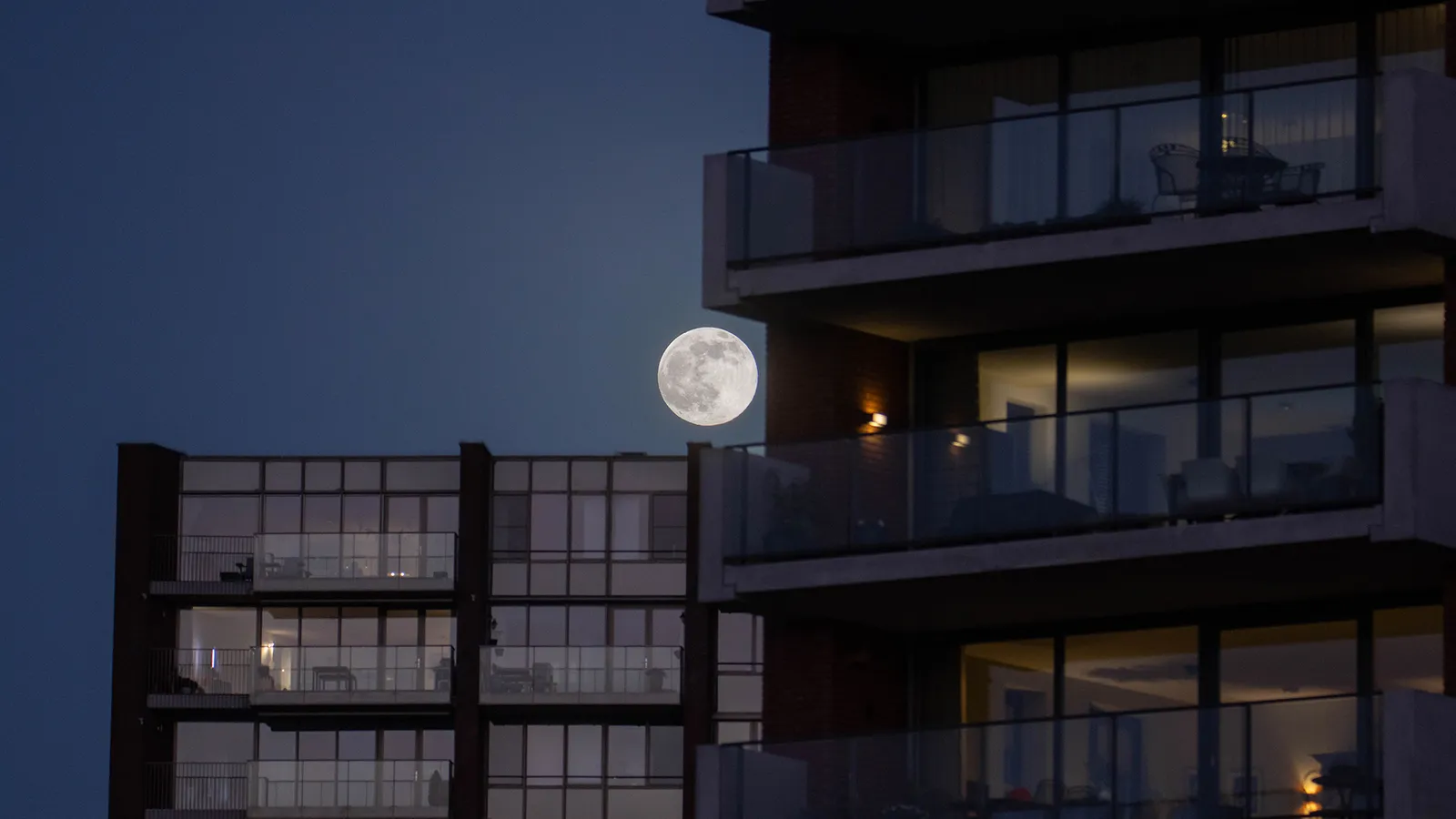 (Image credit: Nicolas Economou/Getty Images)
.
.
Click the link below for the article:
.
__________________________________________
 James' World 2
Jun 19, 2023 @ 18:42:21
Thank you for visiting my Blog , Have a wonderful week
LikeLike
Jun 19, 2023 @ 23:26:47
You are welcome!
LikeLiked by 1 person