
The Wilmington Massacre of 1898
Assorted human interest posts.
November 10, 2025
November 9, 2025
Business, Food For Thought, Human Interest, Political, Science, Technical amazon, business, Business News, current-events, Future, Hotels, human-rights, medicine, mental-health, research, Science, Science News, technology, Technology News, travel, vacation Leave a comment

Click the link below the picture
.
Secretary of Health and Human Services Robert F. Kennedy, Jr., recently announced that the U.S. Food and Drug Administration will launch a review of the safety of the abortion pill, mifepristone. Health researchers say they’re concerned that the review will be politicized and based on flawed reports. More than 100 studies published over the past few decades have shown that the drug, which was approved by the FDA in 2000, is safe and effective at ending a pregnancy.
Given Kennedy’s history of misrepresenting scientific evidence about vaccines, autism, and Tylenol, some scientists say they worry that the health secretary will base the FDA report on unreliable sources.
“Based on what we have seen from this administration to date,” says Peter Lurie, the FDA’s former associate commissioner for public health strategy and analysis, “there is every reason to fear that this study will be a cherry-picking, data-contorting exercise designed to support a predetermined conclusion of lack of safety.”
In a statement to Scientific American, Department of Health and Human Services spokesperson Emily Hilliard said the agency “is conducting a study of the reported adverse effects of mifepristone to ensure the FDA’s risk mitigation program for the drug is sufficient to protect women from unstated risks,” echoing an earlier statement from HHS spokesperson Andrew Nixon.
Kennedy has frequently promoted the FDA review when addressing conservative critics who are impatient for the Trump administration to outlaw or dramatically limit abortion. Antiabortion groups were infuriated by the FDA’s recent approval of a second generic version of mifepristone.
In a post on the social media site X, Kennedy pledged to “review all the evidence—including real-world outcomes” for mifepristone, which is currently used in almost two-thirds of abortions in the U.S.
Kennedy has provided no timeline for the review’s release and few details about what it will encompass. But in a September 19 letter to state attorneys general, Kennedy cited a report from the Ethics and Public Policy Center, a conservative think tank, that claims mifepristone is more dangerous than FDA analyses suggest and calls for ending telehealth prescription of the drug. The availability of Mifepristone via telehealth has contributed to an increase in abortion nationwide in spite of total bans on abortion in 12 states.
That report has serious methodological flaws, says Ushma Upadhyay, a professor of reproductive sciences at the University of California, San Francisco, who dismisses it as “junk science.” She notes that the think tank report was neither peer-reviewed nor published in an established medical journal. The report also does not disclose the specific source of its data, which makes it impossible for other scientists to verify or try to reproduce its findings, she adds. In addition, it provides a false picture of mifepristone’s safety by misclassifying routine follow-up procedures as “serious adverse events,” Upadhyay says.
Kennedy has signaled that the president will be making final regulatory decisions about mifepristone. At a Senate budget hearing in May, Kennedy told lawmakers that “the policy changes will ultimately go through the White House, through President [Donald] Trump.” He said the think tank report “indicates that, at very least, the [drug] label should be changed.”
“Cherry-Picking” Evidence
Some scientists are concerned about Kennedy’s role in the review. When talking about autism and vaccines, Kennedy has often bolstered his arguments with “questionable sources that merely look real,” says Timothy Caulfield, research director at the Health Law Institute of the University of Alberta, who studies health misinformation. “He seems to do this mostly with wedge issues—vaccines, abortion, etcetera —that play to a political agenda.”
Kennedy has succeeded in raising doubts about the safety of proven interventions, including Tylenol, Caulfield says. “Doubt mongering is a very effective strategy, especially in the health space,” he says. “Once that doubt is present, it can have a large impact on the public’s health beliefs and behaviors.”
Kristan Hawkins, president of Students for Life of America, a leading antiabortion group, said in a statement on the group’s website that the FDA review “represents an historic opportunity” to reduce the use of the abortion pill “if handled thoroughly.” The group wants the FDA to conduct an “original investigation” rather than review published studies. It claims that there’s not enough evidence to show that the availability of Mifepristone by mail is safe and that previous studies on the drug were written by people who favor wide distribution of the pill.
The Center for Reproductive Rights, a nonprofit global human rights organization that advocates for abortion access, filed a lawsuit in September against the HHS and the FDA in an attempt to force the Trump administration to reveal the process and sources it will use to review mifepristone’s safety. “The public deserves to know what and who is behind decisions being made about their health and access to vital medications,” says Liz Wagner, a senior federal policy counsel at the organization.
Misleading Statistics
Basing the FDA review on the conservative think tank’s report on mifepristone would produce misleading results, Upadhyay says. A wealth of research has found mifepristone to be safe—so safe that the FDA under the Biden administration began allowing it to be dispensed via telehealth instead of requiring that pregnant people see doctors in person. Prescribers and pharmacies must meet special certification requirements to dispense the drug, and pregnant people are required to sign a patient agreement, Upadhyay says.
.
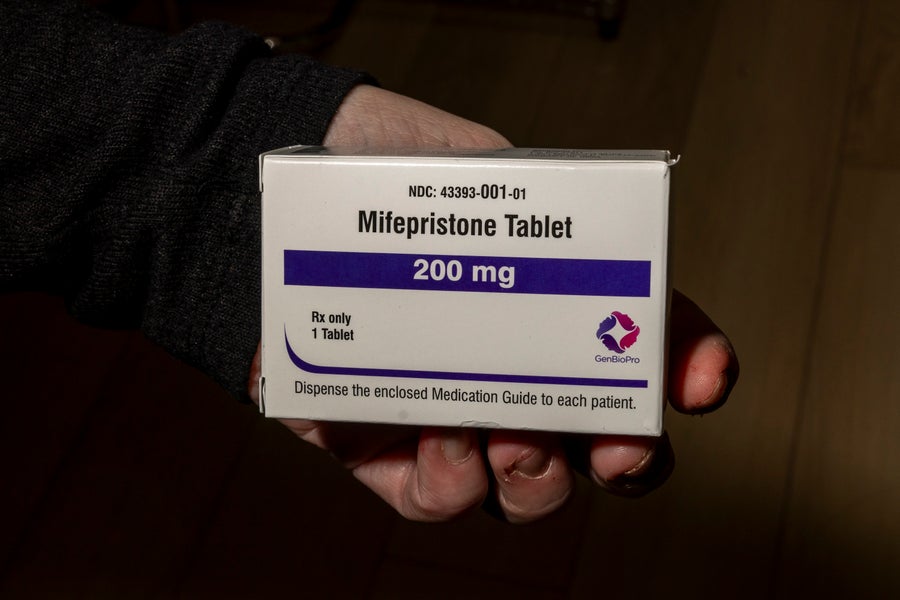
Hundreds of studies in recent decades have found mifepristone to be safe and effective at ending a pregnancy. Natalie Behring/Stringer/Getty Images
.
.
Click the link below for the complete article:
.
__________________________________________
November 9, 2025
Business, Food For Thought, Human Interest, Political, Science, Technical amazon, business, Business News, current-events, Future, Hotels, human-rights, medicine, mental-health, research, Science, Science News, technology, Technology News, travel, vacation Leave a comment

Click the link below the picture
.
President Donald Trump was swept to power for a second time on the back of a central campaign promise to tackle inflation.
The steep rise in the cost of living was top of voters’ minds, and Trump blamed President Joe Biden.
He also made sweeping promises to bring down prices for Americans “starting on day one”.
One year on from his victory, BBC Verify revisits some of the president’s claims.
Groceries
“When I win, I will immediately bring prices down, starting on Day One,” Trump declared at an August 2024 news conference surrounded by packaged foods, milk, meats, and eggs.
Official data – which includes a four-month period when Biden was still president – shows grocery prices rose by 2.7% in the 12 months to September 2025, with some items seeing significantly sharper increases:
- Coffee: 18.9%
- Ground beef (minced beef): 12.9%
- Bananas: 6.9%
Since Trump took office in January, the data also shows that apart from one recorded fall in April, grocery prices have risen each month.
“The president of the United States has very little control over the price of food, especially in the short term,” food economics expert Professor David Ortega told BBC Verify.
Trump’s tariffs are driving up prices of certain foods, he said – a third of coffee consumed in the US comes from Brazil and therefore has a 50% tariff.
Trump’s illegal immigration crackdown may also have had an impact, Ortega adds, especially in farming, where as many as 40% of workers are estimated to be undocumented, which is close to a million people.
“As you know, farmers and companies have to raise wages in order to attract more labour. But trying to quantify those impacts in terms of price increase is almost impossible at the moment.”
Diane Swonk, the chief economist for KPMG, believes tariff and immigration policy changes have contributed to higher costs.
“There’s no question that those shifts are now starting to show up as inflation pressures,” she said.
But she adds that other factors, including weather events, have contributed.
“On coffee, you had climate issues for a very bad growing season, and that was exacerbated by a tariff on Brazil and also Colombia,” she said.
A White House official told BBC Verify President Trump did not control weather patterns in South America, and coffee prices hikes were a global phenomenon.
Data that tracks the cost of coffee shows prices have risen globally, peaking in February, but are now falling.
The same official said the president was addressing rising beef prices by temporarily increasing imports.
While grocery prices are up overall, not every item has become more expensive.
When Trump succeeded Biden in January, the price of a dozen large eggs was $4.93 (£3.79), rising to a record high of $6.23 (£4.78) in March following bird flu outbreaks.
Since then, prices have fallen to $3.49 (£2.68) a dozen.
“President Trump’s supply-side policies are taming Joe Biden’s inflation crisis,” White House Spokesman Kush Desai said.
Other items that have fallen in price over the past 12 months include: butter and margarine (-2%), ice cream (-0.7%), and frozen vegetables (-0.7%).
Electricity
During his campaign, Trump pledged to cut electricity bills sharply.
“Under my administration, we will be slashing energy and electricity prices by half within 12 months, at a maximum 18 months,” he told a rally in August 2024.
Since he became president, prices have risen.
The latest figures show average residential electricity rates reached 17.62 cents per kWh (kilowatt hour) in August 2025 – up from 15.94 cents per kWh in January 2025, according to the US Energy Information Administration.
“It was technically impossible [to halve prices] at the time he made the promise,” according to Professor James Sweeney from the Stanford Precourt Institute for Energy.
Electricity prices not only reflect the cost of generation but also the expense of delivering it through “the wires and the transformers and everything else”, he explained.
Prof Sweeney attributes the increase to both demand and supply issues.
“We have a surge in demand, mostly driven by data centres. People creating images using artificial intelligence are using significant amounts of electricity.”
He added that cuts to renewable energy subsidies and tariffs on imported steel – which raise the cost of building new power generators – have also pushed up prices.
Swonk agreed that the AI boom is pushing up prices, especially for those on lower incomes.
“It exacerbates inequality because consumers that have more access to solar panels and renewables tend to be wealthier households,” she said.
In response, a White House official said that Trump was expanding coal, natural gas and nuclear power, which was “the only viable way to meet the growing energy demand and to lower energy prices”.
Cars
At a campaign rally in September 2024, Trump extended his grocery pledge to cars, telling supporters: “We’re going to get the prices down… groceries, cars, everything”.
However, the average price of a new car topped $50,000 (£38,411) for the first time ever in September, up from $48,283 (£37,092) in January, according to Kelley Blue Book, a US vehicle valuation research company.
Car prices typically rise 2-3% a year, explained Erin Keating from Cox Automotive.
“Tariffs, which have been the biggest factor in the automotive industry over the last 12 months, have been nothing but inflationary.”
She explained new car prices are increasing by about 4% a year, with tariffs contributing at least one percentage point.
“We really think in 2026 that’s going to go higher because most of the manufacturers are holding their fire on raising prices directly due to tariffs, but they’re going to have to come in at some point.”
Keating did point to tax breaks for people in Trump’s spending bill, which she believes may incentivise people to buy new cars.
When asked about the rising price of cars, a White House official told BBC Verify the administration had taken historic regulatory actions to “reverse the left’s radical energy scam and save billions annually”.
Gasoline
Trump made a specific campaign pledge of “getting gasoline below $2 a gallon”.
On the day he entered the White House, the average price for a gallon of “regular” gas was $3.125 (£2.33) according to the American Automobile Association (AAA).
While a long way short of his pledge to get prices below $2, the price of a gallon of gas has fallen to a national average of $3.079 (£2.36).
In response, a White House official pointed us to a gas price comparison website, which had a slightly lower national average of $2.97 (£2.38) per gallon compared with the AAA’s data.
The official added that President Trump has quickly unleashed American energy to make gas affordable again for families across the country.
.
 Getty Images
.
.
Click the link below for the complete article:
.
__________________________________________
November 9, 2025
Business, Food For Thought, Human Interest, Political, Science, Technical amazon, business, Business News, current-events, Future, Hotels, human-rights, medicine, mental-health, research, Science, Science News, technology, Technology News, travel, vacation Leave a comment

Click the link below the picture
.
The older generation always discounts the workplace complaints of the younger generation. In my 20s, there seemed to be an endless supply of commentary about how we millennials were lazy and entitled, just like the members of Generation X before us were slackers. Members of Gen Z get the bad rap of being “unemployable,” because apparently, they do not prize achievement for its own sake, or they’d rather be influencers because the internet has broken their brains.
Gen Z-ers don’t even deserve this perfunctory slander, because the entire process of getting and keeping an entry-level job has become a grueling and dehumanizing ordeal over the past decade.
Certainly, the job market seems grim in this moment. Michael Madowitz, the principal economist at the Roosevelt Institute, described it as “an awful traffic jam.” “If you’re just out of college, you’re trying to merge into a freeway and nobody is letting you in,” he explained. Employers at companies like Airbnb and Intuit almost sound excited talking to The Wall Street Journal about staying lean and culling the number of employees they have, as long as it creates short-term profits.
But the whole experience of work for young people has been tortured for far longer than the economy has been stalled. Earlier this year, my colleague David Brooks spoke to a college senior who called young Americans “the most rejected generation,” describing the hypercompetition that has bled into all aspects of life, even for the most privileged college-educated strivers.
Because most job applications are submitted online, the bar to applying is so much lower than it was in the analog world decades ago, and so for any open role, applicants are competing with hundreds of people. The sense of scarcity and lack starts earlier, because so many selective colleges boast about their record-low admissions rates.
But now artificial intelligence is performing the first few rounds of culling, including early screening, which is further dehumanizing and gamifying the application process. Richard Yoon, who is an economics major at Columbia, told me that when his peers have multiple interviews for jobs in finance, he asks if they heard back from any of them. They tell him: “You don’t understand. Like 19 of those 20 interviews were with bots.”
It’s customary for job seekers to review their résumés for keywords they think A.I. likes, Yoon told me, so that they might have a chance of getting through the digitized gantlet and one day making human contact that could possibly lead to a job offer. Or at the very least, a real-life networking connection. Yoon called the process “dystopian.”
But once you actually have a job, the real dystopia begins. Young people feel as if jobs offer far less mentorship and more micromanaging. Stevie Stevens, who is 27 and lives in Columbus, Ohio, told me that she left a full-time job in July at an exhibition design and production firm because she felt hyperscrutinized and undersupported. “Managers expect you to do six jobs in a 40-hour workweek. My company had mediocre benefits and offered little to no professional growth or training,” she told me.
Stevens also said that what she calls “surveillance state technologies” — apps that synthesized her personal data to determine her level of effort — are part of that feeling of micromanagement. Though she doesn’t have benefits through work now and deals with more uncertainty as a freelancer, she is happier because she has autonomy and control over her time and her efforts.
For the past several years, employers have used “bossware” to track worker productivity. A Times investigation in 2022 found that across professional fields and pay grades, employers were tracking keyboard use, movements, and phone calls, and docking employees for time that they perceived to be “idle.”
That kind of tracking doesn’t account for things like conversations with peers, thinking — you know, with your brain — or, if you work in a warehouse, taking a rest so your body doesn’t fall apart. At least older workers knew a time before this tracking was ubiquitous, and at this point might be senior enough to have the leverage to push back against the most extreme types of surveillance.
It’s no wonder, then, that a working paper published by the National Bureau of Economic Research in July found that young worker despair has been rising in the United States for about a decade. Its co-authors, David Blanchflower and Alex Bryson, analyzed data from the Behavioral Risk Factor Surveillance System, a yearly federal health survey of 400,000 Americans, focusing on how many bad mental health days — ones described as containing “stress, depression and problems with emotions” — a worker had in the past month. They then created a mental despair measurement using the number of bad mental health days, comparing mental despair across demographic, employment, and educational characteristics.
Blanchflower and Bryson found that for workers under 25, mental health is now so poor that they are generally as unhappy as their unemployed counterparts, which is new in the past several years. The rise in despair is particularly pronounced among women and the less educated. Last year, job satisfaction for people under 25 was about 15 points lower than it was for people over 55. This was true in the same year that satisfaction rose for every other age group, according to a survey from the Conference Board. The unhappiness of young workers seemed so pronounced in the past year, whether because of the rapid rise of A.I., the uncertainty of the market, or some other rancid combination of post-Covid malaise and general disaffection.
I called Bryson to find out more about why young workers are so unhappy. He has two hypotheses. One is that the perception of work satisfaction has changed: Young people expect to be happier than previous generations were, in part because they’re using social media to compare themselves to some of their peers, only to then find themselves disappointed by the tedium of their own 9-to-5s. But the other hypothesis is in line with what I’m hearing from young people: The workplace is markedly worse.
.
 Eleanor Davis
.
.
Click the link below for the complete article:
.
__________________________________________
November 8, 2025
Business, Food For Thought, Human Interest, Political, Science, Technical amazon, business, Business News, current-events, Future, Hotels, human-rights, medicine, mental-health, research, Science, Science News, technology, Technology News, travel, vacation Leave a comment
Click the link below the picture
.
You generally have reasons, good or bad, for your beliefs. You can reflect on those reasons: “Why do I think there’s a serial killer in the attic? It’s because the floor creaked.” And, paragon of rationality that you are, you can also adjust your beliefs when additional evidence demands it: “Having scoured the attic, baseball bat in hand, I must conclude that it’s just an old, creaky house.”
This cognitive skill is known as belief revision. It’s long been considered a hallmark of human rationality that distinguishes us from other animals. It relies on a reflective awareness of our own thought processes—thinking about thinking, or metacognition—that other species don’t obviously possess. But a new study, published today in the journal Science, shows that our closest evolutionary relatives also reason in surprisingly sophisticated ways.
In a series of experiments, researchers tested chimpanzees at the Ngamba Island Chimpanzee Sanctuary in Uganda to see how the animals juggled different sources of evidence. Each experiment revolved around food hidden in one of several boxes: The chimps would pick the box they thought was most promising based on an initial clue. Then they’d get another clue that sometimes conflicted with the first. Given the chance to update their decision, they almost always chose the box predicted by a rational-choice model and only changed their mind when the new information was stronger than what they already knew. “The chimps knocked it out of the park,” says Brian Hare, an evolutionary anthropologist at Duke University, who was not involved in the study. “It’s obvious this is so easy for them.”
Most impressively, the animals even accounted for clues that undermined earlier evidence. If they heard something bouncing around inside box 1, they would assume, at first, that it was an apple—but then the experimenter would pull out a stone. Realizing they had been misled, the chimps would immediately opt for box 2, even though it appeared uninspiring a moment before. This was “the cherry on top,” says study co-author Jan Engelmann, a comparative psychologist at the University of California, Berkeley. “None of us thought they could do it because it’s just so complex.”
Of course, lots of animals obey reason without reflecting on it; an amoeba is acting rationally, in some sense, when it follows chemical signals toward food. This “unreflective responsiveness to evidence,” as it’s been called, is a mere shadow of human rationality. But Engelmann argues that chimpanzees’ ability to scrutinize evidence and gauge the certainty of their own knowledge comes much closer to the real thing. “It’s very hard to explain the chimps’ behavior without appealing to some notion of reflection,” he says.
Christopher Krupenye, who studies animal cognition at Johns Hopkins University and was not involved in the study, agrees. He’s agnostic about the content of that reflection—without language, it’s unclear how animals could mentally represent the propositions that make up human beliefs (“I hear rattling, so there’s probably an apple in the box”). It’s possible the chimps think primarily in pictures. Regardless, Krupenye says, “all of this suggests they’re not just driven by simple, emotional responses. They have rather complex awareness.”
Clearly, however, there’s still more to human rationality. According to study co-author Hanna Schleihauf, a comparative psychologist at Utrecht University in the Netherlands, the crucial ingredient may be social interaction—we’re able to sharpen our beliefs through discussion. “This is really what makes humans so special,” she says. “We give and ask for reasons.” Indeed, some cognitive scientists think our reasoning skills evolved so that we could argue with one another.
This study reminds us that those skills evolved from somewhere—namely, from cognitive abilities that were already present in the common ancestor we share with chimpanzees and bonobos. More than 150 years ago, Charles Darwin predicted that our extraordinary mental powers would turn out to be extensions of capacities found throughout the animal kingdom. If chimpanzees are truly capable of reflection, the gap between us and our primate cousins narrows a bit further. As Hare puts it, there’s no need to search the stars for intelligence akin to our own. “We already know we’re not alone,” he says. “There are beings here, considering the world in a way that we think of as being rational.”
.

Chimpanzees show the capacity to revise their beliefs when presented with new evidence. Innocent Ampeire/Ngamba Island Chimpanzee Sanctuary
.
.
Click the link below for the complete article:
.
__________________________________________
November 8, 2025
Business, Food For Thought, Human Interest, Political, Science, Technical amazon, business, Business News, current-events, Future, Hotels, human-rights, medicine, mental-health, research, Science, Science News, technology, Technology News, travel, vacation Leave a comment

Click the link below the picture
.
Traditionally, a new mom’s own mother serves as a sturdy pillar and soft place to land, all wrapped into one. But new data suggests that’s not the case for many. A third of new moms enter motherhood without their mother by their side, according to a report from The Motherless Mothers (TMM) and Peanut, an app connecting people at every stage of parenting.
The findings also suggest that rates of depression and other perinatal mental health conditions are higher in those who are mothering without their mothers because of death, illness, or estrangement.
“Moms usually offer a kind of comfort that’s hard to replace, especially when everything feels new and overwhelming,” says Nona Kocher, MD, MPH, a Miami-based board-certified psychiatrist. “During pregnancy and early motherhood, that kind of support matters more than ever.”
Troublingly, many mothers reported not feeling supported in their struggle, particularly during health care visits. The report says maternal well-being can be helped with one question during check-ups: “Do you have support from your mother or a maternal figure?”
But there are ways for these news moms to find support elsewhere and improve their postpartum experience, experts share.
Why Mothering Without a Mom Can Be So Hard
The worldwide report of more than 2,300 respondents found pronounced effects of mothering without a mother.
- 81% of respondents report having a perinatal mental health condition, which is more than four times the U.S. average of 20%.2
- In particular, motherless mothers in the U.S. are 5.4 times more likely to experience perinatal depression than the Centers for Disease Control and Prevention (CDC)-reported national average of 12.5%.
- 85% of respondents say that motherhood reopened their grief.
These feelings are understandable—expected even—as mothers are often emotional anchors for their daughters during this transition period, says Kiana Shelton, LCSW, a licensed therapist with Mindpath Health.
“During pregnancy and postpartum, a mother can provide normalization when everything feels uncertain,” Shelton explains. “When that maternal presence is missing, there’s not just a lack of support, but a loss of grounding. This absence can intensify feelings of isolation, anxiety, and identity confusion, all of which can increase the risk of perinatal/postpartum depression.”
Catherine M. Cunningham, MD, the section chief of psychiatry at Hackensack Meridian Ocean University Medical Center, agrees, saying perceived loss or a lack of social support is one of the strongest indicators for postpartum depression. And parenting without a mom leaves a gaping hole for many since mothers often provide instrumental support and emotional scaffolding needed in the postpartum period.
“Instrumental support involves practical help with newborn care, meals, and other household tasks to buffer stress and reduce sleep deprivation,” explains Dr. Cunningham. “Emotional scaffolding includes reassurance and validation, modeling of the maternal caregiver role, and a sense of community and family identity.”
When that maternal presence is missing, there’s not just a lack of support, but a loss of grounding. This absence can intensify feelings of isolation, anxiety, and identity confusion, all of which can increase the risk of perinatal/postpartum depression.
Loss Doesn’t Just Mean Death
Importantly, Peanut and TMM, a registered charity and community for mothers navigating parenthood, define the loss of a mother broadly to include death, illness, distance, and estrangement. The latter is critical to acknowledge, as research shows about 6% of adults are estranged from their mothers.
“Estrangement is different from separation due to death or illness, because it involves a choice, whether from the daughter, the mother, or both,” says Geralyn Fortney, LPC, PMH-C, a licensed professional counselor and regional clinic director with Thriveworks. “With that comes questions, and sometimes guilt, shame, or blame.”
After birth, some may experience a strong desire to reach out to their estranged mother, “even if the person knows that it might not be in their best interest,” says Fortney. “People yearn for that connection, which can be overwhelming.”
As for illness, it presents a gray area that’s significantly challenging for a new mother to navigate, especially if she’s assisting with her parent’s care. “If illness is severe, anticipatory grief may be present as well,” adds Fortney.
Death, of course, is permanent, and Fortney isn’t surprised to learn that the perinatal stage rekindled grief in moms.
“People often think they have ‘moved on,’ but are retriggered by the birth of their child,” Fortney says. “The desire to reach out, to share this milestone, to have their mother present can be overwhelming.”
Unsurprisingly, Moms Aren’t Finding Enough Support
Mothering without a mother figure is challenging enough. But the women who took the new Peanut and TMM survey shared that they aren’t receiving support from people involved in their care. About 74% said their health care providers never asked if they had maternal support, and only half of those who were asked said they received meaningful help.
“The grief of mothering while motherless is rarely acknowledged in our culture,” says Emily Guarnotta, PsyD, PMH-C, psychologist and founder of Phoenix Health. “When a new baby arrives, society focuses its attention on the new baby, not the mother. Our culture also has a lot of discomfort when it comes to grief and family issues.”
.
:max_bytes(150000):strip_icc()/PARENTS-mothering-without-a-mom-17c8ae5646484126ac9c58d28c9fb5d0.jpg) Photo: Parents/GettyImages/PeopleImages
Photo: Parents/GettyImages/PeopleImages
.
.
Click the link below for the complete article:
.
__________________________________________
¡Bienvenido de vuelta viajero!
so looking to the sky ¡ will sing and from my heart to YOU ¡ bring...
CEO and Founder of Nsight Health
https://www.tangietwoods
Catholic News, Prayers, HD Images, Rosary, Music, Videos, Holy Mass, Homily, Saints, Lyrics, Novenas, Retreats, Talks, Devotionals and Many More
Decoding Power. Defying Narratives.
A creative collaboration introducing the art of nature and nature's art.
The Home Of Entertainment News, Reviews and Reactions
Hollow Earth Society
•Whenever you are confronted with an opponent, conquer him with love.(Gandhi)
Algotrader at TRADING-CLUBS.COM
Film and Writing Festival for Comedy. Showcasing best of comedy short films at the FEEDBACK Film Festival. Plus, showcasing best of comedy novels, short stories, poems, screenplays (TV, short, feature) at the festival performed by professional actors.
Peace. Tranquility. Insanity.
Take a ride on the wild side
Découvre des musiques prometteuses (principalement) dans la sphère musicale française.
No tiene que Ser una Pesadilla.
Life in Kana-text (er... CONtext)
Tracking money, power, and meaning across borders.
Where feelings meet metaphors and make questionable choices.
Finding hope and peace through writing, art, photography, and faith in Jesus.
Eyasu
The Community for Wounded Healers: Former Medical Students, Disabled Nurses, and Faith-Fueled Pivots
love each other like you're the lyric to their music
Comprendere il mondo per cambiarlo.
Mid-Life Ponderings
Travel,Tourism, Life style "Now in hundreds of languages for you."
I speak the honest truth. I share my honest opinions. I share my thoughts. A platform to grow and get surprised.
User-generated ratings for ethical consumerism
Travel and Lifestyle Blog
Questo è un piccolo angolo di poesie, canzoni, immagini, video che raccontano le nostre emozioni
“Log your journey to success.” “Where goals turn into progress.”
scrivo per dare forma ai silenzi e anima alle storie che il mondo dimentica.
“Dream deeper. Believe bolder. Live transformed.”
Vichar, Motivation, Kadwi Baat ( विचार दर्शनम्)
Traum zur Realität
Savor. Style. See the world.
معا نحو النجاح
Best Forex Broker Ratings & Reviews
art, writing and music by James McFarlane and other musicians
living life in conscious reality
Freelance poetry writing
Peace 🕊️ | Spiritual 🌠 | 📚 Non-fiction | Motivation🔥 | Self-Love💕
 James' World 2