March 29, 2024
Mohenjo
Business, Food For Thought, Human Interest, Political, Science, Technical
amazon, business, Business News, current-events, Future, Hotels, human-rights, medicine, mental-health, research, Science, Science News, technology, Technology News, travel, vacation

Keep dreaming …
Click the link below the picture
.
Move over, modern-day billionaires — the wealthiest person of all time lived seven centuries ago. Musa I of Mali was a 14th-century king (called a “mansa”) who came into power in 1312 CE. He greatly expanded the Mali Empire, culminating in a large swath of West Africa, from the Atlantic Ocean to Timbuktu and beyond. The empire had significant reserves of salt and gold (nearly half of the world’s supply of gold at the time), and it became incredibly wealthy. Mansa Musa also controlled some of the biggest trade centers in Africa, establishing Timbuktu as a major hub. Some sources speculate that Musa’s wealth was equivalent to roughly $400 billion today — by comparison, the wealthiest modern billionaires have net worths of around $200 billion. Though an exact figure is impossible to calculate, many historians believe Musa to be the wealthiest person in history.
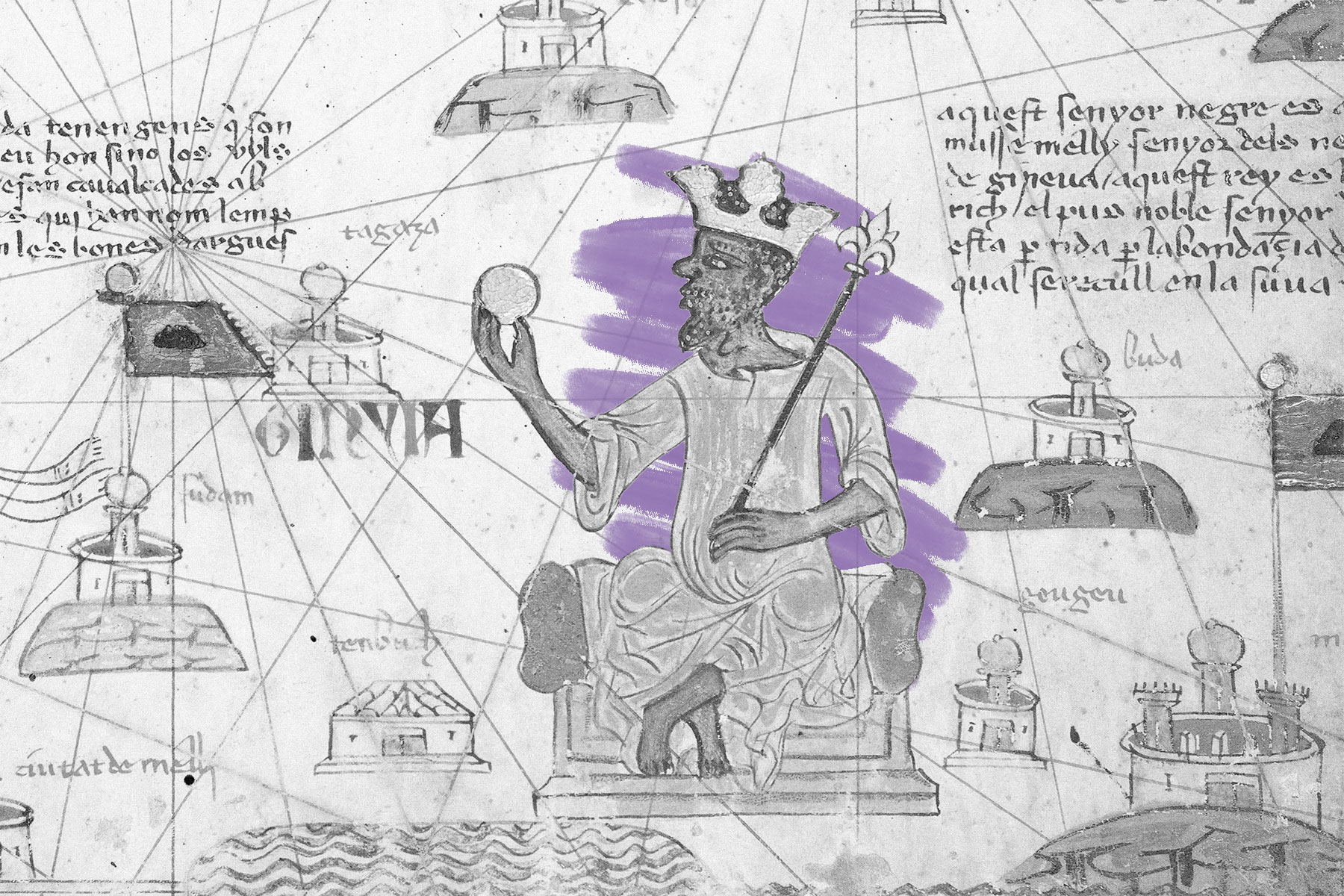
In 1324, the Muslim ruler decided to make a pilgrimage to Mecca. He traversed the Sahara Desert with tens of thousands of followers dressed in Persian silk (including soldiers, enslaved people, merchants, and the entire royal court). Adding to the spectacle, 100 camels carrying hundreds of pounds of gold were also in tow. The caravan reportedly spent three months in Cairo, Egypt, where Musa handed out gold as if it were candy. In fact, Musa’s trek through the Middle East caused the price of gold to plummet in Egypt due to the sheer amount of treasure he brought into the region. Although Musa died sometime in the 1330s, his legacy continued. He made Mali a well-known empire, and it was added to the Catalan Atlas (one of the most popular medieval maps) for the first time in 1375. On the map, a golden-crowned Musa is depicted holding a scepter and a gold nugget.
.
.
.
Click the link below for the article:
.
__________________________________________
March 29, 2024
Mohenjo
Business, Food For Thought, Human Interest, Political, Science, Technical
amazon, business, Business News, current-events, Future, Hotels, human-rights, medicine, mental-health, research, Science, Science News, technology, Technology News, travel, vacation

Click the link below the picture
.
Have you ever talked about a product, and then suddenly got an ad for it on your phone? We’ve all been there, and then skeptically looked over our shoulders for the advertiser lurking in the shadow. But there’s no one there, so we all simply conclude that our phone must be listening to our conversations. You wouldn’t be crazy for thinking that, but it is flat-out wrong. Your phone is not listening to you.
The myth that your phone’s microphone is constantly on, and is listening to your conversations and selling that data to advertisers, is one of the most pervasive myths about technology. It didn’t help when a local advertising company falsely claimed, “It’s true. Your devices are listening to you,” in December. It was a complete lie, that CMG Local Solutions took off their site after 404 Media caught them red-handed. However, this myth originated a long time ago.
Origins of the Myth
“So a lot of people are pretty freaked out about this item from Facebook where they can listen in on your conversations,” said reporter Melanie Michael to thousands of viewers in Tampa Bay on live TV. The news segment ran on May 23rd, 2016, with an article coming out a few days earlier.
“So, be careful what you say in the presence of your phone,” said the 2016 article. “Facebook is not only watching but also listening to your cell phone.”
That article has since been removed from WFLA News Channel 8’s website, but it’s the first instance Gizmodo can find of a major publication reporting this myth. The impact is still felt today, roughly eight years later. The article quotes University of South Florida professor of communications, Kelli Burns. However, Burns never actually said that Facebook was listening to you.
The article quotes Burns as saying “Facebook is watching” and that “I don’t think that people realize how much Facebook is tracking every move we’re making online.”
Burns published a blog post weeks after WFLA’s story went viral, noting that she never actually said that Facebook was listening to you. “Watching, not listening,” said Burns in the post. “Never said listening. And by watching I mean tracking.”
.
 Photo: Max Kegfire (Shutterstock)
.
.
Click the link below for the article:
.
__________________________________________
March 29, 2024
Mohenjo
Business, Food For Thought, Human Interest, Political, Science, Technical
amazon, business, Business News, current-events, Future, Hotels, human-rights, medicine, mental-health, research, Science, Science News, technology, Technology News, travel, vacation

Click the link below the picture
.
Humans are not the only species with music, but we are the only ones who had to make music completely from scratch.
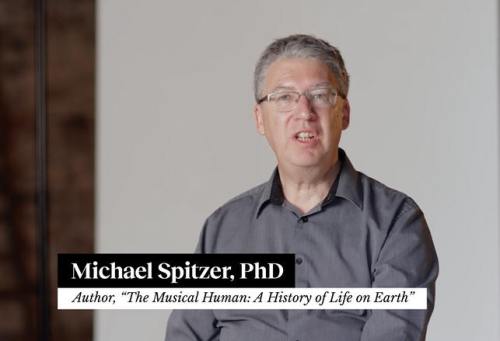
According to Michael Spitzer, Professor of Music at the University of Liverpool, humans are not inherently musical. In fact, we come from a lineage less musically inclined than birds or even insects. This means that when it comes to our musical abilities, we had to rely on both cultural and biological evolution to make music a fundamental aspect of human life.
Our ability to create music is also partially due to how our bodies have developed over time. Contrary to our ape-like ancestors, we have dexterous fingers that allow us to use instruments, and a descended larynx that allows for a wider variety of vocal sounds. These developments paved the path toward human musicality, which eventually distinguished itself from animal vocalizations, transitioning into an art form that serves as a medium for social connection and identity expression.
Spitzer explores the emotional resonance of music, which tends to set us apart from other music-making species, emphasizing its power to express and evoke deep sensations through patterns and rhythms that mirror human experiences. This connection between music, emotion, and human identity highlights music’s role as its own universal yet deeply personal language.
.
 .
.
.
Click the link below for the article:
https://bigthink.com/series/explain-it-like-im-smart/origins-of-music/?utm_source=pocket_discover_science
.
__________________________________________
March 29, 2024
Mohenjo
Uncategorized
Ghostbusters: Frozen Empire is a supernatural comedy directed by Gil Kenan from a screenplay he co-wrote with Jason Reitman. It is the sequel to Ghostbusters: Afterlife (2021) and the fifth film in the Ghostbusters franchise. The veteran Ghostbusters must join forces with their new recruits to save the world in New York City from a […]
GHOSTBUSTERS: FROZEN EMPIRE (2024) – My rating 2/10
March 29, 2024
Mohenjo
Food For Thought, Human Interest, missed News, Political, Science, Technical
amazon, business, Business News, current-events, Future, Hotels, human-rights, medicine, mental-health, research, Science, Science News, technology, Technology News, travel, vacation

.
News You might have missed!
Use your browser or smartphone back arrow (<-) to return to this table for your next selection.
.
__________________________________________
March 28, 2024
Mohenjo
Business, Food For Thought, Human Interest, Political, Science, Technical
amazon, business, Business News, current-events, Future, Hotels, human-rights, medicine, mental-health, research, Science, Science News, technology, Technology News, travel, vacation

Click the link below the picture
.
It was the first day of spring break in 1992 in Phoenix, and 12-year-old Heather Smith was excited for her family’s upcoming ski trip.
But before Smith and her family had even packed their snow pants, she realized she didn’t feel good. “I woke up feeling just a little bit nauseous, and I wasn’t sure why. Throughout the course of the day, I started to feel worse and worse and started to develop pain in the abdomen,” she says.
By about midafternoon, her father took her to urgent care. She ended up getting emergency surgery to have her appendix out.
Smith still has a small scar from the appendectomy. And after the surgery, she found herself intrigued by the part of her body she had so suddenly lost. “It inspired me to wonder: Why do we have this weird little organ in the first place? What does it do? Why does it get inflamed?”
Smith grew up to be a professor of anatomy at Midwestern University and editor-in-chief of a journal called The Anatomical Record. And all these decades later, Smith has made a mark in the field by studying the very organ that threw off her family’s vacation plans in 1992.
She acknowledges that the appendix has a bad rap as a useless organ that can cause you pain and require emergency surgery. “But it turns out recent research shows it does have functions that can help us,” she says.
NPR’s Short Wave spoke to Smith about what the appendix is good for and how a future where appendicitis can be prevented or treated without emergency surgery could be on the way.
What and where is the appendix?
The type of appendix that humans and some primates and rodents have looks like a little worm. It’s about the size of your pinky finger, and it projects off the cecum, which is the first part of the large intestine.
.

As an evolutionary anatomist, Heather Smith studies the fossil record of extinct species. A sudden appendectomy as a child made her curious about what the appendix is for and why it gets inflamed. Heather Smith
.
.
Click the link below for the article:
.
__________________________________________
March 28, 2024
Mohenjo
Business, Food For Thought, Human Interest, Political, Science, Technical
amazon, business, Business News, current-events, Future, Hotels, human-rights, medicine, mental-health, research, Science, Science News, technology, Technology News, travel, vacation

Click the link below the picture
.
The 2024 Abel Prize—the mathematics world’s Nobel Prize equivalent—has been awarded to Michel Talagrand for his advances in describing and predicting the universe’s randomness. Talagrand’s path into mathematics was marked with personal struggle and resilience, and his recognition came as a shock to him.
“There was a total blank in my mind for at least four seconds,” Talagrand tells Nature News’ Davide Castelvecchi, describing when he heard the news of his award. “If I had been told an alien ship had landed in front of the White House, I would not have been more surprised.”
Talagrand’s work focuses on stochastic systems, which model random variables within a given time and space. Examples include the height of a flowing river, stock prices, a hospital’s patient count, the movement of gas molecules, and even a stumbling drunkard’s swerving path. Over years of work, he came to make sense of such systems, using mathematical formulas known as inequalities, to better characterize the limits of their variability.
Where to safely build a house along a rushing waterway, or how to anticipate the growth of a bacterial population, for example, are problems with solutions that may be closely predicted using Talagrand’s methods. The water level in a river may be random, but the mathematician’s work can discern its likely maximum level, which would advise where to construct buildings to avoid flooding, writes the New York Times’ Kenneth Chang.
Essentially, his inequalities, which convert complex systems into geometrical terms, create precise estimates. They offer new tools for study and applications in other fields, including physics, chemistry, communications, and ecology.
“There are papers posted maybe on a daily basis where the punchline is ‘now we use Talagrand’s inequalities,’” Assaf Naor, a mathematician at Princeton University, tells Nature News.
.:focal(1280x719:1281x720)/https://tf-cmsv2-smithsonianmag-media.s3.amazonaws.com/filer_public/dd/d7/ddd78c12-a068-4ce4-a689-0205979e5e62/abelprize-micheltalagrand-bypeterbadge_typos1_abelprize2024-lede-scaled.webp) Michel Talagrand is the 27th recipient of the Abel Prize, which was first awarded in 2003. Peter Badge / Typos1 / Abel Prize 2024
Michel Talagrand is the 27th recipient of the Abel Prize, which was first awarded in 2003. Peter Badge / Typos1 / Abel Prize 2024
.
.
Click the link below for the article:
.
__________________________________________
Older Entries
Newer Entries


