Humans and dogs have been close companions for perhaps 30,000 years, according to anthropological and DNA evidence. So it would make sense that dogs would be uniquely qualified to interpret human emotion. They have evolved to read verbal and visual cues from their owners, and previous research has shown that with their acute sense of smell, they can even detect the odor of stress in human sweat. Now researchers have found that not only can dogs smell stress—in this case represented by higher levels of the hormone cortisol—they also react to it emotionally.
For the new study, published Monday in Scientific Reports, scientists at the University of Bristol in England recruited 18 dogs of varying breeds, along with their owners. Eleven volunteers who were unfamiliar to the dogs were put through a stress test involving public speaking and arithmetic while samples of their underarm sweat were gathered on pieces of cloth. Next, the human participants underwent a relaxation exercise that included watching a nature video on a beanbag chair under dim lighting, after which new sweat samples were taken. Sweat samples from three of these volunteers were used in the study.
Participating canines were put into three groups and smelled sweat samples from one of the three volunteers. Prior to doing so, the dogs were trained to know that a food bowl at one location contained a treat and that a bowl at another location did not. During testing, bowls that did not contain a treat were sometimes placed in one of three “ambiguous” locations. In one testing session, when the dogs smelled the sample from a stressed volunteer, compared with the scent of a cloth without a sample, they were less likely to approach the bowl in one of the ambiguous locations, suggesting that they thought this bowl did not contain a treat. Previous research has shown that an expectation of a negative outcome reflects a down mood in dogs.
The results imply that when dogs are around stressed individuals, they’re more pessimistic about uncertain situations, whereas proximity to people with the relaxed odor does not have this effect, says Zoe Parr-Cortes, lead study author and a Ph.D. student at Bristol Veterinary School at the University of Bristol. “For thousands of years, dogs have learned to live with us, and a lot of their evolution has been alongside us. Both humans and dogs are social animals, and there’s an emotional contagion between us,” she says. “Being able to sense stress from another member of the pack was likely beneficial because it alerted them of a threat that another member of the group had already detected.”
The fact that the odor came from an individual who was unfamiliar to the dogs speaks to the importance of smell for the animals and to the way it affects emotions in such practical situations, says Katherine A. Houpt, a professor emeritus of behavioral medicine at Cornell University’s College of Veterinary Medicine. Houpt, who was not involved in the new study, suggests that the smell of stress may have reduced the dogs’ hunger because it’s known to impact appetite. “It might not be that it’s changing their decision-making but more that it’s changing their motivation for food,” she says. “It makes sense because when you’re super stressed, you’re not quite as interested in that candy bar.”
This research, Houpt adds, shows that dogs have empathy based on smell in addition to visual and verbal cues. And when you’re stressed, that could translate into behaviors that your dog doesn’t normally display, she says. What’s more, it leaves us to wonder how stress impacts the animals under the more intense weight of an anxious owner. “If the dogs are responding to more mild stress like this, I’d be interested to see how they responded to something more serious like an impending tornado, losing your job or failing a test,” Houpt says. “One would expect the dog to be even more attuned to an actual threat.”
On Friday afternoon, my bosses asked if I’d like to test out and explain Noplace, a new social media platform that shot to the top of the Apple Store charts when it switched from referral-only to free-for-all. When they asked me to do that with BeReal two years ago, I ended up falling in love with the app and using it with my friends all summer long, so I was excited. Maybe Noplace, billed as “MySpace for Gen Z,” would turn out the same—a fun platform for my friends and me to play with for the rest of the warm months. I downloaded it, impressed by its commitment to the customizable themes and colors that defined my social media use when I was a kid coding pet pages on Neopets and learning HTML so my LiveJournal could reflect on the outside how I felt on the inside. Here’s what I found.
What is Noplace?
Noplace is bright and colorful, promising to connect people with similar interests. You get a profile page, which you’re able to customize by changing the colors and even the bezels around the text boxes. Like old-timey Facebook, there’s a “wall” where your friends can post public messages to you. Like LiveJournal, there are sections built into your profile where you can announce what you’re eating, listening to, or doing. Like MySpace, you can publicly rank your top friends. Like any other platform, there is a direct-messaging component. And like X, there’s a tab where you can post what you’re thinking or feeling and strangers can respond.
I messed around on the app for three days, but never quite figured out how it connects people with similar interests. On Noplace, your interests are called “stars,” so I selected a few stars from the categories it offered up: Fortnite under “video games,” for instance. I noticed a lot of the possible stars were vague—”astrology,” “LGBTQ,” “reading”—so I created my own in the search bar. I went with baseball and the Minnesota Twins, then added spin class, too. But there was never a way to find other people who chose those stars or connect with them. They just appeared on my profile. It was a little sad, but I’m not ruling out the possibility that I just couldn’t figure it out.
How does Noplace work?
I started posting on the public, feed-style forum right away after quickly throwing together a profile that was all purple, featured a picture of me, and alerted any potential new friends to the fact that I was listening to “Whenever, Wherever” by Shakira while eating a package of dried seaweed snacks. It really did feel very 2004. I couldn’t believe I used to spend so much time on real-time updates back then, especially considering I was doing it all from a desktop computer, tethered to a giant monitor in my basement in the era before smartphones.
I inquired about how to raise my “level” and someone kindly responded to let me know I had to be more interactive on the app to accomplish that. I tapped their profile. They were a young teen. I started tapping more profiles I found in the feed. Everyone appeared to be between 14 and 20. It made me uncomfortable. I felt like an interloper at best and a creep at worst. Not ideal. I decided to force my friends to join, so I could at least be among some peers. That part was easy: I just had to tap an “invite friends” button in the search tab, then send them all a text. Further proof that I was way too old to be doing this came when I noticed that even after I imported my contacts, no one from the list appeared to already be on the app. Matters became more dire when two of my best friends who use Android phones told me there was no Android app at all. It was up to me and my iPhone-using pals to infiltrate on our own.
“Twisters” is a disaster film directed by Lee Isaac Chung from a screenplay by Mark L. Smith, based on a story by Joseph Kosinski. “Twisters” is a standalone sequel to “Twister” (1996). The story follows a group of storm chasers who attempt to launch barrels of sodium polyacrylate solution into a tornado. While still in […]
Since 2020, the condition known as long COVID-19 has become a widespread disability affecting the health and quality of life of millions of people across the globe and costing economies billions of dollars in reduced productivity of employees and an overall drop in the work force.
The intense scientific effort that long COVID sparked has resulted in more than 24,000 scientific publications, making it the most researched health condition in any four years of recorded human history.
Long COVID is a term that describes the constellation of long-term health effects caused by infection with the SARS-CoV-2 virus. These range from persistent respiratory symptoms, such as shortness of breath, to debilitating fatigue or brain fog that limits people’s ability to work, and conditions such as heart failure and diabetes, which are known to last a lifetime.
I am a physician scientist, and I have been deeply immersed in studying long COVID since the early days of the pandemic. I have testified before the U.S. Senate as an expert witness on long COVID, have published extensively on it, and was named as one of Time’s 100 most influential people in health in 2024 for my research in this area.
Over the first half of 2024, a flurry of reports and scientific papers on long COVID added clarity to this complex condition. These include, in particular, insights into how COVID-19 can still wreak havoc in many organs years after the initial viral infection, as well as emerging evidence on viral persistence and immune dysfunction that last for months or years after initial infection.
How long COVID affects the body
A new study that my colleagues and I published in the New England Journal of Medicine on July 17, 2024, shows that the risk of long COVID declined over the course of the pandemic. In 2020, when the ancestral strain of SARS-CoV-2 was dominant and vaccines were not available, about 10.4% of adults who got COVID-19 developed long COVID. By early 2022, when the omicron family of variants predominated, that rate declined to 7.7% among unvaccinated adults and 3.5% of vaccinated adults. In other words, unvaccinated people were more than twice as likely to develop long COVID.
While researchers like me do not yet have concrete numbers for the current rate in mid-2024 due to the time it takes for long COVID cases to be reflected in the data, the flow of new patients into long COVID clinics has been on par with 2022.
We found that the decline was the result of two key drivers: availability of vaccines and changes in the characteristics of the virus – which made the virus less prone to cause severe acute infections and may have reduced its ability to persist in the human body long enough to cause chronic disease.
Despite the decline in risk of developing long COVID, even a 3.5% risk is substantial. New and repeat COVID-19 infections translate into millions of new long COVID cases that add to an already staggering number of people suffering from this condition.
.
Researchers are gaining key insights into the ways that the SARS-CoV-2 virus can lead to long COVID symptoms. smartboy10/Getty Images
My friend Jane’s son was born three months after my own daughter. Now that they are in second grade, you’d hardly notice this age difference at all, but early on, it was hard to believe that would ever be true. When Benjamin was born, Penelope seemed like a giant. When he was a floppy 6-week-old infant, she was 4 and a half months old, well on her way toward being a real, solid, baby.
But then came walking. At a year, like the average kid, Benjamin got up and started toddling around. Not Penelope. By the time he was walking, she was fifteen months old and seemed to show no inclination. It is sometimes easy to ignore the way your children differ from the average, but walking was so visible, so salient. Plus, we saw Benjamin all the time, so it was hard to avoid comparisons.
At Penelope’s 15-month well-child visit, our very practical and pragmatic pediatrician, Dr. Li, told me not to worry that she wasn’t walking. “If she’s not walking by 18 months,” she said, “we’ll call in early intervention. But don’t worry! She’ll figure it out.” I did not have Dr. Li’s relaxed confidence or breadth of experience. I tried to explain to Penelope how to walk; she didn’t care. I tried to provide incentives, which were ineffective. You recall: She was a baby.
And then, about two weeks after the doctor visit, Penelope walked. Just like it was no big deal. Perhaps because she was so old by the time she learned, she never fell down much, either, just went from crawling around to walking normally in a day or two. And then I promptly forgot about my fear that she would never walk and moved on to other neuroses. (There are always more neuroses around the corner when you’re parenting.)
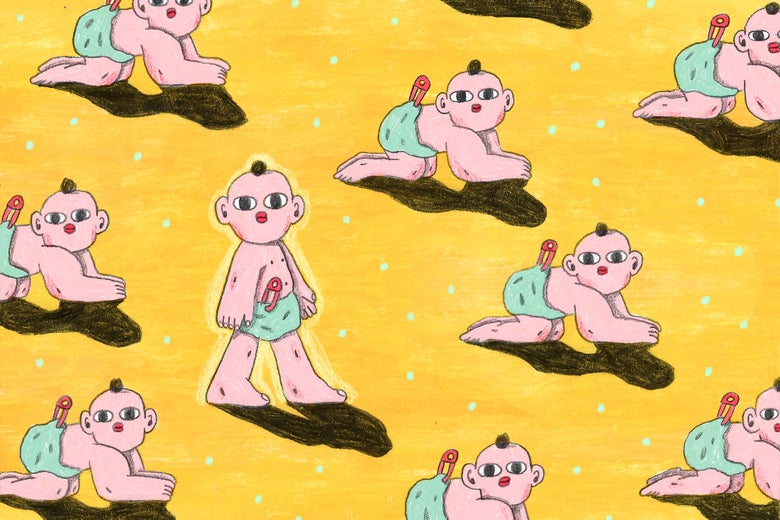
I don’t think my experience was unique. In the moment, physical milestones—sitting, crawling, walking, running—take on an outsize importance. You are in a whole new and bewildering world as a parent, and milestones seem like just about the only map of the territory. Correspondingly, failure to achieve these milestones at the time we expect tends to worry parents. I think part of the problem is that most discussions of this focus on the average age—as in, “Most children walk around one year.” This is true, but it misses the (perhaps surprising) fact that there is a very, very wide distribution in what is typical. (There’s a whole other conversation to be had about how we idealize “typical” in children, but that is for another day.)
To get a sense of this distribution, we can go to the data, collected from healthy, typically developing children. Specifically, we can use data collected and collated by the World Health Organization to look at not just the average age of walking (which is indeed around a year) but the whole distribution. The age range is visualized in the graph below. What we see from this is that the earliest walkers are around 8 months and the latest are close to 18 months. This is an astonishingly large range for parents to process. On a huge range of dimensions, an 8 month old is completely different from an 18 month old, and yet both are normal ages for first steps. That gives you some idea of how different children already are by this point, and it also gives you a sense of how you should view milestones: as a range.
Ushuaia is located on Ushuaia Bay at 6 meters above sea level, surrounded to the west, north, and east by the Andes Fueguinos. It is the only city accessed from the rest of the country by crossing part of the Andes mountain range that runs along the southern edge of Tierra del Fuego. National Route 3 crosses the Sierra Alvear through the Garibaldi Pass to enter the Carabajal Valley, where it follows the Olivia River through the Sierra Sorondo to the Beagle Channel and Ushuaia Bay. For this reason, in Argentina, it is considered the only trans-Andean city (ciudad trasandina).
Ushuaia has long been described as the southernmost city in the world. While here are settlements farther south, the only one of any notable size is Puerto Williams, a Chilean settlement of some 2,000 residents. As a center of population, commerce, and culture, and as a town of significant size and importance, Ushuaia however clearly qualifies as a city. A 1998 article in the newspaper Clarín reported that the designation “Southernmost city in the world” had been transferred to Puerto Williams by a joint committee from Argentina and Chile, but this was denied by Argentine authorities, and the Secretariat of Tourism of Argentina continues to use the slogan in official documentation and web sites.
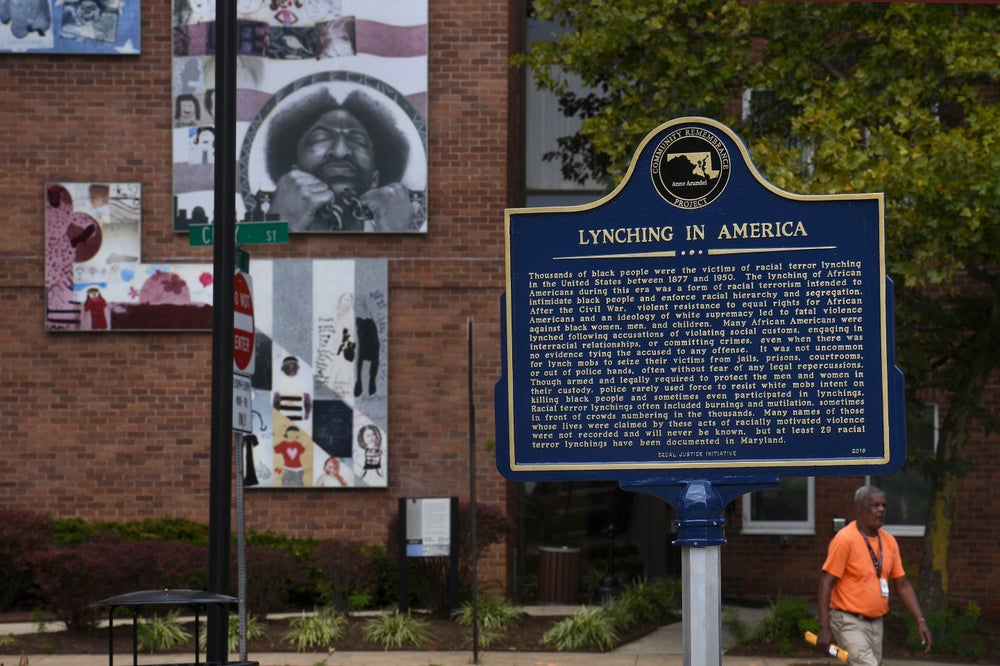
Amid reports of record lows in unemployment for Black Americans and talk of “Black jobs” at June’s presidential debate, economic echoes of historical racism still resonate in the U.S. Today Black Americans face higher unemployment rates, lower earnings and deeper povertythan white Americans.
A legacy of injustice is most starkly evident in the economic disparities that persist in the places that were once plagued by lynchings.
In the 19th and 20th centuries, lynchings were widespread in the U.S., with more than 4,700 extrajudicial murders taking place from 1882 to 1968, according to the National Association for the Advancement of Colored People (NAACP). The 1955 murder of 14-year-old Emmett Till in Mississippi shocked the nation and galvanized the early Civil Rights Movement.
These horrific acts still shape the economic landscape of many counties where the lynchings occurred. Today the legacy of lynchings hurts Black Americans’ economic prospects, limiting upward mobility and perpetuating a cycle of poverty. This is more than a historical anecdote; it’s an ongoing reality backed by rigorous research.
How do we know that? For a studypublished in June in Kyklos, I and my colleague looked at economic opportunity levels for Black individuals in counties with the highest rates of historical lynching. The economic difference between these regions and counties without a lynching history is as large as that between New Orleans and San Francisco; the median income in the latter is more than 170 percent higher. This contrast is significant, given the U.S.’s reputation as the “land of opportunity.”
Previous research by others has shown the lingering effects of lynchings. A 2021 study found that families of lynching victims were still suffering psychologically and economically decades and generations later. “We went from prosperity to poverty overnight,” the 77-year-old daughter of a victim told that study’s authors. The same year, in a paper in Health & Place, researchers looked at life expectancy in 1,221 counties in the U.S. South and found it was lower in those with a history of lynching by more than a year on average, compared with counties with no recorded lynchings.
The notion that anyone, regardless of their background, can achieve economic success through hard work is a cornerstone of the American dream. These findings, however, reveal a different reality for many Black people in the U.S., whose economic prospects are still heavily influenced by the legacy of racial violence and discrimination. The promise of equal opportunity remains elusive, highlighting the need for continued efforts to address these deep-seated inequalities. How accessible is the American dream when historical injustices endure and blight today’s prospects for prosperity?
.
A historic marker detailing lynching in Anne Arundel County and in America at Whitmore Park on Calvert Street is seen September 17, 2019, in Annapolis, MD. Katherine Frey/The Washington Post via Getty Images
About eight years ago, I was hosting an open house at my Montessori school. Classrooms were buzzing with parents and kids, yet one mother stood out. She was speaking to her 4-year-old son in a performative manner, loudly narrating feelings he may be having as he moved through the room.
“I know you want to have that, but it is in the hands of another child. That makes you sad and frustrated, but I am here to help you,” she said to her child. When she spoke to me, she slipped back into a more natural tone and manner of speaking, her voice coming down a full octave.
In our brief conversation, her words flowed freely, as though they were casual representations of her own internal thought process. When she turned back to her son, however, it was as though she were channeling an adult who hosted a PBS show for children. I found this mother to be both engaging and competent in our interactions, yet slightly off-putting and disingenuous as she interacted with her son. I wondered sincerely why she didn’t allow her son access to her authentic self.
I now realize this mother was an early adopter of parenting scripts, something I had never heard of at the time, though they have now become ubiquitous.
Words matter when talking to kids
The spoken message behind parenting scripts is that parents can optimize how they speak to children, supporting their children’s development and validating their feelings. The unspoken message behind parenting scripts is that much of parents’ reflexive language toward their children is pernicious.
Seemingly innocuous but now verboten phrases include “you’re OK,” “be careful,” “stop it,” “you’re so smart,” and “good job.” These phrases gaslight, dominate, or put children into a fixed mindset, right? While there could be some truth to this — words do matter after all — it may be time to ask what impact this is having on parents. And is it really working for children?
When parents are repeatedly given the message that, left to their own devices, the way they communicate with their children is probably harmful, it invites shame, doubt, and a pervasive feeling that every word out of a parent’s mouth carries with it alarmingly high stakes.
I worry about parents wanting to optimize everything
As parenting scripts gain in popularity, I worry that some parents are buying into the idea that they can optimize the parent-child relationship by becoming less of their authentic selves and more of an “ideal” parent that’s prescriptively laid out to them by an expert whose interaction style may differ wildly from the parents’.
.
The author says parenting scripts can harm parent-child relationships. FG Trade Latin/Getty Images
Film and Writing Festival for Comedy. Showcasing best of comedy short films at the FEEDBACK Film Festival. Plus, showcasing best of comedy novels, short stories, poems, screenplays (TV, short, feature) at the festival performed by professional actors.






 Ushuaia is located on Ushuaia Bay