Home

The Real Reason People Aren’t Having Kids

Leave a comment

Click the link below the picture

.

The facts of the so-called fertility crisis are well publicized: Birth rates in the United States have been trending down for nearly two decades, and other wealthy countries are experiencing the same. Among those proposing solutions to reverse the trend, the conventional wisdom goes that if only the government were to offer more financial support to parents, birth rates would start ticking up again.

But what if that wisdom is wrong?

In 1960, American women had, on average, 3.6 children; in 2023, the total fertility rate (the average number of children a woman expects to have in her lifetime) was 1.62, the lowest on record and well below the replacement rate of 2.1. Meanwhile, rates of childlessness are rising: In 2018, more than one in seven women aged 40 to 44 had no biological children, compared with one in 10 in 1976. And according to a new report from Pew Research Center, the share of American adults younger than 50 who say they are unlikely to ever have children rose 10 percentage points between 2018 and 2023, to 47 percent. In mainstream American discourse, explanations for these trends tend to focus on economic constraints: People are deciding not to have kids because of the high cost of child care, a lack of parental leave, and the wage penalty mothers face. Some policy makers (and concerned citizens) suggest that expensive government interventions could help change people’s minds.

.

https://cdn.theatlantic.com/thumbor/ObDdotcw1hPxsfc5zKM8dnHzKM8=/0x0:2000x1125/976x549/media/img/mt/2024/07/family/original.jpgIllustration by Matteo Giuseppe Pani. Source: Getty.

.

.

Click the link below for the article:

https://www.theatlantic.com/family/archive/2024/08/fertility-crisis/679319/

.

__________________________________________

George Cook, Black American Inventor of Automatic Fishing Device (No. 625,829)

2 Comments

George Cook, Black American Inventor of Automatic Fishing Device (No. 625,829)

My helicopter parents forged job applications for me as a teen. I almost made the same mistake with my own child.

Leave a comment

Click the link below the picture

.

When I was 15, my mom announced at the breakfast table that I had a job interview that morning.

She said there was no getting out of it because it was all arranged. Dad would drive me to the new bakery that her friend’s son was about to open in our hometown in northern England.

Two hours later, I sat opposite the manager as she read aloud parts of the application my mom had forged without my knowledge.

“You wrote that math is one of your best subjects,” the woman said, noting that the position was for a part-time counter person at the bakery.

I was abysmal at math. Sure enough, when the manager asked me to solve a simple equation to test my mental arithmetic, I got the answer spectacularly wrong.

Next, the woman showed me the personal note my mom had mailed with my application, addressed to the business owner and introducing herself as his mother’s friend. “Congratulations, John,” she wrote. “Wishing you all the best with your new business venture.”

I cringed, barely believing Mom had tried to pull so many strings to get me the job. The manager had my number, and I didn’t get hired.

When I got home, I argued with my parents. “We were just trying to help,” my dad said. “Don’t ever do that again,” I yelled.

They had good intentions, but it was an example of helicopter parenting at its worse. They wanted to instill a work ethic in me, but it backfired.

When I was hired after showing initiative myself, I felt proud

A few months later, I secured a part-time job by randomly asking for shifts at a local café. The owner said he admired my initiative, which boosted my bank account and self-esteem.

I later found part-time work as a dishwasher at a restaurant, a sales assistant in a menswear store, and a bartender. Toward the end of college, I was a breakfast waitress at a hotel, starting at 6. am.

I tried to get my teenage daughter a job, too

You’d have thought the humiliating experience at the bakery would have taught me a lesson forever. But now, as the mom of a 16-year-old girl, it’s difficult not to copy my parents.

.

https://i.insider.com/66a927221a227600e632d7c2?width=1000&format=jpeg&auto=webpJane Ridley (not pictured) is trying not to make the same mistakes her helicopter parents did. standret/Getty Images

.

.

Click the link below for the article:

https://www.businessinsider.com/mom-blames-helicopter-parents-who-tried-find-her-a-job-2024-7?utm_source=pocket_discover_parenting

.

__________________________________________

Thunderstorms Have Caused $45 Billion in Damages in the U.S. in Just Six Months

Leave a comment

Click the link below the picture

.

CLIMATEWIRE | Global losses from natural disasters eclipsed the long-term average in the first half of 2024, with thunderstorms causing more damage in the U.S. than hurricanes, wildfires, or other catastrophes.

An analysis from the reinsurance company Munich Re found that severe thunderstorms in the U.S. caused $45 billion in losses from January to June, $34 billion of which were insured. That makes 2024 the fourth-costliest thunderstorm year on record, based on the first six months.

Many of the losses were driven by tornadoes and hail spawned from the storms, the report notes.

North America accounted for $60 billion in losses — half of all damages worldwide. Globally, insured losses totaled $62 billion, compared with the 10-year average of $37 billion.

Thunderstorms may seem like small events compared with other kinds of disasters. Individually, they tend to cause less damage than earthquakes, hurricanes, fires, and floods. But they also strike more frequently than many other severe weather events, and their damages add up over time.

A January report from Munich Re found that thunderstorm losses in Europe and North America broke records in 2023, causing damages totaling $76 billion and $58 billion in insured losses.

A report from another reinsurance company, Swiss Re, also warned last year that thunderstorm damage is growing worldwide. A high number of low- to medium-severity events occurred around the globe last year, causing more than $100 billion in losses. Thunderstorms were the main contributor.

“The cumulative effect of frequent, low-loss events, along with increasing property values and repair costs, has a big impact on an insurer’s profitability over a longer period,” said Jérôme Jean Haegeli, chief economist at Swiss Re, in a statement last year. “The high frequency of severe thunderstorms in 2023 has been an earnings test for the primary insurance industry.”

Studies show that climate change worsens thunderstorms around the world. That’s largely a matter of simple physics — a warmer atmosphere holds more moisture, allowing for more intense rainfall events.

That doesn’t always translate to more frequent storms. In some places, the total number of thunderstorms might not change much — but the ones that do occur may grow stronger. Research already shows that extreme precipitation events have worsened across the U.S., according to the federal government’s Fifth National Climate Assessment. A 2023 study also found that severe thunderstorm winds are affecting a larger area of the country over time.

Research also indicates that some regions could see an increase in the number of thunderstorms as temperatures continue to rise.

The rising risks of thunderstorms are taking a toll on the United States. According to NOAA, severe storms account for half of all the country’s billion-dollar disasters since 1980. And the number of billion-dollar thunderstorms is rising over time.

“Climate change entails evolving risks that everyone — society, the economy, and the insurance sector alike — will have to adapt to, so as to mitigate the growing losses from weather-related events,” said Thomas Blunck, member of Munich Re’s Board of Management, in a statement.

Disasters around the world

A variety of other disasters caused havoc around the world in the first half of 2024, Munich Re found.

Not all were climate-related. Earthquakes in Japan and Taiwan this year caused billions of dollars in losses each. The 7.3 magnitude event in Taiwan was the worst the region had experienced since 1999.

Floods caused the greatest losses elsewhere.

Heavy rainfall triggered severe floods and landslides in Brazil in April and May, amounting to $7 billion in total losses. Devastating floods also struck Germany in May, with the costliest event totaling $5 billion in damages.

Seasonal monsoon rains caused severe floods in East Africa, including Kenya, Tanzania, Burundi, and Somalia earlier this year. And in May, tropical cyclones Hidaya and Ialy struck the same region, exacerbating previous destruction and killing hundreds, and displacing around half a million people.

.

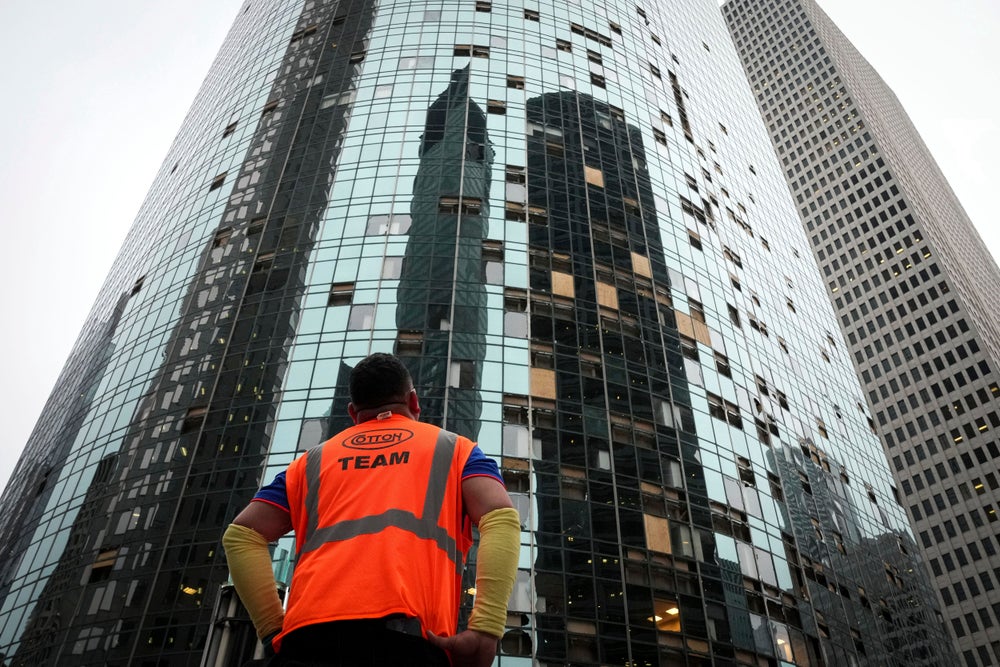
https://static.scientificamerican.com/dam/m/53364d590bbba48a/original/GettyImages-2153584169_WEB.jpg?w=1000

A man surveys damage from a storm Friday, May 17, 2024, in downtown Houston. Jon Shapley/Houston Chronicle via Getty Images

.

.

Click the link below for the article:

https://www.scientificamerican.com/article/thunderstorms-have-caused-usd45-billion-in-damages-in-the-u-s-in-just-six/

.

__________________________________________

Margaret Walker, American Poet, Writer, Winner of The Yale Younger Poets Prize

Leave a comment

Margaret Walker, American Poet, Writer, Winner of The Yale Younger Poets Prize

Is the Paris Olympics’ Swimming Pool ‘Slow’? Let’s Dive into the Math

Leave a comment

Click the link below the picture

.

For many athletes, it is the pinnacle of their career. They have trained hard for years to take part in the Olympic Games. Winning a medal is a childhood dream for most of them—only surpassed by setting a new world record during the competitions.

And that happens again and again. At the Summer Olympics in Tokyo in 2021, existing world records were broken in several disciplines, six in swimming alone, mostly by a difference of tenths or even hundredths of a second. As in most Olympic sports, it’s all about precision: the slightest wrong move or external disturbance can make the difference between success and failure. Nevertheless, swimming stands out in one respect: It takes place in water, or more precisely, in a pool filled with water. And the shape of the pool can have a strong influence on the performance of Olympic athletes.

Before the start of this year’s Summer Olympics in Paris, hopes for new records were high. One of the reasons for this was new training techniques using “digital twins.” These are computer models of swimmers that mathematicians use to help the athletes achieve peak performance.

So far results for swimmers in Paris have been sobering. Only one world record had been broken as of August 1. And even worse: the Olympians seem to be falling far short of expectations. Nicolò Martinenghi, the winner of the men’s 100-meter breaststroke, only managed a time of 59.03 seconds—the slowest winning time in the event at an Olympic Game since 2004.

A cause was purportedly found: the Olympic swimming pool was not deep enough. A few days after the opening of the Games, the headlines were published: “Paris Olympics Swimmers Noticing Pool Is ‘Slow’ as Gold-Medal Times Don’t Come Near World Records,” “No World Records through Two Nights in Paris, Is the Pool in Paris ‘Slow’?,” “How Slow Paris Pool Is Thwarting Swimmers’ World Record Bids.” But can it be true? Is the pool really to blame for the lack of records? Anyone waiting for a “yes” or “no” will be disappointed. Unfortunately, there is no simple answer because the question is related to one of the most complex problems in mathematics.

The Paris La Défense Arena in Nanterre, a suburb of the city, is actually a rugby stadium and concert venue—Taylor Swift performed there in May—and has been converted into an indoor swimming pool for the Games. The huge pool will be dismantled afterward. This approach makes sense: during the summer Games, the many spectators are entitled to watch the athletes compete, but outside of these events, swimming pools with a grandstand that can accommodate 15,000 people seem completely oversize. This is why many Olympic swimming pools are designed to be temporary solutions.

What is surprising, however, is the depth of this year’s pool, which is unusually shallow at 2.15 meters. There is no standardized regulation as to what dimensions an Olympic pool should have. Until a few years ago, it had to be at least two meters deep, but now the minimum depth is 2.5 meters. A depth of three meters, however, is recommended. When construction of the Olympic pool started in 2017, the two-meter rule still applied. The pool in Nanterre is therefore permitted despite its comparatively shallow depth. And this, many are convinced, means that it is “slow.”

.

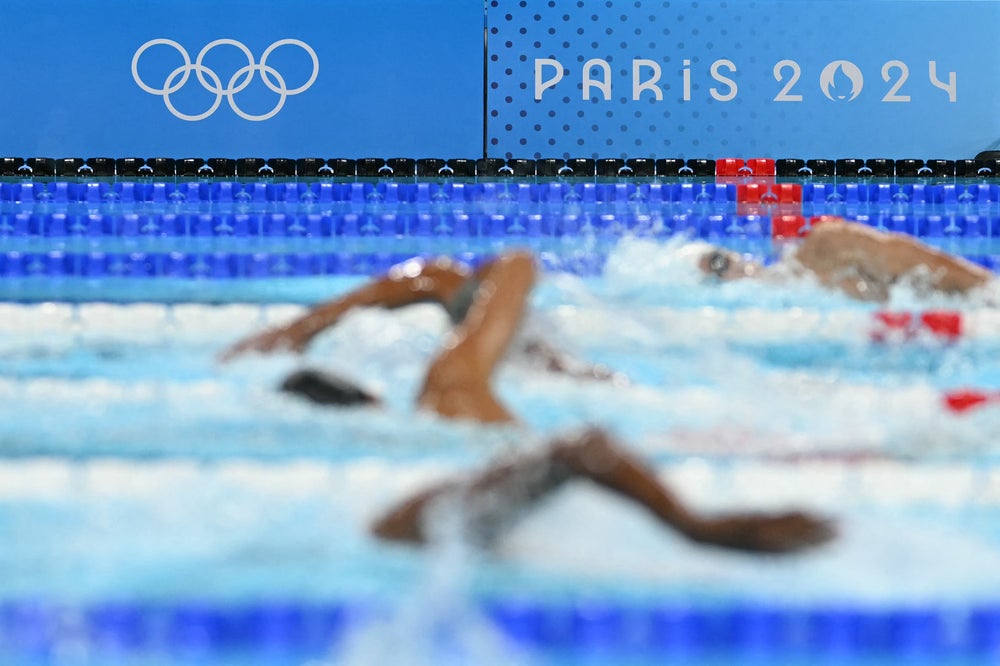
https://static.scientificamerican.com/dam/m/207f71b7701cd2c0/original/GettyImages-2163063844.jpg?w=1000

Swimmers compete during an event at the Paris 2024 Olympic Games at the Paris La Defense Arena. Jonathan Nackstrand/AFP via Getty Images

.

.

Click the link below for the article:

https://www.scientificamerican.com/article/is-paris-olympic-swimming-pool-slow-lets-dive-into-the-math/

.

__________________________________________

Everything Got Better Once I Stopped Cooking For My Family

Leave a comment

Click the link below the picture

.

I turn away from my husband and his snoring, using my back to try to block out the light from my phone. It is my favorite time of day: 10 p.m., in bed, secretly scrolling my favorite app, NYTimes Recipes. Looking at all the beautiful pictures, I feel myself getting excited, hopeful even. I click on family-friendly dinners, and my heart drops instantly: It reads like a list of rejection letters. Fajitas. Chili. Tortellini soup. Lasagna. I swipe, faster and faster, rejecting things left and right (though I still think of left swipe as rejection), and I am reminded of the years I spent swiping on other apps, picky in a different way. Back then, I rejected men for being too square, too edgy, too comfortable with typos. Now I swipe and make the rejections on my children’s behalf: This recipe looks too spicy. Too cheesy. Too saucy. Too meat-y, too bean-y.

It took me years to admit my family, happy in almost every way, would completely implode if asked to live on what the Internet tells me are “Family-Friendly Dinners.” I read other families’ meal plans like other moms read romance novels, fascinated but incredulous, sure no one is being whisked off to Paris or that people’s kids are eating fish tacos in real life.

It wasn’t always this way. For years, I persisted, an acolyte in Ellyn Satter’s church of feeding, sure that if I just put certain foods (namely, healthy home-cooked ones) on the table 10, 20, 50, 5,000 times, my kids would eventually be called “good eaters,” Internet code for adventurous, polite, nonpicky dinner companions, basically little 45-year-olds in children’s bodies. But after years of this, years of heroic dinnertime effort met with routine, resounding rejection, it finally happened. I broke.

The scene that played out in our dining room last fall was a familiar one to anyone with kids. I had spent Sunday meal planning the week’s meals, my cookbooks around me on the living room floor, avoiding the allergens (avocado, tomatoes, peppers) and preferences (no broccoli, fish, “saucy” food, spice) of my family members. I’d found some that threaded the very fine needle of food preferences and time allowances I’d have to cook during the week. I grocery shopped, labeled what food should not be eaten before it was made for dinner (“DO NOT TOUCH!” the egg carton said, as they were destined for pad Thai), and got to cooking.

And so, on that night last September, I cooked. Chicken shawarma — a recipe that promised, literally, to “change my life.” I grilled, roasted, and diced. I minced the dill, considered whether to peel the cucumber. (I split the difference, peeling it in strips.) I set the table, our cloth napkins over our placemats, the food all on the table to serve family style (Ellyn Satter insists!!!), and my family sat down. And of course, nobody ate. My husband muscled out a “Thanks for dinner” as my son slid down in his chair, horrified at the very sight of cooked vegetables. My daughter declared she didn’t eat meat. (She does.)

I did not flip the kitchen table, but only because our dog, Larry, would have immediately made off with the chicken bones, but I did suddenly understand Teresa Giudice in a way I never had before. What was I doing with my one wild and precious life? I loved cooking because it brought people together. And yet my cooking for my family was doing anything but that. We were miserable.

So, I decided I was done. I would no longer cook for my family.

Over the next few days, I came up with my new rule: I would prepare food for my family, but I would not cook. The fine details are such: There are no recipes allowed, whether from a cookbook or online (Bye, NYTimes Recipes! See ya, Smitten Kitchen!!) and food should be prepared in 30 minutes or less. Practically, it means a lot of quesadillas, frozen food (Trader Joe’s frozen aisle is our meal plan for weeks), and pizza. We eat the most basic of tacos (ground turkey, spice packet, pre-shredded cheese). Baked potatoes and bagged salads are go-tos. There are lots of repeat meals.

This doesn’t mean I don’t cook ever; I just no longer cook for my family. I save my cooking for other adults. In fact, the space this no-cooking thing opened up for me inspired me to institute something we call Sunday suppers: a regular time to cook for friends we invite over. At which, of course, my kids eat food that they would normally reject — maybe it’s because they’re surrounded by friends’ children who compliment my pulled pork?

But beyond that, our dinners have now become pleasant. No tables are flipped; no tears are shed onto the scrambled eggs and pancakes we are eating. (Breakfast for dinner is about as fancy as we get now.) My son makes jokes as my daughter tells us the “cuckoo banana pants” thing that happened at school each day. To be clear, we aren’t all eating the same thing. My husband often works late, and I batch cook a big soup or salad for me or us to eat all week alongside the kids. The mealtimes I dreamed of are happening, just over different kinds of food than the fantasy includes.
.

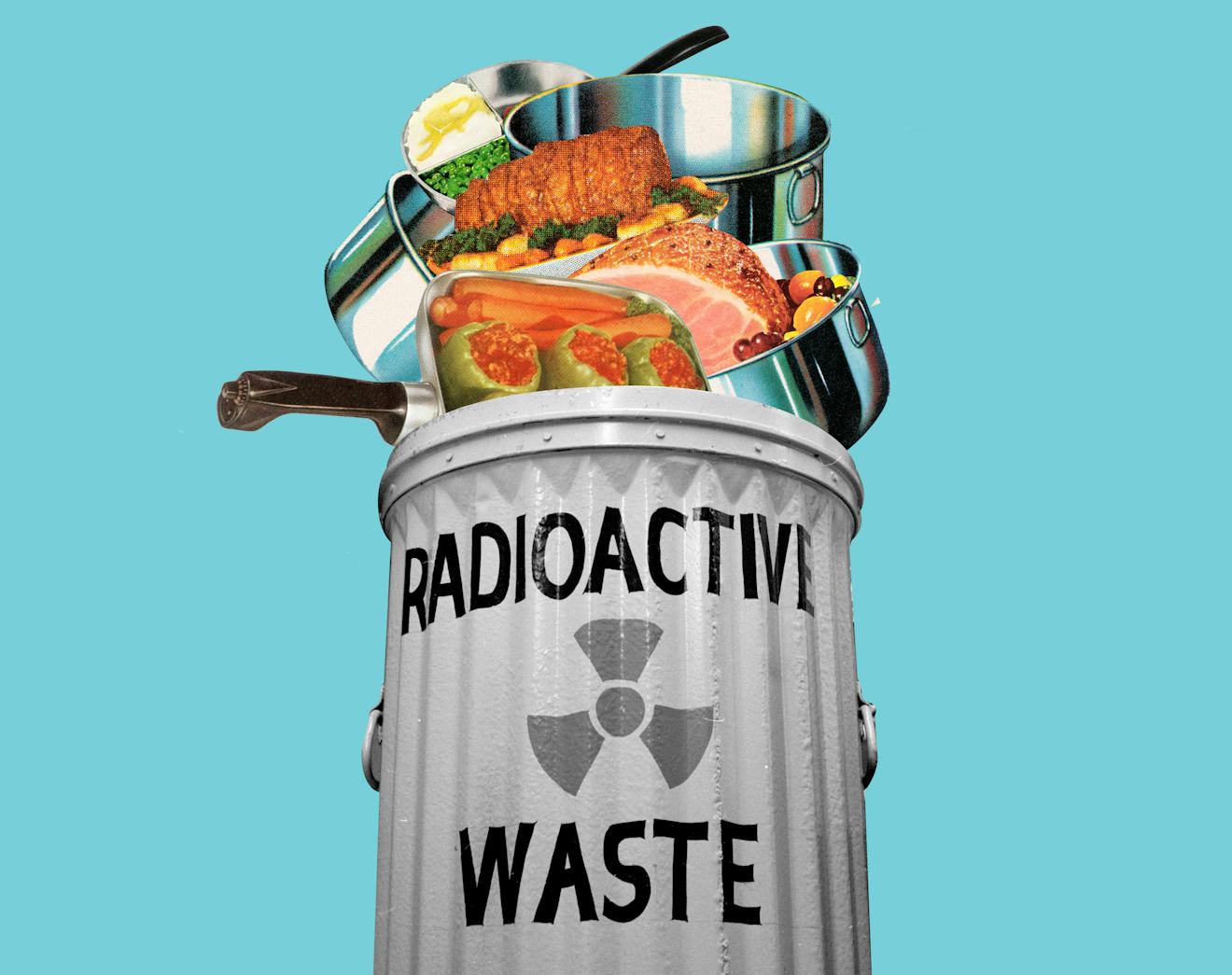
https://imgix.bustle.com/uploads/image/2024/7/24/bd8da724/quitcooking_header.jpg?w=1320The mealtimes I dreamed of are happening, just over different kinds of food than the fantasy includes.

.

.

Click the link below for the article:

https://www.romper.com/life/i-quit-cooking-family-mealtime-weeknight?utm_source=pocket_discover_parenting

.

__________________________________________

Zoe Oli, RICE’s Youngest Stakeholder & CEO of Beautiful Curly Me (11 Years Old)

3 Comments

Zoe Oli, RICE’s Youngest Stakeholder & CEO of Beautiful Curly Me (11 Years Old)

Some Trees ‘Hold Their Breath’ During Wildfires

Leave a comment

Click the link below the picture

.

When wildfire smoke is in the air, doctors urge people to stay indoors to avoid breathing in harmful particles and gases. But what happens to trees and other plants that can’t escape from the smoke?

They respond a bit like us, it turns out: Some trees essentially shut their windows and doors and hold their breath.

As atmospheric and chemical scientists, we study the air quality and ecological effects of wildfire smoke and other pollutants. In a study that started quite by accident when smoke overwhelmed our research site in Colorado, we were able to watch in real time how the leaves of living pine trees responded.

How plants breathe

Plants have pores on the surface of their leaves called stomata. These pores are much like our mouths, except that while we inhale oxygen and exhale carbon dioxide, plants inhale carbon dioxide and exhale oxygen.

Both humans and plants inhale other chemicals in the air around them and exhale chemicals produced inside them – coffee breath for some people, pine scents for some trees.

Unlike humans, however, leaves breathe in and out at the same time, constantly taking in and releasing atmospheric gases.

Clues from over a century of research

In the early 1900s, scientists studying trees in heavily polluted areas discovered that those chronically exposed to pollution from coal-burning had black granules clogging the leaf pores through which plants breathe. They suspected that the substance in these granules was partly created by the trees, but due to the lack of available instruments at the time, the chemistry of those granules was never explored, nor were the effects on the plants’ photosynthesis.

Most modern research into wildfire smoke’s effects has focused on crops, and the results have been conflicting.

For example, a study of multiple crop and wetland sites in California showed that smoke scatters light in a way that made plants more efficient at photosynthesis and growth. However, a lab study in which plants were exposed to artificial smoke found that plant productivity dropped during and after smoke exposure – though those plants did recover after a few hours.

There are other clues that wildfire smoke can impact plants in negative ways. You may have even tasted one: When grapes are exposed to smoke, their wine can be tainted.

What makes smoke toxic, even far from the fire

When wildfire smoke travels long distances, the smoke cooks in sunlight and chemically changes.

Mixing volatile organic compounds, nitrogen oxides and sunlight will make ground-level ozone, which can cause breathing problems in humans. It can also damage plants by degrading the leaf surface, oxidizing plant tissue, and slowing photosynthesis.

While scientists usually think about urban regions as being large sources of ozone that effect crops downwind, wildfire smoke is an emerging concern. Other compounds, including nitrogen oxides, can also harm plants and reduce photosynthesis.

Taken together, studies suggest that wildfire smoke interacts with plants, but in poorly understood ways. This lack of research is driven by the fact that studying smoke effects on the leaves of living plants in the wild is hard: Wildfires are hard to predict, and it can be unsafe to be in smoky conditions.

.

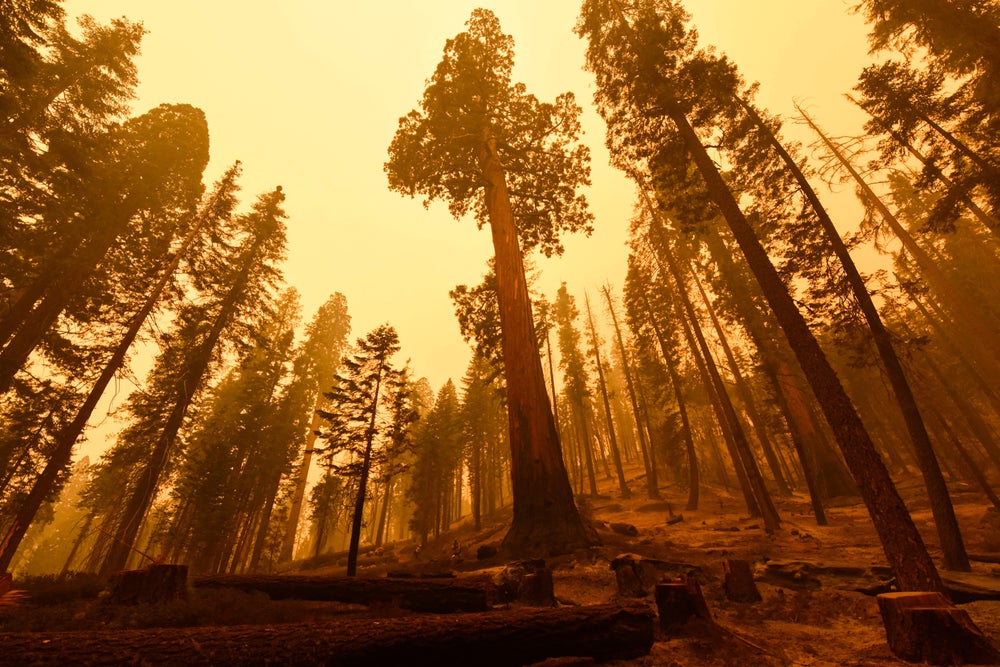
https://static.scientificamerican.com/dam/m/57d42fd9b159a8f0/original/GettyImages-1235458870_WEB.jpg?w=1000

Giant Sequoia trees are shrouded in a yellow tinge of smoke from a wildfire in the Sequoia National Forest in California, in on September 23, 2021. Patrick T. Fallon/AFP via Getty Images

.

.

Click the link below for the article:

https://www.scientificamerican.com/article/some-trees-hold-their-breath-during-wildfires/

.

__________________________________________

Want to avoid giving your kid a smartphone? Mental health experts say you’re not alone — and have 5 tips

Leave a comment


Click the link below the picture

.

It’s hard to avoid giving your child a smartphone in this new digital age, but some parents around the world are looking to buck the trend and seek out guidance on how to protect their kids from the harms of smartphone use.

Smartphone Free Childhood, a recently founded U.K. organization, is aimed at uniting parents who are not giving their kids smartphones. It has since expanded internationally as research around the topic grows.

Young people who acquired a phone before the age of 10 reported worse mental health outcomes than those who acquired a phone over the age of 15, a Sapien Labs study of 27,969 18–24-year-olds from 41 countries last year found.

Meanwhile, at least 42% of children in the U.S. had a smartphone by the age of 10, according to a Common Sense report in 2021.

Some parents give their children smartphones for safety reasons, including being able to contact them and track their location when they’re outside the home, but this may lead to mental health harms.

“The analogy that I often have in mind with the cell phone and technologies today is the automobile and when the automobile was first invented people were thrown from their cars and the number of fatalities was dramatic,” Kathleen Pike, CEO of One Mind at Work and psychology professor at Columbia University Irving Medical Center, told CNBC Make It in an interview.

“There were no seatbelts, there were no airbags. The construction of the chassis made people vulnerable and in recognizing the vulnerabilities that came along with this tremendous technological innovation, we instituted regulations and better design and policies that protected the health and wellbeing of drivers and passengers. We’re in the earliest days with cell phones and technology broadly where we need to do the same,” she said.

Columbia’s Pike and Zach Rausch, a research scientist at New York University Stern School of Business and lead researcher for Jonathon Haidt’s number one New York Times bestseller “The Anxious Generation,” shared five tips on how to avoid giving your kids a smartphone.

Organize with other parents

Being the only parent refusing to give your child a smartphone can be isolating for both you and your kid, Rausch said.

“Before you act on your own, find a couple of your kid’s friends, three to five of them. Talk with their parents, and if you all together decide to delay smartphones till high school, then it’s going to be much easier because then you can say ’Well, Johnny is also not getting his smartphone till 14,” he said, adding that this will make the conversation “much more digestible” for the child.

Pike also advised working with other parents. She shared an anecdote about a parent whose child’s fifth grade class formed a parent-teacher association.

“The class parents, as a collective, agreed that they would postpone giving their kids cell phones until they entered middle school. So when nobody else in the classroom has a cell phone, it makes it a whole lot easier for your child not to have a cellphone,” Pike said.

“If your child is the only one without a smartphone, that may present a whole additional set of stressors for your child,” she added.

Phone-based childhood versus play-based childhood

Children who don’t have a smartphone will need to replace that behavior with other forms of entertainment, the experts said.

“As this new phone-based childhood has come in, we’ve taken away what we call the play-based childhood, where kids used to have much more time being independent outdoors, playing, taking risks, and that is really crucial for human development,” Rausch explained.

He said it’s not enough to just remove the technology, parents have to give your child a new outlet for creativity.

.

https://image.cnbcfm.com/api/v1/image/108008848-1721383094400-gettyimages-1182714056-dsc_0428.jpeg?v=1721383104&w=740&h=416&ffmt=webp&vtcrop=y

siblings have fun on trampoline under blue sky Golero | E+ | Getty Images

.

.

Click the link below for article:

https://www.cnbc.com/2024/07/26/5-tips-to-avoid-giving-your-kid-a-smartphone-mental-health-experts.html?utm_source=pocket_discover_parenting

.

__________________________________________

Older Entries Newer Entries

Gazeta cuiburilor de cuc

Publicație umoristică dedicată glumeților de pretutindeni

JaZzArt en València

Faith saved us from the savages that we were, losing faith makes us savages again

PeopleTalky

Where Trends Meet Truth

MRS. T’S CORNER

https://www.tangietwoods

Srikanth’s poetry

Freelance poetry writing

MediaNegy

Zalai Betti

INOVATION BLOG AND NEWS

INOVATION BLOG PEOPLE AND NEWS

szigetingy | budapest

Németh György

PT. LPPL Lombok

Konsultan Lingkungan Hidup di Lombok - NTB

Idézetek – LeaArt21

Lea Krasznai (LeaArt21) – Idezetek (Idézetek) WordPress (Budapest, Hungary)

danielecolleoni

Appunti, spunti e passioni in liberta'

تعلم وعلم، ادخر،سافر واستجمم .

تعنى بتقديم نصائح للمعلمين المبتدئين، والطلبة الممتحنين، ومشاركة الاخرين تجربة الادخار في المال، بترشيد الاستهلاك المنزلي، وترتيب البيت، والحفاظ على البيئة، وتشجيع السيارات صديقةالبيئة، والسياحة والاسفار، ونماء رؤوس الاموال، والطب البديل وتشجيع التعليم الرقمي والذكاء الاصطناعي، والعناية بالنحل وتربية الاسماك، والاسثمار في رؤوس الاموال، الزراعة العضوية، والعناية باسنان الرضع، و صحة الحوامل، وتفسير القران

scientifique

apprendre pour évoluer

In Between the Lines

Thoughts on books, language, meaning, and the culture around it.

Great Lakes Mindset

Outdoor Recreation & Adventure in the Great Lakes Region

Nelsapy

News, Info, Bio, Articles, Reviews, Lyrics, Technology, Science, Inspiration, Motivation, Philosphy and many more...

Becoming HIS Tapestry

Christian Lifestyle Blogger

Joe Mullins Commissioner

CEO and president of The Mullins Companies

The Luttie Board

Two Cultures. One Life. Endless Stories

Charles Maxwell DeCook

Real Estate Development Specialist

amorentreestrellas.wordpress.com/

¡Bienvenido de vuelta viajero!

Heart of Loia `'.,°~

so looking to the sky ¡ sing and from my heart to YOU ¡ bring...

Michael Ciullo

CEO and Founder of Nsight Health

Nelson MCBS

Catholic News, Prayers, HD Images, Rosary, Music, Videos, Holy Mass, Homily, Saints, Lyrics, Novenas, Retreats, Talks, Devotionals and Many More

global geopolitics

Decoding Power. Defying Narratives.

Talk Photo

A creative collaboration introducing the art of nature and nature's art.

Movie Burner Entertainment

The Home Of Entertainment News, Reviews and Reactions

C r i s t i a n a' s Fine Arts ⛄️

•Whenever you are confronted with an opponent, conquer him with love.(Gandhi)

TradingClubsMan

Algotrader at TRADING-CLUBS.COM

Comedy FESTIVAL

Film and Writing Festival for Comedy. Showcasing best of comedy short films at the FEEDBACK Film Festival. Plus, showcasing best of comedy novels, short stories, poems, screenplays (TV, short, feature) at the festival performed by professional actors.

Bonnywood Manor

Peace. Tranquility. Insanity.

Warum ich Rad fahre

Take a ride on the wild side

Madame-Radio

Découvre des musiques prometteuses (principalement) dans la sphère musicale française.

Ir de Compras Online

No tiene que Ser una Pesadilla.

Kana's Chronicles

Life in Kana-text (er... CONtext)

Jam Writes

Where feelings meet metaphors and make questionable choices.

emotionalpeace

Finding hope and peace through writing, art, photography, and faith in Jesus.

Essu Center

Eyasu The Wonderful

Wearing2Gowns.Blog

A former medical student's journey through healthcare challenges and personal growth