November 17, 2024
Mohenjo
Business, Food For Thought, Human Interest, Political, Science, Technical
amazon, business, Business News, current-events, Future, Hotels, human-rights, medicine, mental-health, research, Science, Science News, technology, Technology News, travel, vacation

Click the link below the picture
.
I didn’t find math particularly exciting when I was in high school. To be honest, I only studied it when I went to university because it initially seemed quite easy to me. But in my very first math lecture as an undergraduate, I realized that everything I thought I knew about math was wrong. It was anything but easy. Mathematics, I soon discovered, can be really exciting—especially if you go beyond the realm of pure arithmetic.
In physics, the truly surprising content—concepts that go against your intuition about the universe—emerges around high school, when students can glimpse the strange quantum world and encounter Einstein’s general and special theories of relativity. School mathematics cannot keep up with these wonders. You learn elementary arithmetic operations, integration, and derivation, the basic handling of probabilities and vectors. If you’re lucky, ambitious teachers might show you a simple proof. And that’s it. So it’s no wonder that many pupils fail to develop a real passion for the subject.
Yet mathematics offers all sorts of surprises, such as the Banach-Tarski paradox, which states that you can double a sphere almost magically, or the fact that there are infinitely many different infinities. What really blew me away was discovering how deeply mathematics is interwoven with the strangest physical phenomena. It’s not necessarily quantum physics itself that gives rise to the incredible effects; no, the systems always follow the strict rules of mathematics. As chemist Peter Atkins put it in his 2003 book Galileo’s Finger, “Determining where mathematics ends and science begins is as difficult, and as pointless, as mapping the edge of a morning mist.”
Few examples illustrate the mixing of math and physics better than a discovery made by physicist Michael Berry. In 1984 Berry revealed a profound and largely unexpected geometric side to quantum mechanics. This geometry, Berry realized, gives quantum particles a kind of memory.
Nothing Should Actually Happen
At the time, Berry was investigating a very simple system: the quantum state of a particle, such as a neutron, in a changing environment. Neutrons have a quantum property called spin, which acts like a tiny magnet that the particles carry with them. This spin can either be oriented with the north pole facing upward or downward—so physicists speak of neutrons having “spin up” or “spin down.” The spin of a neutron is influenced by external magnetic fields.
Berry used mathematical means to investigate what would happen to the neutron if the direction of the magnetic field changed slowly. According to the so-called adiabatic theorem, which was introduced in the early 20th century, the quantum properties of the particle should not change as a result: its energy, momentum, mass, and spin remain the same.
If you slowly turn the direction of the magnetic field and then move it back in the original direction, this action should, in principle, not actually change anything. “That, at any rate, was the prevalent opinion among physicists for many years,” wrote Berry in an article in Scientific American in December 1988. But a “change on the phase of a wave function was overlooked.”
One of the strangest phenomena of quantum mechanics is wave-particle duality: quantum objects can be imagined as pointlike shapes, but they also exhibit wave behavior like water. A phase describes a displacement of the wave by a certain angle—for example, the cosine function is nothing other than a phase-shifted sine function.
As Berry recognized in his calculations, a slow change in the magnetic field causes the wave function of the neutron to rotate by a certain phase. This means that the wave function of the particle shows what happened in the past (in this case, the change in the magnetic field). Further, Berry recognized that this phase does not only occur in the special case of a particle in a magnetic field. Various situations in which a quantum system is slowly changed and then returned to its original conditions leave traces in the wave function.
.
diyun Zhu/Getty Images
.
.
Click the link below for the article:
.
__________________________________________
November 16, 2024
Mohenjo
Business, Food For Thought, Human Interest, Medical, Political, Science, Technical
amazon, business, Business News, current-events, Future, Hotels, human-rights, medicine, mental-health, research, Science, Science News, technology, Technology News, travel, vacation
Click the link below the picture
.
CLIMATEWIRE | EPA finalized regulations Tuesday for a fee that oil and gas companies could begin paying on excess methane emissions next year — if Republicans don’t repeal it first.
The rule guides implementation of a levy created by the 2022 climate law and is the last important climate standard of the Biden administration. It was unveiled at an event on the sidelines of this year’s U.N. climate conference in Baku, Azerbaijan, shortly before a U.S.-China methane summit.
EPA Administrator Michael Regan, who did not attend the global meeting, said in a statement that the rule is “the latest in a series of actions under President Biden’s methane strategy to improve efficiency in the oil and gas sector, support American jobs, protect clean air, and reinforce U.S. leadership on the global stage.”
EPA estimated that the levy would keep 1.2 million metric tons of methane out of the atmosphere through 2035 and deliver “up to $2 billion” in climate benefits.
Companies will begin paying the levy next year for excess emissions released in 2024. Oil and gas operators will pay $900 for each metric ton of methane that’s above a threshold enshrined in the Inflation Reduction Act. The fee, called the waste emissions charge, will climb to $1,500 a ton for 2026 and beyond. The levy reinforces EPA’s Clean Air Act rules for methane by ensuring that if operators aren’t covered by those standards — or don’t comply with them — they would pay the fee.
But President-elect Donald Trump’s victory last week throws doubt on the future of President Joe Biden’s methane policies — particularly the methane fee. Trump could direct former Rep. Lee Zeldin, a New York Republican whom Trump announced as his future EPA administrator Monday, to pare back elements of those policies or scrap them. Zeldin faces Senate confirmation.
The Biden EPA has rolled out important methane rules at each of the last three U.N. climate summits. The administration has also built its climate diplomacy around the need to curb methane — a superpollutant that’s 80 times more powerful than carbon dioxide at raising temperatures over a 20-year time horizon.
The U.S. joined the European Union in 2021 to launch the Global Methane Pledge, which has resulted in more than 150 countries promising to work together to reduce global methane at least 30 percent by 2030. The U.S. summit with China on Tuesday marks the second time the biggest two polluters are meeting to curb the potent gas.
But under Trump, EPA could quickly begin the process of pulling back and replacing Biden-era methane rules with laxer standards — including those that drive implementation of the methane fee. Because the rule is being finalized so late in Biden’s term, Republican lawmakers could invalidate it through a Congressional Review Act resolution.
But experts say those moves wouldn’t absolve Trump’s EPA from having to implement the fee.
“The law is still the law,” said one industry advocate who was granted anonymity to talk about future policies.
A CRA resolution would allow the Trump administration to craft a more industry-friendly methane fee. It could, for instance, make it easier for oil and gas operators to claim fee exemptions offered under the Inflation Reduction Act. Trump could also let operators delay paying the fee until their annual greenhouse gas reports are finalized late in the year. The Trump EPA could also allow corporations to net emissions across all assets, removing restrictions on how cleaner facilities may compensate for dirtier ones to mitigate fees.
If Trump and congressional Republicans wish to kill the methane fee, they would have to enact legislation to repeal it. Democrats and Biden moved the IRA through the annual budget process, and the GOP could potentially use the same maneuver to undo parts of it. Trade groups like the American Petroleum Institute and Independent Petroleum Association of America oppose the fee.
Rosalie Winn, an attorney with the Environmental Defense Fund, said legislation to scrap the fee “would be directly contrary to the interests of the American people.”
.
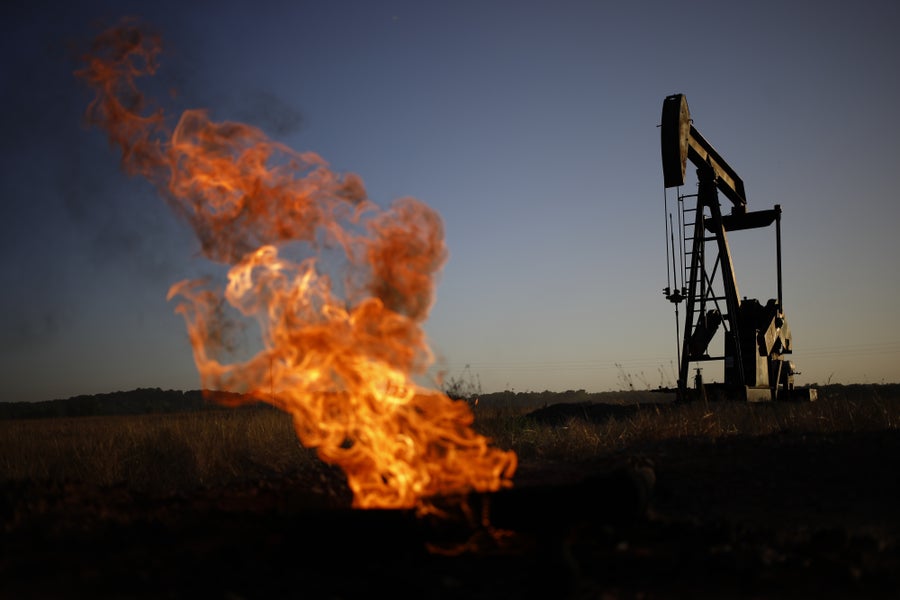
A natural gas flare burns near an oil pump jack at the New Harmony Oil Field in Grayville, Illinois, US, on Sunday, June 19, 2022. Luke Sharrett/Bloomberg via Getty Images
.
.
Click the link below for the article:
.
__________________________________________
November 16, 2024
Mohenjo
Business, Food For Thought, Human Interest, Political, Science, Technical
amazon, business, Business News, current-events, Future, Hotels, human-rights, medicine, mental-health, research, Science, Science News, technology, Technology News, travel, vacation

Click the link below the picture
.
Ancient Book Found Under Nile River – Experts Turn Pale After Transcribing
.
 Ancient Book Found Under Nile River
.
.
Click the link below for the video {click to unmute):
.
__________________________________________
November 16, 2024
Mohenjo
Business, Food For Thought, Human Interest, Medical, Political, Science, Technical
amazon, business, Business News, current-events, Future, Hotels, human-rights, medicine, mental-health, research, Science, Science News, technology, Technology News, travel, vacation

Click the link below the picture
.
As we age, the mind tends to wander forward in time, considering myriad hypotheticals of increasingly philosophical tone: Will we live a long life? And if we do, will it be a life well lived? What does living well mean, exactly?
For some, living well suggests contentment and happiness. But it is also a potential prescription against atypical brain aging and diseases like dementia.
In a 2023 paper published in Nature Aging, researchers find that managing negative emotions could protect the brain from harm in old age.
The finding came as part of the effort to understand why negative emotions, such as persistent stress and anxiety, are seemingly risk factors for neurodegenerative conditions like dementia — and what can be done to stop this outcome.
“The health of the elderly is an increasingly important public health issue with the aging of the population,” co-author Patrik Vuilleumier, a neurologist and professor at the University of Geneva, explains to Inverse. “It is important not only to live long but, even more so, to live in good physical and mental health.”
Most research so far on aging and the brain has focused on cognitive functions, says Vuilleumier, like memory, attention, and motor skills. Emotions, meanwhile, “have been relatively neglected,” he says.
Yet we know emotions influence physical and psychological health. Still, scientists aren’t quite sure how the brain switches from one emotion to another or if emotions and their effects on our body change as we age — including what the consequences of not managing negative emotions might be on our long-term health.
The effect of emotions on the brain
In an effort to answer these questions, Vuilleumier and his colleagues evaluated whether the brains of older people (over 65 years old) react to negative emotions in similar ways to those of younger people (about 25 years old). They studied participants’ ability to regulate their emotions after seeing video clips showing people in a state of emotional suffering. During the experiment, the scientists measured the participants’ brain activity using functional magnetic resonance imaging (fMRI).
The results suggest older people’s brains are more likely to show emotional inertia, which means the degree to which one’s emotional state is resistant to change. In an earlier study, the same team found that negative emotions activate certain brain regions and the brain can remain altered long after those emotions are triggered. The duration depends on the regulation capacities of each individual, Vuilleumier explains.
“We uncovered that, in general, negative emotions can trigger changes in the communication between different brain regions and these changes were found to persist longer in older subjects,” he says.
This was especially obvious when examining the connections between the amygdala and the posterior singular cortex, which are both parts of the brain that help regulate emotion and encode memories.
Changes in brain connectivity were even more pronounced in older adults, who also reported experiencing more anxiety, rumination, and negative emotions. It’s possible that these conditions may amp up the emotional inertia seen in the study.
Emotional inertia and disease
As of March 2023, the team was still analyzing the results to see if prolonged emotional inertia actually represents an increased risk for degenerative diseases like dementia. The plan is to follow the participants over several years and see what changes. Some observational studies do suggest that poor emotion regulation is linked to frequent age-related neurodegenerative conditions, though.
.
 LightFieldStudios/Getty Images
.
.
Click the link below for the article:
.
__________________________________________
November 16, 2024
Mohenjo
Uncategorized
“Here” is a drama produced and directed by Robert Zemeckis, who co-wrote the screenplay with Eric Roth. It is based on the 2014 graphic novel by Richard McGuire. Echoing the source material, the film is told nonlinearly as it covers the events of a single spot of land and its inhabitants, spanning from dinosaurs of […]
HERE (2024) – My rating: 7/10
November 15, 2024
Mohenjo
Business, Food For Thought, Human Interest, Political, Science, Technical
amazon, business, Business News, current-events, Future, Hotels, human-rights, medicine, mental-health, research, Science, Science News, technology, Technology News, travel, vacation
Click the link below the picture
.
As memes go, it wasn’t particularly viral. But for a couple of hours on the morning of November 6, the term “darkest timeline” trended in Google searches, and several physicists posted musings on social media about whether we were actually in it. All the probabilities expressed in opinion polls and prediction markets had collapsed into a single definite outcome, and history went from “what might be” to “that just happened.” The two sides in this hyperpolarized U.S. presidential election had agreed on practically nothing—save for their shared belief that its outcome would be a fateful choice between two diverging trajectories for our world. That raises rather obvious (but perhaps pointless) questions: Could a “darkest
timeline” (or any other “timeline,” for that matter) be real? Somewhere out there in the great beyond, might there be a parallel world in which Kamala Harris electorally triumphed instead?
It turns out that, outside of fostering escapist sociopolitical fantasies and putting a scientific gloss on the genre of counterfactual history, the notion of alternate timelines is in fact something physicists take very seriously. The concept most famously appears in quantum mechanics, which predicts a multiplicity of outcomes—cats that are both alive and dead and all that. If a particle of light—a photon—strikes a mirror that is only partially silvered, the particle can, in a sense, both pass through and reflect off that surface—two mutually exclusive outcomes, known in physics parlance as a superposition. Only one of those possibilities will manifest itself when an observation is made, but until then, the particle juggles both possibilities simultaneously. That’s what the mathematics says—and what experiments confirm. For instance, you can create a superposition and then uncreate it by directing the light onto a second partially silvered mirror. That wouldn’t be possible unless both possibilities remained in play. Although this feature is usually framed in terms of subatomic particles, it is thought to be ubiquitous across all scales in the universe.
What supports the idea that these timelines are real, and not just imaginative fictions, is that they can “interfere” with one another, either enhancing or diminishing the probability of their occurrence. That is, something that might have happened but doesn’t has a measurable effect on what does, as if the former reaches from the shadowy realm of the possible into the world of the actual.
Consider the bomb detector that physicists Avshalom Elitzur and Lev Vaidman proposed in 1993 and that has since been demonstrated (fortunately not with real bombs): Perform the experiment with the partially silvered mirror but place a light-sensitive bomb along one of the two paths the photon can take. This blockage prevents you from uncreating the superposition to restore the traveling photon to its original state. It does so even if the bomb never goes off, indicating that the photon never touched it. The mere possibility that the photon could strike the bomb affects what happens. In theory, you could use this principle—known as counterfactual definiteness—to take x-ray images of cells without subjecting them to damaging radiation. In an emerging subject known as counterfactual quantum computing, a computer outputs a value even if you never press the “run” button.
One way to think about counterfactual definiteness is known as the many-worlds interpretation. A photon striking a mirror causes the cosmic timeline to branch, creating one world in which the particle passes through the mirror and one in which it reflects off that surface. Each of us is stuck inside our world and therefore sees only one outcome at a time, but the other is still there, visible to an inhabitant of the alternate world. All such worlds, taken together, constitute a “multiverse.”
Whether they agree with the many-worlds interpretation or not, physicists and philosophers certainly love to argue about it. Some admire its elegance; others grouse about conceptual difficulties, such as the slippery matter of what exactly constitutes a “world.” Quantum theory not only allows multiple worlds but also offers an infinity of ways to define them.
.
 Hiroshi Watanabe/Getty Images
.
.
Click the link below for the article:
.
__________________________________________
November 15, 2024
Mohenjo
Business, Food For Thought, Human Interest, Political, Science, Technical
amazon, business, Business News, current-events, Future, Hotels, human-rights, medicine, mental-health, research, Science, Science News, technology, Technology News, travel, vacation

Click the link below the picture
.
An intriguing video of a stone house in a mountainside!
.
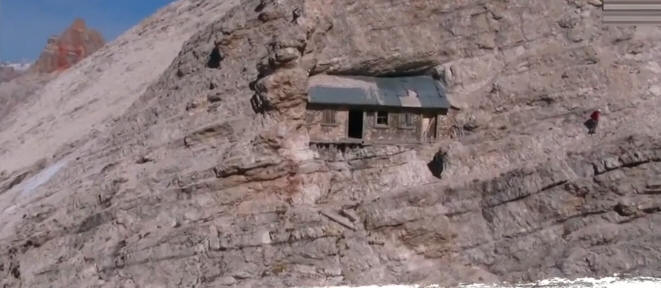 Scientists Make Startling Discovery Of Ancient Stone House
.
.
Click the link below for the video (click to unmute sound):
.
__________________________________________
November 15, 2024
Mohenjo
Business, Food For Thought, Human Interest, Political, Science, Technical
amazon, business, Business News, current-events, Future, Hotels, human-rights, medicine, mental-health, research, Science, Science News, technology, Technology News, travel, vacation

Click the link below the picture
.
There’s no such thing as privacy anymore: Whatever you’re up to, someone, somewhere has all the details. Even if you take heroic steps to mask your online activity and scrupulously protect your privacy in real-life situations, you’re still not totally anonymous. We all know that your credit history is pretty easy to access—and is increasingly used in just about every aspect of your life, from getting a job to renting an apartment. If you’re paying attention, you probably froze your credit report long ago.
But there’s another report that is just as invasive and just as important—and just as necessary to lock down so that it can’t be used against you without your knowledge. It’s called The Work Number, and you really need to start paying attention to it—and freezing it.
What is The Work Number?
The Work Number is an “employment verification” system run by our old friends Equifax, well-known for their careful handling of our private data through the years. Employers send employee data into the system—e.g., your job, your wage or salary details, the dates of your employment, among other details. When you apply for a job somewhere else, that employer can then order a copy of your Employment Data Report (EDR).
Companies send this data to The Work Number because it makes their lives easier: Human Resources (HR) departments are asked to provide work verification on a regular basis (for example, if you’re applying for an apartment and your landlord needs to check your employment status). Giving this information to The Work Number automates the process so they don’t have to respond manually to every verification request. Plus, they benefit when hiring people because they can quickly and easily verify your resume.
All that seems pretty anodyne—until you consider the other ways your EDR can be used. For example, if you’re working extra jobs to make ends meet, one of your employers might use The Work Number to find out—and fire you. A prospective employer can also access your work history when negotiating salary, undermining your leverage. And Equifax absolutely sells this data—or at least some of it—to anyone who wants it, including debt collectors. That means you should take control of your EDR in the same way you take control of your credit report—by freezing it.
How to freeze your EDR
Equifax argues that you shouldn’t freeze your EDR because it actually benefits you in the sense that it makes it easy for people to verify your employment history, reducing delays when you’re applying for a mortgage or interviewing for a new job. And that’s true—but that small bit of convenience doesn’t really outweigh the negatives.
The Work Number falls under the Fair Credit Reporting Act (FCRA) just like your credit reports, so you’re entitled to a) get a free copy of it once a year, and b) freeze it—or unfreeze it—at any time, at your discretion. When you freeze your credit report, you can unfreeze it when you know you’ll be applying for credit. Similarly, you can unfreeze your Work Number any time you know you’ll need employment verification.
The process is pretty easy: Go to the official Work Number website and click on “Log In.” Search for a past employer and check the “I’m not a robot” box. Click your employer (if your employer doesn’t come up in a search, try a different one). Click “Register Now!” and enter your information (note: it requires your Social Security Number).
That’s it! You can now access your EDR via the Work Number dashboard—and you should. Review it and make sure it’s accurate, just as you would a credit report—and dispute any problems you find. Then go back to the dashboard and select “Freeze Your Data.” You’ll have more forms to fill out, and The Work Number will send you a letter confirming the freeze, along with a PIN you’ll need to unfreeze it later. You can also send your request via physical mail, email, or by phone.
.
 Credit: igorfrontier/Shutterstock
.
.
Click the link below for the article:
.
__________________________________________
Older Entries
Newer Entries


