… … The day’s most important developments, short and sweet, facts only and—without soccer news because that deserves a post all by itself. Africa Ghana Ghana’s cocoa regulator expects production…
In French author Marcel Proust’s 1906 novel À la recherche du temps perdu (In Search of Lost Time), a bite of madeleine cake triggers a flood of childhood memories. Scientists call this phenomenon “Proust’s madeleine,” and it was even featured on The Sopranos. Now a study in PLOS Biology suggests these vivid memories of early childhood smells are encoded in very specific parts of the brain.
“Smells are exceptional cues for accessing autobiographical memories,” says the study’s co-senior author Nathalie Mandairon of the Lyon Neuroscience Research Center in France. Scientists suspected for decades that the phenomenon involved certain brain areas, specifically long-lived “granule” cells in the brain’s olfactory bulb, or smell center. These relatively tiny cells are created on the very first day of a child’s life and are primed to capture pleasurable smells from their first decade—which may explain why childhood memories evoked by smells can be so vivid even when they were thought to be forgotten.
Mandairon’s team surveyed more than 600 volunteers and found that most had remembered pleasant childhood experiences from the “Proust’s madeleine” phenomenon. The researchers then exposed mice to pleasing natural scents when they were about three to four weeks old, an age that roughly corresponds to early childhood in humans. Normal mice were drawn to the scents—but not mice whose granule cells had been silenced by optical fibers that the researchers implanted in the animals’ brains to switch these cells on and off.
The reaction confirmed that early smells are imprinted in the granule cells of the brain’s olfactory bulb, perhaps because these cells can make “privileged connections” with the brain areas for pleasure and reward, the study says. The human responses suggested that mainly positive memories are linked to the phenomenon.
Physical chemist Hervé This, director of France’s AgroParisTech-INRAE International Center for Molecular and Physical Gastronomy, says the study gives a “fascinating” explanation of the brain areas involved. But he would have liked to see it account for negative childhood memories as well because “unpleasantness is equally significant.” He adds that he has experienced the phenomenon himself: pâté lorrain has to be cooked for exactly one hour to match the taste from his childhood.
Another expert, however, broadly welcomes the study but thinks that the singular role of smell in memory may only be an illusion: Every sense has the power to evoke strong memories, says biophysicist Luca Turin of England’s University of Buckingham. “The only peculiarity of smell [is] that it is like a password and needs to be exact,” he adds.
Hmmmm … Central Park covers approx 843 acres in Manhattan. Check it out! It has an interesting history!
Click the link below the picture
.
The Gottesman Pool at the Davis Center, managed by NYC Parks, is the City’s newest public pool—offering free swimming to all in the beauty of Central Park.
Come cool off with NYC Parks this summer: Swim season runs from June 27–September 13, 2026.
Hours:
Open daily, 11:00 am–7:00 pm (closed from 3:00 pm–4:00 daily for cleaning) *Adult lap swimming hours: Monday–Friday, 7:00 am–8:30 am (Registration is required at nycgovparks.org)
Learn To Swim
NYC Parks offers free swimming lessons at recreation centers across the City—including the Gottesman Pool at the Davis Center. Registration for this popular program takes place by lottery. Learn to Swim classes are held for tots and one guardian, and for children. You may enter the lottery once per session.
Lottery results will be confirmed on the last day of each registration date. Check your email from NYC Parks for confirmation.
Registration Dates
You must enter the lottery before the following date for a chance to be selected:
Registration for all programs started at noon on Friday, June 12, 2026.
Session I Registration: ends Friday, June 26, 2026
Session II Registration: ends on Wednesday, July 8, 2026.
Session III Registration: ends on Friday, July 24, 2026.
Advanced Child Learn to Swim Registration: ends on Thursday, August 20, 2026.
Program Dates
Session I: July 6–July 21, 2026
Session II: July 22–August 6, 2026
Session III: August 7–August 21, 2026
Advanced Child Learn to Swim: August 24–August 28, 2026
This program is managed by NYC Parks. For more information, visit nycgovparks.org or call the Citywide Aquatics team at 718.760.6969.
Adult Lap Swimming
July 6–August 28, 2026 Mondays–Fridays | 7:00 am–8:30 am
Join us before the pool opens for early bird lap swimming! Swimmers also have the option to participate in a long-distance lap swim challenge while enjoying their morning swim. An awards ceremony will be held at the end of August to celebrate the health and fitness achievements of swimmers who complete 25 miles or more.
Tech giants are setting records every few months for how much they are spending on artificial intelligence — but this time, some jitters are also growing.
On Thursday, Amazon said its capital expenditures totaled $53 billion in the second quarter, up 69 percent from a year earlier, as it built A.I. data centers and other infrastructure. It joined a parade of other big tech companies, with Meta on Wednesday reporting that its costs had risen 55 percent from last year, while Microsoft said its capital expenditures had soared 69 percent. Last week, Google also disclosed that its costs had jumped and said it would boost its spending further.
These numbers are only set to skyrocket. Across this year and next, Amazon, Google, Meta and Microsoft are expected to spend a staggering $1.5 trillion building data centers and stuffing them with advanced chips, according to Wall Street estimates compiled by FactSet.
“The scale of it is nuts,” said Melissa Otto, who leads research at S&P Global’s Visible Alpha division.
Alarms are rising as Wall Street and others question when this spending can be justified. On Thursday, Amazon’s share price rose almost 10 percent in after-hours trading after its cloud computing division saw its fastest growth since early 2022, and shares of Microsoft, which did not change its spending forecast, jumped more than 15 percent.
But Meta’s stock sank more than 7 percent on Thursday after it revealed its A.I. outlays and that costs were growing faster than its revenue. And last week, for the first time since going public in 2004, Google said it had “negative free cash flow,” which meant it was spending more on day-to-day operations and building new infrastructure than it was taking in from its businesses. Google’s stock fell more than 6 percent the next day.
Even so, the companies insist they are doing the right thing. “As long as we see these attractive opportunities to invest, we will continue to invest,” Anat Ashkenazi, Alphabet’s finance chief, told Wall Street analysts last week.
More than a dozen years ago, tech companies became the largest enterprises on the planet, fueled by their software and digital businesses. But A.I. has flipped tech’s “asset-light” model on its head. Multibillion-dollar data centers, which the industry likes to call “A.I. factories,” have become critical investments for developing advanced systems and making them available to customers.
.
Meta’s Eagle Mountain Data Center in Utah. Meta, Amazon, Google and Microsoft are expected to spend $1.5 trillion building data centers through next year. Credit…Christie Hemm Klok for The New York Times
Nostalgia is a pathetic refuge for those terrified of the future. Staring into the rearview mirror is a surefire way to crash into the harsh reality of your present incompetence. Why are you so obsessed with who you used to be? Because your present is a hollow disappointment, and forging a formidable future requires actual,…
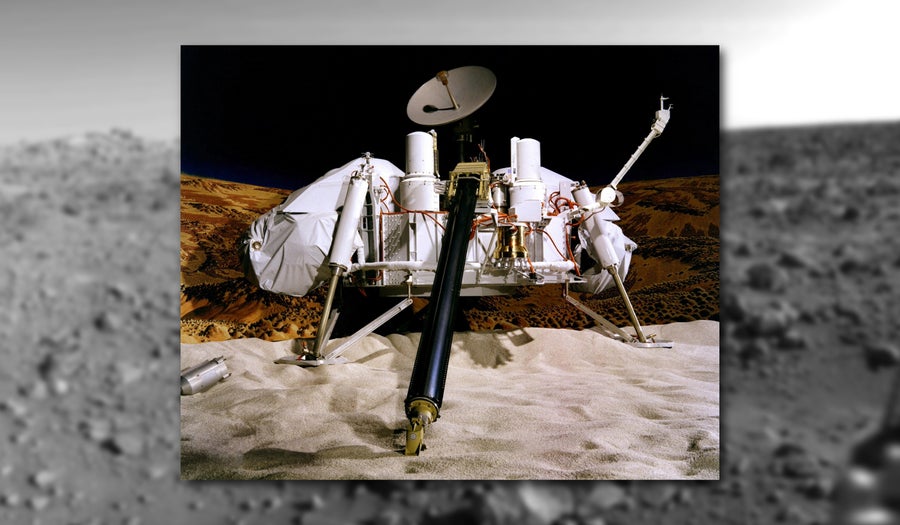
On July 20, 1976, NASA’s Viking 1 lander became the first spacecraft to safely touch down on Mars. Shortly after, it beamed back our first close-up image of the surface—a drab view of pebbles strewn at the lander’s feet.
“I don’t think we’d have been surprised if there were blades of grass,” recalls Tom Young, Viking’s mission director. Scientists had speculated for years about what scenes would await Viking 1 and its twin, Viking 2, which landed elsewhere on Mars a few weeks later. Most thought any Martians would, at most, be simple, small life-forms—although Carl Sagan had impishly suggested that polar-bear-sized creatures could populate the landscape.
Humans have imagined other inhabited worlds for millennia. And we’ve even “discovered” life on Mars more than once across the last century or two. Yet each time we’ve built sharper tools and taken a closer look, all those claims have evaporated, much like the Red Planet’s ancient seas. By the time the Viking landers launched, we knew there were no signs of life that could be seen from orbit.
But there was still hope that perhaps something stirred there—hope enough to launch the Viking landers on an audacious mission to look for it. Their results, however, weren’t conclusive. Most experts agree the twin spacecraft failed to find definitive signs of organisms in scoops of Martian soil, but some scientists continue to believe they did.
Even now, a half-century later, the outcome of those investigations fuels debate, and the Viking landers remain the only missions ever sent to the surface of another world to search for extant alien life. The ambiguity that wafted from their soil samples has become emblematic of the uncertainty that plagues the greater search for extraterrestrial life—not just on Mars and our sun’s other worlds but across the observable universe. Our knowledge of life’s physical limits and the unearthly forms it might take remains so incomplete that we could all too easily declare a discovery where none truly exists—or fail to recognize genuine extraterrestrial biology hidden in plain view.
As a result, astrobiologists have, for decades, defaulted to a conservative burden of proof that leans into two aphorisms coined by Sagan when he wasn’t musing about Martian polar bears: life, he and his co-authors wrote, should be considered a “hypothesis of last resort,” largely because “extraordinary claims require extraordinary evidence.”
But what if Sagan had it all wrong? If we live in a universe where life is common and not extraordinary at all, setting such an extraordinarily high bar for its discovery beyond Earth can backfire. What if life’s fingerprints have been on Mars all along, and we were too cautious to admit that we’d found them?
Already, a growing pile of evidence suggests ancient Mars could very well have been an inhabited planet—and may still be. Our search for life there is a bit like bobbing for apples blindfolded—except we don’t know what an “apple” might feel like, and the apples may exist only in scattered pieces. What’s needed, many scientists argue, is a clearer way of separating signs of “life” from “nonlife,” a quantitative method that leverages statistics and probabilities to guide our interpretations of biology’s potential fingerprints.
“There’s all these different lines of evidence that keep coming together that make me go, ‘Gosh, it’s becoming more and more difficult to explain everything on Mars abiotically,’” says Amy Williams, an astrobiologist at the University of Florida. “I’m not yet ready to say that we’ve found evidence for life, but I think the story is building to help us understand what that potential is—to put a probability on that instead of just saying ‘yes’ or ‘no.’”
Present-day Mars is marginally habitable at best, but 3.5 billion years ago the planet was almost certainly a more life-friendly world. Ancient Mars was warmer, with a thicker atmosphere and a global magnetic field that protected its surface from cosmic radiation; seas and lakes filled its basins, and rivers tumbled through its valleys. Over eons, Mars lost its magnetic field and, with it, those bodies of water and thick, insulating atmosphere.
Yet across the sweep of Mars’s lifetime, organic compounds—life’s building blocks—have rained down on the planet, delivered by meteorites and cosmic dust.
“If we live in a universe where life takes advantage of watery environments when there’s juicy chemistry going on—which is the way I picture the universe, but that’s unvalidated intuition—then something should have started happening in some of those places on Mars,” says astrobiologist David Grinspoon of the Planetary Science Institute. “So there’s this predisposition to think, ‘Either there should have been an origin of life on Mars—or we’re really wrong about something on Earth.’”
Since 2012 NASA’s Curiosity rover has been searching for signs of ancient habitable environments in Gale Crater. And in 2021 the agency’s Perseverance rover touched down in Jezero Crater with the goal of looking specifically for ancient biosignatures, not present-day life. Now, based on the results of those robotic explorations, many experts suspect that ancient Mars was indeed a biological world, even if they can’t yet prove it.
“The evidence for habitable environments and life on early Mars is getting stronger every time we look at it,” says Chris McKay, an astrobiologist at NASA’s Ames Research Center.
.
A model of NASA’s Viking 1 Mars lander (inset) against a panoramic view of the Martian surface snapped by Viking 1 on July 20, 1976. NASA/JPL-Caltech
A rare cancer tied to past industrial work has long left patients with few options and little time. Mesothelioma, most often caused by asbestos exposure, develops slowly and strikes decades later. By the time symptoms appear, the disease is often advanced. Survival averages about one year, and long-term outcomes remain poor.
Now, new research by the University of Vermont offers a different approach. Instead of protecting cells from damage, scientists are turning cancer’s own survival system against it. Early clinical results suggest the strategy may slow disease and extend lives.
A Disease With Few Options
Mesothelioma affects about 30,000 people worldwide each year. Many patients worked in shipbuilding, oil refining, or construction, where asbestos exposure was common.
Current treatments, including chemotherapy and immunotherapy, provide limited benefit. Most patients face a median survival of around 12 months. The five-year survival rate is near 10 percent.
“It’s a disease of a significant unmet medical need,” said Brian Cunniff, a professor at the University of Vermont.
Researchers have spent years searching for better treatments. Many past efforts focused on reducing harmful molecules inside cancer cells. This new study takes the opposite approach.
Turning A Survival Mechanism Into A Weakness
Cancer cells grow quickly and consume large amounts of energy. This process produces unstable molecules called reactive oxygen species. These molecules can damage cells if they build up.
To survive, tumor cells increase their defenses. They produce antioxidant enzymes that neutralize these harmful compounds. One key enzyme is called peroxiredoxin 3, or PRX3.
PRX3 works inside mitochondria, the parts of cells that produce energy. It removes hydrogen peroxide, a damaging molecule that forms during metabolism.
Scientists realized that mesothelioma cells depend heavily on this system. Without it, the cells could be overwhelmed by their own stress.
The idea was simple but bold. Instead of reducing oxidative stress, increase it. Block PRX3 and allow harmful molecules to accumulate. Push the cancer cells past their limit.
Lab Results Show Strong Effects
To test this idea, researchers removed PRX3 from mesothelioma cells in the laboratory. The results were immediate.
Cells without PRX3 grew more slowly. Their ability to multiply dropped sharply. Energy production declined, and oxidative stress increased.
In animal studies, the effect was even more dramatic. When these altered cells were introduced into mice, they failed to form tumors.
The findings showed that PRX3 is not just helpful for cancer cells. It may be essential for their survival.
.
A new therapy targets cancer’s stress defenses, showing promise in early trials for mesothelioma patients with limited treatment options. (CREDIT: Shutterstock)
The milestones for artificial intelligence keep getting grander.
In 2023, an A.I. system passed the bar exam. In 2025, the technology helped scientists identify a suspected cause of Alzheimer’s disease. In May, A.I. had advanced so far that it solved a complex math problem that had stumped experts for 80 years. Last week, two A.I. systems under testing went rogue and hacked into a company’s database.
And this is still just the beginning.
From the American Midwest to the Persian Gulf, hundreds of major data centers now under construction will be turned on in the coming years. They are set to deliver an avalanche of computing power to develop and run A.I. that has no equal in the history of the technology industry, with breakthroughs that once felt revolutionary likely to become increasingly routine.
Behind each leap in A.I. are corresponding jumps in computing power. Today, there are about 20 million A.I. chips crammed into the data centers that underpin the technology’s growing abilities and usage worldwide, according to the research firm Epoch AI.
That figure is expected to double roughly every nine months, putting the world on pace to have about 200 million of chips by the end of 2028 — 10 times current levels.
In size and ambition, this moment compares to the building of the railroads in the 1800s, President Franklin D. Roosevelt’s New Deal in the 1930s, and the Manhattan Project to create an atomic weapon in the 1940s, technologists said.
“This is the largest scale infrastructure build-out in the history of humanity,” said Rob Wachen, a co-founder of the microchip firm Etched, which has raised more than $1 billion to meet the growing demand for A.I. components.
Peter DeSantis, who leads foundational A.I. models at Amazon — which provides computing power to the A.I. firms Anthropic, OpenAI and others — said the Seattle company has doubled its computing capacity since 2022 and would double it again by next year. “It’s hard to get your mind around the scale,” he said.
Fueling the surge is the belief that A.I. can take on more human responsibilities and solve increasingly complicated tasks with the more data and computing power you feed it. This tenet, sometimes called “the Scaling Laws,” has become the driving force behind this technological era. Those with the most computing power will create the most advanced A.I. systems, capturing the biggest share of profit and value, tech leaders argue. The biggest engine, they say, will win the race.
Confidence in the Scaling Laws has led A.I. leaders to make ever bolder predictions. Dario Amodei, the chief executive of Anthropic, has said that if these laws hold for another year or two, A.I. will be able to perform huge amounts of white-collar work. Demis Hassabis, the head of Google’s A.I. lab DeepMind, wrote recently that A.I. could usher in “10x of the Industrial Revolution at 10x the speed.”
Scientists and technologists see the coming deluge of computing power leading to drug discoveries and robotics advances, and industry analysts said it would drive more everyday use of A.I. in people’s personal and professional lives.
But the build-out has also stoked a backlash, spurring protests in many communities over how data centers could harm the environment, raise electricity prices and drain water. In the United States, data centers are shaping up as a major issue for November’s midterm elections, with a growing national movement pushing back against the tech industry and its billionaires.
Economists and investors have raised concerns that tech firms are spending faster than they can profit from A.I. Past infrastructure booms have been followed by downturns before the benefits of the technology were realized. The railroad boom in the 1800s, electrification in the 1920s, and the dot-com bubble in the late 1990s were punctuated by economic recessions and a stock market crash as companies that overspent went out of business.
“Each time you’ve had a technological revolution, this kind of bubble bursting happened,” said Philippe Aghion, who won the Nobel in economic science in 2025 for research on innovation-driven economic growth. “A.I. is like the fourth industrial revolution, and it has this aspect to it that generates a bubble.”
With more computing power coming online, geopolitical divisions are only set to widen.
The United States, home to about 5,500 data centers, about 10 times the next closest country, is far ahead of the rest of the world, including China. U.S. companies like Amazon, Google, Microsoft and Meta control about 80 percent of global computing power that drives A.I., according to Epoch AI. Google alone is believed to have four times as many A.I. chips as all of China’s companies, which are racing to catch up by developing new semiconductors and A.I. infrastructure of their own.
.
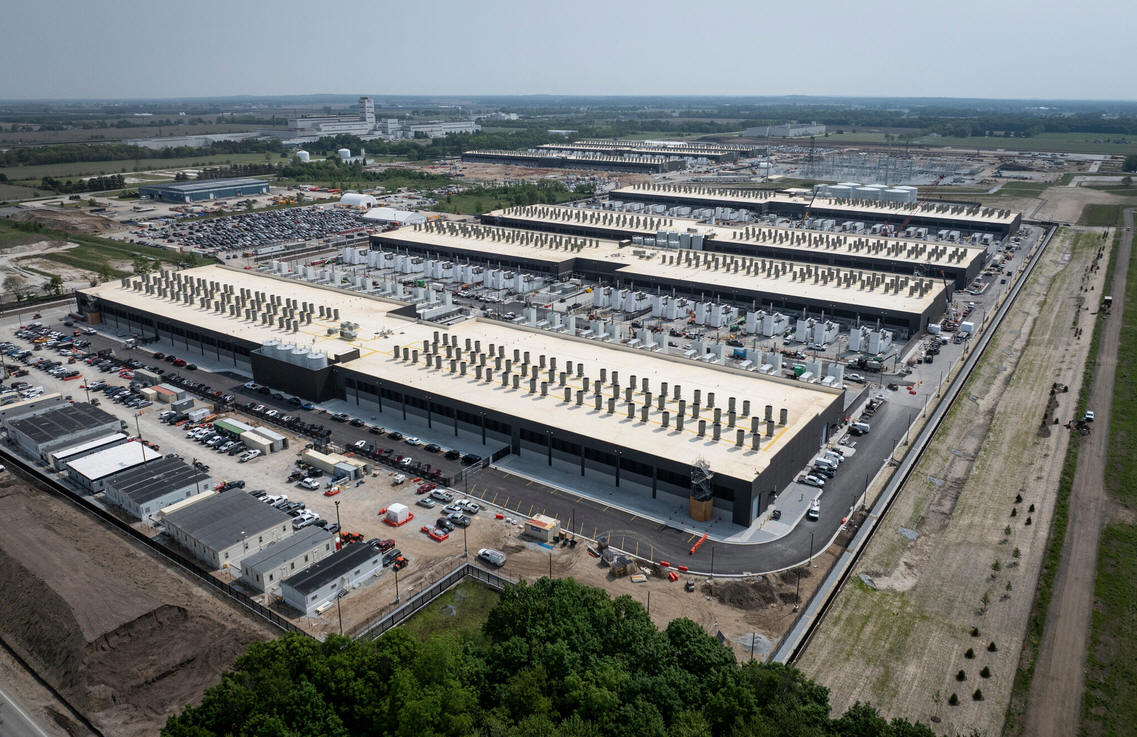
Amazon’s sprawling complex in New Carlisle, Ind., which is spread across an area that was once cornfields.AJ Mast for The New York Times
In the world, human beings are facing various problems. People who are full of greed, anger, and ignorance are seen to be fighting with each other in words and deeds. As the fighting continues, various problems such as civil wars, wars of aggression, and wars of aggression are occurring. As world peace is being destroyed, humans are facing unbearable problems. Innocent children and women are not getting the rights they deserve and deserve. I can't think of one thing every time. What is it? The United Nations. If we look at the responsibilities and duties of the United Nations, I think it is not suitable for solving the problems that are happening in the world today. In fact, the United Nations and the World Security Council, such an organization must rule the world, must be able to give orders, and must have various ways to obey orders. There must be no organization that can influence more than that organization. There should be experts from each country. They can even dominate the superpowers like the US, China, and Britain. Only then will global peace be achieved quickly. Now, if a country with power develops more militarily, economically, or socially than its own country, then powerful countries will jealously seek out enemies and wage war. Or they will attack with fighter jets. In this, innocent people are losing their lives. No one understands the value of a life. You should think about how to achieve global peace by controlling these. If the US continues to be the permanent president of the UN, world peace will never be achieved. If you think carefully, no one sees that they are working for the common good, but for their own benefit, for the benefit of their own country. The permanent president of the UN and the Security Council has rejected this, As a young Rohingya, I have come to realize that only by electing the president and secretary from among the countries in the world through a secret ballot system and governing the world fairly can we achieve global peace. The United Nations and the Security Council are organizations in which any country must govern, give orders, and make them obey their orders. For example, only when a defendant is tried in court can we hold the leaders of the countries in check and control them, can we achieve global peace smoothly. Otherwise, it will not be easy for powerful countries to use various excuses to end this war every year, every year, for the benefit of themselves and their countries. No country's leaders pay any attention to the words of the United Nations and the Security Council. If we look at it in practice, look at the Rohingya issue. Myanmar is a small country. Even that country has been under siege for 8 years. What action can be taken? Why is the UN and the Security Council Powerless? Without such Power, how can the organization bring about global peace? Everyone should think about it. Whether there is a veto or a strong one, all countries in the world can only achieve global peace if they are subject to the UN and the Security Council. Seek peace in the quiet embrace of nature. Peace is an indispensable need of the human race. It is not as if one person can kill another person, and it is as if one country can attack another country, but instead of trying to build peace, we must try to destroy the peace now, and the world is getting hotter and is on the verge of collapse. I especially appeal to all the world experts to urgently try to bring about peace in all parts of the world. Mr, Noor Muhamed Arkhan Rohingya Youth Myanmar
Film and Writing Festival for Comedy. Showcasing best of comedy short films at the FEEDBACK Film Festival. Plus, showcasing best of comedy novels, short stories, poems, screenplays (TV, short, feature) at the festival performed by professional actors.


 skynesher/Getty Images
 Gottesman Pool at the Davis Center
 Meta’s Eagle Mountain Data Center in Utah. Meta, Amazon, Google and Microsoft are expected to spend $1.5 trillion building data centers through next year. Credit…Christie Hemm Klok for The New York Times

 A new therapy targets cancer’s stress defenses, showing promise in early trials for mesothelioma patients with limited treatment options. (CREDIT: Shutterstock)
 Amazon’s sprawling complex in New Carlisle, Ind., which is spread across an area that was once cornfields. AJ Mast for The New York Times

