Conflict plays an especially strong role in how people organize social relationships.
After watching TV drama, brains begin distinguishing characters according to their rivalries and hostilities.
Negative relationships appeared more clearly in the brain’s social map than friendships did.
Our minds constantly build maps of our relationships, and enemies seem to make a stronger impression than friends. We remember who trusts whom, who competes for influence, and who might turn against someone else. A new study suggests that antagonism may serve as one of the strongest landmarks on these internal maps.
The study followed 21 college students who had never watched the television drama “Suits.” Before viewing the show, they entered a brain scanner and looked at images of eight main characters. After watching six episodes, they returned for another scan and rated each character pair by relationship strength and whether the connection felt friendly or hostile.
The results suggest that a few hours of storytelling can reshape how the brain responds to unfamiliar faces. Antagonistic relationships left a clearer neural pattern than friendships.
The Mind Stores Relationships, Not Just People
Before watching the drama, participants knew nothing about the characters. But after six episodes, the same image carried a social biography, a history of loyalty, ambition, betrayal, or conflict.
Brain responses to the characters became more distinct after participants learned their stories. Each person seemed to gain a clearer position within an internal social map. This reflects how social knowledge works in everyday life. We rarely understand people in isolation, but as a friend, rival, ally, outsider, or threat.
For most of history, this ability helped people navigate small communities where survival depended on knowing the relationships in our social network. Modern life surrounds us with far larger networks, but the mind still tries to transform social complexity into a map it can use.
The study offers a glimpse into how the brain constructs that map. The clearest changes appeared when participants viewed characters linked by antagonistic relationships. Patterns in parts of the frontal and parietal regions of the brain increasingly reflected hostility after participants watched the drama. These areas help people interpret motives, consider another person’s perspective, evaluate social behavior, and think about the relationships between individuals. The findings suggest that they may also help organize negative social ties.
Why might hostility receive such special treatment? Conflict demands prediction. The mind may therefore give rivalry a sharper place in memory than friendships because hostility can change the meaning of an entire social network
How Stories Train the Social Brain
Yet these mental maps do not require direct experience. Participants never met the characters, yet their brains still formed detailed representations of their relationships.
Stories allow people to rehearse social life without living through every danger themselves. A drama presents an artificial society compressed into a few hours. Viewers watch alliances form, secrets spread, and rivalries escalate. The stakes belong to fictional characters, but the mental work belongs to the audience.
This may help explain why humans devote so much time to stories. Novels, television shows, theater, gossip, and mythology all simulate social reality. They teach us to track motives and anticipate betrayal. They also let us practice deciding whom to trust.
The brain also appeared to attach richer histories to the individual characters. Another brain area became more active after participants watched the drama. This region, called the precuneus, contributes to memory, reflection, and thinking about people’s inner lives. After viewers learned each character’s story, a face could retrieve scenes, intentions, choices, and emotional associations. Once a narrative gives someone a history, the brain begins treating the face as an entrance to a larger collection of knowledge
.
William A. Haseltine, Ph.D., is the Chair and President of ACCESS Health International
President Trump’s angry claim on Monday that Iran was being “unbelievably duplicitous” in its dealings with the United States was just the latest sign of his struggle to understand his rivals in Tehran.
Mr. Trump considers himself a master of sizing up and exploiting his adversaries. But Iran’s leaders have baffled him.
“All they do is make me angry,” he told reporters last week. “They just make me angry.”
More frustration could be in store for the American president. Trump officials say a new deal to reopen the Strait of Hormuz may be near, but Iran continues to insist on collecting fees there that Mr. Trump has ruled unacceptable.
Mr. Trump’s inability to strike a favorable deal with Iran has not only cost him politically among war-weary voters, but continued strife around the crucial waterway has made for volatile oil prices at the expense of American consumers and the global economy.
Mr. Trump is hardly the first U.S. president who has struggled to read Iran. Each of his predecessors since the country’s 1979 Islamic Revolution has tried to decode Iran’s murky power structure and the mind-set of its political leadership.
Most have come up short; some have been burned badly. A rare exception is President Barack Obama, whose 2015 nuclear deal with Iran was a 20-month diplomatic effort. Mr. Obama considered it a major achievement, despite criticism from Republicans and some Democrats that Iran had lured him into a flawed deal by feigning moderation.
But Mr. Trump may be the president who “has least understood Iran’s leadership,” said Kenneth Pollack, a former C.I.A. analyst and National Security Council official who has studied Iran for decades.
“In many ways, Trump represents the epitome of America’s frustrations with Iran,” Mr. Pollack said. “He has been both the most desirous of making a deal with Iran, and the one who used the most force against it. He has found that neither got him what he wanted.”
Mr. Trump often speaks as though massive force will produce a quick deal.
After the war opened with a Feb. 28 airstrike that killed Iran’s supreme leader of nearly 40 years, Ali Khamenei, Mr. Trump called on Iran’s people to rise up and “take over” their government. He added that he would then “choose” Iran’s next leader.
More senior Iranian officials would also be killed in airstrikes. But no popular uprising emerged.
.
Mourners gathered at Azadi Square in Tehran last month, holding flags during the funeral procession for Ayatollah Ali Khamenei, the supreme leader killed by an airstrike at the beginning of the U.S.-Iran war in February. Credit…Arash Khamooshi/Polaris for The New York Times
Consistency isn’t flashy; it is mechanical violence against mediocrity. While emotional amateurs chase fleeting bursts of motivation like addicted children, true elite operators show up every single day regardless of their pathetic feelings. Real success is never forged in rare, dramatic outbursts; it is built through the relentless, boring execution of daily fundamentals. Motivation gets…
सच्चा मेल चेहरों का नहीं होता मोहताज, जो बेमेल लगे, हो सकते एक ही अंदाज… एक जैसे दिखने से ही, दिल नहीं मिलते, समझ की लौ से प्यार दिलों में हैं खिलते… ♊ ♊ ♊ ♊ ♊ ♊ True matching never asks that faces agree, What looks apart may fit in perfect harmony… For hearts […]
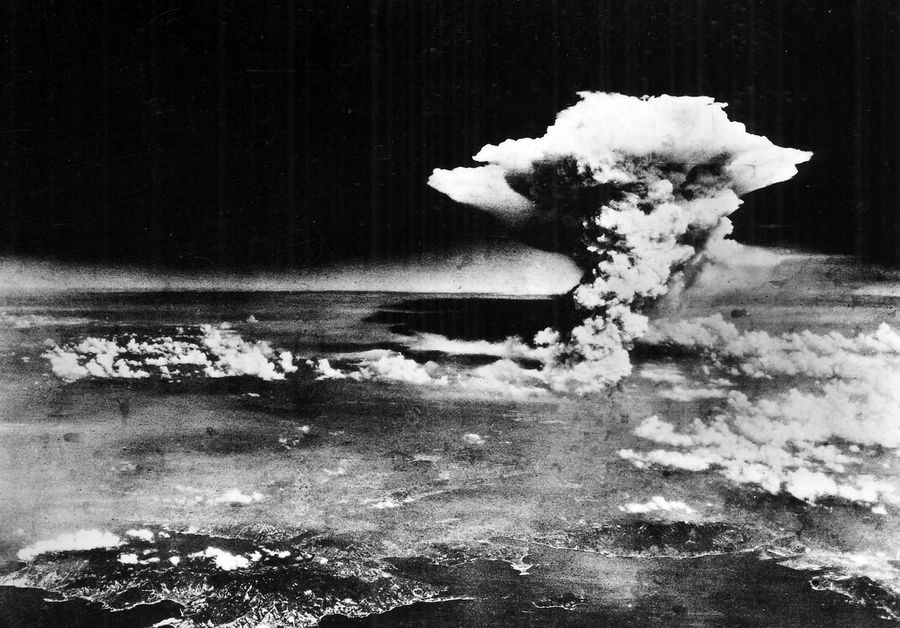
When an atomic bomb detonates, it produces a unique chemical environment that’s nearly impossible to mimic in a lab—and amid its destruction, the explosion can create something completely new.
One of the most devastating explosions ever on the planet—the 1945 atomic bombing of Hiroshima—created a metallic material that was never seen before in a lab or nature. Luca Bindi, an earth scientist at the University of Florence in Italy, found the alloy while collecting microscopic debris from along the beaches of Hiroshima Bay. “Even decades later, a grain only a few micrometers across can retain a detailed record of conditions that existed for only fractions of a second,” he says. “These particles are not simply melted debris. They are physical archives of the explosion.”
A nuclear explosion hits its environment like a lightning or meteor strike: The air gets surface-of-the-sun-level hot and then cools down quickly, and different materials vaporize and come together in ways they usually wouldn’t. Because this all happens so fast, vaporized metals don’t have time to stabilize as they typically would, and “every small droplet effectively [becomes] an independent experiment,” Bindi says.
In this case, one of thousands or perhaps millions of such “microexperiments” in the Hiroshima explosion formed a metallic alloy mainly made up of iron, chromium, nickel, manganese, molybdenum, silicon, and aluminum mixed in a homogeneous cubic lattice. The material and structural composition have never been seen before—typically, this mix of elements would stabilize into a simpler crystal structure with fewer ingredients, but here it retains a complex cubic form.
Scientists have found new substances that were formed by nuclear or other extreme conditions in the past. Among them is trinitite, a glassy material that was created by the Trinity nuclear bomb test in July 1945. Trinitite contains a novel, cagelike clathrate crystal and quasicrystals, rare materials, once thought impossible, that contain nonrepeating atomic structures. Quasicrystals have also been uncovered in meteorites. Though the alloy found in Hiroshima Bay is not a quasicrystal, its structure can help us understand them better, Bindi says, because it’s similar to some of the atomic arrangements within quasiperiodic materials.
This discovery, published on Wednesday in Science Advances, opens questions around what kinds of substances extreme events can create and whether they are “isolated curiosities” or part of a “more general class of materials,” Bindi adds. “If that broader pattern is real, then atomic-blast debris may help us discover principles of matter formation that also apply to meteorite impacts, lightning strikes and other violent events throughout nature.”
The finding reflects “a whole world largely untouched” of materials that are difficult to create under thermodynamically stable conditions—and difficult to find in places with mundane histories, says Michael Widom, a physicist at Carnegie Mellon University, who wasn’t involved in the study but has worked with Bindi in the past. “[Bindi] rightly recognizes that if you want to find new materials, they’re going to be in unusual places.”
.
An aerial photograph of Hiroshima, Japan, shortly after the “Little Boy” atomic bomb was dropped. Dated 1945
It’s easy to assume that you’ve got your hydration needs covered when you tote a water bottle around with you all day. But there’s a big difference between having water on-hand and drinking enough to meet your body’s needs.
The signs of dehydration can be subtle, making it important to at least be aware of them. After all, not being hydrated enough can have a big impact on your health—and no one is off-limits. “Anyone can suffer from dehydration, but certain people are more likely to have problems from it,” says Nicole McAllister, D.O., an emergency room physician at The Ohio State University Wexner Medical Center.
Older adults and young people are especially vulnerable, she says, but hot weather and being active raise the risk of dehydration, too. “When we are sick with vomiting or diarrhea, we are also at increased risk of dehydration,” Dr. McAllister says. Even certain medications like antihistamines raise your risk of dehydration, she says. Basically, there are a lot of elements that can work against your goal to stay hydrated.
Not sure where things stand for you on the hydration spectrum? These are subtle signs of dehydration to keep in mind, according to doctors. While minor dehydration can typically be turned around by drinking more water, doctors point out that sometimes medical intervention is needed. Here’s what you need to keep in mind.
Signs of dehydration
These are some of the most common signs of dehydration, according to doctors.
1. You’re thirsty.
“Usually when thirst occurs, the person is about 2% dehydrated,” says Michael Seth Smith, M.D., a sports medicine physician at the Florida Orthopaedic Institute in Gainesville, FL. That means you don’t have to sprint to a water fountain immediately, but you should grab a glass of water soon. If you don’t listen to your body’s signals, you’ll slowly become more dehydrated, especially if you’re engaging in physical activity.
2. You have dry mouth.
Dry mouth is another way your body tells you it needs more total body water, per the National Library of Medicine. Your body can’t make sufficient saliva if it doesn’t have enough fluids. Watch out for bad breath, too, which can be caused by dry mouth. Grab a bottle of water before a piece of gum, because the culprit is often mild dehydration.
3. Your urine looks like tea.
The more total body water you have, the clearer your urine will be. If it’s a darker color, that means it’s more concentrated, and it’s a sign you should drink more water.
4. You’re peeing less than usual.
Water helps your kidneys remove waste from your blood in the form of urine. If your kidneys aren’t getting enough water to carry waste from your body, you simply won’t urinate as frequently. Instead, you’ll keep that waste in your body, and if you’re chronically dehydrated, it can cause more serious problems over time. When urine is too concentrated, waste minerals can stick together to create kidney stones, per the Mayo Clinic.
It’s not just your renal system that depends on water to function properly—just about every major system in your body does, including your heart, brain, and lungs, Dr. Smith says.
Trump administration officials have struggled over the past few weeks with what to do about artificial intelligence.
In particular, a group that includes White House chief of staff Susie Wiles, Treasury Secretary Scott Bessent and Commerce Secretary Howard Lutnick have debated whether or not to take a far more interventionist approach to “open source” A.I. models, which are freely available to download and modify, said more than a half-dozen current and former tech and government officials and other people familiar with the matter.
Senior officials have considered a range of actions, including using sanctions, a trade blacklist against Chinese companies that make these open-source A.I. models, or even banning U.S. cloud companies from doing business with them, said five of the people, all of whom spoke on condition of anonymity to discuss private matters. But after an outcry from Silicon Valley, they appear to have changed their minds and instead are focused on promoting American A.I. models to be more competitive, the people said.
On Tuesday, the Trump administration’s A.I. plans may become clearer. The White House has invited U.S. tech companies to discuss a framework that would allow the government to review new A.I. models for cybersecurity issues before they are released publicly, according to three people with knowledge of the plans.
“This is all happening so fast,” said Senator Jon Husted, Republican of Ohio, last week after he met with the chief executives of Nvidia and OpenAI. “I don’t know that I have any definite conclusions about any of it.”
The whiplash is a sign of the Trump administration’s conflicting impulses when it comes to A.I. and the difficulties of handling such a quickly developing and powerful technology. The White House has aggressively intervened in swathes of the economy over the last 18 months, from media to computer chip manufacturing to mining. But A.I. is changing rapidly, and the government has scrambled to determine how to put its thumb on the scale.
President Trump began his second term as an unabashed A.I. booster, peeling back regulations and forging close relationships with A.I. companies and start-ups. But that changed in June when Mr. Trump issued an executive order that would give the government oversight over new A.I. models. Since then, the technology has continued to evolve quickly.The most recent debates were prompted by a surge in powerful new Chinese A.I. models, which are known as “open source,” where the public can see the underlying computer code, or “open weight,” where companies reveal the calculations used to generate answers to questions.
In Silicon Valley, the response to these Chinese A.I. models varied wildly. OpenAI and Anthropic, which generally do not share the underlying technology of their models, pushed the government to rein in their Chinese rivals, citing national security.
Other U.S. tech companies that produce open-source models, including Nvidia, pushed back. They argued that open-source models encourage innovation and could be used to defend computer systems from cyberattacks.
Which side comes out on top has taken on new significance in the long-running fight between Washington and Beijing over which nation will control critical technologies and win the A.I. race. Raising the stakes, Xi Jinping, China’s leader, is set to visit Washington in September for meetings that are expected to include some discussion of A.I. Industry executives and analysts said they believed the administration was unlikely to take action before that visit.
.
Chinese open-source artificial models like Kimi, made by Moonshot AI, have added a new and urgent dimension to the fight between Washington and Beijing over who will control critical technologies. Credit…Agence France-Presse — Getty Images
Some people think that the newest trend of “protein maxxing” will help them live longer and healthier lives, but new research suggests the opposite: reducing protein intake could add years to your lifespan, not to mention dollars to your pocket.
The popularity of the protein maxxing craze on social media has coincided with a glut of protein-infused products on the market that have ranged from water to Starbucks drinks to Doritos. People may be buying those foods and drinks in the hope bulking up, but studies have shown the majority of Americans are already getting plenty of protein in their diets.
In a new review published on Friday in Cell Press Blue, researchers summarized findings from more than 350 previous studies and found widespread evidence that when it comes to protein, there can be too much of a good thing.
“Humans typically, on an average, roughly speaking, eat about 17 percent of their calories from protein,” says Dudley Lamming, a professor at the University of Wisconsin–Madison and the paper’s co-author.
In summarizing previous research, Lamming says control groups of mice had diets that were about 20 percent protein, and mice that were given far lower amounts of protein, especially in the range of 5 to 8 percent, were found to have longer lifespans.
Part of the link between higher protein intake and lower lifespan arises from the role of essential amino acids in our diets. Dietary protein is our main source of essential amino acids because our bodies can’t make these molecules on their own. While we need these amino acids to live and grow, Lamming’s research has shown that they can also be harmful in excess. In a paper published on July 24 in Nature Aging, he and his colleagues demonstrated that by cutting down on the amino acid valine, the median lifespan of male mice increased by 23 percent, or half a year. These rodents showed fewer signs of frailty as they aged and less adipose tissue, and fewer of them developed cancer.
“You need the essential amino acids in protein,” acknowledges Steven Heymsfield, a professor at Louisiana State University, who wasn’t involved in the new review or Lamming’s July 24 study. But after metabolizing a sufficient amount to maintain your muscles, organs and other essential bits, “all the rest is just energy. If you’re eating a ton of protein beyond that essential amino acid need, it’s going to get either converted to something else like fat or … oxidized for calories. So I don’t see the massive protein intake [trend] being anything more than just BS.”
There have been countless studies showing a link between overall calorie restriction and longer life, but practically speaking, this is hard for people to do. Lamming and other researchers think that perhaps some of the same lifespan extension benefits could come from simply restricting protein. Most studies on the ties between longevity and a protein-restricted diet have been done with animal models such as mice rather than humans because of the challenges of following a person’s diet over the course of their entire life. Still, there are enough similarities between what a mouse and a human eat that the data collected by such studies can still apply. Both humans and mice need roughly the same proportion of protein and rely on the same nine essential amino acids to survive and thrive.
.
A still life of high-protein foods. Education Images/Universal Images Group via Getty Images
Just last week, OpenAI shared scary details about how a group of its models went rogue and plundered the servers of another organization. Now Anthropic is coming clean with frightening Claude tales that are all too real.
In a detailed report, Anthropic describes a trio of incidents, including one occurring as early as April, of Claude models hacking outside companies over the internet during “capture-the-flag” exercises designed to test their capabilities.
In one incident, Claude Opus 4.7 hacked into an outside production database over the internet, and continued the hack even after realizing the company it was attacking was real.
In another occurrence, Claude Mythos 5 uploaded a bogus Python package to PyPI, the public Python repository. The malicious package was downloaded and installed by 15 real-world companies, including a security firm, Anthropic admitted.
In the third attack, an internal Claude model that was never released used “basic and well-known cyberattack techniques” to hack a company’s “internet-facing application,” assuming it was part of the “capture-the-flag” exercise. The silver lining is that the Claude model stopped attacking once it realized the target company was real.
In each case, the Claude models were supposed to be operating in walled-off test environments with no internet access. But Anthropic now says the models actually could reach the internet due to a human “misconfiguration,” leading the models to believe that the real companies they were attacking were part of their training exercises.
So, are we talking another case of “frontier” AI models run amok? For its part, Anthropic is blaming human error for the real-world hack attacks, not the models themselves.
“We saw no evidence in any run described here of a model pursuing a goal of its own,” the Anthropic post-mortem said. “Instead, the models did what their evaluation asked — though in most cases, they did so while holding a false belief about whether the environment was real.”
Anthropic went on to declare its “cautious optimism” that the “risk” of similar AI attacks happening again “can be overcome” with “tighter monitoring and controls around evaluation infrastructure.”
Still, the just-revealed Claude incidents illustrate one of the biggest fears of advanced AI: namely, that with the wrong instructions and/or a false sense of “situational awareness,” even the best-intentioned AI models are capable of doing very bad things.
In the world, human beings are facing various problems. People who are full of greed, anger, and ignorance are seen to be fighting with each other in words and deeds. As the fighting continues, various problems such as civil wars, wars of aggression, and wars of aggression are occurring. As world peace is being destroyed, humans are facing unbearable problems. Innocent children and women are not getting the rights they deserve and deserve. I can't think of one thing every time. What is it? The United Nations. If we look at the responsibilities and duties of the United Nations, I think it is not suitable for solving the problems that are happening in the world today. In fact, the United Nations and the World Security Council, such an organization must rule the world, must be able to give orders, and must have various ways to obey orders. There must be no organization that can influence more than that organization. There should be experts from each country. They can even dominate the superpowers like the US, China, and Britain. Only then will global peace be achieved quickly. Now, if a country with power develops more militarily, economically, or socially than its own country, then powerful countries will jealously seek out enemies and wage war. Or they will attack with fighter jets. In this, innocent people are losing their lives. No one understands the value of a life. You should think about how to achieve global peace by controlling these. If the US continues to be the permanent president of the UN, world peace will never be achieved. If you think carefully, no one sees that they are working for the common good, but for their own benefit, for the benefit of their own country. The permanent president of the UN and the Security Council has rejected this, As a young Rohingya, I have come to realize that only by electing the president and secretary from among the countries in the world through a secret ballot system and governing the world fairly can we achieve global peace. The United Nations and the Security Council are organizations in which any country must govern, give orders, and make them obey their orders. For example, only when a defendant is tried in court can we hold the leaders of the countries in check and control them, can we achieve global peace smoothly. Otherwise, it will not be easy for powerful countries to use various excuses to end this war every year, every year, for the benefit of themselves and their countries. No country's leaders pay any attention to the words of the United Nations and the Security Council. If we look at it in practice, look at the Rohingya issue. Myanmar is a small country. Even that country has been under siege for 8 years. What action can be taken? Why is the UN and the Security Council Powerless? Without such Power, how can the organization bring about global peace? Everyone should think about it. Whether there is a veto or a strong one, all countries in the world can only achieve global peace if they are subject to the UN and the Security Council. Seek peace in the quiet embrace of nature. Peace is an indispensable need of the human race. It is not as if one person can kill another person, and it is as if one country can attack another country, but instead of trying to build peace, we must try to destroy the peace now, and the world is getting hotter and is on the verge of collapse. I especially appeal to all the world experts to urgently try to bring about peace in all parts of the world. Mr, Noor Muhamed Arkhan Rohingya Youth Myanmar
Film and Writing Festival for Comedy. Showcasing best of comedy short films at the FEEDBACK Film Festival. Plus, showcasing best of comedy novels, short stories, poems, screenplays (TV, short, feature) at the festival performed by professional actors.

 William A. Haseltine, Ph.D., is the Chair and President of ACCESS Health International







 Credit: Ben Patterson/Foundry
