Home

The New Science of Hamstring Training

Leave a comment

Click the link below the picture

.

The exercise is all over social media: A trainer will kneel on a bench, then slowly lower himself forward at the knees until head and chest are within inches of the floor. Then he’ll somehow power back up, having completed the full “Nordic curl.”

The popularity of the move has inspired a new class of gym equipment—specialized benches made for Nordic curls—and sparked a new love affair with an oft-neglected muscle group: your hamstrings. These are the main muscles worked during the full Nordic.

Building them up can insulate you against injuries, power you to run faster, and complete your physique, too. “Hamstrings are very aesthetic,” says Dr. Mike Israetel, a strength training expert and content creator. “And they actually require very little volume to train effectively if you use good technique.”

Interest in those hamstrings has helped push leg day back into prominence. For most gym-goers, leg day has long been a day to dread, filled with vicious exercises, like squats and deadlifts, that torch your entire body. “It hurts at a deep, systemic level,” Israetel says. “It’s malaise writ large.”

That’s due to the sheer size of the muscles involved: The quadriceps (front thigh), adductors (inner thigh), and hamstrings are among your largest muscle groups, demanding huge amounts of oxygen during any session. They also need large loads to challenge them, so your spine and core are heavily recruited, too. Moves like squats and lunges are the equivalent of an “all units” alarm for your entire nervous system.

It’s the stuff that “I survived #legday” memes are made of—but gutting out these sessions will fuel total-body gains. All those heavy lunges, for example, are like a free workout for your abs. And any set of deadlifts not only builds your glutes but also hones forearm strength and layers muscle onto your back. Plus, you’ll burn major calories on leg day, in part because of the sheer weight you’re moving.

It all makes leg day worthwhile, no matter your fitness goal, even if you never attempt the Nordic curl.

Must-Do Hamstring Moves

Stiff-Legged Deadlift

How To Do It: Meet the finest hamstring exercise out there. Stand holding a barbell at your hips, knees bent just slightly, then push your butt back and lower your torso until it’s nearly parallel to the floor. Keep the bar near your shins as you do this. Pause, then stand back up.

Reps & Sets: Do 3 or 4 sets of 8 to 10 reps.

.

man in starting position on a trackAndrew Hetherington

.

.

Click the link below for the complete article:

https://getpocket.com/explore/item/the-new-science-of-hamstring-training

.

__________________________________________

Science Isn’t about Domination. It’s about Democracy

Leave a comment

Click the link below the picture

.

Nestled in the Heritage Foundation’s Project 2025, the slash-and-burn playbook for the federal government that the Trump administration is following while saying it isn’t, is a call for American “science dominance.”

There is no such thing. And what the project means by the term—turning the Department of Energy into a handmaiden of the coal, oil and natural gas industry—betrays not only the taxpayer but science itself.

Science isn’t a winner-take-all, zero-sum game of flag football. Whether during the cold war or the era of Sir Francis Bacon’s New Atlantis, the bedrock of science has been international cooperation. People pursue scientific knowledge not solely for the sake of lording our spoils over everyone else. The monetary value of research is not the only reason why humans engage in asking why of the world around us.

Science breeds diplomacy. It counters division. It tells us what is, not what we want things to be. Science enables democracy. The way the Trump administration is approaching it, by cutting funds for projects that run afoul of conservative values, such as ones related to diversity, or calling for research into claims that have already been debunked, which is the case for the idea that vaccines are linked to autism, defies all this. If that approach succeeds, it will make us a poorer nation in every sense of the word.

By halting federal funds to scientific research, canceling university grants and threatening to deport immigrant scientists, the Trump administration is restricting the flow of ideas. By trying to legitimize debunked scientific ideas and allocating taxpayer dollars to research into those debunked ideas, the administration sows discord and undermines the role of public health in preventing sickness and disease. By canceling global aid for public health projects, the administration is shunning the U.S. role in global health. And in their push for energy dominance, Trump and his allies are kicking years of negotiation over climate change to the curb.

By becoming insular, by cutting out the world, we stand to lose our best and brightest minds in science and the exchange of ideas that leads to innovation. Our country is a scientific and economic powerhouse precisely because we have been so open and collaborative for so long. China’s academic scientific output, as measured by publications in Nature journals, has surpassed that of the U.S. How can cutting federal science funding help the administration’s intellectual war with China? How can the U.S. further its national interests if we shut out ideas and people? How does democracy survive if we stop research and the flow of information?

In setting the stage for the role of the U.S. government in science, Vannevar Bush told President Harry Truman in 1945 that “scientific progress is one essential key to our security as a nation, to our better health, to more jobs, to a higher standard of living, and to our cultural progress.” He noted the federal government’s role in supporting agricultural research and said, “The time has come when such support should be extended to other fields.”

From the 1950s on, the U.S. government has been the largest funder of scientific research in the nation, not to mention the world. Those dollars have helped develop countless drugs, and a wide assortment of military and domestic machinery, and they have paid the salaries of millions of researchers. Those dollars have saved people and helped industrialize nations the world over.

.

https://static.scientificamerican.com/dam/m/6296d0782156497e/original/united_states_surrounded_by_white_picket_fence.jpg?m=1745595950.907&w=900Rob Dobi/Getty Images

.

.

Click the link below for the complete article:

https://www.scientificamerican.com/article/science-isnt-about-domination-its-about-democracy/

.

__________________________________________

How Trump’s EPA Plans to Undo the Scientific Justification for Climate Rules

Leave a comment

Click the link below the picture

.

CLIMATEWIRE | One of the biggest mysteries surrounding President Donald Trump’s EPA is how it plans to revoke the endangerment finding — the lifeblood of most climate regulations.

Hints about its strategy may have been hiding in plain sight for a month now, ever since EPA announced a slew of deregulatory actions in a single afternoon.

Experts said EPA may be betting that it can upend the scientific finding, which paved the way for the nation’s rules on climate pollution on cars, power plants, and across other sectors, without taking direct aim at the overwhelming evidence that greenhouse gases are driving up global temperatures.

Instead, EPA Administrator Lee Zeldin and other officials whom the president tasked in January with undoing the finding could raise questions about whether a sector — or even the whole country — contributes enough climate pollution globally to warrant regulation.

They may also try to redefine how air pollution can harm the public — a necessary predicate for regulating greenhouse gases under the Clean Air Act.

“Maybe they’ll change their mind, but they seem to have an idea of how they want to go about revoking the finding,” said Jeff Holmstead, who served as EPA’s air chief under President George W. Bush.

Jettisoning the endangerment finding could allow the Trump administration to tear out U.S. climate rules by the roots, helping it avoid years of painstaking work to finalize replacement rules that would likely be weaker, according to experts. It would also make it harder for future presidents to regulate other sectors that are contributing to climate change, because the scientific finding would have to be resurrected first.

Experts see hints of that strategy in a relatively detailed press release the agency issued last month, when it announced a barrage of steps it plans to take to roll back climate rules.

Holmstead called the document “very telling.”

He and other experts say the administration may take aim at the cost increases that regulations have on energy and other pillars of Americans’ lives, not at atmospheric science directly. That could allow EPA to skip the cumbersome process of assembling panels of contrarian scientists to build an alternative record on the indisputable link between human emissions and global warming

“They can probably get it out in the next few months,” Holmstead said of a proposed endangerment finding that focuses on regulatory costs. “They won’t need to spend a lot of time — and Federal Register pages — reviewing the science.”

EPA did not respond to requests for comment for this story, but Zeldin offered new details in a combative press conference last week about how he intends to revise the finding. He said the agency plans to undertake a formal rulemaking process with public comment.

“There isn’t a set timeline here,” Zeldin said, in response to a question by POLITICO’s E&E News. “As we go through the process with regards to the dozens of different actions that we are going to start rulemakings on, they each will follow the Administrative Procedures Act, and we’ll make sure that the actions that we take on everything are as durable as possible.”

That indicates the endangerment finding won’t be killed overnight using an executive order, as Trump effectively did earlier this month on rules requiring showerheads to use less water.

But EPA could still move quickly to revoke the finding.

“It’s going to get done,” said Michael McKenna, an energy lobbyist who led Trump’s transition team at the Department of Energy in 2017. “It’s just a question of when and what it looks like, and how long is it going to take.”

McKenna noted that some people in Trump’s orbit have been thinking about how to revise the endangerment finding for more than 15 years, since it was finalized under President Barack Obama, who issued the first rules based on it.

.

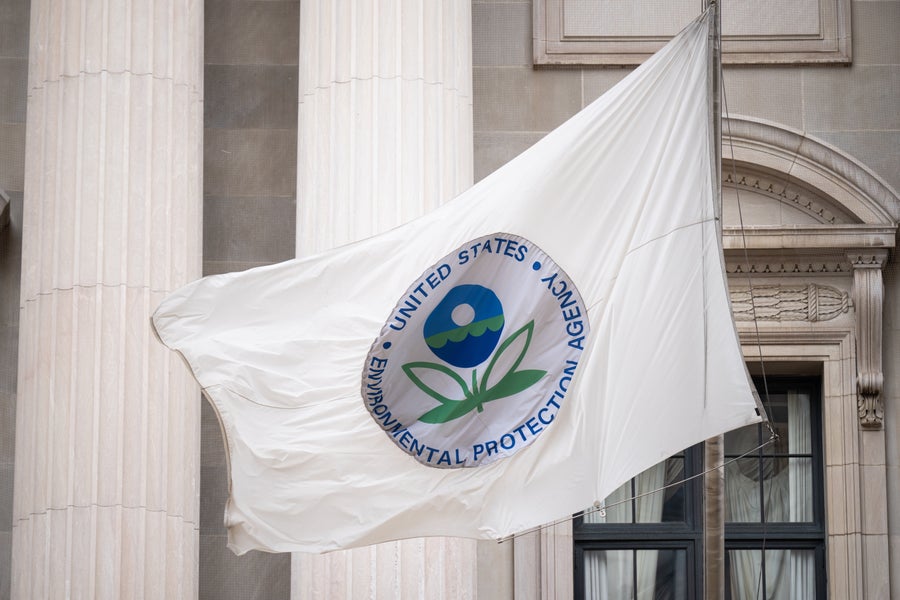
https://static.scientificamerican.com/dam/m/47376b618ff47cb5/original/EPA_flag.jpg?m=1745858660.043&w=900

The Environmental Protection Agency flag flies outside the EPA headquarters in Washington on Thursday, February 6, 2025. EPA Administrator Lee Zeldin’s strategy for unraveling a key finding that underpins climate rules is taking shape. Bill Clark/CQ-Roll Call, Inc via Getty Images

.

.

Click the link below for the complete article:

https://www.scientificamerican.com/article/how-trumps-epa-plans-to-undo-climate-rules/

.

__________________________________________

Washing Your Hair Once a Week May Not Be a Good Idea—Even If It Looks Clean

Leave a comment

Click the link below the picture

.

Spoiler alert: washing your hair once a week may not be a good idea. And yes, even when it feels clean.

The debate around how regularly you should wash your hair is a heated one, but we’re hoping to settle it finally. While some experts say that washing your hair once a week is fine as long as you use a good shampoo and your hair responds well to that frequency, there’s another side to the argument. If your hair is extremely dry and not washed often enough, it can lose its natural moisture with age. According to stylist Rosi Fernandez, director of Ananda Ferdi, it is not advisable to go for more than a week without washing hair, as “follicles become clogged and do not get oxygenated,” she explains.

When it looks clean, but it’s not

As someone who washes my hair every day, I’ve always been a bit envious of people who can go for several days without. For example, the Kardashians’ stylist, Jen Atkin, said in an interview with Allure that she could go up to four or five days without washing, and that it was only on the last day she would resort to an updo with a sharp center parting as that’s when it started to get dirty. But the reality is that although the hair may appear to be clean, pollution (one of the major aggressors of hair in 2023) has dirtied it without you realizing it. “It may look like the hair is clean, but with pollution, sweat, tobacco smoke… the hair becomes saturated,” explains Fernandez.

The consequences of pollution (and not enough washing)

According to Fernandez, when hair is washed less than twice a week, the follicles become clogged, and this can cause a range of problems: scalp flaking, itching, sensitivity, dandruff, and even hair loss. These small particles, which are invisible to the eye, prevent the hair from oxygenating well, which is why it is advisable to wash it more often, even with thick, dry hair that you might not feel the need to wash so frequently. The effects that pollution has on hair were studied all the way back in 1994, by the Industrial Toxicology Research Centre in Lucknow. “At that time, it was shown that suspended particles, smoke, and pollutant gases were deposited on the hair and scalp, causing inflammatory and irritative reactions that can even lead to hair loss,” explains Adolfo Remartínez, founder of Nuggela & Sulé.

Washing it twice a week

There is no universal rule for the frequency of washing hair because, as Fernandez points out, you also have to take into account the place where you live or the lifestyle you lead. “It is not the same living in a city with a lot of pollution as living in the countryside,” she says. “The climate, riding a motorcycle or a car, playing sports, the quality of the water used for washing, et cetera, also play a role.” However, even when hair is dry and thick, experts advise washing at least twice a week to remove all the residues that can accumulate on the scalp, and that saturate and weaken the hair. Fernandez also recalls the importance of emulsifying shampoo in your hands before applying it, especially if it’s an organic product. “A good rinse gives hair its shine,” she concludes.

.

old fashioned photo of woman washing hair in sinkPhoto: Silver Screen Collection / Getty Images

.

.

Click the link below for the complete article:

https://getpocket.com/explore/item/washing-your-hair-once-a-week-may-not-be-a-good-idea-even-if-it-looks-clean

.

__________________________________________

First African American to Enroll at the University of Oregon: Mabel Byrd

Leave a comment

First African American to Enroll at the University of Oregon: Mabel Byrd

True me.. Tap-2117..

Leave a comment

Life’s a rollercoaster, and sometimes, we get stuck on a loop. But hey, that’s part of the ride! Instead of spiraling, let’s flip the page. Moving forward is more important than moving on. Set new goals, embrace the unknown, and learn from those bumps in the road. Every step forward is a chance to level […]

True me.. Tap-2117..

On This Day: May 01, 1863

2 Comments

On This Day: May 01, 1863

THE ACCOUNTANT 2 (2025) – My rating 9/10

2 Comments

The Accountant 2 (stylized as The Accountant2) is an action thriller directed by Gavin O’Connor and written by Bill Dubuque. It is the sequel to The Accountant (2016). It was theatrically released in the United States by Amazon, MGM Studios through Metro-Goldwyn-Mayer, and internationally by the original film’s domestic distributor, Warner Bros. Pictures. Although it’s […]

THE ACCOUNTANT 2 (2025) – My rating 9/10

First Black Governor of Virginia and First Elected Governor in US: Douglas Wilder

Leave a comment

First Black Governor of Virginia and First Elected Governor in US: Douglas Wilder

Could a Monster Earthquake Actually Sink Parts of the Pacific Northwest?

Leave a comment

Click the link below the picture

.

Scary headlines about the Pacific Northwest sinking into the sea are circulating online, with warnings that a major earthquake in the notorious Cascadia subduction zone could be worse than expected.

What’s behind this new alarm? Fortunately, research has not uncovered a new risk that Seattle will become the Lost City of Atlantis. Instead, scientists have examined the combined effects of two well-known phenomena: sea-level rise from climate change and the likely consequences of a major earthquake in the region. It was already known that sea level along the coast of northern California, Oregon, and Washington State is estimated to rise by 1.3 to 2.9 feet by 2100 because of a warming climate. It was also well known that a magnitude 8 or higher earthquake in the area could cause the coastline to slump by up to 6.5 feet. What the new study, published on April 28 in the Proceedings of the National Academy of Sciences USA, adds is an understanding of how much additional land would end up being at a high risk of flooding because of these two combined threats.

Why Does Sea-Level Rise Matter?

While the East Coast is already seeing the effects of beach erosion and rising sea levels, the Pacific Northwest (PNW) has been protected by its geology, so far. The coast that extends from northern California to Vancouver Island in British Columbia sits on a subduction zone where the Juan de Fuca, Explorer, and Gorda oceanic plates slip beneath the North American continental plate—parts of the ever-moving slabs of rock that make up our planet. Right now, the fault system is quiet, meaning it has not had a large earthquake for more than 300 years, and the coast is gradually rising by a few fractions of an inch each year. This geological uplift, a consequence of the interactions of the tectonic plates, outpaces sea-level rise in many areas, so the PNW has been relatively shielded from effects such as extreme flooding events or coastal erosion.

But over the past 7,000 years or so, at least 11 major earthquakes have struck the Cascadia region where these faults reside. The last of these temblors occurred in 1700, and geologists can still see evidence of it causing the coastline to drop between 1.6 and 6.5 feet in the blink of an eye. “We have these really rooted organic soils that are suddenly overlain by this really clean tidal mud, indicating they were suddenly dropped down and were buried and basically converted to tidal flats,” says Tina Dura, a coastal geologist at Virginia Tech and first author of the new study.

What no one had really studied, Dura says, was the combined effect of this sudden subsidence and the slower inundation caused by sea-level rise.

How Much of Cascadia Will Become Prone to Floods?

Dura and her colleagues looked at earthquake scenarios that would yield different ranges of subsidence, from 1.6 to 6.5 feet. They also compared such an earthquake’s effects at today’s sea levels with those at sea levels forecasted for 2100. By that time, sea-level rise is expected to outpace the geological uplift of the PNW and may reach as much as 2.9 feet.

The team found that if an earthquake that caused more than six feet of subsidence were to happen today, the 100-year floodplain in estuaries in Cascadia would expand by 115 square miles. Were this quake to happen in the year 2100, with the additional pressures of sea-level rise, those estuaries would expand by 145 square miles. That would be triple the flood-prone area that is seen today.

How Worried Should We Be?

In the event of a magnitude 8 quake in Cascadia, subsidence would not be the first issue on anyone’s mind. A large undersea quake could cause a devastating tsunami that would immediately threaten lives and structures. The new study is focused on areas within about six feet of elevation of the current 100-year floodplain, Dura says, and the earthquake-driven tsunami could be more than 30 feet high.

.

https://static.scientificamerican.com/dam/m/2284cc24962e6545/original/Stumps-of-Sitka-Spruce-drowned-from-subsidence-during-a-subduction-zone-earthquake-some-1600-years-ago-Neskowin-Oregon.jpg?m=1746043436.285&w=900

Stumps of Sitka spruce, drowned from subsidence during an earthquake at a subduction zone some 1,600 years ago, in Neskowin, Ore.. Marli Miller/UCG/Universal Images Group via Getty Images

.

.

Click the link below for the complete article:

https://www.scientificamerican.com/article/could-a-monster-earthquake-actually-sink-part-of-california/

.

__________________________________________

Older Entries Newer Entries

JaZzArt en València

Faith saved us from the savages that we were, losing faith makes us savages again

PeopleTalky

Where Trends Meet Truth

MRS. T’S CORNER

https://www.tangietwoods

Srikanth’s poetry

Freelance poetry writing

MediaNegy

Zalai Betti

INOVATION BLOG AND NEWS

INOVATION BLOG PEOPLE AND NEWS

szigetingy | budapest

Németh György

PT. LPPL Lombok

Konsultan Lingkungan Hidup di Lombok - NTB

Idézetek – LeaArt21

Lea Krasznai (LeaArt21) – Idezetek (Idézetek) WordPress (Budapest, Hungary)

danielecolleoni

Appunti, spunti e passioni in liberta'

تعلم وعلم، ادخر،سافر واستجمم .

تعنى بتقديم نصائح للمعلمين المبتدئين، والطلبة الممتحنين، ومشاركة الاخرين تجربة الادخار في المال، بترشيد الاستهلاك المنزلي، وترتيب البيت، والحفاظ على البيئة، وتشجيع السيارات صديقةالبيئة، والسياحة والاسفار، ونماء رؤوس الاموال، والطب البديل وتشجيع التعليم الرقمي والذكاء الاصطناعي، والعناية بالنحل وتربية الاسماك، والاسثمار في رؤوس الاموال، الزراعة العضوية، والعناية باسنان الرضع، و صحة الحوامل، وتفسير القران

scientifique

apprendre pour évoluer

In Between the Lines

Thoughts on books, language, meaning, and the culture around it.

Great Lakes Mindset

Outdoor Recreation & Adventure in the Great Lakes Region

Nelsapy

News, Info, Bio, Articles, Reviews, Lyrics, Technology, Science, Inspiration, Motivation, Philosphy and many more...

Becoming HIS Tapestry

Christian Lifestyle Blogger

Joe Mullins Commissioner

CEO and president of The Mullins Companies

The Luttie Board

Two Cultures. One Life. Endless Stories

Charles Maxwell DeCook

Real Estate Development Specialist

amorentreestrellas.wordpress.com/

¡Bienvenido de vuelta viajero!

Heart of Loia `'.,°~

so looking to the sky ¡ sing and from my heart to YOU ¡ bring...

Michael Ciullo

CEO and Founder of Nsight Health

Nelson MCBS

Catholic News, Prayers, HD Images, Rosary, Music, Videos, Holy Mass, Homily, Saints, Lyrics, Novenas, Retreats, Talks, Devotionals and Many More

global geopolitics

Decoding Power. Defying Narratives.

Talk Photo

A creative collaboration introducing the art of nature and nature's art.

Movie Burner Entertainment

The Home Of Entertainment News, Reviews and Reactions

C r i s t i a n a' s Fine Arts ⛄️

•Whenever you are confronted with an opponent, conquer him with love.(Gandhi)

TradingClubsMan

Algotrader at TRADING-CLUBS.COM

Comedy FESTIVAL

Film and Writing Festival for Comedy. Showcasing best of comedy short films at the FEEDBACK Film Festival. Plus, showcasing best of comedy novels, short stories, poems, screenplays (TV, short, feature) at the festival performed by professional actors.

Bonnywood Manor

Peace. Tranquility. Insanity.

Warum ich Rad fahre

Take a ride on the wild side

Madame-Radio

Découvre des musiques prometteuses (principalement) dans la sphère musicale française.

Ir de Compras Online

No tiene que Ser una Pesadilla.

Kana's Chronicles

Life in Kana-text (er... CONtext)

Jam Writes

Where feelings meet metaphors and make questionable choices.

emotionalpeace

Finding hope and peace through writing, art, photography, and faith in Jesus.

Essu Center

Eyasu The Wonderful

Wearing2Gowns.Blog

A former medical student's journey through healthcare challenges and personal growth

...

love each other like you're the lyric to their music