Home

Loneliness Is Inflaming Our Bodies—And Our Politics

Leave a comment

Click the link below the picture

.

Hannah Arendt has been on my mind a lot lately. The 20th-century German-Jewish political philosopher escaped the Nazi Holocaust, and won regard as one of the world’s greatest public intellectuals at a time when few women were appointed to university faculties. She drew on history, literature, and her own life to identify the conditions under which open and liberal societies turn into authoritarian states. Seven decades ago she made observations that still offer powerful insights today.

In The Origins of Totalitarianism, Arendtemphasized one primary factor in the rise of authoritarianism that has little obvious connection to politics: loneliness. While we usually think of loneliness as not having our social needs met, Arendt defined the word as something deeper. Loneliness happens when there are no shared objective facts and no potential collective action to solve shared challenges. It’s a state of being where you can’t trust others. Loneliness, in Arendt’s telling, inflames the connective tissues of a society. It weakens the body politic so that demagogues and despots can prey. “What prepares men for totalitarian domination,” she wrote, “… is the fact that loneliness, once a borderline experience usually suffered in certain marginal social conditions like old age, has become an everyday experience.”

Arendt—as far as I know—didn’t use the word “inflammation” to describe the effects of social isolation on a country or culture. But it’s the metaphor that, to me, gets to the essence of her warning.

Inflammation is the body’s response to a sense of threat—a protective, contractionary response that can extend even to the cellular level. It’s a response that can inhibit healing. A community or society that faces a deficit of meaningful connectedness is similarly in a state of perpetual threat; people are unable to listen to one another, to trust each other, to maintain trust in shared institutions, or to collectively overcome divisions.

This might sound familiar.

From 2003 to 2022, face-to-face socializing among U.S. men fell by 30 percent. For teenagers, it was a staggering 45 percent. An estimated 12 percent of Americans report having no close friends, a fourfold increase since 1990. While social media was supposed to amplify human connection, the rise of comparison culture, social sorting into echo chambers, and the rapid decline of in-person social connection have instead coincided with unprecedented levels of anxiety, depression, and distrust.

It should therefore come as no surprise that, in America, we’re seeing democratic backsliding like Hannah Arendt warned of—including mass polarization, intentional disinformation, and a politics of fear, retribution and rage.

Loneliness inflames societies.

It just so happens that loneliness inflames the body, too.

Two decades ago, researchers Louise Hawkley and John Cacioppo at the University of Chicago demonstrated in a landmark study that loneliness acts as a chronic stressor that triggers the body’s innate stress-response systems. Social isolation keeps the hypothalamic-pituitary-adrenal (HPA) axis in a constant state of arousal, driving persistent cortisol release. This hormonal imbalance heightens inflammation. And this can, in turn, weaken the immune system, compromise cardiovascular health, and worsen vulnerability to mental health conditions such as depression and anxiety. In short, the absence of meaningful social bonds can literally recalibrate the body’s physiological mechanisms toward greater stress and illness.

Over the past two decades, further studies have only reinforced the link between loneliness and inflammatory pathways. George Slavich of the University of California, Los Angeles, underscores that experiencing social disconnection can mimic physical threats in how our brains and immune

systems respond, magnifying the release of inflammatory agents. From an evolutionary standpoint, sustained isolation disrupts our primal need for social integration, leading to inflammation and a whole host of downstream consequences.

It’s easy to downplay the loneliness problem. When former U.S. surgeon general Vivek Murthy warned of the dangers of social isolation and proposed solutions, no meaningful government interventions ensued. Likewise, when the U.K. government appointed a minister for loneliness in 2018, many likened the move to a Monty Python sketch rather than seeing it as a serious policy intervention.

But the medical, social, and even political costs of growing social isolation mean that we can no longer afford to ignore it.

Some solutions are straightforward. Medical innovators are now addressing social isolation through practices like “social prescribing,”—wherein health professionals connect patients who are lonely with nonmedical community services, volunteer programs, exercise groups, and arts activities to improve their well-being. Instead of writing prescriptions for pills, doctors can prescribe a free pass to a museum, an invitation to join a gardening club, or a support group for people facing similar struggles. A recent multiyear evaluation of nature-oriented social prescribing in the U.K. found that programs significantly helped participants reduce anxiety and improve happiness.

.
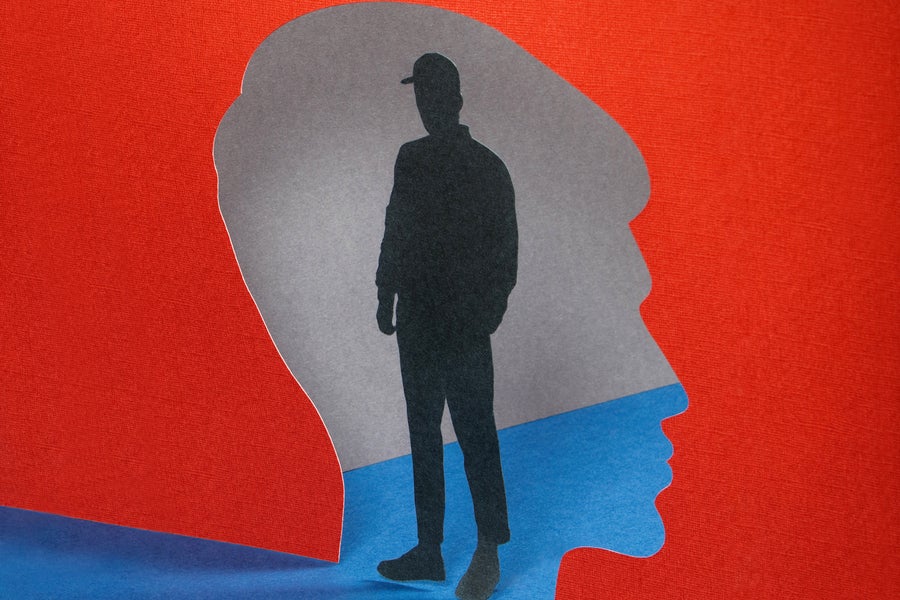
https://static.scientificamerican.com/dam/m/3f40df4ebfb8b2c5/original/male-figure-inside-head.jpg?m=1747343980.641&w=900Eugene Mymrin/Getty Images

.

.

Click the link below for the complete article:

https://www.scientificamerican.com/article/loneliness-is-inflaming-our-bodies-and-our-politics/

.

__________________________________________

Which Is the Best Position to Sleep In?

Leave a comment

Click the link below the picture

.

If you live anywhere affected by the recent heatwaves, you may well have spent your nights tossing and turning, trying out different sleeping positions in an attempt to get comfortable. But what does the evidence say about which sleeping positions are actually the best?

Studies on everyone from seafarers on container ships to welders in Nigeria might be able to help us, although given how important sleep is to us it’s surprising how few large-scale studies have been conducted.

First you need a way of working out which position people are sleeping in. You can ask them of course, but we only really remember the way we were lying when we were trying to fall asleep and the position we wake up in. To find out more, researchers have tried a variety of techniques including filming people while they sleep or getting them to use wearable technology that monitors their movements.

In Hong Kong, researchers are developing what they call the “Blanket Accommodative Sleep Posture Classification System”, which uses infrared depth cameras that can detect a person’s sleep position even through a thick blanket.

Researchers in Denmark used small motion-sensor detectors attached to volunteers’ thighs, upper backs, and upper arms before they went to sleep to establish their favoured sleeping position. They found that during their time in bed, people spent just over half their time on their sides, around 38% on their backs, and 7% on their fronts. The older the people were, the more time they spent on their sides. 

This bias towards sleeping on our sides is something we develop only as we become adults, because children over the age of three spend on average an equal amount of time sleeping on their sides, back and fronts.

Babies, meanwhile, sleep mainly on their backs because they’re put in their cots this way for safety reasons.

So sleeping on your side is the most common position, and we could trust the wisdom of the crowd to choose the position where they sleep best, but what about the data? A very small observational study in which people could sleep however they preferred found that those who slept on their right side slept slightly better than those on their left, followed by those on their backs.

If you find it easy to sleep on your side, then it’s probably also best for anyone else trying to get to sleep nearby. On one occasion, while touring a submarine for a radio programme I was making, the submariners showed me their sleeping quarters, where the bunks were stacked so closely on top of each other that it was hard to turn over. That meant they tended to sleep on their backs, so they told me it was a race to get to sleep first before the whole cabin was full of snoring men.

Another small study looked at seafarers working on merchant container ships and found that respiratory disturbances such as snoring were more common when the seafarers were sleeping on their backs.

.

Screenshot 2023-11-06 at 2.47.43 PM.pngPhotos by Getty Images

.

.

Click the link below for the complete article:

https://getpocket.com/explore/item/which-is-the-best-position-to-sleep-in

.

__________________________________________

First Black Woman to Be Elected to The Washington Legislature: Peggy J. Maxie

Leave a comment

First Black Woman to Be Elected to The Washington Legislature: Peggy J. Maxie

On This Day: May 19, 1918 (I Cried)

Leave a comment

On This Day: May 19, 1918 (I Cried)

What RFK, Jr. Got Wrong about Autism, according to Scientists

Leave a comment

Click the link below the picture

.

Scientific research over the past 30 years has revealed a patchwork of potential causes of autism. Most of them are genetic—the condition is between 60 and 90 percent heritable—and some involve nongenetic risk factors that might impact development during pregnancy.

“We’ve found a great deal of the underlying [causes],” says Helen Tager-Flusberg, an autism researcher and a professor emerita at Boston University. But how these different risk factors come together as the brain develops remains a challenge to piece together. “Autism is not a simple disorder,” she says. “There are no simple answers. There are no so-called smoking guns.”

Even so, Robert F. Kennedy, Jr., the U.S. secretary of health and human services, talks about autism in a way that suggests he thinks there are simple and direct causes. He often refers to the steady rise in autism prevalence (which is likely due to improved screening and diagnosis) as an indicator that

we’re in the middle of an “autism epidemic” driven by “environmental toxins.” He has also refused to disavow the long-debunked idea that vaccines cause autism. This month, as part of Kennedy’s effort to find “the root causes of autism,” the National Institutes of Health and the Centers for Medicare & Medicaid Services announced that they will create a “data platform” to study the condition. In April, NIH Director Jay Bhattacharya had described plans for “national disease registries, including a new one for autism.” The plan involved collecting “comprehensive” private health data on autism that would represent “broad coverage” of the U.S. population, leading autism advocacy organizations, civil rights groups, and research scientists to warn of medical privacy concerns. (Shortly after outlets reported on Bhattacharya’s statements in April, HHS denied that it planned to create an “autism registry.”)

In a budget hearing on Wednesday, Kennedy called for an end to genetic research into autism. “I don’t think we should be funding that genetic work anymore,” he said. “What we really need to do now is to identify the environmental toxins.”

In response to this dismissal of well-established science, Tager-Flusberg has organized a coalition of scientists to push back. The Coalition of Autism Scientists now has 258 members and is still growing.

Scientific American spoke with Tager-Flusberg about Kennedy’s statements this week and how the autism community is responding.

In a Congressional budget hearing Wednesday afternoon, Robert F. Kennedy, Jr., said: “Autism is an epidemic, and the genes do not cause epidemics. They can contribute a vulnerability, but you need an environmental toxin. It’s like cigarettes and smoking.” What was your reaction to that?

There is no reason that we need to refer to the increased prevalence rates, which have been rising steadily for many years now, as an epidemic. This is not the definition of an epidemic, so I take issue with highlighting that.

Second of all, genetics are the primary contributing factor to autism. We know specific genes and variants confer increased risk, even in cases where there aren’t any clear environmental contributions. If anything, it’s the other way around—it’s the environmental factors that add to or interact with the genetic risk for autism.

Take one of the very well-regulated nongenetic factors: parental age, particularly paternal age. What we think is going on is that, as parents age, their germ cells [which develop into eggs or sperm] are changing, and so this is leading to alterations in the DNA that then confer risk for autism.

.

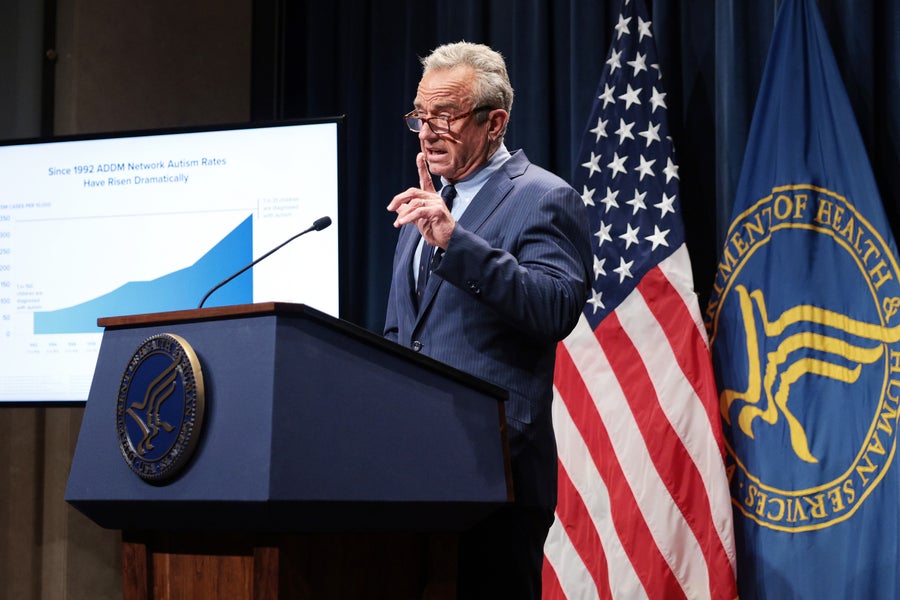
https://static.scientificamerican.com/dam/m/2a268b6ec7b50263/original/rfk_jr_speaks_about_autism_rates_at_press_conference.jpg?m=1747342113.252&w=900

Secretary of Health and Human Services Robert F. Kennedy Jr. speaks during a news conference at the Department of Health and Human Services on April 16, 2025, in Washington, DC. Alex Wong/Getty Images

.

.

Click the link below for the complete article:

https://www.scientificamerican.com/article/rfk-jr-is-completely-wrong-about-autism-say-scientists-and-parents/

.

__________________________________________

Working Too Much Can Change Your Brain

Leave a comment

Click the link below the picture

.

Working long hours comes with a slew of health issues, from too much stress to disturbed sleep, heart conditions, and mental health disorders like anxiety and depression.

It may even cause changes in the brain, according to a new report published in Occupational and Environmental Medicine. Researchers from Korea found that people who regularly work long hours had significant brain differences compared to people who worked less.

Wanhyung Lee, from the department of preventive medicine at Chung-Ang University in Seoul, and his team studied 110 health care workers—some of whom worked more than 52 hours a week, which under Korean law constitutes overwork, and some of whom worked less. All had MRIs that allowed the scientists to analyze differences in the volume and concentration of certain brain tissues.

People who were overworked showed changes in 17 brain regions compared to those who worked typical hours. These differences included areas responsible for executive functions like logical reasoning, as well as managing emotions.

Lee says the results surprised him, in part because they suggest that the brain changes in response to stress and anxiety, with some potential negative consequences. “We anticipated that prolonged stress from overwork would affect brain structure, but finding increased volume in certain brain areas was somewhat unexpected,” he wrote in an email to TIME. “Our results suggest a potential neuroadaptive response, meaning the brain might initially try to compensate for increased cognitive and emotional demands. These surprising findings underscore the complexity of how the brain responds to prolonged occupational stress.”

Advances in brain imaging now make it possible to detect even small volume differences, Lee says. “These technological breakthroughs have empowered researchers to explore previously invisible biological changes induced by prolonged stress or excessive workloads, thus opening up an entirely new dimension in occupational and environmental health research.”

The changes his team identified involve areas of the brain that are responsible for things like memory, decision-making, attention, planning, and problem-solving. “Changes here could impact a person’s ability to efficiently manage tasks, make decisions, and maintain concentration,” he says.

Differences in other areas could affect how well people regulate emotions; the changes they saw may indicate less emotional stability, increased anxiety, and problems interpreting emotional cues or managing interpersonal connections.

Would reducing workload alleviate or reverse some of these changes? It’s too soon to know if these alterations are permanent, Lee says. “Longitudinal studies will be essential to understand if these brain structural changes are reversible or persist long-term.” He plans to follow up this study with longer-term data and larger populations to determine what happens to these brain changes over time, and whether adjusting workloads can reduce or reverse them.

In the meantime, there are things people can do to alleviate some of the negative effects of overwork on their health, even if they can’t adjust their hours. Getting enough sleep and physical activity, as well as addressing stress with mindfulness or relaxation techniques, can help. But Lee says the burden shouldn’t rest entirely on employees. Businesses should limit excessive working hours, provide stress-management resources, and promote work-life balance “to protect their employees’ long-term brain health and productivity.”

.

https://time.com/redesign/_next/image/?url=https%3A%2F%2Fapi.time.com%2Fwp-content%2Fuploads%2F2025%2F05%2Fclock.jpg%3Fquality%3D85&w=1920&q=75Phil Leo/Michael Denora—Getty Images

.

.

Click the link below for the complete article:

https://time.com/7285894/working-too-much-brain-effects/?utm_source=pocket_discover

.

__________________________________________
First African American Elected Mayor in New Mexico: Albert Johnson

Leave a comment

First African American Elected Mayor in New Mexico: Albert Johnson

On This Day: May 18, 1896

Leave a comment

On This Day: May 18, 1896

THUNDERBOLTS* (2025) – My rating 8/10

Leave a comment

Thunderbolts is a superhero film based on Marvel Comics featuring the team Thunderbolts. Produced by Marvel Studios and distributed by Walt Disney Studios Motion Pictures, it is the 36th film in the Marvel Cinematic Universe (MCU). The film was directed by Jake Schreier from a screenplay by Eric Pearson and Joanna Calo, and stars an […]

THUNDERBOLTS* (2025) – My rating 8/10

A Tick-Borne Disease That Acts like Malaria Is Becoming More Common

Leave a comment

Click the link below the picture

.

Ellen Stromdahl was at a garden party in coastal Virginia in June 2023 when her friend Albert Duncan stood up from where he was sitting and abruptly fainted. Duncan is an outdoorsman in his mid-80s — still active and healthy for his age. Stromdahl, an entomologist who works for the United States Army Public Health Center, the Army’s public health arm, rushed to his side. As Duncan came to, she noticed that his tanned skin was tinged with yellow. “This man looks jaundiced,” she thought to herself.

Duncan spent the next several days in and out of the emergency room. His doctors administered countless blood tests and ruled out the usual suspects for an octogenarian — heart disease, diabetes, pneumonia. Finally, on Stromdahl’s recommendation, Duncan’s wife, Nancy, asked his doctors to test him for babesiosis, a rare malaria-like disease caused by microscopic parasites carried by black-legged ticks. The test came back positive not just for babesiosis but also for Lyme disease, another far more common illness caused by the same type of tick.

If Duncan’s doctors had caught the infections sooner, they could have eradicated them with a combination of oral antibiotics and antiparasitic medications. But Duncan, weeks into his illness, needed a procedure called an exchange transfusion. Doctors pumped all of the infected blood out of his body and replaced it with donor blood. About two weeks after the garden party, he was well again.

Babesiosis is rare — the Centers for Disease Control and Prevention reports around 2,000 cases in the United States every year. But what made Duncan’s case even more unusual is that he contracted babesiosis in Virginia, a state that registered just 17 locally acquired cases of the disease between 2016 and 2023.

It got Stromdahl wondering if babesiosis could be becoming more common in Virginia and neighboring states. She spent the following two years working with a team of 21 tick researchers from across the eastern U.S. and South Africa to assess the prevalence of Babesia microti, the parasite that causes babesiosis, in ticks and humans in those states from 2009 to 2024.

The results of the study, published in April in the Journal of Medical Entomology, reveal that the Babesia parasite is rapidly expanding through the mid-Atlantic. This shift, which has coincided with changing weather patterns, could pose a serious threat to people in communities where the disease has long been considered rare.

“Wherever we found positive ticks, there were cases,” Stromdahl said. “They’re small numbers, but that’s why we want to give the early warning before more people get sick.”

One in four cases of babesiosis is asymptomatic. People who do develop symptoms, especially older adults and immunocompromised people, can get quite sick with fever, chills, anemia, fatigue, and jaundice. Untreated, the parasites, which infect and destroy red blood cells, can lead to organ failure and death.

Babesiosis is typically found in the Northeast and the Upper Midwest. Between 2015 and 2022, case counts in the states that regularly report the disease — Connecticut, Massachusetts, Minnesota, New Jersey, New York, Rhode Island, and Wisconsin — rose by 9 percent every year, a development researchers attribute in large part to warmer temperatures caused by climate change, which afford black-legged ticks more opportunities to bite people in a given year and more habitat to spread into.

.

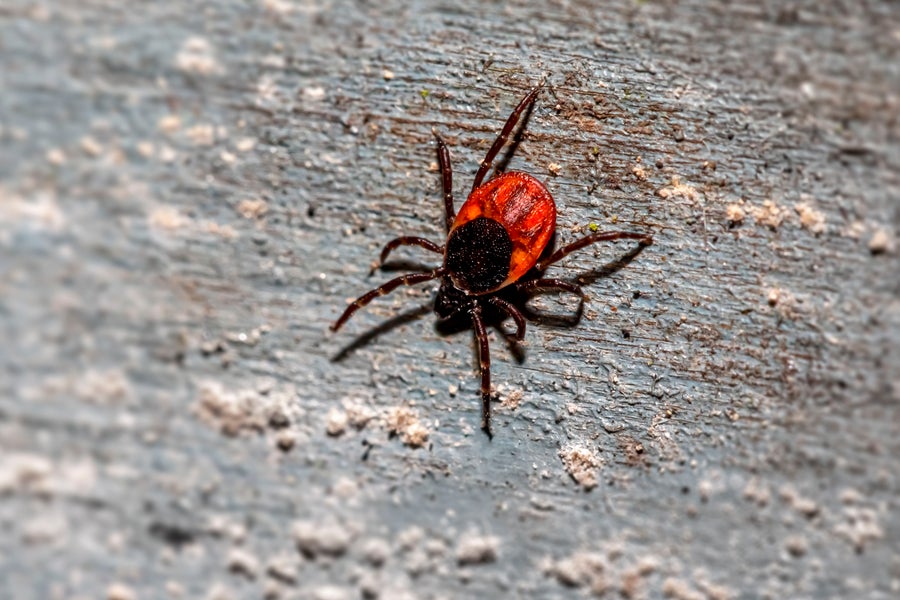
https://static.scientificamerican.com/dam/m/560713ce52f59ee3/original/Castor-bean-tick-ixodes-scapularis.jpg?m=1747069972.279&w=900

Castor bean tick (ixodes scapularis). ErikKarits/Getty Images

.

.

Click the link below for the complete article:

https://www.scientificamerican.com/article/babesiosis-a-tick-borne-disease-that-resembles-malaria-is-on-the-rise/

.

__________________________________________

Older Entries Newer Entries

JaZzArt en València

Faith saved us from the savages that we were, losing faith makes us savages again

PeopleTalky

Where Trends Meet Truth

MRS. T’S CORNER

https://www.tangietwoods

Srikanth’s poetry

Freelance poetry writing

MediaNegy

Zalai Betti

INOVATION BLOG AND NEWS

INOVATION BLOG PEOPLE AND NEWS

szigetingy | budapest

Németh György

PT. LPPL Lombok

Konsultan Lingkungan Hidup di Lombok - NTB

Idézetek – LeaArt21

Lea Krasznai (LeaArt21) – Idezetek (Idézetek) WordPress (Budapest, Hungary)

danielecolleoni

Appunti, spunti e passioni in liberta'

تعلم وعلم، ادخر،سافر واستجمم .

تعنى بتقديم نصائح للمعلمين المبتدئين، والطلبة الممتحنين، ومشاركة الاخرين تجربة الادخار في المال، بترشيد الاستهلاك المنزلي، وترتيب البيت، والحفاظ على البيئة، وتشجيع السيارات صديقةالبيئة، والسياحة والاسفار، ونماء رؤوس الاموال، والطب البديل وتشجيع التعليم الرقمي والذكاء الاصطناعي، والعناية بالنحل وتربية الاسماك، والاسثمار في رؤوس الاموال، الزراعة العضوية، والعناية باسنان الرضع، و صحة الحوامل، وتفسير القران

scientifique

apprendre pour évoluer

In Between the Lines

Thoughts on books, language, meaning, and the culture around it.

Great Lakes Mindset

Outdoor Recreation & Adventure in the Great Lakes Region

Nelsapy

News, Info, Bio, Articles, Reviews, Lyrics, Technology, Science, Inspiration, Motivation, Philosphy and many more...

Becoming HIS Tapestry

Christian Lifestyle Blogger

Joe Mullins Commissioner

CEO and president of The Mullins Companies

The Luttie Board

Two Cultures. One Life. Endless Stories

Charles Maxwell DeCook

Real Estate Development Specialist

Amor Entre Estrellas

¡Bienvenido de vuelta viajero!

Heart of Loia `'.,°~

so looking to the sky ¡ sing and from my heart to YOU ¡ bring...

Michael Ciullo

CEO and Founder of Nsight Health

Nelson MCBS

Catholic News, Prayers, HD Images, Rosary, Music, Videos, Holy Mass, Homily, Saints, Lyrics, Novenas, Retreats, Talks, Devotionals and Many More

global geopolitics

Decoding Power. Defying Narratives.

Talk Photo

A creative collaboration introducing the art of nature and nature's art.

Movie Burner Entertainment

The Home Of Entertainment News, Reviews and Reactions

C r i s t i a n a' s Fine Arts ⛄️

•Whenever you are confronted with an opponent, conquer him with love.(Gandhi)

TradingClubsMan

Algotrader at TRADING-CLUBS.COM

Comedy FESTIVAL

Film and Writing Festival for Comedy. Showcasing best of comedy short films at the FEEDBACK Film Festival. Plus, showcasing best of comedy novels, short stories, poems, screenplays (TV, short, feature) at the festival performed by professional actors.

Bonnywood Manor

Peace. Tranquility. Insanity.

Warum ich Rad fahre

Take a ride on the wild side

Madame-Radio

Découvre des musiques prometteuses (principalement) dans la sphère musicale française.

Ir de Compras Online

No tiene que Ser una Pesadilla.

Kana's Chronicles

Life in Kana-text (er... CONtext)

Jam Writes

Where feelings meet metaphors and make questionable choices.

emotionalpeace

Finding hope and peace through writing, art, photography, and faith in Jesus.

Essu Center

Eyasu The Wonderful

Wearing2Gowns.Blog

A former medical student's journey through healthcare challenges and personal growth

...

love each other like you're the lyric to their music