For years, scientists have viewed cancer as a localized glitch in which cells refuse to stop dividing. But a new study suggests that, in certain organs, tumors actively communicate with the brain to trick it into protecting them.
Scientists have long known that nerves grow into some tumors and that tumors containing lots of nerves usually lead to a worse prognosis. But they didn’t know exactly why. “Prior to our study, most of the focus has been this local interaction between the nerve [endings] and the tumor,” says Chengcheng Jin, an assistant professor of cancer biology at the University of Pennsylvania and a co-author of the study, which was published today in Nature.
Jin and her colleagues discovered that lung cancer tumors in mice can use these nerve endings to communicate way beyond their close vicinity and send signals to the brain through a complex neuroimmune circuit. They also confirmed the circuit exists in humans.
Setting up this circuit starts with a process called innervation, in which lung tumors wire themselves into the vagal nerves—the internal information highway that connects the vital organs to the brain. Within this highway, Jin’s team identified a specialized group of sensory neurons that communicate directly with the central nervous system. “Our study suggests that the tumor actually hijacks these existing pathways to promote itself,” explains Rui Chang, an associate professor of neuroscience at the Yale School of Medicine and a co-author of the study.
When a tumor develops, it employs vagal neurons to send signals screaming up to the nucleus of the solitary tract—the region in the brain stem that, under normal circumstances, keeps functions such as blood pressure, heart rate or digestion in check. The signal sent by the tumor exploits this system, much like malicious code used by a hacker.
Instead of recognizing the tumor as an invader that needs to be destroyed, the brain processes the signal and activates the sympathetic nervous system, mainly known as the driver of the fight-or-flight response. This sympathetic surge is caused by the release of noradrenaline, which, in the context of cancer, has catastrophic consequences.
The noradrenaline is released directly in the tumor’s immediate neighborhood, where it attaches to macrophages—the frontline cells of the immune system that identify, eat, and destroy threats. The macrophages are covered in docking stations called β2 adrenergic receptors, which normally tell the cells when to be aggressive and when to “chill,” preventing the immune system from destroying healthy cells. When the noradrenaline released by the brain-controlled nerves binds to these receptors, it effectively reprograms the macrophages to switch sides.
In this suppressed state, they start releasing chemical signals that act as a “do not disturb” sign for the rest of the immune system. This neutralizes one of the body’s most effective weapons: T cells, the specialized assassins that physically kill tumor cells. Because the brain has ordered the macrophages to create an immunosuppressive shield, the T cells lose their energy, stop multiplying, and fail to recognize the cancer as a threat.
“The authors characterized an entire bidirectional tumor-neural pathway that promotes tumor growth, with huge relevance to human health,” says Catherine Dulac, a professor of molecular and cellular biology at Harvard University, who was not involved in the study.
Jin and her team also looked for ways to stop tumors from talking to the brain. By mapping this loop from the lung to the brain and back again, the researchers identified several new places where they could “cut the wire.” The study showed that blocking any part of the brain-tumor circuit reawakened the immune system.
“Obviously, the perspective for application to cancer treatment is extremely promising,” Dulac says. Jin and Chang say we’re still rather far away from translating their findings into therapeutic strategies, however.
“What we are talking about is going from a mouse model to human. I think there’s still a long way to go,” Chang says.
.
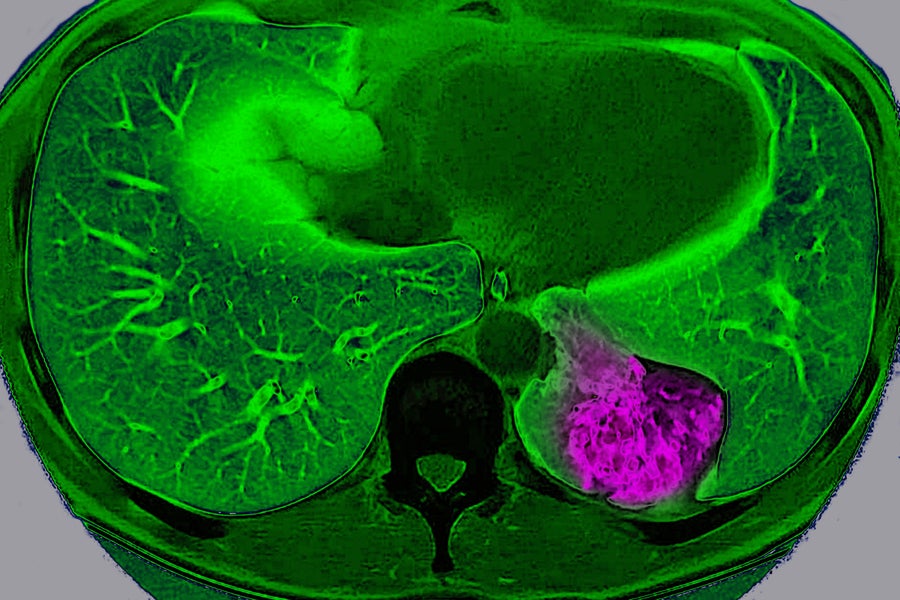
Lung cancer on the left pulmonary lobe, seen on a radial section MRI scan of the chest. BSIP/Universal Images Group via Getty Images
Note: You can save 35 delicious recipes after you click the link shown at the bottom of the page. e.g.,!
Click the link below the picture
The first flavor that comes to mind when you think of chicken wings might be buffalo — and it’s a classic for a reason. However, there are plenty of other sauces and rubs to try, whether baking, frying, or grilling your wings.Smoked chicken wings with ranch dressing, crispy garlic-glazed chicken wings, or even limoncello-marinated chicken wings with pepperoni sauce (pepperoni! sauce!) will take your game day and Super Bowl spreads to the next level. With dozens of chicken wing recipes to choose from, you’re sure to appreciate some old favorites and add a few new varieties to your game day repertoire.
.
Credit: Matt Taylor-Gross / Food Styling by Amelia Rampe
.
.
Click the link below to save 35 delicious wing recipes for the game (check them out):
The crackdown on dissent and speech in Minnesota this winter follows a pattern that is common in countries that slide from democracy to autocracy: A leader enacts a legally dubious policy. Citizens protest that policy. The government responds with intimidation and force. When people are hurt, the government blames them and lies about what happened.
The New York Times editorial board published an index in October tracking 12 categories of democratic erosion, based on historical patterns and interviews with experts. Our index places the United States on a scale of 0 to 10 for each category. Zero represents the United States before President Trump began his second term — not perfect, surely, but one of the world’s healthiest democracies. Ten represents the condition in a true autocracy, such as China, Iran, or Russia.
Based on recent events, we are moving our assessment of one of the categories — stifling speech and dissent — up one notch, to Level 4:
Stifling speech and dissent
Mr. Trump’s Justice Department has become an enforcer of his personal interests, targeting people for legally dubious reasons while creating a culture in which his allies can act with impunity. The targets include Jerome Powell, the Federal Reserve chairman, and several Democratic. True authoritarians go much further, but Mr. Trump has already undone the post-Watergate depoliticization of the Justice Department.
The wide-ranging abuses in Minnesota are the main reason for the change. The Trump administration is conducting a military-style operation in an American city under dubious pretenses. The stated goal is immigration enforcement, even though the state is home to relatively few undocumented immigrants. The true goal seems to be instilling fear in people who oppose Mr. Trump’s agenda. Federal agents have killed two protesters, Renee Good and Alex Pretti, and assaulted and menaced others. The administration has made clear that the abusers will face no accountability.
The acceleration in the stifling of dissent and speech is broader than what’s happening in Minnesota. Since late last year, the administration has also widened its campaign of investigating perceived enemies, such as Jerome Powell, the Federal Reserve chair. The Department of Homeland Security has used subpoenas that no judge approved to demand information on critics. The F.B.I. searched the home of a journalist who had exposed problems with the administration’s policies.
Our country is still not close to being a true autocracy. Many forms of speech and dissent remain vibrant in the United States, in courts, in Congress, the media, and on the streets. But Mr. Trump and his allies have restricted dissent in fundamental ways. It is a violation of basic American values.
Modern authoritarian takeovers often do not start with a military coup. They instead involve an elected leader who uses the powers of the office to consolidate authority and make political opposition difficult. The repression of speech and dissent is central to this process. Even before recent months, Mr. Trump had done so by punishing law firms that had opposed him, revoking the visas of foreign students who criticized the war in Gaza and contributing to intimidation campaigns against federal judges.
Autocrats use the immense power of law enforcement as a political tool, and Mr. Trump’s Justice Department has become an enforcer of his interests. It targets his perceived enemies, such as Jerome Powell, the Federal Reserve chair, on shaky grounds while dropping legitimate investigations of Mr. Trump’s allies or pardoning them. True authoritarians go much further, but Mr. Trump has undone the post-Watergate bipartisan efforts to depoliticize the Justice Department.
When a democracy slides toward autocracy, the leader often finds ways to neuter the legislature. The Trump administration has violated the law by withholding funding authorized by Congress. Mr. Trump has gutted congressionally authorized agencies, including the U.S. Agency for International Development. He has imposed new taxes — his tariffs — without congressional approval. He has ordered overseas military attacks without consulting Congress in ways that his recent predecessors did.
Would-be authoritarians recognize that courts can keep them from consolidating power, and they take steps to weaken or bypass judges. At times, the Trump administration has openly defied federal judges. A judge in Minnesota recently excoriated Immigration and Customs Enforcement for disobeying nearly 100 orders in January alone. On other occasions, the administration has engaged in gamesmanship, ignoring the spirit of judicial orders.
Autocrats often curtail democracy by declaring an emergency and arguing that the threat requires them to exercise unusual degrees of power. Mr. Trump’s recent predecessors were not perfect on this issue, but he has reached another level. His sweeping tariffs are one example. Justifying deportations by claiming that a Venezuelan gang had taken over American cities is another example.
Authoritarians frequently and performatively use the military for domestic control. Mr. Trump deployed the National Guard in Los Angeles to crack down on protests. He has also begun to treat the military as an extension of himself, firing high-ranking officials without good reason and giving overtly political speeches to military readers. ICE is not part of the military, but it is acting largely as a paramilitary force in Minnesota and elsewhere.
Authoritarians tend to demean minority groups, trying to turn them into perceived threats that provide justification for a leader to amass power. Mr. Trump has vilified immigrants and transgender Americans. His appointees and political allies have made blatantly racist, Islamophobic, and antisemitic statements. Mr. Trump has denigrated Somalis in outrageous ways, such as saying, “They contribute nothing. I don’t want them in our country.”
Democratic governments prize accurate information. Authoritarians seek to suppress inconvenient truths. The Trump administration has sought to manipulate government information by, among other things, sidelining scientific experts. The administration has also taken steps to control the media, using the threat of regulatory punishment to silence criticism.
Trying to take over universities
Authoritarians, recognizing that universities are hotbeds of independent thought and political dissent, often single them out for repression. A signature policy of Mr. Trump’s second term has been his attack on higher education. He has cut millions of dollars of research funding, tried to dictate hiring and admissions policies, and taken steps to dictate what colleges can teach.
Creating a cult of personality
Emperors and kings often glorified themselves by displaying their portraits everywhere. The American tradition rejected that hagiography for living presidents — until Mr. Trump. Among recent examples: He rebranded the Kennedy Center to add his own name. The Board of Peace for Gaza will be housed at an institute newly named for him. And the government now sells a so-called gold card, with his face on it, that costs $1 million and offers legal residency to immigrants.
Using power for personal profit
Authoritarians often turn the government into a machine for self-enrichment. Mr. Trump glories in his administration’s culture of corruption. He rewards foreign governments that bestow gifts on him (like a 747 airplane) and approve deals with his company. His family has made hundreds of millions of dollars from crypto. In some cases, he has later helped his benefactors, including by giving pardons.
Manipulating the law to stay in power
Authoritarians change election rules to help their party, and they rewrite laws to ignore term limits. In Mr. Trump’s second term, he has shown worrisome signs of trying to entrench the power of the Republican Party — and recently taken steps to accelerate that campaign. In February, he called for the federal government to take over control of election administration from states. That builds on earlier moves, such as an executive order that would force states to reject some mail-in ballots.
Background and methodology: The clearest sign that a democracy has died is that a leader and his party make it impossible for their opponents to win an election and hold power. Once that stage is reached, however, the change is extremely difficult to reverse.
The 12 benchmarks in this editorial offer a way to understand how much Mr. Trump is eroding American democracy. The categories are based on interviews with legal scholars, political scientists, historians, and other democracy experts. The ratings come from the New York Times editorial board. In our 0-to-10 scales, zero represents roughly where the United States, flawed though it was, had been under presidents of both parties prior to Mr. Trump. Ten represents the condition in a true authoritarian state. Moving even one notch toward autocracy is a worrisome sign.
.
Frontal Assault
.
.
Click the link belowfor the complete article (and charts):
Insecurity is loud because it has something to prove. True confidence, however, has nothing to audition for. When you’re genuinely backed by self-assurance, you don’t feel the need to suck the oxygen out of the room. You become the person who listens more than they speak. This isn’t about being shy; it’s about being so […]
Scientists have found a key brain network that’s disrupted by Parkinson’s disease, according to a study published today in Nature. The results change doctors’ understanding of what causes Parkinson’s symptoms and may unlock more effective and precise treatments.
Parkinson’s has long been considered a movement disorder. Its hallmark symptoms include involuntary muscle contractions, tremor and difficulty walking. But the disease can also disrupt sleep, blood pressure regulation, digestion and cognitive function. The movement-related symptoms can worsen when someone with the disease is under stress, for example, but improve while they are listening to music.
The common factor underlying these seemingly disconnected symptoms, according to the new results, is a brain network that was only discovered in 2023. Called the somato-cognitive action network, or SCAN, it links the mind and the body to turn thoughts into actions. The researchers found that targeting this network with brain-stimulating treatments could better alleviate the symptoms of Parkinson’s disease.
“Parkinson’s is not just a movement problem involving one body part. This study shows it is a whole-body brain network disorder that links movement, thinking, arousal and internal body control,” says Michael Okun, a neurologist at the University of Florida and medical director of the Parkinson’s Foundation, who was not involved in the study.
It’s an “extraordinary” set of findings, says Todd Herrington, a neurologist at Massachusetts General Hospital who treats and studies Parkinson’s.
A Strange Pattern
Neuroscientists have long known that a region of the brain called the primary motor cortex, nicknamed M1, controls the body’s movements. This headband-shaped brain strip extends from ear to ear and contains a “map” of the entire body—often visualized as a distorted humanoid figure called the homunculus. If you want to move your hand, higher-level brain regions closer to your forehead send signals back to M1, which in turn sends motor signals to the hand.
But neurologist Nico Dosenbach of Washington University in St. Louis had observed something strange. When a person in a brain scanner moves their mouth, multiple parts of M1—not just the “mouth” region—activate. These extra spots of activation “just didn’t make sense, if all the things I thought I knew were true,” he says.
It turns out that neuroscientists had been underestimating M1 for nearly a century. M1 is not a simple map of the body. Interspersed between body-part-specific areas are nodes of a network that coordinates higher-level planning for movement. Instead of being a mere foot soldier following orders from more frontal brain regions, M1 helps plan, guide and coordinate action. Dosenbach and his colleagues named the network the somato-cognitive action network, or SCAN, reflecting how it bridges the body and the mind.
These findings caught the eye of Hesheng Liu, a neuroscientist at Changping Laboratory in Beijing. For a decade, he’d been studying Parkinson’s disease, trying to figure out how a treatment called deep-brain stimulation (DBS) works to alleviate symptoms. His team had noticed the strange patterns in M1, too. “We had no idea what they are,” Liu says. When he saw Dosenbach’s paper on SCAN, everything started to make sense. “Probably, that region is behind Parkinson’s disease,” he thought.
A Mind-Body Network
Doctors don’t know what sets off the chain of events that cause Parkinson’s disease. But they know which brain area it most devastates: the substantia nigra, a structure deep in the brain, where neurons that produce the brain signaling chemical dopamine slowly die off.
Stimulating other regions connected to the substantia nigra can alleviate Parkinson’s symptoms, suggesting an entire circuit is involved. Researchers knew that M1 was part of this circuit—and the new results show that it specifically involves the SCAN regions of M1 that plan and coordinate movement. Using multiple brain-imaging datasets from 863 real people with Parkinson’s and healthy individuals, Liu’s team found that SCAN was overlyconnected to deep-brain regions in those with Parkinson’s but not in healthy people or those with other movement disorders. Individuals with Parkinson’s who had higher connectivity in this circuit experienced worse symptoms.
The researchers also found that existing treatments for Parkinson’s, including the medication levodopa (also known as L-DOPA), as well as brain stimulation, decreased the circuit’s connectivity, making the brains of people with the condition look more like those of healthy people. The more a treatment reduced someone’s SCAN connectivity, the more their motor function improved.
Doctors don’t yet know if dying neurons in the substantia nigra cause these SCAN disruptions, or vice versa, says Michael D. Fox, a neurologist at Brigham and Women’s Hospital in Boston, who was not involved in the study. Neurons begin dying decades before symptoms appear, so it seems likely that the former may cause the latter. But it’s “not impossible” that the SCAN dysfunction could start early, too, and cause more neurons to die, he says.
Guiding Better Treatment
Brain stimulation treatments for Parkinson’s were more effective when doctors specifically targeted SCAN regions, Liu’s team also found. This experiment involved a noninvasive technique called transcranial magnetic simulation, or TMS, in which doctors place a wand containing a magnetic coil over the scalp, just on top of M1. Previous studies had shown that the treatment improved symptoms but wasn’t more effective than the medication levodopa. In part because of that limitation, Fox says, TMS isn’t offered clinically to people with Parkinson’s.
But focusing TMS on SCAN regions specifically can improve results, Liu’s team showed. “I’m excited by these results,” Fox says. TMS may be more appealing and accessible to patients than deep-brain stimulation, which requires surgery. “This, in my mind, elevates the potential of noninvasive brain stimulation for helping patients with Parkinson’s in a way that wasn’t there before,” Fox says.
.
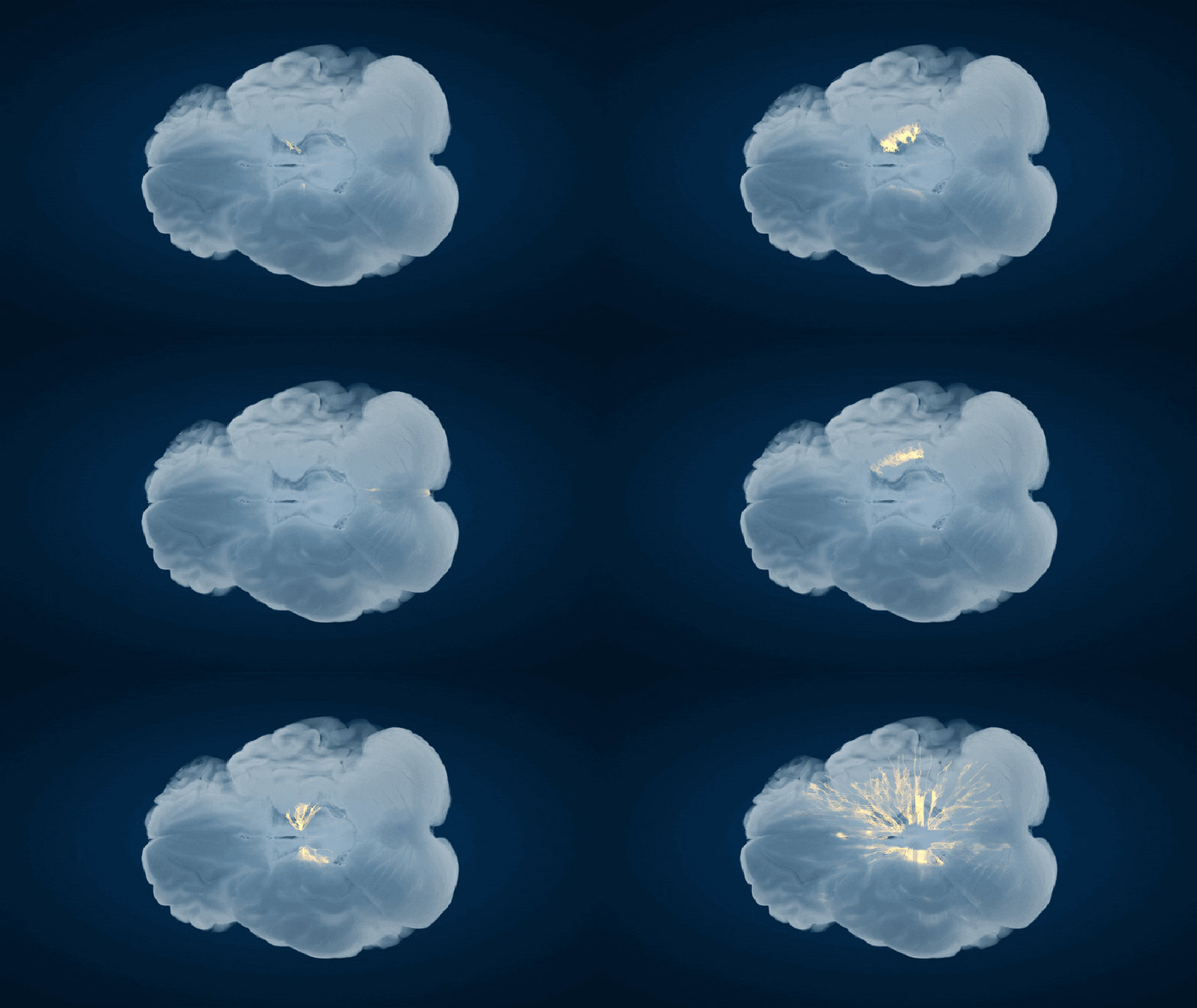
The brain’s motor circuit runs from deep brain structures up to motor regions in cortex. dani3315/Getty Images
Our kids’ school winter vacation schedule is a little wonky; they have a few long weekends off, but then we don’t get a real break till March. It’s not quite enough to go somewhere far away, but when you’re trapped inside with two active boys, those three-day weekends at home feel long. A few years ago, I went on a hunt to find a way to break up that interminable winter slog, to silence the ever-present voices of my sons: “Mom, there’s nothing to do!” (I know there’s nothing to do! It’s freezing out, most team sports are on pause, and by Sunday afternoons the siren call of the iPad becomes deafening to the point of no return.)
I researched. I asked around. Eventually, a friend recommended Mohonk Mountain House, a historic resort that’s about a two-hour drive from New York City. We decided to give it a go. We haven’t looked back.
The place has a kind of old school Catskills-vibe, like if Dirty Dancing met a haunted gothic novel. You can leave after school on a Friday and, after driving up an ear-popping mountain pass, arrive at the enormous, Victorian castle-esque building in time for dinner. The place was founded in 1869, and the aesthetic leans into that history (wood everything, old photographs of Mohonk lining the walls; traditional décor). It’s kind of like The Shining if The Shining was cozy instead of creepy, and the kids, in particular, think it’s very cool.
Mohonk is an all-inclusive resort, so the room rate covers food (but not alcohol). There are set times for breakfast, lunch, and dinner, and the main dining room has lovely views of the mountain and surrounding area. The food is…plentiful. It comes quickly. Breakfast and lunch include buffets the size of a small country. You won’t go hungry at Mohonk Mountain House, that I promise. I’ve never been on a cruise, but I assume that it’s kind of like high-end cruise fare, which isn’t an insult. This is a place that’s best for families. In and out, I say! Let’s get it done with before the kids start asking to play games on our phones.
Most critically, there is a lot to do during the day. There is a heated indoor pool, which my kids love to swim in, and a soothing spa, where you can get facials and massages. There is snow tubing, which my sons enjoy almost as much as I do. There’s a private ice-skating rink with skate rentals included. You can hike up the mountain with spikes, or do cross-country skiing, or snowshoeing as a family. The grounds are picturesque and winter wonderland-y, and every afternoon there’s an open fire pit where you can roast a marshmallow (or five, if you’re my 7-year-old). There are evening activities, like movies, music, and magicians. Last year, we tried indoor archery for the first time. I hit a bullseye. There is no more to that story. I just wanted to share. And the service is family-oriented and helpful. A couple of years ago, my younger son got a horrible stomach virus the night we arrived at Mohonk. He was so sick that we ended up calling the in-house doctor at the hotel, who came right away and said we should go to the nearby hospital to be safe. So my husband sped our car down the dark mountain road while I held my little retching son in the front seat, our other son strapped into the back. Everything was fine, eventually — the hospital was great, our son got fluids, and we stayed until he finally stopped vomiting his brains out. We got back to Mohonk at 3am, exhausted and stressed, and saw that management had put lovely baskets in our room filled with get-better stuffed animals, fresh fruit and snacks, and an array of games for the kids. They continually checked in on us until we left the following day, and all things considered, we had an okay time! Oh, the wonders of traveling with children. The best part about Mohonk, hands down, is that every time we go there, it snows. There’s like some magical timer that knows we’ve arrived, and waking up to the mountain blanketed in white is such a treat for the kids. I can’t guarantee that it’ll happen for you, but if you’d like to coordinate dates with me, just let me know! It never fails.
I feel lucky that our family found this place. It’s so good for kids. We usually arrive in a kind of winter funk and leave with a rosy glow, just enough to get me through until spring. Unsurprisingly, Mohonk has a kind of cult following—families return year after year, and we’ve now gone enough times to recognize people, giving them friendly nods on the trails or the ice rink or while going back for a third piece of cake at the buffet. Winter is coming, which, as a mom, feels daunting, but at least I have Mohonk to look forward to. Another bullseye is in my future.
.
My family has been going to Mohonk Mountain House for years for a reason. Shutterstock
President Trump’s declaration that he wants to “nationalize” voting in the United States arrives at a perilous moment for the relationship between the federal government and top election officials across the country.
While the executive branch has no explicit authority over elections, generations of secretaries of state have relied on the intelligence gathering and cybersecurity defenses, among other assistance, that only the federal government can provide.
But as Mr. Trump has escalated efforts to involve the administration in election and voting matters while also eliminating programs designed to fortify these systems against attacks, secretaries of state and other top state election officials, including some Republican ones, have begun to sound alarms. Some see what was once a crucial partnership as frayed beyond repair.
They point to Mr. Trump’s push to overturn the 2020 election, his continued false claims that the contest was rigged, the presence of election deniers in influential government positions, and his administration’s attempts to dig up evidence of widespread voter fraud that year, even though none has ever been found.
The worry, these election officials say, is that Mr. Trump and his allies might try to interfere in or cast doubt on this year’s midterm elections. The president is urgently trying to defend the Republican majorities in Congress, and the political environment has appeared to grow less friendly to his party.
On Tuesday, a day after Mr. Trump’s comments about wanting to “nationalize” elections, Karoline Leavitt, the White House press secretary, said the president was referring to federal election legislation in Congress. Yet after Ms. Leavitt’s attempt to clarify Mr. Trump’s initial remarks, he doubled down on his assertion that the federal government should oversee state elections.
“Look at some of the places — that horrible corruption on elections — and the federal government should not allow that,” he said. “The federal government should get involved.”
Even before Mr. Trump’s latest remarks, state officials had pointed to other evidence of his aims regarding elections.
The F.B.I. seized ballots and other 2020 voting records last week from an election office in Fulton County, Ga., which on Wednesday challenged the seizure in court. The Justice Department has sued nearly half of the states in the country to try to obtain their full voter rolls with Americans’ personal information in an effort to build a national voter database.
Attorney General Pam Bondi sent a threatening letter to Democratic officials in one of those states, Minnesota, suggesting that the administration might wind down its immigration enforcement efforts there in exchange for concessions, including handing over its voter data.
The New York Times also reported that Tulsi Gabbard, the director of national intelligence, met with F.B.I. field agents the day after the Fulton County search and called Mr. Trump, allowing the president to talk on speakerphone with agents involved in the investigation.
“We can’t trust the federal government, and they are now adversaries of the states,” Shenna Bellows, the Democratic secretary of state in Maine and who is a candidate for governor, said in an interview. “They are abusing their power by trying to build this national voter database that is completely outside of the scope of their authority under the Constitution, and they’re afraid to actually engage in dialogue.”
The tensions are a sharp shift for election officials in the states — which the Constitution dictates are in charge of carrying out elections — after decades of close alliance with the federal government.
These officials — who are much more accustomed to policy nuance and procedural debate than the raw politics of the Trump era — bristle at the administration’s insinuations that they are doing a poor job and are not securing the country’s elections.
“The things that have been said publicly, frankly, are quite appalling,” Lt. Gov. Deidre Henderson, Republican of Utah, said last week at the National Association of Secretaries of State conference in Washington. She was speaking during a question-and-answer session with Jared Borg, a deputy director at the White House Office of Intergovernmental Affairs.
Ms. Henderson, who oversees Utah’s elections, called out Ms. Bondi in particular and the Justice Department’s efforts to push states to hand over their voter rolls.
“She’s pretty much slandered all of us,” Ms. Henderson said. “And to me, that’s problematic to publicly claim that secretaries of state are not doing our jobs and the federal government has to do it for us. Not OK.”
.
Some Democratic state election officials, including Shenna Bellows, secretary of state in Maine, have spoken out about President Trump’s efforts to involve the administration in election and voting matters. Credit…Sophie Park for The New York Times
Film and Writing Festival for Comedy. Showcasing best of comedy short films at the FEEDBACK Film Festival. Plus, showcasing best of comedy novels, short stories, poems, screenplays (TV, short, feature) at the festival performed by professional actors.




:max_bytes(150000):strip_icc()/Buffalo-Wings-Recipe-FT-BLOG1222-26e07fdb9aec4afe8d4bc39ea331c753.jpg) Credit: Matt Taylor-Gross / Food Styling by Amelia Rampe
Credit: Matt Taylor-Gross / Food Styling by Amelia Rampe
 Frontal Assault

 My family has been going to Mohonk Mountain House for years for a reason. Shutterstock
 Some Democratic state election officials, including Shenna Bellows, secretary of state in Maine, have spoken out about President Trump’s efforts to involve the administration in election and voting matters. Credit…Sophie Park for The New York Times
 James' World 2