
Home

Trump Seeks to Abolish Iran’s Atomic Stockpile, a Problem He Helped Create

Leave a comment

Click the link below the picture

.

As President Trump struggles to negotiate or intimidate his way out of the war he began with Iran, he is confronting the complicated legacy of his decision, eight years ago, to cancel what he has called “a horrible, one-sided deal.”

That Obama-era agreement suffered from flaws and omissions. It would have expired after 15 years, leaving Iran free after 2030 to make as much nuclear fuel as it wanted. But once Mr. Trump withdrew from the deal in 2018, the Iranians went on an enrichment spree much sooner, leaving them closer to a bomb than ever before.

Now, Mr. Trump’s negotiators are dealing with the consequences of that decision, which he made over the objections of many of his national security advisers at the time. Underscoring the challenges, Mr. Trump abruptly called off on Saturday a round of nuclear talks with Iran in Pakistan.

Much recent attention has focused on Iran’s half-ton of uranium that has been enriched to a level just shy of what is typically used in atom bombs. The majority of it is thought to be buried in a tunnel complex that Mr. Trump bombed last June. But those 970 pounds of potential bomb fuel represent only a small fraction of the problem.

Today, international inspectors say, Iran has a total of 11 tons of uranium, at various enrichment levels. With further purification, that is enough to build up to 100 nuclear weapons — more than the estimated size of Israel’s arsenal.

Virtually all of that cache accumulated in the years after Mr. Trump abandoned the Obama-era deal. That is because Tehran lived up to its pledge to ship to Russia 12.5 tons of its overall stockpile, about 97 percent. Iran’s weapon designers were left with too little nuclear fuel to build a single bomb.

Now, matching or exceeding that diplomatic accomplishment is one of the most complex challenges facing Mr. Trump and his two lead negotiators, his son-in-law Jared Kushner and his special envoy, Steve Witkoff, whose planned travel to Pakistan for another session of negotiations was canceled at the last minute by Mr. Trump. Central to the negotiations is the American demand that Iran halt further enrichment and that it hand over the fuel stockpile it has built up over the past eight years; Iran is resisting on both fronts.

Mr. Trump is acutely aware that whatever he can negotiate with the Iranians will be compared with what Mr. Obama achieved more a decade ago. While the two countries are still exchanging proposals, and could well come up empty-handed, Mr. Trump is already judging his own, yet-to-be-negotiated agreement as superior.

“The DEAL that we are making with Iran will be FAR BETTER,” Mr. Trump wrote on his social media site on Monday. The Obama-era deal “was a guaranteed Road to a Nuclear Weapon, which will not, and cannot, happen with the deal we’re working on.”

Based on Mr. Trump’s often-shifting objectives for the conflict with Iran, Mr. Kushner and Mr. Witkoff face a daunting list of negotiation topics, many of which the Obama team failed to address. They have to find a way to limit Iran’s ability to rebuild its arsenal of missiles. (The 2015 deal never addressed Iran’s missile capability, and Tehran ignored a United Nations resolution imposing limits.)

They need to find a way to fulfill Mr. Trump’s mandate to protect anti-regime protesters, whom Mr. Trump promised to help in January when they took to the streets. In fact, those protests were among the triggers for the American military buildup that ultimately led to the Feb. 28 attack.

And they must negotiate a reopening of the Strait of Hormuz, which the Iranians shut down after the American-Israeli attacks, a move Mr. Trump was clearly unprepared for. Now Iran has discovered that a few inexpensive mines and threats to ships have given it huge leverage over the global economy, pressure it can dial up or down in ways that nuclear weapons cannot.

But it is the fate of the atomic program that lies at the negotiations’ heart. As in the 2015 talks, the Iranians declare they have a “right” to enrich under the Nuclear Nonproliferation Treaty, one they refuse to give up. But that still leaves room for “suspension” of all nuclear efforts for some number of years. (Vice President JD Vance demanded 20 years when he met his Pakistani interlocutors two weeks ago, only to have Mr. Trump declare a few days later that the right period was “unlimited.”)

William J. Burns, the former C.I.A. chief who played a lead role in the Obama-era negotiations, said in The New York Times on Friday that a good deal would require “tight nuclear inspections, an extended moratorium on the enrichment of uranium and the export or dilution of Tehran’s existing stockpile of enriched uranium in exchange for tangible sanctions relief.”

He also called for the Trump administration to delineate every term. “Unless the lines are clearly drawn and strictly monitored,” Mr. Burns said, “the Iranians will paint outside them.”

That is exactly what happened when Mr. Trump pulled out of the Obama agreement in 2018 and replaced it with nothing. At the time, Iran did not have a single bomb’s worth of uranium. Then it started enriching with a vengeance.

In the current war, Mr. Trump has spoken publicly about a possible raid to seize Iran’s half ton of near-bomb grade material, which could make roughly 10 weapons. But he has not talked about the overall 11-ton cache and the threat it poses to the United States and its allies.

It is hardly a new problem. In 2006, Iran began enriching uranium on an industrial scale. While it described its aims as peaceful and civilian in nature, its aggressive moves convinced experts that Tehran wanted to build a bomb.

.

https://static01.nyt.com/images/2026/02/22/multimedia/25dc-TRUMP-NUKES/22int-iran-larijani-lfwj-superJumbo.jpg?quality=75&auto=webpIn February, in preparation for a possible war with the United States, Iran moved missile launchers into positions within striking distance of Israeli and American military forces. Credit…Arash Khamooshi for The New York Times

.

.

Click the link below for the complete article:

https://www.nytimes.com

.

__________________________________________

Joseph Paul Reason (1941- ) First African American Four-star Admiral in US Navy

Leave a comment

Joseph Paul Reason (1941- ) First African American Four-star Admiral in US Navy

Why firstborns may be more likely than secondborns to be autistic or to have allergies

Leave a comment

Click the link below the bottom picture

.

As the youngest child, I’ve always known my place in the familial order. There’s less pressure but also lower expectations. It means having more lenient and older parents, but also, at times, feeling overlooked. And now I feel a bit vindicated.

Scientists have long been fascinated by how birth order can affect every aspect of who we are, from personality to sexual orientation. Now researchers have comprehensively looked at how birth order affects the likelihood of various health conditions.

In a wide-ranging preprint study that looked for 569 conditions across more than 10 million individuals and more than five million families, researchers found that firstborns were more likely to be diagnosed with neurodevelopmental conditions such as autism and attention deficit hyperactivity disorder (ADHD), as well as allergies. Additionally, firstborns were more likely to have childhood psychoses and acne. Those born second, on the other hand, were more likely to be diagnosed with substance use disorders, shingles, and gastrointestinal disorders.

The findings have not yet been peer-reviewe,d but have been submitted to Nature Health.

Forest plot shows likelihood of conditions with the strongest birth-order associations among firstborns versus secondborns.

Amanda Montañez; Source: “Birth Order and Disease Risk across the Human Phenome: Evidence from 10 Million Siblings,” by Benjamin Kramer et al. Preprint posted to medRxiv on March 27, 2026 (data)


The age gap between siblings also appears to matter. “It seems that smaller age differences [between siblings] are protective against quite a few diseases,” at least relative to larger age gaps, says study co-author Andrey Rzhetsky, a professor of medicine and genetics at the University of Chicago.

Sibling age gaps of less than four years were associated with a lower rate of allergies and asthma—likely because kids who are closer in age interact more often, sharing germs that improve their microbiome. The so-called hygiene hypothesis suggests that lower exposure to allergens in early life makes it more likely that children will develop allergies and asthma—and according to Rzhetsky, this phenomenon is the reason why firstborns and only children are more likely to have these conditions. Firstborns’ immune system may not be exposed to germs from other children in the house as much as that of their younger siblings, especially if the oldest children don’t go to daycare, so they are more likely to overreact to allergens.

The study’s strength is in its large sample size and design, which compared siblings both with their own family members and with siblings within other families to control for socioeconomic status and genetics, says Rodica Damian, an associate professor of social psychology at the University of Houston, who was not involved in the study. “I’m confident that the results that [the researchers] see are probably there, but it’s important to note that they didn’t measure actual disease occurrence,” Damian adds.

Another limitation was that, rather than reviewing the prevalence of health conditions, the researchers looked at administrative insurance claims data, which may reflect that parents are more likely to seek a diagnosis for conditions such as autism, ADHD, and allergies for their firstborn than they are for their subsequent child. “You can’t get a diagnosis if you don’t seek it,” Damian notes. And with children born second, parents might be less inclined to visit their doctor for subtle symptoms.

Additionally, the way a person interacts with the health care system might have nothing to do with their likelihood of developing a condition. The study didn’t include uninsured families or those on Medicaid, which means it skewed wealthier and healthier because poorer families may not have access to high quality health care, says Julia M. Rohrer, who studies birth order at Leipzig University in Germany and was not involved in the study.

Nevertheless, Rohrer says, the rigor of the data analysis is apparent. For example, the researchers looked at how “reproductive stoppage”—when parents stop having children after their first child has a severe challenge—affected the data. After excluding those who didn’t have a second child from the group, the increase in autism diagnoses was still present. (Autistic people have a wide range of presentations and support needs.) “The researchers were methodologically thorough. They’re not just trying to tell a nice story but to really get at the right answer,” Rohrer adds.

With regard to second children and the increased incidence of substance use disorders, Damian takes issue with the idea that this association is linked to increased risk-taking behavior in those born second, as the study authors hypothesize. Previous research has shown no link between birth order and risk-taking behavior. Rather, it’s more likely the result of younger siblings being exposed to alcohol and drug use earlier on by their older siblings, she adds.

The variations between siblings identified in the study are small, but at the population level, they can have an effect. “It could be that all of these small effects of birth order come together to make a difference,” Rohrer says.

.

https://static.scientificamerican.com/dam/asset/223d63f5-e8c1-4690-bf0c-777b61723b14/GettyImages-2264279934_resized.jpeg?m=1776706774.09&w=900Flashpop/Getty Images

.

.

Click the link below for the complete article:

https://www.scientificamerican.com/article/why-firstborns-may-be-more-likely-than-secondborns-to-be-autistic-or-to-have-allergies/

.

__________________________________________
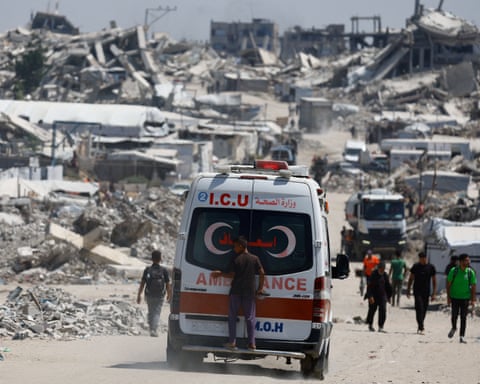
Are You ‘Broke Planning’? 10 Frugal Habits People Are Using to Save in 2026

Leave a comment

Click the link below the picture

.

In 2026, frugality might feel to some more like a survival strategy than a lifestyle choice. A recent survey by price comparison site, Lenspricer, found that people across the country are adopting “broke behaviors,” from skipping delivery fees to delaying purchases, to cope with the rising cost of living.

The online survey of just over 3,000 adult U.S. respondents highlights an interesting trend. People across the country are making strategic (though often small) adjustments to fine-tune their spending and hopefully save money in the long run.

Yet the real “win” may not be just saving $5 on a pickup order; it’s leveraging those good (or bad) frugal habits to create a tax-advantaged strategy.

For instance, you can reinvest your savings from a delivery into a health savings account (HSA) or maximize your contributions to a 529 plan for your kid’s education. Lowering your tax bill can also help cover increased expenses and grow wealth in other areas, like retirement.So here’s how to turn “broke planning” habits into legitimate wealth-building in 2026.

1. Obsessively turning off lights

California, New York, and North Carolina are just a few states that lead the nation in saving on electricity by “obsessively” turning off lights, according to the Lenspricer survey.

Although switching off lights might save the annual household $25 to $172 per year (depending on bulb wattage, hours of operation, and utility rates), the “tax advantage” may be in your home’s infrastructure.

How to turn “energy efficient” habits into potential tax savings:

  • Electric vehicle (EV) charger installation. Installing a home charging station before June 30, 2026, could net you a tax credit of up to 30% of the cost (capped at $1,000), provided your addition is eligible.
  • Adding insulation to walls and ceilings to improve energy efficiency. You may obtain cost savings by reducing “leakage” of hot air inside a cool house, or vice versa.

For the second bullet, if your home upgrades follow the IRS rules for “medically necessary,” they may be deductible on next year’s federal return. However, be sure the renovations meet the federal tax agency’s strict eligibility requirements.

2. Reusing something you probably shouldn’t have

Residents in high-tax state Massachusetts reportedly admitted to reusing items they probably shouldn’t.

While this may include innocuous items like washing and reusing plastic containers or cutlery, it can also extend to potentially dangerous behaviors, like wearing prescription contacts past expiration.

But in the tax world, “recycling” can be a high-pay-off plan.

How to “reuse, recycle” in a tax strategy:

  • Roth conversions. Early retirement years (between retirement and age 73) are typically lower-income, making them perhaps ideal to “reuse” lower federal tax brackets to convert traditional IRA funds to a Roth IRA.
  • Tax-loss harvesting. “Recycle” your investment losses by netting them against capital gains to lower your taxable income. However, you’ll want to watch the wash sale rule if you plan on repurchasing any securities.

3. Waiting weeks for a sale

Maryland and Iowa residents are more likely to practice the “wait-and-see” purchase method, according to the Lenspricer survey. This means they’re waiting days, even weeks, to see if an item will go on sale before making a purchase. You can use a similar practice for deductions on federal income taxes.

How to turn “waiting for the sale” habits into a tax strategy:

  • Bunching deductions. Between new rules for 2026 charitable deductions and a higher standard deduction, next year’s return might be harder to itemize compared to years past.
  • You can potentially navigate around this obstacle by “waiting” and stacking two years’ worth of charitable donations or medical expenses into a single tax year, thus perhaps surpassing the thresholds.

4. ‘Doomscrolling’ your bank app

New Jersey, Florida, and Tennessee residents — to name a few — may check their banking apps like they’re social media, according to the Lenspricer survey.

Even though staying on top of your finances is prudent, “financial doomscrolling” to the point of obsession can increase feelings of anxiety and stress and even impair decision-making.

Fortunately, in 2026, you can hand over that anxiety to a well-planned tax strategy.

How to help minimize the “doomscrolling” habit for your taxes:

  • Use the IRS tax withholding estimator. If you faced an underpayment penalty (or abnormally high tax refund) during the 2026 tax season, you can use the withholding estimator to maximize your tax home pay this year. That can give you more funds in your pocket (or save you from a large surprise tax bill later), without anxiously wondering whether you’re paying the “right” amount of tax throughout the year.

  • Leverage automated investment platforms to handle decisions like tax-loss harvesting for you. Look for platforms that offer investment oversight and tax planning, which could free you from manual daily tracking of tax-oriented goals.

.

https://cdn.mos.cms.futurecdn.net/XFA5muVa8Vrs4JrhCj3zKL-1024-80.jpg.webp(Image credit: Getty Images)

.

.

Click the link below for the complete article:

https://www.kiplinger.com/taxes/broke-planning-frugal-habits-people-are-using-to-save

.

__________________________________________

Rubio’s Absence From Iran Talks Highlights Stay-at-Home Role

Leave a comment

Click the link below the picture

.

When President Barack Obama negotiated a nuclear deal with Iran more than a decade ago, his point man was Secretary of State John Kerry. Over 20 months of talks, Mr. Kerry met with his Iranian counterpart on at least 18 different days, often several times per day.

High-level nuclear diplomacy was a natural role for the top U.S. diplomat. Secretaries of state traditionally take the lead on the country’s biggest diplomatic tasks, from arms control treaties to Israeli-Palestinian agreements.

But as President Trump prepares to send a delegation to the latest round of U.S.-Iran talks in Pakistan this weekend, his secretary of state, Marco Rubio, will remain where he often does: at home.

Mr. Rubio did not attend the last U.S. meeting with Iran earlier this month. Nor did he join several meetings held over the past year in Geneva and Doha. Mr. Rubio has also been absent from U.S. delegations abroad, working to settle the war in Ukraine and Israel’s war in Gaza. Despite a long period of crisis and war in the region, he has not visited the Middle East since a brief stop in Israel last October.

In recent months, Mr. Rubio — consumed with his second role, as Mr. Trump’s national security adviser — has not traveled much at all.

During the Biden administration, Secretary of State Antony J. Blinken made 11 foreign trips from January 2024 to late April 2024, stopping in roughly three dozen cities, according to the State Department. So far this year, Mr. Rubio has visited six foreign cities, including a stop in Milan for the 2026 Winter Olympics.

Mr. Trump has outsourced much of his diplomacy to others, including his friend Steve Witkoff, a wealthy associate from the world of Manhattan real estate, and his son-in-law, Jared Kushner. Mr. Witkoff and Mr. Kushner have spearheaded diplomacy with Israel, Ukraine, and Russia, as well as Iran, whose delegation they will meet for the second time this month in Islamabad, Pakistan’s capital.

Mr. Rubio’s distance from the trenches of diplomacy reflects his dual role on Mr. Trump’s national security team. For the past year, he has served as the White House national security adviser even while leading the State Department — the first person to do so since Henry A. Kissinger in the mid-1970s.

The secretary of state runs the State Department, overseeing U.S. diplomats and embassies worldwide, as well as Washington-based policymakers. Working from the White House, the national security adviser coordinates departments and agencies, including the State Department, to develop policy advice for the president.

The twin roles reflect Mr. Rubio’s influence with Mr. Trump, and offer him a way to maintain it. For Mr. Rubio, less time abroad means more time at the side of an impulsive president prone to making critical national security decisions at any moment.

As Mr. Witkoff, Mr. Kushner, and Vice President JD Vance met with Iranian officials in Pakistan earlier this month, Mr. Rubio was at Mr. Trump’s side at an Ultimate Fighting Championship event, noted Emma Ashford, an analyst of U.S. diplomacy at the nonpartisan Stimson Center in Washington. “Rubio clearly prefers to stay close to Trump,” Ms. Ashford said.

Mr. Rubio accepted the national security adviser job on an acting basis last May after Mr. Trump reassigned the job’s previous occupant, Michael Waltz. But officials say that Mr. Rubio is expected to keep it indefinitely.

That arrangement is not inherently bad, Ms. Ashford added. And she noted that previous presidents had entrusted major diplomatic tasks to people other than the secretary of state. President Joseph R. Biden Jr. delegated his C.I.A. director, William J. Burns, to handle diplomacy with Russia and cease-fire negotiations between Israel and Hamas, for instance.

But she echoed the complaints by many current and former diplomats that Mr. Rubio seems less like someone performing both jobs than a national security adviser who sometimes shows up at the State Department. “I do think it’s to the detriment of the whole department of State and to America’s ability to conduct diplomacy in general that we effectively have the secretary of state position sitting vacant,” she said.

Tommy Pigott, a State Department spokesman, contested such claims. “Anyone trying to paint Secretary Rubio’s close coordination with the White House and other agencies as a negative could not be more wrong,” he said. “We now have an N.S.C. and State Department that are totally in sync, a goal that has eluded past administrations for decades.”

Mr. Rubio divides his time between the State Department and the White House, often spending time at both in the same day. In an interview with Politico last June, Mr. Rubio said he visited the State Department “almost every day.”

While there, he often meets with visiting dignitaries before returning to the White House. Last week, Mr. Rubio presided over a meeting at the State Department between Lebanese and Israeli officials that set the stage for a cease-fire in Lebanon.

His twin jobs “really do overlap in many cases,” he said. “In many cases, you end up being in the same meetings or in the same places; there’s just one less person in there, if you think about it,” Mr. Rubio added. “A lot of people would come to Washington, for example, for meetings, and they’d want to meet with the national security adviser and then meet with me as secretary of state. Now they can do both in one meeting.”

Asked about his travel schedule during a news conference last December, Mr. Rubio said he had less reason to travel abroad because “we have a lot of leaders constantly coming here” to visit Mr. Trump at the White House. Mr. Rubio also joins Mr. Trump’s foreign trips in his capacity as national security adviser.

Many national security veterans call the arrangement unwise, saying that both jobs are extremely demanding and incompatible with one another.

It was not easy even for Mr. Kissinger, who had firmly established himself over more than four years as national security adviser before convincing President Richard M. Nixon to let him take on an additional role as secretary of state in 1973. (In a reversal of Mr. Rubio’s approach, Mr. Kissinger was in constant motion, including a round of Middle East shuttle diplomacy that kept him on the road for 33 straight days.)

“In general, it’s a mistake to combine those roles,” said Matthew Waxman, who held senior roles at the National Security Council, State Department, and the Pentagon during the George W. Bush administration.

“That said, it’s not necessarily a bad thing that a dual-hatted Rubio is so offscreen right now,” Mr. Waxman added. “Especially while so much attention is focused on high-wire diplomacy with Iran, someone needs to manage foreign policy around the rest of the world.”

More on the Fighting in the Middle East


  • U.S. Weapons: The Iran war has significantly drained much of the U.S. military’s global supply of munitions, and forced the Pentagon to rush bombs, missiles, and other hardware to the Middle East from commands in Asia and Europe. The drawdowns have left these regional commands less ready to confront potential adversaries like Russia and China.

  • Vessels Seized: Iran’s Islamic Revolutionary Guards Corps said that its naval forces had seized two cargo ships near the Strait of Hormuz, the Iranian news media reported, as Tehran renewed its efforts to exert control over the strategic waterway. U.S. military forces stopped and boarded a second tanker carrying oil from Iran in the Indian Ocean.

  • Strike in Lebanon: Israeli strikes killed one journalist and wounded another in southern Lebanon, rattling a tenuous cease-fire in Lebanon.

  • Economic Pain for Iranians: Iranians crossing the country’s border with Turkey expressed widely differing views on the war, the cease-fire, and their government, but all voiced deep concern over an economic crisis they said was unfolding in the country. 

  • Deadline for Trump: A decades-old law allows the president to wage war without congressional approval for 60 days, then limits his options for continuing. President Trump may seek to get around it.

  • Pressure on Iraq: The United States has suspended air shipments of dollars to Iraq, according to two senior Iraqi officials, withholding money that Iraq earned from its own oil sales. It is part of a vigorous pressure campaign by the U.S. administration to force the Baghdad government to distance itself from Iran.

.

https://static01.nyt.com/images/2026/04/24/multimedia/24dc-rubio-iran-ztjc/24dc-rubio-iran-ztjc-jumbo.jpg?quality=75&auto=webpAs President Trump prepares to send a delegation to the latest round of U.S.-Iran talks in Pakistan, his secretary of state, Marco Rubio, will remain where he often does: at home. Credit…Eric Lee for The New York Times

.

.

Click the link below for the complete article:

https://www.nytimes.com

.

__________________________________________
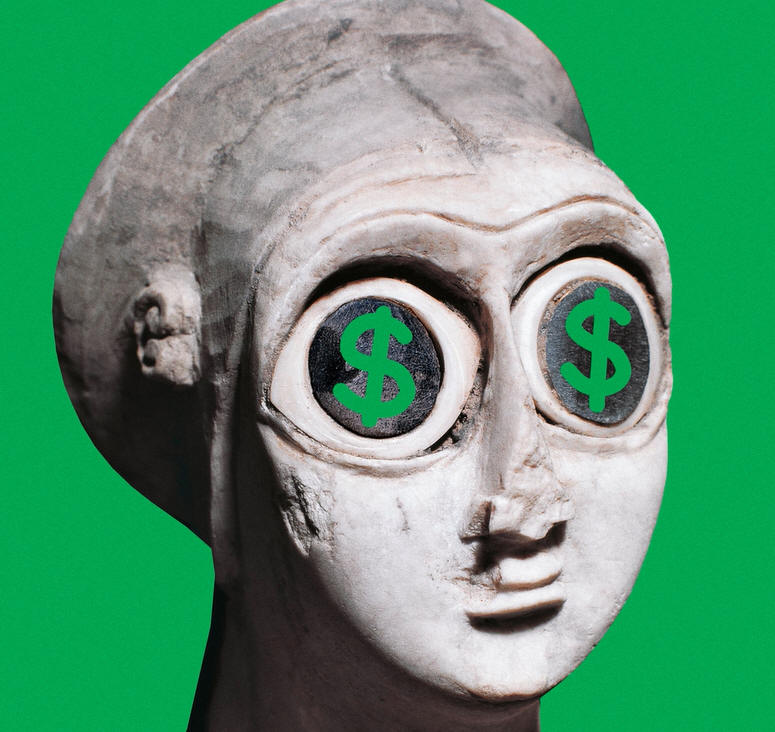
The Construction of the Alaska Highway, 1942: The Role of Race in the Far North

Leave a comment

The Construction of the Alaska Highway, 1942: The Role of Race in the Far North

How a Renaissance gambling dispute spawned probability theory

2 Comments

Click the link below the picture

.

Imagine you and I are playing a simple game of chance. We each throw $50 into a pot and start flipping a coin. Heads, you get a point; tails, I get one. The first person to reach 10 points walks away with the full $100. The game gets underway, and the score is currently eight to six in your favor. Suddenly, my phone rings: there’s an emergency, and I must leave in a hurry. Now we have a problem. You don’t want to just hand me my $50 back because you’re winning. But I’m reluctant to give you the whole pot because I still have a chance to hit a lucky streak and mount a comeback. What is the fairest way to split the cash?

Known as the “problem of points,” or “problem of the division of the stakes,” this puzzle stumped mathematicians for more than 150 years. And it did so for good reason: probability theory hadn’t been invented when the problem was first posed. Two greats of 17th-century math, Blaise Pascal and Pierre de Fermat, corresponded about the problem in a famous series of letters. They not only discovered the correct way to share the pot but also created the foundations of modern probability theory in the process. To this day, the solution is the basis for risk assessments of all kinds, helping us make smarter bets on everything from buying a stock to insuring a home along a coastline.

In 1494, Italian mathematician Luca Pacioli first took an early crack at the problem of points in his textbook, the title of which translates to Summary of Arithmetic, Geometry, Proportions and Proportionality. He proposed that players should split the pot in proportion to how many points they each have at the time of interruption. In our running example, you have won eight of the 14 flips thus far. According to Pacioli’s solution, you would take eight fourteenths of the pot, which equals about $57.14. I would take the remaining six fourteenths. The solution sounds sensible, but more than 50 years later, Niccolò Fontana “Tartaglia” noticed that it failed in cases where the point ratio between players was extreme. What if the interruption came after a single coin toss? Under Pacioli’s rule, the winner of that one flip would take the entire pot, even though the game was far from decided. This would be clearly unfair—and the problem of points is all about seeking a fair split.

Tartaglia proposed an alternative method. Imagine that, in our hypothetical game, you’re ahead by two flips. You have one fifth of the 10 flips needed to win. Because that’s one fifth closer to the goal, Tartaglia reasoned that you should get your full stake back and take one fifth of my stake: the original $50 you put in plus one fifth of my $50, for a total of $60. This new approach seems to operate more equitably, especially at the extremes. Now if the game got interrupted after one flip, then the winner of that flip would take only one tenth of their opponent’s stake instead of all of it. While Pacioli’s method rewards the winning player based on the size of their lead relative to the number of flips thus far, Tartaglia’s method rewards them based on the size of their lead relative to the total length of the game. Tartaglia doubted his own innovation, though, writing, “In whatever way the division is made there will be cause for litigation.” He believed that no perfect mathematical solution existed and that the problem was designed to cause arguments. It turns out he was at least right to doubt his own solution. Imagine that one player had 199 points and that the other had 190 points during a game with a goal of 200 points. Tartaglia would award the first player only nine two-hundredths of their opponent’s stake, or $2.25, even though their opponent would need 10 tails in a row to win. The first player’s measly payout hardly seems to reflect their overwhelming likelihood of winning at that stage of the game.

The debate went nowhere until the mid-17th century, when a French gambler and intellectual socialite enlisted the help of mathematician Blaise Pascal. Pascal immediately saw that the solution lay not in the score at the time of interruption but in the future possibilities of the score, and he wrote to his friend and fellow mathematician Pierre de Fermat to help him prove it. Their correspondence yielded two completely unique approaches to the problem. Amazingly, their disparate approaches always arrived at the same solution. This convergence sealed their confidence in their results, and mathematicians now agree that they had found the fairest way to divide the stakes.

Fermat’s solution was to look at all possible continuations of the game after the point at which it was interrupted and count the number of those continuations that result in a win for each player. A fair percentage of the total pot awarded to a player should be the percentage of possible futures in which that player wins the game. Take our recent example game’s score of eight to six with a goal of 10 points; Fermat would notice that the game must end within five coin flips. If the first player won one flip and the second won three, then they would be tied at nine to nine, and the game would end on the next flip. If the game stopped at this point, Fermat’s method for dividing the pot would list all possible outcomes of those five coin flips and then tally the ones that amassed 10 points for each player. In some of those possible futures a player will win in fewer than five flips, but that’s okay: we can imagine that if the game ends early, the players flip the coin a few extra times just to make the accounting easier. The figure below reveals the answer to our puzzle. The first player wins in 26 out of the 32 possible continuations of the game, so they are due 26 / 32 = 81.25 percent of the pot, or $81.25.

.

https://static.scientificamerican.com/dam/asset/eb2e8ed0-c13b-4c11-8a4c-afe23c1ed280/points-problem_graphic_leadImage.png?m=1776449332.201&w=900Amanda Montañez

.

.

Click the link below for the complete article:

https://www.scientificamerican.com/article/how-a-renaissance-gambling-dispute-spawned-probability-theory/

.

__________________________________________

Pope Leo condemns Iran’s killing of protesters but says he cannot support war

Leave a comment

Hmmmm … Sic Semper Tyrannis!

Click the link below the picture

.

Pope Leo XIV on Thursday denounced the Iranian regime’s killing of protesters but stressed that, “as a pastor,” he cannot support the US-Israeli war with Iran.

The pope’s remarks, made to reporters on board the papal plane returning from his trip to Africa, follow President Donald Trump’s attacks on the pontiff for his stance on the Middle East conflict.

During an in-flight press conference, the pope also addressed the topic of immigration, saying that in some cases immigrants are being treated “worse than pets.”

The first American pope told CNN last month that he hoped Trump would find an “off-ramp” to end the war in Iran, and he spoke out against justifying conflict on religious grounds. But in the hours before the pope took off for Africa on April 13, the US president sharply criticized the pope.

“As a pastor, I cannot be in favor of war,” Leo told reporters flying with him from Malabo, Equatorial Guinea. “I would like to encourage all to make efforts to look for answers that come from a culture of peace and not from a place of hate and division.”

Leo said the US and Israeli bombing of Iran has created a “chaotic situation for the global economy,” along with “a whole population in Iran, of innocent people, which is suffering because of this war.” Highlighting the human cost of conflict, the pope revealed that he carries a photo of a Lebanese Muslim boy, who had carried a sign welcoming the pontiff to the country at the end of last year and who was killed in the war.

The question of Iran is evidently very complex,” he told reporters flying with him from Malabo, Equatorial Guinea, to Rome. “The negotiations they are trying to do — one day Iran says yes, and the United States says no, and vice versa, and we don’t know where it goes.”

Regardless of whether “there is regime change or no regime change,” the emphasis should be on preventing the “death of so many innocents,” Leo said. He cited a letter from the families of school children who died on the first day of the Iran war.

“For me, if there is regime change or not, it’s not clear what the regime is at this moment after the first days of the … attacks of Israel and the United States against Iran,” he said.

The pope, who alternated between English, Spanish, and Italian when answering questions, also criticized the Iranian regime’s killing of protesters in his first remarks on the topic.

Asked if he condemned Tehran’s deadly crackdown on protests in January, Leo said: “I condemn all actions that are unjust. I condemn the taking of people’s lives. I condemn capital punishment. I believe that human life is to be respected,” Leo, 70, said. “When a regime, when a country, takes decisions which take away the lives of people unjustly, then obviously that is something that should be condemned.”

.

https://media.cnn.com/api/v1/images/stellar/prod/ap26113567854141.jpg?c=original&q=w_1202,c_fill/f_avif

Pope Leo XIV celebrates a Holy Mass at the Malabo stadium in Malabo, Equatorial Guinea, on Thursday, April 23. (Misper Apawu/AP)

.

.

Click the link below for the complete article:

https://edition.cnn.com/2026/04/23/europe/pope-leo-iran-war-intl

.

__________________________________________

The ‘Make America Healthy Again’ Movement Is Cooling on Trump and Republicans

Leave a comment

Click the link below the picture

.

On a sweltering night in August 2024, moments before Robert F. Kennedy Jr. endorsed then-candidate Donald J. Trump at a packed rally in Arizona, a conservative young wellness podcaster named Alex Clark had a fleeting backstage conversation with the once-and-future president.

“I said, ‘Mr. President, please keep talking about food and pharma; this has a massive impact with undecided female voters,’ ” recalled Ms. Clark, now a leading conservative voice in Mr. Kennedy’s “Make America Healthy Again” movement. Witnessing the two men join forces, she said, “was the greatest political moment of my life.”

Not quite two years later, the MAHA movement is still a political force. But MAHA leaders warn that many of those who embrace the cause are dispirited and disillusioned — and that when the November elections come around, some may just stay home.

Six of the movement’s most prominent leaders, who together have millions of social media followers, said in separate interviews that the mostly white, mostly female voters who followed Mr. Kennedy into Mr. Trump’s camp are so disappointed with the president that Republicans risk losing them. But they said Democrats would need to work hard to win their votes.

“Republicans would be stupid, moronic,” Ms. Clark said, “to let these voters just slip through our fingers.”

The MAHA PAC, run by Tony Lyons, a conservative-leaning publisher and close Kennedy ally, launched an ambitious initiative in March to raise $100 million to elect “MAHA-aligned, Trump-endorsed” Republicans — a goal that would far exceed the $1.2 million the group raised through the end of February, according to recent campaign finance filings.

But the MAHA leaders who spoke to The New York Times said their voters belong to no individual party. They will vote the person, not party.

“The only thing that matters is action,” said Zen Honeycutt, who founded Moms Across America, an advocacy group that threw its weight behind Mr. Kennedy. “Not a political party.”

Leslie Manookian, a former Wall Street executive who became a homeopath and founded the Health Freedom Defense Fund, which fights vaccine and other medical mandates, said this about MAHA: “I don’t think it’s led by anybody. It’s a populist, grass roots movement.”

Long before Mr. Kennedy gave it a Trump-inspired nickname, the MAHA movement was a loose-knit collection of groups.

Vaccine skeptics fought mandates under the “health freedom” banner. Environmental activists fought chemical exposures, allying themselves with fans of organic food and alternative medicine. They are now held together by Mr. Kennedy, and a shared suspicion of government and industry.

Vaccine skeptics complain that the White House seems to be muzzling Mr. Kennedy on what had been his signature issue. Health and wellness activists are thrilled with Mr. Kennedy’s Eat Real Food agenda promoting red meat and rejecting processed foods, but are upset that Dr. Casey Means, a wellness influencer whose emphasis on diet as a way to combat chronic disease make her a MAHA heroine, is struggling to win Senate confirmation as surgeon general.

And both food and environmental activists feel deeply betrayed by Mr. Trump’s recent executive order aimed at ramping up production of glyphosate, the weedkiller marketed as Roundup, which some scientists suspect causes cancer. The president said he issued it on national security grounds to protect the food supply and because its core ingredient is used to make munitions.

“It’s very hard to support a movement that is labeled MAHA when two opposing things are happening at the same time,” said Vani Hari, a wellness personality who markets herself as “The Food Babe.” “It’s like, ‘Yes, we can eat all the real food we want, but it’s covered in Roundup.’ ”

Whether the MAHA moniker — a riff on MAGA, Mr. Trump’s acronym for Make America Great Again — survives is an open question. MAHA leaders say the components of their movement will thrive and grow no matter what it is called. Both Ms. Hari and Ms. Clark worry about getting MAHA voters to the polls.

“They have nowhere to go,” said Ms. Clark, who works for Turning Point U.S.A., the right-wing organization founded by Charlie Kirk. “They feel like their vote is useless. They have lost the energy. They have lost the enthusiasm. They feel like the Democrats don’t care about them. They feel like the Republicans lied to them, and they’re not planning on voting.”

.

https://static01.nyt.com/images/2026/04/21/us/politics/pol-maha-5/pol-maha-5-superJumbo.jpg?quality=75&auto=webpTricia Busch, a former elementary school teacher and a MAHA voter, felt betrayed by President Trump’s recent executive order promoting glyphosate, the weedkiller marketed as Roundup. Credit…Rachel Mummey for The New York Times

.

.

Click the link below for the complete article:

https://www.nytimes.com

.

__________________________________________
Dr. Randolph Wilson Bromery (1926-2013), Geologist and College Administrator

Leave a comment

Dr. Randolph Wilson Bromery (1926-2013), Geologist and College Administrator

Older Entries Newer Entries

Finanzalibera.com

Finanzalibera.com per una libertà finanziaria

MRS. T’S CORNER

https://www.tangietwoods

Joe Mullins Commissioner

CEO and president of The Mullins Companies

The Luttie Board

Two Cultures. One Life. Endless Stories

Charles Maxwell DeCook

Real Estate Development Specialist

Amor Entre Estrellas

¡Bienvenido de vuelta viajero!

Heart of Loia `'.,°~

so looking to the sky ¡ will sing and from my heart to YOU ¡ bring...

Michael Ciullo

CEO and Founder of Nsight Health

Nelson MCBS

Catholic News, Prayers, HD Images, Rosary, Music, Videos, Holy Mass, Homily, Saints, Lyrics, Novenas, Retreats, Talks, Devotionals and Many More

Global geopolitics

Decoding Power. Defying Narratives.

Talk Photo

A creative collaboration introducing the art of nature and nature's art.

Movie Burner Entertainment

The Home Of Entertainment News, Reviews and Reactions

C r i s t i a n a' s Fine Arts ⛄️

•Whenever you are confronted with an opponent, conquer him with love.(Gandhi)

TradingClubsMan

Algotrader at TRADING-CLUBS.COM

Comedy FESTIVAL

Film and Writing Festival for Comedy. Showcasing best of comedy short films at the FEEDBACK Film Festival. Plus, showcasing best of comedy novels, short stories, poems, screenplays (TV, short, feature) at the festival performed by professional actors.

Bonnywood Manor

Peace. Tranquility. Insanity.

Warum ich Rad fahre

Take a ride on the wild side

Madame-Radio

Découvre des musiques prometteuses (principalement) dans la sphère musicale française.

Ir de Compras Online

No tiene que Ser una Pesadilla.

Kana's Chronicles

Life in Kana-text (er... CONtext)

Jam Writes

Where feelings meet metaphors and make questionable choices.

emotionalpeace

Finding hope and peace through writing, art, photography, and faith in Jesus.

Essu Center

Essu Center TV

Wearing2Gowns.Blog

Romans 8:38-39: “For I am convinced...” Husband, Father, Clinician and Nurse

...

love each other like you're the lyric to their music

Luca nel laboratorio di Dexter

Comprendere il mondo per cambiarlo.

Tales from a Mid-Lifer

Mid-Life Ponderings

Creative

Travel,Tourism, Life style "Now in hundreds of languages for you."

freedomdailywriting

I speak the honest truth. I share my honest opinions. I share my thoughts. A platform to grow and get surprised.

The Green Stars Project

User-generated ratings for ethical consumerism

Cherryl's Blog

Travel and Lifestyle Blog

Sogni e poesie di una donna qualunque

Questo è un piccolo angolo di poesie, canzoni, immagini, video che raccontano le nostre emozioni

My Awesome Blog

“Log your journey to success.” “Where goals turn into progress.”

pierobarbato.com

scrivo per dare forma ai silenzi e anima alle storie che il mondo dimentica | Sito Gratuito No-Profit

Thinkbigwithbukonla

“Dream deeper. Believe bolder. Live transformed.”

Vichar Darshanam

Vichar, Motivation, Kadwi Baat ( विचार दर्शनम्)

Komfort bad heizung

Traum zur Realität

Chic Bites and Flights

Savor. Style. See the world.

ومضات في تطوير الذات

معا نحو النجاح