
Samuel R. Lowery, First Black Male Argued Case Before the U.S. Supreme Court
Assorted human interest posts.
July 24, 2025
Business, Food For Thought, Human Interest, Political, Science, Technical amazon, business, Business News, current-events, Future, Hotels, human-rights, medicine, mental-health, research, Science, Science News, technology, Technology News, travel, vacation 5 Comments

Click the link below the picture
.
A person in Arizona recently died of pneumonic plague—a rare and severe form of the disease. An expert explains how the bacteria that spurred the Black Death centuries ago continues to claim lives
Plague is often associated with Medieval history and the centuries-old Black Death epidemic, but a recent death in northern Arizona is a troublesome reminder of the flea-borne disease’s lingering hold in parts of the world, including the U.S. Local health officials in Arizona’s Coconino County, which includes the city of Flagstaff, confirmed late last week that a person there had died of pneumonic plague—a severe lung infection caused by Yersinia pestis, the bacterium behind the illness.
Human infections and fatalities from plague are relatively rare in the U.S.; according to the Centers for Disease Control and Prevention, seven human cases are reported annually on average. Prior to the Arizona case, the most recent death was reported in 2021. Y. pestis arrived in port cities in the U.S. around 1900 and has since become endemic to rats and other rodents in western U.S. states, including New Mexico, Arizona, Colorado, California, Oregon, and Nevada.
“From a public health standpoint in the U.S., it’s a scary thing that it’s plague, and it’s tragic that that this was a fatal case, but people need to remember that it’s extremely rare,” says David Wagner, executive director of the Pathogen and Microbiome Institute at Northern Arizona University, who has studied plague for more than 25 years. “Not to be flippant, but it’s more important that you put your seat belt on going to the grocery store than it is to worry about plague in the western U.S.”
Scientific American spoke with Wagner about plague’s signs and symptoms, and its persistence across time.
[An edited transcript of the interview follows.]
How do people get sick with plague?
Plague is caused by the bacterium Y. pestis and is really a disease of rodents and their fleas. You have an infected rodent; a flea feeds on the blood of that rodent, and it picks up some Y. pestis. Then, when the flea feeds on another rodent, it can pass along the Y. pestis. It’s constantly cycling back and forth between rodents and fleas in nature; that’s how it’s been maintained for thousands of years in the environment around the world.
What’s the difference between bubonic and pneumonic plague?
People call it the Black Death; they call it bubonic plague; they call it pneumonic plague—it’s all the same disease, just different clinical manifestations. What stands apart [with the recent case is] that it’s pneumonic plague. That’s kind of rare, especially in the U.S.
Pretty much all human cases, with a few exceptions, are acquired from the environment—from the bite of an infected flea. If there isn’t a rodent host for that flea to feed on, it will look for other mammals to feed on. And if humans happen to be in proximity, it will feed on humans and can transmit Y. pestis.
If the immune system doesn’t stop Y. pestis at the source of the flea bite, it will migrate through your lymphatic system to your closest major lymph node. So let’s say I was bit on my wrist; then the bacteria would go to that lymph node in my underarm and start to reproduce there. And that mass swelling, that swollen lymph node, is called a bubo—that’s why it’s called bubonic plague. These days, it’s a dead end because there’s not flea-borne transmission from one human to another. It just stops there with the treatment or death of that individual.
What people might not know is that plague has been endemic throughout the western U.S. in rodent populations for more than 100 years.
Left untreated, though, bubonic plague can get down into your lungs via the bloodstream. That’s called secondary pneumonic plague. Those individuals, then, via cough or direct contact, can spread plague person-to-person, and that’s called primary pneumonic plague.
Someone could also get pneumonic plague from an animal—for example, if they were handling an infected animal and that animal coughed. Sometimes hunters in Central Asia will kill [infected] ground squirrels, and when they’re skinning them can inhale particles. People also talk about septicemic plague, and that means it’s gotten into your bloodstream, and that typically also arises from bubonic plague. You could also get [septicemic plague] directly if you had cuts on your hands and were handling rodents without gloves.
Can pets get infected or transmit plague to humans?
Pets, especially free-roaming ones, may come into contact with dead rodents that have died of plague. Fleas can hop onto pets, which then bring them into the home. This is pretty rare because there are so few [human] cases in the U.S., but that is something we think about.
Flea and tick collars are a good idea. If animals do get sick, most of the evidence shows that dogs fight off the infection and can create antibodies against Y. pestis. Cats are more susceptible and can quickly become sick and actually can progress to pneumonic plague. It’s super, super rare, but that’s a possible way for humans to be exposed to pneumonic plague.
What are the symptoms and treatment?
With bubonic plague, typically people develop a fever, headache, chills and fatigue, and then they’ll get those swollen lymph nodes called buboes. It typically takes a few days to manifest because it sort of starts off in stealthy mode inside the body to try and avoid the immune system.
Plague is easily treated with many different types of antibiotics, as long as it’s caught in time. If untreated, bubonic plague mortality rates may be somewhere between 30 to 60 percent, depending on the situation. Pneumonic plague, left untreated, is almost always fatal. So diagnostics become really important. The challenge is that many physicians in the U.S. have never seen plague. The symptoms are a bit common to other things, so rapid testing in the lab can help.
.

Yersinia pestis. Eye of Science/Science Source
.
.
Click the link below for the complete article:
.
__________________________________________
July 24, 2025
Business, Food For Thought, Human Interest, Political, Science, Technical amazon, business, Business News, current-events, Future, Hotels, human-rights, medicine, mental-health, research, Science, Science News, technology, Technology News, travel, vacation Leave a comment

Click the link below the picture
.
More than a decade ago, Pramod Sharma set out to make learning more engaging. Through AI and computer vision, his startup Osmo transformed iPad apps into hands-on experiences, letting kids use puzzle pieces and other physical objects to solve spelling and math problems on screen.
It was a lot of fun—until Osmo grew, and Sharma’s role shifted from inventing to managing. Meetings, PowerPoint decks, endless email threads took over. “At some point, you become a manager, and you spend a lot of time in communication,” Sharma tells Fast Company. “We realized a lot of our communication wasn’t fun.”
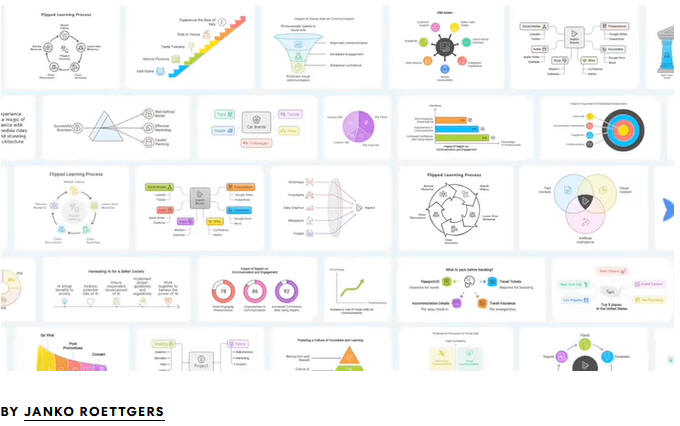
When Sharma and a few colleagues left Osmo four years ago, they decided to tackle that problem. The result is Napkin, a web app that uses generative AI to turn text and numbers into flow charts, diagrams, and other visuals. “You don’t need to be a graphic designer, you don’t need to be a visual thinker,” Sharma says. “Our vision is to democratize visuals for everyone.”
One year into its open beta, Napkin has surpassed five million registered users. Now, the company is preparing to monetize while staying true to the lessons learned from Osmo—chief among them: keep things light and approachable.
“Our users really love the fact that it’s playful,” Sharma says.
From Text to Visuals, with the Help of AI
Napkin’s experience starts with a screen that resembles a page from a school notebook. Users paste or write text, highlight the key parts, hit a magic button, and the app generates several draft visuals to help communicate the core ideas and numbers.
These visuals can be edited to highlight specific phrases or match a company’s branding. “When we started, we had this mindset that we wanted to push for a certain style,” Sharma says. “Now, we think of Napkin as a tool. Editing is a big part of that.”
Just as important is keeping the interface fun. “Traditionally, business products don’t tend to be fun,” Sharma says. “I used to think [that’s] because the boring stuff sells.”
With Napkin, Sharma wanted to try something different, starting with a frictionless onboarding experience. It’s a lesson drawn directly from Osmo. Kids, Sharma points out, won’t tolerate complexity. “If they don’t intuitively get it, they don’t want to play,” he says.
Like Osmo, Napkin encourages learning by doing. “We have no tutorial,” Sharma says. “That thinking comes from games.”
This hands-on approach also supports global adoption. Sixty percent of Napkin’s users don’t speak English, and the service supports dozens of languages. “South Korea is a big market for us,” Sharma says. “Japan is a huge market for us.”
Until now, Napkin has been free to use during its open beta. Soon, the company will introduce two paid subscription tiers, alongside a free plan. It has also started previewing API access for developers and companies looking to integrate the tool.
More Than Just a PowerPoint Replacement
The rise of generative AI has been a major advantage for Napkin. Sharma calls large language models a “huge accelerator.” But with that comes higher expectations, especially for visuals.
“Users have a high bar for AI,” Sharma says. “You can’t get away with 70 percent.” People may settle for rough graphics when making them on their own, but expect professional-grade output from AI. “An Apple keynote, or a TED talk: They want AI to get to that level,” he says.
Sharma doesn’t see Napkin as just a better slide tool. “It’s not just to build a better slide deck,” he says. He wants marketers, executives, and creators to tap into their visual creativity—something he compares to learning a new language.
“Before I went to college, I did not speak English at all,” says Sharma, who was born in India. “My family didn’t speak. I was in a small town. But once I went to college and started learning English, it opened my world in a very significant way.”
The same, he argues, can happen with visual communication. “What you think about new ideas changes,” he says.
.
 .
.
.
Click the link below for the complete article:
.
__________________________________________
July 24, 2025
Business, Food For Thought, Human Interest, Political, Science, Technical amazon, business, Business News, current-events, Future, Hotels, human-rights, medicine, mental-health, research, Science, Science News, technology, Technology News, travel, vacation Leave a comment

Click the link below the picture
.
Wall Street Journal chief economics correspondent Nick Timiraos quickly saw the flaw in President Donald Trump’s Wednesday rant against Federal Reserve Chair Jerome Powell’s refusal to lower interest rates.
“Housing in our Country is lagging because Jerome ‘Too Late’ Powell refuses to lower Interest Rates,” Trump said in a post on Truth Social. “… Our rate should be three points lower than they are, saving us $1 trillion per year (as a country). This stubborn guy at the Fed just doesn’t get it — Never did, and never will. The Board should act, but they don’t have the courage to do so!”
Timiraos pointed out a glaring fact regarding the likelihood of interest expenses falling by $1 trillion per year.
“The U.S. spent $1.1 trillion on interest expenses in 2024, and so there’s almost no way this claim is remotely true,” said Timiraos on X.
Timiraos went on to post that Trump’s own Council of Economic Advisers chair last year voiced concerns that lower mortgage rates might stoke housing costs, including rent, mortgages, property taxes, and utilities.
“Okay, but what happens if lower mortgage rates start pushing home prices and rents back up?” CEA Chair Stephen Miran posted in January 2024.
Timiraos did not leave his comment hanging on X without follow-up, however. When a critic claiming to be a “macro investor” argued that interest expenses “would fall by $1 trillion” if Trump got rates to near zero, Timiraos responded by quote-posting an answer X owner Elon Musk’s “Grok” chatbot wrote saying the critic’s claim “overstates reality.”
Like his claim on interest rates, Trump has resorted to fuzzy math in the past. Economists routinely dismiss Trump’s description of tariffs as a tax on foreign nations, and must remind the reading public that his threat to hit places like Brazil with a 50 percent tariff on all imported goods will likely hurt everyday Americans far more than the Brazilian government.
.
.
.
Click the link below for the complete article:
.
__________________________________________
July 23, 2025
Business, Food For Thought, Human Interest, Political, Science, Technical amazon, business, Business News, current-events, Future, Hotels, human-rights, medicine, mental-health, research, Science, Science News, technology, Technology News, travel, vacation Leave a comment
Click the link below the picture
.
Social inequality and weak democratic institutions are linked to faster ageing, as are other environmental features such as high levels of air pollution, finds a study spanning four continents. Education was one of the top factors that protected against faster ageing.
The study also showed that ageing is accelerated by less-surprising factors such as high blood pressure and heart disease. But the link to social and political influences could help to explain why rates of ageing vary from country to country, the authors say.
“It’s a very important study”, says Claudia Kimie Suemoto, a geriatrician at the University of São Paulo in Brazil who was not involved in the work. “It gives us the global perspective of how these dependent factors shape ageing in different regions of the world.”
Political polarization and uncertainty mean that “we are living in a world of despair”, and that ages people, says lead author Agustín Ibañez, who directs the Latin American Brain Health Institute in Santiago. “We don’t think about the health impacts that this is going to have in the long run.”
The study was published today in Nature Medicine.
Age gaps
The study included 161,981 participants from 40 countries: 7 in Latin America, 27 in Europe, 4 in Asia and 2 in Africa. Just the process of harmonizing these data sets — such as checking that variables were measured in similar ways in different countries — took about 3 years, says Ibañez.
The researchers examined previous research to identify possible factors that hasten or slow ageing and that could be compared across countries. They fed data of these factors into a machine-learning model that predicts a person’s chronological age. That allowed them to calculate each person’s ‘biobehavioural age gap’: the difference between their true chronological age and their age as predicted by the model.
For example, if you are 50 years old but the model predicts that you are 60 years old, you have a biobehavioural age gap of 10 years.
Schooling protects
The top medical risk factors for faster ageing were high blood pressure, hearing impairment and heart disease. Other risk factors included unhealthy weight, alcohol consumption, sleep problems, diabetes and impaired vision.
The factors that provide the best protection against speedy ageing were education, ability to perform activities of daily living and sound cognitive abilities. Other protective factors included physical activity, good memory and the ability to walk well.
Egypt and South Africa had the fastest ageing, whereas European countries showed the slowest ageing, and nations in Asia and Latin America were in the middle.
Accelerated ageing was strongly linked to markers of eroding democracy — such as restricted voting rights, unfair elections and restrictions on the freedom of political parties. “We never expected that,” says Ibañez. Faster ageing was also linked to lower national income levels, exposure to air pollution, social inequality and gender inequality.
The researchers had data points up to 4 years apart for 21,631 participants, allowing for comparison over time. In these data sets, a bigger biobehavioural age gap predicted greater declines in both cognition and the ability to perform daily tasks.
Toll of stress
How physical ageing is linked to a person’s socio-economic and political environment is unclear, but Ibañez hypothesizes that the mechanism might be stress’s physical effects on the body and brain. “Inflammation is a huge potential pathway,” he says.
One of the limitations of working with data from so many countries, Ibañez says, is that the researchers had to omit many variables, such as smoking, that are known to strongly affect ageing, but were measured in very different ways across countries.
Another limitation, Suemoto says, is that 4 years of follow-up data “is very limited for the ageing process”. She would like to see data points 10 or 20 years apart.
Both Suemoto and Ibañez are excited about the possibility that public policy could be tailored to the factors that contribute most to ageing in a specific nation.
Intriguingly, the model predicted that some people were biologically younger than their chronological age. Perhaps studying the factors that these people have in common could point to interventions to protect others from premature ageing, Ibañez says.
.
 Pinglabel/Getty Images
.
.
Click the link below for the complete article:
.
__________________________________________
July 23, 2025
Business, Food For Thought, Human Interest, Political, Science, Technical amazon, business, Business News, current-events, Future, Hotels, human-rights, medicine, mental-health, research, Science, Science News, technology, Technology News, travel, vacation Leave a comment

Click the link below the picture
.
Few people have heard of Sir Edward Coke, but most people reading this live under his rule. Coke served as the Attorney General of England in the early 17th century, which meant he would recommend laws to the Crown to implement. And in 1604, he gave us one of the bedrocks of the Common Law, used all around the world: “An Englishman’s home is his castle.”
Of course, today we might say an American’s, a Canadian’s, or an Australian’s, but Coke’s legal point was that what you did within your home, so long as it was within the law, was your business. The police cannot enter your home unwarranted. The sheriffs cannot bash your door down without good reason. What you did in private was up to you.
The distinction between the private and public spheres extends far beyond Coke’s corner of jurisprudence. There exists a long philosophical tradition that divides what we do, say, and believe in public, and what happens behind closed doors. How you eat, talk, or have sex are matters for the home. How you raise your kids or spend your free time are private things. But one of the most prominent topics philosophers have often hoped to banish to the parlor room was religion. Philosophize in public, worship in private. Rationality in the marketplace, faith and emotion at home.
In this week’s Mini Philosophy interview, philosopher Simon Critchley, author of On Mysticism, argues this needs to change.
The German divide
The idea that you can believe what you like at home but must reason like everyone else in public owes much of its popularity to Martin Luther and Immanuel Kant. Both wrestled with a similar anxiety: What happens when private religious feelings spill out into the street? Luther, who opened the doors to the Reformation and made the Bible readable by the masses, quickly became nervous when people began reading it too freely. The radical fringes — peasants, Anabaptists, visionaries — started claiming divine authority for political revolt. Luther recoiled, siding with princes and writing that rebellious peasants should be “struck down like rabid dogs.”
Kant inherited this wariness and tried to offer a compromise for Protestantism. “What Kant gives us,” Critchley says, “is this modern idea of religious experience as authorized privately, but as not being sanctioned publicly.” In his 1784 essay What is Enlightenment?, Kant argues that “public reason” must be disciplined and rational, while “private reason” can hold whatever faith it likes — so long as it stays in its lane. As Critchley puts it, “Privately, you can believe whatever you like, but you have to respect that distinction between the public and the private.”
It’s a tidy solution: Religion can flourish quietly in the home but mustn’t interrupt public life. The Enlightenment, in this view, is defined by sober rationality that keeps emotion and mysticism at arm’s length. For Critchley, though, this isn’t reason — it’s repression. It’s probably not even possible.
The Jamesian clawbackWilliam James was a psychologist and philosopher, and he was brilliant at both. He was also one of the first thinkers to point out that we cannot neatly compartmentalize bits of our mind. We can’t say, “I’ll think like this in the morning and like this in the afternoon.” You do not hang up your beliefs when you put on your work clothes. As Critchley tells me, it’s an odd notion that “you can be a Buddhist or a Catholic or whatever, but that mustn’t interfere in your life as a citizen.”
 Guido Reni / Public Domain / The MET / Big Think
.
.
Click the link below for the complete article:
.
__________________________________________
https://www.tangietwoods
¡Bienvenido de vuelta viajero!
so looking to the sky ¡ will sing and from my heart to YOU ¡ bring...
CEO and Founder of Nsight Health
Catholic News, Prayers, HD Images, Rosary, Music, Videos, Holy Mass, Homily, Saints, Lyrics, Novenas, Retreats, Talks, Devotionals and Many More
Decoding Power. Defying Narratives.
A creative collaboration introducing the art of nature and nature's art.
The Home Of Entertainment News, Reviews and Reactions
Hollow Earth Society
•Whenever you are confronted with an opponent, conquer him with love.(Gandhi)
Algotrader at TRADING-CLUBS.COM
Film and Writing Festival for Comedy. Showcasing best of comedy short films at the FEEDBACK Film Festival. Plus, showcasing best of comedy novels, short stories, poems, screenplays (TV, short, feature) at the festival performed by professional actors.
Peace. Tranquility. Insanity.
Take a ride on the wild side
Découvre des musiques prometteuses (principalement) dans la sphère musicale française.
No tiene que Ser una Pesadilla.
Life in Kana-text (er... CONtext)
Where feelings meet metaphors and make questionable choices.
Finding hope and peace through writing, art, photography, and faith in Jesus.
Eyasu
The Community for Wounded Healers: Former Medical Students, Disabled Nurses, and Faith-Fueled Pivots
love each other like you're the lyric to their music
Comprendere il mondo per cambiarlo.
Mid-Life Ponderings
Travel,Tourism, Life style "Now in hundreds of languages for you."
I speak the honest truth. I share my honest opinions. I share my thoughts. A platform to grow and get surprised.
User-generated ratings for ethical consumerism
Travel and Lifestyle Blog
Questo è un piccolo angolo di poesie, canzoni, immagini, video che raccontano le nostre emozioni
“Log your journey to success.” “Where goals turn into progress.”
scrivo per dare forma ai silenzi e anima alle storie che il mondo dimentica.
“Dream deeper. Believe bolder. Live transformed.”
Vichar, Motivation, Kadwi Baat ( विचार दर्शनम्)
Traum zur Realität
Savor. Style. See the world.
معا نحو النجاح
Best Forex Broker Ratings & Reviews
art, writing and music by James McFarlane and other musicians
living life in conscious reality
Freelance poetry writing
Peace 🕊️ | Spiritual 🌠 | 📚 Non-fiction | Motivation🔥 | Self-Love💕
Reiseberichte & Naturfotografie

 James' World 2