Deep down in the Arctic Ocean, life becomes bizarre. One might suppose that at its greatest depths, the icy, dark water would be inhospitable to much, but a new discovery reminds us that that is far from the case.
Off the coast of Greenland, the deep seafloor is littered with towering mounds made of crystallized methane and other gases. Known as the Freya hydrate mounds, these structures act like a “frozen reef,” a haven for creatures that have evolved to live in environments unlike any other on Earth.
In a new paper published in Nature Communications, scientists document the deepest ever found of these mounds, at 3,640 meters—or some 2.26 miles—below the surface. The discovery was made as part of the Ocean Census Arctic Deep–EXTREME24 expedition to explore and research the Arctic environment and document ocean life using tools such as underwater robots.
Incredibly, the mounds, which are also known as gas hydrate cold seeps, release methane gas flares some 3,300 meters up into the water—the tallest such flares ever recorded. Over time, the mounds collapse and reform, a dynamic process that the researchers say gives insights into the Arctic’s various ecosystems.
“These are not static deposits,” Giuliana Panieri, a study co-author and a professor at the Arctic University of Norway, said in a statement about the new research. “They are living geological features, responding to tectonics, deep heat flow, and environmental change.”
Gathered at the mounds are chemosynthetic creatures—life that has evolved to depend not on sun-powered photosynthesis for food but on chemical reactions instead. Some of the creatures seen at the Freya mounds are also found at hydrothermal vents, or fissures in the seafloor through which hot, chemical-laden water erupts, the researchers said, suggesting these ecosystems may be more intertwined than previously thought.
“The links that we have found between life at this seep and hydrothermal vents in the Arctic indicate that these island-like habitats on the ocean floor will need to be protected from any future impacts of deep-sea mining in the region,” said Jon Copley, a study co-author and a professor at the University of Southampton in England, in the same statement.
Russian President Vladimir Putin said Ukraine was in no hurry for peace, and if it did not want to resolve their conflict peacefully, Moscow would accomplish all its goals by force.
Putin’s remarks on Saturday, carried by state news agency TASS, followed a vast Russian drone and missile attack that prompted Ukrainian President Volodymyr Zelenskyy to say Russia was demonstrating its wish to continue the war while Kyiv wanted peace.
Zelenskiy is to meet U.S. President Donald Trump in Florida on Sunday to seek a resolution to the war Putin launched nearly four years ago with a full-scale invasion of Russia’s smaller neighbour.
The White House did not immediately respond to a request for comment on Putin’s remarks.
Russian commanders told Putin during an inspection visit that Moscow’s forces had captured the towns of Myrnohrad, Rodynske and Artemivka in Ukraine’s eastern region of Donetsk, as well as Huliaipole and Stepnohirsk in the Zaporizhzhia region, the Kremlin said on the Telegram messaging app.
Ukraine’s military rejected Russia’s assertions about Huliaipole and Myrnohrad as false statements. The situation in both places remains “difficult”, but “defensive operations” by Ukrainian troops are ongoing, the General Staff of Ukraine’s Armed Forces said in a statement on social media.
The Southern Command of Ukraine’s Armed Forces said on Telegram that “fierce fighting” continued in Huliaipole. “However, a substantial part of Huliaipole continues to be held by the Defence Forces of Ukraine.”
Verifying battlefield claims is difficult as access on both sides is restricted, information is tightly controlled, and front lines shift quickly, with media relying on satellite and geolocated footage that can be partial or delayed.
.
Russian President Vladimir Putin attends his annual end-of-year press conference and phone-in in Moscow, Russia, Dec. 19, 2025. Alexander Kazakov | Via Reuters
From the rubble and the ruin, the torture and the terror, the dust and the debris, something is stirring in the Middle East, a spirit that says no to endless cycles of violence and values a future for the region’s children above past feuds.
This sentiment is tenuous, contested, and vulnerable. But with more than a half-million killed in Syria’s 13-year civil war and 70,000 Palestinians killed in the two-year Gaza war, alongside close to 2,000 Israelis, exhaustion is widespread. Shun retribution, murmur the war-weary, and think again.
“There is no other solution but finding a solution,” said Hassan Smadi, 48, a hospital worker in the battered southern Syrian town of Busra. He lost a younger brother, killed in the relentless bombing by Bashar al-Assad, the dictator ousted last year; his family fled to Jordan. “We are tired of war and bored of war, and want only to live peacefully.”
A sign close to where Mr. Smadi stood, installed recently by the local authorities outside a remarkably preserved Roman amphitheater, says, “On this earth, there exists that which deserves life,” a line from the Palestinian poet Mahmoud Darwish.
If there is a refrain heard across war-shattered Syria, where even the gray-green wilting trees look shellshocked, it is, “We just want to live.”
If there is an ambition in Saudi Arabia, it is to become a major power representing a modern Islam, open and technologically advanced, far from any aggressive Pan-Arab ideology.
If there is a buzzword among the Sunni Gulf monarchies, once driven to paroxysms of fear and rage by the Shiite mullahs of Iran, it is “pragmatism.”
Still, the region remains combustible. The United States responded to the killing of two U.S. soldiers and an American interpreter this month by hitting the Islamic State in Syria with punishing airstrikes that Defense Secretary Pete Hegseth called “a declaration of vengeance.”
The strikes came soon after the Trump administration said in its National Security Strategy that the region was “emerging as a place of partnership, friendship and investment,” adding that the days when “the Middle East dominated American foreign policy” were “thankfully over.”
Such optimism, based in large part on the Gaza peace agreement signed in Sharm el Sheikh, Egypt, on Oct. 13, looks overblown, much like President Trump’s claim that day that it took 3,000 years to reach a breakthrough of this kind.
Not everything has been solved overnight by a presidential signature.
In Syria, sectarianism competes with a desire for unity, and violence flares. War festers in Yemen. In Iran, the regime is weak, but its determination to destroy the state of Israel is undimmed. Israeli settlers claw land away from Palestinians in the West Bank, backed by an extreme right-wing Israeli government.
Already, the Gaza accord looks frayed. Israel and Hamas skirmish for advantage. Everything about the peace plan’s next phase — the planned international stabilization force, disarming Hamas, an Israeli withdrawal, and the role of the Palestinian Authority — appears contentious.
Sequencing, or what concessions from which side come first, is the new battleground.
Even so, very few want a return to war. During repeated visits over several months across the region, hope alternated with horror. What was perhaps most striking was a quiet resolve among many people to side with promise over despair and destruction.
“The Gaza war violated the basic Israeli principle of fighting short wars,” said Gershom Gorenberg, an Israeli author and historian. “There is complete exhaustion in Israel; the military is exhausted, and there’s been entirely too much reserve duty. These factors weigh against renewed fighting.”
The American layoff paradox is hard to ignore now. The United States reports strong GDP numbers and a healthy stock market, yet more than a million workers have been pushed out of their jobs in 2025. This contradiction makes people wonder what is really happening inside the world’s biggest economy. Most Americans feel something shifting. […]
Weight-loss pills that harness the same mechanism as the wildly popular drugs Wegovy and Ozempic are coming to the U.S.
On Monday, Novo Nordisk announced that the U.S. Food and Drug Administration approved its oral glucagonlike peptide 1 (GLP-1) medication for weight loss and obesity in adults.
It’s a milestone for the industry, which has struggled to make effective pill versions of the weight-loss injections for years. Most people are more comfortable taking a pill than regularly injecting themselves, says Daniel Drucker, an endocrinologist at the University of Toronto, who previously consulted for Novo Nordisk. “It’s just good to have more options for people,” he says. At the same time, the pills could greatly improve access to the medication by lowering costs—the injections can cost hundreds of dollars per month out of pocket.
“Pills are also easier to transport and produce,” says Rozalina McCoy, an endocrinologist and internist at the University of Maryland, adding that she hopes the new FDA approval will increase access to the drugs.
Prior to that approval, Novo Nordisk, which also makes the injectable semaglutide drugs Ozempic and Wegovy, had seen promising results from its trials of the weight-loss pill, which will also be sold under the brand name Wegovy. In the company’s latest phase 3 clinical trial, the highest dose of the pill resulted in a 16.6 percent weight loss at 64 weeks compared with a 2.7 percent loss among those who took a placebo. For comparison, trials of 2.4 milligrams of Wegovy injections showed up to 17.4 percent weight reduction. (The injection and pill were not compared in a head-to-head trial.)
GLP-1 drugs have transformed the weight-loss industry and revolutionized the treatment of metabolic disease. But until now, they have largely been available in the U.S. only as injections. Novo Nordisk’s pill for type 2 diabetes, Rybelsus, was approved by the FDA in 2019. But oral versions of these drugs haven’t taken off in the same way as the injectables, despite even early data showing weight loss and health benefits to be relatively comparable.
The Wegovy pill, taken once a day, works similarly to the weekly injections—mimicking the activity of a gut hormone that slows down the speed at which people’s stomach empties and that makes them feel fuller. People who take the pills tend to eat less overall. The side effects are pretty similar to those of injections of the drug, and they can include nausea, diarrhea and vomiting.
The pills must also be taken on an empty stomach to work effectively.
“Nothing else can be taken by mouth for at least 30 minutes to allow the medication to be absorbed into the bloodstream,” says John Buse, an endocrinologist at the University of North Carolina at Chapel Hill, who is a consultant and investigator for Novo Nordisk. “If patients take the medication with other medications, food or even more water or coffee, the effectiveness is dramatically reduced.”
The pill will be available in U.S. pharmacies and select telehealth providers in early January, a Novo Nordisk spokesperson told Scientific American. The starting dose of 1.5 mg is anticipated to cost $149 per month out of pocket but could be lower, depending on a person’s insurance.
Importantly, Novo Nordisk’s latest clinical trial success was based on the maximum daily dose of 25 mg, McCoy says. Unlike the injectables, which enter the bloodstream directly, the pills are broken down in the stomach, which means “the oral doses have to be much, much higher” than the Wegovy injections, which cap at 2.4 mg, McCoy explains.
“I expect that the effective doses of oral Wegovy will be much more expensive than the advertised $149, unfortunately. But I would love to see this medication be more affordable,” she says.
A spokesperson for Novo Nordisk told Scientific American that prices for higher doses will be shared in the new year. “We believe this is the most affordable self-pay price to date for a GLP-1 for weight loss,” the spokesperson said.
Other companies are working on their own weight-loss pills: Eli Lilly, which makes Zepbound, is developing a GLP-1 pill, orforglipron, for weight loss and type 2 diabetes, with FDA approval anticipated for March 2026. More pill options—combined with other effective versions of these drugs in the pipeline—will open up the market and hopefully drive prices down, Drucker says.
“I think we’re going to go in the next like 12 to 18 months from these two main [injection] options from Novo Nordisk and Eli Lilly to half a dozen options in this class of medicines,” Drucker says. “That’s only going to be good for people. They’ll have more choice.”
On December 3, Alvin Ailey American Dance Theater opened its 2025–26 holiday season at New York City Center with a gala that marked a turning point for the company. The five-week engagement—running through January 4—signals the first full season under Artistic Director Alicia Graf Mack, and a moment where the heralded repertory leans into what audiences expect from Ailey, while expanding its vision for the next generation.
Graf Mack, the 46-year-old mother of two, stepped into her current position with a certain level of familiarity. She danced with the company for years, an experience that informed her approach as an artistic director. In respecting her predecessors, she feels that this endeavor is a responsibility, not simply her duty.
“I am fully aware of what this role carries,” she says. “I worked under Judith Jamison, who was my idol from the time I was little. I saw how she led. I also worked under Robert Battle and saw how he did things. I don’t take any of that lightly. But in order to do the work that needs to be done, I can’t stay frozen in the magnitude of it. I have to stay grounded. I have to be guided by what I know good dance to be, and how to create an environment where dancers can thrive.”
Among the season’s highlights is “Revelations,” which was performed with live music for six shows during opening weekend and the gala. The season also features Jamison’s “A Case of You” in a new production, alongside company premieres and five world premieres by choreographers Maija García, Fredrick Earl Mosley, Matthew Neenan, Jamar Roberts, and Jawole Willa Jo Zollar in collaboration with Samantha Figgins and Chalvar Monteiro.
Alongside Matthew Rushing, Graf Mack was able to program this season with a bit more leeway than in previous years, something that really intrigued her. “I’m interested in what audiences can feel when dancers are given time,” she says. “We had an extended rehearsal period this year, which isn’t always possible for Ailey. Being in the studio with the dancers—teaching, coaching, watching how they move together—that matters. I think people will notice a shift in energy. It feels fresh in the room.”
Ironically, Graf Mack’s path to leadership was an unlikely one. She grew up knowing she wanted to dance, but running an institution? That was another story. When performing full-time became unsustainable, she turned toward education, earning a master’s degree in nonprofit management and teaching at several universities before landing at Juilliard, where she eventually became dean and director of dance.
“That’s where I really learned what [this job] requires,” she says. “It’s not a title. It’s how you show up every day. How you listen. How you lift people. How you manage the artistic alongside the administrative. Dance companies today need leaders who understand both. You can’t separate creative vision from fundraising, from marketing, from long-term sustainability. They all feed each other.”
As Artistic Director of Ailey, Graf Mack remains interested in how the company can expand its reach without losing its identity. Technology, partnerships, and new platforms are part of that conversation, but always in service of the work. “Alvin Ailey leaned into humanity,” she says. “That’s the through line. The world has changed since his time. The way we reach people has changed. But the responsibility stays the same. We’re here to move people. To tell stories others can’t tell. To be brave.”
During my interview with Alicia, the most moving moments were when she reflected on her relationship with the late Judith Jaminson—her predecessor, and her north star. As a young girl, Graf Mack had Jamison’s image on her wall and later worked under her guidance. Their connection deepened over time, shifting from director to mentor, confidant, and friend.
“She studied everything,” she says of Jamison. “How you speak. How you carry yourself. How you prepare a room. She was meticulous and warm and funny and stylish. She didn’t rush anything. After she retired, she stayed present in my life. She checked in. She showed up. She believed in me.” Graf Mack now occupies Jamison’s former office. Much of the furniture remains, and so does the feeling. “I sit at Mr. Ailey’s desk,” she explains. “That wasn’t negotiable. I’m aware of where I am every day. I don’t feel pressure. I feel gratitude.”
The years of practice, education, and previous roles within Graf Mack’s career culminated with the opening night gala, which took place earlier this month. The evening honored board chair Daria L. Wallach, featured performances from Samara Joy and violinist Melissa White, along with boasting a guest list that included notable figures such as Jasmine Guy, Phylicia Rashad, Lorraine Toussaint, and Sunny Hostin, among others. As glamorous a position as the Artistic Director of the Alvin Ailey American Dance Theater may be, for Graf Mack, the goal remains simple.
“I want people to leave the theater feeling lighter,” she explains. “Ailey has always done that. You come in carrying whatever the day gave you. You leave feeling like you can face it. That’s the work.”
It has been a gruesome year for those who see Donald Trump’s kakistocracy clearly. He returned to office newly emboldened, surrounded by obsequious tech barons, seemingly in command of not just the country but also the zeitgeist. Since then, it’s been a parade of nightmares — armed men in balaclavas on the streets, migrants sent to a torture prison in El Salvador, corruption on a scale undreamed of by even the gaudiest third-world dictators and the shocking capitulation by many leaders in business, law, media and academia. Trying to wrap one’s mind around the scale of civic destruction wrought in just 11 months stretches the limits of the imagination, like conceptualizing light-years or black holes.
And yet, as 2025 limps toward its end, there are reasons to be hopeful.
That’s because of millions of people throughout the country who have refused to surrender to this administration’s bullying. When Trump began his second term, conventional wisdom held that the resistance was moribund. If that was ever true, it’s certainly not anymore. This year has seen some of the largest street protests in American history. Amanda Litman, a founder of Run for Something, a group that trains young progressives to seek local office, told me that since the 2024 election, it has seen more sign-ups than in all of Trump’s first four years. Just this month, the Republican-dominated legislature in Indiana, urged on by voters, rebelled against MAGA efforts to intimidate them and refused to redraw their congressional maps to eliminate Democratic-leaning districts.
While Trump “has been able to do extraordinary damage that will have generational effects, he has not successfully consolidated power,” said Leah Greenberg, a founder of the resistance group Indivisible. “That has been staved off, and it has been staved off not, frankly, due to the efforts of pretty much anyone in elite institutions or political leadership but due to the efforts of regular people declining to go along with fascism.”
In retrospect, it’s possible to see several pivot points. One of the first was a Wisconsin Supreme Court race in April. Elon Musk, then still running rampant at the so-called Department of Government Efficiency, declared the contest critical and poured more than $20 million into the race. Voters turned out in droves, and the Musk-backed conservative candidate lost by more than 10 points. Humiliated, Musk began to withdraw from electoral politics, at one point breaking with Trump. The tight bond between the world’s richest man and the most powerful one was eroded.
In June, Trump’s military parade, meant as a display of dominance, was a flop, and simultaneous No Kings protests all over the country were huge and energetic. A few months later, Charlie Kirk was assassinated, a tragedy that the administration sought to exploit to silence its opponents. When the late-night comedian Jimmy Kimmel made a distasteful comment on ABC that seemed to blame the right for Kirk’s killing, Disney, the network’s parent company, gave in to pressure to take Kimmel off the air. It was a perilous moment for free speech; suddenly, America was becoming the kind of country in which regime critics are forced off television. But then came a wave of cancellations of Disney+ and the Disney-owned Hulu service, as well as a celebrity boycott, and Disney gave Kimmel his show back.
Trump has thoroughly corrupted the Justice Department, but its selective prosecutions of his foes have been thwarted by judges and, more strikingly, by grand juries. Two grand juries refused to indict Letitia James, New York’s attorney general, whom the administration has accused of mortgage fraud, with no credible evidence. After Sean Dunn, a Justice Department paralegal, tossed a sandwich at a Customs and Border Protection officer during a protest in Washington, the administration sent a team of agents in riot gear to arrest him. But grand jurors refused to indict him on a felony charge. Dunn was eventually charged with a misdemeanor, only to be acquitted by a jury. Jeanine Pirro, the former Fox News personality whom Trump made U.S. attorney in Washington, tried three times to secure a federal indictment for assault against a protester who struggled while being pushed against a wall by an immigration agent. Three times, grand juries refused.
Granted, all these grand juries were in liberal jurisdictions, but their rejections of prosecutors’ claims are still striking, since indictments are usually notoriously easy to secure. “I think you’re seeing reinvigorated grand jury processes,” said Ian Bassin, a founder of the legal and advocacy group Protect Democracy. “Nobody actually knows what’s going on in those grand juries, but the outcome of them seems to suggest that people are actually holding the government’s feet to the fire and being unwilling to simply be a rubber stamp.”
Trump ends the year weak and unpopular, his coalition dispirited and riven by infighting. Democrats dominated in the November elections. During Joe Biden’s administration, far-right victories in school board races were an early indication of the cultural backlash that would carry Trump to office. Now, however, Democrats are flipping school board seats nationwide.
Much of the credit for the reinvigoration of the resistance belongs to Trump himself. Had he focused his deportation campaign on criminals or refrained from injuring the economy with haphazard tariffs while mocking concerns about affordability, he would probably have remained a more formidable figure. He’s still a supremely dangerous one, especially as he comes to feel increasingly cornered and aggrieved. After all, by the time you read this, we could well be at war with Venezuela, though no one in the administration has bothered to articulate a plausible rationale for the escalating conflict.But it’s become, over the past year, easier to imagine the moment when his mystique finally evaporates, when few want to defend him anymore or admit that they ever did. “I think it’s going to be a rocky period, but I no longer think that Trump is going to pull an Orban and fundamentally consolidate authoritarian control of this country the way that it looked like he was going to do in March or April,” said Bassin, referring to Prime Minister Viktor Orban of Hungary. If Bassin is right, it will be because a critical mass of Americans refused to be either cowed or complicit.
In the world, human beings are facing various problems. People who are full of greed, anger, and ignorance are seen to be fighting with each other in words and deeds. As the fighting continues, various problems such as civil wars, wars of aggression, and wars of aggression are occurring. As world peace is being destroyed, humans are facing unbearable problems. Innocent children and women are not getting the rights they deserve and deserve. I can't think of one thing every time. What is it? The United Nations. If we look at the responsibilities and duties of the United Nations, I think it is not suitable for solving the problems that are happening in the world today. In fact, the United Nations and the World Security Council, such an organization must rule the world, must be able to give orders, and must have various ways to obey orders. There must be no organization that can influence more than that organization. There should be experts from each country. They can even dominate the superpowers like the US, China, and Britain. Only then will global peace be achieved quickly. Now, if a country with power develops more militarily, economically, or socially than its own country, then powerful countries will jealously seek out enemies and wage war. Or they will attack with fighter jets. In this, innocent people are losing their lives. No one understands the value of a life. You should think about how to achieve global peace by controlling these. If the US continues to be the permanent president of the UN, world peace will never be achieved. If you think carefully, no one sees that they are working for the common good, but for their own benefit, for the benefit of their own country. The permanent president of the UN and the Security Council has rejected this, As a young Rohingya, I have come to realize that only by electing the president and secretary from among the countries in the world through a secret ballot system and governing the world fairly can we achieve global peace. The United Nations and the Security Council are organizations in which any country must govern, give orders, and make them obey their orders. For example, only when a defendant is tried in court can we hold the leaders of the countries in check and control them, can we achieve global peace smoothly. Otherwise, it will not be easy for powerful countries to use various excuses to end this war every year, every year, for the benefit of themselves and their countries. No country's leaders pay any attention to the words of the United Nations and the Security Council. If we look at it in practice, look at the Rohingya issue. Myanmar is a small country. Even that country has been under siege for 8 years. What action can be taken? Why is the UN and the Security Council Powerless? Without such Power, how can the organization bring about global peace? Everyone should think about it. Whether there is a veto or a strong one, all countries in the world can only achieve global peace if they are subject to the UN and the Security Council. Seek peace in the quiet embrace of nature. Peace is an indispensable need of the human race. It is not as if one person can kill another person, and it is as if one country can attack another country, but instead of trying to build peace, we must try to destroy the peace now, and the world is getting hotter and is on the verge of collapse. I especially appeal to all the world experts to urgently try to bring about peace in all parts of the world. Mr, Noor Muhamed Arkhan Rohingya Youth Myanmar
Film and Writing Festival for Comedy. Showcasing best of comedy short films at the FEEDBACK Film Festival. Plus, showcasing best of comedy novels, short stories, poems, screenplays (TV, short, feature) at the festival performed by professional actors.


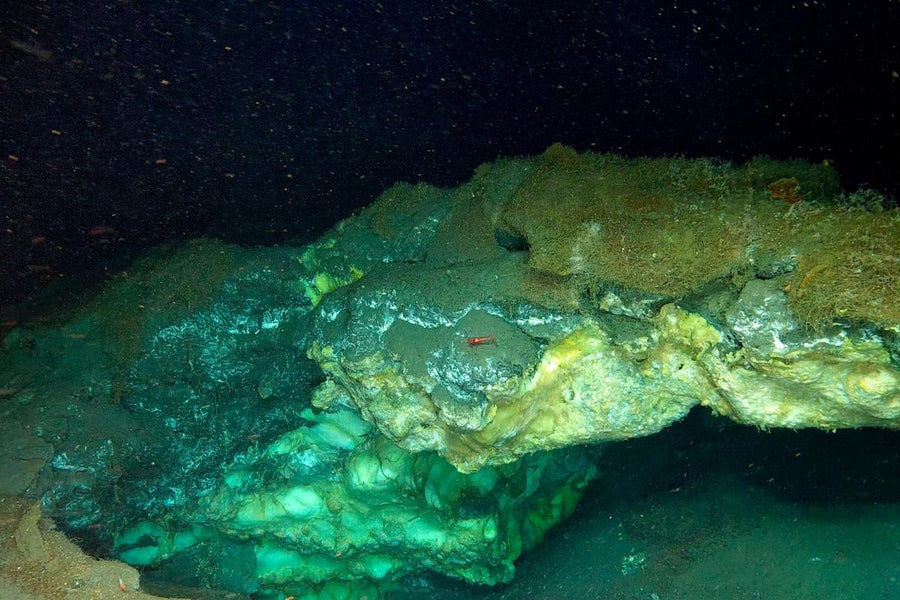 UiT / Ocean Census / REV Ocean


 David Guttenfelder/The New York Times
 Bloomberg/Contributor/Getty Images
 Photo Credit: Chad Salvador
 Jonno Rattman for The New York Times
