What you put on your plate dictates your mood just as much as your physique. There’s a direct line between your gut and your brain, and if you’re fueling with junk, don’t be surprised when you feel like junk. Choosing healthy lifestyle choices regarding nutrition is a massive hack for mental clarity. Ditching processed sugars […]
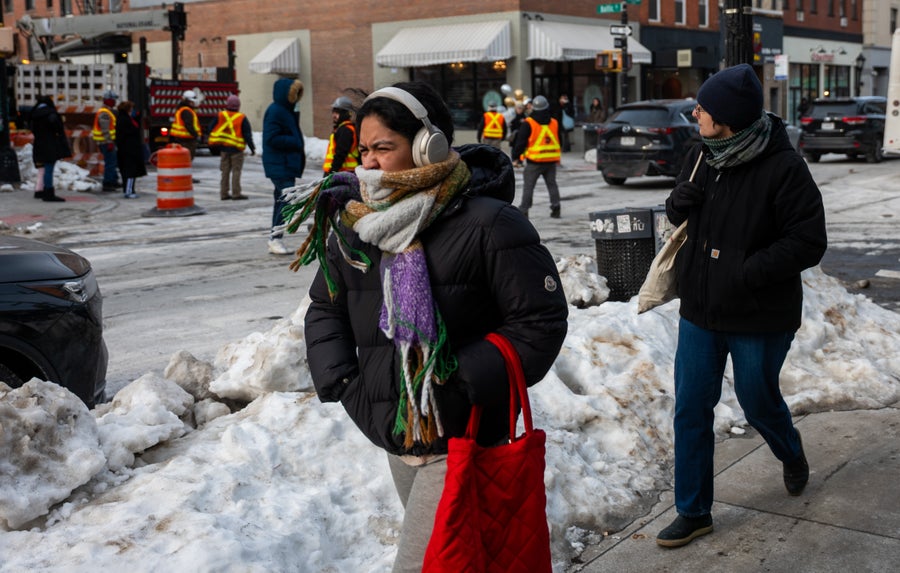
The latest bout of brutally cold weather that has beset the eastern U.S. for weeks sent wind chills into the negative teens and 20s Fahrenheit (negative mid-20s to negative low 30s Celsius) in the U.S. Northeast over the weekend. Meanwhile, out West, winter has brought record-breaking warmth that is more suited for spring and even summer. “I’m sitting here in a T-shirt in early February, a mile high in Colorado,” says climate scientist Daniel Swain of the California Institute for Water Resources.
This stark disparity is the product of a persistent atmospheric pattern. That pattern is about to break, however, and the weather fortunes of the two halves of the country are set to switch.
To explain what’s happening, let’s review a favorite winter weather bugaboo: the polar vortex. The vortex is like a circular rushing river of wind that corrals the bitterest cold air up in the Arctic. When the vortex weakens, that tight circle becomes wavier, akin to how a slow-moving river tends to meander in bends across the landscape, Swain says.
Where the vortex bends southward, cold air follows. And if it bends southward in one spot, it must bend northward in adjacent areas. In this case, the northward bend is happening over the western U.S., where it has pulled up warmer air.
Those bends tend to be set up in ways that reinforce background conditions related to Earth’s geography, Swain says. In the case of the U.S., the location of the Rockies, as well as the boundary between the Pacific Ocean and the land, means that, on average, a weak ridge (a northward bend in the jet stream) forms over the West and a weak trough (a southward bend) establishes over the East. The present dichotomy “is an amplification of that background pattern—a dramatic one,” Swain says.
The rapid warming of the Arctic may be making such weakening of the polar vortex more common, but researchers aren’t yet sure. “To the extent that it’s doing so, it hasn’t been enough to overcome the fact that that source of bitterly cold air isn’t as bitterly cold as it used to be,” Swain says.
This effect bears on the current situation. For the period of December 2025 to January 2026, no part of the contiguous U.S. had record cold. But 21 percent of the country had the warmest such period since 1940, according to climatologist Brian Brettschneider.
And as winters get warmer overall, these bouts of bitter cold become more disruptive because they are so unusual. People are less acclimated to freezing weather, and businesses may not make contingency plans. “For someone who is 25 or 30 years old, they may have had the coldest week in their life,” Swain says, whereas, for those out West, “it’s been the warmest winter regardless of age.”
Though the consequences of the cold have been widespread and acute—with travel disruptions, power outages, and scores of deaths—the warm western winter will also take a toll. Its consequences, however, will be delayed, with the potential for drought, water shortages, and a higher risk of wildfires in the coming months.
The upcoming weather switch up likely comes down to a subtle atmospheric shift. Understanding the details would take a dedicated study to unpack all the influences, Swain says, but it could be a change in where storms in the tropical Pacific are occurring, which can knock things around in the atmosphere like dominoes. Whatever the cause, temperatures will rise to more seasonable levels in the eastern U.S., and cooler, wetter weather will come to the West. Any rain or snow will be welcome, Swain says, but will be unlikely to erase the current deficit.
.
People walk down a street in Brooklyn, N.Y., on February 7, 2026, a day when an “extreme cold warning” was in effect. Spencer Platt/Getty Images
Socialism and capitalism are the two main economic systems used in most countries today. The main difference between capitalism and socialism is the extent to which the government controls the economy.
Key Takeaways: Socialism vs. Capitalism
Socialism is an economic and political system under which the means of production are publicly owned. Production and consumer prices are controlled by the government to best meet the needs of the people.
Capitalism is an economic system under which the means of production are privately owned. Production and consumer prices are based on a free-market system of “supply and demand.”
Socialism is most often criticized for its provision of social services programs requiring high taxes that may decelerate economic growth.
Capitalism is most often criticized for its tendency to allow income inequality and stratification of socio-economic classes.
Socialist governments strive to eliminate economic inequality by tightly controlling businesses and distributing wealth through programs that benefit the poor, such as free education and healthcare. Capitalism, on the other hand, holds that private enterprise utilizes economic resources more efficiently than the government and that society benefits when the distribution of wealth is determined by a freely-operating market. The United States is generally considered to be a capitalist country, while many Scandinavian and Western European countries are considered socialist democracies. In reality, however, most medium- and high-income countries—including the U.S.—employ a mixture of socialist and capitalist programs.
Capitalism Definition
Capitalism is an economic system under which private individuals own and control businesses, property, and capital—the “means of production.” The volume of goods and services produced is based on a system of “supply and demand,” which encourages businesses to manufacture quality products as efficiently and inexpensively as possible.
In the purest form of capitalism—free market or laissez-faire capitalism—individuals are unrestrained in participating in the economy. They decide where to invest their money, as well as what to produce and sell at what prices. True laissez-faire capitalism operates without government controls. In reality, however, most capitalist countries employ some degree of government regulation of business and private investment.
Capitalist systems make little or no effort to prevent income inequality. Theoretically, financial inequality encourages competition and innovation, which drive economic growth. Under capitalism, the government does not employ the general workforce. As a result, unemployment can increase during economic downturns. Under capitalism, individuals contribute to the economy based on the needs of the market and are rewarded by the economy based on their personal wealth.
Socialism Definition
Socialism describes a variety of economic systems under which the means of production are owned equally by everyone in society. In some socialist economies, the democratically elected government owns and controls major businesses and industries. In other socialist economies, production is controlled by worker cooperatives. In a few others, individual ownership of enterprise and property is allowed, but with high taxes and government control.
The mantra of socialism is, “From each according to his ability, to each according to his needs.” This means that each person in society gets a share of the economy’s collective production—goods and wealth—based on how much they need. Workers are paid their share of production after a percentage has been deducted to help pay for social programs that serve “the common good.”
In contrast to capitalism, the main concern of socialism is the elimination of “rich” and “poor” socio-economic classes by ensuring an equal distribution of wealth among the people. To accomplish this, the socialist government controls the labor market, sometimes to the extent of being the primary employer. This allows the government to ensure full employment even during economic downturns.
The Socialism vs. Capitalism Debate
The key arguments in the socialism vs. capitalism debate focus on socio-economic equality and the extent to which the government controls wealth and production.
Ownership and Income Equality
Capitalists argue that private ownership of property (land, businesses, goods, and wealth) is essential to ensuring the natural right of people to control their own affairs. Capitalists believe that because private-sector enterprise uses resources more efficiently than government, society is better off when the free market decides who profits and who does not. In addition, private ownership of property makes it possible for people to borrow and invest money, thus growing the economy.
Socialists, on the other hand, believe that property should be owned by everyone. They argue that capitalism’s private ownership allows a relatively few wealthy people to acquire most of the property. The resulting income inequality leaves those less well off at the mercy of the rich. Socialists believe that since income inequality hurts the entire society, the government should reduce it through programs that benefit the poor, such as free education and healthcare and higher taxes on the wealthy.
Consumer Prices
Under capitalism, consumer prices are determined by free market forces. Socialists argue that this can enable businesses that have become monopolies to exploit their power by charging excessively higher prices than warranted by their production costs.
In socialist economies, consumer prices are usually controlled by the government. Capitalists say this can lead to shortages and surpluses of essential products. Venezuela is often cited as an example. According to UNHCR, “inflation…as well as shortages of food, medicine and essential services have forced millions to seek refuge…” Hyperinflation and deteriorating health conditions under the socialist economic policies of President Nicolás Maduro have driven an estimated 7.7 million people to leave the country as food became a political weapon.
Efficiency and Innovation
The profit incentive of capitalism’s private ownership encourages businesses to be more efficient and innovative, enabling them to manufacture better products at lower costs. While businesses often fail under capitalism, these failures give rise to new, more efficient businesses through a process known as “creative destruction.”
Socialists say that state ownership prevents business failures, prevents monopolies, and allows the government to control production to best meet the needs of the people. However, say capitalists, state ownership breeds inefficiency and indifference as labor and management have no personal profit incentive.
Healthcare and Taxation
Socialists argue that governments have a moral responsibility to provide essential social services. They believe that universally needed services like healthcare, as a natural right, should be provided free to everyone by the government. To this end, hospitals and clinics in socialist countries are often owned and controlled by the government.
Capitalists contend that state, rather than private control, leads to inefficiency and lengthy delays in providing healthcare services. In addition, the costs of providing healthcare and other social services force socialist governments to impose high progressive taxes while increasing government spending, both of which have a strong effect on the economy. However, in some capitalist countries such as the U.S., healthcare is unbearably expensive for the consumer.
Capitalist and Socialist Countries Today
Today, there are few if any, medium- and high- countries that are 100% capitalist or socialist. Indeed, the economies of most countries combine elements of socialism and capitalism.
In Norway, Sweden, and Denmark—generally considered socialist—the government provides healthcare, education, and pensions. However, private ownership of property creates a degree of income inequality. An average of 65% of each nation’s wealth is held by only 10% of the people—a characteristic of capitalism.
The economies of Cuba, China, Vietnam, Russia, and North Korea incorporate characteristics of both socialism and communism.
While countries such as the United Kingdom, France, and Ireland have strong socialist parties, and their governments provide many social support programs, most businesses are privately owned, making them essentially capitalist.
Though long considered the prototype of capitalism, the United States employs certain socialist-like social safety net programs such as Social Security, Medicare, food stamps, and housing assistance. This is set in the Preamble of the U.S. Constitution, with one of the nation’s goals being to “promote the general welfare.”
Socialism
Contrary to popular belief, socialism did not evolve from Marxism. Societies that were to varying degrees “socialist” have existed or have been imagined since ancient times. Examples of actual socialist societies that predated or were uninfluenced by German philosopher and economic critic Karl Marx were Christian monastic enclaves during and after the Roman Empire and the 19th-century utopian social experiments proposed by Welsh philanthropist Robert Owen. Premodern or non-Marxist literature that envisioned ideal socialist societies include The Republic by Plato, Utopia by Sir Thomas More, and Social Destiny of Man by Charles Fourier.
Socialism vs. Communism
Unlike socialism, communism is both an ideology and a form of government. As an ideology, it predicts the establishment of a dictatorship controlled by the working-class proletariat established through violent revolution and the eventual disappearance of social and economic class and state. As a form of government, communism is equivalent in principle to the dictatorship of the proletariat and in practice to a dictatorship of communists. In contrast, socialism is not tied to any specific ideology. It presupposes the existence of the state and is compatible with democracy, and allows for peaceful political change.
Capitalism
While no single person can be said to have invented capitalism, capitalist-like systems existed as far back as ancient times. The ideology of modern capitalism is usually attributed to Scottish political economist Adam Smith in his classic 1776 economic treatise “The Wealth of Nations”. The origins of capitalism as a functional economic system can be traced to 16th to 18th century England, where the early Industrial Revolution gave rise to mass enterprises, such as the textile industry, iron, and steam power. These industrial advancements led to a system in which accumulated profit was invested to increase productivity—the essence of capitalism.
Despite its modern status as the world’s predominant economic system, capitalism has been criticized for several reasons throughout history. These include the unpredictable and unstable nature of capitalist growth, social harms, such as pollution and abusive treatment of workers, and forms of economic disparity, such as income inequality. Some historians connect profit-driven economic models such as capitalism to the rise of oppressive institutions such as human enslavement, colonialism, and imperialism.
.
Hand flips a dice and changes the word “Socialism” to “Capitalism”, or vice versa. Fokusiert / Getty Images
Bad Bunny made history at the Super Bowl on Sunday, giving voice to Puerto Rican history and culture, and doing so in Spanish at a time when that alone could get you picked up by masked immigration agents. Though Bad Bunny did not yell “ICE out” or otherwise call out the Trump administration directly, his performance was unapologetically political.
And you know what? It was a party, too, complete with live salsa, perreo dancing, and even a wedding. You didn’t have to understand Spanish or know anything of what he was talking about to enjoy it. But if you do speak Spanish, it was so much more.
We knew he would probably use the show to make a statement, but even we weren’t prepared for the emotional roller coaster Bad Bunny, a.k.a. Benito Antonio Martínez Ocasio, took us on. It felt subversive to see this display of joy, pride, and resistance. It often felt as though there were two different shows unfolding — one for America and one for América.
His 13-minute set opened with a man dressed in white, guitar in hand and wearing a pava, the classic straw hat worn by the Puerto Rican jíbaro, or small farmer, a contradictory symbol who is the embodiment of Puerto Rican national culture. “Que rico es ser Latino,” he said, holding his guitar. “How wonderful it is to be Latino.” That line tugged on the heartstrings of Latinos, immigrants, and others who, like Bad Bunny, have been told they don’t belong here.
At times, Bad Bunny looked into the camera and spoke to us directly — in Spanish, telling us to believe in ourselves, that we are so much more than we think we are. He sang, “Este es P.R.” — “This is P.R.” — and winked through the camera to those of us at home. And of course, there were the white plastic chairs that have come to symbolize the displacement addressed in his recent album and that sit in and on patios, porches, and marquesinas, or carports, all over the Americas.
People magazine described the performance as a “fun-filled dance party” that largely abandoned politics in favor of sexiness, joy, and tropical flavor. A friend texted to say she was especially annoyed when one media outlet referred to the plants onstage as “shrubbery,” oblivious to how those sugar cane fields recalled a long history of chattel slavery and colonialism in the Caribbean.
During the set, Bad Bunny performed “El Apagón,” a searing critique of Puerto Rico’s failing electrical grid and the long legacy of colonialism behind it. The jíbaros were recast as electrical workers, evoking the ingenuity of Puerto Ricans rebuilding after Hurricane Maria amid federal negligence. Where some viewers may have seen only electrical poles, we saw an acknowledgment of one of the most painful chapters in Puerto Rico’s recent history. And yet, the workers and Bad Bunny still danced, still partied, still lived.
Our friends in Los Angeles cheered when they saw the popular Villa’s Tacos stand, while those in Brooklyn lit up when Toñita of Williamsburg’s Caribbean Social Club handed Bad Bunny a drink. Nearly halfway through the show, the music stopped, and the camera cut to a real couple — two fans who had originally invited Bad Bunny to their wedding — being pronounced husband and wife during the performance.
In the reception scene that followed, the sight of a child dozing across the chairs reminded us of family parties and the endless waiting for our parents to call it a night. We saw ourselves in the little girl Bad Bunny spun around — memories of itchy puffy dresses at family gatherings, dancing with uncles, weaving between grown-ups to chase cousins. “Baila sin miedo, ama sin miedo,” Bad Bunny shouted. “Dance without fear. Love without fear.”
But there was more than feel-good nostalgia wrapped up in that halftime show. In one particularly poignant moment, Ricky Martin appeared sitting on a white chair in the Puerto Rican countryside to sing “Lo Que Le Pasó a Hawaii,” one of Bad Bunny’s most explicit pro-independence anthems. In the song, Bad Bunny urges Puerto Ricans to hold onto their culture and their land in the face of gentrification and displacement.
Mr. Martin crossed over into the English-language market during the 1990s, helping usher in the Latin pop boom. To do so, he embodied many of the stereotypes associated with Latinos. Many likely remember him as the happy-go-lucky, hip-thrusting Latin lover who urged you to “shake your bon-bon.” Since then, he has come out as gay and become a vocal advocate for Puerto Rican sovereignty, joining Bad Bunny at the 2019 protests that led to the ouster of the governor at the time, Ricardo Rosselló.
In Mr. Martin’s autobiography, he wrote that he feared that acknowledging he was gay would ruin his career. He didn’t publicly come out until he was in his late 30s. As he sang, our minds flashed back to a scene moments earlier, where two male dancers grinded together as they stared at each other, sin miedo. It was a quiet yet defiant statement about queerness, visibility, and Latin identity.
Bad Bunny showed us that when he said, “We are Americans” at the Grammys, he wasn’t merely referring to citizenship status. He was challenging this country’s ever-narrowing definitions of who is — and is not — American.
Through a celebration of wedding, family, joy, and community, he created a showcase in which many Latinos, especially Puerto Ricans, felt seen, heard, and represented at every turn, with millions dancing along at home, even if they didn’t know exactly what was going on. He invited us all to join the party. And that might just be the biggest form of resistance for all.
For the first time in more than a decade, the Seattle Seahawks are playing in the Super Bowl—but what exactly is the team’s mascot? There’s no one bird officially dubbed the seahawk, but a few different species have taken on the nickname. Meanwhile, the team’s imagery and live animals at events seem to portray different bird species entirely.
The history of the name dates back to 1975, when fans suggested the “Seahawks” appellation for the city’s then-nameless team that would begin playing the next year. According to the government of Anacortes, Wash.—a city north of Seattle that claims to be the original home of the name seahawk for its high school mascot—the name arose as a nickname for the osprey because of its talons that are uniquely fit to catch fish. Ospreys go by other names, too, including river hawk and fish hawk, and they “embark on these long, arduous journeys and have to survive a lot of obstacles,” says Robert Domenech, executive director of the Raptor View Research Institute in Montana. “The Seahawks have had to survive and overcome lots of challenges and adversities to be able to make it to the Super Bowl, much like an osprey.”
Skuas, large predatory birds from the North Atlantic, have been referred to as seahawks as well. This species is known for its broad shoulders and its habit of aggressively attacking other birds—perhaps providing some inspiration for the team’s players as Sunday approaches. Skuas, however, are not technically hawks, because they don’t seize and grasp prey with their feet, Domenech says.
So do Ospreys or Skuas appear as the Seahawk mascot? The answer seems to be no: all different types of birds are used in the team’s imagery. The blues and greens of the Seahawks’ logo don’t match either species, with some saying the art instead nods to the brightly colored ceremonial masks of Seattle’s Indigenous communities. One ornithologist noted in 2015 that the logo looks strikingly similar to sea eagles, a group of birds including the bald eagle—the mascot for the 2025 Super Bowl–winning Philadelphia Eagles.
A live bird named Taima can be seen at some Seahawks games, but he is in fact an Augur Hawk, which could be because it’s illegal to use ospreys for commercial purposes. And finally, the Seahawks’ official costumed mascot, Blitz, does have an online profile to go by, but he claims no species—only that he’s 6’1” and loves reading, fitness, and bird-watching.
.
Blitz, mascot of the Seattle Seahawks, performs during the 2025 NFL Pro Bowl Skills Showdown on January 30, 2025, at the UCF campus in Orlando, Fla. Perry Knotts/Getty Images
Elon Musk sits comfortably at the top of the billionaires list as the world’s richest person.
Key Takeaways
Despite an estimated net worth of $662 billion, Elon Musk supports the idea that money does not guarantee happiness.
Musk advises people to focus on building useful products and services, saying that money should be a byproduct of creating value.
Sociologist David Bartram suggests that at a certain threshold of wealth, money adds little value to people’s overall happiness.
With a net worth of $662 billion, Elon Musk is the richest person in the world. He is also firmly at the top — the divide between him and the second-richest person in the world, Google co-founder Larry Page, is nearly $400 billion.
Despite all of that wealth, Musk recently questioned the power of money to make life happier. In a post on X earlier this week, Musk wrote, “Whoever said ‘money can’t buy happiness’ really knew what they were talking about.” The post has accumulated over 96 million views at the time of this writing. Musk did not elaborate further on what sparked his public musings.
The Tesla CEO has spoken before about the role of money in his life. In a November conversation with investor Nikhil Kamath on the podcast People by WTF, he advised people to aim to be a “net contributor to society” rather than obsessing over how much money they make.
“Aim to make more than you take,” Musk said on the podcast.
He compared the pursuit of money to the pursuit of happiness, saying that if you make either your main goal, you will probably end up disappointed. Instead, he suggested focusing on creating useful products and services. “If you do that, then money will come as a natural consequence, as opposed to pursuing money directly,” he said.
In November, Tesla approved a historic $1 trillion pay package for Musk that hinges on him meeting several product and financial milestones. The unprecedented pay is the biggest executive compensation proposal ever approved in corporate history. For Musk to receive the full pay, Tesla must hit an $8.5 trillion market cap, a feat never achieved before by any other company.
What experts have said about money and happiness
Sociologist David Bartram, an associate professor at the University of Leicester, told Business Insider that there is a link between wealth and happiness. Money does increase happiness, especially when people move out of poverty and into financial security. Higher income can reduce daily stress, improve health outcomes, and provide access to better housing, education, and leisure, all of which tend to boost life satisfaction, he said.
However, Bartram cautioned that the relationship weakens as people become richer. These benefits follow a pattern of diminishing returns: each extra dollar matters less once basic needs and some comforts are covered. After a certain point, more money adds very little to how happy people feel day-to-day.
“Once you’ve got a few million, anything extra is meaningless for happiness,” Bartram told the outlet.
Another expert, psychologist Matthew Killingsworth, a senior fellow at the University of Pennsylvania, presented a contrasting take. He found in a 2021 study that happiness increased parallel to a person’s rising income, and there was no limit to the positive effect money had on happiness. So, the more money someone had, the happier they tended to be — no matter how much money they made.
Killingsworth explained the findings to The Guardian, stating that he was shocked by the marked difference in happiness between those who are wealthy and those who are low-income.
“If the differences in income/wealth are very large, the differences in happiness can be, too,” he told the publication.
This is the shift from AI as a tool to AI as an operator — and it changes everything.
What if your internet browser acted like a full-time employee — handling research, planning, and execution for you?
That’s exactly what OpenAI’s Atlas browser makes possible — and most people still aren’t using it.
And I’ll show you how solopreneurs are already using it to reclaim 40+ hours a week.
In this video, I’m breaking down eight plug-and-play use cases that solo entrepreneurs are using right now to scale toward six to seven figures and cut their workload in half:
Content Creation: Identify breakout hooks, draft scripts, and organize everything into a single Google Doc automatically.
Tab Chaos Killer: Ask Atlas what you were working on and instantly rebuild your workflow or automation plan from browsing context.
Conversion Boost: Audit landing pages using the latest research and get a ready-to-run test plan for higher conversions.
Inbox Cleanup: Auto-unsubscribe from dead senders and get a clean report of what changed.
Inline Editing: Rewrite any draft in your tone of voice directly inside the page, no copy-paste needed.
Smart Purchasing: Compare tools, gear, and software intelligently before you buy — save hours and avoid bad decisions.
Content Intelligence: Scan Reddit, Substack, and YouTube to build next week’s posting plan based on real audience demand.
SEO and Findability: Run compact audits for Google and AI search engines like Perplexity so people actually find your work.
Inside the video, you’ll learn:
My full Atlas setup from blank browser → first automation
The exact prompts I use to turn Atlas into a revenue-producing machine
How to eliminate 40+ hours of manual work every single week
Why “zero-click searches” mean your current business model must evolve now
The way you use AI just changed. This is how you build your edge before everyone else catches on.
The AI Success Kit is available to download for free, along with a chapter from my new book, The Wolf is at The Door.
The reverend’s intellectualism and distinctive brand of man-up Christianity draws a wide audience to his church, the largest in New York.
One Saturday in mid-September, the Rev. A. R. Bernard took to the blue carpeted stage of the Christian Cultural Center, the 96,000-square-foot megachurch he built 16 years ago at the edge of Starrett City, in Brooklyn, with his usual accouterments: a smartphone, a bottle of water and a large glass marker board that he would soon cover in bullet points drawn from the playbooks of marketing specialists. Mr. Bernard, 63, is tall and slender, and on this day he wore a distressed black leather jacket, a white polo shirt, bluejeans and white tennis shoes — casual Saturday attire. On Sunday, you would find him impeccably tailored in a light wool suit and tortoiseshell glasses, looking more like the banker he once was than the pastor of a congregation of nearly 40,000.
Cameras on telescoping booms were cantilevered over the stage, which is bland and massive, like the set of a daytime talk show. It was the final morning of a weeklong women’s conference, and the female audience of more than 1,000 took out their own devices and cued up their Bible apps, poised to take notes.
When the pastor speaks, everyone takes notes, not just the younger congregants.
His church, the largest in New York City, has long been considered a required stop on the way to City Hall and beyond. Having served as an adviser to Mayor Michael R. Bloomberg for all three terms, Mr. Bernard counts the billionaire among his many powerful friends. (In 2013, he flirted briefly with his own mayoral bid.) Mr. Bernard has met with the last two popes, and when Reuven Rivlin, the president of Israel, visited New York for the first time last year, he attended service at the church days before he addressed the United Nations. Mr. Bernard is a registered Republican, but he voted twice for Bill Clinton and twice for President Obama. The Clintons are old friends; they made sure to visit the church last spring in the days before the New York primary.
Mr. Bernard may have a reputation as a kingmaker, or “spiritual power broker,” as Bill Cunningham, the political consultant and former communications director for Mr. Bloomberg, described him recently, following a storied tradition of influential black pastors in New York City. But his tweedy intellectualism and distinctive brand of muscular, man-up Christianity also draw stars of pop music, film and sports to East New York.
He has been a spiritual adviser to Denzel and Pauletta Washington, and to the former pro football player Curtis Martin. Alonzo Mourning, a former pro basketball player, used to charter a plane to fly from Florida to attend Mr. Bernard’s services. Kenneth P. Thompson, the Brooklyn district attorney, who died last week from cancer, had been a congregant for decades, and his memorial service — his homegoing, in church parlance — was to be celebrated at the Christian Cultural Center on Saturday.
“He’s made me a better person through his teachings,” Pauletta Washington said. “My husband as well.”
Once a Nation of Islam follower and teenage civil rights activist who read Alan Watts and Krishnamurti before he read the Bible, Mr. Bernard presents more like a professor than a bible thumper. That he is a motorcycle-riding family man and father of seven sons as well as a martial arts devotee — inked into Mr. Bernard’s forearm is a Chinese character that translates as “the unfettered mind” — adds to his allure.
On that Saturday morning in Brooklyn, Mr. Bernard was writing swiftly on his marker board while the women in the audience called out encouragements. “You have a responsibility to get smarter,” he told them. “If you’re the smartest one in your group, get a new group. Develop your strengths. Manage your weaknesses.” As always, Mr. Bernard closed with this refrain: “Did you get anything out of this today?”
Then Karen Bernard, his high school sweetheart and wife of 44 years, stepped onto the dais and swiftly upstaged him. Though she has multiple sclerosis, she waved away the stool a burly security guard had brought for her and stood next to her husband, a smartly dressed figure in black patent leather platform shoes with stiletto heels, a delicate diamond bracelet circling her ankle. As her husband described the pneumonia that hit him hard last month — unlike Hillary Clinton, he was benched for two solid weeks — and how his wife had cared for him, Ms. Bernard scanned the crowd, eyebrows eloquently aloft, and said with perfect comedic timing, “Isn’t that what you do with a baby?”
Mr. Bernard winced as the crowd roared its approval.
Ms. Bernard is the not-so-secret sauce in Mr. Bernard’s global ministry. Their long marriage has been a touchstone in his preaching, and he has used their marital struggles as teaching aids. Mr. Bernard will tell you that his work has often been his mistress, and Ms. Bernard will just as quickly tell you how mad that has made her, and for how long (on this morning, she pinched his arm hard to make her point, which delighted her rapt audience).
In the early 1980s, Ms. Bernard miscarried twins while Mr. Bernard was on the road, she said. She blamed him for being absent, and she stayed bitter, she said, for a solid decade. “I thought about leaving him,” she said, but with seven sons, “I had nowhere to go. And my sons needed their father. And I loved him.”
It was after the Saturday service, and the Bernards were in the large, formal dining room of Mr. Bernard’s office suite at the church, an elegant, carpeted apartment with gleaming mahogany furniture that recalls the West Wing. There was a cadre of security guards brandishing walkie-talkies, along with a sizable crowd of family members, church employees and congregants, all milling about the many rooms, which are organized around a large, oval-shaped central hall.
“She had cause to walk away,” Mr. Bernard said, “but she stayed, and I really went to work on myself. I discovered a lot of things about myself I didn’t like. I’m a workaholic. I was all in. That’s when I began to develop teachings about men and men’s responsibilities. She hung in there, and things began to change, and the church just began to explode.”
The two met in high school in East New York, when he was 15 and she was 16. Mr. Bernard’s mother, Adelina Bernard, had been a Panamanian sprinter who qualified for the 1952 Summer Olympics but wasn’t able to compete because an affair with an older man left her pregnant, after which he rejected her and their son. She and Mr. Bernard moved to New York City when he was 4.
As a fatherless, brainy teenager, he found a heady, male-centric blend of activism and spirituality in the Nation of Islam. But when he was a young associate at Banker’s Trust, and a colleague brought him and Ms. Bernard to hear Nicky Cruz, once the leader of the Mau Maus gang, speak about his own conversion to Christianity, Mr. Bernard’s world was upended.
He and Ms. Bernard began to host a Bible study in their Williamsburg kitchen, and it wasn’t long before they figured out that Mr. Bernard was very good at preaching. A deft speaker who uses traditional pastoral tropes like call and response, Mr. Bernard crafts his 45-minute sermons like mash-ups of a university lecture and a Baptist revival, though Mr. Bernard’s church is pointedly nondenominational.
“Coming from a heavy black radical activism, to embrace Jesus was a major thing for me,” he said. “Christianity was the religion of the oppressor, so I had to work through what I knew historically.” Investigating the religion and its central text as an academic would, he began to realize, Mr. Bernard said, “that I had an ability to articulate what I was reading and studying in a way that was not common within any denomination. I also realized that banking was not going to be my life’s calling.”
By the mid-1990s, his church was so popular that it had rapidly expanded from a congregation of 685 to more than 10,000. People came from all five boroughs, as they do today, some traveling hours to do so, and were folded into three Sunday services held in a former Key Food supermarket building in Brownsville, around which lines would start to form as early as 4 a.m. Nightclub goers on their way home grew curious about the crowds, which further swelled the church’s ranks. You might run into Cheryl James and Sandra Denton, two of the members of Salt-N-Pepa, the hip-hop trio; Angela Bassett; or Kim Cattrall, who played the sultry publicist on “Sex and the City.”
In the late 1990s, Disque Deane, the real estate investor and leader of the partnership behind Starrett City, the country’s largest federally subsidized housing complex, approached Mr. Bernard with a proposal for a 15-acre parcel on the edge of his development. As the pastor recalled, “He said, ‘I have a billion-dollar complex I need to preserve, and I’ve been studying you and I want you to build a church.” Mr. Deane did not finance the deal, Mr. Bernard added; the church raised the money and bought 11½ acres. When the $12.6 million complex was nearly complete, Ms. Bernard looked around and told her husband, “It’s not big enough.”
Like the Rev. Floyd Flake, senior pastor of the Greater Allen African Methodist Episcopal Cathedral in Queens, and the Rev. Calvin Butts, who leads the 200-year-old Abyssinian Baptist Church in Harlem, Mr. Bernard now commands an enormous, culturally diverse congregation made up of parishioners traveling from all over the state, Mr. Cunningham said.
“So he crosses a lot of lines, a lot of boundaries,” Mr. Cunningham added. “If you’re a politician and you have a message about jobs or the economy or crime and you’re addressing that megachurch, your message will ripple out to all these different communities.”
Initially, Mr. Bernard’s sermons about male responsibility were attracting a lot of young men, which in turn, brought in more women. Church congregations typically skew more female than male, but at one point more than half of the Christian Cultural Center’s membership was male. (Now the split is 60/40 female to male, like many college campuses.)
The meat of those sermons is collected in “Four Things Women Want From a Man,” Mr. Bernard’s second book, out last May. It’s a slight book, as self-help primers tend to be, but there are a few pearls. Mr. Bernard uses the bible’s first couple, Adam and Eve, as his central metaphor. Adam, alone at first, is a clueless workaholic; Eve, created by God to help Adam get his act together, has better people skills and can multitask, even though Adam thinks she’s a nag.
Man up, men, Mr. Bernard exhorts, or you’ll lose her. Echoing animal behaviorists, he suggests women offer positive reinforcement if their menfolk behave properly.
Mr. Martin, the former football star, is one male congregant who has been avidly following Mr. Bernard’s teachings; he said the pastor is both his friend and a father figure. “He is the single most influential male in my adult life,” he said. Now 43, Mr. Martin began attending his church in the late 1990s, when he signed with the Jets. “A friend of mine said, ‘You’ve got to hear this guy speak,’” he said. “And I just kept going back. I’m a very practical person, and I think he has a tremendous gift for making what is complicated extremely simple. He can talk about God in a way that makes you attracted to God so you don’t get lost in all the rules and regulations.”
Mr. Martin brought his friend Carra Wallace, now chief diversity officer in New York City’s office of the comptroller. She was coming off a divorce — “I like to say I married late and divorced early,” she said — and was attracted to Mr. Bernard’s teaching method: “You take notes, you’re able to study and think about it.” These days, Ms. Wallace attends the 8 a.m. service, an hour’s train ride from her home in Battery Park City. “You get your message in, and then you have your day.”
Mr. Bernard, who is the chief executive of his church, as well as its senior pastor (his six-figure salary is determined by a board), is at heart a practical evangelist. When it was reported in the run-up to the presidential election in 2012 that African-American ministers were encouraging their congregations not to vote because of President Obama’s position on gay marriage, Mr. Bernard bristled at being lumped into that group.
“Let me give you three powerful reasons why I would never tell my congregation not to vote: Schwerner, Goodman and Chaney,” he told a reporter on MSNBC, referring to the young civil rights workers who were murdered in Mississippi in 1964. “Don’t let same-sex marriage be the deciding factor.” He went on to give a meticulous, and theologically agile, mini-lecture on the separation of church and state, on why same-sex marriage is a civil rights issue, and how his own faith nonetheless requires that he obey its tenets.
Last year, when the Supreme Court ruled in favor of same-sex marriage, Mr. Bernard delivered a sermon about how societal norms and laws change over time. “I used the 55-mile-an-hour speed limit as one example,” he said. “That’s the law, but most people are doing 65, so that’s the norm. If they hit 95, which is the extreme, the police will pull them over. Over time, cultural practices can move from extreme to norm to law.”
Change is a process, not an event, he likes to say.
This election year has come with its own challenges. In June, when Donald J. Trump’s team invited a group of evangelicals to advise the candidate, Mr. Bernard was among them. Mr. Bernard has since stepped away from that role, he said, because he felt more like “window dressing,” as he put it, than a genuine adviser. The two had met years ago, weirdly, at Maya Angelou’s 80th birthday party, where Mr. Bernard was the keynote speaker; the setting was Mr. Trump’s Mar-a-Lago estate, which perhaps explains the unlikely pairing of that presidential hopeful with the poet and civil right activist.
“If I’m going to advise you,” Mr. Bernard said, “it’s because I’m going to really, genuinely advise you. O.K., politics is a weird game, I get it. But when I found out that no matter what we were saying, he continued the same path, I said: ‘You know what? I need to step back and remain neutral.’”
Ms. Bernard, with typical candor, said, “I never met Trump, but Trump just has issues, and it’s obvious he has issues.”
Two weeks ago, when Elena George, a celebrity makeup artist, was preparing Donna Brazile, the veteran political analyst now serving as interim chairwoman of the Democratic National Committee, for her role on CNN’s round table after the first presidential debate, they phoned Mr. Bernard to join them in a prayer. “I told Donna, ‘We need reinforcement,’” Ms. George recalled.
“He quoted scripture,” Ms. Brazile said. “And it was helpful.”
.
The Rev. A.R. Bernard last month at the Christian Cultural Center, his Brooklyn megachurch. Credit…Jessica Lehrman for The New York Times
In the world, human beings are facing various problems. People who are full of greed, anger, and ignorance are seen to be fighting with each other in words and deeds. As the fighting continues, various problems such as civil wars, wars of aggression, and wars of aggression are occurring. As world peace is being destroyed, humans are facing unbearable problems. Innocent children and women are not getting the rights they deserve and deserve. I can't think of one thing every time. What is it? The United Nations. If we look at the responsibilities and duties of the United Nations, I think it is not suitable for solving the problems that are happening in the world today. In fact, the United Nations and the World Security Council, such an organization must rule the world, must be able to give orders, and must have various ways to obey orders. There must be no organization that can influence more than that organization. There should be experts from each country. They can even dominate the superpowers like the US, China, and Britain. Only then will global peace be achieved quickly. Now, if a country with power develops more militarily, economically, or socially than its own country, then powerful countries will jealously seek out enemies and wage war. Or they will attack with fighter jets. In this, innocent people are losing their lives. No one understands the value of a life. You should think about how to achieve global peace by controlling these. If the US continues to be the permanent president of the UN, world peace will never be achieved. If you think carefully, no one sees that they are working for the common good, but for their own benefit, for the benefit of their own country. The permanent president of the UN and the Security Council has rejected this, As a young Rohingya, I have come to realize that only by electing the president and secretary from among the countries in the world through a secret ballot system and governing the world fairly can we achieve global peace. The United Nations and the Security Council are organizations in which any country must govern, give orders, and make them obey their orders. For example, only when a defendant is tried in court can we hold the leaders of the countries in check and control them, can we achieve global peace smoothly. Otherwise, it will not be easy for powerful countries to use various excuses to end this war every year, every year, for the benefit of themselves and their countries. No country's leaders pay any attention to the words of the United Nations and the Security Council. If we look at it in practice, look at the Rohingya issue. Myanmar is a small country. Even that country has been under siege for 8 years. What action can be taken? Why is the UN and the Security Council Powerless? Without such Power, how can the organization bring about global peace? Everyone should think about it. Whether there is a veto or a strong one, all countries in the world can only achieve global peace if they are subject to the UN and the Security Council. Seek peace in the quiet embrace of nature. Peace is an indispensable need of the human race. It is not as if one person can kill another person, and it is as if one country can attack another country, but instead of trying to build peace, we must try to destroy the peace now, and the world is getting hotter and is on the verge of collapse. I especially appeal to all the world experts to urgently try to bring about peace in all parts of the world. Mr, Noor Muhamed Arkhan Rohingya Youth Myanmar
Film and Writing Festival for Comedy. Showcasing best of comedy short films at the FEEDBACK Film Festival. Plus, showcasing best of comedy novels, short stories, poems, screenplays (TV, short, feature) at the festival performed by professional actors.




:max_bytes(150000):strip_icc()/cap_v_soc-64336f86820c4217be021540b233461c.jpg) Hand flips a dice and changes the word “Socialism” to “Capitalism”, or vice versa. Fokusiert / Getty Images
Hand flips a dice and changes the word “Socialism” to “Capitalism”, or vice versa. Fokusiert / Getty Images
 Adam Hunger/Associated Press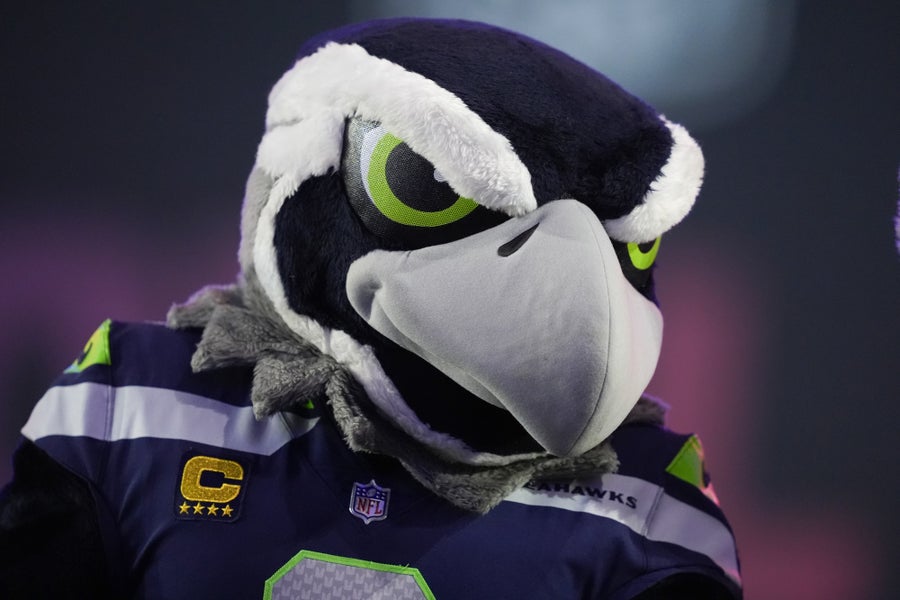

 .
.