Home

What Happens to the Plastic in Your Recycling Bin?

Leave a comment

Click the link below the picture

.

Every week, millions of Americans toss their recyclables into a single bin, trusting that their plastic bottles, aluminum cans, and cardboard boxes will be given a new life.

But what really happens after the truck picks them up?

Single-stream recycling makes participating in recycling easy, but behind the scenes, complex sorting systems and contamination mean a large percentage of that material never gets a second life. Reports in recent years have found 15% to 25% of all the materials picked up from recycle bins ends up in landfills instead.

Plastics are among the biggest challenges. Only about 9% of the plastic generated in the U.S. actually gets recycled, according to the Environmental Protection Agency. Some plastic is incinerated to produce energy, but most of the rest ends up in landfills instead.

So, what makes plastic recycling so difficult? As an engineer whose work focuses on reprocessing plastics, I have been exploring potential solutions.

How does single-stream recycling work?

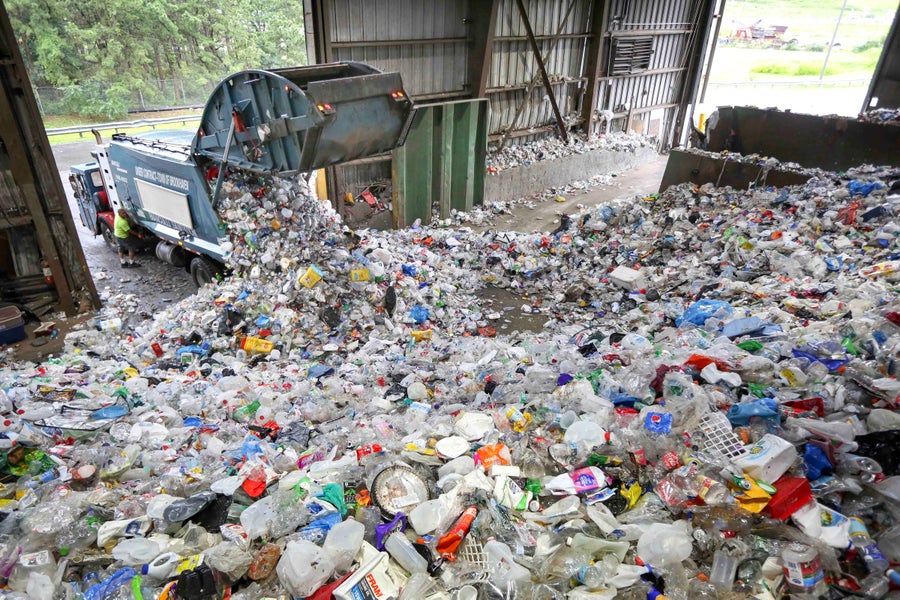
In cities that use single-stream recycling, consumers put all of their recyclable materials − paper, cardboard, plastic, glass, and metal − into a single bin. Once collected, the mixed recyclables are taken to a materials recovery facility, where they are sorted.

First, the mixed recyclables are shredded and crushed into smaller fragments, enabling more effective separation. The mixed fragments pass over rotating screens that remove cardboard and paper, allowing heavier materials, including plastics, metal,s and glass, to continue along the sorting line.

Magnets are used to pick out ferrous metals, such as steel. A magnetic field that produces an electrical current with eddies sends nonferrous metals, such as aluminum, into a separate stream, leaving behind plastics and glass.

The glass fragments are removed from the remaining mix using gravity or vibrating screens.

That leaves plastics as the primary remaining material.

While single-stream recycling is convenient, it has downsides. Contamination, such as food residue, plastic bags and items that can’t be recycled, can degrade the quality of the remaining material, making it more difficult to reuse. That lowers its value.

Having to remove that contamination raises processing costs and can force recovery centers to reject entire batches.

Which plastics typically can’t be recycled?

Each recycling program has rules for which items it will and won’t take. You can check which items can and cannot be recycled for your specific program on your municipal page. Often, that means checking the recycling code stamped on the plastic next to the recycling icon.

These are the toughest plastics to recycle and most likely to be excluded in your local recycling program:

  • Symbol 3 – Polyvinyl chloride, or PVC, found in pipes, shower curtains, and some food packaging. It may contain harmful additives such as phthalates and heavy metals. PVC also degrades easily, and melting can release toxic fumes during recycling, contaminating other materials and making it unsafe to process in standard recycling facilities.
  • Symbol 4 – Low-density polyethylene, or LDPE, is often used in plastic bags and shrink-wrap. Because it’s flexible and lightweight, it’s prone to getting tangled in sorting machinery at recycling plants.
  • Symbol 6 – Polystyrene, often used in foam cups, takeout containers, and packing peanuts. Because it’s lightweight and brittle, it’s difficult to collect and process and easily contaminates recycling streams.

Which plastics to include

That leaves three plastics that can be recycled in many facilities:

  • Symbol 1 – Polyethylene terephthalate, or PET, widely used in soda bottles.
  • Symbol 2 – High-density polyethylene, or HDPE, commonly used in milk jugs and laundry detergent bottles.
  • Symbol 5 – Polypropylene, PP, used in products such as pill bottles, yogurt cups and plastic utensils.

.
https://static.scientificamerican.com/dam/m/3c4231c7ac8b60f/original/Recycling_plant.jpg?m=1745345126.691&w=900

A truck dumps its contents of recyclable items on the tipping floor at the Town of Brookhaven Material Recycling Facility in Yaphank, N.Y. John Paraskevas/Newsday RM via Getty Images

.

.

Click the link below for the complete article:

https://www.scientificamerican.com/article/how-plastic-glass-and-paper-move-through-the-recycling-system/

.

__________________________________________

A massive tariff on millions of Americans’ purchases just went into effect — cue the chaos

Leave a comment

Click the link below the picture

.

 Many Americans might not have felt major effects from President Donald Trump’s sweeping tariffs — until now.

That’s because a major shipping loophole expired at one minute past midnight on Friday. The de minimis exemption, as it’s known, allowed shipments of goods worth $800 or less to come into the United States duty-free, often more or less skipping time-consuming inspections and paperwork.

The loophole helped reshape the way countless Americans shop, allowing ultra-low-cost Chinese e-commerce sites like Shein, Temu and AliExpress to pour everything from yarn to patio furniture, clothes to photography equipment and more into US homes.

Its impending end has rung alarm bells across social media, with a baseline tariff as high as 145% depending on the carrier set to take effect on Chinese imports, potentially more than doubling the cost for all those cheap products deal-hungry Americans scooped up.

And the end of the de minimis exemption for Chinese goods will also distill abstract, complicated, messy, hard-to-follow trade policy into something much easier to understand: a receipt.

Major carriers like UPS, FedEx, DHL, and the United States Postal Service say they’re prepared for the changes. The government says it, too, is set; a US Customs and Border Protection spokesperson told CNN that “We are prepared and equipped to carry out enhanced package screenings and enforce orders effectively.”

But whether regular American shoppers are ready for the changes is another matter.

Of tchotchkes and trade policy

When President Donald Trump initially closed the de minimis exemption for goods from Hong Kong and China earlier this year, chaos ensued.

USPS briefly stopped delivering parcels from China. Delivery times for parcels that did get shipped stretched longer, with limited information on package tracking in the US.

At the heart of the issue: the sheer volume of packages. More than 80% of total US e-commerce shipments in 2022 were de minimis imports, the vast majority of which come from China, according to a congressional research report.

CBP told CNN it currently processes “nearly 4 million duty-free de minimis shipments a day.” Research indicates that a majority of those shipments come from China and Hong Kong. In total, over the last fiscal year, CBP said 1.36 billion packages came to the US under the de minimis exemption.

That’s a lot of dog bandanas, bead kits, frosting spatulas, and tchotchkes. Regular Temu and Shein shoppers told CNN this week they’ve increasingly turned to the site as they feel made-in-the-USA products have gotten out of reach.

“I can’t afford to buy from Temu now, and I already couldn’t afford to buy in this country,” Rena Scott, a 64-year-old retired nurse from Virginia, previously said to CNN Business.

Lower-income households will suffer the most from the end of cheap Chinese e-commerce sites. About 48% of de minimis packages shipped to the poorest zip codes in the United States, while 22% were delivered to the richest ones, according to February research from UCLA and Yale economists.

The changes could come in stages. Already, for example, Shein and Temu raised prices ahead of the de minimis exemption’s end, hiking prices on several goods tracked by CNN 

“Due to recent changes in global trade rules and tariffs, our operating expenses have gone up. To keep offering the products you love without compromising on quality, we will be making price adjustments,” Shein said in a notice posted online recently. “We’re doing everything we can to keep prices low and minimize the impact on you.”

A Temu spokesperson said the company was changing its business model to encourage more local fulfillment, growing the number of US sellers on the platform.

.

https://media.cnn.com/api/v1/images/stellar/prod/ap24059552701973.jpg?c=16x9&q=h_653,w_1160,c_fill/f_webp

.

.

Click the link below for the complete article:

https://edition.cnn.com/2025/05/02/economy/de-minimis-packages-tariff?utm_source=pocket_discover_personal-finance

.

__________________________________________

Why Narcissists Emerge as Leaders Even in Childhood

Leave a comment

Click the link below the picture

.

Narcissistic leaders both fascinate and repel us. They can be charming, act assertively, and articulate visions that may inspire confidence, especially in times of uncertainty. This can attract many followers. In 1931 Sigmund Freud, the father of psychoanalysis, echoed this belief: “[Narcissists] impress others as being ‘personalities’; they are especially suited to act as a support for others, to take on the role of leaders and to give a fresh stimulus to cultural development or to damage the established state of affairs.”

But narcissists famously have a dark side as well that includes unethical, autocratic, and aggressive behavior. They often stifle collaboration and dismiss expert advice. Given those trade-offs, why do narcissists often end up in positions of leadership, and who is drawn to them? My colleague Barbara Nevicka, an organizational psychologist at the University of Amsterdam, and I set up the Childhood Leadership Study to investigate this question in childhood, when narcissistic leadership first emerges. We conducted fine-grained assessments of leadership behavior in 332 children aged seven to 14—and found patterns both in the preference for these leaders and in the relationships that leaders and followers form.

Narcissism is a personality trait characterized by feelings of grandiosity, a sense of entitlement, and a craving for respect and admiration. It’s part of what psychologists call the “dark triad” of personality traits—along with psychopathy and Machiavellianism, or cold, strategic manipulation for personal gain. In adulthood, narcissism may develop into a narcissistic personality disorder. About 6 percent of people in the U.S. meet the criteria for this disorder at some point in their lives, though they may not receive a formal diagnosis. Our research focuses on children with above-average narcissism levels because narcissistic personality disorder is usually not formally diagnosed before adulthood.

The personality trait of narcissism develops in childhood and can be measured from middle childhood, around age seven. Although some degree of narcissism is typical in children this age, markedly higher levels compared with peers may signal a narcissistic personality. Middle childhood is also when leadership tendencies take shape and become increasingly evident. From age nine, children spend about 75 percent of their free time at school in groups of three or more peers, allowing them to form leader-follower relationships. Leadership on the playground, then, provides a blueprint for leadership in politics and beyond.

Our study shows that narcissistic children often emerge as leaders in their classrooms. When we asked children to nominate classmates who they perceived to be leaders, kids in 96 percent of the classrooms tended to pick children with more narcissistic tendencies. It seems that narcissistic children embody the qualities their peers associate with leadership.

But are narcissistic children better leaders? We assigned children to three-person groups and randomly designated one child as the leader to find out. The groups did a collaborative task, with the leader responsible for the decision-making process. Unsurprisingly, more narcissistic children perceived themselves as better leaders. Yet compared with their less narcissistic peers, they did not lead their group to perform better, exhibit stronger leadership (such as by delegating tasks), or receive higher ratings from their group members.

This finding ties in with research among adults. A meta-analysis by Emily Grijalva, an organizational psychologist at the University at Buffalo, shows that narcissistic adults tend to emerge as leaders but don’t excel in those roles.

We suspected that narcissistic traits in leaders are more attractive to some people than others. So we zoomed in on children with low self-esteem—those who feel unsatisfied with themselves and are often shy and withdrawn. We found that when followers with low self-esteem had a narcissistic leader, they perceived the leader as more effective and were more likely to endorse them for future leadership roles than did their peers with higher self-esteem. What’s more, they felt more included in the group, perceived greater group cohesion, felt better about themselves, and were more inclusive toward others when they had a narcissistic leader.

.


https://static.scientificamerican.com/dam/m/1b5473bebb0d8332/original/wooden_pawn_followers_gathered_around_leader.jpg?m=1745245554.104&w=900Bo Feng/Getty Images

.

.

Click the link below for the complete article:

https://www.scientificamerican.com/article/why-narcissists-emerge-as-leaders-even-in-childhood/

.

__________________________________________

Three Financial Planning Strategies for When Markets Fall

Leave a comment

Click the link below the picture

.

The market volatility experienced in early April may have left some investors feeling a bit unnerved.

While many tried-and-true strategies, such as “stay the course,” are still relevant today, there are three additional strategies available to investors that may help take the sting out of lower retirement and investment balances.

1. Retirees: Turn off systematic withdrawal plans

Many retirees use systematic withdrawal plans (SWPs) to generate monthly income. These plans automatically liquidate a specified dollar amount of mutual fund investments and deposit the cash proceeds into a money market or other interest-bearing account.

In most markets, these arrangements work fine, but during a sharp market decline, retirees must be wary of “reverse dollar-cost averaging.” Lower mutual fund values mean an increasing number of units need to be sold to generate the specified amount of monthly income.

As a result, when the markets recover, there are fewer units participating in future appreciation.

We suggest pausing these programs for now and taking a deliberate approach to generating cash flow. Consider that the Bloomberg US Aggregate Bond Index, which is a common benchmark used to evaluate the bond market, has a positive year-to-date return through April 16, 2025.

Retirees in need of monthly income may be well served by cashing in a larger portion of bond investments, giving stock investments that may be struggling more time to recover.

At first glance, this strategy may sound counterintuitive because it creates a more aggressive asset allocation at a time when most retirees are looking to derisk their portfolios.

To be clear, a wholesale change to individual portfolios is not what we are recommending. Rather, investors may want to consider a short-term fix to avoid selling stocks at the worst possible time — immediately after they have dropped in value.

Of course, if the markets begin to decline rapidly again, more drastic measures may be necessary to ensure sustainable cash flow throughout one’s lifetime.

2. Wealth accumulators: Cherry-pick specific investments for Roth conversions

Investors who are saving for retirement may have a traditional IRA or an employer-sponsored retirement plan such as a 401(k) or 403(b). When these balances are substantially lower may be an ideal time to consider a Roth conversion.

Conversions trigger an immediate income tax liability, but the future growth accumulates income tax-free.

Importantly, the Roth IRA conversion does not have to be an all-or-nothing decision. In fact, investors can choose the portion of the account and, in most cases, the specific securities they wish to convert.

.

https://cdn.mos.cms.futurecdn.net/6D4r2Lq6by2KR5ZonHcgKf-1024-80.jpg.webp(Image credit: Getty Images)

.

.

Click the link below for the complete article:

https://www.kiplinger.com/retirement/financial-planning-strategies-for-when-markets-fall?utm_source=pocket_discover_personal-finance

.

__________________________________________

A Guide to Project 2025

Leave a comment

In case you wondered what all the political noise is about!

Click the link below the picture

.

Project 2025 provides a roadmap for “the next conservative President” to downsize the federal government and fundamentally change how it works, including the tax system, immigration enforcement, social welfare programs, and energy policy, particularly those designed to address climate change.

It also wades deeply into the culture war that has been dividing the country. Project 2025 calls for abolishing the teaching of “‘critical race theory’ and ‘gender ideology’” in public schools, and “deleting” terms such as “diversity, equity and inclusion,” “gender equity,” and “reproductive health” from “every federal rule, agency regulation, contract, grant … and piece of legislation that exists.”

Vice President Kamala Harris, the Democratic presidential nominee, has sought to tie Donald Trump to the 887-page book, which was written in part by the former president’s aides. Harris and Democrats refer to the plan as “Trump’s Project 2025 agenda,” and cite it as evidence (not always accurately) of what Trump will do as president, particularly on hot-button issues such as Social Security, Medicare, and abortion.

For his part, Trump has claimed he knows nothing about the plan, and his campaign said that Project 2025 “should not be associated with the campaign.”

Here, we take a look at the plan: what’s in it, who wrote it and what the candidates have said about it.

Who funded and wrote Project 2025?

The project is being led and funded by the Heritage Foundation, a conservative public policy think tank founded in 1973. In addition to Heritage, there are more than 100 conservative organizations on Project 2025’s advisory board. Among those “coalition partners” are the Center for Immigration Studies, Moms for Liberty, Susan B. Anthony Pro-Life America, Tea Party Patriots, Turning Point USA, and America First Legal Foundation, which is headed by Stephen Miller, a former Trump senior adviser.

The project’s policy agenda was published online as a book titled “Mandate for Leadership: The Conservative Promise.” The book has 30 chapters, each credited to one or more of its 35 primary authors and editors — although the final product includes input from “hundreds of contributors,” the project’s organizers said in a press release.

It’s the ninth edition in the “Mandate for Leadership” series, the first of which was published in 1981, during the Reagan administration. According to its authors, earlier editions have had success in influencing government policies.

“The Reagan administration implemented nearly half of the ideas included in the first edition by the end of his first year in office, while the Trump administration embraced nearly 64% of the 2016 edition’s policy solutions after one year,” the Heritage Foundation said in a press release announcing Project 2025.

Some of the notable authors of this most recent version include Dr. Ben Carson, Christopher Miller, and Russ Vought, who are all former Cabinet secretaries under Trump. Carson, who wrote the book’s chapter on housing, was the secretary of the Department of Housing and Urban Development; Miller, who wrote the chapter on defense, was an acting secretary of the Department of Defense; and Vought, who directed the Office of Management and Budget, wrote the chapter about the executive office of the U.S. president.

Ken Cuccinelli, who was a deputy secretary for Trump’s Department of Homeland Security, and Peter Navarro, Trump’s White House adviser on trade, also penned book chapters.

“In fact, at least 140 people who worked in the Trump administration had a hand in Project 2025,” a CNN review found.

The book is one of “four pillars” that will be available to the next conservative president. The other pillars are:

  • A personnel database, which will allow Project 2025 coalition members to “review and voice their recommendations” for appointments.
  • A “Presidential Administration Academy” to teach new hires “how the government functions and how to function in government.”
  • A second document — “the Playbook” — which will include “transition plans” to allow the next president to implement plans quickly.

What does Project 2025 propose?

Project 2025 attempts to put “in one place a consensus view of how major federal agencies must be governed.”

We cannot summarize all of its proposals, but here are some examples:

Abortion: Project 2025 describes the Dobbs decision, which overturned Roe v. Wade, as “just the beginning.”

“Conservatives in the states and in Washington, including in the next conservative Administration, should push as hard as possible to protect the unborn in every jurisdiction in America,” the book states. “In particular, the next conservative President should work with Congress to enact the most robust protections for the unborn that Congress will support while deploying existing federal powers to protect innocent life and vigorously complying with statutory bans on the federal funding of abortion.”

The book calls on the Department of Health and Human Services to protect “the health and well-being of all Americans,” beginning at conception, and to end mandatory health insurance coverage of Ella, an emergency contraceptive that Project 2025 describes as a “potential abortifacient.” It also advocates using an 1873 anti-vice law to block abortion pills from being sent via the mail. (More about that later.)

The book also calls for ending federal funding for “Planned Parenthood and all other abortion providers and redirect[ing] funding to health centers that provide real health care to women.” As we have written before, Planned Parenthood provides more than abortion services. In its 2022-2023 annual report, Planned Parenthood said it provided 4.6 million tests and treatment for sexually transmitted infections, 2.25 million contraception services, 464,021 cancer screenings and prevention services (mostly breast exams and Pap tests), and 1.1 million pregnancy tests and prenatal services.

.

https://cdn.factcheck.org/UploadedFiles/2024_logo.png.

.

Click the link below for the complete article:

https://www.factcheck.org/2024/09/a-guide-to-project-2025/

.

__________________________________________

Firing Science Advisors Will Leave the U.S. Senseless

Leave a comment

Click the link below the picture

.

In the Trump administration’s ongoing race to make the U.S. poorer, sicker, and dumber, one more stomp on the accelerator comes from cuts aimed against its federal advisory committees. Whether on infectious diseases or space exploration, these panels of experts are the unpaid brains behind the brawn of the U.S. government.

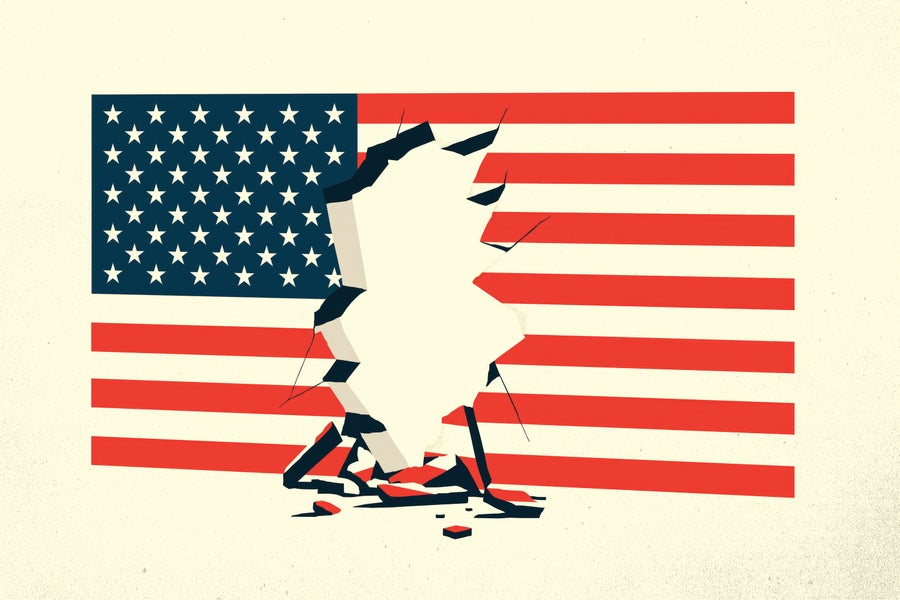
With its signature disdain for anything smacking of smarts or competence, the Trump administration now aims to destroy or neutralize them. In a February 19 executive order, Donald Trump directed his staff to compile a list of “Federal Advisory Committees that should be terminated on grounds that they are unnecessary.” The order directly terminated the HHS Advisory Committee on Long COVID (a syndrome afflicting 23 million people in the U.S. right now) and the Health Equity Advisory Committee, which sought to help underserved people access care like blood pressure medication or postpartum treatment, through Medicare and Medicaid. Since then NOAA has closed several of its advisory panels, NSF closed a dozen, NASA has consolidated its wildly disparate astrophysics, biological and physical sciences, Earth science, heliophysics and planetary sciences panels into one body, and the U.S. Geological Survey closed its new scientific integrity body, alongside five others at the Department of Interior that included a climate adaptation panel. “This means that you, the public, will be more at-risk of being harmed because the scientific integrity and misconduct issues that were prevalent before will continue to persist,” wrote integrity panel member Jacob Carter. He called the committee’s cancellation, “an indicator that this administration has no intention to uphold scientific evidence in its decisions.”He’s right; contrary to the executive order, these committees matter. Cutting away advisory panels hurts everyone and leaves the U.S. government uninformed when making critical decisions that affect millions of lives, alongside a public left in the dark about what advice agencies do receive. These advisors, a “fifth arm of the government,” have long served as a thorn in the side of polluters and lobbyists, putting them under siege for decades, and doubtless in the gunsights of the giddily for-sale Trump administration. A 2021 Ecology Law Quarterly review found past end runs around advisory committees were linked to lead pollution, fracking contamination of drinking water, and worse air quality.

Federal advisory committees operate under a 1972 law, which governs the roughly 1,000 expert committees advising federal agencies on evidence-based practices on issues like boating safety or railroad retirement benefits at a yearly cost of $400 million. The panels are a bargain, providing by law “fairly balanced” expert advice that includes disclosing financial conflicts of interest and providing information openly to the public. The best-known examples from the pandemic were those FDA and CDC panels that voted on the safety and rollout of COVID-19 vaccines to much attention.

History repeats when it comes to attacks on advisory panels. In 2019, Trump ordered a one-third cut in the number of them. The order took aim at science panels at NASA, the NSF, and the Energy Department, in particular. The first Trump administration’s sheer incompetence kept many of those kinds of closures at bay. His then EPA chief resorted to stuffing a clean air panel with industry stooges instead, and an antiabortion advocates panel lacking any scientific credibility was whipped up to eliminate fetal tissue research at NIH.

Now, however, the crush of executive orders and disregard for Congress seen in the first 100 days of the new regime make things look even more dire. The dangerous, unqualified HHS chief Robert F. Kennedy, Jr., has forced out top FDA vaccine official Peter Marks, who oversaw the vaccine panel that held steadily to public health principles during the pandemic, refusing to bend to Trump’s demand for an “October Surprise” vaccine to save himself in the 2020 election. All Department of Homeland Security advisory committees members were fired in January, halting a probe into a massive Chinese breach of U.S. telecommunications infrastructure.

.

https://static.scientificamerican.com/dam/m/86fea47b7d30778/original/cracked_flag_illustration.jpg?m=1745332322.907&w=900Rob Dobi/Getty Images

.

.

Click the link below for the complete article:

https://www.scientificamerican.com/article/firing-science-advisors-will-leave-the-u-s-senseless/

.

__________________________________________

Student Loan Payment Collections Restart in 4 Days. Here’s What Experts Say to Do Now

Leave a comment

Click the link below the picture

.

The US Department of Education is resuming collection efforts on defaulted student loans starting on Monday. If you’re more than nine months behind on your student loan payments, that means your wages could be garnished as soon as this summer.

It may sound scary, but wage garnishment to pay off a debt isn’t new. Currently, some Americans have their wages garnished to pay back taxes, child support, and other debt, including student loans. It just might feel “new” since there were protections in place to allow borrowers in default time to catch up since the COVID-19 pandemic. But starting in May, payments will begin to come due.

“This is actually the norm,” said Elaine Rubin, a student loan expert and corporate communications director for Edvisors. “If a loan is in default, then actions will be taken to then collect on the default loan.”

Student loans are considered in default after you’ve missed 270 days of payments (excluding payment pauses). It’s estimated that 5 million borrowers are in default and will have their loans sent to collections next week. If you’re one of them, here’s what you need to know.

When will the government start garnishing wages for student debt?

There’s less than a week left to pull your loans out of default, with the administration indicating it plans to restart collection efforts on May 5. However, that doesn’t mean you’ll see a hit to your paycheck starting next week. The Department of Education has to notify you 30 days ahead of your wage garnishment.

Expect your defaulted student loan account to move from your current servicer to a private collections agency around the beginning of May and wage garnishment to begin about one month later, Rubin explained.

Will SAVE borrowers have their wages garnished? 

There’s a lot of confusion on Reddit and social media about how wage garnishment will affect SAVE borrowers. If you’re enrolled in the Saving on a Valuable Education plan, your loans have been placed in an administrative forbearance since last summer. With SAVE on hold, millions of borrowers have not been required to make payments, which has led to some wondering if that means their loans are in default.

“It is confusing, because they haven’t been making a payment and believe that it could be at risk of defaulting,” said Rubin. “If you’re not required to make a payment because you’re in an approved forbearance, a deferment, or you actually have a $0 IDR payment, technically, you’re making a payment in that situation.”

The best way to check if your loans are in default is to visit StudentAid.gov or your loan servicer’s website to check your loan standing.

How will I know if my wages are being garnished?

You can check to see your current loan standing on the StudentAid.gov website or by logging into your loan servicer’s website. If your loans are in default and the Department of Education begins the collections process on your debt, you’ll receive a letter in the mail from the department 30 days in advance. This letter will contain your options, including the ability to voluntarily reenter repayment or object to having your wages offset.

How much can the government pull from my paycheck?

The federal government will pull a percentage of your take-home pay (the amount you receive after deductions) to put toward your student loan debt — up to 15%. It won’t take all of your paycheck. Your tax refund or Social Security benefits could also be garnished.

Can I prevent my wages from being garnished?

Yes, there are steps you can take to avoid wage garnishment, but they may not be feasible for everyone.

“As far as 100% preventing it, not everyone is going to be able to do that,” Rubin said. The two best options for most borrowers will be applying for a loan rehabilitation or direct loan consolidation. The third is to pay your loan in full, which Rubin acknowledged will not be possible for most borrowers. 

.

https://www.cnet.com/a/img/resize/40f91f1501dfe7dac1f823e963d19d3760b1c1fe/hub/2024/03/31/0542087b-4d30-41e2-ab6e-c62362925df6/fafsa-student-loan-purple.jpg?auto=webp&fit=crop&height=675&width=1200Viva Tung/CNET

.

.

Click the link below for the complete article:

https://www.cnet.com/personal-finance/loans/student-loan-payment-collections-restart-in-4-days-heres-what-experts-say-to-do-now/?utm_source=pocket_discover_personal-finance

.

__________________________________________

Musk Funded the Carbon-Removal XPrize but Is Now Slashing Climate Research

Leave a comment

Click the link below the picture

.

CLIMATEWIRE | Time magazine selected Elon Musk as its “person of the year” in 2021 after the billionaire entrepreneur upended the car market, reinvigorated the space industry, and funded a $100 million competition for climate technologies that would remove carbon dioxide from the air and sea.

But Musk won’t attend Time’s event in New York City on Wednesday to fete the winners of that groundbreaking contest. The $50 million grand prize will go to Mati Carbon, a Houston-based startup founded three years ago that works with crushed rocks and subsistence farmers to soak up climate pollution.

It’s unclear why Musk, an environmental hero turned MAGA diehard, is skipping the capstone event for a climate contest bankrolled via his eponymous foundation. Neither he nor Time responded to requests for comment. The XPrize will be announced at the Time100 Summit, the magazine’s annual event featuring 100 influential people.

In addition to running electric-vehicle-maker Tesla and the aerospace firm SpaceX, Musk is leading President Donald Trump’s effort to downsize the federal government. The Department of Government Efficiency has slashed climate funding for research, projects and agencies.

“We live in very complicated times,” said Nikki Batchelor, who led the Musk-funded carbon removal competition at the XPrize Foundation. Prior to joining the nonprofit, she worked as an innovation adviser for the U.S. Agency for International Development — the first federal bureau effectively shuttered by Musk. (Musk has no ties to the three-decade-old foundation aside from being a donor.)

“He was one of the leading voices trying to push clean energy forward and think about innovative solutions to tackling climate change,” she said of Musk, the world’s richest person. “We’ve continued on with that.”

Batchelor spoke with POLITICO’s E&E News before XPrize publicly announced the final carbon removal contest winners, each of which removed at least 1,000 tons of CO2 in a year and provided a business plan for how they’ll reach 1 million tons annually. Since 2019, carbon removal companies have locked away about 650,000 tons in total, less than the annual emissions of two natural gas power plants.

The runners-up were NetZero, Vaulted Deep, and Undo Carbon, which netted prizes of $15 million, $8 million, and $5 million, respectively. Undo Carbon uses an enhanced rock weathering approach similar to Mati to remove CO2 from the air faster than the natural carbon cycle. NetZero and Vaulted Deep both lock away CO2 by preventing carbon-rich organic matter from biodegrading.

Commercializing carbon removal technologies is important because the world is unlikely to reduce the burning of oil, gas, and coal quickly enough to prevent the buildup of dangerous levels of heat-trapping carbon dioxide in the atmosphere and oceans. As a result, climate scientists have concluded that it will be necessary in the coming decades to increase the Earth’s carbon removal capacity by billions of metric tons annually.

.

https://static.scientificamerican.com/dam/m/49f7007a707eea7e/original/Elon_Musk_silhouette.jpg?m=1745427940.784&w=900

Tesla CEO Elon Musk went from an environmental hero to a MAGA hardliner. Toby Melville/AFP via Getty Images

.

.

Click the link below for the complete article:

https://www.scientificamerican.com/article/musk-funded-the-carbon-removal-xprize-but-is-now-slashing-climate-research/

.

__________________________________________

What to Know About ‘Involuntary Collections’ If You’re a Student Loan Borrower

Leave a comment

Click the link below the picture

.

The U.S. Department of Education announced on April 21 that the Office of Federal Student Aid (FSA) will restart its student debt collections on May 5.

The announcement marks the first time in five years that the federal government may penalize Americans who fall behind on their student loan payments. Part of that penalization includes the resumption of “involuntary collections,” which can lead to the garnishing of wages. According to the announcement, borrowers will begin receiving collection notices through the U.S. Treasury Offset Program before any further action is taken.

“The Department will also authorize guaranty agencies that they may begin involuntary collections activities on loans under the Federal Family Education Loan Program,” per the press release. There is the disclaimer, though, that “all FSA collection activities are required under the Higher Education Act and conducted only after student and parent borrowers have been provided sufficient notice and opportunity to repay their loans under the law.”

Involuntary collections are “one of the harshest consequences borrowers can face when federal student loans fall into default,” says Ken Ruggiero, co-founder and CEO of Ascent Funding, an education loan provider. This occurs typically after 270 days, or close to nine months, of missed payments.

“It’s an aggressive, automated system that often catches borrowers off guard and deepens their financial hardship,” says Ruggiero. “In addition to the financial hardship, the student borrower is often embarrassed when their employer is notified and then implements wage garnishments.”

Here is what student borrowers should know about involuntary collections, and the advice experts offer:

What can be withheld under involuntary collections?

Through involuntary collections, the government can garnish wages, withhold tax refunds, and seize portions of Social Security checks and other benefit payments to go toward paying back the federal loan.

According to the Treasury Department, for those who have defaulted on their federal loans, the Treasury Offset Program can withhold to 100% of federal tax refunds, up to 15% of federal salaries, up to 15% of Social Security and Railroad Retirement benefits, up to 25% of federal retirement payments, 100% of payments to vendors, and 100% of travel payments for federal employees

Wage garnishment, which the Education Department’s announcement said will begin late in the summer, is when your loan holder can order your employer to withhold up to 15% of your disposable pay to collect your defaulted debt, without taking you to court.

What have Trump officials said about involuntary collections?

Department of Education Secretary Linda McMahon wrote an opinion piece in the Wall Street Journal in conjunction with the announcement of collections restarting, in which she articulated the department’s outlook.

“Borrowers who don’t make payments on time will see their credit scores go down, and in some cases, their wages automatically garnished,” she wrote. “Why? Not because we want to be unkind to student borrowers. Borrowing money and failing to pay it back isn’t a victimless offense.”

Jonathan Collins, assistant professor of political science and education at Teachers College, Columbia University, says that though this is a pre-2020 system, there is a difference here with the Trump Administration.

“Usually, standard practice for the federal government is to work with the borrowers, and if there are issues with repayment, they usually grant forbearance periods, and you can apply for extension on forbearance periods,” Collins says. “But, what [The Trump Administration is] trying to do is get rid of, if not drastically reduce, the amount of people who are in this forbearance zone.”

.

https://time.com/redesign/_next/image/?url=https%3A%2F%2Fapi.time.com%2Fwp-content%2Fuploads%2F2025%2F05%2FGettyImages-2203404040-1.jpg%3Fquality%3D85&w=1920&q=75

Maskot—Getty Images

.

.

Click the link below for the complete article:

https://time.com/7281995/student-loan-borrowers-involuntary-collections-expert-advice/?utm_source=pocket_discover_personal-finance

.

__________________________________________

Celebrate Hubble Space Telescope’s 35th Birthday with Stunning Images

Leave a comment

Click the link below the picture

.

Thirty-five years ago today, a revolutionary new era of astronomy began when the Hubble Space Telescope, tucked onboard the space shuttle Discovery, blasted off Earth into history. The next day, a robotic arm tipped the telescope into orbit from the shuttle’s cargo bay. Within a month, Hubble had truly begun its mission, gazing out at the cosmos for NASA and the European Space Agency with its 2.4-meter-wide starlight-gathering mirror—the largest ever launched to space at the time.

In the years since, Hubble has gathered more than 1.6 million observations and 430 terabytes of data. The telescope has revealed that supermassive black holes nestle at the heart of most large galaxies, Jupiter’s icy moon Europa may be shooting plumes of water out into space, and, in the distant future, our Milky Way galaxy will likely collide with our neighbor, Andromeda.

But the  mission almost flopped.

The Hubble Space Telescope was decades in the works, even making a cameo appearance in a Superman comic in 1972, before it reached space in 1990. But after Hubble’s deployment, as the telescope began operations, astronomers realized its vision was blurry and traced the issue to a tiny imperfection in the telescope’s mirror.

Astoundingly, that mirror is still in use today aboard the observatory. Fortunately, Hubble was uniquely designed to be serviced in orbit by astronauts. NASA’s first (and most urgent) servicing mission flew in December 1993; during five separate spacewalks, astronauts installed a new primary camera able to counteract Hubble’s blurred vision, as well a bulky new apparatus that corrected the light that fed into the observatory’s original suite of instruments. 

Additional shuttle missions in 1997, 1999, 2002, and 2009 also visited the observatory, extending its lifetime and expanding its view each time with new hardware and better instruments. 

The results have been nothing short of breathtaking. Hubble’s position well above most of Earth’s atmosphere allows it to see the cosmos unhindered by the tempests and turbulence that all ground-based observatories face. That privileged vantage point has profoundly shaped our understanding of the solar system and universe around us. 

In our own neighborhood, Hubble has studied the changing weather on the outer planets, discovered moons orbiting Pluto, and watched the once-in-a-lifetime impact of Comet Shoemaker-Levy 9 on Jupiter scar the giant planet with dark spots as big as Earth. It has even glimpsed the sun, in a feat it was most definitely not designed to attempt.

.

https://static.scientificamerican.com/dam/m/3a566e0ab9b7232c/original/Tarantula-nebula.jpg?m=1745595837.323&w=900

The Tarantula Nebula, located about 161,000 light-years away in the Large Magellanic Cloud bordering our Milky Way, is packed with ionized hydrogen gas dotted by supernova remnants. NASA/ESA (CC BY 4.0)

.

.

Click the link below for the complete article and more photographs:

https://www.scientificamerican.com/article/nasas-hubble-space-telescope-marks-35-years-from-launch/

.

__________________________________________

Older Entries Newer Entries

Amor Entre Estrellas

¡Bienvenido de vuelta viajero!

Heart of Loia `'.,°~

so looking to the sky ¡ will sing and from my heart to YOU ¡ bring...

Michael Ciullo

CEO and Founder of Nsight Health

MRS. T’S CORNER

https://www.tangietwoods

Nelson MCBS

Catholic News, Prayers, HD Images, Rosary, Music, Videos, Holy Mass, Homily, Saints, Lyrics, Novenas, Retreats, Talks, Devotionals and Many More

Global geopolitics

Decoding Power. Defying Narratives.

Talk Photo

A creative collaboration introducing the art of nature and nature's art.

Movie Burner Entertainment

The Home Of Entertainment News, Reviews and Reactions

Le Notti di Agarthi

Hollow Earth Society

C r i s t i a n a' s Fine Arts ⛄️

•Whenever you are confronted with an opponent, conquer him with love.(Gandhi)

TradingClubsMan

Algotrader at TRADING-CLUBS.COM

Comedy FESTIVAL

Film and Writing Festival for Comedy. Showcasing best of comedy short films at the FEEDBACK Film Festival. Plus, showcasing best of comedy novels, short stories, poems, screenplays (TV, short, feature) at the festival performed by professional actors.

Bonnywood Manor

Peace. Tranquility. Insanity.

Warum ich Rad fahre

Take a ride on the wild side

Madame-Radio

Découvre des musiques prometteuses (principalement) dans la sphère musicale française.

Ir de Compras Online

No tiene que Ser una Pesadilla.

Kana's Chronicles

Life in Kana-text (er... CONtext)

Cross-Border Currents

Tracking money, power, and meaning across borders.

Jam Writes

Where feelings meet metaphors and make questionable choices.

emotionalpeace

Finding hope and peace through writing, art, photography, and faith in Jesus.

WearingTwoGowns.COM

The Community for Wounded Healers: Former Medical Students, Disabled Nurses, and Faith-Fueled Pivots

...

love each other like you're the lyric to their music

Luca nel laboratorio di Dexter

Comprendere il mondo per cambiarlo.

Tales from a Mid-Lifer

Mid-Life Ponderings

Creative

Travel,Tourism, Life style "Now in hundreds of languages for you."

freedomdailywriting

I speak the honest truth. I share my honest opinions. I share my thoughts. A platform to grow and get surprised.

The Green Stars Project

User-generated ratings for ethical consumerism

Cherryl's Blog

Travel and Lifestyle Blog

Sogni e poesie di una donna qualunque

Questo è un piccolo angolo di poesie, canzoni, immagini, video che raccontano le nostre emozioni

My Awesome Blog

“Log your journey to success.” “Where goals turn into progress.”

pierobarbato.com

scrivo per dare forma ai silenzi e anima alle storie che il mondo dimentica.

Thinkbigwithbukonla

“Dream deeper. Believe bolder. Live transformed.”

Vichar Darshanam

Vichar, Motivation, Kadwi Baat ( विचार दर्शनम्)

Komfort bad heizung

Traum zur Realität

Chic Bites and Flights

Savor. Style. See the world.

ومضات في تطوير الذات

معا نحو النجاح

Broker True Ratings

Best Forex Broker Ratings & Reviews

Blog by ThE NoThInG DrOnEs

art, writing and music by James McFarlane and other musicians

fauxcroft

living life in conscious reality

Srikanth’s poetry

Freelance poetry writing

JupiterPlanet

Peace 🕊️ | Spiritual 🌠 | 📚 Non-fiction | Motivation🔥 | Self-Love💕