When you’re trying to learn something new — like, say, making that new sales demo really sing — you need to practice. When you’re trying to gain expertise, how much you practice is definitely important.
But even more important is the way you practice.
Most people simply repeat the same moves. Like playing scales on the piano, over and over again. Or going through the same list of vocabulary words, over and over again. Or, well, repeating anything over and over again in the hopes you will master that task.
Not only will your skills not improve as quickly as they could, in some cases, they may actually get worse.
According to research from Johns Hopkins, “What we found is if you practice a slightly modified version of a task you want to master, you actually learn more and faster than if you just keep practicing the exact same thing multiple times in a row.”
Why? The most likely cause is reconsolidation, a process where existing memories are recalled and modified with new knowledge.
Here’s a simple example: trying to get better at shooting free throws in basketball. The conditions are fixed. The rim is always 10 feet above the floor. The free-throw line is always 15 feet from the basket.
In theory, shooting from the same spot, over and over again, will help you ingrain the right motions into your muscle memory so your accuracy and consistency will improve.
And, of course, that does happen — but a better, faster way to improve is to slightly adjust the conditions in subsequent practice sessions.
Maybe one time you’ll stand a few inches closer. Another time you might stand a few inches to one side. Another time, you might use a slightly heavier, or lighter, ball.
In short, each time you practice, you make the conditions a little different. That primes the reconsolidation pump — and helps you learn much more quickly.
But Not Too Different — or Too Soon
But you can’t adjust the conditions more than slightly. Do something too different and you’ll simply create new memories, not reconsolidated ones.
“If you make the altered task too different, people do not get the gain we observed during reconsolidation,” the researchers say. “The modification between sessions needs to be subtle.”
And you’ll also need to space out your practice sessions appropriately.
The researchers gave the participants a six-hour gap between training sessions, because neurological research indicates it takes that long for new memories to reconsolidate.
Practice differently too soon, and you haven’t given yourself enough time to “internalize” what you’ve learned. You won’t be able to modify old memories — and therefore improve your skills — because those memories haven’t had the chance to become old memories.
So if you want to dramatically improve how quickly you learn a new skill, try this.
How to Learn a New Skill
The key to improvement is making small, smart changes, evaluating the results, discarding what doesn’t work, and further refining what does work.
When you constantly modify and refine something you already do well, you can do it even better.
Say you want to improve a skill; to make things simple, we’ll pretend you want to master a new presentation.
1. Rehearse the basic skill. Run through your presentation a couple of times under the same conditions you’ll eventually face when you do it live. Naturally, the second time through will be better than the first; that’s how practice works. But then, instead of going through it a third time …
2. Wait. Give yourself at least six hours so your memory can consolidate. (Which probably means waiting until tomorrow before you practice again, which is just fine.)
3. Practice again, but this time …
Go a little faster. Speak a little — just a little — faster than you normally do. Run through your slides slightly faster. Increasing your speed means you’ll make more mistakes, but that’s OK — in the process, you’ll modify old knowledge with new knowledge, and lay the groundwork for improvement. Or …
Go a little slower. The same thing will happen. (Plus, you can experiment with new techniques — including the use of silence for effect — that aren’t apparent when you present at your normal speed.) Or …
.
Photo from Susanne Alfredsson/EyeEm/Getty Images .
Just more than 100 years ago, on March 18, 1925, a tornado slashed across the U.S. Midwest with no warning at all and killed 695 people—a massive number for a single outbreak. Today, those in a twister’s path get a take-cover notice eight to 18 minutes before a strike on average. And as recently as 1992, what looked like a minor tropical disturbance intensified with shocking speed into Hurricane Andrew. There was little time to prepare for the storm, and much of the resulting property damage in South Florida was massive. But by last year, forecasters could give several days’ warning that the then-approaching storms Helene and Milton were likely to abruptly morph into monsters.
Such improvements have cumulatively saved thousands of lives and likely hundreds of billions of dollars across the U.S. And they happened only through concerted federal government investment in studying weather events, improving computer forecast models, and making continent- and ocean-spanning efforts to collect the data that make those forecasts possible. Now, meteorology experts are urgently warning that the Trump administration’s staff firings and funding cuts at the National Weather Service (and its parent, the National Oceanic and Atmospheric Administration) threaten to disrupt these crucial operations and turn back the clock on forecasting.
“Our worst nightmare is that weather forecast offices will be so understaffed that there will be needless loss of life,” wrote five former NWS directors from both Democratic and Republican administrations in an open letter on May 2.
Ultimately, storm experts say, disruption caused by existing and proposed cuts will hit multiple fronts. An understaffed and underfunded NWS could mean that a tornado warning doesn’t come in time, that a hurricane forecast is off just enough so that the wrong coastal areas are evacuated or that flights are less likely to be routed around turbulence. “The net result is going to be massive economic harm,” said climate scientist Daniel Swain during one of his regular talks hosted on YouTube. “As we break these things, eventually it will become painfully and unignorably obvious what we’ve broken and how important it was. And it’s going to be unbelievably expensive in the scramble to try and get it back—and we might not be able to get it back.”
The NWS’s budget pays for weather services that benefit industry
For the past 20 years, a little more than 4,000 NWS staff members have put together 24-7 forecasts for the country’s approximately 300 million people every day of the year. “We have [a more] efficient level of [staff compared] to the number of people we’re serving than any other country in the world by two orders of magnitude,” says Louis Uccellini, who was NWS director from 2013 to 2022 and signed the open letter.
The NWS punches above its economic weight, too: it costs the average American about $4 per year. “It’s a cup of coffee,” says JoAnn Becker, president of the National Weather Service Employees Organization, a union that represents the NWS and several NOAA offices. With one-third of the U.S. economy—from farming to trucking to tourism—being sensitive to weather and climate, the NWS provides an overall benefit of $100 billion to the economy. This is roughly 10 times what the service costs to run, according to an American Meteorological Society white paper. Recent improvements to hurricane forecasts alone have saved up to $5 billion for each hurricane that hit the U.S. since 2007, according to a report by the National Bureau of Economic Research, a nonpartisan, nonprofit economic research organization. In comparison, the NWS’s entire budget for 2024 was less than $1.4 billion.
.
A house submerged in floodwaters, in Pointe-Aux-Chenes, Terrebonne Parish, La. bMark Felix/Bloomberg/Getty Images
After a delicious feast, the last thing many people want to do is exercise. Food is sloshing inside a bloated belly, and sleepiness is setting in. A nap seems like the right move. But while it might feel good at the time, there is another activity you should probably be doing instead: walking.
Between Thanksgiving and New Year’s Day, there are many opportunities for feasting on seasonal foods. Family gatherings may feature that one aunt who sighs after cleaning her plate before saying, “Who’s up for a nice, brisk walk?” Everyone is entitled to their own responses to this ambitious, well-meaning aunt, but there’s something to getting some movement after eating.
A Turkey Trot 5K isn’t the first thing most want to do after a few plates of festive carbs. Nobody needs to do a 5K, though, or even what’s conventionally considered exercise. Just a little light movement is enough.
Science in action — In February 2022, a meta-analysis published in the journal Sports Medicine examined seven studies on how walking after a meal impacted glucose levels. Of those seven, the researchers also looked at four for insulin levels and three for blood pressure. The studies looked at how post-meal glucose metabolism varied based on whether one spent time sitting, standing, or walking in a lab setting.
These researchers gleaned that across these studies, both standing and walking improved one’s glucose metabolism after eating compared to sitting for a while. The novel finding — they write in the paper — is that even standing has benefits. However, a gentle walk assuaged glucose levels far more than standing did. In fact, the difference between sitting and standing’s impact on blood glucose levels was slight.
Overall, they found that even walking for even two minutes after a meal tempers blood sugar.
Why it’s a hack — A few things happen in the body after a meal. Blood diverts to the organs that aid in digestion and nutrient absorption. With more blood coursing through the digestive system, less oxygen circulates through the rest of the body. Going for a walk improves circulation because all your muscles require blood.
“Now you’re telling the body, ‘Wait a minute, we need the blood in the muscles deliver oxygen to help you ambulate,” Steven Malin, an endocrinology and metabolic health professor at Rutgers University, tells Inverse. Going for a walk doesn’t detract from the digestive process but helps create balance in the body, Malin says. He adds that walking after a big meal reduces gastrointestinal issues because movement makes the body absorb food’s nutrients more quickly.
On this note, the meta-analysis posits that the greater benefits on glucose and insulin levels from walking than standing come from the intensity and frequency of muscular activity. In other words, exercising our muscles is part of the biological pathway that mediates glucose and insulin levels.
Our bodies also produce a flurry of hormones. Especially after a large mea
l, feel-good chemicals like serotonin and dopamine will float around, but with that good feeling comes drowsiness. In contrast, cortisol, glucagon, and norepinephrine are the counter-regulatory hormones that energize us. These hormones send the body opposing signals, but seizing those hormones that offer a surge of energy can help head off sluggishness.
The body also more efficiently breaks down food when it doesn’t have a ton on its proverbial plate. Taking a walk right after Thanksgiving dinner offsets the total amount of calories the body must process later. Think of it like doing homework during a free period in high school, so you wouldn’t have as much to do at home that night.
How it affects longevity — Malin’s mantra is, “Any movement is good movement.” You don’t have to race a triathlon to reap the benefits of exercise. Everyone’s aunt might be suggesting a nice family walk, but other options include giving piggyback rides to any children present, wrestling with the cousins, or even doing some arm stretches with or without weights. Walking isn’t the only way to get the blood flowing.
A bomb from a black hole would probably be the most destructive weapon in the universe. Hypothetically, it could be created by wrapping one of these cosmic monsters in mirrors and waiting for it to go “boom.” Now Hendrik Ulbricht of the University of Southampton in England and his colleagues have demonstrated this principle, called superradiance, in the lab using a rotating metal cylinder instead of a black hole. They submitted their results, which have not yet been peer-reviewed, to the preprint server arXiv.org in late March.
“This work shows that a ‘black hole bomb’ can actually be built in the laboratory,” says physicist Vitor Cardoso of the Niels Bohr Institute in Denmark, who was not involved in the study. “It thus provides a solid basis for studying the entire physics of black holes.”
Among the strangest objects in the universe, black holes pack so much mass into such a small space that they can radically warp spacetime. A black hole’s gravitational pull is so strong that within a certain distance, nothing can escape it, not even light. Theorist Roger Penrose is one of the pioneers who first studied black holes mathematically in detail, work for which he shared the Nobel Prize in Physics in 2020. And amid that early work, he realized something surprising.
As Penrose knew, nothing stands still in our cosmos, not even black holes. These massive monsters can spin, distorting spacetime in the process to form a kind of vortex. An approaching object can be caught up in this vortex and spiral around the spinning black hole. Even before the object passes the event horizon, beyond which not even light can escape gravity’s clutches, it reaches an area that physicists call the “ergosphere.” There, the object would have to move faster than light to escape the rotation around the black hole.
This ergosphere is a strange place, as Penrose noted, because objects there can possess negative energy. A particle, for example, could split into two equal-but-opposite parts: one with negative energy and another with positive energy. The former would then crash into the black hole (thus reducing the black hole’s energy), allowing the latter to escape the cosmic behemoth’s mighty grip. An external observer would see a particle with a certain energy falling toward the black hole, only to apparently rebound outward with higher energy. The black hole loses part of its rotational energy in the process.
Black Hole Mining and Superradiance
In principle, this would allow black holes to serve as gigantic sources of energy. The process could not only imbue massive objects with more energy but also amplify electromagnetic waves in a phenomenon called superradiance. This realization spurred some physicists to even imagine how advanced alien civilizations might use superradiance to generate energy. But despite how relatively simple it is to describe on paper, no one knew how the signal of superradiance could be observed in real black holes. Thus, the concept initially remained mere speculation.
This ergosphere is a strange place, as Penrose noted, because objects there can possess negative energy. A particle, for example, could split into two equal-but-opposite parts: one with negative energy and another with positive energy. The former would then crash into the black hole (thus reducing the black hole’s energy), allowing the latter to escape the cosmic behemoth’s mighty grip. An external observer would see a particle with a certain energy falling toward the black hole, only to apparently rebound outward with higher energy. The black hole loses part of its rotational energy in the process.
Black Hole Mining and Superradiance
In principle, this would allow black holes to serve as gigantic sources of energy. The process could not only imbue massive objects with more energy but also amplify electromagnetic waves in a phenomenon called superradiance. This realization spurred some physicists to even imagine how advanced alien civilizations might use superradiance to generate energy. But despite how relatively simple it is to describe on paper, no one knew how the signal of superradiance could be observed in real black holes. Thus, the concept initially remained mere speculation.
In 1971, however, two years after Penrose first described this phenomenon, physicist Yakov Zel’dovich published research that suggested that black holes aren’t the only objects that can be tapped as superradiant energy sources. Any rotating, axially symmetrical body that absorbs electromagnetic radiation, such as a metal cylinder, can also exhibit superradiance under certain circumstances. “Roughly speaking, the rotating absorber must rotate faster
than the phase rotation of the incident radiation,” explains physicist Maria Chiara Braidotti of the University of Glasgow in Scotland, who was involved in the latest work. “If this condition is met, the absorption coefficient of the cylinder changes sign, thus amplifying the radiation.”
Zel’dovich even went one step further by showing that superradiance could also take place in a vacuum and wouldn’t require an incoming electromagnetic wave. That’s because on quantum scales, the vacuum is anything but empty. At any time, pairs of virtual particles and antiparticles can pop into existence, although they typically immediately annihilate each other again. The phenomenon is known as vacuum fluctuation. And these fluctuations could also be amplified in the vicinity of black holes, or a rotating metal cylinder. “Stephen Hawking didn’t believe this idea and tried to refute it,” explains Marion Cromb, a researcher in Ulbricht’s group at the University of Southampton and a contributor to the new work. “Not only did [Hawking] admit that Zel’dovich was right, but he was also able to prove that even nonrotating black holes—without an ergosphere—spontaneously emit radiation.” This realization led to the discovery of Hawking radiation.
.
An artist’s rendition of a black hole surrounded by a glowing accretion disc of material, the light from which is warped by the strong gravity. In principle, energy could be harvested from a spinning black hole, and lab-based demonstrations are beginning to show physicists how this could occur. Mark Garlick/Science Photo Library/Getty Images
A few years ago, I decided to retrain as a neuroscientist. It was a leap into the unknown — no roadmap, just a desire to grow. I chose to approach this time of change with curiosity, and I started a weekly newsletter to document what I learned. Suddenly, my doubts became fuel for discovery.
What I didn’t know at the time was that this systematic curiosity was actively reshaping my brain in ways that would build resilience for navigating future changes.
Curiosity is often treated as a personality quirk — something childlike and playful, maybe even optional. But neuroscience paints a different picture. When we’re curious, the brain’s dopaminergic system — the same one that lights up when we anticipate a reward — kicks into gear. Simply put, curiosity makes us feel good about the prospect of discovering something new.
It also helps us learn more efficiently, enhancing hippocampal activity and boosting our capacity to form and retain new memories. Studies show that when people are curious about a topic, they not only remember the specific information they were interested in but also retain unrelated material better.
Perhaps most importantly, curiosity promotes neuroplasticity, the brain’s ability to rewire itself in response to new experiences. This makes it an ideal cognitive state for those inevitable moments of change when we need to break established neural patterns and form new connections.
Curiosity in times of change
Change, by nature, introduces uncertainty. And the human brain typically responds to uncertainty by activating the amygdala, triggering the same stress responses as physical danger.
What curiosity does is transform that uncertainty from a threat into an invitation.
First, curiosity increases our tolerance for prediction error: the gap between what we expect and what we actually experience. This makes us more flexible in our thinking, less reactive, and better at updating our mental models.
There’s also a balancing act happening between two major brain networks: The default mode network (associated with imagination and introspection) and the executive control network (responsible for goal-oriented behavior) often take turns.
Curiosity helps synchronize these networks, allowing us to envision possibilities while also taking action — the exact balance needed to navigate change.
Emotionally, curiosity can also act as a buffer. When we view an unexpected situation through a curious lens (“what can I learn from this?”), we are less likely to spiral into anxiety or avoidance. This cognitive reframe can dramatically alter how we experience the inherent uncertainty of change.
5 ways to navigate change with curiosity
Curiosity isn’t a fixed trait you either have or lack — it’s a cognitive skill that can be developed. Here are five ways to cultivate it, especially during times of change:
1. Ask “what if?” instead of “what now?”
Reframe fear-based responses with questions that invite exploration. Instead of “I don’t know how to handle this new role,” try “What if I approached this role as a learning opportunity?” This simple shift activates your prefrontal cortex rather than your amygdala, which will help minimize stress in times of change.
A year ago this weekend, the sun’s activity created some of the most spectacular auroras on record, with displays visible as far south as Florida.
The incredible spectacles last May (and another auroral outburst last October) were partly a matter of luck because several factors, some of them serendipitous, affect the appearance of aurora. But the sun had been primed to put on a show as it approached the maximum phase of its 11-year activity cycle—and that high activity continues today. This solar cycle still has the potential to cause more celestial spectacles before activity calms down. And scientists say that the coming solar cycles may be even more eventful. But it remains quite difficult to predict the sun’s behavior.
“Solar storms—it’s a probabilistic thing, so sometimes they don’t always do what you would expect,” says Lisa Upton, a heliophysicist at the Southwest Research Institute.
The Sun Right Now
The sun is essentially a massive liquid magnet. Heliophysicists gauge our star’s activity by tallying the number of sunspots—relatively “cold” knots of its magnetic field that are often the source of radiation and plasma outbursts—on its surface. (Scientists monitor this tally in real time, but they evaluate the solar cycle’s stages based on smoothed averages over many months. So the formal declaration of a cycle’s solar maximum and minimum always happens after the fact.)
The number of sunspots naturally rises and falls over about 11 years, during which the sun’s magnetic poles first strengthen, then weaken and finally flip. When the sun’s magnetic field is calmest, with one pole that is firmly positive and one that is firmly negative, activity is at its minimum, as it was most recently around December 2019, and the star is sometimes entirely free of blemishes.
For more than a year now, the sun has been in the opposite phase—the solar maximum—with a messy magnetic field, plenty of sunspots and regular outbursts. August 2024 produced the most sunspots of any recent month, with more than 200 such storms.
Sunspots have since become less numerous, but it’s still unclear whether the solar maximum is truly on its way out. “We’ve had a little bit of a slowdown in activity [during] the last couple months. That’s not too surprising,” Upton says. “A question at this point, which will be interesting, is whether or not we’re going to have another little spike in activity.”
She says that if such a spike were to happen, it would likely come within about three months, mirroring a small spike that occurred in June and July 2023. “But the sun likes to surprise us,” Upton adds, “so we’ll see if that happens.”
Long-Term Cycles
Even as scientists watch the current solar cycle unfold, they’re also working to understand what future cycles might bring.
That’s a difficult task, given that modern science is only in the 25th activity cycle, in which researchers have made plentiful sunspot observations. More sophisticated observations that help scientists understand the sun in detail, such as space-based observations and magnetic data, are even newer, with some offering insight into only a couple of solar cycles thus far. Scientists can study tree rings and ice cores to get a basic sense of solar activity before observations began, but these data are less detailed and don’t provide precise sunspot counts.
One hypothesis suggests that the sun displays a longer-term variability called the Gleissberg cycle, named for astronomer Wolfgang Gleissberg, who posited such 80-year cycles in the 1960s. (Other proposed longer-duration cycles in solar behavior include the Suess–de Vries cycle, lasting 195 to 235 years, and the Hallstatt cycle, stretching over some 2,400 years.) And a new analysis of protons trapped in the inner radiation belt that surrounds Earth suggests a new Gleissberg cycle may be beginning.
Not all heliophysicists are sold on the Gleissberg cycle, however, given the scant data scientists have to work with. “It’s kind of debatable whether or not this is a physical phenomenon versus a statistical phenomenon,” Upton says.
.
Massive solar flares, graceful eruptions of solar material, and an enormous sunspot make up some of the imagery captured by NASA’s Solar Dynamics Observatory in 2013 and 2014. NASA’s Goddard Space Flight Center/SDO/S. Wiessinger
Ambition is one of the most defining forces in human affairs—a psychological engine that propels individuals beyond the realm of survival into the arena of creation, disruption, and transformation, and significantly predicts educational attainment, career success, job performance, and income.
At its core, ambition is the refusal to accept the status quo, the internal pressure to stretch personal limits and societal boundaries. In a way, the best way to understand ambition is as the inability to be satisfied with one’s accomplishments. Ambition fuels leadership by pushing individuals to take responsibility, imagine alternatives, and mobilize others toward a vision. Ambition underwrites entrepreneurship as the catalyst for risk-taking, persistence, and the stubborn belief that a better way is not only possible but necessary. Without ambition, innovation stalls; with it, people challenge orthodoxy, break conventions, and solve problems that others resign to fate. Across disciplines, from science to art to politics, history’s breakthroughs are seldom the product of complacency—they are the residue of restless, ambitious minds.
The world, to a large extent, is the output of ambitious people. It is shaped by those who couldn’t sit still, who weren’t content with inherited limitations, and who felt compelled to act on their ideas, no matter how unlikely or unpopular. From the first controlled fire to the latest generative AI models, progress has never been evenly distributed—it has been driven by individuals and groups with an outsized appetite to leave a mark. Ambition transforms dissatisfaction into momentum, and imagination into infrastructure. It explains not just who rises to lead or invent, but why civilizations expand, technologies leap forward, and cultures evolve. While it must be tempered by ethics and collective concern, ambition remains an irreplaceable force in the story of human progress.
Everything in moderation
And yet, like all powerful traits, ambition is best expressed in moderation. Too little, and individuals drift—untethered from purpose, passive in the face of opportunity. Too much, and ambition can metastasize into obsession, crowding out humility, collaboration, and even moral judgment. When ambition becomes unbounded, it stops serving the individual and begins demanding sacrifice of relationships, values, and long-term well-being. It can distort self-perception, encouraging people to see themselves not as contributors to a shared cause, but as lone heroes in a zero-sum contest. Teams suffer when ambition eclipses empathy: the pursuit of personal achievement starts to undermine trust, cooperation, and psychological safety. A competitive drive that ignores others’ needs doesn’t just alienate colleagues—it weakens the very foundation of high-functioning organizations.
Unchecked ambition often bleeds into greed, an insatiable hunger not just to succeed, but to dominate. As Gordon Gekko infamously said, “Greed is good”—a provocative mantra for the high-octane world of finance, but a dangerous philosophy when applied indiscriminately. Greed erodes the social contract. It justifies exploitation, tolerates unethical shortcuts, and treats people as a means to an end. In leadership, this can result in toxic cultures, short-term thinking, and spectacular failures. Companies driven solely by ambition without constraint may grow fast, but they often implode faster, toppling under the weight of hubris, burnout, and scandal.
The WeWork Case
Adam Neumann, cofounder and former CEO of WeWork, is a textbook example of how unbridled ambition can lead to spectacular collapse. Neumann started with a compelling vision: to “elevate the world’s consciousness” through a coworking space company that promised to redefine the way people live and work. His charisma and relentless ambition helped WeWork grow at breakneck speed, attracting billions in venture capital and inflating its valuation to nearly $47 billion at its peak. But Neumann’s ambition quickly outpaced operational reality. He expanded into housing (WeLive), education (WeGrow), and other ventures with little strategic coherence. Reports surfaced of erratic behavior, conflicts of interest, and a corporate culture driven more by Neumann’s personal mythos than sound governance.
In 2019, when WeWork attempted to go public, its financial inconsistencies and Neumann’s questionable leadership style came under scrutiny. The IPO failed, Neumann was forced to resign, and the company’s valuation plummeted. His ambition wasn’t the problem in itself—it was that it became delusional, detached from execution, and ultimately corrosive to the company’s sustainability. Neumann exemplifies how visionary drive, without discipline or humility, can become a liability rather than an asset.
In short, the healthiest ambition is grounded in purpose, tempered by self-awareness, and balanced by a commitment to collective success. It lifts everyone, not just the one climbing the fastest.
So, while it’s generally better to have than to lack ambition, here are three proven ways in which an excess of drive or motivation can harm your career and negatively impact others.
1. Ambition can inhibit people’s prosocial drive
When the desire to “get ahead” outweighs the instinct to “get along,” ambition can corrode social cohesion. In team environments, overly ambitious individuals may hoard credit, prioritize visibility over contribution, and treat colleagues as competitors rather than collaborators. This undermines trust and psychological safety—two bedrocks of effective teamwork. For example, a rising executive who constantly angles for the spotlight may alienate peers and demoralize subordinates, even if their individual output is impressive. Over time, the cost of such interpersonal friction outweighs the benefits of raw performance. In the long run, organizations thrive not on lone stars but on networks of mutual respect and cooperation, both of which ambition can quietly erode if left unchecked.
Just over half of the children born in 2020 will face unprecedented exposure to heatwaves over their lifetime, even under a conservative projection for how climate change will unfold over the next 75 years.
The figure rises to 92% of today’s five-year-olds if more pessimistic climate predictions come to pass, and compares with just 16% of people born in 1960 under any future climate scenario.
The findings, published in Nature on 7 May, highlight the disproportionate burden that climate change places on today’s young people — and the need to limit global warming to safeguard future generations.
“Many people of my age have children, young children, and it’s especially for those that the projections look very dire,” says study co-author Wim Thiery, a climate scientist at the Vrije Universiteit in Brussels, who was born in 1987.
That children and young people will bear the brunt of the climate-change burden is not a new idea. But the latest study is among the first to pinpoint the generations and numbers of people that will experience an “unprecedented life” in terms of extreme heat, says Thiery (see ‘Children facing extreme heat’).
They then used demographic data to calculate, for a series of generations born between 1960 and 2020, worldwide, the fraction of each generation that would reach that limit across their lifetimes — and how that would vary with different global-warming scenarios.
Heat on the horizon
The proportion of each generation predicted to experience ‘unprecedented lives’ in terms of heat exposure varied hugely. Of the 81 million people born worldwide in 1960, who are now in their mid-sixties, just 13 million, or 16%, would reach this exposure threshold over their lifetimes, regardless of the climate scenario. But for the 120 million children born in 2020, 58 million (around 50%) would experience this level of exposure, even in the most optimistic scenario put forward by researchers of 1.5 °C of warming above pre-industrial temperatures by 2100. The fraction of today’s five-year-olds experiencing unprecedented lifetime exposure to heatwaves rises to 92% (some 111 million people) for the more pessimistic climate scenario of 3.5 °C of warming.
.
Many of today’s children will experience an ‘unprecedented life’ owing to climate change. AlesVeluscek/Getty Images
During the four years Dan Colflesh struggled to find work, he often thought about his upbringing in rural Appalachia.
Colflesh was used to “pinching pennies” as a young person, he told Business Insider. And as his job search dragged on in adulthood, he began actively looking for ways to cut costs.
“It’s the advice you get when you grow up poor,” he said. “If you don’t have a lot of money, you can’t spend a lot of money.”
Colflesh is one of many Americans who have struggled to find work in recent years. While he landed a job last year, hundreds of others have shared their stories with BI about their long searches and how they’ve settled for lower-paying roles. Though the unemployment rate remains low by historical standards, businesses are hiring at nearly the slowest pace since 2013, excluding a temporary dip in 2020. In response, some job seekers have found creative ways to pay the bills, adjust their application strategies, and stay motivated.”
It’s easier not to be stressed about finding a job if you don’t have to stress about finances at the same time,” said Colflesh, 43, who lives in Massachusetts.
Cutting costs eased some pressure
Colflesh said he was fortunate that both his wife and his mother-in-law, whom they live with, have jobs, which helped ease the financial pressure on the household. Still, his family made several adjustments to cut costs during his job search.
For one, they bought a deep freezer, which allowed them to buy in bulk and freeze meals that Colflesh cooked in large batches — a purchase he believes will save them money in the long run. They also grew some of their own produce in a vegetable garden and smoke-cured store-bought bacon at home to cut grocery costs. Additionally, the family decided to stop using one of their two vehicles and dropped the insurance on it — a choice that was feasible because Colflesh wasn’t commuting to work.
Colflesh added that YouTube videos helped him handle basic car maintenance himself, so he could save money on mechanic bills. And because he was home more, he was able to help care for his children, which reduced his family’s childcare expenses. Colflesh said taking these steps helped him feel less pressure during his job search.
A positive mindset helped him persevere
In 2015, when he was 34, Colflesh quit his job in the customer service industry to pursue a college degree, hoping it would help him with career growth. Six years later, he held an associate degree in physics from Holyoke Community College in Massachusetts and a bachelor’s in political science from the University of Massachusetts Amherst.
But Colflesh said the additional education didn’t seem to help him much in the job market and saddled him with student loans. Despite applying to more than 100 jobs, he struggled to find work, he said, which led him to pause his search for a few months at a time.
Colflesh said he tried common job search strategies, such as tailoring his résumé and cover letter to each role, but nothing seemed to work. Then, last year, a friend referred him for a job at a tech company that would involve answering phones, scheduling, and triaging customer support tickets. He said the referral helped him land an interview, and by May 2024, he’d accepted a job offer.
“This isn’t really what I was looking for, but it’s far from the worst job I’ve had,” he said.
During his job search, Colflesh managed stress by hanging out with friends, engaging with his hobbies, and spending time with his family. While he felt discouraged at times, he did his best to retain a positive mindset, which he said was key to staying motivated.
“Staying positive has to be a choice the person makes,” he said. “Waiting for the situation to create positivity will likely cause you to feel unmotivated and upset. You keep moving forward because what other option is there?”
.
Dan Colflesh, 43, found a job after going back to school and searching for four years.Dan Colflesh
CLIMATEWIRE | When the McBride wildfire erupted in New Mexico three years ago, David Merritt had a math problem.
The fire was closing in on a Lincoln County hospital with 11 admitted patients, but the ambulance drivers who would normally evacuate those patients were busy fighting the blaze. High winds ruled out air evacuations. There were also only two ways out of the town of Ruidoso, and the way leading to the next-nearest hospital was in the evacuation zone.
Merritt, who is a federal health care preparedness coordinator, needed to not only find drivers — but ones who could move the patients an hour away. And he did, by calling in people and resources throughout the state.
But the next time there’s a fire, Merritt might not be there to help.
President Donald Trump has asked Congress to eliminate funding for the Department of Health and Human Services’ Hospital Preparedness Program, which fully funds Merritt’s salary.
That could halt work Merritt is doing this year to ensure local officials have a plan to prevent measles from spreading in evacuation shelters used during wildfires.
“My whole job is to figure out all the things that are going to go wrong and figure out how to cooperatively work together to solve those problems, but I may not be here,” said Merritt. “If HPP goes away, none of that work is done now.”
The Hospital Preparedness Program isn’t just for hospitals. Created after the Sept. 11, 2001, terrorist attacks, the program also funds training for emergency managers and emergency responders to make sure every aspect of a region’s health care system has a plan for and is able to communicate during disasters, whether they are pandemics, cyberattacks, mass shootings, wildfires or hurricanes.
The program has paid for unified communications systems between hospitals and emergency responders, and chemical decontamination supplies, too. It also provides the salary for regional coordinators throughout the United States to help run trainings and respond to events.
Trump’s fiscal 2026 budget request to Congress asks lawmakers to zero out all $240 million in funding for the program, which is part of HHS’ Administration for Preparedness and Response. The budget justifies the request by saying the HPP “has been wasteful and unfocused.”
“This proposal remedies those flaws by allowing States and Territories to properly scope and fund hospital preparedness,” it says. HHS referred questions asking for more details on those “flaws” to the Office of Management and Budget, which did not respond to POLITICO’s E&E News by press time.
Coordinators who are funded by for the program say it provides critical support to states and territories.
“You’re taking down a system that brings multiple agencies together beforehand to respond to disasters, you’re cutting down a lot of networking and a lot of preparedness, a lot of training and a lot of resources that we get beforehand to allow us to be able to respond proactively to disasters,” said T.L. Davis, who was the readiness and response coordinator for the Northeast Arkansas Preparedness and Emergency Response Systems until 2022.
.
The damaged interior of Monette Manor nursing home on Dec. 12, 2021, in Monette, Arkansas. The Hospital Preparedness Program, which President Donald Trump wants to eliminate, paid for the Ambubus that evacuated and cared for patients from two nursing homes when multiple tornadoes ripped through northeast Arkansas that year. Brandon Bell/Getty Images
Film and Writing Festival for Comedy. Showcasing best of comedy short films at the FEEDBACK Film Festival. Plus, showcasing best of comedy novels, short stories, poems, screenplays (TV, short, feature) at the festival performed by professional actors.

 Photo from Susanne Alfredsson/EyeEm/Getty Images .





 Credit: Sergey Novikov / Adobe Stock / Big Think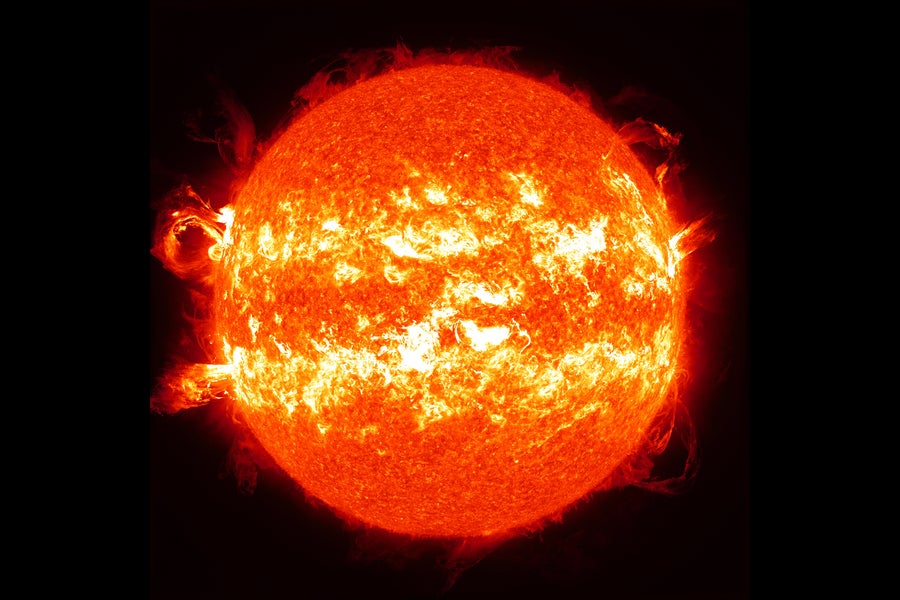

 [Source photo: ILYA AKINSHIN/Adobe Stock]


 James' World 2