I have been watching, with some grim amusement, Elon Musk discovering the limits of being just another political donor. While he was at DOGE, he literally could control the Treasury and DOD — he effectively had the IT reins of the entire country, and could simply gut things he hated at will. There was a price for that: it destroyed what was left of his reputation. But it was real, true power — being able to stop payments at will makes you more powerful than the president.
So much for that. These days, Musk is reduced to begging his followers on X to call their senators and congressmen [sic, obviously] to vote down the Big Beautiful Bill. His nominal reason is that Donald Trump’s budget plan will increase the deficit, but reports indicate that Musk is annoyed an EV credit is getting cut. That makes it harder to sell Teslas in an environment where it’s already hard to sell Teslas. Also, Musk may be annoyed that he didn’t get to stay past his statutory limit as an unpaid advisor and that the FAA isn’t using Starlink, according to Axios.
The cracks have been showing in the MAGA-tech alliance for some time now. When Scott Bessent got Musk’s IRS pick ejected in April, that was notable. (Bessent’s deputy now runs the IRS.) Musk wasn’t politically savvy enough to get Bessent on his side before installing his pick; an end-run like that is insulting, and Musk had been making enemies. Take, for instance, Marco Rubio, who was
furious when Musk destroyed USAID — that was Rubio’s department, and getting rid of it cut his power. Sean Duffy, the reality TV star who is for some reason, running the Department of Transportation, had to intervene to stop DOGE from firing air traffic controllers, while the lack of air traffic controllers remains a hot-button issue.
These men should not have been especially difficult to finesse, but then Musk is known for his bull-in-a-china-shop approach. It is rare that a person in a position of power — a cabinet seat, say — willingly gives up even an inch of leverage. Making enemies of Bessent, Rubio, and Duffy was a strategic error.
Even less powerful enemies can lead to political problems, which is why Musk doesn’t get his pet boy in NASA now. Jared Isaacman was due to receive his final confirmation vote in the Senate when Trump abruptly withdrew his nomination for head of the aerospace agency. That was reportedly because Musk had beef with Sergio Gor, the head of the White House Presidential Personnel Office — basically the lead recruiter for government jobs. The moment Musk was no longer in the actual White House, Gor dropped the blade.
Most people have never heard of vacuum decay, but if it happened, it would be the biggest natural disaster in the universe. Sure, an asteroid could destroy a city or wipe out life on Earth. A supernova could fry the ozone layer. If a blast of energy from a spinning black hole hit our planet, it could rip apart the entire solar system. As dramatic as these disasters are, they’d still leave behind rocks, gas, and dust. With time that matter could come together again, making new stars and planets and maybe life.
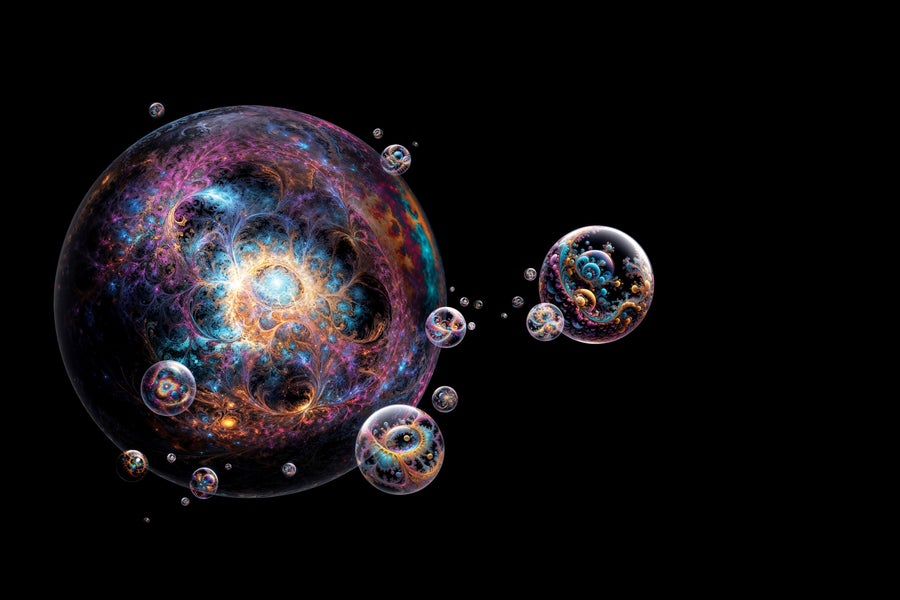
Vacuum decay is different. This cataclysm would result from a change in the Higgs field, a quantum field that pervades all of space. It would be triggered by pure chance, creating a bubble that would expand at almost the speed of light, transforming all in its path. Inside that bubble, the laws of physics we take for granted would change, making matter as we know it (and, consequently, life) impossible.
According to physicists’ current best estimates, vacuum decay is extremely unlikely, with an almost unthinkably small chance of its taking place close enough to our part of the universe to affect us. Still, the chance isn’t zero, and some recent estimates suggest the likelihood might be slightly less minuscule than we used to think. Ultimately, though, the possibility of an apocalyptic quantum bubble shouldn’t cause anyone to lose any sleep.
Even so, scientists have been studying how and why this scenario might play out. The answers to these questions don’t just reveal some fascinating aspects of the quantum world—they may also turn the questions on their heads: rather than making us worry about the threat a vacuum bubble poses, the fact that the universe has survived this long without one may teach us something about the deepest unsolved problems in physics.
All the objects we’re used to—every animal, vegetable, and mineral—are made up of atoms, and those atoms are made up of ripples in quantum fields. Each field is like a setting on a kind of universal control panel. If you could jiggle the electron switch on the control panel, you’d see an electron pop into existence. Most of these switches have a default value of zero: electrons aren’t likely to be in most places, for example. These defaults are sticky—it takes effort, in the form of energy, to push a switch out of its default position. How much energy it requires is determined by Albert Einstein’s famous equation E = mc2, which defines the relation between energy and mass: the more massive a particle, the stickier the default for the switch of its field.
Inside the bubble the laws of physics we take for granted would change.
You might think that in truly empty space, all these switches are set to zero. That’s true for most quantum fields, but some have a different default. One such case is a quantum field proposed by several physicists in 1964, including British physicist Peter Higgs, for whom it was later named. Try to set the Higgs field to zero, and it will resist. The universe “wants” to have a certain amount of Higgsness in it, a default called a vacuum expectation value. It is this amount of Higgs field, instead of zero, that one finds in the vacuum of empty space.
Pushing the Higgs field from this default setting is quite difficult. Scientists finally accomplished it in 2012, when an experiment at the Large Hadron Collider (LHC) near Geneva managed to measure the tiniest, briefest possible shift in the Higgs field. Just as jiggling the electron switch makes an electron, jiggling the Higgs switch makes a particle called a Higgs boson. These particles swiftly vanish after we create them, with the Higgs switch rushing back to its default while knocking other, easier-to-shift switches around, creating particles such as electrons or photons instead. But LHC scientists managed to create enough Higgs bosons to definitively detect them and prove the Higgs field exists.
The Higgs field is special because it controls the mass of all other particles. In effect, it serves as a kind of master switch, determining how sticky all the other switches’ defaults are. If you could grab the Higgs switch and drag it toward zero, you’d find that all the other switches became much easier to flick. In other words, a lower Higgs value would mean it took less energy to make an electron or a quark.
Physicists think of the task of moving the Higgs field from its default value as being a bit like rolling a boulder up a hill. If the boulder rests at the bottom of a valley, you can try to push it upward, but if you let it go, it will just roll down again.
The Trump administration signed a proclamation Wednesday suspending travel to the U.S. for citizens from 12 countries: Afghanistan, Myanmar, Chad, Congo, Equatorial Guinea, Eritrea, Haiti, Iran, Libya, Somalia, Sudan, and Yemen.
Citing national security interests, the proclamation states that the identified countries lack sufficient vetting and screening processes needed to detect foreign nationals who may pose safety or terrorism threats to the U.S.
The proclamation also partially restricted entrance for nationals of seven other countries: Burundi, Cuba, Laos, Sierra Leone, Togo, Turkmenistan, and Venezuela.
Other considerations include a country’s information-sharing policies, presence of terrorists, visa overstay rates, and whether citizens who are sent back are readily accepted, it said.
The ban is set to take effect on Monday at 12:01 a.m. ET.
In a video released by the White House Wednesday night, Trump said that on his first day in office, he directed the secretary of state to perform a security review of “high-risk regions” to make travel restriction recommendations.
He also cited the Sunday attack on Jewish protestors in Boulder, Colorado, in the video. The man charged in the attack, Mohamed Sabry Soliman, is an Egyptian national. Egypt is not named in the new travel ban.
The policy mirrors a similar travel ban announced in January 2017, one week into Trump’s first term, which banned travel from seven Muslim-majority countries. That policy, while largely criticized, was ultimately upheld by the Supreme Court in 2018.
That ban was later ended by President Joe Biden in 2021.
Democratic lawmakers have voiced opposition to the ban on social media. They include Sen. Adam Schiff, D-Calif., and Sen. Ed Markey, D-Mass, who posted on X, “Make no mistake: Trump’s latest travel ban will NOT make America safer. We cannot continue to allow the Trump administration to write bigotry and hatred into U.S. immigration policy.”
The new policy applies to foreigners from the named countries who are outside of the United States and who lack visas to enter as of Monday, June 9.
Certain travelers are excepted from the rule, it states, including U.S. permanent residents, athletes traveling to attend major sporting events, and immediate family members with “clear and convincing evidence of identity and family relationship,” citing DNA as an example.
.
US President Donald Trump speaks from the Truman balcony from the White House on Wed., June 4, 2025. Eric Lee | Bloomberg | Getty Images
Recent breakthroughs suggest that hydrogen reservoirs are buried in countless regions of the world, including at least 30 U.S. states.
Finding such reservoirs could help accelerate a global energy transition, but until now, geologists only had a piecemeal understanding of how large hydrogen accumulations form — and where to find them.
“The game of the moment is to find where it has been released, accumulated, and preserved,” Chris Ballentine, a professor and chair of geochemistry at the University of Oxford and lead author of a new review article on hydrogen production in Earth’s crust, told Live Science in an email.
Ballentine’s new paper starts to answer those questions. According to the authors, Earth’s crust has produced enough hydrogen over the past 1 billion years to meet our current energy needs for 170,000 years. What’s still unclear is how much of that hydrogen could be accessed and profitably extracted.
In the new review, published Tuesday (May 13) in the journal Nature Reviews Earth and Environment, the researchers draw up an “ingredient” list of geological conditions that stimulate the creation and build-up of natural hydrogen gas belowground, which should make it easier to hunt for reservoirs.
“The specific conditions for hydrogen gas accumulation and production are what a number of exploration companies (e.g., Koloma, funded by a consortium led by Bill Gates’ Breakthrough Energy fund, Hy-Terra, funded by Fortescue, and Snowfox, funded by BP [British Petroleum] and RioTinto) are looking at carefully, and this will vary for different geological environments,” Ballentine said.
Natural hydrogen reservoirs require three key elements to form: a source of hydrogen, reservoir rocks, and natural seals that trap the gas underground. There are a dozen natural processes that can create hydrogen, the simplest being a chemical reaction that splits water into hydrogen and oxygen, and any type of rock that hosts at least one of these processes is a potential hydrogen source, Ballentine said.
“One place that is attracting a lot of interest is in Kansas, where a feature called the mid continental rift, formed about 1 billion years ago, created a huge accumulation of rocks (mainly basalts) that can react with water to form hydrogen,” he said. “The search is on here for geological structures that may have trapped and accumulated the hydrogen generated.”
Based on knowledge of how other gases are released from rocks underground, the review’s authors suggest that tectonic stress and high heat flow may release hydrogen deep inside Earth’s crust. “This helps to bring the hydrogen to the near surface where it might accumulate and form a commercial resource,” Ballentine said.
Within the crust, a wide range of common geological contexts could prove promising for exploration companies, the review found, ranging from ophiolite complexes to large igneous provinces and Archaean greenstone belts.
Ophiolites are chunks of Earth’s crust and upper mantle that once sat beneath the ocean, but were later thrust onto land. In 2024, researchers discovered a massive hydrogen reservoir within an ophiolite complex in Albania. Igneous rocks are those solidified from magma or lava, and Archaean greenstone belts are up to 4 billion-year-old formations that are characterized by green minerals, such as chlorite and actinolite.
.
Finding reservoirs of hydrogen in Earth’s crust could help accelerate the energy transition away from fossil fuels. Simon Dux/Alamy Stock Photo
Elon Musk is unloading on President Donald Trump’s “Big Beautiful Bill” like never before.
“I’m sorry, but I just can’t stand it anymore,” Musk wrote on X on Tuesday afternoon. “This massive, outrageous, pork-filled Congressional spending bill is a disgusting abomination.”
“Shame on those who voted for it: you know you did wrong,” Musk continued. “You know it.”
The sprawling bill, which passed the House in May with the support of all but a handful of Republicans, includes cuts to Medicaid and extension of the tax cuts that Trump and Republicans first enacted in 2017.
GOP senators were at a weekly lunch in the Capitol when Musk’s tweet landed. Sen. Ron Johnson of Wisconsin, another fiscal hawk, told BI that the post was being “passed around” among his colleagues as they ate.
“I texted it to a few people,” Johnson said. “I had a phone passed to me.”
Musk’s criticism of the bill isn’t new — he said he was “disappointed” in it in an interview clip that aired last week — and comes as he formally exits the Trump administration.
On Friday, the world’s richest man joined Trump for a press conference to commemorate his time in government. The president lavished praise on Musk and seemed keen on dispelling any notion that cracks had emerged between the two men.
The Committee for a Responsible Federal Budget has estimated that in its current form, the bill would add $2.5 trillion to the deficit over the next 10 years.
“It will massively increase the already gigantic budget deficit to $2.5 trillion (!!!) and burden America citizens with crushingly unsustainable debt,” Musk wrote in another post on X, adding in a third post that “Congress is making America bankrupt.”
The bill is now being worked on by GOP senators, and several fiscal hawks have already raised concerns about the bill’s impact on the deficit. Among them is Sen. Mike Lee of Utah, who immediately replied to Musk’s post.
“The Senate must make this bill better,” Lee wrote.
Musk’s post landed just as White House Press Secretary Karoline Leavitt was delivering a briefing.
“The president already knows where Elon Musk stood on this bill,” Leavitt said. “It doesn’t change the President’s opinion. This is one big beautiful bill, and he’s sticking to it.”
It’s not the first time Musk has criticized the bill — though last time, he wasn’t as forceful. In a recent interview with CBS, Musk said that the bill undermined DOGE’s cost-cutting work.
“I was like, disappointed to see the massive spending bill, frankly, which increases the budget deficit, not just decrease it, and undermines the work that the DOGE team is doing,” Musk said. “I think a bill can be big, or it could be beautiful. I don’t know if it could be both.”
.
“Shame on those who voted for it: you know you did wrong,” Musk said. “You know it.” Allison Robbert / AFP via Getty Images
The beginning of June marks the start of the Atlantic hurricane season, the six-month period when strong storms can brew in the ocean and then wreak havoc on land. Among the hazardous consequences of hurricanes are storm surges, in which water rapidly rises above the normal tide level on shore. These dangerous events can cause flooding and pick up and displace homes and other structures. “Water is very powerful,” says Heather Nepaul, a meteorologist at the National Oceanic and Atmospheric Administration’s National Hurricane Center in Miami. “It can be a deadly situation.”
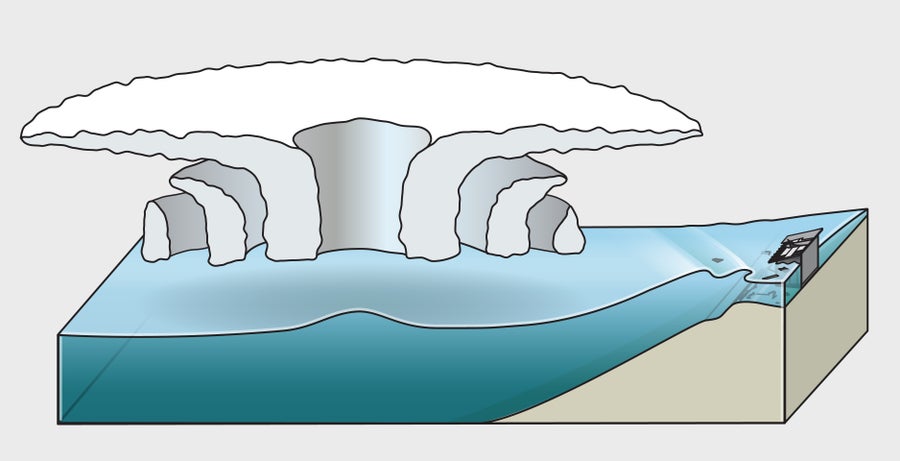
Surges occur when the strong winds of a hurricane interact with ocean waters, piling up water ahead of the storm. As the hurricane heads toward shore, it travels over shallower ocean, and the water it carries has nowhere to go but upward onto land.
How severe a surge will be depends on many factors, including the characteristics of the coastline and the intensity, size, and angle of approach of the storm. In general, though not always, stronger and larger storms produce higher storm surges.
As the climate warms, hurricanes are becoming more intense, and sea levels are rising. Both of these effects are likely to worsen storm surges. Coastal areas that are already vulnerable to storm surge could experience worse impacts, and places that aren’t quite vulnerable now may become increasingly at risk.
HOW IT WORKS
The bulk of a storm surge is caused by wind pushing water ashore. A small part of the effect, however, results from the low atmospheric pressure inside a storm, which decreases the amount of downward force on the ocean, triggering a rise in water level.
As the storm advances, its spiral of air pulls ocean water up into its center. When it nears land, the excess water surges over the shore above and beyond the normal tide level.
VARIABLES THAT AFFECT STORM SURGE HEIGHT
The severity of storm surges is hard to predict because it depends on so many variables: the speed and radius of the wind associated with the storm, the hurricane’s size, the speed and angle at which the storm approaches land, and the specific shape of the shoreline where it hits.
.
Jen Christiansen
.
.
Click the link belowfor the complete article (and article illusions):
During the pandemic housing boom, housing demand surged rapidly amid ultralow interest rates, stimulus relief, and the remote work boom—which increased demand for space and unlocked “WFH arbitrage” as high earners were able to keep their income from a job in, say, New York City or Los Angeles, and buy a home in, say, Austin or Tampa.
Federal Reserve researchers estimate that “new construction would have had to increase by roughly 300% to absorb the pandemic-era surge in demand.” Unlike housing demand, housing stock supply isn’t as elastic and can’t ramp up as quickly. As a result, the heightened pandemic-era demand drained the market of active inventory and overheated home prices, with U.S. home prices rising a staggering 43.2% between March 2020 and June 2022.
Of course, a lot has changed since then.
Not long after mortgage rates spiked in 2022 and return-to-office mandates gained a bit of momentum, national demand in the for-sale market pulled back, and the pandemic housing boom fizzled out.
The longer we’ve remained in this strained housing demand environment, the more the total number of U.S. active sellers is outmatching the total number of active homebuyers.
According to a recent Redfin analysis, there were nearly 490,041 more U.S. home sellers than buyers in April 2025. That’s the most that home sellers have outmatched homebuyers in over a decade.
For comparison, at the height of the pandemic housing boom in April 2022, there were 436,106 more U.S. homebuyers than sellers.
“The balance of power in the U.S. housing market has shifted toward buyers, but a lot of sellers have yet to see or accept the writing on the wall. Many are still holding out hope that their home is the exception and will fetch top dollar,” writes Redfin economist Asad Khan. “But as sellers see their homes sit longer on the market and notice fewer buyers coming through on tour, more of them will realize that the market has adjusted and reset their expectations accordingly.”
Every morning, Kathy Reagan Young steps out of the shower in her Virginia Beach home, towels off, dons a pair of protective goggles, and stands nine inches from a light box the size of a small space heater. Young presses a button, and the box’s bulbs begin to glow a ghostly purple. She briefly bathes her torso in the ultraviolet rays coming from the bulbs, four minutes per side. Then she goes about her day.
That Young can have an ordinary day is remarkable. In 2008, she was diagnosed with multiple sclerosis (MS), a terrible malady in which the body’s own immune system attacks the sheaths that insulate the nerves, destroying them bit by bit. Symptoms begin with weakness, spasms, vision and speech problems, intense fatigue, and what Young calls “cog fog”—chronic low-grade cognitive impairment. Flare-ups can lead to periods of motor-control loss and paralysis. Young, an advocate for MS patients and creator of a popular podcast, has suffered through many such episodes. But things improved with the arrival of her light box.
Ultraviolet (UV) light boxes, which emit only a narrow bandwidth of light that is not linked to skin cancer, have been used for years in the treatment of psoriasis. Young got a prescription from her doctor, and the box was sent to her by a medical-device company called Cytokind that is hoping to expand such use to MS and other autoimmune diseases and was looking for some practical patient feedback. She tried out the device and gave them some pointers: make it smaller and easier to hold because MS often makes your hands go numb, and build in timed reminders to overcome the cog fog. Then, to her surprise, she found that her fatigue disappeared a few months after she started using it.
For years, Young had been forced to rest in bed many times a day, but that stopped with what she calls her UV-fueled rebirth. “I was in a meeting, and someone said to me, ‘Wow, you seem like you’re pretty high energy!’” Young says. “And I guess I hadn’t really thought about it. And then two days later, my daughter said to me, ‘Mom, what are you on?’ I think we were all a little surprised by how quickly and definitively it happened.” Her MS Disease Activity (MSDA) score, which rates MS severity based on the levels of key inflammatory molecules in the blood, was a 1 out of 10, the best possible score, and it has stayed low for more than a year. MS has no cure, and Young still suffers from transient pain and tingling, but the return of her vitality has made it all more bearable. “It’s incredible,” she says. “My friends used to invite me to things, and I’d say yes, but I always canceled because I was wiped out. Well, not anymore.”
Young is one of the first people in the U.S. to test UV phototherapy as an MS treatment, but she may be at the forefront of a revolution in how we think about light and a huge class of diseases. Autoimmune diseases such as MS and type 1 diabetes occur when our natural defenses—our immune systems—viciously turn against our own bodies and organs. These illnesses are estimated to affect more than 350 million people worldwide. Treatments have been elusive.
Although only a handful of clinical trials for MS light therapy have been conducted in people, evidence from a number of medical studies now shows that UV light, the highest-energy part of the solar spectrum that reaches Earth’s surface, has a surprising ability to calm an immune system that has bolted out of control. The new studies offer tantalizing hints that UV therapy might also work for other autoimmune diseases such as type 1 diabetes, rheumatoid arthritis, Crohn’s disease, and colitis. All are more common in people who get very little sun exposure, as are maladies such as Alzheimer’s and cardiovascular disease that appear to have some immune system and inflammatory connections.
Now, scientists are hoping to decipher the pathways through which UV light causes the immune system to back down from its alarm state. They are tracking the way molecules in the skin, such as urocanic acid and lumisterol, which can affect immune system activity, respond to a shot of photons by triggering a cascade of signals that reach every organ in the body. Advocates say this work might lead to a blockbuster drug, an Ozempic for autoimmunity.
They only need one name. Whoopi. Will. Viola. Denzel. Cynthia. Morgan. Legends who carved their names into Hollywood’s highest peaks—often without a safety net. Before they were box-office draws, they were underdogs, fighting for roles that weren’t just afterthoughts, battling Hollywood’s narrow definition of “marketability,” and rewriting the script for what Black talent looks like on screen.
It’s easy to believe the war is over. In an era where Lupita Nyong’o wins an Oscar for her breakout role, where Jordan Peele reinvents horror, and where Beyoncé drops a Renaissance film that sells out theaters worldwide, it almost seems like we’ve arrived. But anyone who’s lived through Hollywood’s cycle of short-term amnesia knows better.
That’s exactly why Academy Award nominee Reginald Hudlin and Shola Lynch set out to make Number One on the Call Sheet. The film sets out to remind us that Black actors aren’t just here; they’ve been here, fighting for space, legacy, and respect since the dawn of cinema. Directed by Hudlin (House Party, Boomerang) and Lynch (Free Angela and All Political Prisoners) and executive producer Bryan Smiley (HARTBEAT), the two-part documentary digs into the unfiltered reality of being Black in Hollywood. Not just the wins, but the near-misses, the coded rejection, and glass ceilings that, though cracked, haven’t fully shattered. Featuring over 30 actors, the doc unpacks what it really means to be number one on the call sheet when the system wasn’t built for you in the first place.
Pulling off a project of this scale? It took the “Avengers,” as the directors call them, to get these stars to sit down. Hudlin shares, “A lot of it came down to personal relationships. It was me either calling the person or Datari calling the person, calling their agent, calling their publicist.”
For many, the title alone says it all. The phrase “number one on the call sheet” carries weight—it’s a distinction that comes with prestige and responsibility. It means you’re the lead, the face of the production, the one everything revolves around. However, for Black actors, that title has historically been elusive. It’s a seat at the table that, for too long, felt reserved for someone else.
“The battles fought by the previous generation paved the way for us. Now, it’s our turn to fight,” Hudlin says.
The documentary dives deep into those journeys, tracing a history that starts long before today’s stars. Before Denzel’s commanding presence or Viola’s gut-wrenching monologues, there was Sam Lucas, the first Black actor to play Uncle Tom in a 1914 silent film. There was Hattie McDaniel, who won an Oscar for Gone with the Wind in 1940 but was forced to sit in a segregated section of the ceremony. There was Sidney Poitier, who carried the weight of dignity and grace in every role he took. Dorothy Dandridge, who dazzled Hollywood but was cast aside too soon. Every step forward was hard won, and every door cracked open had to be pried wide. “One of the lines I love in the men’s film is, what do you do when you get to the top of the mountain? Make more mountains. You gotta keep going. You can’t stop dreaming,” Lynch says.
The project is split into two films—one focusing on men, the other on women—and each takes a different lens to what it means to lead while Black. The men’s segment, Number One on the Call Sheet: Black Leading Men in Hollywood, directed by Hudlin and produced by Jamie Foxx, Kevin Hart, Datari Turner and Dan Cogan, takes on the evolution of Black male stardom, from trailblazers like Richard Roundtree in Shaft to Will Smith redefining what a global movie star could be.
A haze of ice crystals in the air created a halo around the low sun as three snowmobiles thundered onto the sea ice on a February morning in far northern Canada. Wisps of snow blew across the white expanse. It was –26 degrees Celsius as we left Cambridge Bay, an Inuit village in a vast archipelago of treeless islands and ice-choked channels. This temperature was relatively warm, six degrees C above average. The winter had been the mildest in 75 years. The sea ice covering the Arctic Ocean was at its smallest extent on record. Scientists predict that within the next 15 years, this ice cap will disappear in summer for the first time in millennia, accelerating global warming. The U.K. company Real Ice, whose heavily bundled team was bouncing around on the other two snowmobiles ahead of mine, hopes to prevent that outcome with an effort that has been called extremely ambitious, insane, or even dangerous.
At a spot seven kilometers from the village, Real Ice co-founder Cían Sherwin, an Irishman with a red beanie and scraggy goatee, hopped off his snowmobile and started drilling with a long electric auger. A gob of water and frozen shavings sloshed up and out of the hole as he punctured the underside of the ice more than a meter below. Inuit guide David Kavanna widened the opening with a spearlike ice saw, then placed a wood box around it. Sherwin lowered an aluminum pump, which looked like a large coffee urn attached to a curved rubber hose, through the hole. He plugged a cable into a battery pack. After a few seconds, water began pouring out of the hose, spilling onto the ice in an ethereal shade of blue. As it congeals, “the water acts almost like lava,” Sherwin said. “The ice formation starts almost instantly.”
Thin, broad sheets of ice expand from the ice cap’s edges in winter, when it’s dark and cold, and melt away in summer, when the sun shines 24 hours a day. The ice acts like a giant mirror, reflecting up to 90 percent of the sun’s radiation back toward space. Ocean water, in contrast, absorbs 90 percent of sunlight. The ice cap’s core of so-called multiyear ice, which persists year-round, has shrunk by about 40 percent in four decades, kicking off a vicious cycle: as more ice melts, more ocean water is exposed, and that water warms further, melting even more ice. If the ice starts disappearing entirely in summer, global temperatures could rise an extra 0.19 degrees C by 2050.
Real Ice is trying to thicken seasonal ice so it lasts longer into the warm months, keeping the planet cool. Sherwin hopes pumping could someday refreeze a million square kilometers of both seasonal and multiyear ice—an area the size of Texas and New Mexico combined and about a fifth of what’s now left in summer—to stop the ice cap’s death spiral. All it would take, Real Ice says, is half a million ice-making robots.
Polar geoengineering on such an enormous scale could help slow warming until the world finally weans itself off coal, oil, and natural gas. Many scientists think it will never work. The researchers at Real Ice argue we no longer have any option but to try; studies suggest that even slashing fossil-fuel use may not save summertime sea ice. “It’s sad that it’s ended up that way, but we’ve got to do something about it,” Sherwin said to me out on the frozen plain. “Emissions reduction is just not enough anymore.”Cambridge Bay, which British explorers named for a 19th-century Duke of Cambridge, is a town of 1,800 mostly Inuit inhabitants located across from the Canadian mainland on Victoria Island, one of the world’s largest islands. When I landed at the one-room airport on a twin-engine turboprop, I was greeted by a stuffed musk ox and a placard about the 1845 British naval expedition of John Franklin. Cambridge Bay lies along the Northwest Passage, an icy sea route between Europe and Asia sought by explorers for 400 years. Franklin’s two ships, Erebus and Terror, were trapped in the polar sea ice that surges down toward Cambridge Bay in winter, buckling into ridges up to 10 meters high. All 129 men onboard died of cold, starvation, or disease. These days, cruise ships coast through the passage every year, often visiting the grave sites of Franklin expedition members.
.
A team with Real Ice prepares to drill through sea ice in the Canadian Arctic, having already flooded a nearby patch (darker blue) to thicken it. Taylor Roades
Film and Writing Festival for Comedy. Showcasing best of comedy short films at the FEEDBACK Film Festival. Plus, showcasing best of comedy novels, short stories, poems, screenplays (TV, short, feature) at the festival performed by professional actors.

 Image: Cath Virginia / The Verge, Getty Images



 Jen Christiansen
 [Source Photo: Thirdman/Pexels]
 Taylor Callery
 Photography By: Xavier Scott Marshall
 James' World 2