Home

20 Years after Katrina, Major Hurricane Forecasting Advances Could Erode

Leave a comment

Click the link below the picture

.

Like many other meteorologists around the U.S. Gulf Coast on the morning of August 26, 2005, Alan Gerard was monitoring the latest computer model forecasts for Hurricane Katrina, which had just emerged over the Gulf of Mexico after striking South Florida as a Category 1 storm. Gerard, then meteorologist in charge at the National Weather Service’s (NWS’s) office in Jackson, Miss., saw that the newest projections indicated that Katrina would track farther south than previous model runs had predicted. “It was a big change,” he says—and a concerning one because it meant that the storm would have more time over warm water to strengthen and that Katrina’s path had shifted westward, toward Mississippi.

With the weekend fast approaching and several hours before the official forecast would be updated, Gerard quickly e-mailed Mississippi’s emergency management agency to warn them that the state was facing a worse hit and that they needed to start preparing right away.

Just three days later, on August 29, Katrina rammed into the coast at the Louisiana-Mississippi border with a 20-mile-long wall of storm surge estimated at 24 to 28 feet high. (The exact heights that the surge reached aren’t known because most of the gauges, buildings, and other structures that would provide evidence of a high-water mark were obliterated.) In the subsequent hours, the levees around New Orleans failed, releasing torrents of water into the city and making Katrina the deadliest storm to hit the U.S. in nearly 80 years.

Despite the disaster that unfolded because of human mistakes, Katrina had been a well-predicted hurricane; the forecast errors involved were lower than the average at the time. But Katrina, along with the rest of the blockbuster 2004 and 2005 hurricane seasons, helped spark a dedicated, government-funded effort to make hurricane forecasts even better. Over the past 20 years, that project has nearly halved the error in predictions of where a storm will go and has given communities an extra 12 hours of warning time. By one estimate, these and other improvements have saved the nation up to $5 billion for each hurricane that hit the U.S. since 2007—3.5 times as much as the NWS’s budget for 2024. The resounding success is an example of “how this can all work when it’s done right,” Gerard says.

But that success, he and other hurricane experts warn, is under threat as the Trump administration is chopping away parts of the research staff and infrastructure that made such remarkable, lifesaving progress possible.

How Hurricane Forecasts Have Improved

When Frank Marks began forecasting hurricanes in the 1980s, it was only really possible to try to roughly predict the track that a storm would take. “Intensity was a wing and a prayer,” he says. Back then, a storm similar to Hurricane Erin, which parallelled the East Coast in mid-August 2025, would have likely prompted meteorologists to warn the entire coast of a possible hurricane hit because of the inherent uncertainty in forecasts. But this year, forecasters were able to tell that Erin would stay well out to sea; they only issued warnings for rip currents, heavy surf, and some storm surge in coastal areas. “To me, that is astounding, to see that evolution,” says Marks, who became director of the National Oceanic and Atmospheric Administration’s Hurricane Research Division in 2002 and is now retired.

By the time Katrina formed near the Bahamas on Aug. 23, 2005, increased computing power, a better understanding of the physics of hurricanes, and more detailed observations of storms had substantially improved forecasts. But after the Gulf was battered by storms throughout 2004 and 2005, Vice Admiral Conrad Lautenbacher, then administrator of NOAA, thought there was still plenty of room for improvement, Marks says.“If you eliminate all of that research, you’re basically creating a stagnant weather service and a stagnant weather community in general.” —Alan Gerard, former National Weather Service meteorologistWhat grew out of that initial request was a fairly revolutionary effort that was eventually dubbed the Hurricane Forecast Improvement Project (HFIP). (The full name was subsequently changed to the Hurricane Forecast Improvement Program.) Its first step was to ask forecasters what problems they faced—and to bring together NOAA’s hurricane researchers and modelers, as well as academic scientists, to solve those issues.

.
https://static.scientificamerican.com/dam/m/b94f46e1b4817/original/satellite-view-hurricane-katrina.jpg?m=1756409609.267&w=900

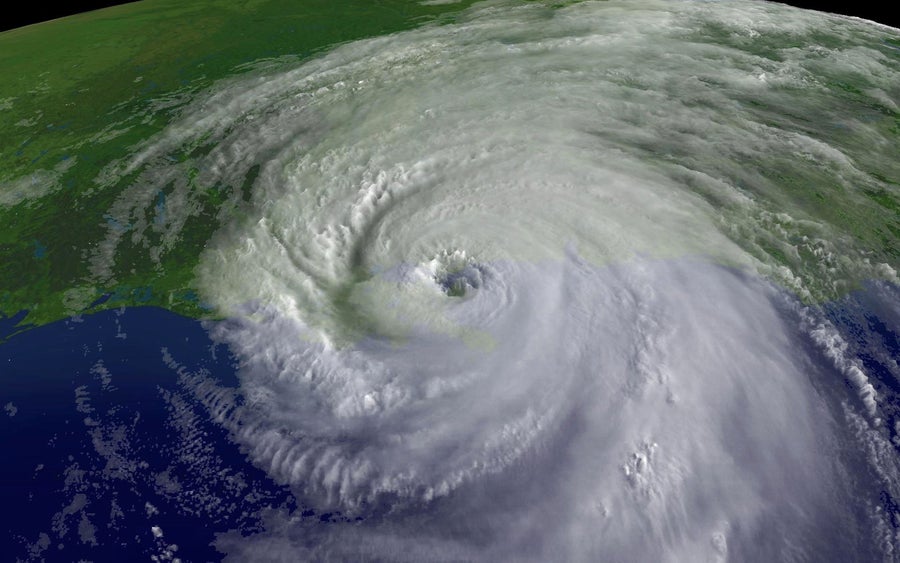
In this satellite image from NOAA, a close-up of the center of Hurricane Katrina’s rotation is seen at 9:45 A.M. EST on August 29, 2005, over southeastern Louisiana.  NOAA via Getty Images

.

.

Click the link below for the complete article:

https://www.scientificamerican.com/article/20-years-after-hurricane-katrina-major-forecasting-advances-could-erode/

.

__________________________________________

Women Grasp Work Networks Better, But That May Affect Their Career Paths. Here’s Why

Leave a comment

Click the link below the picture

.

There are subtle gender-based differences in the ways people approach the working world, and it’s often harder for women to advance through the ranks than for men. There’s plenty of evidence and research to support this (no matter how much certain people want to pretend everything is ok, and suppress efforts to promote equality and inclusiveness).

A new international study that included a large-scale analysis of U.S. workers has highlighted an interesting aspect of the ways women relate to other colleagues. It could partially explain their underrepresentation in senior, influential business roles.

The international team of researchers, including a professor of sociology from the University of South Carolina, examined the way women think about social networks in professional settings. In this context, this means, essentially, how people create a mental map of how colleagues are connected to each other, through particular projects, through various managerial chains, and other, more subtle links.

The team’s research found that women have a much, much better ability than men when it comes to spotting who is connected to who else in a professional way — and they’re better at remembering these networks, research news site Phys.org notes. That may not surprise you, at least if you’ve ever been impressed by the way a female colleague can remember details like, “Oh yes, that’s colleague X who worked for boss Y on that big project Z last year…you know, the one where person A did that amazing work with person B?”

But the researchers found that women are able to carry out this sort of impressive mental feat by relying on a “triadic” trick, which means they assume some form of professional relationship exists between two people who are both connected to a third person. In complex, dense team situations in the workplace, this is a superpower. Researchers found this approach boosts the accuracy with which women understand professional social networks.

The thing is, when you get to more open, informal, and less densely interlinked social networks, the report says it could lead to women making more incorrect assumptions about how people are connected, potentially leading to confusion and less team cohesion.

Think of a situation where your company has asked people to work on a new project that crosses existing teams, where many workers may not have had too many opportunities to work together before. In these situations, information, instruction, and expertise tends to flow through one or two highly knowledgeable people, or informal leadership networks, rather than passing along the usual direct reporting chains. For example, Steve from Accounts may know exactly who to speak to on the new project to solve a particular issue, but you may not, even though you may be senior to Steve.

The researchers found that thess situations tend to disadvantage women. Men can then find themselves in a position of being able to wield more power and advantage.

Why should you care about this? It may sound like a bit of scientific psychobabble to you, but it touches on something important.

You should care because having a deep understanding of relational patterns in a workplace is vital for a good leader. Remembering who reports to which manager for which project, and how the projects are allocated across teams, is more than a memory trick: if problems occur, knowing which person can fix them can be critical. Essentially, knowing which personnel lever to pull to get your company to achieve its goals makes you a more effective leader.

If you want to help your female colleagues and workers to advance to senior levels, then the new research suggests you should be at least aware of the different ways different genders work in professional social networks. By making it very clear which team members have key roles for which topics, and perhaps by formalizing team structures for a project, even an ad hoc undertaking, you can remove some of the disadvantages female leaders may face.

.

https://img-cdn.inc.com/image/upload/f_webp,c_fit,w_828,q_auto/vip/2025/09/GettyImages-2228538516.jpgPhoto: Getty Images

.

.

Click the link below for the complete article:

https://www.inc.com/kit-eaton/women-grasp-work-networks-better-but-that-may-affect-their-career-paths-heres-why/91235613

.

__________________________________________

A $1.4 billion Powerball win sounds life-changing. Here’s the catch.

Leave a comment

Click the link below the picture

.

I did it as well.

I began to dream.

What if I won the Powerball jackpot, which now exceeds $1 billion? Supersize lottery prizes often spark a frenzy, leading people to dream about their “Take this job and shove it” moment.

The lure of microwave wealth might have you thinking about grand living, be it aboard a private jet or relaxing poolside at a beachfront villa.

Or, understandably, your dream might be an escape from worry, whether it’s inflation and the rising cost of housing, groceries, and cars. A big windfall could mean eliminating credit card debt or the ability to help struggling friends and family members.

Ten years ago, the New York Lottery ran an ad campaign with this tagline: “You’d make a way better rich person.”

It was intended to mock the frivolity of the ultra-wealthy.

One commercial showed a smug guy soaking in a tub filled with expensive wine as a butler poured the pinot noir. Another shows a man purchasing solid gold staples. “Sometimes regular staples, they just don’t capture the richness of what you’re stapling,” he explains.

The point being that you’d be much better about spending the money, right?

Yeah, probably not.

Here’s what usually occurs when people get a big infusion of money.

1. There’s always a price to pay

Know that nothing comes free — even winning the lottery. Consider those free subscription offers. You might think why not, “it’s free.”

But before you know it, it’s three years later, and you forgot you’d signed up for automatic renewal. Because even legit companies can hook you into a subscription that becomes nearly impossible to cancel.

Then there are the not-so-legit offers. Many scams have hidden behind the promise of “free stuff.”

Or maybe you inherit a home without a mortgage, only to discover the house is a money pit.

It doesn’t take much for a windfall to become a significant financial burden.

Don’t expect sudden wealth to make all your problems disappear. It never will.

2. Fast money can bring out the worst in people

In some states, by law, lottery winners must be identified. This can make them targets for criminals and lead to a flood of requests for money from family, friends and even strangers.

In November 2015, Craigory Burch Jr. won $434,272 in a Georgia lottery. A few months later, the forklift driver was killed at his home after seven people burst through his front door. Relatives suspect he was targeted because of his lottery win.

Michael Todd Hill of North Carolina won more than $4 million after taxes in a 2017 lottery scratch-off game. Nearly five years later, the 54-year-old married man was sentenced to life in prison without parole for killing his 23-year-old girlfriend.

A California woman won $1.3 million in a lottery pool with her co-workers. A month later, she filed for divorce from her husband of 25 years but did not disclose her winnings during divorce proceedings. Her ex discovered the payout and sued, and the court ordered her to turn over her share to him for intentionally hiding it.

3. Wealth without good money management skills can leave you broke

It happens to movie stars, athletes, music icons, and everyday people.

They receive big paychecks, and the shopping sprees result in bankruptcy.

William “Bud” Post III won $16.2 million in 1988 but ultimately died broke. When he purchased the Pennsylvania Lottery ticket, his bank account had just $2.46, according to his obituary. But within three months of collecting the first of 26 annual payments of nearly $500,000, he was in debt; he’d purchased a plane, a restaurant, and a used-car business.

“Everybody dreams of winning money, but nobody realizes the nightmares that come out of the woodwork, or the problems,” he said five years after his win.

Yes, some lottery winners spectacularly squander their winnings, but those who seek good financial advice and manage their money wisely can keep their wealth.

4. Chasing easy money can become addictive

Spending a few dollars on the occasional lottery ticket isn’t going to hurt anyone who is saving for retirement or building a solid emergency fund. However, I’m concerned about the many others who fall into gambling addiction.

Through sports betting and state lotteries, too many people become compulsive gamblers, which can result in major financial problems, including job losses and bankruptcy.

5. Sure, dream big. But wealth is more likely to come from boring investments.

The millionaire next door or someone working in the cubicle beside you, probably didn’t invest all their money in a tech company that made them wealthy. They didn’t gamble on cryptocurrency.

Many 401(k) millionaires are civil service workers, teachers, military members (or retired military), managers or co-workers who clock in just like you, then leave at the end of their shift to pick up their kids from school. Many of them never earned six-figure salaries.

These millionaires built their wealth over decades. They took advantage of matching retirement plan contributions from their employers. They also didn’t cash out their retirement savings when changing jobs. And, most importantly, they didn’t let a pandemic, a change in presidency or economic issues scare them away from the stock market.

This steady approach, while boring, is what turns regular paychecks into real, lasting wealth over time.

Although it may be fun to romanticize about instant riches, it can be a costly distraction, diverting attention from a solid plan to achieve financial security.

.

https://img-s-msn-com.akamaized.net/tenant/amp/entityid/AA1LMD4I.img?w=768&h=512&m=6

A $1.4 billion Powerball win sounds life-changing. Here’s the catch. © Washington Post illustration; iStock

.

.

Click the link below for the complete article:

https://www.msn.com/en-ca/news/us/a-1-4-billion-powerball-win-sounds-life-changing-here-s-the-catch/ar-AA1LMu3e?ocid=hpmsn&cvid=438e66b6545d40be8a5fb7354bf0280f&ei=31

.

__________________________________________

This Deep-Sea Worm Creates a Toxic Yellow Pigment Found in Rembrandt and Cézanne Paintings

Leave a comment

Click the link below the picture

.

A bright-yellow worm that lives in deep-sea hydrothermal vents is the first known animal to create orpiment, a brilliant but toxic mineral used by artists from antiquity until the nineteenth century. The findings were published in PLoS Biology this week.

The worm (Paralvinella hessleri) is the only creature to inhabit the hottest part of deep-sea hydrothermal vents in the Okinawa Trough in the western Pacific Ocean. The hot, mineral-rich water that shoots up from the sea floor contains high levels of toxic sulfide and arsenic.

Researchers found that the worm accumulates microscopic particles of arsenic on its outer skin cells as well as along its internal organs. This reacts with sulfide from the hydrothermal vent to form small clumps of orpiment, fashioning a microscopic armour around the worm that protects it from the toxic environment.

Orpiment is a naturally occurring arsenic sulfide mineral, often found in hydrothermal and magmatic ore deposits.

The findings came as a surprise to the research group. In the deep sea, creatures dwell in total darkness and are typically grey-ish white or adorned in hues of orange to dark red, says co-author Hao Wang, a deep-sea biologist at the Chinese Academy of Sciences in Qingdao. It “doesn’t make any sense to make pigment in total darkness,” Wang says.

Unknown mechanism

The team is yet to discover how arsenic is transported into the creature’s internal organs.

Other deep-sea creatures are known to produce minerals as a protective armour. The scaly-foot snail (Chrysomallon squamiferum) for instance, hosts bacteria that detoxifies sulfide through the extracellular biomineralization of iron sulfides in its scales, says Narissa Bax, a marine scientist at Greenland Institute of Natural Resources in Nuuk.

Paralvinella hessleri may intentionally combine toxins into a single, ‘safe’, crystalline mineral within its own cells,” she says. It’s ability to fight poison with poison in this way is remarkable, she adds.

But further research to confirm how this occurs will be challenging, owing to the extreme conditions in deep-sea vents, and difficulties studying such species outside their natural environments, she says. Cultivation of P. hessleri in a laboratory setting is currently not possible.

.

https://static.scientificamerican.com/dam/m/5b949cf2b614c9cb/original/paralvinella_hessleri.jpg?m=1756399542.907&w=900

Paralvinella hessleri accumulates microscopic particles of arsenic on its outer skin, which reacts with sulfide to form a microscopic armour of yellow orpiment.  Wang et al./PLoS Biol (CC BY 4.0)

.

.

Click the link below for the complete article:

https://www.scientificamerican.com/article/deep-sea-worm-produces-orpiment-a-toxic-yellow-pigment-used-in-historical/

.

__________________________________________

Paris Jackson Wants Nothing to Do With Her Dad’s Biopic

Leave a comment

Click the link below the picture

.

Paris Jackson would very much like to be excluded from the making of the Michael Jackson biopic. On Wednesday, the singer called out Colman Domingo for claiming she’d given the makers of the upcoming film Michael her support.

While they were both at the amfAR benefit gala at the Venice Film Festival on Sunday, Domingo hosted, Paris performed — Domingo told People that he was excited to be there with Michael’s daughter, celebrating. “It feels like that’s a nice way for us to be together,” he added. Domingo, who plays Joe Jackson, Michael’s father and Paris’s grandfather, also said that Michael’s children are “very much in support of our film” and that he “chatted briefly” with Paris about the project, adding that she’s been “nothing but lovely and warm.”

It sounds like Paris begs to differ. She took to her Instagram Story on Tuesday to tag Domingo and write, “Don’t be telling people I was ‘helpful’ on the set of a movie I had 0% involvement in lol that is so weird. I read one of the first drafts of the script and gave my notes about what was dishonest / didn’t sit right with me and when they didn’t address it I moved on with my life.” She signed off the message with, “Not my monkeys, not my circus. God bless and god speed.”

A few hours later, Paris hopped on Instagram again to hash out more of her thoughts. “The film panders to a very specific section of my dad’s fandom that still lives in a fantasy,” she said, comparing the upcoming movie to music biopics like The Dirt and Bohemian Rhapsody, which were both criticized for inaccuracies. “It’s Hollywood. It’s fantasyland. It’s not real, but it’s sold to you as real,” she continued. “There’s a lot of inaccuracies and there’s a lot of full-blown lies. At the end of the day, that doesn’t really fly with me. I don’t really like dishonesty. I spoke up, I wasn’t heard, I fucked off, that was it.”

Some of Paris’s other family members are much more actively involved in the movie, including her cousin Jaafar Jackson, who’s starring as Michael, and her brother Prince Jackson, who Domingo said is a producer on the film. She seemed to reference Prince, explaining that she’s “not, like, calling the shots on set being a big-shot producer of a movie that’s filled with just inaccuracies,” adding, “I prefer honesty over sales and monetary gain.”

Michael is set to hit theaters April 24, 2026. I have a feeling Paris won’t be making it to the premiere.

.

https://pyxis.nymag.com/v1/imgs/e11/88f/be6a8a9db2bbae1fc17e54f487916bcb41-paris-jackson.rhorizontal.w700.jpgPhoto: Chad Salvador/Variety via Getty Images

.

.

Click the link below for the complete article:

https://www.thecut.com/article/paris-jackson-michael-biopic-colman-domingo-drama.html

.

__________________________________________

The War in Ukraine Has a Shocking New Weapon

Leave a comment

Click the link below the picture

.

At dawn on May 8, 2023, a 17-year-old Russian teenager named Pavel Solovyov climbed through a hole in the fence of an aircraft plant in Novosibirsk, Russia. He and two friends were looking for a warplane that could be set on fire. An anonymous Telegram account had promised them one million rubles, around $12,500, to do so — a surreal amount of money for the boys.

But when the boys saw the Su-24 supersonic bomber, they got scared. This heavy war plane, versions of which have been pounding Ukraine for the past three and a half years, looked too impressive and dangerous to simply incinerate. After some deliberation, the kids decided to singe the grass around the jet but film it to make it look like the plane was engulfed in flames. The stranger from Telegram had promised to pay only after receiving video evidence of the arson.

Mr. Solovyov is now serving almost eight years in a penal colony. He and his friends, detained within a week, were found guilty of carrying out deliberate acts of sabotage. The children did not suspect that this was, as Russian investigators concluded, a covert attack on behalf of Ukraine. Mr. Solovyov and his friends, according to his mother, had simply been asked to “help the aircraft plant get insurance” for the burned plane. Her son once dreamed of opening his own car repair shop. “Now,” she told me, “all his plans have crumbled.”

This is far from an isolated incident. Small-scale attacks like it are part of a new kind of hybrid warfare being carried out by Russia and Ukraine. Over the years since the Russian invasion, the security services of both countries have discovered a cheap and accessible asset — youngsters who can be recruited for one-off covert attacks, often without even knowing who they are working for. It’s a shocking development in this brutal war: the weaponizing of children.

Stories about cross-border surveillance and sabotage have been circulating for a couple of years. But the phenomenon, as stalemate deepens and both countries look for new ways to strike inside enemy territory, has clearly picked up. To learn more about it, I read through the message histories of recruited children with their handlers, spoke with handlers themselves and even listened to a recording of one of them providing a recruit with a recipe for explosives. Over months, I reviewed hundreds of cases in both countries. It was a crash course in deception and disaster.

This is how it works. First, an anonymous user contacts kids over Telegram, WhatsApp, or a video game chat with an offer of a quick buck. Once contact is made, handlers provide instructions. Sometimes these directives are disguised as a “geolocation game.” “Yes, we pay for photos here!” says one online ad posted by recruiters, asking for location-stamped pictures of police cars and ambulances. “It’s like Pokemon Go, but for money.”

The methods can be darker than deceit. A 14-year-old Ukrainian schoolgirl was harassed by her Russian recruiters: They gained access to her intimate photos, then threatened to post them online unless she became a saboteur. Similar blackmail has reportedly been used against schoolkids from the Russian town of Myski. After hacking the boys’ social media accounts and finding compromising material, Ukrainian handlers forced them to spray toxic substances at their school. This recruitment technique ensures a network of saboteurs on the cheap.

On the Russian side, the results are striking. One Ukrainian teenager, taught by the Russian military intelligence service how to use encrypted communications and a timed fuse, carried out an arson attack at an IKEA store in Lithuania. A group of teenage boys were manipulated to spray hateful antisemitic slogans across Ukraine. Two 14-year-olds detonated a bomb near a police station north of Kyiv. A trio of teenage boys blew up a pickup truck in Mykolaiv.

Even when the sabotage doesn’t succeed, it’s scary. A sixth grader from Ternopil, in western Ukraine, was offered money to set fire to critical infrastructure; he reported the approach to the police. A Zhytomyr schoolboy followed his handler’s instructions to build a homemade explosive but was apprehended before he could use it. Behind all these acts, successful and not, were Russian agents.

Ukraine’s efforts are no less shocking. Flyers with Ukrainian recruiters’ personal QR codes can reportedly be found in the toilets of small-town Russian schools. At those recruiters’ urging, anything can be torched. A police car in St. Petersburg, a veterans’ headquarters in Stavropol, a railway in Irkutsk. A 16-year-old fruitlessly tried to set fire to a bomber at a military airfield near Chelyabinsk. Two boys from Omsk succeeded where he couldn’t and set aflame a helicopter using a Molotov cocktail. Less well-resourced kids resort to cigarettes and gasoline from their scooters instead of explosives.

They don’t tend to get away with it. The numbers are small but significant: Since the spring of 2024, the Ukraine security service has arrested around 175 minors implicated in espionage, arson, and bomb plots orchestrated by Russian intelligence agents. The youngest among them is 12 years old. Russia does not disclose such information, but human rights activists I interviewed say there are at least 100 equivalent cases. According to Igor Volchkov, a lawyer specializing in family law, the children’s block in one of Moscow’s main pretrial detention centers has grown from 20 to 100 teenagers during the war, swelling with kids suspected of pro-Ukrainian sabotage.

For 18-year-old Yaroslav Kuligin, worse was in store. After a stranger from a darknet forum asked him to help a rail company get insurance, he set fire to railway equipment and a train compartment. Upon his arrest, the police were not interested in such details: Mr. Kuligin was beaten with stun guns for so long that they kept running out of charge and had to be changed several times until he confessed to working for Ukraine — something he didn’t know he might have been doing.

His mother has gotten used to seeing her son only through a “tiny shabby window in a semidark room” of the pretrial detention center, she told me. He has already attempted suicide twice. “You can sing songs in an entirely made-up language, or crawl on all fours like a dog, or fish in a sink,” he wrote in a letter from a prison psychiatric hospital. “You still won’t stand out from the local crowd much.”Russia sometimes goes even further. In at least three cases, Russian operatives tried to eliminate the people they’d hired by remotely detonating explosives while the recruits were carrying out the sabotage. That’s what happened to two teenagers from Ivano-Frankivsk, Ukraine, who had tried to blow up a railway: One died; another lost his legs. Those who survive the job can be prosecuted as terrorists or sentenced to years of psychiatric treatment.

.

https://static01.nyt.com/images/2025/09/05/opinion/04yapparova/04yapparova-superJumbo.jpg?quality=75&auto=webpBen Hickey

.

.

Click the link below for the complete article:

https://www.nytimes.com/2025/09/04/opinion/russia-ukraine-sabotage-teens.html

.

__________________________________________

New Cell Transplant for Type 1 Diabetes Sidesteps Need for Immunosuppressants

Leave a comment

Click the link below the picture

.

People with type 1 diabetes must constantly rely on insulin injections or pumps, usually for the rest of their life after diagnosis. The autoimmune disease destroys the cells that produce the hormone, which is crucial to keeping blood sugar in check. But now research suggests a new therapy could finally allow people with type 1 diabetes to make insulin on their own.

A 42-year-old man who has lived most of his life with type 1 diabetes has become the first human to receive a transplant of genetically modified insulin-producing cells that can slip past the immune system’s mistaken attacks. This marks the first pancreatic cell transplant in a human to sidestep the need for immunosuppressant drugs—and it might even lead to a future cure for the disease, researchers say.

“This is the most exciting moment of my scientific career,” says cell biologist Per-Ola Carlsson of Uppsala University in Sweden, who helped develop the procedure. The new treatment, he says, “opens the future possibility of treating not only diabetes but other autoimmune diseases.”

Scientists injected nearly 80 million genetically tweaked cells into the participant’s forearm muscle, and 12 weeks later the cells were still alive and producing insulin. The recipient did require additional insulin injections—but the injected cells showed no signs of rejection, which the researchers say is a major step forward. The results were reported this month in the New England Journal of Medicine.

About two million people in the U.S. live with type 1 diabetes, which typically requires an intensive regimen of insulin injections and blood sugar monitoring. If their blood sugar runs amok, people face severe risks, including heart attacks, nerve damage, vision problems, kidney disease, and more.

For decades, scientists have struggled to develop therapies that can successfully replenish beta cells—the specialized insulin-producing cells that are found in the pancreas. Newly added functional beta cells are usually quickly destroyed because a type 1 diabetic immune system flags them as invaders. A few past attempts successfully transplanted donor islets—clusters of pancreatic cells that included beta cells—but these always ultimately triggered an aggressive immune response. And such a response requires recipients to take lifelong immunosuppressive drugs, which come with serious side effects, such as increased risks of infections and cancer. For example, at a conference in June, Boston-based Vertex Pharmaceuticals announced that 10 out of 12 participants who were treated with a stem-cell-based infusion during a clinical trial no longer required insulin injections a year after the therapy. But they may continue to need to immunosuppressants.

In the new study, Carlsson and his team looked for ways to dodge the immune response. First, they broke down a deceased donor’s pancreatic islets into single cells. Using the common gene-editing technique CRISPR, the researchers inactivated in some of these cells two genes that control the expression of proteins called human leukocyte antigens, which direct the immune system to the foreign cells. Without those markers, the immune system can’t easily recognize and destroy the donor cells.

To further evade immune system detection, the team made some cells express higher levels of a gene that discourages attacks by the body’s natural killer cells and macrophages, two types of immune cells. Three months after the treatment, although the immune system attacked some cells in the graft, it left the cells that had the inactivated genes and overexpressed gene alone. Blood tests showed no measurable immune cell activation or antibody production in response to these cells.

Before the transplant, the participant had no measurable naturally produced insulin and was receiving daily doses of the hormone. But within four to 12 weeks following the transplant, his levels rose slightly on their own after meals—showing that the new beta cells were releasing some insulin in response to glucose. Four adverse events occurred, but none were serious or related to the modified cells.

The advance “is amazing,” says Laura Alonso, chief of the division of endocrinology, diabetes and metabolism at Weill Cornell Medicine, who was not involved in the new study. Unlike type 2 diabetes, in which people have poorly functioning beta cells, type 1 diabetes can destroy beta cells completely. Some people with type 1 diabetes may still have a small set of functional beta cells, but in more established cases, the immune system often whittles away all cells, Alonso says. For those established cases, she says, “cell-based therapy is where we need to go.”

.

https://static.scientificamerican.com/dam/m/567d53f2b92cd368/original/insulin_emanating_from_pancreas_illustration.jpg?m=1756328502.812&w=1350

Insulin-producing cells can be genetically modified to hide from the immune system.  Jim Dowdalls/Science Source

.

.

Click the link below for the complete article:

https://www.scientificamerican.com/article/type-1-diabetes-patients-insulin-production-restored-with-new-cell/

.

__________________________________________

How to Kill Mosquitoes: What Works and What Doesn’t

3 Comments

Click the link below the picture

.

Mosquitoes bite, suck your blood, and leave you with itchy bumps and possibly a horrible infection. Mosquito-borne pathogens include malaria, West Nile virus, Zika virus, Chikungunya virus, and dengue. No wonder so many of us want to learn how to kill mosquitoes for good.

While you might fantasize about living in a mosquito-free world, eradicating them would actually be disastrous for the environment. Adult mosquitoes are food for other insects, birds, and bats, while larval mosquitoes support aquatic ecosystems. The best we can hope for is to limit their ability to transmit disease, repel them, and kill them within the confines of our yards and homes.

Mosquito-killing products bring in the big bucks, so it should come as no surprise that there is a wealth of misinformation out there. Before you get sucked into buying a product that simply won’t work, get educated about what does and does not kill these blood-sucking pests.

Key Takeaways: How to Kill Mosquitoes

  • The best way to kill and control mosquitoes is to consistently apply more than one method. Some methods may only target adults, while others may only target larvae.
  • Effective ways to kill mosquitoes include removing breeding grounds, encouraging predators, applying an agent containing BTI or IGR, and using traps.
  • Insect repellents and bug zappers don’t kill mosquitoes.
  • Pesticide-resistant mosquitoes may survive spraying, plus the chemical kills other animals and may persist in the environment.

First things first, when learning how to kill mosquitoes: You need to understand the difference between repelling them and killing them. Repellents make a location (like your yard or skin) less attractive to mosquitoes, but don’t kill them. So, citronella, DEET, smoke, lemon eucalyptus, lavender, and tea tree oil might keep the insects at bay, but won’t control them or get rid of them in the long run. Repellents vary in effectiveness, too. For example, while citronella may deter mosquitoes from entering a small, enclosed area, it doesn’t really work in a wide open space (like your backyard).

There are a host of methods that actually do kill mosquitoes, but aren’t great solutions. A classic example is a bug zapper, which kills only a few mosquitoes, yet attracts and kills beneficial insects that keep the mozzy population down. Similarly, spraying pesticides is not an ideal solution because mosquitoes can become resistant to them, other animals get poisoned, and the toxins can cause lasting environmental damage.

Many species of mosquitoes required standing water to breed, so one of the most effective methods of controlling them is to remove open containers and repair leaks. Dumping containers of standing water kills the larvae living in them before they get a chance to mature.

However, removing water may be undesirable or impractical in some cases. Further, some species don’t even need standing water to reproduce! The Aedes species, responsible for transmitting Zika and dengue, lays eggs out of water. These eggs remain viable for months, ready to hatch when sufficient water becomes available.

A better solution is to introduce predators that eat immature or adult mosquitoes or infectious agents that harm mosquitoes without affecting other wildlife.

Most ornamental fish consume mosquito larvae, including koi and minnows. Lizards, geckos, dragonfly adults and naiads, frogs, bats, spiders, and crustaceans all eat mosquitoes.

Adult mosquitoes are susceptible to infection by the fungi Metarhizium anisoplilae and Beauveria bassiana. A more practical infectious agent is the spores of the soil bacterium Bacillus thurigiensis israelensis (BTI),. Infection with BTI makes the larvae unable to eat, causing them to die. BTI pellets are readily available at home and gardening stores, easy to use (simply add them to standing water), and only affect mosquitoes, black flies, and fungus gnats. The treated water remains safe for pets and wild animals to drink. The disadvantages of BTI are that it requires reapplication every week or two, and it doesn’t kill adult mosquitoes.

.

https://www.thoughtco.com/thmb/YJ-Z-ZfdwudoPH8jpcgOXa1A4vQ=/750x0/filters:no_upscale():max_bytes(150000):strip_icc()/dead-mosquito---2-157293242-5a9edac0fa6bcc0037220151.jpgMost people believe the only good mosquito is a dead mosquito. Doug4537 / Getty Images

.

.

Click the link below for the complete article:

https://www.thoughtco.com/how-to-kill-mosquitoes-4160066

.

__________________________________________

Gavin Newsom responds after legal win against Donald Trump

5 Comments

Click the link below the picture

.

California’s Democratic Governor Gavin Newsom has responded after a federal judge ruled Tuesday that the Trump administration broke the law by deploying National Guard troops to Southern California during immigration enforcement operations and related protests.

U.S. District Judge Charles Breyer in San Francisco stopped short of ordering the troops’ immediate removal but said his ruling would take effect Friday, September 12. Breyer is the younger brother of Stephen Breyer, who served as a Supreme Court justice from 1994 to 2022.

The ruling blocks the Trump administration from “deploying, ordering, instructing, training, or using the National Guard currently deployed in California, and any military troops heretofore deployed in California, to execute the laws, including but not limited to engaging in arrests, apprehensions, searches, seizures, security patrols, traffic control, crowd control, riot control, evidence collection, interrogation, or acting as informants.”

Newsom said in a statement, “Today, the court sided with democracy and the Constitution. No president is a king — not even Trump — and no president can trample a state’s power to protect its people. As the court today ruled, Trump is breaking the law by ‘creating a national police force with the President as its chief.’ That’s exactly what we’ve been warning about for months. There is no rampant lawlessness in California, and in fact, crime rates are higher in Republican-led states.”

Why It Matters

The ruling comes as Trump has discussed deploying the National Guard to various Democratic-led cities, including Chicago, Baltimore and New York, citing concerns about violent crime in the cities. However, crime statistics show that many Republican-run states and cities have equal, or higher, rates of crime.

Trump has already deployed the National Guard in Washington, D.C., in addition to placing the city’s police department under federal control.

“President Trump and Secretary Hegseth have stated their intention to call National Guard troops into federal service in other cities across the country—including Oakland and San Francisco, here in the Northern District of California—thus creating a national police force with the President as its chief,” Breyer wrote in his ruling.

What To Know

In June, Newsom and California Attorney General Rob Bonta filed an emergency request asking the court to block Trump and the Department of Defense from expanding the current mission of federalized Cal Guard personnel and Marines.

The governor’s office said the soldiers were ordered to “engage in unlawful civilian law enforcement activities in communities across the region.”

Roughly 4,000 National Guard soldiers and 700 Marines were deployed to Los Angeles in early June to deal with protests over immigration enforcement, despite objections from local and state officials.

What is the Posse Comitatus Act?

The Posse Comitatus Act is a law passed in 1878 that limits the use of federal military personnel. Breyer said the Trump administration violated the law in its deployment of the National Guard and Marines to Los Angeles.

“Because Defendants’ alleged violations of the Posse Comitatus Act include allegations that Task Force 51 troops have engaged in law enforcement—a domain traditionally within the state’s control—California has suffered an injury that gives it standing to challenge those violations,” Breyer wrote.

What People Are Saying

California Governor Gavin Newsom, in a statement, “Trump’s attempt to use federal troops as his personal police force is illegal, authoritarian, and must be stopped in every courtroom across this country.”

U.S. District Judge Charles Breyer, in a ruling, “Los Angeles was the first U.S. city where President Trump and Secretary Hegseth deployed troops, but not the last.”

What Happens Next

Breyer’s ruling is scheduled to go into effect on Friday, September 12, which could give the Trump administration time to appeal the ruling.

.


https://img-s-msn-com.akamaized.net/tenant/amp/entityid/AA1LJ7wE.img?w=768&h=514&m=6&x=338&y=104&s=478&d=175

President Donald Trump and California Gov. Gavin Newsom walk to speak to reporters after arriving on Air Force One at Los Angeles International Airport in Los Angeles, Friday, Jan. 24, 2025 © Associated Press

.

.

Click the link below for the complete article:

https://www.msn.com/en-ca/news/us/gavin-newsom-responds-after-legal-win-against-donald-trump/ar-AA1LJ14o?ocid=hpmsn&cvid=cecc02ee857c48358f7d244c1fa21055&ei=22

.

__________________________________________

What Does the First Pig-to-Human Lung Transplant Mean for Xenotransplantation?

Leave a comment

Click the link below the picture

.

Scientists announced this week that they have managed to keep a genetically modified pig lung alive inside a human body—although briefly—for the first time. The lung survived for nine days, marking what some researchers say is an early step toward a major, long-hoped-for medical breakthrough. But others note that the road ahead is still a lengthy one.

With available human organs constantly filling only a tiny fraction of transplant demand, scientists have been trying for decades to turn pigs into lifesaving donors. Many pig organs are close in size and structure to those of humans, and pigs are prolific breeders that are relatively easy to raise in a pathogen-free environment. Researchers have successfully transplanted pig kidneys, livers, and hearts into humans, but lungs have remained a daunting challenge because of their complex physiology.

For one thing, lungs contain many blood vessels and white blood cells called macrophages, which surround and kill bacteria and viruses. These cells rapidly produce immune responses—but they also tend to trigger rapid and potentially lethal inflammation when surgeons restore blood flow after reducing it during transplant surgery. Because of such complexity, “we knew lungs would be the last organ that will get into the clinic,” says Muhammad Mohiuddin, a surgeon and president of the International Xenotransplantation Association, who conducted the first pig-to-human heart transplantation in 2022 but was not involved with the new experiment. And although it “is a great achievement” for the field, “we have to be cautiously optimistic” because this is just an early foray into understanding this extremely difficult procedure.

A team of scientists at China’s Guangzhou Medical University transplanted the pig lung into the body of a 39-year-old recipient who had already been declared brain-dead. The researchers used the gene-editing technique CRISPR to alter three pig genes that are naturally targeted by human antibodies. They also added three human genes to help prevent rejection. From the resulting genetically modified pig, they transplanted the left lung into the recipient, whose body was kept on life support, to observe how the organ functioned and how the human immune system responded. They also administered immunosuppressants to help prevent rejection.

The transplanted lung remained functional for nine days and was not immediately rejected by the human body. The scientists did report signs of lung tissue damage—produced by the lack of oxygen during the transplantation—one day after surgery, however. And the immune system showed the first signs of antibody-mediated rejection on days three and six. The experiment was terminated on day nine at the request of the recipient’s family.

In the study, which was published in Nature Medicine this week, the authors said that the process needs significant improvements, such as optimizing the pig’s genetic modifications and the immunosuppressive drugs used to avoid long-term rejection of the organ. None of the authors responded to Scientific American’s interview requests.“I don’t think blindly adding more knockouts and transgenes is the solution,” says Columbia University immunologist Megan Sykes, referring to genetic changes to the donor pig. If scientists take that approach, she adds, each modification should be tested separately by transplanting the pig organs into a baboon—a primate that is often used as a prehuman test stop for transplants. Sykes was not involved with the surgery and has focused on pig-to-baboon experiments to establish a recipient’s tolerance of transplanted lungs “I think tolerance, as well as better control of innate immunity, is going to be essential for the success,” she says.

.

https://static.scientificamerican.com/dam/m/75c21aa0d4e97878/original/pig-lungs-illustration.jpg?m=1756826959.511&w=1350

Illustration of pig lungs. Ebastian Kaulitzki/Science Source

.

.

Click the link below for the complete article:

https://www.scientificamerican.com/article/first-pig-to-human-lung-transplant-marks-milestone-in-xenotransplantation/

.

__________________________________________

Older Entries Newer Entries

Amor Entre Estrellas

¡Bienvenido de vuelta viajero!

Heart of Loia `'.,°~

so looking to the sky ¡ will sing and from my heart to YOU ¡ bring...

Michael Ciullo

CEO and Founder of Nsight Health

MRS. T’S CORNER

https://www.tangietwoods

Nelson MCBS

Catholic News, Prayers, HD Images, Rosary, Music, Videos, Holy Mass, Homily, Saints, Lyrics, Novenas, Retreats, Talks, Devotionals and Many More

Global geopolitics

Decoding Power. Defying Narratives.

Talk Photo

A creative collaboration introducing the art of nature and nature's art.

Movie Burner Entertainment

The Home Of Entertainment News, Reviews and Reactions

Le Notti di Agarthi

Hollow Earth Society

C r i s t i a n a' s Fine Arts ⛄️

•Whenever you are confronted with an opponent, conquer him with love.(Gandhi)

TradingClubsMan

Algotrader at TRADING-CLUBS.COM

Comedy FESTIVAL

Film and Writing Festival for Comedy. Showcasing best of comedy short films at the FEEDBACK Film Festival. Plus, showcasing best of comedy novels, short stories, poems, screenplays (TV, short, feature) at the festival performed by professional actors.

Bonnywood Manor

Peace. Tranquility. Insanity.

Warum ich Rad fahre

Take a ride on the wild side

Madame-Radio

Découvre des musiques prometteuses (principalement) dans la sphère musicale française.

Ir de Compras Online

No tiene que Ser una Pesadilla.

Kana's Chronicles

Life in Kana-text (er... CONtext)

Cross-Border Currents

Tracking money, power, and meaning across borders.

Jam Writes

Where feelings meet metaphors and make questionable choices.

emotionalpeace

Finding hope and peace through writing, art, photography, and faith in Jesus.

WearingTwoGowns.COM

The Community for Wounded Healers: Former Medical Students, Disabled Nurses, and Faith-Fueled Pivots

...

love each other like you're the lyric to their music

Luca nel laboratorio di Dexter

Comprendere il mondo per cambiarlo.

Tales from a Mid-Lifer

Mid-Life Ponderings

Creative

Travel,Tourism, Life style "Now in hundreds of languages for you."

freedomdailywriting

I speak the honest truth. I share my honest opinions. I share my thoughts. A platform to grow and get surprised.

The Green Stars Project

User-generated ratings for ethical consumerism

Cherryl's Blog

Travel and Lifestyle Blog

Sogni e poesie di una donna qualunque

Questo è un piccolo angolo di poesie, canzoni, immagini, video che raccontano le nostre emozioni

My Awesome Blog

“Log your journey to success.” “Where goals turn into progress.”

pierobarbato.com

scrivo per dare forma ai silenzi e anima alle storie che il mondo dimentica.

Thinkbigwithbukonla

“Dream deeper. Believe bolder. Live transformed.”

Vichar Darshanam

Vichar, Motivation, Kadwi Baat ( विचार दर्शनम्)

Komfort bad heizung

Traum zur Realität

Chic Bites and Flights

Savor. Style. See the world.

ومضات في تطوير الذات

معا نحو النجاح

Broker True Ratings

Best Forex Broker Ratings & Reviews

Blog by ThE NoThInG DrOnEs

art, writing and music by James McFarlane and other musicians

fauxcroft

living life in conscious reality

Srikanth’s poetry

Freelance poetry writing

JupiterPlanet

Peace 🕊️ | Spiritual 🌠 | 📚 Non-fiction | Motivation🔥 | Self-Love💕