July 8, 2024
Mohenjo
Business, Food For Thought, Human Interest, Political, Science, Technical
amazon, business, Business News, current-events, Future, Hotels, human-rights, medicine, mental-health, research, Science, Science News, technology, Technology News, travel, vacation

Click the link below the picture
.
If you believe decades of headlines, olive oil could be the closest thing to a life-fixing panacea we have—and now it’s even helping physicists in their experiments.
Researchers at the FOM Institute for Atomic and Molecular Physics (AMOLF) used a single drop of olive oil to create a mirror effect within a system of interacting photons, and the results generate a reaction that mimics memory.
Have you ever used a computer that’s bogged down by too many open programs, and as you type or move the mouse, the screen responds a fraction of a second late? Your action has been logged, but it hasn’t yet occurred. This behavior is analogous to what the AMOLF scientists studied, which is a physical phenomenon called hysteresis, or the way the interacting items within a system are reliant on what has happened before—their memory.
To study hysteresis in photons, these researchers positioned two mirrors so that photons bounced between them, and then added a drop of oil so they could measure how photons behaved inside the drop. This oil forms a laser cavity.
“Scanning the laser-cavity frequency detuning at different speeds across an optical bistability, we find a hysteresis area that is a nonmonotonic function of the speed,” the researchers write in their paper. Photons enter the area and get muddled up in a memory system.
Photons in oil aren’t the only hysteresistic systems. Boiling water is a closely studied example of hysteresis, and scientists have studied every way to magnify the phenomenon, because it varies so much based on a bunch of different factors.
“Experimental boiling curves with hysteresis have different trends, depending on thermal and geometrical parameters of the enhancement structure and boiling liquid physical properties,” a 2015 paper explains.
Hysteresis is often linked with nucleation—the two phenomena have related definitions and frequently appear together. In a seeded raincloud, nucleation is what turns the fixed cloud vapors into drops big enough to fall as rain, and this process, too, is set in motion before it fully expresses. Nucleation acts differently and takes different amounts of time depending on temperature and other factors. The variation is on the same level as with tinkering with boiling water to fine-tune hysteresistic reactions.
There’s some heated (so to speak) debate about what really causes hysteresis. Even though parts of it have been observed for a long time, explaining what’s happening is a different question that hasn’t been fully answered. For that reason, the olive oil scientists are excited about their findings and keeping their future research within a narrow scope.
“The equations that describe how light behaves in our oil-filled cavity are similar to those describing collections of atoms, superconductors, and even high energy physics,” researcher Said Rodriguez explained. And by continuing to study only the hysteresis of the oil-filled cavity, the team can focus on those potential applications rather than the broader entire idea of hysteresis.
.
 Michelle Arnold/EyeEm/Getty Images
.
.
Click the link below for the article:
.
__________________________________________
July 8, 2024
Mohenjo
Business, Food For Thought, Human Interest, Political, Science, Technical
amazon, business, Business News, current-events, Future, Hotels, human-rights, medicine, mental-health, research, Science, Science News, technology, Technology News, travel, vacation

Click the link below the picture
.
A mom gives her 8-month-old baby a warm bath, towels him dry, and wriggles him into soft pajamas. As instructed, she reads him a story, lays him down in his crib, steps into the hall, and pulls the door closed. She heads downstairs, where her husband and their sleep consultant wait. The strange woman’s presence at this hour, and the fact that she was paid $2,600 to be there, might be jarring to previous generations, who learned all they knew about babies and sleep from their families.
For three days, the sleep consultant observes the family, each time for up to 12 hours. She watches how they handle meals with the baby — solids, and breastfeeding — and calmly guides the couple through nap times and a soothing bedtime routine. After her sit-ins, she makes herself available to the parents via text at all hours. Whenever her baby wakes up screaming, the mom taps a frantic message to the coach asking what to do, feeling like whatever she chooses, it will be wrong. (Trust me.)
Baby sleep, or the lack of it, has spawned a desperate market of parents who spend $325 million per year on products that claim to help infants sleep better, deeper, or longer. With that kind of money on the table, and a healthcare industry that is stretched thin, it’s no surprise a new type of wellness entrepreneur — the sleep consultant — has popped up to fill in the gap. Sleep consultants are now part of many new parents’ experiences (and expenses). But who exactly are the people we’re letting into our babies’ circadian rhythms, and what are they really qualified to be doing there?
Dr. Craig Canapari, M.D., board-certified pediatric sleep specialist and director of the Yale Pediatric Sleep Center, finished his training in 2007 and says sleep consultants weren’t on anyone’s radar then. He attributes their recent rise into the collective consciousness of parents to two things: social media, and a very real, unmet need for exhausted new parents. Sleep has always been a necessity, of course, but the isolated way we parent today, with both parents working and fewer grandparents nearby, makes it harder to come by.
“Nationwide, there just aren’t enough pediatric sleep doctors,” Canapari says. “Pediatricians do not get a lot of training in sleep medicine. I probably had one hour, in my four years of medical school, on sleep medicine. I’m not even exaggerating here. As parents who don’t have a village anymore, and we’re all working, and we have all of life’s challenges on our shoulders in addition to parenting, we need sleep.”
Sleep providers’ wait lists are long — Canapari says his new patients usually wait four to five months before being seen. For parents desperate enough to turn to a sleep psychologist for help, that’s a lifetime (and for the infant, it is their lifetime). “That’s not acceptable, right, if your life is falling apart?” he says.
.
 Jose Luis Pelaez Inc/Getty Images
.
.
Click the link below for the article:
.
__________________________________________
July 7, 2024
Mohenjo
Business, Food For Thought, Human Interest, Political, Science, Technical
amazon, business, Business News, current-events, Future, Hotels, human-rights, medicine, mental-health, research, Science, Science News, technology, Technology News, travel, vacation

Click the link below the picture
.
While there are plenty of things that teenagers worry about, dementia isn’t normally one of them. Yet one new major Alzheimer’s drug trial is recruiting people as young as 18 to answer what may be the most pressing question facing the field: Can the ravages of the disease be prevented by identifying those on track to get it and treating them up to 10 years before they show symptoms?
The recent arrival of drugs that slow the cognitive decline of Alzheimer’s in many people is a welcome breakthrough, but so far their efficacy has only been demonstrated in people with mild symptoms. By the time patients are diagnosed, their brains have already undergone extensive changes. But growing evidence suggests that taking the drugs well before that damage has occurred could significantly slow the disease and possibly even stop it in its tracks.
“Now we have drugs that can slow the disease by 30 percent or so in people with symptoms, but that’s not good enough,” says Reisa Sperling, a neurologist who heads the Center for Alzheimer Research and Treatment at Brigham and Women’s Hospital in Boston. “We want to get to 100 percent, and that means preventing people from getting to the symptomatic stages.”
Earlier and earlier
In medicine, treating a disease when it is causing pathological changes in the body, but hasn’t yet progressed far enough to cause clinical symptoms, is known as secondary prevention. (Primary prevention is heading off a disease before there is any pathology, and tertiary prevention is managing symptomatic disease to slow the worsening of symptoms.) Secondary prevention has been essential to medicine’s triumphs in reducing the risks of death and disability for those with early heart disease or diabetes. Doctors don’t wait for someone to have a heart attack before prescribing a cholesterol-lowering statin or for someone to suffer artery or kidney damage before putting them on metformin to control blood sugar.
In 2023, the results of trials of lecanemab (brand name Leqembi) and donanemab on Alzheimer’s patients with mild cognitive impairment suggested that medicine may now have the tools to bring secondary prevention to bear on the disease. Both drugs are monoclonal antibodies that target the hardened clumps of protein called amyloid plaque that form in the brains of Alzheimer’s patients.
Although much is still unknown about the mechanisms of Alzheimer’s, there is little question now that the buildup of plaque precedes symptoms by many years. In the lecanemab and donanemab trials, the earlier patients were along the long road to plaque buildup, the better the drugs did in removing most of the plaque and slowing cognitive decline. “It’s when you remove nearly all the plaque with one of these drugs that you see the real benefits in terms of symptoms,” says Randall Bateman, a physician and professor of neurology at Washington University School of Medicine.
Because patients with even mild symptoms already have a large buildup of plaque, testing the notion that plaque-fighting drugs can be more effective earlier in the buildup process means enlisting presymptomatic patients for trials. “Studies are moving toward people who are just at the borderline for being positive for plaque and treating them to try to keep them from accumulating more of it and from having symptoms,” says Susan Abushakra, a physician and researcher who is vice president of clinical development and medical affairs at Alzheimer’s-focused biotech company Alzheon in Framingham, Mass.
.
 Joey Guidone/Theispot
.
.
Click the link below for the article:
.
__________________________________________
July 7, 2024
Mohenjo
Business, Food For Thought, Human Interest, Political, Science, Technical
amazon, business, Business News, current-events, Future, Hotels, human-rights, medicine, mental-health, research, Science, Science News, technology, Technology News, travel, vacation

Click the link below the picture
.
Earlier this year, a brand-new childcare center opened up in San Diego, serving about 25 families.
The center charges parents 50 percent less than market rate, and childcare workers are paid 15 percent above the going local average. Its hours of operation are flexible. It stays open from 5:30 am to 7 pm every day, longer than most child care centers, and can accommodate emergencies like unexpected work shifts. There’s only one catch: To send your child, you have to work for the San Diego Police Department.
San Diego’s law enforcement child care center, funded through both public and private money, is the first of its kind in the country, but plans for several others across the US are already underway. A bipartisan bill in Congress would expand the model further.
Supporters call law enforcement child care a win-win-win — a way to help diversify policing by making it more accessible to women, a recruiting tool at a time when police resignations and retirements are up, and applications are down. And, frankly, they hope that an innovative model for child care will give a PR boost to a profession that has taken severe blows to its reputation over the last decade.
But it also raises a basic question: Why just police? What about subsidizing other professions, including other first responders like firefighters and nurses?
“My response is those other professions haven’t been demonized like law enforcement has,” said Jim Mackay, a retired police detective and the founder of the National Law Enforcement Foundation, which has advocated for these child care centers and worked with police departments to build them. “My philosophy is if you have a healthy law enforcement, then everything else kind of prospers out from that, and we have to treat the problems with law enforcement first.”
There’s no data yet on if this employer-centric model will pay off, but advocates argue that the childcare investment is a smart bet. The estimated annual operating cost for each center is $2 million, while the average cost to recruit and train a single police officer is $200,000. In other words, if this helps keep even just ten officers in the ranks, it will have been worth it.
.
 Marta Monteiro for Vox
.
.
Click the link below for the article:
.
__________________________________________
July 6, 2024
Mohenjo
Business, Food For Thought, Human Interest, Political, Science, Technical
amazon, business, Business News, current-events, Future, Hotels, human-rights, medicine, mental-health, research, Science, Science News, technology, Technology News, travel, vacation
Click the link below the picture
.
Photons are odd little beasts.
They can act like waves. They can act like particles. They are teeny tiny messengers of force. They are carriers of energy.
But most of all, they’re light. When you think of light, you’re thinking of photons. So literally, when you look around you and see, well, anything, your eyes are detecting photons that are emitted by objects like your computer screen or a lamp, photons emitted by those sources that are reflected off other objects, or an absence of photons—a result of something absorbing or blocking them as they travel through space. Because of this, nearly everything we know about objects in deep space is because of light.
Another thing photons are is weird—very, very weird.
In many ways, they behave like waves, similar to those on the beach or in your bathtub when you splash around, with crests and troughs. The distance between crests is called the wavelength, and the amplitude of a wave—its strength, effectively—is the difference in height between the trough and a crest. In a sound wave, that’s related to the volume of the sound. And in light, it’s related to the light’s intensity.
In other ways, photons act like subatomic particles, which can have momentum, spin, and more. It’s very difficult to wrap your head around the idea that light can be a wave and a particle, even at the same time, but quantum mechanics is exceptionally bizarre that way (which is a big reason it took so long to be accepted by scientists as a good model of reality). These properties, however, define light, and they in turn tell us a lot about the objects that emit or reflect it.
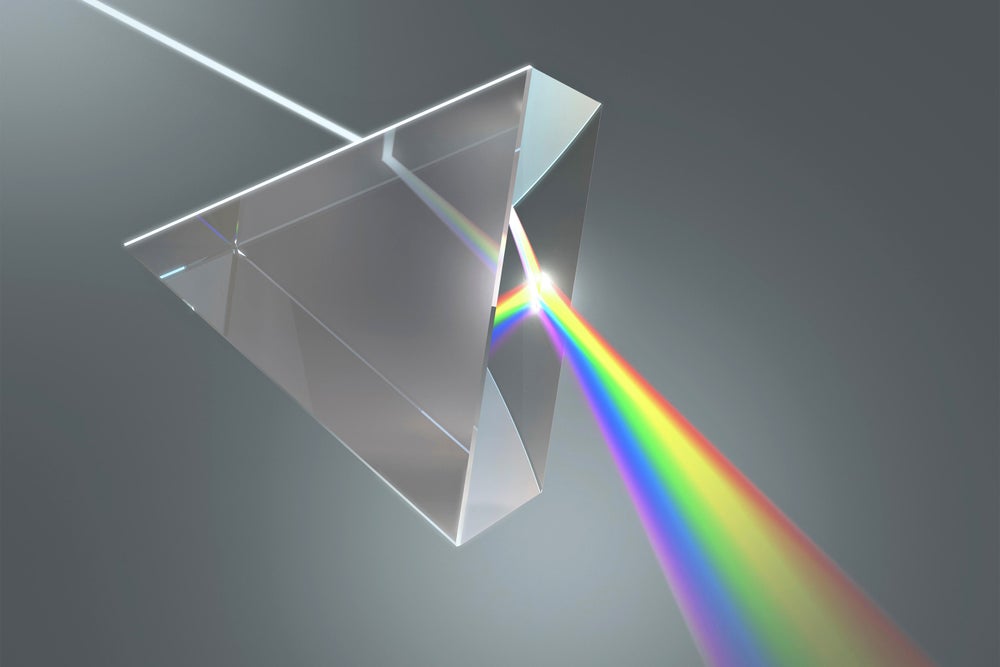
For light, the most fundamental property is the wavelength. That describes how much energy the light has, with shorter wavelength waves having more energy than ones with longer wavelengths. More colloquially, we see this difference in wavelength (or energy) as color. When you see something as violet, for example, you’re seeing light coming from that object with a shorter wavelength. Blue has a slightly longer wavelength, green longer again, then yellow, orange, and finally red, with the longest we see. We can measure the wavelengths of these colors of visible light to determine the range our eyes can detect, and it goes very roughly from 380 nanometers (nm) for violet to about 750 nm for red. (One nanometer is a billionth of a meter.)
An aside: the frequency of light is another fundamental property and is a measure of how frequently the crests pass an observer. It’s equal to the inverse of the wavelength; in other words, the longer the wavelength, the lower the frequency, and vice versa. Scientists use both, usually picking one or the other in their calculations, depending on what makes the math easier or more intuitive.
Our eyes have evolved cells called cones in our retinas that are sensitive to different wavelengths of light. There are three kinds: one detects a small range of wavelengths centered on red, and the others detect ranges centered on green and blue. As light hits those cells, they send signals to the brain, which combines them to create the colors we see.
.
 KTSDesign/Science Photo Library/Alamy Stock Photo
.
.
Click the link below for the article:
.
__________________________________________
July 6, 2024
Mohenjo
Business, Food For Thought, Human Interest, Political, Science, Technical
amazon, business, Business News, current-events, Future, Hotels, human-rights, medicine, mental-health, research, Science, Science News, technology, Technology News, travel, vacation

Click the link below the picture
.
There’s an old saying (of questionable validity) that you don’t know what love is until you have a baby. It’s too often used as a way to lord one’s hard-won parenting knowledge over the uninitiated. And while it’s true that when my daughter was born, I felt like I was drowning in my love for her, the full weight of this saying revealed itself only after we got home: You don’t know what love is until you’ve had a friend leave hot dinners on your porch for weeks. You don’t know what love is until your mom drops everything to stay for a month, cooking and cleaning and caring for your new family. You don’t know what love is until a stranger in the neighborhood sees you out with a newborn wrapped up against your chest, asks your address, and leaves a huge batch of homemade soup on your front stoop. You don’t know what love is until people emerge from the woodwork and go out of their way to soften your landing into parenthood.
A month after my daughter was born, my husband had to go out of town for the first time. I was terrified. A friend of mine left her own baby at home and drove two hours to my house, bearing snacks and drinks and the easy confidence of a mom with nearly a year of experience under her belt. She walked laps around my living room, rocking my daughter as she wailed, and I looked on in awe. And then she asked if she could clean my bathroom — my disgusting, neglected bathroom, with a month of unspeakable grime caked under the toilet rim and pale pink mildew ringing the sink drain. You don’t know what love is until your friend has driven four hours round trip just to pull on rubber gloves and scrub your toilet bowl.
Ahead, here are 12 more stories from the trenches of new parenthood, on the large and small ways we take care of one another.
Care Packages For The Big Kids
My daughter, our third child, was born with a rare genetic disorder, which we didn’t know until she was about 8 days old. She was in the NICU for about six weeks. So on top of normal postpartum stuff, I had a C-section for the first time, and I had to leave her in the hospital when I was discharged. It was just a perfect storm of emotions. We were living in Texas at the time, far away from our families. It was still Covid, so we were on our own. I would wake up, spend a day at the hospital, and come home. I was barely getting through the day. I definitely felt like I was neglecting my older two children.
The week before Easter, one of my best friends in Boston sent a kit for the kids to make Easter cookies. It was pre-made sugar cookies, icing, and decorations and stuff. It was just one of those little things that I normally would have done with them that I just didn’t have the bandwidth for. A lot of times when you have a baby, so much of it is about the baby. But recognizing that there were other people affected by everything that was going on, and our whole family unit — that meant a lot. Especially for me. It was nice to have something that was so simple, but they enjoyed it so much, and it was already all set, so I could actually sit down with them and just open it up and do it.
— Claire, 36, North Carolina, mom of three, ages 8, 6, and 3
.
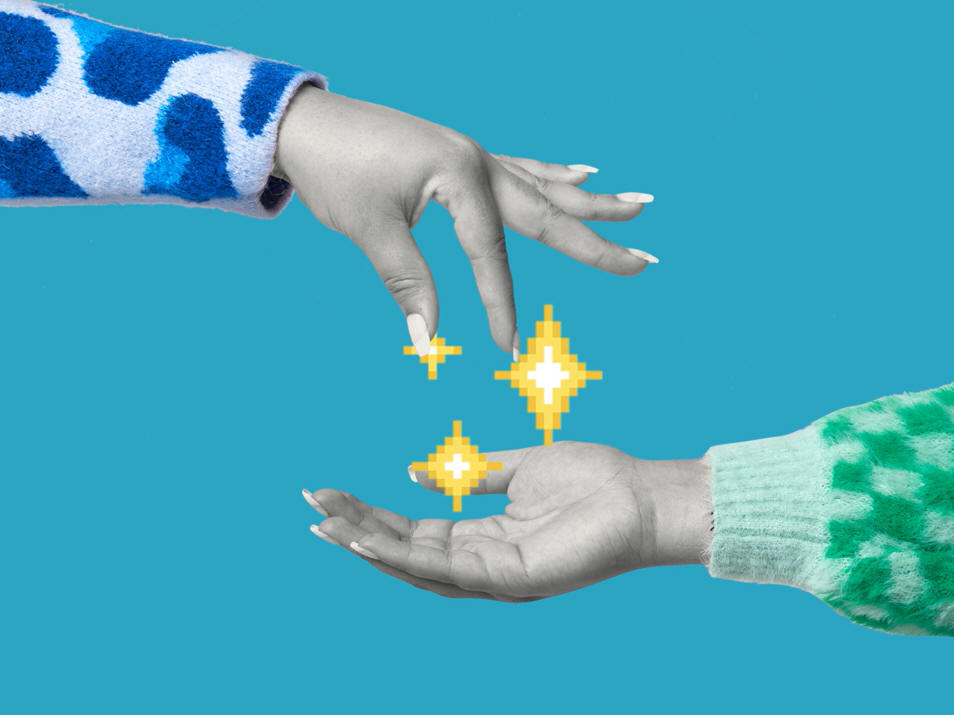 12 parents of all ages look back on the postpartum gestures they’ll never forget.
.
.
Click the link below for the article:
.
__________________________________________
July 5, 2024
Mohenjo
Business, Food For Thought, Human Interest, Political, Science, Technical
amazon, business, Business News, current-events, Future, Hotels, human-rights, medicine, mental-health, research, Science, Science News, technology, Technology News, travel, vacation
Click the link below the picture
.
Electroencephalography, or EEG, was invented 100 years ago. In the years since the invention of this device to monitor brain electricity, it has had an incredible impact on how scientists study the human brain.
Since its first use, the EEG has shaped researchers’ understanding of cognition, from perception to memory. It has also been important for diagnosing and guiding treatment of multiple brain disorders, including epilepsy.
I am a cognitive neuroscientist who uses EEG to study how people remember events from their past. The EEG’s 100-year anniversary is an opportunity to reflect on this discovery’s significance in neuroscience and medicine.
On July 6, 1924, psychiatrist Hans Berger performed the first EEG recording on a human, a 17-year-old boy undergoing neurosurgery. At the time, Berger and other researchers were performing electrical recordings on the brains of animals.
What set Berger apart was his obsession with finding the physical basis of what he called psychic energy, or mental effort, in people. Through a series of experiments spanning his early career, Berger measured brain volume and temperature to study changes in mental processes such as intellectual work, attention, and desire.
He then turned to recording electrical activity. Though he recorded the first traces of EEG in the human brain in 1924, he did not publish the results until 1929. Those five intervening years were a tortuous phase of self-doubt about the source of the EEG signal in the brain and refining the experimental setup. Berger recorded hundreds of EEGs on multiple subjects, including his own children, with both experimental successes and setbacks.
Finally convinced of his results, he published a series of papers in the journal Archiv für Psychiatrie and had hopes of winning a Nobel Prize. Unfortunately, the research community doubted his results, and years passed before anyone else started using EEG in their own research.
Berger was eventually nominated for a Nobel Prize in 1940. But Nobels were not awarded that year in any category due to World War II and Germany’s occupation of Norway.
When many neurons are active at the same time, they produce an electrical signal strong enough to spread instantaneously through the conductive tissue of the brain, skull and scalp. EEG electrodes placed on the head can record these electrical signals.
.
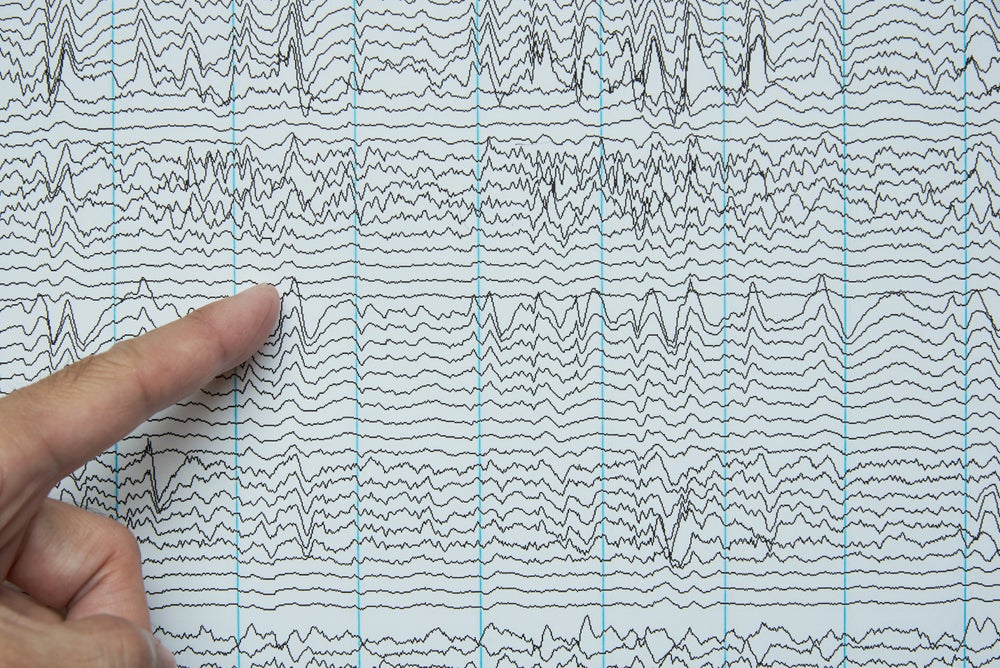
Human brain waves from electroencephalography or EEG.Undefined/Getty Images
.
.
Click the link below for the article:
.
__________________________________________
July 5, 2024
Mohenjo
Business, Food For Thought, Human Interest, Political, Science, Technical
amazon, business, Business News, current-events, Future, Hotels, human-rights, medicine, mental-health, research, Science, Science News, technology, Technology News, travel, vacation

Click the link below the picture
.
There’s no denying that PBS Kids, the home of Daniel Tiger, was once the gold standard for children’s programming. Unfortunately, many of their shows now feel recycled or like they’re spoon-feeding their audience. For example, they’ve turned Elmo and Cookie Monster into transforming robots. A parent can’t help but wonder if they’re more interested in selling toys than entertaining kids. Apple TV+ has quickly (and quietly) been overtaking PBS’ throne in quality programming for kids, bringing considerable value to this parent’s dwindling streaming budget. Several creatives behind Sesame Street and Daniel Tiger’s Neighborhood have their own programs on the streaming service, and the shows are targeted toward specific age groups, not just preschoolers.
After playing 30 Rock‘s Kenneth Parcell with “aw-shucks” aplomb, Jack McBrayer practically seemed destined to host a Mr. Rogers Neighborhood-type show. Here, he plays a version of himself, who also happens to be the kindest resident of Clover Grove, and spreads his fondness for others around his colorful hometown. Behind the scenes, McBrayer co-created this musical show (with songs by pop group OK Go) with Angela C. Santomero, the mind behind Blue’s Clues and Daniel Tiger’s Neighborhood. According to my oldest son, this program is strictly for preschoolers, as he doesn’t enjoy the show as much as his younger brother does.
Frog and Toad
Every streaming service has a children’s series based on a book. Netflix has Captain Underpants, and Prime Video has If You Give a Mouse a Cookie, and each show translates its source material to the screen with varying degrees of success. Apple TV+ has Frog and Toad, which captures what made Arnold Lobel’s award-winning series so delightful to read, from the color palette of its illustrations to its contagious positivity. The show moves at the same pace as your preschooler, so their senses aren’t overloaded, and its core themes about communication and embracing differences are slipped in subtly. Both my sons love it. Don’t be surprised if this becomes the next kids’ show you watch without your kids
Older kids
Stillwater
From each hair on the titular panda’s face to the blades of grass that move with the breeze, Stillwater is far too beautiful for children’s television animation. Even its sound design is soothing, which is on purpose, given the show’s premise. Each episode deals with a problem that one of Stillwater’s child neighbors brings to them. Rather than letting their emotions take over, he supports them in finding a solution by taking a deep breath and looking at the problem from a different perspective, offering a way to navigate complicated feelings so viewers can work on becoming more self-aware humans. Surprisingly, my kids love this show, particularly the beautiful fables Stillwater tells his young neighbors to get his point across.
.
 Credit: AppleTV
.
.
Click the link below for the article:
.
__________________________________________
July 4, 2024
Mohenjo
Business, Food For Thought, Human Interest, Political, Science, Technical
amazon, business, Business News, current-events, Future, Hotels, human-rights, medicine, mental-health, research, Science, Science News, technology, Technology News, travel, vacation
 Be Safe
.
__________________________________________
July 4, 2024
Mohenjo
Business, Food For Thought, Human Interest, Political, Science, Technical
amazon, business, Business News, current-events, Future, Hotels, human-rights, medicine, mental-health, research, Science, Science News, technology, Technology News, travel, vacation

Click the link below the picture
.
Perhaps the biggest difference Lissa O’Rourke has noticed among her preschoolers in St. Augustine, Fla., has been their inability to regulate their emotions: “It was knocking over chairs, it was throwing things, it was hitting their peers, hitting their teachers.”
Data from schools underscores what early childhood professionals have noticed.
Children who just finished second grade, who were as young as 3 or 4 when the pandemic began, remain behind children the same age prepandemic, particularly in math, according to the new Curriculum Associates data. Of particular concern, the students who are the furthest behind are making the least progress catching up.
The youngest students’ performance is “in stark contrast” to older elementary school children, who have caught up much more, the researchers said. The new analysis examined testing data from about four million children, with cohorts before and after the pandemic.
Data from Cincinnati Public Schools is another example: Just 28 percent of kindergarten students began this school year prepared, down from 36 percent before the pandemic, according to research from Cincinnati Children’s Hospital.
How did this happen?
One explanation for young children’s struggles, childhood development experts say, is parental stress during the pandemic.
A baby who is exposed to more stress will show more activation on brain imaging scans in “the parts of that baby’s brain that focus on fear and focus on aggression,” said Rahil D. Briggs, a child psychologist with Zero to Three, a nonprofit that focuses on early childhood. That leaves less energy for parts of the brain focused on language, exploration, and learning, she said.
During lockdowns, children also spent less time overhearing adult interactions that exposed them to new language, like at the grocery store or the library. And they spent less time playing with other children.
Kelsey Schnur, 32, of Sharpsville, Pa., pulled her daughter, Finley, from child care during the pandemic. Finley, then a toddler, colored, did puzzles, and read books at home.
But when she finally enrolled in preschool, she struggled to adjust, her mother said. She was diagnosed with separation anxiety and selective mutism.
“It was very eye-opening to see,” said Ms. Schnur, who works in early childhood education. “They can have all of the education experiences and knowledge, but that socialization is so key.”
.

Preschoolers do not have the same fine motor skills as they did prepandemic, Ms. Frederick said. Aaron Hardin for The New York Times
.
.
Click the link below for the article:
.
__________________________________________
Older Entries
Newer Entries
 James' World 2