Home

Forwards, not back

Leave a comment

Click the link below the picture

.

The ancient Greek physician Hippocrates defined health as a body in balance. The human body was a system of four coordinated humors (blood, black bile, yellow bile, phlegm), each of which had its own balance of qualities (hot or cold, wet or dry) connected to the four elements (fire, air, earth, water). The balance of these qualities and humors was inextricably linked to environmental conditions. Phlegm, for instance, was connected to the element of water, and had the qualities of cold and wet. Hippocrates recognized that when this bodily system was exposed to conditions that perturbed or exacerbated its humors, such as the cold and wet of a snowstorm, the system became unbalanced, in this case producing too much phlegm. His treatments for an abundance of phlegm focused on removing the excess humor and increasing the yellow bile (hot and dry) to bring the body back into balance. Today, we might identify such a condition as a respiratory disease. Hippocrates would not have identified the condition so locally. He would have considered it a condition of the whole body: ‘dis-ease’ was literally a system out of ease or balance.

Today, we think less about the whole body as a complex system and more about its parts and sub-systems. An X-ray of the lungs shows congestion, so we assume the problem is in the lungs and treat for pneumonia, not worrying about other parts of the body unless they show their own symptoms. If a culture in the pathology lab shows a particular microbe at work, we prescribe the relevant antibiotics to combat that microbe rather than attempt to rebalance the system as a whole (despite the current trend to add ‘probiotics’ to the antibiotics approach). This move toward localized diagnoses began in the 18th century with the rise of morbid anatomy and the localization of symptoms to parts. The French physician René Laënnec’s invention of the stethoscope in 1816 allowed him to hear various abnormal sounds in the chest of a patient suffering respiratory distress. He could then carry out an autopsy after the patient died and correlate the visibly abnormal parts with the symptoms that he had detected, which led to powerful diagnostic tools.

The result was the localization of abnormalities to particular parts of the body, which led to the concept of localized diseases and the need for specialized treatments. Modern medicine celebrates the ability to diagnose problems based on localization of symptoms. The systemic imbalance or ‘dis-ease’ of Hippocrates thus became a growing set of separate diseases associated with specific causes, dissociated from the notion of the body as a system.

Following the localization of diseases came the specialization of treatments. These treatments typically rely on identifying the problem within a particular part or subsystem and fixing it, with the goal of getting the patient back to ‘normal’. If a physical part is damaged, we want to repair it so that it works again as closely as possible to the way it was working before. Or, if it cannot be fixed, perhaps because a limb was cut off or a kidney failed, then the tradition has been to replace it with something as close as possible that will work the same way: prosthetics for lost limbs, dialysis machines for failing kidneys.

Despite vast differences in understanding of disease and treatments, models of health from Hippocrates to modern medicine have focused on reestablishing the same state as occurred before illness. Health is a concept imbued with a sense of stability; it is constituted by a body returning to a state that existed before disease or injury and the maintenance of this state. Stability is therefore understood as the maintenance or regeneration of a single, ‘healthy’ state of the body. Since this approach has saved vast numbers of lives, medicine applauds the invention of new analytical tools, procedures, and treatments that advance an understanding of health as a return to a previous state. The sense of stability implicit in thinking about health leads to a picture of health as an outcome of regeneration: a body damaged by injury or disease is brought back to, or regenerates, a previous, ‘healthy’ state.

But what if health isn’t simply a return to a previous state? If we think about health as part of a larger framework of considering organisms as complex systems, there is no ‘return’. Complex systems shift in response to environmental challenges; they adapt to their conditions in order to survive – and adaptation breeds change. Framing health in terms of regeneration, and then asking what it means to regenerate, allows us to prod our assumptions about health as a singular, predetermined outcome and rethink our values in sustaining complex systems in light of damage. That raises the question: what does regeneration mean?

.

Les Baugh lost both his arms in an electrical accident when he was a teenager. Since then, he has managed life mostly without the help of prosthetic arms, finding them to be more of a nuisance than a help. Photo by Zackary Canepari/Panos

.

.

Click the link below for the article:

https://aeon.co/essays/regeneration-is-a-better-ideal-for-health-than-restoration?utm_source=pocket_discover_health

.

__________________________________________

Enlisting Microbes to Break Down ‘Forever Chemicals’

Leave a comment

Click the link below the picture

.

A group of bacteria has proved adept at destroying the ultratough carbon-fluorine bonds that give “forever chemicals” their name. This finding boosts hopes that microbes might someday help remove these notoriously pervasive pollutants from the environment.

Nearly 15,000 chemicals commonly found in everyday consumer products such as pizza boxes, rain jackets, and sunscreens are recognized as perfluoroalkyl and polyfluoroalkyl substances, or PFASs. These chemicals can enter the body via drinking water or sludge-fertilized crops, and they have already infiltrated the blood of almost every person in the U.S. Scientists have linked even low levels of chronic PFAS exposure to myriad health effects such as kidney cancer, thyroid disease, and ulcerative colitis.

Current methods to destroy PFASs require extreme heat or pressure, and they work safely only on filtered-out waste. Researchers have long wondered whether bacteria could break down the chemicals in natural environments, providing a cheaper and more scalable approach. But carbon-­fluorine bonds occur mainly in humanmade materials, and PFASs have not existed long enough for bacteria to have specifically evolved the ability to digest them. The new study—though not the first to identify a microbe that destroys carbon-fluorine bonds—provides a step forward, says William Dichtel, a chemist at Northwestern University who studies energy-efficient ways to chemically degrade PFASs.

To identify a promising set of bacteria, the study’s authors screened several microbe communities living in wastewater. Four strains from the Acetobacterium genus stood out, the team reported in Science Advances. Each strain produced an enzyme that can digest caffeate—a naturally occurring plant compound that roughly resembles some PFASs. This enzyme replaced certain fluorine atoms in the PFASs with hydrogen atoms; then a “transporter protein” ferried the fluoride ion by-products out of the single-celled microbes, protecting them from damage. Over three weeks most of the strains split the targeted PFAS molecules into smaller fragments that could be degraded more easily via traditional chemical means.

By directly targeting carbon-fluorine bonds, the Acetobacterium bacteria partially digested perfluoroalkyls, a type of PFAS that very few microbes can break down. Even so, these Acetobacterium strains could work only on perfluoroalkyl molecules that contain carbon-carbon double bonds adjacent to the car­bon-fluorine ones. These “unsaturated” perfluoroalkyl compounds serve as building blocks for most larger PFASs; they are produced by chemical manufacturers and also emerge when PFASs are destroyed via incineration.

Scientists had previously demonstrated that a microbe called Acidimicrobium sp. strain A6 could break down carbon-fluorine bonds and completely degrade two of the most ubiquitous perfluoroalkyls. This microbe grows slowly, however, and requires finicky environmental conditions to function. And researchers do not yet fully understand how this bacterial strain does the job.

The Acetobacterium lines target a separate group of PFASs, and the team hopes to engineer the microbes to either improve their efficiency or expand their reach—potentially to more perfluoroalkyls. Lead study author Yujie Men of the University of California, Riverside, imagines the microbes would perform best in combination with other approaches to degrade PFASs. The range of chemical structures in these compounds means “a single lab cannot solve this problem.”

Any future commercial use of the microbes would face numerous hurdles, including breakdown speed and replicability outside of the lab, but Men looks forward to seeing how far her team can push the technique. “We’re paving the road as we go,” she says with a laugh.

.

https://static.scientificamerican.com/dam/m/7208a167541a1beb/original/sa1124Adva02.jpg?w=900Thomas Fuchs

.

.

Click the link below for the article:

https://www.scientificamerican.com/article/enlisting-microbes-to-break-down-forever-chemicals/

.

__________________________________________

Why You’re Always So Hot and Sweaty

Leave a comment

Click the link below the picture

.

MAYBE YOU’RE ALWAYS cranking up the air conditioner, or you’ve tried several different cooling blankets. But you can never quite cool off. You may wonder what’s going on: Why do you run so much hotter than everyone else, and is it something you should worry about?

People have different tolerances to temperature, and there’s a great degree of normal variation, explains Vineeth Mohan, M.D., an endocrinologist in Boca Raton, Florida.“When a patient mentions generally feeling too hot or overheated, physicians must try to distinguish between normal human variation versus various potential underlying medical conditions,” Dr. Mohan says.

“Medical conditions rarely cause heat intolerance as the sole symptom,” he adds. So doctors aim to uncover other signs and symptoms that might point to a more serious issue. If you feel hot all the time but don’t have other major symptoms, you’ll probably just need to tweak your thermostat or shed some layers of clothing. Your medications may be to blame as well. However, you might still wonder what’s causing it.

“It’s important to note that feeling hot can be a normal bodily response, but if it’s persistent, severe, or accompanied by other concerning symptoms, consult a health care professional,” adds Michael Weiner, D.O., chief medical officer at MSU Health Care at Michigan State University.

Take a look at this overview of factors that could be to blame for your feeling hot and sweaty all the time:

FEELING HOT AND SWEATY could be an important warning sign of heart disease, especially if it’s sudden or comes with other symptoms, like chest discomfort, heart palpitations, shortness of breath or dizziness, says Sergiu Darabant, M.D., a cardiologist at the Miami Cardiac & Vascular Institute, part of Baptist Health South Florida.

“Cardiovascular stress may trigger the autonomic nervous system,” which can release adrenaline, resulting in overheating and sweating, he says. This can occur with some heart conditions.

The combo of sweating, intense body heat, and discomfort is known as “diaphoresis,” Dr. Darabant says. “Diaphoresis may be indicative of myocardial infarction, heart failure, or very high blood pressure.”

Sweatiness may also indicate heart failure: one study showed that many people with heart failure don’t experience traditional heart attack symptoms and instead have major sweating.

If you have risk factors for heart disease, such as high blood pressure or diabetes or you’re a smoker, be vigilant if you experience frequent, unexplained sweating, Dr. Darabant adds. Chest pain and shortness of breath also shouldn’t be ignored.

2

You have a sweating disorder.

POURING SWEAT AT rest in a cool room? You could have hyperhidrosis, an excessive sweating disorder.

“People with hyperhidrosis sweat without the need to cool the body down,” says Melissa Kanchanapoomi Levin, M.D., a New York City-based dermatologist and founder of Entière Dermatology.

While hyperhidrosis sometimes runs in families or signals an underlying health issue (an infection, heart problem, overactive thyroid, or even cancer), it may also be caused by overactive nerves, signaling your body to sweat more.

If you have it, you may sweat through clothes, notice sweat drip off your fingertips, or have beads of sweat running down your face. If this sounds familiar, switch from a deodorant to an antiperspirant, suggests Dr. Levin. You can actually rub antiperspirant on your feet or hands, too, she says. Still sweating? Make an appointment with your dermatologist to see what’s going on. You might benefit from a prescription-strength antiperspirant. Sometimes, doctors may recommend other meds or even surgery.

.

https://hips.hearstapps.com/hmg-prod/images/hot-summer-royalty-free-image-1693240486.jpg?crop=1.00xw:0.796xh;0,0.204xh&resize=1200:*

rudigobboetty Images

.

.

Click the link below for the article:

https://www.menshealth.com/health/g25933029/why-am-i-always-hot/?utm_source=pocket_discover_health

.

__________________________________________

The Future Looks Bright for Electric School Buses

1 Comment

Click the link below the picture

.

CLIMATEWIRE | In 1925, a small-town Ford dealer in Georgia named Albert Luce attached a wooden coach to the top of a Model T frame and sold it to the owner of a cement plant who wanted a way to transport his workers.

The idea evolved into a business, and nearly a century later the company — known as Blue Bird Corp. — has become one of the biggest school-bus builders in the country.

To stay ahead though, Blue Bird is transforming again. The company is shifting more of its business to electric school buses, even as it continues to crank out the same diesel-powered models that have ferried kids to school for generations.

The new approach for Blue Bird — and its competitors — is due in part to a windfall of money the Biden administration has steered to the industry.

The bipartisan infrastructure law provided $5 billion, overseen by the EPA, for school districts to buy the new buses. And the Inflation Reduction Act dedicated billions of dollars more in grants and tax incentives to pay for factories and battery plants.

But industry officials say the shift to electric was happening even before President Joe Biden took office. For that reason, they say they are optimistic the transition will continue no matter who wins the White House in November — even though there’s a clear difference between Vice President Kamala Harris and former President Donald Trump in their support for electrification.

“We’re going to be in this business for a long time,” said Albert Burleigh, vice president of alternative fuels for Blue Bird.

The company expects to double its e-bus sales from 546 in 2023 to 1,125 in 2025. And the new line could comprise as much as 40 percent of the company’s sales by 2027 — 4,000 to 5,000 buses out of 11,000 to 12,000 in total sales.

Blue Bird’s two largest competitors, Thomas Built Buses and IC Bus, are actively gearing up for the electric market too.

Thomas Built, owned by Daimler, has a factory in High Point, North Carolina, and sold its 1,000th electric bus earlier this year. The company added a third shift at its plant in 2022 to keep up with demand, and it set up a consulting team in 2023 to help customers plan for electric buses.

And IC Bus — which is based in Tulsa, Oklahoma, and is owned by Volkswagen’s Traton division — says school buses are a natural fit for electrification.

“With defined routes and a central depot, school buses are a perfect fit to transition to electric,” says the company on its website.

The e-bus industry got its start in the U.S. in 2014, when a handful of California school districts began buying electric buses to meet the state’s emissions requirements, according to a report from the World Resources Institute.

Another catalyst came in 2016 when Volkswagen agreed to pay $14.7 billion to settle allegations that it cheated on emissions reporting. The settlement allocated $2.7 billion for individual states to fund clean-air projects, and many of them focused on eliminating diesel-powered school buses.

.

https://static.scientificamerican.com/dam/m/55ba2c10a5d74622/original/Vice-President-Kamala-Harris-walks-off-of-an-electric-school-bus.jpg?w=900

Vice President Kamala Harris walks off of an electric school bus during a tour at Meridian High School, in Falls Church, Virginia. Win McNamee/Getty Images

.

.

Click the link below for the article:

https://www.scientificamerican.com/article/electric-school-buses-are-a-climate-and-health-win-with-staying-power/

.

__________________________________________

Communion

Leave a comment

Raleigh McCool | Longreads | September 5, 2024 | 3,082 words (11 minutes)

Click the link below the picture

.

It’s my first day of spin class, and I am in the darkest corner of the room. My feet are crammed into shoes I rent from the front desk—little black Velcro things with cleats on the bottoms. The feet of other riders are strapped into sleek Nikes splashed in bright reds and volt blues and glow-in-the-dark neons. Dangling from my perch upon the bike’s seat, my feet strain at the pedals as I attempt to jam the cleats until they fit. I flail around for a second, until finally, a satisfying snap. I’m connected.

To the bike, I mean. Outside of class, I’m terribly lonely. That’s how I’ve ended up here.

There’s a tweet I wish I’d written about how the real miracle was Jesus having a dozen friends in his 30s, and as someone who has now outlived Jesus, I can testify to the divine work it takes to have friends. With few exceptions, all my friends are married, having kids, and buying houses in the ’burbs. Achieving domestic bliss has really started to cut into my friends’ hangout time.

In the bike room, my feet are tethered to the pedals and I begin to spin my legs around in warm-up. I stand, pedal like I’m riding down Ridgewood Road to my friend Ross’s house—he lived down the street, and in the summer I’d bike over, and we’d hole up in his attic, playing video games and the dice baseball game we invented. Riding my bike as a kid, my bowl cut whooshed in the hot Tennessee air. Here it’s pulled back with a headband, and the room is dark and cool, and the instructor announces we’ll start in a couple minutes. She comes up to me, introduces herself, thanks me for being there. Her name’s Karson. She makes sure my cleats are clipped in and that I have water, tugging on the handlebars to ensure everything is in place.

When class starts, the lights go out. “We ride to the beat of the music,” Karson says. The music is a pop remix I don’t recognize, and it’s playing at a volume that could raise the dead. She helps us find the cadence, “Right, left, right; right, left, right.” Karson announces that when the beat drops, we’ll rise up out of our seats, and we’ll ride, and we’ll, like, drop our elbows, or . . . something? And then, it happens. The music wobble-wobbles, and the lights flash on. Every last one of the 40 or so bikers is on their feet and bouncing up and down, their hands clutching the handlebars as they perform synchronized push-ups, even as their feet maintain the pulsing beat. I do my best to match, but I’m off, my legs too fast and my body too slow. Or maybe it’s the other way around. All around the room, everyone has got it, and it’s not just that their legs are pumping synchronously or that their push-ups are perfectly timed—it’s some ineffable flair, an extra zhuzh of swag that my bike neighbors are adding. I sort of want to pause and be like, “Well, look at you go!” but the lights go dim again, and I am positively gasping. I use the dark to snatch at my towel, slug my water, and sit.

We are halfway through the first song.

In a last-ditch effort to make friends at my gym, I recently plucked out my headphones and stepped up to the squat rack in silence. The only sounds were the clang of weights, the hum of the AC, and my grunty breaths. The idea was to signal to the people around me that I was open for connection, conversation, or a spot. I’d been going to that gym for the past year, and I’d never talked to a soul—each of us with our headphones on, in our own little worlds of isolation.

The no-headphones thing didn’t really work. A couple guys asked for a bench press spot, but providing a spot for these men strangely did not lead to close personal friendship, which put it in good company alongside organizing a wiffle ball game, throwing a birthday party, working at a restaurant, drinking alone at bars, and scrolling mindlessly on my phone, none of which had led to friendships either.

There’s a tweet I wish I’d written about how the real miracle was Jesus having a dozen friends in his 30s, and as someone who has now outlived Jesus, I can testify to the divine work it takes to have friends.

My 30s have been weird: isolating and demoralizing, a depressing gnarl in my stomach. A bone-deep, soul-swamped loneliness I can’t seem to text or swipe my way out of. Days alone in a crowded gym, nights alone on my couch, scrolling and hoping for connection and washing down hope with a handful of IPAs instead. I’m ashamed to be lonely, ashamed to ask for friends in the first place. Needing someone? How embarrassing.

I’ve read and listened to all the articles and podcasts: the friendship recession is upon us. I’m not alone in being alone, which knowledge does not help. I follow the results of my Google search on “how to make friends” to a T: I cohost a bowling night, join a flag football team. The bowling turnout is abysmal, and our flag football team is so bad we’ve all turned against each other. One day I search for group fitness classes near me, and a spin studio pops up: Full Ride Cycling is just down the street.

The next time the beat drops, Karson adds another move to the dance, a little twist, and then a lean, and there’s a moment when she instructs us to “tap (y)our ass back” while riding, which seems simple enough when she does it and yet, my attempts to pump my legs and tighten my core and hurl my ass backward to the beat prove too much for my body altogether. I sit my ass down, and it stays there for the rest of class.

Somewhere in the latter half of my first spin class, I burst into tears. The room has gone completely dark. “This bike room is not about competition,” Karson says. “It’s not about getting it right, or how it looks.” There are two candles lit, the light fluttering up like she’s telling a ghost story; Karson blows them out. “It’s about showing up,” she says. “It’s about trying.” There’s no choreography or beat to keep, and in the utter darkness, I slump my shoulders, looking up at the ceiling I can’t see. “You belong here,” she says, somewhere out there in the dark. “Every one of you. You are welcome.” The song’s too loud to hear my sniffles. I sit and slowly pedal.

When I was little, we passed communion around on little trays—matzos wafers to crack apart, tiny plastic shot glasses of grape juice jiggling on a saucer. I loved church. All the people, our voices harmonizing together, the buzzy electrical currents of love, the huge beautiful mystery of God.

I was a good kid. I obeyed God, followed all the rules—I memorized the verses and respected my elders, didn’t lust or use the Lord’s name in vain. No one yelled it or painted it blood-red on a sign, but they told us: to disobey was sin. And sinners went to hell.

It didn’t hit me until decades later, how afraid I’d been. Fire. Eternal separation. How the flames singed the corners of everything, a childhood charred by fear. The story of Jesus still yanks at me—God on earth, grabbing hold of the lost, insisting they belong—but I don’t really go to church anymore. The fear is still near, hot to the touch.

Sometimes, though, I miss it. The harmonies, the kind smiles, the whole messy lot of us together. When I miss it enough, I rise early and go to an Episcopal church down the street. When it’s time for communion, I file in line with strangers, and at the altar, the reverend hands me a hunk of torn-off bread and a goblet of wine. “This is the body of Christ broken for you,” she says, looking deeply into my eyes. “This is the blood of Christ shed for you,” she says, handing me the cup. When she finally unlocks her gaze, I close my eyes, let the bread and wine melt on my tongue.

.

https://i0.wp.com/longreads.com/wp-content/uploads/2024/08/Communion-essay-image-FINAL.png?resize=1200%2C700&ssl=1Illustration by CLR. Stock art by M_Light_Zone/Getty Images.
.

.

Click the link below for the article:

https://longreads.com

.

__________________________________________

Poppy Seed Tea Can Trigger a Morphine Overdose

Leave a comment

Click the link below the picture

.

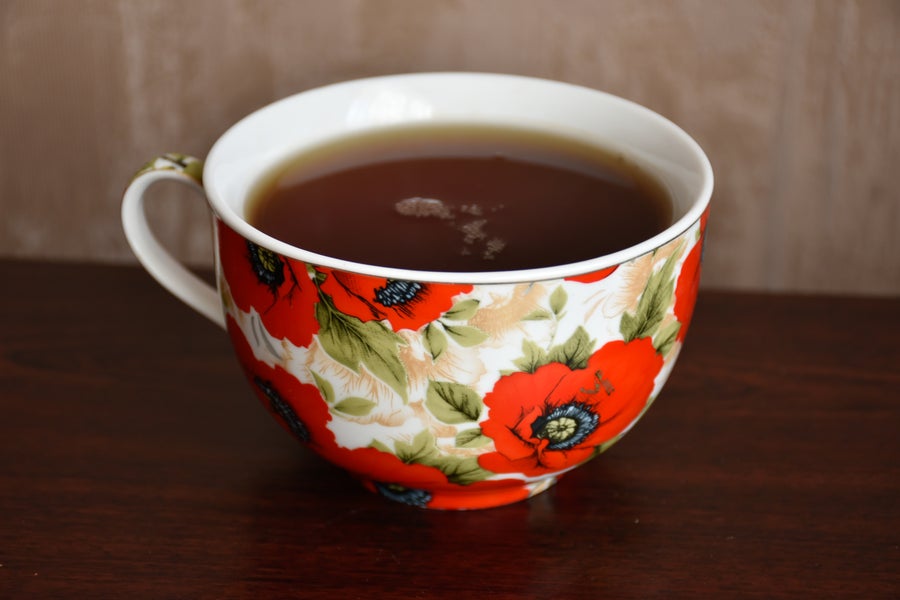
It sounds like a joke: poppy seeds infused with opioids.

Indeed, it was a plotline on the sitcom Seinfeld. But for some, it has been a tragedy.

People have died after drinking tea brewed from unwashed poppy seeds.

And after eating lemon poppy seed bread or an everything bagel, mothers reportedly have been separated from newborns because the women failed drug tests.

Poppy seeds come from the plant that produces opium and from which narcotics such as morphine and codeine are derived. During harvesting and processing, the seeds can become coated with the opium fluid.

Members of the House and Senate have proposed legislation “to prohibit the distribution and sale of contaminated poppy seeds in order to prevent harm, addiction, and further deaths from morphine-contaminated poppy seeds.” The bill was one of several on the agenda for a Sept. 10 House hearing.

The day before the hearing, The Marshall Project and Reveal reported on a woman who ate a salad with poppy seed dressing before giving birth, tested positive at the hospital for opiates, was reported to child welfare, and saw her baby taken into protective custody. Almost two weeks passed before she was allowed to bring her baby home, the story said.

“It’s not an urban legend: Eating poppy seeds can cause diners to test positive for codeine on a urinalysis,” the Defense Department warned military personnel in 2023.

The U.S. Anti-Doping Agency long ago issued a similar warning to athletes.

The Center for Science in the Public Interest, a watchdog group, petitioned the FDA in 2021 to limit the opiate content of poppy seeds. In May, after more than three years with no response, it sued the agency to force action.

“So far the FDA has been negligent in protecting consumers,” said Steve Hacala, whose son died after consuming poppy seed tea and who has joined forces with CSPI.

The lawsuit was put on hold in July, after the FDA said it would respond to the group’s petition by the end of February 2025.

The FDA did not answer questions for this article. The agency generally does not comment on litigation, spokesperson Courtney Rhodes said.

A 2021 study co-authored by CSPI personnel found more than 100 reports to poison control centers between 2000 and 2018 resulting from intentional abuse or misuse of poppy seeds, said CSPI scientist Eva Greenthal, one of the study’s authors.

Only rarely would baked goods or other food items containing washed poppy seeds trigger positive drug tests, doctors who have studied the issue said.

It’s “exquisitely doubtful” that the “relatively trivial” amount of morphine in an everything bagel or the like would cause anyone harm, said Irving Haber, a doctor who has written about poppy seeds, specializes in pain medicine, and signed the CSPI petition to the FDA.

On the other hand, tea made from large quantities of unwashed poppy seeds could lead to addiction and overdose, doctors said. The risks are heightened if the person drinking the brew is also consuming other opioids, such as prescription pain relievers.

.

https://static.scientificamerican.com/dam/m/1159001da28352ab/original/Poppy-seed-cup-of-tea.jpg?w=900Kateryna Hovorukha/Getty Images

.

.

Click the link below for the article:

https://www.scientificamerican.com/article/poppy-seed-tea-can-trigger-a-morphine-overdose/

.

__________________________________________

5 things not to say to a grieving friend

2 Comments

Click the link below the picture

.

It’s almost impossible to know what to say to someone in the throes of grief. We all want to say something comforting. Very few of us know what that is.

I’ve learned this the hard way. My beloved husband of 23 years died at the end of July, two years after being diagnosed with stage IV pancreatic cancer. Since then, I’ve seen friends and neighbors struggle for the right words, and I’ve been surprised by how even the kindest questions can set me off.

There’s no one right answer, of course. What is helpful for me may not work for someone else, and words that I find off-putting may be the perfect balm for another person. Still, trading notes with a few grieving people, including my own children, I’ve found some helpful do’s and five unexpected don’ts.

No. 1: ‘How are you?’

You’d be surprised how loaded this basic question can feel. A caring friend wants to know how you’re doing. What could possibly be wrong with that?

The problem, my kids and I realized, is that it’s a near-impossible question to answer. Our feelings of grief change by the hour, sometimes by the minute, so there’s no answer that will stand the test of time. Do you mean, how am I this very second?  I can answer that, but my answer might change a second later.  Do you mean, how are we coping in life?  The answer is, we don’t know yet.

We find it easier to answer less overarching questions, such as, how was college drop-off? How was the first day of school? How was dinner last night? Specific questions are less challenging than existential ones.

No. 2: ‘How can I help?’

I’ve had to dig deep to figure out why this generous question from well-meaning friends doesn’t sit right. I think it’s because it puts the onus on the griever to help the helper. The helper wants to figure something out – but those of us who are grieving are in no position to help. We often can’t articulate, and might not even know, what we want or need.

Here’s something that worked really well: neighbors who, without asking, dropped off a tray of lasagna or cookies or flowers or fill-in-the-blank. They didn’t ring the doorbell. They didn’t call to find out if we liked lasagna or if we’d be home. They simply left something on the doorstep. One helpful friend showed up at my house and immediately rolled up her sleeves and started doing my sink full of dishes. She didn’t ask. She just dived in. to open the fridge and figure out breakfast for the kids and me, I watched a delivery truck back into our driveway.  Out came bags of bagels, platters of cream cheese, smoked salmon, fresh fruit, and a carton of hot coffee sent by my colleagues. That morning, I did not have the forethought to say, “You know, I could really go for a bagel and coffee right now,” but it turns out that’s exactly what we needed.

.

https://media.cnn.com/api/v1/images/stellar/prod/gettyimages-2148897863.jpg?c=16x9&q=h_653,w_1160,c_fill/f_webp

.

.

Click the link below for the article:

https://www.cnn.com/2024/10/12/health/what-not-to-say-grief-wellness/index.html?utm_source=pocket_discover_health

.

__________________________________________

Ethel Kennedy, matriarch of the famous family, dies at 96

Leave a comment

Click the link below the picture

.

Ethel Kennedy, who lost her husband, Robert F. Kennedy, and brother-in-law, President John F. Kennedy, to assassins’ bullets, and who channeled her grief into raising her 11 children and pursuing a lifetime of public service, died Thursday. She was 96.

Kennedy died from complications from a stroke she suffered last week, former Rep. Joe Kennedy III, D-Mass., a grandson, said in a statement posted on X.

“It is with our hearts full of love that we announce the passing of our amazing grandmother, Ethel Kennedy,” the former congressman said.

Joe Kennedy wrote that his grandmother “was a devout Catholic and a daily communicant.”

“We are comforted in knowing she is reunited with the love of her life, our father, Robert F. Kennedy,” he wrote.

“Along with a lifetime’s work in social justice and human rights, our mother leaves behind nine children, 34 grandchildren, and 24 great-grandchildren, along with numerous nieces and nephews, all of whom love her dearly.”

Kennedy died six weeks after her third child, Robert F. Kennedy Jr., ended his presidential campaign and outraged his Democratic family by endorsing former President Donald Trump.

Born Ethel Skakel on April 11, 1928, in Chicago, Kennedy’s life was marked by tragedy even before Sirhan Sirhan made her a widow in 1968 by gunning down her husband while he was running for president.

Kennedy’s parents, coal magnate George Skakel and Ann Brannack Skakel, were killed in a 1955 plane crash.

Kennedy met her future husband in 1945 at a ski resort in Quebec. At the time, he was dating her older sister, Patricia, according to an official biography at the John F. Kennedy Presidential Library and Museum.

Five years later, “Bobby and Ethel” were married, and their first child, Kathleen, was born on July 4, 1951.

By 1956, the young couple was living with their growing family in the sprawling Virginia mansion they bought from JFK. Meanwhile, Robert F. Kennedy’s public profile was on the rise as chief counsel to the Senate Select Committee. 

.


Ethel Kennedy, widow of Robert F. Kennedy, on Capitol Hill in Washington on June 5, 2018. J. Scott Applewhite / AP file

.

.

Click the link below for the article:

https://www.nbcnews.com/news/obituaries/ethel-kennedy-dies-96-rcna102978

.

__________________________________________

Harris’ political operation crosses $1 billion raised for the 2024 election

Leave a comment

Click the link below the picture

.

Vice President Kamala Harris’ presidential campaign operation crossed the $1 billion fundraising threshold in September, two months after she took over as the Democratic Party’s standard-bearer, according to two people familiar with the numbers.

The figure includes money raised by the campaign committee itself and by a campaign-affiliated joint fundraising committee that also collects cash for the Democratic National Committee and state parties.

The staggering pace suggests Harris has been able to sustain enthusiasm among donors, large and small, as the campaign enters the stretch run before the Nov. 5 election. But it comes amid a historic onslaught of outside spending from super PACs and other groups that has the Harris campaign concerned — particularly about direct mail, in which Republicans have opened a steep advantage in recent months, and on the ground, with groups like Elon Musk’s super PAC and others working to turn out voters for former President Donald Trump.

Meanwhile, public polling shows a finely balanced contest, with little separating Harris and Trump in the key swing states that will ultimately decide the election — and a sliver of swing voters still waiting to decide based on something they see in the last four weeks.

Presidential campaigns tend to take in more money as an election nears, but a clip of roughly half a billion dollars a month is unheard of. Biden’s campaign raised a little more than $1 billion for the entire 2020 election cycle, which included a competitive primary campaign, and affiliated outside groups chipped in another $580 million, according to the Center for Responsive Politics.

.

https://media-cldnry.s-nbcnews.com/image/upload/t_fit-1000w,f_auto,q_auto:best/rockcms/2024-10/241009-kamala-harris-al-1212-d60fc4.jpgDemocrats’ presidential fundraising took off when Kamala Harris jumped into the race in place of Joe Biden in July. Geoff Robins / AFP – Getty Images file

.

.

Click the link below for the article:

https://www.nbcnews.com/politics/2024-election/harris-political-operation-crosses-1-billion-raised-2024-election-rcna174696

.

__________________________________________

A ‘Once-in-a-Lifetime’ Nova Explosion Is Running Late

Leave a comment

Click the link below the picture

.

I’m fond of saying that the cosmos is like a clock, with many objects and events undergoing cycles that can be measured and understood. Our calendars and clocks, after all, really are based on astronomical processes, such as the turning of Earth and its orbit around the sun.

Some other objects keep a calendar, too, but maybe they don’t check their watch often enough. They run late.

That seems to be the case for the star system T Coronae Borealis, or T Cor Bor for short. Every 80 years or so it dramatically brightens, going from obscurity to one of the 200 brightest stars in the sky in just a matter of hours. That cadence makes each of its flare-ups truly a “once-in-a-lifetime” event. The last time it did this was in 1946, so you might expect that it won’t again until 2026, two years from now. This particular object started showing signs of an impending blowout more than a year ago, however, so astronomers updated their own appointment books for it.

And then nothing—at least, not yet. It’ll blow, of that we’re certain, but it may not do so for another year. Or it could go tonight.

T Cor Bor is a binary star, or two stars that orbit each other. One, usually the brighter of the two, is a red giant, a star that is a little more massive than the sun and at the end of its life. Complicated processes in the star’s core cause the outer layers to swell up and cool. It becomes far more luminous as it grows—emitting much more light—but the cooler gas of its expanding outer layers turns the star red. It’s estimated to be about 75 times wider than the sun, making it more than 100 million kilometers in diameter—big enough that if it was swapped out for our own star, it would stretch nearly to the orbit of Venus.

The other star is far more dead. It, too, started off much like the sun and went through a red giant phase. Over time it blew off its outer layers, revealing the white-hot core—a white dwarf. Only the size of Earth but with more mass than the sun, it’s extremely hot and dense, yet its small stature makes it much fainter than its swollen companion.

Despite its Lilliputian nature, the density of the white dwarf gives it immense gravity. The two stars are so close together, separated by only about 75 million kilometers, that the white dwarf can physically pull material away from the red giant. This puts T Cor Bor in a second stellar category: it’s not just a binary star system but also a symbiotic one.

The red giant’s siphoned-off material moves toward the white dwarf but cannot simply plunge onto it. Because the two stars orbit each other, the infalling material has angular momentum, the tendency of a rotating object to continue rotating. As it moves toward the smaller star, it speeds up that sideways motion, just like water accelerates as it streams down a bathtub drain. This material forms a flattened disk around the white dwarf called an accretion disk. Matter—mostly hydrogen—then falls onto the white dwarf’s surface from the disk’s inner edge.

.

https://static.scientificamerican.com/dam/m/6c0c42bc92e1072f/original/White_dwarf_star_and_red_giant_star.jpg?w=900

Artist’s concept of a white dwarf star (left) siphoning gas from its larger companion star (right). Scavenged material piling up on the white dwarf can spark a thermonuclear detonation, causing the star to dramatically brighten. Mark Paternostro/Science Source

.

.

Click the link below for the article:

https://www.scientificamerican.com/article/when-will-this-exploding-star-blow-its-top/

.

__________________________________________

Older Entries Newer Entries

MRS. T’S CORNER

https://www.tangietwoods

Amor Entre Estrellas

¡Bienvenido de vuelta viajero!

Heart of Loia `'.,°~

so looking to the sky ¡ will sing and from my heart to YOU ¡ bring...

Michael Ciullo

CEO and Founder of Nsight Health

Nelson MCBS

Catholic News, Prayers, HD Images, Rosary, Music, Videos, Holy Mass, Homily, Saints, Lyrics, Novenas, Retreats, Talks, Devotionals and Many More

Global geopolitics

Decoding Power. Defying Narratives.

Talk Photo

A creative collaboration introducing the art of nature and nature's art.

Movie Burner Entertainment

The Home Of Entertainment News, Reviews and Reactions

Le Notti di Agarthi

Hollow Earth Society

C r i s t i a n a' s Fine Arts ⛄️

•Whenever you are confronted with an opponent, conquer him with love.(Gandhi)

TradingClubsMan

Algotrader at TRADING-CLUBS.COM

Comedy FESTIVAL

Film and Writing Festival for Comedy. Showcasing best of comedy short films at the FEEDBACK Film Festival. Plus, showcasing best of comedy novels, short stories, poems, screenplays (TV, short, feature) at the festival performed by professional actors.

Bonnywood Manor

Peace. Tranquility. Insanity.

Warum ich Rad fahre

Take a ride on the wild side

Madame-Radio

Découvre des musiques prometteuses (principalement) dans la sphère musicale française.

Ir de Compras Online

No tiene que Ser una Pesadilla.

Kana's Chronicles

Life in Kana-text (er... CONtext)

Cross-Border Currents

Tracking money, power, and meaning across borders.

Jam Writes

Where feelings meet metaphors and make questionable choices.

emotionalpeace

Finding hope and peace through writing, art, photography, and faith in Jesus.

WearingTwoGowns.COM

The Community for Wounded Healers: Former Medical Students, Disabled Nurses, and Faith-Fueled Pivots

...

love each other like you're the lyric to their music

Luca nel laboratorio di Dexter

Comprendere il mondo per cambiarlo.

Tales from a Mid-Lifer

Mid-Life Ponderings

Creative

Travel,Tourism, Life style "Now in hundreds of languages for you."

freedomdailywriting

I speak the honest truth. I share my honest opinions. I share my thoughts. A platform to grow and get surprised.

The Green Stars Project

User-generated ratings for ethical consumerism

Cherryl's Blog

Travel and Lifestyle Blog

Sogni e poesie di una donna qualunque

Questo è un piccolo angolo di poesie, canzoni, immagini, video che raccontano le nostre emozioni

My Awesome Blog

“Log your journey to success.” “Where goals turn into progress.”

pierobarbato.com

scrivo per dare forma ai silenzi e anima alle storie che il mondo dimentica.

Thinkbigwithbukonla

“Dream deeper. Believe bolder. Live transformed.”

Vichar Darshanam

Vichar, Motivation, Kadwi Baat ( विचार दर्शनम्)

Komfort bad heizung

Traum zur Realität

Chic Bites and Flights

Savor. Style. See the world.

ومضات في تطوير الذات

معا نحو النجاح

Broker True Ratings

Best Forex Broker Ratings & Reviews

Blog by ThE NoThInG DrOnEs

art, writing and music by James McFarlane and other musicians

fauxcroft

living life in conscious reality

Srikanth’s poetry

Freelance poetry writing

JupiterPlanet

Peace 🕊️ | Spiritual 🌠 | 📚 Non-fiction | Motivation🔥 | Self-Love💕