October 19, 2024
Mohenjo
Business, Food For Thought, Human Interest, Political, Science, Technical
amazon, business, Business News, current-events, Future, Hotels, human-rights, medicine, mental-health, research, Science, Science News, technology, Technology News, travel, vacation

Click the link below the picture
.
Has the U.S. economy, historically, been better under Republican presidents or Democratic presidents?
A Republican financial analyst decided to find out.
His name? Bart Starr, Jr. (Yes, the son of THAT Bart Starr.)
The answer may surprise you.
(Before Bart Starr, Jr. takes over this story, we have 18 days left until the election. This is go time. Your donations to @WisDems will help us get out the vote all across Wisconsin. Won’t you chip in now?)
Who is Bart Starr, Jr.?
The son of legendary Packers QB Bart Starr, Bart Jr. grew up in Green Bay, WI.
He’s an Alabama attorney, financial consultant, and a supporter of charities including Rawhide Youth Services, an organization co-founded by his parents in the 1960s to help at-risk youth.
A lifelong Republican, he voted for both Bushes, Dole, McCain, & Romney.
From here on, this piece is written by Bart Starr, Jr.
There exists in much of America a belief, one our Republican family accepted for decades, that GOP presidents are better for the U.S. in terms of stock market performance, economic and job growth, and fiscal discipline/deficits.
Recently we accepted a challenge from a centrist economist to determine whether our bias was correct.
It turns out we were wildly mistaken.
Someone known to most Americans said, many years ago, “The economy seems to do better under the Democrats than under the Republicans.”
Before we identify him, let’s see if he was correct by analyzing very long term data in order to avoid the distortion effects of one or two strange years.
Let’s look at the stock market performance from 1961-2024.
Assume we invested $10,000 in the stock market and allowed growth to compound only during Republican presidencies; our $10,000 would have done well, growing to approximately $105,000 during those 32 years.
If we did the exact same thing, but invested only during the 32 years of Democratic presidencies, we would have again done well…exceptionally well. Our $10,000 would have grown to approximately $570,000.
This equals a difference of close to 7% PER YEAR in favor of stock market performance during Democratic administrations.
In fairness, we should point out that one horrific year—2008—landed at the end of the George W. Bush administration.
Given the fact that a 37% drop in the S&P 500 Index resulted in a harsh impact on the Republican side of the ledger, let us run a hypothetical scenario, as follows: We will add 25% to the Republican data, AND deduct 25% from the Democratic data.
After making this adjustment to “share” the impact of 2008, growth under Republican presidents would have increased to $131,000; growth under Democrats would have increased to $427,000, still a significant difference: about 4% more PER YEAR in favor of the Democratic presidents.
Let’s move on from the stock market to economic and job growth.
In order to avoid upside bias from 1935-1944, as the economy recovered from the Great Depression and the buildup to WWll under FDR, we will begin our analysis in 1945.
The most important measure of economic performance is the real growth rate (nominal growth minus inflation).
Under the 40 years with GOP presidents, real GDP growth has averaged 2.4% per year.
Under the 40 years with Dem presidents, real GDP growth has averaged 3.5% per year.
A difference of 1.1% per year might not sound significant, but if you compound it over the course of a 40-year working career, it compounds to 50% more total growth.
Further, these data help explain something remarkable. EVERY transition from a Democratic to a Republican administration during the past 100 years has resulted in slower job growth, while EVERY transition from a GOP to a Democratic administration has led to faster job growth.
.
 Bart Starr, Jr.
.
.
Click the link below for the article:
.
__________________________________________
October 18, 2024
Mohenjo
Business, Food For Thought, Human Interest, Political, Science, Technical
amazon, business, Business News, current-events, Future, Hotels, human-rights, medicine, mental-health, research, Science, Science News, technology, Technology News, travel, vacation

Click the link below the picture
.
Since the COVID pandemic began, claims that the disease poses only minimal risk to children have spread widely, on the presumption that the lower rate of severe acute illness in kids tells the whole story. Notions that children are nearly immune to COVID and don’t need to be vaccinated have pervaded.
These ideas are wrong. People making such claims ignore the accumulating risk of long COVID, the constellation of long-term health effects caused by infection, in children who may get infected once or twice a year. The condition may already have affected nearly six million kids in the U.S. Children need us to wake up to this serious threat. If we do, we can help our kids with a few straightforward and effective measures.
The spread of the mistaken idea that children have nothing to worry about has had some help from scientists. In 2023 the American Medical Association’s pediatrics journal published a study–which has since been retracted—reporting the rate of long COVID symptoms in kids was “strikingly low” at only 0.4 percent. The results were widely publicized as feel-good news, and helped rationalize the status quo, where kids are repeatedly exposed to SARS-COV-2 in underventilated schools and parents believe they will suffer no serious harm.
In January 2024, however, two scientists published a letter with me explaining why that study was invalid. Some of the errors made it hard to understand how the study survived peer review. For example, the authors claimed to report on long COVID using the 2021 World Health Organization definition, but didn’t properly account for the possibility of new onset and fluctuating or relapsing symptoms, even though that definition and the subsequently released 2023 pediatric one emphasize those attributes. Any child with four symptom-free weeks—even nonconsecutive ones—following confirmed infection was categorized by the study authors as not having long COVID.
In August, the authors of the study retracted it. They did not admit to the errors we raised. But they did admit to new errors, and said these mistakes meant they understated the rate of affected children.
And that rate, according to other research, is quite high. The American Medical Association’s top journal, JAMA, in August, published a key new study and editorial about pediatric long COVID. The editorial cites several robust analyses and concludes that, while uncertainty remains, long COVID symptoms appear to occur after about 10 percent to 20 percent of pediatric infections.
If you’re keeping score, that’s as many as 5.8 million affected children in the U.S.—so far. And we know studies and surveys of adults have found that repeat infections heighten the risk of long-term consequences.
The JAMA study comparing infected and uninfected children found that trouble with memory or focusing is the most common long COVID symptom in kids aged six to 11. Back, neck, stomach, and head pain were the next most common symptoms. Other behavioral impacts included “fear about specific things” and refusal to go to school.
Adolescents aged 12 to 17 reported different leading symptoms. Change or loss in smell or taste was most common, followed by body pains, daytime tiredness, low energy, tiredness after walking, and cognitive deficits. The study noted that symptoms “affected almost every organ system.” In other words, these symptoms reflect real physiological trauma. For example, SARS-COV-2 can cause or mediate cardiovascular, neurological, and immunological harm, even increasing the relative risk of new onset pediatric diabetes when compared with other lesser infections.
.
 SergeyChayko/Getty Images
.
.
Click the link below for the article:
.
__________________________________________
October 18, 2024
Mohenjo
Business, Food For Thought, Human Interest, Political, Science, Technical
amazon, business, Business News, current-events, Future, Hotels, human-rights, medicine, mental-health, research, Science, Science News, technology, Technology News, travel, vacation
Some content on this page was disabled on April 15, 2025 as a result of a DMCA takedown notice from Guardian Media Group. You can learn more about the DMCA here:
https://wordpress.com/support/copyright-and-the-dmca/
October 17, 2024
Mohenjo
Business, Food For Thought, Human Interest, Political, Science, Technical
amazon, business, Business News, current-events, Future, Hotels, human-rights, medicine, mental-health, research, Science, Science News, technology, Technology News, travel, vacation
Click the link below the picture
.
Fifteen years ago, cosmologists were flying high. The simple but wildly successful “standard model of cosmology” could, with just a few ingredients, account for a lot of what we see in the universe. It seemed to explain the distribution of galaxies in space today, the accelerated expansion of the universe, and the fluctuations in the brightness of the relic glow from the big bang—called the cosmic microwave background (CMB)—based on a handful of numbers fed into the model. Sure, it contained some unexplained exotic features, such as dark matter and dark energy, but otherwise everything held together. Cosmologists were (relatively) happy.
Over the past decade, though, a pesky inconsistency has arisen, one that defies easy explanation and may portend significant breaks from the standard model. The problem lies with the question of how fast space is growing. When astronomers measure this expansion rate, known as the Hubble constant, by observing supernovae in the nearby universe, their result disagrees with the rate given by the standard model.
This “Hubble tension” was first noted more than 10 years ago, but it was not clear then whether the discrepancy was real or the result of measurement error. With time, however, the inconsistency has become more firmly entrenched, and it now represents a major thorn in the side of an otherwise capable model. The latest data, from the James Webb Space Telescope (JWST), have made the problem worse.
The two of us have been deeply involved in this saga. One (Riess) is an observer and co-discoverer of dark energy, one of the last pieces of the standard cosmological model. He has also spearheaded efforts to determine the Hubble constant by observing the local universe. The other (Kamionkowski) is a theorist who helped to figure out how to calculate the Hubble constant by measuring the CMB. More recently he helped to develop one of the most promising ideas to explain the discrepancy—a notion called early dark energy.
One possibility is that the Hubble tension is telling us the baby universe was expanding faster than we think. Early dark energy posits that this extra expansion might have resulted from an additional repulsive force that was pushing against space at the time and has since died out.
This suggestion is finally facing real-world tests, as experiments are just now becoming capable of measuring the kinds of signals early dark energy might have produced. So far the results are mixed. But as new data come in over the next few years, we should learn more about whether the expansion of the cosmos is diverging from our predictions and possibly why.
The idea that the universe is expanding at all came as a surprise in 1929, when Edwin Hubble used the Mount Wilson Observatory near Pasadena, Calif., to show that galaxies are all moving apart from one another. At the time, many scientists, including Albert Einstein, favored the idea of a static universe. But the separating galaxies showed that space is swelling ever larger.
.
 Chris Gash
.
.
Click the link below for the article:
.
__________________________________________
October 17, 2024
Mohenjo
Business, Food For Thought, Human Interest, Political, Science, Technical
amazon, business, Business News, current-events, Future, Hotels, human-rights, medicine, mental-health, research, Science, Science News, technology, Technology News, travel, vacation

Click the link below the picture
.
Social media companies will face punishments for failing to keep children safe on their platforms, communications watchdog Ofcom has warned.
Services like Facebook, Instagram, and Whatsapp could face fines from the regulator if they do not comply with the new Online Safety Act – which comes into force early next year – Ofcom chief executive Dame Melanie Dawes, told the BBC.
Dame Melanie said it was the responsibility of the firms – not parents or children – to make sure people were safe online.
Companies will have three months from when the guidance is finalized to carry out risk assessments and make relevant changes to safeguard users.
Dame Melanie’s comments came on the same day that Instagram added features to help stop sextortion.
Ofcom has been putting together codes of practice since the Online Safety Act became law.
The Act requires social media firms to protect children from content such as self-harm material, pornography and violent content.
However, the pace of change is not quick enough for some.
Ellen Roome’s 14-year-old son Jools Sweeney died in unclear circumstances after he was found unconscious in his room in April 2022. She believes he may have taken part in an online challenge that went wrong.
Mrs Roome is now part of the Bereaved Parents for Online Safety group.
She told the Today program: “I don’t think anything has changed. They [the technology companies] are all waiting to see what Ofcom are going to do to enforce it, and Ofcom don’t seem to be quick enough to enforce those new powers to stop social media harming children.
“From us as a group of parents, we are sitting there thinking ‘when are they going to start enforcing this?’ They don’t seem to be doing enough.
“Platforms are supposed to remove illegal content like promoting or facilitating suicide, self-harm, and child sexual abuse. But you can still easily find content online that children shouldn’t be seeing.”
Dame Melanie said that technology companies needed to be “honest and transparent” about what their “services are actually exposing their users to”.
“If we don’t think they’ve done that job well enough, we can take enforcement action, simply against that failure.”
Ofcom has already been in close contact with social networking services and Dame Melanie said when the new legal safeguards became enforceable the regulator would be “ready to go”.
She added: “We know that some of them are preparing but we are expecting very significant changes.”
.
 Getty Images The Online Safety Act, which aims to make the internet safer for children, became law just under a year ago in October 2023
.
.
Click the link below for the article:
.
__________________________________________
October 16, 2024
Mohenjo
Business, Food For Thought, Human Interest, Political, Science, Technical
amazon, business, Business News, current-events, Future, Hotels, human-rights, medicine, mental-health, research, Science, Science News, technology, Technology News, travel, vacation
Click the link below the picture
.
It’s September 2024, and a group of American thalidomide survivors and their family members arrive in Washington, D.C., to lobby the government for support. More than 60 years have gone by since Food and Drug Administration medical examiner Frances Oldham Kelsey first stalled the new drug application for thalidomide from the pharmaceutical company Richardson-Merrell.
Although she stopped the drug from going on the market in the U.S., thousands of pregnant people still took thalidomide in Merrell’s so-called clinical trials, and many had babies with shortened limbs and other serious medical conditions. Others had miscarriages or stillborn babies. Here we look at the legacy of thalidomide, the changes in drug regulations in the wake of the scandal, and what happened to our hero, Frances Kelsey.
Katie Hafner: I’m Katie Hafner, and this is the final chapter of The Devil in the Details, a special season from “Lost Women of Science.” It’s about Frances Oldham Kelsey, the doctor who said no to the thalidomide.
As we were working on this story, piecing together a complicated timeline that spanned years and oceans, there was something that kept nagging at me. It wasn’t huge, but it was something.
You know, we’ve talked so much about time — how much time was wasted before anyone figured out there was an epidemic of injured babies, yet more time before thalidomide was pulled from the market in Europe, and even more before the American public was warned about it.
For almost five years, women were taking this drug, thinking it was the safest thing in the world.
Well, there’s another little stretch of time that got me to wondering about that something I just mentioned. It starts in April 1962, when Helen Taussig alerts Frances Kelsey to just how bad the situation was in Europe, and it ends three months later in July 1962, when Americans finally get the message about thalidomide.
What was Frances Kelsey doing during those months? Did she just decide to trust that the drug company, William S. Merrell, had it covered? Of course not.
Jennifer Vanderbes: She starts just going to big hospitals that she has relationships with and asking, have you seen a spike in babies born with phocomelia?
Katie Hafner: Jennifer Vanderbes, the author of “Wonder Drug.”
Jennifer Vanderbes: The answer is yes, but we don’t think they’re connected to thalidomide. And that’s pretty much the answer she gets along the way. She gets really ticked off. There’s another hospital in Cincinnati, that she writes a memo, she says, you know, this is ridiculous, there’s reported five phocomelic births at this hospital, and they’re saying it’s not thalidomide.
Katie Hafner: But there was only so much she could do. Because don’t forget– Frances Kelsey reviewed drug applications; she didn’t run national investigations.
It was only when the FDA launched its official investigation that the agency finally dug into how far thalidomide had spread. And at first, it seemed like the U.S. really had dodged a bullet. On August 7, 1962, the Secretary of Health, Education, and Welfare sent out a press release. A pretty optimistic one. It said that the FDA had already interviewed more than a thousand doctors who’d participated in the “clinical trials” and had determined that more than 15,000 people across the country had received thalidomide.
Katie Hafner: Of those, about one in five were women of childbearing age. But according to this press release, quote, “no abnormalities were observed in the offspring of these patients.”
Frances herself offered a similar message when she was interviewed by the CBC a few days later.
Interviewer: In the experimental use of thalidomide in the United States, about how many people did take the drug?
Frances Kelsey: Uh, in the neighborhood of 15,000, I believe.
.

Lisk Feng
.
.
Click the link below for the article:
.
__________________________________________
October 16, 2024
Mohenjo
Business, Food For Thought, Human Interest, Political, Science, Technical
amazon, business, Business News, current-events, Future, Hotels, human-rights, medicine, mental-health, research, Science, Science News, technology, Technology News, travel, vacation

Click the link below the picture
.
Florida has some protection from two upcoming tropical threats, but there is a chance that protection could waver as the month progresses.
ByAlex Sosnowski, AccuWeather senior meteorologist
Despite an influx of cooler and less humid air across the southeastern United States, Florida remains at risk for tropical threats as AccuWeather meteorologists continue to monitor multiple potential developments.
Approximately six weeks remain in the 2024 Atlantic hurricane season, which runs from June 1 through Nov. 30, and the tropics continue to remain active.
AccuWeather meteorologists have called out two main areas that are most likely to spur tropical development in the next few days to a week or so, and one feature could still find a way to impact Florida.
An area of showers and thunderstorms continues to grow over Central America in response to a gyre, a large and slowly rotating area of low pressure. This very weak storm could spur development in the western Caribbean or the eastern Pacific in the coming days.
“Based on the latest information we have and studying the situation, the most likely path the brewing feature in the western Caribbean would take would be a more southern one into Central America this weekend,” AccuWeather Lead Hurricane Expert Alex DaSilva said.
The northward path of this feature is currently blocked and should stay blocked,” DaSilva added.
Some of the same energy from the Caribbean system may survive into the eastern Pacific.
The same gyre could spur new development in the eastern Pacific, which then could become a threat for areas farther to the north along the coast of Mexico next week.
The western Caribbean zone is not the only area that could give birth to a tropical storm.
“We have been tracking a wave of low pressure (tropical wave) that moved off the coast of Africa earlier this month,” DaSilva said, “This feature has been showing some signs of life off and on in recent days but could be entering a much more favorable area for tropical development this week as it nears the Leeward Islands in the northeastern Caribbean.”
Between Friday and Sunday, the Atlantic feature will have conditions conducive to further organization, including low wind shear and warm water. Because of the growing threat, AccuWeather meteorologists have begun referring to the feature as a tropical rainstorm to raise public awareness of the situation.
“It is possible for the feature to ramp up quickly to a tropical depression or tropical storm as its core approaches or passes near the Leewards late this week,” DaSilva said, “But, as this system travels farther to the west, whatever it becomes, could run into more hostile conditions for strengthening and organization.”
Like the conditions with the western Caribbean system, a path into Florida also appears to be blocked, but that could change over time depending on the position and strength of other weather features.
There are two factors that could suppress any tropical feature that may develop and track toward Florida.
The first is the larger islands of the northern Caribbean, such as Puerto Rico and Hispaniola. The tall mountains could rip away at any system that tracks overhead. The other factor is a complex weather pattern, including the jet stream setup over the southern Atlantic Ocean, the eastern Gulf coast of the U.S., and over the Bahamas
.
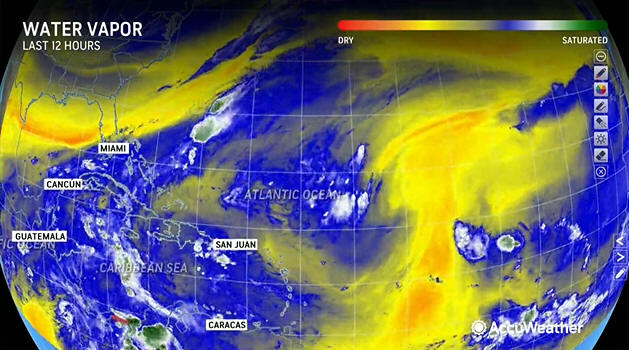 AccuWeather Lead Hurricane Expert Alex DaSilva tracks new threats of tropical development brewing in the Caribbean and the Atlantic as of Oct. 15, as well as the regions at risk of these storms.
.
.
Click the link below for the article:
.
__________________________________________
October 15, 2024
Mohenjo
Business, Food For Thought, Human Interest, Political, Science, Technical
amazon, business, Business News, current-events, Future, Hotels, human-rights, medicine, mental-health, research, Science, Science News, technology, Technology News, travel, vacation
Click the link below the picture
.
Look to the sky this week after sunset to catch a glimpse of Comet Tsuchinshan-ATLAS as it swings past Earth for the first time in 80,000 years.
A bright comet has made a rare appearance in the sky, and skywatchers will have several opportunities to see it before it retreats into the icy depths of space.
Comet C/2023 A3, also known as Comet Tsuchinshan-ATLAS, is visiting the inner solar system for the first time in 80,000 years and is putting on a show. It has become bright enough to see with the naked eye after sunset, and is expected to remain bright throughout the week.
Photographers have already captured stunning images of the comet, which is around the same brightness as Comet NEOWISE was during the summer of 2020.
Comet Tsuchinshan-ATLAS will be visible in the western sky about 30 to 60 minutes after sunset. It will appear above and to the right of Venus, which will be easy to spot due to how bright it glows in the evening.
Each evening, the comet will appear slightly higher in the sky. However, it will also start to fade, so experts recommend looking for it after sunset before it becomes too dim to see without a telescope.
Comets are frozen space rocks containing gas, dust, and ice that typically reside in the far reaches of our solar system.
“When a comet’s orbit brings it close to the sun, it heats up and spews dust and gases into a giant glowing head larger than most planets,” NASA explained on its website, “The dust and gases form a tail that stretches away from the sun for millions of miles.”
Halley’s Comet is one of the most well-known comets, which orbits the sun about once every 76 years. However, most comets take thousands of years to complete one orbit around the sun, such as Comet Tsuchinshan-ATLAS.
Another comet, known as C/2024 S1 (ATLAS), was recently discovered and has the potential to put on a grand display in the morning sky around the end of October and the start of November. However, it is far from a guarantee.
According to EarthSky, Comet S1 comet might be breaking apart as it approaches the sun. “After its close encounter with the sun (if it survived) it could put on a fantastic show for the Northern Hemisphere in the morning skies,” EarthSky explained.
Astronomers will have a better idea later this month on how bright the new comet may get in the sky.
.
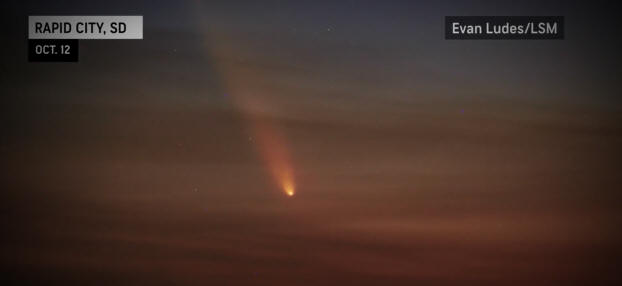 Comet Tsuchinshan-ATLAS
.
.
Click the link below for the article:
.
__________________________________________
October 15, 2024
Mohenjo
Business, Food For Thought, Human Interest, Political, Science, Technical
amazon, business, Business News, current-events, Future, Hotels, human-rights, medicine, mental-health, research, Science, Science News, technology, Technology News, travel, vacation
Click the link below the picture
.
CLIMATEWIRE | Forecasters warned for days that Tampa could be staring down “the big one” — a direct hit from a major hurricane that threatened to submerge much of Florida’s second-largest metro area with never-before-seen storm surge.
The nightmare scenario didn’t happen. Hurricane Milton tracked slightly south of its worst-case trajectory, making landfall Wednesday night in Sarasota County. Storm surge, overall, was lower than the water levels driven by Hurricane Helene two weeks prior.
Yet it was still a record-breaking storm, dumping historic rainfall along the coast and spawning tornadoes that carved a path of destruction across multiple counties.
Scientists say climate change, including unusually warm waters in the Gulf of Mexico, likely worsened its explosive intensification into a Category 5 cyclone before it weakened and made landfall as a Category 3.
“What we can say is the storm was significant, but thankfully this was not the worst-case scenario,” Florida Gov. Ron DeSantis said at a press briefing Thursday morning.
Tampa was spared largely thanks to a southward wobble in Milton’s track in the final hours before landfall, sending the storm toward Sarasota.
That doesn’t mean projections by the National Weather Service were inaccurate, said Austen Flannery, a meteorologist with the National Weather Service’s Tampa office. Landfall still happened well within the forecast’s cone of uncertainty.
“Overall, the end result was relatively consistent with the forecast,” he said.
Preliminary estimates suggest storm surge was highest in Sarasota County, he said, likely around 8 to 10 feet. That’s significantly less than the 15 feet the National Weather Service had warned was possible for Tampa.
Yet widespread flooding still occurred across the state — partly from surge, but largely because of heavy rains.
Parts of Tampa were pelted with more than 10 inches of rainfall. Tampa International Airport recorded 11.73 inches, according to the National Weather Service. And the nearby city of St. Petersburg saw nearly 19 inches of rain, a monthly record.
“In two days, we had more rain than we’ve ever had in the month of October at that location,” Flannery said.
Strong winds also blasted the Tampa Bay region, downing trees and power lines, damaging homes and businesses, and ripping the roof off Tropicana Field, the stadium that’s home to the Tampa Bay Rays in St. Petersburg. Preliminary datasets from the National Weather Service report gusts of over 100 mph in parts of Tampa and Sarasota County.
Milton also sparked tornado outbreaks across the state, including at least 45 individual tornado reports and 19 confirmed touchdowns. The outbreaks triggered more than 100 tornado warnings across the state in a single day, a record for Florida, according to local meteorologists.
Scientists are still digging into the reasons Milton spawned so many twisters. Aspects of the storm’s track and motion across the Gulf and its interaction with other weather systems as it moved over Florida likely fostered favorable conditions for tornado formation.
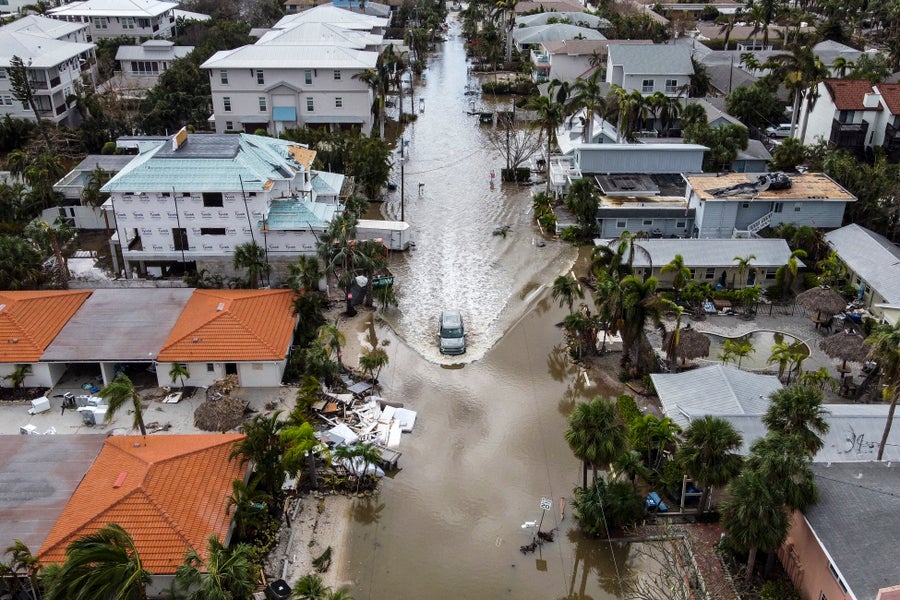
In this aerial photo, a vehicle drives though a flooded street after Hurricane Milton, in Siesta Key, Florida, on October 10, 2024. Chandan Khanna/AFP via Getty Images
.
.
Click the link below for the article:
.
__________________________________________
October 15, 2024
Mohenjo
Business, Food For Thought, Human Interest, Political, Science, Technical
amazon, business, Business News, current-events, Future, Hotels, human-rights, medicine, mental-health, research, Science, Science News, technology, Technology News, travel, vacation

Click the link below the picture
.
In an effort to build a better catfish, researchers at Auburn University have genetically engineered a hybrid catfish species using alligator DNA. The methodology might sound scary. But the byproducts are nearly identical to the farm-raised catfish sold in grocery stores throughout the country. Still, regulatory approval isn’t a guarantee and these reptilian mud kitties won’t end up on the shelves anytime soon.
Creating a More Resilient Catfish
Americans eat a lot of catfish, and it’s impossible to put a number on how many chuckleheads we catch and cook on an annual basis. Regardless, it’s not enough to satisfy the overall demand. In 2021 alone, we imported around 256 million pounds of it from other countries. Meanwhile, we commercially produced another 307 million pounds here at home. Most of these farm-raised fish come from the South—primarily Alabama, Arkansas, Mississippi, and Texas—where the deep-fried delicacy’s true soulmate, the “hush puppy,” was born.
The only problem with raising catfish in farm ponds is that these water bodies turn into breeding grounds for disease. Farmers lose a huge number of fish every year to various infections. That’s why researchers at Auburn University are trying to create a more resilient catfish. With some genetic engineering and just a pinch of alligator DNA, a team of scientists have successfully spawned a new hybrid catfish species that they believe can better resist infection.
To achieve this, the research team led by Rex Dunham and Baofeng Su is using CRISPR technology, which allows scientists to edit and alter the genes of plants and animals. They were already looking for a genetic component to increase the heartiness of freshwater catfish. That search led them to a unique protein found in alligators called cathlecidin. In an interview with the Ireland-based Fish Site, Dunham explained that this antimicrobial protein is thought to protect alligators from developing infections in their wounds. The team figured if they could insert this gene into catfish, they’d end up with a more resilient fish.
Ethical Concerns
One fear that came up during the experiment was the risk of a genetically modified super-fish escaping from farms and disrupting neighboring ecosystems. To prevent this, they used the CRISPR gene-editing tool to remove a catfish gene associated with reproduction. They replaced it with the alligator gene. With these genes swapped, the hybrid catfish are unable to reproduce.
Follow-up experiments proved that the survival rates of these hybrid fish were “between two- and five-fold higher,” according to Dunham. Their findings have been published in bioRxiv.
Because of the ethical concerns surrounding CRISPR technology and genetic modification, regulatory approval for these hybrid catfish isn’t a certainty. The experiment has already raised doubts among the larger scientific community as well. Some have argued that even if these hybrids are more resilient, most fish farmers don’t have a use for lab-spawned, sterile fish. And even though the hybrid species is still just a catfish, there’s also the marketing problem of selling hybridized alligator-catfish to consumers.
Dunham and Su think people could eventually come around to the idea, and Dunham explained that it’s unlikely anybody would notice a difference in the meat itself. “I would eat it in a heartbeat,” he said.
.
 Catfish farming is a huge industry both here in the United States and abroad. (Adobe stock)
.
.
Click the link below for the article:
.
__________________________________________
Older Entries
Newer Entries
 James' World 2