October 28, 2024
Mohenjo
Business, Food For Thought, Human Interest, Political, Science, Technical
amazon, business, Business News, current-events, Future, Hotels, human-rights, medicine, mental-health, research, Science, Science News, technology, Technology News, travel, vacation

Click the link below the picture
.
The British artisanal cheese community is reeling from what it’s calling the great — or grate — cheese heist of 2024 after imposters stole tens of thousands of pounds of high-value cheddar from a major distributor.
London-based retailer and cheesemaker Neal’s Yard Dairy announced last week that it had been the “victim of a sophisticated fraud resulting in the loss of over £300,000 worth of clothbound Cheddar” — the equivalent of more than $389,000.
“The theft involved a fraudulent buyer posing as a legitimate wholesale distributor for a major French retailer, with the cheese delivered before the discovery of the fraudulent identity,” the company said.
The thieves made off with 950 wheels — over 22 metric tons, or roughly 48,500 pounds — of Hafod, Westcombe, and Pitchfork cheddar, it added. The wheels came from three different artisan suppliers across England and Wales.
“Between them, these cheeses have won numerous awards and are amongst the most sought-after artisan cheeses in the U.K.,” Neal’s Yard Dairy said. “The high monetary value of these cheeses likely made them a particular target for the thieves.”
The crime cuts deep: Cheddar, which originated in a village by the same name in Somerset, England, is the best-selling cheese in the U.K. and a big source of national pride.
British celebrity chef Jamie Oliver explained in an Instagram video that there is “only a small handful of real cheddar cheese makers in the world,” and that’s where the stolen cheese came from. He called it a “real shame.”
“This will slow Neal’s Yard being able to support all of their cheesemakers over the next five years, I would imagine,” Oliver said.
Neal’s Yard Dairy is shouldering the cost of the crime, having already paid the artisan cheesemakers in full. The company says it is now taking steps to ensure its own financial stability and the “continued development of the British artisan cheese sector.”
It is also working with local law enforcement and international authorities to try to track down the culprits.
“While the cheese may never be recovered, our priority is to share openly what has happened and to prevent it from happening to other businesses,” it says.
But some in the community are hoping it’s not too late to find some of the cheese — if vigilante cheddar-heads are willing to look.
How cheese lovers can help
The identity of the cheese thieves is still unknown.
Tom Calver with the cheesemaker Westcombe says they were led to believe they were sending their products to France via Neal’s Yard Dairy.
.
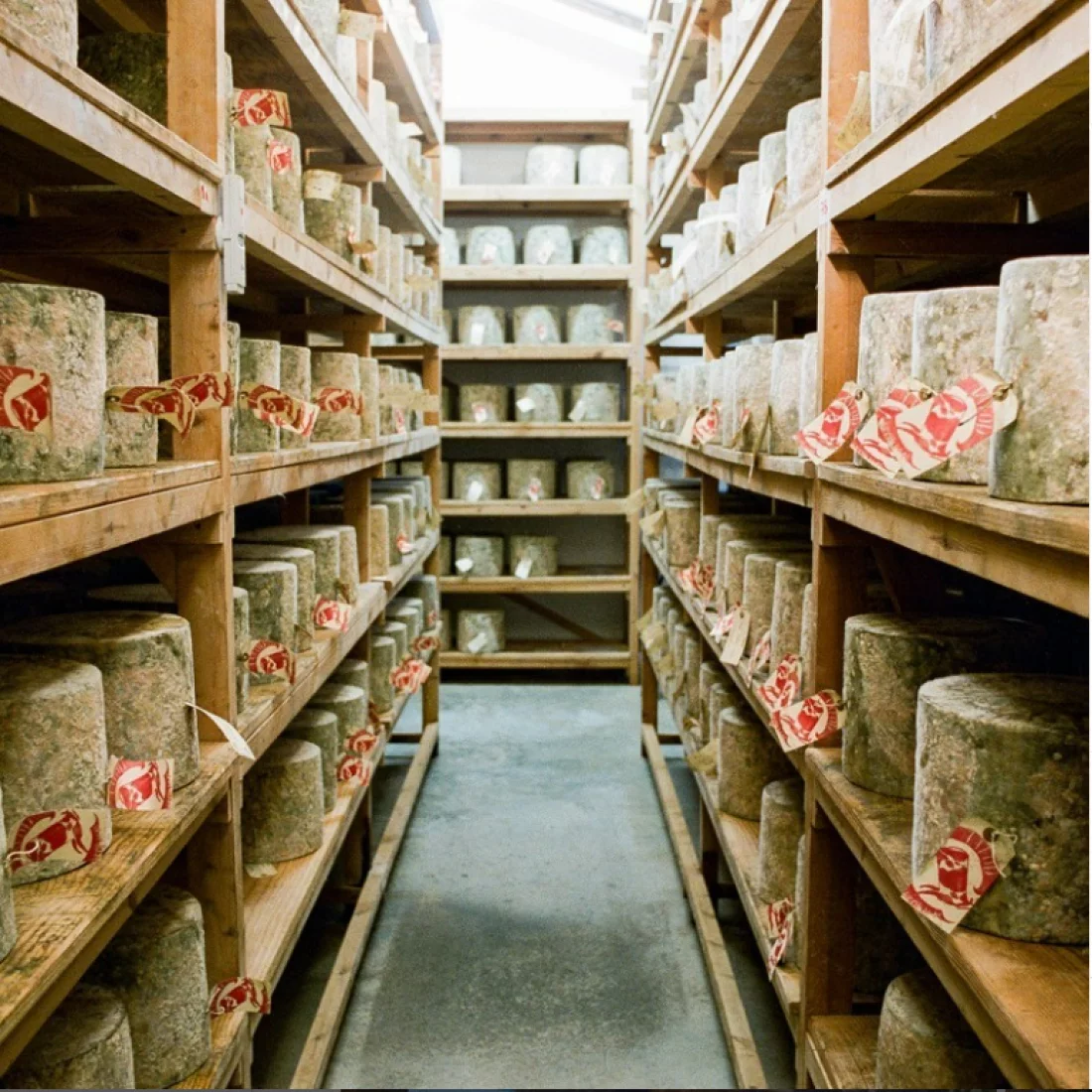
London-based distributor Neal’s Yard Dairy announced on Instagram that it was “the victim of a sophisticated fraud” involving high-value cheddar cheese. They are working with law enforcement to track down the culprit, and asking fellow cheesemongers to report any suspicious deals on clothbound cheddars with the tags detached. Neal’s Yard Dairy/Instagram
.
.
Click the link below for the article:
.
__________________________________________
October 27, 2024
Mohenjo
Business, Food For Thought, Human Interest, Political, Science, Technical
amazon, business, Business News, current-events, Future, Hotels, human-rights, medicine, mental-health, research, Science, Science News, technology, Technology News, travel, vacation

Click the link below the picture
.
Anosmia, or loss of a sense of smell, has become a more familiar term over the past few years, thanks to the prevalence of this condition during the COVID pandemic. Researchers have studied anosmia for centuries, and they have demonstrated that it reduces quality of life and can be associated with depression, early mortality, and other serious health outcomes. Now new research gets at another distinction between those who can smell and those who can’t.
Humans with so-called congenital anosmia, those who are born without a sense of smell, might breathe differently from people who have the ability. These breathing differences could account for the various negative health outcomes associated with anosmia, researchers argue in a study published on Tuesday in Nature Communications.
The idea that breathing and smell are connected is not totally new. Zara Patel, an otolaryngologist at Stanford University, who was not involved in the study, says that human beings constantly sample the environment for odors. We take and act on these cues to determine our behavior in response to our surroundings and to other people. Prior studies have also looked at the relationship between olfaction and breathing––but many of these have only been conducted in animals or in people who lost their smell because of viral infections or other more common causes of anosmia. (According to the new paper, congenital anosmia alone accounts for only about 4 percent of cases of the condition.)
“[This study] traces a mechanistic path that was not clear in humans before,” says Valentina Parma, assistant director of the Monell Chemical Senses Center, who was not involved in the research.
The new study, which was conducted by researchers in Israel, recruited 21 participants with isolated congenital anosmia and 31 people with a typical sense of smell. The researchers developed a wearable device that measured nasal airflow.
“The fact that we can monitor breath continuously for 24 hours is a game changer,” says Lior Gorodisky, a graduate student at the Weizmann Institute of Science in Rehovot, Israel, and the study’s first author. “After a few minutes, the participant is so used to this device that he behaves as usual, which is very different than sitting in a lab, fully aware of the situation.”
The researchers then analyzed the data from the 24-hour period to see how breathing differed between the two groups of people. While both groups breathe at the same overall rate, respiratory patterns were “profoundly altered” in the group with anosmia, the researchers wrote in the study. Those with a typical sense of smell had small inhalation peaks with every breath. These microsniffs did not occur when the participants spent time in a room without odor, suggesting their purpose was only for odor detection.
“What we think is: there is some sort of ongoing olfactory investigation of the world,” says Noam Sobel, a neurobiologist at the Weizmann Institute of Science and a co-author of the study. “You’re constantly asking, ‘Is there an odor here?’”
The study also found there was a subtle but statistically significant difference in the overall shapes of the participants’ breathing waveforms.
“This was significant to the extent that, based on these differences alone, we could tell who is anosmic and who isn’t [with] 83 percent accuracy,” Sobel says, “I don’t think there’s another example of that, of how you can tell who is or is not anosmic without using an odor for your test.”
Despite the study’s novelty, it has some limitations. For one, it has a small sample size. And it doesn’t track people across their lifetime, which is important because smell ability can change over time. The authors also acknowledge that for the control group, they only verbally asked about people sense of smell. Although all answered that their sense of smell was intact, it would have been more valid to administer a smell test.
Additionally, the study focuses on people with congenital anosmia, a population that is not as widely studied as those with other types of smell loss. But anosmia is more often acquired through a viral infection such as COVID, a traumatic brain injury, or neurodegenerative diseases such as Parkinson’s or Alzheimer’s.
The researchers “used a population of patients that have never experienced smell, and so it’d be nice to see if this holds up in patients who lost their sense of smell years ago,” says Eric Holbrook, director of the division of rhinology at Massachusetts Eye and Ear, who was not involved in the study.
.
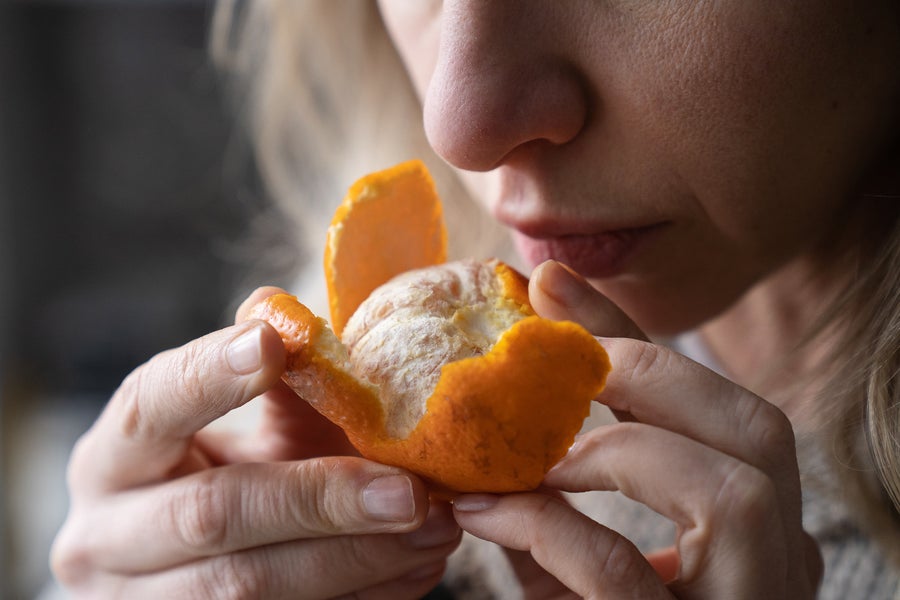 Dima Berlin/Getty Images
.
.
Click the link below for the article:
.
__________________________________________
October 27, 2024
Mohenjo
Business, Food For Thought, Human Interest, Political, Science, Technical
amazon, business, Business News, current-events, Future, Hotels, human-rights, medicine, mental-health, research, Science, Science News, technology, Technology News, travel, vacation

Click the link below the picture
.
For those who turn their lenses toward nature, the Wildlife Photographer of the Year contest is among the most prestigious awards—it’s been referred to as the “Oscars of wildlife photography.”
Now in its 60th year, the competition drew in nearly 60,000 submissions from 117 countries and territories around the globe for its 2024 contest. While the winners have yet to be announced, the Natural History Museum in London, which develops and produces the competition, recently released a collection of highly commended images that offer a sneak peak of what’s to come.
From a leaping stoat to a baby manatee and a frost-covered deer, the images honored in this year’s contest reveal both tender and tense moments in nature.
“In this selection, you see species diversity, a range of behavior and conservation issues,” says Kathy Moran, chair of the judging panel, in a statement. “These images represent the evolution of the competition through the years, from pure natural history to photography that fully embraces representation of the natural world—the beauty and the challenges. It is a powerful selection with which to kickstart a milestone anniversary.”
One hundred photographs from this year’s competition will go on display at the museum beginning October 11. To recognize six decades of the photography contest, the exhibition will also include a timeline of key moments in its history.
Below, take a look at 13 highly commended images that set the stage for the upcoming exhibition and offer a glimpse into wondrous animal behaviors and the often strained relationship between humans and nature.
Going with the Floe by Tamara Stubbs
While on a nine-week expedition in Antarctica’s Weddell Sea, photographer Tamara Stubbs of the United Kingdom spotted these two crabeater seals taking a nap. The pair had fallen asleep near the ship, often submerged enough that only the tips of their noses poked out of the water.
“Every now and then the head would come up for a bigger breath, and two came up together, handing me this photo opportunity,” Stubbs writes on Instagram. “I can’t tell you how magical it was to watch, and hear, as they were all snoring away. Some moments in life are complete treasure, and this was definitely one of those moments.”
Crabeater seals are the most abundant seal species in the Southern Ocean, numbering roughly four million. Despite their name, they do not eat crabs—instead, they’ll dine on krill. But these tiny crustaceans require sea ice, especially during the larval phase of their lives—and climate change is putting them at risk by driving down polar sea ice coverage.
As Clear as Crystal by Jason Gulley
American photographer Jason Gulley has photographed many a manatee, but this image of a mother and calf in Florida’s Crystal River remains one of his favorites. That’s not only because of the calf’s expression, or the bubbles trickling up from its flippers, but because it represents a success story of manatee conservation.
“Just a few years ago, Crystal River was an underwater wasteland devoid of aquatic vegetation,” Gulley writes on Instagram. Nutrient pollution and human development had set off algae blooms that choked out any other plants in the water—including the eelgrass that manatees rely on. “Today, thanks to the work of biologists, community and non-profit organizations, and state agencies, Crystal River is bursting with aquatic grasses that are clearing up the visibility, bringing back fish, and sustaining a year-round manatee presence.”
.
:focal(518x341:519x342)/https://tf-cmsv2-smithsonianmag-media.s3.amazonaws.com/filer_public/1a/3d/1a3d1353-7317-4f5f-8b89-23cd066a4535/jason_gulley_wildlife_photographer_of_the_year.jpg)
A mother manatee and her calf in Florida’s Crystal River amid eelgrass, which is crucial for supporting the large mammals. Jason Gulley / wildlife Photographer of the Year
.
.
Click the link below for the article:
.
__________________________________________
October 26, 2024
Mohenjo
Business, Food For Thought, Human Interest, Political, Science, Technical
amazon, business, Business News, current-events, Future, Hotels, human-rights, medicine, mental-health, research, Science, Science News, technology, Technology News, travel, vacation
Click the link below the picture
.
In his first book, The Heat and the Fury: On the Frontlines of Climate Violence, political correspondent Peter Schwartzstein offers a vital and riveting account of how climate change is already pulling societies apart, feeding violence across the globe. Each chapter presents a nuanced case study: Across the Sahel, farmers and herders fight one another over access to limited water and fertile land. By the coast of Bangladesh, impoverished farmers turn to fishing to supplement inconsistent harvests and face capture by ransom-seeking pirates. Across Jordan, climate-related poverty turns villagers against their overwhelmed government and appears to boost recruitment in terrorist and non-state-armed groups. Schwartzstein draws on more than a decade of on-the-ground reporting to both distill and humanize these complex conflicts, be they local or national.
Scientific American spoke with him about the ways climate change ignites existing societal powder kegs, the mechanisms by which it distorts people’s decision-making and the risk climate-change-associated violence poses in wealthier, Western countries.
[An edited transcript of the interview follows.]
In many of the communities you have covered, you were one of few reporters raising questions about the links between climate change and conflict. How did you land on this angle? Do you think policymakers now see its significance?
I kind of fell into the field because the more straight political reporting space was saturated. But then the more I worked in the general climate and environment space, the more important I found it to be. I quickly realized I didn’t need to try hard to see the intense overlap—that I could tell the story of a country better by looking at it through the prism of water [access] and the environment than by a relatively superficial examination of the political scene. I mean, why, for example, does Iraq have water problems? For some of the same reasons, it has problems across the board: a legacy of conflict, meddling by countries near and far, incompetence, corruption, and an array of other troubles.
In 2015 I was quite literally laughed out of a room in the Iraqi Ministry of Interior when I broached with a senior Iraqi police general the possibility that climate troubles might be contributing to jihadi recruitment. To his mind and the mind of many of his contemporaries, this was just silly. But over the course of the past decade, there’s been an extraordinary sea change in attitudes, both in the wider Middle East and parts of Africa where I work, but also further afield. I’m still not convinced that many of these civilian and security officials that we see talking the talk on climate security see the linkages to the extent that their words might suggest, but there’s an understanding now of the need to at least pay lip service to the importance of climate change.
One difficulty seems to be that it’s hard to quantify the impact of climate change, and there are also so many different, overlapping factors that give rise to conflict. How do you disentangle these?
Yeah, I’d argue it’s almost impossible to effectively quantify the effect of climate change. What I try to do in this book and in my work is show that climate change is part of the equation, rather than put a dollar amount to the contribution. This gets at the heart, though, of why it’s taken so long for climate change’s destabilizing potential to be accepted to the extent that it has. It’s kind of a victim of its own nitty-grittiness.
Can you lead me through one of the examples in the book of how climate change might exacerbate or produce violence?
.
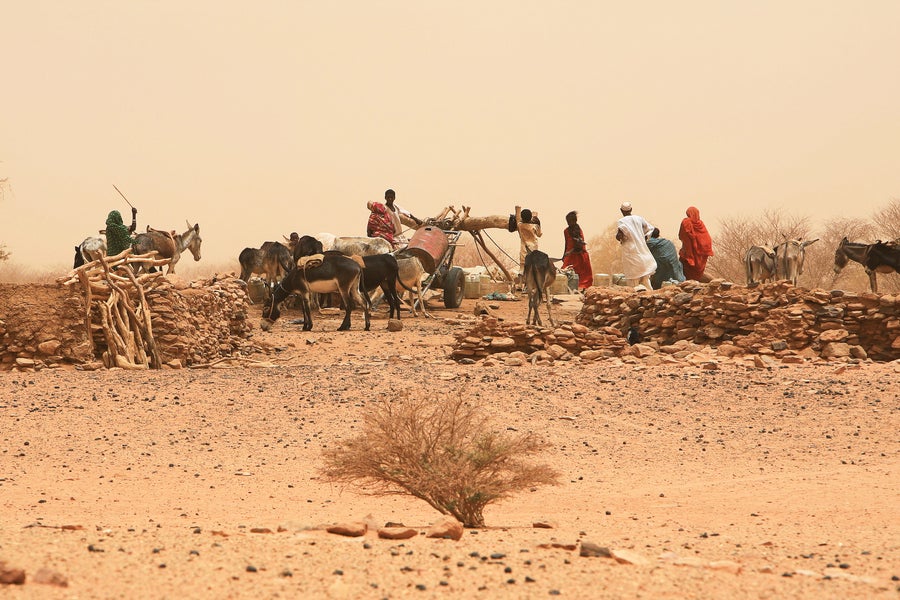
Sudanese people with their animals, fetching water from a deep well in front of the abandoned archeological site of Naqa, in northern Sudan. JordiStock/Getty Images
.
.
Click the link below for the article:
.
__________________________________________
October 26, 2024
Mohenjo
Business, Food For Thought, Human Interest, Political, Science, Technical
amazon, business, Business News, current-events, Future, Hotels, human-rights, medicine, mental-health, research, Science, Science News, technology, Technology News, travel, vacation

Click the link below the picture
.
Gossip Girl
Based on the best-selling book series, Gossip Girl premiered in 2007 and was instantly a must-watch for tweens, teens, and young adults. Who wouldn’t want a glimpse into the world of uber-wealthy teens living very adult lives—sans parental supervision—in the heart of New York City?
But this is a tough show to introduce to your Gen Alpha kids (though today, they very likely will know the show’s star Blake Lively as one of Taylor Swift’s besties). Watching as a parent today, it’s a tough pill to swallow watching a show that glamorizes bullying, blackmail, and backstabbing.
South Park
Many of the boys in my daughter’s elementary school are obsessed with South Park—which is crazy to me because I was in college when the show premiered way back in 1997. Even in the less PC days of the ‘90s, and despite being an animated show about fourth graders, South Park was NOT (and still not) for kids.
This show mocks every religion, race, and profession. In the early seasons, Kenny, one of the main characters, is killed in a violent and grotesque way in almost every episode. The truth is, South Park is actually a really smart show. The problem? If you’re not “in” on the joke—especially if you’re not mature enough to “get” the joke(s)—the takeaways can backfire and send a negative message about acceptance and tolerance.
Beverly Hills, 90210
I was obsessed with Beverly Hills, 90210 from the pilot. And, I’ve recently been rewatching in tribute to the recent death of the show’s star Shannen Doherty. Yes, watching a show that premiered in 1990 seems innocent enough. Twins Brandon and Brenda Walsh get a massive dose of culture shock when they move from Minnesota to Beverly Hills—yet, re-watching as a parent, there’s many things that are a little tougher to accept.
For example, Melrose Place was technically a spin-off of 90210. We were introduced to Melrose Place’s mysterious handyman (emphasis on man) Jake Hansen when 90210’s Kelly Taylor, a junior in high school, all but throws herself at him while he fixes up her mom’s house. He didn’t deny her advances right away and though eventually it fizzled out, the whole scenario was so inappropriate as Kelly was 17 and Jake was definitely well into his twenties!
Buffy the Vampire Slayer
I mean, the show is about a vampire slayer—it says it right there in the title. While this was one of the most popular series of the late ‘90s/early aughts, each week’s storyline unfolded in a bloodbath of intense violence.
This show is a toss-up because, on the one hand, you have an amazing, strong, female role model in Buffy (played by Sarah Michelle Gellar) to introduce to your kids—but on the other hand, there’s a lot of death and darkness to get her there!
Pretty Little Liars
Pretty Little Liars, like Gossip Girl, is based on a best-selling book series, so some of the crazy plot points and disturbing reveals shouldn’t have been that shocking. But, seeing it all play out on the TV series was a little nuts. First of all, the show is about a girl who just vanishes! And, while her friends grapple with the loss, they’re also bullied by someone named “A”, who threatens to expose all their secrets if they don’t do whatever “A” says.
We certainly don’t want our kids worrying about missing classmates or anonymous, omnipresent bullies, but there’s also a plot line where a student dates her teacher for most of the series. That opens up a convo that I don’t think any parent wants to have with their tween/teenage kids!
.
:max_bytes(150000):strip_icc():format(webp)/dontwatch-afa414688b8c4f96b0094ee6ed65fa00.jpg) Getty Images/Dima Berlin
Getty Images/Dima Berlin
.
.
Click the link below for the article:
.
__________________________________________
October 26, 2024
Mohenjo
Business, Food For Thought, Human Interest, Political, Science, Technical
amazon, business, Business News, current-events, Future, Hotels, human-rights, medicine, mental-health, research, Science, Science News, technology, Technology News, travel, vacation

From Wikipedia
Click the link below the picture
.
The Wilmington insurrection of 1898, also known as the Wilmington Massacre of 1898 or the Wilmington coup of 1898, was a coup d’état and a massacre which was carried out by white supremacists in Wilmington, North Carolina, United States, on Thursday, November 10, 1898. The white press in Wilmington originally described the event as a race riot caused by black people. In later study from the 20th century onward, the event has been characterized as a violent overthrow of a duly elected government by a group of white supremacists.
The coup was the result of a group of the state’s white Southern Democrats conspiring and leading a mob of 2,000 white men to overthrow the legitimately elected local Fusionist biracial government in Wilmington. They expelled opposition black and white political leaders from the city, destroyed the property and businesses of black citizens built up since the American Civil War, including the only black newspaper in the city, and killed from 14 to an estimated 60 to more than 300 people.
The Wilmington coup is considered a turning point in post-Reconstruction North Carolina politics. It was part of an era of more severe racial segregation and effective disenfranchisement of African Americans throughout the South, which had been underway since the passage of a new constitution in Mississippi in 1890 which raised barriers to the registration of black voters. Other states soon passed similar laws. Historian Laura Edwards writes, “What happened in Wilmington became an affirmation of white supremacy not just in that one city, but in the South and in the nation as a whole”, as it affirmed that invoking “whiteness” eclipsed the legal citizenship, individual rights, and equal protection under the law that black Americans were guaranteed under the Fourteenth Amendment. tangie
.


 .
.
.
Click the link below for the article:
.
__________________________________________
October 26, 2024
Mohenjo
Business, Food For Thought, Human Interest, Political, Science, Technical
amazon, business, Business News, current-events, Future, Hotels, human-rights, medicine, mental-health, research, Science, Science News, technology, Technology News, travel, vacation

.
The inventor of the treadmill died at the age of 54 😳
The originator of gymnastics died at the age of 57 😳
The past world bodybuilding champion died at the age of 41 😳
The best soccer player in history, Maradona, died at the age of 60 😔
And then . . .
KFC inventor died at 94 😊
Inventor of Nutella brand died at the age of 88 😊
Cigarette maker Winston died at the age of 102 😜
The inventor of opium died at the age of 116 in an earthquake 😜
Hennessy cognac, Irish inventor died at 98 😊
How did doctors come to the conclusion that exercise prolongs life?
The rabbit is always jumping, but it lives for only 2 years.
The turtle that doesn’t exercise at all, lives 400 years.
So . . .
Have a drink,
Take a nap,
And if you wake up, have bacon and eggs.
.
__________________________________________
October 25, 2024
Mohenjo
Business, Food For Thought, Human Interest, Political, Science, Technical
amazon, business, Business News, current-events, Future, Hotels, human-rights, medicine, mental-health, research, Science, Science News, technology, Technology News, travel, vacation
Click the link below the picture
.
We are living in a golden age of apples, a time of delicious, diverse, mouth-watering abundance that we could barely have imagined at the turn of the millennium. How did we get to a time when most of us, most of the year, can eat our choice of fragrant, juicy, sweet, crisp (oh so crisp) apples?
We can thank a mix of science, innovations, investment in long-term research, the multi-multi-multi-generational transmission of knowledge, communal action, and people who joyfully dedicate their lives to a cause.
What’s your favorite apple? I asked this question on the social media platform Bluesky, and this is a sample of people’s answers: Macoun, Winesap, Gravenstein, Winter Banana, CrimsonCrisp, SnapDragon, SweeTango, Jazz, Cosmic Crisp, Jonathan, Empire, Envy, RubyFrost, Hidden Rose, Sonata, Pink Lady, Regent, Honeycrisp, Honeycrisp, Honeycrisp. (My favorite? Evercrisp.)
Many of us remember that the U.S. apple market was dominated for decades by one variety: Red Delicious, which is a bold name for a bland apple. It is certainly red, with a lovely rich jewel color and a handsome shape. But delicious? The main alternative was Golden Delicious, a perfectly fine but similarly uninspiring yellow variety. Tart, green Granny Smiths, which were propagated in Australia in 1868 by an orchardist named Maria Ann Sherwood Smith, started taking a decent share of the market in the U.S. in the 1980s. And that’s where we were stuck.
David Bedford, an apple researcher at the University of Minnesota who helps develop new varieties (his favorite apples: Honeycrisp, SweeTango and Rave) says, “I still remember some big marketers telling me: we have a red apple, a yellow apple, and a green apple. Do we really need any more?”
Apple History
Today’s cultivated apples are produced by the tree Malus domestica. Its ancestor is Malus sieversii, which still grows wild in what is now Kazakhstan and bears small and variable fruit. Farmers began domesticating apples sometime between 10,000 and 4,000 years ago in the Tian Shan Mountains of Central Asia, according to genetic analyses. These cultivated varieties then quickly spread along the Silk Road trade route, where breeders crossed them with another wild species, Malus sylvestris. The ancient Romans developed techniques for apple grafting (more on that in a sec) and propagated the trees across their empire.
It’s a little challenging to track the cultural history of apples because in many languages, the word that came to mean “apple” could refer to any type of fruit. There weren’t apples in Mesopotamia, for instance, so the tempting fruit in the Garden of Eden story was more likely a fig. When the Greek goddess of discord inscribed a fruit with “For the most beautiful” and started the Trojan War, that fruit may have been a quince. And William Tell probably didn’t shoot an arrow through an apple on top of his son’s head. Isaac Newton wasn’t hit on the head, but he did say that observing an apple falling from a tree helped inspire his theory of gravity.
.
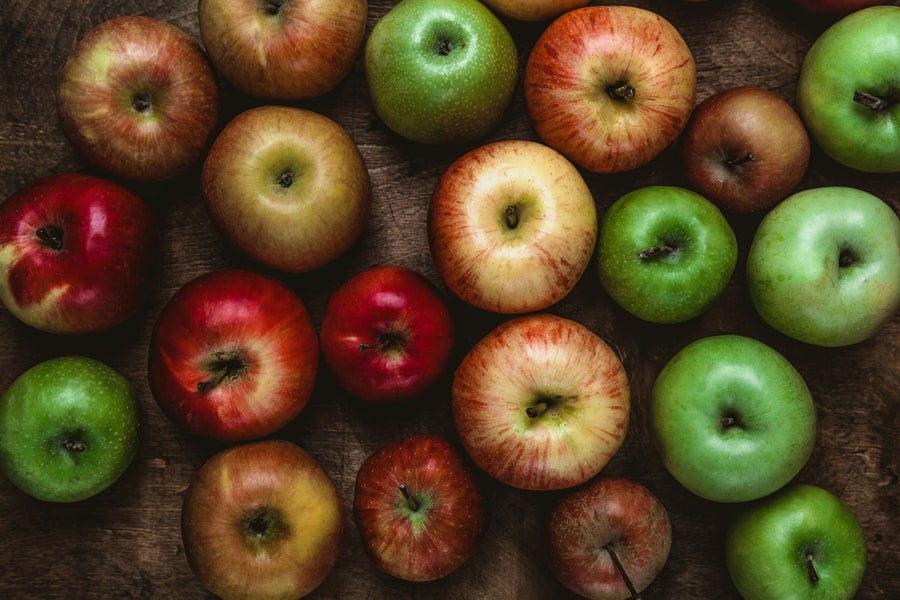 LightFieldStudios/Getty Images
.
.
Click the link below for the article:
.
__________________________________________
October 25, 2024
Mohenjo
Business, Food For Thought, Human Interest, Political, Science, Technical
amazon, business, Business News, current-events, Future, Hotels, human-rights, medicine, mental-health, research, Science, Science News, technology, Technology News, travel, vacation

Click the link below the picture
.
STEM toys are a fantastic way to combine fun and learning, sparking curiosity and creativity in children of all ages. Whether shopping for science gifts for kids or searching for activities that teach valuable skills, these toys offer engaging ways to explore science, technology, engineering, and math. From hands-on activities like the GraviTrax JUNIOR Starter-Set for younger kids to the advanced challenges of the LEGO Technic NASA Mars Rover Perseverance for teens, the best STEM toys offer something for every age and interest.
STEM toys can range from really high-tech gadgets to simple, hands-on activities like marble runs and model rocket kits to even more traditional options like classic paper toys. These toys are designed to build essential skills in science, technology, engineering, and math, providing fun ways to learn while encouraging problem-solving and creativity. Whether your child loves tinkering with building sets, experimenting with science kits, or exploring engineering challenges, there’s something for every budding inventor. High-tech children’s STEM toys can introduce coding and robotics, while simpler toys offer valuable lessons in physics and engineering. They all help foster critical thinking, making STEM toys for kids an excellent choice for playtime and learning. Explore our recommendations to find the perfect educational gift that balances fun and learning for every child.
- Best overall: Yoto Player and collection of STEM cards
- Best splurge: Makeblock mBot Ultimate
- Best for little kids (age 3-7): GraviTrax JUNIOR Starter-Set
- Best for big kids (age 8-12): 3 Doodler Start+ Maker Bundle
- Best for teens (age 13+): LEGO Technic NASA Mars Rover Perseverance
- Best budget: STEM Explorers Superhero Science
How we chose the best STEM toys
Our top STEM toy recommendations are based on extensive research. We reviewed expert opinions, user feedback, and product reviews to compile a list of standout options and tested them thoroughly. Read on to discover the best STEM toys that balance innovation, ease of use, and educational value, providing your child with engaging opportunities to explore science, technology, engineering, and math in a fun and exciting way.
The best STEM toys: Reviews & Recommendations
We’ve handpicked the best STEM toy options to suit a variety of skill levels. Whether you’re looking for something simple for beginners or more complex projects for advanced learners, our detailed reviews will guide you in choosing the perfect STEM toy to inspire creativity and help your child build something amazing.
.
 We may earn revenue from the products available on this page and participate in affiliate programs.
.
.
Click the link below for the article:
.
__________________________________________
October 24, 2024
Mohenjo
Business, Food For Thought, Human Interest, Political, Science, Technical
amazon, business, Business News, current-events, Future, Hotels, human-rights, medicine, mental-health, research, Science, Science News, technology, Technology News, travel, vacation
Click the link below the picture
.
An alcohol-only diet would throw most species for a loop, but new research suggests that hornets can live—apparently unimpaired—with an 80 percent ethanol sugar solution as their sole food source.
Fruit flies, tree shrews, and many other animals naturally consume alcohol in fruits that ferment; this happens when yeast or certain bacteria are around to break down sugars in ripe fruit, creating small amounts of ethanol. Most animal species show signs of impairment or toxicity after consuming this substance at concentrations above 4 percent. But animal nutrition researcher Sofia Bouchebti, now at Ben-Gurion University of the Negev in Israel, suspected that hornets and wasps might tolerate alcohol better—or even use it as a food source. After all, these insects’ gut is known to host yeast that converts fruit sugar to alcohol. When hornets or wasps pollinate and feed, some of this yeast rubs off onto plants and their fruits—playing a key role in the fermentation process.
Bouchebti turned her attention to the hornet Vespa orientalis, a type of social wasp. In a study this week in Proceedings of the National Academy of Sciences USA, she and her colleagues at Tel Aviv University fed both hornets and honeybees sugar solutions containing 0 to 80 percent ethanol with a trackable carbon isotope. The researchers found that hornets’ exhaled breath contained up to 300 percent more labeled carbon than the honeybees’, suggesting the hornets’ bodies broke down the alcohol that much faster.
“There’s lots of energy in ethanol, and it’s a great metabolic fuel,” says study co-author and zoologist Eran Levin. The problem for humans and many other animals, of course, is that there are behavior and health consequences as the substance interacts with the brain and organs. But when provided with nest-building materials, the ethanol-fed hornets in the study completed construction tasks as efficiently as sugar-fed ones. When faced with an intruder, they did not delay sending “back off” signals. Moreover, hornets fed with 80 percent ethanol lived out their typical three-month-long lifespan; their honeybee counterparts died within 24 hours. Still, hornets showed no preference between sugar and ethanol when given a choice. “If ethanol is more nutritious and without bad effects, shouldn’t they want more? Maybe they can’t taste it,” Bouchebti suggests.
To distill the secret behind this metabolic mastery, study co-author and zoologist Dorothée Huchon led a hunt for genetic clues. She found that hornets possess multiple copies of the gene responsible for the enzyme that breaks down alcohol—an adaptation perhaps fueled by their relationship with yeast.
University of Rochester biologist James Fry, who was not involved in the new study, says it tells an “interesting evolutionary story.” But he cautions that the methods are too different from those of other studies to directly compare ethanol resistance between species.
Robert Dudley, an insect flight specialist at the University of California, Berkeley, notes that insects would never encounter such high ethanol values in nature. Bouchebti says the researchers “aimed to find a maximum limit, and we still didn’t find it.” Next up is examining gene expression during ethanol consumption and seeking patterns in this among animals known to be attracted to alcohol (some beetles and bats, for example). Dudley agrees: “A broader survey of social Hymenoptera and other insects is clearly called for,” he says.
.
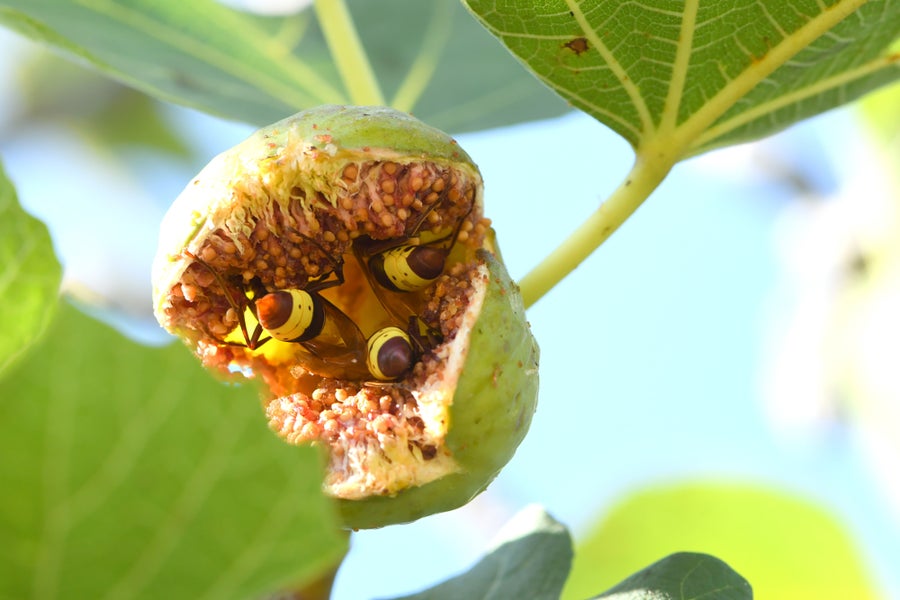
Three hornets feed on a ripe fig, which could provide naturally occurring ethanol. Eran Levin
.
.
Click the link below for the article:
.
__________________________________________
Older Entries
Newer Entries
 James' World 2