December 23, 2024
Mohenjo
Business, Food For Thought, Human Interest, Political, Science, Technical
amazon, business, Business News, current-events, Future, Hotels, human-rights, medicine, mental-health, research, Science, Science News, technology, Technology News, travel, vacation

Click the link below the picture
.
Keith Poulsen’s jaw dropped when farmers showed him images on their cellphones at the World Dairy Expo in Wisconsin in October. A livestock veterinarian at the University of Wisconsin, Poulsen had seen sick cows before, with their noses dripping and udders slack.
But the scale of the farmers’ efforts to treat the sick cows stunned him. They showed videos of systems they built to hydrate hundreds of cattle at once. In 14-hour shifts, dairy workers pumped gallons of electrolyte-rich fluids into ailing cows through metal tubes inserted into the esophagus.
“It was like watching a field hospital on an active battlefront treating hundreds of wounded soldiers,” he said.
Nearly a year into the first outbreak of the bird flu among cattle, the virus shows no sign of slowing. The U.S. government failed to eliminate the virus on dairy farms when it was confined to a handful of states, by quickly identifying infected cows and taking measures to keep their infections from spreading. Now at least 860 herds across 16 states have tested positive.
Experts say they have lost faith in the government’s ability to contain the outbreak.
“We are in a terrible situation and going into a worse situation,” said Angela Rasmussen, a virologist at the University of Saskatchewan in Canada. “I don’t know if the bird flu will become a pandemic, but if it does, we are screwed.”
To understand how the bird flu got out of hand, KFF Health News interviewed nearly 70 government officials, farmers and farmworkers, and researchers with expertise in virology, pandemics, veterinary medicine, and more.
Together with emails obtained from local health departments through public records requests, this investigation revealed key problems, including deference to the farm industry, eroded public health budgets, neglect for the safety of agriculture workers, and the sluggish pace of federal interventions.
Case in point: The U.S. Department of Agriculture this month announced a federal order to test milk nationwide. Researchers welcomed the news but said it should have happened months ago — before the virus was so entrenched.
“It’s disheartening to see so many of the same failures that emerged during the COVID-19 crisis reemerge,” said Tom Bollyky, director of the Global Health Program at the Council on Foreign Relations.
Far more bird flu damage is inevitable, but the extent of it will be left to the Trump administration and Mother Nature. Already, the USDA has funneled more than $1.7 billion into tamping down the bird flu on poultry farms since 2022, which includes reimbursing farmers who’ve had to cull their flocks, and more than $430 million into combating the bird flu on dairy farms. In coming years, the bird flu may cost billions of dollars more in expenses and losses. Dairy industry experts say the virus kills roughly 2% to 5% of infected dairy cows and reduces a herd’s milk production by about 20%.
.

Cows are milked at the Cornell Teaching Dairy Barn in Ithaca, N.Y. These cows are not infected, but the bird flu virus has spread among other cattle. Michael M. Santiago/Getty Images
.
.
Click the link below for the complete article:
.
__________________________________________
December 23, 2024
Mohenjo
Business, Food For Thought, Human Interest, Political, Science, Technical
amazon, business, Business News, current-events, Future, Hotels, human-rights, medicine, mental-health, research, Science, Science News, technology, Technology News, travel, vacation

Click the link below the picture
.
YouTube is taking a tougher stance on clickbait, saying it will remove content with titles or thumbnails that promise viewers “something that the video doesn’t deliver,” as spotted earlier by TechCrunch. This change will “slowly” roll out in India first, according to YouTube’s blog post, but will “expand to more countries” in the “coming months,” YouTube spokesperson Jack Malon says in a statement to The Verge.
YouTube says the policy will combat “egregious” clickbait that misleads viewers, with a particular focus on videos related to “breaking news” or “current events.” The company’s examples of egregious clickbait include a video with the title “the president resigned!” that doesn’t actually address a resignation or a “top political news” thumbnail attached to a video with no news content.
As the policy rolls out in India, YouTube will remove content that violates the rules without giving a strike to creators, at least at first. “And as we continue to educate creators, our enforcement efforts will prioritize new video uploads moving forward,” YouTube says.
.
:format(webp)/cdn.vox-cdn.com/uploads/chorus_asset/file/23986637/acastro_STK092_01.jpg) Illustration by Alex Castro / The Verge
Illustration by Alex Castro / The Verge
.
.
Click the link below for the complete article:
.
__________________________________________
December 22, 2024
Mohenjo
Business, Food For Thought, Human Interest, Political, Science, Technical
amazon, business, Business News, current-events, Future, Hotels, human-rights, medicine, mental-health, research, Science, Science News, technology, Technology News, travel, vacation
Click the link below the picture
.
CLIMATEWIRE | President Joe Biden announced Thursday that he will strengthen the United States’ climate target by aiming to cut planet-warming pollution 61-66 percent by 2035, in a move that his successor is certain to disregard.
The new goal marks an increase over Biden’s 2021 pledge to slash greenhouse gases 50-52 percent by 2030 over 2005 levels, but is a downgrade from what modelers say would have been possible under a future president who acts aggressively to slow rising temperatures.
President-elect Donald Trump has indicated the opposite.
Instead, the target will likely be jettisoned after Trump takes office, reflecting his promises to expand fossil fuel production and dismantle Biden’s climate agenda.
Though the incoming administration could just ignore the target, the goal offers an ambitious marker that states, cities and businesses can aspire to meet, even as the Trump presidency attempts to roll back federal climate programs.
“President Biden’s new 2035 climate goal is both a reflection of what we’ve already accomplished … and what we believe the United States can and should achieve in the future,” said John Podesta, senior White House adviser for international climate policy, in a call with reporters.
The move comes amid increasing pressure on the Biden administration to make urgent environmental commitments in the waning days of the president’s term, even if Trump has no intention of honoring them. U.S. officials say it sends an important signal to the world of what the U.S. could do in the face of those challenges.
“American industry will keep inventing and keep investing. State, local, and tribal governments will keep stepping up,” Biden said in prerecorded video remarks for the announcement.
It also includes at least a 35 percent reduction of methane, a short-lived but potent greenhouse gas that the Biden administration has prioritized tackling through regulations and global agreements.
“We’re looking to governors, mayors, business leaders, and more to carry this important work forward,” said Podesta.
The targets — known as nationally determined contributions, or NDCs — are required under the Paris Agreement, the global deal to limit warming to 1.5 degrees Celsius in the postindustrial era. The White House said that it is formally submitting the new target to the United Nations’ climate change secretariat. Trump is expected to withdraw from the agreement.
‘A North Star’
Observers argued that the new target showcases the ability of the world’s largest economy to tackle climate change without federal help.
.
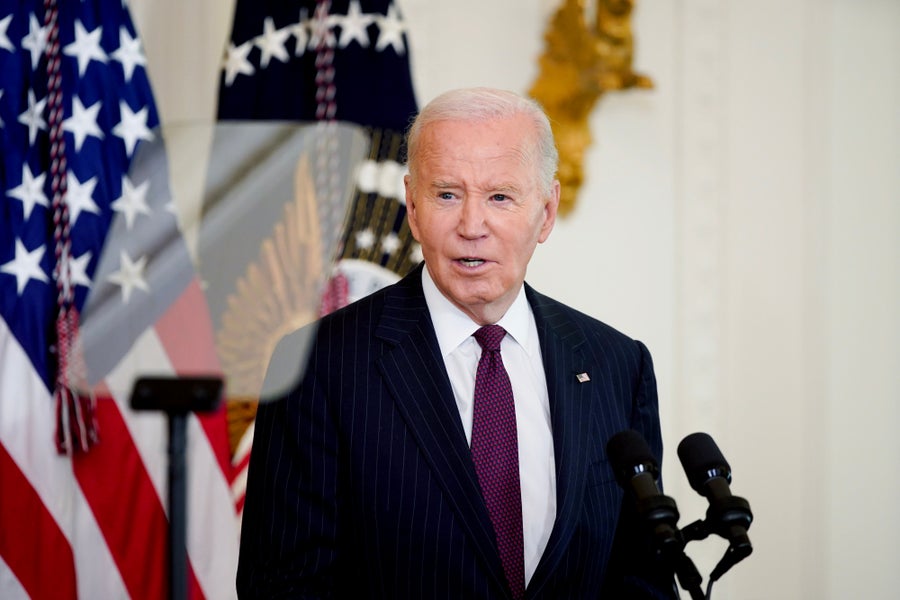
President Joe Biden strengthened U.S. commitments to lower climate pollution Thursday. Al Drago/Bloomberg via Getty Images
.
.
Click the link below for the complete article:
.
__________________________________________
December 22, 2024
Mohenjo
Business, Food For Thought, Human Interest, Political, Science, Technical
amazon, business, Business News, current-events, Future, Hotels, human-rights, medicine, mental-health, research, Science, Science News, technology, Technology News, travel, vacation

Click the link below the picture
.
Does your mind regularly drift to your to-do list during family dinner? Do you check emails every morning before you’ve even had coffee? Have you turned down social plans because you “need” to catch up on work?
If these questions hit close to home, you might be too emotionally invested in your work — and it’s costing you more than you realize.
For high-achieving professionals, especially those who are naturally more sensitive and perceptive, emotional investment in work can be both a blessing and a curse.
Your deep commitment drives excellence and meaningful contributions. But when investment tips into overdrive, it creates a vicious cycle that can hijack your well-being and, ironically, your performance.
Signs you’re too emotionally invested in your job
It can be hard to recognize exactly when you’ve gone beyond “just right” and crossed into “too much” territory. Here are a few common and sometimes subtle signs to be attuned to:
-
You take criticism super personally. When work criticism triggers an emotional cascade that derails your entire day, it’s a sign your self-worth has become entangled with your professional identity. A simple “let’s discuss” email shouldn’t send your heart racing, yet for many, it does. The real issue isn’t sensitivity — it’s that every piece of feedback feels like a judgment of your value as a person.
-
Work follows you home. This goes beyond occasional after-hours emails. I’m talking about a constant hum of work in your mind during moments that should be yours. If you’re checking Slack during family dinner or jolting awake at 3 a.m. worried about tomorrow’s to-do list, you’ve lost the crucial boundary between work and life.
-
Your default setting is people pleasing. When you find yourself compulsively playing the workplace hero — never saying no, always being available, constantly putting others’ needs before your own — you’re likely too emotionally invested. This pattern often masquerades as being a “team player” and stems from a deep fear of disapproval or conflict.
.

David Gyung | Getty Images
.
.
Click the link below for the complete article:
.
__________________________________________
December 21, 2024
Mohenjo
Business, Food For Thought, Human Interest, Political, Science, Technical
amazon, business, Business News, current-events, Future, Hotels, human-rights, medicine, mental-health, research, Science, Science News, technology, Technology News, travel, vacation
Click the link below the picture
.
Should you throw out your black plastic spatula? A recent study that reported alarming levels of several flame retardants in common black-colored plastic items (including cooking utensils, toys and hair products) had many people suddenly taking stock of their inky array of plastic kitchenware and considering wood or metal alternatives. And the reasons for the concern were understandable: the study’s findings, published in Chemosphere, highlighted potential health effects from exposure to the flame retardants, particularly decabromodiphenyl ether (decaBDE)—a chemical the U.S. Environmental Protection Agency banned in 2021 for its apparent links to cancer and reproductive, developmental and immunologic toxicity effects.
But this week the study’s authors issued a correction that suggests exposure to decaBDE from the tested products isn’t as close to the EPA’s safety reference level as they initially thought. The decaBDE exposure they estimated from the screened products is still correct, but it’s one tenth of the reference dose. The study had miscalculated the comparison by an order of magnitude.
The amount of flame retardants in such products is “not as harmful, with respect to the EPA guidance, as [the researchers] originally stated, although, with these chemicals, they may be harmful when you’re exposed to small amounts over a long period of time,” says Andrew Turner, a biogeochemist at the University of Plymouth in England, who wasn’t involved in the research and studies the disposal and recycling of plastic consumer goods. “It’s difficult to put numbers on these chemicals.”
The study authors issued an apology for the mistake in which they maintained that the “calculation error does not affect the overall conclusion of the paper.”
“Our results still show that when toxic additives are used in plastic, they can significantly contaminate products made with recycled content that do not require flame retardancy,” says Megan Liu, a co-author of the recent study and science and policy manager at Toxic-Free Future, an environmental health research and advocacy group. “The products found in this study to contain hazardous flame retardants included items with high exposure potential, such as things that touch our food, as well as toys, which come in contact with kids.”
Why might some black plastics contain flame retardants?
Flame retardants are required in certain products (often including computers, TVs and other common electronic items) to meet fire safety regulations. To reduce the amount of e-waste and fossil fuels needed to make new plastics, some of these items are recycled into black plastics. But the problem is that “you could also recycle the flame retardants and other chemicals that are associated with that plastic,” says Stuart Harrad, an environmental chemist at the University of Birmingham in England, who wasn’t involved in the paper. “Now that’s fine to some degree, I suppose, if you’re only recycling the plastic into uses like TV sets, where you need to meet fire safety regulations. But the point is here is that that isn’t happening.”
.
 fotokostic/Getty Images
.
.
Click the link below for the complete article:
.
__________________________________________
December 21, 2024
Mohenjo
Business, Food For Thought, Human Interest, Political, Science, Technical
amazon, business, Business News, current-events, Future, Hotels, human-rights, medicine, mental-health, research, Science, Science News, technology, Technology News, travel, vacation

Click the link below the picture
.
College grads are on pace to hold nearly twice the number of jobs over their careers compared to 15 years ago, according to LinkedIn’s
new Work Change Snapshot report. That’s 20 jobs now versus 11 in 2010. And the jobs they will have are going to be different. Think about it: Roles like data scientist, social media manager, and sustainability manager didn’t even exist 20 years ago. The rapid introduction of AI not only alters how professionals work but how they must present their AI skills in the job search, too.
And with AI directly impacting the skills and qualifications employers are looking for, candidates who have the skills to work alongside AI and the ability to navigate fast-paced, evolving environments, are being prioritized in the hiring process. Positioning yourself as part of that AI skills–ready group is half the battle.
Showcasing AI skills on your LinkedIn profile or résumé and knowing how to talk about AI in interviews are must-dos. Here’s how to best highlight your AI skills as you search for a new role:
Highlight AI skills in your job search
Almost half of recruiters on LinkedIn identify potential candidates by searching for specific skills. This literally means they’re searching for profiles with AI keywords in the About, Experience, and Skill sections.
Use the About section of your profile and résumé to weave in AI keywords and skills. While hiring managers are keeping an eye out for AI skills, such as prompt engineering or data literacy, people skills are also in demand right now. Be sure to include skills like communication, leadership, project management, teamwork, and adaptability on your profile along with specifics on how you’ve employed these skills to drive impact.
In the Experience section, add your AI skills within specific jobs or projects, to improve your chances of showing up in candidate searches. If you’ve used ChatGPT to help research or proof an email response, you’ve effectively employed prompt engineering. Use that verbiage on your profile:
“Frequently utilize AI to draft and refine customer communications.”
Or if you regularly use AI to take meeting notes, you can say something along the lines of:
“Routinely utilize AI tools to capture and organize meeting notes, resulting in streamlined workflows, enhanced productivity, and improved decision making.”
.
 [Source Photo: Pixabay]
.
.
Click the link below for the complete article:
.
__________________________________________
December 20, 2024
Mohenjo
Business, Food For Thought, Human Interest, Political, Science, Technical
amazon, business, Business News, current-events, Future, Hotels, human-rights, medicine, mental-health, research, Science, Science News, technology, Technology News, travel, vacation
Click the link below the picture
.
President-elect Donald Trump wants Jay Bhattacharya, a physician-scientist and economist at Stanford University, to lead the National Institutes of Health. The NIH is a global powerhouse of science. Its mission is “to seek fundamental knowledge about the nature and behavior of living systems and the application of that knowledge to enhance health, lengthen life, and reduce illness and disability.”
Most politicians, even when criticizing the agency, recognize the good it has done in building effective public health measures. Cancer death rates continue to decline, for example, because of the work NIH investigators have done around prevention, detection, and treatment.
Bhattacharya does not see the agency’s successes this way. In his podcast Science from the Fringe, Bhattacharya recently said he is amazed by “the authoritarian tendencies of public health.” He struck a similar theme in a Newsmax interview: “[We need] to turn the NIH from something that’s [used] to control society into something that’s aimed at the discovery of truth to improve the health of Americans.”
The scientists who apply for NIH funding, sit on peer review panels, and administer grants would be surprised to hear they control society. They do science. The claims of authoritarianism are a screen for pushing a particular agenda that is likely to damage the NIH. Bhattacharya’s science agenda is political: to set concerns for personal autonomy against evidence-based public health science. This is not appropriate for NIH leadership.
Bhattacharya has never explained how the NIH controls society, given its role as a research institution, and it is hard to see how it does except perhaps in setting research priorities and awarding funding based on expert review. Is he
against public health legislation that has controlled lead emissions in vehicles, enforced vaccine requirements for children attending public schools, and promoted folate fortification in bread and fluoride in drinking water? This legislation has improved population health in terms of cognitive performance, infectious disease burden, neural tube defects in pregnancy, and oral health, respectively. Is this the kind of control he fears?
Public health authorities decide on a health promotion measure for a population based on the science, often for people vulnerable and unaware of health risks, when health benefits are clear. NIH research provides the evidence for these public health measures. It is fair to debate the quality of scientific evidence and benefit to population health relative to restrictions on autonomy and choice, but establishing mechanisms for population health risk and making recommendations based on this evidence are not authoritarianism, and making such a comparison is not the way to do good science or build trust.
.

Jay Bhattacharya speaks during a roundtable discussion with members of the House Freedom Caucus on the COVID-19 pandemic at The Heritage Foundation on Thursday, November 10, 2022. Tom Williams/CQ-Roll Call, Inc via Getty Images
.
.
Click the link below for the complete article:
.
__________________________________________
December 20, 2024
Mohenjo
Business, Food For Thought, Human Interest, Political, Science, Technical
amazon, business, Business News, current-events, Future, Hotels, human-rights, medicine, mental-health, research, Science, Science News, technology, Technology News, travel, vacation

Click the link below the picture
.
In navigating today’s turbulent business environment, open and collaborative relationships are increasingly essential. This is a point recognized by many executives and endorsed by more than 80% of contract negotiators. Yet our recent global study reveals a startling truth: most companies remain stuck in an outdated, adversarial approach to deal-making. This conflict-oriented mindset not only hampers innovation and growth but also leaves significant value on the table.
So, why are we stuck, and how do we make the shift?
Businesses must fundamentally reimagine their approach to contract negotiation, moving from a mindset of conflict prevention to one of collaborative value creation. This shift isn’t about being “nicer” in negotiations; it’s about unlocking hidden potential, driving innovation, and creating sustainable, mutually beneficial relationships. And part of that is getting better at selecting partners we trust.
Our comprehensive study of the most-negotiated terms, surveying 937 organizations worldwide, and representing both multinational corporations and small-to-medium enterprises (SMEs), paints a clear picture of the current state of contract negotiations:
- Misaligned priorities: The top five most negotiated terms (limitation of liability, price changes, indemnification, termination, and payment options) focus primarily on risk mitigation and worst-case scenarios. The primary message they send is: “I don’t trust you.”
- Disconnect between negotiation and reality: While companies spend considerable time haggling over legal protections and penalties, the most common sources of disagreement during contract execution are practical issues like pricing, scope, and delivery.
- Power imbalances: Negotiations are driven by power. Fifty-seven percent of negotiators say they regularly encounter situations where the counter party is a non-negotiator, aiming only to impose their template terms, regardless of suitability. The power imbalance is particularly acute in large-small business relationships, where 88% of SMEs report facing inflexibility from larger partners, and only 34% of large firms recognize SMEs’ strategic importance. This dynamic isn’t just ostensibly unfair; it’s increasingly unsustainable in an economy where agility and innovation drive competitive advantage.
- Missed opportunities: This failure to engage on “the things that matter” means that important conversations are missed. Only 16% of negotiators believe that they focus on the right topics, and only 39% believe that their contracts contribute to successful business outcomes.
- Misunderstanding of risk: The legal/financial stranglehold over contracting continues to prioritize mitigation (the false assumption that risk can be controlled with contractual terms) over meaningful risk management (a broader approach of understanding, monitoring, and actively addressing risks throughout the relationship).
This adversarial approach to negotiation comes at a significant cost:
- Wasted resources: Companies spend inordinate amounts of time and money negotiating terms that rarely come into play, neglecting the operational details that truly drive success and influence cost and value.
- Stifled innovation: When negotiations focus on risk mitigation and the imposition of standards, they leave little room for exploring creative solutions or novel partnership structures.
- Damaged relationships: The entire approach to bidding and negotiation typically generates an atmosphere of competition rather than cooperation. It’s an environment where transparency and openness are notable by their absence — and where contracts are divisive, rather than unifying.
- Missed value: By focusing on protecting their own interests, organizations often overlook opportunities for mutual gain and value creation.
A New Framework for Collaborative Contracting
These findings reveal the importance of new thinking in business contracting and an escape from the “mitigation mindset.” Our research identifies three interconnected strategies that characterize successful collaborative contracting:
Leading organizations are shifting from risk transfer to value creation.
This means focusing on terms that directly impact operational success and creating integrated negotiation teams that bring together commercial, legal, and operational perspectives.
Success requires aligning negotiation priorities with operational realities.
Organizations achieving this alignment prioritize practical terms that impact day-to-day operations and create frameworks for handling scope changes and delivery challenges. Those making this shift report significantly fewer disputes and stronger partnerships.
.
 Darren Robb/Getty Images
.
.
Click the link below for the complete article:
.
__________________________________________
December 19, 2024
Mohenjo
Business, Food For Thought, Human Interest, Political, Science, Technical
amazon, business, Business News, current-events, Future, Hotels, human-rights, medicine, mental-health, research, Science, Science News, technology, Technology News, travel, vacation
Click the link below the picture
.
The ongoing bird flu outbreak in the U.S. just got a bit more concerning: a person in Louisiana has been hospitalized with the first severe case of infection with the H5N1 avian influenza virus in the U.S., the Centers for Disease Control and Prevention announced in a statement issued on Wednesday. The governor of California also issued a state of emergency for bird flu Wednesday as a precaution.
A total of 61 human cases of H5N1 have been confirmed in the U.S. this year. Most of them have occurred in dairy or poultry farm workers—and most of them have been mild. The recent Louisiana case, initially reported by the Louisiana Department of Health last Friday, is the first known instance in which a person has been hospitalized for an with the H5N1 infection in the U.S. this year. An investigation is under way, but the involved person appears to have had contact with sick or dead birds from a backyard flock. The viral strain is different from the one currently circulating in dairy cows. Preliminary genetic sequencing revealed it is likely related to the D1.1 strain that is now circulating in wild birds and poultry in the U.S. and to a human case in Canada.
In addition to the Louisiana case, Delaware recently reported a probable H5N1 case that was detected by routine state influenza surveillance. The infected person did not have known contact with sick animals. The CDC could not confirm the type of influenza A virus after multiple tests and has classified it as a “probable case.” There have been at least two previous cases with no known exposure.
“These two cases do not change CDC’s current risk assessment for the general population, which remains low,” said Demetre Daskalakis, director of the CDC’s National Center for Immunization and Respiratory Diseases, in a group call with reporters on Wednesday. Nevertheless, “the large number of animals—birds and mammals—infected with H5 bird flu increases the risk of the virus potentially infecting people and potentially adapting to cause human-to-human spread.”
.

A person in Louisiana has been hospitalized with severe H5N1 influenza after having contact with sick backyard birds. The virus is similar to that found in wild birds and some poultry. Getty Images
.
.
Click the link below for the complete article:
.
__________________________________________
December 19, 2024
Mohenjo
Business, Food For Thought, Human Interest, Political, Science, Technical
amazon, business, Business News, current-events, Future, Hotels, human-rights, medicine, mental-health, research, Science, Science News, technology, Technology News, travel, vacation
Click the link below the picture
.
Employee wellbeing is under serious strain. Roughly 60% of workers say they’re struggling with engagement, and one in five report feeling lonely, according to Gallup. This is no small issue for managers: employees who aren’t thriving are less productive, less committed, and more likely to have a negative effect on your company’s bottom line.
That’s why you need to be aware of how your team is doing and be ready to step in if any issues arise. This takes a commitment to building trust and keeping communication open, says Emma Seppälä, a faculty member at the Yale School of Management and author of Sovereign: Reclaim Your Freedom, Energy, and Power in a Time of Distraction, Uncertainty, and Chaos.
“Make sure your employees feel comfortable and safe with you,” she says. “If they don’t feel they can trust you or that you care, they won’t be open to talking to you.”
Even with a strong rapport, it can be challenging to understand how your colleagues truly feel about their roles, work, and relationships — especially for your remote employees. Asking the right questions in focused one-on-one settings is key, says Steven Rogelberg, Chancellor’s Professor at the University of North Carolina Charlotte and author of Glad We Met: The Art and Science of 1:1 Meetings.
“What we missed during the pandemic was connection and feeling seen by those critical to our success and careers,” he says. “We missed having conversations that matter.”
To make sure you’re in tune with your people, here are six questions our experts suggest to go beyond surface-level interactions.
1. How are you showing up today on a scale of 1-10?
The trouble with perfunctory questions like “How’s life?” is that they often lead to superficial responses like “fine” or “good.” But asking team members to rate their current state on a numerical scale invites a more deliberate form of self-assessment, says Rogelberg. This is particularly important for remote workers who may feel isolated and less connected. If someone ranks themselves a four, for instance, the follow-up question, “What factors are contributing to that score?” becomes a gateway to reflection and deeper understanding.
“Maybe someone is wrestling with a tough project or dealing with stuff at home,” he says. “Asking follow-up questions can help you learn things you might not find out otherwise.”
One word to the wise, however. Before launching into this conversation, set a tone of genuine concern and compassion, says Seppälä. Make eye contact, use a warm voice, and signal that you’re present. “Let them know this conversation is for them and that you care for them as a human first, employee second.”
2. What’s something you’re excited about right now outside of work?
This question might not reveal how your colleagues feel about their jobs, per se, but it does help you build personal connections by uncovering common interests and exploring differences. “Getting to know your team members as people with lives outside of work takes time and trust,” says Rogelberg. “But building this foundation is worthwhile because it makes it easier for people to talk about concerns later on.”
Stay within your colleague’s comfort zone; if someone is hesitant to share, don’t press. “As you gain their trust, they may feel more comfortable opening up,” he says.
.
 Alexey Surgay/Getty Images
.
.
Click the link below for the complete article:
.
__________________________________________
Older Entries
Newer Entries
 James' World 2