March 11, 2025
Mohenjo
Business, Food For Thought, Human Interest, Political, Science, Technical
amazon, business, Business News, current-events, Future, Hotels, human-rights, medicine, mental-health, research, Science, Science News, technology, Technology News, travel, vacation
From

Click the link below the picture
.
When we think of concrete, water is usually a key ingredient that comes to mind. But what if I told you it’s possible to create concrete without a single drop of water? This innovative approach is transforming the construction industry by offering sustainability and efficiency in areas where water is scarce or conservation is a priority.
In this article, I’ll explore the fascinating world of waterless concrete and how it’s changing the way we build. We’ll delve into:
- The science behind waterless concrete: Understanding its composition and how it works.
- Benefits and challenges: What makes it a game-changer and the hurdles it faces.
- Applications and future potential: Where it’s being used today and what the future holds.
Join me as we uncover the potential of this groundbreaking material and its impact on modern construction.
Understanding Concrete Without Water
Concrete without water is a surprising twist on a staple construction material. Instead of liquid, it uses a dry mix activated by alternative binding agents. This innovative approach cuts down on water use, addressing scarcity issues. According to a study by Chen et al., waterless concrete can achieve strength comparable to traditional mixtures when specific polymers are introduced during mixing.
The core of this technique revolves around polymers and other chemical compounds that replace water. They initiate the hardening process, reducing the dependency on water. Research highlights that this method can decrease construction time, as some dry-mix formulas set faster. For instance, tests revealed that a polymer-based dry mix showed a 30% faster setting time compared to typical concrete.
By cutting water dependency, this technology not only offers sustainability but also expands construction possibilities in arid regions where water’s a vital yet scarce resource. It’s an exciting aspect of construction that could reshape how we think about building materials.
The Science Behind Dry Concrete
Dry concrete, or waterless concrete, relies on innovative technology to enable binding without liquid. The transformation from traditional to waterless methods represents a significant shift in construction.
Components and Composition
Dry concrete consists of cement, aggregates like sand or crushed stone, and specialized additives. These additives play a crucial role. Polymers and other chemicals replace water, allowing dry concrete to achieve necessary strength and durability. According to a study in the Journal of Advanced Concrete Technology, using polymers can lead to compressive strengths of up to 60 MPa, comparable to conventional concrete. This advanced composition reduces reliance on water while maintaining structural integrity.
Chemical Reaction Process
The chemical reactions in dry concrete differ from those in regular concrete. In standard mixes, water triggers hydration, bonding the cement particles. Here, polymers and other additives initiate the curing process. A report by Construction and Building Materials indicates that certain dry mixes set up to 30% faster due to this alternative reaction. These rapid reactions offer practical and logistical advantages, particularly in environments with limited water availability.
Benefits of Using Concrete Without Water
Concrete without water offers several benefits, making it an appealing choice in modern construction. By using innovative alternatives, it addresses sustainability and efficiency.
Environmental Advantages
Concrete without water significantly reduces water consumption, leading to greater sustainability. Producing traditional concrete consumes a substantial amount of potable water, sometimes up to 200 liters per cubic meter according to USGS data. In contrast, waterless concrete eliminates this need, conserving precious water resources, especially crucial in arid regions. Additionally, this type of concrete often involves less dust emissions during mixing and handling, decreasing air pollution and contributing to cleaner project sites.
.
 .
.
.
Click the link below for the complete article:
.
__________________________________________
March 11, 2025
Mohenjo
Business, Food For Thought, Human Interest, Political, Science, Technical
amazon, business, Business News, current-events, Future, Hotels, human-rights, medicine, mental-health, research, Science, Science News, technology, Technology News, travel, vacation

Click the link below the picture
.
The question came innocently enough: What do you want to be when you grow up? Lindsay’s daughter, after a brief pause, looked up and confidently replied, “I want to be a client.”
The simplicity of the answer hid the complexity of what she had observed: The clients always seemed to get the very best version of her mother. In her daughter’s young mind, being a client meant holding a special place—one that commands focus, care, and an unwavering commitment.
As two mothers navigating full-time legal careers, that moment was not lost on either of us. It reveals a truth that is often glossed over in the narratives about working women, especially those of us balancing professional intensity with parenting. Beneath the thin veneer of “having it all,” we know all too well the quiet sacrifices and compromises that characterize our balancing act. The spotlight may be on our professional accomplishments, but in the shadows our children wait patiently for our attention, often competing with the demands of a profession that do not easily relent.
The Weight of Expectation
Too often the complexities of ambition, motherhood, and professional duty are distilled into stereotypes that seek to diminish rather than dignify. It’s a familiar story—the notion that a woman with power and responsibility must inevitably be lacking elsewhere. Or that her identity as a mother or partner is somehow contrary to her professional persona. These narratives, however veiled, carry weight.
But let’s say what that really means. It means that the diligence and tenacity we bring to our careers and our clients are identical to the dedication we offer to our families. It means that the long hours spent advocating for clients are juxtaposed with the quiet moments at home, where the stakes are equally high, even if measured in hugs rather than verdicts. It means that, despite the portrayal of women in leadership as one-dimensional, we are more. We are multifaceted, resilient, and deeply invested in both our professions and our roles as mothers.
Living with the Tension
The path of a working mother demands a constant recalibration of priorities where both career and family vie for equal attention and each carries its own form of guilt. The notion of “balance” is a fallacy. At least that’s what we’ve learned from years of trying to juggle our careers and motherhood. Instead, it’s a constant series of trade-offs and compromises leading us to understand that each day is unique.
There’s no neat division between “work” and “life” anymore. Mornings usually start early, working before the rest of the house wakes up. We often work with one eye on the clock, calculating the minutes until we sprint from the office to catch a school or sport event.
Or days when there’s a sick child and no available caregiver, the idea of balance seems laughable. This has forced us to rethink how we define success—not by perfection but by flexibility and resilience. It’s about being okay with the days that feel like controlled chaos and accepting that sometimes one part of life will have to be put on pause for the other.
When our daughters see us in action—they don’t just witness the power, grace, and poise required of our profession; they see the weight of that responsibility and the effort and dedication it takes to give both our clients and our children the best of us.
The Lessons We Teach
As children we dreamed of becoming lawyers, mothers, or both, imagining these roles as ultimate markers of success and happiness. Our daughters, however, have grown up watching us navigate the realities of those choices and their dreams for us are different.
.
 [Photo: Thanasis Zovoilis/Getty Images]
.
.
Click the link below for the complete article:
.
__________________________________________
March 10, 2025
Mohenjo
Business, Food For Thought, Human Interest, Political, Science, Technical
amazon, business, Business News, current-events, Future, Hotels, human-rights, medicine, mental-health, research, Science, Science News, technology, Technology News, travel, vacation

Click the link below the picture
.
Behold! As the Ides of March approaches, witness as Earth’s shadow engulfs the moon!
Or, put another way, a total lunar eclipse is set to occur on the night of March 13 and into the early-morning hours of March 14. This is one of my favorite astronomical events; unlike its fast-paced and potentially hazardous solar counterpart, a lunar eclipse is slow and majestic, happens at night and doesn’t require any special equipment or optical aid to see. This makes it easy and fun to watch; you can pop outside every 15 minutes or so to check its progress, and you usually won’t miss anything.
The entire eclipse will be visible across essentially all of North America and most of South America.
The timings of the eclipse’s various stages are given below, but to understand those, you first need to understand how all this unfolds.
The moon orbits Earth once every 27 days or so. The phase we see it in (crescent, half full, and so on) depends on the angle between the sun, the moon and Earth. When the moon is new, between Earth and the sun, we are gazing at its unilluminated half, so it looks black. When it’s opposite the sun in the sky, we see its fully illuminated half, so it appears full. The other phases occur in between these two geometries, so we see various amounts of the moon’s surface lit. Despite a common misconception, Earth’s shadow has nothing to do with the phases.
But it’s why we have eclipses! Earth’s shadow falls in the direction away from the sun, so the moon has to be opposite the sun in our sky during an eclipse. This means a lunar eclipse can only happen at full moon. As the moon orbits Earth, it moves into Earth’s shadow, creating the stages of the eclipse.
The easiest way to understand how the eclipse works is to imagine it first as if you’re on the moon, looking up at Earth and the sun. From this viewpoint—which, incidentally, two lunar landers are set to see for this eclipse—it looks as if our planet is slowly moving in front of the sun. At first, you see Earth just barely blocking our star. The amount of light hitting you drops but not by much. Over time, Earth blocks more and more of the sun, and the illumination drops further. You’re in Earth’s shadow, yet because you can still see some of the sun, you’re not in full shadow. We call this part of the shadow the penumbra, which comes from the Latin for “near shadow.”
After about an hour, you see Earth completely block the sun. You’re in the deepest part of the shadow, called the umbra, and it is dark all around you. Eventually, Earth leaves the sun’s face—you leave the umbra and move back into the penumbra—and the ground around you is partially illuminated once again—until Earth moves completely off and the eclipse is over.
What does this look like from Earth? After all, I’d bet this is where you’ll be watching this event from! When there isn’t a lunar eclipse, if you look into the sky opposite the sun, you can’t see Earth’s shadow because it’s projected onto empty space. But if you could see the shadow, it would look like two concentric circles in the sky. The big one is the penumbra, and the smaller one inside it is the umbra. When the moon begins moving into the penumbra, it does technically get darker, but it’s hard to tell at first. Once the moon is much deeper in, its dimming becomes more obvious.
.

A time lapse image of a total lunar eclipse’s progression. John Coletti/Getty Images
.
.
Click the link below for the complete article:
.
__________________________________________
March 10, 2025
Mohenjo
Business, Food For Thought, Human Interest, Political, Science, Technical
amazon, business, Business News, current-events, Future, Hotels, human-rights, medicine, mental-health, research, Science, Science News, technology, Technology News, travel, vacation

Click the link below the picture
.
Do Mom and Dad really know best? A recent study seems to suggest so.
Newresearch finds that parents tend to show higher brain connectivity later in life, connecting raising kids with long-term cognitive benefits.1
This new report, which studied 19,964 females and 17,607 males from the UK Biobank, found that parents who raised children experienced better protection against functional brain aging later in life—and that parenting a higher number of children was associated with higher levels of neuro-connectivity.
“These results are striking, but not necessarily surprising,” Edwina R. Orchard, the lead researcher on this study, told Parents. “There is a growing literature in humans and animals that is consistent with these results, suggesting benefits to the structure and function of the brain in parents with more children.”
Does this mean parents are the smartest people? Not necessarily.
Dr. Hannah Homafar, a Board-certified Neurologist, says this study does not establish causation—only a correlation between parenthood and brain function later in life. So, it’s not clear if parenthood, in particular, improves brain health, or if the benefit is found in the enriching activities that parenthood encourages.
“Engaging in meaningful relationships, staying socially connected, and continuously challenging the brain—whether through caregiving, mentorship, or other complex activities—are all factors that may contribute to cognitive longevity,” Dr. Homafar says.
Still, this study brings promising news for parents—and anyone interested in bettering their cognitive health.
“Understanding these nuances could provide valuable insights for brain health at large, including strategies for preserving cognitive function in aging populations,” she says.
Why Is Parenthood Associated With Better Brain Function?
In this study, protection against functional brain aging was seen in both females and males, suggesting the common parenting environment, rather than pregnancy alone, affects brain function.
Ryan Glatt, a Medical Exercise Specialist and Brain Health Coach, notes that this study doesn’t set out to prove how the parenting environment may help brain function, just that there is a connection. Still, experts have some hypotheses on how parenting could improve brain health.
Benefits of Parenting Challenges
For one thing, Glatt says the subjects’ higher functioning brain connectivity in old age may be thanks to the many mental challenges that come with parenting. From planning family schedules to helping kids with homework, being a parent is often mentally challenging.
.
:max_bytes(150000):strip_icc()/parentsbrainaging-4f75ce6b8d1b4d31a3fd48e0a159b4fc.png) Parents/Getty Images
Parents/Getty Images
.
.
Click the link below for the complete article:
.
__________________________________________
March 9, 2025
Mohenjo
Business, Food For Thought, Human Interest, Political, Science, Technical
amazon, business, Business News, current-events, Future, Hotels, human-rights, medicine, mental-health, research, Science, Science News, technology, Technology News, travel, vacation
Click the link below the picture
.
From an airplane, cars crawling down the highway look like ants. But actual ants—unlike cars—somehow manage to avoid the scourge of stop-and-go traffic. Researchers are now studying these insects’ cooperative tactics to learn how to program self-driving cars that don’t jam up.
The free flow of traffic becomes unstable as the density of cars increases on a highway. At 15 vehicles per mile per lane, one driver tapping their brakes can trigger a persistent wave of congestion. “It’s a kind of phase transition,” like water turning from a liquid to a solid form, says Katsuhiro Nishinari, a mathematical physicist at the University of Tokyo, who studies these jamming transitions
Nishinari’s previous research had shown that foraging ants can maintain their flow even at high densities. So what’s their secret? In a recent study published in Transportation Research Interdisciplinary Perspectives, researchers recorded Ochetellus ants on foraging trails and used traffic-engineering models to analyze their movement. They found that the ants don’t jam because they travel in groups of three to 20 that move at nearly constant rates while keeping good distances between one another—and they don’t speed up to pass others.
Human drivers at rush hour are hardly inclined to follow such rules. “We’re maximizing the interests of individuals, [which] is why, at a given point, you start to have a traffic jam,” says study co-author Nicola Pugno, who studies sustainable engineering at the University of Trento in Italy. But self-driving cars, if they one day become ubiquitous, could have more cooperative programming. In one vision of this future, autonomous vehicles would share information with nearby cars to optimize traffic flow—perhaps, the researchers suggest, by prioritizing constant speeds and headways or by not passing others on the road.
This vehicle network would be analogous to ants on a trail, which use scent to coordinate behavior while interacting with one another. “There is no leader,” but this organization emerges anyway, says Noa Pinter-Wollman, a behavioral scientist currently studying ants at the University of California, Los Angeles. And in both ant and vehicle traffic, this type of distributed system can be “very, very strong” and resilient, Nishinari says. (Neither Nishinari nor Pinter-Wollman was involved in the new research.)
Still, ants can do a lot of things that cars—even self-driving ones—can’t, Pinter-Wollman points out. Ants can forge trails as wide as they like, unlike drivers stuck on highways. The insects do sometimes jam up when confined in tunnels, but to keep things moving, “they’ll find a way to walk on the ceiling,” she says. Plus, unlike cars, ants don’t crash; they can literally walk over one another.
Today’s drivers can learn at least one thing from ants to avoid causing a traffic jam, Nishinari says: don’t tailgate. By leaving room between their car and the one ahead of them, drivers can absorb a wave of braking in dense traffic conditions that would otherwise be amplified into a full-blown “phantom” traffic jam with no obvious cause. “Just keeping away,” he says, can help traffic flow smoothly.
.
 Fabio Di Biase/Getty Images
.
.
Click the link below for the complete article:
.
__________________________________________
March 9, 2025
Mohenjo
Business, Food For Thought, Human Interest, Political, Science, Technical
amazon, business, Business News, current-events, Future, Hotels, human-rights, medicine, mental-health, research, Science, Science News, technology, Technology News, travel, vacation

Click the link below the picture
.
Dear Care and Feeding,
A few weeks ago, my wife “Stella” and I left our 3-year-old son “Alex” with my parents for a few days while we went out of town on business. We have left him with my mom and dad on prior occasions and everything went fine. This time, however, my dad did something that enraged my wife. When we came to pick Alex up, the first thing we saw was that his previously shoulder-length hair was gone: He had a buzz cut.
Stella demanded to know why they’d cut his hair without our permission. My dad told her that they had been at the park when some kids asked Alex if he was a boy or a girl, and it upset him. He said that afterward, he asked Alex if he would like to have his hair cut so people wouldn’t mistake him for a girl anymore, and that Alex said yes. So they went to the barber shop my dad uses and had it cut. My wife lambasted him and my mother, loaded Alex into the car, and made us leave immediately.
Nearly a month later, Stella is still outraged over Alex’s new look and is now saying she wants to cut my parents out of our lives for “traumatizing” our son. I’ve talked to Alex about his hair and he doesn’t seem “traumatized” in the least. He says he’s happy that his hair no longer gets in his face and that he doesn’t have to sit still to have it combed out all the time. He truly is fine with it. And it’s not as if my dad decided on his own to have our son’s hair cut without giving him a choice. He asked if he wanted to get it cut, and then he went along with what the kid wanted. I’ve tried to explain this to my wife, but she has no interest in hearing it. Alex has a great relationship with my parents and I’m not willing to blow that up over something so stupid. How can this be resolved when my wife is being so unreasonable?
—Hairy Situation
Dear Hairy,
If you want your parents to remain in your child’s—and your—life, I’d start by knocking off the explaining/defending of your father’s actions. He was wrong. Getting a 3-year-old’s long hair cut off while his parents are away is an act of hostility, even if the child agrees to it when his beloved grandfather suggests it. And yes, even if the 3-year-old says he’s happy now with his buzzcut. The problem is not the hair; it’s the decision-making by a grandparent that undercuts a decision made by a parent. I don’t blame your wife for being furious, and I am 99 percent sure your father knew exactly what he was doing. Your defending him is making matters worse.
If you’d recognized the real reason Stella is so angry and stood up for her instead of minimizing her feelings, I would imagine that, a month later, things would not have escalated to this point. While I don’t believe cutting off contact with Alex’s grandparents is a punishment that fits the hair-cutting crime, I’m not surprised that Stella has reached this conclusion. Your insistence that it was no big deal, your inability or refusal to see this from her point of view, even your enlisting of your child to prove your point—that this is all something “so stupid”—is, I’d wager to say, what angers her more than the inciting incident. Tell your dad he was out of line. Tell Stella you know he was out of line. Apologize profusely to her for being such a jerk about it. And then be patient. This too shall pass.
.
 Photo illustration by Slate. Photo by buraratn/iStock/Getty Images Plus.
.
.
Click the link below for the complete article:
.
__________________________________________
March 8, 2025
Mohenjo
Business, Food For Thought, Human Interest, Political, Science, Technical
amazon, business, Business News, current-events, Future, Hotels, human-rights, medicine, mental-health, research, Science, Science News, technology, Technology News, travel, vacation
Click the link below the picture
.
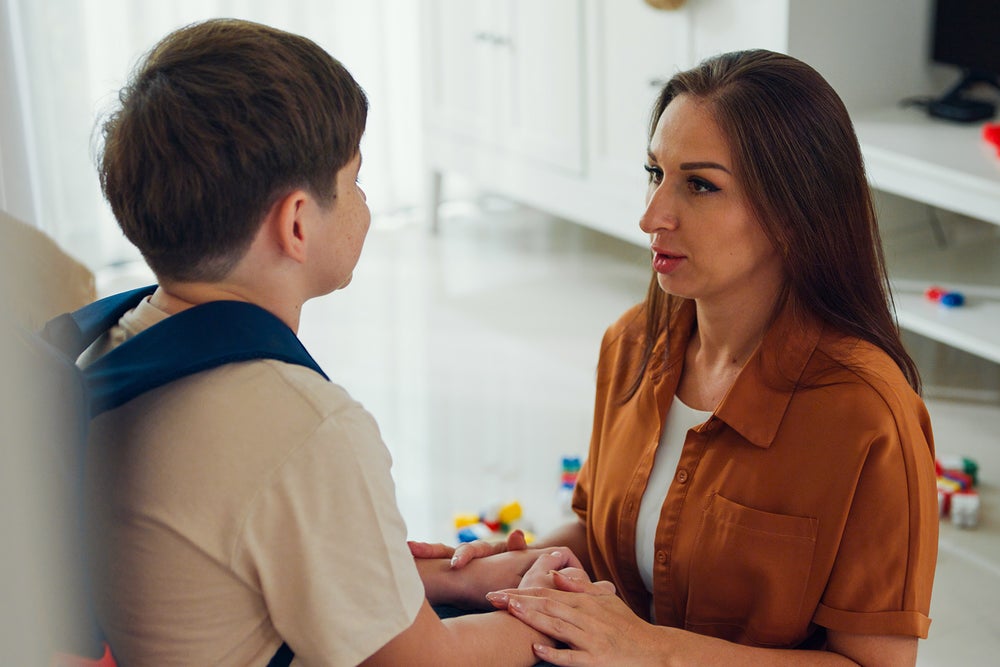
When my son was three years old, he told me one day after preschool that he didn’t want to play with me because I was Black. He went on; Black people are mean, he said, and he only wanted to play with his dad because my husband was white, like him.
We were shocked and I was hurt—my child thought I was bad because I was Black. And even though my son is biracial, he characterized himself as white.
What my son said that day unfortunately reinforced what research has long shown: children absorb racial biases from their environment. I study racial socialization—the ways children learn about race and racism—and I know how early these biases form. I also know that talking about race and racism can shape how children perceive others. Yet when white parents tell me their children say things like “Black people are not nice” or “I don’t want to play with Black kids,” they also tell me they ignore what their children said or simply tell their children it was mean. Without a real conversation about why their child might think that way or how to counter those ideas, children don’t unlearn bias; they just learn not to say it out loud.
In 2022, even though research on white parents discussing racism was still emerging, my colleagues and I argued that they needed to have these conversations with their children. At the time, we pointed to the subtle ways children can absorb racial biases—the diversity (or lack thereof) of their parents’ social circles, the characters they see on TV, and the differences they notice in social class.
But, in 2025, subtlety is a thing of the past. In attacking diversity, equity and inclusion initiatives, the Trump administration is legitimizing and emboldening racism in ways that children—especially white children—undoubtedly notice. If my son, at three years old, could absorb anti-Black messages when overt racism was more widely condemned, imagine what white children today are internalizing in a climate where political leaders openly promote racism.
White parents who see themselves as egalitarian must recognize that the stakes are now higher than ever. If you want to raise children who reject racism rather than passively absorbing it, right now, today, talk with your child about race and racism.
By preschool, children start associating Black people with negative traits and white people with positive traits. These biases form as children pick up on patterns—who holds power, how groups are portrayed in media and how others interact with them. Even subtle nonverbal cues, like smiling at one group and frowning at another, influence children’s preferences. Not surprisingly, young children favor groups receiving positive signals and mimic those behaviors, reinforcing biases. These small cues accumulate, shaping how children perceive racial groups.
While most parents of color talk to their children early about race to prepare them for potential discrimination, white parents often avoid these discussions. In our research on parents of children in the age ranges of 8–12 and 13–17, less than 40 percent of white parents talked to their children about race, and many who did downplayed racism. This avoidance is concerning, given how racial attitudes develop. Without parental guidance, children interpret racial patterns on their own, often reinforcing societal biases.
.
.
.
Click the link below for the complete article:
.
__________________________________________
March 8, 2025
Mohenjo
Business, Food For Thought, Human Interest, Political, Science, Technical
amazon, business, Business News, current-events, Future, Hotels, human-rights, medicine, mental-health, research, Science, Science News, technology, Technology News, travel, vacation

Click the link below the picture
.
When we picture spoiled kids, many of us think of tantrums over not getting what they want, being told to follow rules or simply facing any sort of inconvenience.
But spoiled behavior isn’t just about entitlement or parents giving in — it’s about unmet emotional needs, inconsistent boundaries and a lack of connection.
As a conscious parenting researcher and coach, I’ve studied over 200 kids, and I’ve found that spoiled behavior can sometimes indicate unmet needs. Here are the five signs of highly spoiled children — and how parents can try to undo this behavior:
1. They struggle with hearing ‘no’
A child may push back against rules not because they’re difficult, but because unclear boundaries feel confusing and frustrating. If rules feel unpredictable — or if a child feels powerless in decisions that affect them — they may act out to regain a sense of control.
Tip for parents: Instead of just saying “no” and moving on, acknowledge their feelings: “I see that you’re upset because you want to keep playing, but it’s time for bed now.” Boundaries set with kindness teach that rules aren’t about control — they’re about trust and safety.
2. They constantly seek attention
When kids demand constant attention, it often signals emotional disconnection or uncertainty about their place in the family. A child who doesn’t feel secure in their bond may ask for more: more time, more validation, more reassurance.
For example, a child who always interrupts or clings to a parent in social settings isn’t necessarily being needy, but is rather unsure of their significance when the focus isn’t on them.
Tip for parents: Set aside 10 to 20 minutes of undistracted connection each day. The more time, the better. Play, talk or just be present with your child. Use these moments tell them, “You are enough.”
When kids feel emotionally secure, their need for constant validation fades.
3. They have tantrums to get what they want
Tantrums aren’t manipulation — they’re a cry for help. Children in meltdown mode are typically overwhelmed and lack the skills to process big emotions.
Often, it happens because a child feels unheard when their emotions are dismissed, powerless when they have no say, or overstimulated by too much noise, activity or change.
Tip for parents: Stay calm, validate their feelings (“I see you’re really frustrated”) and offer comfort (“I’m here with you until you feel better”). Kids learn emotional regulation through connection, not control.
.

.
.
Click the link below for the complete article:
.
__________________________________________
March 7, 2025
Mohenjo
Business, Food For Thought, Human Interest, Political, Science, Technical
amazon, business, Business News, current-events, Future, Hotels, human-rights, medicine, mental-health, research, Science, Science News, technology, Technology News, travel, vacation
Click the link below the picture
.
Microsoft has announced that it has created the first ‘topological qubits’ — a way of storing quantum information that the firm hopes will underpin a new generation of quantum computers. Machines based on topology are expected to be easier to build at scale than competing technologies, because they should better protect the information from noise. But some researchers are sceptical of the company’s claims.
The announcement came in a 19 February press release containing few technical details — but Microsoft says it has disclosed some of its data to selected specialists in a meeting at its research centre in Santa Barbara, California. “Would I bet my life that they’re seeing what they think they’re seeing? No, but it looks pretty good,” says Steven Simon, a theoretical physicist at the University of Oxford, UK, who was briefed on the results.
At the same time, the company published intermediate results — but not the proof of the existence of topological qubits — on 19 February in Nature.
Superconducting wire
Topological states are collective states of the electrons in a material that are resistant to noise, much like how two links in a chain can be shifted or rotated around each other while remaining connected.
The Nature paper describes experiments on a superconducting ‘nanowire’ device made of indium arsenide. The ultimate goal is to host two topological states called Majorana quasiparticles, one at each end of the device. Because electrons in a superconductor are paired, an extra, unpaired electron will be introduced, forming an excited state. This electron exists in a ‘delocalized’ state, which is shared between the two Majorana quasiparticles.
The paper reports measurements suggesting that the nanowire does indeed harbour an extra electron. These tests “do not, by themselves” guarantee that the nanowire hosts two Majorana quasiparticles, the authors warn.
According to the press release, the team has carried out follow-up experiments in which they paired two nanowires and put them in a superposition of two states — one with the extra electron in the first nanowire, and the other with the electron in the second nanowire. “We’ve built a qubit and shown that you can not only measure parity in two parallel wires, but a measurement that bridges the two wires,” says Microsoft researcher Chetan Nayak.
“There’s no slam dunk to know immediately from the experiment” that the qubits are made of topological states, says Simon. (A claim of having created Majorana states, made by a Microsoft-funded team based in Delft, the Netherlands, was retracted in 2021.) The ultimate proof will come if the devices perform as expected once they are scaled up, he adds.
Early announcement
Some researchers are critical of the company’s choice to publicly announce the creation of a qubit without releasing detailed evidence. “If you have some new results not connected to this paper, why don’t you wait until you have enough material for a separate publication?” says Daniel Loss, a physicist at the University of Basel, Switzerland. “Without seeing the extra data from the qubit operation, there is not much one can comment,” says Georgios Katsaros, a physicist at the Institute of Science and Technology Austria in Klosterneuburg.
.

Microsoft has unveiled its Majorana 1 quantum chip. © John Brecher for Microsoft
.
.
Click the link below for the complete article:
.
__________________________________________
March 7, 2025
Mohenjo
Business, Food For Thought, Human Interest, Political, Science, Technical
amazon, business, Business News, current-events, Future, Hotels, human-rights, medicine, mental-health, research, Science, Science News, technology, Technology News, travel, vacation

Click the link below the picture
.
Roy Ayers, a legendary jazz vibraphonist, keyboardist, composer and vocalist known for his spacy, funky 1976 hit “Everybody Loves the Sunshine” that has been sampled by such R&B and rap heavyweights as Mary J. Blige, N.W.A., Dr. Dre, 2Pac, Mos Def and Ice Cube, has died. He was 84.
The Ayers family said in a Facebook post that he died Tuesday in New York City after suffering from a long illness. “He lived a beautiful 84 years and will be sorely missed,” it said.
Ayers had 12 albums land in the Billboard 200 album charts, the highest being “You Send Me” in 1978 at No. 48. His “The Best of Roy Ayers” spend 50 weeks on the Contemporary Jazz Album chart.
His music never went out of style, appearing in the 2019 “Queen & Slim: The Soundtrack.” His song “Running Away” propelled A Tribe Called Quest’s 1989 opus “Description of a Fool,” and the song was sampled by Big Daddy Kane and Common. Ayers was heard on Tyler, the Creator’s album “Cherry Bomb” and Erykah Badu’s “Mama’s Gun.”
“Well, I have more sampled hits than anybody,” he said in a 2004 interview with Wax Poetics magazine. “I might not have more samples than James Brown, but I’ve had more sampled hits. Oh, man, and there’s a few I don’t know about.”
.
 Roy Ayers
.
.
Click the link below for the complete article:
.
__________________________________________
Older Entries
Newer Entries
 James' World 2