October 11, 2024
Mohenjo
Business, Food For Thought, Human Interest, Political, Science, Technical
amazon, business, Business News, current-events, Future, Hotels, human-rights, medicine, mental-health, research, Science, Science News, technology, Technology News, travel, vacation

Click the link below the picture
.
Walk into any bookstore, and you’ll find tables loaded with self-help books for every imaginable problem. But there are times when the wisest advice might be tucked away in the memoir section.
These first-person accounts can provide proof that setbacks are survivable. “The way the narrator makes meaning offers us an invitation to think about the meaning that we’ve made in our lives,” said Jonathan Adler, a professor of psychology at Olin College of Engineering. “It’s an invitation to realize that you are interpreting your story, and that you have choices about how you want to do that.”
We asked therapists, psychologists and other mental health experts to recommend memoirs that capture what it’s like to struggle and find your footing again. Here are seven titles that rose to the top of the list.
An Unquiet Mind, by Kay Redfield Jamison
Dr. Jamison, a professor of psychiatry at Johns Hopkins School of Medicine, details her experience living with bipolar disorder, or manic-depressive illness, as the condition was known when this memoir was first published in 1995.
She also describes the long “war” she waged against herself by intermittently resisting medication. “It is such an honest report of the struggle to stay in therapy and continue with treatment when the highs of bipolar are so compelling,” said Alexis Tomarken, a therapist in New York City.
Harriet Lerner, a psychotherapist in Lawrence, Kan. and author of “The Dance of Anger: A Woman’s Guide to Changing the Patterns of Intimate Relationships,” said that she often recommends this book to patients with bipolar disorder, but not “when they’re in a fragile or dysregulated state,” since reading the book can be an emotional experience.
Just Kids, by Patti Smith
In this title, the winner of the 2010 National Book Award for nonfiction, Ms. Smith reflects on making her way as a poet, performer and visual artist in New York City in the late 1960s and early 1970s. Broke, unsettled by the political violence of the time and navigating fluid relationships, she occasionally tipped into despair. But she shared a dedication to art with the photographer Robert Mapplethorpe that steadied and fueled her.
“It was inspiring to me, as someone who is not an artist, to see that kind of commitment,” said Ben Endres, a psychotherapist in Milwaukee, who added that he would recommend this book to anyone trying to break with conventional expectations.
.
 Monica Garwood
.
.
Click the link below for the article:
.
__________________________________________
October 10, 2024
Mohenjo
Business, Food For Thought, Human Interest, Political, Science, Technical
amazon, business, Business News, current-events, Future, Hotels, human-rights, medicine, mental-health, research, Science, Science News, technology, Technology News, travel, vacation

Click the link below the picture
.
Among the plastic in your house might be an orange-colored hard laundry detergent bottle and a squeezable clear ketchup bottle. Come recycling day, you might put them on the curb in a blue bin or bag, expecting they will become something new.
But here’s the problem: those two plastic bottles cannot be recycled together because they are different colors, different plastic types, and made from different chemicals. Unlike an old aluminum can that can be recycled into a new aluminum can, plastics are fundamentally not designed to be recycled.
Yet the idea that plastics are just as recyclable as aluminum is a pervasive misconception because the plastics and petrochemical industries have been drilling it into our brains for nearly half a century. This long con has allowed these industries to make billions of dollars with zero accountability—until recently, when California attorney general Rob Bonta announced that the state of California was suing ExxonMobil for environmental damage and recycling lies.
This is a historic moment in the fight against plastic pollution, a crisis that has been created by companies that have known recycling was not possible for most plastics. While others have filed important suits against consumer brand companies for their pollution, like New York attorney general Letitia James’ lawsuit against PepsiCo, Bonta’s suit is the first to target a company for lying about plastic recycling’s efficacy.
Exxon, one of the largest oil and gas companies in the world, was an obvious company to focus on. Americans typically associate the company with gas stations, but Exxon also makes the polymers—the chains of repeating chemical pieces—that become plastic bottles, cups, utensils, takeout containers, and other packaging for U.S. consumer goods. It considers the manufacturing of plastic components a “core” part of its business and, according to Bonta’s lawsuit, sees 80 percent of the company’s growth potential as “dependent on single-use plastics applications.”
Think about that: while you’re stressing about what to put in the recycling bin, companies like Exxon are on a mission to find new ways to pump unnecessary plastic into the world.
The composition of most plastic makes it an inherently unrecyclable material. More than 16,000 chemicals are used to make different plastics to give the material qualities like color and flexibility, with different types of plastic using different combinations of these additives. The small amount of plastic that is actually recyclable (primarily No. 1 and No. 2, PET and HDPE) is delivered to a facility where the plastic is shredded and ground. Unlike paper, which can be turned into new paper products several times, recycled plastic typically becomes plastic lumber or clothing—which then can no longer be recycled and does not biodegrade.
That’s why less than 6 percent of plastics are recycled in the U.S. and why it’s deceptive that Exxon and others have spent millions over decades on public relations campaigns that falsely promote plastic recycling’s ability to manage all of the mess.
.
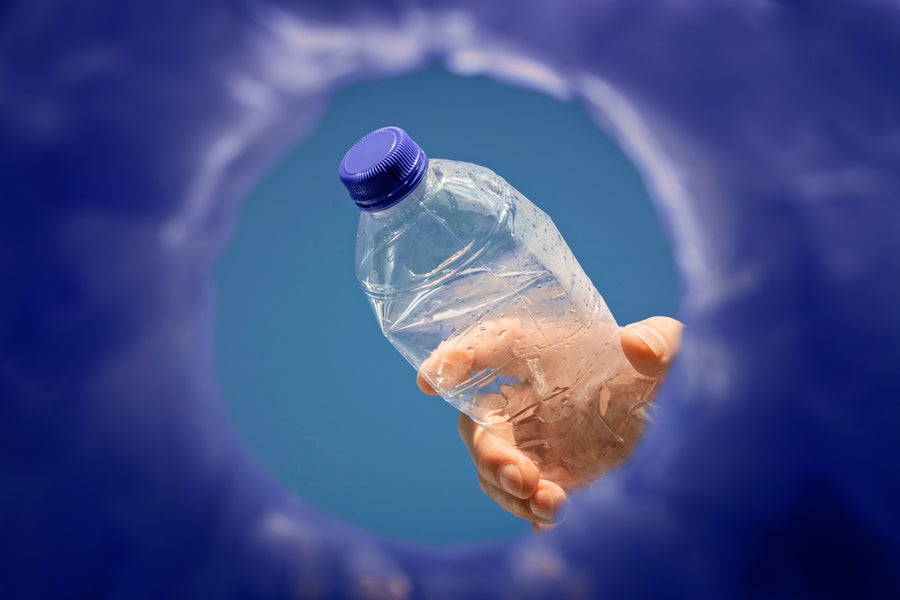 BrianAJackson/Getty Images
.
.
Click the link below for the article:
.
__________________________________________
October 10, 2024
Mohenjo
Business, Food For Thought, Human Interest, Political, Science, Technical
amazon, business, Business News, current-events, Future, Hotels, human-rights, medicine, mental-health, research, Science, Science News, technology, Technology News, travel, vacation

Click the link below the picture
.
Dear, How to Do It,
Last night, I was having sex with my husband and he grabbed both my hands and pinned them to the bed above my head with his hands. Really vanilla position, but it was fantastic and intimate in the moment, then within seconds my right shoulder shuddered and started spasming. He could tell something was wrong, he unpinned both my hands, and we were able to finish, but it wasn’t as enjoyable. Have you heard of this happening before? If so is there a way to deal with it? I can’t see myself having a face-to-face discussion with a chiropractor about this.
—Can’t Pin Me Down
Dear, Can’t Pin Me Down,
Yes, not only have I heard of body parts reacting poorly to being suddenly pinned down in an extreme way, but I’ve experienced it myself. If you want to see a chiropractor, I mean, it’s your body, but I’d suggest a physical therapist first. As for having a face-to-face discussion, if you’re really too embarrassed to tell the full story of what happened, you can simply say you laid on your shoulder funny with your arm up. Ideally, you briefly explain the whole truth (my partner pressed my arm into the bed with it lifted above my head) but if shame is going to prevent you from getting care then go with the workaround.
That said, thinking back on appointments I’ve had with these kinds of professionals, they really just want to know what hurts and walk you through some tests to determine what’s going on—there’s no need for the gory details of how it started hurting.
Dear, How to Do It,
I’m a man (47) married to my wife (47 F) for 20 years and before that we dated for three years. She is the love of my life and the only person I have ever slept with. For many years, our sex life was great. She had a higher sex drive than I did, and we would have sex two to three times a week. She would be the person to initiate it many times when we first started our relationship and be frustrated with me if I didn’t want to have sex with her. At that time, I would say I was comfortable with one to two times a week. We were not into exploring many things (she doesn’t like toys) but she always made me feel like I was doing a great job and caring for her needs.
When we decided to try to have kids, our sex was even more fun because we were doing it with a purpose now. After our first son was born about 11 years ago things understandably slowed down a little, but after a few months, we reached a frequency I was comfortable with. We were having sex about one to two times a week, and we had a second child a couple of years later. After that, we started to have less sex or the one time a week only happened if I initiated and expressed some frustration that I missed intimacy with her a lot. We talked a little, and mostly she was very tired and exhausted after a long day at work and the kids. I was tired too but didn’t want to miss the chance to kiss and hug her.
In the last three years, I have started getting resentful because I have tried to talk to her and express my feelings while trying to reassure I care about her too. We are having even less sex. We can easily go a month without having sex. I recently asked her and she told me that it now hurts her sometimes and for the most part, she doesn’t have interest anymore. After this last conversation, I’m feeling pretty devastated because I miss more intimacy with her and of course, I don’t want her to feel like I’m forcing her. I don’t want her to feel pressured to have sex with me.
I told her I was open to anything she wanted to do that could include touching and passionate kisses, and that I actually miss any form of intimacy with her. She can be very stubborn and told me that it was my fault that I could not control my desire (for her). We are old now and women slow down when they get older and men don’t. Just seeing her naked in the shower makes me just want to jump in the shower with her. What can I do to show her how much I miss her touch? I don’t want to think about going without it. We are getting older but I want to get older with her and be a sexually active older couple. I know I probably need to see a therapist for this but I’m also not comfortable talking to anyone about this yet. And I don’t want to feel I’m an asshole because I’m putting this pressure on her.
—Not Done in Bed Yet
Dear, Not Done in Bed Yet,
You’re not entirely correct when you say that “women slow down when they get older and men don’t.” This may possibly be true as a broad generalization, but we’ve heard from women over the years who are much older than your wife and frustrated that their husbands have no interest in keeping up sexually with them.
You say you’re open to anything and miss any form of intimacy, but the only specifics you mention are pretty far toward the sexual end of the sexual-sensual continuum. So, before you approach your wife again, do some real introspection about whether you actually mean it when you say you’d be happy with nonsexual intimacy like hugs and kisses that lead to nothing more. My gut says you’re lying to yourself because you know that demanding sex from your wife is not a Good Guy™ thing to do, but putting aside your concern with being “good” can help you be honest, and that honesty is likely to resonate better with your wife than what you’ve written here, which is contradictory.
The best way to avoid feeling like an asshole for pressuring your partner is to, well, not pressure your partner. You say you want to have sex when it’s comfortable for both you and your wife. She’s told you sex often hurts her, and that she’s not interested. It seems like you’re hoping something will magically change on her end, and that isn’t the case. You might consider asking your wife whether she’s interested in ways to reduce or prevent the pain she feels. If she’s open to that idea, research experts and options yourself. I want to do some expectation management here though—the state of women’s reproductive health is pretty dismal, so there may not actually be a solution out there that works for her, or it may take a very long time to find one.
You’re correct, a therapist can help you sort through a lot of the things I’ve pointed out today and all the other struggles you might’ve left out of your letter. If you can get comfortable with the idea, it wouldn’t hurt to seek out a sex-positive therapist.
.
 Photo illustration by Slate. Photo by Getty Images Plus.
.
.
Click the link below for the article:
.
__________________________________________
October 9, 2024
Mohenjo
Business, Food For Thought, Human Interest, Political, Science, Technical
amazon, business, Business News, current-events, Future, Hotels, human-rights, medicine, mental-health, research, Science, Science News, technology, Technology News, travel, vacation
Click the link below the picture
.
For most of the 20th century, each successive decade added about three extra years to people’s average lifespan in developed countries. For a person born at the turn of the 21st century, these incremental gains meant that they could, on average, live 30 years longer than someone born in 1900, allowing them to make it to their 80th birthday.
This phenomenon, referred to as radical life extension, was gifted to humanity by advances in various medical technologies and public health measures. Many scientists and lay people alike assumed that the trend would continue and that human lifespans would increase at the same clip indefinitely. Others, however, predicted that humans would hit a natural ceiling, with average lifespans of the world’s longest-lived countries plateauing well before 100.
New research on this hotly debated question now suggests that humanity has, in fact, reached an upper limit of longevity. Despite ongoing medical advances designed to extend life, the findings indicate that people in the most long-lived countries have experienced a deceleration in the rate of improvement of average life expectancy over the past three decades.
This is because aging—a series of poorly understood biological processes whose effects include frailty, dementia, heart disease and sensory impairments—has so far eluded efforts to slow it down, says S. Jay Olshansky, a professor of public health at the University of Illinois at Chicago and lead author of the new study, which was published in Nature Aging. “Our bodies don’t operate well when you push them beyond their warranty period.”
“As people live longer, it’s like playing a game of Whac-a-Mole,” he adds. “Each mole represents a different disease, and the longer people live, the more moles come up and the faster they come up.”
Olshansky became convinced of the immutability of the aging problem in 1990, when he published a paper in Science that predicted that our gains in life expectancy must slow down, even if advances in medicine accelerate. He concluded then that it was “highly unlikely” that humanity would exceed an average life expectancy of 85 years.
The paper met with widespread pushback, he says, because “there’s vested interest in this narrative of continued gains in life expectancy.”
Olshansky was convinced he was right, though. So he decided to “be a patient scientist,” he says, and retest his hypothesis once the real-world data came in. It took 34 years, but the wait has now paid off with “a definitive yes” in support of his original findings, he adds.
Olshansky and his colleagues took a straightforward approach: they examined observed changes in death rates and life expectancies from 1990 to 2019 in the world’s eight longest-lived countries—Japan, South Korea, Australia, France, Italy, Switzerland, Sweden, and Spain—plus the U.S. and Hong Kong. They found that improvement in life expectancy decelerated in almost all of these places, and that it actually declined in the U.S.
South Korea and Hong Kong were exceptions. They underwent recent accelerated improvements in survival, a phenomenon the researchers suspect has to do with the fact that both places concentrated their large increases in life expectancy only recently, in the past 25 years, Olshansky says. Even so, in Hong Kong—whose population is the world’s longest-lived—the researchers found that just 12.8 percent of female children and 4.4 percent of male children born in 2019 are expected to reach 100 years old.
.

Older adults stroll at a crowded shopping street in Tokyo’s Sugamo district. Yoshio Tsunoda/AFLO/Alamy Live News
.
.
Click the link below for the article:
.
__________________________________________
October 9, 2024
Mohenjo
Business, Food For Thought, Human Interest, Political, Science, Technical
amazon, business, Business News, current-events, Future, Hotels, human-rights, medicine, mental-health, research, Science, Science News, technology, Technology News, travel, vacation

Click the link below the picture
.
Gary Lockwood doesn’t believe in motivation. He didn’t get the body he has today (lean, gristly, a bit scary) simply by being motivated. He didn’t become the CEO of 24/7 Fitness because he wanted it enough. And he says as much to his clients. ‘It doesn’t matter how much motivation you have,’ he declares, pronouncing the word as if it were a nasty kind of intestinal worm. ‘There is no substitute for just fucking doing it.’
As for willpower – usually defined as the ability to resist short-term rewards in pursuit of longer-term goals – Lockwood is similarly dismissive. ‘You will not get what you want in fitness or life relying on willpower.’ Willpower is fragile. You might win the battle with your will one day, then lose it the next. The key to ‘just fucking doing it’ is what he terms discipline. ‘Discipline kicks your butt out of bed on cold winter mornings and drags you to the gym for an hour of mind-numbing cardio.’
Some people think there’s some magic pill they can take, he says, or some mystical hack to do with carbs. ‘The truth is, you have to be disciplined. The harder it is, the more discipline you need. How much you want it? It’s irrelevant.’
The Dopamine Trap
In the past 10 or 12 years – the Instagrammian Epoch, if you will – we’ve happily embraced the idea that the people who are rich, thin, toned, successful and happy must have incredible amounts of motivation. They have the power to resist Krispy Kremes, Instagram Reels, Five Guys fries, the Devil himself. By implication, those of us whose lives are a little flabbier, carbier, sloppier, sinnier, must be lacking in these virtues.
But whether or not you buy into Lockwood’s approach – inspired by the neo-Stoic philosopher Joe Rogan, incidentally – it’s hard to disagree with his central thesis: that mere desire to change is in itself insufficient for change. Moreover, he’s far from the only person who has come to view the word ‘willpower’ with suspicion. (Whether ‘discipline’ is really so different is another matter.)
‘Those of us who don’t overeat aren’t white-knuckling it. Our urges simply aren’t that strong’
‘I’m not sure willpower is the best name any more,’ says Pete Williams, a scientist at the Institute for Functional Medicine, who takes a gentler approach with his clients. The main problem for him is that willpower comes with a lot of baggage. It implies a moral failing that only increases the stress and shame associated with being overweight. Which helps no one to actually lose weight.
‘A lot of patients have a very negative relationship with themselves because they believe they don’t have willpower,’ he says. ‘Most patients who come to us generally understand what they need to do to get better.’ The problem is that much of our unhealthier behaviors are driven by the unconscious. ‘They don’t know why they do it. They just can’t help going to the fridge.’
Williams has devoted much of his professional life to understanding why this should be. Some people are irresistibly drawn to high-calorie foods; others can happily sit next to a plate of biscuits and not take a bite. Some skip cheerfully to the gym in the mornings; others find it difficult just to drag themselves out of bed. ‘The question we’ve asked is: is there any genetic basis to that variation?’ says Williams. ‘And the answer to that is yes.’
Williams’ research focuses specifically on dopamine, which plays the central role in our brain’s reward centers. Dopamine acts as both a hormone (it’s a close relative of adrenaline) and a neurotransmitter, which means it sends messages down pathways in our brain that govern different behaviors. One of those pathways, the mesolimbic pathway, has strong associations with reward and anticipation, and thus habit formation, motivation, and addiction.
.

.
.
Click the link below for the article:
.
__________________________________________
October 8, 2024
Mohenjo
Business, Food For Thought, Human Interest, Political, Science, Technical
amazon, business, Business News, current-events, Future, Hotels, human-rights, medicine, mental-health, research, Science, Science News, technology, Technology News, travel, vacation

Click the link below the picture
.
Every entrepreneur dreams of coming up with a groundbreaking business idea and riding it to success. However, the reality is that very few have the good fortune to make it big on their first try. It’s far more common for entrepreneurs to work for years, looking for an idea that could offer their big break.
Every now and then though, new platforms emerge that create opportunities for potential entrepreneurs. For example, Shopify and Etsy made it incredibly easy to launch online stores, creating a new wave of business owners. Right now, Amazon’s Audible audiobook platform is creating similar opportunities, especially as Amazon makes a push to promote it.
Entrepreneur Rob Anderson has a unique perspective on how others can capitalize on this. Here’s his story and his advice to others looking for the next great entrepreneurial side hustle.
An insider’s perspective
Rob started out on Amazon as a third-party reseller who eventually built a 7-figure business. While he was successful as a private label seller of his own brand, it was a full-time job that consumed all of his attention and time and required considerable capital.
Then it occurred to him that there might be a better way to leverage Amazon’s unprecedented reach to make a profit. He began to notice that advertisements for Amazon’s audiobook platform were beginning to appear everywhere. They were sponsoring well-known personalities on YouTube and were all over the social media ad space. They even enjoyed a prominent position on Amazon’s home page.
Rob says, “Because I was already selling through Amazon, I’d seen what it looked like when the company threw its weight behind a new product, and I started to wonder if it meant there was an opportunity for people like me to capture some of the traffic their big push was no doubt creating. So I started to look at the types of audiobooks that were available through Audible. And to my surprise, most of what was there wasn’t coming from big publishing houses, it was self-published works from people all over the place.”
Sharing unique insight and experience
Rob had spent years learning how to be successful as a third-party reseller on Amazon. Given he already understood how to work within Amazon’s system to achieve prominent product placements on the site, he decided to try and publish audiobooks based on the insights he gained as a third-party reseller on the platform.
.

Rob Anderson
.
.
Click the link below for the article:
.
__________________________________________
October 8, 2024
Mohenjo
Business, Food For Thought, Human Interest, Political, Science, Technical
amazon, business, Business News, current-events, Future, Hotels, human-rights, medicine, mental-health, research, Science, Science News, technology, Technology News, travel, vacation

Click the link below the picture
.
It’s time to stop nap shaming. While napping can absolutely affect your sleep at night if you aren’t careful, there is a way to get the best of both worlds — great daytime naps and still sleep soundly at night. That’s where we come in. When you recharge with your mid-day nap, remember these six daily strategies to do it right.
While some people — as noted above — should generally avoid naps, with the right strategy, most people can savor an afternoon nap and still get quality shut-eye when the world goes dark. Here are seven do’s and don’ts to keep in mind before your next nap.
1. Aim to nap in the early afternoon
The earlier you can nap (once you start to feel drowsy), the better. Just like long naps, late naps can interfere with your sleep cycle and keep you up at night. Though everyone’s circadian rhythm is unique, most people experience a dip in alertness around 1 to 3 p.m. If you can make it to a restful area within this timeframe, that’s your best bet for a good nap that doesn’t mess with nighttime sleep.
2. Set the scene
If you’re going to take a nap, you may as well optimize it. Your napping environment should be just as restful as your sleeping environment. Ideally, you’ll nap in the same place you sleep. Napping in a restful environment — with little to no light, a comfortable temperature, and a pillow that suits your sleeping style — can help you fall asleep faster and fully reap the benefits of a short power nap.
3. Nap without guilt
Naps should make you feel better, not worse. Don’t let your nap guilt you into working late or doing more — you needed the extra rest for a reason. Saying things like, “If I nap now, I have to stay up later to do [insert task],” can further disrupt your sleep cycle and cause you to develop a shameful mindset around napping, as if it’s something you should never do. So nap without guilt, as long as you’re still fulfilling your major obligations.
And if you still feel guilty about your afternoon snooze, remember that some cultures literally build naps into their collective daily routine, which should be evidence enough that naps are good for you.
.
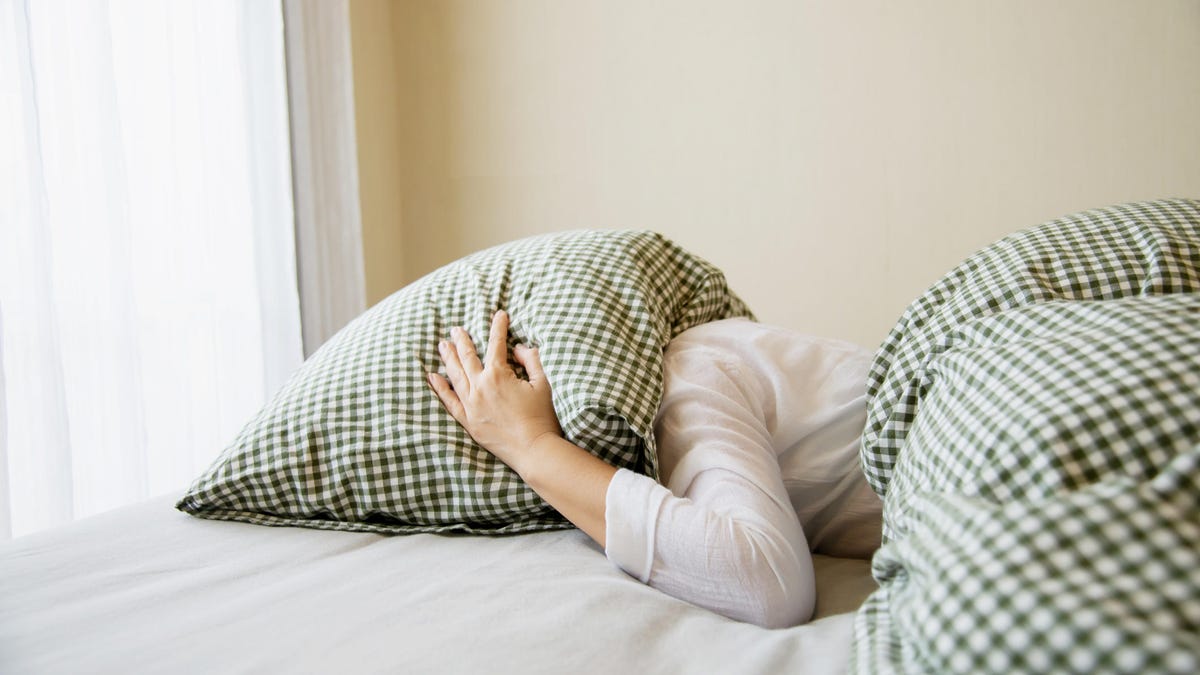
Ever avoid a nap because you know you’ll end up like this at night? If you nap the right way, you can still get a good night’s sleep. Getty Images
.
.
Click the link below for the article:
.
__________________________________________
October 7, 2024
Mohenjo
Business, Food For Thought, Human Interest, Political, Science, Technical
amazon, business, Business News, current-events, Future, Hotels, human-rights, medicine, mental-health, research, Science, Science News, technology, Technology News, travel, vacation
Click the link below the picture
.
This article is part of a series on what the 2024 presidential election means for science, health, and the environment. Editors with expertise on each topic delved into the candidates’ records and policies and the evidence behind them.
The U.S. is home to more guns than people. The toll of this abundance of firearms is staggering: Guns killed more than 48,000 people in the U.S. in 2022, the equivalent of one person every 11 minutes. More than half of those deaths were suicides, and guns are the overall leading cause of death in children aged one to 17. Mass shootings—600-some per year in recent years, although definitions vary—have stoked fear and anger, reshaping the American school experience. Yet mass shootings make up only a tiny fraction of firearm fatalities. And about a third of Americans say they own a gun, even as six in 10 say they favor stricter gun laws.
The rage, despair, carelessness, and greed behind the deaths may be universal, but such numbers are unique to the U.S. Here “our interpersonal conflicts are much more likely to be lethal because we’re more likely to be armed with guns,” says Daniel Webster, a gun violence researcher at Johns Hopkins University.
But there’s nothing inevitable about the prevalence of gun deaths in the U.S. It’s a reality that policies have created and that policies could change, if the political will existed. Evidence suggests that if Vice President Kamala Harris were to become the next U.S. president, she would move toward policies that would reduce gun violence—and that if former president Donald Trump were reelected, he would support laxer policies that could permit gun violence to worsen.
Compared with other common health issues in the U.S., data about gun violence are limited; data about nonfatal gun injuries are almost nonexistent. These gaps, combined with the usual scientific difficulties of distinguishing between causation and correlation, mean researchers lack much of the detailed information they need to analyze the effects of different gun-related policies. That said, the existing research does show that more guns do not keep people safer.
Here’s a rundown of what we can expect from each presidential candidate when it comes to gun policy:
Harris on Gun Policy
Harris has a long history of working with gun policy: She did so when she held a string of district attorney offices in the 1990s and 2000s and when she became California’s attorney general in the 2010s. Throughout those periods, she encouraged the development of stricter restrictions on gun ownership, as well as stronger enforcement of existing regulations. Later, as a U.S. senator, Harris worked on legislation to mandate universal background checks and to better regulate gun dealer licensing. She has in the past also called for both a ban on and a mandatory buyback of assault weapons, although Webster says studies suggest that assault weapon bans can be evaded too easily to impact violence rates.
In 2022, during the Biden-Harris administration, Congress passed the first sweeping gun legislation in nearly three decades. This included important funding mechanisms, as well as a few policy changes, such as requiring stronger background checks on gun buyers under 21 years old, requiring more gun sellers to conduct background checks, and broadening a measure meant to keep guns away from domestic violence offenders. The latter now include those who have abused dating partners, as well as spouses and close family members.
The single most effective policy to reduce gun deaths, according to Webster’s research, is an independent licensing process for gun ownership—not merely a background check managed by gun dealers themselves—that includes vetting the fingerprints and other information an applicant provides. Webster also finds positive results from regulations that take guns away from domestic violence offenders.
President Joe Biden created a White House Office of Gun Violence Prevention, which Harris oversees and which works on policies at both the state and local levels. “This is the first office of gun violence prevention that was initiated in the White House and overseen by a vice president,” says Joseph Richardson, Jr., a medical anthropologist at the University of Maryland. “I don’t think most Americans are even aware that she runs that office.”
.
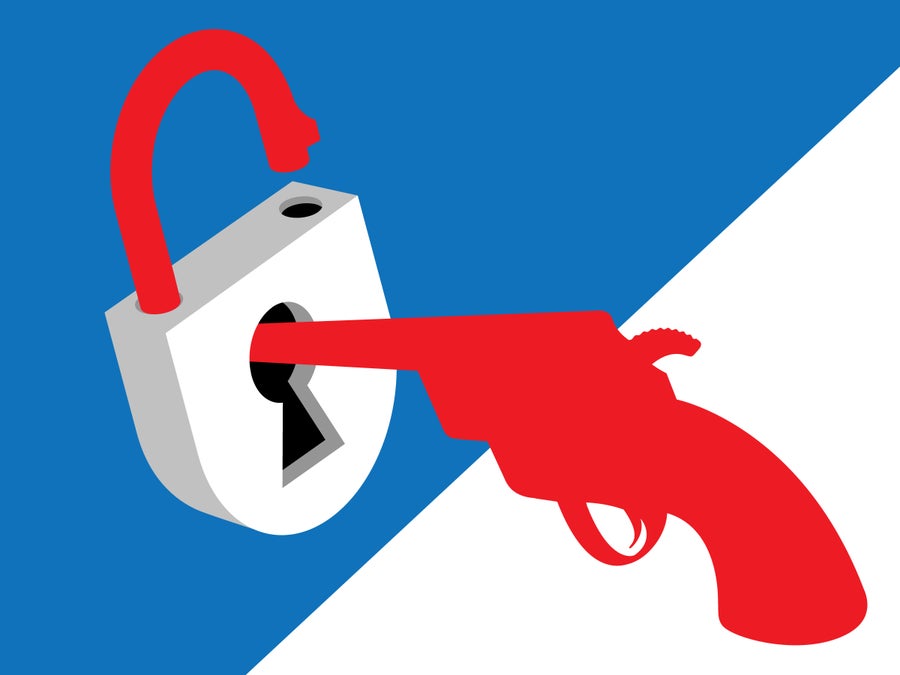 Thomas Fuchs
.
.
Click the link below for the article:
.
__________________________________________
October 7, 2024
Mohenjo
Business, Food For Thought, Human Interest, Political, Science, Technical
amazon, business, Business News, current-events, Future, Hotels, human-rights, medicine, mental-health, research, Science, Science News, technology, Technology News, travel, vacation

Click the link below the picture
.
Habit stacking is a powerful tool, especially for busy entrepreneurs who need to maximize their time and efficiency. While the topic has been discussed in depth and well documented by James Clear, author of Atomic Habits, the idea of habit stacking is to stack up a new habit on top of a current habit.
So, for example, Clear references a meditation habit: “After I brew my morning coffee, I will meditate for one minute.” Or a gratitude habit: “Before I eat my first bite of dinner, I will say one thing I am grateful for that day.”
I confess that I am a multitasker unless I’m working on a deep project or having conversations with friends and family. Below are some of the go-to habit stacks I practice regularly.
1. Morning digital detox and movement
I like to exercise first thing in the morning, and during my workouts, I do not use my phone. I am focused on my workout, my music and making sure I get the most out of my time in the gym, which I thoroughly enjoy.
It’s also wonderful to kick off the morning off my phone, not scrolling and keeping my mind clear, energized, and my overall self in a healthy flow state. Morning routines are critical for productivity and positivity
2. Driving and focused time with kids or partner
I speak with many parents who drive their kids to school and talk about how their children are glued to their phones. While I do take business and personal calls while I drive solo, I have always prioritized conversations with my two boys and husband when we are in the car together.
Most of us have chaotic days, and the time in the car together is a nice time to catch up, talk about the day, and listen to music together. Instead of asking your kids, “How was school?” try something more like, “Who made you laugh today?” Or “What was the coolest class today?”
3. Podcasts and protein
I prioritize nutrition and am not one to skip meals. Lately, my breakfast is a skillet-sized chocolate protein pancake with no sugar and about 50g of protein. It’s basically raw cacao powder, protein powder, and egg whites or eggs.
2. Driving and focused time with kids or partner
I speak with many parents who drive their kids to school and talk about how their children are glued to their phones. While I do take business and personal calls while I drive solo, I have always prioritized conversations with my two boys and husband when we are in the car together.
Most of us have chaotic days, and the time in the car together is a nice time to catch up, talk about the day, and listen to music together. Instead of asking your kids, “How was school?” try something more like, “Who made you laugh today?” Or “What was the coolest class today?”
3. Podcasts and protein
I prioritize nutrition and am not one to skip meals. Lately, my breakfast is a skillet-sized chocolate protein pancake with no sugar and about 50g of protein. It’s basically raw cacao powder, protein powder, and egg whites or eggs.
.

.
.
Click the link below for the article:
.
__________________________________________
October 6, 2024
Mohenjo
Business, Food For Thought, Human Interest, Political, Science, Technical
amazon, business, Business News, current-events, Future, Hotels, human-rights, medicine, mental-health, research, Science, Science News, technology, Technology News, travel, vacation

Thank goodness for the USA’s 3 branches of government, Legislative, Executive, and Judicial! Which ensures that no individual or group will have too much power.
Click the link below the picture
.
In a newly unsealed court filing, special counsel Jack Smith provides the most detailed picture yet of his criminal case against Donald Trump for allegedly trying to overturn the 2020 election and why the former president isn’t immune from prosecution.
U.S. District Judge Tanya Chutkan, who is presiding over the case, released the filing, with minor redactions, on Wednesday.
The special counsel uses the 165-page document to make his case that Trump’s actions around the election were made in a private capacity and not in his official role as president.
The filing comes after the Supreme Court ruled this summer that presidents enjoy broad immunity for official acts while in office, but not for unofficial acts as a candidate or a private citizen.
“When the defendant lost the 2020 presidential election, he resorted to crimes to try to stay in office,” the special counsel’s team writes. “With private co-conspirators, the defendant launched a series of increasingly desperate plans to overturn the legitimate election results in seven states that he had lost.”
A D.C. grand jury indictment accused Trump of actions that culminated in the violent siege at the U.S. Capitol on Jan. 6, 2021. If he regains the White House, Trump is expected to direct new Justice Department leaders to drop the landmark case.
Prosecutors accuse Trump of spearheading a conspiracy to overturn the results of the 2020 election and disenfranchise millions of American voters.
“At its core, the defendant’s scheme was a private criminal effort,” the special counsel writes. “In his capacity as a candidate, the defendant used deceit to target every stage of the electoral process.”
The filing offers several new details about Trump’s actions
The broad strokes of the special counsel’s allegations against Trump have long been known. The filing, though, adds some new details, including sensitive testimony from witnesses and notes taken by former Vice President Mike Pence.
It also offers some colorful details, largely designed to tie Trump to overlapping conspiracies to overturn the 2020 election.
In one section, the filing details what Trump was doing on Jan. 6, 2021, as a violent mob of his supporters stormed the U.S. Capitol. Trump, it says, settled into the dining room off the Oval Office around 1:30 p.m. and spent the afternoon reviewing Twitter on his phone while Fox News played in the background.
At one point, a staffer rushed into the dining room to tell Trump that Pence had been rushed to a secure location because of the rioters. The staffer hoped, the filing says, that Trump would do something to ensure Pence’s safety.
Instead, the document says, Trump “looked at him and said only, ‘So what?'” The new filing also provides a closer look at Trump’s interactions with his former political aide, podcaster Steve Bannon, including a phone call the two men had the day before the Capitol riot, the new court filing says.
.

Special counsel Jack Smith delivers remarks about the Trump election interference case in August 2023 in Washington, D.C. Drew Angerer/Getty Images
.
.
Click the link below for the article:
.
__________________________________________
Older Entries
Newer Entries

