
Home

What repealing the ‘endangerment finding’ means for public health

Leave a comment

Click the link below the picture

.

The Trump administration’s decision to scrap the “endangerment finding” on Thursday will have wide-reaching consequences for greenhouse gas emissions and, ultimately, could hasten climate change, increase risk to human health, and raise fuel costs.

But what is the “endangerment finding,” and what does the revocation of the legal precedent of this 2009 conclusion mean for you? Let’s break down the facts.

What is the endangerment finding?

To understand the endangerment finding, we need to rewind the clock to the Clean Air Act, the landmark 1970 law that allows the Environmental Protection Agency to regulate air pollutants.

The act was originally used to target pollutants such as sulfur oxides and particulate matter, but it was intentionally written broadly so that Congress wouldn’t have to revisit it every time a new pollutant emerged, said Camille Pannu, associate clinical professor of law at Columbia Law School, to Scientific American last year.

In 1999, a group of environmental organizations and eventually states began petitioning the EPA to regulate greenhouse gases under the Clean Air Act. Eventually, in 2007, the Supreme Court decided in the case Massachusetts v. EPA that greenhouse gases, including carbon dioxide, qualified as “air pollutants” under the Clean Air Act. The EPA was required to determine whether or not emissions from cars and trucks would endanger public health or if the science was too uncertain.

Flash forward to 2009: Lisa P. Jackson, then administrator of the EPA, issued the “endangerment finding,” which identified six greenhouse gases and held that they did indeed “threaten the public health and welfare of current and future generations.” The rule became the bedrock on which all subsequent EPA regulations of greenhouse gases have been based. While it was in place, the EPA could not legally ignore climate change or completely cut greenhouse gas regulations.

What effect does repealing the endangerment finding have?

In the short term, EPA regulations on greenhouse gas emissions and fuel efficiency standards for new cars and trucks will be repealed and not replaced. The decision to repeal the rule, however, will face lengthy legal challenges.

The EPA has also proposed repealing regulations on industrial emissions and delaying rules designed to reduce methane emissions, one of the most potent greenhouse gases, from oil and gas facilities.

Rescinding the endangerment finding will also make it harder for future administrations to regulate carbon dioxide and other greenhouse gases under the Clean Air Act without a new law or amendment passed by Congress.

How does climate change affect public health?

There is a robust body of evidence showing the harms of climate change on health. One of the most direct risks is through heat waves, which have become more intense, more frequent, and longer-lasting as global background temperatures have risen. Children, pregnant people, older people, and those who work outdoors are particularly susceptible to heat illness—causing issues from dehydration to death.

Climate change has also been linked to worsened seasonal allergies and higher risks of preterm birth. Additionally, it exacerbates smog and other air pollution that has been linked to asthma, cardiovascular disease, and adverse pregnancy outcomes. More extreme rains fueled by a warmer climate also raise the risks of drinking water being contaminated with toxic bacteria such as Salmonella and Campylobacter. And as temperatures warm and precipitation patterns change, insects that spread diseases—such as mosquitoes that spread malaria and West Nile virus and ticks that spread Lyme disease—are expanding their ranges.

Climate change also exerts a toll on mental health, causing mental trauma—as well as physical injury—from climate-fueled weather extremes such as hurricanes, floods, and wildfires. And research has shown that the effects from events such as hurricanes can cause deaths long after the storms.

Has the endangerment finding been at risk before?

In President Donald Trump’s first term in office, then EPA administrator Scott Pruitt sought to replace Obama-era emissions regulations with weaker ones that were favored by fossil fuel companies, the industrial sector, and car companies. This strategy would have allowed the endangerment finding to stand, dodging potential legal challenges.

When President Joe Biden took office in 2021, his EPA replaced those weakened regulations with more stringent ones. At the end of his presidency in 2024, Biden announced his pledge to reduce U.S. emissions by up to 66 percent by 2035. Overturning Biden’s updated laws has become a focal point of Trump’s second term.

How does this fit in with the rest of Trump’s climate policy?

Trump has long referred to climate change as a “hoax” despite decades of rigorous research and evidence in support of global warming. He began his second presidency by once again removing the U.S. from the Paris climate agreement to limit warming to below 1.5 degrees Celsius. In 2026, Trump also withdrew the U.S. from the United Nations Framework Convention on Climate Change, the treaty under which the Paris Agreement was negotiated.

The current Trump administration has also sought to hobble the build-out of renewable energy in the U.S., particularly offshore wind turbines, which the president has falsely linked to the deaths of whales. And the administration has sought to bolster fossil fuels by opening more federal lands to drilling and ordering coal plants that were marked for retirement to stay open.

.

https://static.scientificamerican.com/dam/m/8bfe646632a07af4/original/GettyImages-1401753381_web.jpeg?m=1770923755.337&w=900eric1513/Getty Images

.

.

Click the link below for the complete article:

https://www.scientificamerican.com/article/what-repealing-the-endangerment-finding-means-for-public-health/

.

__________________________________________

Trump’s EPA repeals landmark climate finding in gift to ‘billionaire polluters’

Leave a comment

Click the link below the picture

.

The Trump administration has revoked the bedrock scientific determination that gives the government the ability to regulate climate-heating pollution. The move was described as a gift to “billionaire polluters” at the expense of Americans’ health.

The endangerment finding, which states that the buildup of greenhouse gases in the atmosphere endangers public health and welfare, has since 2009 allowed the Environmental Protection Agency (EPA) to limit heat-trapping pollution from vehicles, power plants, and other industrial sources.

Donald Trump called the move “the single largest deregulatory action in American history”.

“This is a big one if you’re into environment,” he told reporters on Thursday. “This is about as big as it gets.”

The move comes as part of Trump’s bigger anti-environment push, which has seen him roll back pollution rules and boost oil and gas.

On social media, Barack Obama said the repeal will leave Americans “less safe, less healthy, and less able to fight climate change – all so the fossil fuel industry can make even more money”.

The former Secretary of State John Kerry called the new rule “un-American”.

“Repealing the Endangerment Finding takes Orwellian governance to new heights and invites enormous damage to people and property around the world,” said Kerry, who also served as Joe Biden’s climate envoy. “Ignoring warning signs will not stop the storm. It puts more Americans directly in its path.”

The final rule removes the government’s ability to impose requirements to track, report, and limit climate-heating pollution from cars and trucks. Transportation is the largest source of climate pollution in the US.

It does not apply to regulations on stationary sources of emissions, such as power plants and fossil fuel infrastructure, which are regulated under a separate section of the Clean Air Act, but it will open the door to end those standards, too.

Trump’s EPA has separately proposed to find that emissions from power plants “do not contribute significantly to dangerous air pollution” and therefore should not be regulated. Joseph Goffman, who served as EPA air chief under Joe Biden, expects the agency will apply their vehicles-focused arguments to stationary polluters in order to kill the endangerment finding for all sources of greenhouse gas emissions.

“Instead of the entire house of cards of all EPA climate regulation collapsing all at once today, it’s going to be like a row of dominoes falling,” said Goffman, who helped write and implement the Clean Air Act and worked directly on the endangerment finding.

Environmental advocates have condemned the move as illegal. A slew of green groups have promised to take the EPA to court over the rollback, as has the state of California.

“If this reckless decision survives legal challenges, it will lead to more deadly wildfires, more extreme heat deaths, more climate-driven floods and droughts, and greater threats to communities nationwide – all while the EPA dismisses the overwhelming science that has protected public health for decades,” Gavin Newsom, the California governor, said in a statement.

The move marks “the most aggressive, ruthless act of dismantling public health protections in the agency’s 55-year history”, said Dominique Browning, director and co-founder of environmental advocacy group Moms Clean Air Force.

In a press release, the EPA said the move will save the US $1.3tn, while Trump said Thursday that the move “will save American consumers trillions of dollars”.

The EPA administrator, Lee Zeldin, said the Obama and Biden administrations used the endangerment finding “to steamroll into existence a leftwing wish list of costly climate policies”.

“Who paid the biggest price? Hardworking families, small businesses, millions of Americans who just want a reliable, affordable car to get to work or take their kids to school or go to church on Sunday,” he said.

But though the rollback could save some corporations money, experts note it could take a massive toll on ordinary Americans’ well-being and pocketbooks.

One analysis from green group Environmental Defense Fund found the full repeal of the endangerment finding combined with Trump’s proposal to roll back motor vehicle standards would result in as much as 18bn more tons of planet-warming pollution by 2055 – the same as the annual emissions of China, the world’s top polluter – and would impose up to $4.7tn in additional expenses tied to harmful climate and air pollution by that time.

Zeldin submitted the repeal of the legal determination for White House review last month. In July, he officially announced plans to repeal the finding, justifying the proposal with a widely criticized Energy Department report questioning climate science.

The agency received half a million comments on the proposal. Last month, a federal judge said the July Energy Department report was created unlawfully.

In the repeal of the endangerment finding, the EPA is claiming that the Clean Air Act is only meant to regulate pollution “that harms health or the environment through local and regional exposure”. But there is scientific consensus that by trapping heat in the atmosphere, greenhouse gas emissions are intensifying dangerous extreme weather events, allowing diseases to spread faster, and worsening illnesses from allergies to lung disease.

Trump described the finding as “the legal foundation for the green new scam”, which he claimed “the Obama and Biden administration used to destroy countless jobs”.

But the new rule will have ruinous consequences for working-class Americans, said Jason Walsh, executive director of BlueGreen Alliance, a coalition of labor unions and environmental groups.

“Billionaires like Donald Trump don’t suffer the devastation of climate change,” he said. “Working people do.”

The rollback comes one month after the Trump administration announced it will pull the US from the foundational UN agreement to address the climate crisis, as well as the world’s leading body of climate scientists. Over the past year, Zeldin has also launched an all-out assault on climate, air, water, and chemical protections. The EPA has also removed crucial climate-focused science and data from its webpages.

“This is all part of the Trump administration’s authoritarian playbook to replace facts with propaganda, to enrich a few while harming the rest of us,” said Rachel Cleetus, senior policy director for the climate and energy program at the science advocacy group the Union of Concerned Scientists. “Administrator Zeldin has fully abdicated EPA’s responsibility to protect our health and the environment.”

The EPA has said that it determined the US would save billions annually by revoking the endangerment determination. But the agency’s analysis did not account for the money and lives saved by the environmental and public-health protections that the change would eliminate, experts say.

Alex Witt, senior adviser at green advocacy group Climate Power, said: “Zeldin and Trump are telling our families: we’ll let you get sicker and watch your healthcare costs skyrocket as long as oil and gas CEOs can profit.”

“This decision makes it abundantly clear that Trump is willing to make our families sicker and less safe, all to benefit a few billionaire polluters,” said Witt.

Some industry groups have been reluctant to support the full rollback of the endangerment finding. The American Petroleum Institute, the top US oil lobby group, last month said it backed a repeal of the endangerment finding for vehicles, but not for stationary sources of pollution like power plants.

.

cars on a roadThe morning commute on northbound Interstate 405 at sunrise on 15 January in Los Angeles, California. Photograph: Kevin Carter/Getty Images

.

.

Click the link below for the complete article:

https://www.theguardian.com/us-news/2026/feb/12/trump-epa-rollback-pollution-regulation-endangerment-finding

.

__________________________________________

Trump Administration Live Updates: Democrats Block Funding Bill as Homeland Security Shutdown Looms

Leave a comment

Click the link below the picture

.

  • Funding Standoff: Senate Democrats blocked a measure to fund the Department of Homeland Security as lawmakers remained locked in a standoff that could shut down the agency this weekend. The bill contained none of the restrictions on immigration enforcement that Democrats have demanded to fund the department. The vote came after a heated, four-hour Senate hearing with top immigration officials in which Todd Lyons, the acting chief of ICE, acknowledged that two citizens killed by agents in Minnesota, Renee Good and Alex Pretti, did not appear to be domestic terrorists. Read more ›

  • Minnesota ICE Drawdown: Tom Homan, the White House border czar, said the Trump administration was ending the fiercely criticized surge of immigration agents in Minnesota. State and local officials greeted the announcement with cautious optimism as they celebrated Minnesotans for challenging the conduct of federal agents and protecting immigrants.

  • Military Video: A federal judge temporarily blocked Defense Secretary Pete Hegseth from punishing Senator Mark Kelly, a retired Navy pilot, for participating in a video that reminded active-duty service members not to follow illegal orders. The judge said it would infringe on his First Amendment rights.

A homeland security shutdown draws nearer as Democrats block funding.

Members of Congress were departed Washington on Thursday without funding the Department of Homeland Security, putting it on a near-certain path to a shutdown this weekend amid a deep partisan divide over Democrats’ demands to place new restrictions on federal immigration agents.

Senate Democrats blocked a spending bill that would have funded the department past a Friday night shutdown deadline without adding any new curbs on immigration enforcement, an expected outcome after bipartisan talks on limiting President Trump’s crackdown deadlocked.

Speaker Mike Johnson has canceled a House congressional delegation to the Munich Security Conference this weekend in light of the expected shutdown of the Department of Homeland Security on Saturday, according to five congressional aides with knowledge of the trip.

Dozens of House members were expected to be at the gathering of world leaders, with the heads of the conference touting the U.S. delegation as the largest ever to attend. Now those members, including the top Republicans and Democrats on the foreign affairs and armed services committees, will be absent. Some senators are still planning to travel to Germany to participate.

Senate Democrats just blocked a bill to fund the Department of Homeland Security, after Republicans tried to advance a spending measure that they had already rejected. The measure fell short of the 60 votes needed to overcome the filibuster, with all but one Democrat voting to block it in a 52-47 vote.

The Senate is voting on funding the Department of Homeland Security after it lapses at 12:01 a.m. Saturday, but Democrats are blocking it over a lack of restrictions on immigration agents, putting the agency on the verge of a shutdown. A second vote is expected this afternoon on stop-gap funding, but it is also expected to fail.

The hearing has concluded after about four hours of testimony.

Todd Lyons, the acting director of ICE, said that a shutdown of the Homeland Security Department “would impact personnel actions” like hiring and recruitment.

But when asked further by Senator John Fetterman, Democrat of Pennsylvania, he acknowledged that a shutdown was unlikely to heavily affect immigration enforcement operations because of the $75 billion fund that Republicans allocated to ICE last year as part of their major tax and policy bill.

The Minnesota surge led to thousands of arrests, tense protests and three shootings.

The Trump administration said on Thursday that it was ending its deployment of immigration agents to Minnesota, unwinding an aggressive operation that has stretched for more than two months despite loud opposition from residents and local officials.

For many Minnesotans who had watched the federal government exert its will on their state — wielding law enforcement power and physical force at a scale that had no modern American precedent — the announcement signaled a welcome shift. Still, some expressed skepticism about whether the administration would follow through.

Lawyers for the family of Renee Good, who was killed by a federal agent in Minneapolis, said they were “cautiously optimistic about the drawdown of federal agents from Minnesota.” They added that the “agents’ departure from Minnesota does not dismiss the absolute need for accountability for their actions.”

Minnesota leaders praise residents for standing up to ‘bullies’ during Trump crackdown.

Minnesota officials said the nearly six-week surge of immigration enforcement in the state would leave deep economic and psychological scars that last long after the drawdown of federal agents, which President Trump’s border czar, Tom Homan, announced on Thursday.

Gov. Tim Walz of Minnesota said he was “cautiously optimistic” about the announcement and would now turn his attention to the state’s economic recovery. “They left us with deep damage, generational trauma,” he said. “They left us with economic ruin, in some cases.”

On the same day, the White House announced that it was ending its immigration operation in Minnesota, Kaohly Her, the mayor of St. Paul., Minn., signed an ordinance requiring that all law enforcement officials operating in the city display their names or badge numbers on the outer layer of their uniforms. “Federal law enforcement officers have too often used generic ‘police’ uniforms to obscure their identities and avoid being clearly identified by the agencies they represent,” the mayor said in a statement. Gov. Tim Walz of Minnesota said the expected drawdown of federal agents in his state does not mean that Democrats in Congress should change the way they negotiate on a funding package for the Department of Homeland Security. “Hold the line until you get the minimum reforms necessary in this rogue agency,” he said. Democrats in Congress have suggested new rules for immigration officers as a condition for funding the department. Republicans have so far rejected them.

Tom Homan’s announcement of a drawdown in Minnesota signaled a shift in strategy and messaging for the Trump administration when it comes to immigration enforcement. When the administration wound down its aggressive operations in Los Angeles and Chicago last year, the administration made no formal announcement that agents were leaving town, leaving local and state officials in the dark about their intentions.

Intelligence dispute centers on Kushner reference in intercepted communication.

It was a discussion last year between two foreign nationals about Iran, not an unusual topic for American spies to study. But an intercept of that communication, collected by a foreign spy service and given to the United States, has now become a flashpoint within the intelligence community and between the administration and Congress. The reason is a single name that came up in the discussion: Jared Kushner, President Trump’s son-in-law.

The previously unreported mention of Mr. Kushner in the discussion came after members of Congress were briefed last week about a classified report filed by a whistle-blower regarding the intercept, according to people familiar with the material. The whistle-blower has accused Tulsi Gabbard, the director of national intelligence, of limiting who could see the report and of blocking wider distribution among the nation’s spy agencies, people familiar with the complaint said.

Defense Secretary Pete Hegseth said he planned to appeal the ruling by a federal judge that blocked the Pentagon from seeking to punish Senator Mark Kelly for taking part in a video that reminded active-duty service members not to follow illegal orders.

“This will be immediately appealed,” Hegseth wrote in a social media post. “Sedition is sedition, ‘captain.’”

A judge ordered the government to help return Venezuelans detained in El Salvador.

A federal judge in Washington ordered the Trump administration on Thursday to help bring back any of the nearly 140 Venezuelan immigrants who want to return to the United States from the international limbo they have been living in since March, when officials deported them to El Salvador.

The ruling by the judge, James E. Boasberg, was one of the most robust steps taken so far to force the administration to give due process to the Venezuelan immigrants deported under the authority of an 18th century wartime law.

President Trump said Thursday that he had no knowledge that Howard Lutnick, his secretary of commerce, had ever visited the private island of the convicted sex offender Jeffrey Epstein.

“I wasn’t aware of it, no,” Trump told reporters, adding, “I actually haven’t spoken to him about it.” Trump then explained: “But from what I hear, he was there with his wife and children.” The president then said that he, personally, “was never there.”

The White House has publicly rallied behind Lutnick in recent days, even after learning his ties to Epstein were deeper than the secretary initially suggested.

“It’s a ruling we wanted and hoped for and we’ll see what happens next,” Senator Mark Kelly, Democrat of Arizona, said of the decision by a federal judge who blocked the Pentagon from downgrading his military retirement rank and pay.

Trump Administration Erases the Government’s Power to Fight Climate Change

President Trump on Thursday announced he was erasing the scientific finding that climate change endangers human health and the environment, ending the federal government’s legal authority to control the pollution that is dangerously heating the planet.

The action is a key step in removing limits on carbon dioxide, methane, and four other greenhouse gases that scientists say are supercharging heat waves, droughts, wildfires, and other extreme weather.

President Trump and Lee Zeldin, the administrator of the Environmental Protection Agency, are expected to make a major announcement at the White House related to climate change.

They are set to announce the repeal of the scientific determination that underpins the government’s legal authority to combat climate change. That 2009 determination, known as the endangerment finding, gave the E.P.A. the power to set climate regulations for cars, power plants, and other sources of planet-warming pollution.

Judge Temporarily Blocks Hegseth from Punishing Kelly for Video

A federal judge on Thursday temporarily blocked Defense Secretary Pete Hegseth from punishing Senator Mark Kelly, Democrat of Arizona, for participating in a video that warned active-duty service members not to follow illegal orders.

Judge Richard J. Leon of the District Court for the District of Columbia wrote in a 29-page opinion that the Defense Department’s move to discipline Mr. Kelly, a retired Navy captain and former astronaut, ran roughshod over his freedom of speech. Judge Leon barred Mr. Hegseth and the Pentagon from taking any steps to reduce the senator’s retirement rank and pay, or using the findings against Mr. Kelly in a criminal proceeding.

A federal judge in Washington blocked an attempt by Defense Secretary Pete Hegseth, to penalize Senator Mark Kelly, Democrat of Arizona, for participating in a video that warned active-duty service members not to follow illegal orders.

In a curt 29-page opinion, Judge Richard J. Leon, an appointee of President George W. Bush, wrote the efforts to punish Kelly were a clear violation of his First Amendment rights as a military retiree.

Today’s Senate hearing with the heads of three federal immigration agencies has again highlighted the partisan divide over immigration enforcement efforts, one that has increased the likelihood of a shutdown of the Department of Homeland Security.

Democrats have criticized the practices of federal immigration agents as abusive, aggressive, and out of line with policing standards that govern the use of force and de-escalation tactics. Republicans have argued that policies in Democratic-run cities and states are hampering ICE from deporting undocumented immigrants, some of whom are accused of violent crimes.

Though members of both parties have argued for independent investigations of the shootings in Minnesota, both sides have insisted that a bill to fund the Homeland Security Department addresses their separate concerns.

Republicans are pointing to the announcement by Homan to end the surge of agents to Minneapolis, along with a White House counterproposal to Democrats’ demands as signs that they are operating in good faith in their negotiations to fund the Homeland Security Department.

But on Thursday morning, many Democrats said they still haven’t seen the White House offer, and others said the actions were insufficient. “Abuses cannot be solved merely through executive fiat alone,” Senator Chuck Schumer of New York, the minority leader, said. “Without legislation, what Tom Homan says today could be reversed tomorrow on a whim from Donald Donald Trump.”

Republicans’ advantage on immigration has shrunk, according to a new poll.

The Republican Party’s advantage on immigration appears to be shrinking, according to a new poll from The Associated Press and the NORC Center for Public Affairs Research.

Republicans now hold a narrow, 4 percentage point edge over Democrats on which party Americans trust to handle immigration, down from a 13 percentage point advantage in October.

Senator John Thune, the majority leader, said that a counterproposal from the White House to keep funding flowing to the Homeland Security Department had moved negotiations closer to an “agreement zone,” and he urged Democrats to remain at the table to reach a deal.

He did conceded that “maybe there’s some more ground the White House could give on a couple of fronts” to secure a deal and avoid a partial government shutdown or keep it brief. Thune refused to disclose details of the White House proposal but indicated that any requirement for the department’s officers to have a judicial warrant before entering private property would be a nonstarter.

“The issue of warrants is going to be very hard for the White House or for Republicans,” he told reporters. “But I think there are a lot of other areas where there has been give and progress.”

The Justice Department’s antitrust chief is leaving her post after months of mounting tension.

Gail Slater said on Thursday that she was leaving the top antitrust post at the Justice Department, ending a short tenure for the veteran tech and media lawyer who had faced tensions over her handling of corporate mergers.

Ms. Slater, 54, who was the assistant attorney general for the antitrust division, said in a social media post that she was leaving her role on Thursday with “great sadness and abiding hope.” She was in the job for roughly a year, after her confirmation in March.

Democratic lawmakers on Wednesday denounced the Trump administration’s failed attempt to criminally prosecute six lawmakers for posting a video warning active-duty service members that they are not obligated to follow illegal orders.

The video posted in November sparked anger from President Trump. “SEDITIOUS BEHAVIOR, punishable by DEATH!” he wrote in a post on his social media site.

The Latest on the Trump Administration


  • El Paso: The abrupt, and ultimately short-lived, closure of the city’s airspace was precipitated when Customs and Border Protection officials deployed an anti-drone laser on loan from the Department of Defense without giving aviation officials enough time to assess the risks to commercial aircraft, according to multiple people briefed on the situation.

  • U.S. Attorney Fired:  Federal judges in upstate New York appointed a new U.S. attorney after the Trump administration’s nominee was found to be serving unlawfully, only to see him abruptly fired by the White House.

  • Trump Tax Cuts: The tax law passed in Congress, which revived a slew of expensive tax breaks for both business and individuals, is hitting state revenues and prompting some states to proactively exclude the new federal tax cuts from their tax codes.

  • Lost Factory Jobs: Ford Motor shut down a battery factory and laid off 1,600 workers after President Trump and Republicans gutted government support for electric vehicles. Yet few people in Hardin County, where Trump won 64 percent of the vote in 2024, place much blame on Republicans.

  • Foreign Military Chiefs: Dozens of military chiefs from the Western Hemisphere gathered in Washington for the first time to discuss a wide range of security issues that the Trump administration says are paramount to safeguarding the United States.

  • Kennedy Changes Course: Robert F. Kennedy Jr., the health secretary, is making a calculated election-year pivot away from vaccines, using high profile events to promote his “Eat Real Food” agenda.

  • Nuclear Waste: After years of missed deadlines, New Mexico is demanding that the Energy Department expedite the cleanup of so-called legacy nuclear and hazardous waste at the Los Alamos National Laboratory, the birthplace of the atomic bomb.

.

https://static01.nyt.com/images/2026/02/12/multimedia/12trump-update-header-zgjq/12trump-update-header-zgjq-jumbo.jpg?quality=75&auto=webpSenate Democrats and Republicans continue to clash over funding part of the government.Credit…Eric Lee for The New York Times

.

.

Click the link below for the complete article:

https://www.nytimes.com

.

__________________________________________

Hair extensions may contain chemicals linked to cancer and reproductive issues

2 Comments

Click the link below the picture

.

Dozens of hair extensions—including artificial and natural braids—may contain synthetic chemicals that are a health and environmental hazard, a new study shows. At least 12 of the 169 chemicals detected in the new analysis have been associated with cancer, birth defects, and reproductive issues, and are included in California’s Proposition 65 hazardous chemicals list.

The study, published today in Environment & Health, tested 43 hair extensions, including those made with synthetic hair, as well as untreated “raw” human hair and other biobased hair, such as those made from banana-based fibers. All but two of the products contained a hazardous chemical, and nearly 10 percent of them had organotin compounds—synthetic chemicals linked to endocrine-disrupting effects. Some had concentrations above the European Union limits. More research is needed, however, for government agencies to determine whether the chemical levels found in these products requires greater regulation, the study authors say.

“The hazardous chemicals we identified each carry their own risks,” says Elissia T. Franklin, lead author of the new paper and a research scientist at the nonprofit research organization Silent Spring Institute. “Our findings showed that these products can expose [people] to multiple chemicals over time, and through repeated use, these combined exposures add up.”

More than 70 percent of Black women in the U.S. use hair extensions at least once per year, including in hairstyles such as braiding—a staple of many Black cultures that’s been shaped by the slave trade, colonialism, and Western beauty standards. Chemical relaxers—another product commonly used to style Black hair—that permanently straighten curly or kinky hair have previously been linked to higher risk of uterine cancer.

“On one hand, I’m excited to get the work out and share this new knowledge with the world,” Franklin says. “On the other hand, I’m learning this new information leans towards the idea that my community is deeply polluted with harmful chemicals, even down to practices that are so embedded in the culture, like getting braids.”

Using a chemical library, Franklin’s team winnowed more than 900 chemical signatures picked up from the hair extensions down to dozens of potentially harmful compounds. In samples of synthetic hair, they found levels of chlorine as high as 277,000 micrograms per gram. The Centers of Disease Control and Prevention reports that exposure to chlorine, a flame retardant, at 60 micrograms per gram for 60 minutes or more through inhalation can lead to lung irritation and impaired function. The researchers also flagged some samples with small traces of fluorine, a chemical that can lead to lower birth rates in high doses, as well as organohalogens and nitroaromatics—both known to have carcinogenic effects.

The study didn’t determine whether any particular amount of chemical exposure from the hair extensions was above legal standards or would necessarily cause health issues in people, however. This limitation makes it difficult to create safety guidance, Franklin says. But the work aligns with a growing trend: A 2022 study found traces of potentially harmful heavy metals in synthetic hair, and a 2025 analysis in Consumer Reports found that hair extensions used when braiding contained volatile organic chemicals—which can irritate the eyes, nose, and throat as well as cause potential long-term kidney and liver damage.

In the new study, the “detection of more different classes of potentially harmful chemical contaminants is evidence that these products contain more chemical types than our findings,” showed, says James Rogers, director of product and food safety research and testing at Consumer Reports, who led the 2025 analysis. He was not involved in the new paper.

Biobased hair products, such as those made from silk or banana-based fibers, are generally better options than other extensions. But the study found that some biobased extensions labeled as nontoxic contained unclassified complex chemicals. Although those chemicals might not be dangerous, Franklin advises caution: “Biobased doesn’t automatically mean safer.”

.

https://static.scientificamerican.com/dam/m/3b6053b418dddf53/original/GettyImages-1411970103.jpg?m=1770843962.21&w=900Daniel Llao Calvet/Getty Images

.

.

Click the link below for the complete article:

https://www.scientificamerican.com/article/hair-extensions-may-contain-chemicals-linked-to-cancer-and-reproductive/

.

__________________________________________

AOC Points Out 1 Major Flaw In GOP Outrage Over Bad Bunny’s Super Bowl Show

Leave a comment

Click the link below the picture

.

The progressive Democrat razzed the president and Republicans amid fury over the Puerto Rican superstar’s Spanish-language set.

Rep. Alexandria Ocasio-Cortez (D-N.Y.) ridiculed Republicans having a fit over Bad Bunny’s Super Bowl halftime performance this past weekend while strolling through the halls of Congress on Tuesday night.

Asked about President Donald Trump’s complaint “nobody” could understand the Puerto Rican superstar’s Spanish-language set, she told journalist Nicholas A. Ballasy, “I barely know what Trump’s saying half the time, so I feel him.”

Ocasio-Cortez continued to rib the right when asked about Florida Rep. Randy Fine’s plans to ask the Federal Communications Commission to look into supposedly “pornographic filth” which was part of the performance, as he announced in a Monday X post.

“I thought they didn’t understand what he was saying!” she quipped.

A bulk of the GOP outrage over Bad Bunny’s Super Bowl performance seems to be centered on sexually explicit lyrics in the song “Safarea,” a Puerto Rican expression for debauchery.

But the X-rated verse at the center of their criticism was not included in Sunday’s medley of songs, nor are the most lurid lyrics even performed by Bad Bunny on the recorded version of the track, according to translation on Genius.com.

In addition, less raunchy but still sexually suggestive lines delivered by Bad Bunny during his performance were bleeped during the Super Bowl broadcast, as Axios reported on Tuesday.

During Ocasio-Cortez’s catch-up with Ballasy, she also talked about what the Super Bowl set personally meant to her as a Puerto Rican American.

“It just gives me so much pride to see what he did on the national stage,” she said. “Not only that, but really telling the story of America and all the Americas.”

The progressive went on, “I think it was incredibly inspiring and fun and joyful in a time that people find very challenging.”

CORRECTION: This story has been amended to reflect that Randy Fine represents Florida.

.

Bad Bunny

.

.

Click the link below for the complete article:

https://www.huffpost.com/entry/aoc-flaw-republican-outrage-bad-bunny_n_698ca345e4b080ae0a80eff7?origin=home-latest-news-unit

.

__________________________________________

Trump Administration Live Updates: Bondi Faces Bipartisan Anger Over Epstein Files in Combative Hearing

Leave a comment

Click the link below the picture

.

  • Bondi Hearing: Attorney General Pam Bondi refused to apologize to survivors of the convicted sex offender Jeffrey Epstein, who attended her testimony at a lengthy House Judiciary Committee hearing on Wednesday. Ms. Bondi faced anger from Democrats and at least one Republican, Thomas Massie, who criticized her handling of the release of files related to Mr. Epstein, including redaction errors that revealed the identities of victims.

  • Netanyahu Meeting: President Trump and Prime Minister Benjamin Netanyahu of Israel met for two and a half hours at the White House. Mr. Trump wrote on social media that “nothing definitive” was decided beyond a commitment to continue negotiations with Iran over its nuclear program, which Israel considers an existential threat.

  • Trump’s Tariffs: For a year, Republican leaders in the House have blocked challenges to Mr. Trump’s major trade strategy, tariffs, but dissent within the party has set up a vote to rescind the levies on Canada.

Bondi clashes with Judiciary Committee members over her handling of the Epstein files.

Attorney General Pam Bondi refused to apologize to survivors of the convicted sex offender Jeffrey Epstein who were seated in the House Judiciary Committee room on Wednesday, and instead demanded that Democrats apologize to President Trump.

Ms. Bondi, imitating Mr. Trump’s tactic of going on the attack when facing tough questions, offered few answers, no admissions of fault, and many expressions of fealty and admiration for a president who has exercised direct control over her department’s actions.

Bondi is facing a barrage of questions about the relationship between three senior Trump officials and Jeffrey Epstein. Representative Becca Balint, a Democrat from Vermont, asked Bondi if she planned to investigate Commerce Secretary Howard Lutnick about his relationship with the sex offender. Bondi replied that he “had addressed this himself.”

When Balint mistakenly referred to Bondi as “secretary” at one point, Bondi cut in and said, “I am attorney general.” Balint shot back, “Excuse me, I couldn’t tell.”

At the House Judiciary Committee hearing, there was an intense exchange between Attorney General Pam Bondi and Thomas Massie, a Kentucky Republican, over the Justice Department’s inadvertent release of victims’ identities and the redactions of a purported co-conspirator’s identity. “Who is responsible?” asked Massie, who co-wrote the law requiring the department to release the Epstein files. “Who in your organization made this massive failure?” Bondi responded by calling Massie “a failed politician.”Bondi has accused the Democrats of “theatrics” in her appearance at a House Judiciary Committee hearing. But the attorney general has been, by far, the loudest voice in the room. She has insulted several Democrats and has been repeatedly, if gently, blocked by Jim Jordan, a Republican and the chairman of the committee, from shouting over her questioners.

An uncomfortable and dramatic moment. Under pressure from Pramila Jayapal, a Washington Democrat, Bondi refuses to apologize over her actions in the case to victims of Jeffrey Epstein who are in the hearing room. Bondi, who appeared caught off guard, pivoted to attack Jayapal for trying to drag her “into the gutter.”The Epstein case, once an obsessive focus of the right, has become a political weapon wielded by Democrats in attacking President Trump and his appointees in the Justice Department and F.B.I.

The meeting between President Trump and Prime Minister Benjamin Netanyahu of Israel at the White House ended at about 1:30 p.m. The leaders met for about two and a half hours.

Trump wrote on Truth Social that his meeting with Netanyahu produced no definitive agreement about how to approach Iran. “There was nothing definitive reached other than I insisted that negotiations with Iran continue to see whether or not a Deal can be consummated,” he wrote. “If it can, I let the Prime Minister know that will be a preference. If it cannot, we will just have to see what the outcome will be.”

Trump and Prime Minister Benjamin Netanyahu of Israel have been meeting in private for nearly an hour at the White House as they discuss Iran.

Trump meeting with Netanyahu yields “nothing definitive” on Iran.

President Trump said he told Prime Minister Benjamin Netanyahu of Israel on Wednesday that he “insisted that negotiations with Iran continue” over a possible deal over the country’s nuclear program, as the Middle East remained on edge over American threats to attack.

Mr. Trump said in a post on social media that “nothing definitive” came out of his meeting with Mr. Netanyahu at the White House. He said he told the Israeli leader that he preferred a deal with Iran, but warned that without one, “we will just have to see what the outcome will be.”

The six lawmakers who participated in the November video have repeatedly said they were simply restating a fundamental principle of military law, a point Senator Mark Kelly reiterated once again on Wednesday.

“It’s pretty black and white. I mean, it’s on a plaque, you know, at West Point,” the senator said, referring to the Loyalty to the Constitution plaque at the military academy. “When the law and orders are in conflict, you follow the law. It’s something we’re all taught.”

Senator Elissa Slotkin of Michigan, who also participated in the illegal orders video in November, accused President Trump of weaponizing the Justice Department against his political enemies.

“This is an authoritarian playbook that many of us have watched play out abroad over and over and over again, except now we’re seeing it in the United States,” Slotkin said. She said the Trump administration was seeking to intimidate members of Congress to “get other people beyond us to think twice about speaking out.”

“This is straight from the authoritarian playbook,” said Senator Mark Kelly, Democrat of Arizona, in response to a failed attempt by the Trump administration to secure an indictment against him and five other Democratic lawmakers who posted a video warning active-duty service members that they are not obligated to follow illegal orders. He said members of the U.S. Congress have a “responsibility and obligation” to oversee the executive branch, and “criticize when necessary.”

“This is the master alarm flashing for our democracy,” Kelly said Wednesday at a news conference on Capitol Hill. “It is threatening the very foundation of our system, that we have a right to free speech, to lawfully speak out and protest our government without fear of retaliation.”

Senator Kelly said Republican leaders in Congress needed to speak out against the Trump administration’s attempt to criminally charge the six Democratic lawmakers who posted the illegal orders video, adding that Speaker Mike Johnson, a Republican, “seems to be fully on board with us being thrown into jail.”

Democrats push for transparency on Venezuelan oil money under U.S. control.

Congressional Democrats are escalating their efforts to ensure more oversight of hundreds of millions of dollars in Venezuelan oil proceeds being controlled by the Trump administration in what they say is an unregulated and opaque arrangement susceptible to corruption.

Top Senate Democrats introduced legislation on Wednesday calling on the White House to submit to independent accounting of the funds and their uses after lawmakers unsuccessfully pressed Cabinet officials for justification for the administration’s approach. Democrats said their goal was to force the administration to close offshore accounts holding the money and instead use domestic financial institutions that would be subject to congressional oversight.

The House is set to vote on canceling Trump’s tariffs on Canada.

The House is set on Wednesday to consider a Democratic-written measure that would rescind tariffs President Trump imposed on Canada last year, taking a largely symbolic but politically consequential vote that Republicans have fought for a year to prevent.

The measure, sponsored by Representative Gregory W. Meeks of New York, the top Democrat on the Foreign Affairs Committee, offers the House its first opportunity to formally register support or opposition to Mr. Trump’s trade policy since he began deploying tariffs as an economic strategy upon his return to the White House.

Prime Minister Benjamin Netanyahu has arrived at the White House to meet with President Trump, according to a senior administration official. The two men plan to discuss how their nations should approach Iran.

Kevin Hassett, the director of the White House National Economic Council, came to the defense of Commerce Secretary Howard Lutnick, who is under scrutiny for having closer ties to the disgraced financier Jeffrey Epstein than initially disclosed.

“Secretary Lutnick is one of my best friends in the whole wide world, so I am very comfortable working with him,” Hassett told reporters at the White House on Wednesday.

A day earlier, the commerce secretary acknowledged at a Senate hearing that he had traveled to Epstein’s island and had another encounter with him, years after claiming to have cut ties. The White House has stood by Lutnick.

Federal debt is projected to hit record levels, the Congressional Budget Office warns.

In the first year of his second term, President Trump has tried to radically reshape America’s economy. He has slashed taxes, raised tariffs to their highest levels in almost a century, unilaterally canceled federal spending, pushed down immigration and pressured the Federal Reserve to sharply lower interest rates.

When it comes to the overall federal budget, though, the effect of these dramatic changes has nearly been a wash. The country is still on track to borrow what economists consider an alarming amount of money in the coming years. But the situation, on paper at least, has gotten only somewhat worse, but not significantly, under Mr. Trump’s unorthodox policy mix.

Senator Chuck Schumer, Democrat of New York and the minority leader, said in a social media post that his party would not support a stopgap bill to fund the Department of Homeland Security, raising the threat of a shutdown of the agency when funding lapses this weekend.

Bipartisan talks have appeared deadlocked as Democrats push for new guardrails on federal immigration enforcement operations. Republicans have outright rejected many of the proposed restrictions.

A Border Patrol commander congratulated the agent who shot a Chicago woman.

Shortly after a Border Patrol agent shot a 30-year-old Chicago woman five times, Gregory Bovino, who was leading the federal government’s immigration raids across the city, reached out to offer his congratulations.

“In light of your excellent service in Chicago, you have much yet left to do!!” he wrote to the agent.

The Latest on the Trump Administration


  • Department of Homeland Security: The agency hired a social media manager from the Department of Labor for a key communications job, despite posts he made on Labor Department media accounts that raised internal alarms over possible white-nationalist messaging.

  • Deleted Post: Vice President JD Vance’s office deleted a social media post that broke with administration policy in acknowledging the Armenian genocide after he visited a memorial to the estimated 1.5 million Armenians killed over a century ago.

  • U.S. Troops in Nigeria: The Pentagon will send about 200 troops to help train Nigerians to fight militants, but they will not be involved in combat. U.S. forces have been assisting local soldiers with identifying potential terrorist targets.

  • Gordie Howe International Bridge: A Detroit billionaire lobbied the Trump administration hours before President Trump said he would block the opening of a bridge connecting Detroit to Canada, officials said. Here’s what to know about the project.

  • Georgia Ballot Inquiry: An unsealed search warrant affidavit shows that a criminal investigation into 2020 election results in Fulton County, Ga., was set off by a leading election denier in the Trump administration and relied heavily on claims about ballots that have been widely debunked.

Justice Department: Prosecutors failed to secure an indictment against six Democratic lawmakers who posted a video in the fall that reminded members of the military and intelligence community that they were obligated to refuse illegal orders, four people familiar with the matter said.

.

https://static01.nyt.com/images/2026/02/11/multimedia/11trump-header-gczq/11trump-header-gczq-jumbo.jpg?quality=75&auto=webp

Attorney General Pam Bondi testifying at the Capitol on Wednesday. Credit…Eric Lee for The New York Times

.

.

Click the link below for the complete article:

https://www.nytimes.com

.

__________________________________________
What came before the big bang?

Leave a comment

Hmmmm … Followers of Christ know the answer!

Click the link below the picture

.

The big bang wasn’t a bang in the traditional sense—but it was nonetheless the start of important things: for one, space; another, time. Thirdly, it began the conditions and processes that eventually resulted in us humans, who can sit here and wonder about space and time. The Big Bang was, effectively, the beginning of the universe. According to the logic of human brains, it seems like there must have been something before the Big Bang, even if “before” is the wrong word because there was no time until after.

The good news for us is that physicists do have ways of thinking about—and even empirically studying—the origins of the origin of the universe. Counterintuitive and impossible as it may seem, cosmologists are even making progress in determining which wild ideas might peel back the veil on that early era, even though it remains inaccessible to telescopes.

For millennia, what happened before and at the beginning of the universe was not a question scientists could even scratch at. Cosmological queries were the dominion of philosophers, says Jenann Ismael—herself a philosopher of physics at Johns Hopkins University. The most fundamental query, of course, is where we come from—a question as popular among philosophers as it is with the rest of us. Other questions, Ismael says, include doozies such as “What are space and time? Does time have a beginning? Does space have boundaries?”

Even after cosmology became a hard science, the field was a bit sketchy, Ismael says. “The science was one-and-a-half facts,” she adds. The sentiment, she says, is usually attributed to physicist James Jeans. But that has changed in the past century or so as the philosophers’ musings have wandered into the realm of theory, experiment, and data. “These old conceptual questions are arising in ways that have new angles, a new spin, and a new framework,” Ismael continues.

It’s unclear whether science as a discipline—and scientists as people—will ever be able to answer some questions definitively. After all, no one can “see” before the Big Bang, and no one will ever be able to—at least not directly. But the current and future universe, researchers are learning, may contain clues about the distant past.

And as scientists push the boundaries of what can be known, they are testing their theories about the before before—the only way to get closer to potential truth. “I’m happy to listen to any framework, but I only start taking it seriously when it produces a clean observational target that a real instrument can go after,” says Brian Keating, a cosmologist at the University of California, San Diego. “If there isn’t a discriminant you can measure, you’re doing metaphysics with equations.”

Here are three ideas that he and other scientists take seriously about the cosmos’s ultimate origins.

The No-Boundary Proposal

Quantum mechanics is the physics of the extremely small, ruled by statistics and uncertainty. It’s also what may have shaped the early universe. To understand the quantum cosmos, scientists calculate the probability of a given output from a certain input.

In cosmology, the “output” is the universe as it looks today. “The question is: What should the input be?” says Jean-Luc Lehners, former head of the Theoretical Cosmology group at the Max Planck Institute for Gravitational Physics (Albert Einstein Institute) in Germany.

Physicists can break up the problem into chunks of outputs and inputs. If they consider the modern universe to be the output, they can try to figure out what input might have produced it. Then they can step backward by taking that input as a new output and determine what conditions earlier in the universe might have produced that state, and so on. They can theoretically (if they have a lot of time on their hands) do that forever, going in steps to reach the before before—and even before that.

That infinite regression, however, didn’t make sense to physicists Stephen Hawking and James Hartle, who worked on the question together in the 1980s. They decided to eliminate the universe’s ultimate input—its “beginning.” Instead, they formed a model of the universe called the no-boundary proposal. They suggested time and space form a closed, rounded surface: a four-dimensional hemisphere of spacetime.

Does that not make sense? Try this: imagine the universe like the globe of Earth. The big bang is the North Pole. There is no “before” it, just as there is no north of north. Before becomes irrelevant as a concept. “It’s almost like a Zen idea,” Lehners says. And it’s one he’s toying with in calculations to see if he can re-create the universe we see today from a round place with no north of north.

“The no-boundary proposal has a decent amount of support, or at least interest, within the physics community,” says Sean Carroll, a professor of natural philosophy at Johns Hopkins University. He notes that some scientists worry about how well-defined the idea is, but he finds it to be a “natural starting point,” given what we know about quantum gravity.

A Bouncing, Cyclic Cosmos

Paul Steinhardt, a physicist at Princeton University, has another idea about what happened before the universe as we know it began. It stands in opposition to an idea that he helped shape: this concept suggests that, after the Big Bang, spacetime expanded very quickly for a very short period of time called inflation. The inflation scenario is meant to explain why the universe looks flat and similar in every place our telescopes can look.

After helping to establish inflation theory, however, Steinhardt started doubt the idea—in part because it has required constant tweaking to keep it consistent with our measurements of the cosmos. “It’s really hard to think of a historical example where that actually led to what turns out to be the right answer,” Steinhardt says. “Almost always, that’s a sign that the Titanic is sinking.”

Time to get in a lifeboat, he thought. So he came up with a cyclic universe: one that balloons significantly in size, as ours seems to be doing now, then shrinks a little and then starts expanding all over again. “When people think about contracting universes, they’re usually thinking about things coming to a crunch,” Steinhardt says—the cosmos collapsing back down into an infinitesimally small point. That’s not what Steinhardt is talking about: he thinks the universe perhaps contracts slowly—to a smaller fraction of its size but not to nothing. That shrinking smooths things out in ways inflation fails to explain, he says, while still producing a cosmos that appears flat and the same in all directions.

Steinhardt adds that what looks like a big bang is actually not: the universe expands, then slowly contracts, and then quickly goes back to expanding. The fast transition between contraction and expansion is not a bang but a “big bounce.”

teinhardt hopes to test this idea not just by examining the past but also by taking data from the present and watching the future carefully. “It makes an obvious prediction, which is that the current phase of accelerated expansion can’t continue forever,” Steinhardt says. “It must end.” This idea, in turn, raises a new question: “Could it already be in the process of ending now?” he asks.

Our measurements about how the universe is expanding come from relatively faraway objects that emitted their light a long time ago. Things could have changed, and we might not know yet because the effects would be hard to measure. “We’d have to look at objects very close by in order to detect it,” Steinhardt says. That’s not cosmologists’ forte, and they would have to develop new techniques and instruments to look nearby for such effects.

Even more intriguingly, Steinhardt says that because “nothing bad happens to space” during the contraction and bounce, information—even objects such as black holes—can pass from before the bounce to after. “There might be things in our observable universe which are from before,” he says. Keep an eye out.

Mirror Universe

Another big idea about the before before is of interest to Latham Boyle, a researcher at the Higgs Center for Theoretical Physics at the University of Edinburgh, who was formerly Steinhardt’s graduate student. Like the big bounce concept, Boyle’s favored proposal is pretty simple conceptually—and it similarly eschews inflation. “There’s the universe after the big bang and the universe before the big bang,” he says, “and they’re kind of mirror copies of one another.”

Picture this, Boyle says, like the points of two ice cream cones touching each other, with their contact representing the Big Bang. “Time marches away from the big bang in both directions,” he says. On our side, it goes forward; on the mirror side, it goes backward. What happened before the Big Bang is the reflected opposite of what happened after. And that doesn’t just include time: here, there is matter; there, there is antimatter. Here, left is left; there, left is right.

Boyle has ideas for observations that could support (or nullify) his theory, which is called the CPT-symmetric (charge-parity-time-symmetric) universe. For one, a CPT-symmetric universe wouldn’t have sent gravitational waves shimmering through space from the beginning of the universe, as classical cosmology theories predict. Astronomers have been hunting for such signals. If these waves are eventually detected, that would rule this idea out.

Boyle’s hypothesis also predicts that dark matter could be explained by a particular kind of neutrino. He hopes cosmological instruments will reveal more information about neutrinos soon. The model’s connection to particle physics, among other aspects, makes this idea intriguing, Carroll says.

“What I like here is the economy,” Keating says, “and the fact that it sticks its neck out,” focusing on the kinds of specific, physical predictions experimentalists like him need.

The Test of Time

Each of these scientists is attached to their own idea. But Lehners, interviewed late last year, isn’t confident any of them will stand the test of time—whatever time is. “I think it’s completely preposterous that, in the year 2025, we should understand the beginning of the universe,” he says. “Why not in the year 2,000,025 or whatever?”

nd even if researchers think they are getting close, they could be approaching a false summit: that frustrating place that looks, when you’re hiking, like the top of the mountain but is actually a mere bump blocking your view of the true peak—or your view of what you think is the true peak but is, in fact, just another bump. “In general, I think that it’s extremely plausible that there was something before the big bang,” Carroll says, “but it’s also very plausible that the big bang was truly the beginning. There’s too much we’re just unsure about, and I am a bit skeptical that the state of the art is good enough to allow us to draw any firm experimental or observational conclusions out of any of these models.”

But cosmologists aren’t studying the ultimate origins because they think the mystery will be resolved in their lifetime. Lehner imagines himself as part of an intergenerational project helping humanity trek closer and closer to a truth we may never find.

Studying such a physically and philosophically inaccessible topic is fundamentally different from other types of science—those quests at least exist in our plane of space and time. It almost seems like the question isn’t actually within the realm of science. But science often involves probing things we cannot access, at least at the start, philosopher of physics Ismael says. Scientists predicted atoms before we could see them, and black holes and dark matter still lie beyond our ability to detect directly—yet investigating them is clearly scientific. “I think the benchmark for what counts as science has moved,” she says. And it will continue to—including, perhaps, backward to the before that may not be a before.

.

https://static.scientificamerican.com/dam/m/5bfe0db567197fd6/original/GettyImages-1217774740.jpg?m=1770675341.732&w=900All About Space/Getty Images

.

.

Click the link below for the complete article:

https://www.scientificamerican.com/article/what-came-before-the-big-bang-cosmology/

.

__________________________________________

All the Best Moments From the Winter Olympics So Far

Leave a comment

Click the link below the picture

.

With the Milano Cortina Olympics officially under way, it’s time to spend the next two weeks becoming ridiculously obsessed with a group of elite winter athletes. Oh, but there are so many sports and so many cuties, and your boss says it’s “unprofessional” to have Peacock streaming on your second monitor all day? I’ve got you. Here, all the stars, moments, and cafeteria dispatches you should know about from the Winter Olympics.

Tomàs-Llorenç Guarino Sabaté

There was a point last week when it looked like Guarino Sabaté wasn’t going to be allowed to perform his Minions-inspired short program. However, if enough people get upset about something, suddenly a “copyright-clearance issue” can disappear. Thankfully for all of us, Guarino Sabaté took to the ice in his full Minions regalia and had a blast doing it.

Sturla Holm Lægreid

Men will really air out your business on the world stage instead of going to therapy! After winning a bronze medal, Norwegian biathlete Sturla Holm Lægreid told the Norwegian Broadcasting Corporation that he cheated on his girlfriend three months ago and came clean just before the Games. “I told her a week ago. And it’s been the worst week of my life,” Lægreid said. The athlete admitted that she dumped him (good for her) and that he hoped “committing social suicide” by coming clean on TV “might show her how much I love her.” I hope he has a backup plan.

Team USA’s first gold medal at the Games came from downhill skier Breezy Johnson. Unfortunately, it broke almost immediately. Following her podium ceremony, Johnson’s medal became disconnected from its ribbon and broke into three pieces. This may be something for the International Olympic Committee to look into — Alysa Liu’s gold medal also broke almost immediately. Hopefully, they have hot-glue guns in Italy.

The Curling Baby!

Switzerland’s mixed-doubles curling team is a married couple: Briar Schwaller-Hürlimann and Yannick Schwaller. That is already cute, but they brought their 18-month-old, River, to the Olympics as well. To make matters even cuter, the kid clearly has a knack for his parents’ sport. A not-insignificant chunk of NBC’s curling coverage was focused on River, who already handles the broom like a pro.

.

Photo-Illustration: by The Cut; Photos: Getty Images

.

.

Click the link below for the complete article (plus associated videos and post):

https://www.thecut.com/article/all-the-best-moments-2026-winter-olympics.html

.

__________________________________________

Former Police Chief Said Trump Told Him ‘Everyone’ Knew of Epstein’s Actions

Leave a comment

Click the link below the picture

.

After it became known that Jeffrey Epstein was under investigation in the 2000s, one of the first calls the Palm Beach police received was from Donald J. Trump, the local police chief at the time told the F.B.I. more than a decade later.

Mr. Trump reportedly told the chief, Michael Reiter, “Thank goodness you’re stopping him, everyone has known he’s been doing this,” according to a document recounting their conversation that is part of the tranche of Epstein files released by the Justice Department.

Mr. Trump said it was known in New York circles that Mr. Epstein was disgusting and suggested that the police also focus their investigation on Mr. Epstein’s associate Ghislaine Maxwell, according to the memo. “She is evil,” Mr. Trump reportedly said.

Mr. Trump also told the police chief that he was around Mr. Epstein once when teenagers were present and that he “got the hell out of there,” according to Mr. Reiter’s account.

The former chief described his conversation with Mr. Trump to the F.B.I. in October 2019, two months after Mr. Epstein was found dead in his jail cell while awaiting trial on federal sex trafficking charges, the memo shows. Mr. Reiter told The Miami Herald, which reported on the document earlier, that the call with Mr. Trump occurred in July 2006.

The account highlights the shifting explanations Mr. Trump has given about what he knew — and didn’t know — about Mr. Epstein and Ms. Maxwell. He has denied knowledge of Mr. Epstein abusing underage girls, but also said last year that the financier “stole” young women who worked at his Mar-a-Lago club. The White House has said Mr. Trump barred Mr. Epstein from the club “for being a creep.”

After Ms. Maxwell was arrested, Mr. Trump did not raise any concerns about her behavior. “I just wish her well, frankly,” Mr. Trump said of Ms. Maxwell in 2020. “I’ve met her numerous times over the years, especially since I lived in Palm Beach.”

Karoline Leavitt, the White House press secretary, said she could not confirm the call had taken place but that, if it had, it would corroborate Mr. Trump’s statements that he had kicked Mr. Epstein out of Mar-a-Lago.

She said the phone call “may or may not have happened in 2006 — I don’t know the answer to that question.”

“What I’m telling you is that what President Trump has always said is that he kicked Jeffrey Epstein out of his Mar-a-Lago club, because Jeffrey Epstein was a creep,” she added. “And that remains true, and this call, if it did happen, corroborates exactly what President Trump has said from the beginning.”

In the F.B.I.’s written account of the interview with Mr. Reiter, Mr. Trump is depicted as someone eager to relay to the police his concerns about Mr. Epstein’s conduct.

But in July 2019, shortly after Mr. Epstein’s arrest, Mr. Trump was asked by reporters if he had “any suspicions” that Mr. Epstein “was molesting young women, underaged women.”

“No, I had no idea. I had no idea,” Mr. Trump said at the time. “I haven’t spoken to him in many, many years. But I had — I didn’t have no idea.”

The White House on Tuesday referred questions about Mr. Reiter’s account to the Justice Department. The Justice Department, in a statement, said it had not corroborated the chief’s recollection of the conversation: “We are not aware of any corroborating evidence that the president contacted law enforcement 20 years ago.”

Mr. Reiter declined to comment.

Speaker Mike Johnson last year described Mr. Trump as an “informant” against Mr. Epstein. Mr. Johnson later clarified his remarks, saying he was not sure he used the right word, but that “President Trump was never a hindrance to the Epstein investigation. He was trying to assist in that.”

Mr. Trump has said that he “didn’t know” why Mr. Epstein was recruiting employees from Mar-a-Lago, but claimed that he threw him out of the club amid a dispute over stealing spa workers.

But other documents in the Epstein files appear to undercut that account, according to Representative Jamie Raskin, Democrat of Maryland, who reviewed unredacted portions of the documents this week.

“Epstein’s lawyers synopsized and quoted Trump as saying that Jeffrey Epstein was not a member of his club at Mar-a-Lago, but he was a guest at Mar-a-Lago, and he had never been asked to leave,” Mr. Raskin said.

“It seems to be at odds with some things that President Trump has been saying recently about how he had kicked Jeffrey Epstein out of the club,” he added.

Revelations about Mr. Trump’s connections to Mr. Epstein have been a constant source of headache for the White House as it has tried to distance the president from the notorious sex offender.

Mr. Trump was friendly for at least 15 years with Mr. Epstein, and they were repeatedly spotted together at parties. But Mr. Trump has frequently tried to downplay their relationship.

Mr. Trump has said that the men broke off contact years ago, though there have been several explanations for the falling out.

In 2002, Mr. Trump told New York magazine, “I’ve known Jeff for 15 years. Terrific guy. He’s a lot of fun to be with. It is even said that he likes beautiful women as much as I do, and many of them are on the younger side.”

But two years after Mr. Trump called Mr. Epstein a “terrific guy,” the two men became rivals over an oceanfront Palm Beach mansion that had fallen into foreclosure.

Mr. Epstein pleaded guilty in 2008 to soliciting prostitution involving a minor.

After being indicted on federal sex trafficking charges in 2019, he hanged himself in his jail cell that year, according to local and federal authorities. Ms. Maxwell, his longtime confidante, is serving a 20-year prison sentence after being convicted in 2021 of conspiring with Mr. Epstein for nearly a decade to aid in his abuse.

She recently invoked her Fifth Amendment right against self-incrimination under questioning from the House Oversight Committee.

.

https://static01.nyt.com/images/2026/02/10/multimedia/10dc-trump-epstein-photo-pkwt/10dc-trump-epstein-photo-pkwt-jumbo.jpg?quality=75&auto=webp

The former police chief’s account highlights the inconsistent statements President Trump has made over the years about his relationship with both Jeffrey Epstein and Ghislaine Maxwell. Credit…Kenny Holston/The New York Times

.

.

Click the link below for the complete article:

https://www.nytimes.com

.

__________________________________________

Why has this winter been so cold?

Leave a comment

Click the link below the picture

.

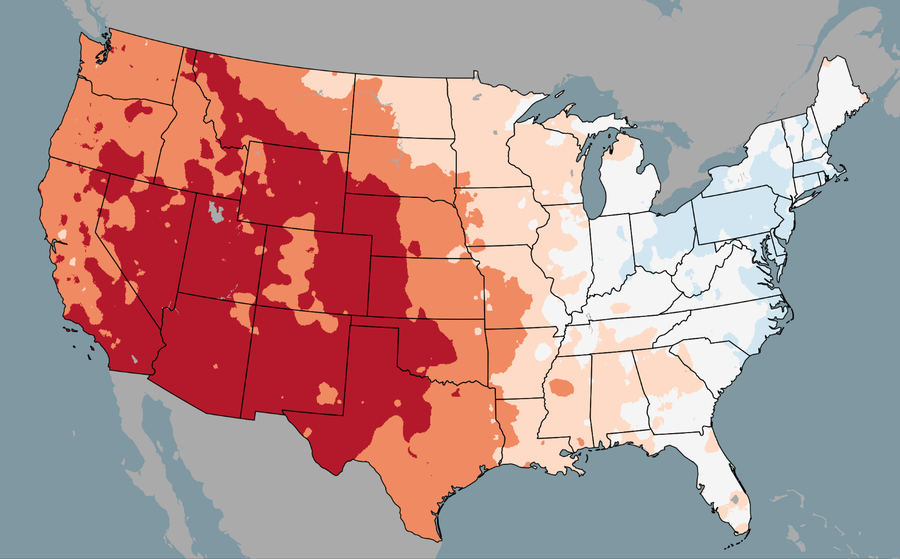
The latest bout of brutally cold weather that has beset the eastern U.S. for weeks sent wind chills into the negative teens and 20s Fahrenheit (negative mid-20s to negative low 30s Celsius) in the U.S. Northeast over the weekend. Meanwhile, out West, winter has brought record-breaking warmth that is more suited for spring and even summer. “I’m sitting here in a T-shirt in early February, a mile high in Colorado,” says climate scientist Daniel Swain of the California Institute for Water Resources.

This stark disparity is the product of a persistent atmospheric pattern. That pattern is about to break, however, and the weather fortunes of the two halves of the country are set to switch.

To explain what’s happening, let’s review a favorite winter weather bugaboo: the polar vortex. The vortex is like a circular rushing river of wind that corrals the bitterest cold air up in the Arctic. When the vortex weakens, that tight circle becomes wavier, akin to how a slow-moving river tends to meander in bends across the landscape, Swain says.

Where the vortex bends southward, cold air follows. And if it bends southward in one spot, it must bend northward in adjacent areas. In this case, the northward bend is happening over the western U.S., where it has pulled up warmer air.

Those bends tend to be set up in ways that reinforce background conditions related to Earth’s geography, Swain says. In the case of the U.S., the location of the Rockies, as well as the boundary between the Pacific Ocean and the land, means that, on average, a weak ridge (a northward bend in the jet stream) forms over the West and a weak trough (a southward bend) establishes over the East. The present dichotomy “is an amplification of that background pattern—a dramatic one,” Swain says.

The rapid warming of the Arctic may be making such weakening of the polar vortex more common, but researchers aren’t yet sure. “To the extent that it’s doing so, it hasn’t been enough to overcome the fact that that source of bitterly cold air isn’t as bitterly cold as it used to be,” Swain says.

This effect bears on the current situation. For the period of December 2025 to January 2026, no part of the contiguous U.S. had record cold. But 21 percent of the country had the warmest such period since 1940, according to climatologist Brian Brettschneider.

And as winters get warmer overall, these bouts of bitter cold become more disruptive because they are so unusual. People are less acclimated to freezing weather, and businesses may not make contingency plans. “For someone who is 25 or 30 years old, they may have had the coldest week in their life,” Swain says, whereas, for those out West, “it’s been the warmest winter regardless of age.”

Though the consequences of the cold have been widespread and acute—with travel disruptions, power outages, and scores of deaths—the warm western winter will also take a toll. Its consequences, however, will be delayed, with the potential for drought, water shortages, and a higher risk of wildfires in the coming months.

The upcoming weather switch up likely comes down to a subtle atmospheric shift. Understanding the details would take a dedicated study to unpack all the influences, Swain says, but it could be a change in where storms in the tropical Pacific are occurring, which can knock things around in the atmosphere like dominoes. Whatever the cause, temperatures will rise to more seasonable levels in the eastern U.S., and cooler, wetter weather will come to the West. Any rain or snow will be welcome, Swain says, but will be unlikely to erase the current deficit.

.

https://static.scientificamerican.com/dam/m/cf72bf7d66e3895d/original/artic-blast-nyc.jpg?m=1770677536.498&w=900

People walk down a street in Brooklyn, N.Y., on February 7, 2026, a day when an “extreme cold warning” was in effect. Spencer Platt/Getty Images

.

.

Click the link below for the complete article:

https://www.scientificamerican.com/article/why-has-this-winter-been-so-cold-in-the-east-and-warm-in-the-west/

.

__________________________________________

Older Entries Newer Entries

Adam Rogers - Comedian

Finding The Funny in Life’s Everyday Chaos

Global geopolitics

Decoding Power. Defying Narratives.

Talk Photo

A creative collaboration introducing the art of nature and nature's art.

Movie Burner Entertainment

The Home Of Entertainment News, Reviews and Reactions

Le Notti di Agarthi

Hollow Earth Society

C r i s t i a n a' s Fine Arts ⛄️

•Whenever you are confronted with an opponent, conquer him with love.(Gandhi)

TradingClubsMan

Algotrader at TRADING-CLUBS.COM

Comedy FESTIVAL

Film and Writing Festival for Comedy. Showcasing best of comedy short films at the FEEDBACK Film Festival. Plus, showcasing best of comedy novels, short stories, poems, screenplays (TV, short, feature) at the festival performed by professional actors.

Bonnywood Manor

Peace. Tranquility. Insanity.

Warum ich Rad fahre

Take a ride on the wild side

Madame-Radio

Découvre des musiques prometteuses dans la sphère musicale française (principalement, mais pas que...).

Ir de Compras Online

No tiene que Ser una Pesadilla.

Kana's Chronicles

Life in Kana-text (er... CONtext)

Cross-Border Currents

Tracking money, power, and meaning across borders.

Jam Writes

Where feelings meet metaphors and make questionable choices.

emotionalpeace

Finding hope and peace through writing, art, photography, and faith in Jesus.

WearingTwoGowns.COM

MOVING FORWARD...That's how WINNING is done!”-Rocky Balboa

...

love each other like you're the lyric to their music

Luca nel laboratorio di Dexter

Comprendere il mondo per cambiarlo.

Tales from a Mid-Lifer

Mid-Life Ponderings

Hunza

Travel,Tourism, precious story "Now in hundreds of languages for you."

freedomdailywriting

I speak the honest truth. I share my honest opinions. I share my thoughts. A platform to grow and get surprised.

The Green Stars Project

User-generated ratings for ethical consumerism

Cherryl's Blog

Travel and Lifestyle Blog

Sogni e poesie di una donna qualunque

Questo è un piccolo angolo di poesie, canzoni, immagini, video che raccontano le nostre emozioni

My Awesome Blog

“Log your journey to success.” “Where goals turn into progress.”

pierobarbato.com

scrivo per dare forma ai silenzi e anima alle storie che il mondo dimentica.

Thinkbigwithbukonla

“Dream deeper. Believe bolder. Live transformed.”

Vichar Darshanam

Vichar, Motivation, Kadwi Baat ( विचार दर्शनम्)

Komfort bad heizung

Traum zur Realität

Chic Bites and Flights

Savor. Style. See the world.

ومضات في تطوير الذات

معا نحو النجاح

Broker True Ratings

Best Forex Broker Ratings & Reviews

Blog by ThE NoThInG DrOnEs

art, writing and music by James McFarlane and other musicians

fauxcroft

living life in conscious reality

Srikanth’s poetry

Freelance poetry writing

JupiterPlanet

Peace 🕊️ | Spiritual 🌠 | 📚 Non-fiction | Motivation🔥 | Self-Love💕

Sehnsuchtsbummler

Reiseberichte & Naturfotografie

Spotlight Choices

astrology - life coaching - optimistic reality

INFINITE ENERGY

"قوتك تبدأ من هنا"