Home

How often do people fall passionately in love? The answer may be less than you think

Leave a comment

Click the link below the picture

.

On average, single adults in the U.S. report they have fallen in passionate love twice in their life so far, according to a new survey. And 14 percent of the 10,036 respondents said they had never fallen in passionate love at all.

The results highlight the diversity of people’s experiences with love, says the study’s lead author, Amanda Gesselman, a psychologist at Indiana University’s Kinsey Institute. “There’s a lot more variation than we really know about,” she says.

Researchers have proposed many ways to understand romantic love. One popular model is the triangular theory of love, which divides romance into three pieces: passion, intimacy, and commitment. The balance of these factors typically changes throughout the life cycle of a relationship, with passionate love happening earliest. “It’s that first feeling of magnetism to a partner, that feeling of obsession—just this intense longing to be together,” Gesselman says. It also typically fades over time and is often replaced by companionate love—a steadier, “warm and cozy kind of love,” she explains.

Stories of passionate love are everywhere—in movies, books, and the narratives we tell ourselves about what it means to live a fulfilling life. These stories often “really center the experience of passion and talk about how universal this is and how everyone feels it,” Gesselman says. Despite this, researchers have relatively little data about how common the experience is across the population.

Gesselman and her team analyzed data from 2022 and 2023 studies of singles in the U.S. Respondents between 18 and 99 years old were asked to report how many times during their life so far they had experienced passionate love. The average was 2.05 times across the whole sample and increased slightly with participants’ age.

Stacked horizontal bar chart shows percentage breakdown of how many times survey respondents said they had experienced passionate love: never (14 percent), once (28 percent), twice (30 percent), three times (17 percent), or four times or more (11 percent).

Amanda Montañez; Source: “Twice in a Lifetime: Quantifying Passionate Love in U.S. Single Adults,” by Amanda N. Gesselman et al., in Interpersona, Vol. 20, No. 1, Article No. e733. Published online February 9, 2026 (data)

Not everyone experiences passionate love, the results show, but the chances increase with age. More than a quarter of people aged 18 to 19 reported never having felt it, and the number decreased to 7.6 percent for those older than age 70. Heterosexual men also reported feeling passionate love more times on average than heterosexual women, but no such differences appeared between men or women who were gay, lesbian, or bisexual.

The results suggest that passionate love is a widespread but infrequent experience for individuals, the authors write. But a big question remains unstudied, Gesselman says: How do people’s appraisals of these experiences change across the life cycles of their relationships and across their own life? People likely reevaluate their past romantic experiences as time goes on, a phenomenon that is crucial for understanding survey data like these.

A key limitation of the study is the fact that it included people of all age groups, who would have had different amounts of time to accumulate relationship experience. Furthermore, the study only included single people, which make up about 31 percent of the adult U.S. population. The results of a similar survey of all adults, including those with romantic partners, would likely look very different. Partnered people are likely to have experienced passionate love at least once, so a survey that excludes them can’t reveal the full picture of this phenomenon, notes Jaimie Krems, a social psychologist at the University of California, Los Angeles, who was not involved with the study.

Passionate love could also exist outside of romantic relationships. As the proportion of the U.S. population that is single continues to grow, it is increasingly important to understand the role these platonic relationships play in people’s lives, Krems says. “I think that is part of the human repertoire, to feel passionate love” in both romantic and nonromantic relationships, she says.

.

https://static.scientificamerican.com/dam/m/83a1be7eef5eb28f/original/GettyImages-2225154152-copy.jpg?m=1771018702.247&w=900Anna Vereshchak/Getty Images

.

.

Click the link below for the complete article:

https://www.scientificamerican.com/article/how-often-do-people-fall-passionately-in-love-the-answer-may-be-less-than/

.

__________________________________________

Barack Obama Says Aliens Are ‘Real,’ But They Aren’t Being Kept at Area 51

Leave a comment

Click the link below the picture

.

Former President Barack Obama said in an interview published Saturday that aliens are “real,” but added that he hadn’t seen them.

Asked by progressive podcaster Brian Tyler Cohen about the existence of extraterrestrial life, the former president responded: “They’re real.”

“But I haven’t seen them. They’re not being kept at Area 51. There’s no underground facility—unless there’s this enormous conspiracy and they hid it from the President of the United States.”

The interviewer did not ask a follow-up question on the topic. 

The former president also spoke out about the recent deployment of thousands of immigration agents to Minnesota, condemning what he described as “rogue behavior” of the federal government during the months-long enforcement surge. 

Obama compared the actions of the Trump Administration in Minnesota to behavior that “we’ve seen in authoritarian countries and we’ve seen in dictatorships, but we have not seen in America.”

“It is important for us to recognize the unprecedented nature of what ICE was doing in Minneapolis, St. Paul, the way that federal agents, ICE agents were being deployed, without any clear guidelines, training, pulling people out of their homes, using five-year-olds to try to bait their parents,” he said, referring to the case of 5-Year-Old Liam Conejo Ramos.

“So the rogue behavior of agents of the federal government is deeply concerning and dangerous, but we should take a moment to appreciate the extraordinary outpouring of organizing, community building, decency, neighbors buying groceries for folks, accompanying children to school, teachers who were standing up for their kids, not just randomly, but in a systematic, organized way, citizens saying, “this is not the America we believe in,’” he said. 

Obama, whom Trump succeeded in 2017, had previously spoken out against the federal immigration operations in Minneapolis following the killings of Alex Pretti and Renee Good by federal agents.

In a statement with his wife Michelle posted on X after Pretti’s death, Obama claimed that Trump and officials in his Administration “seem eager to escalate the situation” instead of “trying to impose some semblance of discipline and accountability over the agents they’ve deployed.”

“This has to stop,” Obama said. “I would hope that after this most recent tragedy, Administration officials will reconsider their approach.” 

The Trump Administration said Thursday it is winding down its massive immigration enforcement operation in Minnesota following months of unrest over excessive use of force by immigration officers in the state, including the shooting deaths of Pretti and Good.

“I have proposed and President Trump has concurred that this surge operation conclude,” border czar Tom Homan told reporters in a press conference in Minneapolis on Thursday.

President Donald Trump sent Homan, his top immigration advisor, to Minnesota late last month to address large-scale protests over excessive use of force by immigration officers in the state. Homan took over leadership of “Operation Metro Surge” from Border Patrol commander Gregory Bovino and quickly set up meetings with local and state leaders, including sheriffs, police chiefs, Governor Tim Walz, Minneapolis Mayor Jacob Frey, and Minnesota Attorney General Keith Ellison.

Obama also responded indirectly to the recent controversy over a video posted by President Donald Trump that depicted him and First Lady Michelle Obama as apes. 

When asked about it, Obama commented on how there is a “sort of clown show that’s happening in social media and on television.” 

“What is true is there doesn’t seem to be any shame about this among people who used to feel like you had to have some sense of decorum and a sense of propriety and respect for the office. So that’s been lost,” he added. 

Trump has refused to apologize for posting the video, saying he instructed a staffer to share it but that he had not seen the offending part.

“I didn’t see the whole thing,” Trump said. “I looked at the first part, and it was really about voter fraud in the machines, how crooked it is, how disgusting it is. Then I gave it to the people. Generally, they look at the whole thing. But I guess somebody didn’t.”

TIME has approached the White House for comment. 

.


Erin Hooley—Associated Press

.

.

Click the link below for the complete article:

https://time.com/7378768/obama-aliens-real-area-51/

.

__________________________________________

Trump’s Relentless Self-Promotion Fosters an American Cult of Personality

Leave a comment

Click the link below the picture

.

The racist online video that President Trump recently shared and then deleted generated a bipartisan furor because of its portrayal of Barack and Michelle Obama as apes. What was little remarked on was how it presented Mr. Trump himself — as the “King of the Jungle.”

After a year back in the White House, Mr. Trump’s efforts to promote himself as the singularly dominant figure in the world have become so commonplace that they no longer seem surprising. He regularly depicts himself in a heroic, almost godly fashion, as a monarch, as a Superman, as a Jedi knight, as a military hero, even as a pope in a white cassock.

While Mr. Trump has spent a lifetime promoting his personal brand, slapping his name on hotels, casinos, airplanes, even steaks, neckties, and bottled water, what he is doing in his second term as president comes closer to building a cult of personality the likes of which has never been seen in American history. Other presidents sought to cultivate their reputations, but none went as far as Mr. Trump has to create a mythologized, superhuman, and omnipresent persona, leading to idolatry.

His picture has been splashed all over the White House, on multistory banners on the side of federal buildings, on annual passes to national parks, and maybe even soon on a one-dollar coin. His name has been etched on the John F. Kennedy Center for the Performing Arts, on the U.S. Institute of Peace, on federal investment accounts, special visas, and a discount drug program, and, if he has his way, on Washington Dulles International Airport, Penn Station in New York, and the future stadium of the Washington Commanders.

His White House is pressuring the Smithsonian Institution’s National Portrait Gallery to display portraits of Mr. Trump by his supporters. A group of cryptocurrency investors has shelled out $300,000 to forge a 15-foot-tall gold-covered bronze statue of Mr. Trump called “Don Colossus” to be installed at his golf complex in Doral, Fla.

His administration is considering designating a new class of battleships in Mr. Trump’s name. His allies are pressuring foreign leaders to endorse his bid for the Nobel Peace Prize and threatening consequences for resisting. Some supporters in Congress have even proposed adding his face to Mount Rushmore, an effort that, for the moment, has gained little traction.

This spree of self-aggrandizement goes beyond mere vanity, although Mr. Trump suffers from no particular shortage in that department. “I really have a big ego,” he noted at the National Prayer Breakfast this month, an assessment that drew no disagreement. What Mr. Trump is actually doing, though, is making himself the inescapable force in American life.

“This is not just egotistical self-satisfaction, it’s a way of expanding presidential power,” said Michael Beschloss, the presidential historian. “A president is more powerful, I assume he believes, if he is ever-present than if he keeps his head down.”

Cults of personality are traditionally associated with dictators and demagogues, not democrats. They are figures like Joseph Stalin, Mao Zedong, Benito Mussolini, and, more recently, the shirtless, horseback-riding Vladimir V. Putin of Russia. But Mr. Trump does not seem concerned that he might be heading down a dangerous path.

Indeed, last month at the World Economic Forum in Davos, Switzerland, he suggested that authoritarianism was not necessarily something to eschew. “Usually they say, ‘He’s a horrible dictator-type person, I’m a dictator,’” he said after delivering a rambling speech. “But sometimes, you need a dictator.”

His staff did not reject the notion that he was fostering a cult of personality when asked for comment. Indeed, it released a statement seeming to argue that one would be deserved.

“President Trump is going to go down in history as the most successful and consequential president in our lifetime,” Steven Cheung, the White House communications director, said in the statement. “He built the most powerful political and cultural movement ever. His successes on behalf of the American people will be imprinted upon the fabric of America and will be felt by every other White House that comes after him.”

But even some former Trump aides said his fixation on glorifying himself served a hunger for dominance that had not translated into making the lives of everyday Americans better.

“This is a man drunk on power with an already enormous ego that was further inflated by winning the presidency again — and the popular vote,” said Sarah Matthews, who was a deputy White House press secretary for Mr. Trump in his first term before resigning in protest after the attack on the Capitol on Jan. 6, 2021.

Ms. Matthews, now affiliated with an opposition group called Home of the Brave, said that rather than focusing “on what’s best for the American people,” the president was concentrating on “building monuments to himself” and exacting revenge against perceived enemies. “It reinforces the perception that this presidency is more about elevating one man than serving the country,” she said.

The notion of a cult of personality has become an increasing theme of the political discourse in recent months. Consider the last 10 days alone: Curt Mills, the executive director of The American Conservative, referred to “the personality cult of Trump.” Gov. Kathy Hochul of New York, addressing a Democratic convention, said Republicans were “nothing more than a personality cult.” And Senator Chuck Schumer of New York, the Democratic leader, said democracy “will prevail over cult of personality.”

Other presidents have encouraged hero worship, and plenty have been honored with monuments. But for the most part, they were more restrained than Mr. Trump, leaving the most ostentatious expressions of reverence to others and generally after they had left office.

George Washington set the standard from the start. Knowing that as the first president he would be establishing precedent, he deliberately shunned the trappings of royalty and declined to be called “Your Majesty” or “Your Highness,” opting instead for the more humble “Mr. President.”

It is true, of course, that the capital of the new nation was named after Washington during his presidency, a decision made by three commissioners he appointed. But historians said he had no known hand in encouraging it.

“He was surprised that the commissioners chose the name, though he did not object,” said David O. Stewart, a Washington biographer. “As near as the evidence shows, George Washington very much liked having the city named after him. He was not without ego, and devoted great energy and attention to developing the capital city.”

The iconic Washington Monument, however, came decades after his death, much as the Jefferson Memorial, Lincoln Memorial, and Kennedy Center were not erected or named until the presidents they honored were gone. Mount Rushmore was carved after Washington, Thomas Jefferson, Abraham Lincoln, and Theodore Roosevelt were all in their graves.

No sitting president ever had his face put on a coin while in office except for Calvin Coolidge, whose laconic personality did not exactly lend itself to cults. And Herbert Hoover surely would have preferred not having his name attached to the Great Depression shantytowns called Hoovervilles, although the Hoover Dam was named for him while he was in office. (Franklin D. Roosevelt stripped the name; Harry S. Truman restored it.)

“Presidents don’t name things after themselves, people name things after presidents — and there is a big difference between the two,” said Jennifer Mercieca, a communications professor at Texas A&M University and the author of “Demagogue for President: The Rhetorical Genius of Donald Trump.”

“One is an expression of power and a demand for respect and status,” she said. “The other is an acknowledgment by the public of a job well done, a grateful public giving a president respect and status.”

Many presidents have enjoyed being the center of attention. Theodore Roosevelt’s daughter Alice Roosevelt Longworth notably said her father “always wanted to be the corpse at every funeral, the bride at every wedding, and the baby at every christening.” Others struggled with that kind of politics. George H.W. Bush painfully tried to avoid the first-person singular “I” in sentences because growing up, his mother taught him that it sounded boastful.

Boastful is not something Mr. Trump ever learned to avoid, nor can he fathom why predecessors passed on self-promotion. When he visited Mount Vernon during his first term, he expressed surprise that Washington did not name the estate for himself. “You’ve got to put your name on stuff, or no one remembers you,” Mr. Trump told people.

With Mr. Trump, it goes beyond names and memory. He wants to be seen as superlative in every way — and flawed in no way. His first-term executive assistant, Madeleine Westerhout, wrote in her memoir that when she expressed concern one day that he seemed exhausted, she was remonstrated by Hope Hicks, the president’s close adviser: “Donald Trump is never tired, and he is never sick.” To even question his health, Mr. Trump himself said in December, is “seditious, perhaps even treasonous.”

Personality-driven politics serve to bind followers of a movement to their leader more than to any particular policy prescription, making his success or failure their own. Veneration and loyalty are central, and ideology secondary. The leader is presented as infallible, uniquely qualified, even divinely delivered for this moment in history.

Mr. Trump has played to these themes since taking the national political stage. “I alone can fix it,” he declared when running in 2016. “I was saved by God to make America great again,” he said on being inaugurated again last year.

The efforts to exalt himself, however, have accelerated in the past year far beyond his first term and have increasingly come to resemble eccentric regimes in far corners of the world. To those who have spent time in the former Soviet Union, the “Don Colossus” statue bears a striking resemblance to the rotating gold statue erected by Saparmurat Niyazov, the megalomaniacal former dictator of Turkmenistan who called himself Turkmenbashi and even renamed the months of the year after himself and his family.

“There is no settled definition of a cult of personality, but for us this qualifies,” Benjamin E. Goldsmith of the Australian National University and Lars J.K. Moen of the University of Vienna, who have studied Mr. Trump’s hold on his supporters, said in a joint email.

The two scholars, who published a paper on the phenomenon in the Political Psychology journal, said the personality cult allowed Mr. Trump to dominate Republican primary contests, right-wing media, and his party’s majorities in Congress. Those who stand against Mr. Trump are deemed traitors and punished accordingly.

“For us, this is the major threat to U.S. democracy from Trump’s cultlike following,” they wrote. “Congress is transformed into an enabler, even when the executive makes disastrous policies, undermines the rule of law, or might attempt to fix elections. The system can transform into an electoral autocracy. Our bet is that we’re already far along that path.”

The Latest on the Trump Administration


  • Trump Nominee on ‘White Erasure’: Jeremy Carl, President Trump’s pick for a senior State Department post, told the Senate Foreign Relations Committee during his confirmation hearing that a loss of a dominant white culture is weakening the country.

  • Economic Outlook: Solid jobs data and a soft inflation reading for January are welcome news for Trump. But the bigger economic picture is less encouraging.

  • Rail Tunnel Funding: Federal funding for the $16 billion Gateway rail tunnel between New York City and New Jersey, which had been suspended for more than four months, has begun to flow again after lawyers for the Trump administration told a federal judge that it would comply with her orders.

  • ‘Board of Peace’ Funding: The United Arab Emirates and the United States have each committed more than $1 billion to Trump’s new international initiative, officials said.

  • Attack on Climate Regulation: The Trump administration has repealed the scientific determination that underpins the government’s legal authority to combat climate change. A legal battle over the repeal is expected to reach the Supreme Court.

  • Troops in Nigeria: The first wave of U.S. military personnel has arrived in Nigeria to assist the country’s armed forces in targeted counterterrorism operations aimed in part at protecting Nigerian Christians.

.

A golden statue of Donald Trump's head and shoulders lies on a surface. White plastic sheeting covers the background.

“Don Colossus” — a 15-foot bronze statue of President Trump — at the sculptor’s studio in Zanesville, Ohio, earlier this month. Credit…Maddie McGarvey for The New York Times

.

.

Click the link below for the complete article:

https://www.nytimes.com

.

__________________________________________

Happy Valentines Day Ladies and uh Gentlemen Too!

Leave a comment


.

__________________________________________

Axolotls wow scientists by regenerating this complex organ

Leave a comment

Click the link below the picture

.

Axolotls are famous for their ability to regrow significant parts of their bodies. But according to recent research, these frilly-headed salamanders, which are native to lakes and wetlands around Mexico City, can perform an even more extraordinary biological feat: they can completely regrow their thymus, a complex organ instrumental to the immune system in most vertebrates.

Previous work suggested that some animals can partially regrow thymuses, but the co-authors of the new paper, published in Science Immunology, were surprised to see axolotls completely rebuild the intricately structured organ from nothing.

“Axolotls are legendary for regenerating limbs and parts of the central nervous system,” says study co-author Maximina H. Yun, a biologist at the Chinese Institutes for Medical Research in Beijing. “The realization that these animals can regrow their full thymus from scratch is a breakthrough moment.”

The thymus is responsible for producing the body’s T cells, which help to target and destroy invading pathogens. “In humans and most other vertebrates, the thymus is famous for being one of the first organs to degenerate,” says Turan Demircan, a biologist and regeneration expert at Muğla Sıtkı Koçman University in Turkey who was not involved in the new research. “Until now, it was believed that once this tissue is gone or removed, it cannot be fully rebuilt.”

For the new study, Yun and her colleagues removed the thymus from several juvenile axolotls. After seven days, many of the animals were already budding new thymuses. After 35 days, more than 60 percent of them had fully regenerated the organ. “I was genuinely surprised,” says study co-author René Maehr, a biologist at the University of Massachusetts Chan Medical School. “A full, functional regeneration of a complex immune organ wasn’t something I expected.”

The team next tested the function of the regenerated thymuses by transplanting them into other axolotls. “Remarkably, the transplanted organs integrated perfectly,” Demircan says.

Further analysis identified two key features essential to the regeneration process: the Foxn1 gene, which scientists already knew was involved in thymus development, and a signaling molecule called midkine, which Demircan says appears in human embryos but is largely inactive in adults. The results indicate there may be a biological pathway involving these components that could be useful for treating thymus-related conditions in humans.

“Axolotls are essentially nature’s ‘master key’ for regeneration research,” Demircan says. “If we could reawaken this specific pathway in humans, we might be able to stimulate the thymus to regrow, potentially reversing immune aging or helping patients who have undergone thymectomies.”

According to Yun, researchers might someday tweak human stem cells to emulate the axolotl and recover thymus function. “We are laying the groundwork for transformative therapies that could redefine our approach to immune restoration.”

.

https://static.scientificamerican.com/dam/m/acc02c65135fc522/original/sa0326Adva10.jpg?m=1770222547.316&w=900Paul Starosta/Getty Images

.

.

Click the link below for the complete article:

https://www.scientificamerican.com/article/axolotls-can-regenerate-their-thymus-a-complex-immune-system-organ/

.

__________________________________________
At least half a dozen top Trump administration officials appear in the Jeffrey Epstein files

Leave a comment

Hmmmm … administrative secrets!

Click the link below the picture

.

At least a half-dozen top officials in the current Trump administration have connections to Jeffrey Epstein, according to an NBC News review of some of the over 3 million documents the Justice Department has released.

The degree to which each individual was connected to Epstein varies significantly, from a single email to years of communications. President Donald Trump, who had a lengthy relationship with Epstein, is mentioned thousands of times in the files. Trump has never been accused by authorities of any wrongdoing connected to Epstein, and has said he parted ways with him in the mid-2000s because he was a “creep.” He has also denied any wrongdoing.

During a testy oversight hearing on Wednesday. Rep. Becca Balint, D-Vt., pressed Attorney General Pam Bondi on whether any current administration officials have been questioned by the Justice Department about their ties to Epstein.

“I’m stunned that you want to continue talking about Epstein,” Bondi replied while sidestepping the question.

In a post on Truth Social on Thursday, Trump praised Bondi’s appearance at the Senate hearing and claimed that the files provide “conclusively” that he “has been 100% exonerated.”

Some officials from previous Democratic administrations have appeared in the files — including former President Bill Clinton, his former Treasury Secretary Larry Summers, and former Obama White House counsel Kathy Ruemmler.

Ruemmler announced this week that she would leave her position as Goldman Sachs’ top lawyer amid blowback over her extensive emails with Epstein. Ruemmler has said she was friendly with Epstein only in the context of being a criminal defense attorney and that she regrets ever having known him.

Summers announced in November that he was taking a leave of absence from his teaching at Harvard University and would step back from other public commitments. Summers said in November that he was “deeply ashamed” of emails that came out last year showing him corresponding with Epstein as recently as July 2019. He has not been accused of any wrongdoing in connection with Epstein’s crimes.

Clinton has said that he cut ties with Epstein before the financier was accused in 2006 of having sex with a minor. His spokesperson said the emails “prove Bill Clinton did nothing and knew nothing.” He has not been accused of any wrongdoing in connection with Epstein by authorities.

Two other ex-Trump administration officials — former DOGE chief Elon Musk and former chief strategist Steve Bannon — also made appearances in the files. Neither has been accused of any wrongdoing in connection with Epstein’s crimes.

Alex Acosta, who was Trump’s Labor secretary during his first term, led the first federal criminal probe into Epstein as U.S. attorney for the Southern District of Florida. Acosta approved a much-maligned secret nonprosecutorial agreement that allowed Epstein to plead guilty in 2008 to lesser state charges, which helped him avoid potentially decades of jail time. Acosta has defended the plea deal and said that his office “acted appropriately” given the context of the 2008 case. “Times have changed, and coverage of this case has certainly changed,” he said in 2019 after Epstein’s arrest in New York.

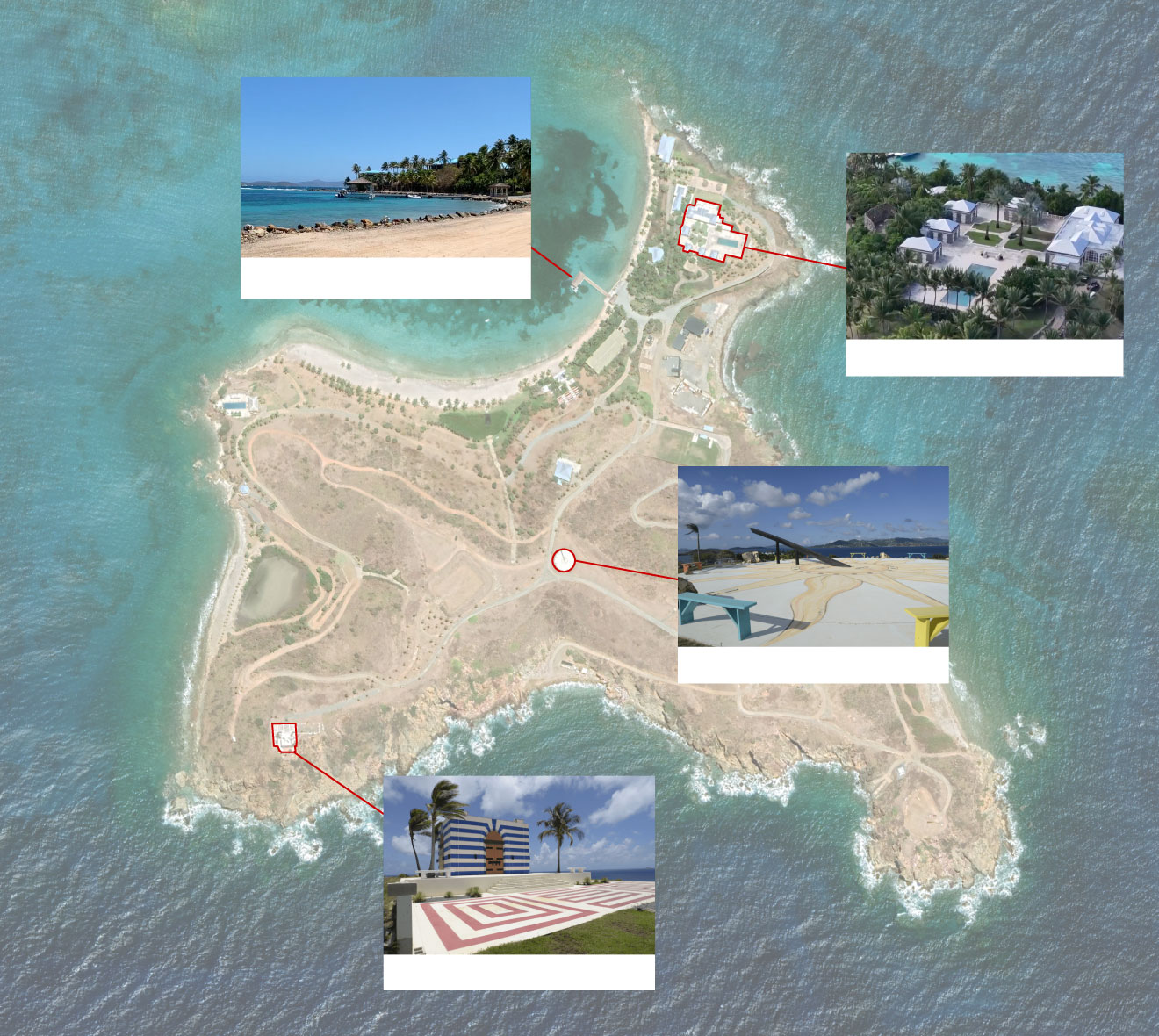
Reached for comment, a White House spokesperson referred NBC News to remarks Trump made on Thursday about Commerce Secretary Howard Lutnick, who admitted this week to visiting Epstein’s island in 2012.

“No, I wasn’t aware of it,” he said of Lutnick’s trip, adding, “I actually haven’t spoken to him about it, I wasn’t, but from what I hear, he was there with his wife and children. And I guess in some cases, some people were. I wasn’t. I was never there. Somebody will someday say that. I was never there.”

No major U.S. political figure has been accused by law enforcement of any crimes, and all have denied wrongdoing. A joint DOJ-FBI memo released last year found that there was no evidence of a so-called “client list” and that no one else would be investigated in connection with Epstein.

Here’s a look at administration officials’ ties to Epstein and his co-conspirator in a sex tracking ring, Ghislaine Maxwell:

Epstein and Trump’s overlap

Numerous people in President Donald Trump’s administrations, past and present, showed up in Epstein file dumps.

NBC News mapped out the web of connections between Jeffrey Epstein and those in President Trump’s administration

This chart shows Jeffrey Epstein, Donald Trump, and eight others who serve or served in Trump’s administration. Mouse over or tap an artist name to hear how they showed up in an Epstein files dump.

RFK Jr. : Kennedy Jr. shows up in the flight logs of Epstein’s private jet and is referenced in an email exchange between Ghislaine Maxwell and Epstein.

JeffreyEpsteinSteveBannonElonMuskKevinWarshJohnPhelanMehmetOzStephenFeinbergRFK Jr.HowardLutnickDonaldTrump

Notes: These connections are based on files released by the Department of Justice and the House Oversight Committee. None shown here, beside Jeffrey Epstein, have been accused by authorities of wrongdoing.

Source: NBC News

Graphic: Joe Murphy and Dareh Gregorian / NBC News

.

Secretary Lutnick

.

.

Click the link below for the complete article ( be sure to click the link for the entire story):

https://www.nbcnews.com/politics/justice-department/least-half-dozen-top-trump-administration-officials-appear-jeffrey-eps-rcna258749?utm_source=snews&utm_medium=referral

.

__________________________________________

Elephant Bone in Spain May Be Proof of Hannibal’s Tanks With Trunks

Leave a comment

Hmmmm … who flooded Harlem with drugs? Payback?

Click the link below the picture

.

A 2,200-year-old bone unearthed near Córdoba, Spain, may provide the first direct archaeological evidence of the formidable battle elephants employed by the Carthaginian general Hannibal.

Tucked away in a bed of rubble alongside Carthaginian coins from the third century B.C., the baseball-size ankle bone serves as a bridge between colorful historical narratives about the Second Punic War and hardened archaeological fact. The fossil wasn’t from the 37 elephants that famously crossed the Alps in 218 B.C., but it offers what Fernando Quesada Sanz, an archaeologist at the Autonomous University of Madrid, calls a “landmark” connection to Hannibal’s military campaigns, as well as his tactical errors.

Traces of combat — specifically, catapult ammunition found with the specimen — suggest the elephant died in battle, according to Dr. Quesada, an author of a study published last month in The Journal of Archaeological Science: Reports.

During the closing decades of the third century B.C., the Mediterranean was dominated by two superpowers: the emergent Roman Republic and Carthage, a North African city-state in what is now Tunisia. Still reeling from a humiliating defeat in the First Punic War — which cost them the strategic islands of Sardinia and Corsica — the debt-stricken Carthaginians pivoted to Spain, carving out a prosperous new empire from its silver mines.

Leading this expansion was Hannibal of the Barca family, whose brother Mago is credited with bringing elephants to the Iberian peninsula around 228 B.C. Hannibal then revolutionized warfare by deploying armored pachyderms against local tribes. This terrifying shock force broke battle lines and provided elevated, commanding positions for his archers.

“It is quite possible that the bone uncovered around Cordoba belonged to one of the elephants that Hannibal used to crush the Carpetani tribe in central Spain,” Dr. Quesada said.

The Second Punic War was ignited in 219 B.C. by Hannibal’s brutal, eight-month siege of Saguntum, a strategic Spanish stronghold allied with Rome. Believing the siege to be a rogue act, Rome demanded that Hannibal be handed over. When Carthage refused, the two powers declared war, setting the stage for a colossal 17-year conflict.

Before his invasion of Italy, Hannibal left 21 war elephants in Spain under the authority of his brother Hasdrubal. Those so-called tanks of antiquity were distributed among Mago and other generals. Dr. Quesada said the bones in his team’s archaeological find might be linked to those elephants.

The four-inch bone fragment was dug up six years ago, ahead of construction work at the Iron Age site Colina de los Quemados. The excavation revealed a violent past for the fortified village. Sealed beneath a collapsed adobe wall, the remnant was found with 12 large stone catapult projectiles, suggesting that a fierce clash had taken place on the grounds of the settlement.

The artifact was found in isolation, with the rest of the animal’s remains lost. This anomaly has led researchers to a curious possibility: The relic might have been intentionally spared, salvaged by someone who found its small size ideal for a souvenir.

Researchers identified the specimen as the third carpal bone from an elephant’s right foreleg by comparing it with anatomical collections at the University of Valladolid in Spain and the Leiden University in the Netherlands. The anatomical match for the bone was confirmed through measurements against Asian elephant and steppe mammoth samples.

Eve MacDonald, a historian at Cardiff University and the author of “Carthage: A New History,” who was not involved in the new study, said that while a single ankle bone limits interpretation, “the association alone adds to the understanding of the significance of the elephant in the Carthaginian war machine.”

The fate of the Córdoba elephant was undoubtedly grim, but it was probably a swifter mercy than the marathon of misery endured by Hannibal’s herd. Over five grueling months, the elephants caravaned from Catalonia across the Pyrenees and the Rhone, ultimately scaling the snow-slicked Alps. Their thousand-mile journey was less a military feat and more a slow-motion catastrophe.

While accounts vary, many historians believe a significant number of the elephants — perhaps nearly all 37 — initially survived the passage. But by the spring of 217 B.C., Hannibal’s grand trunk show had been reduced to a lone survivor: a tusk-shorn animal named Surus, meaning the Syrian. The others had died following the Battle of Trebia because of exhaustion, wounds, and a severe winter ice storm.

Hannibal is said to have ridden Surus across the treacherous Arno marshes after losing an eye to an infection. The chilling admission of the Roman playwright Plautus — that Surus “set my heart a-freezing” — endures as the ultimate testimonial to a creature that commanded absolute, frosty respect.

Uncovering the Past, One Discovery at a Time


  • War Elephants: Archaeologists say a 2,200-year-old specimen is the first direct evidence of how the Carthaginians used the giant mammals in the Punic Wars.

  • The Lighthouse of Alexandria: An ancient skyscraper considered the seventh wonder of the world crumbled to ruin centuries ago. Now an ambitious archaeological project aims to reassemble it in 3-D.

  • Rock Art: An ancient handprint in a cave on an Indonesian island may be the oldest known rock art, created at least 67,800 years ago.

  • Roman Villa Under Deer Park: The unexpected discovery of a well-preserved and fortified villa in Margam Park in South Wales sheds new light on the Roman occupation there, an expert said.

.

https://static01.nyt.com/images/2026/02/17/science/00HS-tb-hannibal/00HS-tb-hannibal-jumbo.jpg?quality=75&auto=webpA Renaissance-era fresco attributed to Jacopo Ripanda depicting Hannibal on the back of an elephant during the Second Punic War, in the third century B.C. Credit…Adam Eastland/Alamy

.

.

Click the link below for the complete article:

https://www.nytimes.com

.

__________________________________________

The physics of ‘Penisgate’ and how ski jumpers fly

Leave a comment

Click the link below the picture

.

In the run-up to this year’s Winter Olympics, and even as the Games have got underway, a scandal has been brewing: allegedly, some competitive ski jumpers may have artificially enlarged their crotch area by injecting their genitals with engorging chemicals or stuffing their underwear to create bigger bulges. The apparent reason: to alter their suit measurements—ski jumpsuits are precisely tailored to jumpers’ bodies—and, reportedly, to gain a boost in jumps.

The allegations, first reported by a German media outlet and since dubbed “Penisgate,” have caught not only the Internet’s attention but also the World Anti-Doping Agency’s eye, although no athletes have been implicated by name.

Still the affair raises an important science question: How does a slight increase in a ski jumper’s suit surface area actually change their jumping distance?

Let’s start with the crotch. According to rules issued by the International Ski and Snowboard Federation (FIS), the body that regulates ski jumping, “crotch height” measurements for an athlete’s suit are taken by laser. So, in theory, if an athlete’s crotch is temporarily a little larger, they would get a slightly roomier suit than they might otherwise.

The extra fabric might be enough to minimally lengthen their jumps by providing a little more lift in the air—much like the patagium of a flying squirrel—and, in turn, more distance. In a sport that’s often decided by a matter of centimeters, any additional hang time can be the difference between gold and silver.

“It has a huge impact,” says Lasse Ottesen, now race director for the Nordic Combined event at FIS and a former Olympic ski jumper. He said research conducted in the 2000s suggested jumpers with a single centimeter of extra material at the crotch could increase jump length by as much as four meters. And according to a more recent study accepted for publication by Frontiers in Sports and Active Living, scientists found that adding one centimeter to the overall circumference of ski jumpers’ suits could lengthen jumps by 3.2 meters.

Athletes, coaches, and regulators are aware of this. In January, before “Penisgate” went viral, several officials from Norway’s ski jumping team were temporarily banned from competition after they were found to have altered athletes’ suits with extra crotch stitching at last year’s Nordic World Ski Championships. That incident went “way beyond what we have ever seen before,” Ottesen says, adding that the FIS is working to refine ski jumping regulations—not least to make sure that “everyone is measured in the correct way.”

Suit size is far from the only factor to influence ski jump lengths, however.

Amy Pope, a principal lecturer in physics and astronomy at Clemson University, explains that how far a ski jumper flies is ultimately the result of physics.

To prepare for their jumps, ski jumpers race down ramps etched with ice grooves in the snow, Pope says. As they descend, the jumpers are aiming to minimize air resistance and the friction on their skis to juice their speed. By the time they reach the bottom, they’re hitting speeds of about 60 miles per hour and a “huge” wall of air resistance—imagine sticking your hand out the window of a car barreling down the highway. “That’s exactly what the athletes are feeling,” she says. And then they jump.

At this point, if the jumper was in a vacuum, their trajectory would be parabolic, with the ideal launch angle of 45 degrees, says Philip Langill, an associate professor in the department of physics at the University of Calgary. A degree more or less, and they wouldn’t travel as far as possible.

Of course, no one is jumping in a vacuum at the Winter Olympics. Instead, the athletes harness “the power of the air around them” to stay aloft longer, Pope says. They contort their bodies to maximize lift, reduce drag, and fight the pull of gravity.

That’s where the sport’s signature “V” style jump comes in—the “biggest revolution” in ski jumping in the last three decades, Ottesen says. In the early 1980s, long jumpers would often keep their skis parallel in the air, he says. But by the 1990s skiers started to fly with their skis in a “V,” increasing their surface area and lift. “All of a sudden, we were jumping a lot farther than we used to,” he says, “and we were crashing more.”

Do the athletes think about all this physics? Sometimes, according to Ottesen, at least—in training, he recalls being “more observant” of the forces acting on his body. But when it comes to competition time, muscle memory takes over. “You’re not thinking about any of this at all. The body and mind are just doing what it’s been practicing,” he says.

.

https://static.scientificamerican.com/dam/m/93d69c5042cdebad/original/ski-jumping.jpg?m=1770905360.946&w=900

Qiwu Song of Team People’s Republic of China competes in the Mixed Team Trial Round on day four of the Milano Cortina 2026 Winter Olympic Games, Lars Baron/Getty

.

.

Click the link below for the complete article:

https://www.scientificamerican.com/article/the-physics-of-penisgate-and-how-ski-jumpers-fly/

.

__________________________________________
Michelle Obama Gets Candid on Empty Nest Life, Confidence, and Finding Freedom at 61

Leave a comment

Click the link below the picture

.

As any working mother can tell you, at one point or another, you’re going to need to outsource—even if you’re Michelle Obama. At an exclusive in-person event at People Inc. headquarters in New York City, the former First Lady spoke with her friend La La Anthony about her new book, The Look. People, Inc. is the parent company of Parents.

She admitted that it wasn’t long before her busy schedule campaigning as First Lady—while raising daughters Malia and Sasha (now 27 and 24)—led her to hire a stylist.

“There was no time to shop or think about clothes, so my executive brain function said, ‘I’m going to need some help,’” said Obama. 

As Obama, 61, explains in her new book, co-written with longtime stylist Meredith Koop, that smart hire led to some of the most iconic looks in the White House despite her reluctance to talk about fashion while performing her duties as First Lady.

“Before I talked about the shoes and the gowns, I wanted my initiatives to speak,” she said. 

But for Obama, it was never just about the clothes. In fact, function always took precedence over fashion. She insisted on having the ability to move freely—to hug, squat, or whatever was needed at an engagement.

“It would drive Meredith [Koop] and her team crazy,” said the Former First Lady. “I never wanted my clothes to stop me from engaging. If it calls for me to take off my shoes and connect with a kid, then that’s what’s going to happen. So don’t put me in something that is going to stain or wrinkle.” 

Something that all mothers can relate to.  

Unsurprisingly, while Obama was there to promote her new coffee table book, she gave us so much more to think about. Including multigenerational life lessons that all of us parents can benefit from. 


Real Confidence Comes From Your Parents

Being a First Lady in the public eye takes confidence. When asked by LaLa Anthony where she gained hers from, Obama credited her parents for their love, stability, and adoration.

“I think that’s where real confidence comes from. I sat around a table where my parents loved my voice. They loved me and my brother’s conversation. They wanted to hear our ideas. They gave us a platform at our own kitchen table,” she said. “That’s the power of great parenting. It buttressed me for all that the world was going to present for me.” 

That world wasn’t always kind, Obama explains.

“Because you go outside your home, particularly as a Black kid. As a tall Black kid. I think they knew that I was going to get a lot of ‘no’s’ and I was going to get a lot of pushback from a world, a country, a society that would have lower expectations of me than I had for myself. So I always came through the door blazing, feeling pretty smart and sure about things.”


Teach Your Kids to Live Without You

Now an empty nester, Obama can see the different ways her mom was preparing her to be independent.

“My mom had been preparing us for her death since she was 10. I think what she was doing was letting us know that she loved us, but that we can live life with and without her. And I understand that now as a parent,” she explains. “I want my daughters to know ‘I love you. You love me, but you don’t need me. You know everything you need to know to be successful.’” 

Be Present in the Feeling

When the former First Lady was caring for her mom, Marian Robinson, near the end of her life, she said something that changed how Obama approached her sixth decade.

“She said, ‘Wow, that quick.’ And I said, ‘What are you talking about?’ and she said, ‘Life.’ What I got from that was that you’re never ready,” said Obama. “And I was like, let me hear that. Let me understand that. Even with a wonderful life, I want to be present. And I think that feeling of 60 is about me trying to be present in the feeling—trying to be present in this moment in my life so that this last chapter is exactly how I want it to be.”

There’s Freedom in Being an Empty Nester

Everything Michelle Obama has done since becoming a mother has been to ensure her girls turn out whole. But with her daughters now out of the house, she’s embracing life rather than mourning the past like so many other empty nesters might do.

“This is the first time in my life where every single decision I make is mine,” she said. “It’s what I want to do. And there’s a burden in that, too. This is the first time I’ve been able to do that for me with no excuses, so that means the consequences are mine too. There’s freedom with that.”

Only Take Advice From Seasoned Moms

The conversation would not have been complete without her making us laugh. Several times. The most memorable? A playful PSA reminding attendees to stop listening to young mommy bloggers. All in jest, she reminded us that none of us has any idea what we’re doing during those first few years.

“Let me hear what you have to say when they’re 27. That’s when I’ll take your advice,” she said. “I don’t know you’re right until I see the final product. I want to talk to Mariane Robinson. I want to talk to the woman who raised the First Lady. All parent bloggers should be grown people.” 

Who are we to disagree?

.

https://www.parents.com/thmb/F9Xla0gFUI51ammbR_3sy91U19w=/750x0/filters:no_upscale():max_bytes(150000):strip_icc()/Parents-MObamaatPeopleInc-3ddbb714ca2e4cc1b195de2bf9f412e8.JPGFormer First Lady Michelle Obama & La La Anthony discuss her new book ‘The Look’ at People Inc. Photo: Stephen Lovekin/Shutterstock for People, Inc.

.

.

Click the link below for the complete article:

https://www.parents.com/michelle-obama-gets-candid-on-empty-nest-life-11846576

.

__________________________________________

Kennedy Allies Target States to Overturn Vaccine Mandates for Schoolchildren

Leave a comment

Click the link below the picture

.

Longtime allies of Robert F. Kennedy Jr., the nation’s health secretary, have launched a new effort to repeal laws that for decades have required children to be vaccinated against measles, polio, and other diseases before they enter day care or kindergarten.

A newly formed coalition of vaccine activists is targeting laws that are considered the linchpin of protection from deadly diseases. States have long mandated childhood immunizations before children can start day care or school, though some exemptions are available.

“What we need to do is freaking burst the dam open,” Leslie Manookian, the backer of a law that banned medical mandates in Idaho, told supporters on a recent call. “And that is what this year is all about, bursting the dam open in the states where we think it can happen first.”

Ms. Manookian is a leader of the Medical Freedom Act Coalition, a new umbrella group of at least 15 nonprofit organizations advocating an end to state laws that codify what they call medical mandates, which largely pertain to vaccines.

So far, bills have been introduced in at least nine states that would eliminate all or nearly all school requirements, including Democratic states like New York, where there is no chance of passage, to states such as New Hampshire, Georgia, Iowa, and Idaho, where the proposals have gained some traction.

Many vaccine proponents view the state-level push as a second stage in the dismantling of the nation’s vaccine infrastructure, building on Mr. Kennedy’s significant reduction of federally recommended vaccines.

While not entirely new, the strategy demonstrates a sophisticated grasp of how to try to unravel more than 100 years of progress in protecting children from deadly pathogens, said Sara Rosenbaum, a health law professor emerita at George Washington University and former Clinton administration health official.

“They’re drunk on their apparent power, because they have one of their own sitting in the secretarial office of H.H.S.,” Ms. Rosenbaum said, referring to Mr. Kennedy’s position at the Department of Health and Human Services. “They think this is the time for them to go for broke and just simply make the default no requirements at all.”

Groups in the new coalition include Children’s Health Defense, the nonprofit that Mr. Kennedy co-founded, and two others created to support his MAHA, or Make America Healthy Again, initiative. One of them, the MAHA Institute, works on state policy and said it is hiring people to support the agenda.

Mr. Kennedy’s retreat from longstanding federal vaccine advice has prompted a flurry of activity at the state level. As his policies take hold, some Democratic leaning states have created their own alliances to reject the new federal vaccine guidance, while some Republican-led states have moved to enshrine it.

At a Heritage Foundation event featuring Mr. Kennedy this month, Kim Mack Rosenberg, general counsel for Children’s Health Defense, said a high priority would be undoing state requirements.

“Ultimately, the goal is to remove mandates,” Ms. Mack Rosenberg said.

“Particularly when you tie those mandates to school attendance, that creates an incredibly difficult situation for families,” she added.

Asked at an event in Tennessee earlier this month about the push to repeal school-entry requirements, Mr. Kennedy said he was not involved in the effort. But he added, “I believe in freedom of choice,” drawing applause from the audience. He said he supported allowing people to make vaccine decisions with their families and physicians.

Ms. Manookian said the coalition’s effort is meant to end what she considered coercion related to all medical interventions. “It’s about putting the power back in the hands of the individual,” she said in an interview.

Proposals to eliminate school-entry vaccine requirements have met mixed fates, with some efforts stalling, in Oklahoma and Indiana, and others pending, including in West Virginia. A bill in Arizona is also pending but is expected to face a veto from the governor, a Democrat, and one in New York is unlikely to clear the Democratic-controlled state legislature. Backers of the coalition say they expect a bill to be introduced in Louisiana next month.

In Florida, despite state officials’ declared intent to end childhood vaccine mandates, no bill has been introduced that would eliminate school-entry rules. One proposal, though, would allow a “conscience” or personal-belief exemption that would make it easier for parents to opt out of immunizations.

The moves to overturn state laws have alarmed pediatricians and other vaccine supporters, who maintain that there is widespread acceptance among parents and the public of immunizing young children.

Eliminating school requirements is viewed by public health experts as a sure way to reduce vaccine coverage, resulting in a surge of measles and whooping cough cases, followed later by potential outbreaks of rubella and polio. The consequences are on display in South Carolina, where a measles outbreak has affected more than 900 people, including at least 19 who were hospitalized with complications, including pneumonia and brain swelling.

At several schools in the center of the outbreak, fewer than 80 percent of students had received all of the required childhood immunizations, well short of the 95 percent needed to stem the spread of measles, a highly contagious virus.

Yet one potent guardrail against weakening immunization mandates has emerged. A number of polls show that voters would penalize lawmakers who favor eliminating school requirements. In one recent poll, conducted by The Wall Street Journal, voters gave Democrats a 9 percent advantage over Republicans when asked which party is best suited to handle vaccine policy.

Two polls commissioned by vaccine backers and conducted by Republican-leaning firms found that voters in Florida and Tennessee would not support lawmakers who want to end school-vaccine mandates. One poll by Fabrizio Ward, a firm that President Trump relies on, found that swing voters in tight congressional races would strip about 20 percentage points from a Republican candidate who was critical of vaccines.

“Vaccine skepticism is bad politics,” the Fabrizio Ward memo said.

Vaccine backers are still concerned about proposals in New Hampshire, Iowa, Idaho, Georgia, and potentially other states that could end or sharply limit vaccine requirements for school entry.

“Prior to vaccines, one in five kids didn’t make it to their fifth birthday,” said Jennifer Herricks, advocacy director for American Families for Vaccines, a nonprofit that receives some of its funding from vaccine makers. “Having these policies in place has really served to protect kids at the time when they are the most vulnerable to these diseases.”

In New Hampshire, vaccine skeptics dominated a lengthy hearing on a bill that would eliminate required vaccines for school, but was amended to keep the polio vaccine. Health department officials said the proposal would put the state out of compliance with federal grant requirements and cost it several million dollars used to immunize low-income children each year.

If the bill passed, there could be “widespread uncontrolled illness,” said Megan Petty, chief of the New Hampshire Bureau of Infectious Disease Control.

Idaho passed a law in 2025 eliminating medical mandates for vaccines or other interventions, but it did not specifically address or change day care or school vaccine requirements, Ms. Manookian said.

She said she planned to support a new Idaho proposal that would. Some Idaho school districts have continued to stand firm on vaccine requirements despite the existing law’s general prohibition against medical mandates, she said.

“The more that the schools and the day cares actually play parent and intrude,” she said, “the more they’re actually harming themselves.”

Chris Anders, a Republican lawmaker in West Virginia, introduced a bill this month that would eliminate school vaccination mandates, including the requirement that county health departments offer free shots to low-income children. He said other lawmakers were unlikely to advance the measure.

“If people decide not to be vaccinated, that is their choice,” he said. “Just like if they decide not to wear a seatbelt or a motorcycle helmet or anything else. If they decide that, they suffer the consequences.”

Last year in Texas, Gov. Greg Abbott quietly signed a bill that opened the door to lawsuits against vaccine makers that advertise in the state.

A 1986 federal law created a special court, the Vaccine Injury Compensation Program, that handles vaccine-injury claims. Mr. Kennedy, who worked on a large lawsuit against one vaccine maker, has long been a critic of the special court, saying vaccine lawsuits should be easier to pursue.

In Florida, Dr. Joseph Ladapo, the surgeon general, announced last fall that the state would end vaccine requirements. With no proposal in the legislature to make that happen, a pared-down effort to change state rules is moving forward.

Florida officials are seeking to repeal the requirement that children be vaccinated against varicella, or chickenpox; hepatitis B, pneumococcal bacteria and Haemophilus influenzae type B, or Hib, a condition that can be deadly.

The state held a contentious hearing in December on the plan. Among those testifying was Jamie Schanbaum, whose fingers and lower legs were amputated after she became severely ill from meningitis, which is prevented by the pneumococcal vaccine. She has advocated the vaccine extensively and in December asked Florida leaders to keep their vaccination requirements in place.

“It’s very frustrating,” she said in an interview, “to see and experience the reality of today and that our most prominent, most respected medical guidances are being not taken seriously.”

.

https://static01.nyt.com/images/2026/02/12/multimedia/00HS-VACCINES-STATES-01-kzgp/00HS-VACCINES-STATES-01-kzgp-superJumbo.jpg?quality=75&auto=webpAn empty classroom at the high school in Williston, N.D., during an outbreak of measles there last year. Credit…Erin Schaff/The New York Times

.

.

Click the link below for the complete article:

https://www.nytimes.com

.

__________________________________________

Older Entries Newer Entries

Adam Rogers - Comedian

Finding The Funny in Life’s Everyday Chaos

Global geopolitics

Decoding Power. Defying Narratives.

Talk Photo

A creative collaboration introducing the art of nature and nature's art.

Movie Burner Entertainment

The Home Of Entertainment News, Reviews and Reactions

Le Notti di Agarthi

Hollow Earth Society

C r i s t i a n a' s Fine Arts ⛄️

•Whenever you are confronted with an opponent, conquer him with love.(Gandhi)

TradingClubsMan

Algotrader at TRADING-CLUBS.COM

Comedy FESTIVAL

Film and Writing Festival for Comedy. Showcasing best of comedy short films at the FEEDBACK Film Festival. Plus, showcasing best of comedy novels, short stories, poems, screenplays (TV, short, feature) at the festival performed by professional actors.

Bonnywood Manor

Peace. Tranquility. Insanity.

Warum ich Rad fahre

Take a ride on the wild side

Madame-Radio

Découvre des musiques prometteuses dans la sphère musicale française (principalement, mais pas que...).

Ir de Compras Online

No tiene que Ser una Pesadilla.

Kana's Chronicles

Life in Kana-text (er... CONtext)

Cross-Border Currents

Tracking money, power, and meaning across borders.

Jam Writes

Where feelings meet metaphors and make questionable choices.

emotionalpeace

Finding hope and peace through writing, art, photography, and faith in Jesus.

WearingTwoGowns.COM

MOVING FORWARD...That's how WINNING is done!”-Rocky Balboa

...

love each other like you're the lyric to their music

Luca nel laboratorio di Dexter

Comprendere il mondo per cambiarlo.

Tales from a Mid-Lifer

Mid-Life Ponderings

Hunza

Travel,Tourism, precious story "Now in hundreds of languages for you."

freedomdailywriting

I speak the honest truth. I share my honest opinions. I share my thoughts. A platform to grow and get surprised.

The Green Stars Project

User-generated ratings for ethical consumerism

Cherryl's Blog

Travel and Lifestyle Blog

Sogni e poesie di una donna qualunque

Questo è un piccolo angolo di poesie, canzoni, immagini, video che raccontano le nostre emozioni

My Awesome Blog

“Log your journey to success.” “Where goals turn into progress.”

pierobarbato.com

scrivo per dare forma ai silenzi e anima alle storie che il mondo dimentica.

Thinkbigwithbukonla

“Dream deeper. Believe bolder. Live transformed.”

Vichar Darshanam

Vichar, Motivation, Kadwi Baat ( विचार दर्शनम्)

Komfort bad heizung

Traum zur Realität

Chic Bites and Flights

Savor. Style. See the world.

ومضات في تطوير الذات

معا نحو النجاح

Broker True Ratings

Best Forex Broker Ratings & Reviews

Blog by ThE NoThInG DrOnEs

art, writing and music by James McFarlane and other musicians

fauxcroft

living life in conscious reality

Srikanth’s poetry

Freelance poetry writing

JupiterPlanet

Peace 🕊️ | Spiritual 🌠 | 📚 Non-fiction | Motivation🔥 | Self-Love💕

Sehnsuchtsbummler

Reiseberichte & Naturfotografie

Spotlight Choices

astrology - life coaching - optimistic reality

INFINITE ENERGY

"قوتك تبدأ من هنا"