August 12, 2025
Mohenjo
Business, Food For Thought, Human Interest, Political, Science, Technical
amazon, business, Business News, current-events, Future, Hotels, human-rights, medicine, mental-health, research, Science, Science News, technology, Technology News, travel, vacation

Click the link below the picture
.
One of the best annual meteor showers, the Perseid meteor shower, is peaking now. The view this year may be slightly marred by a nearly full, waning gibbous moon—the phase that directly follows the full moon—in the sky. The Perseids, however, are often so bold and bright that the show is probably still worth checking out.
The meteors should be most visible after midnight local time and into the early morning hours before dawn from August 11 through August 13. The best times to see them will be between 2 A.M. and 3 A.M. local time. If you look in a dark patch of sky as far from the moon as possible, you should see fast streaks of light zip out from a patch of sky in the constellation Perseus, near the star Eta Persei.
The Perseids are known for being especially swift and bright, and in a good year, viewers can expect to spot between 50 and 100 meteors in an hour. This year, with moonlight hampering dark skies, fewer than half the usual number of meteors could be visible. Still, 25 shooting stars an hour is worth waking up early for.
As a bonus, Venus and Jupiter will be converging in the eastern dawn sky. The bright planets will be making their closest approach to each other between August 11 and August 13, when they will appear as a double star. This sight should be bright enough to spot even from light-polluted cities.
Meteor showers are caused when Earth passes through a trail of debris left by a comet or asteroid. As comets orbit the sun, they shed dust and small particles, which linger along their orbital path. More rarely, asteroids can create similar trails when they break into fragments following a collision with another space rock. When our planet crosses through such a path, these bits of rock and dust burn up in our atmosphere in a glorious spectacle. The Perseids and other annual meteor showers occur at the same time every year because Earth intersects with these debris trails at predictable spots along its orbit.
The Perseids originate from the particles left behind by Comet 109P/Swift-Tuttle. The comet itself is long gone, having moved on to the far reaches of the solar system by now. Its 133-year orbit around the sun last brought it through Earth’s cosmic neighborhood in 1992. But its detritus remains, giving rise to streaks that wow sky watchers every August.
.
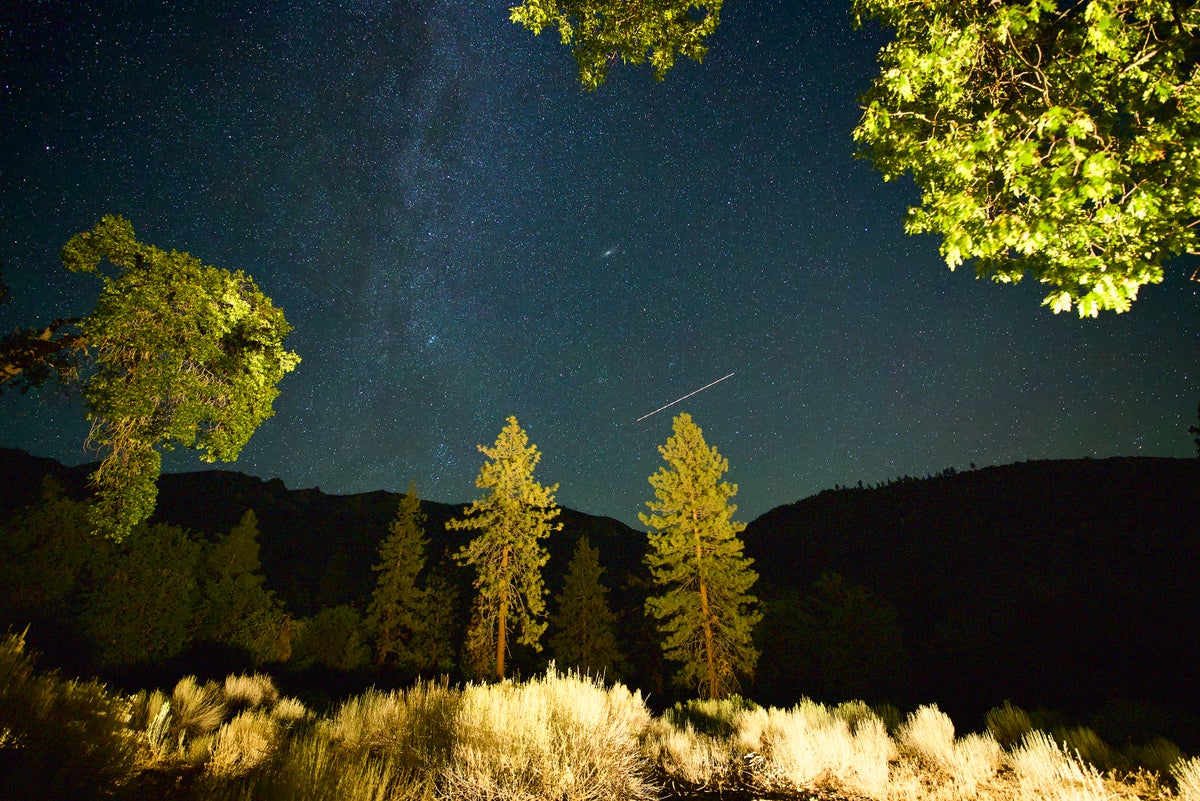 SequoiaJohn61/Getty Images
.
.
Click the link below for the complete article:
.
__________________________________________
August 12, 2025
Mohenjo
Business, Food For Thought, Human Interest, Political, Science, Technical
amazon, business, Business News, current-events, Future, Hotels, human-rights, medicine, mental-health, research, Science, Science News, technology, Technology News, travel, vacation

Click the link below the picture
.
What to know about the report.
A key measure of underlying inflation rose in July as President Trump’s tariffs intensified price pressures across a wider range of consumer goods and services, although the overall increase was likely not significant enough to deter the Federal Reserve from lowering interest rates at its next meeting in September.
The Consumer Price Index stayed steady at 2.7 percent compared to the same time last year. On a monthly basis, prices rose 0.2 percent from June. But an important gauge tracking consumer prices that strips out volatile food and energy prices accelerated more rapidly.
For the markets, today’s numbers “delivered a mild relief rally,” said Gina Bolvin, president of Bolvin Wealth Management Group. “But with tariffs in play, investors should enjoy the calm while keeping an eye on the horizon.”Although prices for new vehicles rose modestly in July, prices for used cars and trucks rose 4.8 percent from a year ago. With new cars selling for an average of almost $49,000, according to Cox Automotive, many buyers have turned to the used market, pushing up prices. That trend is expected to continue if, as expected, automakers begin adding the cost of tariffs to new car prices.
Stephen Miran, chair of the White House Council of Economic Advisers, said the inflation report today shows that there is “no evidence whatsoever” that tariffs have caused a spike in prices. “It just hasn’t panned out,” he said.
Miran, who has been nominated for an open spot on the Federal Reserve, said on CNBC that he can “never rule out anything,” when asked if price increases are coming as more tariffs come online and companies work through their inventories. But he insisted that the president’s global trade war was not responsible for the categories of goods that recorded price increases last month.
Miran, however, declined to answer questions about his nomination to the Fed or how the central bank should approach interest rates in September, saying only that its independence is “of paramount importance.” He declined to say if he believed he would be confirmed before the Fed’s September rate-setting meeting.
While a key measure of underly inflation rose in July, the White House described the report as a positive on Tuesday. Karoline Leavitt, the White House press secretary, said in a statement that it “beat market expectations once again and remains stable, underscoring President Trump’s commitment to lower costs for American families and businesses.”
.

.
.
Click the link below for the complete article:
.
__________________________________________
August 12, 2025
Mohenjo
Business, Food For Thought, Human Interest, Political, Science, Technical
amazon, business, Business News, current-events, Future, Hotels, human-rights, medicine, mental-health, research, Science, Science News, technology, Technology News, travel, vacation

Click the link below the picture
.
Depending on your age, you might think I’m describing Soviet-era Russia — or Russia in the Putin era. You’d certainly think about modern-day China, where the government is an official partner in many private companies, and has unofficial but meaningful influence over most of them.
And in 2025, you might also think that’s beginning to describe America in the second Trump administration.
Last week, for instance, Donald Trump called on the CEO of Intel to resign because of his past business connections to China. In June, Trump approved Nippon Steel’s plan to buy US Steel — but only after the US government was granted a “golden share” in the company that gives Washington the ability to approve or veto some actions, like closing plants. In January, Trump floated the idea of having the US government own a portion of TikTok’s US operations.
And now Trump is requiring Nvidia and AMD to hand over 15% of revenue from high-end chip sales to China, as first reported by the Financial Times. (Nvidia has released a statement noting it “follow[s] rules the US government sets for our participation in worldwide markets,” without addressing reports about the deal directly; AMD and the White House have yet to comment.)
You can make arguments for or against any one of these transactions — US chip sales to China have been a particularly divisive issue, even within the Trump administration. But taken together, there’s little question that in Trump 2.0, we should expect the federal government to insert itself into private business.
Call it “state capitalism, a hybrid between socialism and capitalism in which the state guides the decisions of nominally private enterprises,” Wall Street Journal columnist Greg Ip wrote Monday morning. It’s an exceptionally timely piece he appears to have written before the Nvidia/AMD story broke, because it doesn’t contain any reference to it.
(You can make the list of Trump’s interventions even longer if you’d like: He personally required former Paramount owner Shari Redstone to pay him $16 million to settle a seemingly specious lawsuit, for instance. And Brendan Carr, the Trump-appointed head of the Federal Communications Commission, has required Paramount’s new owners to promise to “root out the bias that has undermined trust in the national news media.” You could also include the concessions Trump is demanding from some of the nation’s most prestigious universities and law firms.)
The chip story is particularly hard to get your head around, since it inverts the premise of the tariff plans Trump has been pushing this year. Instead of taxing goods made overseas and imported into the US, the US is now taxing goods made by American companies, in America — the thing he supposedly wants to see much more of.
It’s not surprising to see Donald Trump say one thing and do another. And half a year into his second presidency, it’s no longer surprising to see the Republican-controlled Congress let him do just about anything he wants: This is the same Congress that passed a law last year requiring TikTok’s US operations to find a US buyer or shut down — and hasn’t said a word about the fact that Trump has decided to ignore that law, repeatedly.
And again, you might not care about the moves the Trump administration has made to steer companies to date. You might even like them. But the odds are increasing that he’s going to end up involving the federal government in an industry or company you do care about. Maybe one you work in. How are you going to feel about it then?
.
 In Donald Trump’s second term, the US government is increasingly involving itself in private business, like a reported 15% tax it has placed on some chip exports to China. Fatih Aktas /Anadolu via Getty Images
.
.
Click the link below for the complete article:
.
__________________________________________
August 11, 2025
Mohenjo
Business, Food For Thought, Human Interest, Political, Science, Technical
amazon, business, Business News, current-events, Future, Hotels, human-rights, medicine, mental-health, research, Science, Science News, technology, Technology News, travel, vacation
Click the link below the picture
.
Thousands of cases of the chikungunya virus, which sickens people bitten by an infected mosquito, have broken out in China during the past week. The virus causes extremely severe joint pain and fever, both of which can be short-lived—but can sometimes continue for years. Chikungunya can sometimes cause heart damage. Three days ago, the U.S. Centers for Disease Control and Prevention issued a travel warning for the area of the outbreak (the province of Guangdong in southern China), advising people to take precautions. And experts warn that chikungunya could further spread in the Americas and parts of Europe, though cases there have been relatively rare compared with those in tropical regions. Here is what you need to know about the disease and the risk.
What is the chikungunya virus, and how do people get infected?
The virus was first identified in Africa in 1952. It is spread most often by two mosquito species: Aedes aegypti and Aedes albopictus. People can get sick within three to seven days of a bite. In 2025, about 240,000 cases and 90 deaths have been reported in 16 countries and territories through July. Cases have been reported in the Americas, Africa, Asia, and Europe. Infection usually produces symptoms including deeply painful joints, fevers, nausea, fatigue, and a rash. Most of the time, these problems resolve in a week or two. “But sometimes they can continue for months and years, and the virus can also cause serious heart damage,” says Jean Lim, a microbiologist at the Icahn School of Medicine at Mount Sinai and a member of the Global Virus Network’s chikungunya task force. “In rare cases, it can be fatal, and those most vulnerable are people who are immunocompromised, the elderly, and babies.”
What has happened in China?
China has reported an outbreak with about 7,000 cases, mostly in Guangdong and its city of Foshan. The Chinese government has distributed mosquito nets and sprayed insecticide through residential areas, streets, and places where people work outside. There have been reports that authorities have forced infected people into hospitals, reminding some of the strict measures China took during the COVID pandemic.
It remains unclear what triggered the outbreak, says Robert Jones, an insect biologist at the London School of Hygiene &Tropical Medicine and another member of the Global Virus Network’s task force. But several weeks of rain and high humidity in the area have created good conditions for A. aegypti and A. albopictus to breed and bite more people, he notes.
Can the virus get from China to the U.S.?
Chikungunya moves easily in this age of fast global travel. There are current outbreaks in France and a case reported in Italy, Jones says. The most likely scenario, according to Lim, is that “a mosquito in China bites and infects someone. That person hops on a plane and flies to the U.S. There a U.S. mosquito bites that person and picks up the virus, and then begins to spread it through the local insect population.”
For this to happen, the new country needs to already have mosquitoes that can host the virus. “Neither of these species is established in the UK, so there is no risk of onward transmission,” Jones says. But “in the United States, both Aedes aegypti and Aedes albopictus can be found, particularly in the south and east. To date, there have been 47 cases of chikungunya confirmed in the U.S. this year.”
Still, there are limiting factors that should minimize worry, says William Klimstra, an immunologist at the University of Pittsburgh’s Center for Vaccine Research. Spraying insecticide and eliminating mosquito breeding areas are effective ways to curb outbreaks. And in a temperate area, the first killing frost will get rid of the insects, stopping viral transmission.
Are there treatments or vaccines for the virus?
Unfortunately, there are no good antiviral therapies, Lim says. Treatment usually consists of supportive care, such as keeping a patient hydrated and managing their pain.
There are, however, two effective and Food and Drug Administration–approved vaccines that get the body to produce antibodies against chikungunya, Jones says, and these lower the risk of infection. One, called IXCHIQ, uses a weakened, noninfective form of the virus. The other vaccine, VIMKUNYA, is based on viruslike particles.
And fortunately, insect repellents and protective clothing work quite well to keep the biting mosquitoes away in outbreak-prone regions of the world.
.
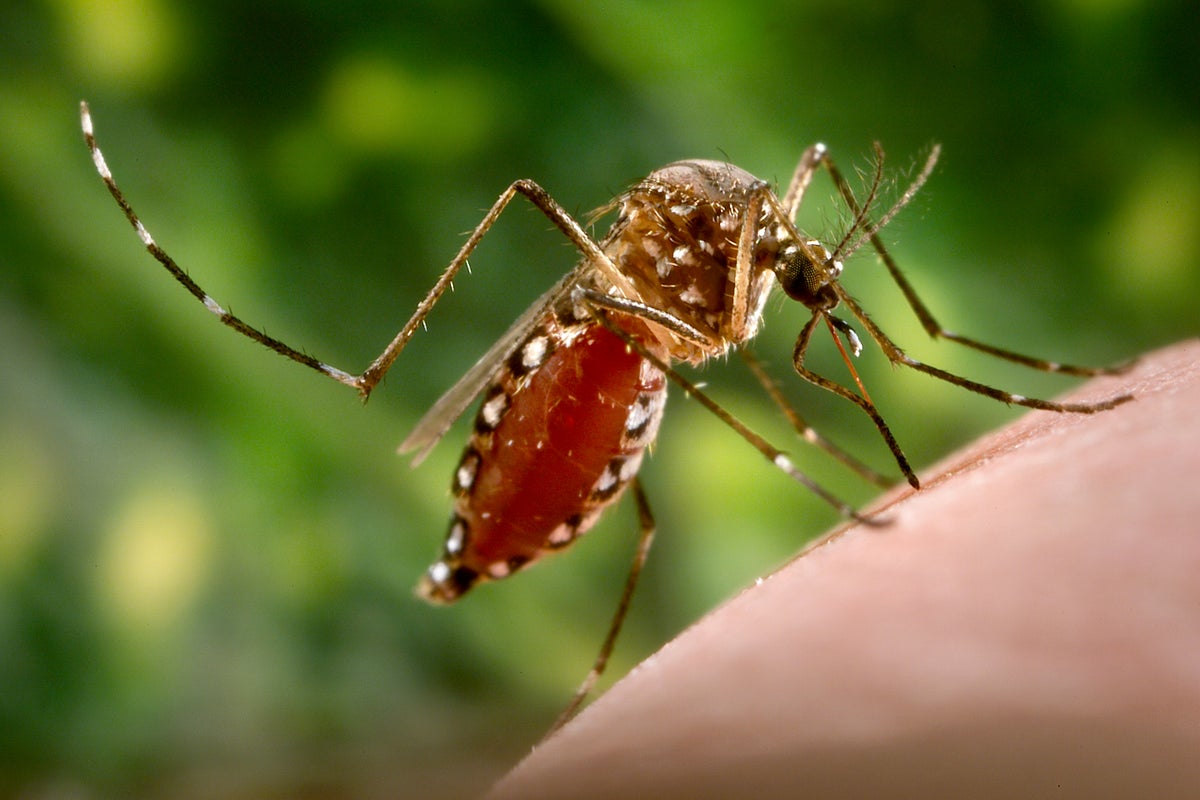
Aedes aegypti mosquitoes can carry chikungunya virus and infect people with a bite, CDC/James Gathany/Science Source
.
.
Click the link below for the complete article:
.
__________________________________________
August 11, 2025
Mohenjo
Business, Food For Thought, Human Interest, Political, Science, Technical
amazon, business, Business News, current-events, Future, Hotels, human-rights, medicine, mental-health, research, Science, Science News, technology, Technology News, travel, vacation

Click the link below the picture
.
A federal judge has rejected the Trump Administration’s request to unseal transcripts of the grand jury testimony that led to the indictment of Ghislaine Maxwell, who was convicted of sex-trafficking related charges and was a long-time associate of the convicted sex offender Jeffrey Epstein.
Judge Paul A. Engelmayer emphasized the importance of maintaining the secrecy surrounding grand jury proceedings in his Monday decision. Those materials can only be unsealed in “rare, ‘exceptional circumstances,’” he said, asserting that granting the Trump Administration’s request to unseal the transcripts would be “applying the exception casually or promiscuously.”
Engelmayer also called into question the “entire premise” of the Trump Administration’s request.
“Contrary to the Government’s depiction, the Maxwell grand jury testimony is not a matter of significant historical or public interest,” the judge said, adding that much of the information in the materials was revealed at Maxwell’s trial.
“Its entire premise—that the Maxwell grand jury materials would bring to light meaningful new information about Epstein’s and Maxwell’s crimes, or the Government’s investigation into them—is demonstrably false,” he wrote.
Releasing the documents “would expose as disingenuous the Government’s public explanations for moving to unseal,” he went on to say. “A member of the public, appreciating that the Maxwell grand jury materials do not contribute anything to public knowledge, might conclude that the Government’s motion for their unsealing was aimed not at ‘transparency’ but at diversion—aimed not at full disclosure but at the illusion of such,” he wrote.
The Department of Justice (DOJ) asked judges to release grand jury transcripts and other materials in both Epstein’s and Maxwell’s cases amid growing backlash over how the Trump Administration has handled the Epstein matter.
Public interest in the late sex offender, who has long been the subject of conspiracy theories on the far right in particular, amplified after the DOJ and FBI released a memo in July that stated that Epstein didn’t have a “client list” of co-conspirators and that his 2019 death in jail was a suicide. While the Trump Administration has tried to brush off questions and concerns over the case, many of the President’s own supporters have expressed frustration over how he has handled the matter.
President Donald Trump’s own years-long relationship with Epstein has also drawn heightened scrutiny amid the renewed attention to the case. The Wall Street Journal published an article last month alleging that Trump sent a “bawdy” letter to Epstein in 2003. The President has denied doing so and has since filed a lawsuit against the Journal’s parent firms, its owner, and the two reporters behind the story. Trump has tried to distance himself from Epstein over the years, recently saying that he broke off his friendship with the disgraced financier after Epstein “stole people that worked for me.”
The controversy has led to increased attention on Maxwell as well, who was convicted in 2021 for her role in recruiting underage girls to engage in illegal sex acts with Epstein and is currently serving a 20-year sentence in federal prison. Late last month, the House Oversight Committee voted to subpoena her for a deposition. DOJ Deputy Attorney General Todd Blanche also interviewed Maxwell over the span of two days late last month.
About a week after meeting with Blanche, Maxwell, who is appealing her conviction, was transferred from a federal facility in Florida to a minimum-security prison camp in Texas. The move sparked outrage from the family of Virginia Giuffre, a victim of Epstein. Her family accused the Trump Administration of giving Maxwell “preferential treatment.”
A separate federal judge in Florida previously rejected one of the DOJ’s requests to release grand jury transcripts from an investigation into Epstein in 2005 and 2007, but another judge is still weighing another request.
.
 Jeffrey Epstein and Ghislaine Maxwell attend an event in New York City on March 15, 2005.Joe Schildhorn/Patrick McMullan— Getty Images
.
.
Click the link below for the complete article:
.
__________________________________________
August 11, 2025
Mohenjo
Business, Food For Thought, Human Interest, Political, Science, Technical
amazon, business, Business News, current-events, Future, Hotels, human-rights, medicine, mental-health, research, Science, Science News, technology, Technology News, travel, vacation

Click the link below the picture
.
An expert warned that U.S. President’s Donald Trump “astonishing U-turn” after agreeing to meet with Putin to discuss ending the war in Ukraine is an “alarming development”.
Nigel Gould-Davies, a senior fellow for Russia and Eurasia at the International Institute for Strategic Studies, told The Associated Press the “symbology” of holding the summit in Alaska was clear, and that the location “naturally favors Russia.”
“It’s easy to imagine Putin making the point. … We once had this territory and we gave it to you, therefore Ukraine had this territory and now should give it to us,” he said, referring to the 1867 transaction known as the Alaska Purchase when Russia sold Alaska to the United States for $7.2 million.
A U-turn to finally make progress?
Prior to Trump announcing the meeting with Putin, his efforts to pressure Russia into stopping the fighting had delivered no progress. The Kremlin’s bigger army is slowly advancing deeper into Ukraine at great cost in troops and armor while it relentlessly bombards Ukrainian cities.
Meanwhile, the Kremlin on Saturday confirmed that Russian President Vladimir Putin will meet U.S. President Donald Trump next Friday in Alaska to discuss ending the conflict in Ukraine.
“It seems entirely logical for our delegation to simply fly across the Bering Strait, and for such an important and anticipated summit of the leaders of the two countries to be held in Alaska,” Putin’s foreign affairs adviser, Yuri Ushakov, said.
The meeting would be the first US-Russia summit since 2021, when former President Joe Biden met Putin in Geneva and could mean a breakthrough in Trump’s effort to end the fighting, although there’s no guarantee it would stop the conflict since Moscow and Kyiv remain far apart on their conditions for peace. Ushakov added the next meeting between the two leaders could be held in Russia and an invitation had already been sent to the US President.
.
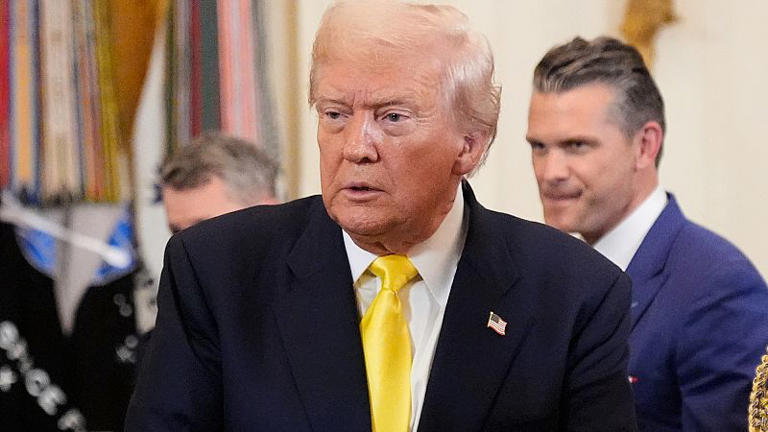
President Donald Trump departs an event to mark National Purple Heart Day in the East Room of the White House, Thursday, Aug. 7, 2025, in Washington. © Copyright 2025 The Associated Press. All rights reserved.
.
.
Click the link below for the complete article:
.
__________________________________________
August 10, 2025
Mohenjo
Business, Food For Thought, Human Interest, Political, Science, Technical
amazon, business, Business News, current-events, Future, Hotels, human-rights, medicine, mental-health, research, Science, Science News, technology, Technology News, travel, vacation
Click the link below the picture
.
Five years ago, electrical engineer Sun Hongbin was given what many would consider an impossible task: build a full-fledged clean-energy system amid some of the coldest temperatures on Earth, screaming winds, and half-year darkness.
China was then building its fifth Antarctic research station, called Qinling, on Inexpressible Island in Terra Nova Bay. And the nation’s government was pushing the concept of “green expeditions” to protect Antarctica’s uniquely fragile environment while studying and surveying the continent. “So having a system that would provide the bulk of Qinling’s energy with renewable power fit that goal,” Sun says.
But conventional solar and wind installations are no match for temperatures that plummet below –40 degrees Celsius, winds of up to 300 kilometers per hour (kmh), and ferocious blizzards. Such conditions can snap wind turbine blades, sharply reduce the performance of solar panels, and prevent batteries from charging and discharging properly. And of course, there are the six months of polar night, when the sun never rises above the horizon.“It was a huge challenge” to build a system for the Earth’s coldest, darkest and most remote continent, says Sun, now president of Taiyuan University of Technology in China and chief scientist for polar clean energy at the Polar Research Institute of China.
But in late 2024, his team traveled to the station to install a system that took $14 million to develop. It consists of 10 wind turbines, 26 solar modules, a hydrogen energy system, a container full of frost-resistant lithium-ion batteries, and a smart grid that can predict and balance supply and demand. The entire renewable system is now running and, according to Sun, should provide half of the base’s average annual energy needs.
“The use of clean energy is a huge advancement to keep the continent clean,” says Kim Yeadong, chair of the Korean National Committee on Polar Research in South Korea, who was not involved with the project. “Other stations will probably have to learn how they achieve that much clean energy. I think it’s remarkable.”
Where Diesel Power Is King
A 2024 preprint analysis of 81 Antarctic research bases found that 37 had installed renewable-energy sources such as solar panels and wind turbines. But the proportion of renewable energy these bases used was “often low,” the researchers wrote. An exception so far has been Belgium’s Princess Elisabeth Station, which is only staffed during the Antarctic summer. It runs completely on wind and solar power, taking advantage of the almost 24-hour daylight. Even so, the vast majority of stations still depend on diesel-powered generators to keep their crews warm, fed, and safe. The main reason this is the case is simply that “they are used to using diesel,” says Daniel Kammen, a professor of energy at the University of California, Berkeley.
.

The majority of power at China’s Qinling research station in Antarctica now comes from clean energy. Members of China’s 41st Antarctic expedition team
.
.
Click the link below for the complete article:
.
__________________________________________
August 10, 2025
Mohenjo
Business, Food For Thought, Human Interest, Political, Science, Technical
amazon, business, Business News, current-events, Future, Hotels, human-rights, medicine, mental-health, research, Science, Science News, technology, Technology News, travel, vacation

Click the link below the picture
.
Tens of millions of Americans voted for President Donald Trump in the belief that he would be competent. They might not have been thrilled that Trump is a convicted felon, or pleased with his role in the violent attack on the Capitol on January 6, 2021. Many worried that he posed a threat to democracy. But enough were willing to overlook all that, because they convinced themselves that Trump would be an effective chief executive, that under his stewardship their lives would get better, and the country would prosper.
A survey from the Democratic pollsters Douglas Schoen and Carly Cooperman, conducted shortly after the election, helps illustrate the point. By an 11-point margin, independents said they would be less confident that the Trump administration would share accurate information compared with the Biden administration. Yet, by a 10-point margin, those same voters said that they thought the Trump administration would be more effective at getting things done.
.
Al Drago / Bloomberg / Getty
.
.
Click the link below for the complete article:
.
__________________________________________
August 10, 2025
Mohenjo
Business, Food For Thought, Human Interest, Political, Science, Technical
amazon, business, Business News, current-events, Future, Hotels, human-rights, medicine, mental-health, research, Science, Science News, technology, Technology News, travel, vacation

Click the link below the picture
.
Russia is running out of precision-guided missiles. But here’s the thing: while many view this as a good thing, in reality, this could be really bad news for Ukraine. But the reason, is #NotWhatYouThink
.

.
.
Click the link below for the complete video (sound on):
.
__________________________________________
August 9, 2025
Mohenjo
Business, Food For Thought, Human Interest, Political, Science, Technical
amazon, business, Business News, current-events, Future, Hotels, human-rights, medicine, mental-health, research, Science, Science News, technology, Technology News, travel, vacation
Click the link below the picture
.
The U.S. Department of Health and Human Services announced on Tuesday that it will cancel $500 million worth of projects dedicated to designing messenger RNA (mRNA) vaccines for pandemic preparedness.
The move drew sharp criticism from medical and health experts. “Scrapping the fastest platform we have is a reckless move rooted in a fundamental misunderstanding of vaccinology,” wrote Jake Scott, an infectious diseases specialist and clinical associate professor of medicine at Stanford University, on the social media site Bluesky.
The use of mRNA in vaccines has opened new doors beyond infectious disease. Researchers are investigating promising mRNA vaccines for pancreatic cancer, which currently has a five-year survival rate of just 13 percent. They’re also studying mRNA treatments for multiple other types of cancer, autoimmune disorders, and genetic diseases such as sickle cell anemia.
What makes mRNA so valuable is its programmability—and, for pandemics, the speed at which it can be programmed.
Traditional vaccines introduce an inactivated or dead pathogen into the body so that the immune system can learn to recognize and fight it: the immune system stores that memory in case it should ever run across the real thing. Vaccines that use mRNA, on the other hand, instruct the body’s own cells to make parts of a protein in or on a pathogen. The body will then learn to recognize this protein without having to fight off the full infectious agent.
These vaccines do not interfere with cellular DNA, which is the permanent blueprint, tucked away in the cell nucleus, that tells the cell’s machinery what proteins to make. Those proteins, considered the cells’ workhorses, then carry out various and critical functions throughout the body. Messenger RNA is a middle step in the process: DNA produces this single-stranded RNA, which then tells the cell how to assemble amino acids into proteins. The mRNA instructions from vaccination degrade within a few days, and studies suggest the spike protein generated by such vaccination against COVID lasts about a month in the body.
When making a traditional vaccine, researchers have to manufacture the antigens, or proteins that stimulate the immune system. They might do this by growing a whole virus in bacteria or chicken eggs and then weakening or killing the pathogen with heat or chemicals. In other cases, they use organisms such as yeast that are genetically engineered to churn out pieces of a virus that
are familiar to the immune system. In these cases, the manufacturing process takes time, testing, and tweaking. For mRNA vaccines, developers design the genetic instructions for an antigen on a computer. The manufacturing process remains the same from vaccine to vaccine, with only the genetic instructions changing. This allows researchers to develop multiple vaccines at once, as well as to develop vaccines that contain mRNA to make multiple antigens for different infections.
“We are working on about 30 different mRNA vaccines, including ones for influenza, HIV, hepatitis C, malaria, tuberculosis, and many others,” said Drew Weissman, a physician-scientist at the Perelman School of Medicine at the University of Pennsylvania, who shared the 2023 Nobel Prize in Physiology or Medicine with biochemist Katalin Karikó for their work on mRNA, in an interview with Nature Medicine in 2021.
The loss of HHS funding won’t stop all mRNA work in the U.S., but it will stymy research designed to get mRNA vaccines out quickly in a public health emergency. The canceled grants include one to develop an mRNA-based vaccine against H5N1 avian influenza, the strain of bird flu that is currently one of the most salient pandemic threats for people. Researchers who study vaccines had previously warned that current federal officials might target the technology.
.

Lipid nanoparticles, like the one shown in this illustration, are used as vehicles to deliver mRNA-based vaccines. Tumeggy/Science Photo Library/Getty Images
.
.
Click the link below for the complete article:
.
__________________________________________
Older Entries
Newer Entries
 James' World 2