Home

‘Jaw-dropping’ fossils reset the clock on when complex animals evolved

Leave a comment

Click the link below the picture

.

Around 540 million years ago, the ocean erupted with complex life: Creatures rapidly transformed from simple, soft-bodied, ocean-floor-dwelling animals into bodies we might recognize today—animals with, say, a shell or cartilage, a mouth and anus, and the ability to swim, burrow, or hunt.

Scientists call this short, sharp burst of evolutionary activity the Cambrian explosion, and it has informed the way we think about how life as we know it evolved on our planet. But the discovery of a trove of bizarre fossils in China is challenging that consensus—the Cambrian explosion may have been less explosive than we thought.

Hundreds of fossils uncovered in southern China’s province of Yunnan reveal that at least some of the life-forms scientists had thought arose in the Cambrian period were alive and thriving millions of years earlier, in an era known as the Ediacaran period. Many of the fossils look alien, from wormlike creatures tethered to the ground to a “sausage-shaped” animal and a fingerlike organism with tentacles. The findings were published in the journal Science on Thursday.

The discovery was something of an accident, says Frances Dunn, a senior researcher of natural history at the Oxford University Museum of Natural History and a co-author of the paper. Her colleagues at Yunnan University in China found the trove while looking for algal fossils in the region’s cliff faces—its rocks are famous for their ability to preserve ancient life.

This chance finding, Dunn says, turned out to hold “some of the most significant early animal fossils” found in decades. More than 700 specimens from the Ediacaran period were there. Some were mere algae, but hundreds more were animals that appeared in “a variety of different forms,” she says.

The most common animal the team found was an organism about the size of a human adult index finger that had a wormlike body and a disk that kept it rooted to the seafloor. Its frequency—more than 100 of the new specimens were examples of this unnamed creature—suggests it once densely populated the ocean floor, Dunn says.

“It was unlike anything I’ve ever seen,” Dunn says.

What was most jaw-dropping, however, was that so many of the found fossils looked uncannily like they belonged to the Cambrian period rather than the Ediacaran, she says. Some, including the abundant worm, were “bilaterians.” This term refers to animals with bilateral symmetry, or a body plan where one side mirrors the other. This critical evolutionary adaptation helped early life to move through sediment or the water column, develop a nervous system, and eventually “dominate” the animal kingdom, Dunn says. Most animals today are bilaterians—including humans.

Before, scientists thought bilaterians primarily arose during the Cambrian period and were rare—certainly not diverse and flourishing—in the Ediacaran.

The new fossils offer a glimpse into a “transitional world,” where simple, soft-bodied life-forms lived alongside complex bilaterians. Some of the specimens look highly similar to cambroernids—animals that looked vaguely similar to modern-day sea cucumbers—which have previously only been dated to the Cambrian.

This is a once-in-a-lifetime find, Dunn says. “People have been on the hunt for a fossil site like this, but not found it until now,” she adds. It indicates that the Cambrian “explosion” may have been more gradual. Or, as Dunn puts it, the finding “defuses the Cambrian explosion.”

Now Dunn and her colleagues are working to formally describe all of the fossils and name any new creatures. Once everything has been cataloged, scientists can study where these animals fit on the tree of life.

“The fossils from this site are going to keep us busy for like 10 years, easily,” she says.

.

https://static.scientificamerican.com/dam/asset/144eb43a-7098-49d5-8df2-c2ff668d3128/new-fossils-2.jpg?m=1775154641.564&w=900

A deuterostome cambroernid fossil and an artist’s reconstruction of it. (The scale bar is two millimeters.) Gaorong Li/Xiaodong Wang

.

.

Click the link below for the complete article:

https://www.scientificamerican.com/article/jaw-dropping-fossils-reset-the-clock-on-when-complex-animals-evolved/

.

__________________________________________

I’ve Been a Financial Professional for 30 Years: This Is the 1 Trait I See in Every Successful Investor

Leave a comment

Click the link below the picture

.

It feels like we’re living in uniquely dangerous times, but if you spend long enough in the financial industry, you’ll recognize a clear pattern in events — and the quality that helps investors weather the storm.

If you spend enough time sitting in local diners or answering the phones at a wealth management firm, you start to notice a rhythm to human anxiety.

The headlines change, the names of the politicians rotate, and the specific economic “boogeyman” of the month evolves, but the underlying sentiment remains remarkably consistent.

Right now, the air is thick with a familiar brand of apprehension. You hear it in the booth next to you over breakfast, and you see it in every notification on your phone:

  • “The market is overdue for a collapse
  • “Interest rates are a permanent weight on the economy”
  • “The world is simply too volatile right now”

I have been a witness to these conversations for nearly 30 years. I’ve seen the seasons of worry shift from the “Japan Inc.” fears of the early ’90s to the dot-com euphoria, the existential dread of the Great Recession and the sheer confusion of the post-pandemic inflationary spike.

Sometimes the catalyst is technology; sometimes it’s Washington; sometimes it’s a virus. The details change, but the feeling that we are standing on the edge of a cliff does not.

And yet, looking back across those decades, a clear pattern emerges. Through every recession, bubble and crash, the people who achieved their long-term financial goals weren’t the ones who found a “trick” to beat the system.

They were the ones who anchored themselves to a few fundamental realities that don’t make the evening news because they aren’t flashy or frightening. Especially when the noise gets as loud as it is today, it’s worth stepping back to look at what lasts.

The high cost of emotional decisions

In my career, I have reviewed thousands of portfolios and sat through hundreds of market cycles. I can say with certainty that almost every significant investing mistake I’ve seen was a failure of temperament, not a failure of intelligence.

These weren’t math errors or a lack of analytical data. They were emotional reactions to a world that felt like it was spinning out of control.

Fear, greed, and panic are the most expensive emotions an investor can have. They act as a “reverse compass,” almost always pointing you toward the exit exactly when you should be standing still or pushing you toward a “hot” investment just as it’s about to peak.

I often think back to a call I received in March 2020. We were in the early, terrifying days of the COVID-19 lockdowns. A client who had been steady and rational for over a decade — called me with a tremor in his voice.

“Dennis,” he said, “I’ve stayed the course through plenty of dips. But this feels different. The world is literally shutting down.”

He wasn’t wrong. It did feel different. The streets were empty, and the markets were in freefall.

We spent nearly an hour on the phone, not talking about P/E ratios or technical indicators, but talking about history and his specific life goals. We talked about why we built his plan the way we did and how it was designed to navigate periods of uncertainty.

Ultimately, he chose to stay aligned with that strategy.

Discipline is the most unglamorous part of investing. It’s boring, and in the heat of a crisis, it feels passive. But in reality, maintaining discipline in the face of a falling market is one of the most active and difficult things a human being can do. It is the bedrock of wealth.

Real ownership in a ‘ticker symbol’ world

Somewhere along the way, the financial media turned investing into a high-stakes video game. We talk about “the market” as if it’s a sentient, fickle beast or a series of random numbers on a screen. We focus on day trading, “hot tips” and the quest for the next unicorn. But this perspective misses the entire point of what we are doing.

At its core, investing is about ownership. When you buy a share of a company, you aren’t just buying a ticker symbol — you are buying a stake in a real business. You are becoming a partial owner of an organization with employees, customers, infrastructure, and intellectual property. You are betting on the collective ingenuity of people who wake up every morning trying to solve problems and create value.

History has a very clear bias toward patient owners. After World War II, as the American middle class expanded, investors in American business benefited. In the 1980s and ’90s, as computing and the internet reshaped the global landscape, the owners of those technologies benefited.

Even after 2008, when the popular narrative was that the global financial system was permanently broken, the following decade proved to be one of the most productive periods for long-term investors in history.

Of course, individual companies fail. This is why we diversify — so that the failure of one “engine” doesn’t bring down the whole plane.

But the broader story remains the same: Productive businesses are the most reliable engines of wealth ever created.

If you view yourself as a long-term owner rather than a short-term gambler, the daily fluctuations of the stock market become much easier to ignore.

Why this matters for the road ahead

Today’s environment is undeniably complicated. We are dealing with record-high markets, elevated interest rates and a geopolitical landscape that feels increasingly fractured. It is tempting to believe that we are living in uniquely dangerous times that require a complete abandonment of traditional wisdom.

But every generation believes their challenges are the ones that will finally break the rules.

  • In the ’70s, it was the end of the gold standard and double-digit inflation
  • In the ’80s, it was the threat of nuclear escalation
  • In 2000, it was the collapse of the “New Economy”
  • In 2020, it was a once-in-a-century pandemic

Each of these moments felt overwhelming while we were in them. And each eventually became a chapter in a history book.

What endured through every one of those chapters were the disciplined investors, the patient owners and the thoughtful planners. Most successful investors aren’t brilliant strategists; they are simply people who are consistent:

  • They show up
  • They review their goals
  • They rebalance their portfolios when things get out of alignment
  • They stay calm when everyone else is rushing for the exits

In a world of loud headlines and constant “breaking news,” perspective is your most valuable asset. Volatility is not the same thing as failure, and a market correction is not a catastrophe — it’s the price of admission for long-term growth. 

f you can focus on discipline over emotion, ownership over speculation and planning over prediction, you aren’t just “investing.” You are building a foundation for your family’s security that can help survive whatever the future holds.

When the noise gets louder, stop looking at the scoreboard and start looking at the plan. That is how real wealth is created, and more importantly, that is how financial confidence is maintained.

Note:

This material is intended for informational/educational purposes only and should not be construed as investment advice, a solicitation, or a recommendation to buy or sell any security or investment product. Please contact your financial professional for more information specific to your situation.

.

Investments are subject to risk, including the loss of principal. Some investments are not suitable for all investors, and there is no guarantee that any investing goal will be met. Past performance is no guarantee of future results.

.

Diversification does not assure a profit or protect against loss in declining markets, and diversification cannot guarantee that any objective or goal will be achieved.

.

The case study in this article is for illustrative purposes only and should not be construed as a recommendation. It may not be representative of your experience.

.

https://cdn.mos.cms.futurecdn.net/vHdb4p6yEzTpnKviZopMHG-768-80.jpg.webp(Image credit: Getty Images)

.

.

Click the link below for the complete article:

https://www.kiplinger.com/investing/the-trait-a-seasoned-financial-planner-sees-in-every-successful-investor

.

__________________________________________

America Is Used to Hiding Its Wars. Trump Is Doing the Opposite.

Leave a comment

Click the link below the picture

.

On April 1, 32 days after abruptly launching a wave of airstrikes on Iran, President Trump made his first formal White House address to the American people about the war. He offered no new information or clarity on his strategy or goals. It was mostly just Trump, talking. But amid the familiar superlatives and tangents, there was a curiously specific digression.

“It’s very important that we keep this conflict in perspective,” Trump said. “American involvement in World War I lasted one year, seven months, and five days. World War II lasted for three years, eight months, and 25 days. The Korean War lasted for three years, one month, and two days. The Vietnam War lasted for 19 years, five months, and 29 days! Iraq went on for eight years, eight months, and 28 days.” All of this was to say that 32 days was really not very long at all.

What was most surprising about Trump’s history lesson was its inference that wars were linear events with beginnings, middles and endings. This was not the impression that a reasonable person would have gotten from the past several months of increasingly disjointed foreign adventures: the capture of Venezuela’s president, an oil blockade, and intimations of regime change in Cuba, weeks of open deliberation over invading Greenland, and finally the Iran war.

These episodes followed the logic of content more than conflict, not so much ending as just kind of receding down the feed, replaced by bigger and better explosions. The White House social media team leaned trollishly into the idea, posting videos to X that spliced airstrike footage with movie and video game clips and a reference to the unofficial Proud Boys motto, “[expletive] around and find out.”

By the time Trump addressed the nation, however, America seemed to be settling into its own finding-out phase, and even the president’s allies were getting nervous. Memes had given way to maps of the Strait of Hormuz; gas was clearing $4 a gallon. Scapegoats were being sought: “As this thing goes south,” the former Fox News host Megyn Kelly said, “we need to know exactly who talked him” — Trump — “into it and what representations were made to convince the president that this was a good idea.”

One Trump national security official, the National Counterterrorism Center director Joe Kent, had already resigned over the war. “In your first administration, you understood better than any modern President how to decisively apply military power without getting us drawn into never-ending wars,” Kent admonished Trump in his resignation letter, blaming “Israel and its powerful American lobby” for luring him into an open-ended conflict.

The “never-ending wars” that Kent bemoaned have been the dominant condition of American foreign policy throughout the 21st century, a once-dystopian-seeming possibility that, somewhere in the long shadow of Sept. 11, became a quietly accepted reality. Americans don’t particularly like endless wars, but it’s been years since they opposed them all that actively, a fact that surely has to do with how little the wars — fought under thickening layers of classification by a professional military drawn from a sliver of the population, and with a rapidly expanding suite of autonomous technologies — cost them personally.

Trump has benefited from this jaded complacency as much as anybody. He railed against the entanglements of the Bush and Obama years in his 2016 campaign and declared in a first-term State of the Union address that “great nations do not fight endless wars.” But in that term, he mostly served as a distracted custodian of the occupations and covert operations he inherited, and voters did not seem inclined to punish him for it. Though he lost the 2020 election, in Gallup polling published early that year, only about a quarter of Democrats and independents, and even fewer Republicans, considered foreign affairs an “extremely important” issue.

In his second term, Trump seems hellbent on changing that. “Trump 47 is almost a different president from Trump 45,” says Michael O’Hanlon, the director of research for the foreign policy program at the Brookings Institution.

A leader who was once ambivalent at best about far-flung conflicts has, in the space of a few months, tried on several centuries’ worth of American imperialist costumes: the unapologetic empire-building of James Polk and James Monroe, the petro-political intrigues and Latin American chess games of Dwight D. Eisenhower’s spooks, Donald Rumsfeld’s fantasies about frictionless air wars. Trump’s April 1 speech, with its scattered musings about triumphs both real and imaginary, did not suggest he planned to change course anytime soon.

This president is, eternally, a break from American history and a logical culmination of it at the same time. On the one hand, his newfound adventurism would seem to run counter to the unspoken pact that Americans and their government have arrived at in the 21st century, in which the country’s citizens agree to mostly ignore the open-ended and opaque military operations conducted in their name as long as the government agrees not to ask them to sacrifice anything for them. On the other hand, the weightless vision of war-making that the Trump White House is presenting to the American people is an obvious product of this same recent history.

“This nation is peaceful, but fierce when stirred to anger,” George W. Bush said in his speech at the National Cathedral three days after the Sept. 11 attacks. American history would beg to differ: The United States was actively involved in military conflicts at home or abroad for most years of the 19th and 20th centuries, and has remained so in the quarter-century since Bush’s speech.

Public opinion of these wars has reflected less resolve than suggestibility. In his 2009 book “In Time of War,” Adam J. Berinsky, an M.I.T. political scientist, surveying seven decades of public opinion data, found that while Americans’ support for wars was affected by major attacks on the country — Pearl Harbor, Sept. 11 — it mostly followed the domestic “ebb and flow of partisan and group-based political conflict”: That is, it tracked politicians’ fights about the wars more than the events of the wars themselves.

This is understandable. Wars are complicated and, for Americans, almost always fought far away. The sacrifices they entail, even when they are painfully felt, are open to interpretation. But the fickleness of public opinion has provided obvious incentive for presidents — who, since Franklin D. Roosevelt, have closely studied polling on their wars — to withhold or shape information.

This project proceeded steadily through America’s postwar hegemony. Congress hasn’t formally declared war since World War II. Heeding the lessons of Korea and Vietnam, presidents have gradually shifted the financing of wars toward borrowing and printing money and away from a direct “war tax,” making it harder for voters to assess their cost. Richard Nixon ended the draft, corralling wars’ human losses within a small and, increasingly, demographically and culturally specific segment of the population.

The War Powers Act of 1973, informed by Vietnam, was supposed to reassert Congress’s authority to openly debate wars before beginning them. But with the arguable exception of George W. Bush, every president since Ronald Reagan has invaded or bombed a country without congressional approval.

Sarah Kreps, a professor at Cornell University who has studied military financing, argues that these innovations have gradually undermined one of the most famous ideas in democratic theory, advanced by Immanuel Kant in his 1795 essay “Toward Perpetual Peace.” Kant argued that democratic states behave differently, and more judiciously, in their war-making than monarchies and oligarchies. Their governments are responsive to their citizens, Kant reasoned, and their citizens are responsive to the costs of war, because they bear them. But what if the cost is hidden from them?

And what if the gravest costs are not borne by them at all? This question has become particularly urgent since the advent of armed drones, which, in their capacity to inflict death without risking it, have changed the elemental moral calculus assumed in warfare. A country that does not incur much human cost from its wars is a country that does not think much about them at all. “The absence of casualties isn’t a bad thing,” Kreps said, “but what it does is make Americans not think twice about how they are spending their resources.”

This became evident during Obama’s presidency, as his administration attempted to shift the war on terror away from the Bush-era counterinsurgencies and into a more amorphous, drone-centric program of counterterrorism. Critics have long contended that this was a perverse consequence of mounting concern over the civil liberties violations of the Bush years: a replacement of black sites and Guantánamo detentions with ghostly assassinations by increasingly autonomous airborne machines, the particulars of which would remain far from the view, and consciences, of the president’s supporters.

It was a bargain that many of those supporters were tacitly willing to accept. Polls during Obama’s presidency found that even as large majorities of Americans opposed staying in Afghanistan, most also approved of the administration’s drone strikes — even when a plurality of respondents couldn’t name the countries being targeted.

The professional-class liberalism of the Obama years, happy to whistle past its moral and ideological contradictions, is one of the main targets of Alexander Karp’s 2025 book “The Technological Republic.” Karp is the chief executive of the data analytics firm Palantir, which used Obama-era Afghanistan operations as a laboratory to develop battlefield software it now provides to Trump’s Pentagon; its programs have been used to target airstrikes in Iran.

In “The Technological Republic,” he describes a fast-arriving future in which wars with beginnings and ends are replaced by constant tactical engagement with elusive, artificial-intelligence-enabled threats. In this new reality, Karp argues, one of the most pernicious threats to national security is the estrangement of American elites from the battlefield: Silicon Valley executives and programmers who angrily protest the military use of the tools they create, a political class that has “never flown halfway around the world to risk one’s life.” He argues for a return to the values of the early Cold War, when technology, culture and national defense were united in common purpose, and has suggested resuming the draft — that America “only fight the next war if everyone shares in the risk and the cost.”

Now that we are fighting the next war, however, it’s not hard to see the contradiction between Karp’s civic vision and his products. Advances in military technology, and especially the transformative technologies currently poking into view, aim to reduce the risk and cost of warfighting, not to share them as widely as possible. In the Palantir-assisted Iran airstrikes, we are getting a glimpse of a new reality in which human deliberation is considered a tactical liability. This is a recipe for a country in which citizen participation in war, where it exists, takes on a different and shallower meaning — “engagement” in the digital audience analytics sense, not the civic one.

You can see this contradiction on particularly garish display in Trump’s second-term bellicosity. The administration’s TikTok Spartanism, on a surface level, affirms Karp’s vision: The White House’s Iran content is an unapologetic brief for American hard power in a zero-sum world full of enemies. But it is a burlesque of the technologized warrior republic rather than a real enactment of it. The videos are possible only in a country that asks little from its people beyond their YouTube clicks, where the intellectual and moral muscles necessary to work through questions of war and peace disappeared into the couch a long time ago.

It is another variation on a familiar decadence rather than a repudiation of it, another reminder of how malleable the narrative of a nation is when it comes unmoored from reality. Once the links between citizen and conflict have been severed, you can tell yourself whatever story you want about who you are and what you are doing in the world.

More on the Fighting in the Middle East


  • Iran’s Military Strength: Iranian operatives have been digging out underground missile bunkers and silos struck by bombs, returning them to operation hours after an attack, according to U.S. intelligence reports. And the news that Iran had shot down a U.S. jet showed that Iran has retained the ability to strike back, however degraded.

  • Strait of Hormuz: European leaders and other officials have ideas for bringing shipping back to the strait once the war in Iran war ends. But the few options they have carry risks.

  • Attacks on Infrastructure: In Kuwait, an attack damaged a power and water desalination plant. Kuwait blamed Iran, which denied carrying out the attack.

  • Iranian Citizens: Families gathered for picnics and games to mark the end of Nowruz, the Iranian New Year holiday, seizing a brief chance to celebrate amid the war. In interviews, fifteen residents of Tehran spoke of their fear as the capital weathered heavy bombardment.

.

https://static01.nyt.com/images/2026/04/12/magazine/12mag-context-1/12mag-context-1-superJumbo.jpg?quality=75&auto=webpPhoto illustration by Chantal Jahchan

.

.

Click the link below for the complete article:

https://www.nytimes.com

.

__________________________________________

Octopus sex is even weirder than you think

Leave a comment

Click the link below the picture

.

Octopus sex hinges on a peculiar anatomical trick. In lieu of a penis, the male has a special mating arm called a hectocotylus. He feels around with it inside the female’s mantle—the bulbous structure behind the eyes that houses all of an octopus’s organs, including reproductive ones—until he finds her ovaries. He then slides a sac of sperm down his arm and deposits it. But the male can’t actually see what he’s doing. So how does he know when he’s found the right spot to send in the sperm? The answer, it turns out, lies in the arm itself.

In a new study published today in Science, researchers show that the male octopus’s mating arm can sense a female’s sex hormones emanating from the oviduct.

The suckers on octopus arms are equipped with chemotactile receptors that allow them to “taste” their surroundings through touch. But octopuses don’t typically use the hectocotylus in hunting or seafloor exploration—instead, males hold it close to their bodies when they’re not mating. Nevertheless, this appendage, like the other seven, comes loaded with receptors, says Pablo Villar, a postdoctoral fellow at Harvard University and co-lead author of the new paper.

To understand what purpose these receptors might serve, Villar and his colleagues coaxed a pair of California two-spot octopuses to mate in the lab. Because octopuses can be aggressive, the researchers installed a divider in the tank with a few small holes so the pair could warm up to each other. This arrangement might seem ill-suited for lovemaking, but surprisingly, the male simply reached across the barrier and got busy. The researchers tested four more mating pairs and got the same result—even in total darkness. “They made it seem super, super natural,” Villar says.

Octopuses are highly visual creatures who communicate through body language and color changes. But these flourishes don’t seem essential for mating. “They were able to do it with no visual cues,” Villar says, “just by touching.” Female octopuses, he and his team theorized, must release some kind of chemical signal to guide males in.

They found that the octopus oviduct produces enzymes that are used to make the sex hormone progesterone. This hormone seems to be what gets the hectocotylus going: when the researchers attached tubes to the holes in the tank divider, each coated with a different chemical, males were quickly drawn to the one containing progesterone. Even amputated mating arms behaved the same way, responding to progesterone but not to other molecules.

Many animals rely to some extent on detecting sex hormones to mate. But the organ that senses those hormones is usually separate from the one that delivers the sperm; in male octopuses, the hectocotylus does both. That way, says Nicholas Bellono, a molecular biologist at Harvard University and Villar’s postdoctoral advisor, “you make sure at the site of release that that’s the exact spot.”

Females of different octopus species may have unique chemical signatures, and males’ receptors may be tuned to respond only to the right blend of hormones. If so, this mating strategy could help keep species separate and potentially give rise to new ones. “Species boundaries are shaped not only by the genes organisms carry, but by the molecular systems that determine how organisms perceive one another,” Anna Di Cosmo, a zoologist at the University of Naples Federico II, wrote in a commentary accompanying the new study. “By reshaping perception, evolution reshapes reproduction, which reshapes the tree of life.”

Elena Gracheva, a neurophysiologist at Yale University, who was not involved in the new study, says it’s too soon to tell whether all octopuses mate in this way or what role these sensory systems may play in evolution. She is impressed by the thoroughness of the research, however, which began with a naturalistic observation and proceeded all the way to fine-grained molecular analyses. “You have very striking animal behavior, and then you’re going down to the single molecule, which I think is beautiful,” she says. “But I would say that this is just the beginning of the discovery.”

.

https://static.scientificamerican.com/dam/asset/427813d6-f5e4-4df0-9c2a-1f62921153a1/saw_California_two_spot_octopus.jpg?m=1775146038.953&w=900

Scientists have now learned a lot more about the sex life of the California two-spot octopus. Windzepher/Getty Images

.

.

Click the link below for the complete article:

https://www.scientificamerican.com/article/octopus-sex-is-even-weirder-than-you-think/

.

__________________________________________

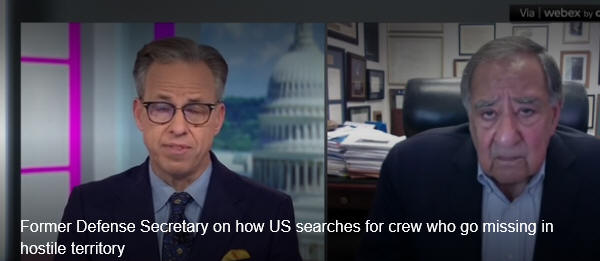
Day 35 of Middle East conflict — US fighter jet shot down over Iran

Leave a comment

Click the link below the picture

.

What we know so far

• US aircraft downed: The status of a US service member remains unknown after an F-15 fighter jet was shot down over Iran. The jet’s other crew member was rescued, US sources told CNN. Iran also struck a second US military plane Friday, forcing the pilot to eject outside Iranian territory, according to a US official.

• Iran offers reward: Tehran has claimed responsibility for shooting down the F-15 and has promised a reward if Iranians find and hand over an American service member.

• In Washington, DC, President Donald Trump still has not publicly commented on the search and rescue mission for the downed crew member. He said in an interview Friday that the jet’s downing would not affect Iran war negotiations.

.

.

.

Click the link below for the complete article:

https://edition.cnn.com/2026/04/03/world/live-news/iran-war-us-trump-oil

__________________________________________

NASA footage of Artemis II burn reveals stunning views of Earth

Leave a comment

Hmmmm … Very short view!

Click the link below the picture

.

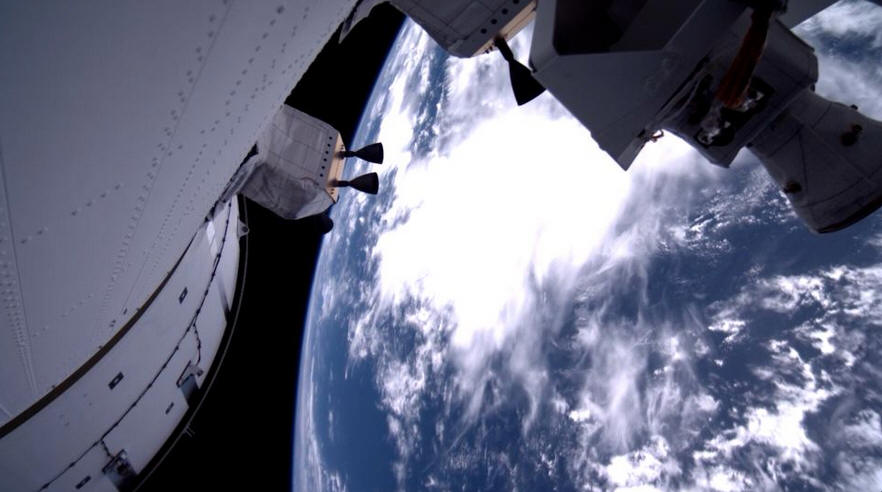
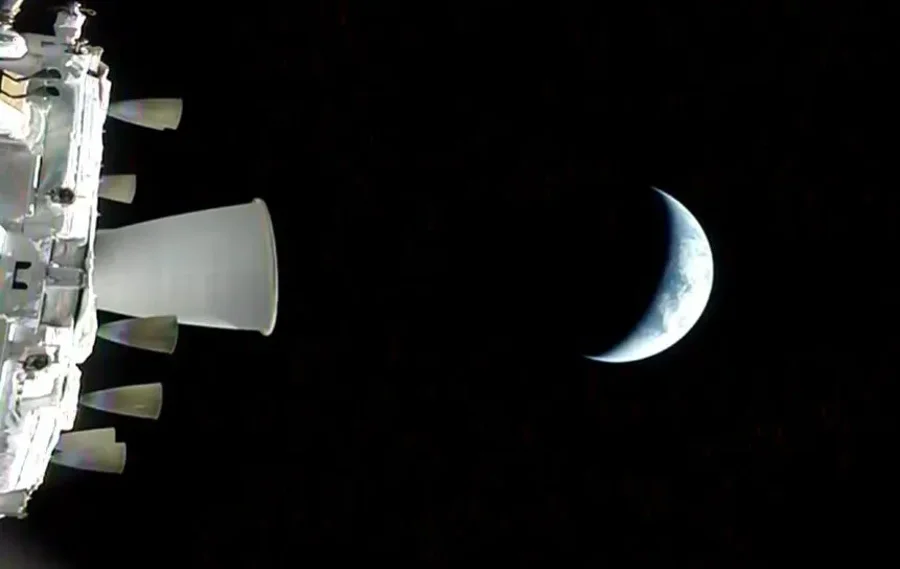
TNASA executed several engine firings on Thursday. The apogee raise burn sent Orion into high-Earth orbit, where the backdrop offered a striking view of the planet. (Source: NASA, speed-increased)

.

A striking view of the planet Earth

.

.

Click the link below for the complete article (click to play):

https://edition.cnn.com/2026/04/03/science/video/artemis-2-apogee-raise-burn-digvid

.

__________________________________________

Hegseth Says U.S. Troops Are Fighting for Jesus. The Pope Disagrees.

Leave a comment

Click the link below the picture

.

Pete Hegseth, the U.S. defense secretary, has asked the American people to pray “every day, on bended knee” for a military victory in the Middle East “in the name of Jesus Christ.”

Pope Leo XIV, the first U.S.-born pontiff, has a starkly different take on what should be done in Jesus’s name.

In a homily during a Mass on Thursday morning before Easter, the pope said that the Christian mission has often been “distorted by a desire for domination, entirely foreign to the way of Jesus Christ.”

Since the United States and Israel began bombing Iran in late February, the pope has consistently called for an end to the violence and a return to dialogue to resolve the conflict. But without naming Mr. Hegseth, he has also pointed out the ways in which Christianity has been marshaled for purposes that the pope says do not align with Catholic teaching.

“We tend to consider ourselves powerful when we dominate, victorious when we destroy our equals, great when we are feared,” the pope said in a homily during a Holy Thursday rite at the Basilica of St. John Lateran, the cathedral of the bishop of Rome. “God has given us an example — not of how to dominate, but of how to liberate; not of how to destroy life, but of how to give it.”

In late March, the pope warned against invoking the name of Jesus for battle, saying in a Sunday homily that Jesus “does not listen to the prayers of those who wage war, but rejects them.”

Throughout his first year as pontiff, Leo has been careful not to wade into U.S. politics and has avoided direct confrontation with the White House.

He has used his influence through proxies, such as when he encouraged U.S. bishops to strongly support immigrants last year as President Trump escalated his deportation campaign.

He has mentioned Mr. Trump only when asked directly by a reporter if he had a message for the U.S. president.

“I’m told that President Trump recently stated that he would like to end the war,” the pope said outside his country residence in Castel Gandolfo outside Rome on March 31. “Hopefully he’s looking for a way to, to decrease the amount of violence, of bombing.”

Pope Leo has said he has not spoken directly to Mr. Trump about the war. But he talked Friday morning by telephone with Isaac Herzog, president of Israel, and reiterated the importance of dialogue and ending the conflicts to secure a “just and lasting peace” in the Middle East, according to a Vatican statement.

More on the Fighting in the Middle East


  • Strait of Hormuz: Britain announced it would hold talks with military planners around the globe about securing the strait for shipping. Separately, Russia, China, and France effectively stymied a push by Arab countries to get the U.N. Security Council to authorize military action against Iran to reopen it.

  • Iranian Bridge: President Trump celebrated a strike on a highway bridge near Tehran and warned there was “much more to follow.” Iran state media said eight people had been killed in the attack and dozens wounded.

  • Attacks on Infrastructure: In Kuwait, an attack damaged a power and water desalination plant. Kuwait blamed Iran, which denied carrying out the attack.

  • The Iranian Diaspora: Divided by war in their native country, Iranians living abroad are navigating broken relationships and lost friendships.

  • Mood in Israel: A majority of Israelis support the war with Iran, but many doubt that it will solve Israel’s long-term security problems. Some also question their prime minister’s assurances and motives.

.

https://static01.nyt.com/images/2026/04/03/multimedia/03israel-iran-pope-fjmv/03israel-iran-pope-fjmv-jumbo.jpg?quality=75&auto=webpPope Leo, during the Holy Thursday Mass in Rome, said the Christian mission had often been “distorted by a desire for domination.” Credit…Vincenzo Livieri/Reuters

.

.

Click the link below for the complete article:

https://www.nytimes.com

.

__________________________________________

NASA’s moon mission day one: a toilet mishap and spacecraft maneuvers

Leave a comment

Click the link below the picture

.

NASA’s Artemis II mission is officially underway, with the first day marked by a series of successful maneuvers and a—thankfully—fixed problem with the onboard toilet.

The Artemis II crew includes NASA astronauts Reid Wiseman, Victor Glover, and Christina Koch, and Canadian Space Agency astronaut Jeremy Hansen. Not long into their flight, they were tasked with a very important test: to make sure the toilet was working. This is the first time a moon-bound human spacecraft has had a functional toilet, after all.

Worryingly, they noticed a “blinking fault light” on the toilet, according to NASA, but the issue was short-lived and has since been resolved.

The toilet is a notable innovation. Made of titanium, it sits in the floor of the Orion spacecraft and allows the astronauts to defecate and urinate simultaneously—a luxury not afforded to astronauts who had relied on earlier toilet models. (The Apollo astronauts used bags to collect their waste.) In another first for moon missions, it also has a door.

Software was reportedly acting up as well: in a recording of livestream audio from Orion, the astronauts could be heard saying that their computers had two versions of Microsoft Outlook—neither of which seemed to be working. NASA did not immediately respond to a request for comment on this issue from Scientific American.

The troubleshooting wasn’t the only task on the crew’s day-one to-do list, however.

The astronauts also practiced an important docking maneuver to test the Orion’s abilities for future missions. Glover, the mission’s pilot, tested the spacecraft’s ability to move up, down, left, and right and tilt in space—critical for ensuring its maneuverability on any future missions.

In the docking test, rather than dock to another spacecraft, the crew used a target on the interim cryogenic propulsion stage (ICPS), which was originally part of the Space Launch System (SLS) rocket that lofted Orion and the crew into space before it separated from the capsule.

After the test, the ICPS will fire its engines for a “disposal burn,” sending it back to Earth and into the Pacific Ocean.

Orion also performed several burns, including one on Thursday morning, to lift the spacecraft’s orbital path, ensuring it wouldn’t fall back to Earth and putting it on the right trajectory as it zips around the planet before heading to the moon.

The rest of day two will also feature some important maneuvers—albeit after the astronauts get some sleep. At around 8:12 P.M. EDT on Thursday, the Artemis II crew will perform a translunar injection burn, a critical step that will send the Orion on its path toward the moon. During this burn, the engines will fire for about six minutes.

.

https://static.scientificamerican.com/dam/asset/3d25de55-bd84-4662-8bdb-50f2b6d8fa9f/artemis-capsule-view.webp?m=1775144728.36&w=900

A view of Earth from NASA’s Orion spacecraft as it orbits above the planet during the Artemis II test flight. NASA

.

.

Click the link below for the complete article:

https://www.scientificamerican.com/article/nasas-moon-mission-day-one-a-toilet-mishap-and-spacecraft-maneuvers/

.

__________________________________________

Dow closes lower as Trump comments dampen traders’ hopes for Iran war ending: Live updates

Leave a comment

Click the link below the picture

.

The Dow Jones Industrial Average slipped Thursday in volatile trading as oil prices surged following President Donald Trump’s remarks that the Iran war would continue for weeks.

The blue-chip Dow declined 61.07 points, or 0.13%, closing at 46,504.67. The S&P 500 advanced 0.11% to end at 6,582.69, and the Nasdaq Composite gained 0.18% to settle at 21,879.18.

The three major indexes ripped higher from their steep losses earlier in the day to briefly turn positive after Iranian state media said that the Middle Eastern country is working with Oman on a protocol to “monitor” ships passing through the Strait of Hormuz. At their lows, the Dow was down more than 600 points, or 1.4%, while the S&P 500 and Nasdaq were down 1.5% and 2.2%, respectively.

“It’s pivotal for the United States that the Strait is reopened, not so much because of oil but because of helium,” said Todd Schoenberger, chief investment officer at CrossCheck Management, noting that helium is “more valuable than foreign oil” given its usage in semiconductor processing and that “there is no substitute for it.”

“Expect more volatility going into the long weekend,” he added.

The indexes oscillated between gains and losses throughout the session following the developments. The CBOE Volatility Index, otherwise known as Wall Street’s fear gauge, touched a session high of more than 27.

“I think investors are having knee-jerk reactions — they want the news to be good, but then think about it a little longer and decide perhaps the uncertainty is still too high, hence the high intraday volatility,” Melissa Brown, managing director of investment decision research at SimCorp, said to CNBC.

Trump delivered an address Wednesday night, providing updates on the Middle East conflict. Though he said that the U.S. is “getting very close” to ending the Iran war, Trump added that the nation would “hit” Tehran “extremely hard.”

“Over the next two to three weeks, we’re going to bring them back to the stone ages where they belong,” the president said.

His comments led to a surge in oil prices. West Texas Intermediate crude futures settled up 11.41% at $111.54 per barrel — the highest level since June 28, 2022. Brent crude futures settled 7.78% higher at $109.03 per barrel.

Oil prices will likely “stay higher for longer,” Brown believes. But even if they do eventually come down, she said that gas prices would still take longer to do so, meaning there’s going to be a “continued inflationary impact on the economy.”

Even with the week’s volatile trading, the major averages posted gains over the period. The S&P 500 advanced 3.4% week to date, while the Dow rose nearly 3%. The Nasdaq outperformed and climbed 4.4%.

Thursday marks the last trading day of the shortened week, as markets are closed for Good Friday. March’s jobs report is set for release on Friday morning, however.

— CNBC’s Spencer Kimball contributed reporting.

Dow closes lower Thursday

The Dow Jones Industrial Average finished Thursday’s session in the red.

The 30-stock index dropped 61.07 points, or 0.13%, to finish at 46,504.67. However, the S&P 500 and Nasdaq Composite both closed in positive territory, rising 0.11% to 6,582.69 and 0.18% to 21,879.18, respectively.

— Sean Conlon

.

https://image.cnbcfm.com/api/v1/image/108286670-1775139172413-gettyimages-2268875632-AFP_A6KQ79W.jpeg?v=1775162119&w=1480&h=833&ffmt=webp&vtcrop=y

Traders work on the floor of the New York Stock Exchange at the opening bell on April 2, 2026.
Charly Triballeau | Afp | Getty Images

.

.

Click the link below for the complete article:

https://www.cnbc.com/2026/04/01/stock-market-today-live-updates.html

.

__________________________________________

Rival Nations Seize On Choke Points to Counter Trump

Leave a comment

Hmmmm … Is MAGA saying dump king Trump!

Click the link below the picture

.

President Trump has unapologetically wielded the power of the United States on the global stage, taking a much more belligerent approach economically and militarily to try to dictate the actions of other countries.

From high tariffs to the war with Iran, Mr. Trump has claimed that this aggressive behavior internationally has only upsides, and that past leaders were fools for refusing to tap into America’s power.

But one clear drawback of the strategy is emerging. While many countries have acceded to the president’s demands, some have found a highly effective new way to fight back. Mr. Trump’s aggression has given them the opportunity to test their control over choke points, threatening the United States and the global economy.

One such choke point is the Strait of Hormuz. Iran, which accounts for less than 1 percent of global economic output, has control over the shipping lane that transports a fifth of the world’s oil and gas. Its closure since the United States and Israel began attacking Iran at the end of February has blocked shipments of fuel, fertilizer, and other goods, sending gas prices sharply higher and spreading anxiety among U.S. farmers and manufacturers.

Another experiment in retaliatory coercion began one year ago on Thursday, when Mr. Trump walked into the Rose Garden and unveiled tariffs on what he called “Liberation Day.” While many governments — even powerful economies like the European Union — complied with U.S. demands, China was a notable exception. Beijing rolled out a licensing system for exports of rare-earth minerals and magnets that has given China unparalleled control over the global manufacturing system.

Makers of cars, semiconductors, fighter jets, and other goods — the backbone of a U.S. factory system that Mr. Trump wants to revive — depend on rare earths, most of which are processed in China.

While China is approving some licenses and allowing some rare earths to flow, supplies for many manufacturers are running short. And China has cut off exports of these materials to companies that work for the U.S. military, leaving them struggling to find other suppliers. Mr. Trump’s decision to delay a visit to China by roughly six weeks until mid-May worried some executives who hoped that his meeting with Xi Jinping, the Chinese leader, could alleviate the pressure.

The difficulties underscore an inconvenient truth for the president: As powerful as the American economy is, its inextricable links with the rest of the world can still bring it to its knees.

Edward Fishman, the author of “Chokepoints: American Power in the Age of Economic Warfare,” said the rest of the world had seen how the mineral controls had gotten Mr. Trump to back off China last year. Since Mr. Trump threatened in January to take over Greenland, even European officials had been searching for potential choke points in U.S. trade, Mr. Fishman said.

“The lesson is that the way to deal with American economic coercion is to fight back,” he said. “Iran now is proving that again.”

China began designing a system of rare-earth controls before the re-election of Mr. Trump, whose strategy is not entirely new: The United States has a long history of weaponizing supply chains, from using its control of the global banking system to punish enemy nations to trying to halt the flow of advanced artificial intelligence technology to China.

But Mr. Trump stepped up American antagonism, with tools ranging from tariffs to military strikes. One of his basic principles has been that the United States should do a better job of leveraging its power. He argues that, as the world’s biggest consumer market, the United States can force other countries to trade on terms less favorable for them, and that with the world’s most powerful military, it can remove heads of state from Venezuela to Iran.

Mr. Trump has dismissed any criticism that those actions violate international alliances, laws or conventions, preferring to see the world in terms of raw power. The countries that have done best against him, like China, seem to recognize that same principle, responding in economically destructive ways to try to force him to back down.

It remains to be seen whether Iran’s control over the Strait of Hormuz persuades Mr. Trump to call off his campaign. But the disruption appears to be encouraging him to try to bring the war to a quicker end.

In an address to the nation on Wednesday night, Mr. Trump said that the United States received “almost no oil” through the strait, and that countries that did “must take the lead in protecting the oil that they so desperately depend on.”

“In any event, when this conflict is over, the strait will open up naturally,” he added.

Oil prices surged, and stocks sank on Thursday after the address.

The United States has been more insulated from the economic aftershocks of the shutdown of the strait than closer economies in Europe, Asia and Africa. But more expensive global energy and tighter supplies of fertilizer, aluminum, helium and other products from the Middle East are still pushing up prices and slowing economic activity in the United States, creating a problem for the Republican Party as midterm elections approach. Higher fuel costs are trickling into the price of fresh food, and rates for international shipping have risen sharply, adding to the cost of importing goods to the United States.

Analysts at Evercore ISI projected on Wednesday that the U.S. economy would grow 2.2 percent this year, rather than 2.8 percent, because of the war and the accompanying energy shock, while core inflation would tick up 0.2 percentage points.

“The U.S. is now heading for a subpar year relative to its potential rather than a strong and above-trend year,” they wrote.

U.S. manufacturers have been quieter about the effect of Chinese rare-earth restrictions, to avoid panicking investors or angering the Chinese government. But many industries are deeply worried about limitations on those shipments and a thinning supply.

China’s controls are having some effect on companies that make M.R.I. and CT machines that use rare earths to do imaging, as well as those that make the magnets inside the machines, said Geoff Martha, the chief executive of Medtronic, a U.S. medical equipment manufacturer, at an event on Monday at the Council on Foreign Relations in Washington.

The industry has engaged with the Trump administration and the Chinese government to try to obtain licenses for exports, he said.

“What we’re finding, it takes work, it creates supply chain disruption, it’s a distraction. But we’re seeing an ability to work through these so far,” Mr. Martha added.

Gina M. Raimondo, who was secretary of commerce in the Biden administration, said at the same event that the Trump administration had seemed surprised by China’s move to weaponize mineral supply chains. She was not, she said.

“It is a huge leverage point that China has over the United States,” she said. She argued that there were plenty of other levers that the U.S. should be attuned to.

For a typical artificial intelligence data center, for example, “most Americans would be alarmed of the dependency we have on China,” Ms. Raimondo said, adding, “China is very aware of that, and they’re going to do everything they can do to maintain that advantage.”

More on the Fighting in the Middle East


  • Trump’s Address on Iran: More than a month into the war in Iran, President Trump gave a prime-time address to make the case for why he believes the conflict is necessary. Here are five takeaways from the speech.

  • Diplomatic Talks: Multiple U.S. intelligence agencies have assessed in recent days that the Iranian government is not currently willing to engage in substantial negotiations over ending the U.S.-Israeli war, according to U.S. officials.

  • Passover in Israel: The atmosphere during preparations for the Jewish festival in the country has been unusually subdued, with people afraid to stray far from their homes and shelters.

  • Southern Lebanon: Israel’s defense minister outlined plans to occupy much of the region, offering his clearest indication yet that Israel intends to control southern Lebanon even after its ground invasion ends. Israel has also pressed some Christian and Druse leaders to expel Shiite Muslims from their towns, according to local leaders.

.

https://static01.nyt.com/images/2026/04/02/multimedia/02dc-trade-chokepoints-01-jkmc/02dc-trade-chokepoints-01-jkmc-jumbo.jpg?quality=75&auto=webpPresident Trump has claimed that his international aggression has only upsides. Credit…Tierney L. Cross/The New York Times

.

.

Click the link below for the complete article:

https://www.nytimes.com

.

__________________________________________

Older Entries Newer Entries

MRS. T’S CORNER

https://www.tangietwoods

Amor Entre Estrellas

¡Bienvenido de vuelta viajero!

Heart of Loia `'.,°~

so looking to the sky ¡ will sing and from my heart to YOU ¡ bring...

Michael Ciullo

CEO and Founder of Nsight Health

Nelson MCBS

Catholic News, Prayers, HD Images, Rosary, Music, Videos, Holy Mass, Homily, Saints, Lyrics, Novenas, Retreats, Talks, Devotionals and Many More

Global geopolitics

Decoding Power. Defying Narratives.

Talk Photo

A creative collaboration introducing the art of nature and nature's art.

Movie Burner Entertainment

The Home Of Entertainment News, Reviews and Reactions

Le Notti di Agarthi

Hollow Earth Society

C r i s t i a n a' s Fine Arts ⛄️

•Whenever you are confronted with an opponent, conquer him with love.(Gandhi)

TradingClubsMan

Algotrader at TRADING-CLUBS.COM

Comedy FESTIVAL

Film and Writing Festival for Comedy. Showcasing best of comedy short films at the FEEDBACK Film Festival. Plus, showcasing best of comedy novels, short stories, poems, screenplays (TV, short, feature) at the festival performed by professional actors.

Bonnywood Manor

Peace. Tranquility. Insanity.

Warum ich Rad fahre

Take a ride on the wild side

Madame-Radio

Découvre des musiques prometteuses (principalement) dans la sphère musicale française.

Ir de Compras Online

No tiene que Ser una Pesadilla.

Kana's Chronicles

Life in Kana-text (er... CONtext)

Jam Writes

Where feelings meet metaphors and make questionable choices.

emotionalpeace

Finding hope and peace through writing, art, photography, and faith in Jesus.

WearingTwoGowns.COM

The Community for Wounded Healers: Former Medical Students, Disabled Nurses, and Faith-Fueled Pivots

...

love each other like you're the lyric to their music

Luca nel laboratorio di Dexter

Comprendere il mondo per cambiarlo.

Tales from a Mid-Lifer

Mid-Life Ponderings

Creative

Travel,Tourism, Life style "Now in hundreds of languages for you."

freedomdailywriting

I speak the honest truth. I share my honest opinions. I share my thoughts. A platform to grow and get surprised.

The Green Stars Project

User-generated ratings for ethical consumerism

Cherryl's Blog

Travel and Lifestyle Blog

Sogni e poesie di una donna qualunque

Questo è un piccolo angolo di poesie, canzoni, immagini, video che raccontano le nostre emozioni

My Awesome Blog

“Log your journey to success.” “Where goals turn into progress.”

pierobarbato.com

scrivo per dare forma ai silenzi e anima alle storie che il mondo dimentica.

Thinkbigwithbukonla

“Dream deeper. Believe bolder. Live transformed.”

Vichar Darshanam

Vichar, Motivation, Kadwi Baat ( विचार दर्शनम्)

Komfort bad heizung

Traum zur Realität

Chic Bites and Flights

Savor. Style. See the world.

ومضات في تطوير الذات

معا نحو النجاح

Broker True Ratings

Best Forex Broker Ratings & Reviews

Blog by ThE NoThInG DrOnEs

art, writing and music by James McFarlane and other musicians

fauxcroft

living life in conscious reality

Srikanth’s poetry

Freelance poetry writing

JupiterPlanet

Peace 🕊️ | Spiritual 🌠 | 📚 Non-fiction | Motivation🔥 | Self-Love💕

Sehnsuchtsbummler

Reiseberichte & Naturfotografie