September 12, 2024
Mohenjo
Business, Food For Thought, Human Interest, Political, Science, Technical
amazon, business, Business News, current-events, Future, Hotels, human-rights, medicine, mental-health, research, Science, Science News, technology, Technology News, travel, vacation

Click the link below the picture
.
Fresh research shows that high-paying remote job opportunities are making a comeback—specifically with regards to hybrid remote arrangements.
At the beginning of the year, high-paying hybrid jobs—the roles that pay $250,000 or more—equated to just 1% of total jobs available, reveals the high-paying job platform Ladders in their latest report; while by the second quarter of 2024, high-paying hybrid jobs yielding the same salary comprised nearly 3% of all listings, evidencing positive upward progress.
“It looks like companies that were mostly onsite before are now adopting hybrid setups to attract and retain top talent. They are finding a sweet spot with hybrid work, which many believe offers the flexibility of remote work while preserving the collaborative and leadership benefits of being in the office,” said John Mullinix, Ladders’ director of growth marketing.
14 High-Paying Hybrid Remote Jobs
The same job board highlighted the following high-paying hybrid remote jobs as being the top roles in demand that pay $250,000+ or more on average, from their analysis of half a million job postings from April to June 2024:
- Physician
- Medical director
- Dentist
- Psychiatrist
- Principal software engineer
- Chief Financial Officer (CFO)
- Relief veterinarian
- Primary care physician
- Family medicine physician
- Solar sales representative
- Market manager
- Attending Physician
- Chief Operating Officer (COO)
- Enterprise account executive
What Do I Need To Land A High-Paying Hybrid Remote Job?
First, let’s talk about experience levels.
According to the research, to land a high-paying hybrid remote job today, you would need to have between eight to 10 years of experience. But there are also many roles that require between five to seven years of experience, so having a hybrid remote job that pays $250,000 or more is not out of the ordinary for someone earlier in their career.
In terms of education, the roles listed above typically require you to have graduated at a bachelor’s or master’s degree level; however, a few, such as market manager, sales representative, account executive, and even COO, can be achieved even without attending college or university for four years.
.

High-paying hybrid remote job opportunities are on the rise Getty
.
.
Click the link below for the article:
.
__________________________________________
September 11, 2024
Mohenjo
Business, Food For Thought, Human Interest, Political, Science, Technical
amazon, business, Business News, current-events, Future, Hotels, human-rights, medicine, mental-health, research, Science, Science News, technology, Technology News, travel, vacation

Click the link below the picture
.
Not long ago, the only way to tell whether a patient with dementia had Alzheimer’s disease was to do an autopsy for the presence of amyloid plaque and other signs of degeneration in the brain. In recent years, new tests can detect the presence of amyloid, a telltale protein of Alzheimer’s, and other biological signs long before the onset of symptoms. Soon, doctors may routinely make definitive diagnoses of Alzheimer’s with a simple blood test, even before symptoms of dementia become apparent.
An early diagnosis of Alzheimer’s is not worth much if there’s nothing you can do about it. But new effective treatments that slow the progress of the disease have become available: the drug lecanemab, recently approved by the FDA, and a new one called donanemab, which slowed cognitive decline in trials. The availability of effective treatments, together with technologies for detecting Alzheimer’s in the early stages, when those treatments can be most effective, have radically changed the outlook for Alzheimer’s patients and their loved ones. The notion of attacking Alzheimer’s in the brain before clinical symptoms emerge, long merely an aspiration, is starting to look like a practical strategy.
Advances in early detection and treatment come as welcome news, but they imply a looming public-health challenge. Being able to screen for Alzheimer’s and administer treatments before symptoms arise would vastly increase the number of people who need attention. Public-health institutions are almost universally inadequate for the task. There are large disparities in the impact of Alzheimer’s and in access to care in the U.S. and around the world. Pilot programs in communities around the world are showing how it might be done.
Meanwhile, the new optimism rippling through the research field is palpable. “Having been in this field for 20 years, the idea that I can finally offer treatments that biologically slow the disease is incredibly exciting,” says Gil Rabinovici, who directs the Alzheimer’s Disease Research Center at the University of California, San Francisco. “There’s a lot more work to do, but the feeling is that our understanding and ability to measure and treat the disease is coming together in a new way.”
An enormous toll
About one in nine Americans over 65 have Alzheimer’s disease, according to figures from the Alzheimer’s Association. The numbers are higher for several segments of the population, including women, Black Americans, and Hispanics. The number of people with Alzheimer’s is expected to more than double in 25 years.
It is a cruel, relentless disease. “It progressively robs you of who you are,” says neuroscientist Donna Wilcock, director of Indiana University’s Center for Neurodegenerative Disorders. Families carry much of the weight, she adds. The annual cost of Alzheimer’s care in the U.S. has reached $345 billion, the Alzheimer’s Association estimates—and that doesn’t count the $340 billion worth of unpaid care put in by an estimated 11 million family members and other caregivers of U.S. Alzheimer’s patients in 2022. Other estimates run even higher (see “The Ten Trillion Dollar Disease,” on page 24).
Modern medicine has made enormous strides in treating cancer, diabetes, heart disease, and even other neurodegenerative diseases such as Parkinson’s and multiple sclerosis. But for years, everything medicine could throw at Alzheimer’s seemed to bounce off. The main research strategy has been to try to come up with drugs that attack the plaque that for more than a century has been known to be present in the brain tissue of deceased Alzheimer’s patients. But the dozens of experimental drugs that reduced brain plaque in mice with Alzheimer’s-like symptoms failed to make any detectable difference in cognitive decline in human drug trials.
.

Recently approved therapies have given hope to the Alzheimer’s community worldwide. Harol Bustos
.
.
Click the link below for the article:
.
__________________________________________
September 11, 2024
Mohenjo
Business, Food For Thought, Human Interest, Political, Science, Technical
amazon, business, Business News, current-events, Future, Hotels, human-rights, medicine, mental-health, research, Science, Science News, technology, Technology News, travel, vacation

Click the link below the picture
.
Following the news that Adele is taking a break from performing, it sparked a widespread conversation about taking time away from work without being judged.
For many employees —especially women who are not international pop stars —walking away from an income isn’t feasible or supported by employers. And many employees fear how employers could perceive a gap on their resume. I spoke with several experts—all recommend framing a career break in a positive, productive way.
Julia Belak, certified resume writer at Kickresume, shared tips and insights for employees on how to explain gaps or career breaks on your CV, even if you’re not a global superstar. Belak states that there are lots of reasons people might take a career break—from returning from parental leave or other caregiving responsibilities. Or you might have taken some time to travel, or maybe you were looking after your health.
“Whatever the reason, having a recent break on your CV doesn’t mean you aren’t a good candidate,” Belak emphasizes. “It just means you might have to change your strategy a little for your job search. For instance, build a functional CV that opens with a list of your skills rather than with your experience—this lets you show off your relevant skills right from the start.”
She suggests that you make sure you include any additional education or training you might have taken during your break, as well as any new skills you learned. “In the experience section of your CV, just add a line to briefly summarize why you took a career break,” Belak adds. “Be prepared to talk about it in the interview, and don’t worry! Plenty of people have come back after a break and carried on having a successful career.”
Eva Chan, career advisor at Resume Genius, told me by email, “Our Hiring Trends Survey found that 69% of hiring managers are concerned about career gaps, although it wasn’t the biggest red flag.” Chan shares that hiring managers understand the job market has been tough and that life events like a recent layoff can cause career disruptions. “But they still get anxious when seeing employment gaps on resumes,” she admits. “While attitudes toward gaps may have softened slightly, job seekers need to be transparent and present these gaps as times of personal or professional growth. Explain them clearly, and these gaps won’t be a big deal in your job search.”
Chan insists that when addressing a career break on your CV, it’s completely fine to acknowledge that you took some time to recharge and focus on other parts of your life. “Whether you spent time on personal development, caregiving or simply needed to reset and re-prioritize, it’s all about framing your break in a positive and clear way. You don’t have to go into every detail—just focus on what you gained from the experience, whether that’s new skills, personal growth, or volunteering.”Chan suggests that you include a short entry in your CV, explaining the break by highlighting how you stayed productive. “You can easily mention that you used the time off to reset or focus on things like family, health, or passion projects,” she points out. “In your cover letter, you can expand on your career gap more by talking about how you used the time to recharge, learn something new, or focus on family or personal priorities. Framing your CV gaps positively shows hiring managers that your career break was intentional and helped prepare you for the next step in your career. The key is to be honest without oversharing. Keep your explanation professional and emphasize how this break has equipped you to contribute even more in your next role. Employers appreciate transparency, but what they really want to know is how you’re ready to make an impact moving forward.”
.

Adele is taking a break from her singing career for an undisclosed amount of time. What would happen … [+] Getty Images for AD
.
.
Click the link below for the article:
.
__________________________________________
September 10, 2024
Mohenjo
Business, Food For Thought, Human Interest, Political, Science, Technical
amazon, business, Business News, current-events, Future, Hotels, human-rights, medicine, mental-health, research, Science, Science News, technology, Technology News, travel, vacation
Click the link below the picture
.
CLIMATEWIRE | A new satellite that can pinpoint greenhouse gas super emitters took off from California on Friday, adding another tool to global efforts to tackle the drivers of global warming.
Tanager-1, which launched alongside SpaceX’s Transporter 11, can detect major emitters of carbon dioxide and methane, a highly potent gas that is 80 times more effective than CO2 at trapping heat in the atmosphere. It was deployed through a coalition involving Carbon Mapper, Planet Labs, and NASA’s Jet Propulsion Laboratory, with funding from groups such as Bloomberg Philanthropies and the Children’s Investment Fund Foundation.
The satellite will focus on facilities that spew out more than 100 kilograms of methane an hour and will help identify the source of those emissions, such as a pipeline leak or flare from a power plant, according to Carbon Mapper. It’s the first of many such satellites the nonprofit hopes to launch, with plans to make the resulting data publicly available online.
Tanager-1 is seen as a complement to MethaneSAT, a satellite supported by the Environmental Defense Fund and Google that helps locate and quantify emissions at a wider scale, such as an entire oil and gas basin.
Riley Duren, Carbon Mapper’s co-founder and chief executive, compared Tanager-1 to a telephoto lens that’s designed to zoom in and identify the origin of emissions within 100 feet, making it easier to see super emitters that might go undetected.
“Super-emitters are potential low hanging fruit for action,” Duren said. “There’s a relatively small number of them. And if you know where they are, you can detect them and you can notify facility operators and notify the regulators — and particularly in cases where there are malfunctions, then there’s the potential to take action.”
Many countries see cutting energy-related methane emissions as among the fastest ways to prevent global temperatures from rising. While methane is more potent than carbon dioxide, it stays in the atmosphere for a shorter time.
More than 150 countries have signed onto a pledge to collectively reduce methane emissions by 30 percent by 2030 and dozens of major oil and gas corporations agreed at last year’s COP28 climate talks to nearly zero out methane emissions by 2030 and end routine flaring.
The White House included Carbon Mapper’s satellite plans in a recent fact sheet outlining government support for action to curb climate super pollutants.
The Tanager-1 satellite will prioritize areas where methane emissions are known to occur, such as oil and gas fields, refineries, and landfills. Carbon Mapper says that information can help companies identify and patch leaks and help countries choose natural gas imports from suppliers with the lowest emissions.
The nonprofit also sees its role as a watchdog, allowing researchers, regulators and green groups to determine whether industries are living up to their emission reduction commitments.
“By improving confidence in the actual methane leakage rates or intensities of global supply chains, we can put pressure on oil and gas producing countries to reduce their methane footprint,” Duren said.
.

Natural gas is flared off during an oil drilling operation in the Permian Basin oil field on March 12, 2022, in Midland, Texas. Joe Raedle/Getty Images
.
.
Click the link below for the article:
.
__________________________________________
September 10, 2024
Mohenjo
Business, Human Interest, Political, Science, Technical
amazon, business, Business News, current-events, Future, Hotels, human-rights, medicine, mental-health, research, Science, Science News, technology, Technology News, travel, vacation

Click the link below the picture
.
For a large part of human prehistory, people around the world practised trepanation: a crude surgical procedure that involves forming a hole in the skull of a living person by either drilling, cutting or scraping away layers of bone with a sharp implement.
To date, thousands of skulls bearing signs of trepanation have been unearthed at archaeological sites across the world.
But despite its apparent importance, scientists are still not completely agreed on why our ancestors performed trepanation.
Anthropological accounts of 20th-Century trepanations in Africa and Polynesia suggest that, in these cases at least, trepanation was performed to treat pain – for instance, the pain caused by skull trauma or neurological disease.
Trepanation may also have had a similar purpose in prehistory. Many trepanned skulls show signs of cranial injuries or neurological diseases, often in the same region of the skull where the trepanation hole was made.
But as well as being used to treat medical conditions, researchers have long suspected that ancient humans performed trepanation for a quite different reason: ritual.
The earliest clear evidence of trepanation dates to approximately 7,000 years ago. It was practised in places as diverse as Ancient Greece, North and South America, Africa, Polynesia and the Far East. People probably developed the practice independently in several locations.
Archaeologists have turned up some of the best evidence for ritual trepanation ever discovered
Trepanation had been abandoned by most cultures by the end of the Middle Ages, but the practice was still being carried out in a few isolated parts of Africa and Polynesia until the early 1900s.
Since the very first scientific studies on trepanation were published in the 19th Century, scholars have continued to argue that ancient humans sometimes performed trepanation to allow the passage of spirits into or out of the body, or as part of an initiation rite.
However, convincing evidenc
e is hard to come by. It is almost impossible to completely rule out the possibility that a trepanation was carried out for medical reasons, because some brain conditions leave no trace on the skull.
However, in a small corner of Russia archaeologists have turned up some of the best evidence for ritual trepanation ever discovered.
The story begins in 1997. Archaeologists were excavating a prehistoric burial site close to the city of Rostov-on-Don in the far south of Russia, near the northern reaches of the Black Sea.
The site contained the skeletal remains of 35 humans, distributed among 20 separate graves. Based on the style of the burials, the archaeologists knew that they dated to between approximately 5,000 and 3,000 BC, a period known as the Chalcolithic or “Copper Age”.
Less than 1 percent of all recorded trepanations are located above the obelion point
One of the graves contained the skeletons of five adults – two women and three men – together with an infant aged between one and two years, and a girl in her mid-teens.
Finding multiple skeletons in the same prehistoric grave is not particularly unusual. But what had been done to their skulls was: the two women, two of the men and the teenage girl had all been trepanned.
Each of their skulls contained a single hole, several centimetres wide and roughly ellipsoidal in shape, with signs of scraping around the edges. The skull of the third man contained a depression which also showed evidence of having been carved, but not an actual hole. Only the infant’s skull was unblemished.
The job of analysing the contents of the grave fell to Elena Batieva, an anthropologist now at the Southern Federal University in Rostov-on-Don, Russia. She immediately recognised the holes as trepanations, and she soon realised that these trepanations were unusual.
.

Our Ancestors Drilled Holes
.
.
Click the link below for the article:
.
__________________________________________
September 9, 2024
Mohenjo
Business, Food For Thought, Human Interest, Political, Science, Technical
amazon, business, Business News, current-events, Future, Hotels, human-rights, medicine, mental-health, research, Science, Science News, technology, Technology News, travel, vacation
Click the link below the picture
.
A few years back, I cut myself on a broken glass. I scampered about my apartment looking for a Band-Aid. As an anesthesiologist and cardiologist, I had airway equipment to insert a breathing tube, medication for a heart attack, resuscitation equipment that included an automated external defibrillator (AED). But no basic first aid. Needless to say, that was rectified quickly. It brought me to thinking, though, about what is medically essential for monitoring our health and wellness—not a breathing tube—in addition to addressing minor household injuries.
We always hear about the wisdom of having canned food, extra bottled water, a flashlight, and other sundries in the event of a calamity. Similarly, there are certain medical items that everyone should keep on hand, regardless of age. Despite social media, smartwatches, smartphones and clever apps, first aid kits should hold some relatively inexpensive, but valuable, devices:
Oximeter: This probe with the little red light—often compared to E.T. The Extra- Terrestrial’sglowing fingertip—is an extremely valuable product. (Yes, I am dating myself with that analogy.) It measures our oxygen saturation, which reflects how well our lungs, and indirectly our heart, are ensuring that our organs are getting enough oxygen. In operating rooms in the 1980s, they were bulky, heavy and very expensive (over $5,000), but with time, they have become extremely portable (the size of an ear pod case) and reasonably priced (as little as $25). They also provide heart rates, and some can determine whether your heart is beating at a regular pace. With respiratory illnesses from seasonal flu to RSV loose, this is very valuable. It will help your doctor decide on whether you need to visit the office or more seriously, proceed to the emergency room.
Blood pressure cuff: In decades past, the monitoring of high blood pressure required frequent visits to the primary care physician, and the measurement was only reflective of one specific moment on one day. Perhaps a hectic bus ride, a challenge finding a parking spot, or a waiting room delay—not to mention “white-coat hypertension”—caused added stress, resulting in an elevated number. A blood pressure cuff should be in every home. Though some simply slip onto the finger, I personally believe that the best choice is designed for the upper arm. The most accurate recordings are obtained after resting in bed for a few minutes, lying flat with your legs uncrossed. And probably not watching a suspenseful movie or with the need for a bathroom visit. It is wise to check it a few times, one minute apart from each other—just for accuracy. Lastly, it never hurts to keep a log of what the readings are so that you can share it with your doctor.
High blood pressure, or hypertension, is called the silent killer as it puts us all at risk of stroke or heart attack, and can even contribute to dementia. Checking it is an easy preventive measure and wise for all of us. When I was a medical student, first learning how to take a person’s blood pressure—in the days before automated machines—I convinced my mother to let me check hers. She always had low blood pressure, so when I found it was elevated, she reflexively said that I must be doing it wrong. My father, a physician, was called in to check, and that is how we diagnosed her hypertension.
Thermometer: Mercury in the glass thermometers have been replaced with newer devices to measure temperature. Their infrared technology can rapidly determine forehead temperature within a second with varied accuracy by product and measuring location, where the very middle of your forehead is best. A notable fever (temperature greater than 100.4 degrees Fahrenheit or 38 degrees Celsius) is important to track and perhaps seek medical attention over, depending upon other medical conditions, signs, and symptoms; including breathing problems, shivering and confusion, all signs of possible sepsis.
For those with children at home, early identification of a fever helps pediatricians. Rapid elevations in temperature, particularly in children of ages six months to five years old, can cause febrile seizures
Eyewash: We sometimes forget how easy it is to splash something into our eyes. Available over the counter, eyewash is worth having at your disposal. Just keep it in an easy-to-remember place. After all, the last thing you want with an irritated eye is a long search for the very product than can help you see better. Dangerous chemicals, splashes, and small foreign bodies are best to flush as soon as possible. Don’t touch the tip of the container to your eye, as it risks contamination. Discard it after such use. Finally, don’t confuse eye drops with eyewash; the former lubricate, whereas the latter cleanses eyes.
.
 Westend61/Getty Images
.
.
Click the link below for the article:
.
__________________________________________
September 9, 2024
Mohenjo
Business, Food For Thought, Human Interest, Political, Science, Technical
amazon, business, Business News, current-events, Future, Hotels, human-rights, medicine, mental-health, research, Science, Science News, technology, Technology News, travel, vacation

Click the link below the picture
.
Recently, a book tour gave me the opportunity to travel around America. Budgets being what they are, I primarily chose cities where I had friends who would happily provide me with places to stay. These were homes, almost without exception, filled with children. I have no children of my own, and this felt like a serendipitous chance to catch up with many of the kids in my life.
In America, there is a persistent, pernicious belief that the only way to be invested in a child’s life is to be a parent — and, for women, to give birth to that child. (Ella and Cole Emhoff, among others, would like a word.) In a country that offers so little support to parents, this often feels like a not-so-covert argument for taking women back to a time when they lacked control over their bodies and their finances.
Recently, the Pew Research Center reported that 64 percent of women under 50 who don’t have children say they “just don’t want to.” This has contributed to another round of hand-wringing about birthrates and childless cat ladies. What the seemingly inexhaustible discussion around this topic leaves out is that many people who say they don’t want to birth or parent children do have children in their lives — other people’s. We rarely account for that, nor do we give full weight to the fulfillment these relationships provide.
Which is not entirely surprising. So often we hear about the annoyance of other people’s children — babies crying on planes, kids fussing at restaurants. Rarely do we talk about the pleasure of these little people, or how transformative it is to have children in your life whom you’re not raising.
I’ve been reminded of the joys of these relationships this summer. Most of the kids in my life, I have known since birth. In more than a few cases, I was present at the discovery that there was a child to be expected. Or I was the person on call to wait with a child while her sibling made an entrance. Many are children I have cared for in various stages of their life: I’ve changed countless diapers and dispensed endless bottles; I’ve given baths; I’ve been the emergency pickup contact at school. Several of these kids have vomited on me. I’m in a number of wills as the person these children will come to if, God forbid, something happens to their parents. For some, all of the above apply.
Since June, I’ve spent time variously spooning avocado into a toddler’s mouth and answering questions about what it’s like to get your period. I’ve been taught new card games. I balanced myself in the surf as a 6-year-old clung to me screaming with joy, trusting me not to let go. I attended a children’s performance of “The Little Mermaid” starring one 9-year-old who, as a 9-week-old, I held in my arms while I did an interview for my first book. Summer concluded with my driving a bunch of teens and preteens to one of their many sporting events while I cajoled them to look up from their phones once in a while and talk to me.
It has been a delight. And the experiences I’ve described are, I believe, fairly common among people who take part in the lives of children without raising their own. Yet it is simply not an experience I see reflected back to me in culture.
.
 Peter Sutherland
.
.
Click the link below for the article:
.
__________________________________________
September 9, 2024
Mohenjo
Business, Food For Thought, Human Interest, Political, Science, Technical
amazon, business, Business News, current-events, Future, Hotels, human-rights, medicine, mental-health, research, Science, Science News, technology, Technology News, travel, vacation

Click the link below the picture
.
Here are five faith facts about Harris:
She was raised on Hinduism and Christianity.
Her mother, Shyamala Gopalan, was from Chennai, India; her father, Donald Harris, from Jamaica. The two met as graduate students at the University of California, Berkeley.
Her name, Kamala, means “lotus” in Sanskrit, and is another name for the Hindu goddess Lakshmi. She visited India multiple times as a girl and got to know her relatives there.
But because her parents divorced when she was 7, she also grew up in Oakland and Berkeley, attending predominantly Black churches. Her downstairs neighbor, Regina Shelton, often took Kamala and her sister, Maya, to Oakland’s 23rd Avenue Church of God in Oakland. Harris now considers herself a Black Baptist.
She is a member of the Third Baptist Church of San Francisco, led by the Rev. Amos Brown.
She is married to a Jewish man.
Harris met her husband, Los Angeles lawyer Douglas Emhoff, on a blind date in San Francisco. They married in 2014. At their wedding, the couple smashed a glass to honor Emhoff’s upbringing (a traditional Jewish wedding custom).
It was Harris’ first marriage and his second. An article in the Jewish press described her imitation of her Jewish mother-in-law, Barbara Emhoff, as “worthy of an Oscar.”
Harris’s stepchildren gave her the nickname of “Momala,” which not only rhymes with Kamala, but also with the Yiddish term of endearment for mother, “mamaleh.”
She was criticized for not proactively assisting in civil cases against Catholic clergy sex abuse during the years she served as a prosecutor.
After graduating from the University of California, Hastings College of the Law, Harris speciali
zed in prosecuting sex crimes and child exploitation as a young prosecutor. But two investigations by The Intercept and The Associated Press found that Harris was consistently silent on the Catholic Church’s abuse scandal — first as San Francisco district attorney and later as California’s attorney general.
Survivors of sex abuse at the hands of priests say she resisted informal requests to help them with their cases and refused to release church records on abusive priests that had been gathered by her predecessor, Terence Hallinan.
As attorney general, Harris filed a brief with the U.S. Supreme Court asking it to refuse Hobby Lobby’s request to deny women health care coverage for contraception because of the craft-store chain owner’s religious beliefs.
In her 2014 brief, supported by 15 states and the city of Washington, D.C., Harris wrote that if Hobby Lobby were allowed to withhold birth control coverage on religious grounds, it might lead other corporations to demand similar exemptions from the nation’s civil rights laws.
In the landmark decision, the Supreme Court ruled that family-owned corporations can’t be forced to pay for insurance coverage for contraception under the Affordable Care Act if it offends their religious beliefs.
Later, as U.S. Senator, Harris co-sponsored a congressional bill to weaken the Religious Freedom Restoration Act to ensure it is not used to permit discrimination in the name of religion.
The measure, called the Do No Harm Act, was first introduced in 2017 and again in 2019. RFRA originally passed in 1993 to prevent the government from “substantially burdening a person’s exercise of religion.” Do No Harm’s backers believed that RFRA “should not be interpreted to authorize an exemption from generally applicable law.”
.
 Democratic presidential candidate Sen. Kamala Harris, D-California, speaks at the Poor People’s Moral Action Congress presidential forum in Washington on June 17, 2019. (AP Photo/Susan Walsh)
.
.
Click the link below for the article:
.
__________________________________________
September 9, 2024
Mohenjo
Business, Food For Thought, Human Interest, Political, Science, Technical
amazon, business, Business News, current-events, Future, Hotels, human-rights, medicine, mental-health, research, Science, Science News, technology, Technology News, travel, vacation

Click the link below the picture
.
The Miami-Dade Police Department released body camera footage on Monday afternoon from the incident that left both Miami Dolphins players Tyreek Hill and Calais Campbell detained briefly ahead of their season opener on Sunday.
Hill was detained by police after being pulled over on an apparent traffic stop while he was on his way to their win over the Jacksonville Jaguars, and he was seen in handcuffs on the ground just a few blocks away from Hard Rock Stadium. Campbell said he stopped to try and deescalate the situation, and he was detained by police, too. Both players were released in time to play in the game as scheduled.
Miami-Dade Police Department Director Stephanie V. Daniels announced on Sunday that one of the officers involved in the incident was placed on administrative duties and that the incident was under investigation. Daniels released body camera footage on Monday night.
CBS Sports’ Jonathan Jones obtained the footage first and shared a thread of it on social media. The first video he shared showed an officer on a motorcycle pulling Hill over. It’s unclear how fast Hill was driving at the time, or if he had committed any infractions. Hill appeared to comply with the officer’s instructions in the first video.
A second video showed Hill interacting with officers while he was on the phone with his agent, Drew Rosenhaus. Three officers pulled Hill out of the car and put him in the ground after Hill briefly rolled his window up.
A third video showed Hill in handcuffs being sat on a curb, and he warned officers that he had recently had surgery on his knee. Campbell then showed up and was told by officers to step back. Campbell did so with his hands raised.
.
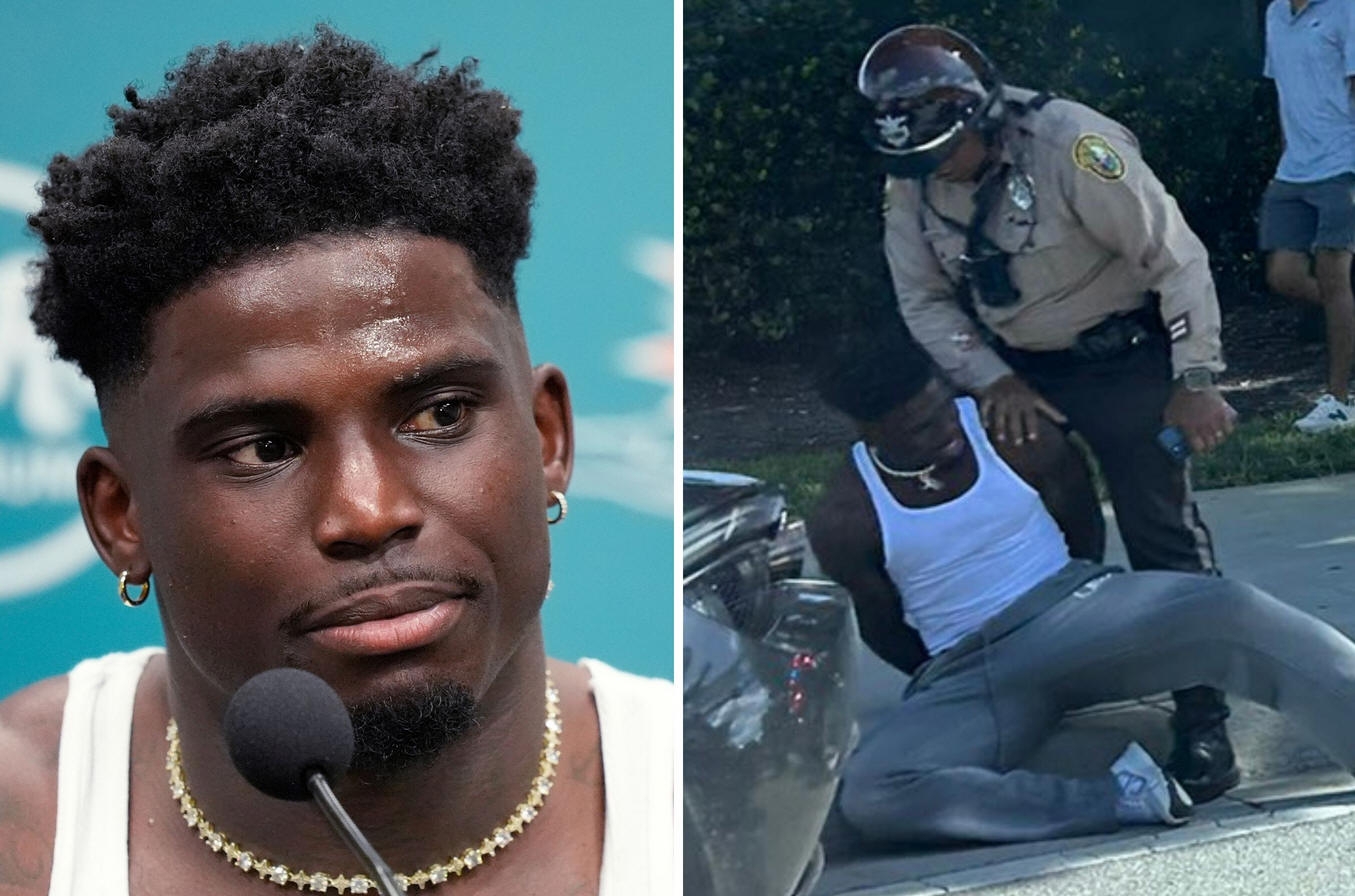 The Miami-Dade Police Department released body camera footage on Monday afternoon from the incident that left both Miami Dolphins players Tyreek Hill and Calais Campbell detained briefly ahead of their season opener on Sunday.
.
.
Click the link below for the article:
.
__________________________________________
September 9, 2024
Mohenjo
Business, Food For Thought, Human Interest, Political, Science, Technical
amazon, business, Business News, current-events, Future, Hotels, human-rights, medicine, mental-health, research, Science, Science News, technology, Technology News, travel, vacation

Click the link below the picture
.
James Earl Jones, a stuttering farm child who became a voice of rolling thunder as one of America’s most versatile actors in a stage, film and television career that plumbed race relations, Shakespeare’s rhapsodic tragedies, and the faceless menace of Darth Vader, died on Monday at his home in Dutchess County, N.Y. He was 93.
The office of his agent, Barry McPherson, confirmed the death in a statement.
From destitute days working in a diner and living in a $19-a-month cold-water flat, Mr. Jones climbed to Broadway and Hollywood stardom with talent, drive, and remarkable vocal cords. He was abandoned as a child by his parents, raised by a racist grandmother, and mute for years in his stutterer’s shame, but he learned to speak again with a herculean will. All had much to do with his success.
So did plays by Howard Sackler and August Wilson that let a young actor explore racial hatred in the national experience; television soap operas that boldly cast a Black man as a doctor in the 1960s; and a decision by George Lucas, the creator of “Star Wars,” to put an anonymous, rumbling African American voice behind the grotesque mask of the galactic villain Vader.
The rest was accomplished by Mr. Jones himself: a prodigious body of work that encompassed scores of plays, nearly 90 television network dramas and episodic series, and some 120 movies. They included his voice work, much of it uncredited, in the original “Star Wars” trilogy, in the credited voice-over of Mufasa in “The Lion King,” Disney’s 1994 animated musical film, and in his reprise of the role in Jon Favreau’s computer-animated remake in 2019.
Mr. Jones was no matinee idol, like Cary Grant or Denzel Washington. But his bulky Everyman suited many characters, and his range of forcefulness and subtlety was often compared to Morgan Freeman’s. Nor was he a singer; yet his voice, though not nearly as powerful, was sometimes likened to that of the great Paul Robeson. Mr. Jones collected Tonys, Golden Globes, Emmys, Kennedy Center honors and an honorary Academy Award.
Under the artistic and competitive demands of daily stage work and heavy commitments to television and Hollywood — pressures that burn out many actors — Mr. Jones was a rock. He once appeared in 18 plays in 30 months. He often made a half-dozen films a year, in addition to his television work. And he did it for a half-century, giving thousands of performances that captivated audiences, moviegoers, and critics.
They were dazzled by his presence. A bear of a man — 6 feet 2 inches and 200 pounds — he dominated a stage with his barrel chest, large head and emotional fires, tromping across the boards and spitting his lines into the front rows. And audiences were mesmerized by the voice. It was Lear’s roaring crash into madness, Othello’s sweet balm for Desdemona, Oberon’s last rapture for Titania, the queen of the fairies on a midsummer night.
He liked to portray kings and generals, garbage men and bricklayers; perform Shakespeare in Central Park, and the works of August Wilson and Athol Fugard on Broadway. He could strut and court lecherously, erupt with rage or melt tenderly; play the blustering Big Daddy in Tennessee Williams’s “Cat on a Hot Tin Roof” (2008) or an aging Norman Thayer Jr. in Ernest Thompson’s confrontation with mortality, “On Golden Pond” (2005).
Some theatergoers, aware of Mr. Jones’s childhood affliction, discerned occasional subtle hesitations in his delivery of lines. The pauses were deliberate, he said, a technique of self-restraint learned by stutterers to control involuntary repetitions. Far from detracting from his lucidity, the pauses usually added force to an emotional moment.
Mr. Jones profited from a deep analysis of meaning in his lines. “Because of my muteness,” he said in “Voices and Silences,” a 1993 memoir written with Penelope Niven, “I approached language in a different way from most actors. I came at language standing on my head, turning words inside out in search of meaning, making a mess of it sometimes, but seeing truth from a very different viewpoint.”
.

James Earl Jones in 1980. He climbed to Broadway and Hollywood stardom with talent, drive and remarkable vocal cords. Credit…M. Reichenthal/Associated Press
 Mr. Jones in 1979 as the author Alex Haley on “Roots: The Next Generation.”Credit…Warner Brothers Television, via Everett Collection
.
.
Click the link below for the article:
.
__________________________________________
Older Entries
Newer Entries
 James' World 2