Home

Vote for Kamala Harris to Support Science, Health and the Environment

Leave a comment

Click the link below the picture

.

In the November election, the U.S. faces two futures. In one, the new president offers the country better prospects, relying on science, solid evidence and the willingness to learn from experience. She pushes policies that boost good jobs nationwide by embracing technology and clean energy. She supports education, public health and reproductive rights. She treats the climate crisis as the emergency it is and seeks to mitigate its catastrophic storms, fires and droughts.

In the other future, the new president endangers public health and safety and rejects evidence, preferring instead nonsensical conspiracy fantasies. He ignores the climate crisis in favor of more pollution. He requires that federal officials show personal loyalty to him rather than upholding U.S. laws. He fills positions in federal science and other agencies with unqualified ideologues. He goads people into hate and division, and he inspires extremists at state and local levels to pass laws that disrupt education and make it harder to earn a living.

Only one of these futures will improve the fate of this country and the world. That is why, for only the second time in our magazine’s 179-year history, the editors of Scientific American are endorsing a candidate for president. That person is Kamala Harris.

Before making this endorsement, we evaluated Harris’s record as a U.S. senator and as vice president under Joe Biden, as well as policy proposals she’s made as a presidential candidate. Her opponent, Donald Trump, who was president from 2017 to 2021, also has a record—a disastrous one. Let’s compare.

Health Care

The Biden-Harris administration shored up the popular Affordable Care Act (ACA), giving more people access to health insurance through subsidies. During Harris’s September 10 debate with Trump, she said one of her goals as president would be to expand it. Scores of studies have shown that people with insurance stay healthier and live longer because they can afford to see doctors for preventive and acute care. Harris supports expansion of Medicaid, the U.S. health-care program for low-income people. States that have expanded this program have seen health gains in their populations, whereas states that continue to restrict eligibility have not. To pay for Medicare, the health insurance program primarily for older Americans, Harris supports a tax increase on people who earn $400,000 or more a year. And the Biden-Harris administration succeeded in passing the Inflation Reduction Act (IRA), which caps the costs of several expensive drugs, including insulin, for Medicare enrollees. Harris’s vice presidential pick, Tim Walz, signed into law a prohibition against excessive price hikes on generic drugs as governor of Minnesota.

When in office, Trump proposed cuts to Medicare and Medicaid (Congress, to its credit, refused to enact them.) He also pushed for a work requirement as a condition for Medicaid eligibility, making it harder for people to qualify for the program. As a candidate, both in 2016 and this year, he pledged to repeal the ACA, but it’s not clear what he would replace it with. When prodded during the September debate, he said, “I have concepts of a plan” but didn’t elaborate. Like Harris, however, he has voiced concern about drug prices, and in 2020 he signed an executive order designed to lower prices of drugs covered by Medicare.

The COVID pandemic has been the greatest test of the American health-care system in modern history. Harris was vice president of an administration that boosted widespread distribution of COVID vaccines and created a program for free mail-order COVID tests. Wastewater surveillance for viruses has improved, allowing public health officials to respond more quickly when levels are high. Bird flu now poses a new threat, highlighting the importance of the Biden-Harris administration’s Office of Pandemic Preparedness and Response Policy.

Trump touted his pandemic efforts during his first debate with Harris, but in 2020 he encouraged resistance to basic public health measures, spread misinformation about treatments and suggested injections of bleach could cure the disease. By the end of that year about 350,000 people in the U.S. had died of COVID; the current national total is well over a million. Trump and his staff had one great success: Operation Warp Speed, which developed effective COVID vaccines extremely quickly. Remarkably, however, Trump plans billion-dollar budget cuts to the Centers for Disease Control and Prevention and the National Institutes of Health, which started the COVID-vaccine research program. These steps are in line with the guidance of Project 2025, an extreme conservative blueprint for the next presidency drawn up by many former Trump staffers. He’s also talked about ending the Office of Pandemic Preparedness and Response Policy, calling it a pork project.

Reproductive Rights

Harris is a staunch supporter of reproductive rights. During the September debate, she spoke plainly about her desire to reinstate “the protections of Roe v. Wade” and added, “I think the American people believe that certain freedoms, in particular the freedom to make decisions about one’s own body, should not be made by the government.” She has vowed to improve access to abortion. She has defended the right to order the abortion pill mifepristone through the mail under authorization by the U.S. Food and Drug Administration, even as MAGA Republican state officials have tried—so far unsuccessfully—to revoke those rights. As a U.S. senator, she co-sponsored a package of bills to reduce rising rates of maternal mortality. In August, Trump said he would vote against a ballot measure expanding access to abortions in Florida, where he lives. The current Florida “heartbeat” law makes most abortions illegal after six weeks of pregnancy, before many people even know they are pregnant.

Trump appointed the conservative U.S. Supreme Court justices who overturned Roe v. Wade, removing the constitutional right to a basic health-care procedure. He spreads misinformation about abortion—during the September debate, he said some states support abortion into the ninth month and beyond, calling it “execution after birth.” No state allows this. He also refused to answer the question of whether he would veto a federal abortion ban, saying Congress would never approve such a ban in the first place. He made no mention of an executive order and praised the Supreme Court, three justices of which he placed, for sending abortion back to states to decide. This ruling led to a patchwork of laws and entire sections of the country where abortion is dangerously limited.

Gun Safety

The Biden-Harris administration closed the gun-show loophole, which had allowed people to buy guns without a license. The evidence is clear that easy access to guns in the U.S. has increased the risk of suicides, murder and firearm accidents. Harris supports a program that temporarily removes guns from people deemed dangerous by a court.

Trump promised the National Rifle Association that he would get rid of all Biden-Harris gun measures. Even after Trump was injured and a supporter was killed in an attempted assassination, the former president remained silent on gun safety. His running mate, J. D. Vance, said the increased number of school shootings was an unhappy “fact of life” and the solution was stronger school security.

Environment and Climate

Harris said pointedly during the September debate that climate change was real. She would continue the responsible leadership shown by Biden, who has undertaken the most substantial climate action of any president. The Biden-Harris administration restored U.S. membership in the Paris Agreement on coping with climate change. Harris’s election would continue IRA tax credits for clean energy, as well as regulations to reduce power-plant emissions and coal use. This approach puts the country on course to spend the authorized billions of dollars for renewable energy that should cut U.S. carbon emissions in half by 2030. The IRA also includes a commitment to broadening electric vehicle technology.

Trump has said climate change is a hoax, and he dodged the question “What would you do to fight climate change?” during the September debate. He pulled the U.S. out of the Paris Agreement. Under his direction the Environmental Protection Agency and other federal agencies abandoned more than 100 environmental policies and rules, many designed to ensure clean air and water, restrict the dangers of toxic chemicals and protect wildlife. He has also tried to revoke funding for satellite-based climate-research projects.

Technology

The Biden-Harris administration’s 2023 Executive Order on Safe, Secure and Trustworthy Development and Use of Artificial Intelligence requires that AI-based products be safe for consumers and national security. The CHIPS and Science Act invigorates the chipmaking industry and semiconductor research while growing the workforce. A new Trump administration would undo all of this work and quickly. Under the devious and divisive Project 2025 framework, technology safeguards on AI would be overturned. AI influences our criminal justice, labor and health-care systems. As is the rightful complaint now, there would be no knowing how these programs are developed, how they are tested or whether they even work.

The 2024 U.S. ballots are also about Congress and local officials—people who make decisions that affect our communities and families. Extremist state legislators in Ohio, for instance, have given politicians the right to revoke any rule from the state health department designed to limit the spread of contagious disease. Other states have passed similar measures. In education, many states now forbid lessons about racial bias. But research has shown such lessons reduce stereotypes and do not prompt schoolchildren to view one another negatively, regardless of their race. This is the kind of science MAGA politicians ignore, and such people do not deserve our votes.

At the top of the ballot, Harris does deserve our vote. She offers us a way forward lit by rationality and respect for all. Economically, the renewable-energy projects she supports will create new jobs in rural America. Her platform also increases tax deductions for new small businesses from $5,000 to $50,000, making it easier for them to turn a profit. Trump, a convicted felon who was also found liable of sexual abuse in a civil trial, offers a return to his dark fantasies and demagoguery, whether it’s denying the reality of climate change or the election results of 2020 that were confirmed by more than 60 court cases, including some that were overseen by judges whom he appointed.

.
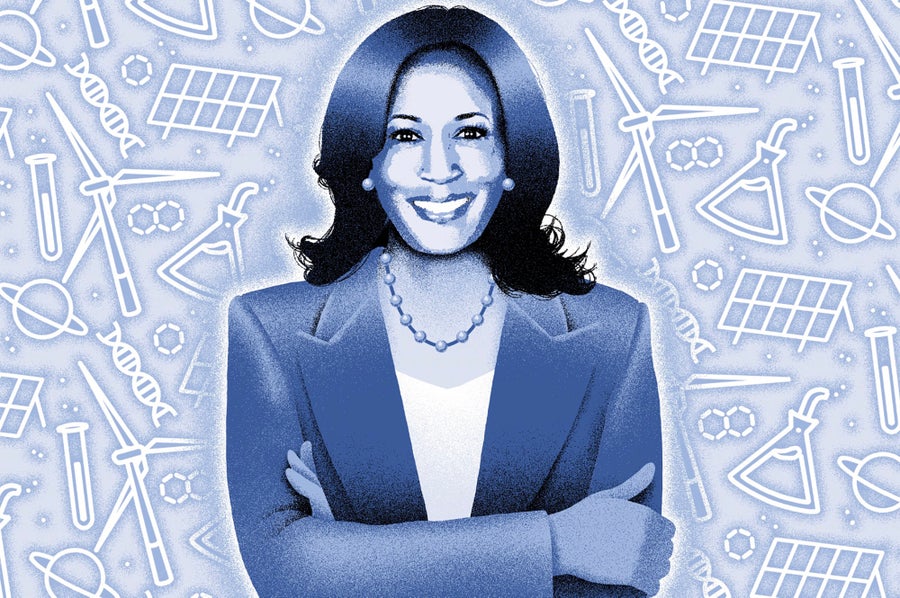
https://static.scientificamerican.com/dam/m/18342a38d6a31cf9/original/Kam2.jpg?w=900Luca D’Urbino

.

.

Click the link below for the article:

https://www.scientificamerican.com/article/vote-for-kamala-harris-to-support-science-health-and-the-environment/

.

__________________________________________

Is It a Red Flag That I Don’t Have Any Childhood Friends?

Leave a comment

Click the link below the picture

.

One thing I remember about childhood is how easy it was to make friends. “Do you want to play with me?” you’d ask another child in a deadpan tone, and they’d reply with either “yes” or “no.” (If I said that to someone today, they’d likely call the police.) Making friends as a teenager wasn’t too difficult, either. I remember sitting next to people in class, and the next thing I knew I was sharing snacks with them at lunchtime, or passing scrunched-up notes about who in our year we found attractive. In fact, as a young person, I always had at least one best mate, if not a whole group of them. Maybe it would’ve been more on-brand for me to have been a social outcast, but I can’t claim that was ever the case.

When I look around me now, though, I have very few close friends that remember me from before my frontal lobe had fully developed. There are a few, yes—a much beloved friend from primary school, a few mates from my teen job (working at a vintage shop in Shoreditch that still haunts my nightmares to this day)—but other than that, it’s as though those earlier friend-making years were wiped clean from my personal history. I’m surprised my partner doesn’t suspect that I committed some grisly crime in my youth and had to take on a new identity.

It’s a commonly held belief that, if a person has no childhood friends, they’re probably not to be trusted. There must be a reason, people claim. They’ve probably done some deranged thing. They’re probably, like, evil or something. Except I—and, of course, I may be biased here—don’t think that’s true. I went to three different primary schools and three different secondary schools—not for any sinister reason, but because my mum and I just moved a lot during those years. As a result, I became adept at forming friendships that didn’t tend to last. I tried to keep in touch with people, but before iPhones, that wasn’t the easiest task. Besides, when you’re a kid, you tend to just become friends with whoever’s in front of you. And for me, that often changed.

Growing up, I was also notoriously flaky. My friends were regularly annoyed about my bowing out of parties. Looking back, this was probably the result of social anxiety, or introversion, but it used to piss people off. As an adult, this is a behavioral trait I’ve definitely managed to curb. I very rarely bail on plans unless I’ve got a good reason, which means that my platonic relationships don’t fizzle out in the way they used to. Friendships, I realized around the age of 21, are like gardens. If you don’t water them on a regular basis, they tend to dry up quickl

I also went to university in London, just down the road from where I already lived. So I didn’t bother going to freshman-year events, and only secured a place in the dorms when someone later dropped out. More than that, I very often felt disconnected, as if everyone had left their hometowns to start an exciting new life, while I was just where I’d always been. I made some friends—and ended up in a long-term relationship—but nothing at uni seemed to stick. This time, it wasn’t because I was constantly moving. Or didn’t have a phone. I just didn’t make the effort. (Looking back, I was probably depressed.) By the time I graduated, I wanted a fresh start—again. Another situation in which I hadn’t retained close friends.

Thankfully, I have lots of mates I love these days, mates who’ve seen me through various break-ups, job changes, weird tattoos, and flop eras. But do I sometimes feel sad that I don’t have many close friends from childhood? Definitely. I think you are, in some ways, your truest self when you’re 12 years old, and anyone you meet at that age will simply understand you on a different level than someone you meet later in life. But that doesn’t mean I’m an evil or untrustworthy person. Or, at least, I don’t think so. Maybe you’d be better off asking around.

.

https://assets.vogue.com/photos/66e12fea1cd10371b336abc9/4:3/w_1920,c_limit/947397312Photo: Getty Images

.

.

Click the link below for the article:

https://www.vogue.com/article/red-flag-no-childhood-friends?utm_source=pocket_discover_parenting

.

__________________________________________

Former NIH Director Elias Zerhouni says beating Alzheimer’s requires studying diverse cohorts

Leave a comment

Click the link below the picture

.

When Elias Zerhouni took over as director of the National Institutes of Health in 2002, the only way doctors could know for certain whether a dementia patient had Alzheimer’s disease was to perform an autopsy. 

A few years later, new technologies that could deliver a definitive diagnosis revealed an embarrassing truth: many of the ongoing clinical trials for Alzheimer’s treatments included a significant number of subjects who had been misdiagnosed. “We didn’t know who had the disease and who didn’t have it,” Zerhouni recalls. 

It fell to Zerhouni and his colleagues at NIH to fashion a research program that could exploit the power of the new diagnostic technologies—which now include imaging, biomarker tests, and digital cognitive tests, among others—to learn about what has turned about to be a hugely complex disease. 

Since leaving NIH in 2008, Zerhouni has carried on that work in various roles—as head of research at Sanofi from 2011 to 2018 and, currently, as a founding board member of the Davos Alzheimer’s Collaborative (DAC). He is helping DAC assemble a cohort of Alzheimer’s patients that reflect the world’s genetic, environmental, social, and economic diversity, which he believes is crucial to understanding and treating the disease. DAC’s Global Cohorts program has so far engaged 26 different countries, with the goal of drawing up to one million people from rich and poor nations alike in North America, South America, Africa, Europe, Asia, and the Middle East. 

Expanding research to include a diverse cohort is essential to treating Alzheimer’s disease, he believes. Still, new drugs that can slow the progress of Alzheimer’s, despite their limitations, are a turning point, and bode well for the future. “Progress in medicine tends to occur like a swarm around a fortress,” he says. “When there is a crack in one place, you have a lot of people going through that crack, not knowing if it’s a dead end or if it’s the beginning of redemption.” 

Scientific American Custom Media talked with Zerhouni about the last two decades of Alzheimer’s research and his vision for what needs to happen going forward. 

SCIENTIFIC AMERICAN CUSTOM MEDIA:
You’ve had a bird’s-eye view of many different human diseases. How is Alzheimer’s unique?

ZERHOUNI: A perfect life is: you are born, you’re healthy, you remain healthy, and you die.

However, that’s not what you see. What you see is that you have a healthy beginning after childhood illnesses, you’re pretty healthy until about 50, when there are some cancers. For many people who live longer and remain physically healthy, cognitive impairment because of neuronal degeneration leads to a more profound loss of quality of life. 

Alzheimer’s is a slow pandemic. It’s growing along with the prevalence of obesity and diabetes and with aging populations almost worldwide. It has a huge economic impact—a permanent impact, because you have a population of patients that could have been healthy and self-sufficient but no longer are.

We found that if you delayed the onset of Alzheimer’s disease by five years, it would reduce its burden on society by 50 percent. We also found that the mortality of caregivers—the wife who takes care of the husband and vice versa—is extremely high. 

.

https://static.scientificamerican.com/dam/m/7e77632f26dad877/original/zerhouni.jpg?w=900Oboh Moses

.

.

Click the link below for the article:

https://www.scientificamerican.com/custom-media/davos-alzheimers-collaborative/former-nih-director-elias-zerhouni-says-beating-alzheimers-requires-studying/

.

__________________________________________
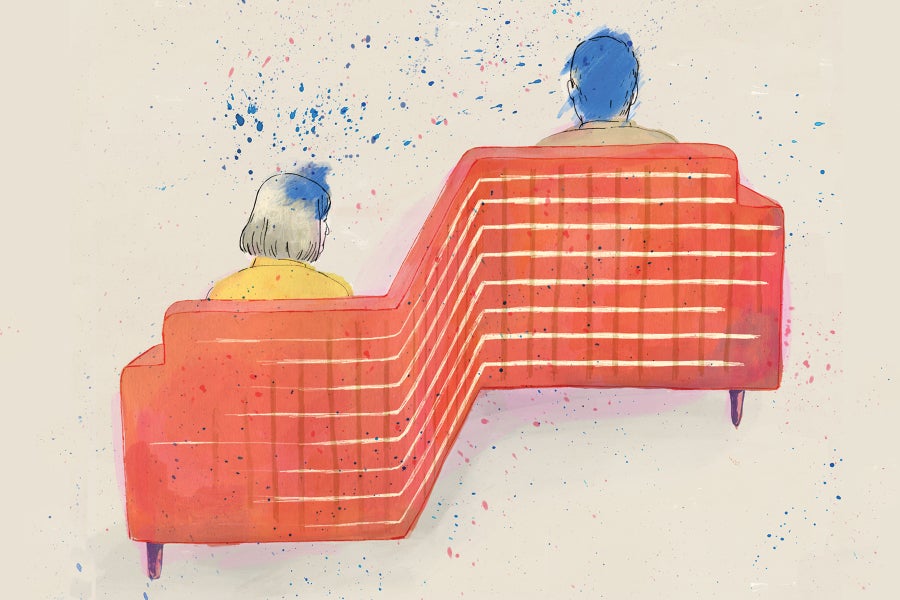
Athlete vs. grandmaster: The psychology of decision-making

Leave a comment

Click the link below the picture

.

In thinking about the economy, two heads are almost always better than one. Great ideas tend to emerge from teamwork. Even so, the partnership between the psychologists Daniel Kahneman and Amos Tversky was exceptional. First, it endured, lasting for more than 25 years and only ending with Tversky’s death in 1996. Secondly, it was immensely productive in establishing modern behavioral economics. Their work won Kahneman the Nobel Memorial Prize in 2002. Had Tversky lived, he would undoubtedly have shared the award. The working relationship had been so close that, rather like Lennon and McCartney, it was not always clear who had done what.

In behavioral economics, information is a resource, and decision making is costly. Its explanation of decision making has much in common with Herbert Simon’s understanding that behavior is rational when it follows a standardized process and economizes on the use of information. But behavioral economics has diverged from Simon’s thinking by arguing that people systematically fail to apply mental processes correctly because of the short-cuts which they take when they process information.

As psychologists, Tversky and Kahneman knew that while our brains are wonderful in many ways, they are still imperfect. We might think of them as having evolved to be very effective in engaging with the environment which our ancestors faced, but much less effective when we start dealing with the typical problems of a modern society. The weaknesses in decision making which psychologists and behavioral economists have identified result from people over-estimating the importance of whatever they can recall or recognize immediately.

When Kahneman and Tversky found evidence that the presentation of information affected decisions, they did not claim to have found evidence that we are irrational. They simply concluded that they had found still more evidence of widespread information-processing biases. Kahneman explained how these biases could arise in his intellectual autobiography, Thinking, Fast and Slow. He suggested that we make most decisions using System 1 processes, which are ‘always on’, and so used by default, but make some using an alternative System 2, in which decision making involves conscious thought.

System 1 thinking is fast, intuitive, and uses very little information. It means going with our instincts. This system manages unconscious responses to our environment, like spitting out very hot food which is scalding our mouths, and routine activities such as parking a car. For elite sports players, letting System 2 get involved in their decision making can damage their performance badly. It is too slow, and too demanding of mental resources to be effective in a highly competitive context where speed of decision making is critical. System 2 is much better for a grandmaster playing chess or an engineer calculating the load which a beam will need to bear. That makes System 2 an important part of what it means to be human. But usually, it sits in reserve, and we decide to switch it on when we are alerted to something novel in the decision which we are trying to make which makes us think that it will outperform System 1.

.

https://bigthink.com/wp-content/uploads/2024/09/think_like_economist_compressed.jpg?resize=480,270Unsplash / WikiCommons / Big Think
.

.

Click the link below for the article:

https://bigthink.com/business/athlete-vs-grandmaster-the-psychology-of-decision-making/?utm_source=pocket_discover_career

.

__________________________________________

The Ten Trillion Dollar Disease

Leave a comment

Click the link below the picture

.

Tremendous advancements in science, public health, and material standards of living in recent decades means that people are living longer than ever before. In 1950, when the world’s population was 2.5 billion, life expectancy at birth was 46.5 years. In 2022, those figures rose to 8 billion and 71.2 years, respectively. By 2050, global life expectancy is projected to rise to 77.3 years.

This good news, however, presents a challenge: keeping many more older people healthy than ever before. By 2050, the number of people aged 65 and above is expected to reach 1.6 billion, up from 761 million in 2021, according to the U.N.’s World Social Report 2023.

Alzheimer’s disease is one of the gravest threats to this growing population: as more and more people live longer and longer, the total number of people with Alzheimer’s disease worldwide is expected to increase by more than 150 percent in the next 30 years. These people have progressively greater challenges in carrying out their day-to-day activities, are more likely to become injured from falls, and face major challenges managing otherwise straightforward medical problems. Many people with Alzheimer’s disease suffer from hallucinations, confusion, and depression. It is also an ultimately fatal disease.

Alzheimer’s disease can cause horrible suffering among patients and their caregivers. This suffering is part of the large burden Alzheimer’s imposes on people and their families, public-health systems, and nations. The economic cost of this burden is difficult to assess. It involves not only easily quantifiable effects such as treatment and long-term care costs and loss of work productivity and lifespan, but also myriad others that are not easy to measure, such as its effects on the mental health and livelihoods of caregivers and other indirect medical costs.

Quantifying the broad economic cost of Alzheimer’s disease is important, not least because it is needed to assess the soundness of the expense to bring tests and, eventually, treatments to so many people through health systems. To this end, we have undertaken a comprehensive analysis, drawing on data from the Institute for Health Metrics and Evaluation (IHME), a leading research organization specializing in analyzing the global burden of diseases, as well as from other organizations and prior studies. We used a methodological approach that estimates the economic burden of Alzheimer’s disease based on people’s willingness to pay to avoid the risk of death. We also developed a macroeconomic model of the productive capacity of a country’s economy that allows for a reduction in labor and capital formation resulting from the disease burden. These methods take into account a wide array of direct and indirect costs of Alzheimer’s disease for individual patients, caregivers, and the aggregate economy.

Based on our willingness-to-pay approach, we estimate that the global economic burden of the disease in 2019 was roughly $2 trillion. By 2050, that burden will rise sharply to about $10 trillion and perhaps as high as $13.5 trillion. For comparison, world GDP is projected to be $228 trillion (inflation adjusted) in 2050. 

.

https://static.scientificamerican.com/dam/m/5ad93af4d6762b20/original/atlasbrain.jpg?w=900

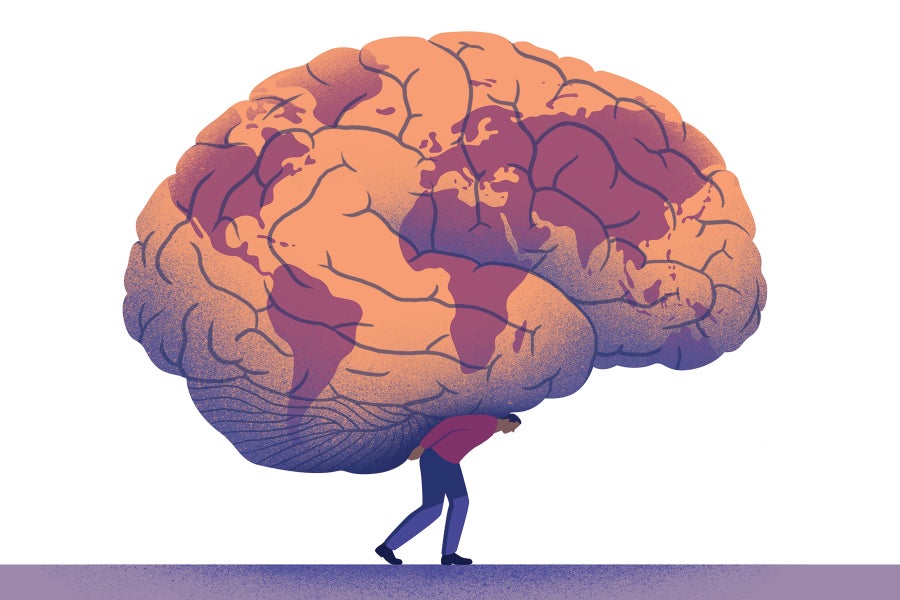
Dementia poses a global economic challenge, affecting rich, middle-income and poor nations. Davide Bonazzi

.

.

Click the link below for the article:

https://www.scientificamerican.com/custom-media/davos-alzheimers-collaborative/the-ten-trillion-dollar-disease/

.

__________________________________________

The Toyota Prius Delivers 93 MPG, Setting Guinness World Record

Leave a comment

Click the link below the picture

.

Would you be impressed by a car that gets 93 mpg? If the answer is yes, then you’re going to be impressed by the current Toyota Prius. While the current Prius may be EPA-rated for a “lowly” 57 mpg, it just completed a cross-country drive, from Los Angeles’ City Hall to New York’s City Hall, while averaging 93.1 MPG. That’s a 3,200-mile trip, so unlike a lot of fuel efficiency tests that take place over a few dozen or a few hundred miles, this one took place between two of America’s biggest cities, one on each coast. And yes, that’s a new fuel-efficiency world record, certified by Guinness.

How does a Toyota Prius nearly double its certified fuel efficiency? The single biggest factor is how it’s driven, or in this case, who is doing the driving. This hyper-efficient Prius owes its record-setting run to a gentleman named Wayne Gerdes, who publishes a website called CleanMPG.com and has a long history of setting efficiency records. The last time Wayne drove across the country, in a Kia Niro hybrid in 2016, he achieved a then-record 76.6 MPG. Wayne has also set records for driving a Volkswagen Passat TDI through all 48 contiguous states while averaging 68 MPG.

So Wayne Gerdes likes to break automotive efficiency records. And this time he chose the current Toyota Prius, which has already won a long list of accolades, including my personal assessment as the best car you can buy today, at least if you’re looking for the best combination of value, reliability, performance, safety, styling, and yes, fuel efficiency. It didn’t surprise me to see Wayne pair up with the current Prius to break another record. Still, getting an average of 93 mpg out of the car while crossing the U.S. is truly impressive.

Think about this — if Wayne was averaging 93 MPG, that means half the time he was doing better than that. It’s safe to assume he was seeing over 100 MPG on long stretches of road, and not just when going down hill. This is the ultimate form of hypermiling, which is what Wayne specializes in. If you read past accounts of how Wayne drives a car, you hear about the usual tactics, like being super-light on the throttle, keeping the vehicle’s speed down, and trying to time his arrival at stop lights so they’re green.

.

https://imageio.forbes.com/specials-images/imageserve/66e26c872727dc316e600cfa/2024-Prius-Limited-WindChillPearl-002/0x0.jpg?format=jpg&crop=3327,1559,x432,y686,safe&width=1440

.

.

Click the link below for the article:

https://www.forbes.com/sites/kbrauer/2024/09/12/the-toyota-prius-gets-93-mpg-setting-new-guinness-world-record/

.

__________________________________________

It’s Time for a Global Effort to Defeat Alzheimer’s

Leave a comment

Click the link below the picture

.

On behalf of the 55 million people worldwide who live with  Alzheimer’s disease, the millions more who shoulder the burden of care and loss, and the younger generations whose futures are clouded by the threat of this disease, we issue a call to action. 

The time is ripe. For the first time, we have an opportunity to defeat this disease, which robs so many otherwise healthy people of their memories and their identities and causes so much suffering and loss to them, their loved ones, and society at large.  

In recent years, scientists have made startling advances in their ability to detect Alzheimer’s disease in the early stages, when treatments are most effective. Drugs are now available that can slow the progress of the disease, having gone from the lab to pharmacy shelves, and more are in the pipeline. 

The arrival of these twin advances in testing and treatments has galvanized medical researchers, entrepreneurs and healthcare professionals. Several big pharmaceutical firms that had backed away from the disease, because it was so complex that it defied quick solutions, are once again making big investments. Biotech firms are working to commercialize new technologies, such as blood biomarker tests and cognitive tests that can help in diagnostics and screening. What’s more, regulators have shown a new willingness to move drugs quickly through the approval process, which is spurring innovation.

This good news brings a new challenge: getting these tests and treatments to the millions of people in all corners of the world who need them. We formed the Davos Alzheimer’s Collaborative (DAC) in part to address this challenge.

Part of this task involves bolstering our ability to detect Alzheimer’s early in the disease. Several blood tests that are currently on the market can measure telltale proteins, and more are due in the coming months. We need to make these tests cost-effective and plentiful. 

Even though much of the technology needed for early detection is already in place, policymakers are underestimating the resources and assistance that clinics, doctors’ offices and public-health officials will require to adopt and implement early detection.

Putting tools in the hands of consumers is another effective strategy that could be helpful in early detection. Digital assessment tools are now available that allow you to test yourself for cognitive impairment—whether it’s memory, judgment or orientation. Such tests can help manage the screening workload in clinics. 

We also need to raise public awareness about the new outlook for Alzheimer’s, so that people know there’s something they can do about the disease other than fear it. People should be asking their doctors, “How is my brain health? Is there a blood test I can take?” Doctors will need to figure out how to build Alzheimer’s testing into their routine clinical practice. DAC is helping them do exactly that. 

Rectifying inequities is critical. So far, researchers developing treatments and tests have focused on people of northern European descent, neglecting the rest of the world, where the vast majority of Alzheimer’s patients are to be found. This is unfair, and it is also bad science, because it leaves out information contained in the full panoply of human genetic diversity. Research organizations are making efforts to rectify this gap, but much remains to be done. 

Healthcare systems around the world, already strained by the growing prevalence of Alzheimer’s and other diseases, will need help in handling the new protocols for screening and treatment. 

To seize this global moment, we must work together. At present, the field of Alzheimer’s is fragmented. Academics work with their cohorts, businesses have their product strategies, governments focus on their own citizens. This compartmentalization is a wasted opportunity to pool our knowledge and scale our resources. 

Governments around the world need to step up their game. The U.S. National Institutes of Health spent about $400 million a year on Alzheimer’s disease in 2010; it now spends $3.7 billion. No other government or region comes close. Europe, China, India and other nations need to join the U.S., U.K. and others in the fight against this disease. 

The World Economic Forum and the Global CEO Initiative on Alzheimer’s Disease came together to form DAC, because we need an international organization that can coordinate an approach to Alzheimer’s disease that resembles the global effort to fight infectious disease. DAC was  modeled on organizations such as Gavi, the Vaccine Alliance; The Coalition for Epidemic Preparedness Innovations and The Global Fund, which were formed as mechanisms for battling malaria, polio, influenza and other infectious diseases around the world. 

Defeating Alzheimer’s will require a massive cooperative effort. DAC is already working to speed innovation and prepare healthcare systems to implement new technologies and strategies. We are enlisting corporate executives, government leaders and nongovernmental organizations in an effort to ease the burden of this disease and end the suffering it causes. 

In the following pages you will read about our efforts thus far to make health systems better able to detect the disease early, reach underserved populations and to find new, innovative ways of bringing more providers to the frontlines.

Leveraging what we are learning from around the world, we are calling on governments to increase their investments in research, healthcare and treatments. Working together, we can beat this disease rapidly and comprehensively. 

Alzheimer’s disease, the millions more who shoulder the burden of care and loss, and the younger generations whose futures are clouded by the threat of this disease, we issue a call to action. 

The time is ripe. For the first time, we have an opportunity to defeat this disease, which robs so many otherwise healthy people of their memories and their identities and causes so much suffering and loss to them, their loved ones and society at large.  

In recent years, scientists have made startling advances in their ability to detect Alzheimer’s disease in the early stages, when treatments are most effective. Drugs are now available that can slow the progress of the disease, having gone from the lab to pharmacy shelves, and more are in the pipeline. 

The arrival of these twin advances in testing and treatments has galvanized medical researchers, entrepreneurs and healthcare professionals. Several big pharmaceutical firms that had backed away from the disease, because it was so complex that it defied quick solutions, are once again making big investments. Biotech firms are working to commercialize new technologies, such as blood biomarker tests and cognitive tests that can help in diagnostics and screening. What’s more, regulators have shown a new willingness to move drugs quickly through the approval process, which is spurring innovation.

This good news brings a new challenge: getting these tests and treatments to the millions of people in all corners of the world who need them. We formed the Davos Alzheimer’s Collaborative (DAC) in part to address this challenge.

Part of this task involves bolstering our ability to detect Alzheimer’s early in the disease. Several blood tests that are currently on the market can measure telltale proteins, and more are due in the coming months. We need to make these tests cost-effective and plentiful. 

Even though much of the technology needed for early detection is already in place, policymakers are underestimating the resources and assistance that clinics, doctors’ offices and public-health officials will require to adopt and implement early detection.

Putting tools in the hands of consumers is another effective strategy that could be helpful in early detection. Digital assessment tools are now available that allow you to test yourself for cognitive impairment—whether it’s memory, judgment or orientation. Such tests can help manage the screening workload in clinics. 

We also need to raise public awareness about the new outlook for Alzheimer’s, so that people know there’s something they can do about the disease other than fear it. People should be asking their doctors, “How is my brain health? Is there a blood test I can take?” Doctors will need to figure out how to build Alzheimer’s testing into their routine clinical practice. DAC is helping them do exactly that. 

Rectifying inequities is critical. So far, researchers developing treatments and tests have focused on people of northern European descent, neglecting the rest of the world, where the vast majority of Alzheimer’s patients are to be found. This is unfair, and it is also bad science, because it leaves out information contained in the full panoply of human genetic diversity. Research organizations are making efforts to rectify this gap, but much remains to be done. 

Healthcare systems around the world, already strained by the growing prevalence of Alzheimer’s and other diseases, will need help in handling the new protocols for screening and treatment. 

To seize this global moment, we must work together. At present, the field of Alzheimer’s is fragmented. Academics work with their cohorts, businesses have their product strategies, governments focus on their own citizens. This compartmentalization is a wasted opportunity to pool our knowledge and scale our resources. 

Governments around the world need to step up their game. The U.S. National Institutes of Health spent about $400 million a year on Alzheimer’s disease in 2010; it now spends $3.7 billion. No other government or region comes close. Europe, China, India and other nations need to join the U.S., U.K. and others in the fight against this disease. 

The World Economic Forum and the Global CEO Initiative on Alzheimer’s Disease came together to form DAC, because we need an international organization that can coordinate an approach to Alzheimer’s disease that resembles the global effort to fight infectious disease. DAC was  modeled on organizations such as Gavi, the Vaccine Alliance; The Coalition for Epidemic Preparedness Innovations and The Global Fund, which were formed as mechanisms for battling malaria, polio, influenza and other infectious diseases around the world. 

Defeating Alzheimer’s will require a massive cooperative effort. DAC is already working to speed innovation and prepare healthcare systems to implement new technologies and strategies. We are enlisting corporate executives, government leaders and nongovernmental organizations in an effort to ease the burden of this disease and end the suffering it causes. 

In the following pages you will read about our efforts thus far to make health systems better able to detect the disease early, reach underserved populations and to find new, innovative ways of bringing more providers to the frontlines.

Leveraging what we are learning from around the world, we are calling on governments to increase their investments in research, healthcare and treatments. Working together, we can beat this disease rapidly and comprehensively. 

.

https://static.scientificamerican.com/dam/m/5b00380658e5e081/original/peopleglobe.jpg?w=900

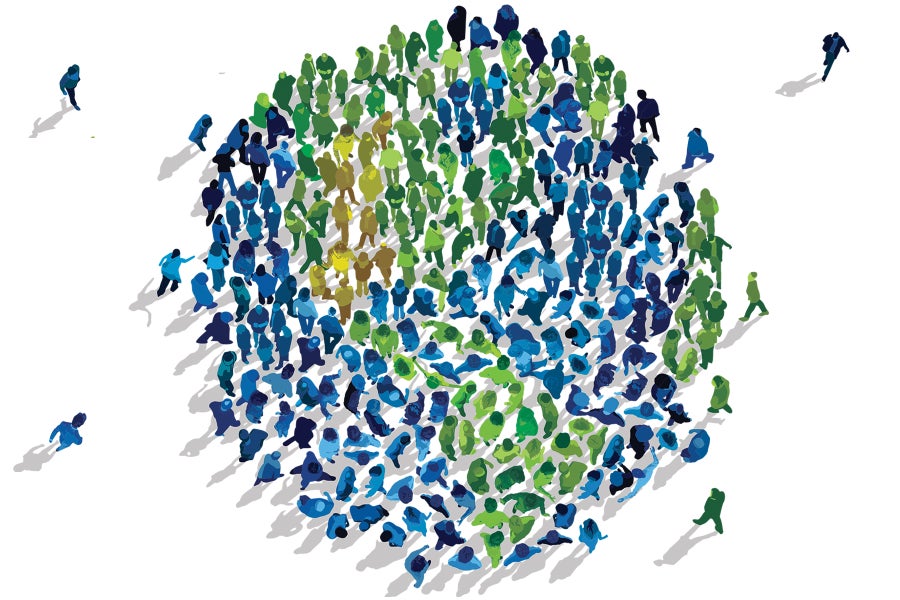
Rectifying inequities will be needed to reduce the numbers of people with dementia worldwide. Daniel Hertzberg/Theispot

.

.

Click the link below for the article:

https://www.scientificamerican.com/custom-media/davos-alzheimers-collaborative/its-time-for-a-global-effort-to-defeat-alzheimers/

.

__________________________________________

5 Effective Ways To Handle A ‘Gaslit Friendship’—By A Psychologist

Leave a comment

Click the link below the picture

.

Friendships are meant to be a sanctuary—a place of happiness, trust and support. But when a friend gaslights you, this safe space turns into an emotional battlefield, leaving you questioning your reality and sense of self. To add insult to injury, gaslighting is often difficult to identify as it’s a subtle and lowkey form of constant and progressive manipulation—gradually pulling you away from your real world toward self-doubt and guilt.

Gaslighting is a manipulation tactic where the victim is made to doubt their reality and feel crazy. It often involves key elements such as denying facts upfront, twisting words and their meanings, or making you feel overly sensitive. While breaking free is tough, here are five strategic ways to start.

1. Recognize Their Patterns

The first step in addressing gaslighting is recognizing it—understanding that someone is warping your sense of reality. A 2024 study published in the journal Current Approaches in Psychiatry shows that gaslighting can happen in various relationships—from romantic to social to political.

It also suggests that gaslighting is often driven by power imbalances, personality traits and how much individuals depend on one another. Phrases like “you’re imagining things” or “that never happened” are common red flags. Dr. Robin Stern, co-founder and associate director of the Yale Center for Emotional Intelligence and a pioneering psychologist in this field, exemplifies multiple scenarios of gaslighting in her book—The Gaslight Effect (2007). She underscores that recognizing early signs is essential to counter this emotional manipulation.

You might notice constant manipulation, where your friend dismisses your feelings as overreactions or accuses you of being too sensitive. Pay keen attention to see how often you are left questioning your own perceptions after normal day-to-day conversations and if you end up feeling chronically unsettled.

While genuine friendship also involves moments of brutal and unsettling honesty, a gaslit friendship may affect your public confidence. Recognizing these patterns is crucial for maintaining healthy and authentic friendships. When you repeatedly face gaslighting, you might internalize it, causing unfounded self-doubt to grow. Awareness of these tactics is your first line of defense in reclaiming your sense of self.

.

https://imageio.forbes.com/specials-images/imageserve/66e1526a760fa9cd7aaf1c8a/mental-vampire/0x0.jpg?format=jpg&crop=3332,2497,x0,y100,safe&width=1440

.

.

Click the link below for the article:

https://www.forbes.com/sites/traversmark/2024/09/12/5-effective-ways-to-handle-a-gaslit-friendship-by-a-psychologist/

.

__________________________________________

The Heartbreak and Hazards of Alzheimer’s Caregiving

Leave a comment

Click the link below the picture

.

Cathy is a woman in her late sixties, with a warm, tremulous voice. For six years, she had been taking care of her husband, Frank, who has Alzheimer’s. Recently, she had begun to berate herself for not being “cut from the same cloth as Mother Teresa”.

“You should know, I’m not a saint,” she said the first time we met. 

I assured her I didn’t know any caregivers who were, nor did I expect to meet any.

“That’s good,” she said.

“The thing is,” she said, “every day with Frank is the same. He gets up, eats breakfast, reads the paper and naps. In the afternoon he grabs the remote, plants himself in his favorite chair, and turns on a game. If it isn’t the Mets, it’s the Jets. If it isn’t the Jets, it’s the Rangers or the Knicks or the Giants. And he’s not a passive spectator. Not Frank. He thinks he’s sitting above the dugout, and when someone fumbles a ground ball or misses a tag, Frank is on his feet, screaming at the poor guy.  Or else, he’s leaning forward, predicting loudly when someone will screw up. ‘Don’t do it!’ he’d yell. ‘Wait! Wait!’”

If it isn’t sports, it’s a movie, any movie—that, too, presents an opportunity for Frank to participate.  He yells at the actors, warning them of some impending disaster. Or he forecasts some dire plot twist, shaking his fist at the TV. And if an attractive actress shows up, he might suddenly shout, “That woman is about to take her top off!  No one wants to see that!”

For months Cathy had put up with Frank’s behavior even though his impromptu yelling and ridiculous predictions sucked the joy out of being in the same room with him.  But when he became fixated on thieves attempting to break into their house at all hours of the day and night, insisting that she lock the doors and shut all the windows, she had had enough. Her patience and good will had run out. 

“No one is out to get you!” she shouted one night. “No one wants anything from you. No one is looking to break in. You hear me? You have dementia! Dementia!”

Cathy knew, of course, that she shouldn’t argue, that it was pointless to use logic and contradict her husband, but she couldn’t help herself.

“I always thought I was a sensitive person,” she mused. “Now I’ve become someone who kicks people when they’re down. I tell him Errol Flynn isn’t going to die. I tell him Doris Day isn’t going to take her blouse off. I tell him he has dementia. Why do I do that?”

Cathy is not alone. The vast majority of caregivers know full well that their spouses or parents are ill, yet they still behave in ways they know are counterproductive: arguing, blaming, insisting on reality, and taking symptoms personally. Yes, Cathy understood that she was dealing with a disease, with someone suffering from delusions and hallucinations, but when Frank, panicked by imaginary thieves, refused to crack open a window, Cathy fumed with resentment, and that feeling gradually overcame her desire to be understanding and reasonable.

Telling me all this, she shook her head in disbelief. “You know, he’s absolutely right. I don’t blame him for getting angry,” she said. “If someone had told me before Frank got Alzheimer’s that my job was to agree with him and accept his reality, I would have said, ‘Sure, what’s so hard about that?’ I mean, who cares that he thinks some jock is going to fall on his ass or that the weather girl is going to flash everyone? It’s not his fault. Who does this?”

“Just about every caregiver I talk to,” I said.

Although Cathy was taken aback by her own irrational behavior, it should not surprise us. Reasonableness is hardly our brain’s first priority. The brain, after all, is an ultrasocial organ that has innate expectations that are often not met when caring for Alzheimer’s patients. So when someone with whom we’ve had a close relationship develops Alzheimer’s, in many cases he or she begins to retreat into a world where we cannot follow. Not only do patients often not realize they have a neurological illness, they start speaking and behaving in ways that test our own sense of reality. 

.

https://static.scientificamerican.com/dam/m/770ae7e15c6ece26/original/Caregivers.jpg?w=900

People strive to provide good care for loved ones with dementia, all while dealing with frustration and loss. Carmen Segovia

.

.

Click the link below for the article:

https://www.scientificamerican.com/custom-media/davos-alzheimers-collaborative/the-heartbreak-and-hazards-of-alzheimers-caregiving/

.

__________________________________________

Meet Vice President Kamala Harris’ Pastor, Civil Rights Leader Amos C. Brown

Leave a comment

Click the link below the picture

.

On Sunday, Rev. Amos C. Brown led service at Third Baptist Church of San Francisco, as he has on most Sundays since becoming pastor there in 1976.

Wearing a hoodie bearing the images of Rev. Martin Luther King Jr., Nelson Mandela, Kwame Ture, and John Lewis, along with the words “GOOD TROUBLE,” he called the congregation to fix their “hearts, minds, and spirits on prayer.” He prayed, by name, for over 30 members of the church who were “sick and shut in.”

Before Brown read from Hebrews 12:1-3, a congregant handed him a note to let him know that President Joe Biden was stepping out of the race for reelection. He read from the verse, saying, “seeing we also are compassed about with so great a cloud of witnesses, let us lay aside every weight, and the sin which doth so easily beset us, and let us run with patience the race that is set before us.”

Then, after the service, Brown received a phone call from another member who was absent that Sunday: Vice President Kamala Harris, who was preparing to run a very different type of race.

“She said to me, ‘Pastor, I called because I want you to pray for me, [my husband] Doug, this country’ — and finally she said — ‘and the race I am intending to run for president,’” Brown told Sojourners on Monday. “We exchanged pleasantries, I congratulated her because she’ll be a great president, and we had prayer. She was so gracious and thankful that I took the time.”

Brown is no stranger to speaking faithfully into high-pressure political moments — as a younger man, he was one of Rev. Martin Luther King Jr.’s few students at Morehouse College. Brown, a veteran Civil Rights activist, has served at Third Baptist since 1976. He also served as a delegate to the United Nations World Conference Against Racism in 2001, is the president of the San Francisco chapter of the NAACP, and served as vice chair of California’s Reparations Task Force.

Harris, who earned enough delegate support by Monday to become the Democratic Party’s nominee, has previously referenced Brown in her public speeches. She referenced him in a January speech to a Women’s Missionary Society of the African Methodist Episcopal Church.

Brown told Sojourners that he invoked his favorite Bible verse, Micah 6:8, as he spoke with Harris, reminding her to “do justice, love mercy, and walk humbly with your maker.”

“That’s what we need in this nation. There’s too much arrogance and egocentricity after all this Trumpism,” he said.

Brown said he has known Harris and her family for more than two decades, calling Harris’ mother “a terrific scholar and scientist.” Harris’s mother, Shyamala Gopalan Harris, was a Hindu from Chennai, India, who worked on breast cancer research. Harris’s father, Donald Harris, is a Black Baptist and a professor emeritus at Stanford University.

Her parents gave her experiences from the Hindu and Baptist traditions when she was growing up. In her 2019 memoir, Harris wrote that her “earliest memories of the teachings of the Bible were of a loving God, a God who asked us to ‘speak up for those who cannot speak for themselves’ and to ‘defend the rights of the poor and needy.’”

.

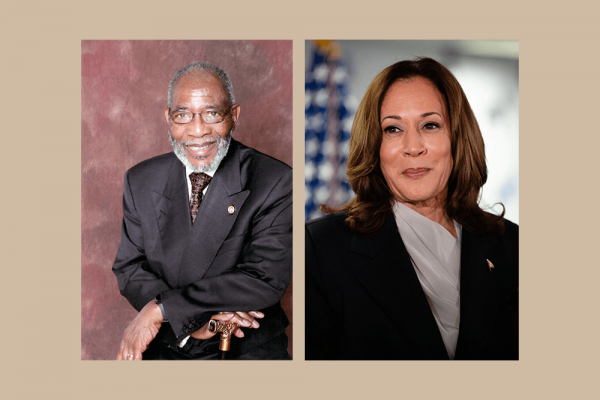
https://sojo.net/sites/default/files/styles/large_rectangle_crop/public/blog/240723-amosharris2.png?itok=kft-pznGA composite of Rev. Amos C. Brown and Vice President Kamala Harris. Photo of Brown courtesy Third Baptist Church in San Francisco. Photo of Harris looking on as she speaks at her Presidential Campaign headquarters in Wilmington, Del., July 22, 2024. Erin Schaff/Pool via REUTERS. Composite by Mitchell Atencio/Sojourners

.

.

Click the link below for the article:

https://sojo.net/articles/meet-vice-president-kamala-harris-pastor-civil-rights-leader-amos-c-brown

.

__________________________________________

Older Entries Newer Entries

MRS. T’S CORNER

https://www.tangietwoods

Amor Entre Estrellas

¡Bienvenido de vuelta viajero!

Heart of Loia `'.,°~

so looking to the sky ¡ will sing and from my heart to YOU ¡ bring...

Michael Ciullo

CEO and Founder of Nsight Health

Nelson MCBS

Catholic News, Prayers, HD Images, Rosary, Music, Videos, Holy Mass, Homily, Saints, Lyrics, Novenas, Retreats, Talks, Devotionals and Many More

Global geopolitics

Decoding Power. Defying Narratives.

Talk Photo

A creative collaboration introducing the art of nature and nature's art.

Movie Burner Entertainment

The Home Of Entertainment News, Reviews and Reactions

Le Notti di Agarthi

Hollow Earth Society

C r i s t i a n a' s Fine Arts ⛄️

•Whenever you are confronted with an opponent, conquer him with love.(Gandhi)

TradingClubsMan

Algotrader at TRADING-CLUBS.COM

Comedy FESTIVAL

Film and Writing Festival for Comedy. Showcasing best of comedy short films at the FEEDBACK Film Festival. Plus, showcasing best of comedy novels, short stories, poems, screenplays (TV, short, feature) at the festival performed by professional actors.

Bonnywood Manor

Peace. Tranquility. Insanity.

Warum ich Rad fahre

Take a ride on the wild side

Madame-Radio

Découvre des musiques prometteuses (principalement) dans la sphère musicale française.

Ir de Compras Online

No tiene que Ser una Pesadilla.

Kana's Chronicles

Life in Kana-text (er... CONtext)

Jam Writes

Where feelings meet metaphors and make questionable choices.

emotionalpeace

Finding hope and peace through writing, art, photography, and faith in Jesus.

WearingTwoGowns.COM

The Community for Wounded Healers: Former Medical Students, Disabled Nurses, and Faith-Fueled Pivots

...

love each other like you're the lyric to their music

Luca nel laboratorio di Dexter

Comprendere il mondo per cambiarlo.

Tales from a Mid-Lifer

Mid-Life Ponderings

Creative

Travel,Tourism, Life style "Now in hundreds of languages for you."

freedomdailywriting

I speak the honest truth. I share my honest opinions. I share my thoughts. A platform to grow and get surprised.

The Green Stars Project

User-generated ratings for ethical consumerism

Cherryl's Blog

Travel and Lifestyle Blog

Sogni e poesie di una donna qualunque

Questo è un piccolo angolo di poesie, canzoni, immagini, video che raccontano le nostre emozioni

My Awesome Blog

“Log your journey to success.” “Where goals turn into progress.”

pierobarbato.com

scrivo per dare forma ai silenzi e anima alle storie che il mondo dimentica.

Thinkbigwithbukonla

“Dream deeper. Believe bolder. Live transformed.”

Vichar Darshanam

Vichar, Motivation, Kadwi Baat ( विचार दर्शनम्)

Komfort bad heizung

Traum zur Realität

Chic Bites and Flights

Savor. Style. See the world.

ومضات في تطوير الذات

معا نحو النجاح

Broker True Ratings

Best Forex Broker Ratings & Reviews

Blog by ThE NoThInG DrOnEs

art, writing and music by James McFarlane and other musicians

fauxcroft

living life in conscious reality

Srikanth’s poetry

Freelance poetry writing

JupiterPlanet

Peace 🕊️ | Spiritual 🌠 | 📚 Non-fiction | Motivation🔥 | Self-Love💕

Sehnsuchtsbummler

Reiseberichte & Naturfotografie