Home

How to Build Career Resilience in Uncertain Times

Leave a comment

Click the link below the picture

.

A senior executive I worked with—let’s call her Marisol—had spent years building trust, driving impact, and delivering results, only to find her role suddenly eliminated during a company restructuring. There was no discussion, no transition plan. Just a few polite reassurances, a severance package, and a carefully worded email later, and that was it.

But instead of being paralyzed by uncertainty, Marisol took control. She reached out to trusted mentors, tapped into her network, and worked with an executive coach while giving herself space to breathe for the first time in years. Then, with a clearer sense of what she wanted next, she rebranded her expertise and pivoted into a broader HR role that recognized the full range of skills she had spent years honing.

Her story is not unique. Layoffs, stagnant wages, AI-driven automation, shifting labor laws, and evolving workplace expectations have made job security a moving target these days. Even the most dedicated professionals aren’t immune to job instability, and salaried workers feel it, too.

The real challenge today isn’t just holding onto a job or making it through another quarter—it’s building a career that won’t crumble in the face of disruption. That takes career resilience: the ability to adapt, take initiative, and stay grounded, even when the ground is shifting beneath you, much like Marisol did.

Four Ways to Build Career Resilience

Career resilience isn’t about clinging to a job out of fear; it’s about learning to adapt as circumstances shift.

Growing up in the Dominican Republic with grandparents who survived a brutal dictatorship, I was raised to be ready. My family keeps our pantry and emergency kit stocked, not out of paranoia but from a deep understanding that nothing is promised.

In work, too, uncertainty demands self-awareness and readiness. This means developing a growth mindset, even when your options feel limited, so you are always ready to pick up and go. The following four strategies can help:

1. Identify your non-negotiables.

Career longevity isn’t just about holding onto a job; it’s about knowing what matters most to you as you navigate the many roles you’ll likely take on. Having clarity on your must-haves, values, and risk tolerance can help you make tough decisions as circumstances quickly change.

Ask yourself:

Do I handle uncertainty well, or does it rattle me? If stability matters most to you, focus on building skills that keep you adaptable and in demand, regardless of industry shifts.

Would I take a pay cut for work that feels more meaningful? If purpose drives you, consider roles that align with your values, interests, or the kind of impact you want to make, even if it means a temporary financial trade-off.

Would I go back to five days in the office? If flexibility is a priority, start cultivating skills and networks that open doors to remote or hybrid opportunities.

Would I accept work that conflicts with my values? If ethical alignment is central to your career choices, seek out roles and organizations whose missions and practices you can stand behind.

Would I agree to lay off my team, knowing those remaining will be overloaded? If leading with fairness and dignity is what you value most, consider where you draw the line. Would you push for a phased approach? Fight for additional support? Or would this be the moment you step away?

Your responses aren’t just theoretical. They help you set career guardrails. Understanding your non-negotiables now enables you to navigate tough choices later before urgency forces your hand.

2. Build adaptability and agility.

Career resilience is like a muscle; you build it by strengthening your emotional intelligence, expanding your skill set, and staying ready to pivot when needed. To strengthen adaptability and agility in your current role:

Understand your role in the bigger picture. Pay attention to how your work connects to broader business functions and goals. Proactively collaborate across teams, solve recurring pain points, and take on projects that stretch your expertise and help you build new skills. Opportunities often come from stepping beyond your immediate role.

Stay steady under pressure. Clear thinking and self-regulation are essential in high-stakes, uncertain environments. Recognize your stress triggers and manage your energy before they take over. Build routines to help you reset, such as mindfulness, breathwork, reflection, or check-ins with mentors or colleagues.

Bet on your high-value skills. AI isn’t replacing leadership, creativity, or emotional intelligence—yet. Take on challenging projects, step into management opportunities, and sharpen your ability to problem-solve, read the room, and adapt in real-time. Identify your high-value skills by noticing what people consistently turn to you for, what problems you solve easily, and where your unique insight makes the biggest impact. The stronger these skills, the more career options you create.

Make learning part of the job—not a backup plan. Deloitte’s Workplace Skills 2024 survey found that 87% of professionals say adaptability and leadership are key to career growth, reinforcing that continuous learning, whether AI, industry trends, or new workplace technologies, is essential for long-term success. Treat every setback as a learning opportunity: what worked, what didn’t, and how to improve. Build learning into your workflow by setting aside time for skill-building, seeking feedback regularly, and staying curious about new tools and industry shifts. Small, consistent efforts add up over time.

.

https://hbr.org/resources/images/article_assets/2025/03/Mar25_25_200486729-001.jpgMatthias Clamer/Getty Images

.

.

Click the link below for the complete article:

https://hbr.org/2025/03/how-to-build-career-resilience-in-uncertain-times?utm_source=pocket_discover_career

.

__________________________________________

Courts Are Rejecting Politicized Attacks on Care for Trans Kids

Leave a comment

Click the link below the picture

.

Ads attacking transgender people may have driven votes in the 2024 election, but bans on health care for trans teens are increasingly falling short, both in the courts and in medical reviews. Voices of reason can fight back, it turns out, against a manufactured moral panic.

Around 1.3 percent of middle school students in the U.S., children on the cusp of adolescence, identify as transgender. Acceptance and awareness of transgender individuals has grown, akin to a “Gender Revolution” as National Geographic called it in 2017. The acceptance, in part, triggered politicized attacks, some frankly weird, centered on banning trans people from sports and ending gender-affirming care for them.

Those attacks on trans kids might be effective politics, but they are lousy medicine. Courts and medical reviews are increasingly coming down on the side of gender-affirming care.

Put simply, gender-affirming care supports people’s own views of themselves. If they want changes in pronouns, names, hairstyles, or clothing, puberty blocking treatment as adolescents, or hormone replacement therapy—that’s okay. What matters is they receive comprehensive medical and psychological care along the way, whatever they and their parents decide. In the U.S., this approach is endorsed by the World Professional Association for Transgender Health and the Endocrine Society as well as a host of other medical organizations. “Critics of our gender-affirming care policy mischaracterize it as pushing medical or surgical treatments on youth; in fact, the policy calls for the opposite,” wrote the then-president of the American Academy of Pediatrics, Moira Szilagyi, in 2022.

Nevertheless, since 2021, 27 states have erected laws or policies limiting minors’ access to this care. These bans are “exacerbating the already high rates of depression, anxiety, and suicide attempts among this vulnerable population,” according to the American Psychological Association. Tennessee’s ban is now under review by the U.S. Supreme Court in U.S. v. Skrmetti, with nationwide implications.

In the meantime, an Ohio appeals court in March blocked that state’s ban on gender-affirming care for minors, saying it violated the state’s constitution. That court also weighed in on medical standards in its decision: “The medical evidence and clinical experience presented in this case demonstrate that, when provided in appropriate circumstances, gender-affirming care can meaningfully improve the health and well-being of transgender adolescents,” found the judges, noting lower rates of depression and other mental health issues. State medical experts testifying in favor of the ban had cited the usual criticisms of “sufficiency and quality of the research” and European restrictions (but not bans) of gender-affirming care for minors. But the judges didn’t buy that, finding “the state did not present, and the trial court did not find, any contrary evidence-based standards [emphasis theirs] accepted by any nationally or internationally recognized professional medical groups,” in the decision.

Fans of trans-care bans regularly employ arguments about insufficient evidence and European restrictions, spreading disinformation. In 2023, for example, Arkansas attorney general Tim Griffin responded to a federal judge blocking his state’s ban, saying, “There is no scientific evidence that any child will benefit from these procedures,” on X. This echoed his state’s ban, which decried “the lack of any long-term longitudinal studies” on puberty-blocking drugs. In other words, we should wait a few decades, while kids suffer, to see if lifesaving care sufficiently satisfies lawmakers like the ones who believe trans kids are “demons” and “mutants.” This moving-the-goalposts demand for extra evidence for gender-affirming care—embedded in Arkansas’ original 2021 ban—has subsequently been copy-pasted into other state laws pushed by partisan religious activists. “These bans were produced as part of an intentional strategy by social and religious conservatives to demonize and scapegoat transgender people,” said Indiana University constitutional law expert Steve Sanders, speaking last year at a Federalist Society event reported by USA Today.

Of course in reality, plenty of evidence demonstrates gender-affirming care’s benefits, as an Association of the Scientific Medical Societies in Germany review concluded in March. The German review also found “no proven effect treatment alternative,” according to news reports. That joins a French medical review released in December, which also backed gender-affirming care. So much for European resistance.

.

https://static.scientificamerican.com/dam/m/258463109d3c68f9/original/let-trans-kids-live-sign.jpg?m=1742932833.86&w=900

A transgender rights supporter takes part in a rally outside of the U.S. Supreme Court. Kevin Dietsch/Getty Images

.

.

Click the link below for the complete article:

https://www.scientificamerican.com/article/courts-are-rejecting-politicized-attacks-on-care-for-trans-kids/

.

__________________________________________

10 Pieces Of Honest Career Advice No One Tells You In Your 30s

Leave a comment

Click the link below the picture

.

Something about your 30s and 40s feels like standing at a professional crossroads. You’ve gained experience, maybe moved up a level or two, and the pressure to “figure it out” once and for all is real. But behind the LinkedIn milestones and polished bios, many professionals in this phase quietly navigate career pivots, burnout, and a desire for meaning, not just momentum.

For many, this stage brings an uncomfortable realization: the ladder you’ve been climbing might be leaning against the wrong wall. What once motivated you—titles, promotions, packed calendars—might no longer feel satisfying. You start questioning what you’re doing and why you’re doing it. And while the outside world may see a seasoned professional, inside, you might be reevaluating everything from your definition of success to your sense of purpose.

Here are 10 career truths no one tells you early on but that every high-achiever eventually learns—sometimes the hard way:

Lesson One

Titles are rented, not owned. Your job title can open doors, but it doesn’t define you. Roles change, companies restructure, and industries shift. Build an identity that isn’t dependent on your business card.

Lesson Two

Working harder doesn’t guarantee you’ll be noticed. Effort matters, but visibility matters more. Too often, we assume that good work speaks for itself. But in most organizations, people are too busy to notice what they’re not explicitly shown. That’s why strategic self-advocacy is critical. This doesn’t mean turning every update into a highlight reel; it means communicating your impact in ways that connect to broader goals.

Lesson Three

Loyalty has an expiration date. Loyalty to a company is admirable until it costs you your growth. If your organization isn’t investing in you, it’s okay to outgrow them. Staying too long for comfort can quietly stall your career. Recognizing when it’s time to move on is professional self-respect.

Lesson Four

Soft skills become your power tools. Technical skills get you in the door in your 20s. By your 30s and 40s, emotional intelligence, communication, adaptability, and self-awareness keep you in the room and move you into better ones.

.

https://imageio.forbes.com/specials-images/imageserve/67e2eaa60a65f08f9c56514e/Meaningful-success-comes-from-knowing-yourself-first--then-designing-a-career-that/960x0.jpg?format=jpg&width=1440

.

.

Click the link below for the complete article:

https://www.forbes.com/sites/cherylrobinson/2025/03/26/10-brutally-honest-career-lessons-nobody-tells-you-in-your-30s-and-40s/?utm_source=pocket_discover_career

.

__________________________________________

Why These Tropical Trees Love a Lightning Strike

Leave a comment

Click the link below the picture

.

Being struck by lightning is something humans generally try to avoid. But for at least one tropical tree species, this doesn’t hurt—and might even be a good thing.

Scientists have long believed that being hit by lightning could have only negative effects on trees. “Your best-case scenario is that you’re kind of okay, and your worst-case scenario is: you explode in a million bits,” says Evan Gora, a forest ecologist at the Cary Institute of Ecosystem Studies in New York State. But after spending many years studying the effects of lightning on rainforests, Gora began wondering whether trees could not only survive this usually deadly event but also actually get some kind of advantage from it.

To find out, he and his colleagues spent several years following the fate of 93 trees from various species in the rainforest of central Panama when they were directly struck by lightning. Nine were from a species known as the almendro (Dipteryx oleifera), a forest giant native to Central and South America that can grow up to 165 feet tall. After the trees were struck, the researchers continued to monitor the ones that survived the shock, checking their overall condition and noting whether the lightning killed neighboring trees and any parasitic vines growing on them.

The results showed that the almendro trees were very resistant to lightning and minimally damaged compared with almost all the other tree species, which were severely damaged—64 percent of the latter trees died within two years of being struck. A few other large species also survived the strikes and might have benefitted as well, but lightning had not struck enough of these species for the researchers to be certain.

Many of the trees that had surrounded the almendros—competing with the species for water and nutrients—were killed by lightning that spread through their branches after it hit the D. oleifera trees. This left more resources and space for the latter. Lightning strikes on the almendros also reduced the average number of parasitic vines on a tree by 78 percent, by killing them. These vines climb on top of the trees to “steal” light.

Equipped with data on lightning strike frequency and the trees’ survival rates after reaching a certain size, the team used computers models to estimate that a typical almendro is likely struck by lightning about five times during its 300-year lifespan. Then, by running simulations using data on details such as how the trees grow and reproduce, the researchers showed that lightning strikes seem to be almost a necessity for the trees. Without the benefits the strikes bring, “they would not live as long,” Gora says.

The researchers also speculate that the almendro might have evolved to attract lightning—or at least not to avoid it, as most other trees have. D. oleifera’s wide crown and tall height, which enhance its chance of being hit, make it a living lightning rod. And it might resist damage by being more electrically conductive than other tree species around it. Gora thinks similar abilities to benefit from lightning might be widespread across other species and types of forests.

Allan Carroll, a disturbance ecologist at the University of British Columbia, who wasn’t involved in the research, says, “The findings of the study are quite novel and make a significant contribution to our knowledge of plant evolution.”

.https://static.scientificamerican.com/dam/m/3d8865934d526291/original/thunderstorm_lightning_and_tree_in_guatemala.jpg?m=1743012878.913&w=900ByronOrtizA/Getty Images

.

.

Click the link below for the complete article:

https://www.scientificamerican.com/article/why-these-tropical-trees-love-a-lightning-strike/

.

__________________________________________

10 Impressive Questions to Ask in a Job Interview

Leave a comment

Click the link below the picture

.

One of the most surprising things to me about interviewing people for jobs has always been how frequently candidates profess not to have any questions for me when prompted. After all, this is a job they’re considering spending a large chunk of their waking hours at for the next however many years, and it’s likely to have a significant impact on their day-to-day quality of life and progression in their career. Surely there’s something they’d like to know about.

Undoubtedly, part of the reason people tell their interviewers they don’t have questions is that they’re unsure of how to ask about the things they really want to know, like “Are you a nightmare of a boss?” or “Am I going to get work calls at 9 p.m., or be expected to work all weekend?” or “Is everyone here miserable?” They also worry that interviewers will read negative subtext into perfectly reasonable questions, for example, looking like a slacker if they ask about what sort of hours people work, or not appearing sufficiently interested in the position they’re interviewing for if they ask about advancement potential. But when you don’t take advantage of the opportunity to ask your interviewer questions, you risk coming across like you’re not that interested in the job or not thinking critically about whether it’s one you’ll do well in.

It’s true that some of the information you want to know is best sought outside of a formal interview (more on how to do that here), but you can still learn a lot by asking your interviewer the right questions. Here are ten strong questions that will get you useful insights into whether the job is right for you.

Questions About the Position

1.

“How will you measure the success of the person in this position?”

This gets right to the crux of what you need to know about the job: What does it mean to do well, and what will you need to achieve in order for the manager to be happy with your performance?

You may think you already understand this from the job posting, but it’s not uncommon for employers to post the same job description year after year, even if the job has changed significantly during that time. Companies often post job descriptions that primarily use boilerplate language from HR, while the actual manager has very different ideas about what’s most important in the role. Also, frankly, most employers just suck at writing job descriptions (which is why some are written by AI and so many more sound like they

were), so it’s useful to have a conversation about what the role is really about. You may find out that while the job posting listed 12 different responsibilities, your success in fact hinges on just two of them, or that the posting dramatically understated the importance of one of them, or that the needs of the role are expected to change significantly in the next year, or that the hiring manager is battling with her own boss about expectations for the role, or even that the manager has no idea what success would look like in the job (which would be a sign to proceed with extreme caution).

2.

“What are some of the challenges you expect the person in this position to face?”

Job descriptions usually just lay out a list of activities and responsibilities. But it’s also important to know what it really looks like to operate on this particular team and in this particular culture. Maybe you’ll find out that the role’s most important client is notoriously hard to please, or there’s been a sticky political history with partner organizations that will complicate the work you’d be taking over. You might find out there’s tons of organizational support for the role, or that it’s a battle to keep the position’s work funded. Things like that often aren’t listed in written job descriptions but can have a profound impact on what it’s like to be in the job and how happy you’re likely to be if you take it.

.

https://pyxis.nymag.com/v1/imgs/857/9e6/aaf78875b0a2e780d88c73cdb9e068e02e-ask-a-boss-lede.rvertical.w330.jpg

Photo-Illustration: by The Cut; Photos: Getty Images


.

Click the link below for the complete article:

https://www.thecut.com/article/questions-to-ask-in-a-job-interview.html?utm_source=pocket_discover_career

.

__________________________________________

Universities Reeling from Trump Cuts Fear for a ‘Lost Generation’ of Scientists

Leave a comment

Click the link below the picture

.

CLIMATEWIRE | Drastic cuts to federal science programs are draining millions of dollars in research funding from universities in Republican-dominated states, testing the support of conservative lawmakers for President Donald Trump’s chaotic reshaping of the U.S. government.

The administration’s downsizing effort — led by Elon Musk’s Department of Government Efficiency — has resulted in thousands of federal employees being fired and the cancellation of billions of dollars in grants at agencies that support research on climate science, public health and other fields.

Those actions — some of which have been reversed by court orders — have sent shock waves through the nation’s scientific research system and led universities in more than a dozen states to limit the number of new students or staff they’ll take on, citing uncertainty about federal funding.

The science-slashing blitz threatens to upend the nation’s research and development pipeline and diminish the flow of innovation that has bolstered local economies and protected communities from the effects of climate change, according to former federal research chiefs.

Republicans lawmakers, who control both chambers of Congress, have largely supported the administration’s science funding cuts, even as they threaten local institutions and the communities that depend on them. But some GOP senators in states with large research universities are beginning to express concern about Trump’s cuts.

“We just want to make sure the money is being deployed as productively as possible,” Republican Sen. Thom Tillis of North Carolina told POLITICO’s E&E News.

His state has seen a 25 percent cut in graduate school admissions at the University of North Carolina, Chapel Hill, and a hiring freeze at North Carolina State University. Similar cost-cutting measures are expected at Duke University.

Universities and the communities they support are reeling as Trump and Musk move to cancel funding for scientific projects focused on climate change, diversity, or other topics they have derided as wasteful and “woke.” The administration is also trying to shut down scientific programs at EPA, NASA, and other agencies that work to advance the nation’s understanding of climate change.

While Washington currently spends around $142 billion more per year on research and development than Beijing, the Chinese Communist Party was already narrowing the gap before Trump’s moves began reverberating through the American scientific system.

“U.S. leadership is clearly being compromised by the Trump administration on the false prophecy of saving money,” said Craig McLean, who served as research director at NOAA during Trump’s first term and sparred with the White House over the president’s erroneous hurricane claims. “This will cost the United States money and opportunity, and endanger people’s lives and property.”

.

https://static.scientificamerican.com/dam/m/25c6bbe1c227bb3e/original/STEM_students-at_University_Lab.jpg?m=1743013814.187&w=900sanjeri/Getty Images

.

.

Click the link below for the complete article:

https://www.scientificamerican.com/article/trump-cuts-threaten-universities-could-lead-to-lost-generation-of-scientists/

.

__________________________________________

The secret to influencing others? Validation

Leave a comment

Click the link below the picture

.

Caroline Fleck, PhD, is a licensed psychologist, corporate consultant, and adjunct clinical instructor at Stanford University. She received a BA in psychology and English from the University of Michigan and an MA and PhD from the Department of Psychology and Neuroscience at Duke. Fleck has served as a supervisor and consultant for some of the most rigorous clinical training programs in the country, and has been featured in national media outlets, including the The New York TimesGood Morning America, and HuffPost. In her private practice, Fleck specializes in dialectical behavior therapy (DBT) and other cognitive behavioral treatments for mood, anxiety, and personality disorders. Fleck’s corporate work focuses on strengthening company cultures and individual performance. She implements custom training programs for Fortune 500 companies and provides executive coaching to industry leaders worldwide.

What’s the big idea?

The secret to influencing others isn’t about persuasion—it’s about validation. In Validation: How the Skill Set That Revolutionized Psychology Will Transform Your Relationships, Increase Your Influence, and Change Your Life, Fleck reveals how acknowledging and accepting others’ experiences can strengthen relationships, defuse conflicts, and even increase self-compassion. Through captivating stories and actionable techniques, she introduces eight powerful skills to harness validation’s transformative impact. Validation uncovers how truly seeing and being seen is the key to lasting change.

Below, Fleck shares five key insights from her new book. Listen to the audio version—read by Fleck herself—in the Next Big Idea App.

1. Validation is not what you think it is.

My technical definition of validation is that it communicates mindfulness, understanding, and empathy in ways that convey acceptance. If I were to translate that into a mantra, it would be, “Validation shows that you’re there, you get it, and you care.”

  • Validation is not praise: Praise is a judgment. It says, “I like the way you look or perform.” Validation demonstrates acceptance. It says, “I accept who you are, independent of how you look or perform.” When people claim that we shouldn’t rely on “external validation,” they are confusing validation with praise.
  • Validation is not problem-solving: Problem-solving focuses on changing someone’s reaction by suggesting solutions to their, e.g., “I know you didn’t do well on that spelling test; why don’t we try reviewing your words on the way to school next time?” Validation, on the other hand, focuses on acknowledging the situation and the validity of someone’s response to it: “You studied so hard; I can understand why you are upset.”
  • Validation is not agreement: I can validate why someone would have concerns about protecting an unborn fetus, even if I am pro-choice. If the idea of validating an opinion you disagree with makes you nervous, rest assured that validating another person’s perspective does not necessarily function to reinforce it. On the contrary, people tend to get entrenched in their views when they feel like they have to defend their own position or attack yours. A validating response from you leaves nothing to attack, much less anything to defend against.

So again, validation shows that you’re there, you get it, and you care. It is not praise, problem-solving, or agreement.

2. Validation is like MDMA for your relationships.

Validation improves relationships by transforming how they feel, increasing trust, intimacy, and psychological safety. Research has consistently shown validation to be among the strongest predictors of relational outcomes, ranging from commitment to quality across various types of relationships. This is really important given the effect relationships have on our health and life expectancy. Having poor social relationships is associated with the same death rate as smoking 15 cigarettes a day. Data show that the quality of a person’s relationships can increase their probability of surviving by 50%.

Importantly, validation is critical to all our relationships, including the one we have with ourselves. Knowing how to validate your own emotions is essential to developing self-compassion and improving how you relate to yourself. I have many more tips on how to cultivate self-validation in the book.

.


https://images.fastcompany.com/image/upload/f_webp,c_fit,w_750,q_auto/wp-cms-2/2025/03/p-91304177-validation-in-life.jpg[Source Photo: Freepik]

.

.

Click the link below for the complete article:

https://www.fastcompany.com/91304177/validation-secret-influencing-others

.

__________________________________________

A Prenatal Test of the Fetus Turns Up Cancers in Pregnant Mothers

Leave a comment

Click the link below the picture

.

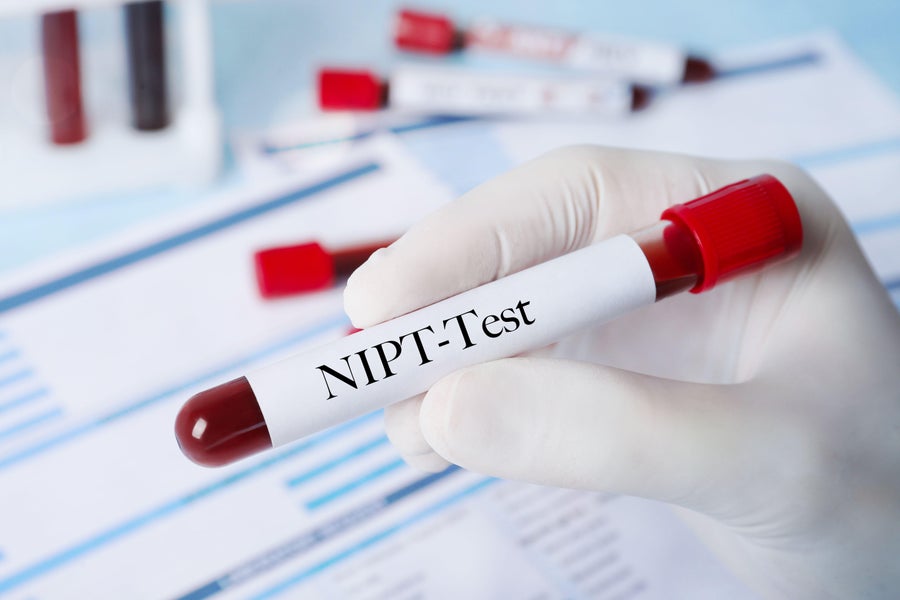
In 2013, Susan Klugman, an obstetrician and geneticist who is currently president of the American College of Medical Genetics and Genomics, got back test results that were “really weird.” Her patient was a pregnant woman who had opted for noninvasive prenatal testing, or NIPT, a screen for Down syndrome and a handful of other conditions that had been on the market for only two years. Now Klugman was looking at a lab report that suggested the 13-week-old fetus had a chromosomal condition that should have been lethal. And yet here it was on ultrasound, with a beating heart, developing organs and no sign of a problem. After several rounds of diagnostic testing, Klugman reassured the woman that her baby would most likely be fine. Nine months later, she read by chance in her local newspaper that the new mother had died of renal cancer. Mysterious test results and an unexpected cancer—surely, Klugman thought, there must be a connection.

For decades, prenatal testing for Down syndrome and other chromosomal conditions had fallen into two categories: invasive biopsies using a needle to collect fetal cells from the amniotic fluid or the placenta, or biomarker testing via a simple blood draw from the pregnant person. The invasive test carries a small but real chance of miscarriage. Biomarker testing is easier, cheaper, and safer, but because it looks at proxy measures and not the fetal DNA itself, it casts a wide and leaky net. Some people carrying a fetus with a chromosomal condition are missed, while the majority of those flagged as high risk turn out to be false positives.

Thus, the introduction of a more accurate and noninvasive blood test in 2011 was embraced enthusiastically by expectant parents. Today, NIPT is used in more than 60 countries, and sales of the test have attained a market value of more than $4.5 billion. In the U.S. alone, it is used in more than a million pregnancies a year. Multiple labs offer NIPT. And while they have their differences, they have this in common: all of them work by examining something called cell-free fetal DNA.

In living cells, DNA is contained in discrete structures known as chromosomes. As cells die and are replaced, chromosomes are deconstructed, and tiny snippets of DNA are released into the bloodstream. If sequenced, these blood-borne snippets can be traced back to their chromosome of origin like jigsaw puzzle pieces using our human genome map as if it were the picture on the box. A random sampling of cell-free DNA will consist of DNA from all chromosomes in proportion to their size—the largest chromosome being represented by the most segments, and so on—and therefore we can predict the number of segments we expect to see from each chromosome of origin.

In a pregnant person, some of this cell-free DNA is fetal DNA from the placenta. In the epiphany that spawned NIPT, Hong Kong–based researcher Dennis Lo realized that even though fetal DNA is only a small part of the whole, the fetal genome can be accurately assessed if the numbers are precise enough because any underrepresentation or overrepresentation of a given chromosome is clearly coming from the fetus. After all, the pregnant person’s chromosomal status is known, so their contribution to the cell-free DNA in the sample is entirely predictable.

That’s a safe assumption almost all the time. But from the earliest days of NIPT, there were rare instances of abnormal results that could not be explained by variations in fetal DNA. Sheetal Parmar, senior vice president of medical affairs for women’s health at Natera, who has been at the NIPT lab since it began testing in 2013, recalls that it was clinicians who first drew their attention to a possible link between certain oddball results and malignancies in pregnant people. “It started with people coming back to us and saying, ‘Hey, this particular patient had this finding and has been diagnosed with cancer,’” Parmar says.

But anecdotes aren’t evidence, and this left the labs in an awkward spot. Telling a person they have cancer—an unknown cancer of unknown origin, requiring unspecified follow-up, which insurance will be unlikely to cover —is not something to be done lightly, much less when the person involved is pregnant. NIPT tests showing multiple missing or added chromosomes, which labs had begun to suspect might be a potential indication of cancer, were officially labelled “nonreportable” results. Unofficially, genetic counselors and obstetricians have told stories of off-the-record phone calls from friends at labs whispering suggestions that a certain patient should “get checked out.”

In 2019, convinced that this cancer signal was real, Diana Bianchi, director of the Eunice Kennedy Shriver National Institute of Child Health and Human Development, began a study intended to provide clearer guidance to labs and clinicians about how and when to follow up on these atypical results. Called IDENTIFY (Incidental Detection of Maternal Neoplasia through Non-invasive Cell-Free DNA Analysis), the study offered a thorough evaluation to any patient who was currently pregnant or less than two years postpartum, who didn’t already have a cancer diagnosis and whose results were “discordant”—that is, cases in which the fetus seemed fine, yet the pregnant person’s NIPT results showed a pattern of extra and missing chromosomes that should have been impossible in a viable pregnancy.

.

https://static.scientificamerican.com/dam/m/6b4dcfcb162b1fbf/original/Noninvasive_prenatal_testing-NIPT.jpg?m=1742824985.079&w=900

A noninvasive prenatal test. Olga Yastremska/Alamy Stock Photo

.

.

Click the link below for the complete article:

https://www.scientificamerican.com/article/a-prenatal-test-of-the-fetus-turns-up-cancers-in-pregnant-mothers/

.

__________________________________________

Teen accepted to more than 60 colleges, earns over $1.1 million in scholarships

Leave a comment

From

Click the link below the picture

.

A 17-year-old student has been accepted into more than 60 colleges and awarded over $1 million in scholarships, bringing him closer to his goal of pursuing a career in medicine.

“I’m just passionate about helping others, lending a helping hand whenever it is needed,” Mantavius “Lebron” Presley, a senior at Douglas County High School in Georgia, told “Good Morning America” in an interview. “My biggest goal in life is to motivate people and help others, because you never know what somebody is going through, and you can always help somebody eat with just a word of inspiration, a smile or even a hug.”

Lebron said he began applying to colleges on Aug. 1, 2024, the first day of his senior year, focusing on schools that aligned with his goals of eventually attending medical school and becoming an anesthesiologist.

His top college choices include the University of Alabama, Morehouse College, Xavier University of Louisiana, Howard University and Mercer University, all known for their strong pre-med programs.

Juggling dual enrollment courses and work-based learning, he said he made time to complete applications whenever possible and applied to as many schools as he could.

Lebron said he was determined from a young age to attend college and achieve something great.

“When I was a little boy, I always said that I would go to the university, because people in my family will always talk about how much they loved their college life and how much [it] really impacted them,” he recalled. “So, I always thought when I was a little boy, that I would just go off and do something amazing.”

Raised by a single mother, Lebron credits his mom, Chasity Green, as his biggest supporter and inspiration.

“She is my biggest cheerleader,” he shared. “Always on the sidelines, always letting me know that she’s here for me, if I have any questions, if I need any advice, if I ever just need a shoulder to lean on, somebody to cry on. If she doesn’t know the answer, she’s gonna get with somebody and find out the answer. She’s just always willing to help me and be by my side and give me inspiration and guidance when I need it the most.”

Lebron’s first college acceptance came in October from the University of Alabama, and the offers kept pouring in. As of Thursday, he had received 61 acceptances and over $1.1 million in scholarships.

.

https://i.abcnewsfe.com/a/041dbed4-663e-4450-be83-e47df9e1f26e/presley-4-ht-er-er-250320_1742489076870_hpEmbed_4x3.jpg?w=992

Mantavius Presley, a senior at Douglas County High School in Georgia has been accepted into more than 60 colleges and awarded over $1 million in scholarships.  Courtesy Mantavius Presley

.

.

Click the link below for the complete article:

https://www.goodmorningamerica.com/living/story/teen-accepted-60-colleges-earns-11-million-scholarships-119975924?cid=social_twitter_abcn

.

__________________________________________

6 signs you might be a bad listener and what to do instead

Leave a comment

Click the link below the picture

.

We live in a world that seems to get busier and busier! Not only do we have our daily work tasks, but we also have more meetings, longer commutes, and more interactions with more people in more locations than at any time in the history of work.  

In addition to the many real and present external distractions, there are also internal obstacles to great listening. Our internal worlds can be loud. At times, they are a blaring noise of emotion, attitude, and motives that can make it impossible for us to give others our full attention. 

As two positive psychology experts, we’ve identified six of the most common internal barriers that can interfere with your ability to listen well, and developed a framework of six “radical listening” skills that can help you have better conversations and build better relationships.

Six barriers that prevent you from listening well:

1. Comparing: “It happened to me!”

Sometimes, the topic of a conversation seems to invite you to share your own, similar experiences. Rather than appreciating the speaker’s experiences, you are mentally reminiscing and preparing to offer your own carefully chosen anecdote—that time that you scheduled a business meeting in a dim sum restaurant where the waiting staff interrupted every couple of minutes to offer you some delicious delicacies. We call this comparing. What is it they are implicitly asking for in the conversation? It might be admiration from you, an acknowledgment of their enthusiasm, or a bit of respect for their work.

2. Competing: “That’s nothing—I have had it much tougher than that!”

People are social creatures and it is common for friends and colleagues to share challenges they are experiencing. An office mate might say “I’m really struggling to get through my emails! I have over 200 unread emails sitting in my inbox!” It is easy to assume that they are looking for some sympathy or perhaps some ideas for dealing with the overwhelm. Instead of offering either of these, however, you respond, “Just 200? I have over 1,000 emails that I need to respond to!” We call this competing. Again, there is nothing wrong with sharing your own experience, but it runs the risk of appearing unsympathetic, self absorbed, or checked-out.

3. Mind reading: “I know what you’re going to say.”

Can you think of any recent interactions in which you were pretty sure what was going to happen even before the conversation took place? This is called mind-reading. This bias—even if it was rooted in experience—interfered with our ability to engage positively with the team. Mind-reading runs the risk of focusing on your own assumptions rather than the views and interests of others. Unless you are actually a mind reader, believing that you know what other people will say becomes a barrier to genuinely listening.

4. Unsolicited advice: “If I were in your shoes . . .”

A leader of a team in another department confides in you how difficult it is for them to take a vacation and totally unplug from work. This is an instance that calls for optimal support matching. Rather than breaking out the toolbox, it is wiser to listen to what is being asked for. It might be that your colleague would appreciate some suggestions. Or, it may be that they just want someone to commiserate with them. Whatever the case, one thing is certain: If you are busy giving unsolicited advice—attempting to solve another person’s problem—while they are talking to you, then you are not listening.

.

https://images.fastcompany.com/image/upload/f_webp,c_fit,w_750,q_auto/wp-cms-2/2025/03/p-1-91299604-how-to-be-a-better-listener.jpg[Photos: ugguggu/Adobe Stock; LanaSham/Adobe Stock]

.

.

Click the link below for the complete article:

https://www.fastcompany.com/91299604/how-to-be-a-better-listener?utm_source=pocket_discover_career

.

__________________________________________

Older Entries Newer Entries

Amor Entre Estrellas

¡Bienvenido de vuelta viajero!

Heart of Loia `'.,°~

so looking to the sky ¡ will sing and from my heart to YOU ¡ bring...

Michael Ciullo

CEO and Founder of Nsight Health

MRS. T’S CORNER

https://www.tangietwoods

Nelson MCBS

Catholic News, Prayers, HD Images, Rosary, Music, Videos, Holy Mass, Homily, Saints, Lyrics, Novenas, Retreats, Talks, Devotionals and Many More

Global geopolitics

Decoding Power. Defying Narratives.

Talk Photo

A creative collaboration introducing the art of nature and nature's art.

Movie Burner Entertainment

The Home Of Entertainment News, Reviews and Reactions

Le Notti di Agarthi

Hollow Earth Society

C r i s t i a n a' s Fine Arts ⛄️

•Whenever you are confronted with an opponent, conquer him with love.(Gandhi)

TradingClubsMan

Algotrader at TRADING-CLUBS.COM

Comedy FESTIVAL

Film and Writing Festival for Comedy. Showcasing best of comedy short films at the FEEDBACK Film Festival. Plus, showcasing best of comedy novels, short stories, poems, screenplays (TV, short, feature) at the festival performed by professional actors.

Bonnywood Manor

Peace. Tranquility. Insanity.

Warum ich Rad fahre

Take a ride on the wild side

Madame-Radio

Découvre des musiques prometteuses (principalement) dans la sphère musicale française.

Ir de Compras Online

No tiene que Ser una Pesadilla.

Kana's Chronicles

Life in Kana-text (er... CONtext)

Cross-Border Currents

Tracking money, power, and meaning across borders.

Jam Writes

Where feelings meet metaphors and make questionable choices.

emotionalpeace

Finding hope and peace through writing, art, photography, and faith in Jesus.

WearingTwoGowns.COM

The Community for Wounded Healers: Former Medical Students, Disabled Nurses, and Faith-Fueled Pivots

...

love each other like you're the lyric to their music

Luca nel laboratorio di Dexter

Comprendere il mondo per cambiarlo.

Tales from a Mid-Lifer

Mid-Life Ponderings

Creative

Travel,Tourism, Life style "Now in hundreds of languages for you."

freedomdailywriting

I speak the honest truth. I share my honest opinions. I share my thoughts. A platform to grow and get surprised.

The Green Stars Project

User-generated ratings for ethical consumerism

Cherryl's Blog

Travel and Lifestyle Blog

Sogni e poesie di una donna qualunque

Questo è un piccolo angolo di poesie, canzoni, immagini, video che raccontano le nostre emozioni

My Awesome Blog

“Log your journey to success.” “Where goals turn into progress.”

pierobarbato.com

scrivo per dare forma ai silenzi e anima alle storie che il mondo dimentica.

Thinkbigwithbukonla

“Dream deeper. Believe bolder. Live transformed.”

Vichar Darshanam

Vichar, Motivation, Kadwi Baat ( विचार दर्शनम्)

Komfort bad heizung

Traum zur Realität

Chic Bites and Flights

Savor. Style. See the world.

ومضات في تطوير الذات

معا نحو النجاح

Broker True Ratings

Best Forex Broker Ratings & Reviews

Blog by ThE NoThInG DrOnEs

art, writing and music by James McFarlane and other musicians

fauxcroft

living life in conscious reality

Srikanth’s poetry

Freelance poetry writing

JupiterPlanet

Peace 🕊️ | Spiritual 🌠 | 📚 Non-fiction | Motivation🔥 | Self-Love💕