May 2, 2025
Mohenjo
Business, Food For Thought, Human Interest, Political, Science, Technical
amazon, business, Business News, current-events, Future, Hotels, human-rights, medicine, mental-health, research, Science, Science News, technology, Technology News, travel, vacation

Click the link below the picture
.
The exercise is all over social media: A trainer will kneel on a bench, then slowly lower himself forward at the knees until head and chest are within inches of the floor. Then he’ll somehow power back up, having completed the full “Nordic curl.”
The popularity of the move has inspired a new class of gym equipment—specialized benches made for Nordic curls—and sparked a new love affair with an oft-neglected muscle group: your hamstrings. These are the main muscles worked during the full Nordic.
Building them up can insulate you against injuries, power you to run faster, and complete your physique, too. “Hamstrings are very aesthetic,” says Dr. Mike Israetel, a strength training expert and content creator. “And they actually require very little volume to train effectively if you use good technique.”
Interest in those hamstrings has helped push leg day back into prominence. For most gym-goers, leg day has long been a day to dread, filled with vicious exercises, like squats and deadlifts, that torch your entire body. “It hurts at a deep, systemic level,” Israetel says. “It’s malaise writ large.”
That’s due to the sheer size of the muscles involved: The quadriceps (front thigh), adductors (inner thigh), and hamstrings are among your largest muscle groups, demanding huge amounts of oxygen during any session. They also need large loads to challenge them, so your spine and core are heavily recruited, too. Moves like squats and lunges are the equivalent of an “all units” alarm for your entire nervous system.
It’s the stuff that “I survived #legday” memes are made of—but gutting out these sessions will fuel total-body gains. All those heavy lunges, for example, are like a free workout for your abs. And any set of deadlifts not only builds your glutes but also hones forearm strength and layers muscle onto your back. Plus, you’ll burn major calories on leg day, in part because of the sheer weight you’re moving.
It all makes leg day worthwhile, no matter your fitness goal, even if you never attempt the Nordic curl.
Must-Do Hamstring Moves
Stiff-Legged Deadlift
How To Do It: Meet the finest hamstring exercise out there. Stand holding a barbell at your hips, knees bent just slightly, then push your butt back and lower your torso until it’s nearly parallel to the floor. Keep the bar near your shins as you do this. Pause, then stand back up.
Reps & Sets: Do 3 or 4 sets of 8 to 10 reps.
.
 Andrew Hetherington
.
.
Click the link below for the complete article:
.
__________________________________________
May 2, 2025
Mohenjo
Business, Food For Thought, Human Interest, Political, Science, Technical
amazon, business, Business News, current-events, Future, Hotels, human-rights, medicine, mental-health, research, Science, Science News, technology, Technology News, travel, vacation

Click the link below the picture
.
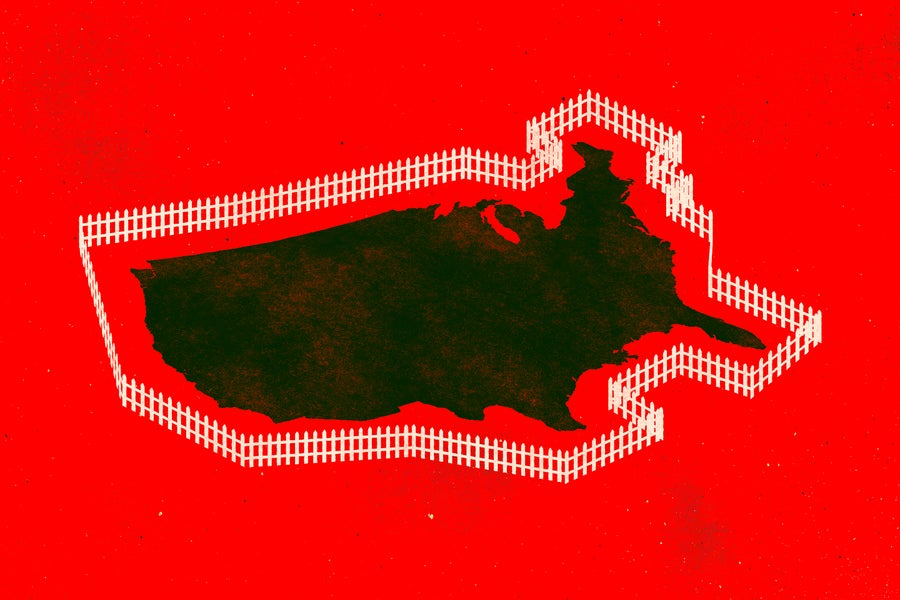
Nestled in the Heritage Foundation’s Project 2025, the slash-and-burn playbook for the federal government that the Trump administration is following while saying it isn’t, is a call for American “science dominance.”
There is no such thing. And what the project means by the term—turning the Department of Energy into a handmaiden of the coal, oil and natural gas industry—betrays not only the taxpayer but science itself.
Science isn’t a winner-take-all, zero-sum game of flag football. Whether during the cold war or the era of Sir Francis Bacon’s New Atlantis, the bedrock of science has been international cooperation. People pursue scientific knowledge not solely for the sake of lording our spoils over everyone else. The monetary value of research is not the only reason why humans engage in asking why of the world around us.
Science breeds diplomacy. It counters division. It tells us what is, not what we want things to be. Science enables democracy. The way the Trump administration is approaching it, by cutting funds for projects that run afoul of conservative values, such as ones related to diversity, or calling for research into claims that have already been debunked, which is the case for the idea that vaccines are linked to autism, defies all this. If that approach succeeds, it will make us a poorer nation in every sense of the word.
By halting federal funds to scientific research, canceling university grants and threatening to deport immigrant scientists, the Trump administration is restricting the flow of ideas. By trying to legitimize debunked scientific ideas and allocating taxpayer dollars to research into those debunked ideas, the administration sows discord and undermines the role of public health in preventing sickness and disease. By canceling global aid for public health projects, the administration is shunning the U.S. role in global health. And in their push for energy dominance, Trump and his allies are kicking years of negotiation over climate change to the curb.
By becoming insular, by cutting out the world, we stand to lose our best and brightest minds in science and the exchange of ideas that leads to innovation. Our country is a scientific and economic powerhouse precisely because we have been so open and collaborative for so long. China’s academic scientific output, as measured by publications in Nature journals, has surpassed that of the U.S. How can cutting federal science funding help the administration’s intellectual war with China? How can the U.S. further its national interests if we shut out ideas and people? How does democracy survive if we stop research and the flow of information?
In setting the stage for the role of the U.S. government in science, Vannevar Bush told President Harry Truman in 1945 that “scientific progress is one essential key to our security as a nation, to our better health, to more jobs, to a higher standard of living, and to our cultural progress.” He noted the federal government’s role in supporting agricultural research and said, “The time has come when such support should be extended to other fields.”
From the 1950s on, the U.S. government has been the largest funder of scientific research in the nation, not to mention the world. Those dollars have helped develop countless drugs, and a wide assortment of military and domestic machinery, and they have paid the salaries of millions of researchers. Those dollars have saved people and helped industrialize nations the world over.
.
 Rob Dobi/Getty Images
.
.
Click the link below for the complete article:
.
__________________________________________
May 1, 2025
Mohenjo
Business, Food For Thought, Human Interest, Political, Science, Technical
amazon, business, Business News, current-events, Future, Hotels, human-rights, medicine, mental-health, research, Science, Science News, technology, Technology News, travel, vacation
Click the link below the picture
.
CLIMATEWIRE | One of the biggest mysteries surrounding President Donald Trump’s EPA is how it plans to revoke the endangerment finding — the lifeblood of most climate regulations.
Hints about its strategy may have been hiding in plain sight for a month now, ever since EPA announced a slew of deregulatory actions in a single afternoon.
Experts said EPA may be betting that it can upend the scientific finding, which paved the way for the nation’s rules on climate pollution on cars, power plants, and across other sectors, without taking direct aim at the overwhelming evidence that greenhouse gases are driving up global temperatures.
Instead, EPA Administrator Lee Zeldin and other officials whom the president tasked in January with undoing the finding could raise questions about whether a sector — or even the whole country — contributes enough climate pollution globally to warrant regulation.
They may also try to redefine how air pollution can harm the public — a necessary predicate for regulating greenhouse gases under the Clean Air Act.
“Maybe they’ll change their mind, but they seem to have an idea of how they want to go about revoking the finding,” said Jeff Holmstead, who served as EPA’s air chief under President George W. Bush.
Jettisoning the endangerment finding could allow the Trump administration to tear out U.S. climate rules by the roots, helping it avoid years of painstaking work to finalize replacement rules that would likely be weaker, according to experts. It would also make it harder for future presidents to regulate other sectors that are contributing to climate change, because the scientific finding would have to be resurrected first.
Experts see hints of that strategy in a relatively detailed press release the agency issued last month, when it announced a barrage of steps it plans to take to roll back climate rules.
Holmstead called the document “very telling.”
He and other experts say the administration may take aim at the cost increases that regulations have on energy and other pillars of Americans’ lives, not at atmospheric science directly. That could allow EPA to skip the cumbersome process of assembling panels of contrarian scientists to build an alternative record on the indisputable link between human emissions and global warming
“They can probably get it out in the next few months,” Holmstead said of a proposed endangerment finding that focuses on regulatory costs. “They won’t need to spend a lot of time — and Federal Register pages — reviewing the science.”
EPA did not respond to requests for comment for this story, but Zeldin offered new details in a combative press conference last week about how he intends to revise the finding. He said the agency plans to undertake a formal rulemaking process with public comment.
“There isn’t a set timeline here,” Zeldin said, in response to a question by POLITICO’s E&E News. “As we go through the process with regards to the dozens of different actions that we are going to start rulemakings on, they each will follow the Administrative Procedures Act, and we’ll make sure that the actions that we take on everything are as durable as possible.”
That indicates the endangerment finding won’t be killed overnight using an executive order, as Trump effectively did earlier this month on rules requiring showerheads to use less water.
But EPA could still move quickly to revoke the finding.
“It’s going to get done,” said Michael McKenna, an energy lobbyist who led Trump’s transition team at the Department of Energy in 2017. “It’s just a question of when and what it looks like, and how long is it going to take.”
McKenna noted that some people in Trump’s orbit have been thinking about how to revise the endangerment finding for more than 15 years, since it was finalized under President Barack Obama, who issued the first rules based on it.
.
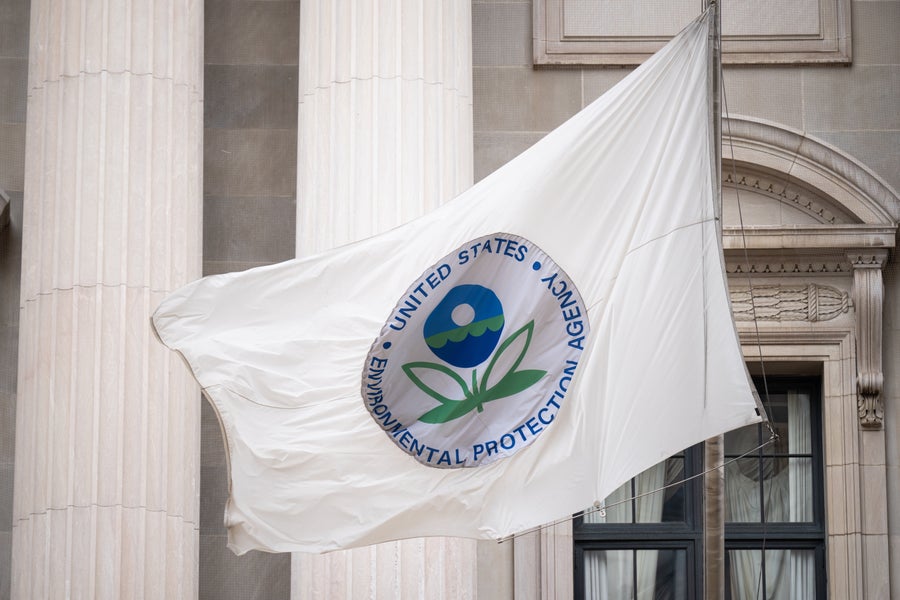
The Environmental Protection Agency flag flies outside the EPA headquarters in Washington on Thursday, February 6, 2025. EPA Administrator Lee Zeldin’s strategy for unraveling a key finding that underpins climate rules is taking shape. Bill Clark/CQ-Roll Call, Inc via Getty Images
.
.
Click the link below for the complete article:
.
__________________________________________
May 1, 2025
Mohenjo
Business, Food For Thought, Human Interest, Political, Science, Technical
amazon, business, Business News, current-events, Future, Hotels, human-rights, medicine, mental-health, research, Science, Science News, technology, Technology News, travel, vacation

Click the link below the picture
.
Spoiler alert: washing your hair once a week may not be a good idea. And yes, even when it feels clean.
The debate around how regularly you should wash your hair is a heated one, but we’re hoping to settle it finally. While some experts say that washing your hair once a week is fine as long as you use a good shampoo and your hair responds well to that frequency, there’s another side to the argument. If your hair is extremely dry and not washed often enough, it can lose its natural moisture with age. According to stylist Rosi Fernandez, director of Ananda Ferdi, it is not advisable to go for more than a week without washing hair, as “follicles become clogged and do not get oxygenated,” she explains.
When it looks clean, but it’s not
As someone who washes my hair every day, I’ve always been a bit envious of people who can go for several days without. For example, the Kardashians’ stylist, Jen Atkin, said in an interview with Allure that she could go up to four or five days without washing, and that it was only on the last day she would resort to an updo with a sharp center parting as that’s when it started to get dirty. But the reality is that although the hair may appear to be clean, pollution (one of the major aggressors of hair in 2023) has dirtied it without you realizing it. “It may look like the hair is clean, but with pollution, sweat, tobacco smoke… the hair becomes saturated,” explains Fernandez.
The consequences of pollution (and not enough washing)
According to Fernandez, when hair is washed less than twice a week, the follicles become clogged, and this can cause a range of problems: scalp flaking, itching, sensitivity, dandruff, and even hair loss. These small particles, which are invisible to the eye, prevent the hair from oxygenating well, which is why it is advisable to wash it more often, even with thick, dry hair that you might not feel the need to wash so frequently. The effects that pollution has on hair were studied all the way back in 1994, by the Industrial Toxicology Research Centre in Lucknow. “At that time, it was shown that suspended particles, smoke, and pollutant gases were deposited on the hair and scalp, causing inflammatory and irritative reactions that can even lead to hair loss,” explains Adolfo Remartínez, founder of Nuggela & Sulé.
Washing it twice a week
There is no universal rule for the frequency of washing hair because, as Fernandez points out, you also have to take into account the place where you live or the lifestyle you lead. “It is not the same living in a city with a lot of pollution as living in the countryside,” she says. “The climate, riding a motorcycle or a car, playing sports, the quality of the water used for washing, et cetera, also play a role.” However, even when hair is dry and thick, experts advise washing at least twice a week to remove all the residues that can accumulate on the scalp, and that saturate and weaken the hair. Fernandez also recalls the importance of emulsifying shampoo in your hands before applying it, especially if it’s an organic product. “A good rinse gives hair its shine,” she concludes.
.
 Photo: Silver Screen Collection / Getty Images
.
.
Click the link below for the complete article:
.
__________________________________________
April 30, 2025
Mohenjo
Business, Food For Thought, Human Interest, Political, Science, Technical
amazon, business, Business News, current-events, Future, Hotels, human-rights, medicine, mental-health, research, Science, Science News, technology, Technology News, travel, vacation
Click the link below the picture
.
Scary headlines about the Pacific Northwest sinking into the sea are circulating online, with warnings that a major earthquake in the notorious Cascadia subduction zone could be worse than expected.
What’s behind this new alarm? Fortunately, research has not uncovered a new risk that Seattle will become the Lost City of Atlantis. Instead, scientists have examined the combined effects of two well-known phenomena: sea-level rise from climate change and the likely consequences of a major earthquake in the region. It was already known that sea level along the coast of northern California, Oregon, and Washington State is estimated to rise by 1.3 to 2.9 feet by 2100 because of a warming climate. It was also well known that a magnitude 8 or higher earthquake in the area could cause the coastline to slump by up to 6.5 feet. What the new study, published on April 28 in the Proceedings of the National Academy of Sciences USA, adds is an understanding of how much additional land would end up being at a high risk of flooding because of these two combined threats.
Why Does Sea-Level Rise Matter?
While the East Coast is already seeing the effects of beach erosion and rising sea levels, the Pacific Northwest (PNW) has been protected by its geology, so far. The coast that extends from northern California to Vancouver Island in British Columbia sits on a subduction zone where the Juan de Fuca, Explorer, and Gorda oceanic plates slip beneath the North American continental plate—parts of the ever-moving slabs of rock that make up our planet. Right now, the fault system is quiet, meaning it has not had a large earthquake for more than 300 years, and the coast is gradually rising by a few fractions of an inch each year. This geological uplift, a consequence of the interactions of the tectonic plates, outpaces sea-level rise in many areas, so the PNW has been relatively shielded from effects such as extreme flooding events or coastal erosion.
But over the past 7,000 years or so, at least 11 major earthquakes have struck the Cascadia region where these faults reside. The last of these temblors occurred in 1700, and geologists can still see evidence of it causing the coastline to drop between 1.6 and 6.5 feet in the blink of an eye. “We have these really rooted organic soils that are suddenly overlain by this really clean tidal mud, indicating they were suddenly dropped down and were buried and basically converted to tidal flats,” says Tina Dura, a coastal geologist at Virginia Tech and first author of the new study.
What no one had really studied, Dura says, was the combined effect of this sudden subsidence and the slower inundation caused by sea-level rise.
How Much of Cascadia Will Become Prone to Floods?
Dura and her colleagues looked at earthquake scenarios that would yield different ranges of subsidence, from 1.6 to 6.5 feet. They also compared such an earthquake’s effects at today’s sea levels with those at sea levels forecasted for 2100. By that time, sea-level rise is expected to outpace the geological uplift of the PNW and may reach as much as 2.9 feet.
The team found that if an earthquake that caused more than six feet of subsidence were to happen today, the 100-year floodplain in estuaries in Cascadia would expand by 115 square miles. Were this quake to happen in the year 2100, with the additional pressures of sea-level rise, those estuaries would expand by 145 square miles. That would be triple the flood-prone area that is seen today.
How Worried Should We Be?
In the event of a magnitude 8 quake in Cascadia, subsidence would not be the first issue on anyone’s mind. A large undersea quake could cause a devastating tsunami that would immediately threaten lives and structures. The new study is focused on areas within about six feet of elevation of the current 100-year floodplain, Dura says, and the earthquake-driven tsunami could be more than 30 feet high.
.

Stumps of Sitka spruce, drowned from subsidence during an earthquake at a subduction zone some 1,600 years ago, in Neskowin, Ore.. Marli Miller/UCG/Universal Images Group via Getty Images
.
.
Click the link below for the complete article:
.
__________________________________________
April 30, 2025
Mohenjo
Business, Food For Thought, Human Interest, Political, Science, Technical
amazon, business, Business News, current-events, Future, Hotels, human-rights, medicine, mental-health, research, Science, Science News, technology, Technology News, travel, vacation

Click the link below the picture
.
Every evening at about 6:30 p.m., I pour my toddler a sippy cup of cold milk and we curl up on the couch next to my husband. “Mama sit!” he says, his way of asking to sit on my lap as he enjoys his milk and a movie of his choosing. It’s a joyful moment of family time, a carefree and cozy break at the end of our busy days.
When I learned that the Food and Drug Administration paused its quality testing on milk, my mind immediately went to our sweet family ritual. It rocked me. The testing pause comes after we learned that bird flu is spreading in dairy cows, traces of the killed virus in our commercial milk supply, which was another development that caused a spike in my anxiety and a late-night message to our pediatrician. I wondered what exactly this pause in testing meant, in the literal sense, and how long it would go on. I worried I would now spend that precious family time concerned about what was in my kid’s milk.
This particular threat is just one of many. From increasing grocery prices, shuttering Head Start programs, abortion bans that make pregnancy more dangerous, bringing back measles, not to mention the threat of gun violence in schools — there are many large ways that the Trump administration has made parents’ lives more difficult — and comparatively, concern over a sippy cup of milk might seem small.
But that smallness is part of what makes this new concern feel so particularly insidious.
Milk is a drink that, for many children, becomes an extension of the comforting bond they formed with their parent through breast- or bottle-feeding, a bridge from baby- to toddlerhood. I relish my son’s faint, milky breath before bedtime, and when I read about the FDA pause, my initial panic came in part from the fear that this tether to his early moments would be severed too soon.
These seemingly small issues like the milk testing are the ones that make the everyday lived experience of parenting feel less safe — and less joyful. It’s death by a thousand cuts.
Brittney Pagone, a former nurse and current stay-at-home mom who runs the Instagram page PAMoms4Change, felt a similar panic. The news alarmed her so much, she says, that she no longer plans to wean her nearly 1-year-old daughter, opting to breastfeed for longer rather than switching to whole milk. This is a privilege, she knows; she has both the time and the ability to breastfeed her daughter, two things many moms don’t have.
The confusion Pagone felt with this news, she says, is just another part of parenting under the current Trump administration, which is currently brewing plans to boost the national birth rate. Pagone finds the administration’s push for families to have more children, at the same time eliminating the safety nets that make it feasible, utterly infuriating.
The decision to breastfeed longer than she’d planned isn’t the only one Pagone has felt forced into because of the Trump administration. Her family recently took a vacation that was close enough to Texas that she requested her infant be vaccinated for measles early.
Meanwhile, the president, who has contemplated giving people $5,000 per child to encourage larger families, has taken to billing himself as the “fertilization president.” And as we struggle to navigate what feels like an increasingly dangerous environment for our children, the government goads us to have more.
.

.
.
Click the link below for the complete article:
.
__________________________________________
April 29, 2025
Mohenjo
Business, Food For Thought, Human Interest, Political, Science, Technical
amazon, business, Business News, current-events, Future, Hotels, human-rights, medicine, mental-health, research, Science, Science News, technology, Technology News, travel, vacation
Click the link below the picture
.
CLIMATEWIRE | The Trump administration on Monday dismissed all of the scientists working on the newest version of the National Climate Assessment, a sweeping report that outlines the growing dangers of rising temperatures for lawmakers, policy experts, and the public.
The sixth installment of the congressionally mandated report, which was due to come out by 2028, has typically been put together by about 400 researchers, many of whom are top scientists at universities who volunteer their time. The assessment is used to craft environmental rules, legislation and infrastructure project planning. It seen by experts as the definitive body of research about how global warming is transforming the country.
Work had already begun on the sixth version. The Trump administration ended that with a note sent to researchers Monday.
“At this time, the scope of the NCA6 is currently being reevaluated in accordance with the Global Change Research Act of 1990,” contributors were told in an email obtained by POLITICO’s E&E News.
The White House did not immediately respond to a request for comment.
The move was roundly criticized by climate scientists late Monday as the news spread. The assessments help Americans “understand how climate change is impacting their daily lives already and what to expect in the future,” said Rachel Cleetus, one of the researchers who was dismissed.
“Trying to bury this report won’t alter the scientific facts one bit, but without this information our country risks flying blind into a world made more dangerous by human-caused climate change,” said Cleetus, a senior policy director at the Union of Concerned Scientists, in a statement. “The only beneficiaries of disrupting or killing this report are the fossil fuel industry and those intent on boosting oil and gas profits at the expense of people’s health and the nation’s economic well-being.”
The plan closely tracks with a proposal by White House budget director Russ Vought, who has urged the Trump administration to toss out all work on the assessment that began under former President Joe Biden. Vought wants to help pick a new group of researchers to issue a report that reflects the administration’s claims that climate change is not a serious threat. That report might focus on how climate change “benefits” the U.S., according to a plan he outlined in Project 2025, the conservative policy proposal produced by the Heritage Foundation.
Earlier this month, the administration defunded the U.S. Global Change Research Program, which supports the assessment. The program, which coordinated the work of 13 federal agencies, had existed for 35 years through Republican and Democratic presidencies, including Trump’s first term.
Trump officials were caught by surprise by the timing of the fourth National Climate Assessment as it was being prepared for release in 2018. Some wanted to withhold the report and fire the scientists who worked on it, but that plan was scuttled. Instead, the White House tried to downplay the report by releasing it the day after Thanksgiving, but that only increased the attention it received.
It’s unclear whom Vought would try to recruit for the next assessment, if there is one.
.
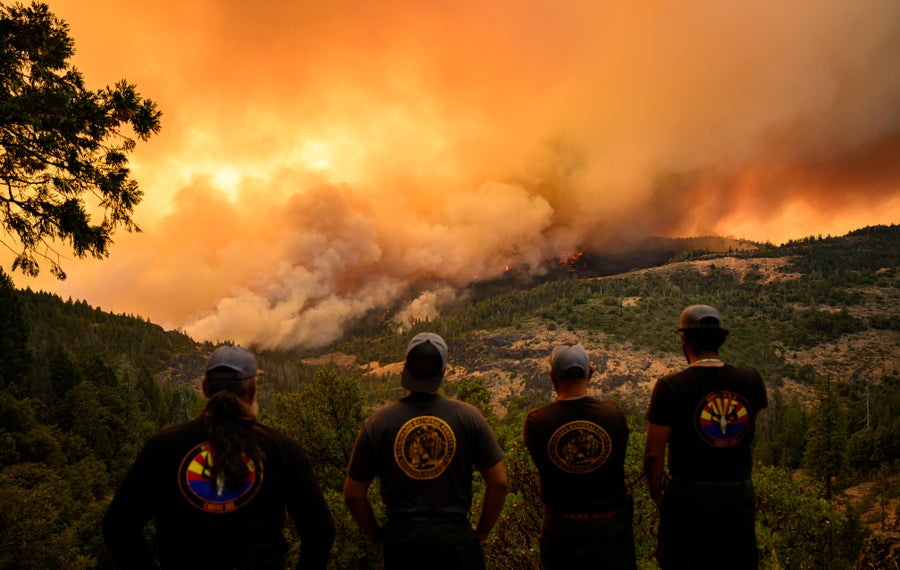
Firefighters watch as flames and smoke move through a valley in the Forest Ranch area of Butte County as the Park Fire continues to burn near Chico, California, on July 26, 2024. Josh Edelson/AFP via Getty Images
.
.
Click the link below for the complete article:
.
__________________________________________
April 29, 2025
Mohenjo
Business, Food For Thought, Human Interest, Political, Science, Technical
amazon, business, Business News, current-events, Future, Hotels, human-rights, medicine, mental-health, research, Science, Science News, technology, Technology News, travel, vacation

Click the link below the picture
.
Ashley Pro lived with her sister Dennice for 28 years. They moved in together after leaving their childhood home, and if Pro hadn’t been transferred to a different city for work, the sisters would likely still be roommates. Pro, a 29-year-old director for an after-school program in Rancho Cucamonga, California, initially worried that any distance would drive a wedge in their relationship. She’d never known a life without the daily presence of Dennice, who is only a year older.
Since their mom worked long hours to make ends meet, Dennice took on a maternal role with her little sister, even picking up extra jobs in college to pay for Ashley’s high school extracurriculars. Although Ashley and Dennice are close to their three older siblings, this period of reliance bonded them.
Even now that they’re living separately, about a 30-minute car ride apart, Ashley says the sisters are as close as ever. They talk on the phone regularly and spend weekends at each other’s places. “It’s something we envisioned,” Pro says. “That was our goal growing up, so we made sure to keep that relationship strong.”
In what may be obvious to those who have them, siblings stand to be one of the most enduring relationships of a person’s life. They’re your first roommates, your first playmates, maybe your first babysitter or charge, and probably your first fight. They’re your social guinea pigs, the first draft
of nearly every interpersonal interaction. Siblings, including half-, step-, and adoptive brothers and sisters, are thrust upon you. But as you age, maintaining those relationships is voluntary.
As siblings progress through life, these once-obligatory relationships can transition from roommate to friend or even best friend. In interviews for their 2015 book Adult Sibling Relationships, authors Geoffrey L. Greif and Michael E. Woolley found 64 percent of respondents said they were good friends with a sibling; 45 percent considered a sibling one of their best friends. But the sibling relationship can also be more fraught. Greif and Woolley found that 62 percent had mixed feelings about their siblings, feeling neither wholly lovey-dovey nor completely cold (interestingly enough, even those who are close to their siblings can have such mixed feelings).
However you feel about your siblings, it’s clear these relationships have a profound impact on well-being. Into adulthood, those who perceive parental favoritism or sibling conflict are more likely to have symptoms of depression, anxiety, hostility, and loneliness. Adult sibling relationships hold just as much weight as a person’s relationship with their mother or spouse.
But what if, for one reason or another, your relationship with a sibling is cordial at best? What if it feels like a relationship you never would have maintained if not for being connected by blood or family ties? “It’s not a bad thing that you don’t have a super close relationship with a sibling,” says Katherine Jewsbury Conger, a professor emerita of human development and family studies at the University of California Davis. “I think we sometimes put super expectations that siblings are going to be really close throughout adulthood, and I don’t think we give enough credit to how many things people experience that make them so different as they move through all the different stages of life.”
An adult sibling relationship is a choice
Like any long-lasting relationship, the one you have with a sibling drastically changes as life goes on. Kids spend the most time with their siblings during childhood and adolescence, whether they like it or not. Depending on family size, there can be multiple children jockeying for attention, space, and resources with little to no reprieve: This is the house you live in, these are the siblings you’re stuck with. Peaceful coexistence can erupt into chaos over teasing or a shirt borrowed without permission. “In childhood, sibling relationships can be very intense, because people are learning how to navigate the world and navigate their family and figure out their own personality,” Conger says. If you get into an argument with a classmate, the school day inevitably ends. “But with your sibling,” Conger says, “you’re still in the same household.”
.

.
.
Click the link below for the complete article:
.
__________________________________________
April 28, 2025
Mohenjo
Business, Food For Thought, Human Interest, Political, Science, Technical
amazon, business, Business News, current-events, Future, Hotels, human-rights, medicine, mental-health, research, Science, Science News, technology, Technology News, travel, vacation
Click the link below the picture
.
Human papillomavirus (HPV) causes nearly 38,000 cancers a year, including most cervical and throat cancers. Now, recent research suggests HPV infection also increases the risk of heart disease. An analysis of seven studies with a total of nearly 250,000 participants found that those who tested positive for HPV were 33 percent more likely than those who tested negative to develop cardiovascular disease.
Now, Stephen Akinfenwa, an internal medicine resident at the University of Connecticut School of Medicine and one of the lead authors of the analysis, says he would like to study whether the HPV vaccine, which can prevent 90 percent of cervical cancers, also reduces the risk of heart disease.
The vaccine, which has been recommended for adolescents since 2006, protects against infection with nine strains of HPV, including high-risk types that are the most likely to cause cervical cancer, as well as strains that cause genital warts. The Centers for Disease Control and Prevention recommends that boys and girls receive a series of two HPV shots at ages 11 or 12 as part of their routine childhood vaccinations—and that people receive three shots if their first dose is instead administered between the ages of 15 and 26. The vaccine is most protective when given before people become sexually active.
The HPV vaccine has been strikingly effective. Cervical cancer deaths in women under age 25—the first generation eligible to receive the vaccine—fell by 65 percent from 2012 to 2019.
Learning that heart disease may be related to HPV is exciting because HPV infection is preventable, Akinfenwa explains. “It feels like good news,” he says. “We’re hoping that [the vaccine] will be a powerful tool for prevention.”
Akinfenwa and his colleagues presented a condensed version of their analysis in March at the annual meeting of the American College of Cardiology. It has not yet been published as a peer-reviewed study. The analysis included studies published between 2011 and 2024 that followed women for three to 17 years.
The largest study included in the analysis was published by researchers in South Korea in 2024 and followed apparently healthy women who were tested for 13 strains of high-risk HPV as part of a routine screening for cervical cancer. The women returned for health checks every year or two for an average of 8.6 years. Although heart disease and death were rare among these women, who had an average age of 40, those who tested positive for high-risk HPV were nearly four times as likely as those who tested negative to develop blocked arteries or die from heart disease, the study found.
Women aren’t the only ones at risk, Akinfenwa says. In one paper included in the analysis, a 2017 study of people undergoing radiation therapy for head and neck cancer, 75 percent of patients were men. (Head and neck cancers are more than twice as common in men as they are in women, according to the National Cancer Institute.) The 2017 study found that people who tested positive for HPV were more likely to have strokes compared with those who tested negative.
HPV is ubiquitous and the most common sexually transmitted infection in the U.S. Among sexually active people, more than 90 percent of men and more than 80 percent of women are infected with HPV during their lifetime. About half of HPV infections involve high-risk strains that cause the bulk of cancers of the cervix, throat, vagina, vulva, anus and penis.
Vaccine hesitancy and lack of awareness about HPV has kept many parents from vaccinating their children against the infection, research shows. Some parents are reluctant to vaccinate their kids against HPV because they don’t think their children will have sex as teenagers. Only 61 percent of adolescents are up to date on all HPV vaccines.
Even without a study that has specifically analyzed the effect of HPV vaccination on heart disease, the link between HPV and heart disease suggests that “vaccination is a good idea, and our study definitely supports that,” Akinfenwa says.
.
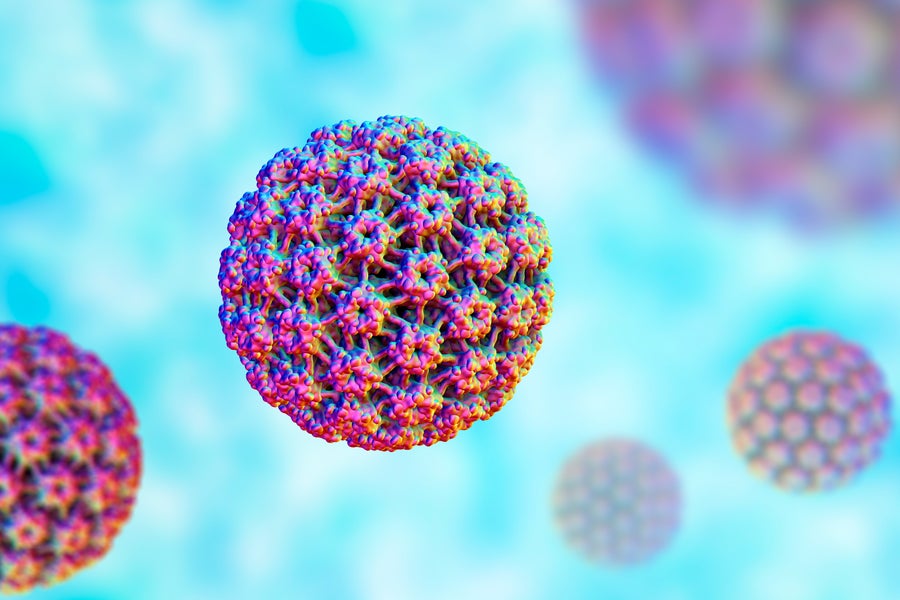
Human papilloma virus (HPV) illustration. Kateryna Kon/Science Photo Library/Getty Images
.
.
Click the link below for the complete article:
.
__________________________________________
April 28, 2025
Mohenjo
Business, Food For Thought, Human Interest, Political, Science, Technical
amazon, business, Business News, current-events, Future, Hotels, human-rights, medicine, mental-health, research, Science, Science News, technology, Technology News, travel, vacation

Click the link below the picture
.
Almost from the time my daughter Elizabeth could speak in sentences, she whined when she didn’t get what she wanted: my attention, a snack, a repair job on a faulty toy. When she turned 3—and suddenly seemed like such a “big girl”—her continued whining started to drive me crazy. I’d mutter angrily under my breath, clench my teeth, and even whine back. Once, I even lost control and yelled so vehemently that she burst into tears. But more often than not, I’d just give in to whatever she wanted, simply to make the shrill sound stop.
Like nails on a chalkboard, whining—an irritating blend of talking and crying—has the ability to make almost any parent either lose their temper or cave. And preschoolers are pretty smart. They know that pleading in that pitch gets a strong reaction from their parents, and if whining has worked in the past, they’ll be even more likely to try it again.
Why Kids Whine
While whining may seem like manipulation, it’s often more helpful to consider why kids whine in the first place. A whiny child isn’t being annoying or spoiled deliberately. Whining is usually the default way that young kids can express themselves when they’re tired, cranky, hungry, uncomfortable, or just don’t want to do something.
Although 3- and 4-year-olds’ language skills are rapidly improving, they still don’t have the vocabulary to describe all of these feelings, explains Michele Borba, EdD, author of Parents Do Make a Difference.
What Not to Do When Your Child Whines
Even when a child can articulate that they’re hungry for lunch or hate sitting in the car seat, they might still whine—because they’ve learned that whining gets your attention. “For 3- and 4-year-olds who are testing the limits of their independence, whining makes them feel very powerful,” says psychologist Carolyn Crowder, PhD, co-author of Whining: 3 Steps to Stopping It Before the Tears and Tantrums Start.
“If you can’t stand whining, your child will do it even more, simply because it gets a reaction,” agrees Jane Nelsen, EdD, co-author of Positive Discipline for Preschoolers. Even scolding can reinforce the behavior. “Kids just want a response. When they don’t know how to get a positive response, they’ll go for a negative one,” Nelsen explains. And needless to say, giving in (“OK, you can have one piece of candy, but promise you’ll eat your lunch?”) doesn’t work either. You might get a respite from the whining, but you’ll perpetuate the problem.
5 Ways to Tackle Whining
Fortunately, you can break this pattern—in a way that encourages your child’s development rather than punishes them. “When you stop getting frustrated by the whining, your child will stop too,” insists Nelsen. At first, this laissez-faire approach seemed completely unrealistic to me. But because my daughter was a whine connoisseur, I decided to try it.
It wasn’t easy—often I was tempted to yell or just give her what she wanted—but I was determined to be firm and consistent. “You have to exercise a lot of self-control,” acknowledges Dr. Crowder. But remember: You’re asking your child to do the same.
To my amazement, within a few weeks, Elizabeth had gotten into the habit of asking nicely instead of nagging. To help turn your whining experiences around in a similar way, here are five strategies you can try next time the whine comes to town.
1. Refuse to let it bother you
Pick a calm, quiet time to tell your child that there’s a new rule: If they whine, you won’t respond.
“From then on, whenever they whine, keep your facial expression absolutely neutral,” Borba says. Calmly remind them that you’re there to listen and help when they use their regular voice.
You might even work together to choose a gentle signal you can give when you notice whining creeping in—like tugging on your ear, suggests Nelsen.
.
:max_bytes(150000):strip_icc()/Parents-GetToddlertoStopWhining-ec5f98910cca48eebf92a55df1b175e0.jpg) PARENTS/ GETTY IMAGES
PARENTS/ GETTY IMAGES
.
.
Click the link below for the complete article:
.
__________________________________________
Older Entries
Newer Entries
 James' World 2