May 30, 2025
Mohenjo
Business, Food For Thought, Human Interest, Political, Science, Technical
amazon, business, Business News, current-events, Future, Hotels, human-rights, medicine, mental-health, research, Science, Science News, technology, Technology News, travel, vacation

Click the link below the picture
.
Over glasses of merlot in 2003, the journalist Jonathan Rauch was asked about his religious beliefs. He nearly answered “atheist,” then paused.
God never made sense to Rauch. As a child in Hebrew school, he went through the motions but was unable to believe. In his teens, he heard pastors on AM radio rail against gay people like himself, calling them “a stench in the nostril of God.” His atheism hardened.
But now, sipping wine in his early 40s, the idea of calling himself an “atheist” seemed to imply he still cared about religion one way or the other. He hadn’t for years. Then it hit him: “I’m … an apatheist!” he replied, getting a chuckle.
Rauch told that story in a 2003 essay published in The Atlantic. His essay celebrated the decline of religion in American life, pointing to falling church attendance and broad changes not so much in what Americans believed but how: with a shrug, increasingly. Calling religion “the most divisive and volatile of social forces,” Rauch was heartened that religion seemed to be losing its grip on American public life.
“I believe that the rise of apatheism,” he wrote, “is to be celebrated as nothing less than a major civilizational advance.”
Today, Rauch calls that essay “the dumbest thing” he’s ever written. His latest book, Cross Purposes: Christianity’s Broken Bargain with Democracy, sets out to correct it.
Cross Purposes is no come-to-Jesus moment for Rauch. It is humbly meant to be one for, well, Christians — especially white evangelicals, who, Rauch argues, have become misaligned with the virtues of Christ, and therefore misaligned with the virtues that liberalism (in the classical sense) depends on.
The book is also intended to be a wake-up call for nonbelievers like Rauch who have underappreciated Christianity’s role in “stabilizing” America’s liberal democracy, a role the Founders wrote about centuries ago.
So, Rauch writes, secular America should greet religion not with apathy but arms wide open. “We should even, perhaps, cherish religion.”
Christianity’s crisis
Cross Purposes argues that Christianity is in crisis, both in numbers and spirit. Drawing on interviews with pastors and analyses from previous books on religion in America, the book diagnoses the problem in two broad ways: Churches are “thinning” (losing members and distinctiveness from the outside world), while some are also “sharpening” (becoming politicized, partisan, confrontational, and divisive).
The trouble started decades ago when Protestant churches made decisions that caused them to become more secularized and politicized. First, the mainline churches aligned themselves with the center-left progressivism of the mid-20th century, focusing less on theology and more on issues like poverty and civil rights. Then, in the late 1970s, white evangelical churches and the Republican party formed an alliance with each side believing it had something to gain: Christian-friendly policies and a loyal voting bloc, respectively.
These shifts had different motivations but a similar effect: Churches became more open to the influence of external culture as Christians focused less on scripture and more on worldly issues.
“The mainline ecumenical churches and the more conservative evangelical churches are, for different reasons, too secular to really distinguish themselves from the outside cultural and political world,” Rauch tells Big Think.
(Rauch has put it like this: People can do good deeds or talk politics on their own time, so why give up their Sunday mornings?)
As churches drifted away from theology, Christians drifted away from churches. From 2000 to 2020, the share of Americans identifying as “practicing Christians” dropped by nearly half. Today, “nones” — an amorphous group that spans from zealous atheists to the vaguely spiritual — account for nearly 30% of the American population, an all-time high representing a cohort larger than all American evangelicals.
Christianity’s rapid decline caught most by surprise.
“I don’t think in 2003 we had any idea how rapid and dramatic the next 20 years would be,” Rauch says. “It’s really unprecedented.”
The early 21st century saw another collapse, too: Americans’ trust in institutions, politics, democracy, and each other (a deterioration reflected in rising rates of affective polarization, where people view opposing political tribes with growing hostility while viewing theirs more favorably).
These declines happened concurrently but not purely coincidentally, according to Rauch. As churches became less able to provide people with a sense of meaning, transcendence, and identity, many Americans filled the void with politics.
“And that’s an absolutely terrible place to get your sense of identity,” Rauch says.
The apatheism argument assumed Christianity’s fall would make American society less divisive, and that the secular world would build something more stable and enlightened atop the rubble of churches.
.
 pozdeevvs / Adobe Stock / Jacob Hege / Big Think
.
.
Click the link below for the complete article:
.
__________________________________________
May 29, 2025
Mohenjo
Business, Food For Thought, Human Interest, Political, Science, Technical
amazon, business, Business News, current-events, Future, Hotels, human-rights, medicine, mental-health, research, Science, Science News, technology, Technology News, travel, vacation

Click the link below the picture
.
I always wanted to understand life. What moves us? What allows us to heal and thrive? And what goes wrong when we get sick or when we eventually stop breathing and die? My search for answers to these stupendously ambitious questions led me, it now seems inexorably, to mitochondria.
In biology classes from high school through university, I learned that mitochondria are little objects that reside within each cell and serve as “powerhouses,” combining oxygen and food to yield energy for the body. This idea of mitochondria being little batteries with a built-in charger, about as interesting as the one in my phone, left me unprepared for the vital reality of these organelles when I first saw them under a microscope in 2011. They were luminous because of a glowing dye I had put in them, and they were dynamic—constantly moving, stretching, morphing, touching one another. They were beautiful. That night, a graduate student alone in a dark laboratory in Newcastle upon Tyne in England, I became a mitochondriac: hooked on mitochondria.
A profound insight by biologist Lynn Margulis helped me make some sense of what I was seeing. She postulated in 1967 that mitochondria descend from a bacterium that was engulfed by a larger ancestral cell about 1.5 billion years ago. Instead of consuming this tidbit, the larger cell let it continue living within. Margulis called this event endosymbiosis, which means, roughly, “living or working together from the inside.” The host cell had no energy source that used oxygen, which, thanks to plants, was already abundant in the atmosphere; mitochondria filled this gap. The unlikely union allowed cells to communicate and cooperate and let their awareness expand beyond their own boundaries, enabling a more complex future in the form of multicellular animals. Mitochondria made cells social, binding them in a contract whereby the survival of each cell depends on every other one, and thus made us possible.
Amazingly, my co-workers and I have discovered that mitochondria are themselves social beings. At least, they foreshadow sociality. Like the bacterium they descended from, they have a life cycle: old ones die out, and new ones are born out of existing ones. Communities of these organelles live within each cell, usually clustered around the nucleus. Mitochondria communicate, both within their own cells and among other cells, reaching out to support one another in times of need and generally helping the community flourish. They produce the heat that keeps our bodies warm. They receive signals about aspects of the environment in which we live, such as air pollution levels and stress triggers, and then integrate this information and emit signals such as molecules that regulate processes within the cell and, indeed, throughout the body.
When our mitochondria thrive, so do we. When they malfunction—when, for instance, their ability to change energy into forms required for biochemical reactions is impaired—we may experience conditions as diverse as diabetes, cancer, autism, and neurodegenerative disorders. And as mitochondria accumulate defects over a lifetime of stress and other insults, they contribute to aging and, ultimately, death. To understand these processes—to see how to sustain physical and mental health—it helps to understand how energy moves through our bodies and minds. That requires a deeper look into mitochondria and their social lives.
Long before I got my first glimpse of mitochondria, I had boned up on the basics of their structure and biology. We inherit our mitochondria from our mother—from the egg cell, to be precise. Mitochondria have their own DNA, which consists of only 37 genes, compared with the thousands of genes in the spiraling chromosomes inside the cell nucleus. This ring of mitochondrial DNA, or mtDNA, is sheltered within two membranes. The outer shell, shaped like the skin of a sausage, encases the mitochondrion and selectively allows molecules to enter or exit. The inner membrane is made of densely packed proteins and has many folds, called cristae, which serve as a site for chemical reactions, much like the plates suspended inside a battery.
Rather than being like battery chargers, mitochondria are more like the motherboard of the cell.
In the 1960s, British biochemists Peter Mitchell and Jennifer Moyle discovered how electrons derived from carbon in food combine with oxygen in the cristae, releasing a spark of energy that is captured as a gradient in electrical voltage across the membrane. This voltage provides the driving force for all processes in the body and brain, from warming to manufacturing molecules to thinking. Mitochondria also produce a molecule called adenosine triphosphate, which serves as a portable unit of energy that powers hundreds of biochemical reactions within each cell.
.
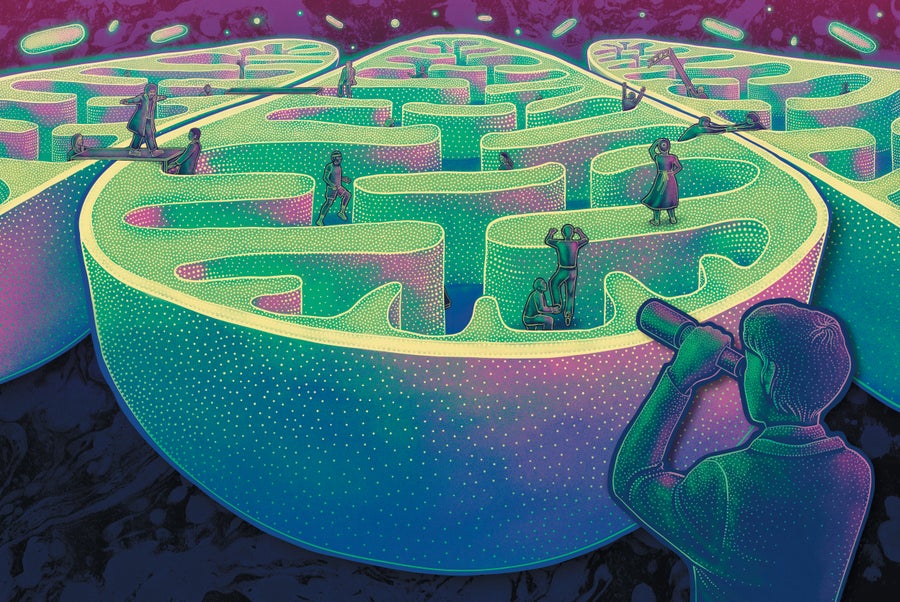 Jennifer N.R. Smith
.
.
Click the link below for the complete article:
.
__________________________________________
May 29, 2025
Mohenjo
Business, Food For Thought, Human Interest, Political, Science, Technical
amazon, business, Business News, current-events, Future, Hotels, human-rights, medicine, mental-health, research, Science, Science News, technology, Technology News, travel, vacation

Click the link below the picture
.
A series of court rulings have thrown the centerpiece of President Donald Trump’s economic agenda into chaos by first blocking the bulk of his sweeping tariffs and then allowing them to resume, at least for now.
Here’s what to know about where the legal battle stands, and where it could go from here.
What have the courts ruled?
Trump was handed a win on Thursday when a federal appeals court ruled in favor of his Administration and paused a Wednesday night ruling from the U.S. Court of International Trade, allowing his tariffs to remain in place for the time being.
A three-judge panel for the trade court had ruled that the President does not have “unbounded authority” to issue tariffs under the International Emergency Economic Powers Act (IEEPA). The 1977 law, which Trump drew on to levy tariffs against almost every country in the world under national emergencies related to fentanyl and trade deficits, enables the President to oversee economic transactions in the case of a national emergency, such as during an “unusual and extraordinary threat” to the economy, foreign policy, or national security.
The ruling halted a 30% tariff on China, a 25% tariff on certain goods from Mexico and Canada, and 10% baseline tariffs on most of the rest of the world, but did not affect import taxes on steel, aluminum, or automakers, which Trump levied under a different law.
The Administration swiftly appealed, and the Thursday decision to grant its emergency motion has temporarily reinstated the tariffs that were halted while the appeals court considers the case.
Adding to the confusion of the back-and-forth rulings, a federal judge issued a ruling in a separate case earlier on Thursday to bar the Trump Administration from collecting tariffs imposed under IEEPA from two Illinois educational toy companies, but paused his injunction for two weeks. The Administration has appealed that decision as well.
What comes next?
The future of Trump’s tariffs is still in limbo. The appeals court directed the plaintiffs in the case, a group comprised of U.S. businesses affected by the tariffs, to respond to federal officials’ motion to stay the trade court’s ruling by June 5. The federal government must then respond by June 9.
The appeals process could ultimately reach as far as the Supreme Court, where the Trump Administration had previously said it would pursue “emergency relief” should the lower court not reinstate the President’s tariff powers.
The levies Trump has imposed under IEEPA have also been challenged in several other lawsuits.
Prior to the reinstatement of the blocked tariffs, White House Press Secretary Karoline Leavitt told reporters at a press briefing on Thursday that the President had “other legal authorities” he could use to impose import taxes on foreign countries.
Leavitt did not specify further, but the U.S. Court of International Trade itself named another law that grants the President limited power to impose tariffs in its ruling. Section 122 of the Trade Act of 1974, it noted, allows the President to levy tariffs of up to 15% for as long as 150 days in response to “fundamental international payment problems,” including “large and serious balance-of-payments deficits,” and unfair trading practices.
Trump has himself used other laws to impose import taxes in both of his terms. His steel, aluminum, and auto tariffs, for instance, draw on his authority under Section 232 of the Trade Expansion Act of 1962, which empowers the President to put tariffs in place in response to national security threats.
.
 U.S. Court of International Trade in New York City, August 22, 2022.Getty Images
.
.
Click the link below for the complete article:
.
__________________________________________
May 28, 2025
Mohenjo
Business, Food For Thought, Human Interest, Political, Science, Technical
amazon, business, Business News, current-events, Future, Hotels, human-rights, medicine, mental-health, research, Science, Science News, technology, Technology News, travel, vacation
Click the link below the picture
.
Hail the size of grapefruit shattered car windows in Johnson City, Texas. In June, 2024, a storm chaser found a hailstone almost as big as a pineapple. Even larger hailstones have been documented in South Dakota, Kansas, and Nebraska. Hail has damaged airplanes and even crashed through the roofs of houses.
How do hailstones get so large, and are hailstorms getting worse?
As an atmospheric scientist, I study and teach about extreme weather and its risks. Here’s how hail forms, how hailstorms may be changing, and some tips for staying safe.
How does hail get so big?
Hail begins as tiny crystals of ice that are swept into a thunderstorm’s updraft. As these ice embryos collide with supercooled water – liquid water that has a temperature below freezing – the water freezes around each embryo, causing the embryo to grow.
Supercooled water freezes at different rates, depending on the temperature of the hailstone surface, leaving layers of clear or cloudy ice as the hailstone moves around inside a thunderstorm. If you cut open a large hailstone, you can see those layers, similar to tree rings.
The path a hailstone takes through a thunderstorm cloud, and the time it spends collecting supercooled water, dictates how large it can grow.
Rotating, long-lived, severe thunderstorms called supercells tend to produce the largest hail. In supercells, hailstones can be suspended for 10-15 minutes or more in strong thunderstorm updrafts, where there is ample supercooled water, before falling out of the storm due to their weight or moving out of the updraft.
Hail is most common during spring and summer when a few key ingredients are present: warm, humid air near the surface; an unstable air mass in the middle troposphere; winds strongly changing with height; and thunderstorms triggered by a weather system.
Larger hail, more damage
Hailstorms can be destructive, particularly for farms, where barrages of even small hail can beat down crops and damage fruit.
As hailstones get larger, their energy and force when they strike objects increases dramatically. Baseball-sized hail falling from the sky has as much kinetic energy as a typical major league fastball. As a result, property damage, such as to roofs, siding, windows, and cars, increases as hail gets larger than the size of a quarter.
.
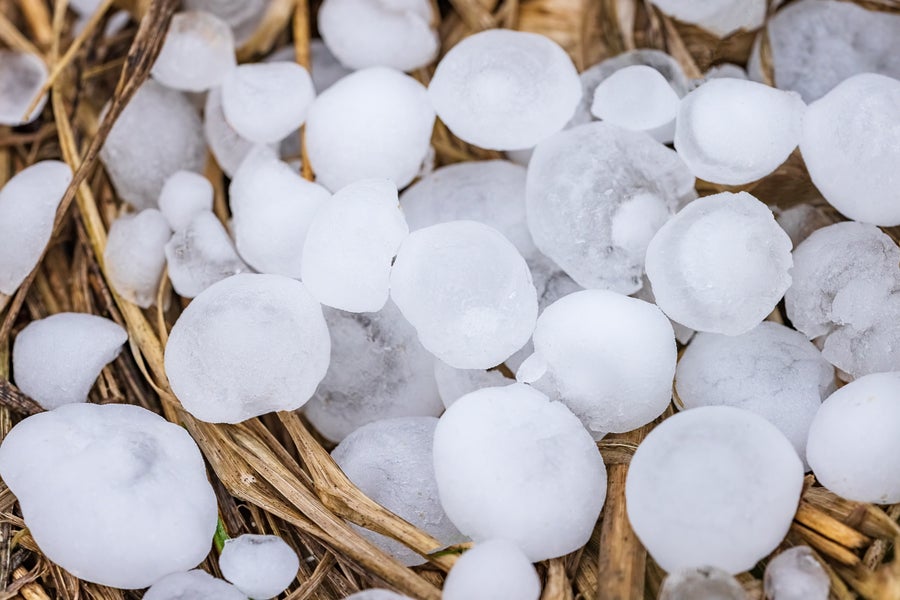 ljphoto7/Getty Images
.
.
Click the link below for the complete article:
.
__________________________________________
May 28, 2025
Mohenjo
Business, Food For Thought, Human Interest, Political, Science, Technical
amazon, business, Business News, current-events, Future, Hotels, human-rights, medicine, mental-health, research, Science, Science News, technology, Technology News, travel, vacation

Click the link below the picture
.
A federal court in New York handed President Donald Trump a big setback Wednesday, blocking his audacious plan to impose massive taxes on imports from almost every country in the world.
A three-judge panel of the U.S. Court of International Trade ruled that Trump overstepped his authority when he invoked the 1977 International Emergency Economic Powers Act to declare a national emergency and justify the sweeping tariffs.
The tariffs overturned decades of U.S. trade policy, disrupted global commerce, rattled financial markets, and raised the risk of higher prices and recession in the United States and around the world.
The U.S. Court of International Trade has jurisdiction over civil cases involving trade. Its decisions can be appealed to the U.S. Court of Appeals for the Federal Circuit in Washington and ultimately to the Supreme Court, where the legal challenges to Trump’ tariffs are widely expected to end up.
Which tariffs did the court block?
The court’s decision blocks the tariffs Trump slapped last month on almost all U.S. trading partners and levies he imposed before that on China, Mexico, and Canada.
On April 2, Trump imposed so-called reciprocal tariffs of up to 50% on countries with which the United States runs a trade deficit and 10% baseline tariffs on almost everybody else. He later suspended the reciprocal tariffs for 90 days to give countries time to agree to reduce barriers to U.S. exports. But he kept the baseline tariffs in place. Claiming extraordinary power to act without congressional approval, he justified the taxes under IEEPA by declaring the United States’ longstanding trade deficits “a national emergency.”
In February, he’d invoked the law to impose tariffs on Canada, Mexico and China, saying that the illegal flow of immigrants and drugs across the U.S. border amounted to a national emergency and that the three countries needed to do more to stop it.
The U.S. Constitution gives Congress the power to set taxes, including tariffs. But lawmakers have gradually let presidents assume more power over tariffs, and Trump has made the most of it.
The tariffs are being challenged in at least seven lawsuits. In the ruling Wednesday, the trade court combined two of the cases — one brought by five small businesses and another by 12 U.S. states.
The ruling does leave in place other Trump tariffs, including those on foreign steel, aluminum, and autos. But those levies were invoked under a different law that required a Commerce Department investigation and could not be imposed at the president’s own discretion.
Why did the court rule against the president?
The administration had argued that courts had approved then-President Richard Nixon’s emergency use of tariffs in a 1971 economic and financial crisis that arose when the United States suddenly devalued the dollar by ending a policy that linked the U.S. currency to the price of gold. The Nixon administration successfully cited its authority under the 1917 Trading With Enemy Act, which preceded and supplied some of the legal language later used in IEPPA.
The court disagreed, deciding that Trump’s sweeping tariffs exceeded his authority to regulate imports under IEEPA. It also said the tariffs did nothing to deal with problems they were supposed to address. In their case, the states noted that America’s trade deficits hardly amount of a sudden emergency. The United States has racked them up for 49 straight years in good times and bad.
So where does this leave Trump’s trade agenda?
Wendy Cutler, a former U.S. trade official who is now vice president at the Asia Society Policy Institute, says the court’s decision “throws the president’s trade policy into turmoil.”
.
 President Donald Trump speaks during a swearing-in ceremony for interim U.S. Attorney General for the District of Columbia Jeanine Pirro, Wednesday, May 28, 2025, in Washington. (AP Photo/Evan Vucci)
.
.
Click the link below for the complete article:
.
__________________________________________
May 27, 2025
Mohenjo
Business, Food For Thought, Human Interest, Political, Science, Technical
amazon, business, Business News, current-events, Future, Hotels, human-rights, medicine, mental-health, research, Science, Science News, technology, Technology News, travel, vacation
Click the link below the picture
.
CLIMATEWIRE | Public officials have started pleading with the Trump administration for help in recovering from deadly disasters as President Donald Trump triggers frustration in states struck by tornadoes, floods, and storms by taking no action on requests for aid.
Trump has left states, counties and tribes in limbo as he delays making decisions on formal requests for millions of dollars in Federal Emergency Management Agency funding. Some areas that are still reeling from extreme weather are unable to start cleanup.
“We’re at a standstill and waiting on a declaration from FEMA,” said Royce McKee, emergency management director in Walthall County, Mississippi, which was hit by tornadoes in mid-March.
The county of 13,000 people can’t afford to clean up acres of debris, McKee said, and is waiting for Trump to act on a disaster request that was submitted by Gov. Tate Reeves, a Republican, on April 1 after the tornadoes killed seven people, destroyed or damaged 671 homes, and caused $18.2 million in public damage.
“I’m disappointed, especially for the people that lost their houses,” McKee said.
Trump himself assailed FEMA in January for being “very slow.”
The frustration over Trump’s handling of disasters is the latest upheaval
involving FEMA. Trump recently canceled two FEMA grant programs that gave states billions of dollars a year to pay for protective measures against disasters. The move drew protests from Republican and Democratic lawmakers.
On May 8, Trump fired FEMA leader Cameron Hamilton and replaced him with David Richardson, a former Marine Corps officer who has no experience in emergency management.
At a congressional hearing on Tuesday, Missouri Sen. Josh Hawley, a Republican, pleaded with Homeland Security Secretary Kristi Noem to push Trump to approve three disaster requests that Missouri Gov. Mike Kehoe, a Republican, had sent to Trump beginning April 2.
“We are desperate for assistance in Missouri,” Hawley said as Noem pledged to help. Her department oversees FEMA.
St. Louis Mayor Cara Spencer, whose city was badly damaged by tornadoes earlier this week, told MSNBC: “What we need right now is federal assistance. This is where FEMA and the federal government have got to come in and help communities. Our city can’t shoulder this alone.”
Trump has not acted on 17 disaster requests, a high number for this time of year, according to a FEMA daily report released Wednesday. On the same date eight years ago, during Trump’s first presidency, only three disaster requests were awaiting presidential action, the FEMA report from May 21, 2017, shows.
Eleven of the 17 pending disaster requests were sent to Trump more than a month ago.
“This looks to me like, until FEMA’s role is clarified, then we’re just going to sit on it,” said a former senior FEMA official who was granted anonymity to speak candidly.
Trump has indicated that he wants to shrink the agency, which distributes about $45 billion in disaster aid a year, helps with as many as 100 disasters at a time and, he said, “has been a very big disappointment.”
.
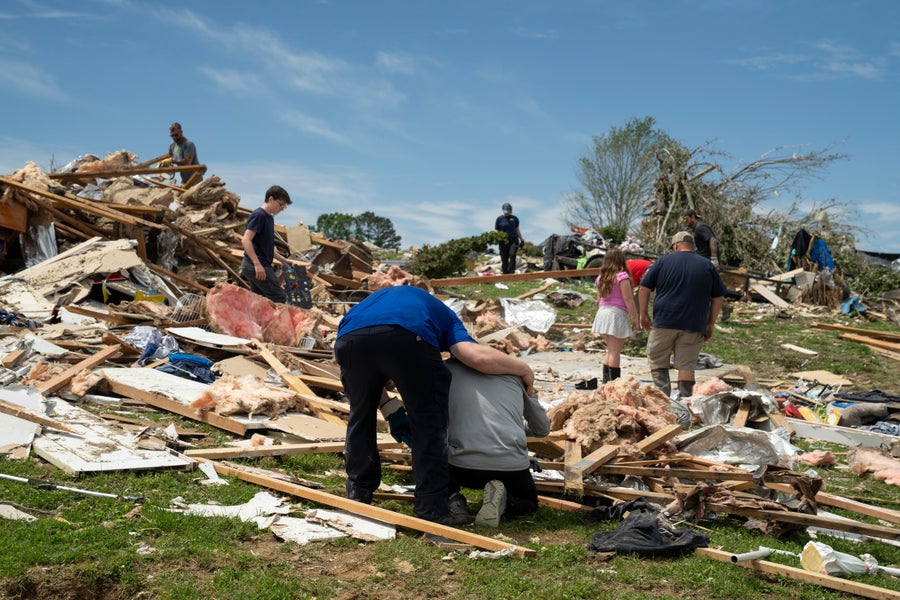
A man is comforted by a family friend while cleaning up the debris of his house on May 18, 2025, in the community of Sunshine Hills outside of London, Kentucky. A tornado struck the neighborhood of Sunshine Hills just after midnight on May 17, 2025, in London, Kentucky. Michael Swensen/Getty Images
.
.
Click the link below for the complete article:
.
__________________________________________
May 27, 2025
Mohenjo
Business, Food For Thought, Human Interest, Political, Science, Technical
amazon, business, Business News, current-events, Future, Hotels, human-rights, medicine, mental-health, research, Science, Science News, technology, Technology News, travel, vacation

Click the link below the picture
.
As a parent, it may feel like managing your child’s sleep habits is an uphill battle—the busy swirl of school, extra-curricular activities, and the family circus can make getting to bed a chore. But sleep is not just important for physical health—it is essential for mental health, too. Getting to bed on time can be a challenge for busy families, but it’s possible to build a good rest routine to support children’s emotional and cognitive resilience.
Clinical psychologist Brian Razzino, Ph.D., stresses the importance of sleep as the “foundation” of mental health. “Think of sleep as the foundation of a house—if it’s shaky, everything built on it becomes unstable,” he says. “Chronic sleep deprivation undermines our emotional ‘blueprints,’ making us more prone to mood swings, heightened stress responses, and persistent anxiety.”
Dr. Razzino describes an emotional blueprint as the underlying structure or framework that shapes how a person experiences, processes, and expresses emotions.
The Link Between Sleep and Mental Health
When sleep is inadequate over long periods, it can significantly impact mood regulation, emotional stability, and mental health. Research highlights a direct link between chronic sleep deprivation and mental health disorders such as anxiety and depression. In a 2020 review in the National Library of Medicine, researchers found that individuals suffering from chronic insomnia were more likely to develop mood disorders. This reinforces the understanding that poor sleep is not just a symptom, but a contributing factor to mental health challenges.
Dr. Razzino says that “over time, insufficient sleep is strongly linked to a higher risk of clinical depression and more severe anxiety disorders,” and the effects are not limited to adults. Children and adolescents with disrupted sleep patterns are also at greater risk for mental health struggles. A 2024 study by renowned sleep researcher Evelyn Touchette and colleagues revealed that kids experiencing sleep difficulties, such as trouble falling asleep, were at an elevated risk for depression, ADHD, and conduct problems by age 15.
Dr. Razzino compares a child’s brain to a cluttered office by day’s end, with sleep serving as the cleaning crew that clears out waste and reorganizes for a fresh start the next day.
“Sleep acts as the brain’s overnight maintenance crew,” Dr. Razzino explains. “During sleep, our minds consolidate memories, process stressors, and strengthen the neural connections critical for learning. But when sleep is interrupted, these repair cycles are shortened, leading to deficits in emotional regulation and cognitive performance.”
While the link between sleep and emotional well-being is undeniable, emotional regulation and emotional resilience often become key areas of concern in children and adolescents facing sleep disturbances. From a clinical standpoint, understanding how sleep deprivation affects emotional responses is crucial, and learning how to implement age-appropriate support strategies can help mitigate these effects.
Emotional Resilience
Stephanie Drew, LCSW, a therapist specializing in child and adolescent mental health, also emphasizes the benefits of adequate sleep for emotional resilience. “Well-rested children are better equipped to regulate their emotions and cope with stress effectively,” she says. “Sleep helps develop emotional regulation skills, which are essential for coping with life’s challenges.”
For children, sleep disruptions—such as long sleep latency (difficulty falling asleep)—can be particularly detrimental. “Even one aspect of sleep disruption can gradually undermine the brain’s nightly ‘maintenance,’ leading to challenges in managing everyday stress, learning effectively, and developing stable emotional patterns,” Dr. Razzino adds.
Sleep-Deprived Parents Suffer, Too
Sleep deprivation doesn’t only affect children; it also has serious repercussions for adult mental health. Rebekka Wall, a certified adolescent and adult sleep consultant, explains, “Chronic lack of sleep affects our mental health because it increases stress, impairs our emotional regulation, and reduces our overall resilience to mental, emotional, and physical challenges.” Though parents may be able to push through sleep deprivation, adults, like children, need quality sleep to maintain their mental well-being, and going without rest can lead to a similar cascade of negative effects.
“When we lack sleep, we experience irritability, brain fog, and the parts of the brain that help us manage emotions don’t function as they should,” says Wall. “This results in an inability to cope effectively with stress, increased anxiety, and even symptoms of depression.” While addressing sleep and emotional regulation in children is crucial, it’s important to recognize the immense challenge parents face in ensuring everyone gets adequate rest, particularly when caring for younger children.
.
:max_bytes(150000):strip_icc()/Parents-Sleep-Package-1-182005bddc24436db64bd202615637d0.jpg) Photo: Getty Images
Photo: Getty Images
.
.
Click the link below for the complete article:
.
__________________________________________
May 26, 2025
Mohenjo
Business, Food For Thought, Human Interest, Political, Science, Technical
amazon, business, Business News, current-events, Future, Hotels, human-rights, medicine, mental-health, research, Science, Science News, technology, Technology News, travel, vacation

 .
.
__________________________________________
May 26, 2025
Mohenjo
Business, Food For Thought, Human Interest, Political, Science, Technical
amazon, business, Business News, current-events, Future, Hotels, human-rights, medicine, mental-health, research, Science, Science News, technology, Technology News, travel, vacation
Click the link below the picture
.
Nearly 900 tornadoes have torn through more than 30 states so far this year, killing dozens of people, shredding buildings and landscapes across big chunks of the Eastern U.S., and costing billions. The oddly fickle and precise mix of atmospheric ingredients needed to generate tornadoes just happens to have occurred over and over again since mid-March, and the season isn’t over yet.
“In order to get a tornado, you need to have a thunderstorm that’s capable of producing a tornado,” says Jana Houser, a tornado researcher at the Ohio State University. Most often, these are what meteorologists call “supercell” thunderstorms, which feature a circulation pattern called a mesocyclone.
Supercell formation requires a set of conditions that make the atmosphere unstable, and these start with warm, moist air at the surface and cold, dry air above. The instability comes from warmer air’s greater buoyancy, which makes it rise upward. And this mix needs yet another specific ingredient, wind shear, “where winds change speed and direction as you go up with height” in the atmosphere, Houser says. This can create sort of a “tube” of horizontally rotating air. Next, the nascent twister needs an updraft, or upward-moving air, which tightens and speeds up the rotating air, taking it “from spinning like a bike tire” to “spinning like a top.”
All of these conditions are necessary, but they’re still not always enough. “Most supercells don’t even actually produce tornadoes in their lifetime,” Houser says.
The exact mechanics of tornado formation aren’t yet fully understood, but essentially, air rotation at the ground needs to meet a strong updraft aloft; this pulls the rotation in like a figure skater pulling in their arms, as Houser puts it.
Tornadoes can—and do—happen wherever the right conditions are present, from Argentina to Italy to Bangladesh. But the U.S. is by far the leader in the average annual number of these storms. North America’s geography naturally promotes a crucial collision of air masses: juicy air streams northward from the bathtub warmth of the Gulf of Mexico, while cool, dry winds rush eastward over the Rockies. The air masses meet over the center of the country, which is how the region centered around northeastern Texas and Oklahoma came to be called Tornado Alley. “If you were to design a place that would get repeated severe storms, you would build something like the central U.S.,” says Rich Thompson, chief of forecast operations for the National Weather Service’s Storm Prediction Center.
But over the past decade or so, that tornado bull’s-eye has changed a bit. A “new Tornado Alley” has emerged about 400 or 500 miles to the east, in part because moist Gulf air is reaching farther east than in the past.
Why do tornadoes mainly form in spring?
“Spring tends to be the peak because it’s a transitional season,” Houser says. Coming out of winter, there is still abundant cold air at northern latitudes and aloft, and at the same time, the sun is shining much more, heating up the surface air to promote instability.
Fall is also a transitional season, but the air aloft remains generally warmer for some time after summer. Tornado activity doesn’t tend to pick up again until later in the fall, when the atmosphere has cooled down again.
The local peaks in tornado occurrence tend to move northward as spring rolls into the summer: the Gulf Coast peaks earlier in the spring, the Southern Plains in May and June, and the Northern Plains and upper Midwest in June and July.
.
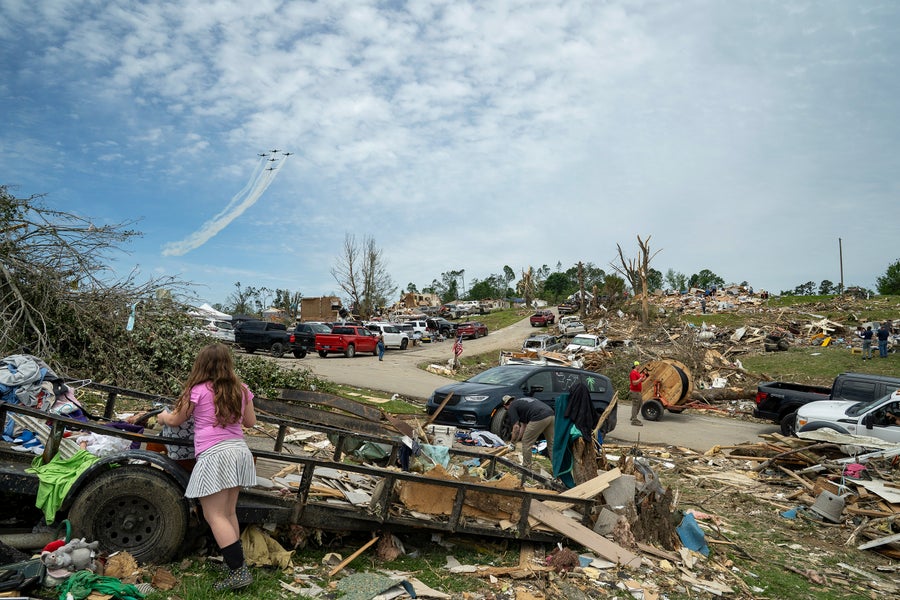
A U.S. Air Force aerobatic team flies in formation over community members and crews cleaning up debris on May 18, 2025, in the community of Sunshine Hills outside of London, Ky. A tornado struck the neighborhood just after midnight on May 17, 2025. Michael Swensen/Stringer/Getty Images
.
.
Click the link below for the complete article:
.
__________________________________________
May 26, 2025
Mohenjo
Business, Food For Thought, Human Interest, Political, Science, Technical
amazon, business, Business News, current-events, Future, Hotels, human-rights, medicine, mental-health, research, Science, Science News, technology, Technology News, travel, vacation

Click the link below the picture
.
Scott Galloway, a prominent marketing professor at New York University, says Elon Musk’s links to the cost-cutting White House DOGE Office fueled “one of the greatest brand destructions” of all time.
Speaking on an episode of the Pivot podcast, which he cohosts with journalist Kara Swisher, Galloway said Musk’s role with the agency had taken a major toll on Tesla.
“Tesla was a great brand,” Galloway said.
“The rivers have reversed and the tide has turned entirely against him,” he continued, citing a recent Axios Harris poll that showed Tesla had plummeted from eighth place in the ranking of America’s 100 most visible companies in 2021 to 95th in 2025.
Galloway attributed Tesla’s issues to Musk alienating the company’s core customer base with his turn toward politics over the last year.
In the United States, the Tesla CEO spent millions backing Trump’s presidential campaign and was almost inseparable from him during the transition. He then became the public face of DOGE, an advisory body tasked with reducing government spending.
While Musk became a hero to many of Trump’s supporters, the image of a tech billionaire wielding so much power also sparked a backlash, which mostly targeted Tesla.
Tesla reported a 71% drop in earnings per share year over year during its earnings call in late April and has faced widespread protests at its dealerships and showrooms.
“He is a brilliant guy, but he’s alienated his core demographic,” Galloway said on Friday. “He’s alienated the wrong people. Three-quarters of Republicans would never consider buying an EV. So he’s cozied up to the people who aren’t interested in EVs.”
During Tesla’s recent earnings call, Musk said he planned to step back from his work with DOGE and refocus on the companies that made him a household name. He reiterated that on Saturday.
“Back to spending 24/7 at work and sleeping in conference/server/factory rooms,” Musk wrote on X after the platform had battled with widespread outages.
“I must be super focused on 𝕏/xAI and Tesla (plus Starship launch next week), as we have critical technologies rolling out.”
The SpaceX CEO also told an audience at the Qatar Economic Forum on Tuesday that he planned to spend “a lot less” on political campaigns in the future.
“If I see a reason to do political spending in the future, I will do it,” Musk clarified. “I do not currently see a reason.”
.
 Elon Musk says he is stepping back from his government work to refocus on his companies. Scott Olson/Getty Images
.
.
Click the link below for the complete article:
.
__________________________________________
Older Entries
Newer Entries
 James' World 2