Officials in nine countries are trying to get a handle on the New World screwworm, a fly whose larvae eat the living flesh of livestock.
The pest is marching northward at an alarming rate and has now moved some 1,400 miles from southern Panama to southern Mexico in about two years. Screwworms are disastrous for ranchers, whose cattle can become infected when the flies lay eggs in cuts or wounds, after which their resulting larvae burrow, or screw, into that flesh. The northernmost sighting is currently about 700 miles south of the U.S. border.
Since the insect overpowered local containment efforts in Panama’s province of Darién in 2023, it has moved through Central America and is now found as far north as the Mexican state of Oaxaca. Thousands of animals have been infected, and officials have reported dozens of human cases in Costa Rica, Nicaragua, Honduras, and Mexico this year.
As the fly spreads northward from the narrow Darién Gap in Panama and up the funnel of Central America, it becomes harder to control. Agricultural departments suppress fly populations by releasing millions of sterile male flies per week into the environment throughout Central America. These males are raised in a facility in Panama jointly run by that country’s agricultural department and the U.S. Department of Agriculture. Because female screwworms mate only once in their lifetime, this population of infertile males reduces the size of the next generation of flies. Consistent application of this sterile insect technique eradicated the screwworm from the U.S. in 1966 and from regions north of the Darién Gap in 2006.
That invisible wall holding the screwworm back has crumbled, however. “I don’t know how it got away so quickly,” says Maxwell Scott, an entomologist at North Carolina State University, who studies genetic methods to control populations of the fly. “There had to be some movement of infested livestock, particularly through the middle [of Central America]…. It just moved too fast,” Scott says about the swift speed of the screwworm spread.
On their own, the flies can usually fly no more than about 12 miles in their monthlong lifetime, says Sonja Swiger, an entomologist at Texas A&M University. But the screwworm larvae can travel great distances while developing inside (and gnawing on the flesh of) their hosts. A new generation reaches sexual maturity every week to two weeks, and females can lay up to 2,800 eggs over the course of their lifespan, according to the California Department of Food & Agriculture.
Most people aren’t at risk of screwworm infections, which are rare compared with those in livestock. But cases have appeared in Central America since the breach of the Darién Gap. Nicaragua first detected the parasite in livestock in March 2024; by February 2025, health officials there confirmed 30 human cases. Costa Rica saw 42 confirmed cases between January and May 2025 and at least two deaths, according to the country’s health ministry. Honduras has reported 40 human cases and three deaths, according to the public health network EpiCore, while Guatemala reported its first human case in May. The Mexican Ministry of Health has confirmed eight human cases.
In humans, infection with fly larvae is known as myiasis. Those who are most at risk for screwworm myiasis are people who work closely with livestock or who sleep outdoors. Treatment involves removing the larvae, sometimes with surgery.
Screwworms haven’t made it back into the U.S. yet. How quickly this might happen depends on whether agricultural officials can hold the line in Mexico or push the fly southward. On May 27, U.S. Department of Agriculture officials announced $21 million in funding to retrofit a fruit fly production plant in Metapa, Mexico, to produce sterile screwworm flies. When operational, the plant will churn out between 60 million and 100 million additional flies a week to help suppress the breeding population in Mexico.
While the sterile insect technique is likely to remain the key tool in the arsenal against screwworms for years to come, new genetic methods of insect control could eventually come to bear against the problem. In May ethicists and entomologists, including Scott, wrote in a paper in Science that the screwworm is a good candidate for complete elimination with gene drive technology, which involves genetic engineering to ensure that a deadly mutation will be included in an animal’s sperm and egg cells and thus will be passed on to the next generation. The loss of screwworms does not seem to substantially affect the ecosystem, the researchers wrote, and death by the insect is painful and slow.
.
Screwworm parasites are getting closer and closer to the U.S. border. The parasites primarily infect cows. Ferrantraite/Getty Images
Representative Don Bacon, Republican of Nebraska, has publicly accused President Trump of treating Russia with “velvet gloves,” criticized him for gutting AmeriCorps and questioned his power to impose tariffs without congressional approval.
He has described Defense Secretary Pete Hegseth’s use of Signal to share sensitive military operations as “unacceptable.” And he was the sole House Republican to vote “no” on a bill to rename the Gulf of Mexico as the “Gulf of America.” He said he thought it was stupid.
Mr. Bacon’s willingness to publicly disagree with the president make him an anomaly in the tribal House Republican Conference, where members tend to fall in line behind Mr. Trump’s agenda and actively seek out ways to demonstrate their loyalty to him. In a Republican-led Congress that has been reluctant to challenge Mr. Trump on almost anything, the Nebraskan is among the last of a disappearing breed in his party. And his recent statements and actions strongly suggest he may be headed for the exits.
While Mr. Bacon has shown an independent streak in his statements, he still often backs down from his “red lines” on policy and votes with his party. After telling the White House that he would not vote for a bill that included more than $500 billion in Medicaid cuts, he ultimately voted “yes” for legislation carrying Mr. Trump’s domestic agenda that included far more.
And after telling The New York Times and House Republican leaders that he was a firm “no” on any cuts to a global anti-AIDS program, he ultimately voted “yes” this week on a package that would claw back $9 billion in spending already approved by Congress and targeted by the Department of Government Efficiency for cuts, including to the President’s Emergency Plan for AIDS Relief.
Still, he is more independent than most of his colleagues. In an interview in his office last week, Mr. Bacon, at 61, serving his fifth term in Congress, would not say whether he voted for Mr. Trump last year. He also likened members of his party to people following someone off a cliff, compared himself to Winston Churchill speaking out against Adolf Hitler in the 1930s, and criticized the billionaire tech tycoon Elon Musk, who has bankrolled many of his Republican colleagues.
“I sort of blame him for that disaster,” he said of Mr. Musk, referring to Mr. Musk’s exhorting Republicans late last year to tank a spending deal that was intended to avert a government shutdown. On one level, Mr. Bacon is making a fairly obvious statement: Mr. Musk did play a crucial role in killing the spending bill. But it is the kind of obvious statement that most Republicans on Capitol Hill are not willing to make these days, for fear of jeopardizing their political futures as Mr. Musk has threatened retribution against anyone who fails to vote the way he believes they should.
In the coming weeks, Mr. Bacon, who represents a center-leaning district in the otherwise deeply red state of Nebraska that both former President Joseph R. Biden Jr. and former Vice President Kamala Harris won by more than 4 percentage points, plans to announce whether or not he will seek a sixth term in Congress.
His retirement would be welcome news for Democrats, who have long viewed Nebraska’s Second Congressional District as one of their best opportunities to pick up a seat. They have consistently been denied because of Mr. Bacon’s strong, independent brand and unique electoral strength. Last month, a Democrat unseated a three-term Republican in the Omaha mayor’s race. The morning after that race was called, Representative Hakeem Jeffries, Democrat of New York and minority leader, told the House Democratic Caucus that they were officially on “Don Bacon retirement watch,” and the room erupted in cheers, according to a person familiar with the meeting.
Mr. Bacon would not discuss his plans, but his recent record of criticizing Mr. Trump and Mr. Musk suggests that he does not have a re-election campaign in mind. Still, in the interview, he said he had not given up on politics or on the Republican Party.
Meeaaaoow rises like a question mark before dawn. Anyone living with a cat knows their sounds: broken chirrups like greetings, low growls that warn, purrs stitched into sleepy conversation. Ethologists have organized feline sounds that share acoustic and contextual qualities into more than 20 groupings, including the meow, the hiss, the trill, the yowl, and the chatter. Any individual meow belongs, academically speaking, to a broad “meow” category, which itself contains many variations. The house cat’s verbal repertoire is far greater than that of its largely silent wild cousins. Researchers have even begun to study whether cats can drift into regional dialects, the way human accents bend along the Hudson or the Thames. And just as humans gesticulate, shrug, frown, and raise their eyebrows, cats’ fur and whiskers write subtitles: a twitching tail declares excitement, flattened ears signal fear, and a slow blink promises peace. Felis catus is a chatty species that, over thousands of years of domestication, has pivoted its voice toward the peculiar primate that opens the fridge. Now imagine pointing your phone at that predawn howl and reading: “Refill bowl, please.” Last December, Baidu—a Chinese multinational company that
specializes in Internet services and artificial intelligence—filed a patent application for what it describes as a method for transforming animal vocalizations into human language. (A Baidu spokesperson told Reuters last month that the system is “still in the research phase.”) The proposed system would gather animal signals and process them: it would store kitten or puppy talk for “I’m hungry” as code, then pair it not only with motion-sensing data such as tail swishes but also with vital signs such as heart rate and core temperature. All of these data would get whisked through an AI system and blended before emerging as plain-language phrases in English, Mandarin, or any other tongue.
The dream of decoding cat speech is much older than deep learning. By the early 20th century, meows had been recorded on wax cylinders, and in the 1970s John Bradshaw, a British anthrozoologist, began more than four decades of mapping how domestic cats tell us—and each other—what they mean. By the 1990s, he and his then doctoral student Charlotte Cameron-Beaumont had established that the distinct domestic “meow,” largely absent between adults in feral colonies, is a bespoke tool for managing humans. Even domestic cats rarely use it with each other, though kittens do with their mothers. Yet for all that anecdotal richness, the formal literature remained thin: there were hundreds of papers on bird song and dozens on dolphin whistles, but only a scattering on feline phonology until machine learning revived the field in the past decade.
One of the first hints that computers might crack the cat code came in 2018, when AI scientist Yagya Raj Pandeya and his colleagues released CatSound, a library of roughly 3,000 clips covering 10 types of cat calls labeled by the scientists, from hiss and growl to purr and mother call. Each clip went through software trained on musical recordings to describe a sound’s “shape”—how its pitch rose or fell and how long it lasted—and a second program cataloged them accordingly. When the system was tested on clips it hadn’t seen during training, it identified the right call type around 91 percent of the time. The study showed that the 10 vocal signals had acoustic fingerprints a machine can spot, giving researchers a proof of concept for automated cat-sound classification and eventual translation.
Momentum built quickly. In 2019 researchers at the University of Milan in Italy published a study focused on the one sound aimed squarely at Homo sapiens. The research sliced the meow into three situational flavors: “waiting for food,” “isolation in an unfamiliar environment,” and “brushing.” By turning each meow into a set of numbers, the researchers revealed that a “feed me” meow had a noticeably different shape from a “where are you?” meow or a “brush me” meow. After they trained a computer program to spot those shapes, the researchers tested the system much as Pandeya and colleagues had tested theirs: it was presented with meows not seen during training, all hand-labeled based on circumstances such as hunger or isolation. The system correctly identified the meows up to 96 percent of the time, and the research confirmed that cats really do tweak their meows to match what they’re trying to tell us.
The research was then scaled to smartphones, turning kitchen-table curiosity into consumer AI. Developers at software engineering company Akvelon, including a former Alexa engineer, teamed up with one of the study’s researchers to create the MeowTalk app, which they claim can translate meows in real time. MeowTalk has used machine learning to categorize thousands of user-submitted meows by common intent, such as “I’m hungry,” “I’m thirsty,” “I’m in pain,” “I’m happy,” or “I’m going to attack.” A 2021 validation study by MeowTalk team members claimed success rates near 90 percent. But the app also logs incorrect translation taps from skeptical owners, which serves as a reminder that the cat might be calling for something entirely different in reality. Probability scores can simply reflect pattern similarity, not necessarily the animal’s exact intent.
People are not born racist. As former U.S. President Barack Obama, quoting Nelson Mandela, former president of South Africa, tweeted shortly after the tragic events in Charlottesville August 12, 2017 in which the university town was overtaken by white supremacists and hate groups, resulting in the killing of a counter protester, Heather Heyer, “No one is born hating another person because of the color of his skin or his background or his religion. People must learn to hate, and if they can learn to hate, they can be taught to love, for love comes more naturally to the human heart than its opposite.”
Very young children do not naturally choose friends based on the color of their skin. In a video created by the BBC children’s network CBeebies, Everyone’s Welcome, pairs of children explain the differences between themselves without referring to the color of their skin or ethnicity, even though those differences exist. As Nick Arnold writes in What Adults Can Learn About Discrimination From Kids, according to Sally Palmer, Ph.D., lecturer in the Department of Human Psychology and Human Development at University College London, it is not that they don’t notice the color of their skin, it is that the color of their skin is not what is important to them.
Racism is Learned
Racism is learned behavior. A 2012 study by Harvard University researchers showed that children as young as three years of age can adopt racist behavior when exposed to it, even though they may not understand “why.” According to renowned social psychologist Mazarin Banaji, Ph.D., children are quick to pick up on racist and prejudicial cues from adults and their environment. When white children were shown faces of different skin colors with ambiguous facial expressions, they showed a pro-white bias. This was determined by the fact that they ascribed a happy face to a perceived white skin color and an angry face to a face that they perceived to be black or brown. In the study, Black children who were tested showed no color-bias. Banaji maintains that racial bias can be unlearned, though, when children are in situations where they are exposed to diversity and they witness and are part of positive interactions between different groups of people acting as equals.
Racism is learned by the example of one’s parents, caregivers, and other influential adults, through personal experience, and through the systems of our society that promulgate it, both explicitly and implicitly. These implicit biases permeate not only our individual decisions but also our societal structure. The New York Times has created a series of informative videos explaining implicit biases.
There are Different Types of Racism
According to social science, there are seven main forms of racism: representational, ideological, discursive, interactional, institutional, structural, and systemic. Racism can be defined in other ways as well — reverse racism, subtle racism, internalized racism, colorism.
In 1968, the day after Martin Luther King was shot, the anti-racism expert and former third-grade teacher, Jane Elliott, devised a now-famous but then-controversial experiment for her all-white third-grade class in Iowa to teach the children about racism, in which she separated them by eye color into blue and brown, and showed extreme favoritism toward the group with blue eyes. She has conducted this experiment repeatedly for different groups since then, including the audience for an Oprah Winfrey show in 1992, known as The Anti-Racism Experiment That Transformed an Oprah Show. People in the audience were separated by eye color; those with blue eyes were discriminated against while those with brown eyes were treated favorably.The reactions of the audience were illuminating, showing how quickly some people came to identify with their eye color group and behave prejudicially, and what it felt like to be the ones who were being treated unfairly.
Microaggressions are another expression of racism. As explained in Racial Microagressions in Everyday Life, “Racial microaggressions are brief and commonplace daily verbal, behavioral, or environmental indignities, whether intentional or unintentional, that communicate hostile, derogatory, or negative racial slights and insults toward people of color.” An example of microaggression falls under “assumption of criminal status” and includes someone crossing to the other side of the street to avoid a person of color. This list of microaggressions serves as a tool to recognize them and the messages they send.
Unlearning Racism
Racism in the extreme is manifested by groups such as the KKK and other white supremacist groups. Christoper Picciolini is the founder of the group Life After Hate. Picciolini is a former member of a hate group, as are all the members of Life After Hate. On Face the Nation in Aug. 2017, Picciolini said that the people who are radicalized and join hate groups are “not motivated by ideology” but rather “a search for identity, community, and purpose.” He stated that “if there’s a brokenness underneath that person, they tend to search for those in really negative pathways.” As this group proves, even extreme racism can be unlearned, and the mission of this organization is to help counter violent extremism and to help those participating in hate groups find pathways out of them.
.
Multi-ethnic young adults’ hands holding pieces from the same puzzle.Nullplus/E+/Getty Images
Ole Ginnerup Schytz, an engineer in Denmark’s sleepy Vindelev agricultural area, had used a metal detector only a handful of times when he found a bent clump of metal in a friend’s barley field. He figured it was the lid from a container of tinned fish and tossed it in his junk bag with the other bits of farm trash that had set his metal detector beeping: rusty nails, screws, scrap iron. A few paces away he dug up another shiny circle. Someone had clearly enjoyed a lot of tinned fish here—into the sack it went. But when Ginnerup found a third metal round, he stopped to take a closer look. Wiping the mud from its surface, he suddenly found himself face-to-face with a Roman emperor. At that point he had to admit “they weren’t food cans,” Ginnerup recalls with a chuckle.
After a brief intermission for an online Teams meeting for work that December day in 2020, Ginnerup dug up 14 glittering gold disks—some as big as saucers—that archaeologists say were buried about 1,500 years ago, during a time of chaos after ash clouds from a distant volcanic eruption created a miniature ice age. Four medallions feature Roman emperors, and several bear intricate geometric patterns. But the real showstopper is an amulet called a bracteate with two stylized designs: a man in profile, his long hair pulled back in a braid, and a horse in full gallop. An expert in ancient runes says she was awestruck when she finally made out the inscription on top: “He is Odin’s man.”
These embossed runes are the oldest known written mention of Odin, the Norse god of war and ruler of Valhalla. Ginnerup’s bracteate, which archaeologists describe as the most significant Danish find in centuries, extended the worship of Odin back 150 years—and it’s all because Ginnerup received a metal detector as a birthday present from his father-in-law.
Many other European countries have prohibited or heavily restricted hobbyist metal detecting, but Denmark has embraced it, creating a system for members of the public to hand over finds to government archaeologists. The result has been an embarrassment of riches, with more than 20,000 items turned in annually in recent years. The curators assigned to identify and catalog the artifacts can’t dream of keeping up, but the fruits of their collective labor are clear: whereas neighboring countries have only vague sketches of the past, metal detectorists have filled in the ancient map of Denmark with temple complexes, trade routes and settlements that would have otherwise been lost to history.“
Private detectorists have rocketed Denmark ahead of its neighbors in archaeological research,” says Torben Trier Christiansen, curator of archaeology at Denmark’s North Jutland Museums. “There’s nothing ‘amateur’ about them.”
Denmark has been inhabited since the end of the last ice age, when nomadic hunter-gatherers from southern Europe arrived following the migration of reindeer and retreating glaciers as early as 12,500 years ago. The ancestors of modern ethnic Danes showed up some 5,000 years ago, journeying from the steppes of what is now Ukraine and southwestern Russia. Their descendants lived in small farming communities across Scandinavia for thousands of years, building megaliths and barrows for their honored dead and making human sacrifices in bogs to appease their gods.
In the early centuries of the common era, these farming communities coalesced into a series of Germanic tribes—the Cimbri, the Teutons, the Jutes, the Angles, and the Danes—who became skilled seafarers, explorers, and metalworkers. Because precious metals—including silver, gold, and the components of bronze—do not occur naturally in what is now Denmark, its denizens had to barter for or steal these metals from abroad. They traded extensively with the Roman Empire, which never reached as far north as Scandinavia.
.
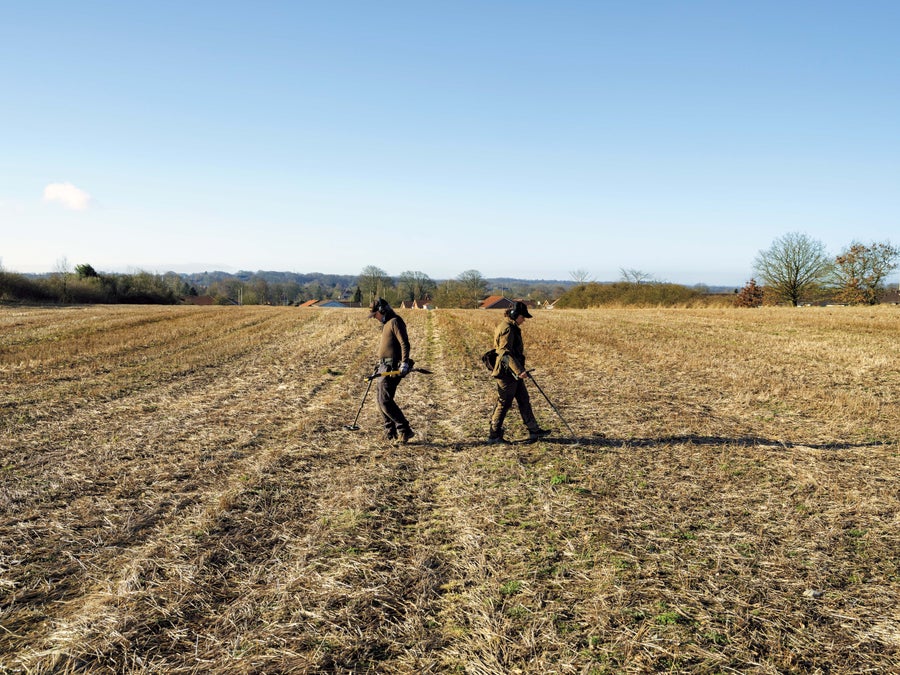
Kristen Nedergaard Driøe (left) and Marie Aagard Larsen (right) swing their metal detectors over a field where grain is typically grown in southern Denmark. Alastair Philip Wiper
The “Godfather of AI” says that some fields are safer than others when it comes to being replaced by AI.
Geoffrey Hinton, 78, is often referred to as the Godfather of AI due to his pioneering work on neural networks, which began in the late 1970s. He won the 2024 Nobel Prize in Physics for his work on machine learning and is currently a professor emeritus in computer science at the University of Toronto.
In a recent interview on the podcast “Diary of a CEO” that aired on Monday, Hinton said AI has the potential to cause mass joblessness.
“I think for mundane intellectual labor, AI is just going to replace everybody,” Hinton said. “Mundane intellectual labor” refers to white-collar jobs. He specified that the replacement would take the form of “a person and an AI assistant” doing the work that “ten people did previously.”
Hinton gave one example, noting that paralegals were at risk of losing their jobs to AI, and said that he would be “terrified” to work in a call center right now, due to the potential for automation. However, he pointed out that blue-collar work would take a longer time to be replaced by AI.
“I’d say it’s going to be a long time before it [AI] is as good at physical manipulation,” Hinton said in the podcast. “So, a good bet would be to be a plumber.”
In the interview, Hinton also challenged the notion that AI would create new jobs, stating that if AI automated intellectual tasks, there would be few jobs left for people to do.
“You’d have to be very skilled to have a job that it [AI] just couldn’t do,” Hinton said.
AI has the potential to decrease hiring, especially for entry-level jobs. A report released last month from venture capital firm SignalFire found that big tech companies have stopped hiring new graduates for entry-level roles as much as they did in the past, and AI is a significant reason for the decline.
The report found that the percentage of new graduate hires at companies like Meta and Google dropped by 25% from 2023 to 2024, reaching just 7% in 2024.
It’s not just the tech industry — Wall Street also shows signs of being impacted by AI. In March, Morgan Stanley announced layoffs of 2,000 employees, intending to replace some with AI. A report released in January from Bloomberg Intelligence showed that AI could cause as many as 200,000 job cuts across 93 major banks, including Citigroup and JPMorgan, within the next five years.
.
Geoffrey Hinton. Photo By Ramsey Cardy/Sportsfile for Collision via Getty Images
Astrophysics is, as many astrophysicists will tell you, the story of everything. The nature and evolution of stars, galaxies, galaxy clusters, dark matter, and dark energy—and our attempts to understand these things—allow us to pose the ultimate questions and reach for the ultimate answers. But the practitioners of these arts, as the late astronomer Vera Rubin wrote in her autobiography’s preface, “too seldom stress the enormity of our ignorance.”
“No one promised that we would live in the era that would unravel the mysteries of the cosmos,” Rubin wrote. And yet a new observatory named for her, opening its eyes soon, will get us closer than ever before to unraveling some of them. This will be possible because the Vera C. Rubin Observatory will do something revolutionary, rare, and relatively old-fashioned: it will just look out at the universe and see what there is to see.
Perched on a mountaintop in the Chilean Andes, the telescope is fully assembled and operating, although scientists are not able to use it just yet. A few weeks of testing remain to ensure that its camera—the largest in astronomical history, with a more than 1.5-meter lens—is working as it should. Engineers are monitoring how Earth’s gravity causes the telescope’s three huge glass mirrors to sag and how this slight slumping will affect the collection and measurement of individual photons, including those that have traveled for billions of light-years to reach us. They are also monitoring how the 350-metric-ton telescope will rapidly pan across seven full moons’ worth of sky, stabilize and go completely still, and take two 15-second exposures before doing it all over again all night long.
In this fashion, the scope plans to canvas the entire sky visible from Earth’s Southern Hemisphere every three nights, remaking an all-sky map over and over again and noticing how it changes. And computer scientists are finalizing plans for how to sift through 20 terabytes of data every night, which is 350 times more than the data collected by the vaunted James Webb Space Telescope each day. Others are making sure interesting objects or sudden cosmic surprises aren’t missed among Rubin Observatory’s constant stream of images. Software will search for differences between each map and send out an alert about each one; there could be as many as 10 million alerts a night about potential new objects or changes in the maps.
From finding Earth-grazing asteroids and tiny failed stars called brown dwarfs to studying the strangely smooth rotation of entire galaxies sculpted by dark matter, the Rubin Observatory’s mission will encompass the entire spectrum of visible-light astronomy. The telescope will continue mapping the sky for 10 years. It may be better poised to answer astrophysicists’ deepest questions than any observatory built to date.
“The potential for discovery is immense,” said Christian Aganze, a galactic archaeologist at Stanford University, who will use the observatory’s data to study the history of the Milky Way.
The Rubin Observatory’s Mission
The observatory’s goal was not always so broad. Originally named the Large Synoptic Survey Telescope (LSST), the Rubin Observatory was initially proposed as a dark-matter hunter. Vera Rubin found the first hard evidence for what we now call dark matter, a gargantuan amount of invisible material that shapes the universe and the way galaxies move through it. She and her colleague, the late astronomer Kent Ford, were studying the dynamics of galaxies when they made the discovery in the 1970s.
.
View of Rubin Observatory at sunset in May 2024. The 8.4-meter Simonyi Survey Telescope at Rubin Observatory, equipped with the LSST camera, the largest digital camera in the world, will take enormous images of the Southern Hemisphere sky, covering the entire sky every few nights. Olivier Bonin/SLAC National Accelerator Laboratory
A doctor in Florida has used a robot to remotely perform surgery on a cancer patient thousands of miles away in Africa.
Vipul Patel, the medical director of the Global Robotic Institute at Orlando’s Advent Health, recently performed a prostatectomy, which removes part or all of the prostate, on Fernando da Silva of Angola, ABC News reported in an exclusive story from medical correspondent Dr. Darien Sutton on Tuesday.
Da Silva, 67, was diagnosed with prostate cancer in March, and in June, Patel cut out the cancer using transcontinental robotic telesurgery. The surgery was a success, according to ABC News.
Prostate cancer is very prevalent in Africa, Patel told the network, adding, “In the past, they really haven’t monitored it well or they haven’t had treatments.”
“We’ve been working on this really for two years,” Patel said. “We traveled the globe, looking at the right technologies.”
Da Silva was the first patient in a human clinical trial approved by the Food and Drug Administration to test this technology.
Surgeons have used a multimillion-dollar robot to operate on patients using “enhanced visuals and nimble controls” before, ABC News reported, but they are often near their patients when operating the machine.
Patel used fiber optic cables to test the technology at a long distance from his patient. “There was no perceptible delay in my brain,” the doctor said.
His surgical team was in the operating room with Da Silva just in case they had to jump in.
“We made sure we had plan A, B, C, and D. I always have my team where the patient is,” the doctor said.
In case something went awry with the telecommunications, “the team would just take over and finish the case and do it safely,” he said.
Reflecting on the surgery, Patel called it “a small step for a surgeon, but it was huge leap for health care.”
.
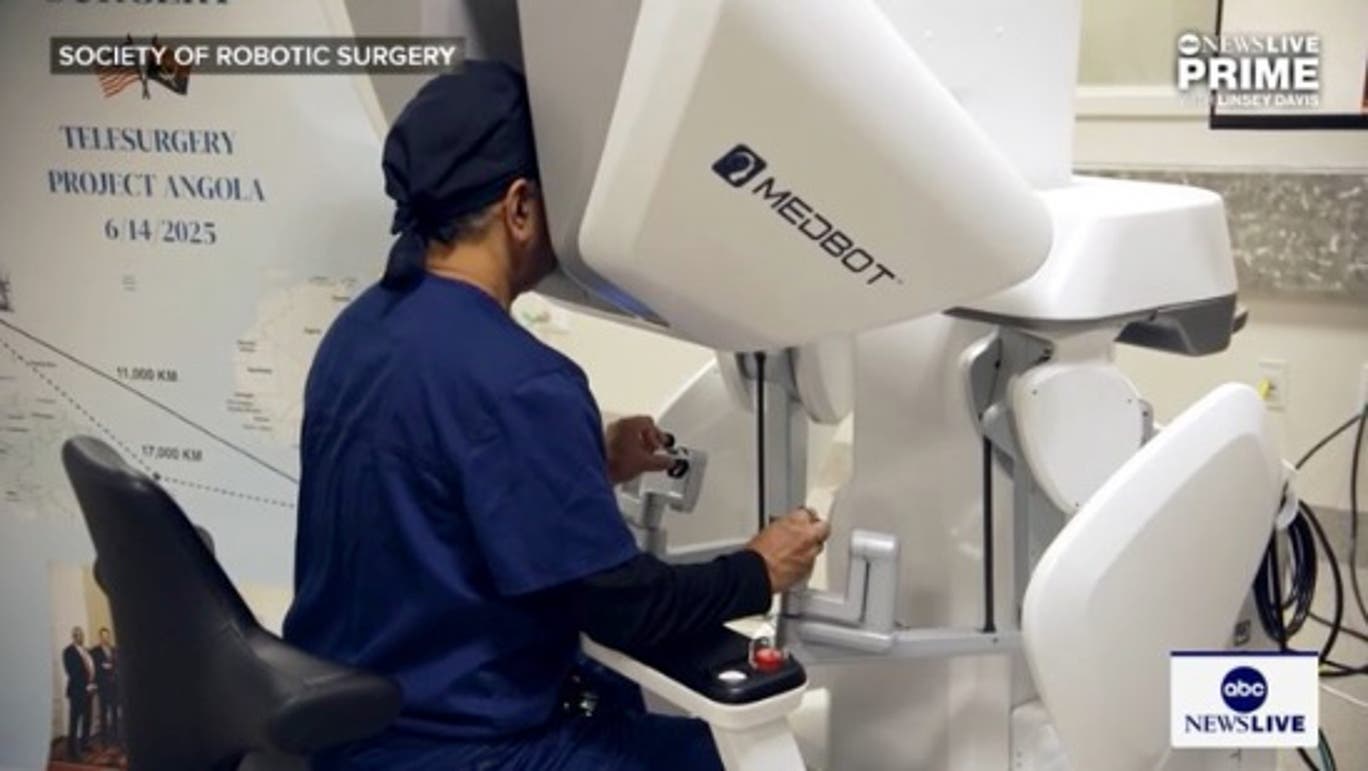
Dr. Vipul Patel in Florida used a robot to remotely perform surgery on a cancer patient thousands of miles away in Africa
Subatomic particles such as quarks can pair up when linked by ‘strings’ of force fields — and release energy when the strings are pulled to the point of breaking. Two teams of physicists have now used quantum computers to mimic this phenomenon and watch it unfold in real time.
The results, described in two Nature papers on June 4, are the latest in a series of breakthroughs towards using quantum computers for simulations that are beyond the ability of any ordinary computers.
“String breaking is a very important process that is not yet fully understood from first principles,” says Christian Bauer, a physicist at the Lawrence Berkeley National Laboratory (LBNL) in Berkeley, California. Physicists can calculate the final results of particle collisions that form or break strings using classical computers, but cannot fully simulate what happens in between. The success of the quantum simulations is “incredibly encouraging,” Bauer says.
String simulations
Each experiment was conducted by an international collaboration involving academic and industry researchers — one team at QuEra Computing, a start-up company in Cambridge, Massachusetts, and another at the Google Quantum AI Lab in Santa Barbara, California.
The researchers using QuEra’s Aquila machine encoded information in atoms that were arranged in a 2D honeycomb pattern, each suspended in place by an optical ‘tweezer’. The quantum state of each atom — a qubit that could be excited or relaxed — represented the electric field at a point in space, explains co-author Daniel González-Cuadra, a theoretical physicist now at the Institute for Theoretical Physics in Madrid. In the other experiment, researchers encoded the 2D quantum field in the states of superconducting loops on Google’s Sycamore chip.
The teams used diametrically opposite quantum-simulation philosophies. The atoms in Aquila were arranged so that the electrostatic forces between them mimicked the behaviour of the electric field, and continuously evolved towards their own states of lower energy — an approach called analogue quantum simulation. The Google machine was instead used as a ‘digital’ quantum simulator: the superconducting loops were made to follow the evolution of the quantum field ‘by hand’, through a discrete sequence of manipulations.
.
The Aquila magneto-optical trap in QuEra’s facilities. QuEra Computing Inc.
The man suspected of opening fire on two Minnesota legislators and their spouses on 14 June, killing one legislator and her husband, was apprehended late on Sunday night and charged with two counts of murder and two of attempted murder, the state’s governor, Tim Walz, said at a news conference.
Vance Boelter, 57, is suspected of fatally shooting the Democratic state representative Melissa Hortman and her husband, Mark, at their residence early on Saturday. Boelter is also suspected of shooting the state senator John Hoffman and his wife, Yvette, at their home, seriously injuring them.
“One man’s unthinkable actions have altered the state of Minnesota,” the state’s governor, Tim Walz, said at a news conference.
Boelter was arrested in a rural area in Sibley County, southwest of Minneapolis, according to police, who added that he was armed when he was taken into custody.
A criminal complaint unsealed Sunday night said Boelter faces two counts of second-degree murder and two counts of attempted second-degree murder in the deaths of the Hortmans and the wounding of Hoffman and his wife.
Authorities alleged Boelter fled on foot after police responded to a shooting at Hortman’s house. Authorities alleged Boelter was wearing a police uniform that so closely resembled an actual law enforcement uniform that most civilians wouldn’t be able to tell the difference.
Earlier Sunday, Drew Evans, superintendent of the Bureau of Criminal Apprehension, said at a news conference a nationwide warrant had been issued for the suspect’s arrest.
Evans said authorities found a car very early Sunday, they believed Boelter was using, a few miles from his home in Green Isle, in the farm country about an hour west of Minneapolis. He also said they found evidence in the car that was relevant to the investigation, but did not provide details.
The superintendent also said authorities interviewed Boelter’s wife and other family members in connection with Saturday’s shootings. He said they were cooperative and were not in custody.
The FBI had issued a reward of up to $50,000 for information leading to his arrest and conviction. They circulated a photo taken Saturday of Boelter wearing a tan cowboy hat and asked the public to report sightings.
On Sunday evening, US Senator Amy Klobuchar shared a statement from Yvette Hoffman expressing appreciation for the outpouring of public support.
“John is enduring many surgeries right now and is closer every hour to being out of the woods,” Yvette Hoffman said in a text that Klobuchar posted on social media. “He took 9 bullet hits. I took 8, and we are both incredibly lucky to be alive. We are gutted and devastated by the loss of Melissa and Mark.”
Film and Writing Festival for Comedy. Showcasing best of comedy short films at the FEEDBACK Film Festival. Plus, showcasing best of comedy novels, short stories, poems, screenplays (TV, short, feature) at the festival performed by professional actors.




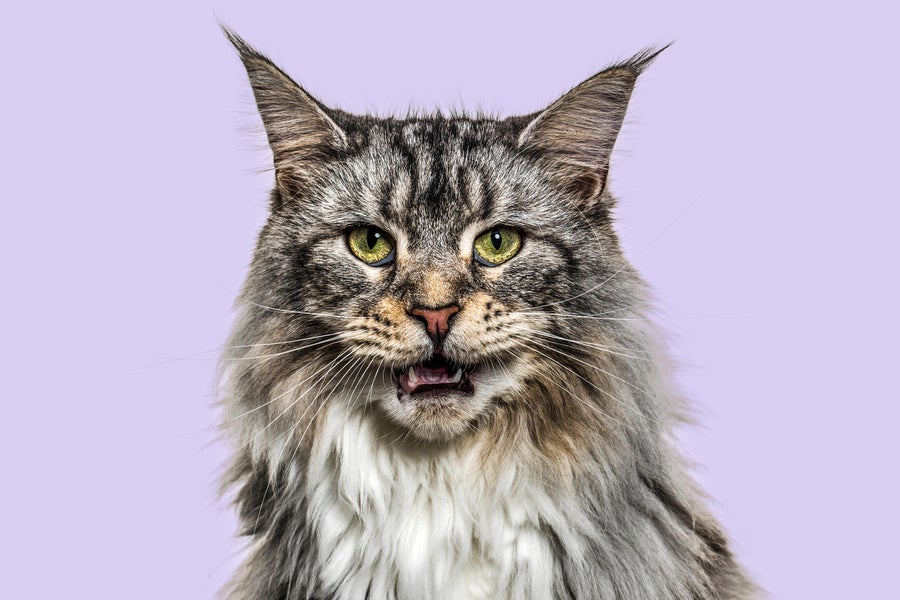 Life on white/Alamy Stock Photo
:max_bytes(150000):strip_icc()/TeachingAnti-Racism-59a4732b6f53ba0011b9eb30.jpg)

 Geoffrey Hinton. Photo By Ramsey Cardy/Sportsfile for Collision via Getty Images

 Dr. Vipul Patel in Florida used a robot to remotely perform surgery on a cancer patient thousands of miles away in Africa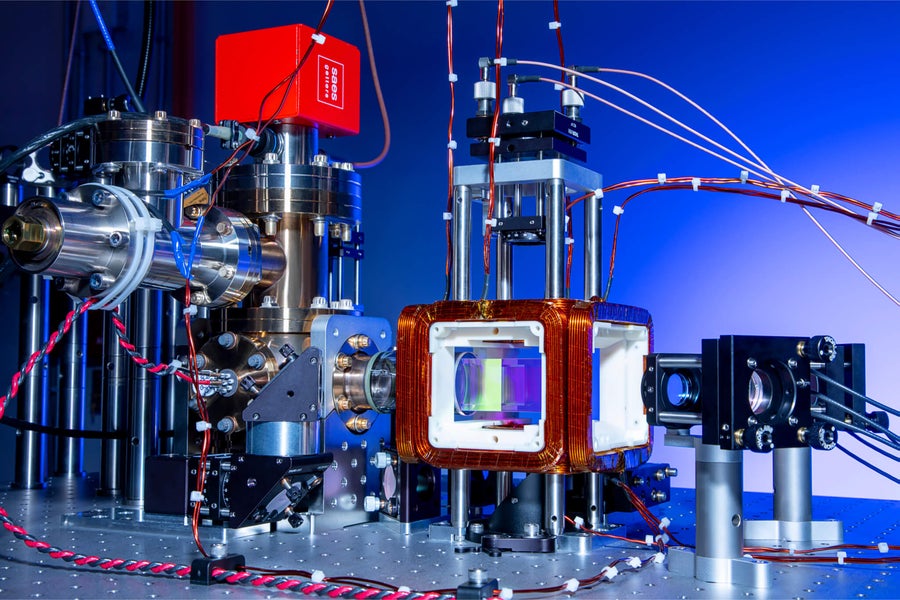


 James' World 2