Home

How China Brought Clean Energy to Antarctica’s Frigid Darkness

Leave a comment

Click the link below the picture

.

Five years ago, electrical engineer Sun Hongbin was given what many would consider an impossible task: build a full-fledged clean-energy system amid some of the coldest temperatures on Earth, screaming winds, and half-year darkness.

China was then building its fifth Antarctic research station, called Qinling, on Inexpressible Island in Terra Nova Bay. And the nation’s government was pushing the concept of “green expeditions” to protect Antarctica’s uniquely fragile environment while studying and surveying the continent. “So having a system that would provide the bulk of Qinling’s energy with renewable power fit that goal,” Sun says.

But conventional solar and wind installations are no match for temperatures that plummet below –40 degrees Celsius, winds of up to 300 kilometers per hour (kmh), and ferocious blizzards. Such conditions can snap wind turbine blades, sharply reduce the performance of solar panels, and prevent batteries from charging and discharging properly. And of course, there are the six months of polar night, when the sun never rises above the horizon.“It was a huge challenge” to build a system for the Earth’s coldest, darkest and most remote continent, says Sun, now president of Taiyuan University of Technology in China and chief scientist for polar clean energy at the Polar Research Institute of China.

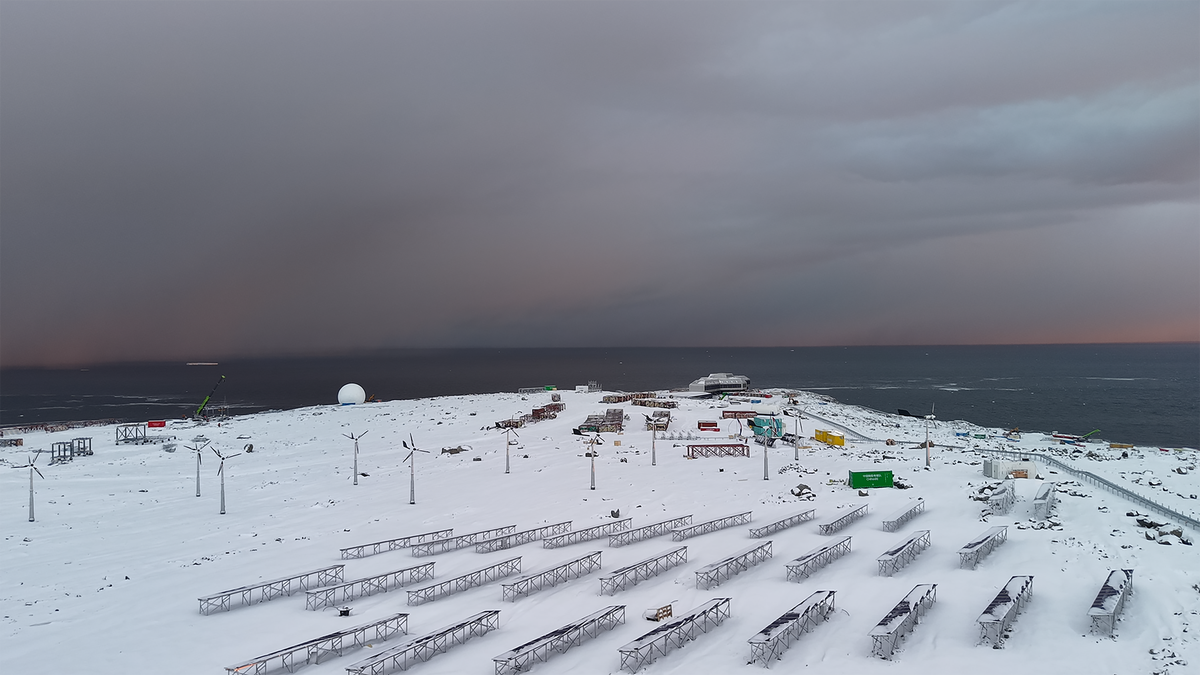
But in late 2024, his team traveled to the station to install a system that took $14 million to develop. It consists of 10 wind turbines, 26 solar modules, a hydrogen energy system, a container full of frost-resistant lithium-ion batteries, and a smart grid that can predict and balance supply and demand. The entire renewable system is now running and, according to Sun, should provide half of the base’s average annual energy needs.

“The use of clean energy is a huge advancement to keep the continent clean,” says Kim Yeadong, chair of the Korean National Committee on Polar Research in South Korea, who was not involved with the project. “Other stations will probably have to learn how they achieve that much clean energy. I think it’s remarkable.”

Where Diesel Power Is King

A 2024 preprint analysis of 81 Antarctic research bases found that 37 had installed renewable-energy sources such as solar panels and wind turbines. But the proportion of renewable energy these bases used was “often low,” the researchers wrote. An exception so far has been Belgium’s Princess Elisabeth Station, which is only staffed during the Antarctic summer. It runs completely on wind and solar power, taking advantage of the almost 24-hour daylight. Even so, the vast majority of stations still depend on diesel-powered generators to keep their crews warm, fed, and safe. The main reason this is the case is simply that “they are used to using diesel,” says Daniel Kammen, a professor of energy at the University of California, Berkeley.

.

https://static.scientificamerican.com/dam/m/4ebb15449160ef16/original/QinlingStation_4web.png?m=1754505169.96&w=1200

The majority of power at China’s Qinling research station in Antarctica now comes from clean energy.  Members of China’s 41st Antarctic expedition team

.

.

Click the link below for the complete article:

https://www.scientificamerican.com/article/how-china-made-an-antarctic-station-run-on-majority-clean-energy/

.

__________________________________________

Trump’s Unforgivable Sin

Leave a comment

Click the link below the picture

.

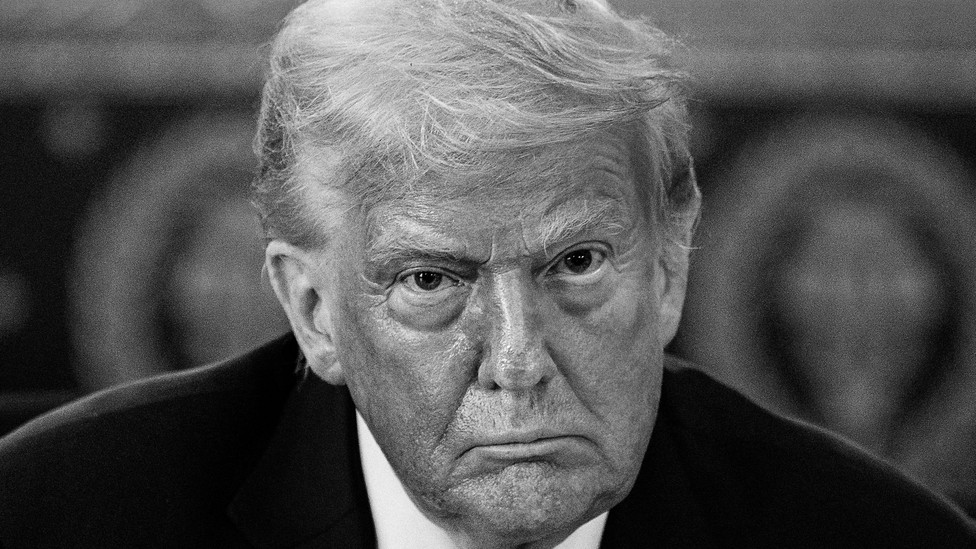
Tens of millions of Americans voted for President Donald Trump in the belief that he would be competent. They might not have been thrilled that Trump is a convicted felon, or pleased with his role in the violent attack on the Capitol on January 6, 2021. Many worried that he posed a threat to democracy. But enough were willing to overlook all that, because they convinced themselves that Trump would be an effective chief executive, that under his stewardship their lives would get better, and the country would prosper.

A survey from the Democratic pollsters Douglas Schoen and Carly Cooperman, conducted shortly after the election, helps illustrate the point. By an 11-point margin, independents said they would be less confident that the Trump administration would share accurate information compared with the Biden administration. Yet, by a 10-point margin, those same voters said that they thought the Trump administration would be more effective at getting things done.

.

https://cdn.theatlantic.com/thumbor/Imb-NLpG-_XptTHpBz2Zs45jIh4=/0x0:3160x1777/976x549/media/img/mt/2025/08/2025_08_05_Hot_to_Beat_Donald_Trump/original.jpg

Al Drago / Bloomberg / Getty

.

.

Click the link below for the complete article:

https://www.theatlantic.com/politics/archive/2025/08/trump-incompetence/683779/

.

__________________________________________

Russia is Running Out of Missiles

Leave a comment

Click the link below the picture

.

Russia is running out of precision-guided missiles. But here’s the thing: while many view this as a good thing, in reality, this could be really bad news for Ukraine. But the reason, is #NotWhatYouThink

.

.

.

Click the link below for the complete video (sound on):

https://www.msn.com/en-ca/video/news/russia-is-running-out-of-missiles/vi-AA1KcYtk?ocid=hpmsn&cvid=ac56e7ff37da4c42af1cc089b1890251&ei=29#details

.

__________________________________________

Why mRNA Vaccines Are So Revolutionary—And What’s at Stake if We Lose Them

Leave a comment

Click the link below the picture

.

The U.S. Department of Health and Human Services announced on Tuesday that it will cancel $500 million worth of projects dedicated to designing messenger RNA (mRNA) vaccines for pandemic preparedness.

The move drew sharp criticism from medical and health experts. “Scrapping the fastest platform we have is a reckless move rooted in a fundamental misunderstanding of vaccinology,” wrote Jake Scott, an infectious diseases specialist and clinical associate professor of medicine at Stanford University, on the social media site Bluesky.

The use of mRNA in vaccines has opened new doors beyond infectious disease. Researchers are investigating promising mRNA vaccines for pancreatic cancer, which currently has a five-year survival rate of just 13 percent. They’re also studying mRNA treatments for multiple other types of cancer, autoimmune disorders, and genetic diseases such as sickle cell anemia.

What makes mRNA so valuable is its programmability—and, for pandemics, the speed at which it can be programmed.

Traditional vaccines introduce an inactivated or dead pathogen into the body so that the immune system can learn to recognize and fight it: the immune system stores that memory in case it should ever run across the real thing. Vaccines that use mRNA, on the other hand, instruct the body’s own cells to make parts of a protein in or on a pathogen. The body will then learn to recognize this protein without having to fight off the full infectious agent.

These vaccines do not interfere with cellular DNA, which is the permanent blueprint, tucked away in the cell nucleus, that tells the cell’s machinery what proteins to make. Those proteins, considered the cells’ workhorses, then carry out various and critical functions throughout the body. Messenger RNA is a middle step in the process: DNA produces this single-stranded RNA, which then tells the cell how to assemble amino acids into proteins. The mRNA instructions from vaccination degrade within a few days, and studies suggest the spike protein generated by such vaccination against COVID lasts about a month in the body.

When making a traditional vaccine, researchers have to manufacture the antigens, or proteins that stimulate the immune system. They might do this by growing a whole virus in bacteria or chicken eggs and then weakening or killing the pathogen with heat or chemicals. In other cases, they use organisms such as yeast that are genetically engineered to churn out pieces of a virus that

are familiar to the immune system. In these cases, the manufacturing process takes time, testing, and tweaking. For mRNA vaccines, developers design the genetic instructions for an antigen on a computer. The manufacturing process remains the same from vaccine to vaccine, with only the genetic instructions changing. This allows researchers to develop multiple vaccines at once, as well as to develop vaccines that contain mRNA to make multiple antigens for different infections.

“We are working on about 30 different mRNA vaccines, including ones for influenza, HIV, hepatitis C, malaria, tuberculosis, and many others,” said Drew Weissman, a physician-scientist at the Perelman School of Medicine at the University of Pennsylvania, who shared the 2023 Nobel Prize in Physiology or Medicine with biochemist Katalin Karikó for their work on mRNA, in an interview with Nature Medicine in 2021.

The loss of HHS funding won’t stop all mRNA work in the U.S., but it will stymy research designed to get mRNA vaccines out quickly in a public health emergency. The canceled grants include one to develop an mRNA-based vaccine against H5N1 avian influenza, the strain of bird flu that is currently one of the most salient pandemic threats for people. Researchers who study vaccines had previously warned that current federal officials might target the technology.

.

https://static.scientificamerican.com/dam/m/62d3f97baab989da/original/lipid_nanoparticles_mrna_delivery.jpg?m=1754504246.493&w=1200

Lipid nanoparticles, like the one shown in this illustration, are used as vehicles to deliver mRNA-based vaccines.  Tumeggy/Science Photo Library/Getty Images

.

.

Click the link below for the complete article:

https://www.scientificamerican.com/article/mrna-vaccine-tech-could-transform-medicine-and-cure-diseases-rfk-jr-just/

.

__________________________________________

Emory University shooting updates: Gunman identified after father-of-three cop killed near CDC campus

Leave a comment

Click the link below the picture

.

Police have identified the suspected gunman who killed a police officer in a shooting near the Emory University campus in Atlanta, Georgia, on Friday.

The suspected gunman, who opened fire and struck the Centers for Disease Control and Prevention building near Emory, has been identified as 30-year-old Patrick Joseph White from Kennesaw, Georgia. The gunman was found dead in the CVS, though officials don’t know “whether that was from officers or if it was self-inflicted,” Atlanta Police Chief Darin Schierbaum said Friday.

DeKalb County Police Department confirmed officer David Rose was fatally shot in the line of duty. He was a 33-year-old father of two, with a third on the way.

“Officer Rose served DeKalb County with courage, integrity, and unwavering dedication,” the DeKalb County police said in a tribute. “Even in the face of danger, was he diligent in his duty to protect our community.”

Police are reportedly working on the theory that the CDC was the shooter’s target, who “blamed his illness on the Covid-19 vaccine,” a law enforcement official told CNN. The gunman’s identity has not yet been released.

No one inside the CDC building was harmed, and no civilians were killed in the shooting, officials confirmed.

Where is the suspected shooter from?

The Georgia Bureau of Investigation says Patrick Joseph White, 30, is from Kennesaw, Georgia.

The town is about 30 miles away from the CDC campus where Friday’s shooting unfolded.

How did the Emory University shooting unfold?

A gunman, who reportedly believed he was sick from the COVID-19 vaccine, is dead after opening fire at Emory University, near the Centers for Disease Control and Prevention headquarters, on Friday.

Here’s how the incident unfolded:

Gunman identified as Patrick Joseph White

The Georgia Bureau of Investigation has identified the gunman as 30-year-old Patrick Joseph White of Kennesaw, Georgia.

White died during the incident. DeKalb County Police Officer David Rose was also killed.

Gunman struck CDC campus building

Police say a gunman opened fire in a CVS across the street from the Centers for Disease Control and Prevention campus in Atlanta, Georgia on Friday afternoon.

The gunman fired several shots at the agency’s building, breaking windows. DeKalb County Police Officer David Rose was killed in the shooting.

Officials have declined to comment on the gunman’s motive. However, the gunman may have targeted the CDC because he believed he was sick from the COVID-19 vaccine, a law enforcement official told CNN.

ICYMI: Gunman opened fire outside CDC HQ

A man opened fire outside the headquarters of the U.S. Centers for Disease Control and Prevention in Atlanta on Friday, leaving bullet marks in windows across the sprawling campus and killing a police officer before he was found dead in a nearby building, authorities said.

The attack, which unfolded near neighboring Emory University, prompted a massive law enforcement response to one of the nation’s most prominent public health institutions, but no one else was reported to be injured.

At least four CDC buildings were hit, Director Susan Monarez said in a post on X. Images shared by employees showed multiple agency buildings with bullet-pocked windows, underscoring the breadth of the damage to a site where thousands of scientists and staff work on critical disease research.

The gunman was found on the second floor of a building across the street from the CDC campus and died at the scene, Atlanta Police Chief Darin Schierbaum said.

He added that “we do not know at this time whether that was from officers or if it was self-inflicted.”

.

https://static.the-independent.com/2025/08/08/22/41/Active-Shooter-Reported-Around-Emory-University-y7dq1xwv.jpeg?width=1200&height=800&crop=1200%3A800&quality=75&width=640&auto=webp

Suspect in Emory University shooting dead after killing one police officer. Students were told to ‘run, hide, fight’ as police swarmed the area Friday afternoon

.

.

Click the link below for the complete article:

https://www.the-independent.com/news/world/americas/crime/atlanta-shooting-emory-college-university-updates-b2804642.html

.

__________________________________________

Erodes from the top: Two charts lay bare the threat posed by the radical right to democracy

Leave a comment

Click the link below the picture

.

In the 2024 UK general election, Reform came third with a 14% share of the vote, capturing five seats in the House of Commons. This was a breakthrough election for the party. In the previous general election in 2019, when it was known as the Brexit party, it won a 2% vote share and captured no parliamentary seats at all.

This success is part of a trend. Radical right-wing populist parties are making gains in elections across many democracies and, in plenty of cases, they’re winning power. Giorgia Meloni’s Brothers of Italy has been in government in Italy since the election of September 2022, when they took 26% of the vote and captured 119 seats in the national parliament.

In the National Assembly elections of June 2024, Marine Le Pen’s National Rally increased its representation from 89 seats to 125 seats. And in the Netherlands, the Freedom Party (PVV), led by right-wing populist Geert Wilders, won the largest vote share in 2023 with 24%, capturing 37 seats in the House of Representatives.

Perhaps most significantly, Donald Trump won the US presidential election in November 2024 with a rightwing populist agenda – a victory that has created turmoil in American politics and the economy, along with the rest of the world.

Expert views

The American political scientist, Larry Bartels, argued in a recent book that democracy erodes from the top. He explains that contemporary democracies die not by military coups or revolutionary overthrows but by populist leaders winning elections and then subverting the institutions of democracy from within. Once in power, they restrict the freedom of the courts, squeeze the fairness out of elections, and attack the press.

The Chapel Hill expert surveys, a database that classifies political parties into ideological groupings, helps illustrate the stakes at play here.

The 2024 survey data covers 31 countries, and it was administered in all the European Union member state,s plus a few others, including Britain, Norway, and Turkey. It shows that there are more radical right-wing parties than any other kind of party in these countries, and they are growing in number and in support.

The 2024 data was compiled by 609 political scientists, who looked at party ideologies, their policy preferences, electoral performances, and the extent to which they participate in government. There are 279 parties in the database altogether, and so they are classified into “party families” to make the analysis manageable.

A party family is a grouping of parties which the experts think are similar to each other, even though there may be some differences between them. For example, the Alternative for Germany (AfD), the National Rally (RN) in France, the Party for Freedom (VVD) in the Netherlands, the Freedom Party in Austria (FPO), and Reform in Britain are all classified as right-wing populist parties in the dataset. The chart shows the extent to which these 11 party families have been successful in winning votes in the most recent elections.

The Performance of Party Families in 31 Countries in 2024:

The radical right family consisted of 48 parties, and on average, they won 11% of the votes and 17% of seats in the various national legislatures. They are growing in support and influence, coming fourth after the conservative, socialist, and Christian democrat party families in voting support and representation in parliaments.

The threat to democracy

We can get some idea of how likely such parties are to undermine democracy by looking at responses to a question in the Chapel Hill survey. This asked the experts to judge the extent to which parties think power should or should not be concentrated in the executive. It is measured on a ten-point scale where zero means that the party is strongly in favour of constraining the power of the executive, whereas ten means that a party opposes any restrictions on executive powers.

The chart shows the average scores for each of the party families on this executive power scale. It is readily apparent that the radical right parties are significant outliers on the scale, being very much more likely to support executive dominance than the other party families.

Scores on the Executive Power Scale

The survey showed that parties of the right, such as the Conservatives, Agrarian and Religious parties, are rather more likely to support executive dominance than parties of the centre or left. But the radical right parties stand out as really strongly supporting this. This is in sharp contrast to radical left parties, which are quite suspicious of such executive dominance.

This is important since it shows that once in power, these parties are tempted to subvert the separation of powers between the executive, the legislature, and the judiciary. This is likely to be accompanied by attacks on an independent media, the use of the courts against opponents, and attempts to gerrymander elections.

All this comes from the belief that a strong leader is the best form of government, a sentiment shared by many Trump supporters in the United States. Anne Applebaum’s recent book Twilight of Democracy illustrates this dynamic in the case of eastern European countries such as Poland and Hungary.

The implication is that if these parties grow stronger and dominate governments, they are quite likely to try to subvert democracy. Reform supporters in Britain could get more than they bargained for.

.

https://img-s-msn-com.akamaized.net/tenant/amp/entityid/AA1Ka2cF.img?w=768&h=512&m=6&x=107&y=48&s=612&d=612

(REUTERS) © provided by AlterNet

.

.

Click the link below for the complete article:

https://www.msn.com/en-ca/news/other/erodes-from-the-top-two-charts-lay-bare-the-threat-posed-by-the-radical-right-to-democracy/ar-AA1K9SH8?ocid=hpmsn&cvid=05e056cc9afe4c2c88ba98c5ad26d87a&ei=74

.

__________________________________________

MRI Accidents Explained: What Causes Deaths and Injuries in Scanners

Leave a comment

Click the link below the picture

.

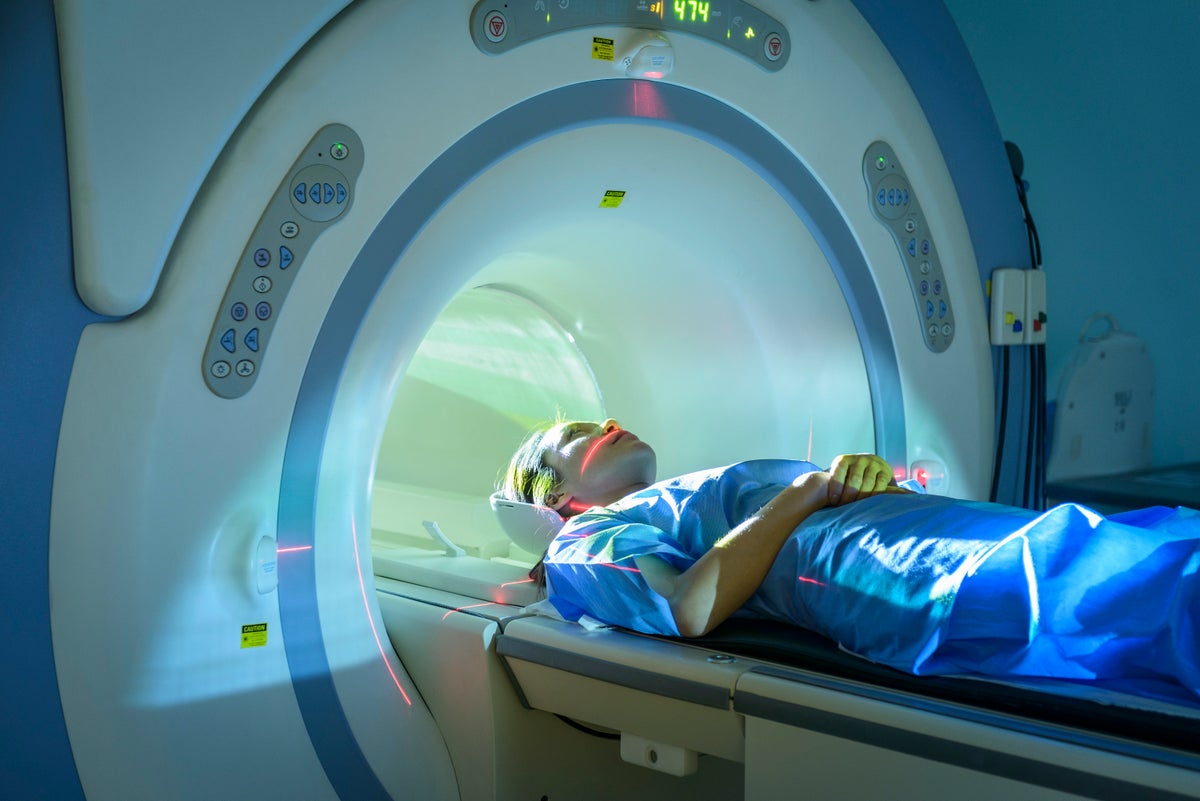
Last month, a man on Long Island died after he was pulled into a magnetic resonance imaging scanner by a large metal chain he was wearing around his neck. It’s not the first time an MRI scanner has proved to be a death trap.

In this latest case, according to media reports, the man had accompanied his wife to the MRI center and was waiting outside the exam room while her knee was being scanned. When the procedure was completed, she called him over so that he could help her stand up. The man entered the MRI room, and a 20-pound chain he was wearing around his neck for weight training was immediately attracted to the magnet in the MRI. It pulled the man’s body with it, hurled him against the scanner, and trapped him there. He sustained serious injuries and was pronounced dead at a hospital the following day.

How could this happen? An MRI scanner uses magnetic fields generated by metal coils in its core, and other fields are then added in pulses. In simple terms, a static magnetic field orients the nuclei of hydrogen atoms in the body so they’re all facing the same direction; the magnetic pulses briefly redirect the nuclei, and then they align themselves in parallel again. The scanner detects these shifts and uses them to create images of the tissue.

In terms of safety, the problem is that, as current flows through the device, it becomes a huge and extremely powerful electromagnet. Ferromagnetic materials—which, at room temperature, include iron, cobalt, nickel, and some metal alloys—are attracted to it with a great deal of force. That means metallic objects that come close to a switched-on MRI can become dangerous projectiles.

So there’s a good reason why metal parts are taboo in and around MRI machines. In preparation for a scan, patients are asked to remove any metal objects they are carrying. When people don’t follow this instruction, serious accidents can occur. In 2023, a Brazilian man took a loaded firearm into the MRI room where he was accompanying his mother. The magnet pulled the gun out of his waistband, and a shot went off when it hit the scanner. The bullet hit the man in the abdomen, causing a fatal injury. Similar weapon discharges have also occurred in the U.S., fortunately with less serious outcomes, including a 2012 incident in New York State that involved an off-duty police officer.

Before a patient is brought in for a scan, they’re asked whether they have any medical or cosmetic implants containing metal in their body. These can include pacemakers, stents, piercings, and screws in bones. Metal residue from gunshot wounds must also be reported. The staff then check whether the objects could cause problems. In the end, most metal objects inside the body pose no danger to patients. But if they’re overlooked, things can get ugly.

Projectile fragments and metal shavings that have penetrated the tissue as a result of gunshot wounds or accidents may travel a few millimeters during the scan. Doctors consider very carefully whether an MRI is too risky in the presence of such foreign bodies and then switch to other imaging procedures if necessary. Small metal particles also sometimes move back and forth around their own axis and in confined spaces. This can cause them to heat up dangerously.

There can even be problems with tattoos that contain certain metallic inks. In one case, a tattooed professional football player sustained burns during a pelvic MRI scan. “At-risk” tattoos are those with black pigment or any other pigments containing iron oxide, as well as those with a design that displays loops, large circular objects or multiple adjacent points.

In one extreme example of internal metal objects causing damage during an MRI scan, a woman wore a sex toy into the MRI without the knowledge of the clinic staff. Most of these toys are made of silicone, a plastic that should be unproblematic in the magnet, but to the surprise of those present, especially the woman being examined, this one did contain ferromagnetic material. As a result, she suffered unspecified internal injuries and had to be admitted to a hospital.

In general, MRIs are very safe when used properly. Technicians perform tens of thousands of scans every year without causing any damage to those being examined. Serious accidents involving overlooked or unreported ferromagnetic materials are very rare. But it’s important that MRI patients follow one cardinal rule: leave the metal outside the scanning room.

.

https://static.scientificamerican.com/dam/m/5262b83e121fdbc0/original/GettyImages-548557055.jpg?m=1754431598.538&w=1200Monty Rakusen/Digital Vision

.

.

Click the link below for the complete article:

https://www.scientificamerican.com/article/mri-accidents-explained-what-causes-deaths-and-injuries-in-scanners/

.

__________________________________________

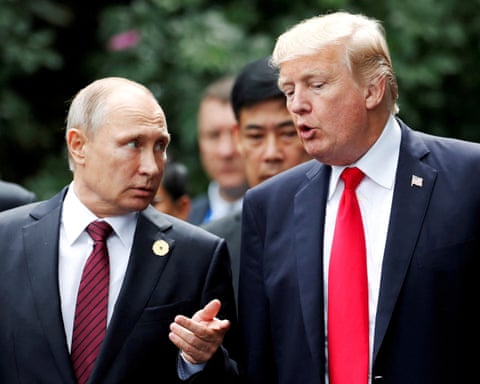
Trump says he will meet Putin in Alaska next Friday to discuss Ukraine war

Leave a comment

Click the link below the picture

.

Donald Trump has said he will meet with Vladimir Putin to discuss the war in Ukraine next week and said an end to the three-and-a-half-year war would have to involve “some swapping of territories”.

Trump said he planned to meet the Russian president next Friday in Alaska. He announced the location in a brief post on his Truth Social site.

Russian state media agency Tass confirmed the date and location of the meeting, citing Kremlin aide Yury Ushakov.

Earlier in the day, Trump told reporters in the White House the meeting “would have been sooner, but I guess there’s security arrangements that unfortunately people have to make”.

The US president also said “there’ll be some swapping of territories to the betterment of both” Ukraine and Russia, and that the issue would be discussed soon, but he gave no further details.

Bloomberg reported on Friday that the deal could cement some of Putin’s territorial gains in Ukraine, in effect freezing the battle lines in the Kherson and Zaporizhzhia regions. Putin has claimed four Ukrainian regions in their entirety, although much of their territory remains under Ukrainian control.

US and Russian officials were working on a deal under which Russia would halt its offensive in exchange for the territorial concessions, making it a politically fraught proposal in Ukraine, Bloomberg said.

Trump’s comments came after Poland’s prime minister said a “freeze” in the conflict could be close, after speaking with the Ukrainian leader, Volodymyr Zelenskyy, who has communicated with Trump and European leaders in recent days.

“There are certain signals, and we also have an intuition, that perhaps a freeze in the conflict – I don’t want to say the end, but a freeze in the conflict – is closer than it is further away,” Donald Tusk said during a news conference. “There are hopes for this.”

Tusk said Zelenskyy was “very cautious but optimistic” about the ceasefire, Reuters reported. Ukraine was keen that Poland and other European countries play a role in planning for a ceasefire and an eventual peace settlement, Tusk said.

Trump has previously expressed his readiness to meet Putin one-on-one without preconditions, including direct negotiations between Putin and Zelenskyy, stoking fears that Ukraine may be left out of negotiations for the framework of a potential ceasefire.

If the summit happens, it would be the first US-Russia summit since 2021, when former president Joe Biden met Putin in Geneva.

Zelenskyy has responded by speaking with European leaders, including the German chancellor, Friedrich Merz, and the French president, Emmanuel Macron, who are key conduits to Trump.

The US envoy Steve Witkoff had proposed a three-way meeting with Trump, Putin, and Zelenskyy, but the Kremlin had ignored that suggestion, said the Putin aide Yuri Ushakov, and was “focusing on preparations for a bilateral meeting with Trump in the first place”.

Putin has said he is not ready to meet Zelenskyy, even as the Kremlin claimed preparations were under way for a bilateral summit with Trump next week.

“I have nothing against it in general; it is possible, but certain conditions must be created for this,” Putin said of a meeting with Zelenskyy. “But unfortunately, we are still far from creating such conditions.”

Last month, Trump issued an ultimatum for Putin to agree to a ceasefire or face secondary sanctions, with the deadline set for this Friday. That deadline appeared in place despite plans for the summit, although the White House has not said what secondary measures it could enforce.

Trump did target India with a 25% tariff hike for purchasing Russian oil this week, singling out one of Moscow’s economic enablers in a move that New Delhi complained was unfair and selective.

Trump had grown frustrated with Putin in public in recent months as the war dragged through its third year and Putin continued to launch nightly missile and drone strikes on Ukrainian cities despite Trump’s insistence that he could strike a deal within 24 hours of becoming president.

“Putin … talks nice and then he bombs everybody in the evening,” Trump said last month. “So there’s a little bit of a problem there.”

At this dangerous moment for dissent

I hope you appreciated this article. Before you close this tab, I wanted to ask if you could support the Guardian at this crucial time for journalism in the US.

When the military is deployed to quell overwhelmingly peaceful protest, when elected officials of the opposing party are arrested or handcuffed, when student activists are jailed and deported, and when a wide range of civic institutions – non-profits, law firms, universities, news outlets, the arts, the civil service, scientists – are targeted and penalized by the federal government, it’s hard to avoid the conclusion that our core freedoms are disappearing before our eyes – and democracy itself is slipping away.

In any country on the cusp of authoritarianism, the role of the press as an engine of scrutiny, truth and accountability becomes increasingly critical. At the Guardian, we see it as our job not only to report on the suppression of dissenting voices, but to make sure those voices are heard.

Not every news organization sees its mission this way – indeed, some have been pressured by their corporate and billionaire owners to avoid antagonizing this government. I am thankful the Guardian is different.

Our only financial obligation is to fund independent journalism in perpetuity: we have no ultrarich owner, no shareholders, no corporate bosses with the power to overrule or influence our editorial decisions. Reader support is what guarantees our survival and safeguards our independence – and every cent we receive is reinvested in our work.

The Guardian’s global perspective helps contextualize and illuminate what we are experiencing in this country. That doesn’t mean we have a single viewpoint, but we do have a shared set of values. Humanity, curiosity, and honesty guide us, and our work is rooted in solidarity with ordinary people and hope for our shared future.

.

Vladimir Putin and Donald TrumpVladimir Putin and Donald Trump in 2017. According to reports, a US-Russia deal could allow Putin to keep some of the Ukrainian territory his troops have captured. Photograph: Jorge Silva/Reuters

.

.

Click the link below for the complete article:

https://www.theguardian.com/us-news/2025/aug/08/trump-says-he-will-meet-putin-very-shortly-to-discuss-end-to-ukraine-war

.

__________________________________________

Trump’s tariffs are now in place. Alcohol, a cup of joe and Toyotas are about to cost a whole lot more

Leave a comment

Click the link below the picture

.

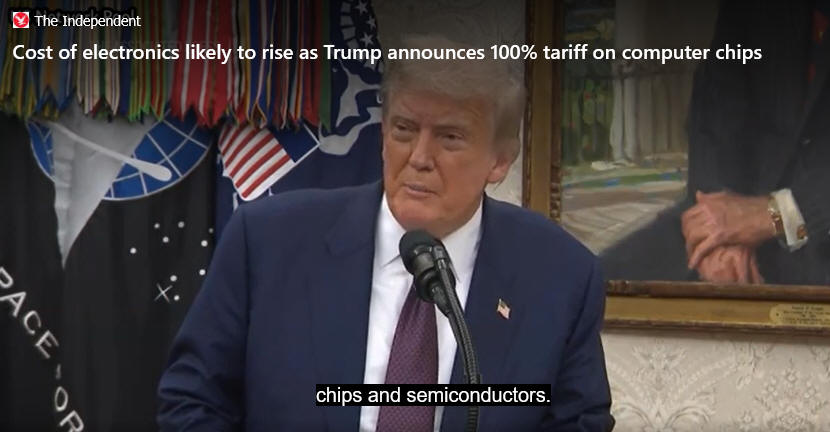
President Donald Trump’s global tariffs, ranging from 10 to 50 percent, took effect on Thursday, igniting fear among consumers, companies and investors about potential price hikes.

Everyday items ranging from coffee to Toyotas, home furnishings to Gap jeans, are expected to become more expensive as companies adjust their prices to counteract the impact of tariffs. While the president has asked companies to absorb any increases in costs, many cannot forever.

Even luxury items such as Range Rovers, French wines, or Rolex watches are likely to face prices hikes as they navigate 10 percent, 15 percent, and 39 percent tariffs, respectively, from the president.

While Trump wants tariffs to promote domestic production and purchasing, Americans will most likely bear the cost. Economic experts agree that sweeping tariffs on goods from countries could lead to supply chain issues, price spikes, or even inflation.

Here are some of the goods expected to cost more.

Alcohol

Consumers of French, Italian, or Spanish wines, Scotch whiskey, and aperitifs such as Aperol, can expect to see the price of their favorite alcoholic beverage rise due to the 15 percent tariff on the European Union.

The E.U. is a major exporter of wines and spirits to the U.S. In 2024 alone, the E.U. accounted for $3.4 billion worth of imported spirits.

Despite pleas from the beverage industry, the president’s trade deal did not create exemptions for alcohol, which will likely drive up the price of imported wine or liquor – either in stores or restaurants.

“Without productive negotiations reducing reciprocal tariffs on wine and spirits, American wine retailers anticipate a significant decline in sales on top of the already difficult market, as well as significant job losses and subsequent business closures,” Tom Wark, the executive director of the Association of Wine Retailers, said.

A letter to the president from the Toast Not Tariffs Coalition, a group of 57 associations representing the U.S. alcohol industry and related industries, said tariffs on the E.U. could result in 25,000 American job losses, and nearly $2 billion in lost sales.

Diageo, the maker of Guinness, Bailey’s, Johnnie Walker, and more, said the company expects to see a $200 million slump as a result of the tariffs.

Cars and car parts

Already, consumers have seen cars and car parts become more expensive over the last few months as a result of Trump’s tariffs because the U.S. relies heavily on its trading partners for auto parts.

Cox Automotive, an industry service and technology provider, expects the sticker price of vehicles to rise anywhere from four-to-eight percent by the end of the year. That means the average car price would be above $50,000

While the president struck several deals with countries, many of them still make imported vehicles more expensive.

Imported cars from the U.K., such as Range Rovers, are subject to a 10 percent tariff.

Japan, which sells more cars to the U.S. than any other country, is facing a 15 percent tariff rate, which is expected to cause major disruption.

Toyota said on August 7 it expects a $9.5 billion profit loss for the year.

“It’s honestly very difficult for us to predict what will happen regarding the market environment,” Takanori Azuma, Toyota’s head of finance, said.

But given that many car parts are imported from Japan, the tariffs are likely to hurt U.S. carmakers as well.

General Motors projects a $4 billion loss, Stellantis, the maker of Jeeps, said it anticipates tariffs will add $1.7 billion in expenses, and Ford, which builds more cars in the U.S. than any of its rivals, said it expects tariffs to cause a $2 billion loss this year.

Clothing

Clothing is expected to see one of the most significant price increases since the U.S. is the largest single importer of apparel, and much of it comes from countries in Asia.

“The 2025 tariffs disproportionately affect clothing and textiles, with consumers facing 40% higher shoe prices and 38% higher apparel prices in the short-run,” the Budget Lab at Yale, a nonpartisan policy research center, said in a recent analysis. Shoes and apparel could remain 19 percent and 17 percent higher, respectively, in the long run, the report added.

Vietnam, one of the largest exporters of appear to the U.S., has agreed to a 20 percent tariff. Brands such as Nike, Adidas, Zara, and Gap manufacture much of their clothing in Vietnam. While many can absorb some of those costs, even raising prices 10 percent would make a $65 pair of shoes $71.50, without tax.

Bjorn Gulden, the CEO of Adidas, said the tariffs “will directly increase the cost of our products for the U.S.”

Other countries that are high producers of clothing face significant tariffs as well. Bangladesh has a 20 percent tariff, while Indonesia and Cambodia both face a 19 percent tariff.

India, also a large producer of apparel, faces a steep tariff of 25 percent, and Trump has threatened to increase that to 50 percent by the end of August if the country does not stop importing Russian oil.

While the U.S. also imports a large portion of clothing from China, which is still negotiating a trade deal, Trump’s decision to get rid of the de minimis exemption will make it more costly for consumers to purchase cheap clothing from stores like Shein or Temu.

Coffee

The U.S. relies heavily on Brazil to import coffee for the 165 million people who need their daily caffeine fix, but Trump’s 50 percent tariff threatens the long-term availability and price of the drink.

“When people go to their local coffee shop, whether it’s Starbucks or something else, by and large they will likely be buying some form of Brazilian coffee,” Monica de Bolle, senior fellow at the Peterson Institute for International Economics, told NPR.

“A 50 percent tariff will kill that market.”

Household products: appliances, cookware, furniture

Everyday household items made with steel or aluminum, such as cookware, appliances, furniture, and more, are likely going to be impacted by Trump’s steep 50 percent industry tariffs.

The U.S. relies heavily on its trading partners, particularly Canada and Mexico, for steel and aluminium imports.

Nearly half of the aluminum used in the U.S. is imported, while less than a quarter of steel is imported. But that doesn’t mean consumers won’t see price increases.

One small business, Heritage Steel, a family-owned cookware manufacturer in Tennessee, told NBC News that they recently received a tariff bill of $75,000 on an order of handles – and they’re anticipating higher bills in the future.

Since the U.S. does not have many specialized steel manufacturers, Heritage Steel imports approximately 75 percent of its raw material. Unlike other cookware manufacturers, they only import raw material and create their products in the U.S.

Danny Henn, the vice president of operations for Hertiage Steel, told NBC News that the company wants to keep its products moderately priced, but at the same time, cannot absorb the new price of steel. They’ve raised their prices approximately 15 percent to make up for it.

“We’re happy and proud to be a provider of really high-quality cookware, but one that’s more affordably priced than some of the others on the market,” Henn said. “We want to continue to offer the best price we can, given our constraints.”

Watches

Although imported watches are not an everyday essential, luxury wristwatches made in Switzerland are likely to see significant price increases thanks to the 39 percent tariff imposed on the country on Thursday.

That means Americans looking to purchase a watch from recognizable brands such as Rolex, Breitling, Patek Philippe, Omega, or TAG Heuer may have to pay significantly more.

An analysis of the impact, conducted by Bob’s Watches, a secondhand watch retailer, found that a $9,900 stainless steel Breitling could rise to $11,080.

.

.

.

Click the link below for the complete article:

https://www.msn.com/en-ca/money/topstories/trump-s-tariffs-are-now-in-place-alcohol-a-cup-of-joe-and-toyotas-are-about-to-cost-a-whole-lot-more/ar-AA1K6LhS?ocid=hpmsn&cvid=fad3d003200748bca6d6e52ff0f83ab6&ei=19

.

__________________________________________

Our Nearest Sunlike Star Might Have a Planet, JWST Shows in Stunning Finding

Leave a comment

Click the link below the picture

.

Astronomers have found nearly 6,000 exoplanets orbiting other stars. But for every confirmed detection, there are countless mere hints, inconclusive observations that could just as well be blips of cosmic noise or glitches in a telescope. Most are too tenuous to take seriously, but every so often, one of these candidate planets is so tantalizing and potentially transformative that it can’t be ignore.

That’s certainly the case for one recently spotted by the James Webb Space Telescope (JWST) around a sunlike star called Alpha Centauri A, part of the nearest star system to Earth. If the finding were confirmed to represent a planet—and not instead a clump of dust or some instrumental aberration—it would be a gas giant, akin to a warmer version of our own Saturn. It would orbit within Alpha Centauri A’s habitable zone, the starlight-bathed region where liquid water can persist on a planet’s surface. But the world itself would likely be lifeless, smothered beneath thick layers of gas. Any accompanying moons, however, could have better chances for harboring oceans—and perhaps even life.

Announced on August 7 and described in two preprint papers that have been accepted for publication in the Astrophysical Journal Letters, the candidate and its possibilities call to mind worlds from science fiction, such as the jungle moon of Pandora in James Cameron’s Avatar films—which, incidentally, orbits a gas giant called Polyphemos around, yes, Alpha Centauri A. But there’s still a chance that the real-world JWST discovery will prove to be a mirage.

“If it’s real, it’s amazing,” says Elisabeth Matthews, an exoplanet-focused astrophysicist at the Max Planck Institute for Astronomy in Heidelberg, Germany. “It’s a really exciting candidate—quite an intriguing candidate,” she says. “The authors work hard to make a case for why this, frankly, small and faint blob of light is believable, but I think there are still some open questions that need to be answered to really be 100 percent sure.”

The finding has been nearly a decade in the making, says Charles Beichman, an astronomer at NASA’s Jet Propulsion Laboratory and the California Institute of Technology and a co-author of the two new papers. In 2017, nearly half a decade before JWST would launch, he sent an e-mail to scientists positing that the telescope’s giant 6.5-meter mirror, paired with its Mid-Infrared Instrument (MIRI), might be able to see planets orbiting Alpha Centauri A. “When you stop laughing, let’s think about doing this project,” Beichman told them.

It was a bold suggestion, particularly when JWST was still on the ground, he admits. The telescope “was never really meant to look at a star that’s this bright, moving this fast and located, as Alpha Centauri is, right in the middle of the galactic plane, where there’s thousands of stars,” Beichman says.

Despite those obstacles, the appeal was irresistible. Alpha Centauri A is about the same size and age as our sun. And the star and its two companions, the slightly smaller Alpha Centauri B and the tiny red dwarf star Proxima Centauri, comprise the nearest stellar system to our own—just about four and a half light-years away. Because the Alpha Centauri system is spitting distance from us, astronomically speaking, it’s a bright, perennially popular target for scientists who may not be able to conduct similar observations on dimmer, more distant stars.

This is especially true for direct imaging, the technical term for when astronomers actually manage to take an exoplanet’s picture. Most exoplanetary discoveries instead arise through far more indirect means, such as the dip in a star’s light caused by a world passing between its sun and our telescope or the tiny wobbling of a star caused by an orbiting planet’s gravitational tug. Only in rare cases can astronomers truly see an alien world; typically, a planet needs to be very big and bright—as well as rather far from its sun—to offer any hope for astronomers to glimpse it against the overwhelming glare of its star.

But because Alpha Centauri A is cosmically close, Beichman and his colleagues thought that they could use JWST’s stunning power to accomplish the feat even for a planet that orbits relatively close to the star, within just a few times the distance between Earth and our sun. “Alpha Centauri just lets us cheat because it’s closer than everybody else,” Beichman says.

Although proximity makes for easier studies, this is counterbalanced against the system’s vexing complexity. Alpha Centauri A is the brightest star of the three in the system, but its stellar companion Alpha Centauri B is still quite bright—and quite close, crowding into telescopes’ field of view. Although JWST is equipped with a coronagraph—a masking tool to block out the glare from one star—it can’t do much to curtail this second, planet-obscuring source of light.

For Aniket Sanghi, a Ph.D. student in astrophysics at Caltech and a co-author of the two new papers, that difficulty only made the task more alluring. “I was looking for the next challenging object to work on, and Alpha Centauri A turned out to be one of the most challenging objects,” Sanghi says.

Faced with the brightness of not one but two stars overpowering JWST’s exoplanet-hunting optics, the researchers turned to a surprising strategy: enlisting yet another star. They found a particularly nondescript star that they could use as a stand-in. By observing this other star centered on and blocked by the coronagraph and then off-center and unmasked, the researchers were able to model how its light flowed through JWST’s optics. This created a template by which Alpha Centauri B’s light could then be subtracted out from the precious images of Alpha Centauri A.

And when the researchers tackled the feat in August 2024, they found exactly what they hoped for: a faint blob of light nestled near the blocked-out Alpha Centauri A. “As a direct imager, you’re always confounded by artifacts,” Sanghi says. “You’re very skeptical of anything you see. But this one just popped out so clearly.”

Sanghi and his colleagues tried to undermine their own data, striving to explain how the blob could be stray light within JWST’s optics or a background object in the sky, but nothing quite stuck.

.

https://static.scientificamerican.com/dam/m/66e9387712ef7357/original/alpha_centauri_a_with_gas_giant_planet.jpg?m=1754572976.519&w=1200

This artist’s concept shows what a gas giant orbiting Alpha Centauri A could look like.  NASA, ESA, CSA, STScI, R. Hurt (Caltech/IPAC)

.

.

Click the link below for the complete article:

https://www.scientificamerican.com/article/jwst-spots-possible-alien-planet-at-alpha-centauri/

.

__________________________________________

Older Entries Newer Entries

Heart of Loia `'.,°~

so looking to the sky ¡ will sing and from my heart to YOU ¡ bring...

Michael Ciullo

CEO and Founder of Nsight Health

MRS. T’S CORNER

https://www.tangietwoods

Nelson MCBS

Catholic News, Prayers, HD Images, Rosary, Music, Videos, Holy Mass, Homily, Saints, Lyrics, Novenas, Retreats, Talks, Devotionals and Many More

Global geopolitics

Decoding Power. Defying Narratives.

Talk Photo

A creative collaboration introducing the art of nature and nature's art.

Movie Burner Entertainment

The Home Of Entertainment News, Reviews and Reactions

Le Notti di Agarthi

Hollow Earth Society

C r i s t i a n a' s Fine Arts ⛄️

•Whenever you are confronted with an opponent, conquer him with love.(Gandhi)

TradingClubsMan

Algotrader at TRADING-CLUBS.COM

Comedy FESTIVAL

Film and Writing Festival for Comedy. Showcasing best of comedy short films at the FEEDBACK Film Festival. Plus, showcasing best of comedy novels, short stories, poems, screenplays (TV, short, feature) at the festival performed by professional actors.

Bonnywood Manor

Peace. Tranquility. Insanity.

Warum ich Rad fahre

Take a ride on the wild side

Madame-Radio

Découvre des musiques prometteuses (principalement) dans la sphère musicale française.

Ir de Compras Online

No tiene que Ser una Pesadilla.

Kana's Chronicles

Life in Kana-text (er... CONtext)

Cross-Border Currents

Tracking money, power, and meaning across borders.

Jam Writes

Where feelings meet metaphors and make questionable choices.

emotionalpeace

Finding hope and peace through writing, art, photography, and faith in Jesus.

WearingTwoGowns.COM

The Community for Wounded Healers: Former Medical Students, Disabled Nurses, and Faith-Fueled Pivots

...

love each other like you're the lyric to their music

Luca nel laboratorio di Dexter

Comprendere il mondo per cambiarlo.

Tales from a Mid-Lifer

Mid-Life Ponderings

Creative

Travel,Tourism, Life style "Now in hundreds of languages for you."

freedomdailywriting

I speak the honest truth. I share my honest opinions. I share my thoughts. A platform to grow and get surprised.

The Green Stars Project

User-generated ratings for ethical consumerism

Cherryl's Blog

Travel and Lifestyle Blog

Sogni e poesie di una donna qualunque

Questo è un piccolo angolo di poesie, canzoni, immagini, video che raccontano le nostre emozioni

My Awesome Blog

“Log your journey to success.” “Where goals turn into progress.”

pierobarbato.com

scrivo per dare forma ai silenzi e anima alle storie che il mondo dimentica.

Thinkbigwithbukonla

“Dream deeper. Believe bolder. Live transformed.”

Vichar Darshanam

Vichar, Motivation, Kadwi Baat ( विचार दर्शनम्)

Komfort bad heizung

Traum zur Realität

Chic Bites and Flights

Savor. Style. See the world.

ومضات في تطوير الذات

معا نحو النجاح

Broker True Ratings

Best Forex Broker Ratings & Reviews

Blog by ThE NoThInG DrOnEs

art, writing and music by James McFarlane and other musicians

fauxcroft

living life in conscious reality

Srikanth’s poetry

Freelance poetry writing

JupiterPlanet

Peace 🕊️ | Spiritual 🌠 | 📚 Non-fiction | Motivation🔥 | Self-Love💕

Sehnsuchtsbummler

Reiseberichte & Naturfotografie