As the Wall Street Journal reports that Donald Trump wants to quickly nominate a replacement for Lisa Cook, the Federal Reserve governor who is resisting his attempt to force her out, the president told reporters he has a favorite candidate.
Asked about possible replacements for Cook during his marathon televised cabinet meeting on Tuesday, Trump said: “We have some very good people for that position.”
“I think, maybe in my own mind, I have somebody that I like,” Trump added, before saying that he would also consult Scott Bessant, the treasury secretary, and Howard Lutnick, the commerce secretary.
Trump appears to be considering the possibility of naming his economic adviser Stephen Miran to serve out the remainder of Cook’s term, which does not expire until 2038. Earlier this month, Trump nominated Miran to serve for a much shorter term, as a replacement for another member of the Fed’s board, Adriana Kugler, a Biden nominee who was due to be replaced in five months.
Cook has said that she will sue to keep her position as a governor of the independent central bank and her lawyer, Abbe Lowell, called Trump’s move to fire her “illegal”.
In May, when the supreme court’s conservative majority ruled that the president could fire members of other independent agencies without cause, they rejected the argument that allowing him to do so would also permit him to replace members of the Federal Reserve. The court’s order on the other agencies, the justices wrote, had no bearing on “the constitutionality of for-cause removal protections” for members of the central bank.
“The Federal Reserve is a uniquely structured, quasi-private entity that follows in the distinct historical tradition of the First and Second Banks of the United States,” the conservative justices wrote.
.
Donald Trump during the cabinet meeting on Tuesday. Photograph: Aaron Schwartz/Pool/Aaron Schwartz – Pool/CNP/Shutterstock
As President Trump posed triumphantly for photos with police officers, government agents, and members of the National Guard in Southeast Washington last week, lawyers across town in federal court grappled with his new brand of justice.
The stream of defendants who shuffled through a federal courtroom on Thursday afternoon illustrated the new ways in which laws are being enforced in the nation’s capital after the president’s takeover of the city’s police. They were appearing before a magistrate judge on charges that would typically be handled at the local court level, if they were filed at all.
One man had been arrested over an open container of alcohol. Another had been charged with threatening the president after delivering a drunken outburst following his arrest on vandalism. And one defendant’s gun case so alarmed prosecutors that they intend to drop the case.
Mr. Trump has cast his crackdown on crime as a success, and suggested on Friday that it was a blueprint he would seek to apply to other cities, including Chicago. To defense lawyers and even some prosecutors, though, many of the cases that have landed in court have raised concerns that the takeover seems intended to artificially inflate its effect because government lawyers have been instructed to file the most serious federal charges, no matter how minor the incident.
One of the recipients of Mr. Trump’s show of force was Mark Bigelow, 28, a part-time delivery driver for Amazon.
After midnight on Aug. 19, Mr. Bigelow was sitting in the middle row of a van parked on a street in Northeast Washington with its doors open, according to court papers. Two other men were in the front when a full complement of law enforcement officials — from the Metropolitan Police Department, the F.B.I., the Drug Enforcement Administration, Immigration and Customs Enforcement, and the State Department’s Diplomatic Security Service — stopped and saw what appeared to be an open container of alcohol in the front seat.
As law enforcement questioned and searched the two other passengers, Mr. Bigelow left the van and started to walk away, until other agents stopped him, according to the charging document. Peering into the van, an officer spotted “a second cup containing an alcoholic beverage in the middle row seat,” at which point Mr. Bigelow was arrested on charges of possession of an open container, a misdemeanor.
As he was placed in a vehicle, the handcuffed Mr. Bigelow became belligerent, twisting his body and yelling, “Get off me! Y’all too little, bro!” at an ICE agent, according to a court filing, which described how Mr. Bigelow made “physical contact” by kicking an agent in the hand and another in the leg.
As a result, Mr. Bigelow was charged with assaulting, resisting or impeding a federal officer, an offense that carries a maximum sentence of eight years in prison.
The charges follow a directive by the U.S. attorney, Jeanine Pirro, to prosecutors to charge the most serious crimes possible in each case and to do so in federal court, where sentences tend to run much longer.
A federal public defender representing Mr. Bigelow, Elizabeth Mullin, told the U.S. magistrate judge, Moxila A. Upadhyaya, that he would never have been arrested, let alone charged with a federal felony, but for the president’s crackdown. “He was caught up in this federal occupation of D.C.,” she said. “This was a case created by federal law enforcement.”
Next up was Torez Riley, 37, who was arrested at a Trader Joe’s grocery store for what the police said was possession of two handguns in his bag.
Mr. Riley’s case has been a point of contention inside the U.S. attorney’s office, where a number of prosecutors concluded that officers unlawfully searched Mr. Riley when they stopped him, violating the Fourth Amendment, according to people familiar with the case who spoke on the condition of anonymity to discuss internal deliberations.
Before Mr. Trump’s crackdown, prosecutors in Ms. Pirro’s office would have been likely to dismiss a case like Mr. Riley’s after an initial review of the facts of the arrest, according to the people, who were familiar with the instructions.
.
Law enforcement officials searching a car after a traffic stop in Washington last week. President Donald Trump has cast his crackdown on crime as a success, and suggested on Friday that it was a blueprint he would seek to apply to other cities, including Chicago.Credit…Eric Lee for The New York Times
Just two months after reports warily noted that new world screwworms, flesh-eating parasites that are notorious for killing livestock, pets, and other animals, hadn’t “made it back into the U.S. yet,” they have—in the form of the country’s first human infection from the current outbreak in Central America. Screwworm larvae hitched a ride inside a person who had recently been to El Salvador, according to the Department of Health and Human Services.
The patient, a resident of Maryland, has been treated, and the threat to other people is low. “A human coming back with [larvae] is generally not going to lead to an outbreak because those humans are going to go get treated,” says veterinary entomologist Sonja L. Swiger of Texas A&M University. “These larvae are horrible. They eat your body, literally.”
The real danger is to livestock. The new world screwworm has been spreading steadily northward from Central America, mainly by traveling in infected animals, and poses a major threat to the U.S. meat industry. Last week, Secretary of Health and Human Services Robert F. Kennedy, Jr., determined that the advancing parasite signaled a “significant potential for a public health emergency” that could threaten national security, according to an HHS notice.
What is a screwworm?
Screwworms are the larvae of the fly Cochliomyia hominivorax, which lays up to 300 of them at a time inside open wounds or tender parts, such as the mouth, of warm-blooded animals. Once they hatch, the larvae corkscrew their way through living flesh as they consume it, causing extreme pain or, if left untreated, even death. After three to seven days, the larvae fall to the ground and burrow into the soil to pupate, transforming into flies. A female fly mates only once and carries around the sperm to lay about 3,000 eggs in her lifespan of up to 30 days.
How are screwworm infestations treated?
The best treatment is avoidance. Because the flies are attracted to open wounds—even something tiny such as a tick bite, according to the Centers for Disease Control and Prevention—people should cover all wounds, especially when sleeping outdoors, working near cattle or traveling in infected areas. Although the adult flies aren’t known to be in the U.S. yet, they are in southern Mexico.
If you suspect you have been attacked or infected, see a physician right away. The worms may be visible in the wounds. Each individual organism must be carefully extracted, which may require surgery. Currently, there are no drugs approved by the Food and Drug Administration for treating screwworm infestations.
Kennedy did declare, however, that the FDA can fast-track approval processes for antiparasitic drugs to be used in animals with screwworm infestations. (No cases from the current outbreak have been detected in animals in the U.S.) The FDA’s Center for Veterinary Medicine is now working with makers of animal drugs to identify promising medications. Veterinarians may also use drugs that are approved for other uses to treat screwworm infestations.
.
Screw-worm fly (Cochliomyia hominivorax) larvae use their sharp mandibles to dig into and eat away the living tissue of warm-blooded animals, including humans. Philippe Psaila/Science Source
Sight words, writing his full name, addition, and subtraction — there’s a lot I know my 4-year-old son, Cooper, will learn at school this year. And because he truly loves to learn, I know he’ll nail it all. When he decided he wanted to write his numbers, we spent hours over one weekend practicing until he could scribble every digit almost as neatly as my own. When the kindergartners in his class of 3- to 5-year-olds began learning to read, he asked me for nights on end to teach him, too. I have no doubt he’ll gobble up every lesson his teacher gives him this year. But it’s not his academics I’m most excited for him to master.
You see, my little guy is exactly like me when I was his age: introverted, terrified of conflict, and at times cripplingly risk-averse. I’ve been prone to anxiety my entire life, afraid to put my face underwater when learning to swim or to ever take my training wheels off. It wasn’t until I was an adult that I learned to stand up for myself, and if we’re being honest, it still takes a major slight to prompt it. I see all of that same hesitation in my son. As the person who never learned to ride a bike or swim underwater, the grown woman who still feels a burning unease inside while struggling to speak up, I want to do everything in my power to change his trajectory.
Cooper has always been shy, and he isn’t one to stand up for himself or say anything to another kid who wrongs him (in the way little kids can “wrong” one another — snatching a toy, wiping a booger on his arm, you know). We’ve always told him the same thing: “Use your words and tell them no. If they don’t listen, ask your teacher for help.” For years, my husband and I have repeated the same refrain, until his first year in Montessori school.
In true toddler fashion, he wasn’t a fan of trying new foods, so I was elated when Cooper asked to eat lunch from the cafeteria on Fridays when they serve chicken nuggets or pizza. Then one day, on the drive home from school, I asked how his lunch was… and somebody had stolen his chicken nuggets. So, I messaged his teacher to let her know, and she assured me she knew the likely culprit and would sit that student with the kindergarten girls who she knew would give him hell.
Then she shared her insights: Cooper hadn’t said a word to anyone about it. It rang true for me that not only did my little shy guy not feel confident standing up for himself, but he also wasn’t sure how to ask for help, or when it was warranted. Maybe this is just being 3 or 4, but I’d seen all our friends’ children be ready and willing to speak up, bicker, and even throw hands if necessary. I imagine he feels a lot like I did in the face of conflict: dwarfed, intimidated, and just wanting it to end more than wanting it to be made right.
His teacher assured me it was fine for him to bring any conflicts to her until he got older and a little more confident, and said we should instruct him to do just that. And there I had it — something really life-changing his teacher could help me get across to him that my husband and I just haven’t been able to communicate the right way yet.
I had seen all the fruits of her labor throughout the school year: the easy way our son began counting to 200 by ones, fives, and tens, the songs about friendship he’d sing to himself as he played, and the confidence to get up on stage and perform a traditional Mexican hat dance with his classmates for the school’s heritage night (yes, it was precious). It hadn’t yet occurred to me that his teacher was also willing to coach him through some equally important life lessons, like how to work out a conflict with his classmates, speak up, or ask for help.
We’re lucky that at our son’s Montessori school, they have the same teacher from ages 3 to 5. His teacher, already well-versed in his strengths and hurdles, has two more years with him. He grew so much in his first year, and I could never have imagined how much he would learn. I know that when he walks out of his second year in her classroom, he’ll be unrecognizable in more new and wonderful ways. Maybe he’ll have neater handwriting, color entirely inside the lines, or even be starting to read. But honestly, my biggest hope is that he’ll know it’s OK to ask for help, say no, and talk to his friends about hard things. Knowing we’ll get to watch the slow bloom of his confidence, to me, is just as much a part of the magic of a new school year.
.
Navigating friendships, asking for help, not knowing what you’re getting for lunch and eating it anyway… this stuff matters, too. by Katie McPherson
Shortly after 10 a.m. on Monday, when an Israeli military strike hit the facade of a hospital building in southern Gaza, emergency responders who were already nearby rushed to the scene. So did journalists.
But just minutes later, according to witnesses, hospital officials, and video footage that captured the immediate aftermath of that first blast, a second strike hit the same part of the hospital, enveloping it in a thick cloud of smoke and dust.
Once the air cleared, the full extent of the horror at Nasser Hospital was revealed.
Four Palestinian journalists had been killed on the spot, and a fifth would later die of his wounds. At least 15 more people were killed, including members of the medical staff, rescue workers, and patients, according to the Gazan health ministry. Dozens more were injured, it said.
The Israeli military provided no immediate explanation for the attack, one of the deadliest for members of the news media, who have already died in unusually high numbers covering the war. The five journalists had worked for news outlets that included Reuters, The Associated Press, and Al Jazeera, according to their employers.
The military acknowledged carrying out a strike in the area of Nasser Hospital, without saying what the target was. In a statement, it said that it regretted “any harm to uninvolved individuals” and that its chief of staff had ordered an immediate inquiry.
The office of Prime Minister Benjamin Netanyahu, who generally casts civilian deaths in Gaza as a regrettable but unavoidable part of war, suggested that those on Monday were the result of a military blunder.
“Israel deeply regrets the tragic mishap that occurred today at the Nasser Hospital,” the office said in a statement. It went on to say that “Israel values the work of journalists, medical staff, and all civilians.”
But the rare expressions of regret did little to assuage the growing swell of local and international outrage.
Even before Monday, the war in Gaza between Israel and Hamas had been one of the deadliest conflicts anywhere for journalists, with almost 200 killed since the fighting began, according to the Committee to Protect Journalists.
The Israeli government has barred international journalists from entering Gaza to freely report on the war. That has left much of the world relying on local Palestinian journalists, reporting amid bombardment and widespread hunger, to understand the situation in the enclave.
“The killing of journalists in Gaza should shock the world — not into stunned silence — but into action, demanding accountability and justice,” the spokeswoman for the United Nations human rights office, Ravina Shamdasani, said in a statement issued after the strikes.
In a joint letter sent by The A.P. and Reuters to Israeli officials later Monday, the agencies said they had found the Israeli military’s “willingness and ability to investigate itself in past incidents to rarely result in clarity and action.”
The circumstances of the attack, in the southern city of Khan Younis, were not immediately clear, and the military did not specify if the strikes had been carried out by missiles, tank fire, or drones.
But Israel’s conduct in the war has prompted international censure of the soaring civilian death toll as well as Israeli restrictions on the entrance of aid. Parts of Gaza are now experiencing famine, according to a global group of experts backed by the United Nations.
More than 60,000 Palestinians have been killed in Gaza, according to health officials there. Their tally does not distinguish between combatants and civilians, but it includes about 18,000 children and minors. The Hamas-led attack on Israel on Oct. 7, 2023, that ignited the war killed around 1,200 people, with about 250 others taken as hostages to Gaza.
Some of Israel’s attacks on journalists have been intentional. A strike that killed several journalists in Gaza earlier this month was aimed at Anas al-Sharif, a reporter with Al Jazeera, the Qatari-based network. Israel accused him of being a Hamas operative. Al Jazeera rejected that assertion.
On Monday, after one of its cameramen was killed, the network, which has frequently clashed with Israel, accused the Israeli military of killing its reporters as part of a “systematic campaign to silence the truth.”
Last year, a New York Times investigation found that, since the start of the war, the Israeli military had also significantly loosened safeguards meant to protect civilians.
.
Two Israeli strikes hit a hospital in southern Gaza on Monday, killing five Palestinian journalists and at least 15 other people, according to local health officials.CreditCredit…Agence France-Presse — Getty Images
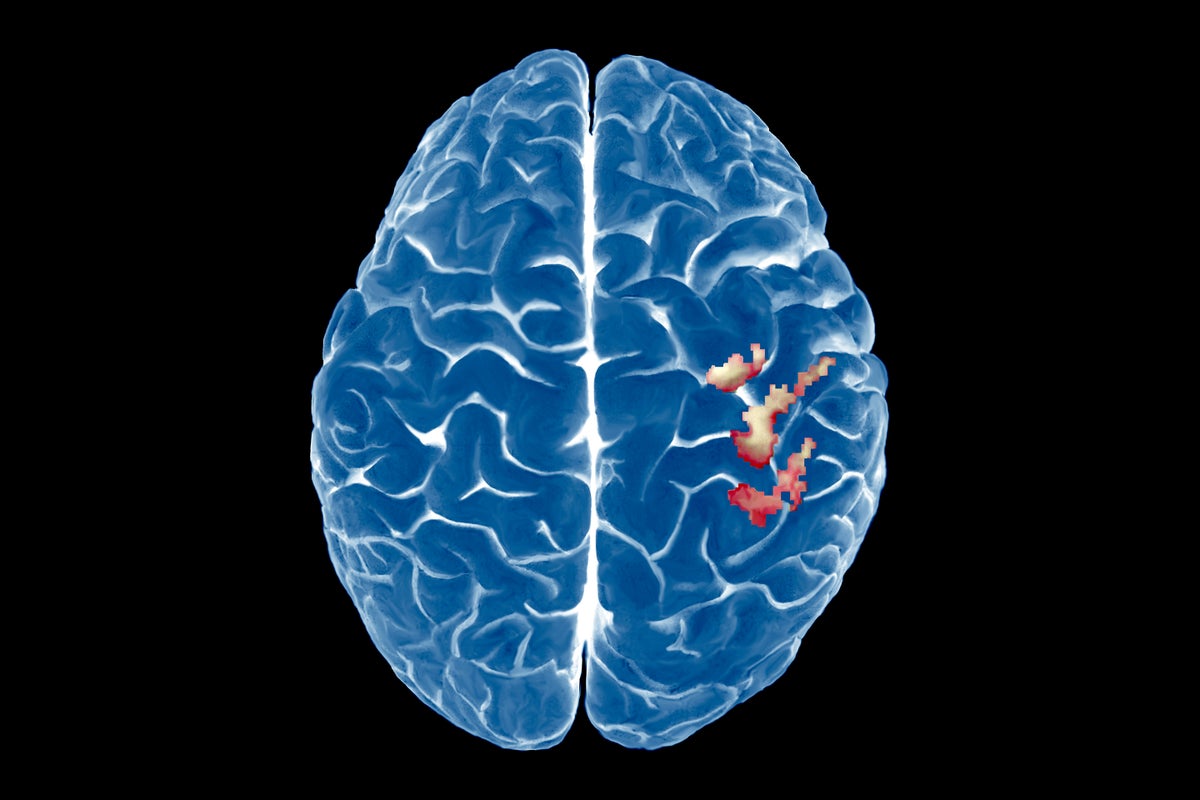
A brain-imaging study of people with amputated arms has upended a long-standing belief: that the brain’s map of the body reorganizes itself to compensate for missing body parts.
Previous research had suggested that neurons in the brain region holding this internal map, called the primary somatosensory cortex, would grow into the neighbouring area of the cortex that previously sensed the limb.
But the latest findings, published in Nature Neuroscience on 21 August, reveal that the primary somatosensory cortex stays remarkably constant even years after arm amputation. The study refutes foundational knowledge in the field of neuroscience that losing a limb results in a drastic reorganization of this region, the authors say.
“Pretty much every neuroscientist has learnt through their textbook that the brain has the capacity for reorganization, and this is demonstrated through studies on amputees,” says study senior author Tamar Makin, a cognitive neuroscientist at the University of Cambridge, UK. But “textbooks can be wrong”, she adds. “We shouldn’t take anything for granted, especially when it comes to brain research.”
The discovery could lead to the development of better prosthetic devices, or improved treatments for pain in ‘phantom limbs’ — when people continue to sense the amputated limb. It could also help scientists working to restore sensation in people who have had amputations.
Mapping cortical plasticity
Study first author Hunter Schone, a neuroscientist at the University of Pittsburgh in Pennsylvania, says that previous reports from some people with amputations had led him and his colleagues to doubt the idea that the brain’s map of the body is reorganized after amputation. These maps are responsible for processing sensory information, such as touch or temperature, at specific body regions. “They would say: ‘I can still feel the limb, I can still move individual fingers of a hand I haven’t had for decades,’” Schone says.
To investigate this contradiction, the researchers followed three people who were due to undergo amputation of one of their arms. The team used functional magnetic resonance imaging (fMRI) to map the cortical representations of the body before the surgery, and then after the amputation for up to five years. It is the first study to do this.
Before their amputations, participants performed various movements, such as tapping their fingers, pursing their lips, and flexing their toes while inside an fMRI scanner that measured the activity in different parts of the brain. This allowed the researchers to create a cortical ‘map’ showing which regions sensed the hand. To test the idea that neighbouring neurons redistribute in the cortex after amputation, they also made maps of the adjacent cortical area — in this case, the part that processes sensations from the lips. The participants repeated this exercise several times after their amputation, tapping “with their phantom fingers”, says Schone.
.
The brain’s map of the body in the primary somatosensory cortex remains unchanged after amputation. Zephyr/Science Source
As a kid growing up in Seattle, Coco Cultr founder Jesa Chiro remembers thinking that as a little sister, “your older brother just seems like the coolest person in the world,” she says. “At least to me, anyway.” Her older brother, Munya, who she describes as a “basketball fanatic,” collected everything basketball-related he could: jerseys, NBA 2K games, bobbleheads, and whatever memorabilia he could get his hands on. Some of Chiro’s earliest memories include waking up early to go to Munya’s basketball camps, watching games together, and tagging along on trips to Goodwill with him in search of jerseys. The Chiro family’s team was the Seattle SuperSonics until it was sold in 2006, later moving to Oklahoma City and rebranding as the Thunder in 2008.
While Chiro never had the innate athletic ability or handles for basketball, she did go through a brief obsessed-with-Lauren-Jackson-and-Sue-Bird phase. (Her brother had the Sonics, she had the Seattle Storm.) After receiving a wristband from Bird at age 11, she claims, “I never washed it.” Years later, she’d find her place in the sport not by way of her brother or as a WNBA fan, but through fashion.
“Why is there not any cute sportswear for women?” asks Chiro, who sits on a patio over Zoom. While that question might seem outdated in light of countless collaborations, capsule collections, and brands like Playa Society reshaping WNBA merch, Chiro called out the gap early on. When the Sonics left her hometown, the cultural and emotional pull of sports memorabilia was palpable, inspiring her to stockpile and rework jerseys. Chiro also cites Xuly. Bët’s spring 1995 collaboration with Puma—which saw deadstock soccer jerseys reimagined as dresses—as an early Coco Cultr influence. “In an interview, [Xuly.Bët designer] Lamine Badian Kouyaté said, ‘Why not use something that would go to waste and make something new and beautiful?’ That really stuck with me. It captures how I approach Coco.
”Chiro founded Coco Cultr during the height of pandemic lockdown, while studying at Western Washington University. After graduation, she moved to New York, and came across the aforementioned Xuly.Bët fashion show on YouTube one day. Inspired, Chiro went to L Train Vintage near her apartment and picked up an old Philadelphia 76ers Hardwood Classics jersey. “I didn’t know what I was going to make,” she says. “I just started cutting and sewing, no pattern, no plan.” At the time, Chiro was working retail at Lower East Side vintage store Procell. She wore her custom mini jersey dress, with the word “Sixers” across the front, to her shift the next day. Her boss clocked it immediately: “That’s really sick,” he said. “Do you have more? We should be carrying this.” And they did, becoming the first store to place an order with the brand; Procell still carries Coco Cultr today.
The sustainable label made a name for itself online with upcycled, reworked vintage pieces: two-piece sets, bikinis, and, most notably, the vintage jersey dresses. Think: A-line cut, body-conscious fit, mid-thigh hem dresses with a heavy emphasis on NBA team logos. The rarer the jersey, the more excited Chiro is to work with it. Her signature silhouette has caught the attention of the sports and streetwear industries—from celebrity stylists and WNBA teams that have gifted her jerseys to reimagine, to brands like Nike and Supreme that have tapped her for special projects.
Chiro calls herself a “digger” when it comes to seeking out vintage jerseys. “It’s fun for me to dive into what makes something rare,” she says. “What was happening at the time? Why this colorway? That’s the part I love.” These days, though, with high demand, she has rules: no Michael Jordan Bulls jerseys (too common) and deadstock Ray Allen Sonics jerseys are a priority, as are any of Kobe Bryant’s.
The lawyer took the elevator 32 floors to the U.S. attorney’s office, where for eight years he had worked as a highly regarded prosecutor. He had a container of homemade chocolate chip cookies to share and some thoughts to keep to himself.
“You have to be polite,” the lawyer, Michael Gordon, explained as the elevator rose. “But I don’t want to minimize it, or make it seem like everything’s OK. It’s not.”
Mr. Gordon was heading up on this steaming late July day in Tampa, Fla., to collect his things and say goodbye. Three weeks earlier, and just two days after receiving yet another outstanding performance review, he had been interviewing a witness online when a grim-faced colleague interrupted to hand him a letter. It said he was being “removed from federal service effective immediately” — as in, now.
Although the brief letter, signed by Attorney General Pam Bondi, provided no justification, Mr. Gordon knew the likely reason: Jan. 6, 2021.
He was being fired for successfully prosecuting people who had stormed the United States Capitol that day — assaulting police officers, vandalizing a national landmark and disrupting that sacrosanct moment in a democracy, the transfer of presidential power.
He was being fired for doing his job.
The letter did more than inform Mr. Gordon, a 47-year-old father of two, that he was unemployed. It confirmed for him his view that the Justice Department he had been honored to work for was now helping to whitewash a traumatic event in American history, supporting President Trump’s reframing of its violence as patriotic — and those who had prosecuted rioters in the name of justice as villains, perhaps even traitors.
In the seven months since Mr. Trump, newly returned to the White House, granted clemency to nearly 1,600 people charged in the largest criminal investigation in Justice Department history, his administration has turned the agency upside down.
.
Michael Gordon, left, was dismissed as a federal prosecutor after he investigated the storming of the Capitol on Jan. 6, 2021
A scene at the United States Capitol.Joseph Rushmore
Rachel Feltman: For Scientific American’s Science Quickly, I’m Rachel Feltman.
An estimated one out of every 10 people in the U.S. has some kind of food allergy, which adds up to more than 33 million Americans. Peanut allergies are among the most common and certainly take the lead as the most visible.
But peanut allergies weren’t always so prevalent. In the late 1990s, a nationwide survey found that peanut allergies were reported in 0.4 percent of American children. Just over a decade later, that number had more than tripled.
Scientists still aren’t completely sure what led to this big uptick, but it could stem in part from parental anxiety over peanut allergies—and misguided advice about how to keep kids safe.
Here to tell us more about the latest research on peanut allergies, including new avenues for treatment and prevention, is Maryn McKenna, the author of a recent article on the subject for Scientific American. Maryn is a journalist who covers food policy and public health.
Thank you so much for coming on to chat with us today.
Maryn McKenna: Thanks for having me.
Feltman: So what do we know about the origins of peanut allergies?
McKenna: This is a really interesting mystery still. No matter how much study and how much research funding has gone into the problem of peanut allergy—and food allergies more broadly—a lot of it still remains kind of opaque.
Feltman: Mm.
McKenna: We know the biological mechanisms of what makes an allergy happen, but why peanut allergy in particular came on the scene 20, 30 years ago or so, and why it blew up to such a major public health problem—people are still working that out.
Feltman: So I guess let’s start with the easier question, then, which is: What is a food allergy? How does it work, both genetically and in the moment in a person’s body?
McKenna: I think most people are familiar with the concept of our having an immune system that, through a variety of mechanisms, defends our bodies against the outside world, broadly speaking, against things that are not us. Most of the time, the immune system works really well to adapt its reactions, its defenses of us, to the way we continue to live our lives.
Sometimes its reactions get wildly out of scale, and that’s what happens in food allergy and peanut allergy. The immune system recognizes proteins in these foods as being sort of not self, not part of us, and mounts an extraordinary reaction that expresses itself in the kind of symptoms that, if you’re allergic, you’ve experienced or that you may be familiar with from hearing about them from other people: hives, itchiness, difficulty breathing, difficulty swallowing; in the worst presentations depressed blood pressure, inability to breathe and sometimes, in, in the worst case, a heart attack.
Feltman: And what are the actual rates of nut allergy? It’s definitely one of the ones we hear about a lot, but how prevalent is it?
McKenna: This can be a frustrating question to try to answer because what we know about people being allergic depends on their telling researchers that they’re allergic …
Feltman: Mm.
McKenna: So it’s all self-reported. There are biological markers for allergy, but we don’t apply tests for those biological markers to the entire population, so all of the data relies on people telling researchers who have asked that an allergy is present in themselves or in their kids, if they’re parents answering for children.
Shortly after the Soviet Union invaded Afghanistan in December 1979, President Jimmy Carter said, in a TV interview, that the assault “made a more dramatic change in my opinion of what the Soviets’ ultimate goals are than anything they’ve done in the previous time that I’ve been in office.”
Carter’s critics chortled at his belatedly acknowledged naïveté, but at least he admitted that he’d been wrong and took corrective actions—ending economic assistance to the USSR, suspending nuclear arms control talks, withdrawing his ambassador, pulling out of the 1980 Moscow Olympics, stiffening defenses in southern Asia, and arming anti-Soviet insurgents (a move that had woeful consequences later on, but that’s another story).
Our current president, Donald Trump, has admitted that he’d overestimated his ability to end the Russia–Ukraine war and expressed puzzlement over Russian President Vladimir Putin’s continued bombardment of Ukrainian cities. But he hasn’t done much about it, and his view of Putin’s character and goals—which has always been, to say the least, rosy—hasn’t changed one whit.
Film and Writing Festival for Comedy. Showcasing best of comedy short films at the FEEDBACK Film Festival. Plus, showcasing best of comedy novels, short stories, poems, screenplays (TV, short, feature) at the festival performed by professional actors.

 Donald Trump during the cabinet meeting on Tuesday. Photograph: Aaron Schwartz/Pool/Aaron Schwartz – Pool/CNP/Shutterstock




 Navigating friendships, asking for help, not knowing what you’re getting for lunch and eating it anyway… this stuff matters, too. by Katie McPherson




 Michael Gordon, left, was dismissed as a federal prosecutor after he investigated the storming of the Capitol on Jan. 6, 2021
 Science Photo Library/Getty Images

 James' World 2