November 12, 2025
Mohenjo
Business, Food For Thought, Human Interest, Political, Science, Technical
amazon, business, Business News, current-events, Future, Hotels, human-rights, medicine, mental-health, research, Science, Science News, technology, Technology News, travel, vacation
 x
x
Click the link below the picture
.
Stella was eight years old when she stopped eating solid foods. She went from being a “foodie” to strictly consuming liquids, says Briana, Stella’s mother. That diet soon became problematic for Stella, too: later, she removed chunks from her soup and struggled to drink smoothies that contained small seeds. She grew so afraid of swallowing that she’d spit out her saliva. “She said she had a fear of choking,” Briana says. (The last names of Stella and Briana have been withheld for privacy.)
In less than a month, Stella became so tired and malnourished that her parents took her to the hospital. Doctors put her on a feeding tube, and they were concerned that the rapid weight loss for her age might cause heart issues. Within 24 hours of being hospitalized, a psychologist diagnosed Stella with avoidant/restrictive food intake disorder, or ARFID, a serious eating disorder that’s become steadily more prevalent globally in recent years. Health care providers and psychologists are now trying to untangle ARFID’s causes, signs, and disconcerting rise.
Clinicians emphasize that ARFID is much more than a dislike of certain foods. It’s developmentally normal for many kids to go through a picky eating phase between ages two and six. But ARFID presents as a food avoidance so persistent and pervasive that it can cause adults to drop below the minimum health body mass index, or BMI (a hotly debated measurement that links a person’s weight to their height), or to lose so much weight that they experience symptoms of malnutrition, such as vitamin deficiencies, irregular menstrual cycles, low testosterone, hair loss, muscle loss and a constant feeling of being cold. In kids, drastic weight loss from ARFID can cause children to fall off standard U.S. growth charts for healthy development. Developmental issues linked to the loss in weight and calories often spur doctors to recommend supplemental nutritional intake.
“We’re not just trying to treat kids who don’t like broccoli. It’s the kid who is malnourished as a result of their food choices,” says James Lock, a psychiatry professor and director of the Child and Adolescent Eating Disorder Program at the Stanford University School of Medicine.
An Increasingly Recognized Disorder
ARFID was formally recognized as a feeding and eating disorder in the Diagnostic and Statistical Manual of Mental Disorders in 2013. That enabled clinicians to put a name to a condition that had been around but had gone undetected for some time.
“Probably there were people who had this syndrome, but they didn’t really talk about it because there’s a stigma around it,” says Jennifer Thomas, co-director of the Eating Disorders Clinical and Research Program at Massachusetts General Hospital, who has treated people with ARFID.
Wider recognition of the condition is partly driving the recent increase in cases. Real-world data on ARFID cases are lacking, but some studies have reported a global prevalence ranging from 0.35 to 3 percent across all age groups. Certain countries and regions report much higher numbers: a recent study in the Netherlands, for example, found that among 2,862 children aged 10, 6.4 percent had ARFID. The eating disorder clinic, Equip, that provided specialized care to Stella after she was hospitalized, says it treated more than 1,000 people in the U.S. with ARFID in 2024—a 144 percent jump from 2023.
“I think that’s one of the things that has made ARFID a challenging eating disorder [to diagnose]—because it is a lot of different things.” —Jessie Menzel, clinical psychologist
And the National Alliance for Eating Disorders has found that ARFID now accounts for up to 15 percent of all new eating disorder cases. People can experience ARFID at any age, although recently diagnosed cases have mostly been in children and teens. The average age of diagnosis is 11 years old, and 20 to 30 percent of cases are in boys, a higher percentage than other eating disorders, according to the alliance.
Signs and Symptoms
Unlike other eating disorders, such as anorexia nervosa and bulimia, ARFID doesn’t appear to be associated with body image. The problem—and seeming cause—is the food itself and the emotional and physiological response toward it.
People with ARFID generally fall into one or several of three categories. According to one study of adults with ARFID, 80 percent of respondents said they were uninterested in eating, 55 percent said they stay away from many foods because of sensory issues, and 31 percent said they avoid food because they are afraid of adverse consequences such as choking or vomiting. About two-thirds of the participants were in more than one of these categories.
“I think that’s one of the things that has made ARFID a challenging eating disorder [to diagnose]—because it is a lot of different things,” says Jessie Menzel, a clinical psychologist who treats the condition and other eating disorders.
There are some common signs that signal ARFID, however. In addition to significant weight loss and signs of malnutrition, ARFID’s physical symptoms include gastrointestinal issues, low body temperature, and the growth of a type of soft, fine body hair called lanugo that is typically not present after infancy. Behavioral changes include a lack of appetite, difficulty paying attention, food texture avoidance, extreme selective eating, and a fear of vomiting or choking
.
 vadimguzhva/Getty Images
.
.
Click the link below for the complete article:
.
__________________________________________
November 12, 2025
Mohenjo
Business, Food For Thought, Human Interest, Political, Science, Technical
amazon, business, Business News, current-events, Future, Hotels, human-rights, medicine, mental-health, research, Science, Science News, technology, Technology News, travel, vacation

Click the link below the picture
.
In an effort to combat Alzheimer’s disease, scientists are looking at existing drugs that could treat the condition, and a 2025 study identified two promising candidates that are currently used to treat cancer.
Already approved by regulators in the US – meaning potential clinical trials for Alzheimer’s could start sooner – the drugs are letrozole (usually used to treat breast cancer) and irinotecan (usually used to treat colon and lung cancer).
The team of US researchers started by investigating how Alzheimer’s altered gene expression in the brain.
They then searched a medical database called the Connectivity Map for drugs that reversed these changes in gene expression, as well as cross-referenced records of patients who had taken these medicines as part of cancer treatments. The drugs appeared to have decreased their risk of developing Alzheimer’s.
“Alzheimer’s disease comes with complex changes to the brain, which has made it tough to study and treat, but our computational tools opened up the possibility of tackling the complexity directly,” says computational biologist Marina Sirota, from UC San Francisco.
“We’re excited that our computational approach led us to a potential combination therapy for Alzheimer’s based on existing FDA-approved medications.”
Having picked out letrozole and irinotecan as the best candidates, the researchers tested them in mouse models of Alzheimer’s. When used in tandem, the drugs were shown to reverse some of the brain changes brought on by the disease.
The harmful clumps of tau protein that build up in brains affected by Alzheimer’s were reduced significantly, and the mice showed improvements in learning and memory tasks – two brain capabilities often impaired by Alzheimer’s.
By combining the two drugs, the researchers were able to target different types of brain cells affected by the disease. Letrozole seemed to counter Alzheimer’s in neurons, while irinotecan worked in glia.
“Alzheimer’s is likely the result of numerous alterations in many genes and proteins that, together, disrupt brain health,” says neuroscientist Yadong Huang, from UC San Francisco and Gladstone Institutes.
“This makes it very challenging for drug development, which traditionally produces one drug for a single gene or protein that drives disease.”
It’s a promising start, but there’s more work to be done: Obviously, the drugs have only been directly tested in mice so far, and these medications also come with side effects. These need to be considered alongside the benefits if the drugs are to be repurposed for a different disease than what they were originally approved for.
One of the next steps should be clinical trials for people with Alzheimer’s disease. According to the researchers, this approach could lead to more personalized and effective treatments, based on how gene expression has been altered in each case.
It’s estimated that more than 55 million people have Alzheimer’s, and as the world’s population ages, that’s expected to more than double in the next 25 years. Finding ways to prevent the disease and even reverse symptoms would have a huge impact on global health.
“If completely independent data sources, such as single-cell expression data and clinical records, guide us to the same pathways and the same drugs, and then resolve Alzheimer’s in a genetic model, then maybe we’re on to something,” says Sirota.
.
 (Juan Gaertner/Science Photo Library/Getty Images)
.
.
Click the link below for the complete article:
.
__________________________________________
November 12, 2025
Mohenjo
Business, Food For Thought, Human Interest, Political, Science, Technical
amazon, business, Business News, current-events, Future, Hotels, human-rights, medicine, mental-health, research, Science, Science News, technology, Technology News, travel, vacation

Click the link below the picture
.
Chris Hemsworth is joining a growing list of Hollywood stars opening up about caring for their aging and sick loved ones.
Care advocates gathered at the Australian Embassy in Washington, D.C. on Nov. 5 for a screening of Hemsworth’s new documentary, “A Road Trip to Remember,” which follows Hemsworth and his father, Craig Hemsworth, on a motorbike trip across Australia. Craig Hemsworth is one of over 55 million people worldwide living with dementia or Alzheimer’s disease.
“I just find myself wanting to spend more time with him,” Hemsworth says in the film’s trailer.
“For many years, people just didn’t talk about it,” said Jane Root, CEO and founder of Nutopia, the film production company that made Hemsworth’s documentary. “And suddenly, influential people like Chris and Seth and people are suddenly, like, this is something that needs to be talked about. We need to stop being scared of it, we need to take away the stigma of it.”
The United States is at a critical moment where family caregivers are holding up their families and the country’s long-term care system, said Megan O’Reilly, vice president for health and family for AARP government affairs.
“The more that folks are talking about it and sharing their stories, they’re empowering those around them to share their stories,” O’Reilly said. “I’ve increasingly seen it over the last couple of years… this has been building to this moment.”
‘If Chris can do it, I can do it.’
Hemsworth isn’t new to documentaries or the team that helped make “A Road Trip to Remember.” The film is backed by the same creators (including Nutopia) who made Hemsworth’s “Limitless” series, where he investigated various ways to try and live better for longer.
“My Dad and I had always spoken about taking a trip back to the Northern Territory, where our family had lived years ago, but we had never been able to set aside the time to actually do it,” Hemsworth said in a Facebook post on Oct. 16. “More recently, the idea of taking that road trip reemerged with more pressing importance. The result was a more profound, more moving, and more surprising journey than I ever anticipated.”
Charlie Parsons, senior vice president of global development for National Geographic Channel, has worked with Hemsworth since the beginning of his “Limitless” series. He said National Geographic doesn’t look to work with big names for the sake of having a celebrity on a poster. There needs to be an “honest to goodness passion for the subject matter,” Parsons said. And Hemsworth cares deeply about health and his family.
“He was just very vulnerable,” Parsons said. That vulnerability leads to connection, and hopefully will lead to more people sharing their caregiving and Alzheimer’s stories. Parsons said he has found himself opening up more about his own mother’s dementia journey in recent years. “If Chris can do it, I can do it.”
“Now she’s at a point where she doesn’t know who I am,” Parsons said of his mother. “I go in there, and sometimes she’s kind of asleep or kind of dozing off. I just, I hold her hand for 45 minutes, and I tell her I love her.”
Unlike other stories of caregiving that tend to focus on the difficult parts of care and aging, Root said Hemsworth’s documentary is a celebratory story.
“It’s a film that makes you smile,” Root said. “It’s about Chris saying, ‘I want to spend time with my dad.’ And he really enjoyed it.”
.
 Chris Hemsworth and Dad
.
.
Click the link below for the complete article:
.
__________________________________________
November 11, 2025
Mohenjo
Business, Food For Thought, Human Interest, Political, Science, Technical
amazon, business, Business News, current-events, Future, Hotels, human-rights, medicine, mental-health, research, Science, Science News, technology, Technology News, travel, vacation
 .
.
__________________________________________
November 11, 2025
Mohenjo
Business, Food For Thought, Human Interest, Political, Science, Technical
amazon, business, Business News, current-events, Future, Hotels, human-rights, medicine, mental-health, research, Science, Science News, technology, Technology News, travel, vacation
Click the link below the picture
.
When Hurricane Melissa slammed into Jamaica on October 28, it showed just how devastatingly powerful a Category 5 hurricane can be—and then some.
It will be weeks before experts can truly assess just how badly Hurricane Melissa ravaged Jamaica and nearby islands. But scientists are already confident that climate change contributed to the storm’s horrifying strength, which sent winds gusting far beyond the minimum required for a Category 5. And Melissa could revive discussions swirling around whether the five categories of the Saffir-Simpson Hurricane Wind Scale are sufficient to describe the monstrous storms that climate change can fuel.
What would a Category 6 storm look like?
The Saffir-Simpson scale breaks hurricanes into numbered categories based solely on peak sustained wind speeds. By this scale, a storm with sustained maximum winds of 74 to 95 miles per hour is a Category 1 hurricane. When a storm’s winds hit 111 mph, it becomes Category 3, which also marks the official designation of a “major hurricane.” The most severe classification under the Saffir-Simpson scale, Category 5, marks hurricanes with sustained peak wind speeds of 157 mph or higher.
But last year, hurricane scientists suggested that this “open-ended” nature of the Saffir-Simpson scale is no longer sufficient to convey the reality of modern hurricanes. They proposed the establishment of Category 6, which would begin at peak sustained wind speeds of 192 miles per hour.
As the researchers noted, so far, five storms reached this horrifying milestone, and all of them did so in years after 2010. Those storms were Hurricane Patricia in the eastern Pacific Ocean and four typhoons—which are not traditionally assigned categories—in the western Pacific: Haiyan, Goni, Meranti, and Surigae.
Hurricane Melissa didn’t quite meet the proposed Category 6 boundary, with initial measurements suggesting maximum sustained wind speeds of 185 mph. That leaves it tied with several other serious storms—the “Labor Day” hurricane of 1935 and Hurricanes Gilbert, Wilma, and Dorian in 1988, 2005, and 2019, respectively—for the second strongest peak sustained wind speed in the Atlantic Ocean.
The strongest sustained wind speed in the Atlantic on record occurred in 1980’s Hurricane Allen, which hit 190 mph, nearly grazing the researchers’ suggested Category 6.
Some scientists argue that extending the Saffir-Simpson scale is unnecessary, however. That argument rests on the fact that the scale includes not just category numbers and wind speeds but also notes about what kind of damage to expect from those winds. Indeed, Herbert Saffir, one of the scientists behind the scale, was a structural engineer who focused on wind damage.
Category 3 is described by the National Hurricane Center as causing “devastating damage,” with even well-built homes being vulnerable to losing their roof and the affected region facing a potentially days-long loss of water and electrical service. Both Categories 4 and 5 are described as causing “catastrophic damage”: “Most of the area will be uninhabitable for weeks or months,” the rubric reads. At that point, Category 6 opponents argue, there’s little further distinction to be made about just how dire the situation will be.
And some are concerned that an additional category could have the opposite effect of the one intended. “It could inflate the scale such that life-shattering storms assigned lower categories would garner even less attention than they already do,” wrote University of Arizona atmospheric scientist Kim Wood on Bluesky.
Climate change and monster storms
Hurricane Allen’s shocking winds in 1980, before a noticeable trend of increasingly intense hurricanes was observed, are an important reminder that climate change does not directly cause monster hurricanes. Scientists prefer to describe climate change as “loading the dice” for, or contributing to, the strength of serious storms.
And scientists have already concluded that climate change did indeed contribute to the strength of Hurricane Melissa. An analysis by the nonprofit research organization Climate Central calculated that the waters Melissa traveled over as a Category 5 storm as it approached Jamaica were more than one full degree Celsius (two full degrees Fahrenheit) hotter than normal—a circumstance that climate change made more than 700 times more likely.
A second rapid analysis, this one conducted by the organization ClimaMeter, determined that climate change strengthened Melissa’s winds and rain by about 10 percent compared with how the storm might have played out under conditions where humans had not added heat-trapping greenhouse gases to the atmosphere. Researchers will release other, similar “attribution analyses,” as these studies are known, in the coming days and weeks.
In general, however, scientists know that hurricanes are becoming more severe as climate change accelerates. Warmer ocean water fuels stronger winds, and warmer air holds more water, which can then become rainfall. Meanwhile, rising sea levels make coastal regions more vulnerable to storm surge. Studies have shown that as climate change continues, a higher proportion of hurricanes are reaching Category 3, while other evidence shows that even tropical storms and weak hurricanes are intensifying as well.
But the initial analyses also point to a weakness of the Category 6 idea and an inherent weakness of the Saffir-Simpson scale as a risk communications tool: the scale considers only wind speeds, but hurricanes’ storm surge and rainfall can be just as hazardous, if not more so.
.
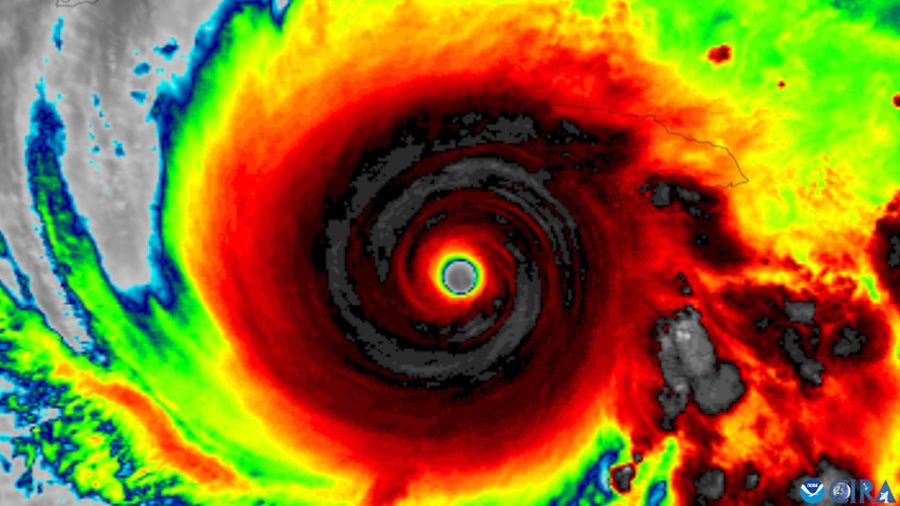
Hurricane Melissa became one of the strongest hurricanes ever recorded in the Atlantic Ocean on October 28, 2025. CSU/CIRA & NOAA
.
.
Click the link below for the complete article:
.
__________________________________________
November 11, 2025
Mohenjo
Business, Food For Thought, Human Interest, Political, Science, Technical
amazon, business, Business News, current-events, Future, Hotels, human-rights, medicine, mental-health, research, Science, Science News, technology, Technology News, travel, vacation

Click the link below the picture
.
An Arizona man who pleaded guilty to murder charges after leaving his 2-year-old daughter to die in a sweltering hot car for hours as temperatures climbed to 109 degrees Fahrenheit has killed himself, officials said Wednesday.
Christopher Scholtes, 38, was found dead in his home Wednesday, the day he was set to appear in court for his sentencing, Pima County Attorney Laura Conover announced at a press conference.
“This little girl’s voice was nearly silenced because justice was not served appropriately this morning,” Conover said. “But it has not and will not be silenced due to the hard work of the people who work here at the Pima County Attorney’s Office.”
Online records for the Maricopa County Medical Examiner’s office confirm that Scholtes died. He is survived by two other children and his wife.
The 2-year-old girl died in a car outside her family’s home July 9, authorities said. Security footage from nearby homes shows that she was left alone in the car for about three hours, according to officials.
Scholtes initially told police that when he arrived home that day, his daughter was asleep in her car seat and he did not want to wake her, according to a news release from the Marana Police Department. He added that he left his daughter inside the car seat with the vehicle running in the driveway and the air conditioner turned on, before going inside the house, according to the release.
The air conditioner was not on, according to authorities. A complaint later filed by prosecutors said that Scholtes knew the car and the AC automatically shut off after 30 minutes.
Prosecutors said that Scholtes, who was unemployed, found the child dead in the car shortly after his wife, a doctor, came home from work and wondered where she was.
The 2-year-old girl was later pronounced dead at a nearby hospital, officials said.
Scholtes was arrested July 12. He pleaded guilty to second-degree murder and child abuse charges in October and was expected to spend up to 30 years in prison, according to Conover.
Court documents later revealed that Scholtes was distracted by video games on the day his daughter died and “regularly” left his kids alone in the car.
Scholtes’ wife texted him “I told you to stop leaving them in the car, How many times have I told you,” as his 2-year-old daughter was being transported to the hospital, according to a documents.
He responded, “Babe I’m sorry!”
“How could I do this. I killed our baby, this can’t be real,” he added in a later text to his wife, according to the documents.
.
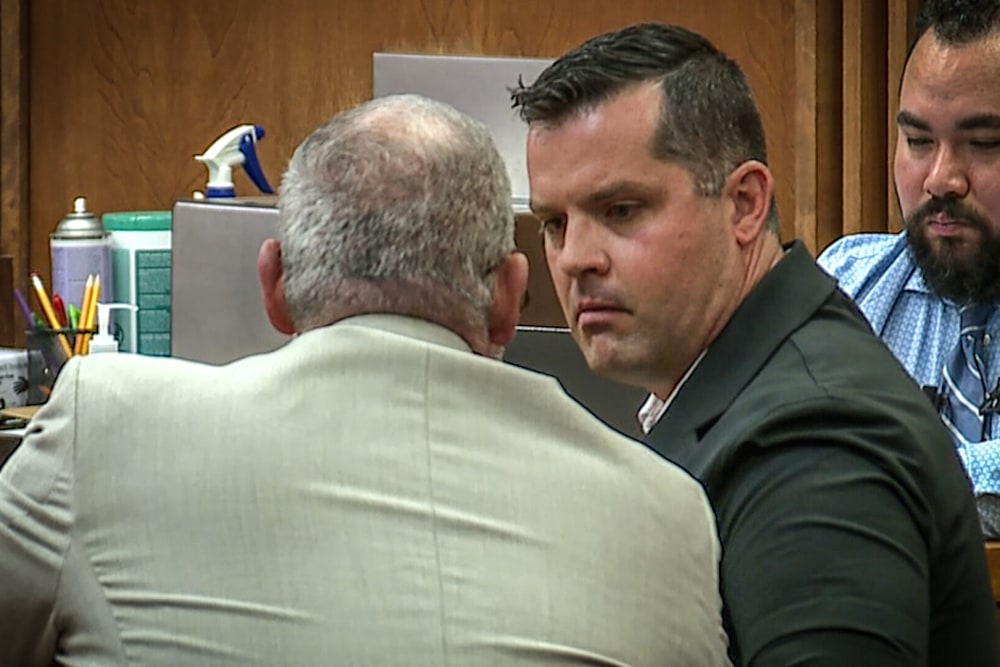 Christopher Scholtes, a father who pleaded guilty to the murder of his 2-year-old daughter after leaving her in a hot car.via KVOA
.
.
Click the link below for the complete article:
.
__________________________________________
November 11, 2025
Mohenjo
Business, Food For Thought, Human Interest, Political, Science, Technical
amazon, business, Business News, current-events, Future, Hotels, human-rights, medicine, mental-health, research, Science, Science News, technology, Technology News, travel, vacation

Click the link below the picture
.
Representative Nancy Pelosi announced on Thursday that she will retire when her term concludes in early 2027, ending a remarkable career in which she rose to become one of the most powerful women in American history.
Ms. Pelosi, 85, was the nation’s first and only female House speaker, and she will have represented San Francisco in Congress for 39 years when she leaves office. She has served during an era of seismic change for American society and her own city, from the throes of the AIDS crisis to the legalization of gay marriage, and through the meteoric rise of the tech sector and the nation’s extreme polarization.
She entered political office later in life and became a hero to Democrats for the way she wielded immense power to push Obamacare, climate change legislation, and infrastructure programs through Congress.
“With a grateful heart, I look forward to my final year of service as your proud representative,” she told her constituents in a nearly six-minute video posted on X early Thursday morning, with clips of San Francisco’s iconic cable cars and colorful Victorian homes flashing in the background.
“My message to the city I love is this: San Francisco, know your power,” she continued. “We have always led the way, and now we must continue to do so by remaining full participants in our democracy and fighting for the American ideals we hold dear.”
Ms. Pelosi, who likes to use the phrase “resting is rusting,” led the House Democrats for 20 years, eight of which she spent as speaker. She has also been a prodigious fund-raiser and raised more than $1.3 billion for Democratic campaigns, according to her aides.
But she was reviled by conservatives, who painted her as the scary embodiment of liberal San Francisco values and blamed her for what they considered the nation’s decline.
She has been a chief irritant to President Trump, even to this day, calling him “a vile creature” in a CNN interview that aired this week. She presided over two of his impeachment votes in the House. And he has called her “Crazy Nancy,” with no sense of fondness for his foe.
Her Democratic colleagues said she was unlike any other politician with whom they had worked. Jackie Speier, a Bay Area Democrat who served in the House for 15 years, said that Ms. Pelosi would go down in history “as the most consequential speaker ever.”
“She has a command, a presence. All eyes turn to her,” Ms. Speier said.
Her retirement had been grist for the local and national political rumor mill for several years, and younger Democrats grew increasingly eager to run for her seat. They feared, however, that it would be folly to challenge one of the most powerful politicians in modern history.
Ms. Pelosi, for her part, told CNN days ago that she had no doubt she would win re-election if she were to run for another term.
Still, the overwhelming defeat Democrats suffered last year in the congressional and presidential races has prompted soul-searching within the party — and louder calls for older Democrats to step down and make way for new politicians with fresh ideas.
The race to succeed Ms. Pelosi was already shaping up to be a fierce one before she announced her retirement. Scott Wiener, a Democratic state senator from San Francisco who is a champion of housing construction, and Saikat Chakrabarti, who worked as Representative Alexandria Ocasio-Cortez’s chief of staff, have already announced they were running for the seat, with or without Ms. Pelosi on the ballot.
In recent months, Ms. Pelosi has refused to discuss her career plans, insisting she was focused solely on the passage of California’s Proposition 50, a ballot measure to approve newly drawn House districts. She worked behind the scenes to help Gov. Gavin Newsom craft the measure, which passed on Tuesday, and to raise money for the effort.
It was considered one of her final achievements, both a blow to Mr. Trump, who had sought more Republican seats in the House by gerrymandering in conservative states, and a parting gift to the next generation of California Democrats who could benefit from as many as five additional seats in the state.
Mr. Trump still has strong contempt for Ms. Pelosi.
“The retirement of Nancy Pelosi is a great thing for America,” he said on Thursday in a response to Fox News. “She was evil, corrupt, and only focused on bad things for our country.”
At a packed union hall in San Francisco on Monday morning, Ms. Pelosi was the emcee for a Proposition 50 rally that included Mr. Newsom and labor leader Dolores Huerta.
“This is a moment of truth for America,” Ms. Pelosi told the crowd. “It’s self-defense for our democracy.”
n the audience, union workers wore T-shirts that Ms. Pelosi had autographed for them and pins with drawings of six tiny Nancy Pelosis standing side by side, each wearing a suit in a different color of the rainbow.
At the rally, the ever-stylish Ms. Pelosi was sporting a green corduroy suit and green stilettos, never mind the fall she took in December on a marble staircase in Luxembourg that forced her to get a hip replacement and remain stuck for several months in dreaded flats.
Ms. Pelosi’s career in elected office has been a long one, but it did not span even half her life. Born into a politically powerful family of Democrats in Baltimore — her father and brother each served as the city’s mayor — Ms. Pelosi went the more traditional route for women of her age.
At first, anyway.
She met her husband, Paul Pelosi, at Georgetown University, and the couple moved to his hometown, San Francisco, where she stayed home to raise their five children. During that time, Mr. Pelosi grew his career as a venture capitalist.
As a young mother, Ms. Pelosi found a way to support the Democratic Party by opening up the family’s large home for fund-raisers. That led to friendships with a host of prominent San Francisco Democrats in the 1970s and 1980s, including Willie Brown, Jerry Brown, and Phil and John Burton, brothers who served in Congress.
.
 Representative Nancy Pelosi announced that she will not run for re-election. Her term ends in January 2027.Credit…Gabriela Bhaskar/The New York Times
.
.
Click the link below for the complete article:
.
__________________________________________
November 10, 2025
Mohenjo
Business, Food For Thought, Human Interest, Political, Science, Technical
amazon, business, Business News, current-events, Future, Hotels, human-rights, medicine, mental-health, research, Science, Science News, technology, Technology News, travel, vacation
Click the link below the picture
.
Every year, Halloween enthusiasts adorn their homes with synthetic cobwebs. But humans aren’t the only creatures who decorate their abodes.
Spiders bedeck their webs with “stabilimenta”—various woven patterns that are typically made of a different kind of silk than the rest of the web. In a new study published Wednesday, researchers reported that they found that these “web decorations” may help the spiders detect certain vibrations that can help them find their prey.
Arachnologists have debated the function of these ornaments for decades. Early researchers in the field called such a decoration a “stabilimentum” (Latin for a “support”) because they believed the structures helped stabilize webs. But this hypothesis has been proven wrong, says Gabriele Greco, a bioengineer at the University of Pavia in Italy and co-author of the recent study, which was published in PLOS One.
Scientists have also proposed that stabilimenta shield spiders from harsh ultraviolet rays, convey water for the arachnids to drink, or can either visually attract or repel prey. There is just one function that researchers widely agree on: stabilimenta help spiders of some species hide from predators. But “there are many different types of [web] geometries,” Greco says, “and this makes the possibilities of new functions available to spiders.”
A creature landing or moving on a spider web generates force. This force can become a vibration that travels through the silk that the spider can perceive. While reading old papers, Greco was unable to find any research into how stabilimenta shape those vibrations.
He and his colleagues chose to study Argiope bruennichi—a large spider that has yellow, black, and white stripes and spins classic webs with spiral patterns—because the species is easy to find and one of the only spiders that produces stabilimenta in Italy, said Greco. He and his colleagues took images of six different types of stabilimenta in the forests of Sardinia over the course of two years.
There was the classic, or “normal,” stabilimentum—a dense, thick, zigzagging thread. Similarly, the “juvenile” stabilimentum that was produced by juvenile spiders zigzagged, but it was not as thick. The researchers called web decor that was woven on only one side from the center of the web “reduced.” “Drafted” stabilimenta appeared as incomplete or thin zigzags. And some webs had no stabilimenta at all. Lastly, the team categorized a “platform” stabilimentum: a thick and dense network of silk, woven in a symmetric pattern in the middle of the web.
Once these structures were photographed, the researchers created computer simulations to model how vibrations spread through the various webs. They tested the effect that different directions of impact had on each web.
In the simulations, the team first found that stabilimenta had no effect on waves from the force of an object landing perpendicular to the web or hitting it from the side toward the center. “Until here, I was happy because this is exactly what I expected,” Greco says.
But sometimes prey gets stuck in a web and thrashes from side to side, emitting vibrations parallel to the spiral. Greco was surprised to find that stabilimenta in the platform shape can play a huge role in transmitting that vibration. In the simulations, a platform stabilimentum made it possible for some vibrations to reach the web’s far side by improving connectivity among the threads—a process that, in nature, would help the waiting arachnid detect prey. (A similar but milder effect came through with other stabilimentum shapes.)
“This adds one more piece to the puzzle,” says Todd Blackledge, a biologist at the University of Akron, who was not involved in the study, “I think the really important take-home message of this paper is that they did not find a big, dramatic effect” of stabilimenta overall. He emphasizes that because the study was based on modeling, we still need to ask, “Does this really apply to real spiders in the real world?”
Greco sees this study as a starting point to categorizing stabilimenta’s effects on vibration, and next, he hopes to study such spooky effects in the wild.
.
 Spiders such as this Argiope bruennichi sometimes adorn webs with zigzagging stabilimenta. Pierluigi Rizzo (member of Aracnofilia – Italian Society of Arachnology) (CC-BY 4.0)
.
.
Click the link below for the complete article:
.
__________________________________________
November 10, 2025
Mohenjo
Business, Food For Thought, Human Interest, Political, Science, Technical
amazon, business, Business News, current-events, Future, Hotels, human-rights, medicine, mental-health, research, Science, Science News, technology, Technology News, travel, vacation

Click the link below the picture
.
Dallas Cowboys defensive end Marshawn Kneeland was found dead with a self-inflicted gunshot wound after evading authorities, crashing a car, and fleeing on foot, Texas police said Thursday.
At around 10:33 p.m. Wednesday, Texas Department of Public Safety troopers attempted to stop a car for a traffic violation near Frisco, the Frisco Police Department said in a statement.
The driver allegedly refused to stop, prompting a pursuit that required assistance from Frisco police.
“After losing visual of the vehicle, troopers located it minutes later, crashed on southbound Dallas Parkway near Warren Parkway,” the statement said.
Police said that the man, later identified as Kneeland, 24, ran away.
During the search for Kneeland, officers said they received information that he had “expressed suicidal ideations.” He was found at 1:31 a.m. local time, “deceased with what appeared to be a self-inflicted gunshot wound,” the statement said.
The Plano Police Department said in a statement that officers responded “to a call for a welfare concern” at an address associated with Kneeland around 11:40 p.m. Wednesday. They did not make contact with anyone at the residence, the statement said.
Dallas Cowboys defensive end Marshawn Kneeland was found dead with a self-inflicted gunshot wound after evading authorities, crashing a car, and fleeing on foot, Texas police said Thursday.
At around 10:33 p.m. Wednesday, Texas Department of Public Safety troopers attempted to stop a car for a traffic violation near Frisco, the Frisco Police Department said in a statement.
The driver allegedly refused to stop, prompting a pursuit that required assistance from Frisco police.
“After losing visual of the vehicle, troopers located it minutes later, crashed on southbound Dallas Parkway near Warren Parkway,” the statement said.
Police said that the man, later identified as Kneeland, 24, ran away.
During the search for Kneeland, officers said they received information that he had “expressed suicidal ideations.” He was found at 1:31 a.m. local time, “deceased with what appeared to be a self-inflicted gunshot wound,” the statement said.
The Plano Police Department said in a statement that officers responded “to a call for a welfare concern” at an address associated
The case and manner of death will be determined by the Collin County Medical Examiner’s Office, the police statement added. Police said they are investigating the case as a possible suicide.
“It is with extreme sadness that the Dallas Cowboys share that Marshawn Kneeland tragically passed away this morning,” the Cowboys said in a statement.
“Marshawn was a beloved teammate and member of our organization. Our thoughts and prayers regarding Marshawn are with his girlfriend, Catalina, and his family.”
In a statement, Kneeland’s agent also confirmed his death overnight, but neither he nor the team said where or how the NFL player died.
“I watched him fight his way from a hopeful kid at Western Michigan with a dream to being a respected professional for the Dallas Cowboys,” Jonathan Perzley said in a statement, asking for “privacy and compassion” for those close to Kneeland.
“Marshawn poured his heart into every snap, every practice, and every moment on the field. To lose someone with his talent, spirit, and goodness is a pain I can hardly put into words. My heart aches for his family, his teammates, and everyone who loved him, and I hope they feel the support of the entire football community during this unimaginable time.”
The Cowboys selected Kneeland with their second-round pick in the 2024 draft, the 56th overall selection. He played in 11 games during his rookie season and appeared in seven in 2025, recording his first career sack in Week 1.
.
 Marshawn Kneeland in Inglewood, Calif., in 2024.Ric Tapia / Getty Images file
.
.
Click the link below for the complete article:
.
__________________________________________
November 10, 2025
Mohenjo
Business, Food For Thought, Human Interest, Political, Science, Technical
amazon, business, Business News, current-events, Future, Hotels, human-rights, medicine, mental-health, research, Science, Science News, technology, Technology News, travel, vacation
Click the link below the picture
.
Emily Bazelon: Hi, David. There are many legal controversies for us to dig into. Let’s start with the news — the argument at the Supreme Court on Wednesday in the case challenging President Trump’s tariffs. Do you think it went as badly for the Trump administration as I do? Were you surprised by anything? And how were you counting up the justices’ votes?
David French: Hi Emily! I agree with you that, on balance, the argument did not go well for the Trump administration, but it wasn’t a slam dunk on the anti-tariff side either. There was one surprising element to me — two of the court’s most conservative justices seemed to be sharply at odds with each other during the argument. Justice Gorsuch’s questioning was damaging for the administration’s case, while Justice Alito very clearly planted his flag for Trump’s tariffs.
At a couple points, Alito virtually took over the oral argument, pressing Neal Katyal, one of the attorneys who represented the plaintiffs challenging the tariffs, for several minutes at a time on a number of fronts. His most effective line of questioning concerned whether the term “regulate” could encompass imposing a fee. I thought Katyal handled Alito’s questions well, but I do think that exchange slightly shifted the momentum of the argument, at least for a time.
Based on the oral argument, I’d say that four votes seem strongly against the administration’s position (Gorsuch, Kagan, Sotomayor and Jackson), two are softer votes against the administration (Barrett and Roberts), two seemed moderately sympathetic to Trump’s case (Kavanaugh and Thomas), and Alito was ready to defend Trump’s tariffs like he was making a goal-line stand in the fourth quarter of the Super Bowl.
Is there any moment that truly stood out to you?
Emily: Two. Barrett zeroed in on the text of the statute Trump has relied on, in a way I thought was devastating. The question is whether the phrase “regulate … importation” gives Trump the authority he’s seeking. Barrett pointed out that those words are not tariffs or duties or imposts (that last one was not on my vocab list, I confess) or any of the other terms Congress traditionally has used for taking money from foreign sellers of goods that come into the United States. Barrett asked for an example, any example, of another law that functions the way the solicitor general, D. John Sauer, says this one does — “Can you point to any other place in the code or any other time in history where that phrase, together, ‘regulate importation,’ has been used to confer tariff-imposing authority?” she said.
Sauer could only come up with the precursor statute to the one Trump is using, which Barrett already knew about.
My point is that Justice Barrett, a determined textualist, seems very doubtful that the words in the emergency law Trump used to impose the tariffs mean what he says they mean. For textualists, that should be a death knell.
Alito, however, clearly read the same words differently. He thinks regulating importation equals tariffs. To me, it’s a great example, among many, of why textualism does not point to The One True Answer of how to interpret a law in the way that adherents of this method often claim it does.
The other moment was Gorsuch’s closing mic drop. “It does seem to me — tell me if I’m wrong — that a really key part of the context here is the constitutional assignment of the taxing power to Congress,” he said. “The power to reach into the pockets of the American people is just different, and it has been different since the founding.”
In other words, he’s suggesting that Trump is usurping one of the most important functions that the founders gave to Congress to ensure that the president would not be able to act like a king. That’s the crux of why Trump’s claim of authority here is such a blow to the constitutional separation of powers. Tariffs, as some of the justices pointed out, are taxes by another name. They raise revenue by imposing costs that companies can eat or pass on to consumers.
If the president can declare an emergency at a whim, as Trump has done by declaring a run-of-the-mill trade deficit a national emergency, and then tariff whoever he wants at whatever rate, which he has also done — Ontario, how dare you run an anti-tariff ad that uses Ronald Reagan’s actual words against this president? — then Congress is not a coequal branch. Not even close. Congress is just … sitting on the sidelines. The president can dun countries or maybe even companies he doesn’t like, raise all the revenue he wants, and Congress can’t do a thing about it unless it can come up with a veto-proof majority to revoke his self-declared emergency powers. Justice Gorsuch pointed out that under this scheme, as a practical matter, Congress can never get its taxing power back.
David: That Gorsuch quote is key — it felt to me like he was summarizing his own theory of the case, a theory rooted in the founding ideas of the country. Taxation is a core enumerated power of Congress, and the idea that it delegated its core enumerated authority through a broad, vague statute governing international economic emergencies seems to strike Justice Gorsuch as implausible.
As you note, there was another portion of the oral argument that brought this point home. Justice Gorsuch asked the solicitor general about the “retrieval problem” — the difficulty of taking power back from the president. It takes only a bare majority of Congress (with presidential assent) to delegate the power, but a supermajority to retrieve the power — unless a president actually wants to surrender the power Congress has given him or her.
This creates, in Gorsuch’s words, a “one-way ratchet” that results in the president accumulating more and more power at the expense of the legislature.
Gorsuch’s observation has profound implications beyond the tariff case. One way that administrations expand presidential power is by arguing that the judiciary isn’t the proper branch to check the president, that, in some instances, only Congress has the authority.
But, as Gorsuch notes, that check is often completely illusory in the absence of congressional supermajorities. I can think of a number of circumstances where Gorsuch’s observation is relevant, including — most notably — in the disputes over Trump’s deployments and attempted deployments of the National Guard. The administration is arguing that the courts shouldn’t second-guess the president and that if Congress wants to amend the statute that grants him the power to deploy the troops, it can. But is that a real check when Congress can’t act on its own absent a veto-proof supermajority?
We’ve been talking a lot about the weaknesses in the administration’s position, but I fear that might leave readers with the wrong impression — that the outcome of this case is a foregone conclusion. I think the administration has a path to victory here. It can argue that the words “regulate … importation” in the International Emergency Economic Powers Act (the full name of the statute before the court) should be read to encompass tariffs, especially when combined with the broad discretion presidents enjoy to conduct foreign affairs.
.
 Aleksey Kondratyev for The New York Times
.
.
Click the link below for the complete article:
.
__________________________________________
Older Entries
Newer Entries
 James' World 2