Click the link below the picture
.
You might find these videos enlightening!
.
.
.
Click the link below for the videos:
https://www.youtube.com
.
__________________________________________

Assorted human interest posts.
February 22, 2026
Business, Food For Thought, Human Interest, Political, Science, Technical amazon, business, Business News, current-events, Future, Hotels, human-rights, medicine, mental-health, research, Science, Science News, technology, Technology News, travel, vacation 4 Comments

Click the link below the picture
.
.
.
.
Click the link below for the videos:
.
__________________________________________
February 22, 2026
Business, Food For Thought, Human Interest, Political, Science, Technical amazon, business, Business News, current-events, Future, Hotels, human-rights, medicine, mental-health, research, Science, Science News, technology, Technology News, travel, vacation Leave a comment

Click the link below the picture
.
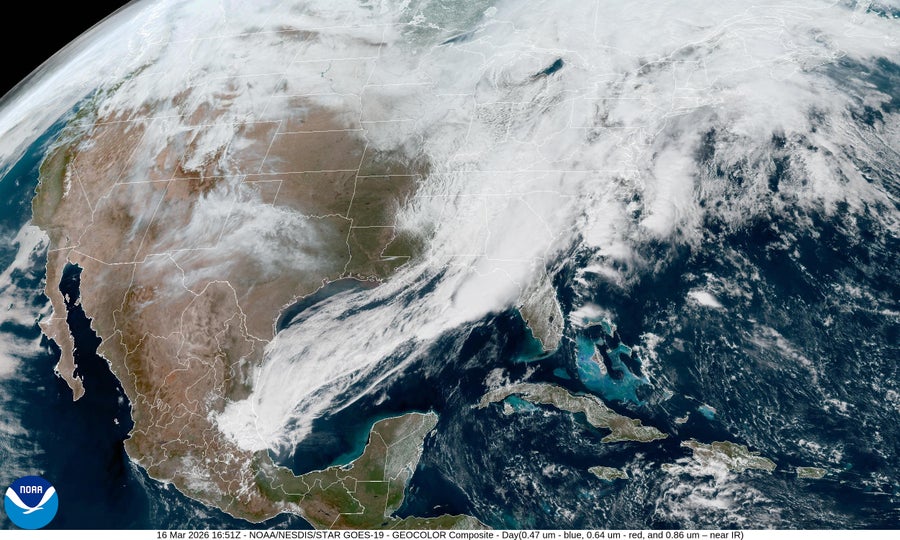
Below the surface, Greenland’s ice appears to be churning up, a process one scientist described as akin to a “boiling pot of pasta”
Hidden underneath the surface of Greenland’s ice, there are strange, vast structures known as “plumes.” But for years, scientists didn’t know how these curious forms came to be—until now. A new study published in the journal Cryosphere reveals that the structures may have been caused by thermal convection in a process similar to the churning of the hot rock in Earth’s mantle.
Convection is caused by temperature differences within a material. Hot material rises, and cool material falls—driving a cycling, or convection. The same phenomenon appears to occur in ice, too, indicating that parts of the ice sheet may be softer than scientists realized. That’s important for one crucial reason: we know that Greenland’s ice sheet is rapidly melting. And as the climate warms, scientists are racing to understand how exactly it will melt and how fast.
“We typically think of ice as a solid material, so the discovery that parts of the Greenland ice sheet actually undergo thermal convection, resembling a boiling pot of pasta, is as wild as it is fascinating,” said Andreas Born, a professor of Earth science at the University of Bergen in Norway, in a statement.
Although the findings do not necessarily mean that the ice sheet will melt faster, they could offer clues as to how it may melt. And that knowledge is critical—the sheet is more than 650,000 square miles in size; by one estimate, if all of it melts, it will raise the planet’s sea levels by a whopping 24 feet.
“Our discovery could be key to reducing uncertainties in models of future ice sheet mass balance and sea-level rise,” Born said in the same statement.
.
ODD ANDERSEN/Getty Images
.
.
Click the link below for the complete article:
.
__________________________________________
February 22, 2026
Business, Food For Thought, Human Interest, Political, Science, Technical amazon, Business News, current-events, Future, Hotels, human-rights, medicine, mental-health, research, Science, Science News, technology, Technology News, travel, vacation Leave a comment

Click the link below the picture
.
Nemesio “El Mencho” Oseguera Cervantes, the powerful and long-pursued head of the Jalisco New Generation Cartel and one of the world’s most-wanted traffickers, died following a Mexican military operation on Sunday, handing the country a consequential victory as it looks to show tangible results to the Trump administration.
Oseguera, a former police officer, led the Jalisco New Generation Cartel, or CJNG, as it became one of the “most powerful and ruthless criminal organizations” inside Mexico, according to the US Drug Enforcement Administration.
Violence erupted in several states in Mexico after security forces from multiple federal branches of Mexico’s military carried out the operation in the town of Tapalpa in the western state of Jalisco. Officials said suspected members of organized crime unleashed a wave of violence following the operation, torching buses and businesses while clashing with security forces.
The US State Department urged American nationals in parts of Mexico to “seek shelter and remain in residences or hotels” until further notice.
Mexico’s Secretariat of National Defense said that US authorities provided “complementary information” that supported the operation. A US defense official confirmed that an interagency US task force “played a role” in the operation. However, the precise role that the US played is still unclear.
Since its establishment in January, the Joint Interagency Task Force-Counter Cartel has regularly worked with the Mexican military through US Northern Command to combat cartel operations along the US-Mexico border, the US official said.
“However, I want to emphasize that this was a (Mexican military) operation, so the success is theirs,” the official noted.
During the raid, CJNG members traded fire with the government forces, resulting in four gang members being killed at the scene, the defense ministry said.
Osegeura and two others were seriously injured and died as they were being transported via aircraft to Mexico City, according to the ministry.
Three Mexican military personnel were also injured in the operation and transferred to a hospital in Mexico City for treatment.
Mexican President Claudia Sheinbaum lauded the work of the agencies involved in the mission.
Mexico’s various state governments are working in “full coordination” to address the disorder, Sheinbaum said on Sunday, adding that “activities are proceeding normally” in most of the country.
“We work every day for the peace, security, justice, and well-being of Mexico,” she said.
Flights canceled as chaos erupts across Mexico
The military operation triggered a series of violent events across the state of Jalisco, which is scheduled to host four matches of the 2026 soccer World Cup in June, before spreading to other states such as Michoacán and Guanajuato.
Suspected members of organized crime groups set buses on fire, blocked roads in the area, and clashed with authorities, Jalisco Governor Pablo Lemus Navarro reported.
Video obtained by CNN showed multiple fires burning and plumes of smoke rising across Puerto Vallarta, a resort town popular with US tourists on Mexico’s west coast.
Violence erupted in several states in Mexico after security forces from multiple federal branches of Mexico’s military carried out the operation in the town of Tapalpa in the western state of Jalisco. Officials said suspected members of organized crime unleashed a wave of violence following the operation, torching buses and businesses while clashing with security forces.The US State Department urged American nationals in parts of Mexico to “seek shelter and remain in residences or hotels” until further notice.
Mexico’s Secretariat of National Defense said that US authorities provided “complementary information” that supported the operation. A US defense official confirmed that an interagency US task force “played a role” in the operation. However, the precise role that the US played is still unclear.
Since its establishment in January, the Joint Interagency Task Force-Counter Cartel has regularly worked with the Mexican military through US Northern Command to combat cartel operations along the US-Mexico border, the US official said.
“However, I want to emphasize that this was a (Mexican military) operation, so the success is theirs,” the official noted.
During the raid, CJNG members traded fire with the government forces, resulting in four gang members being killed at the scene, the defense ministry said.
Osegeura and two others were seriously injured and died as they were being transported via aircraft to Mexico City, according to the ministry.
Three Mexican military personnel were also injured in the operation and transferred to a hospital in Mexico City for treatment.
Mexican President Claudia Sheinbaum lauded the work of the agencies involved in the mission.
Mexico’s various state governments are working in “full coordination” to address the disorder, Sheinbaum said on Sunday, adding that “activities are proceeding normally” in most of the country.
“We work every day for the peace, security, justice, and well-being of Mexico,” she said.
As a result of the violence, several airlines, including Delta Air Lines, Alaska Airlines, American Airlines and Air Canada, cancelled flights to Puerto Vallarta and Guadalajara, leaving some tourists temporarily stranded.
Footage captured at major airports and verified by CNN showed distant smoke and panicked travelers.
At Guadalajara’s international airport, travelers took cover near a jetway and sprinted through the terminal.
Another video showed a large group of people being escorted by uniformed employees across the tarmac of Puerto Vallarta’s main airport.
Amid the flight cancellations, Mexico’s Federal Civil Aviation Agency reported that the airports of Guadalajara, Puerto Vallarta and Tepic had resumed normal operations on Sunday afternoon.
During the military operation, Lemus urged residents to remain in their homes and said that public transportation services in Jalisco would be suspended “until the situation is under control.”
The governor stated that the violence has spread to at least five states and urged the public to avoid traveling on highways.
The Michoacán Public Security Secretariat reported that efforts are underway to restore traffic flow following the road blockades.
Meanwhile, the Guanajuato Security and Peace Secretariat reported fires at pharmacies and convenience stores in different parts of the state.
“No injuries have been reported, but there has been property damage,” the statement added, announcing the deployment of a security operation in coordination with the Army, the National Guard, and municipal police.
Carlos Navarro, 54, a US-Mexico dual citizen, was traveling to visit family in a small town in his home state of Jalisco as the operation unfolded.
While waiting for a connecting bus in Guadalajara, he was informed that the service was canceled due to a bus being set on fire.
Navarro took refuge in a nearby Walmart, where panicked employees permitted him to stay even as an evacuation was underway.
“You hear about it, but it’s very different to hear it on the news than to experience it firsthand,” he told CNN, “It’s very difficult because it makes you very sad. It makes you very sad because I love my country.”
Most-wanted person in Mexico
Oseguera worked for CJNG as it splintered off from the Milenio Cartel, eventually rising through the ranks to lead the criminal enterprise.
Under his leadership, CJNG expanded its power and control in Jalisco and the surrounding area.
Mexican authorities long sought to apprehend Oseguera for his involvement in the cartel. In 2018, Mexico’s Attorney General’s Office offered 30 million pesos ($1.7 million USD) for information leading to his arrest.
Oseguera was also wanted by US authorities, who offered a bounty of up to $15 million for information leading to his arrest.
The US Justice Department charged Oseguera in 2022 with leading the effort to manufacture and distribute fentanyl for importation into the US.
A Justice Department indictment of Oseguera said his organization is active in the Mexican states of Jalisco, Colima, and Veracruz, and has a presence elsewhere.
In 2025, Oseguera was sanctioned and classified as a Specially Designated Global Terrorist by the US Department of State.
In a post on X, Deputy Secretary of State Christopher Landau described Oseguera’s death as a “great development for Mexico, the US, Latin America, and the world.”
He added that he is watching the chaotic scenes in Mexico “with great sadness and concern.”
Pressure from Trump
Sheinbaum has previously cast doubt on the strategy of targeting cartel kingpins, warning that decapitating criminal organizations can fracture them into rival factions and ignite new cycles of violence. Yet security remains a persistent vulnerability for her administration.
Over the past year, Sheinbaum has come under intensifying pressure from US President Donald Trump, as he threatens military intervention and higher import tariffs if Mexico fails to demonstrate concrete gains in curbing drug trafficking.
Shortly after the US capture of ousted Venezuelan leader Nicolás Maduro, Trump suggested that he could expand his military campaign to Mexican drug trafficking groups.
Sheinbaum has rejected the notion of US strikes in Mexico, characterizing them as a violation of Mexico’s sovereignty and territorial integrity.
Instead, she has pursued a direct approach to combating organized crime by increasing cooperation with US security partners.
.
Image: Cath Virginia / The Verge, Getty Images
.
.
Click the link below for the complete article:
.
__________________________________________
February 22, 2026
Business, Food For Thought, Human Interest, Political, Science, Technical amazon, business, Business News, current-events, Future, Hotels, human-rights, medicine, mental-health, research, Science, Science News, technology, Technology News, travel, vacation Leave a comment

Click the link below the picture
.
The Supreme Court may have just helped save the Republic.
On Friday, a 6-3 majority struck down President Trump’s use of the International Emergency Economic Powers Act to implement sweeping global tariffs, including tariffs against Mexico, Canada and China.
Justices John Roberts, Elena Kagan, Sonia Sotomayor, Ketanji Brown Jackson, Amy Coney Barrett and Neil Gorsuch voted together — though for different reasons — to block one of the central elements of Trump’s foreign and economic policy. As Roberts explained in his opinion, in terms of sheer economic impact the case dwarfed many of the most contentious cases of the last several terms, including, for example, Biden v. Nebraska, the case blocking President Joe Biden’s student loan debt forgiveness program.
In fact, it may prove to be the most important Supreme Court decision this century. And if you think I’m being hyperbolic, let me explain.
First, the court blocked a monumental presidential power grab — one so big and so bold that it threatened the foundation of our constitutional system.
The chief justice’s opinion hinged on a legal principle called the “major questions doctrine” — the same doctrine that was used repeatedly to block the Biden administration’s regulations and orders.
As Justice Gorsuch explained in his concurring opinion, the doctrine means, “When executive branch officials claim Congress has granted them an extraordinary power, they must identify clear statutory authority for it.”
In other words, relying on broad and vague statutory language, such as the International Emergency Economic Powers Act’s grant of authority to presidents to “regulate” importation when he or she declares an emergency isn’t precise enough to sweep away the Constitution’s explicit language granting taxing authority to Congress.
Other justices, including Kagan, Sotomayor and Jackson, had an even simpler explanation for blocking the tariffs. As Kagan wrote in her concurring opinion, “Ordinary principles of statutory interpretation lead to the same result.”
It’s not that words like “regulate” and “importation” aren’t precise enough to grant the president extraordinary powers. Instead, as Kagan wrote, “IEEPA’s key phrase — the one the government relies on — says nothing about imposing tariffs or taxes.”
And since the statute says nothing about tariffs or taxes, then the Trump administration can’t use it to prop up the president’s lawless scheme.
The majority’s reasoning alone makes the tariff case extraordinarily important.
For years presidents of both parties have been using broad and vague language in federal statutes as a pretext for engaging in lawmaking in place of Congress.
The expansion of presidential power, which has accelerated exponentially under Trump, has placed our republican form of government under strain. When presidents yank power from Congress, they begin to assume the role of an elected monarch — the exact opposite of the framers’ intent.
Gorsuch explained this masterfully in his concurrence. “For those who think it important for the nation to impose more tariffs,” he wrote, “I understand that today’s decision will be disappointing. All I can offer them is that most major decisions affecting the rights and responsibilities of the American people (including the duty to pay taxes and tariffs) are funneled through the legislative process for a reason.”
The legislative process can be slow and frustrating, Gorsuch explained, but
through that process, the nation can tap the combined wisdom of the people’s elected representatives, not just that of one faction or man. There, deliberation tempers impulse, and compromise hammers disagreements into workable solutions. And because laws must earn such broad support to survive the legislative process, they tend to endure, allowing ordinary people to plan their lives in ways they cannot when the rules shift from day to day.
In a series of interim decisions, the Trump administration recently enjoyed a temporary winning streak at the Supreme Court, but the judicial tide seems to be turning. Combined with its recent decision in Trump v. Illinois, which refused to stay a lower-court ruling blocking Trump’s deployment of the National Guard in Illinois, the Supreme Court has defied two of the administration’s most dangerous, most authoritarian ambitions.
It also appears set to defy Trump yet again in another ruling soon. In oral arguments in Trump v. Cook — a case challenging the president’s decision to fire Lisa Cook, a member of the Federal Reserve’s board of governors — a clear majority of the court seemed skeptical of his actions.
The court will also hear arguments in Trump v. Barbara — the case challenging Trump’s executive order abolishing birthright citizenship as we know it — in April, and the omens are not good for him in that case, either.
Perhaps the most important aspect of the court’s decision is how it may help restore faith in how courts make decisions. The crisis in American democracy isn’t simply a product of the Trump administration’s overreach, it’s also a product of deep public cynicism about government institutions. Trump owes at least some of his appeal to that cynicism. If all that matters is power, then why not pick the man who exercises that power to its fullest?
As a result, millions of Americans wonder, do principles matter at all? Or is all of politics merely a matter of gaining and wielding power, supporting your friends and crushing your enemies?
The tariff decision is a reminder that principles do still matter, that at least one branch of government is not in thrall to the president, and that we can rely on reason and precedent to decide cases rather than simply counting Republican and Democratic appointees.
It is important that Roberts anchored his majority opinion in three cases that struck down the policies of Democratic presidents — Biden v. Nebraska, West Virginia v. EPA (involving environmental regulations), and National Federation of Independent Business v. OSHA (Covid vaccine mandate). That sent a clear signal that presidents of both parties are held to the same standard.
And when you combine the tariff case with Trump v. Illinois, alongside the Trump administration’s terrible record at the Supreme Court during his first term (where he had the worst record of any president at least since Franklin D. Roosevelt), it’s clear that the conservative-dominated judiciary bears little resemblance to the sycophantic Republican Congress.
That doesn’t mean the court has gotten everything right. I still have profound disagreements with its decision to grant expansive presidential immunity in Trump v. United States. That case remains dangerously wrong. I also have qualms about its applications of the unitary executive theory, but the measure of a functioning branch of government isn’t whether I always agree with its decisions (and we should all be thankful for that).
Instead, I measure judicial integrity differently. I ask whether judges are acting in good faith, honestly applying their legal philosophies to the questions before them, regardless of their partisan or ideological affiliation.
There’s also a third, less obvious way in which the court’s decision helps preserve the Republic — by limiting opportunities for corruption.
By assuming vast powers of taxation, Trump made himself the focal point for an enormous amount of lobbying and trading favors. In January, for example, Politico reported that the 20 largest lobbying firms raked in nearly $824 million in revenue in the first year of Trump’s second term, a sharp increase from $595 million in Biden’s last year.
The administration has sent a message, loudly and clearly — almost anything is for sale, at the right price. And as ProPublica reported last April, politically connected people and companies were already benefiting from what appears to be targeted relief from Trump’s tariffs.
The Wall Street Journal’s editorial board called the administration’s opaque process for granting exemptions “the Beltway Swamp’s dream.”
The case is a victory for the Constitution and the rule of law, but there are still causes for concern. Trump is furious. He said he was “ashamed of certain members of the court” and said they were “very unpatriotic and disloyal to our Constitution.”
Those are dangerous words from a dangerous man.
There were also dissents, of course. Justice Brett Kavanaugh wrote one, as did Justice Clarence Thomas. Kavanaugh wrote the principal dissent, which both Thomas and Justice Samuel Alito joined, and his argument was straightforward. When the statute granted Congress the power to regulate importation, the word “regulate” encompasses the power to tariff. “Like quotas and embargoes,” Kavanaugh wrote, “tariffs are a traditional and common tool to regulate importation.”
The most notable portion of his dissent came later in his opinion, when he accurately noted that “numerous” other statutes grant the president the authority to impose tariffs.
Kavanaugh is correct. Other statutes do grant tariff authorizations to the president, and we should expect the administration to try to reconstruct as much of his tariff authority as he can through different means. (Biden did much the same thing in response to the Supreme Court’s student loan decision.)
But Trump’s most powerful tool has been taken away. He’ll have trouble doing tariffs the hard way when he loses the easy way. This is not an administration that is known for its legal competence.
In addition, as Roberts notes in his opinion, those other statutes “contain various combinations of procedural prerequisites, required agency determinations and limits on the duration, amount and scope of the tariffs they authorize.”
Now the ball is on Trump’s side of the net. The court has challenged him on perhaps the signature economic policy of his second term, and he is not taking it well. The threat of Trump defying the Supreme Court hovers over every decision he doesn’t like. On Friday he announced that he would impose a new 10 percent tariff on imports through different legal authorities — a move that will no doubt also be contested in court. Then on Saturday he upped it to 15 percent.
During Trump’s second term, I’ve likened the judiciary to the rear guard of a retreating army. A valiant delaying action can give the army a chance to reinforce, reorganize and strike back. But if the army can’t strike back, then rear guards merely delay defeat.
The judiciary isn’t perfect, but it is performing its core constitutional function. It is preserving the foundation of America’s constitutional structure. But not even the Supreme Court can save Americans from themselves.
If we keep electing men like Trump, they will keep undermining that foundation, until it finally collapses.
One day that may well happen. But on Friday, the Supreme Court said not this day. On this day the presidency is stuffed back into its box. On this day the separation of powers prevails. And on this day the Constitution holds.
It is now our job to make sure that the Supreme Court did not stand in vain.
.
Jonno Rattman for The New York Times
.
.
Click the link below for the complete article:
.
__________________________________________

February 21, 2026
Business, Food For Thought, Human Interest, Political, Science, Technical amazon, business, Business News, current-events, Future, Hotels, human-rights, medicine, mental-health, research, Science, Science News, technology, Technology News, travel, vacation Leave a comment

Click the link below the picture
.
When you walk into a doctor’s office, you assume something so basic that it barely needs articulation: your doctor has touched a body before. They have studied anatomy, seen organs, and learned the difference between pain that radiates and pain that pulses. They have developed this knowledge, you assume, not only through reading but years of hands-on experience and training.
Now imagine discovering that this doctor has never encountered a body at all. Instead, they have merely read millions of patient reports and learned, in exquisite detail, how a diagnosis typically “sounds.” Their explanations would still feel persuasive, even comforting. The cadence would be right, the vocabulary impeccable, the formulations reassuringly familiar. And yet the moment you learned what their knowledge was actually made of—patterns in text rather than contact with the world—something essential would dissolve.
Every day, many of us turn to tools such as OpenAI’s ChatGPT for medical advice, legal guidance, psychological insight, educational tutoring or judgments about what is true and what is not. And on some level, we know that these large language models (LLMs) are imitating an understanding of the world that they don’t actually have—even if their fluency can make that easy to forget.
But is an LLM’s reasoning anything like human judgment, or is it merely generating the linguistic silhouette of reasoning? As a scientist who studies human judgment and the dynamics of information, I recently set out with my colleagues to address this surprisingly underexplored question. We compared how LLMs and people responded when asked to make judgments across a handful of tests that have been studied for decades in psychology and neuroscience. We didn’t expect these systems to “think” like people, but we believed it would be valuable to understand how they actually differ from humans to help people evaluate how and when to use these tools.
In one experiment, we presented 50 people and six LLMs with several news sources, then asked them to rate the source’s credibility and justify their rating. Past research shows that when a person encounters a questionable headline, several things typically happen. First, the person checks the headline against what they already know about the world: whether it fits with basic facts, past events or personal experience. Second, the reader brings in expectations about the source itself, such as whether it comes from an outlet with a history of careful reporting or one known for exaggeration or bias. Third, the person considers whether the claim makes sense as part of a broader chain of events, whether it could realistically have happened and whether it aligns with how similar situations usually unfold.
Large language models cannot do the same thing. To see what they do instead, we asked leading models to evaluate the reliability of news headlines following a specific procedure. The LLMs were instructed to state the criteria they were using to judge credibility and to justify their final judgment. We observed that even when models reached similar conclusions to those of human participants, their justifications consistently reflected patterns drawn from language (such as how often a particular combination of words coincides and in what contexts) rather than references to external facts, prior events, or experience, which were factors that humans drew upon.
In other experiments, we compared humans’ and LLMs’ reasoning around moral dilemmas. Humans draw on norms, social expectations, emotional responses, and culturally shaped intuitions about harm and fairness to think about morality. As one example, when people evaluate morality, they often use causal reasoning. They consider how one event leads to another, why timing matters, and how things might have turned out differently if something had changed along the way. People imagine various situations through counterfactuals in which they ask, “What if this had been different?”
We found that a language model reproduced this form of deliberation fairly well: The model provides statements that mirror the vocabulary of care, duty or rights. It will present causal language based on patterns in language, including “if-then” counterfactuals. But importantly, the model is not actually imagining anything or engaging in any deliberation, just reproducing patterns in how people talk or write about these counterfactuals. The result can sound like causal reasoning, but the process behind it is pattern completion, not an understanding of how events actually produce outcomes in the world.
Across all the tasks we have studied, a consistent pattern emerges. Large language models can often match human responses, but for reasons that bear no resemblance to human reasoning. Where a human judges, a model correlates. Where a human evaluates, a model predicts. When a human engages with the world, a model engages with a distribution of words. Their architecture makes them extraordinarily good at reproducing patterns found in text. It does not give them access to the world those words refer to.
And yet, because human judgments are also expressed through language, the model’s answers often end up resembling human answers on the surface. This gap between what models seem to be doing and what they actually are doing is what my colleagues and I call epistemia: when the simulation of knowledge becomes indistinguishable, to the observer, from knowledge itself. Epistemia is a name for a flaw in how people interpret these models, in which linguistic plausibility is taken as a surrogate for truth. This happens because the model is fluent, and fluency is something human readers are primed to trust.
The danger here is subtle. It is not primarily that models are often wrong—people can be, too. The deeper issue is that the model cannot know when it is hallucinating, because it cannot represent truth in the first place. It cannot form beliefs, revise them or check its output against the world. It cannot distinguish a reliable claim from an unreliable one except by analogy to prior linguistic patterns. In short, it cannot do what judgment is fundamentally for.
People are already using these systems in contexts in which it is necessary to distinguish between plausibility and truth, such as law, medicine, and psychology. A model can generate a paragraph that sounds like a diagnosis, a legal analysis or a moral argument. But sound is not substance. The simulation is not the thing simulated.
None of this implies that large language models should be rejected. They are extraordinarily powerful tools when used for what they are: engines of linguistic automation, not engines of understanding. They excel at drafting, summarizing, recombining, and exploring ideas. But when we ask them to judge, we quietly redefine what judgment becomes—shifting it from a relationship between a mind and the world to a relationship between a prompt and a probability distribution.
What should a reader do with this knowledge? Do not fear these systems, but seek a clearer understanding of what these systems can and cannot do. Remember that smoothness is not insight, and eloquence is not evidence of understanding. Treat large language models as sophisticated linguistic instruments that require human oversight precisely because they lack access to the domain that judgment ultimately depends on: the world itself.
.
Tom Werner/Getty Images
.
.
Click the link below for the complete article:
.
__________________________________________
February 21, 2026
Business, Food For Thought, Human Interest, Political, Science, Technical amazon, business, Business News, current-events, Future, Hotels, human-rights, medicine, mental-health, research, Science, Science News, technology, Technology News, travel, vacation Leave a comment

Click the link below the picture
.
Engineering majors earn some of the highest salaries right after college — and they’re still near the top years later.
That’s according to the latest findings from the Federal Reserve Bank of New York, based on 2024 U.S. Census data, the most recent available.
The analysis breaks down annual earnings for college graduates by major and reflects the income of full-time workers whose highest degree is a bachelor’s, excluding currently enrolled students. Various engineering degrees have consistently ranked among the top-paying fields in recent years.
The highest-paying majors for workers ages 22 to 27 are computer engineering, computer science, and chemical engineering, with recent graduates earning median early-career salaries of $85,000 or more. That’s well above the U.S median personal income of just over $45,000, according to U.S. Census Bureau data.
However, engineering accounts for about 6% of bachelor’s degrees awarded nationwide, representing a relatively small share of all college graduates, according to the most recent data from the National Center for Education Statistics.
Here are the 18 majors that lead to the highest salaries for workers ages 22 to 27:
- Computer engineering: $90,000
- Computer science: $87,000
- Chemical engineering: $85,000
- Aerospace engineering: $85,000
- Industrial engineering: $83,000
- Electrical engineering: $82,000
- Mechanical engineering: $80,000
- Construction services: $75,000
- Civil engineering: $75,000
- General engineering: $75,000
- Miscellaneous engineering: $75,000
- Economics: $72,000
- Business analytics: $72,000
- Finance: $70,000
- Mathematics: $70,000
- Nursing: $70,000
- Mathematics: $70,000
- Finance: $70,000
Engineering graduates remain in strong demand for their mix of mathematical skills and technical expertise, which are valuable across a wide range of industries, data from the National Association of Colleges and Employers shows.
While artificial intelligence is reshaping how the technical work is done, employment in many engineering fields is still projected to grow over the next decade, according to the Bureau of Labor Statistics.
Engineering also tends to pay well over time. Among graduates ages 35 to 45, every engineering major reports median pay of at least $100,000. Here are all of the majors with mid-career median earnings of $100,000 or more, according to the New York Fed.
- Chemical engineering: $135,000
- Computer engineering: $131,000
- Aerospace engineering: $130,000
- Electrical engineering: $123,000
- Computer science: $120,000
- Mechanical engineering: $120,000
- Construction services: $120,000
- Civil engineering: $115,000
- Economics: $115,000
- Finance: $112,000
- Business analytics: $109,000
- General engineering: $105,000
- Miscellaneous engineering: $105,000
- Physics: $105,000
- Engineering technologies: $104,000
- Industrial engineering: $100,000
- Mathematics: $100,000
- Information systems: $100,000
- Marketing: $100,000
- Biochemistry: $100,000
- Political science: $100,000
In contrast, education and arts majors tend to earn significantly less overall. By ages 35 to 45, six fields of education majors report median earnings below $60,000, placing them among the lower-paid fields in the study
.
Hill Street Studios | Getty
.
.
Click the link below for the complete article:
.
__________________________________________
February 21, 2026
Business, Food For Thought, Human Interest, Political, Science, Technical amazon, business, Business News, current-events, Future, Hotels, human-rights, medicine, mental-health, research, Science, Science News, technology, Technology News, travel, vacation Leave a comment

Click the link below the picture
.
On weekdays, Doug Micetich works as an “inclusion concierge” at the Kelsey Ayer Station, a six-story, multifamily development with 115 apartments located in downtown San Jose, Calif.
Mr. Micetich, 51, regularly volleys advice and gets people on their way. But for many of the disabled residents living here, he also helps with critical issues related to benefits assistance, including connecting residents to in-home providers who can help with personal care and preparing meals.
The Kelsey Ayer Station is the almost two-year-old first site for the Kelsey, a national nonprofit that builds and advocates for affordable and accessible housing for people with disabilities.
Currently, there is a waiting list to get an apartment there. At the nonprofit’s newest building in San Francisco, which celebrated its grand opening last fall, more than 7,000 people applied for 112 apartments. Next year, the Kelsey will open a new building in Birmingham, Ala., with other sites slated for the future.
The needs of disabled people are not often prioritized in conversations around solving the country’s affordable housing crisis. According to nonpartisan group, the National League of Cities, 26 percent of people have a disability, yet it’s estimated that less than 6 percent of the national housing supply is made to be accessible.
The Kelsey aims to demonstrate that even in one of the nation’s most expensive markets, it’s possible to build affordable housing with support services. And it can be replicated.
“Our approach from the beginning was addressing what we define as the overlooked and unmet housing needs of people with disabilities,” said Micaela Connery, the Kelsey’s chief executive. She founded the company alongside her cousin, Kelsey Flynn O’Connor, who lived with multiple disabilities and struggled to find accessible housing in adulthood. (Ms. O’Connor died in 2018.)
Exhibiting the charm of a midsize boutique hotel, the Kelsey Ayer Station is situated in San Jose’s First Street Urban Village corridor, next to the light rail line and close to major bus routes, shops, and cultural hubs like the city’s art museum and the popular San Pedro Square food market.
“There’s not an ounce of it feeling institutional or sterile, which is sometimes both the reality and the perception of things that anchor on access,” explained Ms. Connery.
Indoors, the airy entrance melds into common areas designed for working and gathering. Colorful artworks by disabled artists adorn the walls. Everywhere, color-coded symbols promote wayfinding around the building.
Apartments feature wide doorways, open floor plans, low-to-the-ground storage, and dimmable lighting. Several units offer bathrooms with roll-in showers.
Darcy McCann, 46, is a full-time graduate student finishing a post-bachelor’s program in clinical psychology. Diagnosed with cerebral palsy at age 2, she became a resident of the Kelsey in the summer of 2024 after applying through the open lottery system.
Before that, she was living in accessible housing that lacked community. But now, meeting up with others to play board games or to paint quells feelings of isolation. “Living here provides a great opportunity to meet and talk with others in a supportive space,” she said.
Ms. McCann recalls how past living arrangements prevented simple tasks like washing her hands at the kitchen sink because counters couldn’t accommodate the size of her powered wheelchair. Here, access is expected.
Another resident, Barry Gee, 40, said the Kelsey community provides a sense of security that he didn’t have in past housing, noting he feels safe “because I know and trust my neighbors.” The ability to walk to nearby grocery stores and the community center are ancillary benefits, along with proximity to the light rail for the occasional trips Mr. Gee makes to the Great America amusement park in nearby Santa Clara.
One quarter of the Kelsey’s apartments are reserved for people with disabilities, and units are available to residents with and without disabilities across all income levels. Apartment rents range from $578 to $2,899, and some residents with vouchers may pay even less. Leases are written in clear, plain language without the typical legalese.
The project came together through philanthropic, private, and public partners, including support from the city of San Jose. The $75 million development budget allowed a cost of about $650,000 per unit. “Our project is consistent with and in some cases below typical affordable housing costs in the Bay Area,” said Ms. Connery, noting that developers often equate accessibility with high building costs.
The Kelsey’s ethos is steered by a compendium of “inclusive design standards” which were created by people with and without disabilities, and with members of the Inclusive Design Council and Mikiten Architecture. It features more than 300 elements meant to serve people across access needs, and it covers housing design and operations strategies along with leasing and resident services. Among the standards: ample common spaces with flexible seating, play areas for service and companion pets, and the on-site inclusion concierge.
“Real inclusion only works when everyone understands the ‘why,’ not just the requirements,” said Ms. Connery.
Representative Sam Liccardo says the city of San Jose is changed by the achievements of the Kelsey Ayer Station. “Hundreds of our San Jose neighbors gained a home, and our nation gained a model for inclusive housing.”
For Mr. Micetich, the inclusion concierge, no two days are the same. In the morning, he might introduce a resident to resources for job training or financial planning. By the afternoon, he could be finalizing details for a pizza and art night to bring residents together. “It’s not like we’re just providing the housing. We’re trying to truly make a community.”
.
Jason Henry for The New York Times
.
.
Click the link below for the complete article:
.
__________________________________________
February 20, 2026
Business, Food For Thought, Human Interest, Political, Science, Technical amazon, business, Business News, current-events, Future, Hotels, human-rights, medicine, mental-health, research, Science, Science News, technology, Technology News, travel, vacation Leave a comment

Click the link below the picture
.
The U.S. Food and Drug Administration will review a messenger RNA (mRNA) flu vaccine for approval, according to its maker, Moderna. The decision is a dramatic U-turn for the agency, which, only about a week ago, had publicly rejected Moderna’s application to get the shot reviewed.
When it initially rejected the application, the FDA had said Moderna’s clinical trials were lacking. On Wednesday, Moderna said it had made modifications to its application. While the reversal has been welcomed by the vaccine maker and public health experts alike, the incident has been the latest instance of the Trump administration undermining vaccine science. Secretary of Health and Human Services Robert F. Kennedy, Jr., whose department has jurisdiction over the FDA, is a noted vaccine skeptic who has repeatedly criticized mRNA COVID vaccines.
HHS spokesperson Andrew Nixon said in a statement that the FDA had held discussions with the company, leading to “a revised regulatory approach and an amended application, which FDA accepted.”
“FDA will maintain its high standards during review and potential licensure stages as it does with all products,” Nixon said.
William Schaffner, an infectious disease physician and a professor at Vanderbilt University Medical Center, says the FDA’s decision to backtrack is “good news.”
“It is important to give all candidate new vaccines a fair, equitable assessment. This is especially true for new mRNA-based vaccines as this technology currently is being applied to create vaccines against a variety of illnesses, including cancers,” he says.
Modern’s mRNA flu shot is based on the same technology as its COVID vaccine. The mRNA COVID shots have been credited with saving millions of lives. “With these mRNA vaccines, the benefits outweigh the risk,” says Angie Rasmussen, a virologist at the University of Saskatchewan.
In these kinds of shots, mRNA—essentially the instruction manual for genes to make proteins—is injected into the body, where it teaches cells to recognize and attack viral proteins. Vaccines that use mRNA are attractive prospects for protecting against flu and a host of other diseases, including cancer. They are easy to manufacture quickly and highly flexible, meaning new vaccines can be made rapidly to respond to emerging viral variants.
Having such a vaccine available for flu would “potentially be a major step forward in efforts to protect the health of individuals from severe influenza,” says Robert Hopkins, medical director of the National Foundation for Infectious Diseases.
.
Jackyenjoyphotography/Getty Images
.
.
Click the link below for the complete article:
.
__________________________________________
February 20, 2026
Business, Food For Thought, Human Interest, Political, Science, Technical amazon, business, Business News, current-events, Future, Hotels, human-rights, medicine, mental-health, research, Science, Science News, technology, Technology News, travel, vacation Leave a comment

Click the link below the picture
.
The shell-shocked, disbelieving, haunted face of Andrew Mountbatten-Windsor will become part of how his arrest will be remembered.
It’s not a particularly edifying sight. Andrew is slumped in the back seat of a car after his release, fingers steepled, whether in prayer or protection.
His collar is up. For that matter, his collar has been felt. Was Andrew’s expression of shock how he looked when he had a mugshot photo taken in police custody?
It’ll become the counterpart of that other famous Andrew picture, taken almost 25 years ago, of a smiling, confident prince, beside a 17-year-old Virginia Giuffre in a London townhouse, when the capital was his playground.
Earlier, Andrew Mountbatten-Windsor had become the first senior member of the Royal Family in modern history to have been arrested. It was another catch-your-breath moment.
It was followed by an unprecedented statement from his brother, King Charles. “Let me state clearly: the law must take its course,” read the unambiguous statement from the King, offering no hiding place or royal get-out clause.
The arrest, on suspicion of misconduct in public office, relates to Andrew’s time as the UK’s trade representative between 2001 and 2011. It follows a series of allegations, prompted by the release of the Epstein files, that Andrew shared official documents.
That included sharing reports from trade visits and a confidential briefing on investment in Afghanistan with the sex offender Jeffrey Epstein, and passing a Treasury briefing to a personal business contact.
Being a member of the Royal Family will make no legal difference to how his case is assessed.
Andrew Mountbatten-Windsor has consistently denied any wrongdoing in his associations with Epstein.
The no-nonsense police statement on Thursday morning was a bluntly worded news earthquake: “The man remains in police custody at this time.”
Whoever thought we’d read that sentence when the man in question is still in the line of succession to the throne, and in theory, if not in practice, remains a counsellor of state?
Andrew’s explanation of his behaviour won’t be in a TV interview. The public will not have forgotten the BBC’s Newsnight interview, which remains the last time Andrew spoke publicly about his relationship with Epstein.
This time, it will have been in the presence of a lawyer and the investigating officers, rather than under the TV lights, and the consequences of any untruths will be much more serious.
The action by the police on a winter’s morning in Norfolk was remarkable, breaking news, and also appeared to have taken the King by surprise as much as anyone else.
But the story of Andrew’s links to Epstein has been decades in the making – and so has Andrew’s downfall, first chipping away at his reputation before turning into an avalanche of disgrace.
The association with Epstein meant Andrew lost his trade envoy role in 2011, and after that disastrous Newsnight interview in 2019 he was removed as a working royal.
His retreat from public life became even more complete after his 2022 settlement with his accuser, Virginia Giuffre.
And in October last year, as emails revealed that Andrew hadn’t ended his links with Epstein when he had claimed, he was stripped of his prince and duke titles, and eventually shuffled out of his Royal Lodge home at Windsor.
They were tough sanctions, removing any vestige of royal status.
The Palace has had some nervous moments in recent times, with questions shouted by hecklers suggesting they might be protecting Andrew.
The statement from the King will have sought to draw a line under this and separate the Royal Family from whatever might happen to Andrew.
Another important factor in all of this is the public mood. The Epstein files, and what they have revealed regarding a network of those apparently high in connections but low on morals, have left people feeling angry at such unaccountable power and wealth.
It has felt abusive to the public, that the rich and influential appear to have been immune from the consequences of their behaviour, be it in terms of either sex or money. It has seemed to the public that corruption paid.
Making the arrest even more resonant is that it happened on Andrew’s 66th birthday. Any candles would have to wait.
There are references to Andrew’s previous birthdays in the Epstein files, such as a glitzy bash for his 50th at St James’s Palace.
One person who had to turn down the invite for that night of “mysterious mischief” was Jeffrey Epstein, who was still under house arrest as part of a sentence for procuring a minor for prostitution.
Andrew celebrated his birthday 12 months ago as Prince Andrew, the Duke of York, Earl of Inverness and Knight of the Garter. Who knows what will have changed by his next birthday.
.
Andrew Mountbatten-Windsor, after his release from custody after his arrest
.
.
Click the link below for the complete article:
.
__________________________________________
February 20, 2026
Business, Food For Thought, Human Interest, Political, Science, Technical amazon, business, Business News, current-events, Future, Hotels, human-rights, medicine, mental-health, research, Science, Science News, technology, Technology News, travel, vacation Leave a comment

Click the link below the picture
.
After Russia invaded Ukraine, the United States and much of the West all but severed economic ties to Moscow.
But since President Trump took office more than a year ago, he has described a “tremendous opportunity” for deals with Russia if the war ends, and the Kremlin has dangled possible investments in front of the famously transactional leader.
Now, a Texas investor with ties to the Trump family is testing the possibility of making deals with Russian companies, even as the fighting in Ukraine rages on. The investor, Gentry Beach, said that he quietly signed an agreement with one of Russia’s biggest energy companies last fall to develop natural gas in Alaska.
Mr. Beach’s deal, which he insisted was motivated by business interests and not politics, shows how Mr. Trump is starting to bring Russia back into the Western economic fold, even as few signs point to President Vladimir V. Putin being ready to stop his assault on Ukraine, and U.S. sanctions against Russia remain in place.
It also shows how the Kremlin’s messaging about what it says are immense business opportunities in Russia — an aide to Mr. Putin this week put their value at an improbable $14 trillion — is starting to resonate in the United States.
“Trump is a transactional president,” Mr. Beach said in an interview. “I don’t think people would have felt as comfortable working with Russian companies during the Biden administration as they do during the Trump administration.”
The project is in its early stages and faces steep hurdles, and Mr. Beach declined to disclose the financial details. The Russian company, Novatek, said it was “indeed having negotiations on the potential use” of its technology to liquefy natural gas in remote northern Alaska. But it did not confirm that it was working with Mr. Beach.
Mr. Beach’s deal could represent the first known instance of an American investor formalizing a new business venture with a major Russian company since the Kremlin started promoting deal-making opportunities to the Trump administration a year ago. Overall, U.S. companies have remained deeply skeptical of doing business with Russia, and the Trump administration imposed significant new sanctions on Russia’s oil industry last fall.
But Mr. Trump, despite voicing occasional frustration with Mr. Putin, has often echoed the Kremlin’s talking points, both on Russia’s economic promise and on the idea that President Volodymyr Zelensky of Ukraine is standing in the way of peace. He said last week that Russia “wants to make a deal” to end the war, and that “Zelensky is going to have to get moving.”
Mr. Beach said he negotiated his deal in meetings in Dubai and Europe last year with Novatek’s billionaire chief executive, Leonid Mikhelson, who is under sanctions in the U.K. and Canada but not in the United States or the European Union.
“It’s time for all of us to work together,” Mr. Beach said, describing himself as a “bringer of peace.”
Mr. Beach, a hedge fund and private equity investor, is a college friend of Donald Trump Jr.’s, the president’s eldest son, and served as a finance vice chairman for Mr. Trump’s 2017 inauguration. His pursuit of deals around the world since Mr. Trump’s re-election has sowed confusion about his ties to the administration and frustrated Donald Trump Jr., The Wall Street Journal reported last fall.
Speaking to The New York Times last week, Mr. Beach said the relationship with Donald Trump Jr. played no role in the Novatek deal, and said he did not “do any business with the Trumps on any level.” He said that his effort was not part of the U.S.-Russia talks led by Steve Witkoff, Mr. Trump’s peace envoy.
But Mr. Beach also said that “this project is known about at the highest levels” in Moscow and Washington. He said he would soon announce the names of executives who would lead the project.
Last August, days after meeting Mr. Trump in Alaska, Mr. Putin said that “we are discussing with our American partners” the possibility of using Novatek technology to produce liquefied natural gas in Alaska. Doug Burgum, the interior secretary, said in October that foreign investors were interested in exporting the gas directly from Alaska’s North Slope.
Mr. Mikhelson, one of Russia’s richest men, has kept a low profile since Russia’s 2022 invasion of Ukraine, but met regularly with Mr. Putin before then, according to the Kremlin’s website.
Novatek, which has close ties to the Kremlin but is not state-controlled, is under partial U.S. sanctions, and some of its subsidiaries face more severe restrictions. Mr. Beach said he had been able to legally pursue his deal because the United States did not fully sanction the Novatek parent company itself.
Kirill Dmitriev, Mr. Putin’s economic envoy, has pitched a multitude of potential deals to Mr. Witkoff and other interlocutors, including jointly selling gas to Europe and building an undersea tunnel from Russia to Alaska.
Many U.S. companies scrambled to pull out of their business dealings with Russia after Mr. Putin’s invasion of Ukraine in 2022, facing intensifying Western sanctions and political pressure.
Under Mr. Trump, that pressure has eased. Last spring, Mr. Trump described Russia’s economic potential as a “tremendous opportunity.” But while the Kremlin was eager to re-establish business ties, Mr. Trump said that major deal-making would only be possible after Russia stopped its war in Ukraine.
That is why Mr. Beach’s deal could mark a milestone, especially as the U.S.-mediated Ukraine peace talks drag on. Mr. Beach said he was not waiting to jump into deal-making with Russia, because “the guy that’s early to the opportunity is usually the one I’ve found that makes the money.”
Most of the American corporate world, which once saw Russia as a hot emerging market with a growing middle class, remains skeptical about returning to the country because of the political uncertainty and the limited potential gains.
Ivan Grek, the director of George Washington University’s Russia program, said that Mr. Beach’s project could be an early test of whether new U.S.-Russia deals are realistic. He said he also saw interest in doing more business with Russia from medical technology, pharmaceutical and consumer goods companies.
“Gentry is a pioneer in this case, if not the only pioneer,” said Mr. Grek, who has been convening discussions among officials, businesspeople and academics on economic policy toward Russia.
Mr. Beach’s project would tackle an enduring conundrum for the U.S. energy industry: how to sell the huge amount of natural gas produced in the slice of tundra near Alaska’s Arctic Ocean coastline known as the North Slope. But it still faces major obstacles, including securing the participation of larger energy companies that would supply gas to the project.
It could also compete with Trump-backed plans for an 800-mile pipeline to send North Slope gas to southern Alaska, where it could be liquefied and exported. Mr. Beach argued that his project would be complementary to the pipeline.
The project would echo the approach Novatek has developed for shipping gas from the remote Russian Arctic: turning it into liquefied natural gas in a prefabricated plant and transporting it out by icebreaker. Novatek said in its statement that the climate in the Alaskan Arctic was similar.
“Experts have discussed this opportunity for many years,” Novatek’s statement went on. “Having said that, all the arrangements can only be implemented subject to support from the Russian and U.S. authorities.”
Mr. Beach described Mr. Mikhelson, the billionaire head of Novatek, as “very pro-American,” and said his agreement envisioned using a movable liquefied natural gas plant already under construction at Novatek’s factory in Russia’s Murmansk region. He also said he would seek to use ice-breaking liquefied natural gas carriers built in South Korea to transport the gas to Asian markets.
Mr. Beach said he was pursuing the Novatek project from a “purely business” perspective. But people with experience doing business in Russia said that Mr. Beach’s reputation as a Trump associate was likely to serve him well there.
Paul Ostling, a former Ernst & Young executive who served on Russian corporate boards until the Ukraine invasion in 2022, said the risks in Russia now were so steep that only people with strong political connections stood a chance of success in entering the market.
“That’s a huge difference from saying the door is open for normal business,” he said.
The Latest on the Trump Administration
Three Conflicts to Solve: Iran, Ukraine and Gaza are in play as Trump envoys, Steve Witkoff and Jared Kushner, conduct talks on all of them. But progress in each conflict is scant.
C.D.C. Leadership Shake-Up: The director of the National Institutes of Health, Dr. Jay Bhattacharya, will take on the additional role of acting director of the Centers for Disease Control and Prevention, two administration officials said.
Targeting Noncitizen Voting: Homeland security officials, at the direction of the White House, are intensifying efforts to investigate voting by noncitizens in pursuit of Trump’s baseless claims that illegal voting by undocumented immigrants is a rampant and insidious threat.
Airport Name Trademark: Trump’s family business recently filed trademark applications for potential airport names, records show, an effort to preserve control over the use of his brand.
OSHA Workplace Inspections Dropped: New data about the federal agency responsible for workplace safety suggests a substantial drop in inspections in the months after Trump returned to office last year.
.
President Trump with President Vladimir V. Putin of Russia during a meeting in Alaska last year. Credit…Doug Mills/The New York Times
.
.
Click the link below for the complete article:
.
__________________________________________
so looking to the sky ¡ will sing and from my heart to YOU ¡ bring...
CEO and Founder of Nsight Health
https://www.tangietwoods
Catholic News, Prayers, HD Images, Rosary, Music, Videos, Holy Mass, Homily, Saints, Lyrics, Novenas, Retreats, Talks, Devotionals and Many More
Finding The Funny in Life’s Everyday Chaos
Decoding Power. Defying Narratives.
A creative collaboration introducing the art of nature and nature's art.
The Home Of Entertainment News, Reviews and Reactions
Hollow Earth Society
•Whenever you are confronted with an opponent, conquer him with love.(Gandhi)
Algotrader at TRADING-CLUBS.COM
Film and Writing Festival for Comedy. Showcasing best of comedy short films at the FEEDBACK Film Festival. Plus, showcasing best of comedy novels, short stories, poems, screenplays (TV, short, feature) at the festival performed by professional actors.
Peace. Tranquility. Insanity.
Take a ride on the wild side
Découvre des musiques prometteuses dans la sphère musicale française (principalement, mais pas que...).
No tiene que Ser una Pesadilla.
Life in Kana-text (er... CONtext)
Tracking money, power, and meaning across borders.
Where feelings meet metaphors and make questionable choices.
Finding hope and peace through writing, art, photography, and faith in Jesus.
Eyasu
MOVING FORWARD...That's how WINNING is done!”-Rocky Balboa
love each other like you're the lyric to their music
Comprendere il mondo per cambiarlo.
Mid-Life Ponderings
Travel,Tourism, Life style "Now in hundreds of languages for you."
I speak the honest truth. I share my honest opinions. I share my thoughts. A platform to grow and get surprised.
User-generated ratings for ethical consumerism
Travel and Lifestyle Blog
Questo è un piccolo angolo di poesie, canzoni, immagini, video che raccontano le nostre emozioni
“Log your journey to success.” “Where goals turn into progress.”
scrivo per dare forma ai silenzi e anima alle storie che il mondo dimentica.
“Dream deeper. Believe bolder. Live transformed.”
Vichar, Motivation, Kadwi Baat ( विचार दर्शनम्)
Traum zur Realität
Savor. Style. See the world.
معا نحو النجاح
Best Forex Broker Ratings & Reviews
art, writing and music by James McFarlane and other musicians
living life in conscious reality
Freelance poetry writing
Peace 🕊️ | Spiritual 🌠 | 📚 Non-fiction | Motivation🔥 | Self-Love💕