January 10, 2026
Mohenjo
Business, Food For Thought, Human Interest, Political, Science, Technical
amazon, business, Business News, current-events, Future, Hotels, human-rights, medicine, mental-health, research, Science, Science News, technology, Technology News, travel, vacation

Click the link below the picture
.
The Washington National Opera decided on Friday to move its performances out of the John F. Kennedy Center for the Performing Arts, abandoning the hall where it has played since 1971 in perhaps the largest artistic rebuke yet to President Trump’s campaign to remake the Kennedy Center in his image.
The opera company is seeking to sever its ties with the Kennedy Center after a tumultuous year in which both groups have faced cancellations by artists, empty seats, and the retrenchment of donors protesting Mr. Trump’s intervention. Within weeks of beginning his second term, the president named himself chairman of the center and installed a political ally, Richard Grenell, as its executive director, while filling its board with supporters.
A resolution to leave was approved by the opera’s board of trustees on Friday. The opera said in a statement that it would “seek an amicable early termination of its affiliation agreement with the Kennedy Center and resume operations as a fully independent nonprofit entity.”
The resolution calls for the opera to move its performances out of the Kennedy Center’s 2,364-seat Opera House as soon as possible and to reduce the number of performances as a cost-saving measure. Opera officials said that new sites in Washington have been lined up, but that no leases have been signed. They declined to name those venues.
The officials said details about the new schedule would be announced shortly. The Kennedy Center’s website currently lists the opera’s lineup of spring performances, including Scott Joplin’s “Treemonisha” and “West Side Story” as well as its upcoming gala, but a separate website has been set up.
The resolution also calls for the opera to begin negotiations with the Kennedy Center about ending an affiliation agreement that has bound the cultural institutions since it was signed in 2011, when the opera was facing financial challenges.
The opera declined to release a copy of the resolution, which was approved by the 37-member board during a virtual meeting on Friday. But details of its contents were provided to The New York Times by officials involved in the deliberations.
Under Mr. Grenell, the Kennedy Center has been aggressive in trying to discredit artists who have canceled commitments with the center. But on Friday, Roma Daravi, a spokeswoman, said the center agreed that the time had come to end this relationship.
“After careful consideration, we have made the difficult decision to part ways with the W.N.O. due to a financially challenging relationship,” she said. “We believe this represents the best path forward for both organizations and enables us to make responsible choices that support the financial stability and long-term future of the Trump Kennedy Center.”
In a social media post that has since been deleted, Mr. Grenell said that ending the arrangement would give the Kennedy Center the flexibility to bring in operas from around the world. “Having an exclusive Opera was just not financially smart,” he wrote. “And our patrons clearly wanted a refresh.”
Opera leaders said the decision to leave was in response to a drop in attendance and a decline in donor contributions during the president’s second term, as well as an escalating number of artists who have refused to appear at the Kennedy Center since Mr. Trump’s name was added to the building last month. (The authority of the board to overrule Congress and rename the center, which was created in 1971 in tribute to John F. Kennedy, is disputed, and The Times has continued to refer to its legal name.)
“I am deeply saddened to leave the Kennedy Center,” Francesca Zambello, who has been the opera’s artistic director for 14 years, said in a statement. “I have been proud to be affiliated with a national monument to the human spirit, a place that has long served as an inviting home for our ever-growing family of artists and opera lovers.”
In its statement, the opera appeared to take pains to be conciliatory, not naming Mr. Trump or Mr. Grenell.
“The board and management of the company wish the center well in its own future endeavors, including recognizing the center for having secured significant funding, including $275 million from Congress, for upgrades to the center,” the statement said.
The affiliation agreement was first negotiated when Barack Obama was president, setting a framework for the organizations to work cooperatively in hiring the opera company’s general director (currently Timothy O’Leary) and artistic director, as well as to make decisions on its programming. The Kennedy Center also leases space to the opera company for storage, offices, and rehearsals.
Among the most difficult issues that need to be resolved is the future of the opera’s $30 million endowment, which has already become a matter of dispute. The opera contends that the affiliation agreement makes clear that both entities control the fund, the result of a history of donations from opera supporters in Washington.
Officials with the opera said they would move all performances out of the center, regardless of whether its formal ties are ended. They asserted that taking their shows to other venues would free the company of programming and personnel entanglements with the Kennedy Center.
.
 Washington National Opera officials contend that exiting the Kennedy Center would also give it more control over programming decisions. Credit…Kenny Holston for The New York Times
.
.
Click the link below for the complete article:
.
__________________________________________
January 9, 2026
Mohenjo
Business, Food For Thought, Human Interest, Political, Science, Technical
amazon, business, Business News, current-events, Future, Hotels, human-rights, medicine, mental-health, research, Science, Science News, technology, Technology News, travel, vacation

Click the link below the picture
.
President Donald Trump’s push to take control of Venezuela’s oil has focused global attention on the South American nation’s vast reserves.
Trump has repeatedly touted Venezuela’s rich oil supply as among the motivations for the January 2 military assault on the country and the capture of its leader, Nicolás Maduro, who has since been charged with drug trafficking and weapons possession.
But just how much oil does Venezuela have, and why?
In 2024, the country claimed more than 300 billion barrels of proven crude oil reserves, the highest of any nation. The runners-up were Saudi Arabia, with more than 260 billion barrels, and Iran, with more than 200 billion barrels. The global total was 1,566 billion barrels.
And the vast reserves are not a coincidence. Geology is very much in Venezuela’s favor, says Luis Zerpa, a petroleum engineer at the Colorado School of Mines. “From the geology side, it just has the perfect location,” he says. And like all fossil fuels, the country’s oil owes its existence to deep time—and the planet’s dynamic surface.
The story of oil begins when land is pushed up in one region, creating a low-lying basin nearby, Zerpa says. Rock is eroded from the higher-elevation land into the basin, which also fills with the organic remains of plants and animals. Over millions of years, enough material piles up above to raise the temperature and pressure to the point that sediments turn into rock and organic material becomes oil and gas.
The balance of oil and gas depends on two factors. The first is how much rock builds up above the material. The so-called oil window occurs at a depth of anywhere between 4,000 and 12,000 feet; below it, organic matter is more likely to turn into gas. The other factor is the origin of the organic material itself—marine plants are more likely to become oil, whereas terrestrial plants are more likely to become gas.
As oil and gas form—and as tectonic plates move—the rock surrounding these deposits begins to fracture. This sets the hydrocarbons free from the source rock in which they formed and enables them to migrate up into more porous rock that then traps them in place.
Venezuela is nestled between the Caribbean and South American plates. And the Nazca plate, which underlies the eastern Pacific Ocean, also shapes the area’s tectonic scene. The jostling of all those plates lifted up the northern Andes and other highlands in the region, while it simultaneously created three sedimentary basins that have produced oil and gas: the Eastern Venezuela Basin in the north, the Maracaibo basin in the northwest, and the Barinas-Apure basin in the west.
Hence, Venezuela’s more than 300 billion barrels of proven crude oil reserves were formed. Here, “proven” means that engineers have drilled enough wells to accurately estimate the extent of oil and gas deposits in the country’s territory.
Getting that oil is a different matter. Venezuela’s production of the fossil fuel peaked around 1970 at around 3.7 million barrels per day, before it fell steeply starting in the late 1970s and continued to drop during the 1980s. It recovered here and there in the mid-1990s and early 2010s. But in 2025, the nation produced only around 1.1 million barrels per day. Analysts expect that any political transition in the wake of Maduro’s capture and arrest will barely raise that output for at least the next two years: aging infrastructure has severely constrained production, and fixing that will take billions of dollars in investment and several years, Reuters has reported.
.
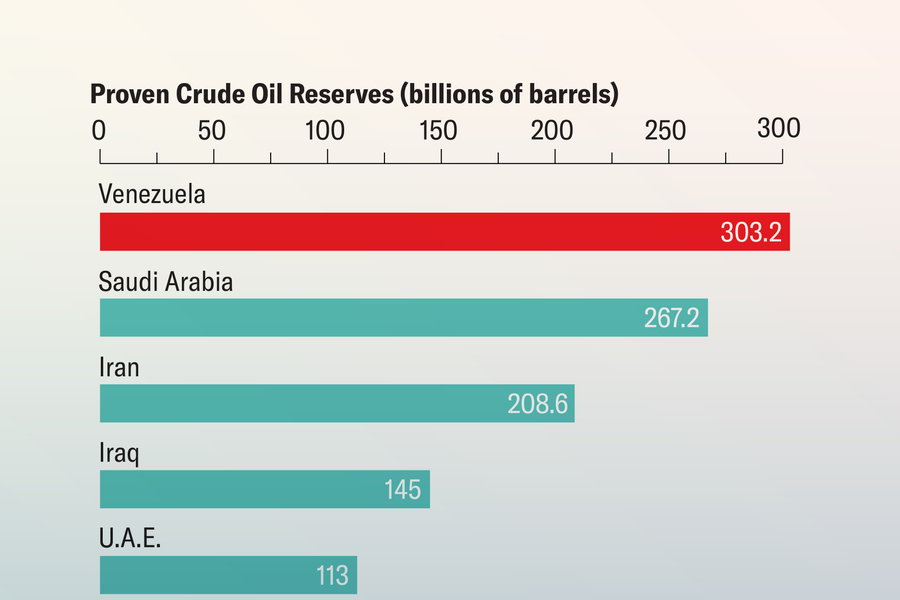 Amanda Montañez; Source: OPEC Annual Statistical Bulletin 2025. Organization of the Petroleum Exporting Countries, 2025 (data)
.
.
Click the link below for the complete article:
.
__________________________________________
January 9, 2026
Mohenjo
Business, Food For Thought, Human Interest, Political, Science, Technical
amazon, business, Business News, current-events, Future, Hotels, human-rights, medicine, mental-health, research, Science, Science News, technology, Technology News, travel, vacation

Click the link below the picture
.
In my work with parents who are caring for a child with an eating disorder, I’ve become keenly aware of the language we use when talking about kids and food. Our words can shape our attitudes and beliefs, our identities and anxieties. And the familiar phrase “picky eating” — with its undertones of disapproval and even blame — has always left a bad taste in my mouth.
“Picky eating” lacks an actual definition and is so vague it can describe a child who isn’t a fan of bitter vegetables, one who isn’t getting enough nourishment to grow, and everything in between. It’s become an abstract you-know-it-when-you-see-it phenomenon. But because our current perceptions of pickiness are so heavily shaped by diet culture and ableism, almost no family feels like they’re measuring up.
We’ve come a long way since the days of routinely categorizing foods as “good” or “bad.” But with an increasing focus on avoiding or addressing so-called pickiness, I worry we have simply shifted from vilifying foods to vilifying children themselves.
“I don’t believe there is any such thing as a picky eater because we are autonomous people and we are all entitled to our flavor and texture preferences,” says Dani Lebovitz, a pediatric registered dietitian based in Nashville. “If a child doesn’t want to eat something or they say they don’t like something, it’s not because they’re picky. They’re learning about their taste buds, their flavor preferences, and texture preferences.”
We honor adults’ idiosyncratic food selections all the time — watch anyone order a drink at Starbucks — but we’ve been taught to be suspicious and critical of children’s tastes.
Kids aren’t choosing to be choosy.
Perhaps the most pernicious myth about picky eating is that a manipulative child is exploiting weak, permissive parents. “It’s a loaded term that implies it’s potentially a hostile choice or an acting-out of some kind,” says Vera Hough, a mother of four in New Jersey who vividly recalls her own eating differences as a child. “I definitely was on no level looking for attention, trying to make trouble for other people, getting extra work out of other people. I literally was frightened, threatened, and disturbed by the tastes and textures of a lot of foods.”
Her parents were able to respond to her sensory needs in ways some feeding influencers might criticize as catering to a child’s unreasonable demands. “When my mother made grilled cheese for everyone for lunch, she made me a tuna fish sandwich, and I ate it in the car in the garage, so that I did not have to smell everyone else’s grilled cheese. My mother accommodated these things. They did all the things you’re supposed to do in terms of offering things from time to time, but didn’t make a big deal or a power play out of it.”
It’s time to ditch the parent blame.
While Hough feels grateful her needs were met and she wasn’t shamed for her way of eating, she developed a whole new perspective on feeding challenges when her youngest child struggled to eat after experiencing medical trauma. Even though she knew her son’s barriers to eating were not her fault, she still felt the sting of stigma and unrealistic expectations. “For some reason, it’s a mother’s entire responsibility to get her child to eat. And, by the way, doctors make you feel like sh*t about that.”
This immense pressure on parents, especially moms, to orchestrate some version of idealized eating is not only unrealistic but counterproductive. “When a child’s eating is painted as a problem, parents are charged with fixing it. And it can become a source of extreme stress, as the label ‘picky’ typically implies that the child is being stubborn or they’re being difficult by choice,” says Naureen Hunani, a registered dietitian in Montréal who specializes in working with neurodivergent children and their families.
Despite what social media brag posts or your aunt’s side-eye might lead you to believe, the way children eat “is not a gauge of the quality of parenting that you are doing. Some kids just struggle with food, and it has nothing to do with parenting. It’s actually heavily influenced by genetics,” notes Taylor Arnold, Ph.D., a pediatric dietitian in Gilbert, Arizona. A robust twin study recently provided strong evidence that a child’s approach to food is largely innate.
Parents aren’t to blame for a child’s eating challenges, but at the same time, we aren’t powerless, either. By rejecting conventional ideas about picky eating, we actually have a better chance of fostering a positive relationship with food.
The label can obscure the real reason a kid struggles with food.
False assumptions about pickiness not only fuel guilt and tension but can also mask what could really be going on for a child. “Our kids are communicating to us that there’s something they’re struggling with, whether they’re overstimulated, their sensory needs are not being met, whether it hurts to swallow, whether they have a stomachache because they’re constipated. And if we see a kid as picky, we could be missing things,” says Arnold.
When parents have a gut feeling an underlying physiological or neurological difference may be a factor in their child’s eating patterns, even medical providers can make the mistake of dismissing the behaviors as a “picky-eating” phase. Well-meaning pediatricians have even suggested parents withhold a child’s preferred foods and present only “healthier” options under the false assumption that no child will starve. Tell that to a family whose kid ends up needing a feeding tube.
“We know there are children who would rather starve than eat something that they have such an aversion to. In the moment, that is what makes them feel safest,” says Hunani.
And because diet culture makes us think only certain kinds of strong preferences are problematic, it’s easy for parents and doctors to miss early warning signs of anorexia or other eating disorders. Children who become particular about the perceived healthiness of food are more likely to be praised than be assessed for eating problems.
.

.
.
Click the link below for the complete article:
.
__________________________________________
January 9, 2026
Mohenjo
Business, Food For Thought, Human Interest, Political, Science, Technical
amazon, business, Business News, current-events, Future, Hotels, human-rights, medicine, mental-health, research, Science, Science News, technology, Technology News, travel, vacation

Click the link below the picture
.
Just days after President Trump celebrated his military triumph in Venezuela, he suffered a rare defeat at home at the hands of Democrats and five Republicans in the Senate, who rejected his bold claim to unbridled power.
The striking bipartisan Senate vote on Thursday to open a war powers debate and potentially restrain the president’s ability to conduct military actions was just one of the notable acts of resistance registered on Capitol Hill this week, as Congress began what promises to be a tumultuous year with midterm elections hanging over its every move.
It was accompanied by strong Republican pushback to Mr. Trump’s designs on Greenland, a Democratic health care victory accomplished with significant G.O.P. help, and dozens of Republicans breaking with the president in an unsuccessful bid to override the first two vetoes of his second term.
Together, the events illustrated that the president, who for a year has been able to count on a largely compliant Republican-led Congress with no appetite to challenge him, is facing new defiance as lawmakers concerned about their political futures look to assert themselves ahead of midterm voting.
The war powers vote was the clearest sign that the president might not enjoy as free a hand as he has become accustomed to, even as he declared this week in an interview with The New York Times that the sole restraint on his power was his “own morality.”
Fifty-two senators on Thursday decided that might not be the case, as they agreed to consider whether the president had to seek their approval for future actions in Venezuela. They still carefully commended the president for removing the dictator Nicolás Maduro.
“Would Congress need to weigh in if the administration decided they needed to commit troops to the future for hostilities?” asked Senator Josh Hawley of Missouri, one of the Republicans who backed the resolution. “Based on what I know and my reading of the Constitution, I just kind of think we would have to vote on that.”
The rare loss, not surprisingly, infuriated the president, who lashed out at the defectors in his own party in a politically counterproductive social media post. He urged the electoral defeat of all of them, including Senator Susan Collins of Maine, whose re-election is critical to Republicans maintaining their Senate majority next year. Ms. Collins responded by suggesting that perhaps Mr. Trump would rather see a Democrat win.
The president began the week sounding resigned to Republican losses in November, telling House G.O.P. lawmakers on Tuesday: “They say that when you win the presidency, you lose the midterms.”
Whether his pressure will have an impact on those who broke with him on the war powers measure will be determined next week, when the Senate casts a decisive vote on the resolution.
It was not just Venezuela where Republicans sought to hold the White House in line. After days of Mr. Trump and his inner circle suggesting that Greenland might be next up for U.S. intervention, top Republicans had had enough. Senator Roger Wicker of Mississippi, who leads the Armed Services Committee and has consistently backed the administration despite some doubts, said flatly that the citizens of Greenland did not wish to be bought, and that the United States should respect their prerogative.
Senator Lisa Murkowski of Alaska, who backed the war powers resolution, was even stronger, calling Trump administration rhetoric on Greenland profoundly troubling.
“I think most of us want to be able to just not only quiet that, but just make clear that is not only not going to happen — it is an option that has been taken off the table,” she said in a floor speech.
Across the Capitol, Republicans were also defying their leaders to bolster their own re-election chances. Seventeen of them sided with Democrats to support a three-year extension of pandemic-era Affordable Care Act subsidies, in what former Speaker Nancy Pelosi noted was a first for Republicans after years of condemning the health law.
While the measure has little chance of becoming law without changes, Representative Hakeem Jeffries, Democrat of New York and the minority leader, noted that many on Capitol Hill had been skeptical for months that Democrats could pull off such a win, saying the victory was one “a lot of folks in this institution believed was not possible.”
But the Republicans who backed the bill, many from competitive districts where they could lose their seats, said they had no choice but to give voters what they had demanded.
“Philosophically, I completely disagree with this,” said Representative Derrick Van Orden of Wisconsin. “But I’m not going to leave millions of Americans who truly need health care insurance in the lurch.”
Other signs of sprouting congressional independence were visible. The House passed a bipartisan package of spending bills that rejected many of the steep cuts Mr. Trump had requested, and that Democrats noted were carefully drawn to give the administration less opportunity to make unilateral funding decisions overruling Congress.
The Senate agreed to post a plaque honoring the police who protected the Capitol and lawmakers during the Jan. 6, 2021, pro-Trump riot, even as the White House this week falsely claimed in its own version of events that police officers were the ones who caused the violence. And Senator Thom Tillis, Republican of North Carolina, said he would block any Department of Homeland Security nominees until Kristi Noem, the homeland security secretary, agreed to testify in the Senate after ducking earlier invitations.
Mr. Trump did avoid one congressional embarrassment this week, as the House failed to override his first vetoes of some fairly routine bills that he had rejected in his fights with interests in Colorado and Florida.
It was clear that many Republicans were ready to overrule Mr. Trump on legislation that had sailed through Congress with no opposition. But the back-to-back override votes came after his social media diatribe against the Republican senators who broke with him on the war powers measure. That outburst may have persuaded some G.O.P. lawmakers in the House to stay out of the line of fire.
Still, dozens of Republicans joined Democrats in the two unsuccessful override attempts, a notable development in the House, where unquestioning fealty to the president has been constant and nearly universal.
Democrats were relishing their wins over Mr. Trump and their newfound allies among Republicans, however short-lived they expected those alliances to be. Top Democrats suggested that reluctance among Republicans to blindly follow the president might be the shape of things to come as they accept that Mr. Trump has his own interests at heart, rather than their political fortunes.
“Public sentiment in terms of how Trump is behaving as president and what he’s doing as president keeps sinking and sinking and sinking,” Senator Chuck Schumer, Democrat of New York and the minority leader, said after the war powers vote. “So I think on this issue and other issues, you’re going to find our Republican colleagues saying, ‘You know, maybe following Trump is like Thelma and Louise — right over the cliff.’”
.

Kenny Holston/The New York Times

Tierney L. Cross/The New York Times

Eric Lee for The New York Times
.
.
Click the link below for the complete article:
.
__________________________________________
January 8, 2026
Mohenjo
Business, Food For Thought, Human Interest, Political, Science, Technical
amazon, business, Business News, current-events, Future, Hotels, human-rights, medicine, mental-health, research, Science, Science News, technology, Technology News, travel, vacation
Click the link below the picture
.
Glacial earthquakes are a special type of earthquake generated in cold, icy regions. First discovered in the northern hemisphere more than 20 years ago, these quakes occur when huge chunks of ice fall from glaciers into the sea.
Until now, only a very few have been found in the Antarctic. In a new study published in Geophysical Research Letters, I present evidence for hundreds of these quakes in Antarctica between 2010 and 2023, mostly at the ocean end of the Thwaites Glacier – the so-called Doomsday Glacier that could send sea levels rising rapidly if it were to collapse.
A recent discovery
A glacial earthquake is created when tall, thin icebergs fall off the end of a glacier into the ocean.
When these icebergs capsize, they clash violently with the “mother” glacier. The clash generates strong mechanical ground vibrations, or seismic waves, that propagate thousands of kilometers from the origin.
What makes glacial earthquakes unique is that they do not generate any high-frequency seismic waves. These waves play a vital role in the detection and location of typical seismic sources, such as earthquakes, volcanoes, and nuclear explosions.
Due to this difference, glacial earthquakes were only discovered relatively recently, despite other seismic sources having been documented routinely for several decades.
Varying with the seasons
Most glacial earthquakes detected so far have been located near the ends of glaciers in Greenland, the largest ice cap in the northern hemisphere.
The Greenland glacial earthquakes are relatively large in magnitude. The largest ones are similar in size to those caused by nuclear tests conducted by North Korea in the past two decades. As such, they have been detected by a high-quality, continuously operating seismic monitoring network worldwide.
The Greenland events vary with the seasons, occurring more often in late summer. They have also become more common in recent decades. The signs may be associated with a faster rate of global warming in the polar regions.
Elusive evidence
Although Antarctica is the largest ice sheet on Earth, direct evidence of glacial earthquakes caused by capsizing icebergs there has been elusive. Most previous attempts to detect Antarctic glacial earthquakes used the worldwide network of seismic detectors.
However, if Antarctic glacial earthquakes are of much lower magnitude than those in Greenland, the global network may not detect them.
In my new study, I used seismic stations in Antarctica itself to look for signs of these quakes. My search turned up more than 360 glacier seismic events, most of which are not yet included in any earthquake catalogue.
The events I detected were in two clusters, near Thwaites and Pine Island glaciers. These glaciers have been the largest sources of sea-level rise from Antarctica.
Earthquakes at the Doomsday Glacier
Thwaites Glacier is sometimes known as the Doomsday Glacier. If it were to collapse completely, it would raise global sea levels by 3 meters, and it also has the potential to fall apart rapidly.
About two-thirds of the events I detected – 245 out of 362 – were located near the marine end of Thwaites. Most of these events are likely glacial earthquakes due to capsizing icebergs.
The strongest driver of such events does not appear to be the annual oscillation of warm air temperatures that drives the seasonal behavior of Greenland glacier earthquakes.
Instead, the most prolific period of glacial earthquakes at Thwaites, between 2018 and 2020, coincides with a period of accelerated flow of the glacier’s ice tongue towards the sea. The ice-tongue speed-up period was independently confirmed by satellite observations.
This speed-up could have been caused by ocean conditions, the effect of which is not yet well understood.
The findings suggest the short-term scale impact of ocean states on the stability of marine-terminating glaciers. This is worth further exploration to assess the potential contribution of the glacier to future sea-level rise.
The second largest cluster of detections occurred near the Pine Island Glacier. However, these were consistently located 60–80 kilometers from the waterfront, so they are not likely to have been caused by capsizing icebergs.
These events remain puzzling and require follow-up research.
What’s next for Antarctic glacial earthquake research
The detection of glacial earthquakes associated with iceberg calving at Thwaites Glacier could help answer several important research questions. These include a fundamental question about the potential instability of the Thwaites Glacier due to the interaction of the ocean, ice, and solid ground near where it meets the sea.
Better understanding may hold the key to resolving the current large uncertainty in the projected sea-level rise over the next couple of centuries.
.
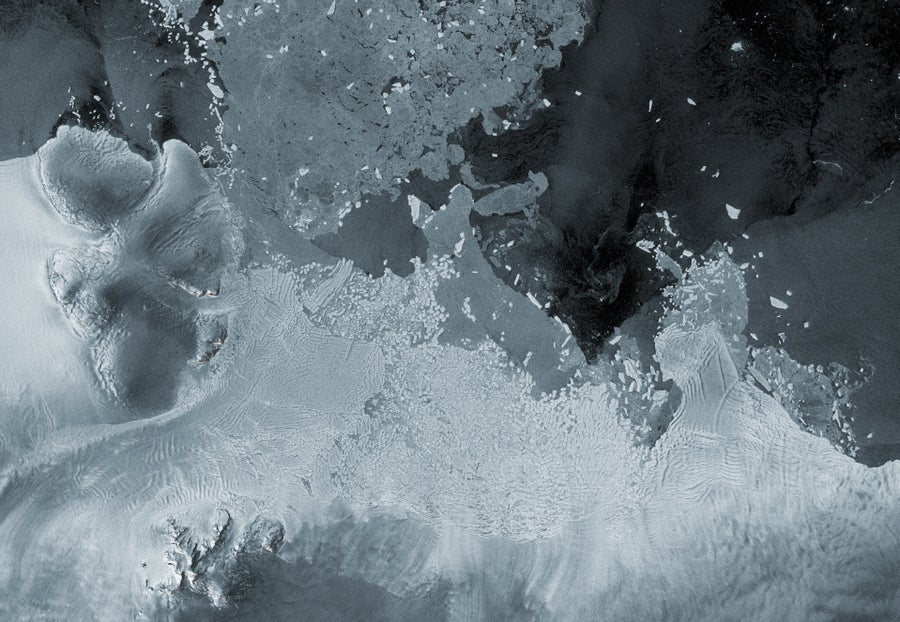
Thwaites Glacier in West Antarctica is seen in this image captured by the Copernicus Sentinel-1 mission on March 2, 2024. More and more ice continues to break off from the unstable glacier and slip into the sea. ©ESA/Copernicus Sentinel-1
.
.
Click the link below for the complete article:
.
__________________________________________
January 8, 2026
Mohenjo
Business, Food For Thought, Human Interest, Political, Science, Technical
amazon, business, Business News, current-events, Future, Hotels, human-rights, medicine, mental-health, research, Science, Science News, technology, Technology News, travel, vacation

Click the link below the picture
.
One year ago today, I was blithely going about my business in New York—where I stuck around longer than usual after the holidays to celebrate my dad’s 70th birthday—when I started seeing the Instagram posts about the Los Angeles wildfires.
Like many of us, I’ve become bizarrely accustomed to learning about apocalyptic world news through my feed—but this time, I watched from afar as my friends and neighbors panicked and mourned, and organized in my very own city, the one I was due to fly back to in just a few days.
As social media became crowded with mutual-aid asks and volunteer opportunities, I fielded updates from my partner about the state of our friends’ homes in the Palisades and Altadena and air-quality reports from our own neighborhood in East Hollywood. I did the stupid, trivial-seeming things you do when you’re perfectly safe while your loved ones are across the country, only narrowly avoiding danger; I donated to GoFundMes, I shipped go bag items to my partner’s parents’ house in Orange County (where he drove our dog to escape the worst of the smoke), I googled “dog masks” and cried and felt ridiculous and caught my flight home into a city on fire.
When I picked up my car near my friends’ house in Mar Vista, it was covered in a fine layer of ash. Down the street, a masked neighbor was grimly cleaning the exterior of his own car. We exchanged timid waves, transported for a moment to the early days of the COVID-19 pandemic, when we were all both brought together and increasingly isolated by calamity.
Like COVID, the LA fires weren’t an equalizer so much as a reminder of our city’s stark inequality; the Eaton fire had a disproportionate effect on Altadena’s Black and Latino residents, and a year later, many Angelenos still can’t afford to rebuild their homes. But during those first days and weeks when the fires still raged, I noticed that all of us strangers were a little more primed for reflexive and generic kindness. It’s something I’m noticing still: Warmth, it turns out, isn’t an emergency-situation anomaly.
As I’ve nestled deeper into the fabric of my adopted city, I’ve found endless examples of people building community care into their daily lives—from the dozens of volunteers who cook and distribute food to unhoused Angelenos in MacArthur Park every week to the Altadena Seed Library educators sending seed care packages to families affected by the wildfires. Mutual aid is vital in times of acute, headline-grabbing crisis, yes, but not only then.
Los Angeles has been tested beyond belief since last year. Not only are we still recovering from the wildfires, but ICE raids have rocked the foundation of LA’s immigrant population. Many undocumented workers are now forced to stay home to avoid illegal persecution and arrest, leaving once-populated street corners—where beloved local fruteros sold cups of jicama, mango, and chamoy—empty, and exacerbating our city’s already-acute housing crisis as some immigrants struggle to pay rent. I’ve seen a lot of people leave LA over the past year, burned out by trauma, an increasingly dried-up job market, or just the soaring cost of just about everything. Many of them are lifelong Angelenos with a lot more claim on the city than I’ll ever have—so when my long-term relationship ended in the fall, a lot of the people I love assumed I’d be one of them.
But I still believe in LA. I want to stay and fight and organize in this city, doing jail support and court-watching with the LA Tenants Union and visiting my community dye bath. I feel strongly that where you live shouldn’t be just an accident of birth or a perk of privilege. It should be a choice—one you make anew every day and one that’s strengthened by the ties you knit to the community that built it.
“What’s keeping you in LA?” a well-meaning friend asked in the wake of my breakup. When I thought about the answer, what I saw was a rush of images: of walking my dog through Hollywood in a sea of hot pink bougainvillea petals, perusing old editions of Gourmet at my favorite used-cookbook store in Long Beach, drunkenly feasting on bacon-wrapped “danger dogs” from the cart outside Akbar, walking the Silver Lake Reservoir while pointing out squirrels to my friend’s eight-month-old, gossiping with my friend Sarah as we bought up bags of pasta at FoodTown for weekend distro at MacArthur Park. As a transplant, I’m still learning how to be the best resident I can be, but of the seven cities that I’ve lived in over the course of my life—and after the last year in LA—I can truly say that I’ve never been prouder to call somewhere home.
.
 Photo: Getty Images
.
.
Click the link below for the complete article:
.
__________________________________________
January 8, 2026
Mohenjo
Business, Food For Thought, Human Interest, Political, Science, Technical
amazon, business, Business News, current-events, Future, Hotels, human-rights, medicine, mental-health, research, Science, Science News, technology, Technology News, travel, vacation

Click the link below the picture
.
Remember 2025, when President Trump dictated bracing new rules for the economy? Impose sweeping tariffs! Dismantle government agencies! Lower taxes! Cut spending! The Federal Reserve remained independent, but almost everyone else fell in line.
That may soon feel like ancient history, because in the first couple of months of this new year, the power shifts. The Supreme Court is expected to rule on both the Trump administration’s huge slew of tariffs and the president’s ability to control the Federal Reserve Board. In addition, a new nominee to lead the Fed will be handed over to the Senate for scrutiny. Meanwhile, Congress no longer seems to be listening to Mr. Trump on taxes and spending — and might even start enacting its own agenda.
These developments, affecting cornerstones of Mr. Trump’s domestic agenda, will have a large impact on what our economy looks like and how it works. But in a sharp contrast to last year’s rule by fiat, none of the expected changes in these extremely consequential arenas is in the president’s control. At a minimum, these events may thwart his efforts to further impose his will. At a maximum, they will begin undoing the changes he’s made so far. Either way, we’re likely to end up well past peak Trump.
The tariff decision may be the first of these seismic event
s. In November, the Supreme Court heard arguments about the limits of the International Emergency Economic Powers Act, the basis of a majority of the tariffs introduced last year (including the so-called reciprocal tariffs of at least 10 percent imposed on almost all U.S. trading partners).
The court is expected to rule in coming days or weeks. A clean outcome — either fully endorsing or decisively rejecting the administration’s rationale — is possible but unlikely. More probable is a muddled decision that upholds some authorities while narrowing others. That ambiguity would ripple outward.
If some tariffs stay in place, businesses that have so far absorbed much of the costs may no longer be able to shield consumers from higher prices. Trading partners may reconsider their agreements — or retaliate against U.S. products. And if any tariffs are struck down, the administration will almost certainly try to reimpose them using alternative legal authorities, which will set off still more litigation.
The Supreme Court will be only getting started, however, because sometime soon thereafter it’s likely to issue a decision that will shape monetary policy more directly than the court has at any point in recent memory.
In August, President Trump claimed to have fired a Federal Reserve governor, Lisa Cook. Lower courts have blocked her removal pending Supreme Court review, with arguments scheduled to take place this month. (I joined every living former Federal Reserve chair, along with many former economic officials and economists, in an amicus brief supporting her.) The court’s ruling could reaffirm the independence of the Fed — or severely weaken it by effectively allowing the president to remove any central bankers who displease him.
Jerome Powell, the current Fed chair, particularly displeases him. Mr. Powell’s term as chair ends in May, so Mr. Trump is expected to choose a nominee to replace him sometime soon. Confirmation hearings will follow, to test not only the nominee’s qualifications, but also his or her willingness to operate independently of the White House.
Whoever takes the job will face real constraints. Financial markets will limit how far the chair can push policy. And within the Federal Reserve itself, the 11 other voting members of the Federal Open Market Committee have grown increasingly willing to dissent from the majority opinion. If the Supreme Court strengthens protections against removal, those dissents are likely to multiply — leaving the chair with less authority than at any point in decades.
Complicating matters further, there are signs that Congress, too, could reassert its powers.
In 2025, lawmakers largely did the president’s bidding on economic policy, passing tax cuts, spending cuts and stablecoin legislation with little effective resistance. But as midterm elections approach, the unified Republican front is starting to break, and Republican leaders could lose their very narrow control over the two chambers of Congress.
The overarching economic issue animating public debate is “affordability,” and its most immediate focal point is the expiration of expanded Affordable Care Act subsidies on Jan. 1. About 22 million people now face higher health insurance premiums. Democrats shut down the government last fall in an effort to extend the subsidies, framing them as central to a broader affordability agenda. In December, four House Republicans joined Democrats in a discharge petition to force a floor vote over leadership objections.
In an ideal world, Congress would use this moment to enact serious health care reform, lowering costs without increasing the deficit. With time already run out, that outcome seems unlikely. How lawmakers handle this issue may foreshadow whether they revisit the deep cuts to Medicaid and nutrition assistance enacted in the 2025 tax and spending bill.
.
 Illustration by Sam Whitney/The New York Times
.
.
Click the link below for the complete article:
.
__________________________________________
January 7, 2026
Mohenjo
Business, Food For Thought, Human Interest, Political, Science, Technical
amazon, business, Business News, current-events, Future, Hotels, human-rights, medicine, mental-health, research, Science, Science News, technology, Technology News, travel, vacation
Click the link below the picture
.
A potential new type of celestial object has all the makings of a normal small galaxy. It’s rich with the same hydrogen gas that births suns and planets, and it lies within a halo of dark matter, the same invisible stuff that holds galaxies together. Yet it’s missing one key component of glittering galaxies like our own Milky Way: stars.
Nicknamed Cloud-9, the gas cloud is technically the best-yet example of a RELHIC, or Reionization-Limited H I Cloud. The “H I” stands for Cloud-9’s bounty of neutral hydrogen, and “RELHIC” refers to what astronomers believe the object to be: a primordial fossil—or relic—from the universe’s early epochs that, for some reason, never managed to form stars or become a full-fledged galaxy. That makes Cloud-9 a “failed galaxy,” said Rachael Beaton, an astronomer at the Space Telescope Science Institute, during a January 5 press conference at the American Astronomical Society’s 247th meeting in Phoenix, Ariz.
Based on their understanding of dark matter’s behavior and the hierarchical process of galaxy formation, astronomers have long predicted that such starless objects should exist throughout the cosmos. But until recently, RELHICs had been notoriously difficult to spot.
The results—presented by Beaton at the meeting and published in the Astrophysical Journal Letters last November—bolster the case that we’ve finally found one of these elusive phantom galaxies. Cloud-9 first burst onto the astronomy scene in 2023, when the Five-Hundred-Meter Aperture Spherical Radio Telescope in China’s province of Guizhou discovered a nearly 5,000-light-year-wide spherical cloud of hydrogen gas about 14 million light-years from Earth that appeared to be a faint dwarf galaxy, albeit bereft of visible stars. More in-depth studies on the cloud showed that it contains about a million solar masses of hydrogen and some five billion solar masses of dark matter, but researchers couldn’t confirm it to be truly starless. Perhaps, instead, it was indeed a strange sort of dwarf galaxy that was sparsely populated with very old and dim stars.
So Beaton and her colleagues peered once again at the object through the keen gaze of the Hubble Space Telescope. And in all of Hubble’s observations, she said, it found hints of just one star within Cloud-9. It could be that other stars simply went by undetected, but based on further simulations, the team found that the cloud probably couldn’t host more than some 3,000 solar masses worth of stars—a meager smattering that would preclude the object being a dwarf galaxy. This new result not only makes Cloud-9 the foremost REHLIC candidate in astronomers’ catalogs but also a milestone for verifying the common prediction that “not every dark matter halo will have a galaxy in it,” Beaton said.
While the fresh information from Hubble “certainly eliminates the possibility that [Cloud-9] is a dwarf galaxy,” there’s still much left to learn about this peculiar object, says Kristine Spekkens, an astronomer at Queen’s University in Ontario, who was not involved with the work. For instance, she says, Cloud-9 doesn’t have quite as smooth a shape as astronomers would expect. Better mapping of its gas distribution could provide more insights into how exactly it formed and evolved over cosmic time.
Still, it will be difficult to definitively confirm that Cloud-9 is in fact a RELHIC so long as it remains in a league completely of its own, says Ethan Nadler, an astronomer at the University of California, San Diego, who didn’t take part in the Hubble observations. While dubbing the cloud officially “starless” will be challenging, finding similar objects may help researchers shed some light on this dark area of astronomy.
.

The “failed galaxy” Cloud-9, a dark matter-dominated blob of hydrogen gas some 14 million light-years from Earth. The diffuse magenta represents radio data from the ground-based Very Large Array (VLA) that shows the presence of the gas. The dashed circle marks the peak of radio emission, which is where researchers focused their search for stars. Follow-up observations by the Hubble Space Telescope found no stars within the cloud. The few objects that appear within its boundaries are background galaxies. NASA, ESA, VLA, Gagandeep Anand (STScI), Alejandro Benitez-Llambay (University of Milano-Bicocca) (science); Joseph DePasquale (STScI) (image processing)
.
.
Click the link below for the complete article:
.
__________________________________________
January 7, 2026
Mohenjo
Business, Food For Thought, Human Interest, Political, Science, Technical
amazon, business, Business News, current-events, Future, Hotels, human-rights, medicine, mental-health, research, Science, Science News, technology, Technology News, travel, vacation

Click the link below the picture
.
President Donald Trump’s military operation to capture Venezuelan President Nicolás Maduro is flatly illegal under international law and almost certainly illegal under federal law—an unauthorized use of force against a foreign nation that pushes executive power past its breaking point. Yet there is no real chance that the courts will curb it, even as the mission evolves into a possible occupation of Venezuela and an expansion of hostilities to its neighbors. Nor is there any signal that Congress will impose restraints on what appears to be the dawn of a new conflict overseas, surrendering its constitutional war powers to Trump without objection. And even if Congress does try to assert its authority to oversee (or end) military action in South America, it will face an uphill battle in a judiciary that persistently favors the commander in chief.
This inversion of our constitutional order sets a perilous precedent that even many celebrating Maduro’s fall may come to regret. It marks the death knell of the post–World War II settlement that, however imperfect, wrestled the anarchy of war into a framework designed to condition armed aggression on legal justification. The executive branch’s consolidation of power now reverberates far beyond the United States’ shores as a saber-rattling president abandons any pretense that the law can constrain his resort to military force. Indeed, the legal theories the administration has floated to defend its actions draw on a historical source Trump once disavowed: the arch-interventionist claim that the U.S. has an inalienable right to police the world.
It is difficult to tally all the ways in which the Maduro operation was illegal, but start with a point that few dispute: This act violated international law. Trump’s invasion of Venezuela to capture its president cannot be squared with Article 2(4) of the U.N. Charter, which bars member nations from deploying “the threat or use of force against the territorial integrity or political independence of any state.” This principle—the most important rule of international law today—should bind the United States, which ratified the charter in 1945. And it clearly prohibits the American government from invading another country to make an arrest.
.
 So what is the government’s legal defense of its military incursion into Venezuela? Photo illustration by Slate. Photos by Alex Wong/Getty Images and Luis Jaimes/AFP via Getty Images.
.
.
Click the link below for the complete article:
.
__________________________________________
January 7, 2026
Mohenjo
Business, Food For Thought, Human Interest, Political, Science, Technical
amazon, business, Business News, current-events, Future, Hotels, human-rights, medicine, mental-health, research, Science, Science News, technology, Technology News, travel, vacation

Click the link below the picture
.
“How did you sleep?” You might answer that question by weighing how many hours you slept or how often you woke up throughout the night.
But there is a third, often neglected, element of sleep to consider, experts say. It’s the consistency of your sleep schedule.
Sleep consistency refers to how well you maintain the same bedtime and wake-up time, give or take 30 minutes — and that includes weekends, said Jean-Philippe Chaput, a professor of medicine at the University of Ottawa.
Research suggests that most adults in the United States do not have a consistent sleep schedule. And that may be harming their health, Dr. Chaput said.
What the Research Suggests
Much of the science on the link between inconsistent sleep and poor health is based on observational studies, which can’t prove cause and effect. Their results are also often restricted by various limitations (including if the study was performed on a small number of people, or on people of only certain ages, ethnicities, or occupations). It’s also difficult to accurately track people’s sleep patterns over months or years, and some studies define sleep consistency in different ways.
Despite these limitations, scientists have found some patterns. Those who tend to deviate most from a consistent sleep schedule seem to be at higher risk of certain health conditions like cardiovascular disease, obesity, mental health issues like depression and anxiety, and dementia.
In a 2020 study, researchers analyzed the sleep patterns of nearly 2,000 adults aged 45 to 84 in the United States. They concluded that those with the most irregular sleep schedules were more than twice as likely to develop cardiovascular disease than those with more regular sleep patterns.
In another study published in 2024, researchers analyzed sleep data from more than 88,000 adults in the United Kingdom and assigned “sleep regularity” scores to all of them. Those who scored lowest, meaning they had the most irregular sleep schedules, were about 50 percent more likely to develop dementia than those who scored in the middle of the range.
Scientists aren’t sure how frequent or how severe your sleep irregularity has to be to increase your health risk, said Soomi Lee, an associate professor of sleep and aging at Penn State. But the more you deviate from your typical sleep time — whether that’s within a 24-hour period or across weeks or months — the more the risks seem to increase, she said.
In a large review of studies published in 2023, a group of sleep scientists concluded that there was enough evidence to recommend maintaining a regular sleep schedule to help protect metabolic, mental, and cardiovascular health.
Why Inconsistent Sleep May Put Health at Risk
Researchers are still untangling why inconsistent sleep patterns might negatively affect health, but their leading theory has to do with the body’s circadian rhythm, Dr. Lee said.
Your circadian rhythm makes up a roughly 24-hour internal clock that governs your sleep-wake cycle as well as the ebbs and flows of your hormones, metabolism, cardiovascular function, immune system, appetite, and mood.
When you stray from your typical sleep schedule, the bodily functions that rely on those rhythms are thrown off, too. For example, staying up late or sleeping in may affect your hormone levels. Cortisol, which regulates stress, could be released at odd times or in more erratic ways. This can increase stress and inflammation throughout the body that, over time, may affect cardiovascular or metabolic health, Dr. Chaput said.
A misaligned circadian rhythm may also cause you to feel hungry outside of your regular mealtimes, said Dr. Andrew Varga, an associate professor of medicine at the Icahn School of Medicine at Mount Sinai in New York City. That could lead you to eat at unusual hours, such as late at night, possibly resulting in digestive issues or, in the long run, weight gain or obesity, he said.
How to Keep Sleep Consistent
With work, school, parenting demands, and social obligations, it can be challenging to sleep consistently. But experts have some tips.
Setting an alarm to go off an hour before your bedtime every night can remind you that it’s time to start getting ready for sleep, Dr. Varga said. Doing something relaxing during that hour, such as reading or meditating, can help you wind down for bed.
It’s also important to expose yourself to sunlight every morning — ideally for 20 to 30 minutes at the same time every day, said Dr. Nishay Chitkara, the director of sleep medicine at NYC Health + Hospitals/Bellevue. While standing in front of a window can be beneficial, he said, it’s best to go outside to do this, even if it’s cloudy. A bright artificial indoor light, like a light therapy box, can help, too.
Light is the main cue that regulates your circadian rhythm. When it hits your eyes in the morning, your body begins its countdown to later that evening — when it releases hormones telling your body it’s time to go to bed.
You may not feel exhausted from inconsistent sleep in the same way you might after a night of tossing and turning, Dr. Lee added. But try your best to stick with a sleep routine regardless. The more consistent you are, she said, the better your health will be in the long run.
.
 Joyce Lee for The New York Times
.
.
Click the link below for the complete article:
.
__________________________________________
Older Entries
Newer Entries
 James' World 2