Thousands of computers across the world are currently scouring the number line in a scavenger hunt for rare mathematical gems. Prime number enthusiasts, looking for larger and larger numbers that are divisible only by 1 and themselves, muster vast amounts of computing power and algorithmic ingenuity in hopes of etching their name into the scrolls of math history.
The latest entry comes from Luke Durant, a researcher in San Jose, Calif. Durant’s discovery overturned the former record holder, which sat uncontested for nearly six years, an unprecedentedly long reign in the modern search for ever larger prime numbers. The gap makes sense: as primes grow, they spread further apart, making each new find harder than the last.
The new prime contains a mind-boggling 41,024,320 digits. To put that in perspective, the estimated number of atoms in the observable universe clocks in at around 80 digits. Every additional digit increases a number by 10 times, so the size of the new prime lives far beyond human intelligibility. Primes play a major role in pure math, where they’re main characters in a field called number theory, and in practice, where, for example, they underlie widely used encryption algorithms. A prime with 41 million digits won’t immediately join the ranks of useful numbers, but for now, it adds a feather in the cap of a community that longs to apprehend the colossal.
Durant’s success stems in part from new clever software from the Great Internet Mersenne Prime Search and in part from heavy-duty hardware and computational muscle that he personally mobilized for the pursuit. By assembling a “cloud supercomputer” spanning 17 countries, he ended a long tradition of personal computers discovering primes.
Prime numbers are often called the “building blocks of math” because every whole number greater than 1 has a fingerprint as the product of a unique collection of primes. For example, 15 is the product of the primes 5 and 3, whereas 13 cannot be subdivided like this because 13 is prime. The study of these numbers dates back at least to the ancient Greeks. In 300 B.C.E. Euclid proved in his textbook Elements that infinitely many primes exist, and mathematicians, both professional and amateur, have relished the hunt for them ever since.
While the first string of primes—2, 3, 5, 7, 11, and so on—is easy to find, the task gets considerably more challenging as the numbers get larger. For millennia, people found primes by hand—until 1951, when computers took over the search. But even silicon bounty hunters struggle to spot primes in the far reaches of the number line because testing the primality of an enormous number is nontrivial. To cope, researchers deploy every little optimization trick they can to speed up their tests or narrow their hunting ground, thereby boosting their chances of finding a new prime.
Consider the number 99,400,891. How would you determine whether or not it’s prime? You could simply divide it by every smaller number and check if it has any divisors (in addition to 1 and itself). But that’s nearly 100 million cases to check for a relatively puny eight-digit number. You would save significant work by realizing that you don’t need to check every number up to the target, just the prime numbers. Why? You only need to find one divisor (one number that cleanly divides 99,400,891 with no remainder). We know that any nonprime divisor could be further broken down into its prime factors—if your target is divisible by 15, then it’s also divisible by the primes 5 and 3, so you only need to check the latter to determine primality. Further savings would come from the insight that you don’t need to check every smaller prime either, only those up to the square root of 99,400,891 (the number that when multiplied by itself gives you this eight-digit result). If none of those smaller primes divide it cleanly, then you can stop looking because the product of any two numbers larger than the square root of 99,400,891 will exceed it. These efficiency tricks slash our search drastically, from around 100 million numbers to only 1,228 (the number of primes less than the square root of 99,400,891). For those curious, 99,400,891 = 9,967 × 9,973, so it’s not prime.
Those shortcuts did wonders for an eight-digit number, but how did Durant reach 41,024,320 digits? To graduate the search from the merely massive to the truly gargantuan, he and many other seekers focus on particular types of prime numbers. Mersenne primes, named for Marin Mersenne, the French theologian who studied them in the 17th century, take a special form. You get them by multiplying 2 by itself some number of times and then subtracting 1, as described in the equation 2n – 1. Mersenne noticed that when you plug in different values for n, you sometimes get a prime number. Specifically, 2n – 1 can only yield a prime when n itself is prime, and even then it’s not guaranteed. What makes Mersenne primes special from a prime hunter’s perspective is that we know a fast method (called the Lucas-Lehmer primality test) for checking whether numbers of the form 2n – 1 are prime. That test is much faster than any known general methods for numbers without that special form.
The Lucas-Lehmer test fuels the Great Internet Mersenne Prime Search project, which launched in 1996 and enables any volunteer to download a free code that searches for Mersenne primes to run on their computers. The crowdsourced approach and the focus on Mersenne primes have proved successful. The seven largest known primes are all Mersenne primes and were all found by participants of the project. Note that smaller unknown primes certainly exist, but because we don’t know efficient methods for checking them, they’ll remain in the shadows for now.
.
After Euclid revealed that infinitely many prime numbers exist in 300 B.C.E., mathematicians have been on the hunt. Tostphoto/Getty Images
Just about everybody is really worried about the U.S.’s Election Day, which is coming up on us fast. In a recent poll from the American Psychological Association, 72 percent of people said they were concerned that the results of the election could lead to violence. And 56 percent said it could end democracy in the country. Nina Vasan, a psychiatrist at the Stanford University School of Medicine, who has researched Internet-based anxiety treatments and sees patients at her clinical practice, says she has never encountered this level of depression and concern about the future. And she is seeing it both in people who support Kamala Harris and in people who support Donald Trump. Scientific American senior health editor Josh Fischman spoke with Vasan this week about the reasons for this extreme stress level. Vasan also described several self-help methods that people can use to reduce their fears and worries—practices that they can employ even if uncertainty over the winner extends past Election Day.
[An edited transcript of the interview follows.]
Are people exceptionally on edge for this presidential election?
Oh, yes. I’m hearing things like “I don’t want to get out of bed in the morning” and “I wake up in the night, or I can’t even sleep because I’m so anxious” and “I’m having nightmares of what could happen in two weeks or next year.” I have one patient who lives in Washington, D.C., but is going to stay with her mother in Oregon because she’s afraid of the possibility of violence in the nation’s capital. There are a lot of real symptoms of anxiety and depression. Some people feel it very physically. They feel nauseous, or their heart is racing, or they’re sweating, or they feel incredibly tired. We all experience anxiety and fear differently.
Is this level of stress worse than what you’ve seen in past elections?
Definitely, and I think there are several reasons for that. One is that a sense of stress has been building up for years. It’s not just this election. Go back to October 7, 2023, and Hamas’s terrible attack on Israel and then the awful destruction and loss of life brought by Israel’s war in Gaza. Before that there was Russia’s ongoing war with Ukraine. Here at home there are mass shootings and the mob attack on the Capitol on January 6, [2021]. Whether it’s the New York Times or Facebook or TikTok, we get this constant stream of very negative news about humanity that has really made people depressed and sad and upset about the world.
Now it’s Donald Trump and Kamala Harris. Trump was already president four years ago, right? If you’re a Republican, you probably think of his four years as when life was great. If you’re a Democrat, you likely think of those four years as when life was horrible. For both, there’s this fear that “if all that returns, my life is going to suck.”
Does this fear take its toll on relationships, too?
We’re a diverse country with diverse beliefs. Now opinions are so divided that people feel they can’t talk to their boss or friends or family because they’ll disagree about politics. People feel silenced or harassed into silence. I’ve heard some people say they’re not going home for Thanksgiving because they’ll just argue about politics with family.
Just reading news about politics seems to make people upset.
There are people who are just consuming news nonstop. They get overwhelmed and anxious. They stop spending time with friends and doing the work they need to do because it’s this huge thing that’s taken over their lives.
What can people do to relieve this sense of dread?
The recommendation that I give to everyone is that you have to put very strong boundaries around your consumption. So when I wake up in the morning, I can read the news for 30 minutes, I can scroll TikTok or Instagram or whatever for 10 minutes. But then I stop, and I’m not allowed to go back until tomorrow morning.
Do you really tell people “30 minutes and you’re done”?
I do. I think in half an hour, you can consume what you need, especially if you’re a daily news reader. Whether its politics or sports or entertainment or stocks or whatever. Beyond that, it gets repetitive. I see that people watch or read something, get concerned by it and feel driven to read four more articles on the same subject, thinking that will make them feel better. And you know what? It never makes them feel better. They feel worse.
If the nerve-racking buildup to the U.S. presidential election has stolen your sleep, you’re not alone. An American Psychological Association survey released last week found that more than 82 percent of adults have felt that this election cycle “has been an emotional rollercoaster” and that 25 percent say they have lost sleep over it. But experts in the field have some good news: a few actionable, science-based steps can help.
Since the moment the first campaign signs went up, sleep physician Sally Ibrahim says, she has been providing advice for what she calls “electsomnia.”
“You can have acute insomnia or very short-term issues around sleep, like if you’re about to get married, for example. But election season drags on so much [that] people can develop these sort of chronic issues with their sleep loss,” says Ibrahim, a pediatric and adult sleep specialist at the University Hospitals health system in northeastern Ohio and an associate professor at the Case Western Reserve University School of Medicine. “What studies have found is our thoughts around our situation can be much more impactful than the situation itself.”
Anxiety about anything can disrupt sleep, but research suggests that unpredictable, high-stakes, world-scale events—such as the coming U.S. election—can have a particularly intense effect, says clinical psychologist Tony Cunningham, director of the Center for Sleep and Cognition at Beth Israel Deaconess Medical Center and Harvard Medical School. Cunningham ran a study that tracked people’s moods, mental health, alcohol consumption, and sleep in 2020, right around that year’s presidential election and the COVID pandemic. He found that those who experienced more stress and depression on election day were more likely to have worse sleep that night.
“Sleep was uniquely terrible, [as well as] almost every metric we collected,” Cunningham says. “Stress and negative mood were probably the most dramatically affected. There were several days of significant increase leading up to the election, and then it was kind of a slow-burn couple of days until it got back down to normal.” People reported napping more the day after the election, he adds.
“Take stock of how you are doing in the moment, especially day-to-day, leading up to and following the election.”
—Tony Cunningham, clinical psychologist
The four-day delay in the 2020 voting results also likely worsened things, Cunningham says. He was surprised that even many non-U.S. study participants reported similar stress and shifts in sleep that rose and fell with the election cycle. “This is a major sociopolitical event that is driving an acute stress response in a large proportion of the population,” he says.
Cunningham, who is collecting data again for the 2024 election, warns that people in the U.S. may experience a “double whammy” when the clocks switch from daylight saving time to standard time during the weekend before election day. This could be “particularly damaging” to sleep, he says. Luckily, there are ways to cope. “The first thing is just to try to acknowledge your feelings and recognize your limits,” Cunningham says. “Take stock of how you are doing in the moment, especially day-to-day, leading up to and following the election.”
Cunningham also notes that research links overconsumption of news during stressful events to psychological distress. “There’s a level between being informed and then doomscrolling at four in the morning,” he says, adding that the latter “is not going to be helpful to you.”
“Performance anxiety” about sleep can also beget less sleep. “We actually tell people with insomnia, ‘Don’t worry about not sleeping,’” Ibrahim says.
Habit stacking is a powerful tool, especially for busy entrepreneurs who need to maximize their time and efficiency. While the topic has been discussed in depth and well documented by James Clear, author of Atomic Habits, the idea of habit stacking is to stack up a new habit on top of a current habit.
So, for example, Clear references a meditation habit: “After I brew my morning coffee, I will meditate for one minute.” Or a gratitude habit: “Before I eat my first bite of dinner, I will say one thing I am grateful for that day.”
I confess that I am a multitasker unless I’m working on a deep project or having conversations with friends and family. Below are some of the go-to habit stacks I practice regularly.
1. Morning digital detox and movement
I like to exercise first thing in the morning, and during my workouts, I do not use my phone. I am focused on my workout, my music and making sure I get the most out of my time in the gym, which I thoroughly enjoy.
It’s also wonderful to kick off the morning off my phone, not scrolling and keeping my mind clear, energized and my overall self in a healthy flow state. Morning routines are critical for productivity and positivity.
2. Driving and focused time with kids or partner
I speak with many parents who drive their kids to school and talk about how their children are glued to their phones. While I do take business and personal calls while I drive solo, I have always prioritized conversations with my two boys and husband when we are in the car together.
Most of us have chaotic days, and the time in the car together is a nice time to catch up, talk about the day and listen to music together. Instead of asking your kids, “How was school?” try something more like, “Who made you laugh today?” Or “What was the coolest class today?”
3. Podcasts and protein
I prioritize nutrition and am not one to skip meals. Lately, my breakfast is a skillet-sized chocolate protein pancake with no sugar and about 50g of protein. It’s basically raw cacao powder, protein powder and egg whites or eggs.
While I make this, I usually take calls, usually internal or more casual calls that do not require me to be in front of a screen. I also catch up on learning via podcasts. Most importantly, you should kick off your day with protein as it is the best fuel for your brain and body and will help prevent poor eating habits.
4. Sunlight, steps and creative thinking
I like to combine walking with brainstorming and thinking, and although it can be difficult, I schedule a few short walks where I don’t make a call, listen to a podcast or play music. Instead, I think. This ‘phone completely off’ habit stack ensures healthy physical activity and beneficial sunlight (when the sun is out!) and usually leads to creative ideas or problem-solving.
This habit is also an effective exercise to do with a work colleague. I’ve come up with multiple new ideas or solved problems while on a walk or hike. The endorphins and movement are proven to support this. If you really want to maximize this habit stack, plan this no-phone walk immediately after a meal, as this will help prevent the post-lunch energy slump.
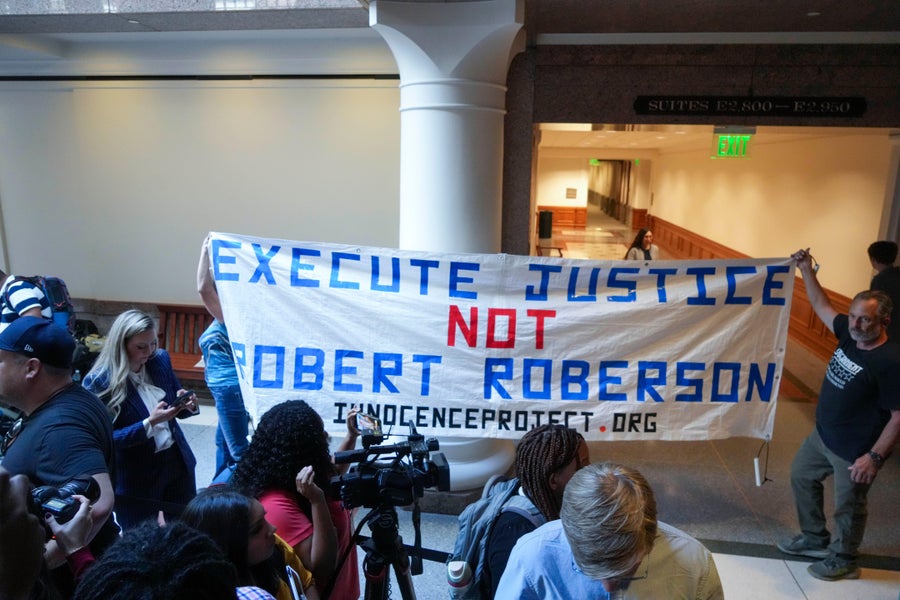
In a last-minute effort to save the life of a man on death row, a bipartisan group of Texas legislators has just done something extraordinary: they have unanimously subpoenaed Robert Roberson, convicted in 2003 of killing his daughter based on the now-discredited theory of shaken baby syndrome, to testify before them five days after he was scheduled to be executed, effectively forcing the state to keep him alive.
Roberson is one of many people who have been imprisoned for injuries to a child that prosecutors argue resulted from violent shaking. But research has exposed serious flaws in these determinations, and dozens of other defendants who have been wrongly convicted under this theory have been exonerated. Yet
Roberson remains on death row, even as politicians, scientists, and others—including the lead detective who investigated him and one of the jurors who convicted him—have spoken out on his behalf. If his execution proceeds, they and many others believe that Texas will be killing an innocent man for a “crime” that never happened.
As our scientific understanding of shaken baby syndrome has evolved over the past 20 years, justice requires that courts reexamine old convictions in light of new findings. This is especially true for Roberson, who would be the first person in the U.S. to be executed for a conviction based on shaken baby syndrome. No matter one’s view of the death penalty, the ultimate punishment must be held to the ultimate standard of proof—and Roberson’s case falls woefully short of that standard.
The theory behind shaken baby syndrome dates back to the early 1970s, when two medical researchers—Norman Guthkelch and John Caffey—separately published the first scientific papers explaining that shaking an infant can cause fatal internal injuries even absent external injuries. Over time physicians and law enforcement officers, among others, widely began to rely on a triad of symptoms—brain bleeding, brain swelling, and retinal bleeding—as definitive proof that someone had abused a child by shaking. To support this theory, researchers cited cases in which a child displayed these symptoms and a caretaker confessed to shaking the child, which ostensibly confirmed the triad as a reliable way to diagnose abuse.
There is no doubt that shaking a child can cause injuries, including those that compromise the shaken baby syndrome triad. Newer research, however, has shown that shaking is not the only way to cause those injuries: They can also result from an accidental “short fall” (e.g., falling off a bed) as well as from other medical causes (e.g., pneumonia, improper medication)—all of which were true of Roberson’s daughter. In fact, a 2024 study found that the injuries historically used to diagnose shaking are actually more likely to result from accidents than from shaking. In short, modern science understands that the presence of these symptoms does not necessarily mean that a child was abused, nor does their absence mean that they were not abused.
Why did clinicians wrongly trust this triad of symptoms for so long? The short answer is that correcting misconceptions requires a feedback loop that is often lacking in child abuse investigations. When a doctor diagnoses a living adult and prescribes a treatment, the effectiveness of that treatment provides feedback on the correctness of their diagnosis; if the treatment proves ineffective, doctors can learn from this misdiagnosis and adjust future diagnoses accordingly. Such feedback, however, is not always sufficient; for instance, doctors practiced bloodletting for centuries because it was generally accepted and seemed to work for some patients, though it was an illusory correlation. With respect to shaking, doctors rarely learn whether a child was actually shaken because the child is typically deceased or unable to articulate what happened, and thus doctors rarely receive feedback that the triad led to an incorrect diagnosis.
As for the studies that used a caretaker’s confession to establish that abuse occurred, it is now well-known that innocent people sometimes confess to crimes they did not commit, such that confessions are not synonymous with truth. Some scholars have even argued that the unique circumstances of suspected shaking cases (e.g., suspects’ emotional state) create an especially high risk of false confession.
Further complicating matters, child abuse determinations are subject to cognitive bias, in which extraneous information leads experts to interpret the same injury in different ways—at least one of which must be incorrect. In one study, for example, medical professionals more often judged the same childhood injury as abuse rather than an accident if told that the child’s parents were unmarried or drug users—both of which appear to be true of Roberson. Another study found that those same extraneous factors led emergency room doctors to misdiagnose accidental injuries as abuse in a staggering 83 percent of cases.
.
Protesters from the Innocence Project in the hallway outside a hearing room in Texas. Legislators issued an unusual last-minute subpoena to save death-row inmate Robert Roberson from his scheduled execution. Bob Daemmrich/Alamy Live News
If you’re ready to relax and unwind, a trip to the sauna can do the trick. There are many ways to enjoy sauna benefits these days—from a post-workout ritual to soaking up the heat on a chilly day—and it appears the buzzy wellness trend is here to stay.
Whether you prefer sweating it out in a sauna or a steam room (which is more humid), both settings are loaded with benefits, says Michele Bailey, DO, a primary care physician at Rush University Medical Group. Visiting a sauna regularly may help you manage various health conditions including rheumatologic and skin diseases like psoriasis, she says.
High temperatures can also boost your circulation, alleviate chronic pain, reduce joint stiffness, and even strengthen your immune system, according to a recent study. But can sauna usage help you achieve other goals like weight loss, healthy skin, and stress relief? Ahead, experts break down what saunas are, the potential benefits, and who should (and shouldn’t!) bring on the heat.
What is a sauna vs a steam room?
A sauna is a room that people use to enjoy dry heat. It is typically heated between 82.2 and 90.5 degrees Celsius (180 and 195 degrees Fahrenheit) with very low humidity. The most traditional type is a wood-burning sauna, which uses fire to heat up the space. There are also electric saunas, which produce heat with electricity (think: the kind someone might install in their home).
Some versions are designed to make the heat easier to tolerate. Infrared saunas, for example, utilize infrared light waves to warm your body up directly without raising the temperature of the air around you. They are said to spark the same effects in your body as a traditional sauna but at a lower temp.
Steam rooms, on the other hand, are characterized by moist heat, making them more humid than traditional saunas. Steam rooms are usually heated between 37.8 and 48.9 degrees Celsius (100 and 120 degrees Fahrenheit) and have nearly 100% humidity, says Purvi Parikh, MD, an internal medicine physician and clinical assistant professor at NYU Grossman School of Medicine. Although steam rooms are not technically as hot as saunas, you will likely feel warmer in a steam room because of the extra moisture in the air, she says.
11 sauna benefits
1. It may improve your circulation
Anything that raises your body temperature will increase your heart rate, which in turn increases your circulation, says Denise Millstine, MD, an internist at Mayo Clinic’s family medicine office in Scottsdale, Arizona.
Sitting in a sauna is almost like walking on a treadmill at a regular pace, says Dr. Parikh. Because of the heat, your heart has to pump harder to circulate your blood, which means you’re getting some cardio benefits even though all you’re doing is sitting in the heat. Keep in mind, though, it’s still no replacement for exercise, which has tons of other body benefits.
2. It may help lower your blood pressure
Spending time in a sauna may help lower blood pressure for some people, says Dr. Millstine. ‘Physiologically, much like exercise, your blood pressure [goes up] initially…then, long-term, it results in better management and lowering of your blood pressure,’ she says. Traditional sauna bathing is also associated with overall lower blood pressure, research shows.
This year’s US presidential race is unprecedented, with a last-minute switch in the Democratic Party’s nominee and assassination attempts targeting Republican Party candidate Donald Trump. As anxiety about the outcome mounts, and with conspiracy theories about the 2020 election results lingering, the stage is set for a period of intense rumoring about voting and counting-related processes.
Using ongoing social-media research conducted at the University of Washington’s Center for an Informed Public in Seattle, which I co-lead, my colleagues and I can identify rumors spreading across both Democratic and Republican online networks in real time. We can see how election rumors emerge as events unfold, and how they frequently combine first-hand accounts, such as photos or videos, with pre-existing narratives, for example that non-US citizens vote in large numbers. Understanding how election events combine with partisan tropes can make rumors more predictable (E. S. Spiro and K. Starbird Issues Sci. Technol. 39(3), 47–49; 2023). Here, we describe three types of rumor that we expect election deniers to lean on as we approach voting day.
False allegations and conspiracy theories about widespread voting by non-citizens is a major theme in this election. For example, we have seen several person-on-the-street video interviews on social-media platforms such as Tiktok and Instagram that supposedly show non-citizens admitting that they are registered, planning to vote or have voted. Some videos use selective editing and inaccurate subtitles to create a false impression. In other cases, interviewees have acknowledged providing erroneous answers owing to anxiety, for example not wanting a stranger to know that they are not a citizen.
We’ve seen this playbook before. In January 2016, just after he took office, then-president Trump claimed that votes cast by three million to five million illegal immigrants had cost him the popular vote. Yet, there is no evidence that large numbers of non-citizens vote illegally in the United States. A 2016 study of 42 jurisdictions estimated that about 30 of 23.5 million votes (0.0001%) were cast by non-citizens (see go.nature.com/3nuhdzo). But despite these extremely low numbers, the rumors are particularly persistent this year, aligned with a broader rise in anti-immigration rhetoric.
A second class of rumor relates to allegations about biases in election administration. Owing to the decentralized nature of the US election, something is likely to go wrong somewhere. And localized errors could be used to mislead by falsely assigning malintent to election officials, overlooking remedies or exaggerating impact.
Registration forms or ballots might get mailed to the wrong person or address. A ballot design error might misspell a candidate’s name. For instance, about 250 electronic ballots e-mailed to military and overseas voters in late September by Palm Beach County, Florida, erroneously spelled Democratic vice-presidential nominee Tim Walz as ‘Tom Walz’. Although the error was swiftly rectified, several Democratic-leaning social-media users shared the story as an example of Republican scheming.
In such cases, people often share photos, videos and first-person accounts, which can spread widely online. The Trump campaign and several partisan political organizations are training ‘election-integrity’ volunteers and setting up reporting infrastructure — including through text messages and online forms — to collect evidence.
Such information could feed rumor machines. Social-media platforms are primed to facilitate the rapid spread of political rumors, including a whole theater of influencers who work with their audiences to synthesize ‘evidence’ to fit pre-existing narratives.
During the vote-counting period, claims of ‘suspicious’ actors or objects are likely to arise. For instance, grainy photos might show a person rolling ‘suspicious equipment’ up to a counting facility. Videos and eyewitness accounts of white vans, ostensibly full of ballots of non-citizen voters, pulling up to a polling place might be posted. Each rumor helps to build a larger story that something is amiss, that someone is cheating and that the results cannot be trusted.
Such tactics were widely deployed to dispute the outcome of the 2020 US presidential election. In reality, the equipment in the worrisome boxes turned out to belong to a photographer from a local news outlet in Detroit, Michigan. The white vans were rentals regularly used by election officials to transport ballots from polling locations to vote-counting centers.
Exposure to light is crucial for our physical and mental health, as this and future articles in the series will show.
But the timing of that light exposure is also crucial. This tells our body to wake up in the morning, when to poo and the time of day to best focus or be alert. When we’re exposed to light also controls our body temperature, blood pressure, and even chemical reactions in our body.
But how does our body know when it’s time to do all this? And what’s light got to do with it?
What is the body clock, actually?
One of the key roles of light is to re-set our body clock, also known as the circadian clock. This works like an internal oscillator, similar to an actual clock, ticking away as you read this article.
But rather than ticking you can hear, the body clock is a network of genes and proteins that regulate each other. This network sends signals to organs via hormones and the nervous system. These complex loops of interactions and communications have a rhythm of about 24 hours.
In fact, we don’t have one clock, we have trillions of body clocks throughout the body. The central clock is in the hypothalamus region of the brain, and each cell in every organ has its own. These clocks work in concert to help us adapt to the daily cycle of light and dark, aligning our body’s functions with the time of day.
However, our body clock is not precise and works to a rhythm of about 24 hours (24 hours 30 minutes on average). So every morning, the central clock needs to be reset, signalling the start of a new day. This is why light is so important.
The central clock is directly connected to light-sensing cells in our retinas (the back of the eye). This daily re-setting of the body clock with morning light is essential for ensuring our body works well, in sync with our environment.
In parallel, when we eat food also plays a role in re-setting the body clock, but this time the clock in organs other than the brain, such as the liver, kidneys or the gut.
So it’s easy to see how our daily routines are closely linked with our body clocks. And in turn, our body clocks shape how our body works at set times of the day.
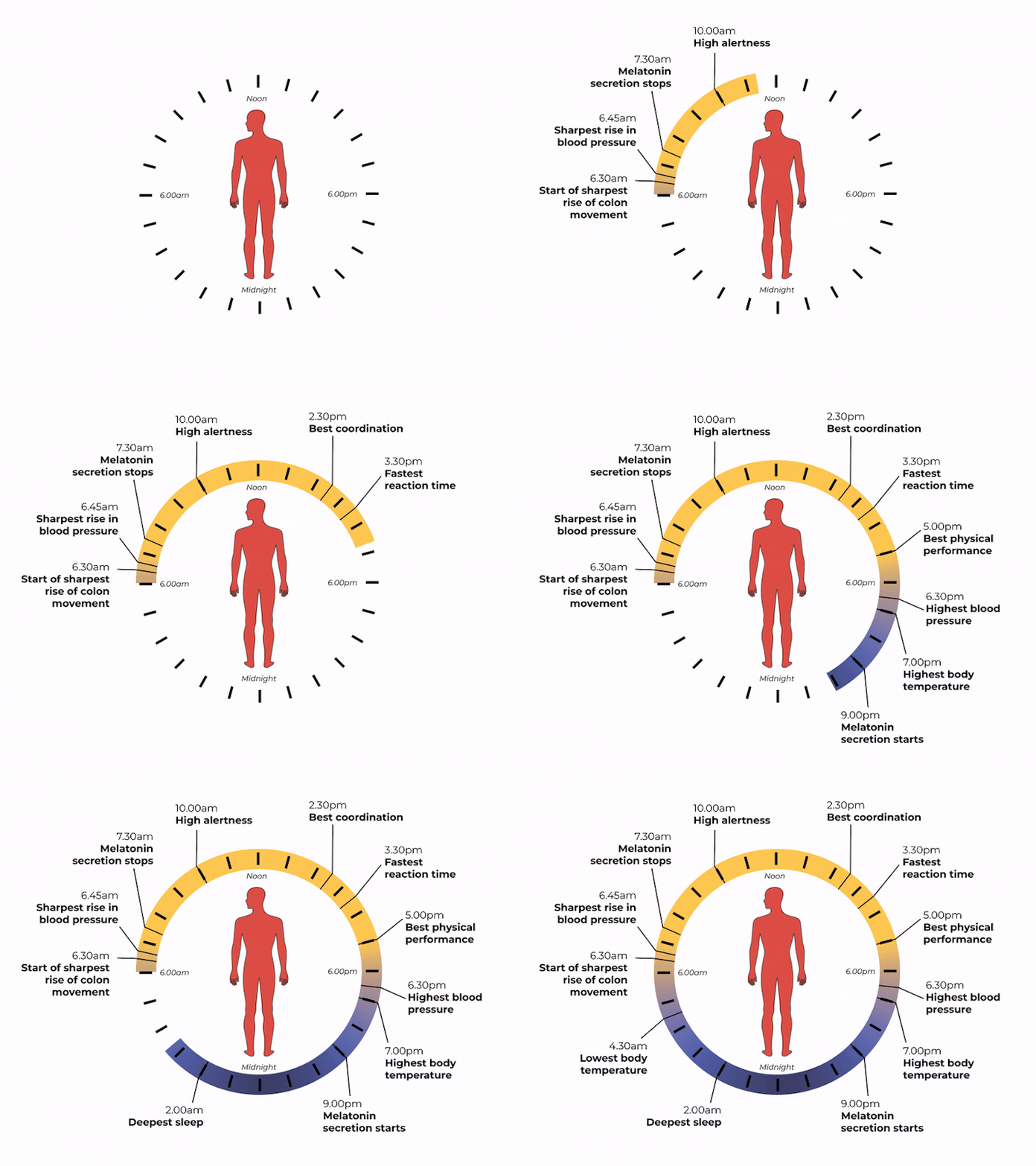
What time of day?
Matt Garrow/The Conversation.Adapted from Delos, CC BY
Let’s take a closer look at sleep
The naturally occurring brain hormone melatonin is linked to our central clock and makes us feel sleepy at certain times of day. When it’s light, our body stops making melatonin (its production is inhibited) and we are alert. Closer to bedtime, the hormone is made, then secreted, making us feel drowsy.
Our sleep is also partly controlled by our genes, which are part of our central clock. These genes influence our chronotype – whether we are a “lark” (early riser), “night owl” (late sleeper), or a “dove” (somewhere in between).
But exposure to light at night when we are supposed to be sleeping can have harmful effects. Even dim light from light pollution can impair our heart rate and how we metabolise sugar (glucose), may lead to psychiatric disorders such as depression, anxiety, and bipolar disorder, and increases the overall risk of premature death.
The main reason for these harmful effects is that light “at the wrong time” disturbs the body clock, and these effects are more pronounced for “night owls”.
This “misaligned” exposure to light is also connected to the detrimental health effects we often see in people who work night shifts, such as an increased risk of cancer, diabetes, and heart disease.
How about the gut?
Digestion also follows a circadian rhythm. Muscles in the colon that help move waste are more active during the day and slow down at night.
The most significant increase in colon movement starts at 6.30am. This is one of the reasons why most people feel the urge to poo in the early morning rather than at night.
The gut’s day-night rhythm is a direct result of the action of the gut’s own clock and the central clock (which synchronizes the gut with the rest of the body). It’s also influenced by when we eat.
Behind every peach you bite into is the work of countless human generations.
The fuzzy, sweet stone fruit traces back to China, where it has been cultivated for more than 8,000 years. It wasn’t until the 1500s that Spanish colonists carried peaches into the Americas when they first explored the North American Southeast, where the fruit gained a foothold in what is now Georgia. Scientists have known that much about this symbol of summer. But how did peaches become so widespread in the U.S.? Research published in September in Nature Communications argues that after the fruit was introduced by Europeans, the peach spread across much of what is now the eastern U.S. with the help of Indigenous peoples.Today, Georgia is the Peach State,” says botanist RaeLynn Butler, secretary of culture and humanities at the Muscogee (Creek) Nation and a co-author of the new research. “That legacy stems from a long history.” Much of that history comes from the Muscogee (Creek) Nation and other Indigenous communities that lived in the area when peaches first arrived in the Americas.
“A lot of choices and agency by Indigenous people played a huge role,” says Jacob Holland-Lulewicz, an archaeologist at Pennsylvania State University and a co-author of the new research. They “were also responsible for structuring the ecology and the landscape to be an appropriate place for peaches to grow, and they tended to the peach plants.”
Holland-Lulewicz had long noted reports of peach pits found at archaeological sites across the southeastern U.S. And a few years ago he decided to compile these into a more detailed picture of how peaches spread—one that could shed light on the Indigenous histories that archaeology has typically ignored or suppressed. “I started to think about [the fruit] as a trade good,” he says. “Maybe we could use peaches to track, at a really high resolution, how Indigenous communities were interacting.”
The research team gathered evidence from more than two dozen archaeological sites and several early towns across the southeastern U.S. where one or more peaches had been discovered. Previous research at some of these sites had already provided a time frame for the presence of peaches. For the sites where that age had not yet been determined, the researchers used radiocarbon dating, either directly on peach pits or on other nearby materials to establish when peaches were likely present.
This work, however, showed only where peach pits had survived—not how people used the fruit or seeds. “We can’t see what people actually did with peaches and peach pits, so we’re making inferences based on the archaeological record,” says Kristen Gremillion, an archaeobotanist at the Ohio State University, who has researched peach history in the Americas but was not involved in the new research.
Perhaps the most surprising date the study authors determined comes from a site in inland Georgia, where Ancestral Muskogean people lived for a few decades beginning in the early to mid-1500s. The researchers suggest that the two peach pits found at this site may be related to Hernando de Soto’s early expedition inland in 1540, one of a series of journeys that bands of Spaniards made during their first century in the Americas.
Beyond this outlier, the peach pits didn’t appear to reach inland Georgia until decades later. The bulk of early peaches, dating to before 1600, come from coastal Florida and Georgia. The fruit then spread across a swath of northern Florida and southern Georgia between 1625 and 1640. By 1650, peaches had moved throughout the rest of Georgia and eastern Alabama, plus some sites in North Carolina and eastern Tennessee. The fruit had reached Arkansas by the 1670s, the researchers found, and prior archaeological records show peaches arriving in New York State before the beginning of the 18th century.
Walking has seen a surge in popularity over the past few years, thanks to a slew of research that’s found that it’s great for your overall health and longevity. Now, another study has found that you don’t need to log several miles to reap the benefits of walking. Instead, just a few minutes a day could provide a serious boost for your overall health.
So, what’s the deal with this study and why is walking so good for you? Here’s what we know.
What did the study find?
The meta-analysis, which was published in the British Journal of Sports Medicine, analyzed data from 196 peer-reviewed articles that involved more than 30 million people. The researchers specifically looked at the link between the participants’ physical activity and health.
After crunching the data, the researchers discovered that people who logged 75 minutes of moderate-intensity exercise (which includes brisk walking) per week had a 23 percent lower risk of early death.
When the study authors broke that down even more, they found that 75 minutes a week of moderate-intensity exercise lowered the risk of cardiovascular disease by 17 percent and cancer by seven percent.
Why is walking so good for you?
There are a few reasons why walking is beneficial. For one, it’s approachable.
“There’s no skill hurdle and people aren’t usually intimidated by it,” says Albert Matheny, R.D., C.S.C.S., co-founder of SoHo Strength Lab. You also don’t need extra equipment, meaning you can usually just walk out the door and go.
“Walking is great because it’s a cardiovascular exercise, but it’s also weight-bearing,” Matheny says. “That’s ultimately better for bone density and overall mobility.”
In addition to all of that, research has linked a walking habit with better moods, improvements in heart health, and a lowered risk of developing diabetes.
How much walking do you need to do per day to reap the benefits?
It really depends on your goals. This particularly study found that walking at a solid pace for just 11 minutes a day (a.k.a. 75 minutes spread out over the course of seven days) can give you all of those health perks mentioned above.
But that doesn’t mean you need to stop walking once you hit 11 minutes. “There’s no magic number,” Matheny says. “It’s not like if you walk less than 5,000 steps, you get no benefit.”
If you’re looking to take up a walking habit for fitness, he suggests aiming for 5,000+ steps a day. Ultimately, though, Matheny recommends just doing what you can.
How can I add more walking to my day?
There are so many ways to take up a walking habit, including making it a regular workout or finding ways to sneak it in, like walking to a friend’s house versus driving there. (You may need to upgrade your footwear to get a good walking shoe if you plan to ramp things up, though.)
.
Women’s Health may earn commission from the links on this page, but we only feature products we believe in. Why Trust Us? miniseries
Film and Writing Festival for Comedy. Showcasing best of comedy short films at the FEEDBACK Film Festival. Plus, showcasing best of comedy novels, short stories, poems, screenplays (TV, short, feature) at the festival performed by professional actors.

 Jena Ardell/Getty Images
 Dmytro Betsenko/Getty Images



 Dragon Claws/Getty Images


 James' World 2