December 25, 2024
Mohenjo
Business, Food For Thought, Human Interest, Political, Science, Technical
amazon, business, Business News, current-events, Future, Hotels, human-rights, medicine, mental-health, research, Science, Science News, technology, Technology News, travel, vacation

Click the link below the picture
.
When I was 17 I was nearly killed when a fight broke out after a high school football game and someone fired a gun. A stray bullet struck my throat, tearing through my trachea and damaging my carotid artery.
This near-death experience deeply traumatized my entire family. Yet my parents couldn’t focus solely on my survival and healing. In the hospital, they were overwhelmed by a labyrinth of paperwork, billing inquiries, and questions about insurance coverage. Even after I was discharged, the challenges continued. Instead of focusing on my recovery, we spent our energy addressing delayed approvals for follow-up care, denied access to physical therapy, and endless requests to clarify reimbursements.
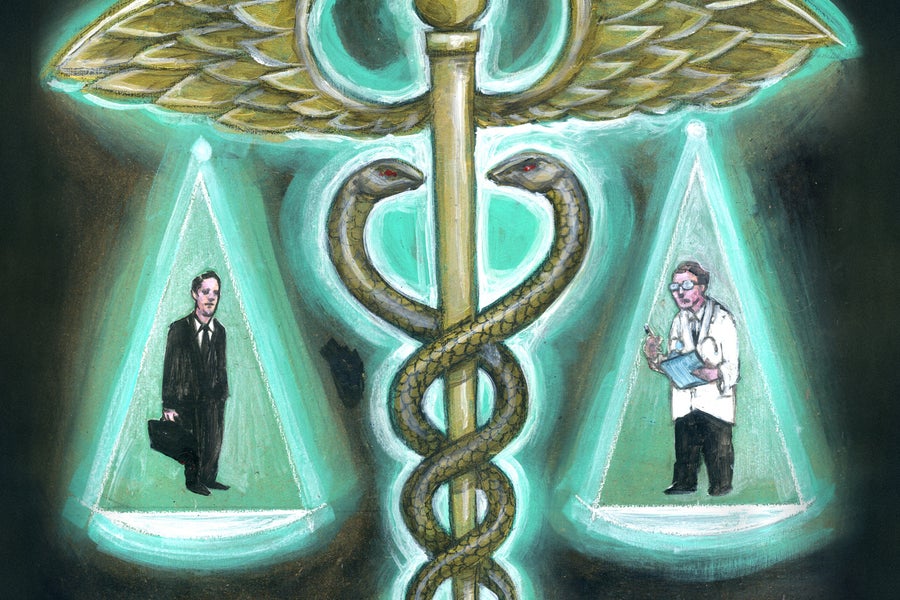
Our health insurance system made a catastrophic time for me and my parents needlessly worse. Now, as a trauma surgeon, I have seen how pervasive such
struggles are. And with the killing of UnitedHealthcare CEO Brian Thompson, long-simmering and widespread anger about the harm that health insurers have caused seems to be reaching a boiling point. After decades of public outcry over health care policies that prioritize profits over people—policies that deny lifesaving treatments, cause bankruptcy over uncovered medical treatments, and leave entire communities behind—the demand for reform is growing too loud to ignore. For too many, health insurance is a brick wall—a bureaucratic gatekeeper that creates barriers instead of providing solutions.
We cannot justify his killing; so how do we channel our collective grief and frustration into meaningful change? How do we build a health care system that offers healing, not harm—a system that values human life over corporate gain? It will take courage, accountability, and a willingness to reimagine a system where patients are seen as people, not as financial transactions.
The average annual cost of health care in the U.S. is estimated at a staggering $15,074 per person. We purchase health insurance, either on the open market or through our employer, with the expectation that if we need to see a doctor or undergo treatment, our insurance will cover most—if not all—of the expenses. Yet nearly two-thirds of U.S. bankruptcies are tied to obscenely high medical expenses, even among people who have insurance. Around 41 percent of Americans carry medical debt, highlighting the system’s profound failure to provide financial security when it’s needed most.
On top of these ruinous costs—which patients rarely know up front and have little time to understand during medical emergencies—insurers also decide whether they will pay for care, regardless of whether a patient’s doctor says such care is necessary. The delay of care through bureaucratic hurdles like prior authorizations and denied claims are carefully designed to force people and their doctors to fight their way through outdated systems like fax machines and endless phone trees to ask for appeals or reconsideration of denied treatments or examinations. All too often the mental effort and excessive time required to navigate claims, denials, and appeals wears people down, leading them to simply give up on getting the coverage they are owed. This isn’t just inefficiency; it’s a predatory failure of empathy for people during their most vulnerable moments. And it perversely exacerbates anxiety and depression for the sick person and their caregivers alike, compounding the very challenges the system is meant to address.
I’ve spent countless nights fighting to save lives in operating rooms. I’ve witnessed how gun violence intersects with healthcare inequities, leaving families to confront not only grief but insurmountable medical bills. Survivors often endure years of physical and financial pain as they battle not only their injuries but also insurance denials for necessary care. I know firsthand what my patients go through. Every step of my own recovery felt like a negotiation—not just for my health but for access to the care I needed. At times, I questioned whether I was viewed as a patient or a cost to be managed. These frustrations extended to my family, who bore the emotional and logistical burden of dealing with appeals and authorizations while supporting my recovery.
.
 Fanatic Studio/Alamy Stock Photo
.
.
Click the link below for the complete article:
.
__________________________________________
December 25, 2024
Mohenjo
Business, Food For Thought, Human Interest, Political, Science, Technical
amazon, business, Business News, current-events, Future, Hotels, human-rights, medicine, mental-health, research, Science, Science News, technology, Technology News, travel, vacation

Click the link below the picture
.
The world might seem to be on the brink of a humanoid-robot heyday. New breakthroughs in artificial intelligence promise the type of capable, general-purpose robots previously seen only in science fiction—robots that can do things like assemble cars, care for patients, or tidy our homes, all without being given specialized instructions.
It’s an idea that has attracted an enormous amount of attention, capital, and optimism. Figure raised $675 million for its humanoid robot in 2024, less than two years after being founded. At a Tesla event this past October, the company’s Optimus robots outshined the self-driving taxi that was meant to be the star of the show. Tesla’s CEO, Elon Musk, believes that these robots could somehow build “a future where there is no poverty.” One might think that supremely capable humanoids are just a few years away from populating our homes, war zones, workplaces, borders, schools, and hospitals to serve roles as varied as therapists, carpenters, home health aides, and soldiers.
Yet recent progress has arguably been more about style than substance. Advancements in AI have undoubtedly made robots easier to train, but they have yet to enable them to truly sense their surroundings, “think” of what to do next, and carry out those decisions in the way some viral videos might imply. In many of these demonstrations (including Tesla’s), when a robot is pouring a drink or wiping down a counter, it is not acting autonomously, even if it appears to be. Instead, it is being controlled remotely by human operators, a technique roboticists refer to as teleoperation. The futuristic looks of such humanoids, which usually borrow from dystopian Hollywood sci-fi tropes like screens for faces, sharp eyes, and towering, metallic forms, suggest the robots are more capable than they often are.
“I’m worried that we’re at peak hype,” says Leila Takayama, a robotics expert and vice president of design and human-robot interaction at the warehouse robotics company Robust AI. “There’s a bit of an arms war—or humanoids war—between all the big tech companies to flex and show that they can do more and they can do better.” As a result, she says, any roboticist not working on a humanoid has to answer to investors as to why. “We have to talk about them now, and we didn’t have to a year ago,” Takayama told me.
Shariq Hashme, a former employee of both OpenAI and Scale AI, entered his robotics firm Prosper into this arms race in 2021. The company is developing a humanoid robot it calls Alfie to perform domestic tasks in homes, hospitals, and hotels. Prosper hopes to manufacture and sell Alfies for approximately $10,000 to $15,000 each.
“Why are we enamored with this idea of building a replica of ourselves?”
Guy Hoffman, associate professor, Cornell University
In conceiving the design for Alfie, Hashme identified trustworthiness as the factor that should trump all other considerations, and the top challenge that needs to be overcome to see humanoids benefit society. Hashme believes one essential tactic to get people to put their trust in Alfie is to build a detailed character from the ground up—something humanlike but not too human.
This is about more than just Alfie’s appearance. Hashme and his colleagues are envisioning the way the robot moves and signals what he’ll do next; imagining desires and flaws that shape his approach to tasks; and crafting an internal code of ethics that governs the instructions he will and will not accept from his owners.
.

.
.
Click the link below for the complete article:
.
__________________________________________
December 24, 2024
Mohenjo
Business, Food For Thought, Human Interest, Political, Science, Technical
amazon, business, Business News, current-events, Future, Hotels, human-rights, medicine, mental-health, research, Science, Science News, technology, Technology News, travel, vacation
Click the link below the picture
.
The moon is Earth’s closest neighbor in space and the only extraterrestrial body humans have visited. Yet scientists are still unsure exactly when a Mars-size meteorite slammed into early Earth, causing our natural satellite to form from the debris. Lunar rock samples suggest the event happened 4.35 billion years ago, but planet formation models and fragments of zircon from the moon’s surface put it at 4.51 billion years ago.
A new study published on December 18 in Nature offers a way to explain that 150-million-year gap. Computer modeling and analysis of previous research suggests the 4.35-billion-year-old rock samples may not date back to the moon’s formation but instead a later event in the moon’s history in which it temporarily heated up, causing its surface to melt and crystallize.
The moon is slowly moving away from Earth, so its orbit isn’t circular. As it moves, it is squeezed and stretched by Earth’s gravity, resulting in what is known as tidal heating—and one of these heating events likely happened 4.35 billion years ago. This early moon would have looked like Jupiter’s moon Io, says the new study’s lead author Francis Nimmo, a planetary scientist at the University of California Santa Cruz. “It would have had volcanoes all over its surface,” he says. This event would have also erased lunar impact basins caused by meteorite strikes, which researchers use to estimate age as well.
This difference of 150 million years matters a lot to scientists, Nimmo says, especially for learning more about the early Earth. “The moon is moving away from the Earth, and the rate at which that happens depends on what the Earth
was like,” he says. “Was it solid? Was it liquid? Did it have an ocean? Did it have an atmosphere?” For instance, really early Earth likely didn’t have an ocean—or it would have pushed the moon away too fast. The moon’s formation time is crucial to these calculations, and more complex models of tidal heating and the mineralogy involved could help refine our view in the future.
“No previous study has synthesized all the available evidence comprehensively,” says Yoshinori Miyazaki, a geophysicist at the California Institute of Technology, who wasn’t involved with the study. “This paper provides a better view in resolving the discrepancies between different age estimates.”
Current hypotheses for when the Earth and moon formed, which put the date at anywhere from 30 million to 150 million years after the sun’s birth, suggest vastly different scenarios for planet formation. “Resolving these uncertainties is essential for constructing a consistent picture of solar system history,” Miyazaki says.
.
 Javier Zayas Photography/Getty Images
.
.
Click the link below for the complete article:
.
__________________________________________
December 24, 2024
Mohenjo
Business, Food For Thought, Human Interest, Political, Science, Technical
amazon, business, Business News, current-events, Future, Hotels, human-rights, medicine, mental-health, research, Science, Science News, technology, Technology News, travel, vacation

Click the link below the picture
.
Don’t be duped by a scam made with artificial intelligence tools this holiday season. The FBI issued a public service announcement earlier this month, warning criminals are exploiting AI to run bigger frauds in more believable ways.
While AI tools can be helpful in our personal and professional lives, they can also be used against us, said Shaila Rana, a professor at Purdue Global who teaches cybersecurity. “[AI tools are] becoming cheaper [and] easier to use. It’s lowering the barrier of entry for attackers so scammers can create really highly convincing scams.”
There are some best practices for protecting yourself against scams in general, but with the rise of generative AI, here are five specific tips to consider.
Beware of sophisticated phishing attacks
The most common AI-enabled scams are phishing attacks, according to Eman El-Sheikh, associate vice president of the Center for Cybersecurity at the University of West Florida. Phishing is when bad actors attempt to obtain sensitive information to commit crimes or fraud. “[Scammers are using] generative AI to create content that looks or seems authentic but in fact is not,” said El-Sheikh.
“Before we would tell people, ‘look for grammatical errors, look for misspellings, look for something that just doesn’t sound right.’ But now with the use of AI … it can be extremely convincing,” Rana told NPR.
However, you should still check for subtle tells that an email or text message could be fraudulent. Check for misspellings in the domain name of email addresses and look for variations in the logo of the company. “It’s very important to pay attention to those details,” said El-Sheikh.
Create a code word with your loved ones
AI-cloned voice scams are on the rise, Rana told NPR. “Scammers just need a few seconds of your voice from social media to create a clone,” she said. Combined with personal details found online, scammers can convince targets that they are their loved ones.
Family emergency scams or “grandparent scams” involve calling a target, creating an extreme sense of urgency by pretending to be a loved one in distress, and asking for money to get them out of a bad situation. One common scheme is telling the target their loved one is in jail and needs bail money.
Rana recommends coming up with a secret code word to use with your family. “So if someone calls claiming to be in trouble or they’re unsafe, ask for the code word and then [hang up and] call their real number [back] to verify,” she said.
.

Scammers are using generative artificial intelligence tools to create more convincing fake text and voices to commit fraud, according to a recent FBI warning to the public. Olivier Morin/AFP via Getty Images
.
.
Click the link below for the complete article:
.
__________________________________________
December 23, 2024
Mohenjo
Business, Food For Thought, Human Interest, Political, Science, Technical
amazon, business, Business News, current-events, Future, Hotels, human-rights, medicine, mental-health, research, Science, Science News, technology, Technology News, travel, vacation
Click the link below the picture
.
Keith Poulsen’s jaw dropped when farmers showed him images on their cellphones at the World Dairy Expo in Wisconsin in October. A livestock veterinarian at the University of Wisconsin, Poulsen had seen sick cows before, with their noses dripping and udders slack.
But the scale of the farmers’ efforts to treat the sick cows stunned him. They showed videos of systems they built to hydrate hundreds of cattle at once. In 14-hour shifts, dairy workers pumped gallons of electrolyte-rich fluids into ailing cows through metal tubes inserted into the esophagus.
“It was like watching a field hospital on an active battlefront treating hundreds of wounded soldiers,” he said.
Nearly a year into the first outbreak of the bird flu among cattle, the virus shows no sign of slowing. The U.S. government failed to eliminate the virus on dairy farms when it was confined to a handful of states, by quickly identifying infected cows and taking measures to keep their infections from spreading. Now at least 860 herds across 16 states have tested positive.
Experts say they have lost faith in the government’s ability to contain the outbreak.
“We are in a terrible situation and going into a worse situation,” said Angela Rasmussen, a virologist at the University of Saskatchewan in Canada. “I don’t know if the bird flu will become a pandemic, but if it does, we are screwed.”
To understand how the bird flu got out of hand, KFF Health News interviewed nearly 70 government officials, farmers and farmworkers, and researchers with expertise in virology, pandemics, veterinary medicine, and more.
Together with emails obtained from local health departments through public records requests, this investigation revealed key problems, including deference to the farm industry, eroded public health budgets, neglect for the safety of agriculture workers, and the sluggish pace of federal interventions.
Case in point: The U.S. Department of Agriculture this month announced a federal order to test milk nationwide. Researchers welcomed the news but said it should have happened months ago — before the virus was so entrenched.
“It’s disheartening to see so many of the same failures that emerged during the COVID-19 crisis reemerge,” said Tom Bollyky, director of the Global Health Program at the Council on Foreign Relations.
Far more bird flu damage is inevitable, but the extent of it will be left to the Trump administration and Mother Nature. Already, the USDA has funneled more than $1.7 billion into tamping down the bird flu on poultry farms since 2022, which includes reimbursing farmers who’ve had to cull their flocks, and more than $430 million into combating the bird flu on dairy farms. In coming years, the bird flu may cost billions of dollars more in expenses and losses. Dairy industry experts say the virus kills roughly 2% to 5% of infected dairy cows and reduces a herd’s milk production by about 20%.
.

Cows are milked at the Cornell Teaching Dairy Barn in Ithaca, N.Y. These cows are not infected, but the bird flu virus has spread among other cattle. Michael M. Santiago/Getty Images
.
.
Click the link below for the complete article:
.
__________________________________________
December 23, 2024
Mohenjo
Business, Food For Thought, Human Interest, Political, Science, Technical
amazon, business, Business News, current-events, Future, Hotels, human-rights, medicine, mental-health, research, Science, Science News, technology, Technology News, travel, vacation

Click the link below the picture
.
YouTube is taking a tougher stance on clickbait, saying it will remove content with titles or thumbnails that promise viewers “something that the video doesn’t deliver,” as spotted earlier by TechCrunch. This change will “slowly” roll out in India first, according to YouTube’s blog post, but will “expand to more countries” in the “coming months,” YouTube spokesperson Jack Malon says in a statement to The Verge.
YouTube says the policy will combat “egregious” clickbait that misleads viewers, with a particular focus on videos related to “breaking news” or “current events.” The company’s examples of egregious clickbait include a video with the title “the president resigned!” that doesn’t actually address a resignation or a “top political news” thumbnail attached to a video with no news content.
As the policy rolls out in India, YouTube will remove content that violates the rules without giving a strike to creators, at least at first. “And as we continue to educate creators, our enforcement efforts will prioritize new video uploads moving forward,” YouTube says.
.
:format(webp)/cdn.vox-cdn.com/uploads/chorus_asset/file/23986637/acastro_STK092_01.jpg) Illustration by Alex Castro / The Verge
Illustration by Alex Castro / The Verge
.
.
Click the link below for the complete article:
.
__________________________________________
December 22, 2024
Mohenjo
Business, Food For Thought, Human Interest, Political, Science, Technical
amazon, business, Business News, current-events, Future, Hotels, human-rights, medicine, mental-health, research, Science, Science News, technology, Technology News, travel, vacation
Click the link below the picture
.
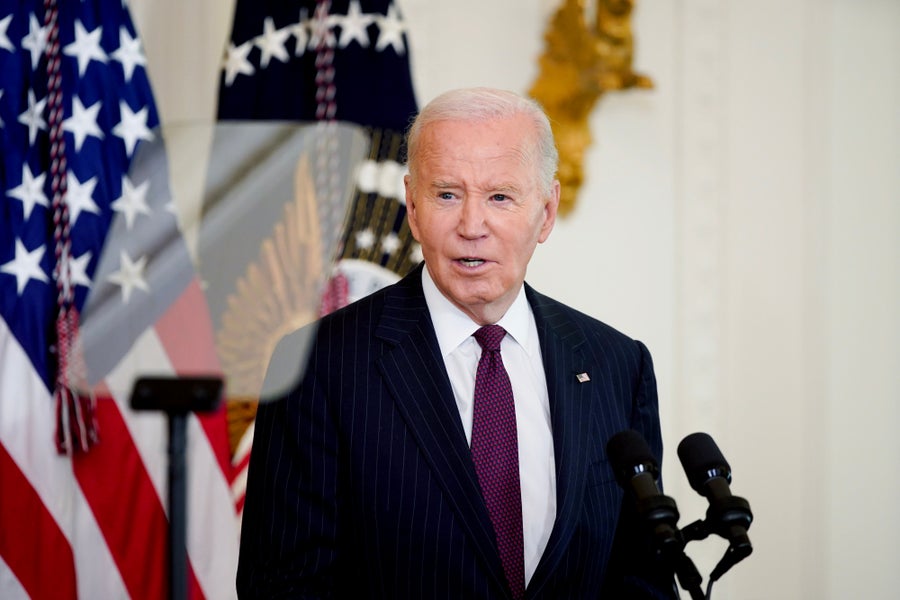
CLIMATEWIRE | President Joe Biden announced Thursday that he will strengthen the United States’ climate target by aiming to cut planet-warming pollution 61-66 percent by 2035, in a move that his successor is certain to disregard.
The new goal marks an increase over Biden’s 2021 pledge to slash greenhouse gases 50-52 percent by 2030 over 2005 levels, but is a downgrade from what modelers say would have been possible under a future president who acts aggressively to slow rising temperatures.
President-elect Donald Trump has indicated the opposite.
Instead, the target will likely be jettisoned after Trump takes office, reflecting his promises to expand fossil fuel production and dismantle Biden’s climate agenda.
Though the incoming administration could just ignore the target, the goal offers an ambitious marker that states, cities and businesses can aspire to meet, even as the Trump presidency attempts to roll back federal climate programs.
“President Biden’s new 2035 climate goal is both a reflection of what we’ve already accomplished … and what we believe the United States can and should achieve in the future,” said John Podesta, senior White House adviser for international climate policy, in a call with reporters.
The move comes amid increasing pressure on the Biden administration to make urgent environmental commitments in the waning days of the president’s term, even if Trump has no intention of honoring them. U.S. officials say it sends an important signal to the world of what the U.S. could do in the face of those challenges.
“American industry will keep inventing and keep investing. State, local, and tribal governments will keep stepping up,” Biden said in prerecorded video remarks for the announcement.
It also includes at least a 35 percent reduction of methane, a short-lived but potent greenhouse gas that the Biden administration has prioritized tackling through regulations and global agreements.
“We’re looking to governors, mayors, business leaders, and more to carry this important work forward,” said Podesta.
The targets — known as nationally determined contributions, or NDCs — are required under the Paris Agreement, the global deal to limit warming to 1.5 degrees Celsius in the postindustrial era. The White House said that it is formally submitting the new target to the United Nations’ climate change secretariat. Trump is expected to withdraw from the agreement.
‘A North Star’
Observers argued that the new target showcases the ability of the world’s largest economy to tackle climate change without federal help.
.
President Joe Biden strengthened U.S. commitments to lower climate pollution Thursday. Al Drago/Bloomberg via Getty Images
.
.
Click the link below for the complete article:
.
__________________________________________
December 22, 2024
Mohenjo
Business, Food For Thought, Human Interest, Political, Science, Technical
amazon, business, Business News, current-events, Future, Hotels, human-rights, medicine, mental-health, research, Science, Science News, technology, Technology News, travel, vacation

Click the link below the picture
.
Does your mind regularly drift to your to-do list during family dinner? Do you check emails every morning before you’ve even had coffee? Have you turned down social plans because you “need” to catch up on work?
If these questions hit close to home, you might be too emotionally invested in your work — and it’s costing you more than you realize.
For high-achieving professionals, especially those who are naturally more sensitive and perceptive, emotional investment in work can be both a blessing and a curse.
Your deep commitment drives excellence and meaningful contributions. But when investment tips into overdrive, it creates a vicious cycle that can hijack your well-being and, ironically, your performance.
Signs you’re too emotionally invested in your job
It can be hard to recognize exactly when you’ve gone beyond “just right” and crossed into “too much” territory. Here are a few common and sometimes subtle signs to be attuned to:
-
You take criticism super personally. When work criticism triggers an emotional cascade that derails your entire day, it’s a sign your self-worth has become entangled with your professional identity. A simple “let’s discuss” email shouldn’t send your heart racing, yet for many, it does. The real issue isn’t sensitivity — it’s that every piece of feedback feels like a judgment of your value as a person.
-
Work follows you home. This goes beyond occasional after-hours emails. I’m talking about a constant hum of work in your mind during moments that should be yours. If you’re checking Slack during family dinner or jolting awake at 3 a.m. worried about tomorrow’s to-do list, you’ve lost the crucial boundary between work and life.
-
Your default setting is people pleasing. When you find yourself compulsively playing the workplace hero — never saying no, always being available, constantly putting others’ needs before your own — you’re likely too emotionally invested. This pattern often masquerades as being a “team player” and stems from a deep fear of disapproval or conflict.
.

David Gyung | Getty Images
.
.
Click the link below for the complete article:
.
__________________________________________
December 21, 2024
Mohenjo
Business, Food For Thought, Human Interest, Political, Science, Technical
amazon, business, Business News, current-events, Future, Hotels, human-rights, medicine, mental-health, research, Science, Science News, technology, Technology News, travel, vacation
Click the link below the picture
.
Should you throw out your black plastic spatula? A recent study that reported alarming levels of several flame retardants in common black-colored plastic items (including cooking utensils, toys and hair products) had many people suddenly taking stock of their inky array of plastic kitchenware and considering wood or metal alternatives. And the reasons for the concern were understandable: the study’s findings, published in Chemosphere, highlighted potential health effects from exposure to the flame retardants, particularly decabromodiphenyl ether (decaBDE)—a chemical the U.S. Environmental Protection Agency banned in 2021 for its apparent links to cancer and reproductive, developmental and immunologic toxicity effects.
But this week the study’s authors issued a correction that suggests exposure to decaBDE from the tested products isn’t as close to the EPA’s safety reference level as they initially thought. The decaBDE exposure they estimated from the screened products is still correct, but it’s one tenth of the reference dose. The study had miscalculated the comparison by an order of magnitude.
The amount of flame retardants in such products is “not as harmful, with respect to the EPA guidance, as [the researchers] originally stated, although, with these chemicals, they may be harmful when you’re exposed to small amounts over a long period of time,” says Andrew Turner, a biogeochemist at the University of Plymouth in England, who wasn’t involved in the research and studies the disposal and recycling of plastic consumer goods. “It’s difficult to put numbers on these chemicals.”
The study authors issued an apology for the mistake in which they maintained that the “calculation error does not affect the overall conclusion of the paper.”
“Our results still show that when toxic additives are used in plastic, they can significantly contaminate products made with recycled content that do not require flame retardancy,” says Megan Liu, a co-author of the recent study and science and policy manager at Toxic-Free Future, an environmental health research and advocacy group. “The products found in this study to contain hazardous flame retardants included items with high exposure potential, such as things that touch our food, as well as toys, which come in contact with kids.”
Why might some black plastics contain flame retardants?
Flame retardants are required in certain products (often including computers, TVs and other common electronic items) to meet fire safety regulations. To reduce the amount of e-waste and fossil fuels needed to make new plastics, some of these items are recycled into black plastics. But the problem is that “you could also recycle the flame retardants and other chemicals that are associated with that plastic,” says Stuart Harrad, an environmental chemist at the University of Birmingham in England, who wasn’t involved in the paper. “Now that’s fine to some degree, I suppose, if you’re only recycling the plastic into uses like TV sets, where you need to meet fire safety regulations. But the point is here is that that isn’t happening.”
.
 fotokostic/Getty Images
.
.
Click the link below for the complete article:
.
__________________________________________
December 21, 2024
Mohenjo
Business, Food For Thought, Human Interest, Political, Science, Technical
amazon, business, Business News, current-events, Future, Hotels, human-rights, medicine, mental-health, research, Science, Science News, technology, Technology News, travel, vacation

Click the link below the picture
.
College grads are on pace to hold nearly twice the number of jobs over their careers compared to 15 years ago, according to LinkedIn’s
new Work Change Snapshot report. That’s 20 jobs now versus 11 in 2010. And the jobs they will have are going to be different. Think about it: Roles like data scientist, social media manager, and sustainability manager didn’t even exist 20 years ago. The rapid introduction of AI not only alters how professionals work but how they must present their AI skills in the job search, too.
And with AI directly impacting the skills and qualifications employers are looking for, candidates who have the skills to work alongside AI and the ability to navigate fast-paced, evolving environments, are being prioritized in the hiring process. Positioning yourself as part of that AI skills–ready group is half the battle.
Showcasing AI skills on your LinkedIn profile or résumé and knowing how to talk about AI in interviews are must-dos. Here’s how to best highlight your AI skills as you search for a new role:
Highlight AI skills in your job search
Almost half of recruiters on LinkedIn identify potential candidates by searching for specific skills. This literally means they’re searching for profiles with AI keywords in the About, Experience, and Skill sections.
Use the About section of your profile and résumé to weave in AI keywords and skills. While hiring managers are keeping an eye out for AI skills, such as prompt engineering or data literacy, people skills are also in demand right now. Be sure to include skills like communication, leadership, project management, teamwork, and adaptability on your profile along with specifics on how you’ve employed these skills to drive impact.
In the Experience section, add your AI skills within specific jobs or projects, to improve your chances of showing up in candidate searches. If you’ve used ChatGPT to help research or proof an email response, you’ve effectively employed prompt engineering. Use that verbiage on your profile:
“Frequently utilize AI to draft and refine customer communications.”
Or if you regularly use AI to take meeting notes, you can say something along the lines of:
“Routinely utilize AI tools to capture and organize meeting notes, resulting in streamlined workflows, enhanced productivity, and improved decision making.”
.
 [Source Photo: Pixabay]
.
.
Click the link below for the complete article:
.
__________________________________________
Older Entries
Newer Entries
 James' World 2