February 4, 2025
Mohenjo
Business, Food For Thought, Human Interest, Political, Science, Technical
amazon, business, Business News, current-events, Future, Hotels, human-rights, medicine, mental-health, research, Science, Science News, technology, Technology News, travel, vacation

Click the link below the picture
.
Between ever-evolving technology, social media influence, and a society that thrives on competition and instant gratification, parents these days are stressed. That’s where slow parenting comes in. Slow parenting emphasizes the importance of stepping back from the fast-paced world of modern parenting and instead focusing on spending meaningful time with your kids. There’s no need to pack their days with activities, sports, and social events to help them thrive—sometimes, all you need are the little moments when you can relax, connect, and appreciate each other’s company.
A slow parenting approach is not about doing less or being hands-off—it’s about being more present and mindful while remembering that childhood is not a competition or a race, but it is fleeting. Those moments you share with your kids should be treated as precious. Here, we look at what slow parenting entails, the pros and cons, and how to be a slow parent in an increasingly fast-paced society.
What is Slow Parenting?
Slow parenting is a parenting style that encourages parents to take a break from the constant need to plan outings and extracurricular activities. The idea is that without a packed schedule, kids have more time to play, explore, and develop at their own pace. And for parents, its an opportunity to take a break from the high-speed, competitive world of modern parenting, which demands more and more of parents’ time and energy.
At its core, the slow parenting style emphasizes quality over quantity—how your time is spent is more important than the number of activities you participate in.
“You can just take a step back, follow [your child’s] lead, and [let them] show you what they’re really interested in and what they’re curious about,” says Liz Conradt, Ph.D., a clinical and developmental psychologist and Associate Professor of Pediatrics at Duke University.
Slow Parenting Characteristics
These are some of the most common traits of slow parents:
-
They are patient regarding their children’s interests, avoiding the urge to rush them into activities or sports. “A lot of times kids will say, ‘I want to do this,’ or ‘I don’t want to do that,’ [so] then you let them develop their own passions and interests,” says Dr. Conradt.
-
They appreciate quality time with their kids—even if that means spending more time at home.
-
They are flexible and open to changing plans or adjusting schedules based on their children’s needs, rather than sticking to a rigid routine—perhaps even sharing some characteristics with Type B parents.
-
They believe childhood is not a competition, focusing instead on their children’s well-being and personal growth rather than comparing them to their peers.
-
They prioritize strengthening the parent-child bond over constantly trying to schedule activities to keep them busy.
-
They don’t feel the need to keep their kids busy all the time—relaxation and downtime are a priority.
.
:max_bytes(150000):strip_icc()/slow-parenting-GettyImages-1506935230-eab04c69e3634093b55b84f48f478ea7.jpg) Parents/Getty Images
Parents/Getty Images
.
.
Click the link below for the complete article:
.
__________________________________________
February 3, 2025
Mohenjo
Business, Food For Thought, Human Interest, Political, Science, Technical
amazon, business, Business News, current-events, Future, Hotels, human-rights, medicine, mental-health, research, Science, Science News, technology, Technology News, travel, vacation

Click the link below the picture
.
Long in decline, the U.S. nuclear industry is hoping for resurrection at two sites of its greatest failures: Three Mile Island in Pennsylvania and the Hanford Site in Washington state. Nuclear power, the industry claims, will help satisfy the surging power demands from data centers and the growing AI economy. But such a wrong turn ignores the long-unresolved problems of radioactive nuclear wastes that AI cannot wish away.
In September Constellation Energy announced plans to restart a shuttered reactor at Three Mile Island, prodded by Microsoft, which will need many gigawatts of power to perform extensive AI calculations in its expanding fleet of data centers. Amazon followed suit and announced in November that it will invest $334 million to develop small modular nuclear reactors (SMRs) at Hanford, site of the world’s first plutonium-production facility.
Google and Meta are also hoping to bring nuclear power back. In October 2024 Google announced it eventually plans to purchase 500 megawatts of electricity from Kairos Power, which is developing a novel SMR in Oak Ridge,
Tenn., on the site of the national lab that long refined uranium for the nuclear industry. And Facebook parent Meta is seeking bids for nuclear power plants for its data centers.
These tech giants recognize that the next generation of microprocessors to be used for AI calculations at data centers will require oodles of electricity to power and cool them. A single Nvidia Blackwell chip, for example, can draw up to two kilowatts, more than what is needed for a typical house. Cram thousands of them in servers inside a data center, and they will need as much power as a small city.
So-called hyperscale data centers require over 100 megawatts (100 MW)—a sizeable fraction of the output of a major power plant. And that power should be cheap, steady, and reliable.
An authoritative December 2024 report from the U.S. Department of Energy, written by energy experts at the Lawrence Berkeley National Laboratory, is especially illuminating. The growth in U.S. data-center energy usage over the next five years, they state, would correspond “to a total power demand for data centers between 74 and 132 [gigawatts].” That would represent some 7 to 12 percent of the U.S. electricity consumption forecast for 2028.
Where on Earth is all this power going to come from? Given the challenges electric utilities face in supplying electricity to meet other growing needs, including electric vehicles, it’s small wonder that big tech has turned back to the atomic nucleus. But the power demands outlined in the DOE report would require building or resurrecting the equivalent of at least 40 Three Mile Island reactors over the next five years. That’s impossible.
.
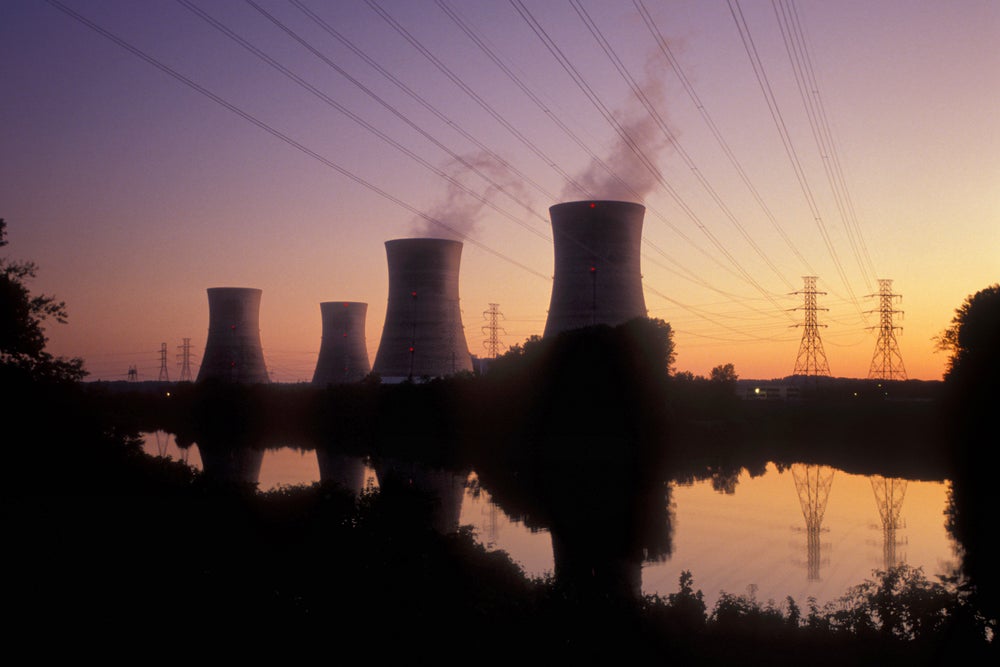
Three Mile Island Nuclear Generating Station in Londonderry Township, Dauphin County, Pennsylvania was shutdown following the partial meltdown of its Unit 2 reactor (TMI-2) on March 28, 1979. Andre Jenny/Alamy Stock Photo
.
.
Click the link below for the complete article:
.
__________________________________________
February 3, 2025
Mohenjo
Business, Food For Thought, Human Interest, Political, Science, Technical
amazon, business, Business News, current-events, Future, Hotels, human-rights, medicine, mental-health, research, Science, Science News, technology, Technology News, travel, vacation

Click the link below the picture
.
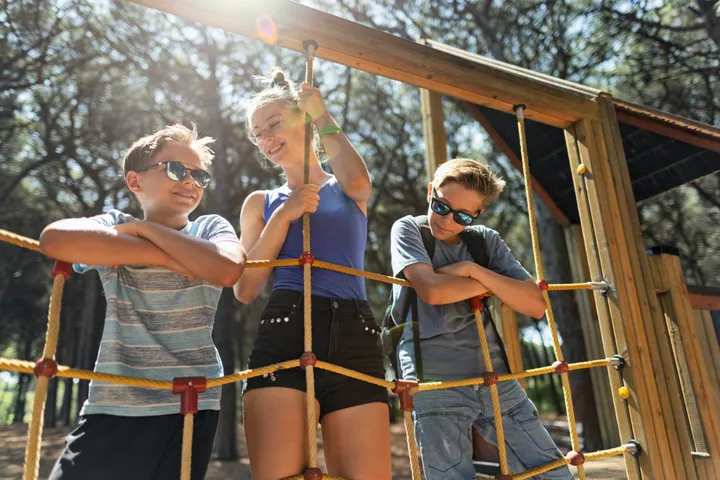
Teaching kids how to share, take turns, and be considerate of others is often top of mind for parents and caregivers. But kids also need to learn to how be assertive and stand up for themselves — even if that’s a skill parents don’t talk about as often.
“Assertiveness is all about teaching kids to express their needs and boundaries confidently without being aggressive,” said Ann-Louise Lockhart, pediatric psychologist, parent coach, and owner of A New Day Pediatric Psychology. “[This] equips kids with skills to make it through challenges like bullying, peer pressure and interpersonal conflict.”
We talked to experts about phrases parents can teach kids so they’re able to verbalize their feelings, develop confidence and set boundaries — all while still being respectful.
Why is it important to raise kids who are assertive?
It’s important “to teach our kids to be assertive so they can advocate for both themselves and others,” said Amy McCready, founder of Positive Parenting Solutions and author of “The ‘Me, Me, Me’ Epidemic — A Step-by-Step Guide to Raising Capable, Grateful Kids in an Over-Entitled World.” “Kids need to learn this skill in childhood so they can carry it with them through their teenage years and into adulthood.”
Knowing how to be assertive also helps kids be open with their emotions and avoid bottling them up, she explained.
“Assertive communication [also] creates healthier relationships in both personal and professional life and … more successes in all areas of life,” added Lisa Schab, licensed clinical social worker and author of “Cool, Calm, and Confident: A Workbook to Help Kids Learn Assertiveness Skills.”
Teach kids simple phrases that are direct, but not aggressive.
“I don’t like that. Please stop.”
Whether your kid is being pushed on the playground or teased by a friend, this simple and clear phrase sets an instant boundary.
“By saying, ‘I don’t like that,’ your child acknowledges their emotions, which helps them own their perspective without blaming or shaming,” Lockhart said. “The follow-up, ‘Please stop,’ is a firm yet polite demand for a specific behavior to end.”
.
 mgorthand via Getty Images
.
.
Click the link below for the complete article:
https://www.huffpost.com/entry/phrases-that-teach-kids-how-to-be-assertive_l_6786c317e4b0a673540f8292?utm_source=pocket_discover_parenting
.
__________________________________________
February 2, 2025
Mohenjo
Business, Food For Thought, Human Interest, Political, Science, Technical
amazon, business, Business News, current-events, Future, Hotels, human-rights, medicine, mental-health, research, Science, Science News, technology, Technology News, travel, vacation
Click the link below the picture
.
If you flick a flat stone toward a pond at just the right angle, it skips across in a series of smooth jumps. Inch-long cricket frogs also seem to skitter over the surface of water with physics-defying grace. But when Talia Weiss, then a bioengineering graduate student at Virginia Tech, filmed the frogs with a high-speed camera, she saw a very different picture.
“The motion is so fast that if you look at it with the naked eye, you really can’t tell the difference,” Weiss says.
For a new study in the Journal of Experimental Biology, Weiss and her co-authors recorded skittering cricket frogs from above and below the surface at 500 frames per second and then played the videos back much more slowly. The researchers found that instead of hopping with just their feet breaking the surface, as older studies had described anecdotally, the frogs were actually doing a series of belly flops—sinking for a fraction of a second and then kicking themselves upward with each jump.
Rather than actually skittering across water like basilisk lizards do, the frogs were “porpoising”—leaping from the water as they swim. Weiss says their legs may be too slow for true surface hopping.
“To jump on the water surface, you have to have your legs retracted and ready to push down again by the time you’re approaching the water in every jump,” she explains. “And these [frogs] don’t prepare for their landing at all; they sort of just belly flop. They don’t retract their legs fast enough to immediately jump again” from the surface itself.
“Fast animal movements can be really deceiving,” and the new camerawork reveals what the frogs are actually doing, says Jasmine Nirody, an organismal biologist at the University of Chicago, who was not involved in the study. By carefully analyzing such motions, “we can think about how we might be able to use [the frog’s] strategy in various bioinspired robots,” she adds. “Now we know what to look for.”
.
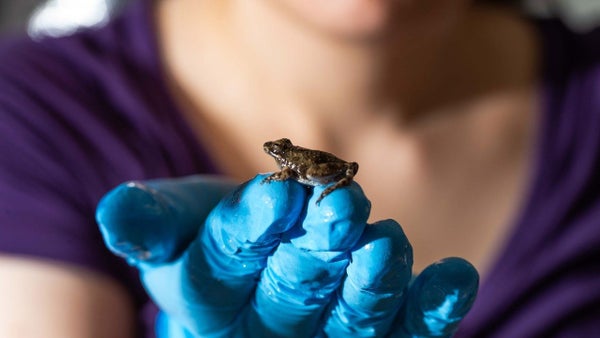
Graduate researcher Talia Weiss observes a cricket frog, whose unusual locomotion lets it appear to skip across the water’s surface. nJake Socha
.
.
Click the link below for the complete article:
.
__________________________________________
February 2, 2025
Mohenjo
Business, Food For Thought, Human Interest, Political, Science, Technical
amazon, business, Business News, current-events, Future, Hotels, human-rights, medicine, mental-health, research, Science, Science News, technology, Technology News, travel, vacation
Click the link below the picture
.
Because we are living longer than previous generations did, there is a higher likelihood that people will experience brain deterioration.
A study published in January showed that an estimated half a million people may be diagnosed with dementia this year. By 2060, the number is predicted to reach 1 million cases annually.
The aging population may be living with lifestyle chronic diseases like high blood pressure and type 2 diabetes, which also raise a person’s dementia risk. “We estimate that about 40% of cases of dementia are preventable through lifestyle and other factors,” said Dr. Meredith Bock, neurologist and chief medical officer at Remo Health. Just because you carry a gene that puts you at a higher risk for developing dementia doesn’t mean that you will.
“There’s certainly a benefit to lifestyle interventions, both at reducing the time of onset of dementia or potentially getting it at all,” Bock said.
Some of these interventions, like getting plenty of exercise or doing brain puzzles, are well known. Others, however, may not be. Below, neurologists share the behaviors they do daily to keep their risk of dementia low, which may seem unusual to some:
They walk to their colleague’s office instead of sending an email.
Instead of being glued to a chair in front of a computer at work, Dr. Gabriel Leger, a neurologist at UC San Diego Health, is very intentional about getting up and moving to break up prolonged sitting periods.
“If I’m not with patients, I’m more likely to stand up and go across the building to speak to somebody instead of sending an email just because it gets me off the chair and makes me more active,” Leger said.
Our bodies weren’t designed to be still for prolonged periods, explained Leger. A 2023 study of nearly 50,000 adults revealed that 10 hours or more of sitting per day is linked to increased dementia risk.
They interact with people IRL as often as possible.
Another reason Leger will discuss a matter with a colleague face-to-face instead of simply sending an email is that interacting with other people helps preserve brain function.
“The more social interaction you have, the more connections your brain is making,” Leger said. Socializing with others is a protective factor to reduce your risk of Alzheimer’s disease. He added that it is as much a stimulator of brain connections as education.
“When you have a typical conversation, there are a lot of different cognitive domains you may be drawing on, comprehending language, speaking, following a story, and a lot of behavioral aspects, socio-emotional cues that you’re picking up on and responding to,” Bock explained. “Social interactions are also just really good for mood, which is also closely related to cognition.”
If they have pets, they really commit to caring for them.
Leger owns two dogs and two cats. With dogs in particular, “you interact with them socially, you are obligated to take them out every day for a walk, and they force you to interact with other dog owners,” Leger said.
“You have a responsibility and are maintaining the sense that ‘There’s something that I need to do. I need to feed my dog. I need to make sure that they’re well.’ It’s a bit like parenting, where that sense of purpose is kept.”
.

F.J. Jimenez via Getty Images Caring for pets can have brain-protecting benefits.
.
.
Click the link below for the complete article:
.
__________________________________________
February 1, 2025
Mohenjo
Business, Food For Thought, Human Interest, Political, Science, Technical
amazon, business, Business News, current-events, Future, Hotels, human-rights, medicine, mental-health, research, Science, Science News, technology, Technology News, travel, vacation
Click the link below the picture
.
CLIMATEWIRE | The federal government Tuesday shut down the online system it uses to distribute billions in disaster aid after President Donald Trump ordered agencies to freeze the flow of public money, alarming officials who are struggling to respond to catastrophes.
The Federal Emergency Management Agency cut off access to the online portal, which funnels roughly $30 billion a year to states for disaster expenses ranging from debris cleanup to infrastructure repairs, following Trump’s expansive order to halt federal funding as the White House scrutinizes spending programs, Todd DeVoe, emergency coordinator for Inglewood, California, told POLITICO’s E&E News.
“We may see recovery delayed for years,” said DeVoe, who is second vice president of the International Association of Emergency Managers in the United States. “The grant portal where we do all grant work is inaccessible.”
FEMA did not respond to requests for comment. The spending pause outlined by a memo released late Monday by the Office of Management and Budget was causing confusion within the disaster agency, according to people within FEMA who were not authorized to speak to the press. A federal judge blocked Trump’s spending freeze on Tuesday evening, minutes before it was scheduled to take effect, until Feb. 3.
“It’s going to slow things down when there’s already frustration with how long it takes for communities to recover,” former FEMA chief of staff Michael Coen told E&E News, referring to the funding disruption. “It’s just one more thing they now have to deal with.”
The spending pause was scheduled to take effect at 5 p.m. Tuesday, four days after Trump assailed FEMA and the Biden administration for the response to Hurricane Helene in North Carolina in late September. The freeze affected programs across the government as the administration undertook a sprawling review to ensure they comply with Trump’s executive orders, including cutting off funds for diversity, equity and inclusion.
A halt to FEMA spending could affect every state that has been hit by a major storm, wildfire or other disaster in the past decade or more as they wait for the federal government to reimburse them for recovery projects. FEMA pays 75-100 percent of rebuilding costs and is still reimbursing states for disasters that occurred two decades ago.
“They’re kind of in limbo right now, trying to figure out if they’re going to be funded or not,” DeVoe said. The pause could “really impact low-income states and communities.”
A lot depends on how long FEMA withholds funding. “If this is just a short pause,” DeVoe said, “there may be no harm, no foul.”
It’s unclear how a halt will affect recovery efforts related to the wildfires in Southern California or from Hurricanes Helene and Milton, which battered Florida, Georgia and South Carolina in addition to North Carolina.
Southeastern states are still cleaning up debris left by the hurricanes, but they have not yet sought reconstruction aid from FEMA. The California wildfires are still active. FEMA has agreed to pay a large share of cleanup costs for the hurricanes and fires and for emergency housing.
.

A person assesses damages of his house after Hurricane Helene made landfall in Horseshoe Beach, Florida, on September 28, 2024. Chandan Khanna/AFP via Getty Images
.
.
Click the link below for the complete article:
.
__________________________________________
February 1, 2025
Mohenjo
Business, Food For Thought, Human Interest, Political, Science, Technical
amazon, business, Business News, current-events, Future, Hotels, human-rights, medicine, mental-health, research, Science, Science News, technology, Technology News, travel, vacation

Click the link below the picture
.
It’s the Friday evening of a long work week. Maybe you sit down on the couch and start to scroll on social media. A friend texts you to cancel the dinner you planned, and a part of you is relieved, happy even. Now you can stay home and order in.
Journalist Derek Thompson says this turn toward isolation can’t entirely be blamed on COVID-19. “We are now in the midst of an anti-social century,” he says.
In his most recent article for The Atlantic, Thompson writes that the trend toward isolation has been driven by technology. Cars, he says, “privatized people’s lives” in the second half of the 20th century, by allowing them to move from dense cities into more sprawling suburbs. Televisions, meanwhile, “privatized our leisure” by keeping us indoors. More recently, Thompson says, smartphones came along, to further silo us.
“Smartphones make our alone time feel more crowded than it used to be, at the same time that our smartphones make crowds feel more lonely than they used to be,” he says. “When you’re at a party, it’s easier than ever, arguably, to take out your phone, look into your palm, and suddenly, from an experiential standpoint, you’re not at a party at all.”
In 2023, Surgeon General Vivek H. Murthy issued a report about America’s “epidemic of loneliness and isolation.” But Thompson makes a distinction between the two.
“If loneliness is an instinct to be around people, I would argue that [the] kind of social isolation that we’re seeing is the opposite of loneliness, choosing to be alone,” he says. “We’re choosing to spend more and more time with ourselves, more and more time, year after year, without feeling that special, important biological cue to be around other people. And that, I think, is something to be quite worried about.”
Interview highlights
On the need for communal spaces
Between the early 1900s and 1950, we built a ton of what the sociologist Eric Klinenberg calls “social infrastructure.” We built library branches and community centers and public pools, and we built places for people to spend time outside of their home and their work. In the last 50, 70 years, we haven’t built nearly as much of this stuff. … “Third space,” or “third place” … it’s not your home and … it’s not your work. And so it’s a place that you choose to be with people you’re not related to and you’re not financially obligated to be around. … These places build community. …
.

SeventyFour via Getty Images
.
.
Click the link below for the complete article:
.
__________________________________________
January 31, 2025
Mohenjo
Business, Food For Thought, Human Interest, Political, Science, Technical
amazon, business, Business News, current-events, Future, Hotels, human-rights, medicine, mental-health, research, Science, Science News, technology, Technology News, travel, vacation
Click the link below the picture
.
As the new moon rises this week, it ushers in a new year on the lunar calendar used by many cultures across East and Southeast Asia. On the Chinese zodiac’s 12-year lunar cycle, 2025 is the Year of the Snake—an animal that symbolizes wisdom and change.
These limbless reptiles can be found on every populated continent, thanks to an evolutionary “big bang” some 125 million years ago. There are more than 3,000 snake species, with incredible variation among them. Some of the animals are smaller than an earthworm, while others are longer than a pickup truck. Some are harmless to humans, whereas others are venomous. And the ecological roles they play as critical pest controllers and nutrient cyclers are often underappreciated. So as we look to the year ahead, let’s give our odd, wriggly friends some appreciation.
Shimmying Serpents
Snakes’ signature move is the slither. But they can also scrunch forward like an inchworm or launch themselves from a coiled position to leap or strike. And a few years ago scientists discovered another, stranger method of snake movement: “lasso locomotion.” Researchers were testing ways to keep brown tree snakes away from birds’ nests in Guam. They put wide metal cylinders at the bottom of poles, expecting this to deter the snakes, which generally need to wrap themselves twice around a pole or tree trunk to climb it with their normal, accordionlike “concertina locomotion.”
Instead, the team found that snakes were literally tying themselves into knots to surpass the barriers. The reptiles would wrap their tail just once around the barrier and then hook the tip around their body. This created a sort of lasso shape that the snakes could use to shimmy up the pole—ever so slowly but effectively.
Thermal Vision
Pythons, boas, pit vipers, and more can hunt in total darkness. They sense prey animals not only by smell but also by the heat their quarry emanates. These snake’s so-called pit organs enable them to “see” this heat; the organs act like a thermal camera that allows the reptiles to home in on a target.
Pit organs are membrane-covered divots near a snake’s nostrils. Infrared radiation emanating from potential prey heats up the membrane, which causes it to thicken and changes the small electric charge that runs across the membrane’s outer surface. That voltage change gets passed to nerve cells, which send the information to the brain.
Open Wide
Snakes generally don’t chew their food. Instead, they swallow prey whole and slowly digest it over the course of days. Burmese pythons, for example, can spend an entire week digesting a single meal. While they normally eat smaller mammals like rodents, these pythons have also been spotted consuming comparatively enormous alligators and deer. They can open their mouth four times wider than their skull.
.

Blue Insularis snake. Ikhsan Yohanda/Getty Images
.
.
Click the link below for the complete article:
.
__________________________________________
January 31, 2025
Mohenjo
Business, Food For Thought, Human Interest, Political, Science, Technical
amazon, business, Business News, current-events, Future, Hotels, human-rights, medicine, mental-health, research, Science, Science News, technology, Technology News, travel, vacation

Click the link below the picture
.
The brain is a well-designed machine. If it’s working well—like when it’s reading the words on this page—we don’t notice it at all. At night when we sleep, the brain takes our consciousness offline so it can start its real work: sorting through the day’s information, storing the important parts, and cleaning out the gunk that accumulated.
The brain is so well-designed, in fact, that we hardly even notice when it’s breaking down.
Like the rest of our organs, the brain undergoes its own aging process. And yet the majority of adults don’t experience major cognitive decline—the kind that severely limits their ability to live independently—over time.
That’s because the brain is one of the most resilient organs in the body. Yes, dementia affects about 5.6% of the world’s population, a share that includes the devastating burden of Alzheimer’s disease. But in normal aging, even as parts of the brain shrink and neurons lose connection with each other, those changes only have a minor effect on our daily lives. It may be frustrating to forget where you put your keys, but you can still learn that you’re prone to forgetting them, and pick up the habit of writing notes for yourself.
For adults who remain neurologically healthy into their later years, the brain constantly adapts and even thrives under new conditions. But how it pulls it off is a mystery scientists are still trying to solve. The hope is that if researchers can understand how healthy brains stay resilient, they can identify what’s happening when these systems fail—often, leading to dementia.
Never Constant
The brain’s incredible resilience comes, at least in part, from its plasticity. The rest of the body’s organs carry out roughly the same job from the moment we’re born—albeit on a larger scale as we grow. The heart pumps blood, the liver and kidneys filter, and the stomach churns food.
Not the brain.
Babies’ brains are equipped with billions of neurons, but they have to be warmed up and molded to be useful. Over as many as 25 years, neurons form hundreds of thousands of connections as we learn and make memories. Some of these connections are cropped as they’re not needed; others grow stronger as we learn to reason in the abstract, mitigate impulsive and risky behavior, and plan ahead for the future.
Shortly after the brain finishes fully forming, though, it starts to wear down.
“Aging is a lifelong biological process,” says Kristin Kennedy, a neuroscientist at the University of Texas at Dallas who studies healthy cognitive aging. There’s some disagreement about exactly when the brain starts to show signs of wear and tear. Some of the limited research available suggests it happens around middle age, some suggests our 30s, and some even in our 20s. But the consensus is that some shrinkage is inevitable and normal. Specifically, the prefrontal cortex and medial lobes—areas involved with high-level functions like planning, emotional processing, learning, and memory—get a little smaller, says Elizabeth Zelinski, a neuroscientist and gerontologist at the University of Southern California.
.
 For most, the brain constantly adapts and even thrives under new conditions. Photo by Hokyoung Kim for Quartz
.
.
Click the link below for the complete article:
.
__________________________________________
January 30, 2025
Mohenjo
Business, Food For Thought, Human Interest, Political, Science, Technical
amazon, business, Business News, current-events, Future, Hotels, human-rights, medicine, mental-health, research, Science, Science News, technology, Technology News, travel, vacation
Click the link below the picture
.
CLIMATEWIRE | One week in, the Trump administration is broadening its assault on the functions of government and shifting control of the federal purse strings further away from members of Congress.
President Donald Trump’s budget office Monday ordered a total freeze on “all federal financial assistance” that could be targeted under his previous executive orders pausing funding for a wide range of priorities — from domestic infrastructure and energy projects to diversity-related programs and foreign aid.
In a two-page memo obtained by POLITICO, the Office of Management and Budget announced all federal agencies would be forced to suspend payments — with the exception of Social Security and Medicare.
“The use of Federal resources to advance Marxist equity, transgenderism, and green new deal social engineering policies is a waste of taxpayer dollars that does not improve the day-to-day lives of those we serve,” according to the memo, which three people authenticated.
The new order could affect billions of dollars in grants to state and local governments while causing disruptions to programs that benefit many households. There was also widespread confusion over how the memo would be implemented and whether it would face legal challenges.
While the memo says the funding pause does not include assistance “provided directly to individuals,” for instance, it does not clarify whether that includes money sent first to states or organizations and then provided to households.
The brief memo also does not detail all payments that will be halted. However, it broadly orders federal agencies to “temporarily” stop sending federal financial assistance that could be affected by Trump’s executive actions.
That includes the president’s orders to freeze all funding from the Democrats’ signature climate and spending law — the Inflation Reduction Act and the bipartisan infrastructure package enacted in 2021. It also imposes a 90-day freeze on foreign aid.
Senate Minority Leader Chuck Schumer in a statement decried the announcement as an example of “more lawlessness and chaos in America as Donald Trump’s Administration blatantly disobeys the law by holding up virtually all vital funds that support programs in every community across the country.”
The New York Democrat urged the administration to lift the freeze.
“They say this is only temporary, but no one should believe that,” he said. “Donald Trump must direct his Administration to reverse course immediately and the taxpayers’ money should be distributed to the people. Congress approved these investments and they are not optional; they are the law.”
.

In a two-page memo, the Office of Management and Budget ordered all federal agencies to temporarily suspend payments.
Anna Moneymaker/Getty Images
.
.
Click the link below for the complete article:
.
__________________________________________
Older Entries
Newer Entries
 James' World 2