February 13, 2025
Mohenjo
Business, Food For Thought, Human Interest, Political, Science, Technical
amazon, business, Business News, current-events, Future, Hotels, human-rights, medicine, mental-health, research, Science, Science News, technology, Technology News, travel, vacation

Hmmmm…
Click the link below the picture
.
Scientists are bracing for major changes in the direction of US biomedical research as Robert F. Kennedy Jr, who has promoted vaccine misinformation and public-health conspiracies, gains control over a vast swathe of science policy.
The Senate voted today to confirm Kennedy as President Donald Trump’s secretary of the Department of Health and Human Services, which has an annual budget of roughly US$1.7 trillion and includes the Centers for Disease Control and Prevention, the Food and Drug Administration (FDA) and the National Institutes of Health (NIH) — the world’s largest funder of biomedical research. Kennedy has embraced some fields of biomedical research. But he has shown hostility to others, and has rejected established science on the efficacy of COVID-19 vaccines, the safety of vaccines in general and other topics. (Kennedy told the Senate that he supports vaccines and believes that they have saved lives.)
“The future of America as a superpower in research appears grim,” says Theodora Hatziioannou, a virologist at the Rockefeller University in New York City, who creates new models for studying HIV ― which Kennedy has falsely suggested is not the cause of AIDS. “Even on issues he claims he supports, he does not follow scientific evidence. Picking a person like this to lead is like having the wolf guard the sheep.”
False dichotomy
During his own presidential campaign, Kennedy said that he would prioritize research on chronic diseases and would give infectious-disease research at the NIH “a break” for eight years. Speaking before a Senate committee in January, Kennedy asserted that chronic conditions such as obesity, diabetes, asthma and some cancers have historically received less attention than infectious diseases, but are mostly responsible for rising healthcare costs. (Data from the NIH show that cancer alone receives more federal funding than that allotted to all infectious diseases combined.)
Even some researchers who could benefit from an emphasis on chronic disease are wary. Eric Lau, a cancer researcher at the Moffitt Cancer Center in Tampa, Florida, says that although it would certainly be nice to see more money poured into studying cancer, the federal government should focus on increasing funding for biomedical research in general.
Both he and Larry Schlesinger, a physician-scientist and chief executive of the Texas Biomedical Research Institute in San Antonio, say that the idea of cutting one field to benefit another creates a false dichotomy between chronic and infectious disease that isn’t rooted in scientific reality.
As an example of how tightly the two are linked, researchers cite increasing evidence that some chronic conditions stem from infectious diseases: infection with human papillomavirus (HPV), for instance, can cause cancer of the cervix and other tissues. “Prioritizing chronic conditions increasingly means prioritizing infectious diseases,” says Schlesinger, who was himself diagnosed with oral cancer after an infection with HPV decades before. “We are appreciating more and more that infections, and the inflammation they cause, play an important role in these chronic conditions.”
Scientists also say that the ongoing outbreak of bird flu, which has made at least 68 people in the United States ill since the start of 2024, makes this an especially bad time to cut research into infectious diseases.
Focus on food
As part of his ‘Make America Healthy Again’ pledge, Kennedy has repeatedly called for further studies into diet and nutrition, as well as research on the links between environmental pollution and human health. During his January hearing, Kennedy said that scientists “know” that obesity is caused by “an environmental toxin”, and asked why researchers haven’t dedicated themselves to finding and eliminating it.
.
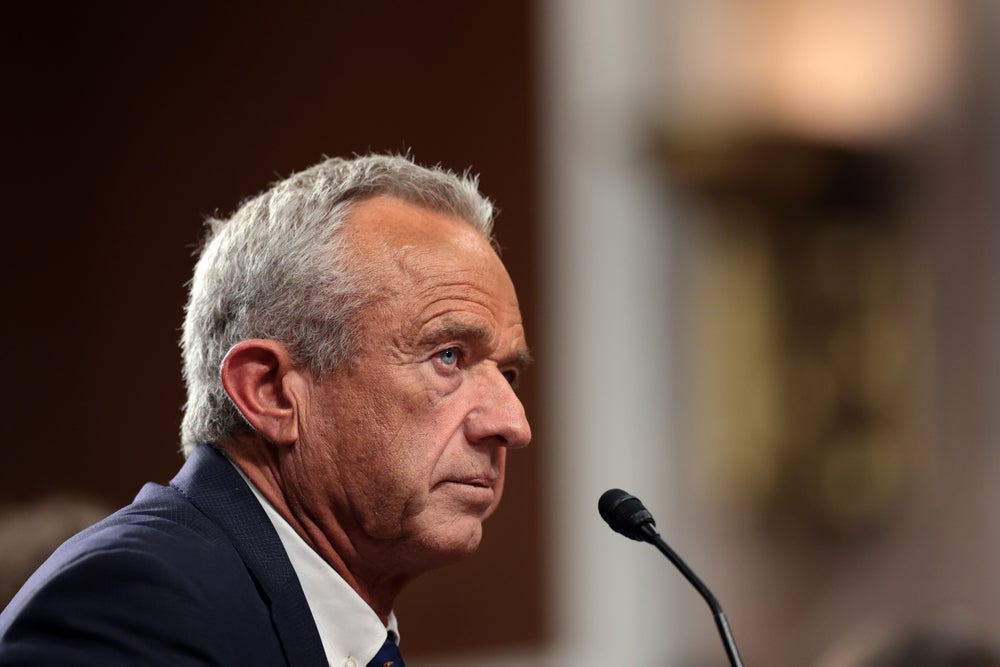
Robert F. Kennedy Jr. now oversees the U.S. Centers for Disease Control and Prevention, which he last year called a ‘cesspool of corruption.’ Win McNamee/Getty Images
.
.
Click the link below for the complete article:
.
__________________________________________
February 13, 2025
Mohenjo
Business, Food For Thought, Human Interest, Political, Science, Technical
amazon, business, Business News, current-events, Future, Hotels, human-rights, medicine, mental-health, research, Science, Science News, technology, Technology News, travel, vacation

Click the link below the picture
.
My mother was always the last parent to pick me up from gymnastics practice. While other moms arrived in jeans, she’d sweep in wearing a power suit, fresh from her role as a senior marketing executive at a major software company. At the time, it was a bit embarrassing. Looking back, I realize I was witnessing someone who refused to accept artificial limitations on what she could achieve.
Years later, as a CMO, I’ve come to appreciate how those early lessons shaped my understanding of professional possibilities. As a CMO in the ‘80s, my mother was a trailblazer—it was not typical for a woman to have a seat at the board table. But I’ve also learned that even with strong role models, we can still construct invisible barriers that limit our potential.
These self-imposed ceilings manifest in unexpected ways—not just in career aspirations, but in how we think about work itself. Years before remote work became mainstream, I questioned another artificial boundary: the assumption that effective leadership required a physical office. The answers about where and how we could work seemed predetermined by longstanding corporate norms, until I proved otherwise.
Where’s your artificial ceiling?
The pattern of self-limitation is pervasive in the business world, especially in how we perceive career progression. I have personally experienced how these artificial barriers affect leaders, restricting our potential for further growth and advancement despite our knowledge of customers, market dynamics, and business strategy. Nevertheless, numerous skilled marketing
leaders, including myself until recently, hesitate to pursue a trajectory beyond CMO. This is not due to a lack of capability, but rather because we have internalized certain assumptions about our career path direction and the roles that align with our expertise.
The same can be said for other professions. Regardless of your department or title, where do you see yourself “topping out?” What’s the limit? And why is that the limit? Ask yourself those questions. And then make sure the ceiling you envision genuinely where you want your ceiling to be. (Of course, not everyone aspires to be a CEO; I’m talking about aligning your perceived ceiling with your desired ceiling.)
Break through the ceiling
My own process of breaking through these limitations began with redefining success on my terms. That meant moving beyond traditional career metrics to focus on creating lasting impact. To me, this meant developing the next generation of diverse business professionals, building high-performance teams rooted in different perspectives, and pursuing roles challenging conventional wisdom about career progression.
Breaking through artificial ceilings is about more than career paths. It’s about how we work. Long before the recent global shift to remote work, I chose to lead my teams from a distance. This was in an era when many questioned whether remote leadership could truly work. But I’ve built and led high-performing teams across distances for years, proving that physical presence doesn’t define leadership impact. Today, my long-term success as a remote executive serves as evidence that meaningful mentorship, team development, and career growth don’t require shared office space.
My professional goals have evolved beyond the CMO role—a goal that once seemed beyond my scope but now forms the core of my professional vision. The interesting thing is that breaking through the limitations was never just about moving up the ladder; it’s more that I realized that the metrics that matter to me, and the impact I want to have are beyond the CMO role. My perceived ceiling now aligns with my desired ceiling.
Elevate others along the way
The process of dismantling these self-imposed barriers isn’t just personal; it’s about creating ripple effects throughout organizations as well as our families, social circles, communities, and more. In my role mentoring emerging business professionals, I’ve seen how one person breaking through their perceived limitations can inspire others to do the same. (Really!)
.
 [Photo: Getty Images]
.
.
Click the link below for the complete article:
.
__________________________________________
February 12, 2025
Mohenjo
Business, Food For Thought, Human Interest, Political, Science, Technical
amazon, business, Business News, current-events, Future, Hotels, human-rights, medicine, mental-health, research, Science, Science News, technology, Technology News, travel, vacation
Click the link below the picture
.
We’re covering the latest bird flu news to keep you up to date. Here’s what’s happening:
Different Strain of H5N1 in Dairy Cows
Several dairy cattle herds in Nevada have tested positive for a strain of H5N1 avian influenza that is different from the one that has been predominantly infecting such cattle since last March, the U.S. Department of Agriculture reported on February 5. It was confirmed on January 31 during the agency’s recently launched national milk testing strategy. A dairy worker was also infected with the strain, the Centers for Disease Control and Prevention said on Monday. This genotype, called D1.1, is more commonly found in wild birds and poultry. It has been linked to some severe infections in humans, including the first death in the U.S. The finding means the virus could be harder to eradicate from cattle than scientists thought because it could be reintroduced by wild birds.
Bird Flu May Have Spread between Cats and Humans
The CDC briefly posted a report last week that contained data that suggested the H5N1 virus may have spread from house cats to humans, and vice versa, the New York Times reported. The information on H5N1 initially appeared in a Morbidity and Mortality Weekly Report (the CDC’s regular publication on public health issues and outbreaks) that was about wildfire air quality, and it may have been inadvertently included. The data were quickly removed. They had described one household where a cat infected with H5N1 may have spread the virus to another cat and an adolescent child and a second household where an infected dairy worker may have spread the virus to a cat. Cats have previously gotten infected after drinking raw milk or consuming raw pet food, but this is the first known case of a cat infecting a human in the current outbreak—suggesting house cats could be a possible vector for spreading the virus to people.
New Head of U.S. Pandemic Office Will Face Bird Dilemma
President Donald Trump selected Gerald Parker, a veterinarian and former federal health official, to lead the White House Office of Pandemic Preparedness and Response Policy. Congress created the office in 2022 to advise the president and coordinate the government’s response to pandemics and other public health threats. Parker was associate dean for Global One Health at Texas A&M University and was head of the National Science Advisory Board for Biosecurity (NSABB) under the Biden administration. The NSABB determines what research can be conducted with dangerous pathogens, including so-called gain-of-function research. If bird flu were to become a pandemic, Parker would have a central role in the coordinating the federal response. Ashish Jha, Biden’s former White House COVID response coordinator, told CBS News that Parker “is a very good choice.”
NYC Live Bird Markets Ordered to Close
New York State’s governor Kathy Hochul announced that all live bird markets in New York City and several surrounding counties are being ordered to close temporarily for cleaning and disinfection. The order came as H5N1 was detected at several bird farms in the city. The state’s Department of Agriculture and Markets issued the order, which requires the roughly 80 markets in New York City and Westchester, Nassau and Suffolk Counties to sell their inventory, conduct cleaning and disinfection and remain closed for five days afterward. Markets that have had confirmed virus in flocks will also be required to follow quarantine and culling instructions.
.
 Bobiko/Getty Images
.
.
Click the link below for the complete article:
.
__________________________________________
February 12, 2025
Mohenjo
Business, Food For Thought, Human Interest, Political, Science, Technical
amazon, business, Business News, current-events, Future, Hotels, human-rights, medicine, mental-health, research, Science, Science News, technology, Technology News, travel, vacation

Click the link below the picture
.
I’m standing in my kitchen chopping garlic when my 2-year-old shouts for more cheese crackers. The timer on the oven beeps at me to flip the fish sticks when I hear a loud wail from the living room. My middle son has hit my oldest, and now they’re both clamoring for me in tears.
“What happened now?” I bellow, my nerve endings frazzled from the exhaustion of being a mom to three kids ages 5 and under while pregnant with my fourth.
“Come on, guys! I’m trying to cook dinner. Why can’t we just play nicely?”
Rather than respond with care and empathy for my child who got hurt, I feel like a volcano has erupted right there in the kitchen. Suddenly I’m burning to yell at everyone for everything. I take a huge breath in and hug my son. I direct a dirty glare toward my other kid but eventually hug him, too, and ask that the kids talk about and apologize for what happened.
Then I immediately feel ashamed of my overblown reaction. They’re just kids, and everyone is OK.
The thing is, this incident was par for my parenting. Everyday moments used to catapult me into a fit of rage: a cup of spilled juice, a splotch of marker on the ottoman, running a few minutes late to a social event. I would yell at my kids and shame them for little things, things that all kids do. I knew that what I was doing wasn’t great, and I knew it was probably harming my kids. But I didn’t know how to break the cycle.
I searched for answers, following social media accounts of well-known child psychologists and parenting experts, like Becky Kennedy (who gives phenomenal advice, by the way). I tried being more patient and empathetic with my kids, and it worked — to a degree. But there was still something inside of me that caused me to unleash on my kids at a moment’s notice. I’d then feel shame, apologize, and the cycle would repeat. I didn’t want to be a rage-filled, yelling, anxious mom. What was my problem?
I had seen talk therapists and cognitive behavioral therapists in the past when I went through a breakup or needed help communicating better with my husband. But after continued struggles as a mother, I knew I needed to dig deeper. Oddly enough, my mom had told me about her recent experience of seeing an EMDR therapist to work through traumatic memories from her childhood and how she felt freer, better than she ever had. In fact, she said she wished she had gone 30 years ago and told me that she and my dad would give me some money for it so I could experience the mental and emotional freedom that they had. Little did I know, I would exceed their gift and keep going to my therapist every other week for three years, spending over $4,000 out of pocket.
I signed up to see an EMDR (eye movement desensitization and reprocessing) and IFS (internal family systems) therapist. EMDR is a psychotherapy technique that helps you reprocess traumatic memories to reduce the level of disturbance within your mind and body. During EMDR sessions, I would recall difficult core memories while I moved my eyes side to side. Over time, the memories that haunted me (and the memories I never knew existed that were underlying) became less potent, and my anxiety less frequent.
IFS psychotherapy involved seeing that I — and every human being — is made of multiple parts. Working within this model, I learned how to identify, accept and heal my younger parts, and create more harmony within myself.
.

The author, her husband, and their four kids at the zoo in October 2024. Courtesy Of Jenna Jonaitis
.
.
Click the link below for the complete article:
.
__________________________________________
February 11, 2025
Mohenjo
Business, Food For Thought, Human Interest, Political, Science, Technical
amazon, business, Business News, current-events, Future, Hotels, human-rights, medicine, mental-health, research, Science, Science News, technology, Technology News, travel, vacation
Click the link below the picture
.
As the U.S. and China ramp up their 21st-century race to land humans on the moon, it’s easy to overlook another aspect of lunar exploration that in many respects has become a “no contest”: commercially built and operated missions.
As part of NASA’s Commercial Lunar Payload Services (CLPS) program, private U.S. companies have been hurling a steady stream of innovative robotic landers at the moon in unmatched numbers. And that trend is set to continue later this month with the launch of the next CLPS mission, IM-2, from the private company Intuitive Machines. Launching from NASA’s Kennedy Space Center on a SpaceX Falcon 9 rocket no earlier than February 26, IM-2 is the company’s shot at redemption after its inaugural predecessor, IM-1, tilted askew during its touchdown early last year. This time IM-2’s lander, Athena, will seek to stick its landing and ferry a robust array of science and technology experiments to the vicinity of Mons Mouton, a plateau near the lunar south pole.
Officials from NASA and Intuitive Machines confirmed the launch details and previewed the mission’s science during a press briefing on February 7.
“The IM-2 mission is particularly special…, as it is largely dedicated to lunar technology demonstrations that are truly foundational to creating a U.S.-led lunar infrastructure,” Niki Werkheiser, director for technology maturation at NASA’s Space Technology Mission Directorate, said during the briefing. These demonstrations include NASA’s PRIME-1 (Polar Resources Ice Mining Experiment 1), which is “capable of identifying and quantifying water [ice]” and other volatile substances in lunar soil thanks to a drill that can reach up a meter into the surface. “Demonstrating that we can collect these volatiles using the tech demonstrations onboard will not only help us better understand the origins of our solar system, but they will also be useful to our future astronauts for in situ resources, including drinking water, breathing air and creating rocket fuel,” added Nicky Fox, associate administrator of NASA’s Science Mission Directorate, during the briefing.
Other key technologies onboard Athena are the Micro Nova Hopper and the Lunar Surface Communication System (LSCS), developed by Intuitive Machines and Nokia Bell Labs, respectively, as part of NASA’s Tipping Point technology initiative. Nicknamed “Gracie” after software pioneer Grace Hopper, the Micro Nova Hopper is intended to leap away from Athena sometime after the lander’s touchdown and to embark on a series of incremental hops toward Crater H—a 20-meter-deep, permanently shadowed crater about half a kilometer away. There it will poke around for any signs of volatiles at or under the surface.
“The purpose of the [hopper] demo is to show that we can reach extreme environments with technologies other than rovers,” explained Trent Martin, senior vice president of space systems at Intuitive Machines, at the briefing. Nokia’s LSCS, which uses the same 4G LTE communications technology as a smartphone, will keep all of Athena’s payloads “online” and connected as they branch out on their respective objectives. “We are set up to handle the very large number of payloads that we have on this mission … and supporting operations from around the world from different control centers for various payloads that are on the mission,” Martin added.
But Athena is also helping to continue previous and ongoing missions. For instance, it carries a tiny, NASA-provided aluminum device called the Laser Retroreflective Array, or LRA, which the space agency intends to use as a node in a larger lunar network for more accurately pinpointing the locations of key moon landers. And on its rocket to the moon, Athena shares a ride with various secondary payloads, chief among them NASA’s Lunar Trailblazer, a moon-orbiting satellite slated to provide sophisticated high-resolution maps of where water may lurk at or beneath the moon’s airless surface.
Besides highlighting some of the mission’s science at the briefing, officials also offered reassurances that Athena wouldn’t succumb to the same faults that led its predecessor, the IM-1 lander, nicknamed Odysseus, to land lopsided on the moon. During its landing on February 22 of last year, Odysseus touched down about 30 degrees off-kilter, breaking a leg and falling on its side—in spite of the prelaunch glitches Intuitive Machines purported to have fixed.
.

An artist’s rendering of an Intuitive Machines lander making its descent to the lunar surface near the moon’s south pole. Intuitive Machines and Nokia Bell Labs
.
.
Click the link below for the complete article:
.
__________________________________________
February 11, 2025
Mohenjo
Business, Food For Thought, Human Interest, Political, Science, Technical
amazon, business, Business News, current-events, Future, Hotels, human-rights, medicine, mental-health, research, Science, Science News, technology, Technology News, travel, vacation

Click the link below the picture
.
What happens when you stop drinking alcohol? Pretty much everything you’d expect—and also plenty that you might not.
First, there’s the obvious: better sleep, less anxiety, and a clearer head. Then, there are the benefits you probably haven’t considered. Like: glowier skin, hotter sex, and deeper relationships—just to name a few.
“Nearly every area of my life has improved,” JW Wiseman, founder of the non-alcoholic craft cocktail brand, Curious Elixirs, says of his decision to quit drinking a decade ago. “It has improved my sleep, my sex life, my relationships, my memory, my weight, my skin, and my pocketbook.”
The benefits of not drinking alcohol
Wiseman isn’t being superlative. Studies show that the list of social, psychological, and physical benefits of teetotaling is ever-growing. There’s evidence that quitting drinking supports everything from more balanced hormones to a stronger immune system to reduced risks of heart disease, liver disease, and cancer.
Cutting out booze has the potential of increasing self-awareness, self-confidence, and self-esteem, too. “My emotional range is wider than it was when I was using alcohol to numb and unwind,” says Wiseman, noting that the impact of this has been profound: “When your emotions are bubbling up more often, you have to do more work on yourself,” he explains. “ Life isn’t necessarily easier without alcohol, but it’s far more fulfilling.”
As one doctor I interviewed put it, when you quit alcohol, “your entire body and soul improves.”
Changing attitudes about drinking
Though alcohol consumption among young people has been on a decline in recent decades, swapping that evening glass of red wine for non-alcoholic spritzes and mocktails isn’t always easy to do—even if you don’t officially struggle with an alcohol use disorder. After all, alcohol is literally everywhere, and its consumption is ingrained into our culture and societal norms.
“Alcohol is the only socially-accepted mind-altering beverage in the world,” says Dr. Rafaat Girgis, a triple-board certified psychologist and the medical director at Moment of Clarity, a mental health treatment center in Orange County, California. “It’s served at parties, during meals, and on holidays. For most people, it’s just a part of daily life.” Which is why taking even just a short break for Dry January or Sober October—not to mention, completely quitting long-term—can feel like it requires heroic levels of discipline.
Giving up alcohol
One way to make it a little easier: having a firm understanding of when you can expect to experience all the benefits. Anticipating everything that can occur after one day, one week, one month, and beyond can help you stay connected with the positive changes as they unfold—and remind you to treat yourself kindly when temptations emerge. “Getting your body back to normal functioning depends on many factors, including your gender, current health, and your willingness,” explains Girgis. “Accept it, learn, and gain insight as you go.” The body and the soul don’t improve overnight, in other words.
To that end, it’s important to stay patient—and persistent. Good advice for any challenging situation, really. Tanya Mezher, a certified dietary nutritionist and the founding practitioner at functional medicine platform Malla agrees. “Recovery takes time, and setbacks may occur,” she warns. “Stay committed to your goals. The timeline varies from person to person, but noticeable improvements in physical and mental health can often be seen within a few weeks to months.”
With that in mind, here are tips to help you succeed at every part of the journey, as well as an overview of what to expect when you stop drinking in the short and long term. Just remember: if you’re feeling hopeless or out-of-control because of drinking, it’s important to seek professional medical support. You don’t have to go it alone and quitting cold turkey is not advisable. Call the Substance Abuse and Mental Health Services Administration hotline, which operates 24/7, 365 days a year, at 1-800-662-HELP (4357) for more information.
How long does alcohol stay in your system?
Though we may feel “sober” within a few hours of drinking, alcohol actually remains in the system for much longer than many of us assume. Though it takes six to twelve hours for alcohol to metabolize, booze can still be detected in the breath and saliva for 12 to 24 hours; in the urine for up to 14 days; and in the hair for a whopping 90 days.
.
 Kirn Vintage Stock/Getty Images
.
.
Click the link below for the complete article:
.
__________________________________________
February 10, 2025
Mohenjo
Business, Human Interest, Political, Science, Technical
amazon, business, Business News, current-events, Future, Hotels, human-rights, medicine, mental-health, research, Science, Science News, technology, Technology News, travel, vacation
Hmmm…Impeachment?
Click the link below the picture
.
The U.S. National Institutes of Health announced on February 7 it was immediately cutting some $4 billion a year in funding to biomedical researchers nationwide. The move would reduce the share of NIH grants paid to “indirect” costs—lab upkeep, administration, and operation—to 15 percent, cutting their historical rate almost in half, overnight.
In the announcement, NIH said that of roughly $35 billion spent funding 300,000 researchers nationwide in 2023, $9 billion went to indirect costs. The move to a lower indirect cost rate, it argued, put them more in line with those put in place by private foundations.
On February 10 in response, 22 states filed a federal lawsuit, “to protect their states and residents from unlawful action by the National Institutes of Health (‘NIH’) that will devastate critical public health research at universities and research institutions in the United States.”
Donald Trump proposed dropping NIH’s indirect cost rate to 10 percent in 2017, but faced congressional resistance. As was the case then, the newly proposed cuts have triggered widespread criticism from scientists, who say it endangers patients and the U.S. strategic advantage in research. “Frankly, this means that the lives of my children and grandchildren—and maybe yours—will be shorter and sicker,” medical professor Theodore Iwashyna of Johns Hopkins University told CNN.
Indirect costs eating into lab grants have long triggered complaints from scientists, but a 2014 Nature analysis concluded that “overall, the data support administrators’ assertions that their actual recovery of indirect costs often falls well below their negotiated rates.”
Scientific American spoke to David Skorton, president of the Association of American Medical Colleges, which represents all the medical degree–granting schools in the U.S., about this shift, and its effects on medicine.
[An edited transcript of the interview follows.]
How does this affect people who may have never heard of “indirect” NIH grants before, but who get sick or know people who could benefit from better medicine?
So the idea of biomedical research is multifaceted. Some of it is meant to help understand the way life works. Over a decade of research led to the idea that messenger RNA, a basic building block of biology, for example, could actually be used as a platform for vaccines. That knowledge was very basic, very fundamental, and eventually fed into Operation Warp Speed and the development of vaccines against COVID-19. So that’s one thing.
Then there are research projects that you might call applied research, like cancer clinical trials. Someone unfortunately has cancer, and basic research has shown that perhaps a new approach, like immunotherapy, harnessing the immune system to fight off cancer cells, might help. We need to find out, so it goes to human, clinical trials. Those clinical trials are also research projects. And then there are research projects that have to do with diagnosing illnesses. Not treating it. I did some research early in my career on computer processing medical images from the cardiovascular system. The idea there was to develop better diagnostic techniques that could lead to a quicker way to diagnose an illness. So that you know the right treatment.
.

National Institutes of Health (NIH) campus, Bethesda, Maryland. Grandbrothers/Alamy Stock Photo
.
.
Click the link below for the complete article:
.
__________________________________________
February 10, 2025
Mohenjo
Business, Food For Thought, Human Interest, Political, Science, Technical
amazon, business, Business News, current-events, Future, Hotels, human-rights, medicine, mental-health, research, Science, Science News, technology, Technology News, travel, vacation

Click the link below the picture
.
It’s one of my favorite 47 seconds of all time.
On the video playing on my phone, a pigtailed toddler gleefully shrieks as she loses a battle with an unruly sprinkler head in a grassy lawn.
It’s a great memory that feels as if it were taken yesterday. But this soaking wet and positively joyful girl—my daughter—is nearly 13 years old and has long since ditched the pigtails. Another video of my younger daughter polishing off a plate of “skabetti” is a close second, and one played just as often.
As parents, it is very much our birthright to capture childhood. The classic go-to for documenting is, of course, the baby book. And look, I tried. My firstborn was the beneficiary of a well-meaning effort to capture and curate milestones in a pastel-colored, polka-dot baby book. It starts off strong but then dramatically tapers off (because life). My second kid has maybe a shoebox with milestones hastily recorded on a Post-it (because second kid).
But I make up for it by saving snippets of their childhood in another way. Like that of many parents, my phone contains lots of videos of my kids. In addition to the delightful sprinkler showdown, there are clips of soccer games, recitals, birthdays. It is a robust repository—hundreds of videos taking up hundreds of gigabytes.
Whenever the time comes for me to upgrade to a new phone, these old videos come with me, thank you very much. I have, at the ready and at any moment, easy access to their early years—from a first encounter with snow to their budding inquiries at dinnertime (“What do badgers eat?” “Were you and Abraham Lincoln friends?”).
Some find the fact that Generation Alpha has such hyperdocumented childhoods to be alarming and potentially harmful. But as long as your knee-jerk reaction isn’t to immediately put all these photos and videos online and you can balance being present in the moment, these gigabytes of still and moving images are an unalloyed blessing.
But I make up for it by saving snippets of their childhood in another way. Like that of many parents, my phone contains lots of videos of my kids. In addition to the delightful sprinkler showdown, there are clips of soccer games, recitals, birthdays. It is a robust repository—hundreds of videos taking up hundreds of gigabytes.
Whenever the time comes for me to upgrade to a new phone, these old videos come with me, thank you very much. I have, at the ready and at any moment, easy access to their early years—from a first encounter with snow to their budding inquiries at dinnertime (“What do badgers eat?” “Were you and Abraham Lincoln friends?”).
Some find the fact that Generation Alpha has such hyperdocumented childhoods to be alarming and potentially harmful. But as long as your knee-jerk reaction isn’t to immediately put all these photos and videos online and you can balance being present in the moment, these gigabytes of still and moving images are an unalloyed blessing.
It’s a privilege to be able to so effortlessly indulge my nostalgia whenever I want. For many adults my age, seeing snaps of our childhood might be limited to whenever we have a chance to visit our parents’ house. It requires some effort to unearth dusty albums from basements and closets. The ritual of sitting together to watch family videos also requires some time. Set up the VCR; dig up the tapes. Rewind, fast-forward, rewind.
There is a redemptive element at play here. My childhood lives in the carefully curated and compartmentalized memory of my mind. There is virtually no record of my own early years, with only a handful of photos and certainly no videos. In the 1980s, the time of camera film and camcorders, my parents didn’t invest in making a record, and the dysfunction of my fractured family life ensured that there were very few moments worth committing to film or ever watching on playback.
But I’m not alone when it comes to my fierce attachment to these old videos. It turns out, the subjects of these videos are kind of obsessed with watching themselves.
My kids eagerly press Play and relive it all: the unmistakable lilt of their little baby voices, unsteady first steps, charmingly off-key renditions of Disney songs, and wary standoffs with anything remotely resembling a vegetable on their plate.
.
 Scaliger/iStock/Getty Images Plus
.
.
Click the link below for the complete article:
.
__________________________________________
February 9, 2025
Mohenjo
Business, Food For Thought, Human Interest, Political, Science, Technical
amazon, business, Business News, current-events, Future, Hotels, human-rights, medicine, mental-health, research, Science, Science News, technology, Technology News, travel, vacation
Click the link below the picture
.
For those who have wrestled a bulky couch around a tight corner and lamented, “Will this even fit?” mathematicians have heard your pleas. Geometry’s “moving sofa problem” asks for the largest shape that can turn a right angle in a narrow corridor without getting stuck. The problem sat unsolved for nearly 60 years until November, when Jineon Baek, a postdoc at Yonsei University in Seoul, posted a paper online claiming to resolve it. Baek’s proof has yet to undergo thorough peer review, but initial passes from mathematicians who know Baek and the moving sofa problem seem optimistic. Only time will tell why it took Baek 119 pages to write what Ross Geller of the sitcom Friends said in one word.
The solution is unlikely to help you on moving day, but as frontier math grows more abstruse, mathematicians hold a special fondness for unsolved problems that anybody can understand. In fact, the popular math forum MathOverflow maintains a list of “Not especially famous, long-open problems which anyone can understand,” and the moving sofa problem currently ranks second on the list. Still, every proof expands our understanding, and the techniques used to resolve the moving sofa problem will likely lend themselves to other geometric puzzles down the road.
The rules of the problem, which Canadian mathematician Leo Moser first formally posed in 1966, involve a rigid shape—so the cushions don’t yield when pressed—turning a right angle in a hallway. The sofa can be any geometric shape; it doesn’t have to resemble a real couch. Both the shape and the hallway are two-dimensional. Imagine the sofa weighs too much to lift, and you can only slide it.
A quick tour through the problem’s history reveals the extensive effort that mathematicians have poured into it—they were no couch potatoes. Faced with an empty hallway, what is the largest shape you could squeeze through it? If each leg of the corridor measures one unit across (the specific unit doesn’t matter), then we can easily scoot a one-by-one square through the passage. Elongating the square to form a rectangle fails instantly, because once it hits the kink in the hallway, it has no room to turn.
Yet mathematicians realized they can go bigger by introducing curved shapes. Consider a semicircle with a diameter (the straight base) of 2. When it hits the turn, much of it still overhangs in the first leg of the hallway, but the rounded edge leaves just enough room to clear the corner.
Remember the goal is to find the largest “couch” that slides around the corner. Dusting off our high school geometry formulas, we can calculate the area of the semicircle as π/2, or approximately 1.571. The semicircle gives a significant improvement over the square, which had an area of only 1. Unfortunately, both would look strange in a living room.
Solving the moving sofa problem requires that you not only optimize the size of a shape but also the path that shape traverses. The setup permits two types of motion: sliding and rotating. The square couch only slid, whereas the semicircle slid, then rotated around the bend, and then slid again on the other side. But objects can slide and rotate at the same time. Mathematician Dan Romik of the University of California, Davis, has noted that a solution to the problem should optimize both types of motion simultaneously.
British mathematician John Hammersley discovered in 1968 that stretching the semicircle can buy you a larger sofa if you carve out a chunk to deal with that pesky corner. Furthermore, Hammersley’s sofa takes advantage of a hybrid sliding plus rotating motion. The resulting sofa looks like a landline telephone:
.
 RgStudio/Getty Images
.
.
Click the link below for the complete article:
.
__________________________________________
February 9, 2025
Mohenjo
Business, Food For Thought, Human Interest, Political, Science, Technical
amazon, business, Business News, current-events, Future, Hotels, human-rights, medicine, mental-health, research, Science, Science News, technology, Technology News, travel, vacation

Click the link below the picture
.
These days, if you hear about the birth of an Olivia or a Liam, you might feel a pang of sympathy—the poor child has been cursed with the most popular name of their time and might be at risk of sharing it with a kindergarten classmate.
This wasn’t always considered an undesirable outcome. The name Mary, for instance, was the most popular girls’ name for all but six years from 1880 to 1961, and “if you talk to people from earlier generations, [they’ll say] ‘Well, of course, there were five Marys in the class,’” Laura Wattenberg, the founder of the naming-trends site Namerology, told me. “That didn’t matter. There wasn’t that kind of fear.”
In the past 60 or so years, American parents’ approach to naming their kids has undergone a profound shift. Today, many parents seek out less popular names to help their kids stand out. But in the past, parents typically picked common names, consciously or not, so that their kids would fit in.
In 1880, the percentage of babies who got a top-10 most popular name was in the neighborhood of 32 percent, according to Wattenberg’s calculations. In 1950, it was about 28 percent. And in 2020, it had fallen to an all-time low of 7 percent. “We are deep in an era of naming individuality, where parents assume that having a [name] sound distinctive and unique is a virtue,” Wattenberg said.
For much of American history, many people just named their kids after someone on the family tree, which helped keep names in circulation for a long time. This was especially true for baby boys, who have historically had less varied names than baby girls in part because they were more likely to inherit a family name. For instance, in Raleigh Colony, roughly one in two boys had the name John, William, or Thomas. Those three names remained in or near the top 10 from the 1880s, when the Social Security Administration’s records begin, through the 1960s.
Of course, some names from earlier eras did stand out. Puritan names like Patience, Temperance, and Standfast had explicit moral heft. Immigrants injected some variety by using names from their home countries, but also sometimes opted for (or felt pressured to pick) “whiter-sounding” names in hopes of fitting in. And there was some charming regional diversity. Early-20th-century Oklahoma produced names like Ovonual and Odelene. In southern Appalachia, there were kids named Meek, Bent, Wild, Whetstone, Speed, and AnvilThe last decades of relatively uniform naming were the 1940s and ’50s. In 1955, for example, half of all American babies born had one of just 78 names, according to Wattenberg. In 2019, that number was 520. Parents’ inclination toward sameness in the ’40s and ’50s might have had to do with the unifying effect of living through the Great Depression and World War II. Those events “gave them a sense of solidarity with the whole culture, the whole country,” Cleveland Evans, a professor emeritus of psychology at Bellevue University and an expert on names, told me. At a time when the path to success seemed communal, being like other people wasn’t seen as a bad thing.
.
 Jamie Grill/Getty Images
.
.
Click the link below for the complete article:
.
__________________________________________
Older Entries
Newer Entries
 James' World 2