June 12, 2025
Mohenjo
Business, Food For Thought, Human Interest, Political, Science, Technical
amazon, business, Business News, current-events, Future, Hotels, human-rights, medicine, mental-health, research, Science, Science News, technology, Technology News, travel, vacation

Hmmmm…
Click the link below the picture
.
Notes
The American Community Survey did not release the 1-year estimates for 2020 due to significant disruptions to data collection brought on by the coronavirus pandemic.
The majority of our health coverage topics are based on analysis of the Census Bureau’s American Community Survey (ACS) by KFF. ACS includes a 1% sample of the US population and allows for precise state-level estimates.
The ACS asks respondents about their health insurance coverage at the time of the survey. Respondents may report having more than one type of coverage; however, individuals are sorted into only one category of insurance coverage. See definitions for more detail on coverage type.
Data may not sum to totals due to rounding.
Data include the civilian noninstitutionalized population in the United States.
Sources
KFF estimates based on the 2008-2023 American Community Survey, 1-Year Estimates.
.
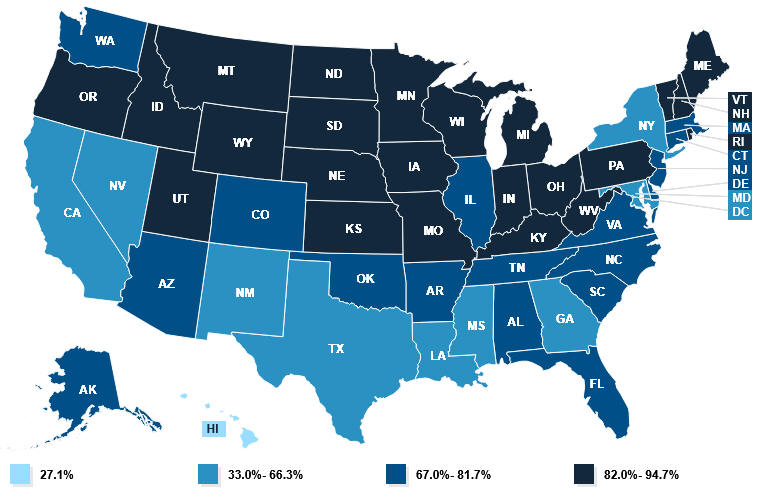 Medicare Usage by State
.
.
Click the link below for the complete article:
.
__________________________________________
June 12, 2025
Mohenjo
Business, Food For Thought, Human Interest, Political, Science, Technical
amazon, business, Business News, current-events, Future, Hotels, human-rights, medicine, mental-health, research, Science, Science News, technology, Technology News, travel, vacation

Covid is stil killing people…
Click the link below the picture
.
For the first time since the COVID vaccines became available in pharmacies in 2021, the average person in the U.S. can’t count on getting a free annual shot against a disease that has been the main or a contributing cause of death for more than 1.2 million people around the country, including nearly 12,000 to date this year.
“COVID’s not done with us,” says Jennifer Nuzzo, an epidemiologist at Brown University. “We have to keep using the tools that we have. It’s not like we get to forget about COVID.”
In recent weeks, the Department of Health and Human Services, led by prominent antivaccine activist Robert F. Kennedy, Jr., has announced a barrage of measures that are likely to reduce COVID vaccine access, leading to a swirl of confusion about what will be available for the 2025–2026 season. HHS officials did not respond to a request for comment for this article.
Government officials appear to be limiting COVID shots to people who are aged 65 and older and to those who have certain preexisting health conditions—groups that have long been known to face a higher risk of developing severe COVID. Pregnant people and some children, meanwhile, appear to be explicitly excluded from access, despite plentiful evidence that vaccines are very safe and effective for them and that COVID infections can cause them significant harm.
Scientific American spoke with clinicians and public health experts about the latest COVID vaccine recommendations, what access may look like this fall, and how these policies might influence people’s vaccination choices and health.
What COVID vaccines will be manufactured this year?
Public health experts are monitoring a strain of the COVID-causing virus SARS-CoV-2 called NB.1.8.1, which was first detected early this year and last month became responsible for one in 10 COVID cases globally. So far, the new variant has mostly been reported in Asia and Europe. But it has also been picked up in airport surveillance in multiple U.S. states, says Peter Chin-Hong, an infectious disease physician and a professor of medicine at the University of California, San Francisco.
The emergence of a new variant isn’t surprising, particularly at this time of year, Chin-Hong says. “It’s kind of acting like clockwork—maybe this might be the variant of the summer,” he adds. Still, NB.1.8.1 has led to concerns about a potential surge in cases, although Chin-Hong and other scientists don’t have any evidence so far that it causes more serious disease than other currently circulating strains.
“All of these new variants, they might be more transmissible, they might be more immune evasive, but I’ve seen no data whatsoever that suggests that they’re more pathogenic,” says Angela Rasmussen, a virologist at the University of Saskatchewan.
Within the U.S., a strain called LP.8.1 has been the most common one detected since March. Both NB.1.8.1 and LP.8.1 are among the alphabet soup of strains that descended from a key ancestor lineage called Omicron JN.1, which dominated U.S. cases by early 2024.
.
 Andriy Onufriyenko/Getty Images
.
.
Click the link below for the complete article:
.
__________________________________________
June 12, 2025
Mohenjo
Business, Food For Thought, Human Interest, Political, Science, Technical
amazon, business, Business News, current-events, Future, Hotels, human-rights, medicine, mental-health, research, Science, Science News, technology, Technology News, travel, vacation

Click the link below the picture
.
Indian police say more than 200 bodies have been recovered after a plane crashed shortly after takeoff from Ahmedabad. Most of the 242 people on board were Indian or British. DW has the latest.
A Boeing 787 Dreamliner crashed shortly after takeoff from Ahmedabad, en route to London’s Gatwick Airport. Some 242 people were on board
Flight 171, including 169 Indians, 53 Britons, 7 Portuguese, and 1 Canadian
The cause of the crash has yet to be determined
Ahmedabad police have said more than 200 bodies have been recovered, and there appear to be no survivors. Indian Prime Minister Narendra Modi said the incident was ‘heartbreaking beyond words.’ The crash is the first fatal incident involving a Boeing 787 Dreamliner
Boeing’s 787 Dreamliner had strong safety record before Ahmedabad crash
The Boeing 787-8 Dreamliner, which crashed in Ahmedabad, is one the world’s most advanced aircraft.
Unlike Boeing’s 737 Max series, the Dreamliner has had a strong safety record, with no fatal accidents until Thursday’s crash, in which all 242 people on board died.
The plane that crashed in Ahmedabad is the smallest of three types of 787, and was delivered in 2014.
The 787 Dreamliner entered commercial service in 2011. Boeing has sold more than 2,500 787s, of which 47 were sold to Air India.
The plane can normally hold up to 248 passengers, while the larger 787-9 can carry up to 296 people, according to Boeing.
The 787 is powered by twin engines, which are supplied by American firm GE Aerospace or Rolls-Royce from the UK.
The engines on the plane that crashed were provided by GE. In a post on X, GE said it was “deeply saddened” by the incident, adding that the company is “prepared to support our customer and the investigation.”
While this is the first fatal incident involving a Dreamliner, there have been previous accidents.
In July 2013, an Ethiopian Airlines flight, which had no one on board, caught fire while on the ground at London’s Heathrow airport after a short-circuit.
.

Hundreds are feared dead after footage from the scene showed smoke and wreckage © Amit Dave/REUTERS
.
.
Click the link below for the complete article:
.
__________________________________________
June 11, 2025
Mohenjo
Business, Food For Thought, Human Interest, Political, Science, Technical
amazon, business, Business News, current-events, Future, Hotels, human-rights, medicine, mental-health, research, Science, Science News, technology, Technology News, travel, vacation
Click the link below the picture
.
Sperm have to wiggle vigorously to reach an egg, and that motion is key to a clever new fertility test. The technique, tested with bull semen and detailed in Advanced Materials Interfaces, harnesses physics to make fertility testing easier and more cost-effective—and, if it works for human sperm, too, it might eventually help people tackle some conception issues from home.
“Fifty percent of families are facing a big challenge in terms of addressing fertility,” says Sushanta Mitra, a mechanical engineer at the University of Waterloo and co-author of the recent study. “Our aim is to democratize that process.”
Current laboratory tests for male fertility involve examining a semen sample under a microscope. Experts check the sperm cells’ liveliness, which is considered a good proxy for fertility because the gametes need to quickly swim more than 1,000 times their body length to reach an egg. But these lab tests can be expensive and time-consuming. Meanwhile, at-home tests tend to be less accurate because they often only detect the presence of certain proteins in sperm rather than assessing how the cells move.
The newly described method uses basic physics to measure sperm activity without costly equipment. The researchers placed droplets of bull semen at the end of a flexible plastic strip suspended next to a water-resistant surface. Next, they moved the surface toward the drop until it made contact and then moved it back to its original position. They measured how strongly each semen droplet stuck to the surface, via weak hydrogen bonds, as it was pulled away. If many highly active sperm were wiggling around inside the fluid, the hydrogen bonds broke more quickly, disrupting the drop’s surface adhesion and making it break away earlier; the livelier the sperm, the less sticky the drop. “It’s exciting to be able to come up with a way to quantify sperm mobility at home,” says Stanford University urologist Tony Chen, who was not involved in the study.
Mitra and his team hope to develop this technique into a cheaper, easier and more accurate home fertility test. “There is a lot of stigma around male fertility,” Mitra says. Easier private testing could encourage people to evaluate semen quality more often, allowing them to check in while making lifestyle adjustments to perk up lethargic sperm, such as quitting smoking or reducing alcohol use. Such tests could also potentially be useful for breeding livestock.
The researchers’ next steps will be to standardize the tests and obtain benchmarks for different types of sperm, including human and bovine. Chen says clinical trials that evaluate droplets from many different patients will also be necessary to ensure the tests work with samples that have varying pH levels, white blood cell counts, and fructose concentrations. “There’s more than just sperm in semen,” he says.
.
 Getty Images
.
.
Click the link below for the complete article:
.
__________________________________________
June 11, 2025
Mohenjo
Business, Food For Thought, Human Interest, Political, Science, Technical
amazon, business, Business News, current-events, Future, Hotels, human-rights, medicine, mental-health, research, Science, Science News, technology, Technology News, travel, vacation

Click the link below the picture
.
As immigration raids continued across the country, a curfew went into effect Tuesday night in Los Angeles, the epicenter of protests that spread coast to coast against the detention and removal of suspected undocumented migrants.
Mayor Karen Bass said the curfew, which begins at 8 p.m. and expires at 6 a.m. for an undetermined length of time, was necessary to quell unrest. “If you drive through downtown L.A., the graffiti is everywhere and has caused significant damages,” Bass said, adding that 29 businesses were looted Monday night alone.
Activists had also gathered in New York, Boston, Chicago, Dallas, Atlanta, and elsewhere, rebuking the Trump administration’s tough stance against migrants and its aggressive round-up efforts, which Democratic leaders in California have criticized as contributing to a sense of fear across communities.
NBC News has counted at least 25 rallies and demonstrations coast to coast since Monday. Some involved only a few dozen people, while others attracted thousands.
The protests took place as federal immigration raids continued nationwide Tuesday, including a “targeted enforcement operation” in Los Angeles, according to Immigration and Customs Enforcement, as well as a raid at a meat processing facility in Omaha, Nebraska.
ICE posted a photo on X showing a person wearing military fatigues alongside federal agents, one with “DEA” emblazoned on his vest, standing near a handcuffed person, and a military Humvee painted in camouflage parked next to them. The arrest happened in Los Angeles, ICE said.
In Omaha, two businesses were targeted for federal immigration enforcement operations, local officials said. Mayor John Ewing Jr.’s office said federal agents arrested 80 people at Glenn Valley Foods and Lala Dairy.
Cellphone video of the scene at Glenn Valley Foods showed agents in green uniforms, camouflage clothing and plainclothes appearing to detain several workers, hands cuffed, in the facility’s lunchroom, where a motto was painted on a wall: “Together we achieve more.”
Chad Hartmann, a spokesperson for Glenn Valley Foods, said in a statement that federal agents searched the company’s facility “for persons believed to be using fraudulent documents to gain employment.”
He said that the company strives to operate within the law, that it is cooperating with agents and that it “is not being charged with any crime.”
.

.
.
Click the link below for the complete article (sound on):
.
__________________________________________
June 10, 2025
Mohenjo
Business, Food For Thought, Human Interest, Political, Science, Technical
amazon, business, Business News, current-events, Future, Hotels, human-rights, medicine, mental-health, research, Science, Science News, technology, Technology News, travel, vacation
Click the link below the picture
.
As president, Donald Trump pretty much checks all the warning boxes for an autocrat. Last September, Scientific American warned of Trump’s “nonsensical conspiracy fantasies,” that he “ignores the climate crisis” and has fondness for “unqualified ideologues,” whom he would appoint should he become president again. It’s now May, and sadly, that all checks out.
The U.S. is in a bad place and, scholars warn, looks to be headed for worse.
Worse even than Trump’s relentless attacks on science have been his administration’s assaults on the law. His officials have illegally fired federal workers, impounded congressional appropriations, and seized people off the street for deportations to foreign prisons, threatening the same for all U.S. citizens. “The depth and breadth of this administration’s disregard for civil liberties, political pluralism, the separation of powers, and legal constraints of all kinds mark it as an authoritarian regime,” law professor David Pozen of the Columbia University School of Law told the New York Times in April.
We should all be worried that the U.S. is headed toward an autocracy—government by one person, even without political science offering a warning. But scholarship on how nations descend into this unfortunate state, seen in places like Turkey and Hungary, might not surprise you with what it suggests about the U.S.
“Since Donald Trump’s inauguration, the country has embarked on the slippery slope toward autocracy,” concludes political scientist Daniel Stockemer of the University of Ottawa, in a May report in Politics & Policy. Rather than a coup, Trump’s attacks on law firms, universities, immigrants, and others constitute “a more incremental form of democratic erosion,” he writes,
one that follows a six-step theory of incremental autocratization based on research on the democratic backsliding seen worldwide in recent decades. The model arose in major part from the work of political scientist Marianne Kneuer of the Dresden University of Technology. She looked at the last quarter-century’s collapse in Venezuela, examining how states turn from democratic to autocratic in stages, as opposed to a sudden coup.
The U.S. has already breached the first three steps of Stockemer’s theory. The first step is one of social turmoil; this originated with the Tea Party movement during the Obama administration. Marked by angry politics, backlash against minorities and immigrants, and distrust in institutions, the U.S. has in the last two decades changed from a “full” to a “flawed” democracy, according to the Economist’s global democracy index.
The second step requires a “project of radical change,” like the populist movement of Venezuela’s Hugo Chavez in the 1990s, or in the U.S. case, Trump’s MAGA movement, which defends white, male privileges and holds prime loyalty for many Republicans.
The third step is a “decisive electoral victory,” applicable to Chavez in 1999 or Trump in 2024, the latter a vote that also brought Trump control of a subservient Congress.
That leaves us at the edge of the fourth step, the dismantling of checks and balances on executive power.
.
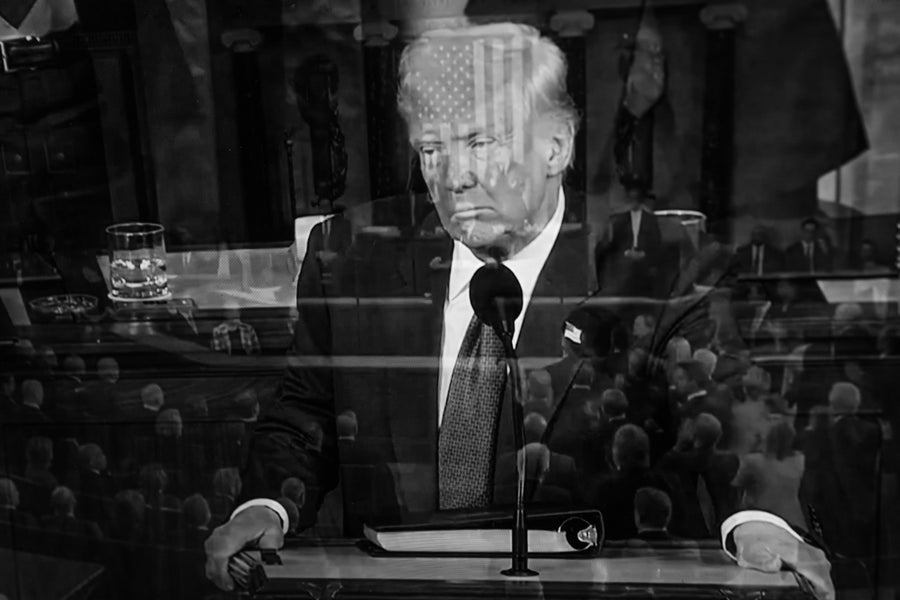
In a split image on television, President Donald Trump delivers an address to a joint session of Congress on March 4, 2025. Andrew Lichtenstein/Corbis via Getty Images
.
.
Click the link below for the complete article:
.
__________________________________________
June 10, 2025
Mohenjo
Business, Food For Thought, Human Interest, Political, Science, Technical
amazon, business, Business News, current-events, Future, Hotels, human-rights, medicine, mental-health, research, Science, Science News, technology, Technology News, travel, vacation

Click the link below the picture
.
The US and China say they have agreed in principle to a framework for de-escalating trade tensions between the world’s two biggest economies.
US Commerce Secretary Howard Lutnick said the deal should result in restrictions on rare earth minerals and magnets being resolved.
Both sides said they would now take the plan to their presidents – Donald Trump and Xi Jinping, for approval.
The announcement came after two days of negotiations in London between top officials from Beijing and Washington.
Chinese exports of rare earth minerals, which are crucial for modern technology, were high on the agenda of the meetings.
Last month, Washington and Beijing agreed a temporary truce over trade tariffs, but each country has since accused the other of breaching the deal.
The US has said China has been slow to release exports of rare earth metals and magnets, which are essential for manufacturing everything from smartphones to electric vehicles.
Meanwhile, Washington has restricted China’s access to US goods such as semiconductors and other related technologies linked to artificial intelligence (AI).
“We have reached a framework to implement the Geneva consensus,” Lutnick told reporters.
“Once the presidents approve it, we will then seek to implement it,” he added.
The new round of negotiations followed a phone call between Donald Trump and China’s leader Xi Jinping last week, which the US President described as a “very good talk”.
“The two sides have, in principle, reached a framework for implementing the consensus reached by the two heads of state during the phone call on June 5th and the consensus reached at the Geneva meeting,” China’s Vice Commerce Minister Li
When Trump announced sweeping tariffs on imports from a number of countries earlier this year, China was the hardest hit. Beijing responded with its own higher rates on US imports, and this triggered tit-for-tat increases that peaked at 145%.
.
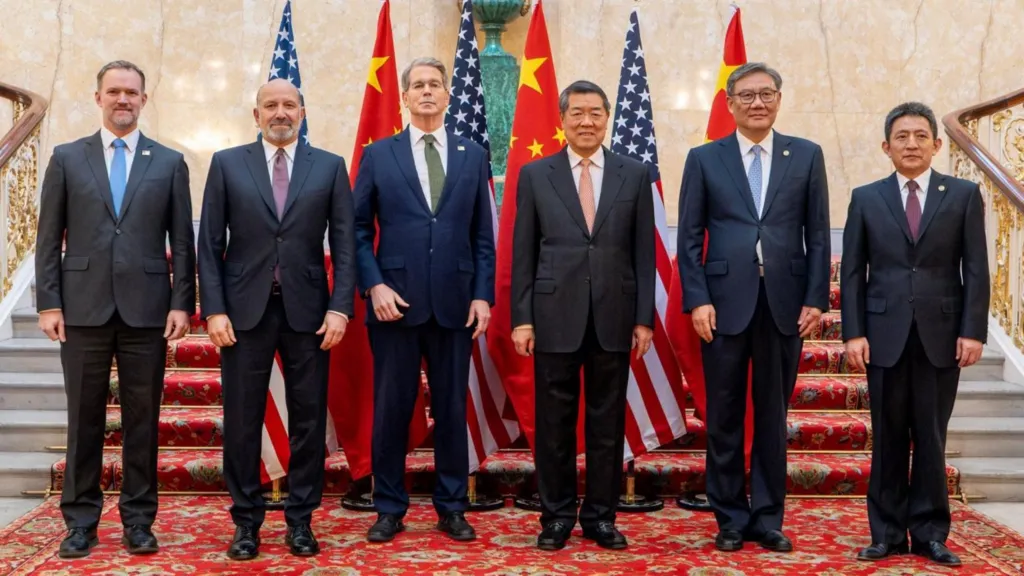 Top officials from the US and China have been meeting in London
.
.
Click the link below for the complete article:
.
__________________________________________
June 9, 2025
Mohenjo
Business, Food For Thought, Human Interest, Political, Science, Technical
amazon, business, Business News, current-events, Future, Hotels, human-rights, medicine, mental-health, research, Science, Science News, technology, Technology News, travel, vacation
Click the link below the picture
.
CLIMATEWIRE | The Trump administration has reversed course and will restore U.S. Department of Agriculture websites related to climate change in response to a lawsuit brought by environmental organizations and farmers.
Groups represented by Earthjustice and the Knight First Amendment Institute at Columbia University had sued in February, alleging that the removal of climate-related policies, datasets, and other resources violated federal laws requiring advanced notice, reasoned decision-making and public access to certain information.
In a letter late Monday, the administration told Judge Margaret Garnett of the U.S. District Court for the Southern District of New York that the USDA will restore the climate-related web content that was removed after President Donald Trump’s inauguration, including all USDA webpages and interactive tools listed in the lawsuit.
It noted that the process of restoring the removed content was already underway and that the USDA expects to mostly complete the process in two weeks. The USDA also pledged that it “commits to complying with” federal law governing future “posting decisions.”
The purged material had included information on climate-smart farming, forest conservation, and adaptation. The USDA also took down climate sections from the websites for the Forest Service and the Natural Resources Conservation Service, including information to help farmers access money for conservation practices.
The move comes days before Garnett was to hear the challengers’ request for a preliminary injunction that sought to require the USDA to restore the webpages and stop taking down additional climate information.
“We’re glad that USDA recognized that its blatantly unlawful purge of climate-change-related information is harming farmers and communities across the country,” said Jeffrey Stein, an associate attorney with Earthjustice. Stein added that farmers depend on the websites to protect their farms from drought, wildfire, and extreme weather.
.

Harvesting soybeans in Jarrettsville, Maryland. Edwin Remsberg/Getty Images
.
.
Click the link below for the complete article:
.
__________________________________________
June 9, 2025
Mohenjo
Business, Food For Thought, Human Interest, Political, Science, Technical
amazon, business, Business News, current-events, Future, Hotels, human-rights, medicine, mental-health, research, Science, Science News, technology, Technology News, travel, vacation

Click the link below the picture
.
Over the last few months, you’ve probably heard more than you ever have about tariffs. Tariffs have been a big focus of President Donald Trump’s second term, and many companies have announced price hikes to offset tariff costs.
Trump recently announced new 50% tariffs on steel and aluminum imports last week, a move that could hit home appliances particularly hard.
“We expect home appliance prices to rise this year, especially for mid-range and premium models that rely heavily on imported parts and materials,” said David Warrick, executive vice president at Overhaul, a supply chain management platform, and former head of global supply chain technology at Microsoft.
Larger home appliances could be the most susceptible to price hikes. “Refrigerators, dishwashers, and washing machines are particularly vulnerable because they often include a high percentage of foreign components — even when final assembly happens in the US,” said Warrick.
CNET has been covering the Trump administration’s tariff policy and changes, and we’ve already seen manufacturers and retailers raise prices on laptops, toys and groceries. Before you panic-buy a home appliance, here’s what you need to know about tariffs and how they could increase appliance prices this year.
How do tariffs impact home appliance prices?
We could see home appliance prices rise on products that are made in countries hit with tariffs. Because tariffs are paid by the importing company, the costs are typically passed along to the consumer in the form of higher prices, although the price hike may not be a 1-to-1 ratio with the tariff rate.
The tariffs that most threaten home appliances include the 50% tariff on all steel and aluminum imports, the 25% tariff on imported goods from Mexico and Canada, and the 30% tariff on imports from China. Higher tariffs on Mexico, Canada, and China have been temporarily halted, but this could change in the coming months.
Tariffs don’t only apply to assembled products that are made elsewhere and then shipped here to be sold. Many products that are assembled in the US involve imported components.
Materials like steel and aluminum are often imported, as are pumps, motors, and hoses, so appliances that include those parts could see notable price increases, according to Travis Tokar, a professor of supply chain management at Texas Christian University.
How tariffs impact home appliance prices could also vary depending on the type of appliance, the size, and where it’s manufactured.
“A lot of this will depend on the agreement with Mexico since many large appliances are assembled in Mexico,” said Patti Jordan, associate professor of professional practice at the Neely School of Business. “Product[s] manufactured primarily in China, such as vacuum cleaners, air purifiers, and small appliances, will most definitely be impacted.”
The Trump administration has also wavered on its tariff policy, making it difficult for the industry to predict what’s next. “It’s the off-and-on tariff strategy that is leading to the supply chain instability more so than the tariffs — at least so far,” Buffington added.
.

Trump’s new steel and aluminum tariffs could increase the price of appliances. Jeffrey Hazelwood/CNET
.
.
Click the link below for the complete article:
.
__________________________________________
June 8, 2025
Mohenjo
Business, Food For Thought, Human Interest, Political, Science, Technical
amazon, business, Business News, current-events, Future, Hotels, human-rights, medicine, mental-health, research, Science, Science News, technology, Technology News, travel, vacation
Click the link below the picture
.
We’ve never been so close to discovering life beyond Earth. Our generation could be the one that finds it, provided two essential ingredients exist. First, that there’s life out there. Second, that we’re willing to look.
Alien life’s existence is outside our control, but the universe seems to encourage our attention. Many people rest their optimism about alien life on the remarkable fact that our cosmos is brimming with planetary possibilities. To date, we’ve discovered nearly 6,000 exoplanets, most of them around only the nearest of the Milky Way’s hundreds of billions of stars. That means all our astonishingly successful planet-hunting surveys have studied just a mere teardrop of a vast cosmic sea—and implies there are at least as many planets as stars in our galaxy alone, plus some 1025 worlds in the rest of the observable universe. Chances are we’re not alone, so long as the probability that planets spring forth life is not astronomically miniscule.
Discovering alien life, on the other hand, rests squarely on us. For the first time in human history, we can meaningfully answer once-timeless questions. Countless generations before us could only ask, “Are we alone?” as passive stargazers. Today, our rockets reliably reach otherworldly destinations, our robotic emissaries yield transformative knowledge about our planetary neighbors, and our telescopes gaze ever farther into the heavens, revealing the subtle beauty of the cosmos.
NASA has led the way on this work, but it now faces an existential threat in the form of short-sighted budget cuts proposed by the White House. If passed into law by Congress, these cuts would axe critical space missions, gut NASA’s workforce, and abandon one of the most captivating quests in all of science. Additional sweeping cuts planned for the National Science Foundation would be similarly ruinous for ground-based astronomy and a host of other endeavors that support NASA’s work at the high frontier.
Led by NASA, for more than a half-century, the U.S. has been building toward a golden age of astrobiology, a field of research the space agency helped invent. The groundwork was laid on Mars, beginning with the Viking missions of the 1970s and continuing into today, where the agency has “followed the water” to dried-up lakebeds. In 2014, NASA’s Curiosity rover uncovered clues pointing to an ancient, life-friendly Mars, and more recently, NASA’s Perseverance rover has been caching promising rock samples for return to Earth. Researchers eagerly await their arrival, because if Mars ever did harbor life, then some of Perseverance’s specimens may well contain some sort of Martian fossils.
Besides our own familiar Earth, Mars isn’t the only promising incubator of life around the sun. In the outer solar system, NASA’s Galileo probe and Cassini orbiter lifted the icy veils of Jupiter’s moon Europa and Saturn’s moon Enceladus, respectively. Beneath thick shells of ice, both moons harbor global subsurface oceans, which could be teeming with bacterial or even macroscopic denizens. NASA’s Clipper spacecraft launched in 2024 and is hurtling toward Europa, where it will make close flybys of the moon to assess its habitability. The agency has developed concepts for follow-on missions to land on both worlds and taste the chilly chemistry there for the telltale signs of life.
Every organism on Earth requires liquid water, but perhaps that’s not a strict requirement elsewhere. Astrobiologists speculate about “weird life” in Venus’s sulfuric acid clouds and in the liquid hydrocarbon seas of Saturn’s frigid moon Titan. NASA plans to visit each of these worlds with state-of-the-art spacecraft—two to Venus and one to Titan—in the 2030s.
And then there’s the great expanse of exoplanets. NASA’s James Webb Space Telescope has furnished unprecedented data about exoplanet atmospheres, most of them hot and puffy—the easiest to observe. But the most alluring exoplanets for astrobiologists—those the size and temperature of Earth—are just beyond our sight. Currently, teams of scientists are conceptualizing NASA’s next great eye in space, the Habitable Worlds Observatory, whose mission is, as its name suggests, to image and examine dozens of notionally Earth-like planets for the global exhalations of alien biospheres.
.

An artist’s illustration of a potentially habitable exoplanet orbiting a red dwarf star. NASA’s Goddard Space Flight Center
.
.
Click the link below for the complete article:
.
__________________________________________
Older Entries
Newer Entries
 James' World 2