November 26, 2025
Mohenjo
Business, Food For Thought, Human Interest, Political, Science, Technical
amazon, business, Business News, current-events, Future, Hotels, human-rights, medicine, mental-health, research, Science, Science News, technology, Technology News, travel, vacation

Click the link below the picture
.
The pill version of Novo Nordisk’s blockbuster weight-loss medication, semaglutide, failed to slow down Alzheimer’s progression in an initial analysis of two clinical phase 3 trials. The company behind the weekly injectable diabetes medication Ozempic and weight-loss drug Wegovy, which are also known as GLP-1 drugs, announced the top-line results today.
Endocrinologist Daniel Drucker says that the trials were well-done, but the results are “a setback for the field.” Novo Nordisk confirmed in a statement to Scientific American that the company is ending its semaglutide trials on Alzheimer’s, including tests involving the injectable version of the drug.
“GLP-1 [drugs] have given us so many wonderful results, but tackling these very challenging brain disorders has been disappointing,” says Drucker, who has consulted for Novo Nordisk in the past but does not currently. “No one expected that it was going to shut down the progression of Alzheimer’s disease, but there was a hope that we would see some benefit, and we didn’t.”
Animal models and reviews of real-world data have previously suggested that GLP-1 drugs might reduce the risk or slow development of Alzheimer’s. The reason why remains elusive, although researchers, including Drucker, suggest that these drugs might reduce inflammation associated with certain neurological conditions.
“GLP-1 does reduce inflammation in many parts of the body, and inflammation does drive part of the pathology of Alzheimer’s,” he says.
Novo Nordisk’s trials, called evoke and evoke+, involved 3,808 people aged 55 to 85 who had early-stage Alzheimer’s, classified as having mild cognitive impairment as a result of the disease. During most of the 156-week trial, the researchers gave half the participants 14 milligrams of oral semaglutide once a day, while the other half received a placebo.
Participants who took the drug did show some improvements in Alzheimer’s biomarkers, but treatment didn’t delay disease progression, according to the company.
Drucker says there are many potential explanations why oral semaglutide didn’t work as hoped. The fatty-acid structure surrounding semaglutide might have prevented it from being able to penetrate certain brain regions, such as the hippocampus, which controls memory and cognitive function. Past studies evaluating the connection between GLP-1 treatment and Alzheimer’s risk or development have mostly drawn from data on the injectables, raising questions on whether changing how people take the drug or the dosage could elicit a different outcome, Drucker says, though he adds that giving higher doses to some older adults may also come with additional risks.
“These are not wonder drugs that will fix everything that is wrong with us, and that’s why we have to do the clinical trials, and we need rigorous evidence,” Drucker says, adding that Novo Nordisk deserves credit for doing the trials despite the low odds of success.
Novo Nordisk plans to present the findings at the Clinical Trials in Alzheimer’s Disease (CTAD) conference next week and the full datasets at the AD/PD Alzheimer’s and Parkinson’s Diseases Conference in March 2026.
“We will continue to analyze the data and may not have the answer to the ‘why’ next week when we share the results at CTAD,” a Novo Nordisk spokesperson told Scientific American.
.
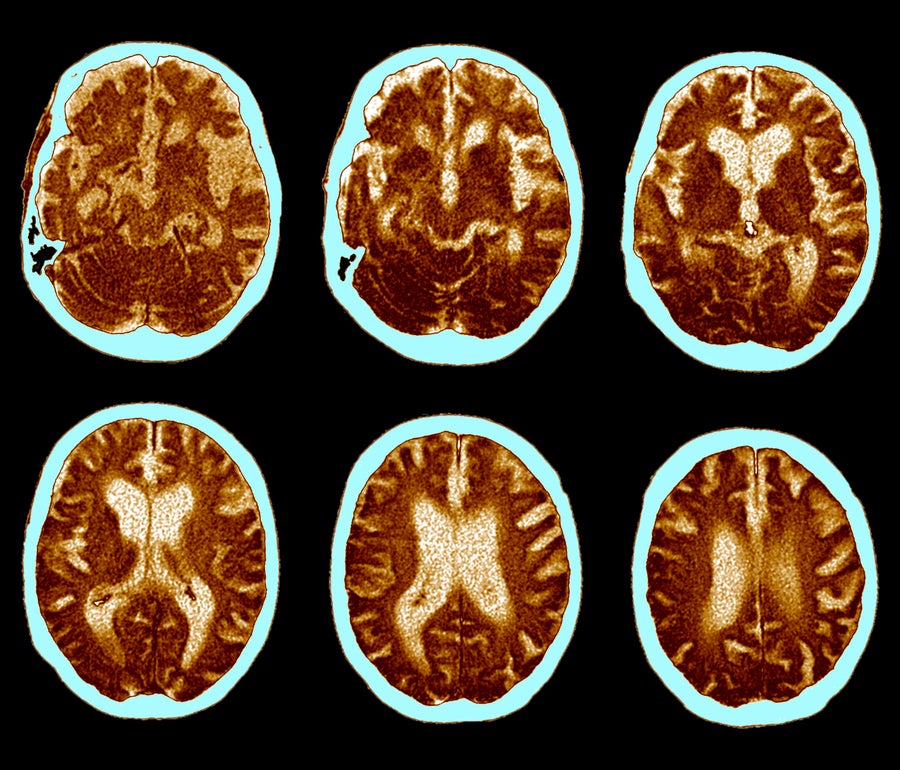
Brain CT scans of Alzheimer’s disease. ZEPHYR/Science Source
.
.
Click the link below for the complete article:
.
__________________________________________
November 26, 2025
Mohenjo
Business, Food For Thought, Human Interest, Political, Science, Technical
amazon, business, Business News, current-events, Future, Hotels, human-rights, medicine, mental-health, research, Science, Science News, technology, Technology News, travel, vacation

Click the link below the picture
.
JANNA LEVIN: It’s such a pleasure to be here tonight.
I wonder how many of you have reflected on this phenomenon: everything anyone has ever seen, or ever will see, makes up less than 5% of what is out there in the universe.
All the people, all the faces, all the mountains, the moon, the stars, the galaxies, supernova—everything we’ve ever seen—is less than 5%. The rest is in the form of dark matter and dark energy, as yet unknown.
And the “dark” phrasing is a misnomer. The dark energy is in this room right now. It fills the room. The dark matter is coursing through you right now. They’re not dark; they’re invisible.
I wonder—and maybe you’ve wondered yourself—what is all this dark stuff? Where does it come from? What is it? Or maybe you study astrophysics, and you actually build detectors deep in mines, waiting patiently for years for one dark matter particle to strike your detector. Yet, despite its abundance, the dark matter has never revealed itself.
It could be that it never will, that we’ll never identify exactly what it is. But maybe you’ve reflected on this strange disparity between us and this dark universe. Or maybe this is your first time hearing all of this.
Imagine us as a collection of confetti tossed amongst this impassive void—sparkling because we are luminous—and yet, to the dark matter, we are as invisible to the dark sector as the dark sector is to us.
Consider the visible universe: you can see your hand because the atoms in your body scatter light, your eyes absorb that light, and that light triggers an electrical impulse along nerve endings. That ignites in your mind an image, the qualia of the visual world. You can feel your fingertips because atoms interact. You can smell and taste because of chemical interactions. Your heartbeat is regulated by electrical impulses from specialized cells.
This is the world we know: the visual world. It’s electrical, it’s magnetic, it’s the world of atoms and of light.
But it’s not just our microcosm. This is the same material that burns in stars, the same light that shines from stars, the same matter lingering from the Big Bang. This is everything everyone has ever seen and ever will see.
If we spiral out to the large scale, we enter the domain of dark matter and dark energy.
.
 Everything ever seen — every star, mountain, and face — makes up less than 5 percent of the universe. Astrophysicist Janna Levin reminds us that the rest — dark matter and dark energy — is invisible, mysterious, and everywhere. We are the luminous exception in a universe of darkness.
.
.
Click the link below for the complete article (sound on to listen – 13 minutes) (click transcript to read article):
.
__________________________________________
November 26, 2025
Mohenjo
Business, Food For Thought, Human Interest, Political, Science, Technical
amazon, business, Business News, current-events, Future, Hotels, human-rights, medicine, mental-health, research, Science, Science News, technology, Technology News, travel, vacation

Click the link below the picture
.
The suspect accused of critically wounding two National Guard members in a shooting near the White House on Wednesday entered the United States in 2021 through a refugee program for people fleeing Afghanistan, officials said.
Homeland Security Secretary Kristi Noem confirmed on social media that the suspect had entered from Afghanistan in September 2021 under a Biden-era program called Operation Allies Welcome, which provided entry to Afghan nationals fleeing the Taliban takeover of their country after the chaotic withdrawal of U.S. troops.
The Trump administration pauses immigration from Afghanistan.
The Trump administration said on Wednesday that it had stopped processing immigration applications from Afghanistan, hours after officials in Washington detained an Afghan man they said had shot two National Guard troops near the White House.
U.S. Citizenship and Immigration Services, which oversees U.S. immigration, made the announcement on social media late Wednesday. The two Guard members from West Virginia were in critical condition after a 29-year-old man from Afghanistan shot them, officials said. The man, who was also injured, entered the United States in 2021 under a Biden-era immigration program for Afghans leaving their country after the government fell to the Taliban.
The pause on immigration applications from Afghan nationals will affect a number of Afghans who worked for the U.S. government or NATO forces during the 20-year war in Afghanistan. They are eligible to apply for what’s known as a Special Immigrant Visa, but the Trump administration’s recent curbs on immigration have left many of them in limbo – either stranded in third countries or forced into hiding in Afghanistan.Representatives for the Taliban administration in Afghanistan did not immediately respond to a request for comment on the shooting or the suspension of immigration applications from Afghan nationals. In recent months, Afghan officials have said they were ready to discuss the repatriation of Afghan nationals with the United States and other countries.
Before the shooting, some troops and officials worried about the Guard’s safety.
The shooting of two National Guard members in Washington, D.C., shocked Americans on Wednesday, but not everyone was surprised.
“I knew this would happen,” a member of the California National Guard texted The New York Times as news spread, speaking on condition of anonymity because he did not have authority to comment publicly.
U.S. Citizenship and Immigration Services announced on social media that it had paused immigration applications from Afghan nationals. “Effective immediately, processing of all immigration requests relating to Afghan nationals is stopped indefinitely pending further review of security and vetting protocols,” the agency said on X.Shawn VanDiver, the president of #AfghanEvac, a coalition of groups helping Afghans immigrate, said in a statement that the organization supports the shooter “facing full accountability and prosecution under the law.” But he urged that the shooting “not be used as an excuse to define or diminish an entire community,” pointing out that Afghans seeking to settle in the United States “undergo some of the most extensive security vetting of any population entering the country.”
.

.
.
Click the link below for the complete article:
.
__________________________________________
November 25, 2025
Mohenjo
Business, Food For Thought, Human Interest, Political, Science, Technical
amazon, business, Business News, current-events, Future, Hotels, human-rights, medicine, mental-health, research, Science, Science News, technology, Technology News, travel, vacation
Click the link below the picture
.
China is set to launch the Shenzhou-22 spacecraft to its orbital space station on November 25, providing a vital lifeboat for its three stranded astronauts after they spent days with no guaranteed trip back to Earth in an emergency.
The spacecraft will launch from the Jiuquan Satellite Launch Center in northwest China, the China Manned Space Agency said in a statement. After the crew of the damaged spacecraft Shenzhou-20 used Shenzhou-21 to return home, the three Shenzhou-21 astronauts were left with only a damaged spacecraft should they have had to return to Earth. And while they are apparently going about their work on the space station as usual, experts say scenarios like this one are dangerous and need to be better addressed.
Technically, the damaged spacecraft that remains docked at China’s space station could have been used in an emergency, but that poses risks, especially because it remains unclear how much damage the craft suffered, says Jonathan McDowell, an astronomer at the Center for Astrophysics | Harvard & Smithsonian.
“I’m not sure NASA would have done that,” McDowell says, but “everything in space flight is a balancing of risks.”
“There’s no not risky option,” he adds. And as the amount of space debris in orbit around Earth grows, space agencies must prepare for more scenarios like this. International cooperation will be critical to protecting astronauts of different nationalities in orbit, McDowell says. And as crewed launches into space increase, having better contingency plans for human rescue will become increasingly necessary, says RAND think-tank analyst Jan Osburg. Government space agencies could delegate these operations to private companies or NGOs who have the capacity and infrastructure to respond quickly, he says.
Already, the U.S. and Russia use the same docking system at the ISS, allowing them to mitigate risks to both groups of astronauts. A partnership like that between the U.S. and China “would demonstrate a capability that each country could rescue the other astronauts in an emergency,” McDowell says.
If Shenzhou-22’s launch is successful tomorrow, China will have demonstrated its ability to respond to such scenarios on short notice, Osburg says. “That’s a pretty good achievement,” he says. China’s astronaut woes are reminiscent of last year’s saga at the ISS, when two NASA astronauts became stuck there for months longer than intended after their capsule—Boeing’s Starliner—encountered problems during the docking process. China’s human exploration program is a top priority for the country, with plans to send two astronauts to the moon by 2030.
.
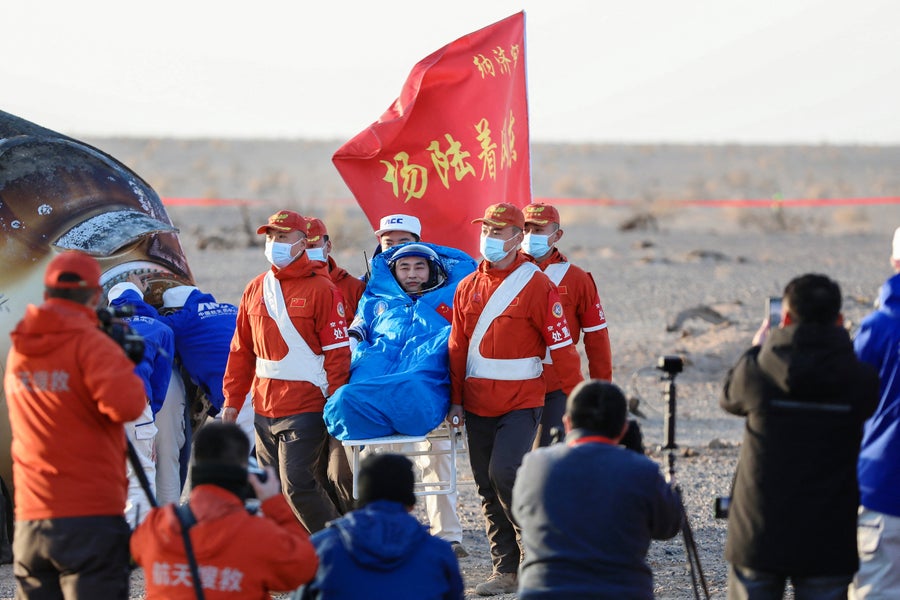
Shenzhou-20 crew member Chen Zhongrui is carried by the team after arriving at the Dongfeng landing site in the Gobi Desert, Inner Mongolia, China, on November 14, 2025. Three Chinese astronauts returned to Earth on November 14, state TV footage showed, after a delay caused by their spacecraft being struck by debris in orbit. STR / Contributor/Getty
.
.
Click the link below for the complete article:
.
__________________________________________
November 25, 2025
Mohenjo
Business, Food For Thought, Human Interest, Political, Science, Technical
amazon, business, Business News, current-events, Future, Hotels, human-rights, medicine, mental-health, research, Science, Science News, technology, Technology News, travel, vacation

Click the link below the picture
.
Cross-country storms are expected to batter much of the U.S. this week, potentially disrupting holiday travel for millions of people.
Rain is expected to fall across the Midwest, Southeast, and East Coast today, while snow is forecast for parts of Michigan, Wisconsin, Ohio, Pennsylvania, and New York this week. Wind gusts could reach 20 to 30 mph on Thursday in New York City, threatening the city’s famed parade.
Thanksgiving is one of the biggest travel days of the year. AAA projects that overall, 81.8 million people will travel 50 miles or more during the Thanksgiving holiday period. But the rough weather should come as no surprise to most travelers. “As we get into late November, that’s kind of when we start to really experience those first bouts of really cold weather,” says Allison Finch, lead meteorologist for the New York State Weather Risk Communication Center.
Historic Thanksgiving storms
The busy holiday period, combined with the changing seasons, often threatens chaos on the roads and at airports. And over the years, Thanksgiving has seen some memorable storms.
Several cities in the Northeast saw near record-breaking cold temperatures on Thanksgiving Day in 2018, with temperatures dropping to 19°F that morning in New York City—making it the second-coldest Thanksgiving in the city’s history. Thousands, though, wrapped themselves in metallic foil blankets and sleeping bags on the sidewalk to watch the parade pass through the streets to watch the Macy’s Thanksgiving Day Parade.
The next year, a bomb cyclone—a large storm that rapidly strengthens over a 24 hour period—brought rain, snow, and hail to the West Coast, disrupting travel in Los Angeles as water flooded the roads.
The Macy’s Thanksgiving Day Parade, which has not been cancelled since 1944 for any reason, has even been impacted by harsh winter weather. In 1997, 43 mph winds wreaked havoc on the parade, and two people were injured after a Cat-in-the-Hat balloon broke the metal arm off a lamppost. The debacle led New York City officials to declare that it will ground the balloons if winds reach 23 mph—but that has yet to happen since.
Natural disasters have also made headlines on the holiday. In 1950, an extratropical cyclone impacted 22 states around the holiday week, as significant winds, heavy rain, and blizzard conditions killed 353 and injured 160. On Thanksgiving week in 1992, one of the largest November tornado outbreaks in U.S. history occurred over the course of three days, when severe weather spawned around 100 tornadoes everywhere from Texas to Virginia, Indiana, Ohio, and Kentucky.
How climate change is impacting Thanksgiving weather
Though it might not feel like it, erratic and intense November storms are being made more likely by rising global temperatures, according to Climate Central. Over 225 cities in the U.S. have seen November temperatures rise since 1970—by 2.4°F on average. It could impact Thanksgiving weather trends—increasing the amount of winter precipitation as the warmer atmosphere is able to carry more moisture.
This increases the likelihood for significant snowfall from lake effect snow, which occurs when warmer temperatures prevent the lakes from freezing over, causing the warmer water to evaporate into passing cold fronts and fall down as snow. Parts of the Midwest and Great Lakes region are expected to see lake effect snow this week.
“With warmer temperatures from climate change, you’re going to have a warmer November or warmer fall altogether,” says Finch. “And as we get into the later kind of time period in November, if you have warmer lake temperatures, and then you get this burst of intense cold air, that’s going to make the lake effect events a lot more significant when they happen.”
Early research shows that the warmer temperatures are also impacting the polar vortex, a large area of low pressure and cold air that surrounds both of the Earth’s poles. That could make severe winter weather events in some areas more likely—and cause temperatures to fluctuate.
“The research is hinting that as climate change continues, it’s leading to more frequent disruptions, which could lead to more cold air intrusion,” says Finch. “So if you have a disruption in the polar vortex that sends that cold polar air further south into the United States, places like Texas get a really cold freeze, or Florida, where people go to stay warm, they all of a sudden are really cold.”
.
 A pair of storms packing heavy snow and hurricane-force winds left tens of thousands without power in the United States on Nov. 27, 2019, and wreaked havoc for Americans traveling for the Thanksgiving holiday. Jason Connolly—AFP
.
.
Click the link below for the complete article:
.
__________________________________________
November 25, 2025
Mohenjo
Business, Food For Thought, Human Interest, Political, Science, Technical
amazon, business, Business News, current-events, Future, Hotels, human-rights, medicine, mental-health, research, Science, Science News, technology, Technology News, travel, vacation

Click the link below the picture
.
The day before Halloween, President Trump landed at Joint Base Andrews after spending nearly a week in Japan and South Korea. He was then whisked to the White House, where he passed out candy to trick-or-treaters. Allies crowed over the president’s stamina: “This man has been nonstop for DAYS!” one wrote online.
A week later, Mr. Trump appeared to doze off during an event in the Oval Office.
With headline-grabbing posts on social media, combative interactions with reporters, and speeches full of partisan red meat, Mr. Trump can project round-the-clock energy, virility, and physical stamina. No,w at the end of his eighth decade, Mr. Trump and the people around him still talk about him as if he is the Energizer Bunny of presidential politics.
The reality is more complicated: Mr. Trump, 79, is the oldest person to be elected to the presidency, and he is aging. To pre-empt any criticism about his age, he often compares himself to President Joseph R. Biden Jr., who at 82 was the oldest person to hold the office, and whose aides took measures to shield his growing frailty from the public, including by tightly managing his appearances.
Mr. Trump has hung a photo of an autopen in a space where Mr. Biden’s portrait would otherwise be, and disparages his predecessor’s physicality often.
“He sleeps all the time — during the day, during the night, on the beach,” Mr. Trump said about Mr. Biden last week, adding: “I’m not a sleeper.”
Mr. Trump remains almost omnipresent in American life. He appears before the news media and takes questions far more often than Mr. Biden did. Foreign leaders, chief executives, donors, and others have regular access to Mr. Trump and see him in action.
Still, nearly a year into his second term, Americans see Mr. Trump less than they used to, according to a New York Times analysis of his schedule. Mr. Trump has fewer public events on his schedule and is traveling domestically much less than he did by this point during his first year in office, in 2017, although he is taking more foreign trips.
He also keeps a shorter public schedule than he used to. Most of his public appearances fall between noon and 5 p.m., on average.
And when he is in public, occasionally, his battery shows signs of wear. During an Oval Office event that began around noon on Nov. 6, Mr. Trump sat behind his desk for about 20 minutes as executives standing around him talked about weight-loss drugs.
At one point, Mr. Trump’s eyelids drooped until his eyes were almost closed, and he appeared to doze on and off for several seconds. At another point, he opened his eyes and looked toward a line of journalists watching him. He stood up only after a guest who was standing near him fainted and collapsed.
Mr. Trump has prompted additional questions about his health by sharing news about medical procedures he has had, but not details about them. While in Asia, Mr. Trump revealed that he had undergone magnetic resonance imaging at Walter Reed National Military Medical Center in early October.
“I gave you the full results,” Mr. Trump told reporters, mischaracterizing the summary that was released by his physician, which did not say that Mr. Trump had an M.R.I. scan and contained few other details.
“I have no idea what they analyzed,” Mr. Trump told reporters aboard Air Force One recently after he was again asked about his M.R.I. “But whatever they analyzed, they analyzed it well, and they said that I had as good a result as they’ve ever seen.”
Mr. Trump also applies makeup to a bruise on the back of his right hand, adding speculation about a medical condition that his physician and aides say is caused by taking aspirin and shaking so many hands. In September, the bruising on his hand, coupled with swollen ankles, caused observers on the internet to speculate wildly about his health.
In response to a list of questions about Mr. Trump’s health, including about the results of his M.R.I. and whether or not he was falling asleep in the Oval Office, Karoline Leavitt, the White House press secretary, praised the president’s energy and pointed to Mr. Biden.
“Unlike the Biden White House, who covered up Joe Biden’s cognitive decline and hid him from the press, President Trump and his entire team have been open and transparent about the president’s health, which remains exceptional,” Ms. Leavitt said in a statement.
.

Mr. Trump, 79, is the oldest person to be elected to the presidency.Credit…Haiyun Jiang/The New York Times
.
.
Click the link below for the complete article:
.
__________________________________________
November 24, 2025
Mohenjo
Business, Food For Thought, Human Interest, Political, Science, Technical
amazon, business, Business News, current-events, Future, Hotels, human-rights, medicine, mental-health, research, Science, Science News, technology, Technology News, travel, vacation
Click the link below the picture
.
As many as 70 million people in the U.S. have problems with sleep, and many are increasingly turning to melatonin supplements to help them fall asleep. People generally perceive these over-the-counter gummies, liquids, and tablets as harmless. But recent research has raised new questions about whether the popular sleep aid is as benign as people assume, especially the longer it’s used.
How does melatonin work in the body?
Melatonin is a hormone that humans naturally produce, as do all other mammals, including bears, and birds. It regulates the body’s circadian rhythm, the 24-hour biological “clock” that influences when we are sleepy or awake and alert. The body’s melatonin levels fluctuate in response to light—the brain’s control center for sleep suppresses levels during the day and boosts levels at night. As the hormone circulates in the bloodstream, it tones down the signals that keep us awake, but it doesn’t cause sleep, says Jennifer Martin, a psychologist at the Florida International University. Instead of acting like a sedative, melatonin sends the body biological signals that it’s nighttime.
What are melatonin’s short-term side effects?
Melatonin supplements are generally considered safe, but some people do report headaches, dizziness, or nausea after exposure. Taking too much at one time can disrupt sleep rather than improve it. Too much of the drug may also trigger something akin to a melatonin hangover the next day: lingering amounts in the blood can cause grogginess and tiredness.
Supplements are sold with doses that are “much, much higher than anybody is naturally producing,” says Jamie Zeitzer, a sleep specialist at Stanford University. The hormone is commonly sold in five-milligram concentrations, though some “extra strength” products say they contain up to 40 milligrams.
“More isn’t better,” Martin says. “For a lot of people, a small dose is the most beneficial.”
Getting the right amount can be tricky. While the melatonin used in supplements is chemically identical to that produced in the body, the actual amount of the hormone in these products may not match what’s on their label. Some over-the-counter products contained anywhere from 80 percent less to about 470 percent more melatonin than advertised, a 2017 study found. Melatonin is sold as a supplement, which means such products reach the market without the Food and Drug Administration first evaluating their safety or production standards. Shalini Paruthi, a sleep medicine physician at John J. Cochran Veterans Hospital in St. Louis and spokesperson for the American Academy of Sleep Medicine, says to look for U.S. Pharmacopeia–certified products, which are tested for the quantity of their listed ingredients.
How does long-term melatonin use affect health?
At a conference in early November, researchers at SUNY Downstate Health Sciences University and their colleagues presented an analysis of U.K. medical records that raised concerns about long-term melatonin use. Almost 5 percent of 65,414 adults with insomnia who took melatonin for at least a year experienced heart failure (whereas almost 3 percent of those who did not take the sleep aid did so). People who took melatonin for at least a year were also more than three times as likely to be hospitalized for heart failure and nearly twice as likely to die from any cause compared with those who had no medical record of taking melatonin.
But some experts believe the findings, which have not yet been published or peer-reviewed, might say more about the consequences of poor sleep rather than melatonin use. “I don’t see a very good reason for melatonin to be directly involved in [heart failure],” Zeitzer says. Bad sleep is more likely putting extra pressure on the cardiovascular system, he says. Chronic insomnia is already known to be related to a higher risk of cardiovascular disease, metabolic dysfunction, and issues with memory, learning, and mental health. A more likely explanation for the new study’s trends is that people with poor sleep are relying on melatonin, which might not be helping them, Martin says.
Other long-term studies haven’t found evidence that melatonin harms the heart. But there isn’t much substantial, long-term safety data for melatonin.
Is melatonin safe for children?
Parents are increasingly giving their children melatonin to help with sleep. Evidence suggests it can make a real difference for some children with neurodivergent conditions. Many autistic kids, for example, have a harder time falling—and staying—asleep. That may be because they produce melatonin differently, releasing it later in the evening or in lower amounts than usual, Paruthi says. In such cases, “we would definitely recommend a low-dose melatonin to see if that helps,” she says. “And for a lot of these kids, it really does.”
.
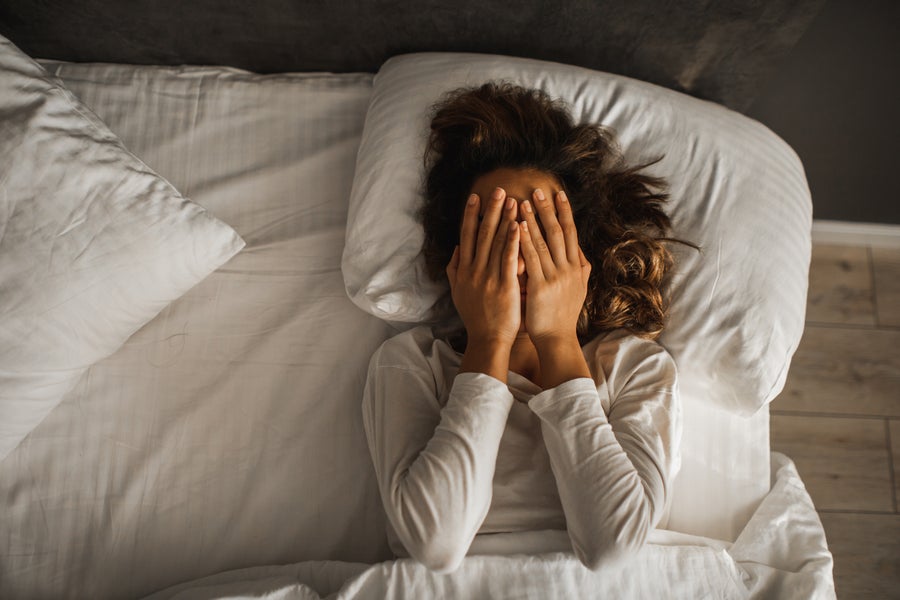 Oleg Breslavtsev/Getty Images
.
.
Click the link below for the complete article:
.
__________________________________________
November 24, 2025
Mohenjo
Business, Food For Thought, Human Interest, Science, Technical
amazon, business, Business News, current-events, Future, Hotels, human-rights, medicine, mental-health, research, Science, Science News, technology, Technology News, travel, vacation

Click the link below the picture
.
When Ray Romano needed inspiration for his CBS sitcom Everybody Loves Raymond, he didn’t have to look far from home. The stand-up comic wasn’t a trained actor, so the series was built around familiar aspects of his own life — a wife and three young children, with meddling parents and an older brother living nearby.
The result was that the Barones of Long Island felt like a real family that we visited every week for nine seasons.
Mediating between his harried wife Debra (Patricia Heaton), overbearing mother Marie (Doris Roberts), grouchy father Frank (Peter Boyle), and gloomy brother Robert (Brad Garrett), Ray always had a lot on his plate. Here’s a look at what happened to this lovably fractious family since they left our TV screens in 2005.
Ray Romano won an Emmy for playing Ray, an insecure sportswriter often caught in the middle between warring family members.
Kids may recognize his voice as Manny the woolly mammoth in the Ice Age franchise, while adults have seen Romano transition from sitcom hijinks to more dramatic fare. He reflected on his post-Raymond life by creating and starring on the dramedy Men of a Certain Age (2009–2011) with Andre Braugher and Scott Bakula, then joined the cast of Parenthood (2012–2015).
The Queens native paired up with Holly Hunter as lovable would-be in-laws in The Big Sick (2017), played a mob lawyer in Martin Scorsese’s The Irishman (2019), and starred alongside Hugh Jackman in HBO’s acclaimed Bad Education (2019). The small-screen vet also booked regular roles on Vinyl (2016) and Get Shorty (2017–2019). He recently went behind the camera for his directorial debut, Somewhere in Queens (2022), in which he starred alongside Laurie Metcalf.
While Romano’s post-Raymond career has kept him busy — including a role in the main cast of Netflix’s No Good Deed (2024) — he has been intentional about not repeating himself with another sitcom.
“I don’t want to have to follow that. I like that it still holds up. It still resonates,” he told EW in 2019. “The secret was just writing about things that relate to us, and that’s half the battle. When people can relate to it and see themselves, then the comedy is much easier.”
Romano married Anna Scarpulla in 1987. They have four children: Alexandra, Gregory, Matthew, and Joseph.
Patricia Heaton picked up back-to-back Emmys as Debra, a housewife who found it hard to get along with her inescapable in-laws.
As Heaton remembers it, her audition captured the spirit of the character.
“I was in a big hurry because I had a babysitting conflict with my husband,” she told EW in 2005. “Even though he’s British, and Ray is from Queens, they have this universal male idiocy that crosses all continents. I had a certain amount of impatience I put into the reading that worked.”
The actress was already a familiar face on TV, having appeared in a recurring role on Thirtysomething (1989–1991) and snagged a lead on Room for Two (1992–1993). But Raymond made her a household name — though her popularity far outlived that signature role.
When the series ended, it wasn’t long before she headlined her own hit sitcom, The Middle (2009–2018). During that time, she produced a Food Network cooking series, Patricia Heaton Parties, scoring a Daytime Emmy for Outstanding Culinary Program.
The Ohio native has recently been seen on the big screen in the inspirational drama The Unbreakable Boy (2025) and as a nun in the Al Pacino-led exorcism thriller, The Ritual (2025).
Heaton has been married to British actor David Hunt since 1990. They have four sons: Samuel, John, Joseph, and Daniel.
.
 CBS/Courtesy Everett Merry Christmas from the Barones! The cast of ‘Everybody Loves Raymond’
.
.
Click the link below for the complete article:
.
__________________________________________
November 24, 2025
Mohenjo
Business, Food For Thought, Human Interest, Political, Science, Technical
amazon, business, Business News, current-events, Future, Hotels, human-rights, medicine, mental-health, research, Science, Science News, technology, Technology News, travel, vacation

Click the link below the picture
.
A federal judge on Monday tossed out separate criminal charges against the former F.B.I. director James B. Comey and New York’s attorney general, Letitia James, saying the loyalist prosecutor installed by President Trump to bring the cases was put into her job unlawfully.
The twin rulings, by Judge Cameron McGowan Currie, were the most significant setback yet to the president’s efforts to force the criminal justice system to punish his perceived foes. The case dismissals also served as a rebuke to Attorney General Pam Bondi, who had rushed to carry out Mr. Trump’s orders to appoint the prosecutor, Lindsey Halligan, as the U.S. attorney for the Eastern District of Virginia.
The dismissals, while embarrassing for the White House and the Justice Department, are unlikely to be the last word on an issue of constitutional authority that many legal experts expect could be appealed to the Supreme Court. And the way Judge Currie rendered her decision left open the possibility that another prosecutor could refile the charges against both Mr. Comey and Ms. James.
Judge Currie’s orders center on Mr. Trump’s unorthodox decision to appoint Ms. Halligan to her prosecutorial position in an interim capacity, replacing his previous pick, who was also serving in a temporary role. Within days after assuming her new post, Ms. Halligan rejected the advice of the career prosecutors in her new office and moved single-handedly to indict both Mr. Comey and Ms. James, two of the president’s most reviled targets.
In her rulings on Monday, Judge Currie said that it was unlawful to appoint two interim prosecutors in succession, and dismissed the charges against Mr. Comey and Ms. James without prejudice.
The administration signaled on Monday it would appeal the judge’s ruling, rather than acquiesce to the death of two high-profile cases the president demanded they be brought.
Karoline Leavitt, the White House press secretary, told reporters that the judge “was clearly trying to shield Letitia James and James Comey from receiving accountability” and added that the Justice Department would quickly appeal “this unprecedented action.”
The dismissal of charges without prejudice meant the government could also try to refile them, whatever the outcome of the ultimate legal fight over the appointment of Ms. Halligan, a former White House aide and personal lawyer to Mr. Trump.
In a statement, a lawyer for Mr. Comey, Patrick J. Fitzgerald, said that with the dismissal of the case against his client, “an independent judiciary vindicated our system of laws not just for Mr. Comey but for all American citizens.”
Ms. James’s lawyer, Abbe Lowell, said the court ruling showed Mr. Trump “went to extreme measures to substitute one of his allies to bring these baseless charges after career prosecutors refused. This case was not about justice or the law; it was about targeting Attorney General James for what she stood for and who she challenged.”
Judge Currie’s ruling stems from a series of machinations that Mr. Trump undertook earlier this fall. Her legal rationale was based in part on the decision by another federal judge, Aileen M. Cannon, to dismiss an indictment against Mr. Trump over concerns about the appointment of Jack Smith as special counsel in that case.
In late September, he rushed to oust Ms. Halligan’s predecessor, Erik S. Siebert, the career U.S. attorney in the Eastern District of Virginia, who had expressed concern that there was not sufficient evidence to indict Mr. Comey and Ms. James. The president then replaced Mr. Siebert with Ms. Halligan, who had no previous experience as a prosecutor.
When Ms. Halligan did the president’s bidding by hurrying to charge Mr. Comey and Ms. James, it was a generational erosion in the tradition of the White House keeping distance from the affairs of the Justice Department.
.
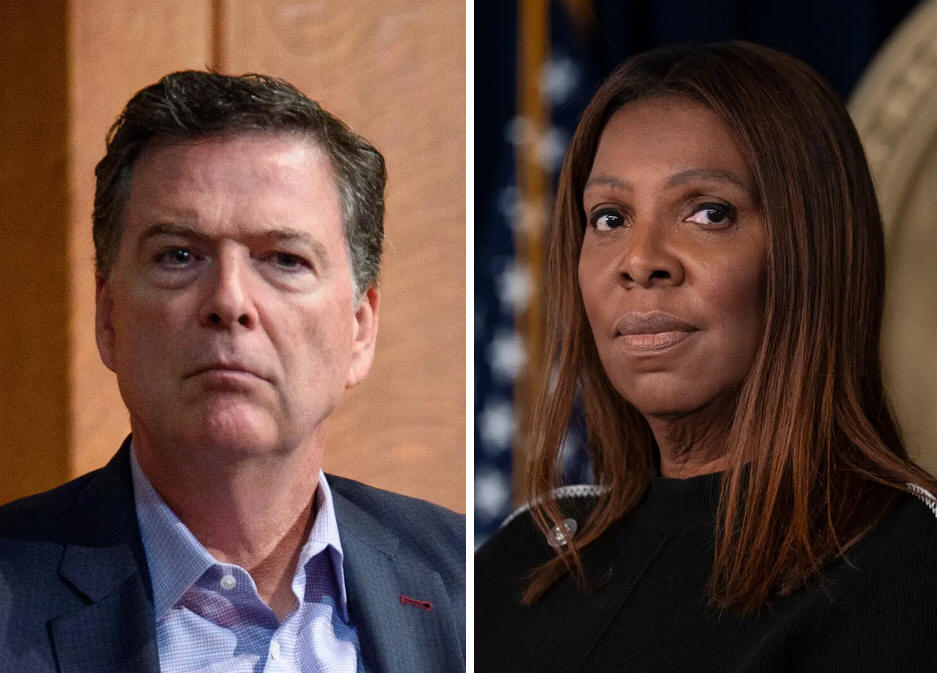
A federal judge dismissed criminal charges against the former F.B.I. director James B. Comey and New York’s attorney general, Letitia James.Monica Jorge for The New York Times; James Estrin/The New York Times
.
.
Click the link below for the complete article:
.
__________________________________________
November 23, 2025
Mohenjo
Business, Food For Thought, Human Interest, Political, Science, Technical
amazon, business, Business News, current-events, Future, Hotels, human-rights, medicine, mental-health, research, Science, Science News, technology, Technology News, travel, vacation
Click the link below the picture
.
From deep-sea hydrothermal vents to freezing glaciers, there are plenty of harsh environments on Earth. But they’re nothing compared with outer space.
There are, however, a growing list of species, such as tardigrades and certain flowering plants, that can survive in that cold vacuum. The most recent addition is a type of moss, scientists at Hokkaido University in Japan and their colleagues recently reported in iScience.
“The fact that another major group of terrestrial life can survive in space, as far as physical findings, is cool,” says University of Florida space biology expert Robert Ferl, who was not involved in the study. “Terrestrial life may not be limited to the Earth.”
Space is a tough place to survive. It lacks air and has extreme amounts of ultraviolet radiation that can damage DNA. And its temperatures range from freezing to extreme heat. But mosses are resilient. They were one of the first plants to adapt to land when such life started transitioning out of the water about 500 million years ago.
The Hokkaido University research team studied Physcomitrium patens, a species of moss that is typically found around pools of water in temperate parts of the world, including Europe, North America, and East Asia. They compared the tolerance of three different stages of the plant: the protonemata, or the moss’s juvenile stage; the brood cells, specialized cells that emerge in stressful conditions; and the plant’s reproductive spores, which are produced in a tough capsule known as the sporangium.
The researchers simulated space conditions by exposing the three tissues to UV radiation and freezing and high temperatures. For each simulation, the spores were always more resilient than the other two plant parts. “[The spores] are very strong, more than we expected,” says plant biologist and study co-author Tomomichi Fujita.
To further test the spores, they were placed on a platform outside of the International Space Station from early March to late December 2022. After they were brought back to Earth, they were grown on a petri dish, and more than 80 percent of the spores germinated.
“The next question is: Why?” Fujita says. “We don’t know the reason why [the spores] are so strong,” but it may be because they are dormant in space. Additionally, although more spores germinated than the team expected, their growth rate was delayed.
Next, the researchers want to know the genes involved in the spores’ tolerance to space to see if there was any UV-induced DNA damage.
Studying how terrestrial life, such as moss, flowers, and microorganisms, fare in space clues scientists into how future forms of life could be sustained in the stars. Though it’s a far cry from reality, knowing this could help expand human habitats beyond Earth.
.

A reddish-brown sporophyte can be seen at the top center of a leafy gametophore. This capsule contains numerous spores inside. Mature sporophytes like these were individually collected and used as samples for the space exposure experiment conducted on the exposure facility of the International Space Station. Tomomichi Fujita
.
.
Click the link below for the complete article:
.
__________________________________________
Older Entries
Newer Entries
 James' World 2