Home

Women Are Scared And Scrapping Their Baby Plans Under This Administration & For Good Reason

Leave a comment

Click the link below the picture

.

I knew it would be bad, I just didn’t know it would all happen so fast,” Hannah Baker*, a 32-year-old mother of one in the southeastern United States, tells me. “I had already made up my mind back in the summer that if he got elected, we were a one-and-done family. I think my partner was hoping I’d change my mind or that things wouldn’t be as bad as they are, but nope. We’re done.”

Baker’s not alone. And while U.S. fertility rates have been dropping for years, and cultural pressure around having a family has fortunately lessened, studies show that much of the declining birth rate can be attributed to the lack of infrastructure that makes it possible for families to grow. A recent Pew Research study found that 26% of parents under 40 cite financial reasons for not having more children, and a Gallup study found that many American families have less children than they actually want. A study at the Institute for Population Research found that while the birth rate has nosedived, Americans’ desire for children has stayed more or less the same. It’s simply less feasible.

In the time since Baker and I last spoke, the government website reproductiverights.gov went dark. An executive order removed more than 200 pages from Head Start, the federal program for low-income children, including videos on postpartum depression. The United States has been removed from the world’s main climate pact. Remote work for federal employees — a lifeline for working mothers — has all but been eliminated. There is no “family leave plan” on the table. There’s no federally protected right to abortion. There’s no hope for the climate and the state of the planet. There’s no comfort for LGBTQ communities, for transgender people, for pregnant people.

“I don’t want to die trying to have another baby. I don’t want to leave my own living child motherless.”

So as much as Baker says she’d like to give her son a sibling, she just doesn’t feel ready, not in this political climate. It doesn’t feel safe. “For me, I just want to be sure I can take care of him. And with everything going on, I’m just terrified. Like what if he’s gay? What if I lose my remote work job? What if groceries stay so expensive?”

Some women cite the terminology in abortion laws — as some state’s abortion restrictions are blamed for the completely avoidable deaths of women like 28-year-old Amber Thurman in Georgia — as a reason why they’re changing their family plans.

Theresa Parks* lives in a blue state with one child — but she’s suffered several miscarriages. “I’ve always had to have a D&C,” she tells me. “I want more children, but I’m terrified of experiencing another miscarriage and being left to go septic or something if they completely ban abortion.” She feels “somewhat safe” in her blue state, she says, but she doesn’t trust the government or any of the pundits who say abortion is really just a states’ rights issue. “I don’t want to die trying to have another baby. I don’t want to leave my own living child motherless.”

Baker’s not alone. And while U.S. fertility rates have been dropping for years, and cultural pressure around having a family has fortunately lessened, studies show that much of the declining birth rate can be attributed to the lack of infrastructure that makes it possible for families to grow. A recent Pew Research study found that 26% of parents under 40 cite financial reasons for not having more children, and a Gallup study found that many American families have less children than they actually want. A study at the Institute for Population Research found that while the birth rate has nosedived, Americans’ desire for children has stayed more or less the same. It’s simply less feasible.


Dr. Kecia Gaither, M.D., a double board-certified physician in OB-GYN and maternal fetal medicine, is the director of perinatal services/maternal fetal health medicine at NYC Health + Hospitals. When I spoke to her in November, before Trump was officially sworn in as president, I’d hoped she’d beam a light of hope down and declare all of our fears unfounded. This did not happen. “Reproductive health and equity has taken a major hit in the wake of the Roe v. Wade reversal. In light of that ruling, many states have banned the election of pregnancy terminations, forcing women — and the physicians who care for them — to face difficult and, many times, life-threatening situations. For my colleagues in certain parts of the country, they have been witness to their health care compatriot being threatened, coerced, and even jailed for rendering care — even in the face of their patients facing life-threatening pregnancy complications,” she tells me. “The incoming administration’s agenda, via Project 2025, apparently will end access to medical abortion, curtail birth control access, allow health facilities to deny particular emergency saving care, and establish an abortion surveillance system… to name just a few.”

Julia Mazer, a Georgia mom of a toddler, was nine weeks pregnant on Election Day 2024 with what she described as “hopefully” her second child. “I have lost pregnancies before, so I know that a pregnancy doesn’t always guarantee a baby. I think we would have stopped trying to conceive if I wasn’t already pregnant before the election,” she tells me. “The biggest change this time is that I am more afraid for my life than I was before. I have been pouncing on news articles about Josseli Barnica and others who died during miscarriage due to abortion bans. I Googled which states have bans and what the term limits are in case I need to travel out of state for abortion care — if there’s time.” Mazer says that she’s always been pro-choice, and that she can’t imagine feeling all of these debilitating pregnancy symptoms while also worrying about an abusive or absent co-parent, food insecurity, anything. “It makes me feel so privileged. I don’t know what will happen, but I do know that this pregnancy will be our last.”

Maddison Z was living in Charlotte, North Carolina, when she gave birth to her first son in early 2023. She had just moved from NYC. “I was really early in my pregnancy when Roe was overturned. It felt so heavy and scary. But I was thankfully living somewhere where I had access to the health care I needed. In July of 2024, when our son turned 18 months old, my husband and I were discussing trying for another baby. In order to feel comfortable, I knew I needed to live in a state that granted me access to all health care. If something were to happen during a pregnancy that put my life at risk, I needed to be able to choose my life, and the life of my son, who needs me,” she told me before the election.

Since then, Maddison’s ideas about having another child have have shifted: “We wonder if it is even ethical to bring another child into this world, knowing the negative impact this current administration will have on the environment, social issues, and the economy,” she says.

Lauren Hughes* in Michigan tells me she’s terrified to have a baby if Trump’s Supreme Court overturns same-sex marriage. “It’s already an ordeal to make sure my wife is listed on the birth certificate, even if we use her egg. She has to adopt her own child, basically. What if they take away our marriage?”

“The biggest change this time is that I am more afraid for my life than I was before.”

Megan Buck, 32, in Atlanta, agrees. “Me and my wife were considering IVF last year. We both want kids and went through a bunch of testing to see if we could. We went to baby sections of stores just to daydream; it was amazing. But now with the political animosity towards our community, it’s scary.” Buck has an autoimmune disorder and also worries about the laws surrounding abortions. “Not only are there health risks associated with me having a baby, but with the attack on trans rights, it seems like only a matter of time before they come for more in our community. The last thing I’d want to happen is for everything to go well and then have complications with my wife having rights to our baby because we’re two women.”

Baker’s not alone. And while U.S. fertility rates have been dropping for years, and cultural pressure around having a family has fortunately lessened, studies show that much of the declining birth rate can be attributed to the lack of infrastructure that makes it possible for families to grow. A recent Pew Research study found that 26% of parents under 40 cite financial reasons for not having more children, and a Gallup study found that many American families have less children than they actually want. A study at the Institute for Population Research found that while the birth rate has nosedived, Americans’ desire for children has stayed more or less the same. It’s simply less feasible.

In the time since Baker and I last spoke, the government website reproductiverights.gov went dark. An executive order removed more than 200 pages from Head Start, the federal program for low-income children, including videos on postpartum depression. The United States has been removed from the world’s main climate pact. Remote work for federal employees — a lifeline for working mothers — has all but been eliminated. There is no “family leave plan” on the table. There’s no federally protected right to abortion. There’s no hope for the climate and the state of the planet. There’s no comfort for LGBTQ communities, for transgender people, for pregnant people.

“I don’t want to die trying to have another baby. I don’t want to leave my own living child motherless.”

So as much as Baker says she’d like to give her son a sibling, she just doesn’t feel ready, not in this political climate. It doesn’t feel safe. “For me, I just want to be sure I can take care of him. And with everything going on, I’m just terrified. Like, what if he’s gay? What if I lose my remote work job? What if groceries stay so expensive?”

Some women cite the terminology in abortion laws — as some state’s abortion restrictions are blamed for the completely avoidable deaths of women like 28-year-old Amber Thurman in Georgia — as a reason why they’re changing their family plans.

Theresa Parks* lives in a blue state with one child — but she’s suffered several miscarriages. “I’ve always had to have a D&C,” she tells me. “I want more children, but I’m terrified of experiencing another miscarriage and being left to go septic or something if they completely ban abortion.” She feels “somewhat safe” in her blue state, she says, but she doesn’t trust the government or any of the pundits who say abortion is really just a states’ rights issue. “I don’t want to die trying to have another baby. I don’t want to leave my own living child motherless.”

Dr. Kecia Gaither, M.D., a double board-certified physician in OB-GYN and maternal fetal medicine, is the director of perinatal services/maternal fetal health medicine at NYC Health + Hospitals. When I spoke to her in November, before Trump was officially sworn in as president, I’d hoped she’d beam a light of hope down and declare all of our fears unfounded. This did not happen. “Reproductive health and equity has taken a major hit in the wake of the Roe v. Wade reversal. In light of that ruling, many states have banned the election of pregnancy terminations, forcing women — and the physicians who care for them — to face difficult and, many times, life-threatening situations. For my colleagues in certain parts of the country, they have been witness to their health care compatriot being threatened, coerced, and even jailed for rendering care — even in the face of their patients facing life-threatening pregnancy complications,” she tells me. “The incoming administration’s agenda, via Project 2025, apparently will end access to medical abortion, curtail birth control access, allow health facilities to deny particular emergency saving care, and establish an abortion surveillance system… to name just a few.”

Julia Mazer, a Georgia mom of a toddler, was nine weeks pregnant on Election Day 2024 with what she described as “hopefully” her second child. “I have lost pregnancies before, so I know that a pregnancy doesn’t always guarantee a baby. I think we would have stopped trying to conceive if I wasn’t already pregnant before the election,” she tells me. “The biggest change this time is that I am more afraid for my life than I was before. I have been pouncing on news articles about Josseli Barnica and others who died during miscarriage due to abortion bans. I Googled which states have bans and what the term limits are in case I need to travel out of state for abortion care — if there’s time.” Mazer says that she’s always been pro-choice, and that she can’t imagine feeling all of these debilitating pregnancy symptoms while also worrying about an abusive or absent co-parent, food insecurity, anything. “It makes me feel so privileged. I don’t know what will happen, but I do know that this pregnancy will be our last.”

Maddison Z was living in Charlotte, North Carolina, when she gave birth to her first son in early 2023. She had just moved from NYC. “I was really early in my pregnancy when Roe was overturned. It felt so heavy and scary. But I was thankfully living somewhere where I had access to the health care I needed. In July of 2024, when our son turned 18 months old, my husband and I were discussing trying for another baby. In order to feel comfortable, I knew I needed to live in a state that granted me access to all health care. If something were to happen during a pregnancy that put my life at risk, I needed to be able to choose my life, and the life of my son, who needs me,” she told me before the election.

Since then, Maddison’s ideas about having another child have have shifted: “We wonder if it is even ethical to bring another child into this world, knowing the negative impact this current administration will have on the environment, social issues, and the economy,” she says.

Lauren Hughes* in Michigan tells me she’s terrified to have a baby if Trump’s Supreme Court overturns same-sex marriage. “It’s already an ordeal to make sure my wife is listed on the birth certificate, even if we use her egg. She has to adopt her own child, basically. What if they take away our marriage?”

Baker’s not alone. And while U.S. fertility rates have been dropping for years, and cultural pressure around having a family has fortunately lessened, studies show that much of the declining birth rate can be attributed to the lack of infrastructure that makes it possible for families to grow. A recent Pew Research study found that 26% of parents under 40 cite financial reasons for not having more children, and a Gallup study found that many American families have less children than they actually want. A study at the Institute for Population Research found that while the birth rate has nosedived, Americans’ desire for children has stayed more or less the same. It’s simply less feasible.

In the time since Baker and I last spoke, the government website reproductiverights.gov went dark. An executive order removed more than 200 pages from Head Start, the federal program for low-income children, including videos on postpartum depression. The United States has been removed from the world’s main climate pact. Remote work for federal employees — a lifeline for working mothers — has all but been eliminated. There is no “family leave plan” on the table. There’s no federally protected right to abortion. There’s no hope for the climate and the state of the planet. There’s no comfort for LGBTQ communities, for transgender people, for pregnant people.

“I don’t want to die trying to have another baby. I don’t want to leave my own living child motherless.”

So as much as Baker says she’d like to give her son a sibling, she just doesn’t feel ready, not in this political climate. It doesn’t feel safe. “For me, I just want to be sure I can take care of him. And with everything going on, I’m just terrified. Like, what if he’s gay? What if I lose my remote work job? What if groceries stay so expensive?”

Some women cite the terminology in abortion laws — as some state’s abortion restrictions are blamed for the completely avoidable deaths of women like 28-year-old Amber Thurman in Georgia — as a reason why they’re changing their family plans.

Theresa Parks* lives in a blue state with one child — but she’s suffered several miscarriages. “I’ve always had to have a D&C,” she tells me. “I want more children, but I’m terrified of experiencing another miscarriage and being left to go septic or something if they completely ban abortion.” She feels “somewhat safe” in her blue state, she says, but she doesn’t trust the government or any of the pundits who say abortion is really just a states’ rights issue. “I don’t want to die trying to have another baby. I don’t want to leave my own living child motherless.”

Dr. Kecia Gaither, M.D., a double board-certified physician in OB-GYN and maternal fetal medicine, is the director of perinatal services/maternal fetal health medicine at NYC Health + Hospitals. When I spoke to her in November, before Trump was officially sworn in as president, I’d hoped she’d beam a light of hope down and declare all of our fears unfounded. This did not happen. “Reproductive health and equity has taken a major hit in the wake of the Roe v. Wade reversal. In light of that ruling, many states have banned the election of pregnancy terminations, forcing women — and the physicians who care for them — to face difficult and, many times, life-threatening situations. For my colleagues in certain parts of the country, they have been witness to their health care compatriot being threatened, coerced, and even jailed for rendering care — even in the face of their patients facing life-threatening pregnancy complications,” she tells me. “The incoming administration’s agenda, via Project 2025, apparently will end access to medical abortion, curtail birth control access, allow health facilities to deny particular emergency saving care, and establish an abortion surveillance system… to name just a few.”

Julia Mazer, a Georgia mom of a toddler, was nine weeks pregnant on Election Day 2024 with what she described as “hopefully” her second child. “I have lost pregnancies before, so I know that a pregnancy doesn’t always guarantee a baby. I think we would have stopped trying to conceive if I wasn’t already pregnant before the election,” she tells me. “The biggest change this time is that I am more afraid for my life than I was before. I have been pouncing on news articles about Josseli Barnica and others who died during miscarriage due to abortion bans. I Googled which states have bans and what the term limits are in case I need to travel out of state for abortion care — if there’s time.” Mazer says that she’s always been pro-choice, and that she can’t imagine feeling all of these debilitating pregnancy symptoms while also worrying about an abusive or absent co-parent, food insecurity, anything. “It makes me feel so privileged. I don’t know what will happen, but I do know that this pregnancy will be our last.”

Maddison Z was living in Charlotte, North Carolina, when she gave birth to her first son in early 2023. She had just moved from NYC. “I was really early in my pregnancy when Roe was overturned. It felt so heavy and scary. But I was thankfully living somewhere where I had access to the health care I needed. In July of 2024, when our son turned 18 months old, my husband and I were discussing trying for another baby. In order to feel comfortable, I knew I needed to live in a state that granted me access to all health care. If something were to happen during a pregnancy that put my life at risk, I needed to be able to choose my life, and the life of my son, who needs me,” she told me before the election.

Since then, Maddison’s ideas about having another child have have shifted: “We wonder if it is even ethical to bring another child into this world, knowing the negative impact this current administration will have on the environment, social issues, and the economy,” she says.

Lauren Hughes* in Michigan tells me she’s terrified to have a baby if Trump’s Supreme Court overturns same-sex marriage. “It’s already an ordeal to make sure my wife is listed on the birth certificate, even if we use her egg. She has to adopt her own child, basically. What if they take away our marriage?”

“The biggest change this time is that I am more afraid for my life than I was before.”

Megan Buck, 32, in Atlanta, agrees. “Me and my wife were considering IVF last year. We both want kids and went through a bunch of testing to see if we could. We went to baby sections of stores just to daydream; it was amazing. But now with the political animosity towards our community, it’s scary.” Buck has an autoimmune disorder and also worries about the laws surrounding abortions. “Not only are there health risks associated with me having a baby, but with the attack on trans rights, it seems like only a matter of time before they come for more in our community. The last thing I’d want to happen is for everything to go well and then have complications with my wife having rights to our baby because we’re two women.”

Jessica Hernandez* lives in the South and tells me she won’t have any more babies if there’s even a chance of an ICE agent showing up at the hospital while she’s in labor. “Would they take my kid?” she asks.

Miranda Lynch is a birth photographer and around babies and families constantly. She decided a long time ago that she didn’t want children, and after years of debilitating endometriosis, PCOS, and autoimmune disorders that make her periods unbearable, she’s found a solution that works for both her pain and to keep her from getting pregnant: hormonal birth control pills. “Not an IUD, not a shot, not whatever — my pills,” she tells me over the phone. “And if I cannot access my hormonal birth control pills, my life will go back to being unmanageable. So the solution is to have my organs cut out, unfortunately, before it becomes illegal to do so.” Lynch has a hysterectomy scheduled. “I’m also unmarried. I don’t have a husband to sign off on anything. I have to get it done now.”

Lynch is also nervous about this new administration and how its policies may affect the families she works with in the delivery room. “There are going to be a lot more upsetting incidents that I’m witness to. There are going to be more scared parents and fewer just elated and confident ones. It’s going to change. And how does birth worker culture shift into that space?”

Gaither says it’s impossible to gauge how things will go right now until we actually see how the reproductive landscape will look in 2025. But the truth of the matter is that women will die if reproductive rights are not upheld. When I ask Gaither to explain why abortion is health care, she’s succinct. “The question becomes this: if a woman is carrying a baby with a lethal anomaly, or carrying a molar pregnancy, or other obstetric complication that may impact her survival? We need to have options.”

The current Republican Party, who has so desperately tried to claim the title “party of family values,” has made no secret about what they wanted or how they wanted this country to look. Eliminating free lunches at school, insisting that you can just “ask grandparents to help” (when what we really need is free, universal child care), not to mention the prospect of risking our autonomy and our lives in pregnancy, with near-constant dread about the viability of the planet — it all adds up. The prospect of building a family under the current administration is becoming less like the American dream than, for too many people in this country, a potential nightmare.

*Names have been changed for safety reasons.

.

“I want more children, but I’m terrified of experiencing another miscarriage and being left to go septic or something if they completely ban abortion.”

.

.

Click the link below for the complete article:

https://www.romper.com/pregnancy/the-families-changing-their-baby-plans-now-that-gestures-broadly

.

__________________________________________

Live Updates: U.S. and Israel Strike Iran as Trump Calls for Overthrow of Government

2 Comments

Click the link below the picture for a multitude of updates not included here!

Click the link below the picture

.

Here’s the latest.

The United States and Israel attacked Iran on Saturday in a major assault that threatened a broader regional conflict, with President Trump vowing to devastate the country’s military, eliminate its nuclear program, and bring about a change in its government.

Waves of large explosions shook the Iranian capital, Tehran, starting around 9 a.m. local time — 1 a.m. in Washington — and continued into the evening. Witnesses described chaos in the streets as people rushed to seek shelter, find loved ones, or flee the city.

Several residential buildings in Bahrain’s capital Manama were targeted this evening, according to the Gulf kingdom’s Ministry of Interior. “Civil Defense continues with firefighting and rescue operations at the affected sites,” the ministry said in a statement, without elaborating further. Videos being shared on social media on Saturday night, and verified by The New York Times, appeared to show a moving object striking a residential apartment building in the capital Manama, causing a large explosion.

The New York Police Department said it was enhancing its presence at sensitive locations in the city, including at diplomatic and religious sites, in light of the strikes in Iran. Gov. Kathy Hochul said the State Police was taking similar precautions across New York. No specific, credible threats to the city or state have been identified, the governor said.

‘Under this rubble, students are buried’: Iran says dozens killed in strike on school.

Dozens of people, probably most of them children, were killed in a strike that hit a girls’ elementary school in southern Iran, according to Iranian health officials and state media.

It was one of two strikes that appear to have hit schools since U.S. and Israeli warplanes launched their attack on Iran around 10 a.m. local time. Saturday is the start of the workweek in the country, and many Iranians had already dropped off their children and headed into their offices as explosions began to shake the capital and many cities across Iran.

Netanyahu takes his shot at regime change in Iran.

The joint U.S.-Israel attack on Iran is, in one sense, a long-held aspiration for Prime Minister Benjamin Netanyahu of Israel. He has been portraying the Islamic Republic, a sworn enemy of his country, as a singular threat to Israel, the region, and the world for more than three decades.

Now, an emboldened Israel and its strongest ally, the United States, have declared the aim of the war as nothing less than paving the way for the overthrow of Iran’s government by encouraging Iranians to rise up against the Islamic Republic.

The Israeli military published a warning urging those present at an “industrial complex” in Isfahan, a major city in central Iran, to evacuate. It also told residents of a nearby area to remain in their homes until the morning hours.

Hundreds of Shiite Muslims marched in various parts of Pakistan to express their support for Iran. Many Pakistani Shiites, a sizable religious minority in their country, look to Iran for religious guidance and, at times, political support. “When Iran is attacked, we feel our faith, our identity, and our very existence are being targeted,” said Asghar Jaffer, a Shiite student activist in Karachi.

Iranian attacks on Israel shine a light on shelter shortage.

Sirens warning of incoming Iranian missile fire have sent people in Israel running to public and private bomb shelters, and fortified rooms in their homes.

But the missile barrages have also highlighted a shortage of protected spaces in a country that has been preparing for war with Iran for decades.

Several dozen protests opposing the U.S.-led strikes in Iran are planned in cities across the United States as part of a national day of action today. The sponsors of the demonstrations, a coalition of organizations, including Answer Coalition, a group that opposes war and racism, said they were protesting the Trump administration’s “illegal attack” on the country.

“The people of this country reject another endless war,” the sponsors wrote in their call to action.

Mai Sato, a Japanese legal scholar and the U.N. special rapporteur on human rights in Iran, called the U.S.-Israeli strikes “unlawful” because they were launched without authorization from the U.N. Security Council. The Council will convene an emergency meeting later today. She said in a social media post that military intervention is not a solution to the nuclear issue and “does nothing to address why people took to the streets. It is for the Iranian people to shape their own future.”

The Strait of Hormuz, a global shipping lane, has been “effectively closed,” according to Tasnim, the news outlet affiliated with the Iran Revolutionary Guard Corps, or IRGC, the county’s most powerful military force.

“The IRGC has warned various vessels that, due to the insecure conditions around the strait resulting from the U.S. and Israeli military aggression and Iran’s responses, passage through the strait is currently unsafe,” Tasnim quoted the IRGC as saying.

The Israeli military said it struck roughly 500 targets across Iran since this morning, including air defense systems and missile launchers. It said the targets included a surface-to-surface missile launch site in the area of Tabriz, in western Iran. The strikes allowed the Israeli Air Force to “expand its aerial superiority” in Iranian skies, the military added.

The U.S. Maritime Administration, a government agency, has advised American commercial ships to stay away from the Persian Gulf area, including the Strait of Hormuz. “It is recommended that vessels keep clear of this area if possible,” the agency said. Jordan’s Public Security Directorate said it handled 54 reports of falling debris that caused material damage but no injuries.

The Israeli military just said it began another wave of attacks on Iranian aerial defense and missile launches in central Iran. Iran’s state broadcaster, IRIB, is reporting explosions in Garmdareh, west of Tehran, as well as the northwestern city of Urmia near the Turkish border, the southern port city of Bushehr, and Qom, south of Tehran.

The authorities in Dubai said that four people were injured and taken to a hospital after an “incident” in the Palm Jumeirah area, an artificial island off the coast of the city, adding that the site was secure and the resulting fire under control. Videos shared on social media that were verified by The New York Times appeared to show an object landing close to one of the buildings that line the main road of the Palm Jumeirah, causing an explosion. The conflict in the Middle East has quickly threatened the flow of oil out of the Middle East, which could make oil and other fuels more expensive. Oil analysts expect prices to jump when markets open on Sunday evening. Shipping companies have stopped sending their tankers through the Strait of Hormuz, the narrow passage through which at least 20 percent of daily oil production travels, according to oil industry analysts. “Nobody’s going to enter right now,” said Angeliki Frangou, the chief executive of Navios Maritime Partners, a Greek shipping company with vessels in the region, referring to the strait.

The foreign ministry of Saudi Arabia said in a statement that it successfully intercepted Iranian attacks aimed at the Riyadh region and the Eastern Province. The kingdom will “take all necessary measures” to defend itself, “including the option of responding to aggression,” it said.

The White House press secretary, Karoline Leavitt, said on social media that President Trump has spoken on the phone with Prime Minister Benjamin Netanyahu of Israel. She said Trump also monitored the military assault in Iran “overnight at Mar-a-Lago alongside members of his national security team.”

Here’s what members of Congress are saying about the U.S.-led attacks on Iran.

Members of Congress are weighing in on the United States’ attack on Iran, and Republicans and Democrats are significantly at odds.

Republicans largely praised President Trump for what they said was a critical operation targeting a country that had long threatened the United States and its allies. Many circumvented the issue of whether the president needed authorization from Congress to carry out an extended military operation.

Kuwait’s state media said a drone struck the country’s main airport on Saturday, citing the civil aviation authority. It said the drone caused minor injuries to workers at the airport’s Terminal 1 building.

The Emirates defense ministry said on Saturday evening that it had intercepted a “new wave” of Iranian missiles launched toward the country, and that “fragments from the interceptions” had fallen in areas across the cities of Abu Dhabi and Dubai. The defense ministry statement said there were no injuries at those sites. A White House official said the Pentagon notified members of the Armed Service Committees early Saturday morning after the strikes began. Some members of the committees said they were not notified, including Senator Jack Reed, Democrat of Rhode Island and the ranking member of the Senate Armed Services Committee.

Gideon Saar, Israel’s foreign minister, said that military action against Iran was urgently needed “despite the significant risks involved.”

“Delay would have allowed the Iranian regime to reach a level of immunity for its nuclear program, as well as to engage in the mass production of long-range ballistic missiles,” he said in an English-language statement.

In a letter to the U.N. Security Council, Iran’s foreign minister, Abbas Araghchi, asked for the council to intervene and said Israel and the United States had violated international law in attacking Iran. “The United States and the Israeli regime shall bear full and direct responsibility for all ensuing consequences, including any escalation arising from their unlawful actions,” Mr. Araghchi said in the letter. “All bases, facilities, and assets of the hostile forces in the region shall be regarded as legitimate military objectives within the framework of Iran’s lawful exercise of self-defense.”Ursula von der Leyen, the president of the European Union’s executive arm, announced on social media that she would convene a special security update meeting on Monday on the situation in Iran. She said that it is “of the utmost importance that there is no further escalation through Iran’s unjustified attacks on partners in the region.”Prime Minister Keir Starmer of Britain has said in a televised statement that British planes “are in the sky today” in the Middle East “as part of co-ordinated regional defensive operations to protect our people, our interests, and our values.” Mr. Starmer said Iran should refrain from further strikes, give up its weapons program, and end repression of its people, adding: “This is the route back to the negotiating table.”

.

.

.

Click the link below for the complete article:

https://www.nytimes.com

.

__________________________________________

Squeak! The surprising new physics of why basketball games are so noisy

Leave a comment

Click the link below the picture

.

It’s officially squeak season.

The National Collegiate Athletic Association’s March Madness is right around the corner. The National Basketball Association (NBA) is fresh off its All-Star break, with the playoffs on the horizon. The playoffs for the women’s three-on-three league Unrivaled start this weekend—and Angel Reese will be back!

So turn on your TV and pump up the volume. Try tuning out the color commentary, the pulsating music, and the “defense” chants, and what you’ll hear is basketball’s true soundtrack: a symphony of squeaks.

Today, in a study published in the journal Nature, a team of scientists have made a “Wemby”-sized stride forward on the timeless scientific mystery of why basketball sneakers make those joyful noises.

“We were not expecting to find so much richness and depth, from a physics point of view, underneath the sole of a shoe,” says Adel Djellouli, a scientist at Harvard University and co-lead author of the study.

Most scientists who had considered the problem believed that shoe squeaks were a straightforward example of the common “stick-slip phenomenon.”

It’s easy to see stick-slip in action. Just plop a heavy book on a table and try to gently slide it across. Instead of a smooth slide, you’ll get a jerky, stop-and-start kind of motion.

Basketball squeaks, the theory went, were an example of the same phenomenon. When a player stopped on a dime, their shoe’s rubbery sole would slip slightly—many times per second in the same stop-and-start pattern—producing a squeak. This is how violins work and why a squeaky door hinge rings at a lower pitch when you open it slowly.

But with the power of high-speed cameras and acoustic analysis, Djellouli and his co-authors have shown that basketball shoes are special. 

It’s all about the bumps. Those long, raised patterns of ridges that line the bottom of a sneaker are really the maestros of basketball’s soundscape. Watch the bottom of a shoe rubbing against the hardwood in slow motion, and you’ll see.

The sole’s ridges don’t lift and stick all at once. Rather, only a tiny part of each ridge separates from the ground at any one time. That pocket of separation glides down the ridge until it reaches the end of the sole, at which point the air outside the shoe receives a little kick. Those separation waves ripple down the ridges thousands of times per second, kicking the air rhythmically. The rate of kicks is exactly the frequency of the squeak—the faster the kicks, the higher the pitch.

That frequency depends on the shape of each ridge, which guides the waves down with a characteristic speed. “The idea of a waveguide for friction was not known,” says Gabriele Albertini, a structural engineer at the University of Nottingham in England and Djellouli’s co-lead author. To demonstrate their finding, the scientists reverse-engineered rectangular blocks of synthetic sole with distinct pitches. They were even able to play Darth Vader’s theme from Star Wars on a piece of glass. “It took us three days to rehearse,” Djellouli says. “We could have just shown it in a graph, but where’s the fun in that?”

The sneaker study falls under the larger umbrella of “bimaterial friction,” the special physics of two different materials rubbing together. The phenomenon of two different faults slipping against each other to produce an earthquake, for instance, is much like a sneaker rubbing on hardwood. Rather than the entire fault stopping and starting, ripples of separation move along it, similarly to what happens with the sneaker. The team believes its rubber setup could become an easy way to study earthquake physics in a lab.

“This is a more advanced and technically sophisticated analysis of a problem I dipped my toe into 20 years ago,” says Martyn Shorten, a stick-slip expert at BioMechanica, a consulting firm in Oregon. “I love it!”

So next time you see NBA player Shai Gilgeous-Alexander take someone’s ankles, remember that the spectacle’s squeaky score is something to behold as well. And when you cop your favorite player’s new signature shoe, you’re buying a finely tuned musical instrument that simulates an earthquake with every step. Who knows—maybe we’re just a few years off from “signature squeaks!”

.

https://static.scientificamerican.com/dam/m/a5cdbf979f35f1f/original/GettyImages-2259281685.jpg?m=1772039825.202&w=900

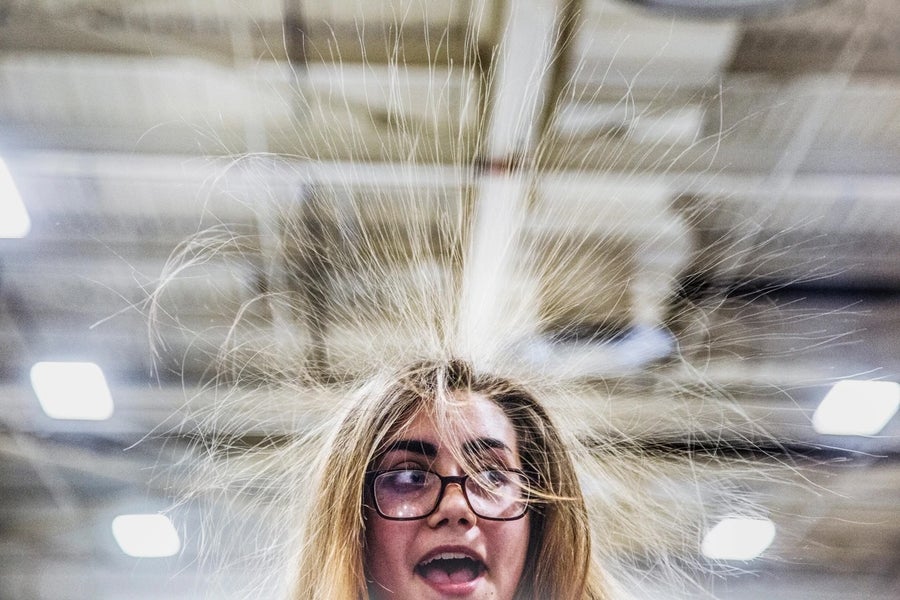
Every time reigning MVP Shai Gilgeous-Alexander blows by a defender in an NBA game, you’ll hear the unmistakable squeak of basketball sneakers against the hardwood. Physicists now understand where these joyful sounds come from. Joshua Gateley/Getty Images

.

.

Click the link below for the complete article:

https://www.scientificamerican.com/article/the-surprising-new-physics-of-squeaky-basketball-shoes/

.

__________________________________________

US Figure Skater Amber Glenn Faced Hate During 2026 Olympics, and Her Sister Has a Response

Leave a comment

Click the link below the picture

.

As I cheer on my sister, Amber Glenn, during her first-ever Olympics, I’m so proud of the person and athlete she is. And, of course, with that love comes a fierce desire to protect her from the ugliness and hate I’m seeing online.

Recently, Amber was interviewed by our longtime friend Ashley Cain, the cohost of the Flame Bearers and Culxtured series Making It to Milan, about Amber’s journey to the Games, equity in sports, and her advice for young athletes. I was thrilled to be a part of her episode, too, and talk about what it means to me to see someone I love so much finally get the honor and recognition she deserves.

Amber has always been exceptional. In a sport where longevity often leads to burnout, she has stayed relentlessly devoted to her dream. After more than a decade in international figure skating, three consecutive US national champion titles, and now a gold medal at her very first Olympics, she’s shown the world that she fights for her dreams and doesn’t give up.

The same goes for her beliefs and values. Amber has always been unapologetically exactly who she is. For Amber, being the first out LGBTQ+ woman on a US Olympic figure skating team means more than just a footnote in her bio. She wears the Pride flag pin not for attention or because it’s on trend, but because she’s had to fight to love herself unconditionally, and she wants the same for LGBTQ+ people across the country.

You may be wondering what my sister said to bring on such vicious hatred. When asked at a press conference about her views on Trump’s impact on the LGBTQ+ community, she responded: “It’s been a hard time for the [LGBTQ+] community overall in this administration. It isn’t the first time that we’ve had to come together as a community and try and fight for our human rights.”

She never expressed a lack of respect or a lack of appreciation for this country. She simply spoke about what millions of Americans are living right now, as shown in the more than 400 anti-LGBTQ+ bills that have been introduced in the US so far this year, according to the ACLU. That’s when the hate started pouring in. This isn’t criticism; this is an attempt to strip away someone’s humanity, all because what she’s saying is different and scary to them.

Especially now, as Amber prepares for one of the biggest moments of her career, she should not have to carry the hate she has received while also trying to land her jumps. No athlete should. We say we want people to be authentic, then we recoil when they are. We say athletes are role models, then we demand they stay silent about their own lives. We celebrate them right up until they make us uncomfortable, and then we say they are horrible people.

For me, there was never a question of whether or not I would love and support my sister unconditionally—love doesn’t have strings attached. Neither does allyship. Our parents taught us to treat all people with love and respect, even if we don’t understand where they’re coming from. You don’t have to be LGBTQ+ (or even understand what it means) to agree that people deserve to be who they are, and love who they love, without receiving hate.

Allyship is supposed to be uncomfortable. That’s kind of the point. It gives us just a taste of what the people we care about deal with day in and day out. If it makes us feel overwhelmed, we can imagine how they must feel all the time. Through the years, I’ve seen the beautiful and terrifying sides of people reflected through sports. I’ve seen how sports can bring people together across divides, and how groups and platforms like Flame Bearers champion women exactly as they are. I’ve also seen the way that people use sport as a space to promote bigotry, declaring that there’s only one way to be an athlete, a woman, an American.

When I see my sister with her teammates, beaming with pride, I think of the good in sports. Beyond any medal, seeing my sister happy is the greatest victory. Seeing all the positive comments in Flame Bearers’ feed reminds me that there are other people out there who celebrate diversity and lead with compassion. I’m going to keep looking toward the light, and doing all I can to outshine the dark.

.

https://assets.teenvogue.com/photos/69976b73ca42263caa8c15dc/16:9/w_1600,c_limit/2262519365Jamie Squire/Getty Images

.

.

Click the link below for the complete article:

https://www.teenvogue.com/story/us-figure-skater-amber-glenn-faced-hate-during-2026-olympics-sister-response

.

__________________________________________

Pentagon Standoff Is a Decisive Moment for How A.I. Will Be Used in War

Leave a comment

Click the link below the picture

.

The fight between the Department of Defense and the artificial intelligence company Anthropic has ostensibly been about a $200 million contract over the use of A.I. in classified systems.

But as the two sides careen toward a 5:01 p.m. Friday deadline over terms of the contract, far more is at stake.

Amid the legalese and heated rhetoric are questions being asked globally about how to use A.I., what the technology’s risks are, and who gets to decide on setting any limits — the makers of A.I. or national governments.

Underlying it all is fear and awe over the dizzying pace of A.I. progress and the technology’s uncertain impact on society.

“Something like this dispute was inevitable,” said Michael C. Horowitz, who worked on A.I. weapons issues in the Defense Department during the Biden administration. “Because the technology is advancing so quickly, we’re having these debates now. A.I. has moved from being in a niche conversation to something really at the center of global power.”

An hour before the deadline on Friday, President Trump weighed in on the fight, posting on social media that he would “NEVER ALLOW A RADICAL LEFT, WOKE COMPANY TO DICTATE HOW OUR GREAT MILITARY FIGHTS AND WINS WARS!” That decision, he said, “belongs to YOUR COMMANDER-IN-CHIEF, and the tremendous leaders I appoint to run our Military.”

The clash centers on the Pentagon’s use of a classified version of Anthropic’s A.I. model, Claude. The company wants to embed safeguards in its technology to prevent its use for mass domestic surveillance of Americans or in fully autonomous weapons with no humans in the loop.

The Pentagon has said that it has no plans to use the technology for those purposes, but that a private contractor cannot decide how its tools will be lawfully used for national security, just as a weapons manufacturer does not determine where its missiles are dropped.

At the Pentagon, the dispute comes at an important moment. Defense Secretary Pete Hegseth, the former Fox News contributor who has lashed out at policies and companies he sees as too liberal, wants to aggressively integrate A.I. in war planning and weapons development. Mr. Hegseth is echoing Mr. Trump, who has made the expansion of A.I. a cornerstone of his policies.

But Anthropic, a five-year-old company worth about $380 billion, has staked its reputation on A.I. safety and raised concerns about the technology’s dangers, even as it has collaborated with U.S. defense and intelligence agencies. It is the only A.I. company currently operating on the Pentagon’s classified systems.

In recent days, the Pentagon and Anthropic have showed no signs of backing down. Sean Parnell, the Pentagon spokesman, posted on social media on Thursday that the Pentagon demanded that Anthropic allow it to use A.I. “for all lawful purposes,” saying it was a “common-sense request.”

In response, Dario Amodei, Anthropic’s chief executive, said the Pentagon’s “threats do not change our position: we cannot in good conscience accede to their request.” Anthropic was prepared to lose its government contract and help the Pentagon transition to another company’s technology, he said.

Without a compromise, Mr. Hegseth has threatened to invoke the rarely used Defense Production Act to force Anthropic to work with it on its terms, or designate the company a supply chain threat and block it from doing business with the government.

The confrontation has created new divisions between Silicon Valley and Washington at a moment when the industry seemed in step with President Trump’s tech-forward agenda, especially as Google, xAI, and OpenAI are also involved in A.I. work with the Pentagon.

On Thursday, nearly 50 OpenAI employees and 175 Google employees published a letter calling on their leaders to “refuse the Department of War’s current demands.” More than 100 employees who work on Google’s A.I. technology expressed concern in another letter to company leaders about working with the Pentagon. Prominent technologists, including Jeff Dean, a top Google executive, have also said they are concerned about how A.I. can be misused for surveillance.

(The New York Times has sued OpenAI and Microsoft, accusing them of copyright infringement of news content related to A.I. systems. The companies have denied those claims.)

A little over two years ago, A.I. safety and regulation was a top concern. At a global summit hosted in Britain by then Prime Minister Rishi Sunak, the United States, China, and 26 other countries signed a pledge to address some of the technology’s potential risks, such as giving hackers new attack methods and accelerating disinformation.

But as the A.I. race ramped up, the issue has faded as a priority. Last year, the Trump administration revoked safety policies imposed under President Biden. Mr. Trump signed an executive order in December aimed at undercutting state laws that regulate A.I. He has also lifted restrictions on exports of A.I. semiconductors, despite concerns that the components could help rivals like China.

The European Union, which passed far-reaching A.I. regulations in 2024, is now considering rolling some back. At the United Nations, a yearslong effort to ban certain A.I. weapons has been stalled by opposition from the United States, Russia, and other countries.

On the battlefield, the war in Ukraine has ushered in an era of drone warfare that turned autonomous weapons from a futuristic possibility to a near-term reality.

“As A.I. becomes more powerful and more capable, the incentives to use it also become much stronger,” said Helen Toner, an A.I. policy expert at Georgetown University and former OpenAI board member. “At the same time, people’s appetite to talk about risks and how to solve them has gone down.”

Ms. Toner said the Anthropic-Pentagon dispute showed a fundamental disconnect. In Washington, officials view A.I. as a new tool that can be harnessed for specific goals. In Silicon Valley, creators of the technology see it becoming more like an “entity” with sophisticated reasoning that may behave in unexpected and dangerous ways without oversight and refinement, she said.

The fight between the Pentagon and Anthropic began on Jan. 9, when Mr. Hegseth published a memo calling for A.I. companies to remove restrictions on their technologies.

“The time is now to accelerate A.I. integration, and we will put the full weight of the Department’s leadership, resources, and expanding corps of private sector partners into accelerating America’s Military A.I. Dominance,” he wrote.

Underpinning Mr. Hegseth’s strategy was a fundamental shift in military technology. Hardware is in an age of decline. Military contractors have struggled to deliver ships and fighter planes on time and on budget.

Software has become an increasingly powerful tool. Tech executives, including Alex Karp, the chief executive of the data analytics company Palantir, which works closely with the federal government, have argued that America’s competitive edge over adversaries will be found in its advances with software.

Anthropic has been a willing partner, providing the government with a special version of Claude that has fewer restrictions. Yet some in the Pentagon viewed the start-up with suspicion. Its openness to talking about safety risks put off some in the department’s leadership, who have called the San Francisco company “woke.”

When talks between the Pentagon and Anthropic began over a $200 million contract for use of A.I. in classified systems, lawyers from both sides quietly traded emails over contract language, said two people involved in the discussions.

Anthropic asked for two things. The company said it was willing to loosen its restrictions on the technology, but wanted guardrails to stop its A.I. from being used for mass surveillance of Americans or deployed in autonomous weapons with no humans involved. Without those, Anthropic risks damaging its safety-first reputation.

“This is really about the power of the state to determine how A.I. is being deployed in the world versus companies,” said Robert Trager, co-director of Oxford University’s Martin A.I. Governance Initiative.

Cordula Droege, the chief lawyer for the International Committee of the Red Cross, which has called for global limits on A.I. weapons, said the violent risks of introducing swarms of autonomous weapons on battlefields is being lost in the wider debate.

“Throughout history, warfare goes in parallel with the development of technology,” she said.

The Latest on the Trump Administration


  • Inquiry of Ex-Officials: A U.S. attorney in Miami is said to be expanding the scope of an investigation into former officials involved in scrutinizing Trump during his first campaign and term.

  • Downed Drone: The U.S. shot down a drone belonging to the Homeland Security Department over a Texas border town, prompting the F.A.A. to shutter nearby airspace, according to four people familiar with what transpired.

  • Iran: As they made their public case for another U.S. attack, President Trump and his aides made claims about Iran’s weapons and nuclear program that were either false or unproven.

  • Voter Data: The Trump administration sued five states to obtain unredacted voter registration databases, in pursuit of baseless claims of voter fraud.

  • Sanctions Against U.N. Official: The family of a U.N. expert on the Israeli-occupied Palestinian territories sued Trump and top officials, challenging sanctions imposed against her over her views of the war in Gaza.

.

https://static01.nyt.com/images/2026/02/27/multimedia/27biz-ai-military-pentagon-fthp/27biz-ai-military-pentagon-fthp-superJumbo.jpg?quality=75&auto=webpThe Pentagon has said that a private contractor cannot decide how its tools will be lawfully used for national security. Credit…Tierney L. Cross/The New York Times

.

.

Click the link below for the complete article:

https://www.nytimes.com

.

__________________________________________

Heart disease in young women projected to rise sharply by 2050

Leave a comment

Click the link below the picture

.

Heart disease is the top cause of death for women in the U.S.; it kills more of them than all forms of cancer combined. But the unique signs and symptoms of heart disease in women are more likely go undetected and untreated than those in men.

The dangers heart disease poses to women may be about to get worse, according to a new analysis. Based on national data between 2010 to 2020, researchers project that, by 2050, the prevalence of serious cardiovascular disease and stroke in women in the U.S. will rise from 10.7 percent to 14.4 percent—affecting more than 22 million people. And that’s not counting high blood pressure.

The study, published today in Circulation, also shows an alarming uptick of disease in younger women: nearly a third of all women between age 20 and 44 will be diagnosed with some form of cardiovascular disease by 2050.

Bar charts show projected changes in prevalence of cardiovascular diseases among U.S. women, by age and race or ethnicity, from 2020 to 2050.

Amanda Montañez; Source: “Forecasting the Burden of Cardiovascular Disease and Stroke in Women in the United States through 2050: A Scientific Statement from the American Heart Association,” by Karen E. Joynt et al., in Circulation, Vol. 153. Published online February 25, 2026 (data)

The projection is “really a wake-up call,” says Karen Joynt Maddox, lead author of the study and a cardiologist at Washington University in St. Louis. She is also vice chair of the Council on Quality of Care and Outcomes Research at the American Heart Association, which publishes these forecasts every year.

“Despite all of our amazing advances in treating cardiovascular disease, we have not made many advances in preventing the disease. And in fact, the projections would suggest that we’re doing worse and worse in preventing the cardiovascular risk factors,” she says.

The estimates represent a setback in the fight against cardiovascular disease, says C. Noel Bairey Merz, a cardiologist at Cedars-Sinai Medical Center in Los Angeles, who was not involved in the study.

“We had this idea that maybe by the end of this century, cardiovascular disease would be a rare condition,” Bairey Merz says. “Up until 2010, we had gotten cardiovascular disease down to one in four women, and now we’re back to one in three. It’s a sad reality.”

Hypertension—a form of high blood pressure that is an early risk factor of heart disease—could spike, according to the projections. Nearly 60 percent of women will have high blood pressure by 2050—up from 50 percent in 2020. And the rates of numerous cardiovascular conditions, such as coronary disease, heart failure, stroke and atrial fibrillation could all rise slightly, according to the study. By 2050, the prevalence of diabetes could increase by 10 percent, while that of obesity may increase by about 17 percent. Similar trends were observed in girls aged two to 19, with obesity predicted to increase from 19.6 percent to 32 percent by 2050.

“Cardiovascular disease is a life course disease. We can see risk factors start in childhood,” Joynt Maddox says. “I worry a lot about the increases that we’re projecting in young people, about setting people up for having heart problems when they’re in their 30s and 40s and 50s instead of their 60s and 70s and 80s.”

Bar charts show projected changes in prevalence of high blood pressure, obesity, high cholesterol and diabetes among U.S. women from 2020 to 2050.

Amanda Montañez; Source: “Forecasting the Burden of Cardiovascular Disease and Stroke in Women in the United States through 2050: A Scientific Statement from the American Heart Association,” by Karen E. Joynt et al.,

Older women have a higher prevalence of disease, but cardiovascular risk factors are high and rising in younger groups. Those two trends could feed each other in a vicious cycle, Joynt Maddox explains. As women age, they might experience greater rates of cardiovascular disease associated with a prior heart or metabolic issue. People with a past history of stroke and heart attacks are more likely to die from heart failure years later.

Similar trends could be seen in men, Joynt Maddox says. “It’s not that women are uniquely experiencing the increase in obesity or high blood pressure, but there are additional layers on top of that,” she adds.

Part of the reason why women may be at particular risk could relate to the significant hormonal changes they experience throughout life, including during menstruation, pregnancy and menopause, Joynt Maddox says. Determining how these life events affect heart health will require more research, but these are “issues that we can definitely build upon,” Bairey Merz says.

Socioeconomic and demographic factors also affect outcomes. For example, Black women have the highest incidence of high blood pressure, obesity and diabetes, which are all cardiovascular disease risk factors, and this is expected to still be the case in 2050. They could also see the gr

eatest jumps in heart failure and stroke, according to the new predictions.

“The double whammy is these intersectionalities—you’re Black or brown, and you live in a rural or underserved area, and you have absolutely no access to health care or insurance,” Bairey Merz says.

These racial health disparities are well documented, but the new forecast underscores the need for better prevention measures and health care policies, Joynt Maddox says. New glucagonlike peptide 1 (GLP-1) drugs, for example, could help mitigate rates of cardiovascular disease and obesity. How much GLP-1 drugs will do this “is an enormous unanswered question,” says Joynt Maddox, adding that the data the projections are based on do not fully overlap with the rise in GLP-1 drugs. “But I’m optimistic that it’s going to be part of helping us bend the curve.”

.

https://static.scientificamerican.com/dam/m/511fbe93254d7731/original/GettyImages-2261207901_heart.jpg?m=1772028485.505&w=900KATERYNA KON/SCIENCE PHOTO LIBRARY/Getty Images

.

.

Click the link below for the complete article:

https://www.scientificamerican.com/article/heart-disease-in-young-women-projected-to-rise-sharply-by-2050/

.

__________________________________________

Columbia president says student was detained by DHS agents who claimed they were looking for missing child

Leave a comment

Click the link below the picture

.

A Columbia University student was detained Thursday morning by immigration agents who misrepresented themselves by saying they were looking for a missing child to get access to a residential building, the university’s top administrator said.

Elmina Aghayeva, who is from Azerbaijan, was later released, but the school’s acting president, Claire Shipman, and others condemned the agents’ actions in the alleged 6 a.m. incident in an off-campus Columbia building.

“This was a frightening and fast-moving situation and utterly unacceptable for our students and staff,” Shipman said in a statement.

The Department of Homeland Security said Immigration and Customs Enforcement agents arrested Aghayeva and said her student visa had been terminated in 2016 “for failing to attend classes.”

“The building manager and her roommate let officers into the apartment,” the DHS statement said.

Aghayeva said Thursday afternoon in an Instagram story that she had been released and was on her way home. “I am safe and okay,” she wrote, adding that she was in “complete shock over what happened.”

The hours before she was released were marked by growing outrage and concern over how she was arrested.

Shipman said five federal agents entered the off-campus Columbia building “without any kind of warrant.”

“The agents gained entry by stating they were police searching for a missing child,” she said. “They made their way to the apartment of the student they were targeting with the same story.”

A representative from DHS said its agents wore badges around their necks and verbally identified themselves.

Shipman said the agents flashed a photo of the purported missing child, which was captured on security video, as part of the false story. She also said the agents did not show a university public safety officer any warrant.

“A public safety officer arrived, asked multiple times for a warrant, which was not produced, and asked for time to call his boss, which was not given,” Shipman said. “The agents took our student.”

Public officials were alarmed over the university officials’ allegation, including New York Mayor Zohran Mamdani. Mamdani, who is in Washington, wrote on X that he spoke with President Donald Trump about concerns over the arrest.

“He has just informed me that she will be released imminently,” Mamdani wrote shortly before Aghayeva shared news of her release.

Gov. Kathy Hochul condemned the detention of the student and said “a rogue deportation agenda is operating with zero transparency and even less accountability.”

She also referred to Nurul Amin Shah Alam, a nearly blind refugee who was found dead in Buffalo, New York, after authorities said Customs and Border Protection left him at a coffee shop.

“Yesterday, a blind father was released from federal custody and left alone on the street to find his way home. He never made it back to his family. This morning, ICE agents misled campus security and took a young woman from her college dorm without a judicial warrant,” Hochul said.

Senate Minority Leader Chuck Schumer, D-N.Y., described the allegations as “unacceptable” on X. He said his office was working closely with Columbia and authorities on the matter.

“It is outrageous that ICE agents falsely represented themselves to arrest a Columbia graduate student by entering university-owned housing without a warrant,” he wrote.

Aghayeva is an international student with a visa, according to a statement her friends released through a faculty organization, the American Association of University Professors. She is in her senior year, majoring in neuroscience and political science.

The statement added that she was taken from her Columbia housing building on West 121st Street. 

Aghayeva’s lawyer filed a habeas corpus petition with the Southern District of New York on Thursday, a copy of which was obtained by NBC News. It says that she entered the U.S. in or around 2016 on a visa and that no reason was given for her detention.

An attorney for Aghayeva did not immediately respond to a request for comment.

Several student groups, including Columbia Student Apartheid Divest, called for an emergency rally “to protest the detention of an undergrad from a Columbia building.” The demonstration outside the university gates drew about 100 people, according to the college newspaper, the Columbia Spectator.

In the letter, Shipman reminded the campus community that law enforcement agents must have judicial warrants or judicial subpoenas to access nonpublic areas of the school. If law enforcement requests access, she said, students, faculty and staff members should ask the agents to wait and then contact the university’s public safety office.

“Do not allow them to enter or accept service of a warrant or subpoena,” Shipman urged.

“An administrative warrant is not sufficient” to access nonpublic areas of the campus, she added.

NBC News has reported that an internal ICE memo in May said agents are allowed to forcibly enter a home using an administrative warrant if a judge has issued a “final order of removal.” That is a departure from previous norms, in which a warrant signed by a judge or a magistrate was necessary for agents to forcibly enter homes.

The university said in a letter sent to the campus Thursday that it was deploying additional patrols and staffing to residential buildings.

Columbia residential staff members were instructed, in nonemergency situations, not to allow any law enforcement entry into its buildings without Columbia Public Safety present and guidance from the Office of the General Counsel.

Columbia University has become a political flash point over the past two years amid protests against Israel’s war in Gaza, high-profile ICE arrests, and criticism of the university from Trump himself.

The Trump administration ordered the cancellation of $400 million in federal grants last year after he accused the university of failing to act “in the face of persistent harassment of Jewish students.”

A letter was sent to the Columbia University trustees and the former interim president laying out conditions to restore its federal funding, which included a ban on masks on campus and comprehensive reform of its admissions “to confirm with federal law and policy.”

The university acquiesced to the demands last year to restore its grant funding. It also agreed to pay a $200 million settlement to the government to resolve allegations that it violated anti-discrimination laws.

According to the university, the agreement preserved “Columbia’s autonomy and authority over faculty hiring, admissions, and academic decision-making.”

Homeland Security agents also executed search warrants on two Columbia University residences last year, though no arrests were made at the time. The search came days after immigration authorities arrested Palestinian activist Mahmoud Khalil, a Columbia University graduate student at the time.

Khalil, a legal permanent resident, was released in June after three months in immigration detention following widespread protests and a legal battle to keep him in the U.S. Attorneys for Khalil argued that his detention was a targeted retaliation for his pro-Palestinian views and, therefore, unconstitutional.

Khalil’s status remains uncertain after an appeals court overturned a lower court ruling last month, saying he had to continue to move through the immigration court process before he could challenge whether the detention violated his rights.

.

Elmina Aghayeva was detained at Columbia

.

.

Click the link below for the complete article:

https://www.nbcnews.com/news/us-news/columbia-university-says-dhs-agents-detained-student-residential-build-rcna260808

.

__________________________________________

Trump’s Shields Are Down

Leave a comment

Click the link below the picture

.

It’s my favorite “Star Trek” moment:

Shields are down, captain! We can’t take another hit!

In what seems like every movie or episode, whenever a federation starship is engaged in battle, its deflector shields are being raised or dropped or damaged by enemy fire to some oddly specific level (47 percent, say). It’s the stuff of high drama, when risk meets strategy to force a life-or-death decision. When shields are down, will the captain surrender, call for a shipwide evacuation, or launch an ingenious counterattack?

I do not claim full Trekkie status, but I’ve been thinking about those shields as I watch President Trump’s second term. Trump seems to have his own set of deflector shields: his cabinet secretaries and other top officials, whom he uses to absorb some of the blowback from his most contentious policies.

Kristi Noem, the secretary of homeland security, is a shield for the Trump administration’s brutal, sometimes fatal, immigration enforcement. Pam Bondi, the attorney general, is the face of the president’s efforts to exact prosecutorial vengeance upon his antagonists and to bypass such punishment for his allies. Pete Hegseth, the secretary of defense, embodies the administration’s crusade against diversity programs and its faux tough-guy persona. And Howard Lutnick, the commerce secretary, is the administration’s “tariff dealmaker in chief,” as The New Yorker put it, the implementer of the president’s stubbornly unpopular trade policies.

When the shields are at reasonable strength, they can keep taking fire, and the ship of state continues flying. But when the shields are battered and begin to malfunction, the entire enterprise is exposed. And right now, a lot of Trump’s shields seem to be faltering at once.

Cosplaying with cowboy hats and bulletproof vests, Noem oversees and defends the excesses of ICE and the border patrol, personifying all that has gone wrong with the Department of Homeland Security. The Wall Street Journal recently published an embarrassing exposé, which featured Noem feuding with senior officials and obsessing over her television appearances; and this week, The Intercept reported that a story Noem has told repeatedly about an immigrant cannibal who began eating himself on a deportation flight was fabricated, citing federal law enforcement sources. The knives are out for Noem, not only from Democrats hoping to impeach her but from within the administration itself.

At the Justice Department, Bondi has done precisely as the president has demanded — investigating or indicting his political enemies, whether they are members of Congress, prosecutors, a former F.B.I. director, or another official who served in Trump’s first administration. Yet the saga of the Epstein files hovers over her. In a spectacularly combative House hearing this month, Bondi refused to turn and face victims of Epstein’s who were present and apologize to them, and she derided members of the Judiciary Committee as “a failed politician” in one case and a “washed-up loser lawyer” in another. While the Justice Department can’t hire enough prosecutors willing to pursue her partisan agenda, Bondi melts down on live television.

velations that surrounded his nomination, by the Signal-group-chat fiasco, and by his hectoring of top military officers regarding fitness and haircuts. But more recently, his missteps have escalated. First, with the strikes against suspected drug boats in the Caribbean (including a potential war crime that Hegseth blamed on the “fog of war”), and second, with the Pentagon’s approval of the use of a laser weapon by border protection agents, which resulted in the brief shutdown of El Paso International Airport. The “warrior ethos” that Hegseth purports to represent is morphing into the incompetence that one would expect when a Fox News host is tasked with running the Pentagon.

And Lutnick, already charged with pursuing the Trump administration’s tariff policy — which 60 percent of Americans dislike — is now known to have misled the public about his connections to Epstein, which were more extensive than the secretary had previously stated. (It seems Lutnick visited Epstein’s island and did business with him after he had supposedly cut off ties.) When Representative Thomas Massie, Republican of Kentucky, calls this government “the Epstein administration,” this is the sort of thing he’s talking about.

During his first term, Trump was quick to eject top officials who displeased or embarrassed him. By this point in his first administration, the president had already moved on from the national security adviser; the F.B.I. director and deputy director; the White House chief of staff, press secretary and chief political strategist; and the secretary of health and human services. (Soon to go were his secretary of state, his top economic adviser, his secretary of veterans’ affairs, and another national security adviser.)

In the second term, by contrast, Trump has endured few major personnel losses. Mike Waltz was ousted as the national security adviser last year but received a consolation prize as the ambassador to the United Nations, while Elon Musk, who caused so much harm in his brief tenure as the head of the Department of Government Efficiency, departed the unpaid post when his time as a so-called special government employee ran out.

So, why does Trump seem less willing to dismiss top officials and advisers this time around?

Part of it may be pique. After Trump gave up on Matt Gaetz, his initial choice for attorney general, who withdrew from consideration in response to allegations of sex trafficking and drug use, the president became reluctant to buckle again. Backtracking on other cabinet choices, even dubious picks such as Hegseth for the Pentagon or Tulsi Gabbard as the director of national intelligence, might have signaled weakness, which we know this president cannot abide.

But there’s another explanation. When Trump cut loose senior officials during his first term, it was often because they espoused worldviews or priorities different from his own; in some cases, they obstructed his decisions or subscribed to norms he found useless and constraining. Remember Jeff Sessions, the attorney general whose unforgivable sin was to recuse himself from oversight of the Russia investigation, leading to the appointment of Robert Mueller as a special counsel? Or Rex Tillerson, the secretary of state who repeatedly clashed with the White House over policy? “We were not really thinking the same,” Trump explained to reporters when he pushed out Tillerson.

The offenses of Trump’s second-term cabinet members tend to be ones of loyalty or sycophancy, rarely of independent thought. Whatever damage the secretaries inflict on their country or their reputations is done on the president’s orders and on his behalf. In Trump’s first term, sacrificing cabinet members meant firing them, or pushing them to resign. In the second term, it means keeping them in the job for as long as those shields retain even marginal power.

The cabinet secretaries understand their purpose. Marco Rubio, the secretary of state (and national security adviser and onetime national archivist), is among the more respected members of the administration; he was confirmed in the post by a unanimous Senate vote, as Trump recalled in his State of the Union address this week. “People like you,” the president marveled, to Rubio, perhaps thinking of the contrast with his own weak approval ratings. But Rubio knows the deal, which Trump made clear when he mused about retaking the Panama Canal during his address to Congress last year. “Good luck, Marco,” he said. “Now we know who to blame if anything goes wrong.”

Cabinet secretaries have often taken the fall for the president they serve. Jimmy Carter’s entire cabinet and senior White House staff offered to resign in July 1979, hoping to re-energize his troubled presidency. (Carter accepted a handful of resignations and reorganized the White House, but he still lost to Ronald Reagan the next year.) And after the Republican Party suffered “a thumping” in the 2006 midterm elections, as President George W. Bush memorably put it, Donald Rumsfeld, the defense secretary overseeing the unpopular war in Iraq, quickly stepped down. (Stuff happens.)

Trump himself seems to be tiring of the cloying cabinet meetings, a staple of both terms, in which officials take turns gushing over their leader. (Personnel once meant policy; now it means flattery.) After he appeared to doze off at a recent gathering, Trump explained that it had gotten “pretty boring.” If affordability worries or violent immigration enforcement continue undercutting Trump’s standing, producing another midterm thumping for the Republicans this November, perhaps some of the cabinet secretaries will find the exits, no matter how fawningly they’ve praised Trump in public.

After all, it’s nice to have people to blame if anything goes wrong.

For the moment, though, Trump is sticking by his team, even those members who seem especially vulnerable. “Secretary Lutnick remains a very important member of President Trump’s team,” Karoline Leavitt, the White House press secretary, recently declared. “The president fully supports the secretary.” And at Homeland Security, a top spokeswoman, Tricia McLaughlin, is leaving, but not yet Noem herself, no matter that the department is so toxic on Capitol Hill that Democrats have blocked its funding.

The president can afford to dangle these battered shields by his side a little longer because he still has others at his disposal: a subservient congressional majority; a Supreme Court that, no matter its ruling on tariffs or on the deployment of National Guard troops in U.S. cities, still granted him “absolute immunity” from prosecution for official acts; and a vice president who will remain a trolling Trump loyalist as long as he thinks it will get him the Republican nomination in 2028.

For all the attention devoted to Trump’s deteriorating popularity, his public standing may not matter that much to him. Trump knows he is not going to appear on a ballot again; whatever the price for the incompetence of his cabinet or the venality of his administration, he will not be the one to pay it.

Trump’s approach to governance is entirely self-referential. His best protection may be his indifference to the plight of his party, of his potential successors, and of his fellow citizens. That shield is always at maximum strength.

.

https://static01.nyt.com/images/2026/02/27/opinion/27lozada-grid/27lozada-grid-superJumbo.jpg?quality=75&auto=webpPhoto illustration by The New York Times; source photographs by Associated Press, Reuters, and Getty Images

.

.

Click the link below for the complete article:

https://www.nytimes.com

.

__________________________________________

China is reportedly testing a new airborne wind turbine

Leave a comment

Hmmmm … We are falling behind the world in everything because of this Administration!

Click the link below the picture

.

The future of renewable energy might be in the sky. Researchers in China have reportedly tested a new, gravity-defying wind turbine system that they say could generate power from the airspace above cities.

The turbine is called the S2000 Stratosphere Airborne Wind Energy System, or SAWES. Held up by what is essentially a helium blimp, the machine reportedly generated 385 kilowatts of electricity from 2,000 meters (more than 6,500 feet) above the city of Yibin in China’s province of Sichuan, according to a recent Euronews report.

You can see it in action in the video below.

“Traditional wind turbines operate by rotating their blades when wind strikes them, thereby generating electricity,” said Weng Hanke, co-founder and chief technology officer of the turbine’s maker, Beijing Linyi Yunchuan Energy Technology, to Euronews. “This generator functions similarly, except that power generation occurs not at ground level but in the air.” As the blades spin, cables carry electricity to the ground.

Researchers reportedly conducted similar tests last September, and the machine is still a prototype. Although China is the world’s largest emitter of carbon dioxide, the country is also the global leader in renewable energy, especially wind and solar.

.

https://static.scientificamerican.com/dam/m/517556dc1a360e04/original/Offshore-Wind-Power-Generation.jpg?m=1771527968.652&w=900

Wind turbines in the city of Yancheng in the Chinese province of Jiangsu. CFOTO/Future Publishing via Getty Images

.

.

Click the link below for the complete article:

https://www.scientificamerican.com/article/china-is-reportedly-testing-a-new-airborne-wind-turbine/

.

__________________________________________

‘Fear is everywhere’: BBC reports from Mexican city turned into war zone by drug cartel feud

Leave a comment

Click the link below the picture

.

Mexico’s president has praised the special forces for “bringing down” the country’s most wanted man, drug lord Nemesio Oseguera Cervantes.

Oseguera, better known as “El Mencho”, died in custody on Sunday, shortly after being captured amid a bloody firefight in Jalisco.

But as the BBC’s Quentin Sommerville found in another Mexican cartel hotspot – Culiacán in northern Sinaloa state – the vacuum left by the removal of a powerful cartel leader can trigger a surge in violence as warring factions battle for control.

Warning: This article contains graphic accounts of cartel violence, which readers may find upsetting.

“The fear is everywhere, and the fear is constant,” said paramedic Héctor Torres, 53, from the front seat of the ambulance in Culiacán.

We had just come from the scene of a shooting inside a garage in the city centre.

The owner was lying dead in his office, blood spreading across the white tiled floor. As Héctor and the other paramedic, Julio César Vega, 28, entered the premises, a woman ran in wailing.

She was the man’s wife, but there was nothing to be done. Héctor checked for vitals and then placed a paper blanket over the corpse.

For the last year and a half, the Sinaloa cartel, one of the world’s largest and most feared drug gangs, has been at war with itself, after the son of one of its leaders betrayed another.

The removal of that cartel leader, Ismael “El Mayo” Zambada, who is now in prison in the US, has wrought mayhem across Sinaloa and provides a warning of the dangers facing the country.

 
Héctor said the violence in Culiacán had never been so bad or gone on for so long. Last year, their number of call-outs increased by over 70%.

But in the week I spent with Héctor and Julio, almost every incident they responded to ended the same way, with a dead body in a building or by the side of the road, and grief-stricken relatives nearby asking for answers.

Few cartel victims survive, and nowhere is safe; schools, hospitals and even funerals have been attacked.

“Sinaloa cartel was like a family. Everyone was united in a single cartel. They were friends, they ate at the same table,” Héctor explained. “They were like brothers –parents, uncles, sisters – and suddenly they were fighting… and locked in a deadly feud,” he said.

That family business was built into a billion-dollar enterprise producing the deadly drug fentanyl and flooding US streets with opioids, which have cost tens of thousands of lives.

US President Donald Trump declared the cartel, and others, terrorist organisations, and labelled fentanyl a weapon of mass destruction. He’s threatened Mexico with direct military action if it doesn’t bring the drug and the traffickers under control.

Both Héctor and Julio were wearing body armour, 14kg of Kevlar and armour plate.

Julio said it was essential: “We don’t know if the people responsible for the attacks are still at the scene or if they completed their objective and suddenly disappeared. So we run the risk of being caught in the crossfire of an attack and getting injured.”

The sun was beginning to set as we drove back to the paramedic base, and a city that once came alive at night, would soon be deserted. Traffic was slow.

The Mexican government has sent thousands of troops to Sinaloa, and they’d set up checkpoints on most of the roads.

It turned out that when the garage owner was killed, three men were kidnapped from the premises at the same time. The heavily armed soldiers and marines were checking cars for any sign of them.

Warning: The following paragraphs contain descriptions of violence and torture which readers may find upsetting.

Kidnapping in Culiacán can be a fate worse than death.

Earlier in the week, a body had been found dumped on the pavement outside one of the main shopping malls.

From the state of the victim’s corpse, it was clear he’d been tortured. His body was intact, but the skull had been flayed and the eyes removed.

A sign was left with the corpse, in large lettering, a message from one cartel faction to another. It accused the dead man of being a traitor and came with a warning: “We are coming for the rest of you.”

Culiacán is a prosperous city, full of shopping malls, neat parks and fancy car dealerships. Outside the mall, a man in black cycling gear stopped in the rush-hour traffic to stare as the police placed the remains of the man into a body bag.

The next day, the body of another victim – mutilated in the same way – was left by the main road heading north outside of the city. When the forensic team lifted the accompanying sign, it was difficult to read; blood ran down its surface and puddled in the gravel verge.

At each new crime scene, I would meet Ernesto Martínez, who has been reporting on the violence here for 27 years. A 16-year-old boy had been shot dead in the city’s San Rafael neighbourhood; Emmanuel Alexander legs were still tangled in his bike frame as the police marked out the more than a dozen bullet casings around his body.

He’d been killed at close range by a handgun. 

Martínez explained that “there used to be more police officers, there were more soldiers, there was more security”.

“You’d find a checkpoint on every corner, and yet the homicides continued; they didn’t decrease, they remained at an average of five or six homicides a day. And the same trend continues.”

So what might end the violence? I met one of the Sinaloa factions to ask that question. Before the meeting, I was told not to bring my phone, nor any tracking devices.

They are vicious criminals, who show little remorse, and they have a simple solution to the killings. The government should step out of the way and let them murder each other – regardless of the threat to bystanders – until one faction is left standing.

They arrived at the meeting fully armed, and donned face masks for the interview, after insisting on having their identities disguised.

When I asked “Marco” (not his real name) if he had any guilt, he said: “Yes, it’s true because a lot of times innocent people die. Children die. There’s a lot of death of innocent people.”

Sitting beside him, “Miguel” (not his real name) was more ruthless: “A lot of people will keep dying because the cartel is still fighting, and it keeps getting worse. The war will continue. Nothing will calm down until there’s only one faction left.”

Reynalda Pulido’s son, Javier Ernesto, disappeared in December 2020. She’s still searching for him, and for others too – and leads the group Mothers Fighting Back.

On a chilly morning, at a petrol station not far from Culiacán, Pulido and a group of other mothers hugged each other before setting out on a search.

The women, more than a dozen, were nearly all wearing white T-shirts with the pictures and names of their missing loved ones.

They began by fixing the pictures of some of the missing to lamp posts, the sound of their tape tearing across the noise of neighbourhood dogs, which barked aggressively when they passed by homes. With them was a military escort, half a dozen heavily armed soldiers, in an armoured truck and pick-up truck with a top-mounted gunner, acting as their convoy.

In a field where buzzards were flying overhead, they used metal probes and pick axes and shovels in their search for remains. They were looking for disturbed soil, indentations in the ground, any sign of a makeshift grave. As they probed the earth, they smelt the dirt, looking for the distinctive odour of human remains.

During a break in the search, Reynalda Pulido told me that when she wakes up every day, she asks God: “Tell me why I’m here?”.

“What gives me strength is realizing that no one else is going to look for them. I realize it because no one is moving to search for the disappeared in Sinaloa. And a mother will always look for her child, no matter if it’s to the ends of the earth, she will look.”

The women had received several tip-offs that a body may have been disposed of in the field, but after hours in the midday sun, they found nothing but animal bones.

I asked Reynalda gently if she thought she would ever find her son. “It’s something I ask myself very often,” she said, wiping tears from her eyes.

“But I’ve already found my son in the 250 bodies I’ve located, and in the thirty-something people I’ve found alive. They are my children, too. And the children of all the families who come to ask me for help become my children. My son is there, in each and every one of them. All of them carry a little piece of my son.”

The root cause of Culiacán’s misery is the fentanyl trade.

In a cartel-owned basement, “Román” (not his real name), who produces the drug, tells me to follow him.

He’d just packed his latest shipment of the drug, more than half a dozen packages of tightly pressed white powder, bound for the United States.

He wore a face mask and gloves while handling the deadly bundles.

When he opened one package, it was pressed solid, the number 300 indented in the surface.

Before, they would ship pills to the US. Now, they send powder, which they believe makes it easier to avoid US Customs.

Each package weighs a kilo and is worth $20,000 (£14,800). But Román explained that, depending on the city it is sent to, it can fetch more. “If we take it to New York, it can go as high as $28,000 or $29,000. The further up it goes, the higher the price, and the greater our profit.”

He takes no responsibility, feels no shame for the business he is in. And he says that whatever the Mexican and United States governments think, the fentanyl will keep flowing.

“Even though the government has intensified the search, they’re coming after us more and getting closer, yes,” he said. “But when it comes to production, we’ve never stopped. Sometimes we do scale back because things get hot, the government gets too close. So we lay low for a few days, but once that problem passes, we either continue or move to other areas.”

The US has labelled you terrorists, we tell him. He replies, blithely: “Well, even though President Donald Trump refers to us as terrorists, I would just remind him that as long as there are consumers, we’re going to keep doing this, but that doesn’t necessarily make us terrorists. As long as people want to consume it, they are free to do so. No one is forcing them. No one forced them to start this vice, to start using this stuff.”

The Mexican government has said it is making progress in its fight against drug trafficking. It says it has cut the fentanyl supply to the US by 50%.

From Culiacán, I travelled to Mexico City. The capital’s airport was noisy with the sound of drilling and plaster being pulled from walls, preparations for World Cup 2026.

At one of her regular news conferences – held before Sunday’s killing of “El Mencho” – I asked President Claudia Sheinbaum what it would take to bring the violence in Sinaloa under control.

She blamed the internal power struggle within the Sinaloa cartel for the surge in violence in the northern state and insisted that her government was “trying to avoid harm to civilians, to the people”.

Back in Sinaloa, I’d had a final call out with the paramedics, Héctor and Julio, to another shooting downtown. As a police helicopter flew overhead, we passed through the crime scene tape to find a man on the pavement bleeding from a bullet wound to the chest. He was still breathing and screaming for help. As Héctor began treating him, Julio raced to another man around the corner, who was critically injured and wasn’t responding.

The fear that the cartel might return, even despite the presence of soldiers and marines around us, added greater urgency to the men’s work.

Both victims were patched up and rushed to a nearby hospital. They were bystanders, it turned out, caught in crossfire. But, still, the military placed an armed cordon around the hospital in case of attack. We would later learn that the men survived.

Both Héctor and Julio removed their blue rubber medical gloves, still wet with blood, and shared a cigarette. “These are the first victims we’ve found alive since November,” Héctor said.

.

https://ichef.bbci.co.uk/news/800/cpsprodpb/1f16/live/170d1a60-10d1-11f1-97cc-8b3c62c7814d.jpg.webp

Members of the Sinaloa cartel have split into rival factions engaged in a deadly war, Darren Conway/BBC

.

.

Click the link below for the complete article:

https://www.bbc.com/news/articles/cx2g3vmde0eo

.

__________________________________________

Older Entries Newer Entries

Heart of Loia `'.,°~

so looking to the sky ¡ will sing and from my heart to YOU ¡ bring...

Michael Ciullo

CEO and Founder of Nsight Health

MRS. T’S CORNER

https://www.tangietwoods

Nelson MCBS

Catholic News, Prayers, HD Images, Rosary, Music, Videos, Holy Mass, Homily, Saints, Lyrics, Novenas, Retreats, Talks, Devotionals and Many More

Global geopolitics

Decoding Power. Defying Narratives.

Talk Photo

A creative collaboration introducing the art of nature and nature's art.

Movie Burner Entertainment

The Home Of Entertainment News, Reviews and Reactions

Le Notti di Agarthi

Hollow Earth Society

C r i s t i a n a' s Fine Arts ⛄️

•Whenever you are confronted with an opponent, conquer him with love.(Gandhi)

TradingClubsMan

Algotrader at TRADING-CLUBS.COM

Comedy FESTIVAL

Film and Writing Festival for Comedy. Showcasing best of comedy short films at the FEEDBACK Film Festival. Plus, showcasing best of comedy novels, short stories, poems, screenplays (TV, short, feature) at the festival performed by professional actors.

Bonnywood Manor

Peace. Tranquility. Insanity.

Warum ich Rad fahre

Take a ride on the wild side

Madame-Radio

Découvre des musiques prometteuses (principalement) dans la sphère musicale française.

Ir de Compras Online

No tiene que Ser una Pesadilla.

Kana's Chronicles

Life in Kana-text (er... CONtext)

Cross-Border Currents

Tracking money, power, and meaning across borders.

Jam Writes

Where feelings meet metaphors and make questionable choices.

emotionalpeace

Finding hope and peace through writing, art, photography, and faith in Jesus.

WearingTwoGowns.COM

The Community for Wounded Healers: Former Medical Students, Disabled Nurses, and Faith-Fueled Pivots

...

love each other like you're the lyric to their music

Luca nel laboratorio di Dexter

Comprendere il mondo per cambiarlo.

Tales from a Mid-Lifer

Mid-Life Ponderings

Creative

Travel,Tourism, Life style "Now in hundreds of languages for you."

freedomdailywriting

I speak the honest truth. I share my honest opinions. I share my thoughts. A platform to grow and get surprised.

The Green Stars Project

User-generated ratings for ethical consumerism

Cherryl's Blog

Travel and Lifestyle Blog

Sogni e poesie di una donna qualunque

Questo è un piccolo angolo di poesie, canzoni, immagini, video che raccontano le nostre emozioni

My Awesome Blog

“Log your journey to success.” “Where goals turn into progress.”

pierobarbato.com

scrivo per dare forma ai silenzi e anima alle storie che il mondo dimentica.

Thinkbigwithbukonla

“Dream deeper. Believe bolder. Live transformed.”

Vichar Darshanam

Vichar, Motivation, Kadwi Baat ( विचार दर्शनम्)

Komfort bad heizung

Traum zur Realität

Chic Bites and Flights

Savor. Style. See the world.

ومضات في تطوير الذات

معا نحو النجاح

Broker True Ratings

Best Forex Broker Ratings & Reviews

Blog by ThE NoThInG DrOnEs

art, writing and music by James McFarlane and other musicians

fauxcroft

living life in conscious reality

Srikanth’s poetry

Freelance poetry writing

JupiterPlanet

Peace 🕊️ | Spiritual 🌠 | 📚 Non-fiction | Motivation🔥 | Self-Love💕

Sehnsuchtsbummler

Reiseberichte & Naturfotografie