December 15, 2022
Mohenjo
Business, Food For Thought, Human Interest, Political, Science, Technical
amazon, business, Business News, current-events, Future, Hotels, human-rights, medicine, mental-health, research, Science, Science News, technology, Technology News, travel, vacation

Click the link below the picture
.
Nestled in the Ring of Kerry, the sleepy town of Kenmare is shrouded in a mist that runs off its rolling hills. Home to just 1,563 people, it maintains a unique, Wes Anderson-style charm; in the modern world yet not entirely of it. It is a million miles away from the TikTok drama that surrounds one of its newest residents, Carrie Jade Williams.
Relatively unknown until November 2020, Williams’ status in the literary community grew after she won the Financial Times’ Bodley Head/FT Essay Prize, which is open to writers under the age of 35. The winning entry is published in the FT Weekend, the weekend edition of the British newspaper, although the competition does not appear to have been run for the last two years. Williams’ entry was a moving essay about her diagnosis with Huntington’s Disease, a debilitating, degenerative genetic condition that affects the brain. Written using a speech-to-text computer program, the essay won her a £1,000 prize.
The piece was also praised by influential people. Hilary Knight, director of digital strategy at the Tate, a leading group of art galleries in the UK, described it as “an incredibly moving read and a reminder we shouldn’t need about designing for inclusion”.
“When I received my diagnosis I wrote a bucket list and decided I wanted to write a novel to leave behind, and that’s really how my writing started,” Williams told the Financial Times. “Getting a diagnosis that means you’ll stop being able to communicate is terrifying, but writing gave me back my voice.”
Williams hasn’t published a novel, but she has become a high-profile advocate for people living with disabilities, and a well-known figure on the Irish literary scene. She has a profile on the publishing house Penguin’s website and has appeared at festivals in County Kerry, on the Guilty Feminist podcast, and at writers’ workshops in St John’s Theatre, Listowel, and online.
.
 Photo: TikTok / VICE
.
.
Click the link below for the article:
.
__________________________________________
December 15, 2022
Mohenjo
Crime, Food For Thought, Human Interest, Medical, missed News, Political, Science, Technical
amazon, business, Business News, current-events, Future, Hotels, human-rights, medicine, mental-health, research, Science, Science News, technology, Technology News, travel, vacation

.
News You might have missed!
Use your browser or smartphone back arrow (<-) to return to this table for your next selection.
.
__________________________________________
December 14, 2022
Mohenjo
Business, Food For Thought, Human Interest, Political, Science, Technical
amazon, business, Business News, current-events, Future, Hotels, human-rights, medicine, mental-health, research, Science, Science News, technology, Technology News, travel, vacation

Click the link below the picture
.
Like eating, drinking and breathing, we need sleep to survive. So how can something that should be so natural, instinctual, and automatic be so hard?
As a psychologist who studies sleep for a living, I’ve worked with hundreds of patients to improve their sleep through cognitive behavioral therapy.
Through my research, I’ve found that the No. 1 sleep killer isn’t social media or an uncomfortable mattress — it’s rumination.
Rumination leads to poor sleep
Rumination is a sleep blocker because it keeps your mind aroused, especially in bed, when it’s dark and quiet.
Your attention is drawn back, again and again, to this thing that didn’t go well or to a regret. I’ve laid in bed and replayed a dumb comment I made at a party, even though the person I said it to probably forgot it moments later.
Negative thoughts and emotions like these are what neuroscientists call “salient” because they are so noticeable and loud.
.
 tommaso79 | Getty
.
.
Click the link below for the article:
.
__________________________________________
December 14, 2022
Mohenjo
Business, Food For Thought, Human Interest, Political, Science, Technical
amazon, business, Business News, current-events, Future, Hotels, human-rights, medicine, mental-health, research, Science, Science News, technology, Technology News, travel, vacation

Click the link below the picture
.
The internet knows my age and home address. It knows how much I make and what I do for work. It knows when I last voted and who I voted for. Recently, I got married in a supposedly secret ceremony at city hall. The internet found out before my mother.
I didn’t willingly share this information, but I’m not at all surprised that it’s online. Personal data — the searches, photos, purchases, locations, and Facebook messages that populate digital identities and fuel the attention economy — is the internet’s favorite currency. It’s also becoming impossible to control.
That’s partly because the US lacks substantial data-privacy legislation. You’re not really protected against rampant data brokering on “background check” sites like Whitepages and BeenVerified, which scrape public records and compile information — like your home address and phone number — and make them painfully visible.
And yes, when we sign up for Instagram or order our dinners on Caviar, we might technically be voluntarily signing away our rights, but what other choice do we have? Privacy policies are tailor-made to obscure their murky contents, and few of us take the time to read the terms of service. Plus, “if you want complete control — if you want to opt-out, you’re going to lead a very limited life,” says Eva Galperin, director of cybersecurity at the Electronic Frontier Foundation.
.
 Photo by Zac Freeland/Vox
.
.
Click the link below for the article:
.
__________________________________________
December 14, 2022
Mohenjo
Crime, Food For Thought, Human Interest, Medical, missed News, Political, Science, Technical
amazon, business, Business News, current-events, Future, Hotels, human-rights, medicine, mental-health, research, Science, Science News, technology, Technology News, travel, vacation
.
News You might have missed!
Use your browser or smartphone back arrow (<-) to return to this table for your next selection.
.
__________________________________________
December 13, 2022
Mohenjo
Business, Food For Thought, Human Interest, Political, Science, Technical
amazon, business, Business News, current-events, Future, Hotels, human-rights, medicine, mental-health, research, Science, Science News, technology, Technology News, travel, vacation

Click the link below the picture
.
Shooting stars will dash across the chilly December sky as one of the top astronomy events of 2022 puts on an impressive performance in the heavens.
The Geminids will peak on Tuesday night into early Wednesday morning, and unlike some meteor showers that can only be viewed in the hours before sunrise, the Geminids are active all night long. The annual event often boasts over 100 meteors per hour when viewed from dark locations, but onlookers this year should curb expectations due to the moon.
“A good strategy this year may be to observe between dusk and moon rise on the evening of December 13,” the American Meteor Society (AMS) explained, adding that the moon will be rising around 10 p.m., local time, on peak night. Moonlight will wash out many of the dimmer meteors, reducing the number of shooting stars that can be observed.
With Tuesday evening projected to offer the best viewing conditions, this year’s edition of the Geminids will favor younger stargazers who cannot stay up late on a school night.
.
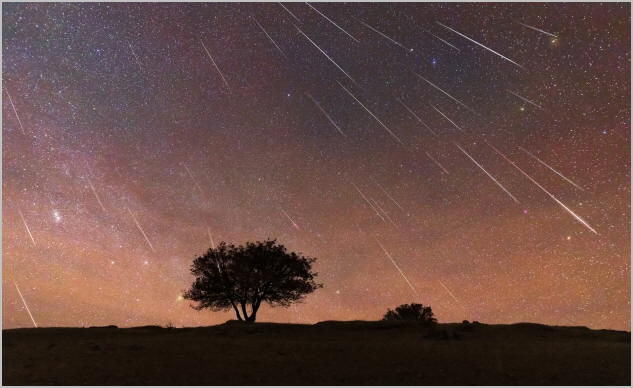 Geminid meteor shower
.
.
Click the link below for the article:
.
__________________________________________
December 13, 2022
Mohenjo
Business, Food For Thought, Human Interest, Political, Science, Technical
amazon, business, Business News, current-events, Future, Hotels, human-rights, medicine, mental-health, research, Science, Science News, technology, Technology News, travel, vacation
Click the link below the picture
.
In 2014, I graduated college with a tidal wave of medical school rejections. In search of a new career plan, I spent the next few years making money however I could — modeling, tutoring, and even working as a real estate agent.
But in 2018, I began posting personal finance videos on YouTube. It wasn’t a lucrative side hustle until the pandemic hit in 2020 when one topic struck a chord: stimulus and relief efforts, and what they meant for people’s wallets.
When my videos went viral, I registered for YouTube Adsense to further monetize my channel. That’s when my passive income journey began. In 2021, I made $1.5 million dollars in revenue.
And this year, I’ve been grossing an average of $114,000 a month in passive income through my videos, online courses and social media posts.
.
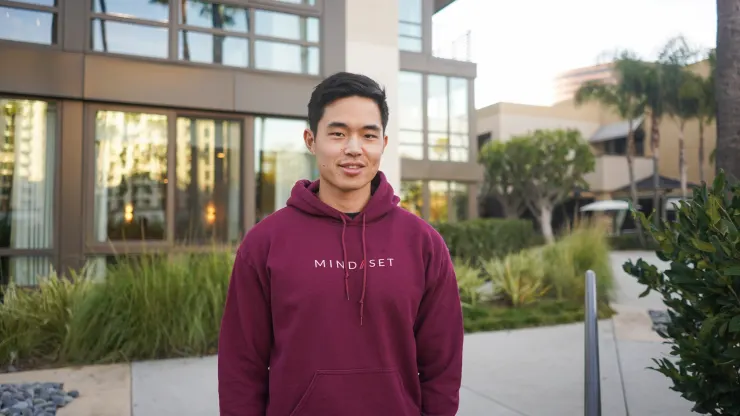
In 2021, Chang’s business brought in $1.5 million in gross revenue. Photo: Charlie Chang
.
.
Click the link below for the article:
.
__________________________________________
December 13, 2022
Mohenjo
Business, Food For Thought, Human Interest, Political, Science, Technical
amazon, business, Business News, current-events, Future, Hotels, human-rights, medicine, mental-health, research, Science, Science News, technology, Technology News, travel, vacation

Click the link below the picture
.
In the TV series The Good Place, the character Chidi Anagonye is defined by his inability to make even the simplest of decisions – from choosing what to eat to proclaiming love for his soulmate. The very idea of making a choice often results in a serious stomachache. He is stuck in continued ‘analysis paralysis’.
We meet Chidi in the afterlife and learn that his indecisiveness was the cause of his death. While standing in the street, endlessly equivocating on which bar to visit with his best friend, an air-conditioning unit from the apartment above falls on his head, killing him instantly.
“You know the sound that a fork makes in the garbage disposal? That’s the sound my brain makes all the time,” he says in one episode. And besides making himself unhappy, Chidi’s lack of confidence in his own judgments drives the people around him crazy.
If that sounds like an exaggerated version of you, then you are not alone: indecisiveness is a common trait. While some people come to very quick judgments, others struggle to weigh up the options – and may even try to avoid making a choice at all.
As Chidi shows, indecisiveness can be linked to problems like anxiety, yet recent research suggests that it can also have an upside – it protects us from common cognitive errors like confirmation bias so that when the person does finally come to a judgment, it is generally wiser than those who jumped to a conclusion too quickly. The trick is to learn when to wait, and when to break through the inertia while it’s holding you back.
.
 Indecision
.
.
Click the link below for the article:
.
__________________________________________
December 13, 2022
Mohenjo
Crime, Food For Thought, Human Interest, Medical, missed News, Political, Science, Technical
amazon, business, Business News, current-events, Future, Hotels, human-rights, medicine, mental-health, research, Science, Science News, technology, Technology News, travel, vacation
.
News You might have missed!
Use your browser or smartphone back arrow (<-) to return to this table for your next selection.
.
__________________________________________
December 13, 2022
Mohenjo
Business, Food For Thought, Human Interest, Political, Science, Technical
amazon, business, Business News, current-events, Future, Hotels, human-rights, medicine, mental-health, research, Science, Science News, technology, Technology News, travel, vacation


 Check out the Emancipation movie with Will Smith!
.
__________________________________________
Older Entries
Newer Entries

