When Courtney Gore ran for a seat on her local school board in 2021, she warned about a movement to indoctrinate children with “leftist” ideology. After 2 1/2 years on the board, Gore said she believes a much different scheme is unfolding: an effort by wealthy conservative donors to undermine public education in Texas and install a voucher system in which public money flows to private and religious schools.
Gore points to West Texas billionaires Tim Dunn and brothers Farris and Dan Wilks, who have contributed to various political action committees that have poured millions into legislative candidates who have promoted vouchers. The men also fund or serve on the boards of a host of public policy and advocacy organizations that have led the fight for vouchers in Texas.
In recent years, the largesse from Dunn and the Wilks brothers has reached local communities across Texas, including Granbury, near Fort Worth, where fights over library books, curriculum, and vouchers have dominated the community conversation.
Gore said that she believes school board candidates are being recruited, at times without their full knowledge, in an effort “to cause as much disruption and chaos as possible” and weaken community faith in local school districts.
In 2021, two local men — former state representative Mike Lang and political consultant Nate Criswell — asked Gore to run for school board. At the time, the three were co-hosts of a web-based talk show that targeted local officials they believed were insufficiently conservative and were straying from GOP platform positions. They took frequent aim at the Granbury school district, which they alleged was allowing explicit sexual content into school libraries and teaching divisive ideas about race.
Gore broke from the group shortly after taking office in January 2022, when she concluded that the materials she had warned about on the campaign trail were not present in Granbury schools. She claims the men and other leaders of the far-right faction in Hood County, home to Granbury, dismissed her findings. They continued to pummel the district over books and curriculum, supported school board candidates who sought to remove a growing number of titles from library shelves, and worked to derail three bond elections that would have funded new and renovated buildings for the overcrowded district.
That’s when Gore said she began to piece together connections that hadn’t been previously apparent to her.
.
Courtney Gore, vice president of the Granbury Independent School District Board of Trustees, listens to public comments during a February meeting.Credit: Shelby Tauber for ProPublica and Texas Tribune
In new research, scientists have shared data from a special observatory, and it’s lead them to theorize that dark energy may be weakening. This data all comes from the first year of observation of the Dark Energy Spectroscopic Instrument (DESI), an array of 5,000 robots that have worked together to map the cosmos in more detail than ever before.
While we don’t yet fully understand dark energy, a shift in our core understanding of the concept—from thinking of it as constant to thinking of it as weakening—could affect all of physics, and influence how our universe eventually ends.
When talking about the history of the universe today, scientists use a paradigm called the Lambda Cold Dark Matter (ΛCDM) model—a mathematical equation that works out in harmony with our current understanding of the Big Bang origin of the universe. And an essential part of it is the cosmological constant, lambda, which dates back to Albert Einstein but has evolved over time in its purpose. Lambda’s constancy is essential to our understanding of the ΛCDM model, and the constant is closely linked with dark energy, which was also suggested to be constant.
After a year of observation at DESI in Arizona, however, dark energy is not behaving exactly as expected. “We’re seeing some potentially interesting differences that could indicate that dark energy is evolving over time,” director Michael Levi said on the DESI blog.
Talking about this revelation last week, Popular Mechanic’s Darren Orf laid out what a big deal this discovery is for scientists, especially considering that this should be just the beginning what DESI will uncover. It’s important to note that this data represents just one year out of DESI’s planned project life of five years total, and that the observations may change or fit into a different conclusion as more data is collected.
A person in Texas has tested positive for the highly pathogenic avian influenza A virus (H5N1), also known as bird flu, the U.S. Centers for Disease Control and Prevention has confirmed. This individual, who was exposed to cattle that were believed to be infected with the virus, reported eye redness—a sign of conjunctivitis—but no other symptoms. The patient is being treated with antiviral medication and is recovering.
Avian flu has been ripping through farmed poultry and wild bird populations around the world in recent years. It has also infected mammalian species ranging from foxes, bears, and seals to cats and dogs. And in recent weeks, infections have been found in cattle in six U.S. states: Kansas, Texas, Michigan, New Mexico, Idaho, and Ohio.* There is no evidence of human-to-human transmission so far, and the CDC says the risk to the public remains low.
The new human case is the second known to occur in the U.S. The first was in 2022, when a person in Colorado tested positive for the virus via a nasal swab after having direct contact with infected poultry. That patient reported mild fatigue and later recovered. Previous cases of avian flu in humans were deadly, but they involved a different form of the virus than the one that is currently circulating.
Scientific American talked to Michael Osterholm, director of the Center for Infectious Disease Research and Policy at the University of Minnesota, about the latest human case and the risk to human health more broadly.
How worried should we be about the human bird flu case in Texas?
First of all, there’s some clarification here. Neither of these two cases [in the U.S.] has been an actual influenza infection, as you think of a respiratory infection. They both have been basically either a nasal swab detection, for the previous one, or in the case of this one, a conjunctivitis—an eye infection. So this isn’t classic influenza at all.
The first one was just someone who was tested routinely. They were working in a barn, depopulating the birds that were dying from flu, and they had some mild symptoms, and they just got tested. They don’t know if the symptoms were related to it, and it could have been that the virus was just picked up in the nose because of just inhaling it in. The second case is a case of conjunctivitis. So that’s not, again, unexpected in that there are receptor sites in the eye for influenza viruses.
.
Avian flu has recently been detected in cattle in several U.S. states, and a person was recently infected after having contact with potentially infected animals. tianyu wu/Getty Images
People have long been fascinated with how the Egyptian pyramids were built, floating theories from the construction of expansive causeways to extraterrestrial assistance.
Now scientists have evidence to support another theory, centered around the discovery of a long-lost branch of the Nile that would have run alongside 31 ancient pyramids built between the 27th and 18th centuries BC.
Though the pyramids today sit on a sandy, desert plateau near the ancient Egyptian capital of Memphis, a newly published study maintains the region was once home to a bustling river branch that was likely a vital means of transportation.
Researchers named the 64-kilometre river branch Ahramat (the Arabic word for “pyramids”) and said it was likely used to float large stone blocks for the construction of the pyramids. Many of the stones originated from hundreds of kilometers south of where the pyramids stand today, with some weighing more than a ton.
The river likely also transported other equipment and people.
Geomorphologist Eman Ghoneim, the study’s lead researcher, told National Geographic she and her team from the University of North Carolina Wilmington believe the lost river “was a superhighway for ancient Egypt.”
.
Scientists have discovered a lost river branch of the Nile, now named Ahramat, that they believe may have been used to transport building materials and massive stone blocks to pyramid construction sites in ancient Egypt. EWEL SAMAD/AFP via Getty Images
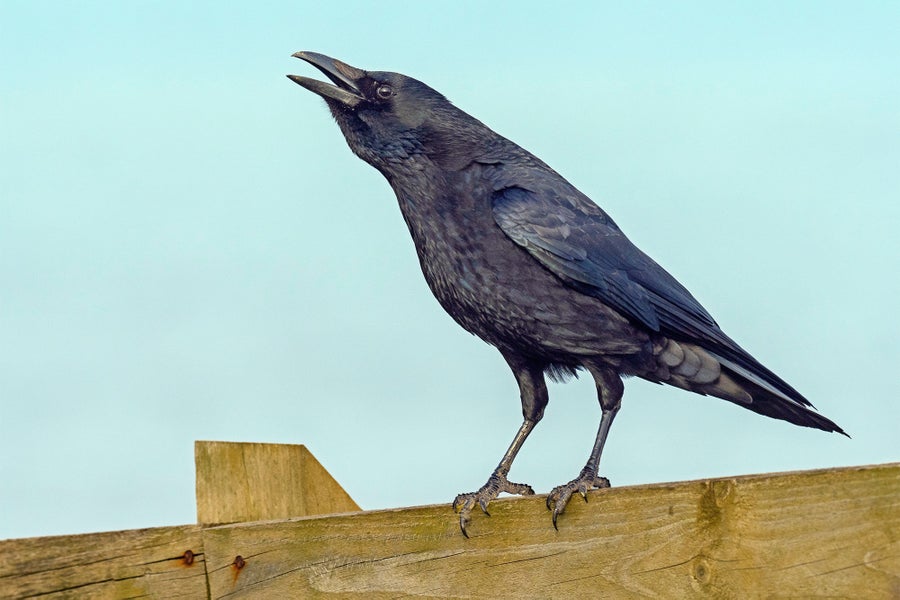
The rock group Counting Crows were onto something when they chose their band name. Crows can indeed count, according to research published this week in Science.
The results show that crows have counting capacities near those of human toddlers who are beginning to develop a knack for numbers, says lead study author Diana Liao, a postdoctoral researcher in neurobiology at the University of Tübingen in Germany. “We think this is the first time this has been shown for any animal species,” she adds.
Crows do not appear to be capable of symbolic counting, in which numbers are associated with a particular symbol that serves as an exact representation. This skill is still thought to be unique to humans. Instead, the birds are able to count by controlling the number of vocalizations they produce to correspond to associated cues—just like young children who have yet to master symbolic counting often do, Liao says. For example, a toddler who is asked how many apples are on a tree may answer, “One, one, one” or “One, two, three”—producing the number of speech sounds that correspond to the number of objects they see rather than just saying, “Three.”
Scientists have long suspected that some nonhuman species might also have the ability to count by controlling the number of their vocalizations, but they have lacked the smoking gun evidence to prove it. In a study of Black-capped Chickadees, for example, researchers reported that the number of “dee” notes at the ends of the birds’ alarm calls was inversely correlated with the size of the predator they were issuing warnings about. (The small predators in that study posed a higher risk to the chickadees than large ones did.) “They seemed to be conveying the magnitude of the threat,” Liao says.
Yet, this finding on its own did not prove that chickadees were intentionally conveying information about the predator through numbered calls. The behavior could also be driven by the level of fear the birds were experiencing, Liao says, with more dangerous predators triggering higher states of arousal and thus more calls.
Europe’s upcoming Mars mission will use a pioneering nuclear-powered device that harnesses the radioactive decay of americium to keep its components warm — a first for spacecraft.
The European Space Agency (ESA) announced the plans on 16 May, alongside details of an agreement with NASA that crystallized the US agency’s contribution to the long-delayed ExoMars mission, which will deliver Europe’s first Mars rover, called Rosalind Franklin. ESA was originally working with the Russian space agency Roscosmos on the mission, but canceled the partnership in 2022, after Russia invaded Ukraine.
Radioisotope heater units (RHUs) harness the heat produced by the decay of radioactive elements to keep spacecraft warm enough to operate when it is not possible to use electricity generated by solar panels. ESA has historically relied on US or Russian partners to provide RHUs that use plutonium-238 for missions, but since 2009 has been working on its own program to create RHUs, as well as batteries that provide electricity.
The European RHUs will heat components of the mission’s landing platform, which deploys the rover onto the Martian surface. The lander powers the rover before it exits the platform and opens its solar panels. Heating the lander will extend its life, so it can provide backup in case there are issues when the rover is deployed, says Orson Sutherland, ESA’s group leader for Mars Exploration, who is based at the European Space Research and Technology Center (ESTEC) in Noordwijk, the Netherlands.
Americium decay
ESA’s heater units will not only be a first for Europe, but the first anywhere to use americium-241, a by-product of plutonium decay that packs less power per gram than does its precursor. But americium-241 is more abundant and cheaper — meaning that, even if the RHUs require more of the isotope, they might be less expensive overall. “Developing and launching a European RHU will be a first for ESA and a major achievement,” says Sutherland.
The Rosalind Franklin rover is uniquely equipped to search for traces of ancient life on Mars: it has a 2-meter drill that will allow it to burrow deep beneath the Martian surface. But the mission was originally slated for launch in 2018 and had already been delayed by technical issues and the COVID-19 pandemic, even before tensions escalated with Russia.
ESA had to radically rethink the mission to proceed without the involvement of Roscosmos, which was meant to build the lander. That led ESA to create a new European-designed lander and rely on NASA to fill the remaining holes in the mission plan. According to the agreement, NASA will provide capacity to launch ExoMars in 2028, as well as braking engines for the lander. NASA will also supply RHUs, for the rover.
.
An artist’s impression of ESA’s ExoMars rover, Rosalind Franklin. Credit: ESA/ATG medialab
I last interviewed Ebrahim Raisi, the ultra-hard-line President of Iran, during his début appearance at the United Nations, in 2022. He spoke belligerently and with such speed that the interpreter struggled to keep up. He was the same on the U.N. dais, where he furiously waved a photo of General Qassem Soleimani and demanded that Donald Trump be tried for ordering his assassination—a “savage, illegal, immoral crime”—in a U.S. drone strike, in 2020. Back home, Iran was in turmoil after nationwide protests erupted in response to the death, in police custody, of a twenty-two-year-old named Mahsa Amini. She had been arrested for improper hijab; too much hair was showing. Raisi’s government ordered a brutal crackdown; security forces eventually killed more than five hundred protesters and arrested nearly twenty thousand. During an interview with a handful of journalists, conducted in the chandeliered ballroom of a New York hotel, Raisi was asked about the protests. “We’re all professionals,” he said, and insisted that we focus on the dispute over Iran’s nuclear program “rather than diverting to other issues.”
Raisi, who had a manicured white beard and wore a black turban signifying his descent from the Prophet Muhammad, offered no hint of diplomatic compromises over the growing tensions with the West, as three of his predecessors had done during their U.N. visits. He instead boasted of a shifting world order that mobilized America’s rivals. After his election, in 2021, Raisi oversaw Tehran’s expanding military cooperation with Russia, which included the transfer of hundreds of drones for its war in Ukraine. He tightened ties with China, which is now the main importer of Iranian oil, thus bailing Iran out of the sanctions noose created by Washington. At home, however, Raisi was “derided for incompetence” and often the butt of relentless Persian humor, Vali Nasr, the former dean of the Johns Hopkins School for Advanced International Studies, told me. Raisi invoked tougher enforcement of the hijab and restricted personal freedoms, which in turn sparked the widest protests against the regime since the 1979 Revolution. He was arguably Iran’s most unpopular President. “Whoever succeeds him could be construed by the public as an improvement,” Nasr added. Raisi was also the first President to be personally sanctioned by the U.S.
Raisi died in a helicopter crash on Sunday. He was flying back from the country’s border with Azerbaijan, in the northwest, where he had celebrated the opening of a new dam with his Azerbaijani counterpart—a symbol of Iran’s strengthening relations with nations in the Caucasus. He flew in a convoy of three helicopters. Two landed safely after navigating thick fog over remote and rugged mountains. Raisi flew in a vintage U.S.-manufactured Bell helicopter, a model purchased during the monarchy in the nineteen-seventies. (Bell stopped producing it more than twenty-five years ago.) Iran has struggled to maintain its aging aircraft, and U.S. sanctions have complicated access to spare parts. Despite early conspiracy theories about deliberate sabotage of Raisi’s helicopter, which spread feverishly across social media, Iran attributed the crash to a “technical failure” after the charred wreckage was finally found early on Monday in a dense mountain forest. Eight others, including Iran’s foreign minister, Hossein Amir-Abdollahian, were also killed.
Raisi died at a precarious time for a revolutionary regime that is ever more xenophobic, paranoid, and rigid. His legacy is “a sharp deterioration of Iran’s relations with the West, owing to the failed efforts to negotiate a return to the 2015 nuclear agreement, increasingly close military ties with Russia, and the perilous tit for tat with Israel,” Ali Vaez, an Iran expert at the International Crisis Group, told me. His successor will have to deal with “deep social and economic discontent, regional instability and tension, and, over the longer horizon, the fate of the Islamic Republic.”
Black holes stretch the fabric of spacetime to its extreme—and the closer you get to one, the more warped things get. “You can be really very close to a black hole and, happily, circularly orbit,” says Andrew Mummery, a physicist at the University of Oxford. But as you draw nearer, a black hole’s gravitational grip becomes overpowering. You hit a precipice, and instead of peacefully circling, you simply fall.
At this point, classical orbital mechanics breaks down, and “[Isaac] Newton has nothing to say,” Mummery notes. Describing the dynamics of an object falling headlong down a black hole’s maw is a task for Albert Einstein’s general theory of relativity.
Einstein used this theory more than a century ago to predict what happens in what would later become known as black holes. Just outside a black hole’s event horizon—the boundary past which not even light can escape—an orbiting object will abruptly encounter a so-called plunging region and plummet to its doom at nearly the speed of light.
Theorists consider a black hole’s plunging region to be where the fate of all things falling in becomes sealed. Yet beyond that basic insight, this area has remained a near-total mystery. “Basically, the preexisting theoretical models ignored this region,” Mummery says—after all, it’s small and hard to see with current telescopes. But thanks to a chance outburst by a black hole feasting on matter in our galaxy, Mummery, and his colleagues have now observed the plunging region for the first time. They reported their results in a paper published last week in the Monthly Notices of the Royal Astronomical Society.
“The first time you see it, it’s just nice to know it’s there at all,” Mummery says. “Now that we know we can see this, there’s a lot of things we can, in principle, learn using it.”
.
An artist’s concept of a stellar-mass black hole (right) siphoning material from a companion star (left). Much of the material forms an accretion disk around the black hole before falling inside. ESO/L. Calçada/M.Kornmesser
Film and Writing Festival for Comedy. Showcasing best of comedy short films at the FEEDBACK Film Festival. Plus, showcasing best of comedy novels, short stories, poems, screenplays (TV, short, feature) at the festival performed by professional actors.

 Courtney Gore, vice president of the Granbury Independent School District Board of Trustees, listens to public comments during a February meeting. Credit: Shelby Tauber for ProPublica and Texas Tribune






 Now scientists have evidence to support another theory, centered around the discovery of a long-lost branch of the Nile that would have run alongside 31 ancient pyramids built between the 27th and 18th centuries BC.

 An artist’s impression of ESA’s ExoMars rover, Rosalind Franklin. Credit: ESA/ATG medialab